light Seat Alhambra 2009 Owner's Manual
[x] Cancel search | Manufacturer: SEAT, Model Year: 2009, Model line: Alhambra, Model: Seat Alhambra 2009Pages: 285, PDF Size: 7.62 MB
Page 248 of 285
If and when
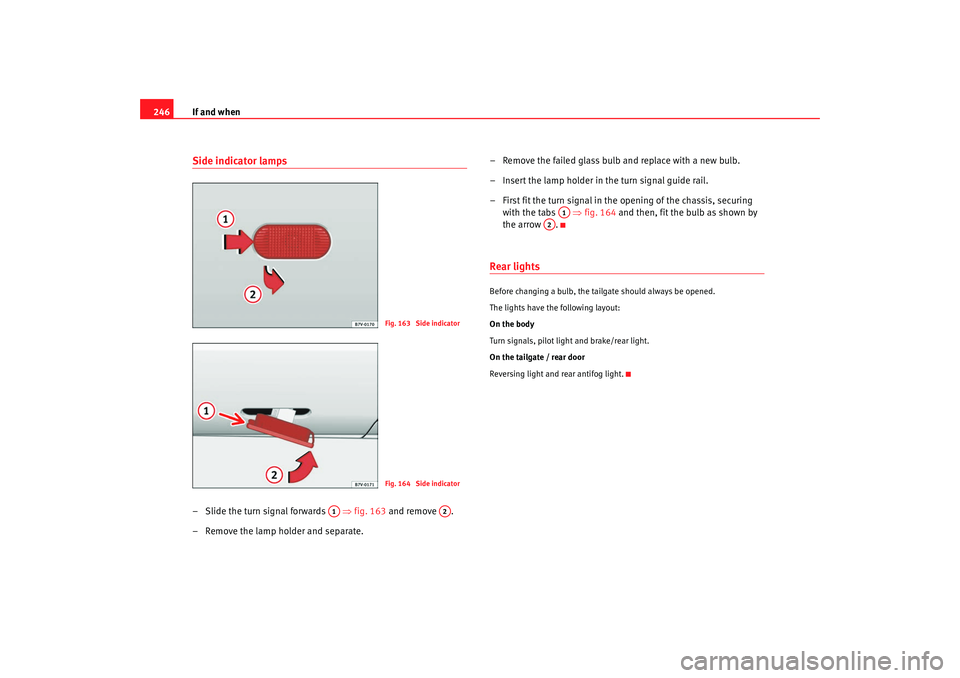
246Side indicator lamps– Slide the turn signal forwards ⇒fig. 163 and remove .
– Remove the lamp holder and separate. – Remove the failed glass bulb and replace with a new bulb.
– Insert the lamp holder in the turn signal guide rail.
– First fit the turn signal in the opening of the chassis, securing
with the tabs ⇒fig. 164 and then, fit the bulb as shown by
the arrow .
Rear lightsBefore changing a bulb, the tailgate should always be opened.
The lights have the following layout:
On the body
Turn signals, pilot light and brake/rear light.
On the tailgate / rear door
Reversing light and rear antifog light.
Fig. 163 Side indicatorFig. 164 Side indicator
A1
A2
A1
A2
alhambra_aleman.book Seite 246 Montag, 23. M‰ rz 2009 1:12 13
Page 249 of 285
If and when247
Safety First
Operating instructions
Tips and Maintenance
Te c h n i c a l D a t a
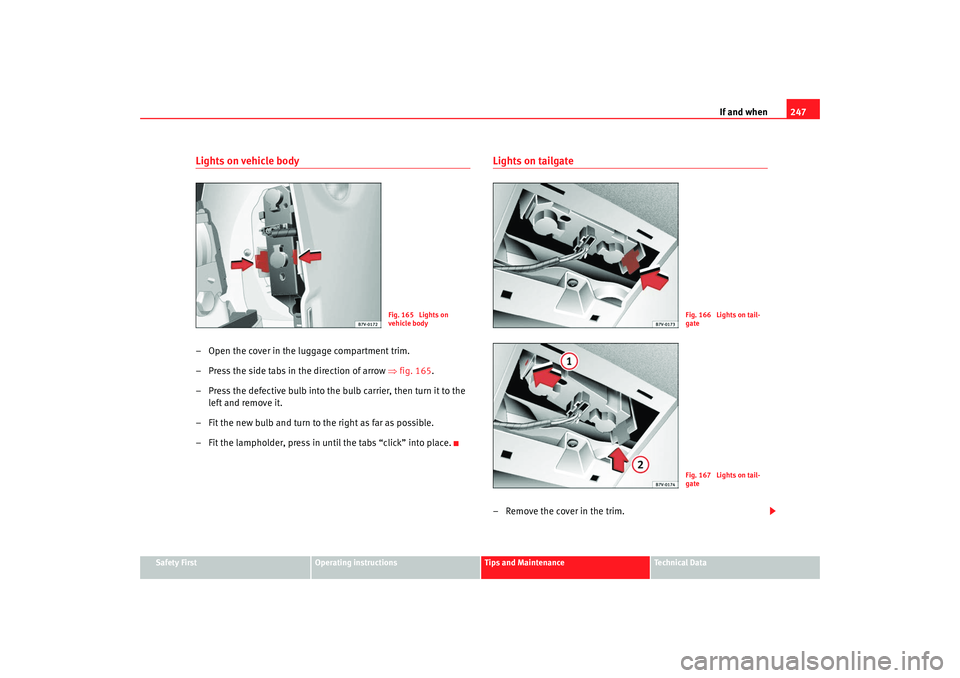
Lights on vehicle body – Open the cover in the luggage compartment trim.
– Press the side tabs in the direction of arrow ⇒fig. 165.
– Press the defective bulb into the bulb carrier, then turn it to the left and remove it.
– Fit the new bulb and turn to the right as far as possible.
– Fit the lampholder, press in until the tabs “click” into place.
Lights on tailgate– Remove the cover in the trim.
Fig. 165 Lights on
vehicle body
Fig. 166 Lights on tail-
gateFig. 167 Lights on tail-
gate
alhambra_aleman.book Seite 247 Montag, 23. M‰ rz 2009 1:12 13
Page 250 of 285
If and when
248
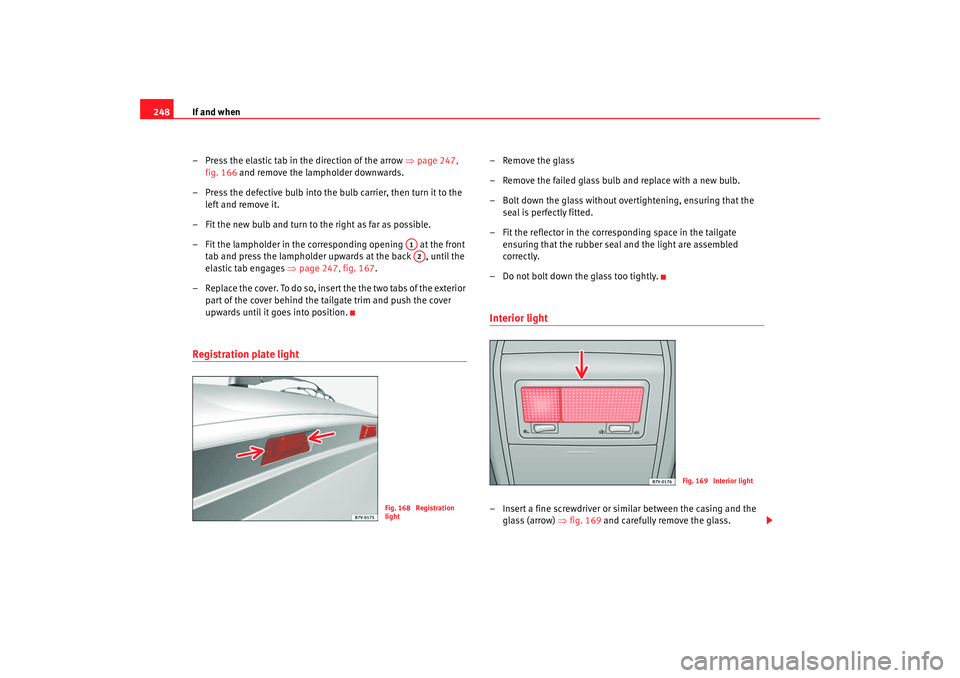
– Press the elastic tab in the direction of the arrow ⇒page 247,
fig. 166 and remove the lampholder downwards.
– Press the defective bulb into the bulb carrier, then turn it to the left and remove it.
– Fit the new bulb and turn to the right as far as possible.
– Fit the lampholder in the corresponding opening at the front tab and press the lampholder upwards at the back , until the
elastic tab engages ⇒page 247, fig. 167 .
– Replace the cover. To do so, insert the the two tabs of the exterior part of the cover behind the tailgate trim and push the cover
upwards until it goes into position.Registration plate light
– Remove the glass
– Remove the failed glass bulb and replace with a new bulb.
– Bolt down the glass without overtightening, ensuring that the
seal is perfectly fitted.
– Fit the reflector in the corresponding space in the tailgate ensuring that the rubber seal and the light are assembled
correctly.
– Do not bolt down the glass too tightly.Interior light– Insert a fine screwdriver or similar between the casing and the glass (arrow) ⇒fig. 169 and carefully remove the glass.
A1A2
Fig. 168 Registration
light
Fig. 169 Interior light
alhambra_aleman.book Seite 248 Montag, 23. M‰ rz 2009 1:12 13
Page 251 of 285
If and when249
Safety First
Operating instructions
Tips and Maintenance
Te c h n i c a l D a t a
– Replace the bulb.
– Replace the glass in the casing.Reading light
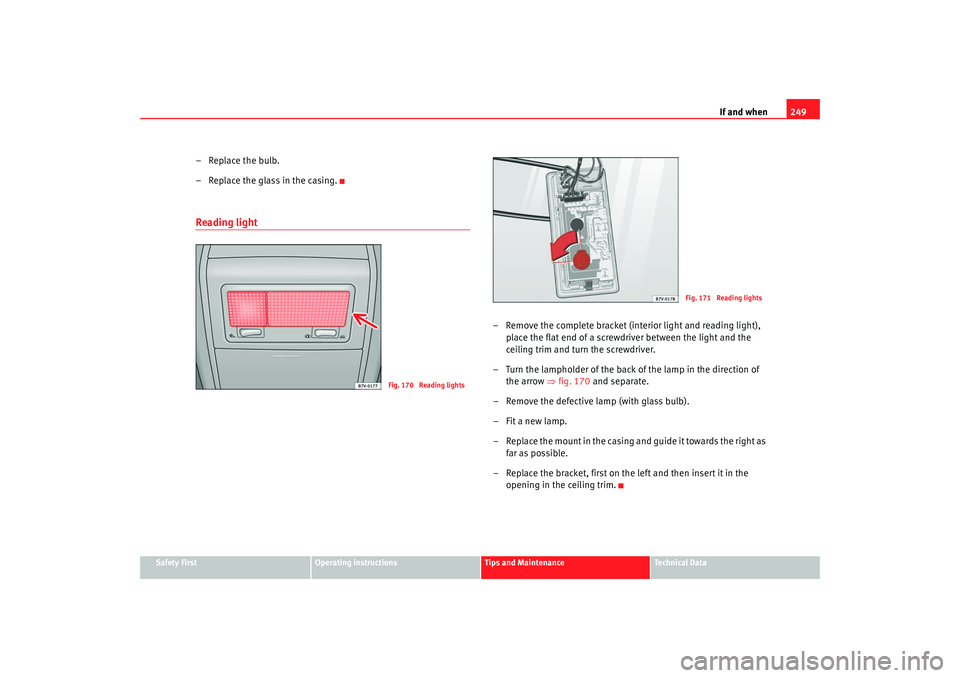
– Remove the complete bracket (interior light and reading light),
place the flat end of a screwdriver between the light and the
ceiling trim and turn the screwdriver.
– Turn the lampholder of the back of the lamp in the direction of the arrow ⇒fig. 170 and separate.
– Remove the defective lamp (with glass bulb).
–Fit a new lamp.
– Replace the mount in the casing and guide it towards the right as far as possible.
– Replace the bracket, first on the left and then insert it in the opening in the ceiling trim.
Fig. 170 Reading lights
Fig. 171 Reading lights
alhambra_aleman.book Seite 249 Montag, 23. M‰ rz 2009 1:12 13
Page 253 of 285
If and when251
Safety First
Operating instructions
Tips and Maintenance
Te c h n i c a l D a t a
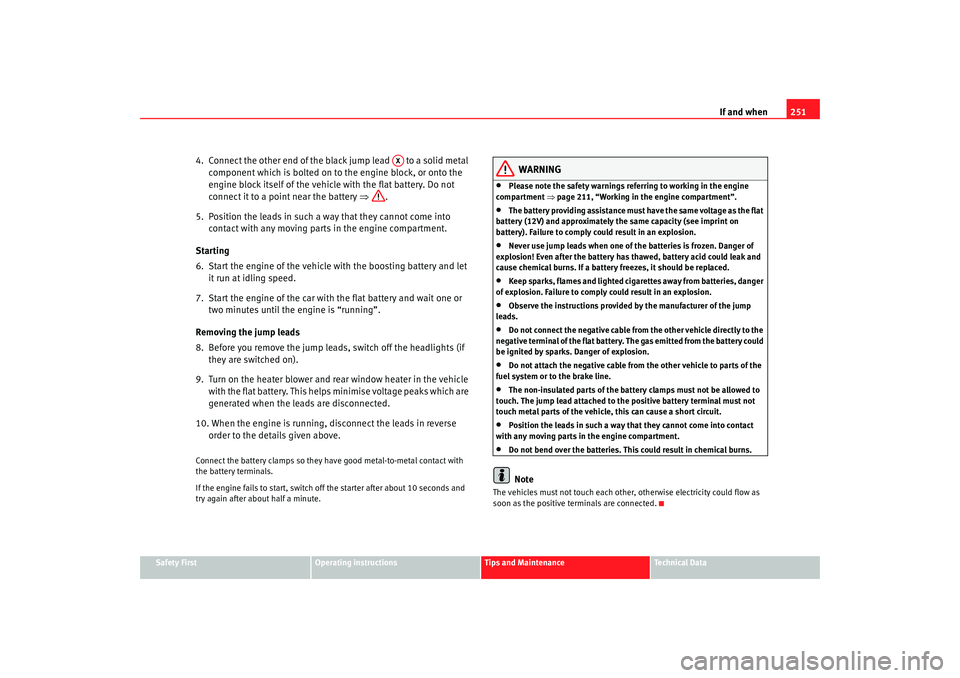
4. Connect the other end of the black jump lead to a solid metal
component which is bolted on to the engine block, or onto the
engine block itself of the vehicle with the flat battery. Do not
connect it to a point near the battery ⇒ .
5. Position the leads in such a way that they cannot come into contact with any moving parts in the engine compartment.
Starting
6. Start the engine of the vehicle with the boosting battery and let it run at idling speed.
7. Start the engine of the car with the flat battery and wait one or two minutes until the engine is “running”.
Removing the jump leads
8. Before you remove the jump leads, switch off the headlights (if they are switched on).
9. Turn on the heater blower and rear window heater in the vehicle with the flat battery. This helps minimise voltage peaks which are
generated when the leads are disconnected.
10. When the engine is running, disconnect the leads in reverse order to the details given above.Connect the battery clamps so they have good metal-to-metal contact with
the battery terminals.
If the engine fails to start, switch off the starter after about 10 seconds and
try again after about half a minute.
WARNING
•
Please note the safety warnings referring to working in the engine
compartment ⇒page 211, “Working in the engine compartment”.
•
The battery providing assistance must have the same voltage as the flat
battery (12V) and approximately the same capacity (see imprint on
battery). Failure to comply could result in an explosion.
•
Never use jump leads when one of the batteries is frozen. Danger of
explosion! Even after the battery has thawed, battery acid could leak and
cause chemical burns. If a battery freezes, it should be replaced.
•
Keep sparks, flames and lighted cigarettes away from batteries, danger
of explosion. Failure to comply could result in an explosion.
•
Observe the instructions provided by the manufacturer of the jump
leads.
•
Do not connect the negative cable from the other vehicle directly to the
negative terminal of the flat battery. The gas emitted from the battery could
be ignited by sparks. Danger of explosion.
•
Do not attach the negative cable from the other vehicle to parts of the
fuel system or to the brake line.
•
The non-insulated parts of the battery clamps must not be allowed to
touch. The jump lead attached to the positive battery terminal must not
touch metal parts of the vehicle, this can cause a short circuit.
•
Position the leads in such a way that they cannot come into contact
with any moving parts in the engine compartment.
•
Do not bend over the batteries. This could result in chemical burns.Note
The vehicles must not touch each other, otherwise electricity could flow as
soon as the positive terminals are connected.
AX
alhambra_aleman.book Seite 251 Montag, 23. M‰ rz 2009 1:12 13
Page 255 of 285
If and when253
Safety First
Operating instructions
Tips and Maintenance
Te c h n i c a l D a t a
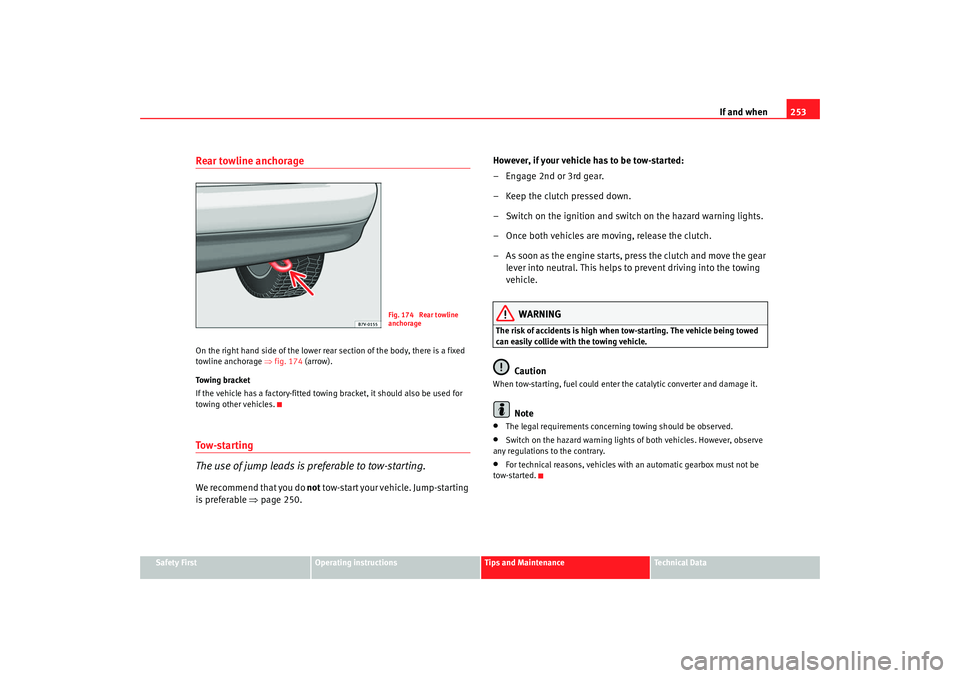
Rear towline anchorageOn the right hand side of the lower rear section of the body, there is a fixed
towline anchorage ⇒ fig. 174 (arrow).
To w i n g b r a c k e t
If the vehicle has a factory-fitted towing bracket, it should also be used for
towing other vehicles.To w - s t a r t i n g
The use of jump leads is preferable to tow-starting.We recommend that you do not tow-start your vehicle. Jump-starting
is preferable ⇒page 250. However, if your vehicle has to be tow-started:
– Engage 2nd or 3rd gear.
– Keep the clutch pressed down.
– Switch on the ignition and switch on the hazard warning lights.
– Once both vehicles are moving, release the clutch.
– As soon as the engine starts, press the clutch and move the gear
lever into neutral. This helps to prevent driving into the towing
vehicle.
WARNING
The risk of accidents is high when tow-starting. The vehicle being towed
can easily collide with the towing vehicle.
Caution
When tow-starting, fuel could enter the catalytic converter and damage it.
Note
•
The legal requirements concerning towing should be observed.
•
Switch on the hazard warning lights of both vehicles. However, observe
any regulations to the contrary.
•
For technical reasons, vehicles with an automatic gearbox must not be
tow-started.
Fig. 174 Rear towline
anchorage
alhambra_aleman.book Seite 253 Montag, 23. M‰ rz 2009 1:12 13
Page 256 of 285
If and when
254Notes for tow-starting or towingIf a cable is used for towing the vehicle, please observe the
following:
As the driver of the towing vehicle
– Switch on the hazard warning lights. However, observe any regu-
lations to the contrary.
– Drive slowly at first until the tow-rope is taut. Then accelerate gradually.
– Begin and change gears cautiously. If you are driving an auto- matic vehicle, accelerate gently.
– Remember that the brake servo and power steering are not working in the vehicle you are towing. Brake earlier than you
would normally, but with a more gentle pressure on the brake.
As the driver of the vehicle being towed
– Switch on the hazard warning lights. However, observe any regu- lations to the contrary.
– Place the gearstick in neutral or position N .
– Ensure that the tow-rope remains taut at all times.Tow-rope or tow-bar
It is easier and safer to tow a vehicle with a tow-bar. You should only use a
tow-rope if you do not have a tow-bar.
A tow-rope should be slightly elastic to reduce the loading on both vehicles.
It is advisable to use a tow-rope made of synthetic fibre or similarly elastic
material. Attach the tow-rope or the tow-bar only to the towing eyes provided or a
towing bracket.
Driving tips
Towing requires some experience, especially when using a tow-rope. Both
drivers should be familiar with the technique required for towing. Inexperi-
enced drivers should not attempt to tow-start or tow away another vehicle.
Do not pull too hard with the towing vehicle and take care to avoid jerking the
tow-rope. When towing on an unpaved road, there is always a risk of over-
loading and damaging the anchorage points.
The ignition of the vehicle being towed must be switched on to prevent the
steering wheel from locking and also to allow the use of the turn signals,
horn, windscreen wipers and washers.
If the vehicle is towed, with the hazard warning lights on and the ignition
switched on, the turn signal may be used to indicate that you are going to
change direction. Move the turn signal lever accordingly. Meanwhile, the
hazard warning lights will go off. When the turn signal lever is returned to the
rest position, the hazard warning lights will automatically reconnect.
The brake servo works only when the engine is running. In this case the pedal
has to be pressed harder.
As the power assisted steering does not work if the engine is not running, you
will need more strength to steer than you normally would.
Towing vehicles with an automatic gearbox
•
Move the selector lever to N.
•
Do not drive faster than 50 km/h when towing a vehicle.
•
Do not tow further than 50 km.
•
If a breakdown truck is used, the vehicle must be towed with the front
wheels raised.
alhambra_aleman.book Seite 254 Montag, 23. M‰ rz 2009 1:12 13
Page 262 of 285
General notes on the technical data
260WeightsKerb weight refers to the basic model with a fuel tank filled to 90% capacity
and without optional extras. The figure quoted includes 75 kg to allow for the
weight of the driver.
For special versions and optional equipment fittings or for the addition of
accessories, the weight of the vehicle will increase ⇒.
WARNING
•
Please note that the centre of gravity may shift when transporting
heavy objects; this may affect the vehicle's handling and lead to an acci-
dent. Always adjust your speed and driving style to suit road conditions
and requirements.
•
Never exceed the gross axle weight rating or the gross vehicle weight
rating. If the allowed axle load or the allowed total weight is exceeded, the
driving characteristics of the vehicle may change, leading to accidents,
injuries and damage to the vehicle.
To w i n g a t r a i l e rTra iler weig htsTrailer weigh ts
The trailer weights and drawbar loads approved are selected in intensive
trials according to precisely defined criteria. The approved trailer weights are
valid for vehicles in the EU for maximum speeds of 80 km/h (in certain
circumstances up to 100 km/h). The figures may be different in other coun-
tries. All data in the official vehicle documents take precedence over these
data ⇒ . Drawbar load
The
maximum permitted weight exerted by the trailer drawbar on the ball joint
of the towing bracket must not exceed 85 kg.
In the interest of road safety, we recommend that you always tow
approaching the maximum drawbar load. The response of the trailer on the
road will be poor if the drawbar load is too small.
If the maximum permissible drawbar load cannot be met (e.g. with small,
empty and light-weight single axle trailers or tandem axle trailers with an axle
base of less than 1 metre), at least 4% of the actual trailer weight is a legal
stipulation for a drawbar load.
WARNING
•
For safety reasons, you should not drive at speeds above 80 km/h when
towing a trailer. This also applies to countries where higher speeds are
permitted.
•
Never exceed the maximum trailer weights or the draw bar loading. If
the permissible axle load or the permissible total weight is exceeded, the
driving characteristics of the vehicle may change, leading to accidents,
injuries and damage to the vehicle.
WheelsTyre pressure, snow chains, wheel boltsTyre pressu res
The sticker with the tyre pressure values can be found on the inside of the
tank flap. The tyre pressure values given there are for cold tyres. The slightly
raised pressures of warm tyres must not be reduced ⇒.
alhambra_aleman.book Seite 260 Montag, 23. M‰ rz 2009 1:12 13
Page 274 of 285
Technical Data
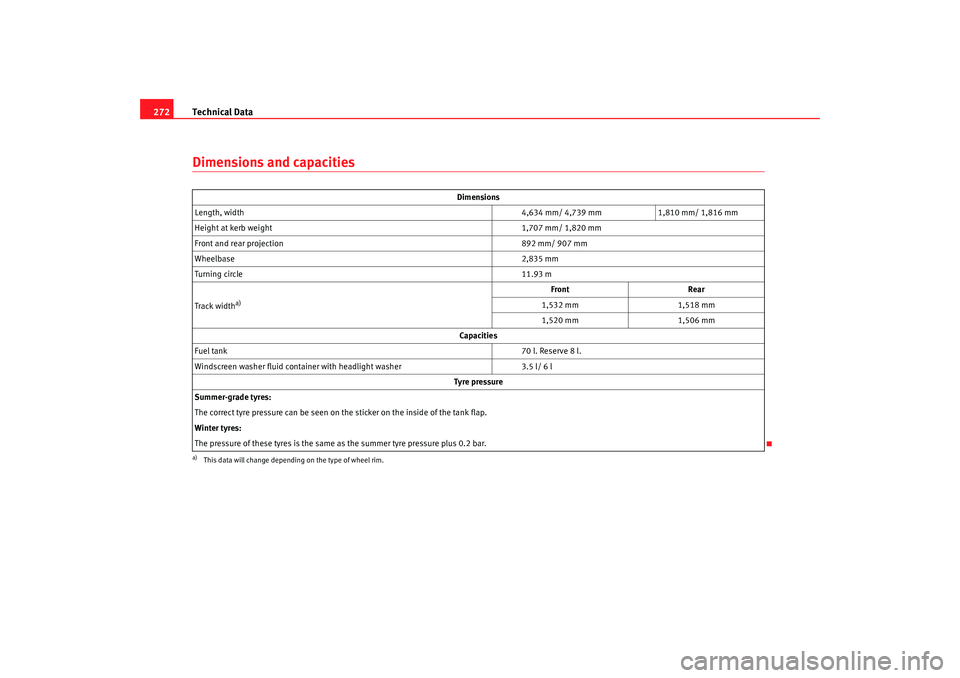
272Dimensions and capacities
Dimensions
Length, width 4,634 mm/ 4,739 mm1,810 mm/ 1,816 mm
Height at kerb weight 1,707 mm/ 1,820 mm
Front and rear projection 892 mm/ 907 mm
Wheelbase 2,835 mm
Turning circle 11.93 m
Track width
a)
a)This data will change depending on the type of wheel rim.
Front Rear
1,532 mm 1,518 mm
1,520 mm 1,506 mm
Capacities
Fuel tank 70 l. Reserve 8 l.
Windscreen washer fluid container with headlight washer 3.5 l/ 6 l
Tyre pressure
Summer-grade tyres:
The correct tyre pressure can be seen on the sticker on the inside of the tank flap.
Winter tyres:
The pressure of these tyres is the same as the summer tyre pressure plus 0.2 bar.
alhambra_aleman.book Seite 272 Montag, 23. M‰ rz 2009 1:12 13
Page 276 of 285
Index
274Belt tension devices . . . . . . . . . . . . . . . . . . . . . . 31
Belt tensioner
Warning lamp . . . . . . . . . . . . . . . . . . . . . . . . 34
Biodiesel . . . . . . . . . . . . . . . . . . . . . . . . . . . . . . 209
Bonnet . . . . . . . . . . . . . . . . . . . . . . . . . . . . . . . . 213
Brake assist system . . . . . . . . . . . . . . . . . . . . . 182
Brake fluid . . . . . . . . . . . . . . . . . . . . . . . . . . . . . 223 Changing . . . . . . . . . . . . . . . . . . . . . . . . . . . 224
Brake pad wear Warning lamp . . . . . . . . . . . . . . . . . . . . . . . 181
Brake pad wear indicator* Indicator . . . . . . . . . . . . . . . . . . . . . . . . . . . . . 79
Brake pads . . . . . . . . . . . . . . . . . . . . . . . . . . . . . 187
Brake servo . . . . . . . . . . . . . . . . . . . . . . . . 181, 187
Brake system . . . . . . . . . . . . . . . . . . . . . . . . . . . 223 brake servo . . . . . . . . . . . . . . . . . . . . . . . . . 181
Warning lamp . . . . . . . . . . . . . . . . . . . . . . . . 78
warning lamp . . . . . . . . . . . . . . . . . . . . . . . . 181
Brakes . . . . . . . . . . . . . . . . . . . . . . . . . . . . 181, 187
Braking distance . . . . . . . . . . . . . . . . . . . . . . . . 187
Breakdown set storage . . . . . . . . . . . . . . . . . . . . . . . . . . . . . 233
Bulb change . . . . . . . . . . . . . . . . . . . . . . . . . . . 245
Bulb defect warning lamp . . . . . . . . . . . . . . . . . . . . . . . . . 78
Buzzer . . . . . . . . . . . . . . . . . . . . . . . . . . . . . . . . 163CCar care Exterior . . . . . . . . . . . . . . . . . . . . . . . . . . . . . 196 Car care products . . . . . . . . . . . . . . . . . . . . . . . 195
Car phone . . . . . . . . . . . . . . . . . . . . . . . . . . . . . 205
Car washes . . . . . . . . . . . . . . . . . . . . . . . . . . . . 196
Catalytic converter . . . . . . . . . . . . . . . . . . . . . . 188
CCS . . . . . . . . . . . . . . . . . . . . . . . . . . . . . . . . . . . 177
CD changer
Location . . . . . . . . . . . . . . . . . . . . . . . . . . . . 137
Central locking . . . . . . . . . . . . . . . . . . . . . . . . . . 89 individual opening of doors . . . . . . . . . . . . . 90
Central locking button . . . . . . . . . . . . . . . . . . . . 92
Central stowage on instrument panel . . . . . . . 134
Cetane number . . . . . . . . . . . . . . . . . . . . . . . . . 209
Changing a light . . . . . . . . . . . . . . . . . . . . . . . . 245
Changing a wheel . . . . . . . . . . . . . . . . . . . 238, 242
Changing brake pads . . . . . . . . . . . . . . . . . . . . 187
Changing bulbs lights on tailgate/rear door . . . . . . . . . . . . 247
Lights on vehicle body . . . . . . . . . . . . . . . . 247
Reading light . . . . . . . . . . . . . . . . . . . . . . . . 249
Registration plate light . . . . . . . . . . . . . . . . 248
Changing gear See Manual gearbox . . . . . . . . . . . . . . . . . . 167
Changing the bulbs interior light . . . . . . . . . . . . . . . . . . . . . . . . . 248
rear lights . . . . . . . . . . . . . . . . . . . . . . . . . . 246
Changing the lamps Side indicator lights . . . . . . . . . . . . . . . . . . 246
Chassis number . . . . . . . . . . . . . . . . . . . . . . . . 258
Checking . . . . . . . . . . . . . . . . . . . . . . . . . . . . . . 226
Checking battery electrolyte level . . . . . . . . . . 226 Checking engine oil level . . . . . . . . . . . . . . . . . 216
Child safety . . . . . . . . . . . . . . . . . . . . . . . . . . . . . 46
Child seat . . . . . . . . . . . . . . . . . . . . . . . . . . . . . . . 48
Categorisation in groups . . . . . . . . . . . . . . . 48
Group 1 . . . . . . . . . . . . . . . . . . . . . . . . . . . . . 49
Group 2 . . . . . . . . . . . . . . . . . . . . . . . . . . . . . 49
Group 3 . . . . . . . . . . . . . . . . . . . . . . . . . . . . . 49
Groups 0 and 0+ . . . . . . . . . . . . . . . . . . . . . . 48
in front passenger seat . . . . . . . . . . . . . . . . . 34
Safety notes . . . . . . . . . . . . . . . . . . . . . . . . . . 46
securing . . . . . . . . . . . . . . . . . . . . . . . . . . . . . 51
Childproof locks . . . . . . . . . . . . . . . . . . . . . . . . . 94
Cigarette lighter . . . . . . . . . . . . . . . . . . . . . . . . 141
Cleaning alloy wheels . . . . . . . . . . . . . . . . . . . . 199
Cleaning and caring for your vehicle . . . . . . . . 195
Cleaning chrome . . . . . . . . . . . . . . . . . . . . . . . . 199
Cleaning cloth seat covers . . . . . . . . . . . . . . . . 201
Cleaning dash panel . . . . . . . . . . . . . . . . . . . . . 201
Cleaning engine compartment . . . . . . . . . . . . . 200
Cleaning fabric trim . . . . . . . . . . . . . . . . . . . . . 201
Cleaning leather . . . . . . . . . . . . . . . . . . . . . . . . 202
Cleaning plastic parts . . . . . . . . . . . . . . . . . . . . 201
Cleaning seat belts . . . . . . . . . . . . . . . . . . . . . . 202
Cleaning windows . . . . . . . . . . . . . . . . . . . . . . . 198
Cleaning wooden trim . . . . . . . . . . . . . . . . . . . . 201
Climatronic . . . . . . . . . . . . . . . . . . . . . . . . . . . . 153 Air outlet . . . . . . . . . . . . . . . . . . . . . . . . . . . 158
Controls . . . . . . . . . . . . . . . . . . . . . . . . . . . . 153
faults . . . . . . . . . . . . . . . . . . . . . . . . . . . . . . 159
alhambra_aleman.book Seite 274 Montag, 23. M‰ rz 2009 1:12 13