tow bar Seat Alhambra 2012 User Guide
[x] Cancel search | Manufacturer: SEAT, Model Year: 2012, Model line: Alhambra, Model: Seat Alhambra 2012Pages: 388, PDF Size: 6.72 MB
Page 245 of 388
243
Trailer towing
● The trailer must have a fixed drawbar.
● Trailers with brakes must be equipped with a mechanical inertia brake.
WARNING
Do not let the extra safety afforded by the stabilisation system tempt you
into taking any risks when driving.
● Adjust your speed and driving style to visibility, road, traffic and
weather conditions.
● If the road surface is slippery, take care when accelerating.
● When a system is operating, lift your foot off the accelerator.
WARNING
It is possible that the combination stabilisation system does not correct-
ly recognised all driving situations.
● It is possible that the stabilisation system does not detect snaking of
a light trailer and thus does not intervene.
● When driving on slippery ground, the trailer could jack-knife despite
the stabilisation system.
● Trailers with a high centre of gravity may even tip over before they
start to rock sideways.
● If a trailer is not used at the trailer socket is connected (for example,
installation of a bicycle carrier with lights), repeated automatic braking
may occur in extreme driving conditions.
Retrofitting a tow hitch
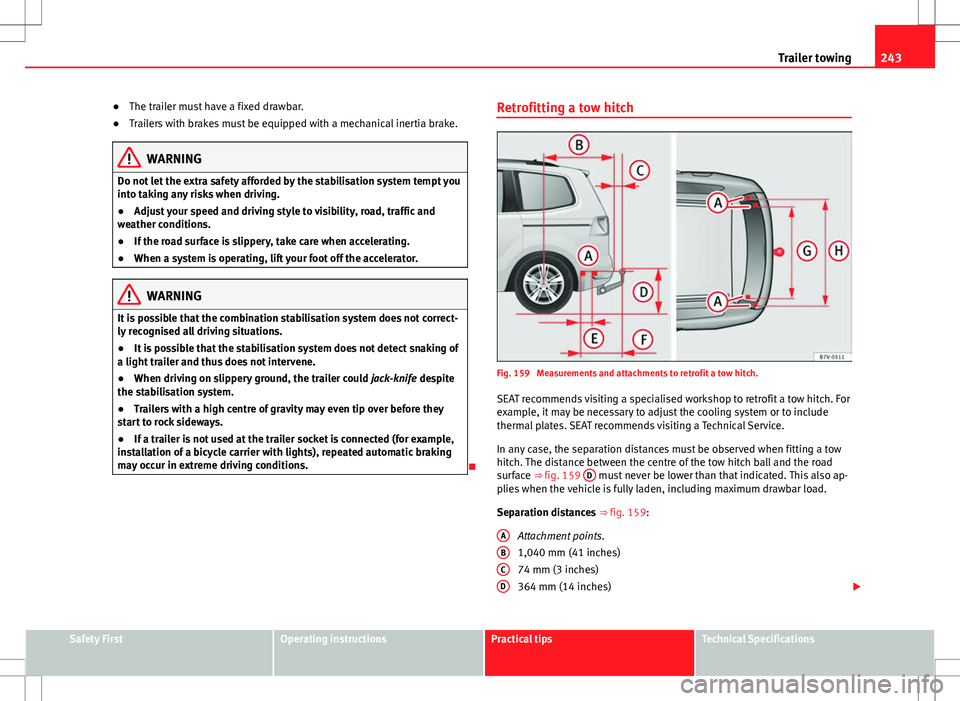
Fig. 159 Measurements and attachments to retrofit a tow hitch.
SEAT recommends visiting a specialised workshop to retrofit a tow hitch. For
example, it may be necessary to adjust the cooling system or to include
thermal plates. SEAT recommends visiting a Technical Service.
In any case, the separation distances must be observed when fitting a tow
hitch. The distance between the centre of the tow hitch ball and the road
surface ⇒ fig. 159 D
must never be lower than that indicated. This also ap-
plies when the vehicle is fully laden, including maximum drawbar load.
Separation distances ⇒ fig. 159:
Attachment points.
1,040 mm (41 inches)
74 mm (3 inches)
364 mm (14 inches)
A
BCD
Safety FirstOperating instructionsPractical tipsTechnical Specifications
Page 312 of 388
310Wheels and tyres
WARNING (Continued)
● Only use suitable tools that are not damaged when changing a wheel.
● Always stop the engine, turn on the electronic parking brake and
place the gear selector lever in position P, for an automatic gearbox, or
engage a gear for a manual gearbox to reduce the risk of the vehicle mov-
ing accidentally.
● Have the tightening torque of the wheel bolts checked as soon as
possible with a reliable torque wrench.
Preparations for changing a wheel
Check list
Before changing a wheel, complete the following operations in the order
given ⇒
:
Park the vehicle on an even and solid surface.
Connect the electronic parking brake ⇒ page 185.
Automatic gearbox: Move selector lever to position P ⇒ page 176.
Stop the engine and remove the key from the ignition ⇒ page 172.
Manual gearbox: Select a gear ⇒ page 176.
Have all vehicle occupants get out of the vehicle and wait in a safe
place (for example, behind the safety barrier).
Block the opposite wheel with wedges or a similar object.
When towing a trailer: unhook the trailer from the towing vehicle and
park it correctly.
If the luggage compartment is full: take the baggage out of the vehicle. Take the vehicle tool kit out of the luggage compartment.
Remove the wheel trims ⇒ page 308.
1.
2.
3.
4.
5.
6.
7.
8.
9.
10.
11.
WARNING
Failure to follow the checklist prepared for your own safety could lead to
accidents and severe injuries.
● Always complete the operations given in the checklist and observe
the general rules of safety.
Page 347 of 388
345
If and when
Instructions for tow starting
In general, the vehicle should not be started by towing. Jump-starting is
much more preferable ⇒ page 341.
For technical reasons, the following vehicles can not be tow started:
● Vehicles with an automatic gearbox.
● Vehicles with an electronic parking brake, given that it is possible that
the brake will not be disengaged.
● If the vehicle battery is flat, it is possible that the engine control units do
not operate correctly.
However, if your vehicle must absolutely be tow-started (manual gearbox):
● Engage the 2nd or 3rd gear.
● Keep the clutch pressed down.
● Switch on the ignition and the hazard warning lights.
● Release the clutch when both vehicles are moving.
● As soon as the engine starts, press the clutch and move the gear lever
into neutral. This helps to prevent a collision with the towing vehicle.
CAUTION
When tow-starting, fuel could enter the catalytic converter and damage it.
Towing instructions
Tow-rope or tow-bar
When towing, the tow bar is the safest and vehicle friendly way. You should
only use a tow-rope if you do not have a tow-bar. A tow-rope should be slightly elastic to avoid damage to both vehicles. It is
advisable to use a tow-rope made of synthetic fibre or similarly elastic mate-
rial.
Only secure the tow rope or tow bar to the tow ring or specially designed
fitting.
Vehicles with a
factory fitted towing device , can only be used for towing
with a tow-bar, specially designed to fit on a tow hitch ball ⇒ page 237.
Towing vehicles with an automatic gearbox
Note the following for a towed vehicle:
● Make sure the gear selector lever is in the N position.
● Do not drive faster than 50 km/h (30 mph) when towing a vehicle.
● Do not tow further than 50 km (30 miles).
● If a breakdown truck is used, the vehicle must be towed with the front
wheels raised. Note the following instructions for towing four wheel drive
vehicles.
Instructions for towing four-wheel-drive vehicles
Four wheel drive vehicles can be towed using a toolbar or tow rope. If the
vehicle is towed with the front or rear axle raised, the engine must be turned
off to avoid transmission damage.
For vehicles with a double clutched DSG ®
(direct shift gearbox) the instruc-
tions for towing vehicles with an automatic gearbox apply ⇒ page 345.
Situations in which the vehicle should not be towed
In the following cases, the vehicle should not be towed but transported on a
trailer or special vehicle:
● If the vehicle gearbox does not contain lubricant due to a fault.
● If the vehicle battery is flat and, as a result, the electronic steering lock
and electronic parking brake cannot be disengaged if applied.
● If the vehicle to be towed has an automatic gearbox and the distance to
be covered is greater than 50 km (30 miles).
Safety FirstOperating instructionsPractical tipsTechnical Specifications
Page 349 of 388
347
If and when
Fitting the tow ring to the rear for vehicles without factory fitted tow hitch
● Take the tow ring from the on-board tools ⇒ page 324.
● Press on the upper cover and carefully remove it back. This may require
some strength. Allow the cover to hang.
● Screw in the tow ring into its position anticlockwise as far as it will go
⇒
. Use a suitable tool to firmly tighten the tow ring in its location.
● After towing, remove the tow ring by turning it clockwise and put the
cover back in place.
CAUTION
● The tow ring must always be completely and firmly tightened. Other-
wise, it could be released while towing and tow-starting.
● Vehicles with a factory fitted towing device, can only be used for towing
with a tow-bar, specially designed to fit on a tow hitch ball. Otherwise, the
tow hitch ball and the vehicle may be damaged. Otherwise, a tow rope
should be used.
Towing advice
Towing requires some experience, especially when using a tow-rope. Both
drivers should be familiar with the technique required for towing. For this
reason, inexperienced drivers should abstain.
While driving, avoid excessive traction forces and jerking. When towing on
an unpaved road, there is always a risk of overloading and damaging the
anchorage points.
If the vehicle is towed, with the hazard warning lights on and the ignition
switched on, the turn signal may be used to indicate changes of direction.
Simply operate the turn indicator lever as usual. Meanwhile, the hazard
warning lights will go off. When the turn signal lever is returned to the rest
position, the hazard warning lights will be turned on automatically. Notes for the driver of the towed vehicle
●
Leave the ignition on to avoid locking the steering wheel, to release the
electronic parking brake and to activate the turn signal indicators, the horn
as well as the window wipers and window washers.
● As the power assisted steering does not work if the engine is not run-
ning, you will need more strength to steer than normally.
● The brake must be depressed must harder as the brake servo does not
operate. Avoid hitting the towing vehicle.
● Note the instructions and information contained in the instruction man-
ual for the vehicle to be towed.
Notes for the driver of the towing vehicle
● Accelerate gently and carefully. Avoid sudden manoeuvres.
● Brake well in advance than usual and brake gently.
● Note the instructions and information contained in the instruction man-
ual for the vehicle to be towed.
Safety FirstOperating instructionsPractical tipsTechnical Specifications
Page 353 of 388
351
Description of specifications
Towing a trailer Trailer weights
Trailer weight
The trailer weights and drawbar loads approved are selected in intensive tri-
als according to precisely defined criteria. The approved trailer weights are
valid for vehicles in the EU for maximum speeds of 80 km/h (in certain cir-
cumstances up to 100 km/h). The figures may be different in other coun-
tries. All data in the official vehicle documents take precedence over these
data ⇒
.
Drawbar load
The maximum permitted weight exerted by the trailer drawbar on the ball
joint of the towing bracket must not exceed 100 kg.
In the interest of road safety, we recommend that you always tow approach-
ing the maximum drawbar load. The response of the trailer on the road will
be poor if the drawbar load is too small.
If the maximum permissible drawbar load cannot be met (e.g. with small,
empty and light-weight single axle trailers or tandem axle trailers with a
wheelbase of less than 1 metre), a minimum of 4% of the actual trailer
weight is legally required for the drawbar load.
WARNING
● For safety reasons, do not exceed the 80 km/h limit. This is also valid
in countries where higher speeds are permitted.
● Never exceed the maximum trailer weights or the drawbar load. If the
permissible axle load or the permissible total weight is exceeded, the
driving characteristics of the vehicle may change, leading to accidents,
injuries and damage to the vehicle.
Wheels
Tyre pressure, snow chains, wheel bolts
Tyre pressures
The sticker with the tyre pressure values can be found on the inside of the
tank flap. The tyre pressure values given there are for cold tyres. The slightly
raised pressures of warm tyres must not be reduced. ⇒
Snow chains
Snow chains may be fitted only to the front wheels.
Consult the chapter “wheels” of this manual.
Wheel bolts
After the wheels have been changed, the tightening torque of the wheel
bolts should be checked as soon as possible with a torque wrench ⇒
.
The tightening torque for steel and alloy wheels is 140 Nm.
WARNING
● Check the tyre pressure at least once per month. Checking the tyre
pressure is very important. If the tyre pressure is too high or too low,
there is an increased danger of accidents, particularly at high speeds.
● If the torque of the wheel bolts is too low, they could loosen while the
vehicle is in motion. Risk of accident! If the tightening torque is too high,
the wheel bolts and threads can be damaged.
Note
We recommend that you ask your Technical Service for information about
appropriate wheel, tyre and snow chain size.
Safety FirstOperating instructionsPractical tipsTechnical Specifications
Page 383 of 388

Snow chains . . . . . . . . . . . . . . . . . . . . . . . 305, 351All-wheel drive . . . . . . . . . . . . . . . . . . . . . . 305
Sockets 12 Volts . . . . . . . . . . . . . . . . . . . . . . . . . . . . 154
Faults . . . . . . . . . . . . . . . . . . . . . . . . . . . . . 155
Spanner symbol . . . . . . . . . . . . . . . . . . . . . . . . . 61
Spare fuel canister . . . . . . . . . . . . . . . . . . . . . . 268
Spare parts . . . . . . . . . . . . . . . . . . . . . . . . . . . . 261
Special features Automatic car wash . . . . . . . . . . . . . . . . . . 247
Folding exterior mirrors . . . . . . . . . . . . . . . 113
High pressure cleaning equipment . . . . . . 248
Parking . . . . . . . . . . . . . . . . . . . 185, 189, 367
Pushing . . . . . . . . . . . . . . . . . . . . . . . . . . . . 172
Radio reception . . . . . . . . . . . . . . . . . . . . . 259
Removing the vehicle key . . . . . . . . . . . . . 174
Washing the vehicle . . . . . . . . . . . . . . . . . . 247
Windscreen wipers . . . . . . . . . . . . . . . . . . . 106
Special notes High-pressure cleaning system . . . . . . . . . 239
Long parking times . . . . . . . . . . . . . . . . . . . 74
Towing . . . . . . . . . . . . . . . . . . . . . . . . . 344, 345
Tow starting . . . . . . . . . . . . . . . . . . . . . . . . 345
Specifications Combined weight . . . . . . . . . . . . . . . . . . . . 244
Drawbar load . . . . . . . . . . . . . . . . . . . . . . . 235
Trailer weight . . . . . . . . . . . . . . . . . . . . . . . 244
Specific notes Electric sliding doors . . . . . . . . . . . . . . . . . . 82
Spectacle case . . . . . . . . . . . . . . . . . . . . . . . . . 143
Speed rating . . . . . . . . . . . . . . . . . . . . . . . . . . . 307
Stabilising the vehicle and trailer combina- tion . . . . . . . . . . . . . . . . . . . . . . . . . . . . . . . . . 242 Start-Stop function
Driving with a trailer . . . . . . . . . . . . . . . . . . 235
Start-Stop Function . . . . . . . . . . . . . . . . . . . . . 198
Start assist See "Start assist systems" . . . . . . . . . . . . . 196
Starting assistance . . . . . . . . . . . . . . . . . . . . . 341 Description . . . . . . . . . . . . . . . . . . . . . . . . . 342
Jump leads . . . . . . . . . . . . . . . . . . . . . . . . . 342
Positive pole on the starting assistancepoints . . . . . . . . . . . . . . . . . . . . . . . . . . . . 342
Starting using an external battery See Starting assistance . . . . . . . . . . . . . . . 341
Steering Control lamp . . . . . . . . . . . . . . . . . . . . . . . . 169
Counter steering assistance system . . . . . 170
Electromechanical . . . . . . . . . . . . . . . . . . . 170
Power steering . . . . . . . . . . . . . . . . . . . . . . 170
Steering column lock . . . . . . . . . . . . . . . . . 170
Tendency to pull to one side . . . . . . . . . . . 303
Warning lamp . . . . . . . . . . . . . . . . . . . . . . . 169
Steering wheel Adjustment . . . . . . . . . . . . . . . . . . . . . . . . . 171
Rocker switches (Tiptronic) . . . . . . . . . . . . 182
Storage compartment on the roof console . . . 143
Storage compartments . . . . . . . . . . . . . . . . . . 142 Glove compartment lighting . . . . . . . . . . . 102
Sudden braking . . . . . . . . . . . . . . . . . . . . . . . . 317
Sun blind . . . . . . . . . . . . . . . . . . . . . . . . . . . . . 103
Sun blinds Rear side windows . . . . . . . . . . . . . . . . . . . 103 Sunshade
Anti-trap function . . . . . . . . . . . . . . . . . . . . . 94
Closing . . . . . . . . . . . . . . . . . . . . . . . . . . . . . 93
Opening . . . . . . . . . . . . . . . . . . . . . . . . . . . . 93
Sun visor . . . . . . . . . . . . . . . . . . . . . . . . . . . . . . 103
Symbols See "Lamps" . . . . . . . . . . . . . . . . . . . . . . . . . 54
System Automatic dipped beam control . . . . . . . . . 99
Systems ABS . . . . . . . . . . . . . . . . . . . . . . . . . . . . . . . 191
Adaptive headlights . . . . . . . . . . . . . . . . . . . 99
Anti-lock brake system (ABS) . . . . . . . . . . 191
ASR . . . . . . . . . . . . . . . . . . . . . . . . . . . 192, 193
Auto Hold . . . . . . . . . . . . . . . . . . . . . . . . . . 196
BAS . . . . . . . . . . . . . . . . . . . . . . . . . . . . . . . 192
Brake assist system (BAS) . . . . . . . . . . . . . 192
Braking assist . . . . . . . . . . . . . . . . . . . . . . . 192
Cruise control . . . . . . . . . . . . . . . . . . . . . . . 214
EDL and XDS . . . . . . . . . . . . . . . . . . . . . . . . 192
Electronic differential lock system (EDL andXDS) . . . . . . . . . . . . . . . . . . . . . . . . . . . . . 192
Electronic Stability Control (ESC) . . . . . . . 191
ESC . . . . . . . . . . . . . . . . . . . . . . . . . . . . . . . 191
Lane Assist . . . . . . . . . . . . . . . . . . . . . . . . . 217
Lane Assist system . . . . . . . . . . . . . . . . . . . 217
Launch-Control Programme . . . . . . . . . . . . 183
Optical parking system . . . . . . . . . . . . . . . 202
Park assist . . . . . . . . . . . . . . . . . . . . . . . . . 201
Park Assist . . . . . . . . . . . . . . . . . . . . . . . . . 204
Park Assist system . . . . . . . . . . . . . . . . . . . 204
Parking sensor system . . . . . . . . . . . . . . . . 201
Rear Assist . . . . . . . . . . . . . . . . . . . . . . . . . 209
381
Index
Page 384 of 388

Rear assist system . . . . . . . . . . . . . . . . . . . 209
Sign Assist . . . . . . . . . . . . . . . . . . . . . . . . . 220
Start-Stop . . . . . . . . . . . . . . . . . . . . . . . . . . 198
Start assist . . . . . . . . . . . . . . . . . . . . . . . . . 196
Tiredness detection . . . . . . . . . . . . . . . . . . 223
Traction control system . . . . . . . . . . . . . . . 193
Traction control when accelerating (ASR) . 192
Tyre monitoring indicator . . . . . . . . . . . . . . 227
Tyre monitoring systems . . . . . . . . . . . . . . 225
T Tailgate . . . . . . . . . . . . . . . . . . . . . . . . . . . . . . . . 84 Closing . . . . . . . . . . . . . . . . . . . . . . . . . . . . . 86
Driving with the tailgate open . . . . . . . . . . . 14
Electronic locking . . . . . . . . . . . . . . . . . . . . . 87
Electronic opening . . . . . . . . . . . . . . . . . . . . 87
Emergency locking and unlocking . . . . . . 321
Opening . . . . . . . . . . . . . . . . . . . . . . . . . . . . 85
See "Tailgate" . . . . . . . . . . . . . . . . . . . . . . . . 84
Unlocking . . . . . . . . . . . . . . . . . . . . . . . . . . . 85
Warning indicator . . . . . . . . . . . . . . . . . . . . . 84
Technical data Axle loads . . . . . . . . . . . . . . . . . . . . . . . . . . . 15
Bottle capacity . . . . . . . . . . . . . . . . . . . . . . 109
Curb weight . . . . . . . . . . . . . . . . . . . . . . . . . 15
Engine oil specifications . . . . . . . . . . . . . . 284
Roof load . . . . . . . . . . . . . . . . . . . . . . . . . . . 141
Total weight . . . . . . . . . . . . . . . . . . . . . . . . . 15
Tyre pressures . . . . . . . . . . . . . . . . . . . . . . . 301
Weights . . . . . . . . . . . . . . . . . . . . . . . . . . . . . 15
Technical details Type of fuel . . . . . . . . . . . . . . . . . . . . . . . . . 272 Technical modifications . . . . . . . . . . . . . . . . . . 262
Labels . . . . . . . . . . . . . . . . . . . . . . . . . . . . . 259
Lifting platform . . . . . . . . . . . . . . . . . . . . . . 266
Plates . . . . . . . . . . . . . . . . . . . . . . . . . . . . . 259
Technical specifications . . . . . . . . . . . . . . . . . . 349
Temperature display Outside temperature . . . . . . . . . . . . . . . . . . 59
Temperature gauge Coolant . . . . . . . . . . . . . . . . . . . . . . . . . . . . 288
The tailgate Locking . . . . . . . . . . . . . . . . . . . . . . . . . . . . . 76
See "The tailgate" . . . . . . . . . . . . . . . . . . . . 76
Unlocking . . . . . . . . . . . . . . . . . . . . . . . . . . . 76
Things to note Auxiliary heater . . . . . . . . . . . . . . . . . 165, 168
Diesel particulate filter . . . . . . . . . . . . . . . 274
Electric sliding doors . . . . . . . . . . . . . . . . . . 82
Fumes . . . . . . . . . . . . . . . . . . . . . . . . . . . . . 168
Increase in exhaust fumes . . . . . . . . . . . . . 273
Parking sensor system . . . . . . . . . . . . . . . . 201
Rear assist . . . . . . . . . . . . . . . . . . . . . . . . . 211
Switching Auto Hold off . . . . . . . . . . . . . . . 197
Water underneath the vehicle . . . . . . . . . . 162
Tightening torque Wheel bolts . . . . . . . . . . . . . . . . . . . . . . . . . 311
Tightening torque of wheel bolts . . . . . . . . . . 351
TIN . . . . . . . . . . . . . . . . . . . . . . . . . . . . . . . . . . . 306
Tips for driving . . . . . . . . . . . . . . . . . . . . . . . . . . . 7 Before starting out . . . . . . . . . . . . . . . . . . . . . 7
Tiptronic . . . . . . . . . . . . . . . . . . . . . . . . . . . . . . 182
Tiredness detection . . . . . . . . . . . . . . . . . . . . . 223
Tools . . . . . . . . . . . . . . . . . . . . . . . . . . . . . . . . . 324 Total weight . . . . . . . . . . . . . . . . . . . . . . . . . . . . 15
Tow hitch
Function control . . . . . . . . . . . . . . . . . . . . . 240
Installing a bicycle carrier . . . . . . . . . . . . . 239
Towing . . . . . . . . . . . . . . . . . . . . . . . . . . . . . . . . 344 Automatic gearbox . . . . . . . . . . . . . . . . . . . 345
Driving advice . . . . . . . . . . . . . . . . . . . . . . . 347
Four-wheel-drive . . . . . . . . . . . . . . . . . . . . . 345
Front tow ring . . . . . . . . . . . . . . . . . . . . . . . 346
Rear tow ring . . . . . . . . . . . . . . . . . . . . . . . . 346
Special notes . . . . . . . . . . . . . . . . . . . . . . . 345
Tow bar . . . . . . . . . . . . . . . . . . . . . . . . . . . . 345
Towing prohibited . . . . . . . . . . . . . . . . . . . 345
Towing rope . . . . . . . . . . . . . . . . . . . . . . . . 345
With a tow hitch . . . . . . . . . . . . . . . . . . . . . 345
Towing a trailer . . . . . . . . . . . . . . . . . . . . . . . . . 351
Towing bracket Optical parking system . . . . . . . . . . . . . . . 203
Parking sensor system . . . . . . . . . . . . . . . . 201
Tow starting . . . . . . . . . . . . . . . . . . . . . . . . . . . 345
Traction . . . . . . . . . . . . . . . . . . . . . . . . . . . . . . . 307
Traction control system (ASR) . . . . . . . . . . . . . 193
Traction control when accelerating (ASR) . . . . 192
Trailer Adjusting the headlights . . . . . . . . . . . . . . 241
Anti-theft alarm . . . . . . . . . . . . . . . . . . . . . 240
Connection . . . . . . . . . . . . . . . . . . . . . . . . . 239
Drawbar load . . . . . . . . . . . . . . . . . . . . . . . 235
Driving with a trailer . . . . . . . . . . . . . . 237, 241
Electrically releasing the hitch ball . . . . . . 238
Electric socket . . . . . . . . . . . . . . . . . . . . . . 240
Fitting a trailer tow hitch . . . . . . . . . . . . . . 243
Function control . . . . . . . . . . . . . . . . . . . . . 240
382 Index