ecu Seat Alhambra 2012 Workshop Manual
[x] Cancel search | Manufacturer: SEAT, Model Year: 2012, Model line: Alhambra, Model: Seat Alhambra 2012Pages: 388, PDF Size: 6.72 MB
Page 313 of 388

311
Wheels and tyres
Wheel bolts
Fig. 183 Changing the
wheel: Slacken the wheel
bolts.
Fig. 184 Changing the
wheel: Tyre valve 1 and
position of anti-theft
wheel locking bolt 2
or
3.
Only use the tool supplied with the vehicle to loosen the wheel bolts.
Loosen the wheel bolts only about one turn before raising the vehicle with
the jack. If the wheel bolt is very tight, you may be able to loosen it by pushing down
on the end of the wheel brace carefully with your foot. Hold on to the car for
support and take care not to slip.
Loosening wheel bolts
●
Fit the wheel brace as far as it will go over the wheel bolt ⇒ fig. 183.
● Hold the wheel brace at the end and rotate the bolt approximately one
turn anticlockwise ⇒
.
Loosening anti-theft wheel bolts
For wheels with full hubcap, the anti-theft wheel lock must be threaded into
position ⇒ fig. 184 2
or 3 before mounting the hubcap. Otherwise it will
not be possible to mount the full hubcap.
● Take the adapter for anti-theft wheel bolts out of the vehicle tool kit.
● Insert the adapter onto the wheel bolt.
● Fit the wheel brace onto the adapter as far as possible.
● Hold the wheel brace at the end and rotate the bolt approximately one
turn anticlockwise ⇒
.
Important information about wheel bolts
The wheel rims and bolts have been designed to be fitted to factory op-
tions. If different rims are fitted, the correct wheel bolts with the right length
and correctly shaped bolt heads must be used. This ensures that wheels are
fitted securely and that the brake system functions correctly.
In some circumstances, wheel bolts from the same model vehicle should
not be used.
Wheel bolt tightening torque
The prescribed tightening torque for wheel bolts for steel and alloy wheels
is 140 Nm. Have the tightening torque of the wheel bolts checked as soon
as possible with a reliable torque wrench.
If wheel bolts are rusty and it is difficult to tighten them, the threads should
be replaced and cleaned before checking the torque.
Safety FirstOperating instructionsPractical tipsTechnical Specifications
Page 318 of 388
316If and when
If and when
In case of emergency
Introduction
Additional information and warnings:
● Braking, stopping and parking ⇒ page 185
● Emergency locking and unlocking ⇒ page 318
● Vehicle tools ⇒ page 324
WARNING
A faulty vehicle in traffic represents a risk of accident for the driver and
for other road users.
● Stop the vehicle safely as soon as possible. Park the vehicle a safe
distance from surrounding traffic to lock all the doors in case of an emer-
gency. Turn on the hazard warning lights to warn other road users.
● Never leave children or disabled people alone in the vehicle if the
doors are to be locked. In case of an emergency, passengers will be trap-
ped inside the vehicle. Individuals locked in the vehicle can be exposed
to very high or very low temperatures.
Protecting yourself and securing the vehicle
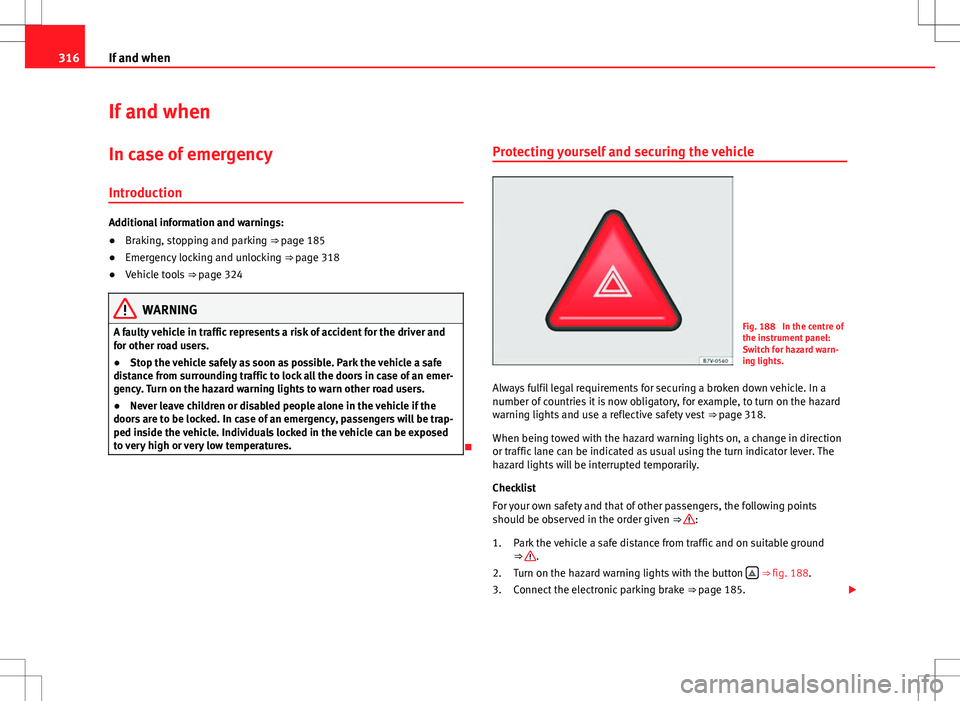
Fig. 188 In the centre of
the instrument panel:
Switch for hazard warn-
ing lights.
Always fulfil legal requirements for securing a broken down vehicle. In a
number of countries it is now obligatory, for example, to turn on the hazard
warning lights and use a reflective safety vest ⇒ page 318.
When being towed with the hazard warning lights on, a change in direction
or traffic lane can be indicated as usual using the turn indicator lever. The
hazard lights will be interrupted temporarily.
Checklist
For your own safety and that of other passengers, the following points
should be observed in the order given ⇒
:
Park the vehicle a safe distance from traffic and on suitable ground
⇒
.
Turn on the hazard warning lights with the button ⇒
fig. 188.
Connect the electronic parking brake ⇒ page 185.
1.
2.
3.
Page 320 of 388
318If and when
First aid kit, warning triangle, reflective vests and fire
extinguishers*
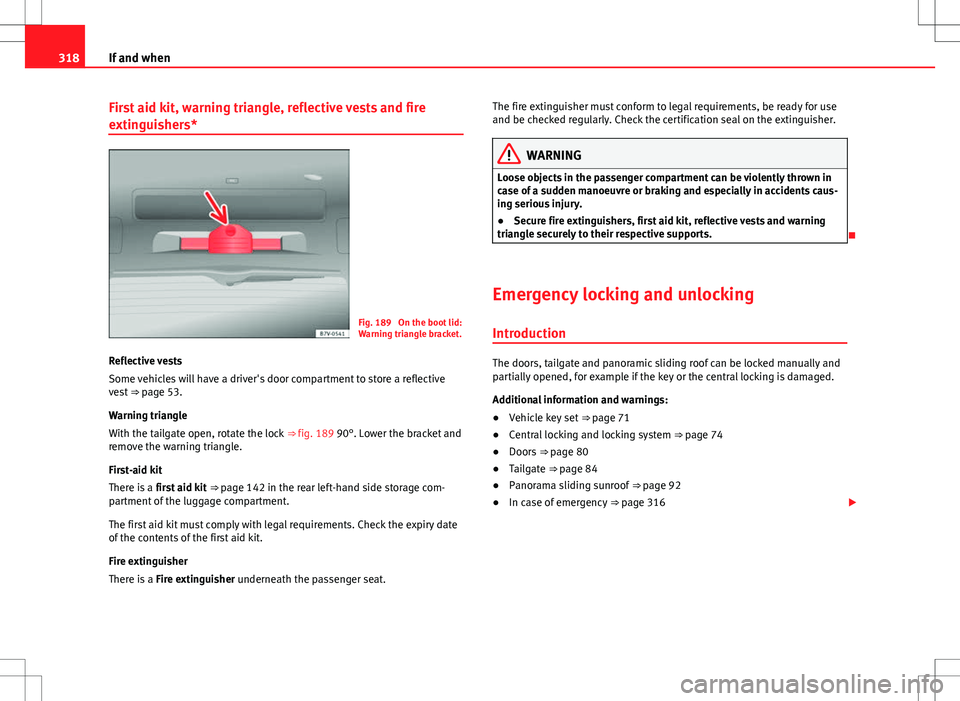
Fig. 189 On the boot lid:
Warning triangle bracket.
Reflective vests
Some vehicles will have a driver's door compartment to store a reflective
vest ⇒ page 53.
Warning triangle
With the tailgate open, rotate the lock ⇒ fig. 189 90°. Lower the bracket and
remove the warning triangle.
First-aid kit
There is a first aid kit ⇒ page 142 in the rear left-hand side storage com-
partment of the luggage compartment.
The first aid kit must comply with legal requirements. Check the expiry date
of the contents of the first aid kit.
Fire extinguisher
There is a Fire extinguisher underneath the passenger seat. The fire extinguisher must conform to legal requirements, be ready for use
and be checked regularly. Check the certification seal on the extinguisher.
WARNING
Loose objects in the passenger compartment can be violently thrown in
case of a sudden manoeuvre or braking and especially in accidents caus-
ing serious injury.
● Secure fire extinguishers, first aid kit, reflective vests and warning
triangle securely to their respective supports.
Emergency locking and unlocking Introduction
The doors, tailgate and panoramic sliding roof can be locked manually and
partially opened, for example if the key or the central locking is damaged.
Additional information and warnings:
● Vehicle key set ⇒ page 71
● Central locking and locking system ⇒ page 74
● Doors ⇒ page 80
● Tailgate ⇒ page 84
● Panorama sliding sunroof ⇒ page 92
● In case of emergency ⇒ page 316
Page 325 of 388
323
If and when
Manually unlocking the gear selection lever
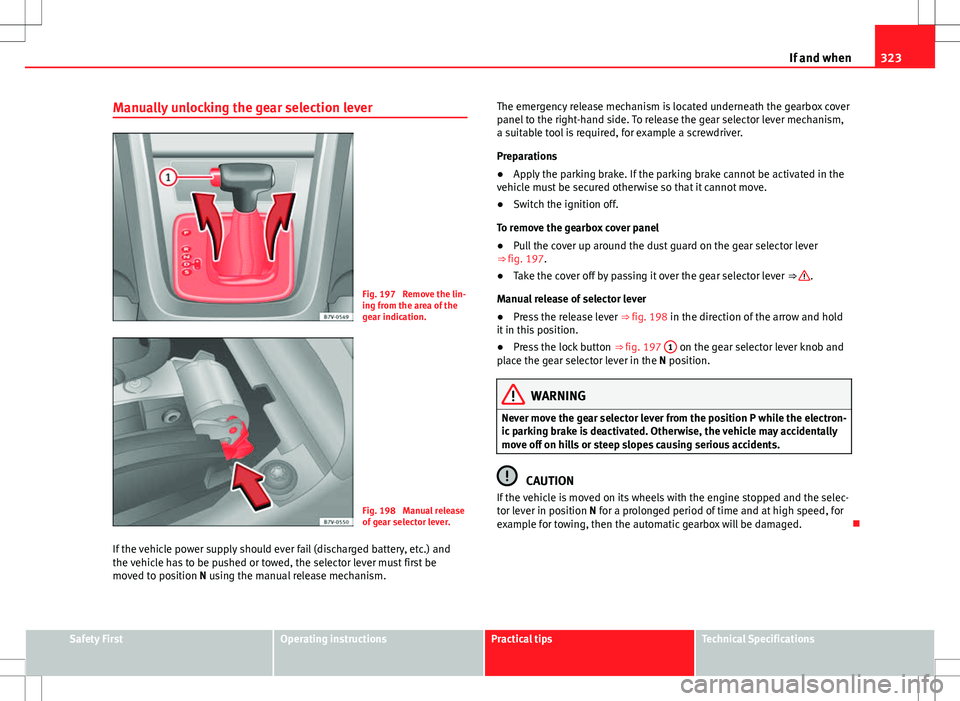
Fig. 197 Remove the lin-
ing from the area of the
gear indication.
Fig. 198 Manual release
of gear selector lever.
If the vehicle power supply should ever fail (discharged battery, etc.) and
the vehicle has to be pushed or towed, the selector lever must first be
moved to position N using the manual release mechanism. The emergency release mechanism is located underneath the gearbox cover
panel to the right-hand side. To release the gear selector lever mechanism,
a suitable tool is required, for example a screwdriver.
Preparations
●
Apply the parking brake. If the parking brake cannot be activated in the
vehicle must be secured otherwise so that it cannot move.
● Switch the ignition off.
To remove the gearbox cover panel
● Pull the cover up around the dust guard on the gear selector lever
⇒ fig. 197.
● Take the cover off by passing it over the gear selector lever ⇒
.
Manual release of selector lever
● Press the release lever ⇒ fig. 198 in the direction of the arrow and hold
it in this position.
● Press the lock button ⇒ fig. 197 1
on the gear selector lever knob and
place the gear selector lever in the N position.
WARNING
Never move the gear selector lever from the position P while the electron-
ic parking brake is deactivated. Otherwise, the vehicle may accidentally
move off on hills or steep slopes causing serious accidents.
CAUTION
If the vehicle is moved on its wheels with the engine stopped and the selec-
tor lever in position N for a prolonged period of time and at high speed, for
example for towing, then the automatic gearbox will be damaged.
Safety FirstOperating instructionsPractical tipsTechnical Specifications
Page 326 of 388
324If and when
Tools*
Introduction
When securing the vehicle in case of a breakdown, please note the legal re-
quirements for each country.
Additional information and warnings:
● Working in the engine compartment ⇒ page 279
● Change wheel ⇒ page 309
● In case of emergency ⇒ page 316
WARNING
Loose objects in the passenger compartment can be violently fired
through the compartment in case of a sudden manoeuvre or braking and
especially in accidents causing serious injury.
● Make sure that the vehicle tools are stored safely in the luggage com-
partment.
WARNING
Unsuitable or damaged on-board tools can cause injury or accidents.
● Never work with inappropriate or damaged tools.
Location
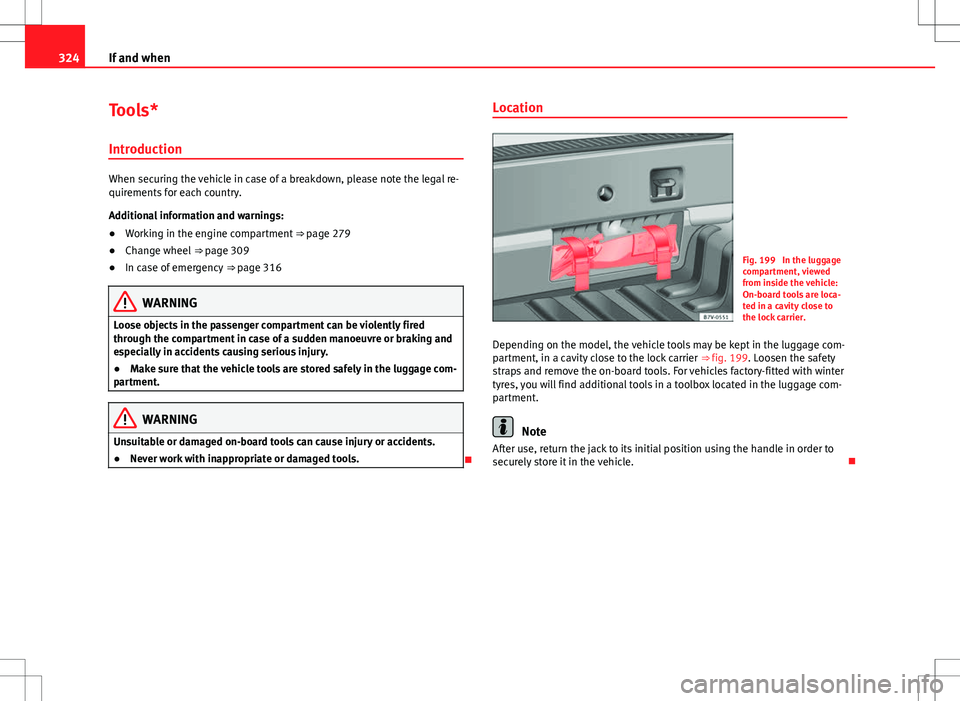
Fig. 199 In the luggage
compartment, viewed
from inside the vehicle:
On-board tools are loca-
ted in a cavity close to
the lock carrier.
Depending on the model, the vehicle tools may be kept in the luggage com-
partment, in a cavity close to the lock carrier ⇒ fig. 199. Loosen the safety
straps and remove the on-board tools. For vehicles factory-fitted with winter
tyres, you will find additional tools in a toolbox located in the luggage com-
partment.
Note
After use, return the jack to its initial position using the handle in order to
securely store it in the vehicle.
Page 339 of 388
337
If and when
To replace the tail light bulbs
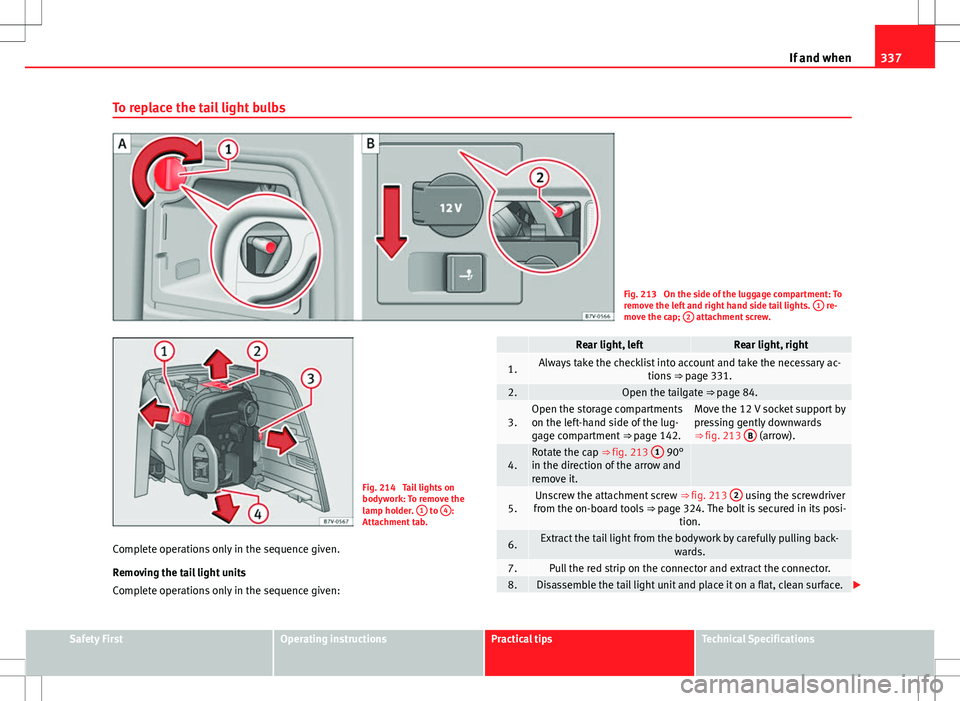
Fig. 213 On the side of the luggage compartment: To
remove the left and right hand side tail lights. 1 re-
move the cap; 2 attachment screw.
Fig. 214 Tail lights on
bodywork: To remove the
lamp holder. 1
to 4:
Attachment tab.
Complete operations only in the sequence given.
Removing the tail light units
Complete operations only in the sequence given:
Rear light, leftRear light, right
1.Always take the checklist into account and take the necessary ac- tions ⇒ page 331.
2.Open the tailgate ⇒ page 84.
3.Open the storage compartments
on the left-hand side of the lug-
gage compartment ⇒ page 142.Move the 12 V socket support by
pressing gently downwards
⇒ fig. 213 B
(arrow).
4.Rotate the cap ⇒ fig. 213 1 90°
in the direction of the arrow and
remove it.
5.Unscrew the attachment screw ⇒ fig. 213 2 using the screwdriver
from the on-board tools ⇒ page 324. The bolt is secured in its posi-
tion.
6.Extract the tail light from the bodywork by carefully pulling back- wards.
7.Pull the red strip on the connector and extract the connector.8.Disassemble the tail light unit and place it on a flat, clean surface.
Safety FirstOperating instructionsPractical tipsTechnical Specifications
Page 340 of 388
338If and when
To change the bulb
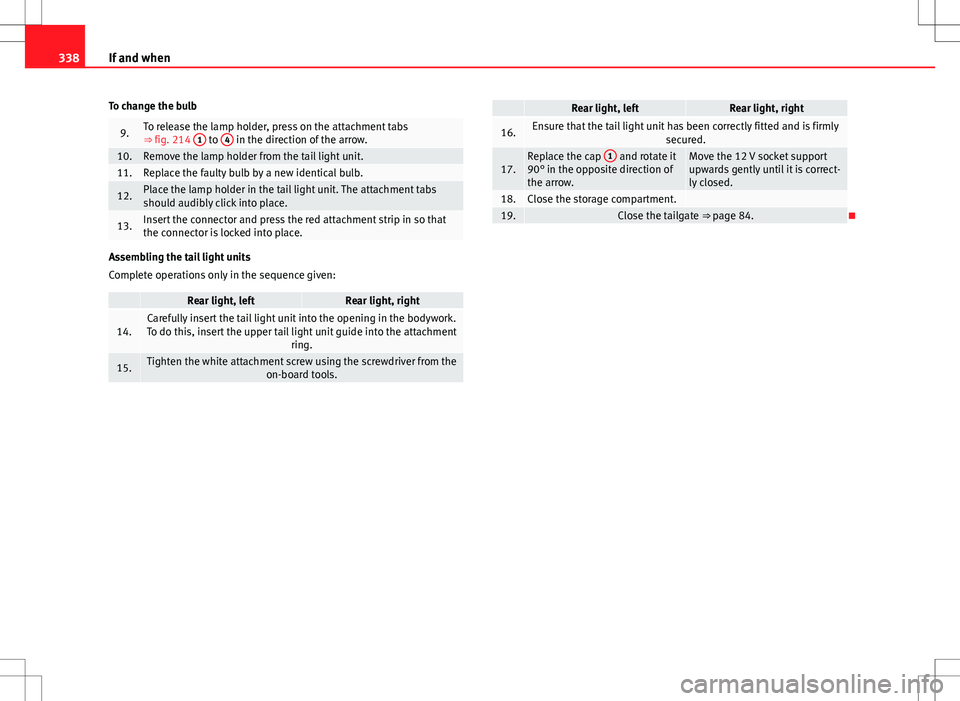
9.To release the lamp holder, press on the attachment tabs
⇒ fig. 214 1 to 4 in the direction of the arrow.10.Remove the lamp holder from the tail light unit.11.Replace the faulty bulb by a new identical bulb.
12.Place the lamp holder in the tail light unit. The attachment tabs
should audibly click into place.
13.Insert the connector and press the red attachment strip in so that
the connector is locked into place.
Assembling the tail light units
Complete operations only in the sequence given:
Rear light, leftRear light, right
14.Carefully insert the tail light unit into the opening in the bodywork.
To do this, insert the upper tail light unit guide into the attachment ring.
15.Tighten the white attachment screw using the screwdriver from theon-board tools.
Rear light, leftRear light, right
16.Ensure that the tail light unit has been correctly fitted and is firmly secured.
17.Replace the cap 1 and rotate it
90° in the opposite direction of
the arrow.Move the 12 V socket support
upwards gently until it is correct-
ly closed.
18.Close the storage compartment. 19.Close the tailgate ⇒ page 84.
Page 347 of 388
345
If and when
Instructions for tow starting
In general, the vehicle should not be started by towing. Jump-starting is
much more preferable ⇒ page 341.
For technical reasons, the following vehicles can not be tow started:
● Vehicles with an automatic gearbox.
● Vehicles with an electronic parking brake, given that it is possible that
the brake will not be disengaged.
● If the vehicle battery is flat, it is possible that the engine control units do
not operate correctly.
However, if your vehicle must absolutely be tow-started (manual gearbox):
● Engage the 2nd or 3rd gear.
● Keep the clutch pressed down.
● Switch on the ignition and the hazard warning lights.
● Release the clutch when both vehicles are moving.
● As soon as the engine starts, press the clutch and move the gear lever
into neutral. This helps to prevent a collision with the towing vehicle.
CAUTION
When tow-starting, fuel could enter the catalytic converter and damage it.
Towing instructions
Tow-rope or tow-bar
When towing, the tow bar is the safest and vehicle friendly way. You should
only use a tow-rope if you do not have a tow-bar. A tow-rope should be slightly elastic to avoid damage to both vehicles. It is
advisable to use a tow-rope made of synthetic fibre or similarly elastic mate-
rial.
Only secure the tow rope or tow bar to the tow ring or specially designed
fitting.
Vehicles with a
factory fitted towing device , can only be used for towing
with a tow-bar, specially designed to fit on a tow hitch ball ⇒ page 237.
Towing vehicles with an automatic gearbox
Note the following for a towed vehicle:
● Make sure the gear selector lever is in the N position.
● Do not drive faster than 50 km/h (30 mph) when towing a vehicle.
● Do not tow further than 50 km (30 miles).
● If a breakdown truck is used, the vehicle must be towed with the front
wheels raised. Note the following instructions for towing four wheel drive
vehicles.
Instructions for towing four-wheel-drive vehicles
Four wheel drive vehicles can be towed using a toolbar or tow rope. If the
vehicle is towed with the front or rear axle raised, the engine must be turned
off to avoid transmission damage.
For vehicles with a double clutched DSG ®
(direct shift gearbox) the instruc-
tions for towing vehicles with an automatic gearbox apply ⇒ page 345.
Situations in which the vehicle should not be towed
In the following cases, the vehicle should not be towed but transported on a
trailer or special vehicle:
● If the vehicle gearbox does not contain lubricant due to a fault.
● If the vehicle battery is flat and, as a result, the electronic steering lock
and electronic parking brake cannot be disengaged if applied.
● If the vehicle to be towed has an automatic gearbox and the distance to
be covered is greater than 50 km (30 miles).
Safety FirstOperating instructionsPractical tipsTechnical Specifications
Page 373 of 388
Brake assist systems . . . . . . . . . . . . . . . . . . . . 191
Brake assist system (BAS) . . . . . . . . . . . . . . . . 192
Brake fluid . . . . . . . . . . . . . . . . . . . . . . . . . . . . 193Specification . . . . . . . . . . . . . . . . . . . . . . . . 194
Brakes Brake assist systems . . . . . . . . . . . . . . . . . 191
Brake fluid . . . . . . . . . . . . . . . . . . . . . . . . . 193
Brake fluid level . . . . . . . . . . . . . . . . . . . . . 194
Brake pads . . . . . . . . . . . . . . . . . . . . . . . . . 189
Changing the brake fluid . . . . . . . . . . . . . . 194
Control lamp . . . . . . . . . . . . . . . . . . . . . . . . 186
Emergency brake indicator in case of sud-den braking . . . . . . . . . . . . . . . . . . . . . . . 317
Running-in brake pads . . . . . . . . . . . . . . . . 189
Warning lamp . . . . . . . . . . . . . . . . . . . . . . . 186
Brake servo . . . . . . . . . . . . . . . . . . . . . . . . 189, 191
Brake system Malfunction . . . . . . . . . . . . . . . . . . . . . . . . 189
Brake systems . . . . . . . . . . . . . . . . . . . . . . . . . 191
Braking assist . . . . . . . . . . . . . . . . . . . . . . . . . . 192 Brake assist system (BAS) . . . . . . . . . . . . . 192
Breakdown Securing the vehicle . . . . . . . . . . . . . . . . . 316
Bulb fault See changing bulbs . . . . . . . . . . . . . . . . . . 330
C
Card compartments . . . . . . . . . . . . . . . . . . . . . 145
Care See "Care of your vehicle" . . . . . . . . . . . . . 246
Vehicle interior . . . . . . . . . . . . . . . . . . . . . . 253 Care of your vehicle
Exterior . . . . . . . . . . . . . . . . . . . . . . . . . . . . 246
Caring for paintwork . . . . . . . . . . . . . . . . . . . . . 251
Carrier system . . . . . . . . . . . . . . . . . . . . . . . . . . 139
Catalytic converter . . . . . . . . . . . . . . . . . . . . . . 233 Malfunction . . . . . . . . . . . . . . . . . . . . . . . . 233
Warning lamp . . . . . . . . . . . . . . . . . . . . . . . 232
CD changer . . . . . . . . . . . . . . . . . . . . . . . . 142, 149
Central locking . . . . . . . . . . . . . . . . . . . . . . . 74, 77 Antitheft alarm . . . . . . . . . . . . . . . . . . . . . . . 78
Locking/unlocking the vehicle . . . . . . . . . . 76
Central locking system After airbag deployment . . . . . . . . . . . . . . . 75
Description . . . . . . . . . . . . . . . . . . . . . . . . . . 75
Opening doors individually . . . . . . . . . . . . . 75
Centre armrest . . . . . . . . . . . . . . . . . . . . . . . . . 126
Changing Windscreen wiper blades . . . . . . . . . . . . . 250
Changing a wheel . . . . . . . . . . . . . . . . . . . . . . 309 Changing a wheel . . . . . . . . . . . . . . . . . . . 315
Preparations . . . . . . . . . . . . . . . . . . . . . . . . 310
Raising the vehicle . . . . . . . . . . . . . . . . . . . 313
Wheel bolts . . . . . . . . . . . . . . . . . . . . . . . . . 311
Changing bulbs . . . . . . . . . . . . . . . . . . . . . . . . 330 Bodywork . . . . . . . . . . . . . . . . . . . . . . . . . . 337
Checklist . . . . . . . . . . . . . . . . . . . . . . . . . . . 331
Front bumper . . . . . . . . . . . . . . . . . . . . . . . 335
Halogen headlights . . . . . . . . . . . . . . . . . . 332
Indicator . . . . . . . . . . . . . . . . . . . . . . . . . . . 330
Initial operations . . . . . . . . . . . . . . . . . . . . 331
Number plate light . . . . . . . . . . . . . . . . . . . 339
Sea changing bulbs . . . . . . . . . . . . . . . . . . 330 Tailgate . . . . . . . . . . . . . . . . . . . . . . . . . . . . 336
Tail lights . . . . . . . . . . . . . . . . . . . . . . 336, 337
Xenon headlights . . . . . . . . . . . . . . . . . . . . 334
Changing gear . . . . . . . . . . . . . . . . . . . . . . . . . 176 Automatic gearbox . . . . . . . . . . . . . . . . . . . 180
Engaging gears (manual gearbox) . . . . . . 179
Manual gearbox . . . . . . . . . . . . . . . . . . . . . 179
Manually unlocking the gear selection lev-er . . . . . . . . . . . . . . . . . . . . . . . . . . . . . . . 323
Selecting gears (automatic gearbox) . . . . 180
Warning and control lamps . . . . . . . . . . . . 177
Changing gears Gear recommendation . . . . . . . . . . . . . . . . 184
Tiptronic . . . . . . . . . . . . . . . . . . . . . . . . . . . 182
Changing the battery of the vehicle key . . . . . . . . . . . . . . . . . . . . . 73
Changing the wheel After changing the wheel . . . . . . . . . . . . . . 315
Checking Tyre pressures . . . . . . . . . . . . . . . . . . . . . . . 302
Checking the oil level . . . . . . . . . . . . . . . . . . . . 285
Check list . . . . . . . . . . . . . . . . . . . . . . . . . . . . . . . 7
Checklist Before working in the engine compart-ment . . . . . . . . . . . . . . . . . . . . . . . . . . . . . 281
Changing bulbs . . . . . . . . . . . . . . . . . . . . . 331
In case of an emergency . . . . . . . . . . . . . . 316
Check list Preparations for changing a wheel . . . . . . 310
Raising the vehicle with the jack . . . . . . . . 314
Checklist Refilling precautions . . . . . . . . . . . . . . . . . 271
Seat belts . . . . . . . . . . . . . . . . . . . . . . . . . . . 21
371
Index
Page 374 of 388
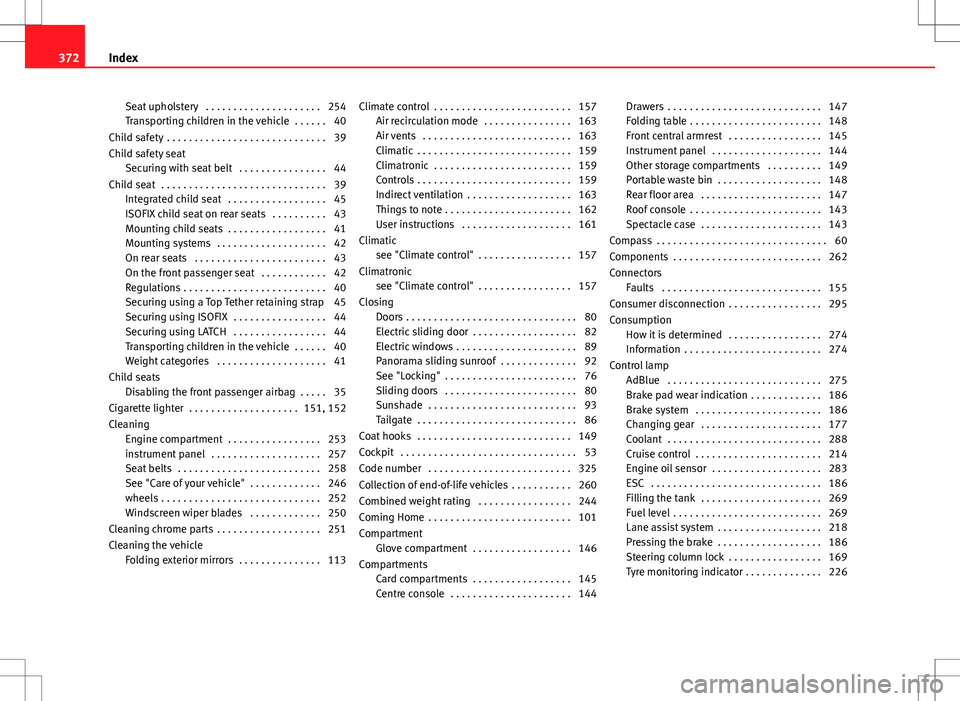
Seat upholstery . . . . . . . . . . . . . . . . . . . . . 254
Transporting children in the vehicle . . . . . . 40
Child safety . . . . . . . . . . . . . . . . . . . . . . . . . . . . . 39
Child safety seat Securing with seat belt . . . . . . . . . . . . . . . . 44
Child seat . . . . . . . . . . . . . . . . . . . . . . . . . . . . . . 39 Integrated child seat . . . . . . . . . . . . . . . . . . 45
ISOFIX child seat on rear seats . . . . . . . . . . 43
Mounting child seats . . . . . . . . . . . . . . . . . . 41
Mounting systems . . . . . . . . . . . . . . . . . . . . 42
On rear seats . . . . . . . . . . . . . . . . . . . . . . . . 43
On the front passenger seat . . . . . . . . . . . . 42
Regulations . . . . . . . . . . . . . . . . . . . . . . . . . . 40
Securing using a Top Tether retaining strap 45
Securing using ISOFIX . . . . . . . . . . . . . . . . . 44
Securing using LATCH . . . . . . . . . . . . . . . . . 44
Transporting children in the vehicle . . . . . . 40
Weight categories . . . . . . . . . . . . . . . . . . . . 41
Child seats Disabling the front passenger airbag . . . . . 35
Cigarette lighter . . . . . . . . . . . . . . . . . . . . 151, 152
Cleaning Engine compartment . . . . . . . . . . . . . . . . . 253
instrument panel . . . . . . . . . . . . . . . . . . . . 257
Seat belts . . . . . . . . . . . . . . . . . . . . . . . . . . 258
See "Care of your vehicle" . . . . . . . . . . . . . 246
wheels . . . . . . . . . . . . . . . . . . . . . . . . . . . . . 252
Windscreen wiper blades . . . . . . . . . . . . . 250
Cleaning chrome parts . . . . . . . . . . . . . . . . . . . 251
Cleaning the vehicle Folding exterior mirrors . . . . . . . . . . . . . . . 113 Climate control . . . . . . . . . . . . . . . . . . . . . . . . . 157
Air recirculation mode . . . . . . . . . . . . . . . . 163
Air vents . . . . . . . . . . . . . . . . . . . . . . . . . . . 163
Climatic . . . . . . . . . . . . . . . . . . . . . . . . . . . . 159
Climatronic . . . . . . . . . . . . . . . . . . . . . . . . . 159
Controls . . . . . . . . . . . . . . . . . . . . . . . . . . . . 159
Indirect ventilation . . . . . . . . . . . . . . . . . . . 163
Things to note . . . . . . . . . . . . . . . . . . . . . . . 162
User instructions . . . . . . . . . . . . . . . . . . . . 161
Climatic see "Climate control" . . . . . . . . . . . . . . . . . 157
Climatronic see "Climate control" . . . . . . . . . . . . . . . . . 157
Closing Doors . . . . . . . . . . . . . . . . . . . . . . . . . . . . . . . 80
Electric sliding door . . . . . . . . . . . . . . . . . . . 82
Electric windows . . . . . . . . . . . . . . . . . . . . . . 89
Panorama sliding sunroof . . . . . . . . . . . . . . 92
See "Locking" . . . . . . . . . . . . . . . . . . . . . . . . 76
Sliding doors . . . . . . . . . . . . . . . . . . . . . . . . 80
Sunshade . . . . . . . . . . . . . . . . . . . . . . . . . . . 93
Tailgate . . . . . . . . . . . . . . . . . . . . . . . . . . . . . 86
Coat hooks . . . . . . . . . . . . . . . . . . . . . . . . . . . . 149
Cockpit . . . . . . . . . . . . . . . . . . . . . . . . . . . . . . . . 53
Code number . . . . . . . . . . . . . . . . . . . . . . . . . . 325
Collection of end-of-life vehicles . . . . . . . . . . . 260
Combined weight rating . . . . . . . . . . . . . . . . . 244
Coming Home . . . . . . . . . . . . . . . . . . . . . . . . . . 101
Compartment Glove compartment . . . . . . . . . . . . . . . . . . 146
Compartments Card compartments . . . . . . . . . . . . . . . . . . 145
Centre console . . . . . . . . . . . . . . . . . . . . . . 144 Drawers . . . . . . . . . . . . . . . . . . . . . . . . . . . . 147
Folding table . . . . . . . . . . . . . . . . . . . . . . . . 148
Front central armrest . . . . . . . . . . . . . . . . . 145
Instrument panel . . . . . . . . . . . . . . . . . . . . 144
Other storage compartments . . . . . . . . . . 149
Portable waste bin . . . . . . . . . . . . . . . . . . . 148
Rear floor area . . . . . . . . . . . . . . . . . . . . . . 147
Roof console . . . . . . . . . . . . . . . . . . . . . . . . 143
Spectacle case . . . . . . . . . . . . . . . . . . . . . . 143
Compass . . . . . . . . . . . . . . . . . . . . . . . . . . . . . . . 60
Components . . . . . . . . . . . . . . . . . . . . . . . . . . . 262
Connectors Faults . . . . . . . . . . . . . . . . . . . . . . . . . . . . . 155
Consumer disconnection . . . . . . . . . . . . . . . . . 295
Consumption How it is determined . . . . . . . . . . . . . . . . . 274
Information . . . . . . . . . . . . . . . . . . . . . . . . . 274
Control lamp AdBlue . . . . . . . . . . . . . . . . . . . . . . . . . . . . 275
Brake pad wear indication . . . . . . . . . . . . . 186
Brake system . . . . . . . . . . . . . . . . . . . . . . . 186
Changing gear . . . . . . . . . . . . . . . . . . . . . . 177
Coolant . . . . . . . . . . . . . . . . . . . . . . . . . . . . 288
Cruise control . . . . . . . . . . . . . . . . . . . . . . . 214
Engine oil sensor . . . . . . . . . . . . . . . . . . . . 283
ESC . . . . . . . . . . . . . . . . . . . . . . . . . . . . . . . 186
Filling the tank . . . . . . . . . . . . . . . . . . . . . . 269
Fuel level . . . . . . . . . . . . . . . . . . . . . . . . . . . 269
Lane assist system . . . . . . . . . . . . . . . . . . . 218
Pressing the brake . . . . . . . . . . . . . . . . . . . 186
Steering column lock . . . . . . . . . . . . . . . . . 169
Tyre monitoring indicator . . . . . . . . . . . . . . 226
372 Index