seats Seat Alhambra 2013 Service Manual
[x] Cancel search | Manufacturer: SEAT, Model Year: 2013, Model line: Alhambra, Model: Seat Alhambra 2013Pages: 387, PDF Size: 6.13 MB
Page 125 of 387
123
Seats and storage
Head restraints Adjusting the head restraints
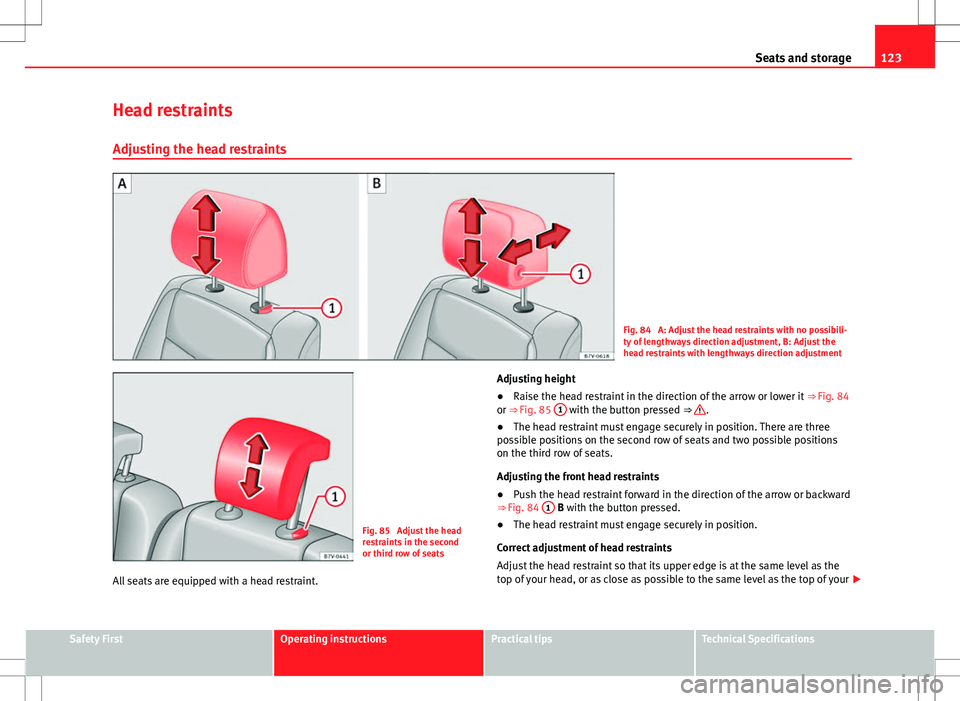
Fig. 84 A: Adjust the head restraints with no possibili-
ty of lengthways direction adjustment, B: Adjust the
head restraints with lengthways direction adjustment
Fig. 85 Adjust the head
restraints in the second
or third row of seats
All seats are equipped with a head restraint. Adjusting height
●
Raise the head restraint in the direction of the arrow or lower it ⇒ Fig. 84
or ⇒ Fig. 85 1
with the button pressed ⇒ .
● The head restraint must engage securely in position. There are three
possible positions on the second row of seats and two possible positions
on the third row of seats.
Adjusting the front head restraints
● Push the head restraint forward in the direction of the arrow or backward
⇒ Fig. 84 1
B with the button pressed.
● The head restraint must engage securely in position.
Correct adjustment of head restraints
Adjust the head restraint so that its upper edge is at the same level as the
top of your head, or as close as possible to the same level as the top of your
Safety FirstOperating instructionsPractical tipsTechnical Specifications
Page 126 of 387
124Seats and storage
head and under no circumstances below eye level. Keep the back of your
neck as close as possible to the head restraint.
Adjusting the head restraint for short people
Lower the head restraint completely, even if your head is below its upper
edge. When the head restraint is at its lowest, it is possible that a small gap
remains between it and the seat backrest.
Adjusting the head restraint for tall people
Raise the head restraint completely.
WARNING
Travelling with the head restraints removed or improperly adjusted in-
creases the risk of severe or fatal injuries in the event of accidents and
sudden braking or manoeuvres.
● Always fit and adjust the head restraint properly whenever a person
is occupying a seat.
● All vehicle occupants must correctly adjust the head restraint accord-
ing to their height to reduce the risk of back injuries in the event of an
accident. The upper edge of the head restraint must be as close as possi-
ble to the same level as the top of your head and under no circumstances
below eye level. Keep the back of your neck as close as possible to the
head restraint.
● Never adjust the head restraint while the vehicle is in motion.
Removing and fitting the head restraints
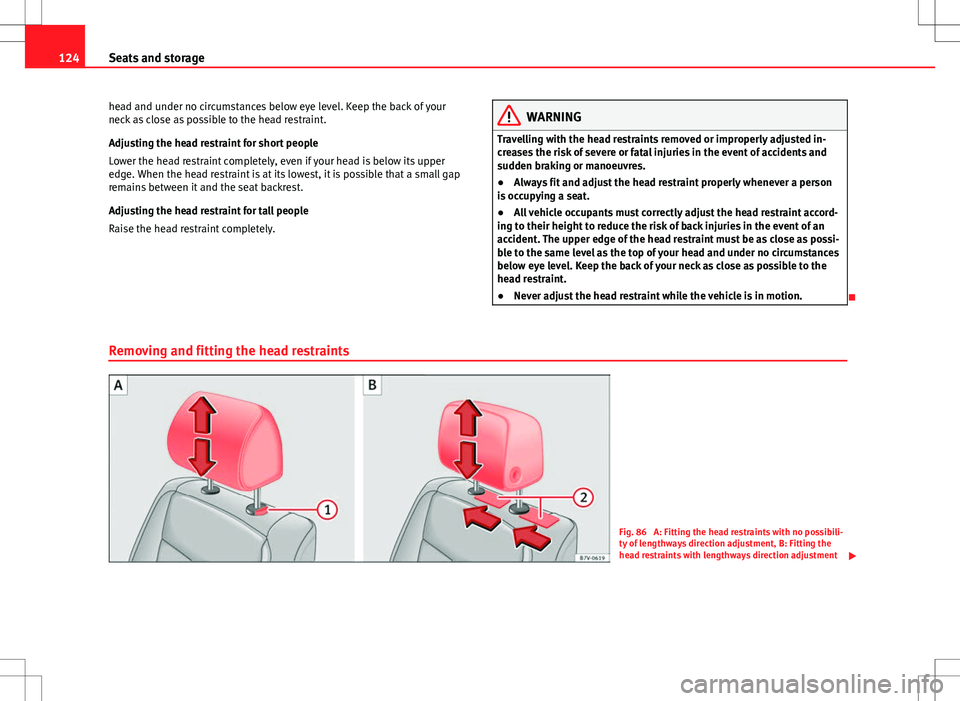
Fig. 86 A: Fitting the head restraints with no possibili-
ty of lengthways direction adjustment, B: Fitting the
head restraints with lengthways direction adjustment
Page 127 of 387
125
Seats and storage
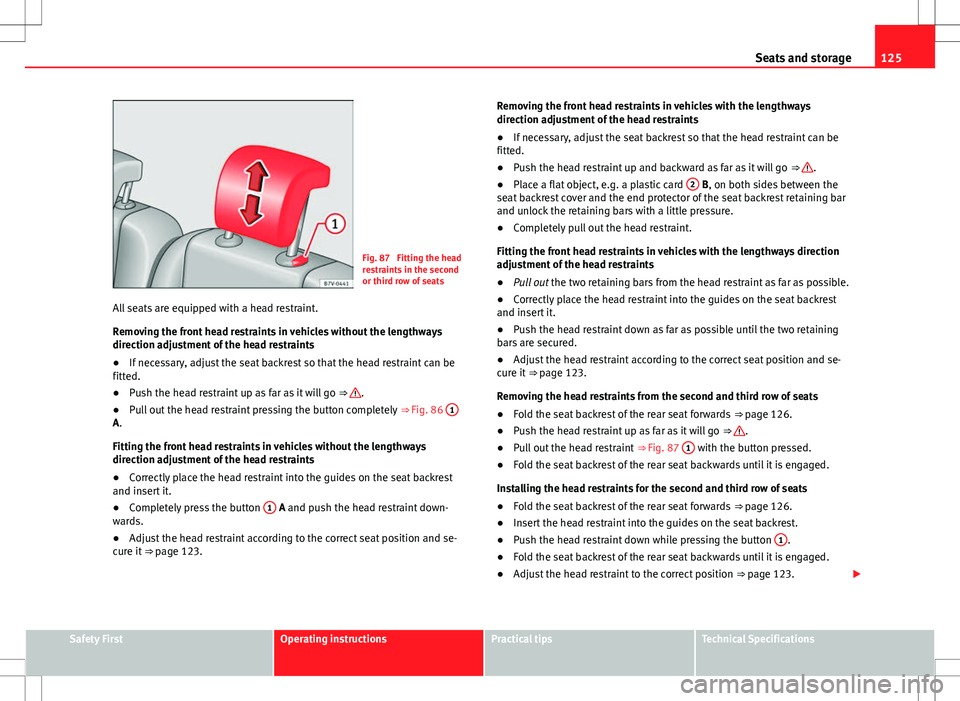
Fig. 87 Fitting the head
restraints in the second
or third row of seats
All seats are equipped with a head restraint.
Removing the front head restraints in vehicles without the lengthways
direction adjustment of the head restraints
● If necessary, adjust the seat backrest so that the head restraint can be
fitted.
● Push the head restraint up as far as it will go
⇒
.
● Pull out the head restraint pressing the button completely
⇒ Fig. 86 1
A.
Fitting the front head restraints in vehicles without the lengthways
direction adjustment of the head restraints
●
Correctly place the head restraint into the guides on the seat backrest
and insert it.
● Completely press the button 1
A and push the head restraint down-
wards.
● Adjust the head restraint according to the correct seat position and se-
cure it ⇒ page 123. Removing the front head restraints in vehicles with the lengthways
direction adjustment of the head restraints
●
If necessary, adjust the seat backrest so that the head restraint can be
fitted.
● Push the head restraint up and backward as far as it will go ⇒
.
● Place a flat object, e.g. a plastic card 2 B, on both sides between the
seat backrest cover and the end protector of the seat backrest retaining bar
and unlock the retaining bars with a little pressure.
● Completely pull out the head restraint.
Fitting the front head restraints in vehicles with the lengthways direction
adjustment of the head restraints
● Pull out the two retaining bars from the head restraint as far as possible.
● Correctly place the head restraint into the guides on the seat backrest
and insert it.
● Push the head restraint down as far as possible until the two retaining
bars are secured.
● Adjust the head restraint according to the correct seat position and se-
cure it ⇒ page 123.
Removing the head restraints from the second and third row of seats
● Fold the seat backrest of the rear seat forwards ⇒ page 126.
● Push the head restraint up as far as it will go ⇒
.
● Pull out the head restraint ⇒ Fig. 87 1 with the button pressed.
● Fold the seat backrest of the rear seat backwards until it is engaged.
Installing the head restraints for the second and third row of seats
● Fold the seat backrest of the rear seat forwards ⇒ page 126.
● Insert the head restraint into the guides on the seat backrest.
● Push the head restraint down while pressing the button 1
.
● Fold the seat backrest of the rear seat backwards until it is engaged.
● Adjust the head restraint to the correct position ⇒ page 123.
Safety FirstOperating instructionsPractical tipsTechnical Specifications
Page 128 of 387
126Seats and storage
WARNING
Travelling with the head restraints removed or improperly adjusted in-
creases the risk of severe or fatal injuries in the event of accidents and
sudden braking or manoeuvres.
● Always fit and adjust the head restraint properly whenever a person
is occupying a seat.
● Refit any removed head restraints immediately so that passengers
are properly protected.
CAUTION
On removing and fitting the head restraint, make sure the head restraint
does not hit the interior roof of the vehicle or the seat backrest of the front
seat. This could damage the interior roof and other parts of the vehicle.
Centre armrest
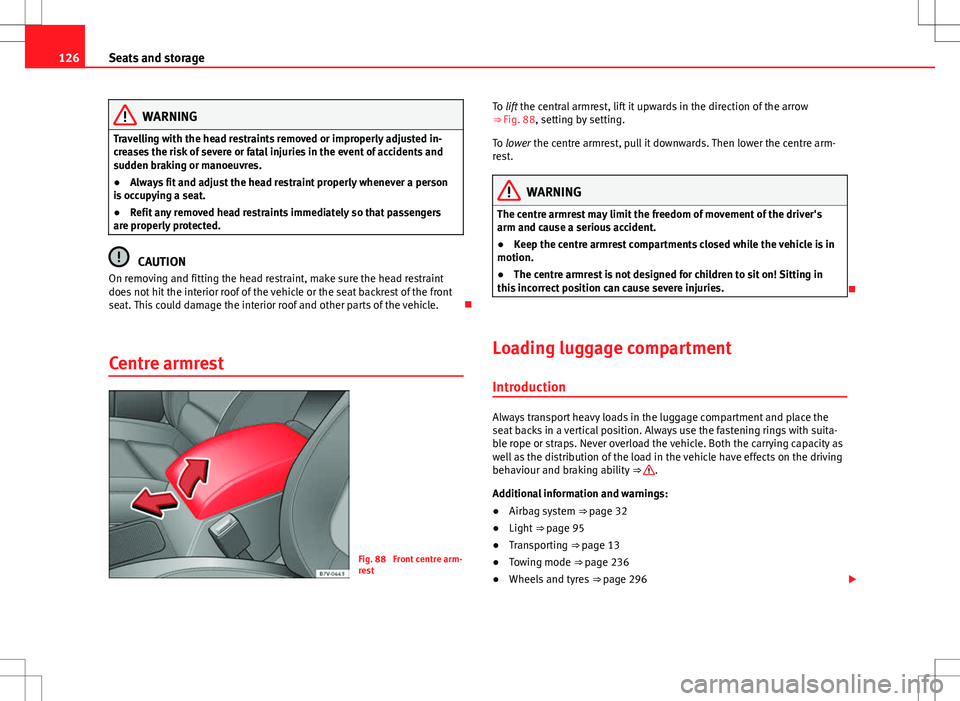
Fig. 88 Front centre arm-
rest To lift the central armrest, lift it upwards in the direction of the arrow
⇒ Fig. 88, setting by setting.
To lower the centre armrest, pull it downwards. Then lower the centre arm-
rest.
WARNING
The centre armrest may limit the freedom of movement of the driver's
arm and cause a serious accident.
● Keep the centre armrest compartments closed while the vehicle is in
motion.
● The centre armrest is not designed for children to sit on! Sitting in
this incorrect position can cause severe injuries.
Loading luggage compartment Introduction
Always transport heavy loads in the luggage compartment and place the
seat backs in a vertical position. Always use the fastening rings with suita-
ble rope or straps. Never overload the vehicle. Both the carrying capacity as
well as the distribution of the load in the vehicle have effects on the driving
behaviour and braking ability ⇒
.
Additional information and warnings:
● Airbag system ⇒ page 32
● Light ⇒ page 95
● Transporting ⇒ page 13
● Towing mode ⇒ page 236
● Wheels and tyres ⇒ page 296
Page 129 of 387
127
Seats and storage
WARNING
When the vehicle is not in use or being watched, always lock the doors
and the rear lid to reduce the risk of serious injury or death.
● Do not leave children unwatched, especially when the rear lid is open.
Children could climb into the luggage compartment, close the rear lid
from inside and be unable to escape themselves. This could lead to seri-
ous injury or death.
● Never allow children to play in or around the vehicle.
● Never transport people in the luggage compartment.
WARNING
Unsecured or incorrectly secured objects can cause serious injury in case
of a sudden manoeuvring or breaking or in case of an accident. This is es-
pecially true when objects are struck by a detonating airbag and fired
through the vehicle interior. To reduce the risks, please note the follow-
ing:
● Secure all objects in the vehicle. Always keep equipment and heavy
objects in the luggage compartment.
● Always secure objects with suitable rope or straps so that they can-
not enter the areas around the front or side airbags in case of sudden
braking or an accident.
● While driving, always keep object compartments closed.
WARNING (Continued)
● Do not place hard, heavy or sharp objects inside the vehicle interior,
in open storage compartments, the rear shelf or on the dash panel.
● Remove hard, heavy and sharp objects from clothes and pockets in-
side the vehicle and store securely.
WARNING
The transport of heavy object changes vehicle handling and increases
braking distance. Heavy loads that have not been stored or secured cor-
rectly could cause loss of control and result in serious injury.
● The vehicle handling changes when transporting heavy objects due
to a change in the centre of gravity.
● Distribute the load as uniformly and as low down on the vehicle as
possible.
● Store heavy objects in the luggage compartment as far from the rear
axle as possible.
CAUTION
● Hard objects on the rear shelf could chafe the wires of the heating ele-
ment and antenna of the rear window and cause damage.
● The side window antenna could be damaged due to chafing from ob-
jects.
Note
The ventilating slits between the heated rear window and the shelf must not
be covered so that used air can escape from the vehicle.
Safety FirstOperating instructionsPractical tipsTechnical Specifications
Page 130 of 387
128Seats and storage
Folding down rear seats to create load space
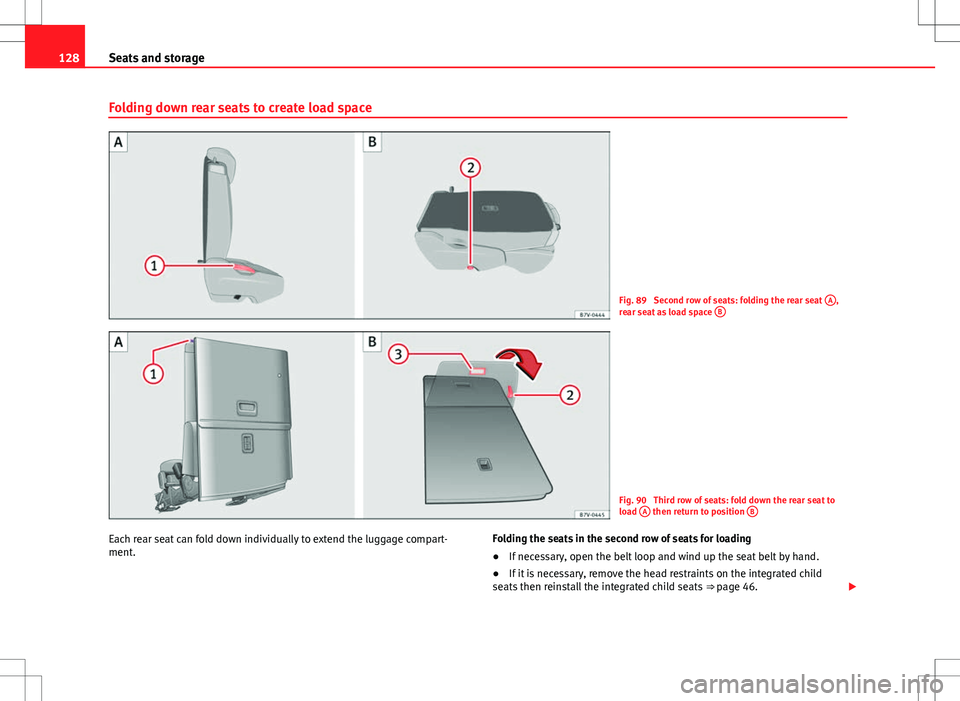
Fig. 89 Second row of seats: folding the rear seat A,
rear seat as load space B
Fig. 90 Third row of seats: fold down the rear seat to
load A then return to position B
Each rear seat can fold down individually to extend the luggage compart-
ment. Folding the seats in the second row of seats for loading
●
If necessary, open the belt loop and wind up the seat belt by hand.
● If it is necessary, remove the head restraints on the integrated child
seats then reinstall the integrated child seats ⇒ page 46.
Page 131 of 387
129
Seats and storage
● If necessary, raise the armrests.
● Remove objects from the footwell in front of and behind the rear seat
⇒
.
● Move the rear seat all the way back.
● Push the head restraint down as far as it will go ⇒ page 10.
● In the middle seat, close the drinks carrier in the rear of the centre con-
sole, if necessary.
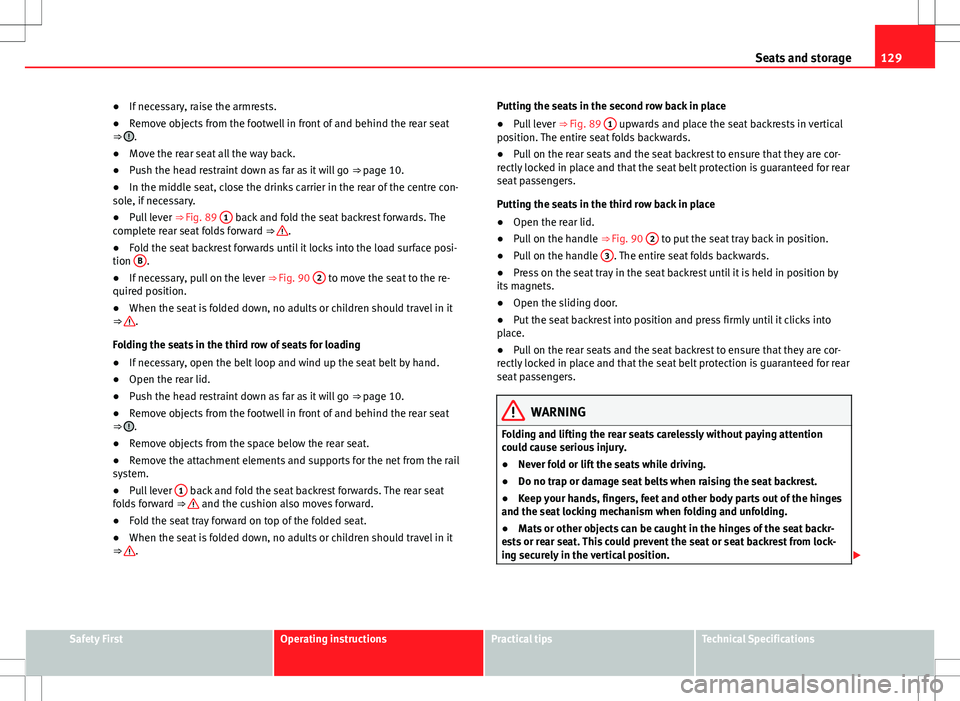
● Pull lever ⇒ Fig. 89 1
back and fold the seat backrest forwards. The
complete rear seat folds forward ⇒ .
● Fold the seat backrest forwards until it locks into the load surface posi-
tion B
.
● If necessary, pull on the lever ⇒ Fig. 90 2 to move the seat to the re-
quired position.
● When the seat is folded down, no adults or children should travel in it
⇒
.
Folding the seats in the third row of seats for loading
● If necessary, open the belt loop and wind up the seat belt by hand.
● Open the rear lid.
● Push the head restraint down as far as it will go ⇒ page 10.
● Remove objects from the footwell in front of and behind the rear seat
⇒
.
● Remove objects from the space below the rear seat.
● Remove the attachment elements and supports for the net from the rail
system.
● Pull lever 1
back and fold the seat backrest forwards. The rear seat
folds forward ⇒ and the cushion also moves forward.
● Fold the seat tray forward on top of the folded seat.
● When the seat is folded down, no adults or children should travel in it
⇒
. Putting the seats in the second row back in place
●
Pull lever ⇒ Fig. 89 1
upwards and place the seat backrests in vertical
position. The entire seat folds backwards.
● Pull on the rear seats and the seat backrest to ensure that they are cor-
rectly locked in place and that the seat belt protection is guaranteed for rear
seat passengers.
Putting the seats in the third row back in place
● Open the rear lid.
● Pull on the handle ⇒ Fig. 90 2
to put the seat tray back in position.
● Pull on the handle 3. The entire seat folds backwards.
● Press on the seat tray in the seat backrest until it is held in position by
its magnets.
● Open the sliding door.
● Put the seat backrest into position and press firmly until it clicks into
place.
● Pull on the rear seats and the seat backrest to ensure that they are cor-
rectly locked in place and that the seat belt protection is guaranteed for rear
seat passengers.
WARNING
Folding and lifting the rear seats carelessly without paying attention
could cause serious injury.
● Never fold or lift the seats while driving.
● Do no trap or damage seat belts when raising the seat backrest.
● Keep your hands, fingers, feet and other body parts out of the hinges
and the seat locking mechanism when folding and unfolding.
● Mats or other objects can be caught in the hinges of the seat backr-
ests or rear seat. This could prevent the seat or seat backrest from lock-
ing securely in the vertical position.
Safety FirstOperating instructionsPractical tipsTechnical Specifications
Page 132 of 387
130Seats and storage
WARNING (Continued)
● All seat backrests must engage correctly for the seat belts on the rear
seats to work properly. When the seat backrest of an occupied seat is not
correctly locked in place, the passenger can be thrust forward with the
seat backrest in case of sudden braking, sudden manoeuvres or an acci-
dent.
● No seat must be occupied if the seat backrest or seat is folded or not
correctly engaged.
CAUTION
● Before folding the seat backrest of the rear seat, adjust the front seats
so that the head restraint or seat backrest do not hit them when it is folded.
● Objects placed in the footrest area in front of and behind the rear seats
can be damaged when seats are folded down or put back into position. Re-
move any objects in the way before folding seats down or repositioning
them. ●
Objects placed in the moulding on the back of the third row of seats can
be damaged when folding down the seats or putting them back into posi-
tion. Remove any objects in the way before folding seats down or reposi-
tioning them.
● The attachment elements and supports for the net partition placed on
the rail system can be damaged when folding down seats from the third row
or putting them back into position and these can also damage the seats
themselves. Before folding down or repositioning the seats, remove the at-
tachment elements and supports for the net from the rail system.
Page 133 of 387
131
Seats and storage
Rear shelf*
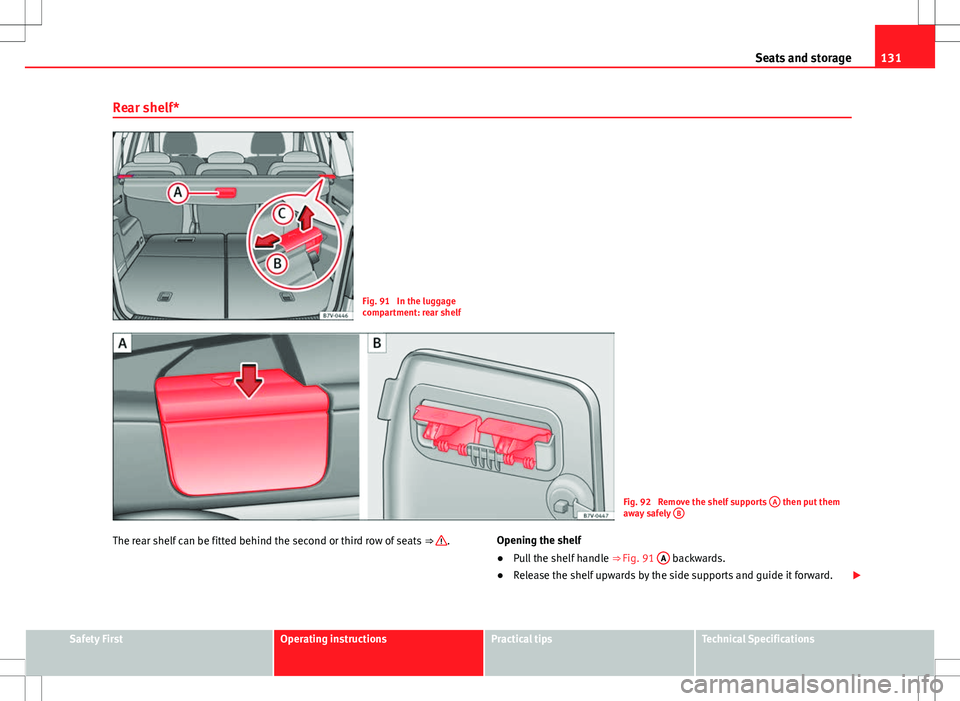
Fig. 91 In the luggage
compartment: rear shelf
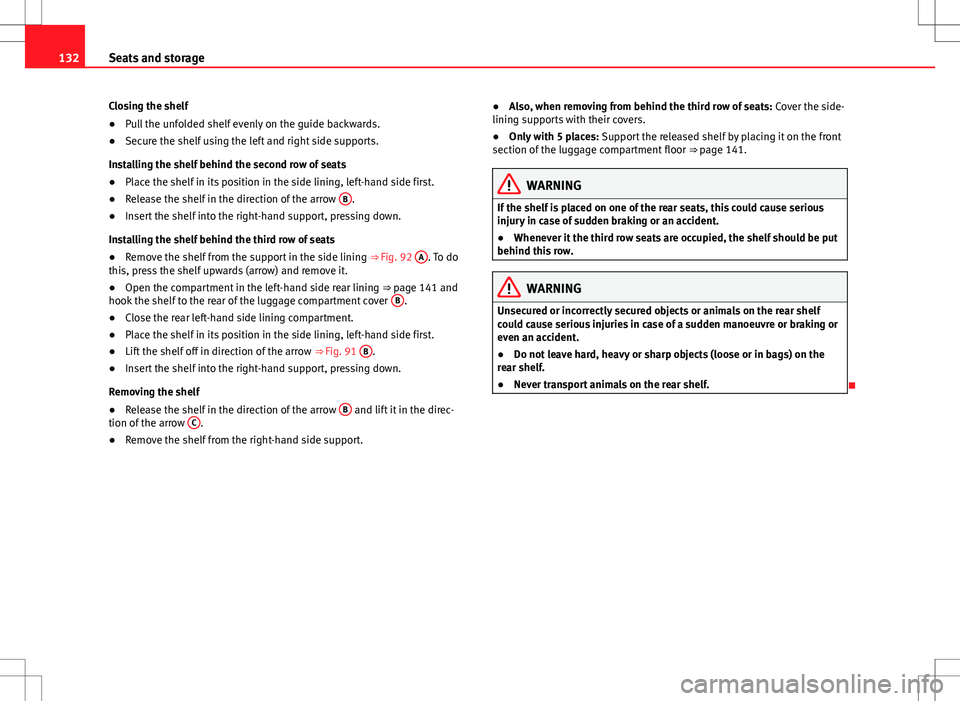
Fig. 92 Remove the shelf supports A then put them
away safely B
The rear shelf can be fitted behind the second or third row of seats
⇒ .Opening the shelf
●
Pull the shelf handle ⇒ Fig. 91 A backwards.
● Release the shelf upwards by the side supports and guide it forward.
Safety FirstOperating instructionsPractical tipsTechnical Specifications
Page 134 of 387
132Seats and storage
Closing the shelf
● Pull the unfolded shelf evenly on the guide backwards.
● Secure the shelf using the left and right side supports.
Installing the shelf behind the second row of seats
● Place the shelf in its position in the side lining, left-hand side first.
● Release the shelf in the direction of the arrow B
.
● Insert the shelf into the right-hand support, pressing down.
Installing the shelf behind the third row of seats
● Remove the shelf from the support in the side lining ⇒ Fig. 92 A
. To do
this, press the shelf upwards (arrow) and remove it.
● Open the compartment in the left-hand side rear lining ⇒ page 141 and
hook the shelf to the rear of the luggage compartment cover B
.
● Close the rear left-hand side lining compartment.
● Place the shelf in its position in the side lining, left-hand side first.
● Lift the shelf off in direction of the arrow ⇒ Fig. 91 B
.
● Insert the shelf into the right-hand support, pressing down.
Removing the shelf
● Release the shelf in the direction of the arrow B
and lift it in the direc-
tion of the arrow C.
● Remove the shelf from the right-hand side support. ●
Also, when removing from behind the third row of seats: Cover the side-
lining supports with their covers.
● Only with 5 places: Support the released shelf by placing it on the front
section of the luggage compartment floor ⇒ page 141.
WARNING
If the shelf is placed on one of the rear seats, this could cause serious
injury in case of sudden braking or an accident.
● Whenever it the third row seats are occupied, the shelf should be put
behind this row.
WARNING
Unsecured or incorrectly secured objects or animals on the rear shelf
could cause serious injuries in case of a sudden manoeuvre or braking or
even an accident.
● Do not leave hard, heavy or sharp objects (loose or in bags) on the
rear shelf.
● Never transport animals on the rear shelf.