cooling Seat Leon 5D 2011 Owner's manual
[x] Cancel search | Manufacturer: SEAT, Model Year: 2011, Model line: Leon 5D, Model: Seat Leon 5D 2011Pages: 302, PDF Size: 4.17 MB
Page 61 of 302
59
Cockpit
Needle in warning zone C
The warning lamp* ⇒ fig. 48 2 will light up if the needle is in the warning
zone. The following warning message appears on the instrument panel dis-
play 1)
. Stop the vehicle and switch off the engine. Check the coolant level
⇒ page 224 ⇒
.
Even if the coolant level is correct do not continue driving. You should ob-
tain technical assistance.
WARNING
When working in the engine compartment, always observe the safety
warnings ⇒ page 217.
CAUTION
Accessories in front of the air inlet reduce the cooling effect of the coolant.
At high outside temperatures and high engine loads, there is a risk of the
engine overheating.
Rev counter
The rev counter displays the engine speed in revolutions per
minute. The start of the red zone ⇒ fig. 32 4
indicates the maximum engine speed
operating at service temperature. However, it is advisable to change up a in-
to a higher gear, move the selector lever to D or lift your foot off the acceler-
ator before the needle reaches the red zone.
CAUTION
The rev counter needle must never enter the red zone on the scale. Risk of
engine damage.
For the sake of the environment
Changing up into higher gears sooner, following the recommended gear in-
dications ⇒ fig. 38 will help you to reduce fuel consumption, emissions and
also engine noise.
Speedometer
The speedometer is equipped with a digital odometer and a trip recorder, in
addition to a service intervals display.
During the running-in period, the instructions shown on ⇒ page 189
should be followed.
Setting the digital clock*
The digital clock is located in the instrument panel display.
– Turn the setting knob ⇒ fig. 32 5
clockwise until the first
“click” to set the hour. The hour will flash. To change the hour,
press the button.
– Turn the setting knob clockwise to the second “click” to set the
minutes. The minutes will flash. To change the minutes, press
the button.
1)
Depending on the version of the model.
Safety FirstOperating InstructionsPractical TipsTechnical Specifications
Page 150 of 302
148Air conditioning
Note
Please observe the general notes ⇒ page 155.
Heating and cooling the interior
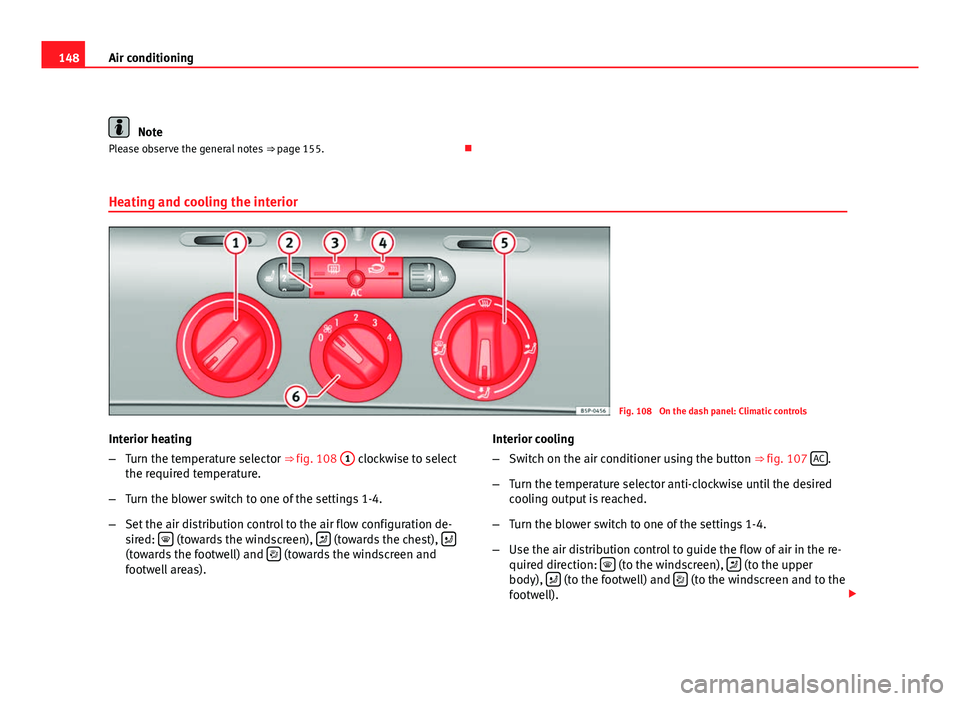
Fig. 108 On the dash panel: Climatic controls
Interior heating
– Turn the temperature selector ⇒ fig. 108 1
clockwise to select
the required temperature.
– Turn the blower switch to one of the settings 1-4.
– Set the air distribution control to the air flow configuration de-
sired:
(towards the windscreen), (towards the chest), (towards the footwell) and (towards the windscreen and
footwell areas). Interior cooling
–
Switch on the air conditioner using the button ⇒ fig. 107 AC
.
– Turn the temperature selector anti-clockwise until the desired
cooling output is reached.
– Turn the blower switch to one of the settings 1-4.
– Use the air distribution control to guide the flow of air in the re-
quired direction:
(to the windscreen), (to the upper
body), (to the footwell) and (to the windscreen and to the
footwell).
Page 152 of 302
150Air conditioning
Air recirculation mode ⇒ fig. 109
prevents strong odours in the outside
air from entering the vehicle interior, for example when passing through a
tunnel or in queuing traffic.
With low temperatures outside, the air recirculation increases the effective-
ness of the heating system by warming the air inside the vehicle rather than
the cold air from outside.
With high outside temperatures, the air recirculation increases the effective-
ness of the air conditioning system by cooling the air inside the vehicle
rather than the ambient air.
If the windscreen air output is on and the air recirculation mode is pressed,
this remains active. When the recirculation mode is on, if the air distribution towards the windscreen mode is selected, the recirculation mode is deacti-
vated. For safety reasons, the air recirculation mode should not be connec-
ted.
WARNING
In air recirculation mode, no cold air from the outside enters the vehicle
interior. If the air conditioning system is switched off, the windows can
quickly mist over. Therefore, never leave the air recirculation mode
switched on for a long time (risk of accident).
Page 156 of 302
154Air conditioning
Manual mode
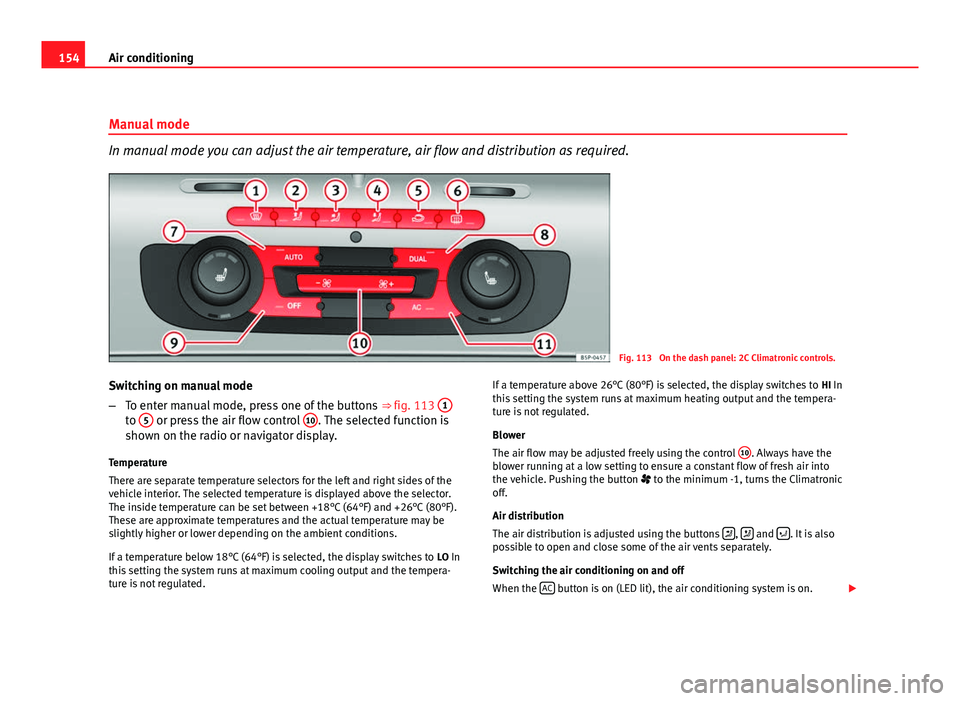
In manual mode you can adjust the air temperature, air flow and distribution as required.
Fig. 113 On the dash panel: 2C Climatronic controls.
Switching on manual mode
– To enter manual mode, press one of the buttons ⇒ fig. 113 1
to 5 or press the air flow control 10. The selected function is
shown on the radio or navigator display.
Temperature
There are separate temperature selectors for the left and right sides of the
vehicle interior. The selected temperature is displayed above the selector.
The inside temperature can be set between +18°C (64°F) and +26°C (80°F).
These are approximate temperatures and the actual temperature may be
slightly higher or lower depending on the ambient conditions.
If a temperature below 18°C (64°F) is selected, the display switches to LO In
this setting the system runs at maximum cooling output and the tempera-
ture is not regulated. If a temperature above 26°C (80°F) is selected, the display switches to
HI In
this setting the system runs at maximum heating output and the tempera-
ture is not regulated.
Blower
The air flow may be adjusted freely using the control 10
. Always have the
blower running at a low setting to ensure a constant flow of fresh air into
the vehicle. Pushing the button to the minimum -1, turns the Climatronic
off.
Air distribution
The air distribution is adjusted using the buttons
, and . It is also
possible to open and close some of the air vents separately.
Switching the air conditioning on and off
When the AC
button is on (LED lit), the air conditioning system is on.
Page 157 of 302
155
Air conditioning
When the AC
button is off (LED off), the air conditioning system is off.
When the AC
button is off, the air conditioning system is switched off to
save fuel. The temperature continues to self-regulate. The set temperature
can then only be reached if it is higher than the outside temperature.
Driver and passenger temperature control
The DUAL
button controls the synchronisation of the 2 Climatronic climate
zones.
When the DUAL
button is on (LED lit), the climate zone of the Climatronic is
personalised, for example: Driver side temperature 22°C and passenger
side temperature 23°C.
When the DUAL
button is off (LED off), the climate zone of the Climatronic is
synchronised, for example: Driver side temperature 22°C and passenger
side temperature 22°C.
If the DUAL
button is off and the passenger side temperature is changed,
the function is automatically activated.
Air recirculation mode
Air recirculation mode prevents fumes or unpleasant smells
from coming from the outside. – Press the button
⇒ fig. 113
2 to switch air recirculation
mode on or off. It is switched on if the following symbol appears
in the display .
Air recirculation mode prevents strong odours in the ambient air from enter-
ing the vehicle interior, for example when passing through a tunnel or in a
traffic jam. With low outside temperatures, the air recirculation increases the effective-
ness of the heating system by heating the air inside the vehicle rather than
the air from outside.
With high outside temperatures, the air recirculation increases the effective-
ness of the air conditioning system by cooling the air inside the vehicle
rather than the ambient air.
If the windscreen air output is on and the air recirculation mode is pressed,
this remains active. When the recirculation mode is on, if the air distribution
towards the windscreen mode is selected, the recirculation mode is deacti-
vated. For safety reasons, the air recirculation mode should not be connec-
ted.
WARNING
In air recirculation mode, no cold air from the outside enters the vehicle
interior. If the air conditioning system is switched off, the windows can
quickly mist over. Therefore, never leave the air recirculation mode
switched on for a long time (risk of accident).
General notes
Pollution filter
The pollution filter (a combined particulate filter and active carbon filter)
serves as a barrier against impurities in the outside air, including dust and
pollen.
For the air conditioner to work with maximum efficiency, the pollution filter
must be replaced at the intervals specified in the Service Schedule.
If the filter loses efficiency prematurely due to use in areas reaching very
high pollution levels, the pollen filter must be changed more frequently
than stated in the Service Schedule.
Safety FirstOperating InstructionsPractical TipsTechnical Specifications
Page 158 of 302
156Air conditioning
Air conditioner
When the air conditioning system is switched on, not only the temperature,
but also the air humidity in the vehicle interior is reduced. This improves
comfort for the vehicle occupants and prevents misting of the windows
when the ambient air humidity is high.
If the air conditioning system cannot be switched on this may be caused by
the following reasons:
● The engine is not running.
● The AC
button is disconnected.
● The outside temperature is below +3°C.
● The air conditioning system compressor has been temporarily switched
off because the engine coolant temperature is too high.
● The air conditioner fuse is faulty.
● Another fault in the vehicle. Have the air conditioner checked by a speci-
alised workshop.
CAUTION
● If you suspect that the air conditioner is damaged, switch it off with but-
ton AC
to prevent further damage and have it checked by a specialised
workshop.
● Repairs to the air conditioner require specialist knowledge and special
tools. Therefore, we recommend you to take the vehicle to a specialised
workshop.
Note
● If the humidity and temperature outside the vehicle are high, condensa-
tion can drip off the evaporator in the cooling system and so forming a pud-
dle underneath the vehicle. This is completely normal and there is no need
to suspect a leak.
● Keep the air intake slots in front of the windscreen free of snow, ice and
leaves to ensure heating and cooling are not impaired, and to prevent the
windows from misting over. ●
The air from the vents flows through the vehicle interior and is extracted
by slots designed for this purpose. Therefore, do not cover these slots with
items of clothing or other objects.
● The air conditioner operates most effectively with the windows and the
sliding/tilting sunroof* closed. However, if the temperature inside the vehi-
cle is excessive because of the sun, the air inside can be cooled faster by
opening the windows for a short time.
● Do not smoke while air recirculation mode is on, as smoke drawn into
the air conditioning system leaves a residue on the evaporator, producing a
permanent unpleasant odour.
● It is advisable to connect the air conditioning at least once a month, to
lubricate the system gaskets and prevent leaks. If a decrease in the cooling
capacity is detected, an Authorised Service Centre should be consulted to
check the system.
Page 199 of 302
197
Trailer towing
Fig. 137 Attachment
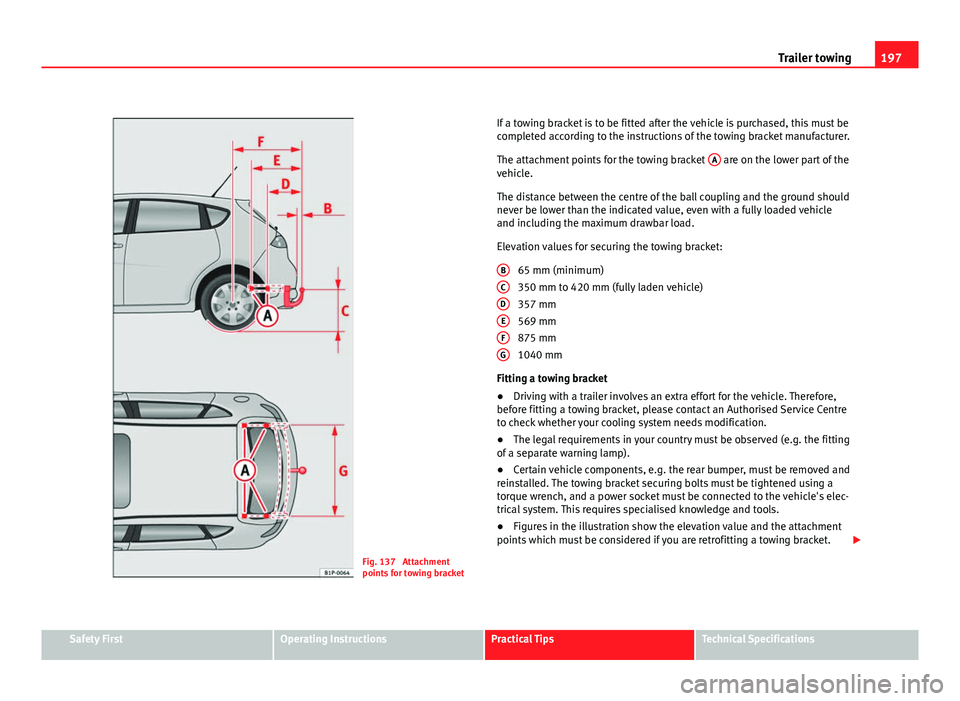
points for towing bracket If a towing bracket is to be fitted after the vehicle is purchased, this must be
completed according to the instructions of the towing bracket manufacturer.
The attachment points for the towing bracket
A
are on the lower part of the
vehicle.
The distance between the centre of the ball coupling and the ground should
never be lower than the indicated value, even with a fully loaded vehicle
and including the maximum drawbar load.
Elevation values for securing the towing bracket:
65 mm (minimum)
350 mm to 420 mm (fully laden vehicle)
357 mm
569 mm
875 mm
1040 mm
Fitting a towing bracket
● Driving with a trailer involves an extra effort for the vehicle. Therefore,
before fitting a towing bracket, please contact an Authorised Service Centre
to check whether your cooling system needs modification.
● The legal requirements in your country must be observed (e.g. the fitting
of a separate warning lamp).
● Certain vehicle components, e.g. the rear bumper, must be removed and
reinstalled. The towing bracket securing bolts must be tightened using a
torque wrench, and a power socket must be connected to the vehicle's elec-
trical system. This requires specialised knowledge and tools.
● Figures in the illustration show the elevation value and the attachment
points which must be considered if you are retrofitting a towing bracket.
B
CDEFG
Safety FirstOperating InstructionsPractical TipsTechnical Specifications
Page 220 of 302
218Checking and refilling levels
WARNING (Continued)
● Never touch the radiator fan. It is temperature controlled and could
start automatically, even when the engine has been switched off and the
key removed from the ignition!
● Do not unscrew the cap on the expansion tank when the engine is
hot. If the coolant is hot, the cooling system will be pressurised!
● Protect face, hands and arms by covering the cap with a large, thick
cloth to protect against escaping coolant and steam.
● Always make sure you have not left any objects, such as cleaning
cloths and tools, in the engine compartment.
● If you have to work underneath the vehicle, you must use suitable
stands additionally to support the vehicle, there is a risk of accident!. A
hydraulic jack is insufficient for securing the vehicle and there is a risk of
injury.
● If any work has to be performed when the engine is started or with
the engine running, there is an additional, potentially fatal, safety risk
from the rotating parts, such as the drive belts, alternator, radiator fan,
etc., and from the high-voltage ignition system. You should also observe
the following points:
–Never touch the electrical wiring of the ignition system.
– Ensure that jewellery, loose clothing and long hair do not get trap-
ped in rotating engine parts. Danger of death. Before starting any
work remove jewellery, tie back and cover hair, and wear tight-fitting
clothes.
– Never accelerate with a gear engaged without taking the necessary
precautions. The vehicle could move, even if the handbrake is ap-
plied. Danger of death.
● If work has to be carried out on the fuel system or on electrical com-
ponents, you must observe the following safety notes in addition to the
above warnings:
–Always disconnect the battery. The vehicle must be unlocked when
this is done, otherwise the alarm will be triggered.
– Do not smoke.WARNING (Continued)
– Never work near naked flames.
– Always have a fire extinguisher on hand.
CAUTION
When topping up service fluids, make sure not to mistake them. Using the
wrong fluids could cause serious malfunctions and engine damage!
For the sake of the environment
Service fluids leaks are harmful to the environment. For this reason you
should make regular checks on the ground underneath your vehicle. If you
find spots of oil or other fluids, have your vehicle inspected in a specialised
workshop.
Page 226 of 302
224Checking and refilling levels
Coolant
Coolant specifications
Coolant is a mixture of water and at least 40% coolant addi-
tive. The cooling system must be filled with a mixture of water and at least 40 %
of our coolant additive G 12+ or an additive with the specification TT-VW
774 F (it is dyed purple). This mixture provides the necessary freeze protec-
tion down to -25°C and protects the alloy parts of the cooling system
against corrosion. It also prevents scaling and raises the boiling point of the
coolant.
The concentration of coolant must always be at least 40% - even if freeze
protection is not required.
If greater freeze protection is required in very cold climates, the proportion
of the antifreeze additive G 12+ can be increased. However, the percentage
of coolant additives should not exceed 60%, as this would reduce the
freeze protection. It would also reduce the cooling effect. A mixture with
60% additive will give antifreeze protection to approx. -40°C.
WARNING
● The coolant additive is toxic. There is a toxic risk. Always keep the
coolant additive in the original container which should be stored out of
the reach of children. The same applies to coolant which you have
drained off.
● The coolant additive G 12+ must be added in sufficient quantities to
provide anti-freeze protection at the coldest ambient temperatures that
can be expected. At extremely cold outside temperatures, the coolant
could freeze, causing the vehicle to breakdown. As the heater would not
work either, there is a risk of freezing to death.
CAUTION
● Other additives may give considerably inferior corrosion protection. The
resulting corrosion in the cooling system can lead to a loss of coolant, caus-
ing serious damage to the engine.
● The coolant additive G 12+ (purple) can be mixed with the additive G 12
(red) or G 11. Never mix G12 (red colour) with G 11.
Checking the coolant level and topping up
The correct coolant level is important for fault-free function-
ing of the engine cooling system.
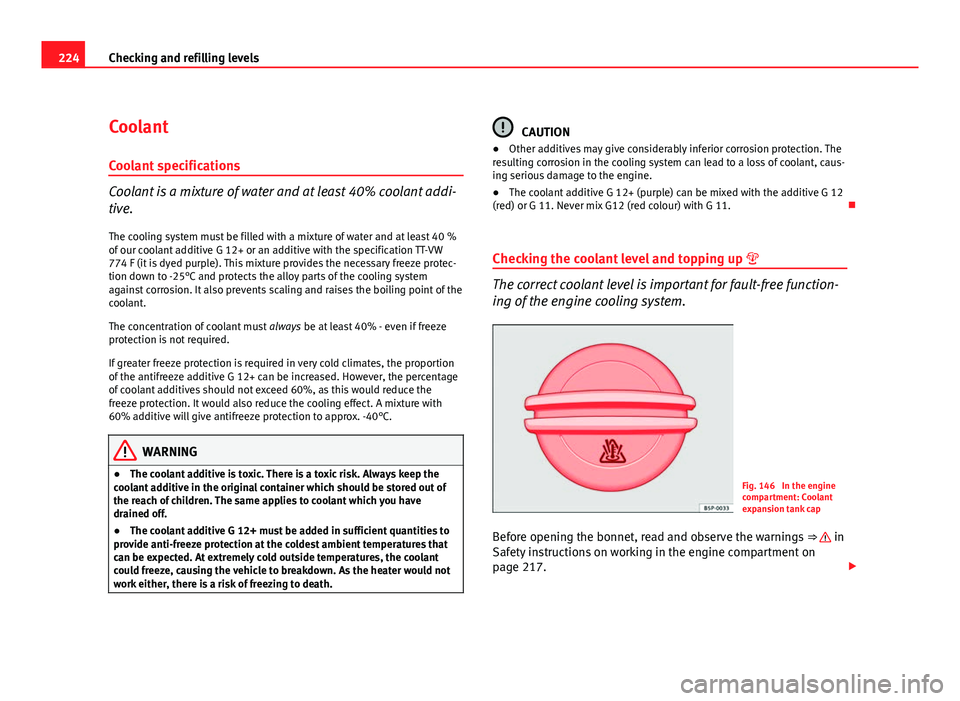
Fig. 146 In the engine
compartment: Coolant
expansion tank cap
Before opening the bonnet, read and observe the warnings ⇒
in
Safety instructions on working in the engine compartment on
page 217.
Page 227 of 302

225
Checking and refilling levels
Opening the coolant expansion tank
– Switch off the engine and allow it to cool.
– To prevent scalding, cover the cap on the expansion tank with a
thick cloth and carefully unscrew the cap ⇒
.
Checking coolant level
– Look into the open coolant expansion tank and read off the
coolant level.
– If the level is below the “MIN” mark, top up with coolant.
Topping up coolant
– Only use new coolant liquid.
– Do not fill above the “MAX” mark.
Closing the coolant expansion tank
– Screw the cap on again tightly.
The position of the coolant expansion reservoir is shown in the correspond-
ing engine compartment illustration ⇒ page 273.
Make sure that the coolant meets the required specifications ⇒ page 224.
Do not use a different type of additive if additive G 12+ is not available. In
this case use only water and bring the coolant concentration back up to the
correct level as soon as possible by putting in the specified additive
⇒ page 224.
Always top up with new coolant.
Do not fill above the “MAX” mark. Otherwise the excess coolant will be
forced out of the cooling system when the engine is hot.
The additive G 12+ (purple) may be mixed with G 12 (red) and also with G
11.
WARNING
Any work carried out in the engine compartment or on the engine must
be carried out cautiously.
● When working in the engine compartment, always observe the safety
warnings ⇒ page 217.
● When the engine is warm or hot, the cooling system is pressurised!
Do not unscrew the cap on the expansion tank when the engine is hot.
This is a burn injury risk.
CAUTION
● When mixed with other additives the colour of G 12 will change to
brown. If this occurs you should have the coolant changed immediately.
Failure to do so will result in engine damage!
● If a lot of coolant fluid has been lost, wait for the engine to cool down
before putting in cold coolant. This avoids damaging the engine. Large cool-
ant losses are an indication of leaks in the cooling system. See a special-
ised workshop immediately and have the cooling system checked. Other-
wise, there is a risk of engine damage.
Safety FirstOperating InstructionsPractical TipsTechnical Specifications