tow Seat Toledo 2013 Owner's Guide
[x] Cancel search | Manufacturer: SEAT, Model Year: 2013, Model line: Toledo, Model: Seat Toledo 2013Pages: 258, PDF Size: 3.94 MB
Page 142 of 258
140Driving
● Do not tow-start the engine. Risk of engine damage! In vehicles with a
catalytic converter, unburnt fuel could reach the catalytic converter and
catch fire in it. This would lead to a fault in the catalytic converter. Use the
battery from another vehicle for help in starting the engine ⇒ page 214,
Jump-starting.
● After the engine has been working hard for a long time, leave the engine
idling for about one minute before switching it off at the end of a journey.
This will stop the engine from overheating.
For the sake of the environment
Do not warm up the engine when the vehicle is stationary. If possible, move
off immediately after starting the engine. This will help the engine reach op-
erating temperature more quickly, reducing the quantity of emissions.
Note
● The engine can only be started with the original SEAT key.
● Loud running noises may be heard briefly after cold-starting the engine.
This is normal and is no cause for concern.
● After the engine has been stopped and the ignition switched off, the ra-
diator fan may continue running for around 10 minutes.
● If the engine still does not start after a second attempt, the fuel pump
fuse might have blown. Check the fuse and replace if necessary
⇒ page 219 or contact your Specialised Service.
● You should always engage the steering lock when you leave the vehicle.
This will hinder any attempts at theft. Adjusting the steering wheel position
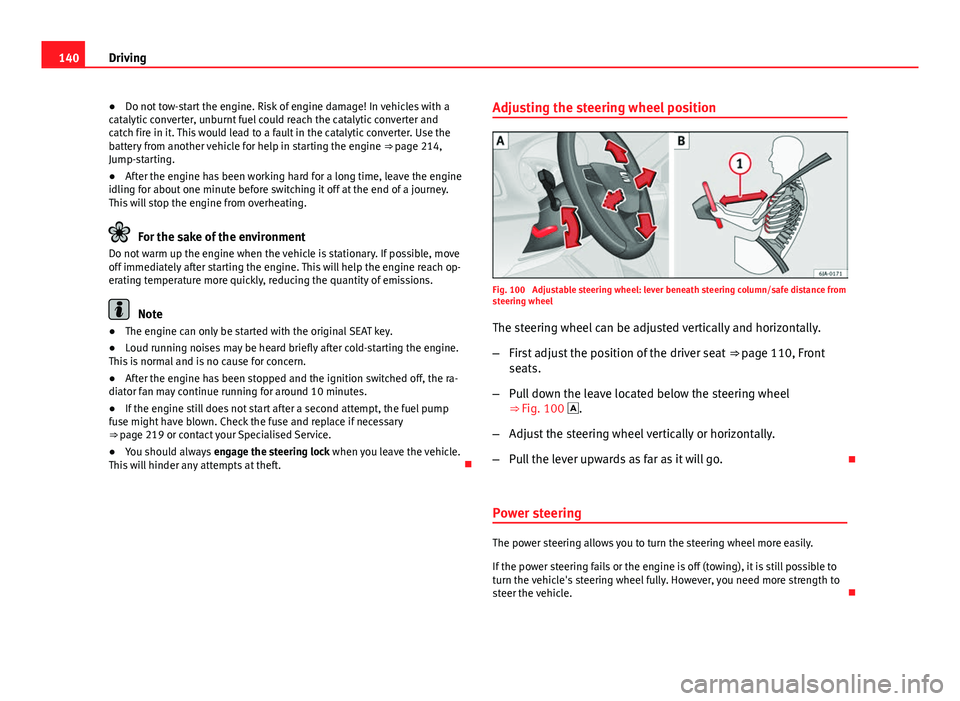
Fig. 100 Adjustable steering wheel: lever beneath steering column/safe distance from
steering wheel
The steering wheel can be adjusted vertically and horizontally.
– First adjust the position of the driver seat ⇒ page 110, Front
seats.
– Pull down the leave located below the steering wheel
⇒ Fig. 100 .
– Adjust the steering wheel vertically or horizontally.
– Pull the lever upwards as far as it will go.
Power steering
The power steering allows you to turn the steering wheel more easily.
If the power steering fails or the engine is off (towing), it is still possible to
turn the vehicle's steering wheel fully. However, you need more strength to
steer the vehicle.
Page 150 of 258
148Driving
R
– Reverse
Reverse gear must be engaged only when the vehicle is stationary and the
engine is idling.
To move the selector lever to position R from positions P or N, press the in-
terlock button on the selector lever knob and press down on the brake ped-
al.
The reverse lights come on when the selector lever is in position R and the
ignition is on.
N
– Neutral (idling)
Neutral (idling) is engaged in this position.
To move the selector lever from position N (if the lever has remained in this
position for more than 2 seconds) to position D or R, at speeds of less than
5 km/h (3 mph), and when the vehicle is stationary, press down on the
brake pedal.
D
– Drive (forwards)
In this position, the gearbox automatically changes to a lower or higher
gear, depending on engine requirements, the driving speed and the gear
shift programme.
To move the selector lever to position D from position N at speeds of less
than 5 km/h (3 mph) and when the vehicle is stationary, press down on the
brake pedal.
In some situations (e.g. on mountain roads or when towing a trailer or cara-
van), it can be advantageous to switch temporarily to the manual shift pro-
gramme ⇒ page 148 so that the gear ratios can be selected manually to
suit driving conditions.
S
– Sports driving position
Shifting up later than usual makes full use of the engine power. This shifts
down earlier in relation to position D. To move the selector lever to position S from position D, press the interlock
button on the selector lever knob.
Tiptronic gearbox
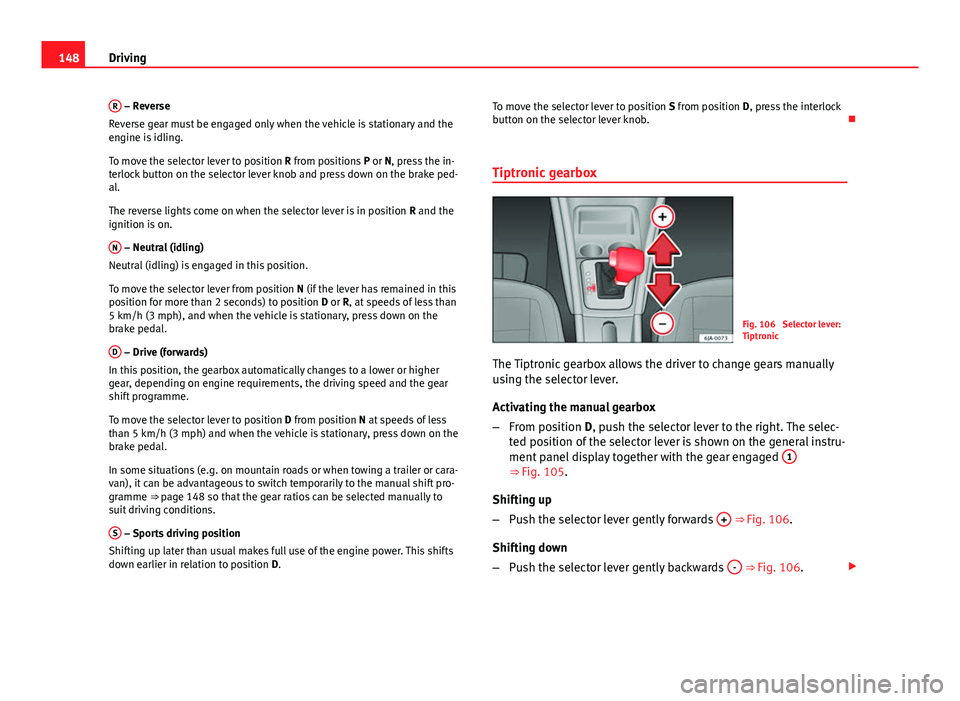
Fig. 106 Selector lever:
Tiptronic
The Tiptronic gearbox allows the driver to change gears manually
using the selector lever.
Activating the manual gearbox
– From position D, push the selector lever to the right. The selec-
ted position of the selector lever is shown on the general instru-
ment panel display together with the gear engaged 1
⇒ Fig. 105.
Shifting up
– Push the selector lever gently forwards +
⇒ Fig. 106.
Shifting down
– Push the selector lever gently backwards -
⇒ Fig. 106.
Page 153 of 258
151
Driving
– Press the interlock button on the selector lever knob at the
same time and move the selector lever to position N (if the se-
lector lever were to be moved back to position P then it would
lock again).
Foot pedals
Under no circumstances must correct use of the pedals be impaired!
Only a floor mat secured to the two corresponding fastening points may be
used in the driver footwell.
Only use floor mats from the catalogue of SEAT Original Accessories that
fasten at two points.
WARNING
No object must be left in the driver footwell. Risk of preventing or limit-
ing use of the foot pedals!
Parking aid*
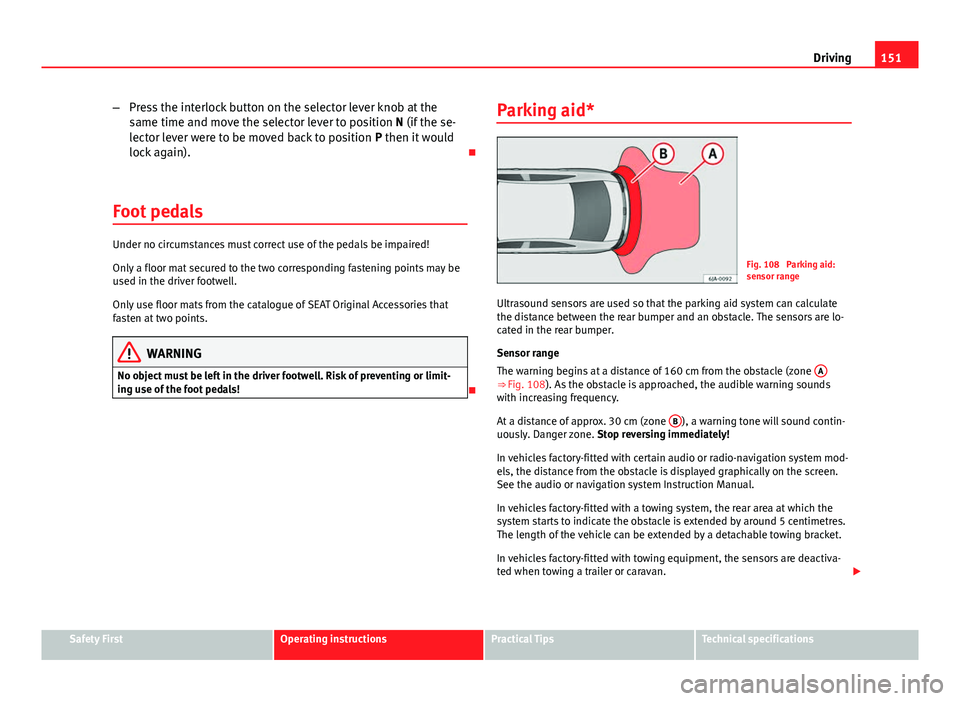
Fig. 108 Parking aid:
sensor range
Ultrasound sensors are used so that the parking aid system can calculate
the distance between the rear bumper and an obstacle. The sensors are lo-
cated in the rear bumper.
Sensor range
The warning begins at a distance of 160 cm from the obstacle (zone A
⇒ Fig. 108). As the obstacle is approached, the audible warning sounds
with increasing frequency.
At a distance of approx. 30 cm (zone B
), a warning tone will sound contin-
uously. Danger zone. Stop reversing immediately!
In vehicles factory-fitted with certain audio or radio-navigation system mod-
els, the distance from the obstacle is displayed graphically on the screen.
See the audio or navigation system Instruction Manual.
In vehicles factory-fitted with a towing system, the rear area at which the
system starts to indicate the obstacle is extended by around 5 centimetres.
The length of the vehicle can be extended by a detachable towing bracket.
In vehicles factory-fitted with towing equipment, the sensors are deactiva-
ted when towing a trailer or caravan.
Safety FirstOperating instructionsPractical TipsTechnical specifications
Page 154 of 258
152Driving
Switching the parking aid system on and off
Parking aid is switched on when the ignition is on and reverse gear engag-
ed. This is confirmed by a short audible warning.
Parking aid is switched off when reverse gear is released.
WARNING
● Parking aid does not free the driver from responsibility when parking
or performing similar manoeuvres. Pay special attention to small children
or animals, as the parking aid sensors may not always be able to detect
them.
● Before reversing or parking, make sure there are no small obstacles,
e.g. stones, narrow pillars, towing brackets, etc. in front and behind the
vehicle. These obstacles may not always be detected by the parking aid
device.
● The surface of certain objects may not reflect the signals of the park-
ing aid sensors. Therefore, people wearing clothing of this kind may not
be detected by the parking aid system.
● Outside noise may interfere with the parking aid system. Under cer-
tain unfavourable circumstances, certain objects or people may not be
detected.
Note
● If a constant sound at a higher frequency is emitted for 3 seconds when
the system is switched on then there is a fault in the system. Please take the
vehicle to a specialised technical service to solve this fault.
● To ensure that the parking aid system works properly, the sensors must
be kept clean (e.g. free of ice).
● If the parking aid system is switched on when the automatic gearbox se-
lector lever is in position P, the acoustic signal will be interrupted (the car
cannot be moved). Cruise control (Cruise control system)*
Introduction
The cruise control system allows you to drive at a constant speed of 30 km/
h (19 mph) or higher without having to press the accelerator. However, the
speed is only maintained within the margin permitted by the engine power
and the braking effect of the engine.
The warning lamp lights up on the general instrument panel if cruise con-
trol is switched on.
WARNING
● For safety reasons the cruise control system must not be used in
dense traffic or where roads conditions are poor (e.g. due to ice, aqua-
planing, loose grit, snow). Risk of accident!
● The programmed speed can only be re-established if it is not too high
for current traffic conditions.
● Always switch the cruise control system off after using it in order to
avoid involuntary use.
CAUTION
● The cruise control cannot maintain a constant speed when the vehicle is
moving downhill. The vehicle tends to accelerate under its own weight.
Therefore, shift down or use the brake pedal in good time to slow the vehi-
cle.
Note
● In vehicles with an automatic gearbox, the cruise control system cannot
be switched on if the selector lever is in position P, N or R.
● In vehicles with a manual gearbox, the cruise control cannot be switched
on if first gear or reverse gear is engaged.
Page 156 of 258
154Driving
To recover the set speed, briefly press switch B
in RES once you have re-
leased the brake or clutch pedal.
Switching off cruise control completely
– Move knob A ⇒ Fig. 109 ⇒ page 153 to OFF.
START-STOP*
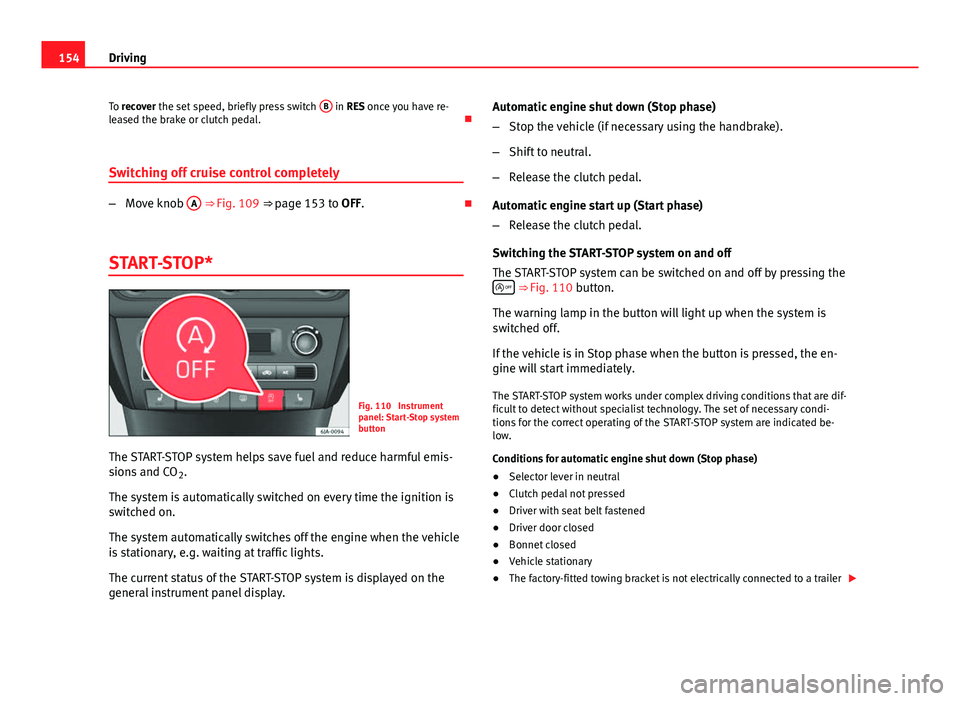
Fig. 110 Instrument
panel: Start-Stop system
button
The START-STOP system helps save fuel and reduce harmful emis-
sions and CO 2.
The system is automatically switched on every time the ignition is
switched on.
The system automatically switches off the engine when the vehicle
is stationary, e.g. waiting at traffic lights.
The current status of the START-STOP system is displayed on the
general instrument panel display. Automatic engine shut down (Stop phase)
–
Stop the vehicle (if necessary using the handbrake).
– Shift to neutral.
– Release the clutch pedal.
Automatic engine start up (Start phase)
– Release the clutch pedal.
Switching the START-STOP system on and off
The START-STOP system can be switched on and off by pressing the
⇒ Fig. 110 button.
The warning lamp in the button will light up when the system is
switched off.
If the vehicle is in Stop phase when the button is pressed, the en-
gine will start immediately.
The START-STOP system works under complex driving conditions that are dif-
ficult to detect without specialist technology. The set of necessary condi-
tions for the correct operating of the START-STOP system are indicated be-
low.
Conditions for automatic engine shut down (Stop phase)
● Selector lever in neutral
● Clutch pedal not pressed
● Driver with seat belt fastened
● Driver door closed
● Bonnet closed
● Vehicle stationary
● The factory-fitted towing bracket is not electrically connected to a trailer
Page 158 of 258

156Driving and the environment
Practical Tips
Driving and the environment
The first 1500 km (900 miles) New engine
Over the first 1500 kilometres (900 miles) the engine must be run
in.
Up to 1,000 kilometres (600 miles)
– Do not drive at more than 3/4 of the maximum speed corre-
sponding to the engaged gear, i.e. up to 3/4 of the maximum
permitted engine speed.
– Do not drive at full speed.
– Avoid high engine speeds.
– Do not tow a trailer.
From 1,000 to 1,500 kilometres (600 to 900 miles)
– Slowly increase the engine speed until reaching the maximum
permitted speed of the engaged gear, i.e. the maximum permit-
ted engine speed.
During its first few hours of running, the internal friction in the engine is
greater than later on, when all the moving parts have bedded in. How the
vehicle is driven over approximately the first 1500 kilometres (900 miles),
determines the success of the process of running in the engine. After the running in, the vehicle should not be driven at
high engine
speeds. The maximum permitted engine speed is marked at the start of the
red zone on the rev counter dial. The gear must be changed up when the red
area is reached in vehicles with a manual gearbox. Extremely high engine
speeds when accelerating are automatically limited, however the engine is
not protected against high engine speeds produced by incorrectly changing
to a lower gear, which could cause the engine to run at revs above the maxi-
mum permitted amount, and consequently result in damage to the engine.
Additionally, vehicles with a manual gearbox must also bear the following in
mind: do not drive with the engine speed too low. Change down to a lower
gear when the engine no longer runs smoothly. Observe the recommenda-
tions for changing gear ⇒ page 60, Recommended gear display.
CAUTION
All the information for speed and engine speed refers to an engine that op-
erates at operating temperature. Do not run the engine at high engine
speeds, neither when stopped or while driving.
For the sake of the environment
Do not drive at unnecessarily high engine speeds – an anticipated change
to a higher gear contributes to saving fuel, reducing operating noise and
protects the environment.
Page 160 of 258
158Driving and the environment
Fuel consumption also depends on factors that cannot be influenced by the
driver. It is normal for consumption to be greater in winter or in difficult con-
ditions, on roads in poor condition, when towing a trailer, etc.
Fuel consumption can also vary considerably from that stated by the manu-
facturer due to the outside temperature, the weather and driving style.
The vehicle has factory-fitted technical conditions in order to save fuel and
to operate in economic mode. SEAT pays special attention to minimize the
environmental impact. Take the following indications in this chapter into ac-
count in order to conserve and to take advantage of these qualities:
The engine speed must be maintained at the maximum in order to prevent
vehicle resonance and high fuel consumption.
Foresighted driving
The vehicle consumes the majority of fuel when accelerating, therefore
avoid unnecessary acceleration and braking. If you think ahead when driv-
ing, you will need to brake less and thus accelerate less. For example, when
approaching a red traffic light, allow the vehicle to decelerate freely or use
the engine braking effect. Saving energy when changing gear
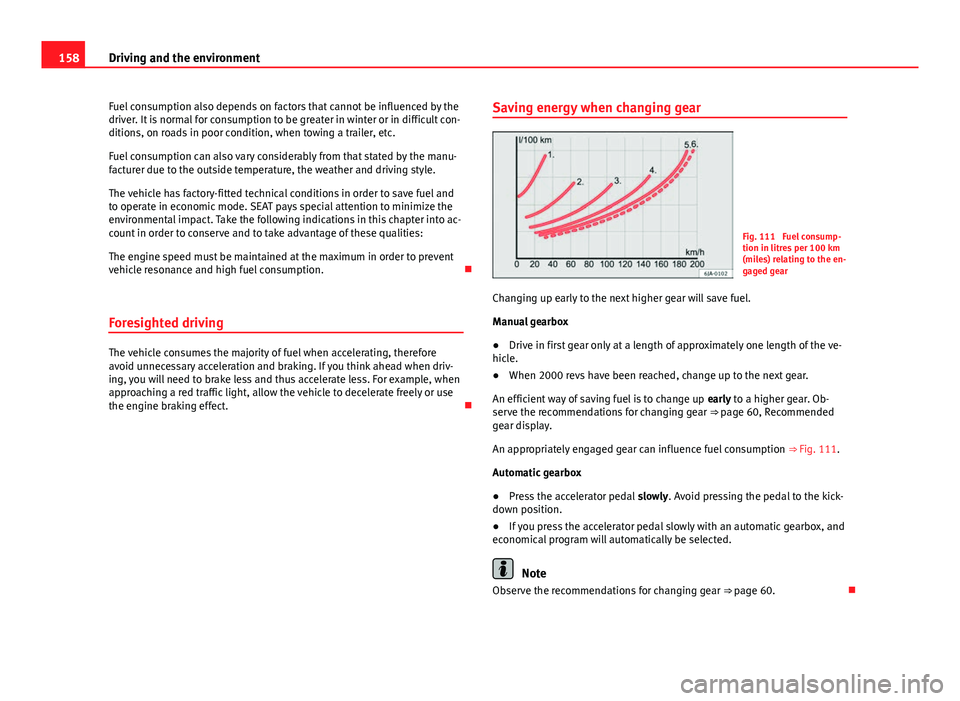
Fig. 111 Fuel consump-
tion in litres per 100 km
(miles) relating to the en-
gaged gear
Changing up early to the next higher gear will save fuel.
Manual gearbox
● Drive in first gear only at a length of approximately one length of the ve-
hicle.
● When 2000 revs have been reached, change up to the next gear.
An efficient way of saving fuel is to change up early to a higher gear. Ob-
serve the recommendations for changing gear ⇒ page 60, Recommended
gear display.
An appropriately engaged gear can influence fuel consumption ⇒ Fig. 111.
Automatic gearbox
● Press the accelerator pedal slowly. Avoid pressing the pedal to the kick-
down position.
● If you press the accelerator pedal slowly with an automatic gearbox, and
economical program will automatically be selected.
Note
Observe the recommendations for changing gear ⇒ page 60.
Page 166 of 258
164Driving the vehicle with a trailer
Driving the vehicle with a trailer
Driving the vehicle with a trailer
Technical requirements
If your vehicle has a factory-fitted towing bracket or is equipped with a se-
lection of SEAT Original Accessories, it meets all the relevant technical and
legal requirements.
In vehicles with a towing bracket it is possible to remove the ball joint, situ-
ated (together with the special assembly instructions) in the housing for the
spare wheel in the vehicle luggage compartment ⇒ page 207, Vehicle tool
kit*.
Your vehicle is fitted with a 13-pole power socket for the electrical connec-
tion between the trailer and the vehicle. If the trailer you are going to use
has a 7-pin connector, the corresponding adaptor, acquired from the SEAT
Original Accessories Catalogue, can be used.
If a towing bracket is to be retro-fitted to the car, it must be done according
to the instructions of the towing bracket manufacturer.
Note
Any queries that may arise can be directed to an authorised SEAT dealer.
Trailer weight
Trailer weight
The combined vehicle and trailer must be balanced. To do so use the maxi-
mum permitted towing bracket load. An insufficient weight exerted by the trailer drawbar on the ball joint of the towing bracket will have a negative
impact upon the response of the vehicle-trailer assembly on the road.
Weight distribution
Distribute loads in the trailer so that heavy objects are as near to the axle as
possible. Ensure that the objects do not move.
If the towing vehicle is empty and the trailer loaded then the load distribu-
tion is incorrect. However, if these conditions cannot be avoided, drive very
slowly.
Tyre pressure values
Correct the tyre pressure in your vehicle to “total load” ⇒
page 197, Tyre
useful life.
Trailer weight
Never exceed the authorised trailer weight under any circumstances
⇒ page 233, Description of the data.
The trailer weights listed are only applicable for altitudes up to 1000 m
above sea level. Due to a lower air density the engine power decreases de-
pending on the increase in altitude, this also causes the climbing ability to
decrease, which requires a reduction of the weight of the vehicle with a
trailer by 10 % for every 1000 m increase in altitude. The weight of the as-
sembly is calculated by adding the vehicle weight (loaded) to the trailer
weight (loaded). Always drive with special care when towing a trailer.
The towed load and support load information that is displayed on the tow-
ing bracket manufacturers label are only values for the verification of the
device. The correct figures for your specific vehicle, which are usually lower
than these figures, are given in the documentation of your vehicle.
Page 167 of 258
165
Driving the vehicle with a trailer
WARNING
● Exceeding the maximum established load per axle and the maximum
towing bracket load in addition to the maximum permitted load or the
load of the vehicle + trailer assembly can cause accidents and serious in-
juries.
● A sliding load could considerably affect the stability and safety of the
vehicle + trailer assembly, resulting in accidents and serious injuries.
Towing a trailer
Exterior mirrors
Check whether you can see enough of the road behind the trailer with the
standard rear vision mirrors. If this is not the case, you should have addi-
tional exterior mirrors fitted. Observe the relevant statutory requirements of
the country you are in.
Headlights
Before starting a journey, also check the headlight beam settings with the
trailer hitched up. Adjust the headlight range settings if necessary
⇒ page 99, Range control of main lights .
Driving speed
For your own safety do not drive faster than the maximum permitted speed
indicated on the trailer.
At all times, immediately reduce speed if you detect the slightest swaying
movement of the trailer. Never try to “return the trailer to a straight posi-
tion” by accelerating.
Brakes
Brake in due course! If the trailer has an overrun brake, apply the brakes
gently at first and then, firmly. This will prevent the jerking that can be caused by locking of trailer wheels. Change to a lower gear in good time be-
fore descending a slope in order to take advantage of the engine brake.
The trailer is incorporated into the vehicle anti-theft alarm system.
●
When the vehicle has a factory-fitted anti-theft alarm and a towing
bracket
● When the trailer is electrically connected to the vehicle via the towing
bracket socket
● When the vehicle electrical device and the towing bracket are operation-
al
● When the vehicle is locked and the vehicle anti-theft alarm device is ac-
tivated
Once the electrical connection is interrupted with the vehicle trailer locked,
the alarm sounds.
Always switch off the vehicle anti-theft alarm device before connecting or
disconnecting a trailer. The vehicle anti-theft alarm device could cause the
alarm to sound ⇒ page 91, Anti-theft alarm system*.
Engine overheating
In the event that the coolant temperature gauge needle moves to the right
section of the scale or to the red area, immediately reduce speed. If the con-
trol lamp flashes on the general instrument panel, stop the vehicle and
switch off the engine. Wait several minutes and check the coolant level in
the tank ⇒ page 188.
Please observe the following indications ⇒ page 72, Coolant level and tem-
perature .
The coolant temperature can be reduced by switching on the heating.
Safety FirstOperating instructionsPractical TipsTechnical specifications
Page 169 of 258
167
Driving the vehicle with a trailer
Towing bracket device Introduction
If the vehicle is equipped with a towing bracket device from the factory or
consisting of genuine SEAT accessories, it meets all the national technical
and legal requirements for towing.
Your vehicle is fitted with a 13-pin power socket for the electrical connection
between the trailer and the vehicle. If the towing bracket is equipped with a
7-pin connector, the corresponding available adaptor may be used as a
genuine SEAT accessory.
The towing device has a maximum vertical load of 50 kg.
WARNING
● Before driving with the ball-headed bar fitted, verify its correct as-
sembly and placement in the clamping bush.
● Do not use the ball-headed bar if it is not correctly placed and fixed in
the clamping bush.
● Do not use the towing device for towing if it is damaged or missing
parts.
● Do not modify or adapt the towing device for towing.
● Never disengage the ball-headed bar with the trailer still hitched.
CAUTION
Be careful not to damage the paint on the bumper when handling the ball-
headed bar. Description
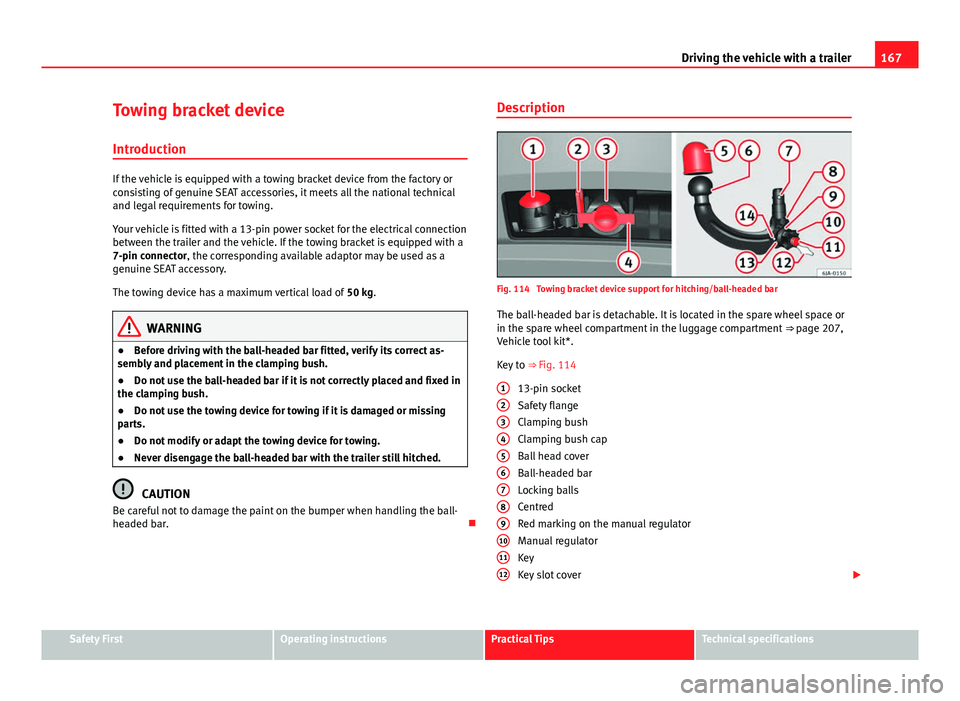
Fig. 114 Towing bracket device support for hitching/ball-headed bar
The ball-headed bar is detachable. It is located in the spare wheel space or
in the spare wheel compartment in the luggage compartment ⇒ page 207,
Vehicle tool kit*.
Key to ⇒ Fig. 114
13-pin socket
Safety flange
Clamping bush
Clamping bush cap
Ball head cover
Ball-headed bar
Locking balls
Centred
Red marking on the manual regulator
Manual regulator
Key
Key slot cover
1
23456789101112
Safety FirstOperating instructionsPractical TipsTechnical specifications