brakes SKODA SUPERB 2008 2.G / (B6/3T) User Guide
[x] Cancel search | Manufacturer: SKODA, Model Year: 2008, Model line: SUPERB, Model: SKODA SUPERB 2008 2.G / (B6/3T)Pages: 272, PDF Size: 18.25 MB
Page 186 of 272

Driving and the Environment187
Using the systemSafetyDriving TipsGeneral MaintenanceBreakdown assistanceTechnical Data
Driving and the Environment
A new engine
The engine has to be run in during the first 1 500 kilometres.
Up to 1 000 kilometres
– Do not drive faster than 3/4 of the mamimum speed of the gear in use,
that is 3/4 of the maximum permissible engine speed.
– Do not use full throttle.
– Avoid high engine revolutions.
– Do not tow a trailer.
From 1 000 up to 1 500 kilometres
– Increase the power output of the engine gradually up to the full
speed of the gear engaged, that is up to the maximum permissible
engine revolutions.
During the first operating hours the engine has higher internal friction than later
until all of the moving parts have harmonized. The driving style which you adopt
during the first approx.1 500 kilometres plays a decisive part in the success of
running in your car.
You should not drive at unnecessarily high engine revolutions even after the
running-in period is complete. The maximum permissib le engine speed is marked
by the beginning of the red zone on the scale of the revolutions counter. Shift up
into the next higher gear on a vehicle fitted with manual gearbox before the red
zone is reached. Extremely high engine revolutions are automatically governed, by
the way.
For a vehicle fitted with a manual gearbox the converse situation also applies: Do
not drive at engine revolutions which are too low. Shift down as soon as the engine
is no longer running smoothly.
Caution
All the speed and engine revolution figure s apply only when the engine is at its
normal operating temperature. Never rev up an engine which is cold, neither when
the vehicle is stationary nor when driving in individual gears.
For the sake of the environment
Not driving at unnecessarily high engine revolutions and shifting to a higher gear as
early as possible are ways to minimise fuel consumption and operating noise levels
and protects the environment.
New tyres
New tyres have to be “run in” since they do not offer optimal grip at first. You should
take account of this fact for the first 500 kilometres and drive particularly carefully.
New brake pads
Allow for the fact that new brake pads do not achieve their full braking efficiency
until approximately 200 kilometres. New brake pads must be first “run in” before
they develop their optimal friction force. You can, however, compensate for this
slightly reduced braking force by increa sing the pressure on the brake pedal.
This guideline also applies to any new brake pads installed at a future date.
During the running-in period , you should avoid excessive stresses on the brakes.
This includes, for example, violent braking, particularly from very high speeds, and
also when crossing mountain passes.
NKO B6 20.book Page 187 Wednesday, March 26, 2008 3:15 PM
Page 187 of 272
Driving and the Environment
188
Catalytic converter
Proper operation of the emission co ntrol system (catalytic converter)
is of major significance for drivin g your vehicle in an environmen-
tally conscious way.
Please refer to the following guidelines.
– For vehicles with petrol engine only refuel with unleaded petrol
⇒ page 205, “Grades of petrol”.
– Never run the fuel tank completely empty.
– Do not switch off the ignition while you are driving the vehicle.
– Do not pour too much oil into the engine ⇒page 212, “Replenishing
engine oil”.
– Do not tow-start the vehicle over a distance of more than 50 metres
⇒ page 237, “Tow-starting and towing vehicle”.
If you drive your vehi cle in a country in which unleade d petrol is not available, you
must have the catalytic converter replaced later when driving the vehicle into a
country in which use of a cata lytic converter is mandatory.
WARNING
•In view of the high temperatures which may be produced in the catalytic
converter, one should always park a vehicle in such a way that the catalytic
converter cannot come into contact with easily flammable materials below
the vehicle - a risk of fire!
•Never use additional underbody protection or corrosion-protection
agents for the exhaust pipes, catalyti c converters or heat shields. Such
substances might ignite when driving - risk of fire!
Caution
•Vehicles fitted with catalytic converter should neve r be allowed to let the fuel
tank to run completely empty. An irregular fuel supply can result in poor ignition or misfiring. Unburnt fuel may get into the exhaust system and damage the catalytic
converter.
•Filling the tank even only once with le
aded petrol will result in the catalytic
converter being destroyed.
•If you detect misfiring, a drop in perf ormance or irregular engine running when
driving, reduce your speed immediately and have the vehicle inspected by the
nearest specialist garage. The symptoms described may be caused by a fault in the
ignition system. Unburnt fuel may get in to the exhaust system and damage the
catalytic converter.
For the sake of the environment
Even if the exhaust system is operating properly, a sulphur-like exhaust odour may
be produced under certain operating condit ions of the engine. This depends on the
sulphur content of the fuel. It is often su fficient to refuel with unleaded premium-
grade petrol of a different brand or at a different filling station.
Driving in an economical and environmentally
conscious manner
General
Your personal style of driving is a major factor.
Your fuel consumption, any pollution of the environmental and the wear-and-tear
to the engine, brakes and tyres, depend essentially on three factors:
•your personal style of driving,
•the conditions under which your vehicle is operated,
•technical aspects.
You can easily improve your fuel economy by 10 - 15 percent by driving in an
economical way with foresight. This section is intended to provide you with a
number of tips on how to protect the en vironment and at the same time save
money.
NKO B6 20.book Page 188 Wednesday, March 26, 2008 3:15 PM
Page 194 of 272

Towing a trailer195
Using the systemSafetyDriving TipsGeneral MaintenanceBreakdown assistanceTechnical Data
should be attached to folding arms. Adjust
the mirrors so that they provide you with
an adequate field of view to the rear.
Headlights
Before starting off with a hitched trailer, also check the setting of the headlights.
Alter the setting as necessary with th e aid of the headlight beam adjuster
⇒ page 59, “Headlamp range adjustment* ”.
Detachable ball head
The ball rod is detachable on vehicles which feature a factory-fitted towing device.
It is stowed together with separate fitting instructions in the spare wheel well in the
luggage compartment of the vehicle.
Further information on the towing device ⇒page 196.
Note
•We recommend that you also have yo ur vehicle inspected between service
intervals if you tow a trailer frequently.
•The handbrake on the towing vehicle must be put on when coupling and
decoupling the trailer.
Driving Tips
Particular caution is required when towing a trailer.
– Do not, as far as possible, drive with your vehicle unladen and the
trailer laden.
– Do not make full use of the legal maximum speeds. This applies in particular to downhill sections.
– Apply the brakes in good time.
– Keep a check on the coolant temperature gauge if the outside temper- ature is high.
Distribution of weight
The distribution of the weight is very poor if your vehicle is unladen and the trailer
is laden. Maintain a particularly low speed if you cannot avoid driving with this
combination.
Driving speed
Do not drive faster than 80 km/hour for safety reasons. This also applies for coun-
tries in which higher speeds are allowed.
The fact that the driving stability of the vehicle + trailer combination reduces with
increasing speed means that the legally allowed speed should not be used when
there are unfavourable road, weather or wind conditions, particularly near accident
black spots.
You must always reduce your speed immedi ately as soon as you detect even just
the slightest swaying of the trailer. On no account attempt to stop the trailer from
“swaying” by accelerating.
Apply the brakes in good time! If the trailer is fitted with a trailer brake, apply the
brakes gently at first and then brake firmly . This will avoid brake jolts resulting from
the trailer wheels locking. Shift down gears in good time before negotiating a down-
hill section to allow the engine to also act as a brake.
Engine overheating
Please keep a check on the coolant temperature gauge if you have to negotiate a
lengthy slope in a low gear at a high engine speed when the outside temperature is
very high ⇒page 11, “Coolant temperature gauge”.
If the needle of the coolant temperature gauge moves into the right-hand area or
even the red area of the scale, reduce yo ur speed immediately. Stop and switch off
the engine if the warning light
in the instrument cluste r begins flashing. Wait a
few minutes and check the level of coolant in the coolant expansion bottle
⇒ page 214, “Inspecting the coolant level”.
Please refer to the following guidelines ⇒page 31, “Coolant temperature/ Coolant
quantity ”.
The coolant temperature can be reduced by switching on the heating.
Any increase in the cooling effect of the coolant fan through shifting down a gear
and increasing the engine speed is not possible since the fan speed is independent
NKO B6 20.book Page 195 Wednesday, March 26, 2008 3:15 PM
Page 215 of 272
Inspecting and Replenishing
216
There may be an indication of a leak in th e brake system, however, if the fluid level
drops significantly within a short time or if it drops below the “MIN” marking. A situ-
ation where the brake fluid level is too low is indicated by the warning light
lighting up in the instrument cluster ⇒page 34. In this case stop immediately and
do not drive any further! Obta in professional assistance.
WARNING
•Read and observe the warning notes ⇒page 209 before working in the
engine compartment.
•If the fluid level has dropped below the MIN marking, do not drive any
further - risk of accident! Contact a Škoda dealer to obtain professional
assistance.
Replacing brake fluid
Brake fluid absorbs moisture. This causes the fluid to absorb moisture from the
surrounding air over a period of time. Excessive water in the brake fluid may be the
cause of corrosion in the brake system. Th e water content also lowers the boiling
point of the brake fluid. This is why brake fluid must be replaced every two
years.
One may only use new genuine brake fluid from Škoda Auto a.s. The specification
for the brake fluid is “FMVSS 116 DOT 4”.
We recommend that you have the brake fluid replaced by a Škoda Service Partner
as part of an Inspection Service.
WARNING
•Using old brake fluid can result in seve re stress on the brakes because of
the formation of vapour bubbles in the brake system. This greatly impairs
the braking efficiency and thus also the safety of your vehicle.
•Brake fluid is toxic! It must therefore be kept safely in closed original
containers and well aw ay from children and unauthorized persons.
Caution
Brake fluid damages the paintwork of the vehicle.
For the sake of the environment
In view of the problems involved with prop er disposal of brake fluid, the special
tools and the professional knowledge required, you should have the brake fluid
replaced by a Škoda Service Partner.
Battery
Working on the battery
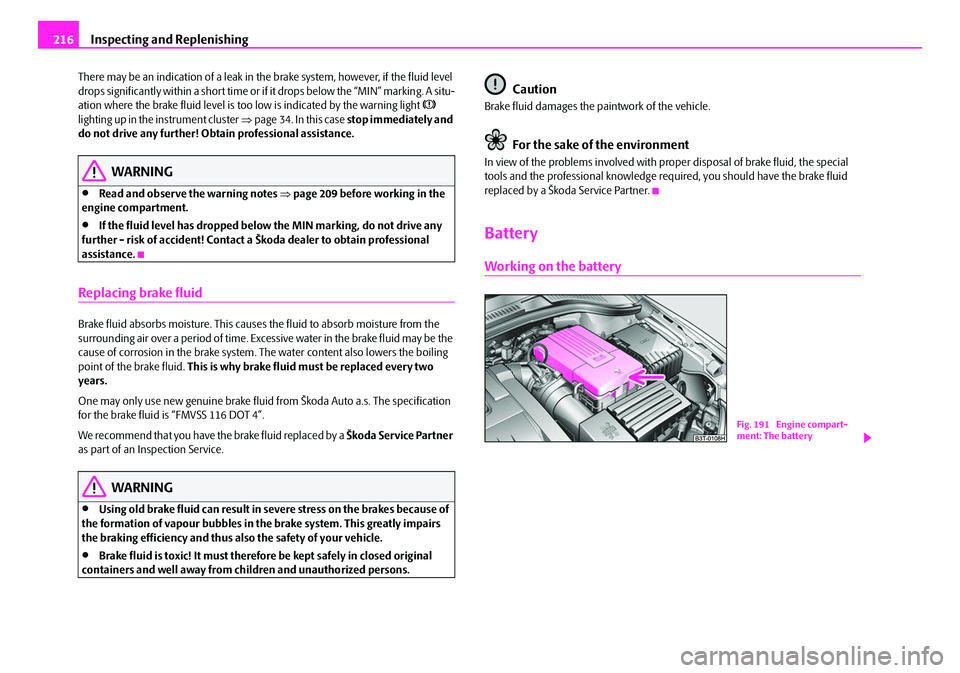
Fig. 191 Engine compart-
ment: The battery
NKO B6 20.book Page 216 Wednesday, March 26, 2008 3:15 PM
Page 264 of 272

Index265
Index
A
Abroad . . . . . . . . . . . . . . . . . . . . . . . . . . . . . . . . . . . . . 192
ABS . . . . . . . . . . . . . . . . . . . . . . . . . . . . . . . . . . . . . . . . . 183
Warning light . . . . . . . . . . . . . . . . . . . . . . . . . . . . . 32
Accessories . . . . . . . . . . . . . . . . . . . . . . . . . . . . . . . . . 228
Adaptive headlights . . . . . . . . . . . . . . . . . . . . . . . . . . . 56 Warning light . . . . . . . . . . . . . . . . . . . . . . . . . . . . . 28
Adjusting seats . . . . . . . . . . . . . . . . . . . . . . . . . . . 71, 150 electrically . . . . . . . . . . . . . . . . . . . . . . . . . . . . . . . . 72
Adjusting the steering wheel . . . . . . . . . . . . . . . . . . 110
AHL . . . . . . . . . . . . . . . . . . . . . . . . . . . . . . . . . . . . . . . . . 56
Air conditioning system . . . . . . . . . . . . . . . . . . . . . . . 96 Recirculated air mode . . . . . . . . . . . . . . . . . . . . . 99
Airbag . . . . . . . . . . . . . . . . . . . . . . . . . . . . . . . . . . . . . . 160 Deployment . . . . . . . . . . . . . . . . . . . . . . . . . . . . . 161
Front airbag . . . . . . . . . . . . . . . . . . . . . . . . . . . . . 161
Head airbag . . . . . . . . . . . . . . . . . . . . . . . . . . . . . 167
Knee airbag . . . . . . . . . . . . . . . . . . . . . . . . . . . . . . 164
Side airbag . . . . . . . . . . . . . . . . . . . . . . . . . . . . . . 165
Warning light . . . . . . . . . . . . . . . . . . . . . . . . . . . . . 29
Airbag system . . . . . . . . . . . . . . . . . . . . . . . . . . . . . . . 160 Warning light . . . . . . . . . . . . . . . . . . . . . . . . . . . . . 29
Airbags . . . . . . . . . . . . . . . . . . . . . . . . . . . . . . . . . . . . . 160
Alarm . . . . . . . . . . . . . . . . . . . . . . . . . . . . . . . . . . . . . . . . 45
Alternator Warning light . . . . . . . . . . . . . . . . . . . . . . . . . . . . . 34
Antilock brake system . . . . . . . . . . . . . . . . . . . . . . . . 183 Antilock brake system (ABS)
Warning light . . . . . . . . . . . . . . . . . . . . . . . . . . . . . 32
Anti-theft alarm system . . . . . . . . . . . . . . . . . . . . . . . 45
Ashtray . . . . . . . . . . . . . . . . . . . . . . . . . . . . . . . . . . . . . . 85
Auto Check Control . . . . . . . . . . . . . . . . . . . . . . . . . . . 22
Auto Computer . . . . . . . . . . . . . . . . . . . . . . . . . . . . . . 14
Automatic gearbox Emergency programme . . . . . . . . . . . . . . . . . . 128
Automatic gearbox DSG . . . . . . . . . . . . . . . . . . . . . . 123 Kickdown . . . . . . . . . . . . . . . . . . . . . . . . . . . . . . . 126
Selector lever-emergency unlocking . . . . . . . 128
Tiptronic . . . . . . . . . . . . . . . . . . . . . . . . . . . . . . . . 126
Automatic light control . . . . . . . . . . . . . . . . . . . . . . . . 54
Automatic seat adjustment . . . . . . . . . . . . . . . . . . . . 73
Automatic vehicle wash systems . . . . . . . . . . . . . . 198
Automatic wiper/washer system . . . . . . . . . . . . . . . 65
Avoiding damage to your vehicle . . . . . . . . . . . . . 193
B
Battery . . . . . . . . . . . . . . . . . . . . . . . . . . . . . . . . . . 34, 216 change . . . . . . . . . . . . . . . . . . . . . . . . . . . . . . . . . . 220
Charge . . . . . . . . . . . . . . . . . . . . . . . . . . . . . . . . . . 219
Inspecting the electrolyte level . . . . . . . . . . . . 219
Operation in winter . . . . . . . . . . . . . . . . . . . . . . 219
Before setting off . . . . . . . . . . . . . . . . . . . . . . . . . . . . 150
Belt Warning light . . . . . . . . . . . . . . . . . . . . . . . . . . . . . 33 Belt tensioners . . . . . . . . . . . . . . . . . . . . . . . . . . . . . . 158
Belts . . . . . . . . . . . . . . . . . . . . . . . . . . . . . . . . . . . . . . . . 154
Bluetooth . . . . . . . . . . . . . . . . . . . . . . . . . . . . . . . 133, 138
Bonnet . . . . . . . . . . . . . . . . . . . . . . . . . . . . . . . . . . . . . 208
Warning light . . . . . . . . . . . . . . . . . . . . . . . . . . . . . 33
Boot lid . . . . . . . . . . . . . . . . . . . . . . . . . . . . . . . . . . . 41, 42 Warning light . . . . . . . . . . . . . . . . . . . . . . . . . . . . . 33
Brake Handbrake . . . . . . . . . . . . . . . . . . . . . . . . . . . . . . 114
Warning light . . . . . . . . . . . . . . . . . . . . . . . . . . . . . 34
Brake Assist . . . . . . . . . . . . . . . . . . . . . . . . . . . . . . . . . 183
Brake booster . . . . . . . . . . . . . . . . . . . . . . . . . . . . . . . 183
Brake fluid . . . . . . . . . . . . . . . . . . . . . . . . . . . . . . . . . . 215
Brake pads Warning light . . . . . . . . . . . . . . . . . . . . . . . . . . . . . 33
Brakes . . . . . . . . . . . . . . . . . . . . . . . . . . . . . . . . . . . . . . 182
Button on the driver's door Power windows . . . . . . . . . . . . . . . . . . . . . . . . . . . 47
Buttons for the central locking system . . . . . . . . . . 39C
Car jack . . . . . . . . . . . . . . . . . . . . . . . . . . . . . . . . . 230, 235
Car state . . . . . . . . . . . . . . . . . . . . . . . . . . . . . . . . . . . . . 22
Catalytic converter . . . . . . . . . . . . . . . . . . . . . . . . . . 188
CD changer . . . . . . . . . . . . . . . . . . . . . . . . . . . . . . . . . 146
Central locking system . . . . . . . . . . . . . . . . . . . . . . . . 38
Changing a wheel . . . . . . . . . . . . . . . . . . . . . . . . . . . 231
NKO B6 20.book Page 265 Wednesday, March 26, 2008 3:15 PM