engine overheat TOYOTA SIENNA HYBRID 2021 Owners Manual (in English)
[x] Cancel search | Manufacturer: TOYOTA, Model Year: 2021, Model line: SIENNA HYBRID, Model: TOYOTA SIENNA HYBRID 2021Pages: 601, PDF Size: 32.07 MB
Page 4 of 601
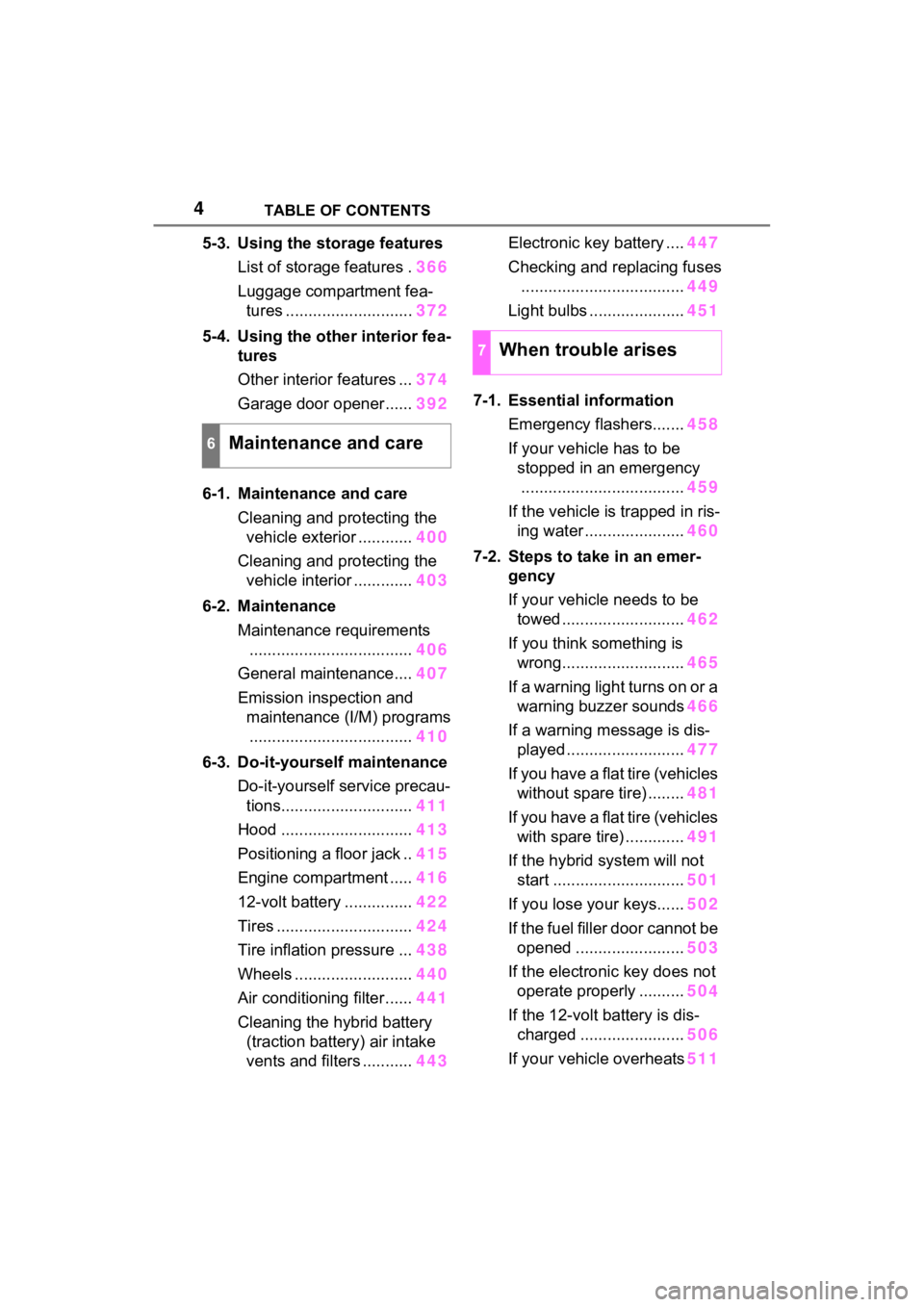
4TABLE OF CONTENTS
5-3. Using the storage featuresList of storage features . 366
Luggage compartment fea- tures ............................ 372
5-4. Using the other interior fea- tures
Other interior features ... 374
Garage door opener...... 392
6-1. Maintenance and care Cleaning and protecting the vehicle exterior ............ 400
Cleaning and protecting the vehicle interior ............. 403
6-2. Maintenance Maintenance requirements.................................... 406
General maintenance.... 407
Emission inspection and maintenance (I/M) programs.................................... 410
6-3. Do-it-yourself maintenance Do-it-yourself service precau-tions............................. 411
Hood ............................. 413
Positioning a floor jack .. 415
Engine compartment ..... 416
12-volt battery ............... 422
Tires .............................. 424
Tire inflation pressure ... 438
Wheels ......... .................440
Air conditioning filter ...... 441
Cleaning the hybrid battery (traction battery) air intake
vents and filters ........... 443Electronic key battery ....
447
Checking and replacing fuses .................................... 449
Light bulbs ..................... 451
7-1. Essential information Emergency flashers....... 458
If your vehicle has to be stopped in an emergency.................................... 459
If the vehicle is trapped in ris- ing water ...................... 460
7-2. Steps to take in an emer- gency
If your vehicle needs to be
towed ........................... 462
If you think something is wrong........................... 465
If a warning light turns on or a warning buzzer sounds 466
If a warning message is dis- played .......................... 477
If you have a flat tire (vehicles without spare tire) ........ 481
If you have a flat tire (vehicles with spare tire) ............. 491
If the hybrid system will not start ............................. 501
If you lose your keys...... 502
If the fuel filler door cannot be opened ......... ...............503
If the electronic key does not operate properly .......... 50
4
If the 12-
volt battery is dis-
charged ....................... 506
If your vehicle overheats 511
6Maintenance and care
7When trouble arises
Page 15 of 601
15Pictorial index
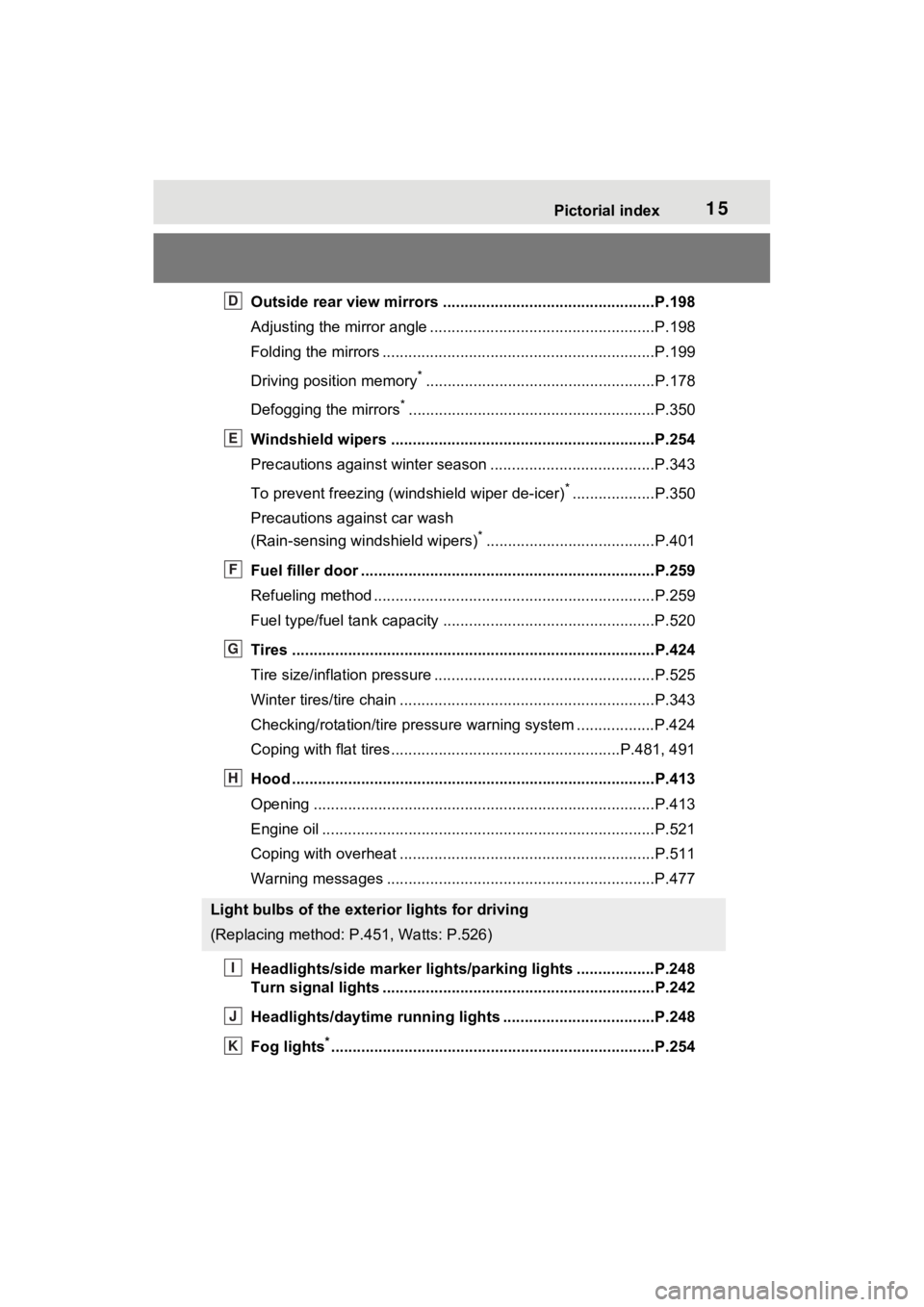
Outside rear view mirrors .................................................P.198
Adjusting the mirror angle ....................................................P.198
Folding the mirrors ...............................................................P.199
Driving position memory
*.....................................................P.178
Defogging the mirrors
*.........................................................P.350
Windshield wipers .............................................. ...............P.254
Precautions against winter season .............................. ........P.343
To prevent freezing (windshield wiper de-icer)
*...................P.350
Precautions against car wash
(Rain-sensing windshield wipers)
*.......................................P.401
Fuel filler door ............................................... .....................P.259
Refueling method ............................................... ..................P.259
Fuel type/fuel tan k capacity .................................................P.520
Tires ....................................................................................P.424
Tire size/inflation pressure ................................... ................P.525
Winter tires/tire chain ........................................ ...................P.343
Checking/rotation/tire pressur e warning system ..................P.424
Coping with flat tires......................................... ............P.481, 491
Hood ....................................................................................P.413
Opening ........................................................ .......................P.413
Engine oil ..................................................... ........................P.521
Coping with overheat ........................................... ................P.511
Warning messages ..............................................................P.477
Headlights/side marke r lights/parking lights ..................P.248
Turn signal lights ...............................................................P.242
Headlights/daytime running lights .............................. .....P.248
Fog lights
*............................................................... ............P.254
Light bulbs of the exterior lights for driving
(Replacing method: P.451, Watts: P.526)
D
E
F
G
H
I
J
K
Page 17 of 601

17Pictorial index
Opening/closing the rear side windows ...............................P.201
Warning messages ..............................................................P.477
Back door ...................................................... .....................P.150
Locking/unlocking ................................................................P.151
Opening from inside the cabin
*............................................P.154
Opening from outside........................................... ........P.152, 153
Warning messages ..............................................................P.477
Outside rear view mirrors .................................................P.198
Adjusting the mirror angle ..................................... ...............P.198
Folding the mirrors ...............................................................P.199
Driving position memory
*.....................................................P.178
Defogging the mirrors
*.........................................................P.350
Windshield wipers .............................................. ...............P.254
Precautions against winter season .............................. ........P.343
To prevent freezing (windshield wiper de-icer)
*...................P.350
Precautions against car wash
(Rain-sensing windshield wipers)
*.......................................P.401
Fuel filler door ............................................... .....................P.259
Refueling method ............................................... ..................P.259
Fuel type/fuel tan k capacity .................................................P.520
Tires ....................................................................................P.424
Tire size/inflation pressure ................................... ................P.525
Winter tires/tire chain ........................................ ...................P.343
Checking/rotation/tire pressur e warning system ..................P.424
Coping with flat tires......................................... ............P.481, 491
Hood ....................................................................................P.413
Opening ........................................................ .......................P.413
Engine oil ..................................................... ........................P.521
Coping with overheat ........................................... ................P.511
Warning messages ..............................................................P.477
C
D
E
F
G
H
Page 20 of 601
20Pictorial index
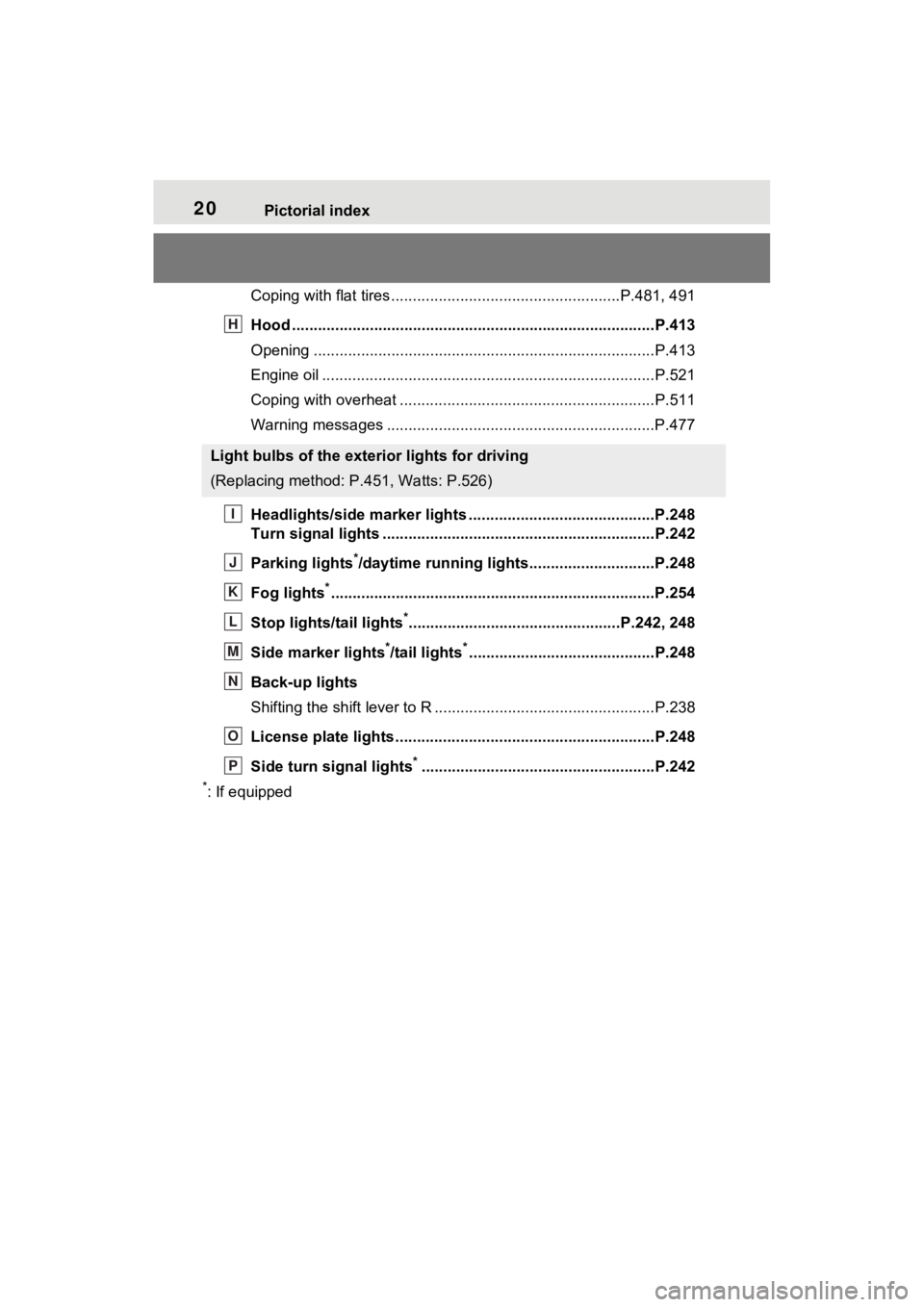
Coping with flat tires.....................................................P.481, 491
Hood ....................................................................................P.413
Opening ........................................................ .......................P.413
Engine oil ..................................................... ........................P.521
Coping with overheat ........................................... ................P.511
Warning messages ..............................................................P.477
Headlights/side marker lights .................................. .........P.248
Turn signal lights ...............................................................P.242
Parking lights
*/daytime running lights.............................P.248
Fog lights
*............................................................... ............P.254
Stop lights/tail lights
*.................................................P.242, 248
Side marker lights
*/tail lights*...........................................P.248
Back-up lights
Shifting the shift lever to R ...................................................P.238
License plate lights........................................... .................P.248
Side turn signal lights
*......................................................P.242
*: If equipped
Light bulbs of the exterior lights for driving
(Replacing method: P .451, Watts: P.526)
H
I
J
K
L
M
N
O
P
Page 99 of 601
992-1. Instrument cluster
2
Vehicle status information and indicators
eration” refers to the conversion of
energy created by the movement
of the vehicle into electrical
energy.
In the following situ ation, the Hybrid
System Indicator does not operate.
●“READY” indicator is not illumi-
nated.
●The shift lever is in a range other
than D or S.
■Outside temperature display
●In the following si tuations, the cor-
rect outside tempe rature may not
be displayed, or the display may
take longer than normal to
change.
• When stopped, or driving at low speeds (less than 12 mph [20
km/h])
• When the outside temperature has changed suddenly (at the
entrance/exit of a garage, tunnel,
etc.)
●When “--” or “E” is displayed, the
system may be malfunctioning.
Take your vehicle to your Toyota
dealer.
●Displays the outside temperature
within the range of -40°F (-40°C)
to 122°F (50°C).
●When the outside temperature is
approximately 37°F (3°C) or
lower, the low outside temperature
indicator will flash for approxi-
mately 10 seconds , then stay on.
■Liquid crystal display
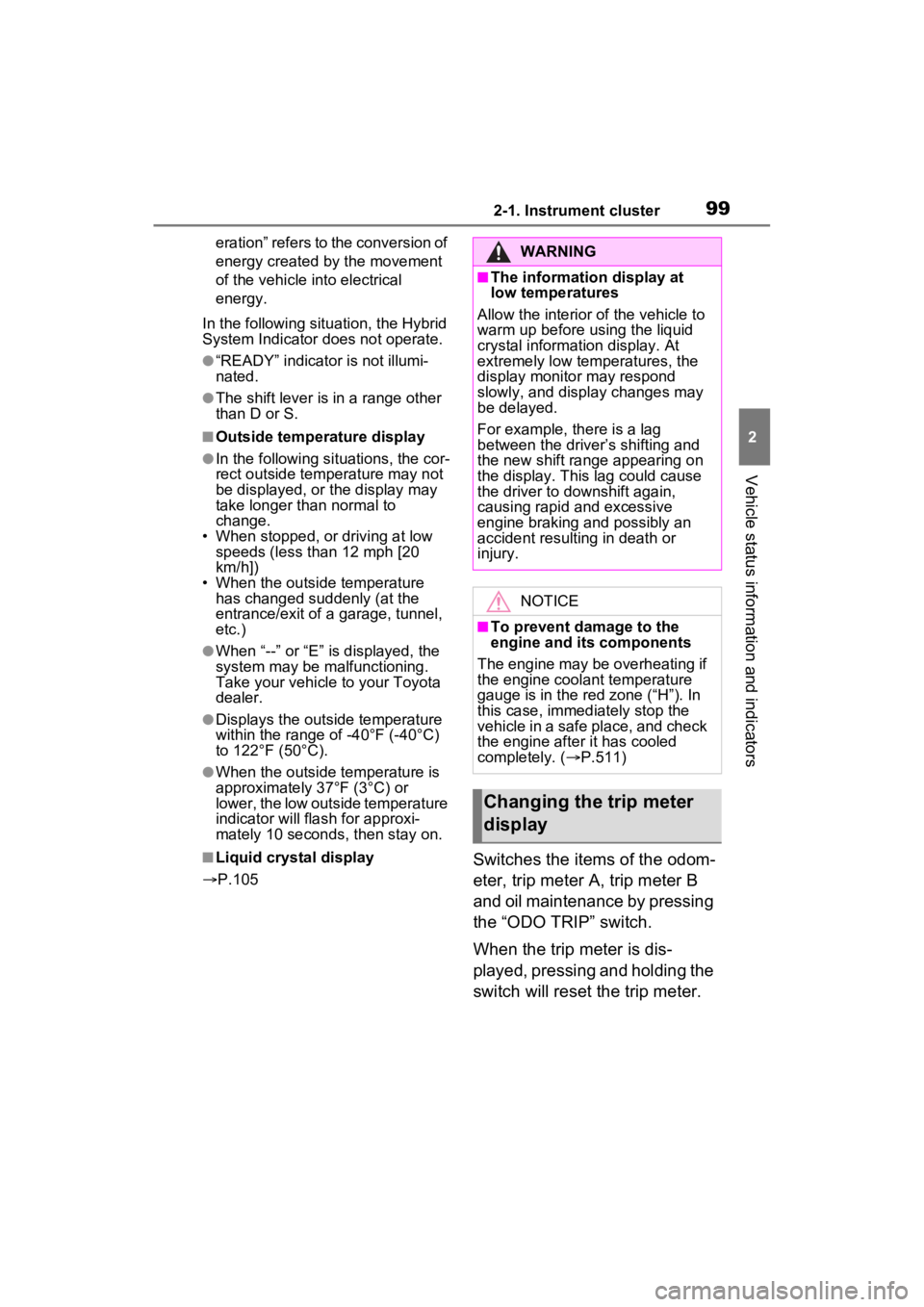
P.105Switches the items of the odom-
eter, trip meter A, trip meter B
and oil maintenance by pressing
the “ODO TRIP” switch.
When the trip meter is dis-
played, pressing and holding the
switch will reset the trip meter.
WARNING
■The information display at
low temperatures
Allow the interior of the vehicle to
warm up before using the liquid
crystal information display. At
extremely low temperatures, the
display monitor may respond
slowly, and display changes may
be delayed.
For example, there is a lag
between the driver’s shifting and
the new shift range appearing on
the display. This lag could cause
the driver to downshift again,
causing rapid and excessive
engine braking and possibly an
accident resulting in death or
injury.
NOTICE
■To prevent damage to the
engine and its components
The engine may be overheating if
the engine coolant temperature
gauge is in the red zone (“H”). In
this case, immediately stop the
vehicle in a safe place, and check
the engine after it has cooled
completely. ( P.511)
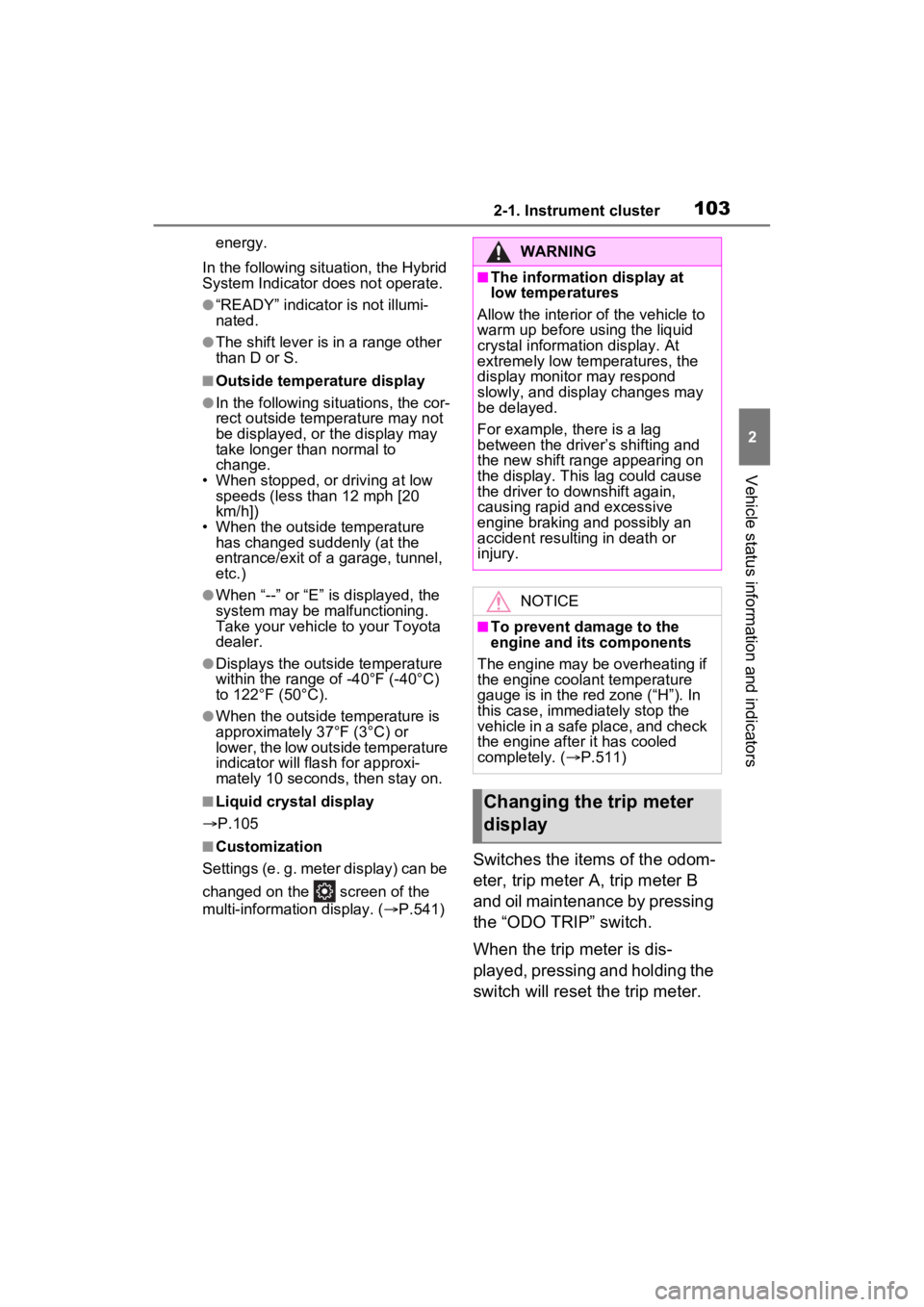
Changing the trip meter
display
Page 103 of 601
1032-1. Instrument cluster
2
Vehicle status information and indicators
energy.
In the following situ ation, the Hybrid
System Indicator does not operate.
●“READY” indicator is not illumi-
nated.
●The shift lever is in a range other
than D or S.
■Outside temperature display
●In the following si tuations, the cor-
rect outside tempe rature may not
be displayed, or the display may
take longer than normal to
change.
• When stopped, or driving at low speeds (less than 12 mph [20
km/h])
• When the outside temperature has changed suddenly (at the
entrance/exit of a garage, tunnel,
etc.)
●When “--” or “E” is displayed, the
system may be malfunctioning.
Take your vehicle to your Toyota
dealer.
●Displays the outside temperature
within the range of -40°F (-40°C)
to 122°F (50°C).
●When the outside temperature is
approximately 37°F (3°C) or
lower, the low outside temperature
indicator will flash for approxi-
mately 10 seconds , then stay on.
■Liquid crystal display
P.105
■Customization
Settings (e. g. meter display) can be
changed on the screen of the
multi-informat ion display. (P.541)Switches the items of the odom-
eter, trip meter A, trip meter B
and oil maintenance by pressing
the “ODO TRIP” switch.
When the trip meter is dis-
played, pressing and holding the
switch will reset the trip meter.
WARNING
■The information display at
low temperatures
Allow the interior of the vehicle to
warm up before using the liquid
crystal information display. At
extremely low temperatures, the
display monitor may respond
slowly, and display changes may
be delayed.
For example, there is a lag
between the driver’s shifting and
the new shift range appearing on
the display. This lag could cause
the driver to downshift again,
causing rapid and excessive
engine braking and possibly an
accident resulting in death or
injury.
NOTICE
■To prevent damage to the
engine and its components
The engine may be overheating if
the engine coolant temperature
gauge is in the red zone (“H”). In
this case, immediately stop the
vehicle in a safe place, and check
the engine after it has cooled
completely. ( P.511)
Changing the trip meter
display
Page 213 of 601
2124-1. Before driving
WARNING
●Be careful not to shift the shift
lever with the accelerator pedal
depressed.
Shifting the shift lever to a gear
other than P or N may lead to
unexpected rapid acceleration
of the vehicle that may cause an
accident and result in death or
serious injury. Doing so can
damage the transmission and
may result in a loss of vehicle
control.
■If you hear a squealing or
scraping noise (brake pad
wear limit indicators)
Have the brake pads checked and
replaced by your Toyota dealer as
soon as possible.
Rotor damage may result if the
pads are not replaced when
needed.
It is dangerous to drive the vehicle
when the wear limits of the brake
pads and/or those of the brake
discs are exceeded.
■When the vehicle is stopped
●Do not depress t he accelerator
pedal unnecessarily.
If the vehicle is in any gear other
than P or N, the vehicle may
accelerate suddenly and unex-
pectedly, causing an accident.
●In order to prev ent accidents
due to the vehicle rolling away,
always keep depressing the
brake pedal while stopped with
the “READY” indicator is illumi-
nated, and apply the parking
brake as necessary.
●If the vehicle is stopped on an
incline, in order to prevent acci-
dents caused by the vehicle roll-
ing forward or backward, always
depress the brake pedal and
securely apply the parking
brake as needed.
●Avoid revving or racing the
engine.
Running the engine at high
speed while the vehicle is
stopped may cause the exhaust
system to overheat, which could
result in a fire if combustible
material is nearby.
■When the vehicle is parked
●Do not leave glasses, cigarette
lighters, spray cans, or soft
drink cans in the vehicle when it
is in the sun.
Doing so may result in the fol-
lowing:
• Gas may leak from a cigarette lighter or spray can, and may
lead to a fire.
• The temperature inside the vehicle may cause the plastic
lenses and plastic material of
glasses to deform or crack.
• Soft drink cans may fracture, causing the contents to spray
over the interior of the vehicle,
and may also cause a short cir-
cuit in the vehicle’s electrical
components.
●Do not leave cigarette lighters in
the vehicle. If a cigarette lighter
is in a place such as the glove
box or on the floor, it may be lit
accidentally when luggage is
loaded or the se at is adjusted,
causing a fire.
●Do not attach adhesive discs to
the windshield or windows. Do
not place containers such as air
fresheners on the instrument
panel or dashboard. Adhesive
discs or containers may act as
lenses, causing a fire in the
vehicle.
Page 229 of 601

2284-1. Before driving
Avoid jerky starts or sudden
acceleration.
Avoid jerky steering and
sharp turns, and slow down
before making turn.
Note that when making a turn,
the trailer wheels will be
closer than the vehicle wheels
to the inside of the turn. Com-
pensate by making a wider
than normal turning radius.
Slow down before making a
turn, in cross winds, on wet or
slippery surfaces, etc.
Increasing vehicle speed can
destabilize the trailer.
Take care when passing other
vehicles. Passing requires
considerable distance. After
passing a vehicle, do not for-
get the length of your trailer,
and be sure you have plenty
of room before changing
lanes.
To maintain engine braking
efficiency and charging sys-
tem performance, when using
engine braking, do not use
the transmission in D.
Instability happens more fre-
quently when descending
steep or long downhill grades.
Before descending, slow
down and downshift. Do not
make sudden downshifts
while descending steep or
long downhill grades.
Avoid holding the brake pedal down too long or applying the
brakes too frequently. This
could cause the brakes to
overheat and result in
reduced braking efficiency.
Due to the added load of the
trailer, your vehicle’s hybrid
system may overheat on hot
days (at temperatures over
85°F [30°C]) when driving up
a long or steep grade. If the
engine coolant temperature
gauge indicates overheating,
immediately turn off the air
conditioning (if in use), pull
your vehicle off the road and
stop in a safe spot. ( P.511)
Always place wheel blocks
under both the vehicle’s and
the trailer’s wheels when
parking. Apply the parking
brake firmly, and put the
transmission in P. Avoid park-
ing on a slope, but if unavoid-
able, do so only after
performing the following:
1 Apply the brakes and keep
them applied.
2 Have someone place wheel
blocks under both the vehi-
cle’s and trailer’s wheels.
3 When the wheel blocks are in
place, release the brakes
slowly until the blocks absorb
the load.
4 Apply the parking brake
firmly.
Page 468 of 601
4677-2. Steps to take in an emergency
7
When trouble arises
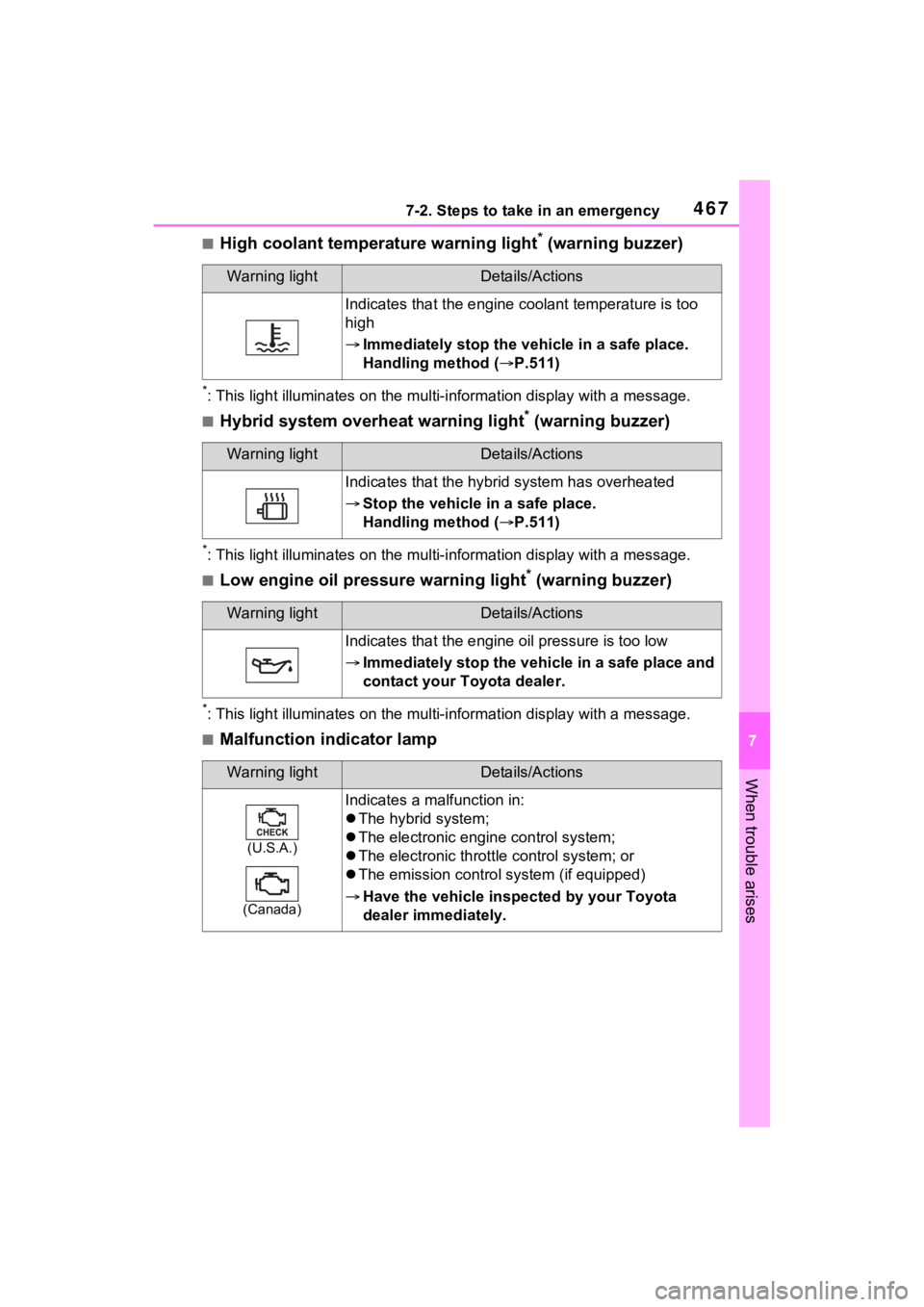
■High coolant temperature warning light* (warning buzzer)
*: This light illuminates on the mu lti-information display with a message.
■Hybrid system overheat warning light* (warning buzzer)
*: This light illuminates on the mu lti-information display with a message.
■Low engine oil pressure warning light* (warning buzzer)
*: This light illuminates on the mu lti-information display with a message.
■Malfunction indicator lamp
Warning lightDetails/Actions
Indicates that the engine coolant temperature is too
high
Immediately stop the v ehicle in a safe place.
Handling method ( P.511)
Warning lightDetails/Actions
Indicates that the hybri d system has overheated
Stop the vehicle in a safe place.
Handling method ( P.511)
Warning lightDetails/Actions
Indicates that the engine oil pressure is too low
Immediately stop the vehicle in a safe place and
contact your Toyota dealer.
Warning lightDetails/Actions
(U.S.A.)
(Canada)
Indicates a malfunction in:
The hybrid system;
The electronic engi ne control system;
The electronic throttle control system; or
The emission control system (if equipped)
Have the vehicle insp ected by your Toyota
dealer immediately.
Page 480 of 601

4797-2. Steps to take in an emergency
7
When trouble arises
tion display, it may indicate a mal-
function. Immediately stop the
vehicle and contact your Toyota
dealer.
•“Braking Power Low”
• “12-Volt Battery Charging System
Malfunction”
• “Oil Pressure Low”
●If any of the following messages
are shown on the multi-informa-
tion display, the vehicle may have
run out of fuel. Stop the vehicle in
a safe place and, if the fuel level is
low, refuel the vehicle.
• “Hybrid System Stopped”
• “Engine Stopped”
●If “Low Auxiliary Battery See
Owner’s Manual” is shown
• When the display goes off after
several seconds
*:
Maintain the hybri d system opera-
tion for more than 15 minutes and
charge the 12- volt battery.
• When the display does not go off:
Start up the hybrid system using the
procedures for “If the 12-volt battery
is discharged” ( P.506)
*: Displays for about 6 seconds
●If “Maintenance Required for Trac-
tion Battery Cooling Parts See
Owner’s Manual” is shown, the fil-
ter may be clogged, the air intake
vent may be blocked, or there may
be a gap in the duct. Therefore,
perform the following correction
procedure.
• If the air intake vent or filter of the hybrid battery (traction battery)
are dirty, perform the procedures
on P.443to clean them.
• If the warning message is shown when the air intake vent and filter
of the hybrid battery (traction bat-
tery) are not dirty, have the vehicle
inspected at your Toyota dealer.
■If “Engine Oil Level Low Add or
Replace” is displayed
The engine oil level may be low.
Check the level of the engine oil, and add engine oil if necessary.
This message may be displayed if
the vehicle is stopped on a slope.
Move the vehicle to a level surface
and check if the message disap-
pears.
■If “Hybrid System Stopped
Steering Power Low” is dis-
played
This message is displayed if the
hybrid system is stopped while driv-
ing.
When steering wheel operations are
heavier than usual, grip the steering
wheel firmly and operate it using
more force than usual.
■If “Hybrid System Overheated
Output Power Reduced” is
shown
The message may be shown when
driving under severe operating con-
ditions. (For example, when driving
up a long steep hill or driving up a
steep hill in reverse.)
Coping method: P.514
■If “Traction Battery Needs to be
Protected Refrain from the Use
of N Position” is shown
This message may be displayed
when the shift lever is in N.
As the hybrid battery (traction bat-
tery) can not be charged when the
shift lever is in N, shift the shift lever
to P when the vehicle is stopped.
■If “Traction Battery Needs to be
Protected Shift into P to
Restart” is shown
This message is displayed when the
hybrid battery (traction battery)
charge has becom e extremely low
because the shift lever has been left
in N for a certain amount of time.
When operating the vehicle, shift to
P and restart the hybrid system.
■If “Shift to P Before Exiting
Vehicle” is shown
Message is displayed when the
driver’s door is opened without turn-