instrument panel TOYOTA YARIS HATCHBACK 2010 Owners Manual
[x] Cancel search | Manufacturer: TOYOTA, Model Year: 2010, Model line: YARIS HATCHBACK, Model: TOYOTA YARIS HATCHBACK 2010Pages: 406, PDF Size: 8.14 MB
Page 3 of 406
1
OVERVIEW
FEATURES/OPERATIONS
SAFETY AND EMERGENCY FEATURES
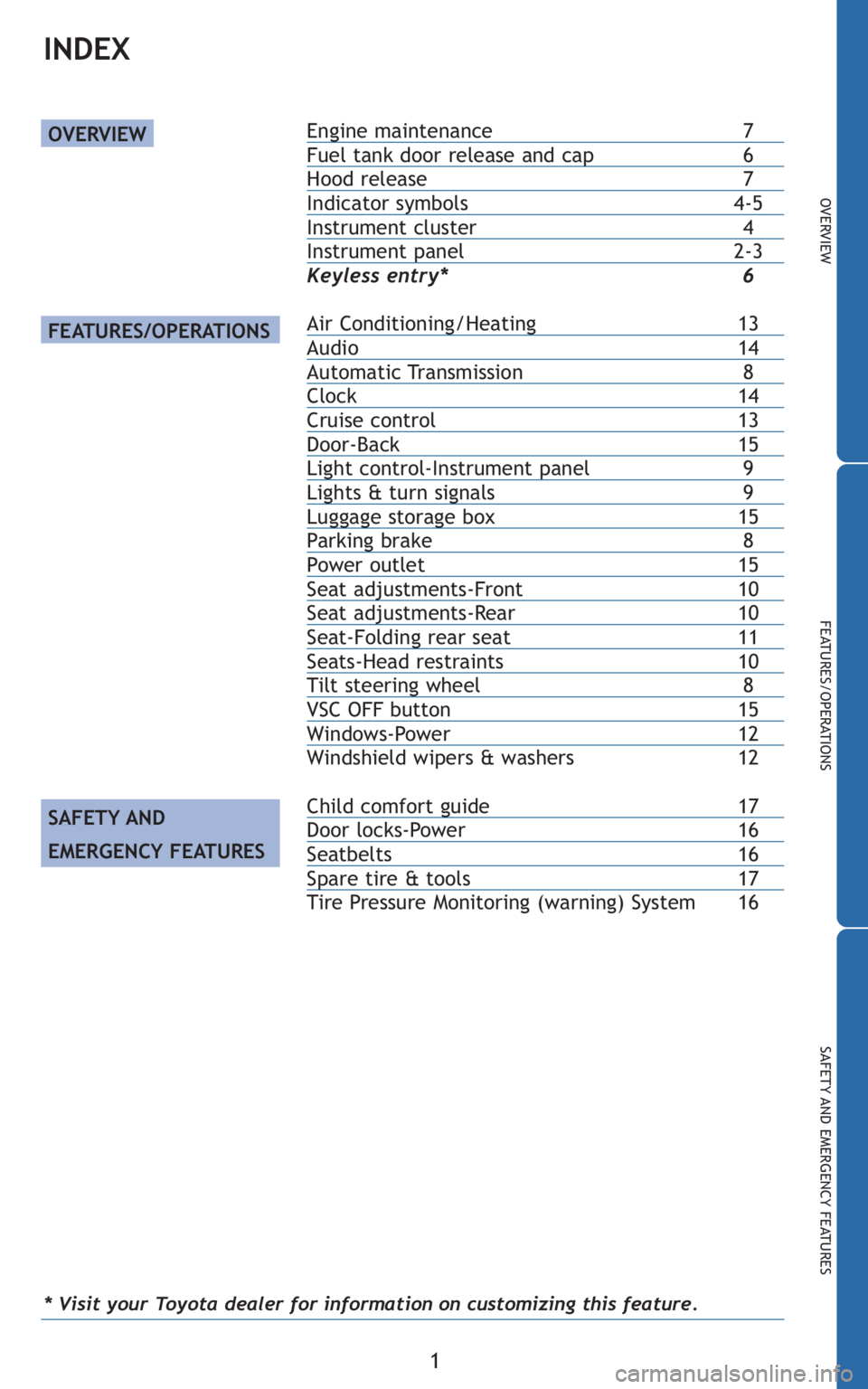
Engine maintenance7Fuel tank door release and cap 6Hood release 7Indicator symbols4-5Instrument cluster 4Instrument panel2-3
Keyless entry* 6
Air Conditioning/Heating13Audio 14Automatic Transmission 8Clock14Cruise control13Door-Back 15Light control-Instrument panel 9Lights & turn signals 9Luggage storage box15Parking brake 8Power outlet15Seat adjustments-Front10Seat adjustments-Rear10Seat-Folding rear seat11Seats-Head restraints10Tilt steering wheel 8VSC OFF button15Windows-Power 12
Windshield wipers & washers 12
Child comfort guide 17Door locks-Power 16Seatbelts16Spare tire & tools 17
Tire Pressure Monitoring (warning) System 16
OVERVIEW
FEATURES/OPERATIONS
SAFETY AND
EMERGENCY FEATURES
INDEX
* Visit your Toyota dealer for information on customizing this feature.
Page 4 of 406
2
OVERVIEW
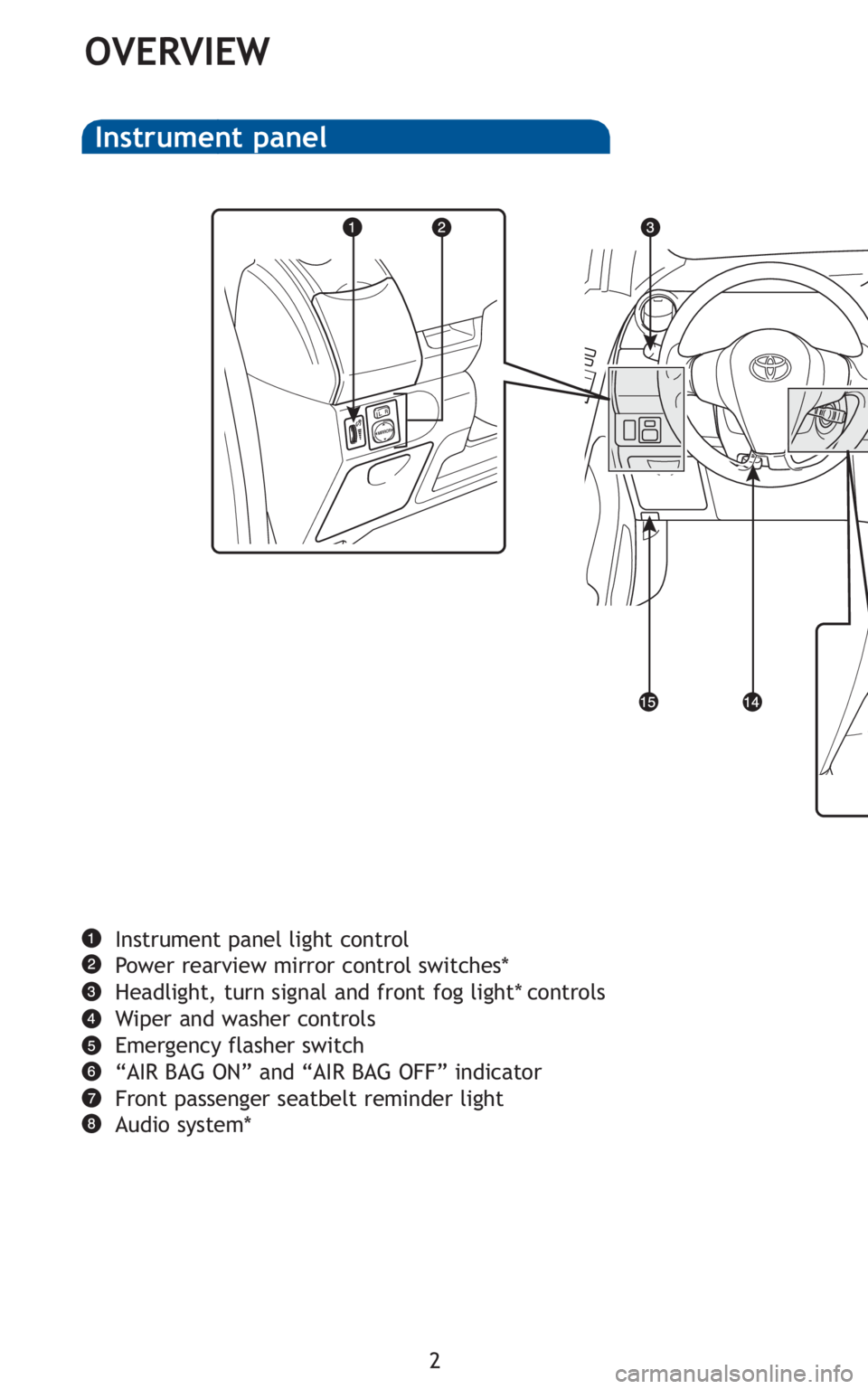
Instrument panel light control
Power rearview mirror control switches*
Headlight, turn signal and front fog light* controls
Wiper and washer controls
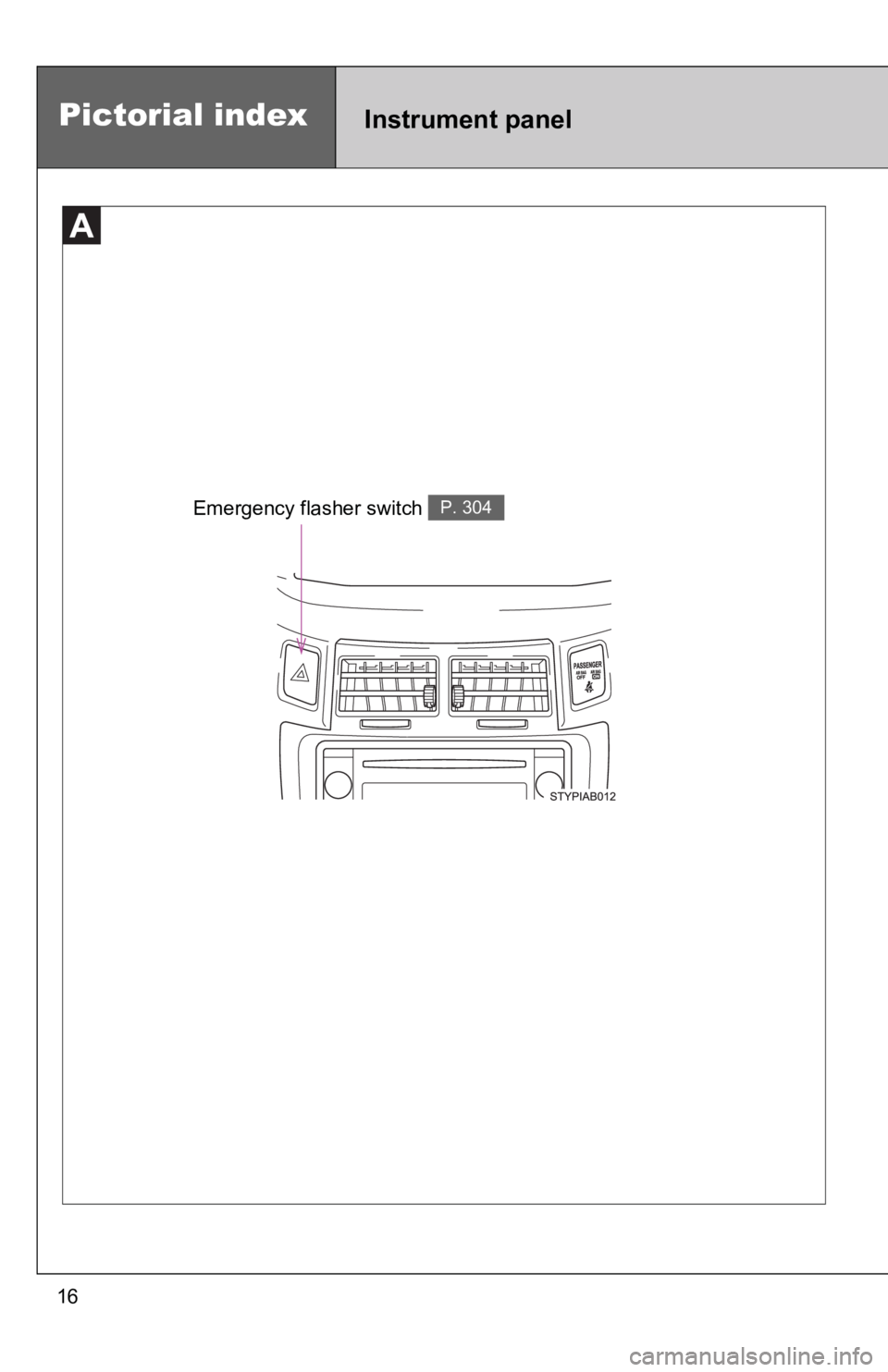
Emergency flasher switch
“AIR BAG ON” and “AIR BAG OFF” indicator
Front passenger seatbelt reminder light
Audio system*
Instrument panel
Page 11 of 406
9
OVERVIEW
FEATURES/OPERATIONS
SAFETY AND EMERGENCY FEATURES
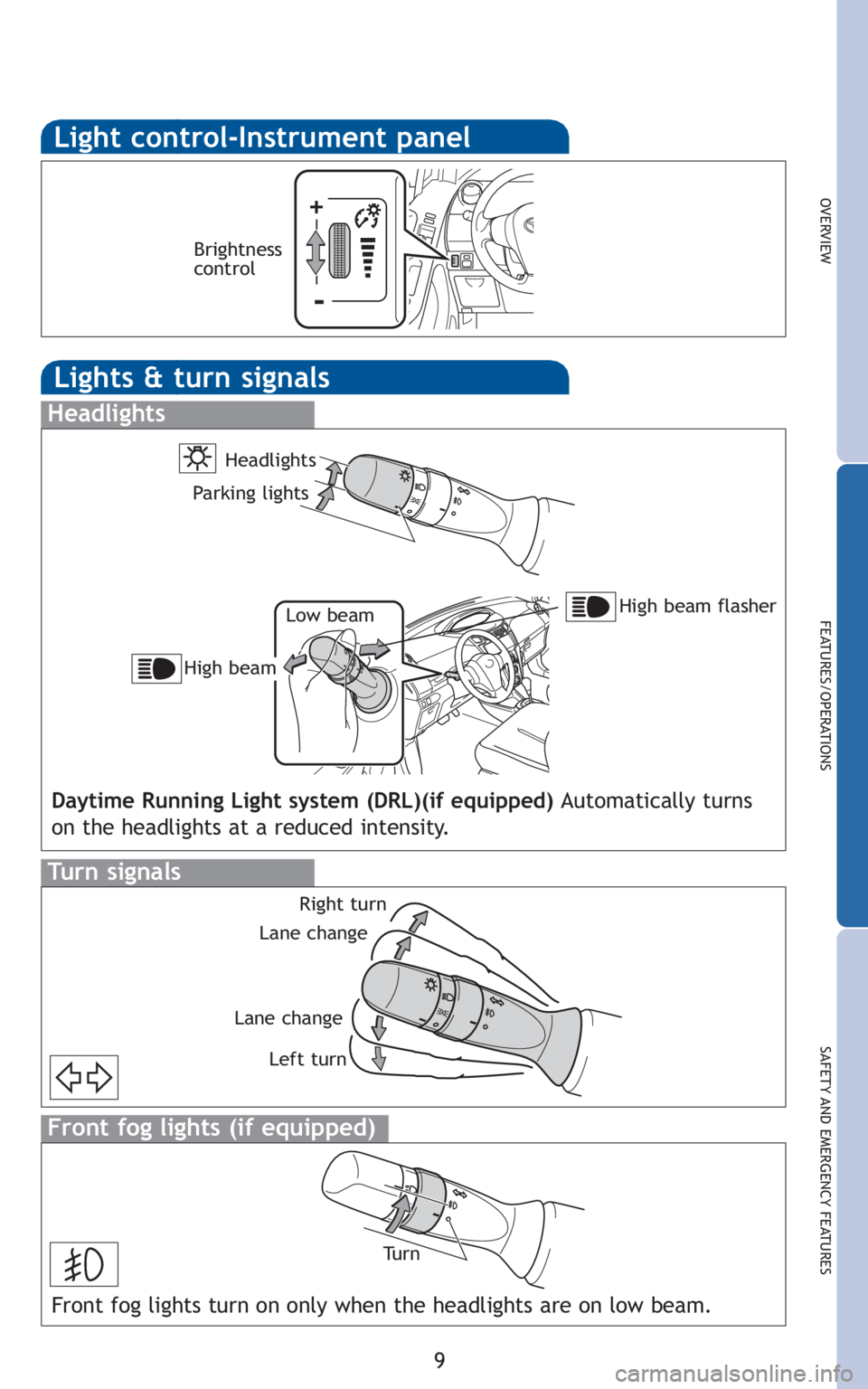
Light control-Instrument panel
Brightness
control
+
-
Lights&turnsignals
Headlights
High beam flasher
Low beam
Headlights
Parking lights
High beam
Daytime Running Light system (DRL)(if equipped) Automatically turns
on the headlights at a reduced intensity.
Turn signals
Right turn
Lane change
Lane change Left turn
Front fog lights (if equipped)
Tu r n
Front fog lights turn on only when the headlights are on low beam.
Page 35 of 406
15
Pictorial indexInstrument panel
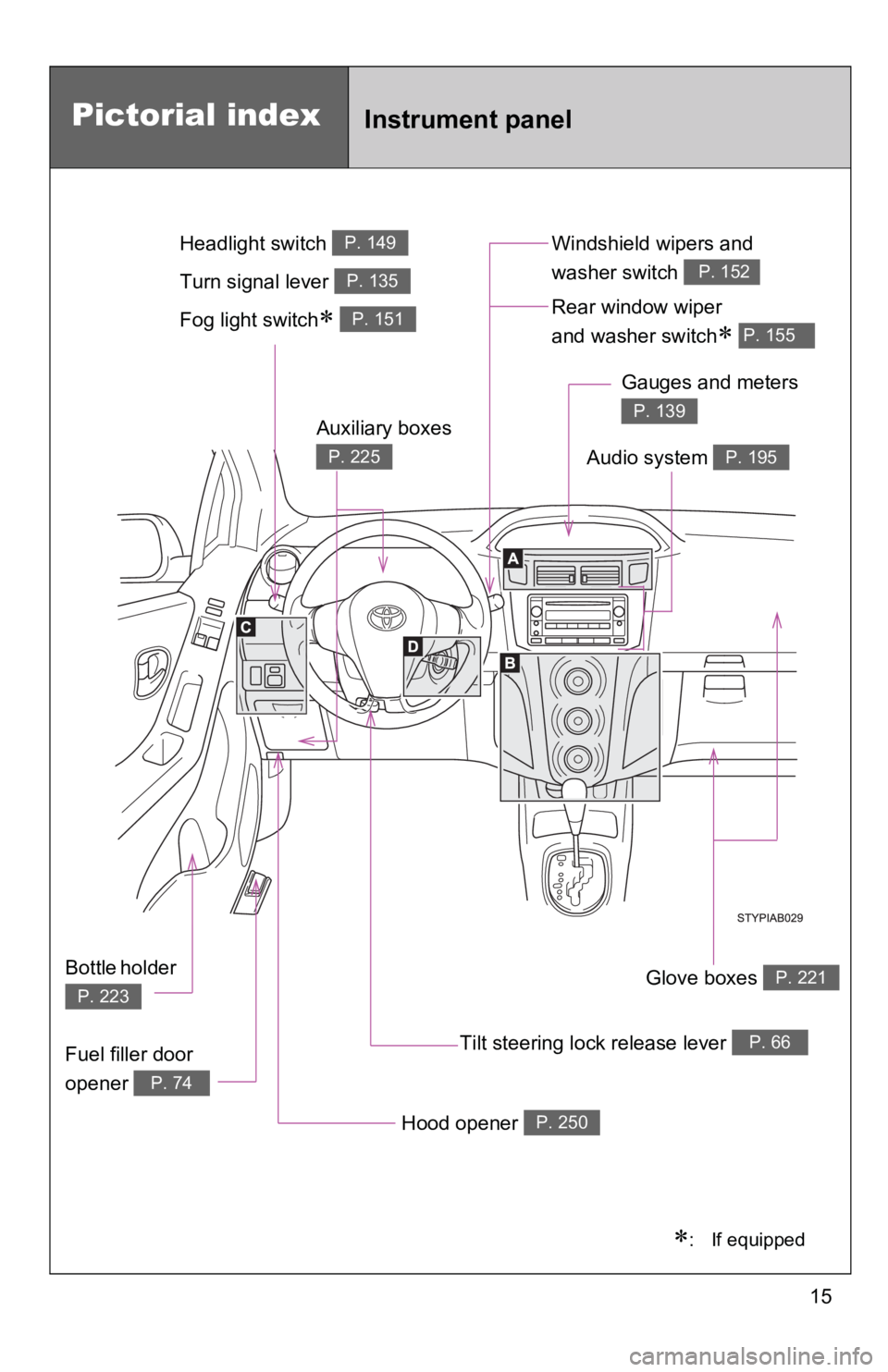
Fog light switch∗ P. 151Rear window wiper
and washer switch
∗ P. 155
Tilt steering lock release lever P. 66
Hood opener P. 250
Gauges and meters
P. 139
Audio system P. 195
Glove boxes P. 221
Fuel filler door
opener
P. 74
Auxiliary boxes
P. 225
Bottle holder
P. 223
Windshield wipers and
washer switch
P. 152Turn signal lever P. 135
Headlight switch P. 149
∗: If equipped
Page 36 of 406
16
Emergency flasher switch P. 304
Pictorial indexInstrument panel
Page 38 of 406
18
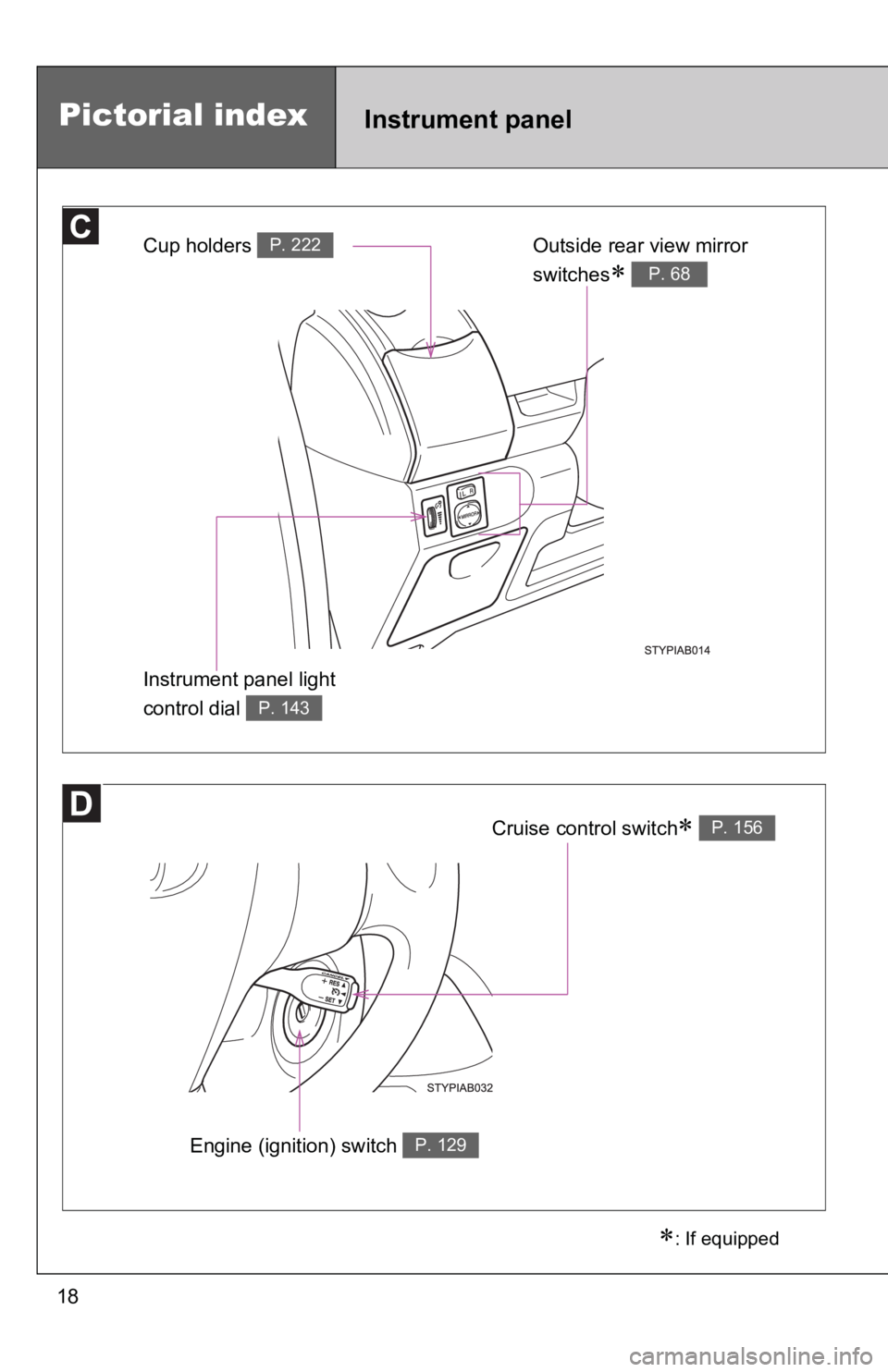
∗: If equipped
Cup holders P. 222Outside rear view mirror
switches
∗ P. 68
Instrument panel light
control dial
P. 143
Pictorial indexInstrument panel
Cruise control switch∗ P. 156
Engine (ignition) switch P. 129
Page 106 of 406

92 1-7. Safety information
CAUTION
■SRS airbag precautions
Observe the following precautions regarding the airbags.
Failure to do so may cause death or serious injury.
●The driver and all passengers in the vehicle must wear their seat belts
properly.
The SRS airbags are supplemental devices to be used with the seat belts.
● The SRS driver airbag deploys with considerable force, and can cause
death or serious injury especially if the driver is very close to the airbag.
The National Highway Traffic Safety Administration (“NHTSA”) advises:
Since the risk zone for driver airbag is the first 2 - 3 in. (50 - 75 mm) of infla-
tion, placing yourself 10 in. (250 mm) fr om your driver airbag provides you
with a clear margin of safety. This distance is measured from the center of
the steering wheel to your breastbone. If you sit less than 10 in. (250 mm)
away now, you can change your driving position in several ways:
• Move your seat to the rear as far as you can while still reaching thepedals comfortably.
• Slightly recline the back of the seat. Although vehicle designs vary, many drivers can achieve the 10 in.
(250 mm) distance, even with the driver seat all the way forward, sim-
ply by reclining the back of the seat somewhat. If reclining the back of
your seat makes it hard to see the road, raise yourself by using a firm,
non-slippery cushion, or raise the seat if your vehicle has that feature\
.
• If your steering wheel is adjustable, tilt it downward. This points the air- bag toward your chest instead of your head and neck.
The seat should be adjusted as recommended by NHTSA above, while still
maintaining control of the foot pedals, steering wheel, and your view of the
instrument panel controls.
Page 110 of 406

96 1-7. Safety information
CAUTION
■Modification and disposal of SRS airbag system components
Do not dispose of your vehicle or perform any of the following modifications
without consulting your Toyota dealer.
The SRS airbags may malfunction or deploy (inflate) accidentally, causing
death or serious injury.
● Installation, removal, disassembly and repair of the SRS airbags.
● Repairs, modifications, removal or replacement of the steering wheel,
instrument panel, dashboard, seats or seat upholstery, front, side and rear
pillars or roof side rail.
● Repairs or modifications of the front fender, front bumper, or side of the
occupant compartment.
● Installation of snow plows, winches, etc. to the front grille (bull bars, kan-
garoo bar etc.).
● Modifications to the vehicle’s suspension system.
● Installation of electronic devices such as mobile two-way radios or CD
players.
● Modifications to your vehicle for a person with a physical disability.
Page 156 of 406
143
2-2. Instrument cluster
2
When driving
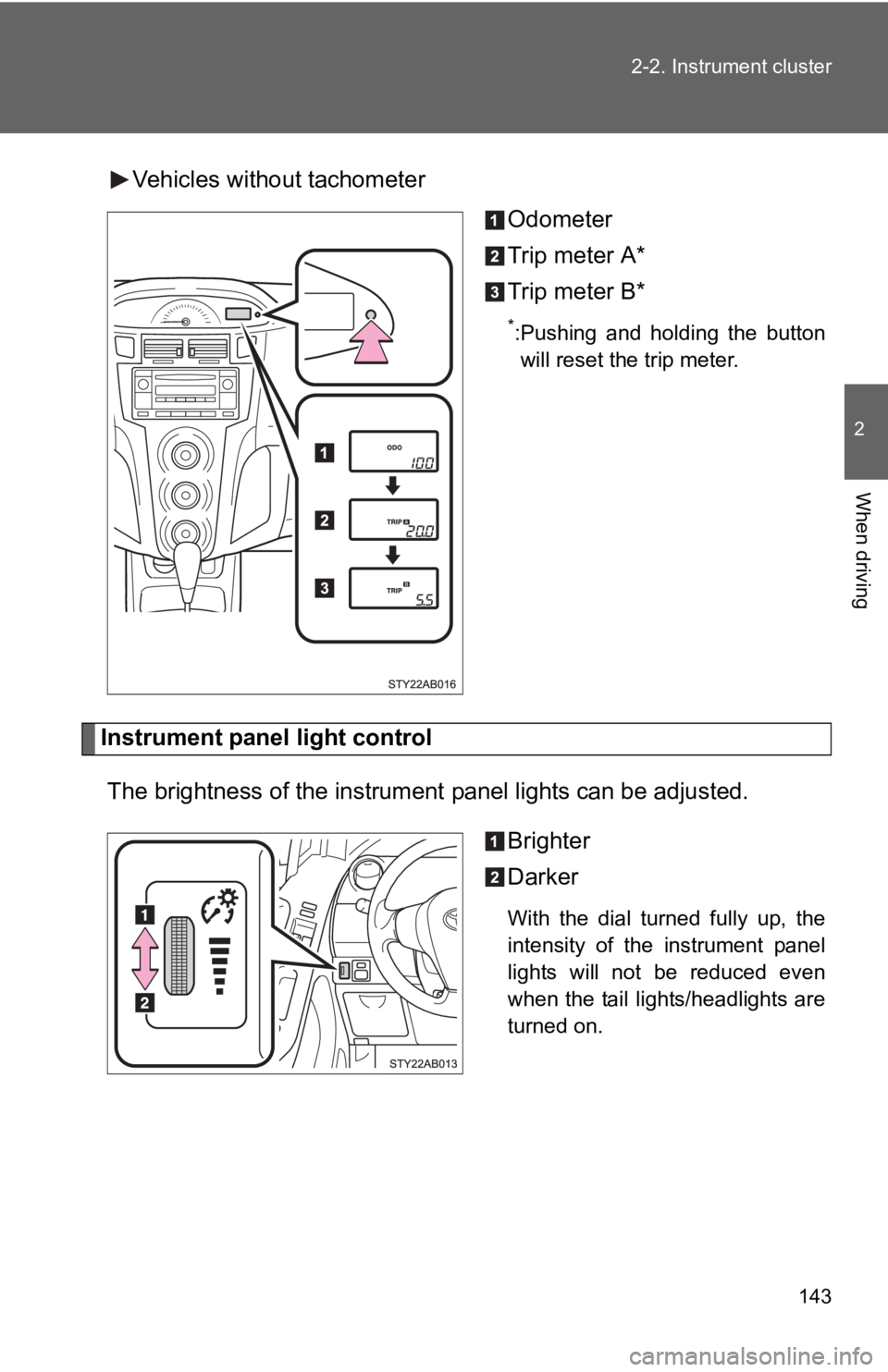
Vehicles without tachometer
Odometer
Trip meter A*
Trip meter B*
*:Pushing and holding the buttonwill reset the trip meter.
Instrument panel light control
The brightness of the instrument panel lights can be adjusted.
Brighter
Darker
With the dial turned fully up, the
intensity of the instrument panel
lights will not be reduced even
when the tail lights/headlights are
turned on.
Page 158 of 406
145
2-2. Instrument cluster
2
When driving
Indicators and warning lights
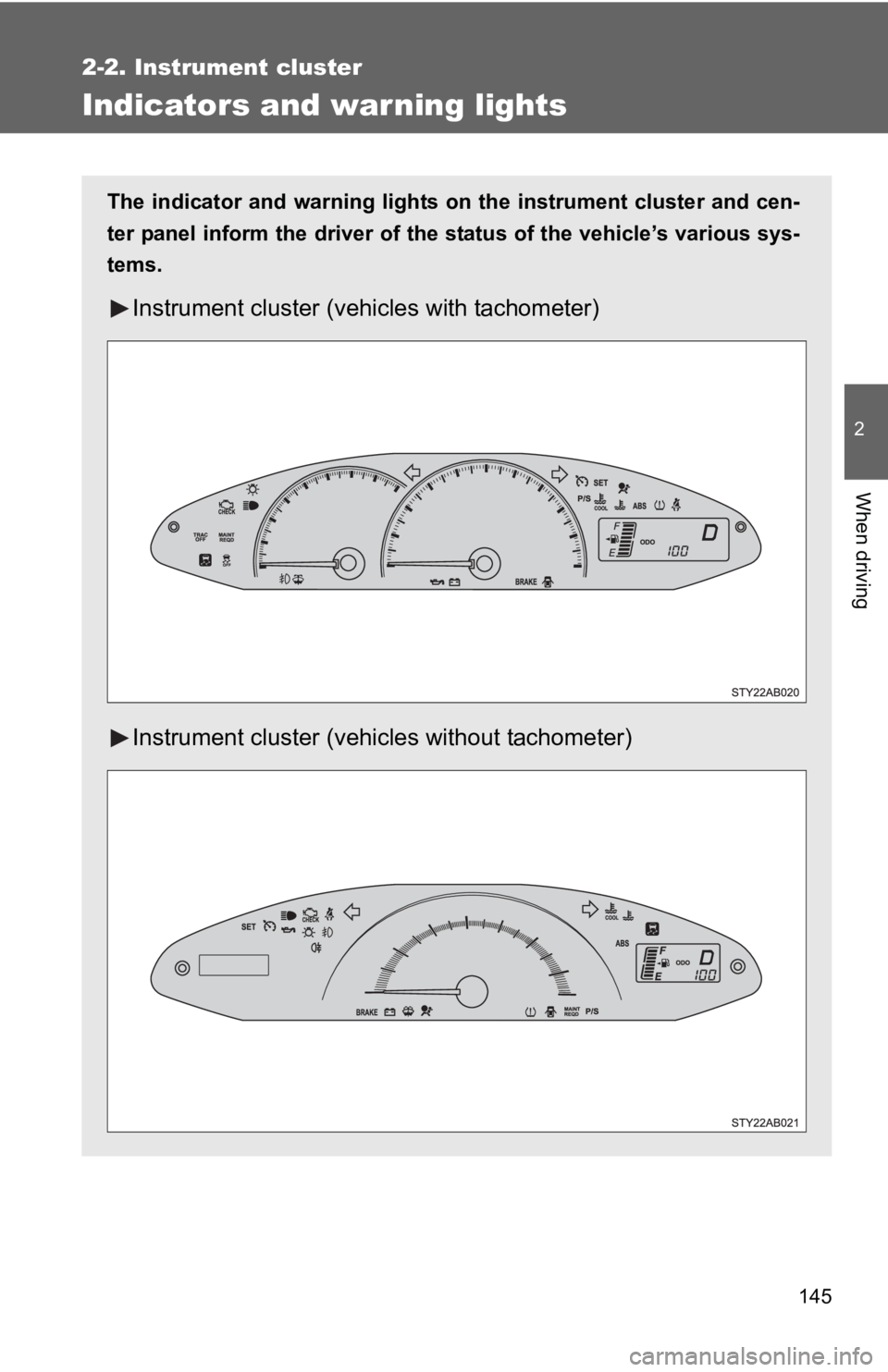
The indicator and warning lights on the instrument cluster and cen-
ter panel inform the driver of the status of the vehicle’s various sys-
tems.
Instrument cluster (vehicles with tachometer)
Instrument cluster (vehicl es without tachometer)