steering VOLKSWAGEN BEETLE 2014 3.G User Guide
[x] Cancel search | Manufacturer: VOLKSWAGEN, Model Year: 2014, Model line: BEETLE, Model: VOLKSWAGEN BEETLE 2014 3.GPages: 380, PDF Size: 5.78 MB
Page 107 of 380

Daytime running lights (DRL)
Separate lamps are installed in the headlights or in the front bumper for the daytime running lights (DRL).
When the daytime running lights are switched on, only these separate lamps come on ⇒ .
The daytime running lights are switched on whenever the ignition is switched on and the light switch is in position O or AUT O.
If the light switch is in position AUT O, a low-light sensor switches the low beams as well as the instrument and switch lighting on and off automatically.
Static cornering lights
Your vehicle may have fog lights under the front bumper, which on some models are also static cornering lights. On some models the static cornering lights may be integrated in the headlights. At speeds below about 25 mph (40 km/h), the light on one side of the vehicle will come on automatically when you turn a corner. If you turn to the right, the right fog light comes on; turn left and the left fog light comes on. The light dims and goes out when the steering wheel is straightened out again.
When you move the selector lever to Reverse (R), the static cornering lights on both sides of the vehicle may come on so that you can see the area around the vehicle better when backing up.
The static cornering lights work only when the headlights are on. If you are using automatic headlight
control (headlight switch in the AUT O position ⇒ fig. 72), they work only when the headlights have been automatically switched on. The static cornering lights do not come on when the headlight switch is in the O position or when the fog lights themselves have been switched on, Switching lights on and off.
Automatic headlight control (AUTO)
Your vehicle may be equipped with automatic headlight control, which is a convenience feature only and cannot always recognize all lighting and driving situations.
If the light switch is in the AUT O position, both vehicle lighting and instrument and switch lighting are
automatically switched on and off in the following situations ⇒ :
Automatic activation: Automatic deactivation:
If the low-light sensor registers darkness, for example when driving through a tunnel. If sufficient brightness is registered.
If the rain sensor recognizes rain and switches the windshield wipers on. If the windshield wipers have not moved for several minutes.
WARNING
Crashes and other accidents can happen when you cannot see the road ahead and when you cannot be seen by other motorists.
x Never use daytime running lights (DRL) to see where you are going. DRL are not bright enough to light up the roadway and be seen by other motorists. You will not be able to see far enough ahead for safety, especially at dusk or when it is dark. Always switch on the low-beam headlights at dusk or when it is dark.
x The taillights do not come on when the daytime running lights are switched on. A vehicle without taillights on cannot be seen by others in bad weather, at dusk, or when it is dark.
x If automatic headlight control (AUTO) is switched on, the low-beam headlights still may not be switched on in fog or heavy rain. You have to switch on the low-beam headlights yourself.
In cool or humid weather, the insides of the headlights, the rear lights, and turn signals can temporarily fog up. This is normal and does not affect the service life of the vehicle's lighting system.
Page 109 of 380
Instrument panel lighting and headlight range adjustment
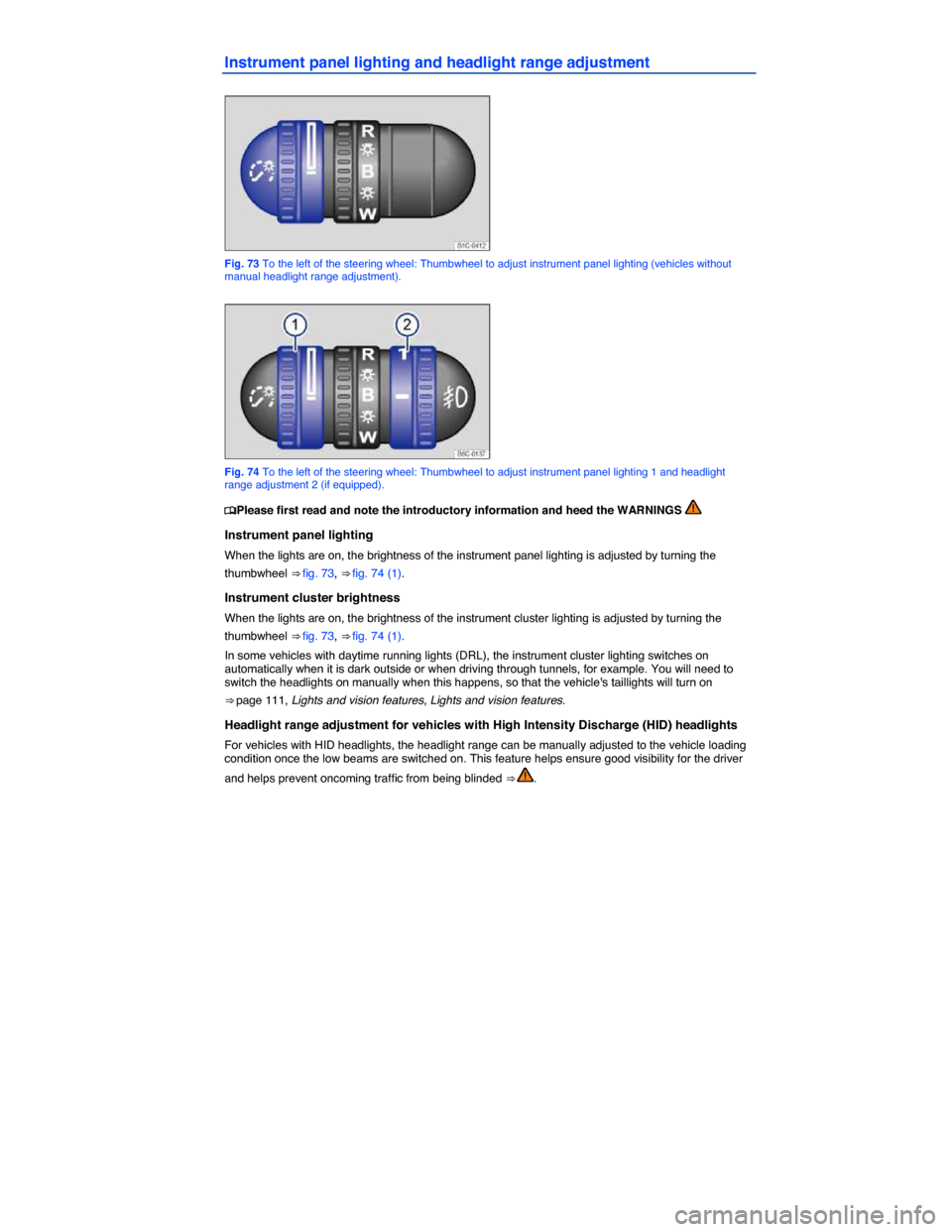
Fig. 73 To the left of the steering wheel: Thumbwheel to adjust instrument panel lighting (vehicles without manual headlight range adjustment).
Fig. 74 To the left of the steering wheel: Thumbwheel to adjust instrument panel lighting 1 and headlight range adjustment 2 (if equipped).
Page 110 of 380
Turn the thumbwheel to the desired position (2):
Position Vehicle loading condition5
– Front seats occupied and an empty luggage compartment.
1 All seats occupied and an empty luggage compartment.
1.5 All seats occupied and a fully loaded luggage compartment
2 Only the driver seat occupied and a fully loaded luggage compartment.
3 –
WARNING
Headlights that are aimed too high because of the way the vehicle is loaded can blind and distract other drivers. This can lead to a crash and serious personal injuries.
x Always make sure the headlights are adjusted to loading conditions so that they do not blind others.
Interior and reading lights
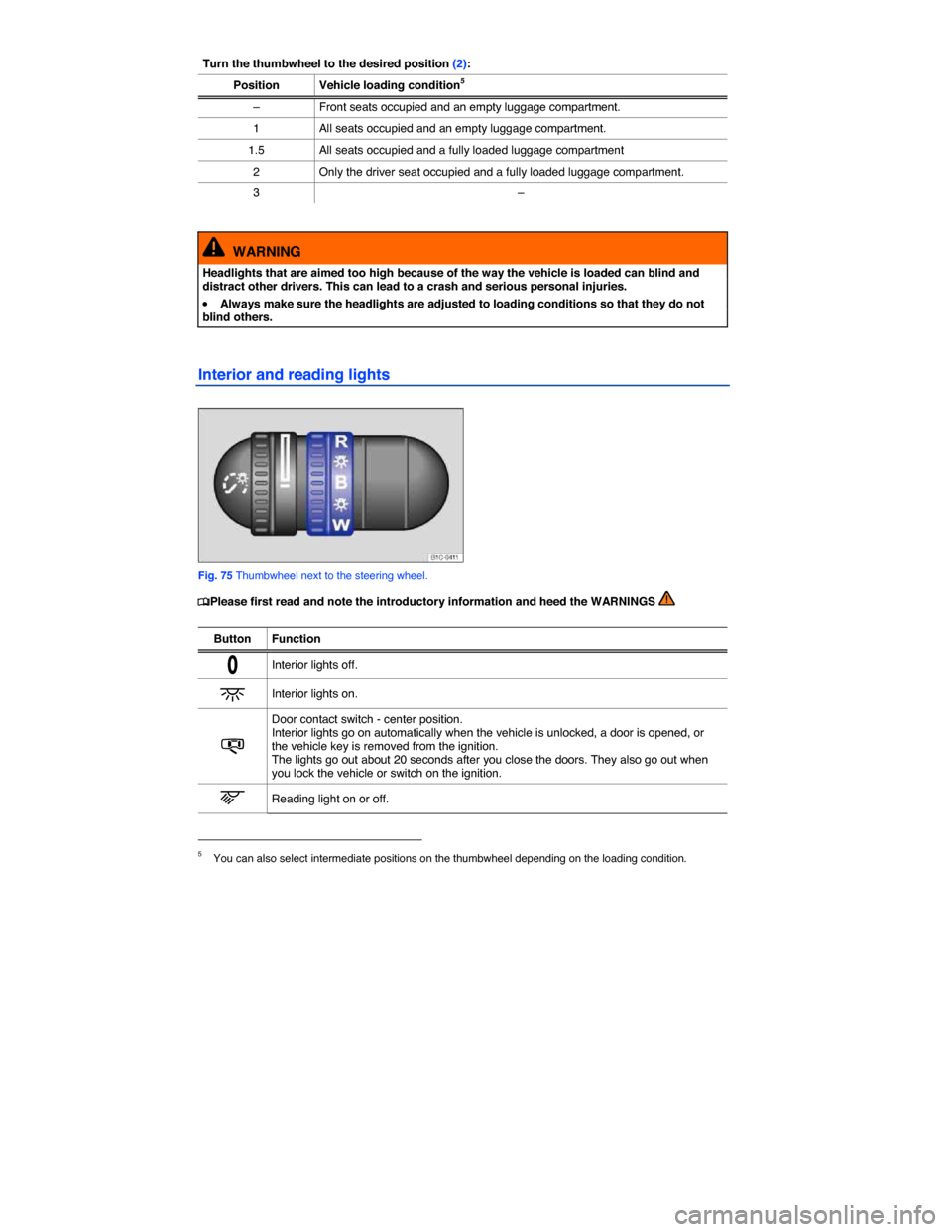
Fig. 75 Thumbwheel next to the steering wheel.
Page 129 of 380

Driving with an open rear hatch can lead to serious personal injury. If you have to drive with an open rear hatch, make sure that all objects and the hatch itself are properly secured and take appropriate measures to keep toxic exhaust fumes from entering the vehicle.
WARNING
Driving with an unlatched or open rear hatch can lead to serious personal injury.
x Never transport objects larger than those that fit completely in the luggage compartment, because the rear hatch cannot be fully closed properly.
x After closing the rear hatch, always pull up on it to make sure that it is properly closed and cannot open suddenly when the vehicle is moving.
x Always stow all objects securely in the luggage compartment. Loose objects can fall out of the luggage compartment and injure others on the road behind you.
x Drive carefully; anticipate what other drivers will do.
x Avoid abrupt or sudden acceleration, steering, or braking, because the unlatched rear hatch can move suddenly.
x Always mark objects sticking out from the luggage compartment clearly for others to see. Obey all applicable legal requirements.
x Never use the rear hatch to “clamp” or “hold” objects that stick out of the luggage compartment.
x Always remove any luggage rack or other rack mounted on the rear hatch (along with any luggage on the rack) before driving with an open rear hatch.
WARNING
Driving with an open rear hatch can cause poisonous carbon monoxide in the engine exhaust to get into the passenger compartment.
x Carbon monoxide causes drowsiness, inattentiveness, poisoning, and loss of consciousness. It can lead to accidents and severe personal injuries.
x Always keep the rear hatch closed while driving to help keep poisonous exhaust fumes from being drawn into the vehicle.
x Never transport objects that are too large to fit completely into the luggage area, because then the rear hatch cannot be fully closed.
x If you absolutely must drive with an open rear hatch, do the following to reduce the risk of carbon monoxide poisoning:
– Close all windows and the power sunroof.
– Switch off the climate control system's air recirculation feature.
– Open all air vents in the instrument panel.
– Set the fresh air fan to the highest speed.
NOTICE
The open rear hatch changes the vehicle length and height.
Driving a loaded vehicle
Page 133 of 380

WARNING
Unsecured or incorrectly stowed items can fly through the vehicle, causing serious personal injury during hard braking or sharp steering or in an accident. Loose items can also be struck and thrown through the passenger compartment by the front airbags if they inflate. To help reduce the risk of serious personal injury:
x Always stow all objects securely in the vehicle. Always put luggage and heavy items in the luggage compartment.
x Always secure objects in the passenger compartment properly with suitable straps so that they cannot move into the deployment zone of a side or front airbag during sudden braking, in a sudden maneuver, or in a collision.
x Always keep storage compartments closed while driving.
x Never stow hard, heavy, or sharp objects in the vehicle's open storage compartments, on the luggage compartment cover, or on the top of the instrument panel.
x Always remove hard, heavy, or sharp objects from clothing and bags in the vehicle interior and stow them securely in the luggage compartment.
WARNING
Transporting heavy objects causes the handling characteristics of the vehicle to change and increases braking distances. Heavy loads which are not properly stowed or secured in the vehicle can lead to a loss of vehicle control and cause serious personal injury.
x Transporting heavy items causes the handling characteristics of the vehicle to change by shifting the vehicle's center of gravity.
x Always distribute luggage evenly and as low as possible within the vehicle. The vehicle capacity weight figures apply when the load is distributed evenly in the vehicle (passengers and luggage).
x Always stow luggage and heavy items in the luggage compartment as far forward of the rear axle as possible.
x Never exceed the vehicle's Gross Vehicle Weight Rating or Gross Axle Weight Ratings, which are printed on the Safety Compliance Certification Label located on the door jamb of the driver door. Exceeding the permissible weight can cause the vehicle to skid and behave differently.
x Always adapt your speed and driving style to accommodate your payload and its weight distribution within your vehicle.
x Be especially cautious and gentle when stepping on the accelerator pedal and avoid sudden braking and other maneuvers.
x Brake earlier than you would if you were not driving a loaded vehicle.
NOTICE
The defroster heating wires or antenna in the rear window can be damaged by objects that rub against them.
The ventilation slots in the luggage compartment must not be blocked so that stale air can escape from the vehicle.
Page 188 of 380

WARNING
Improper use of vehicle keys can result in serious personal injury.
x Always take the key with you when you leave the vehicle. The engine can be started and vehicle systems such as the power windows can be operated, leading to serious personal injury.
x Never leave children, disabled persons, or anyone who cannot help themselves in the vehicle. The doors can be locked with the remote control vehicle key. This could result in people being trapped in the vehicle in an emergency. For example, depending on the time of year, people trapped in the vehicle can be exposed to very high or very low temperatures.
x Heat buildup in the passenger and luggage compartment of a parked vehicle can result in temperatures in the vehicle that are much higher than the outside temperatures, particularly in summer. Temperatures can quickly reach levels that can cause unconsciousness and death, particularly to small children.
x Never remove the key from the ignition switch while the vehicle is moving or rolling to a stop. The steering wheel will lock and you will not be able to steer or control the vehicle.
Leaving the key in the ignition for a long time when the engine is not running will drain the vehicle battery.
Leaving the selector lever for a long period of time in any position other than Park (P) when the ignition is switched off can drain the vehicle battery.
On automatic transmission vehicles, the vehicle key can be removed from the ignition switch only when the transmission is in Park (P). You may have to press the release button on the transmission selector lever to put the lever into Park (P).
Starter button
Fig. 112 In the center console: Starter button for the Keyless Access locking and starting system.
Page 189 of 380
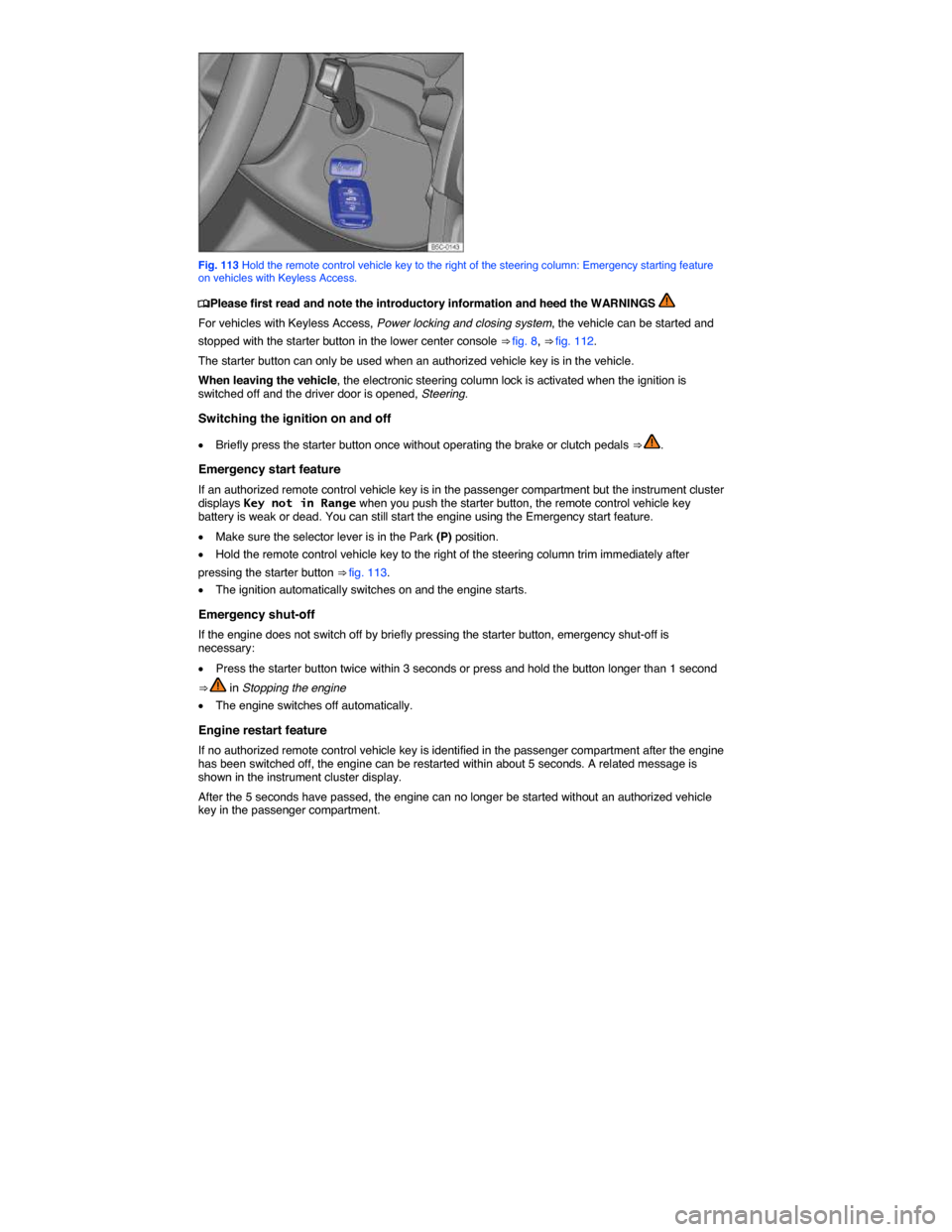
Fig. 113 Hold the remote control vehicle key to the right of the steering column: Emergency starting feature on vehicles with Keyless Access.
Page 191 of 380

Please perform these steps only in the order listed.
Step Vehicles without Keyless AccessVehicles with Keyless Access
5. When the engine starts, release the vehicle key. When the engine starts, release the starter button.
6. If the engine does not start, switch off the ignition and start again after about 1 minute.If the engine does not start, switch off the ignition and start again after about 1 minute. Use the emergency start feature if necessary
7. Release the parking brake when you are ready to start driving
WARNING
Never leave the vehicle unattended while the engine is running. The vehicle could move suddenly, especially when the vehicle is in gear, resulting in accidents and personal injury.
WARNING
“Starting fluids” can explode and can cause a “run-away” vehicle condition.
x Never use starting assist fluids.
NOTICE
x You can damage the starter or the engine if you try to start the engine when the vehicle is still moving, or if you try to restart the engine right after switching it off.
x Avoid high engine speeds, full throttle acceleration, and heavy engine loads when the engine is cold.
x Do not try to start the engine by pushing or towing the vehicle. Unburned fuel can get into the catalytic converter and damage it. The steering column may also be locked.
Do not let your vehicle warm up while standing; instead, start driving right away after making sure that you have good visibility through all windows. This will help the engine reach operating temperature faster and keep down emissions.
Major consumers of electricity are temporarily switched off when the engine is being started.
After starting a cold engine, there may be increased operating noises for a few seconds. This is normal and harmless.
When outside temperatures are below +41 °F (+5 °C) and the diesel fueled preheater is activated, minor fume build-up may occur underneath the vehicle.
Stopping the engine
Page 192 of 380

Please perform these steps only in the order listed.
Step Vehicles without Keyless AccessVehicles with Keyless Access
1. Bring the vehicle to a complete stop ⇒ .
2. Depress and hold down the brake pedal until step 4 is completed.
3. Automatic transmission: Shift the transmission into Park (P).
4. Apply the parking brake to help prevent the vehicle from moving
5. Turn the vehicle key to position ⇒ fig. 111 (0) in the ignition switch. Briefly press the starter button ⇒ fig. 112. If the engine will not switch off, carry out the emergency shut-off procedure
6. Manual transmission: Shift into 1st gear (vehicle on flat surface or pointing uphill) or reverse (vehicle pointing downhill).
7. Removing the vehicle key from the ignition switches off electrical equipment and activates the steering column lock.
Opening the doors switches off electrical equipment and activates the steering column lock.
WARNING
Never stop the engine before the vehicle has come to a complete stop. You can lose control of the vehicle, crash, and be seriously injured.
x The airbags and safety belt pretensioners will not work when the ignition is switched off.
x The brake booster does not work when the engine is not running. More brake pedal pressure will be needed to stop the vehicle.
x The power steering system does not work when the engine is not running, and you will need more force to steer the vehicle.
x When the key is removed from the ignition switch, the steering will lock and you will not be able to steer the vehicle.
NOTICE
If the vehicle has been driven hard for a long time, the engine could overheat when it is stopped. To reduce the risk of engine damage, let the engine idle in Neutral for about 2 minutes before you switch off the ignition.
If the ignition is switched on or the engine is running and the driver door is opened, a chime sounds. The chime is also a reminder to switch off the engine and turn off the ignition before leaving and locking the vehicle from the outside.
On vehicles with automatic transmissions, the vehicle key can only be removed from the ignition when the transmission is in Park (P).
After the engine has been switched off, the radiator fan in the engine compartment may keep running for several minutes, or may start running after the vehicle has been parked for a while, even if the ignition is switched off and the vehicle key has been removed. The radiator fan shuts off automatically when the engine has cooled down enough.
Page 201 of 380
Shifting with Tiptronic®
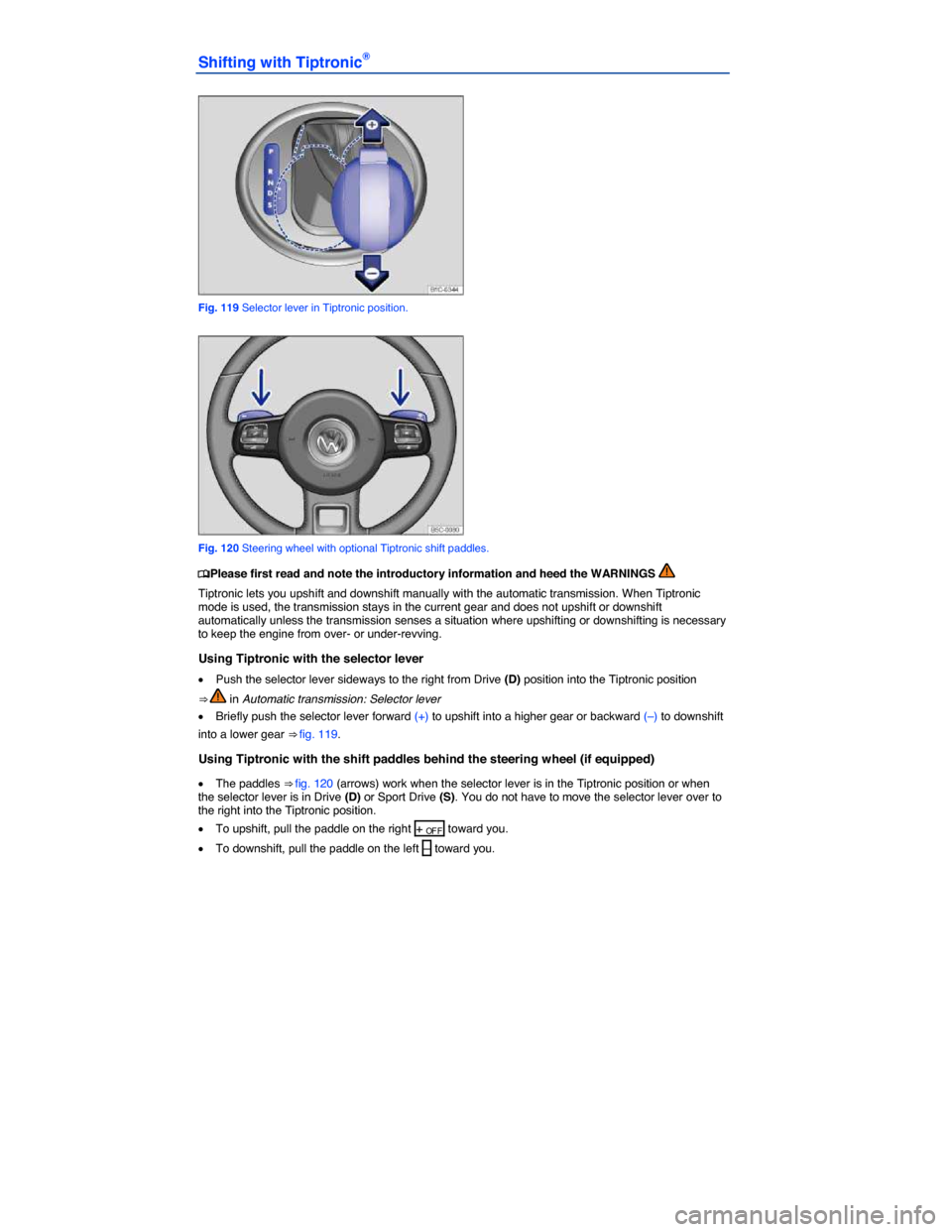
Fig. 119 Selector lever in Tiptronic position.
Fig. 120 Steering wheel with optional Tiptronic shift paddles.