Fan VOLKSWAGEN JETTA 2009 Owner's Manual
[x] Cancel search | Manufacturer: VOLKSWAGEN, Model Year: 2009, Model line: JETTA, Model: VOLKSWAGEN JETTA 2009Pages: 477, PDF Size: 77.6 MB
Page 189 of 477
Booklet 2.1 Safety first
WARNING (continued)
• If a or oth er strap is used lo attac h a
c hild restra int to th e f ro nt p assenger sca t,
make sure that it i s not so tight ,
weight -sensin g lo mea sur e m ore
weig ht than is act ually on th e seat.
Using tethers on rear-facing CRSs
few rear-fa cin g CRSs come wit h a
t e th er. P le a se read and heed the CRS manufa c
t ur er' s in stru ction s carefully
det ermin e how
t o properly ins tall the te th er.
WARNING
A ch ild in a reanva rd-faci ng ch ild seal s tall ed on front passenger seat w ill be ous ly injur ed and can be kill ed if front
a ir ba g in flates· even with a n Advanced Air b ag
Sys te m .
• The
airbag will ch ild seal
or infant carri er w ith g rea t force and will
smas h the child seal and chi ld again st th e
b ac krest, ce nter ar m rest, or door.
• A
tether or other str ap o n a rearward
faci ng c hild re straint attached lo front senge r sca t can put t oo mu ch pr essure on
WARNING (continu ed)
• Th e heavier we ig h t regis tered can make
th e sys te m work as though an adult were on
th e sea l and d epl oy
Adva nce d Air bag w hen ii m ust be s uppressed causing serious or even
fat al inju ry to child .
WARNING (continued)
weig ht -mat in the scat an d register a heav ier
we ig ht in A dvan ced Airba g Syste m. The
h eav ie r we ig ht reg is tere d ca n make
vance d Airba g Sys te m wo rk as thou gh an
a dult were on the seat and dep loy the
va nced A irbag w hen ii must be suppr essed
ca usin g se rious or eve n fatal injury to the
c hild .
• If you mu st in stall a rea rward facing child
sea l o n th e front pas senge r sca t beca use of
cep tional circumstan ces and the PA SSENGER
AIR BAG OFF li ght docs not come on and stay
on, imm edia te ly in sta ll th e rear-facing child
se at in a rear seating po sition and have
airbag system insp ec ted b y your Vo lkswag en
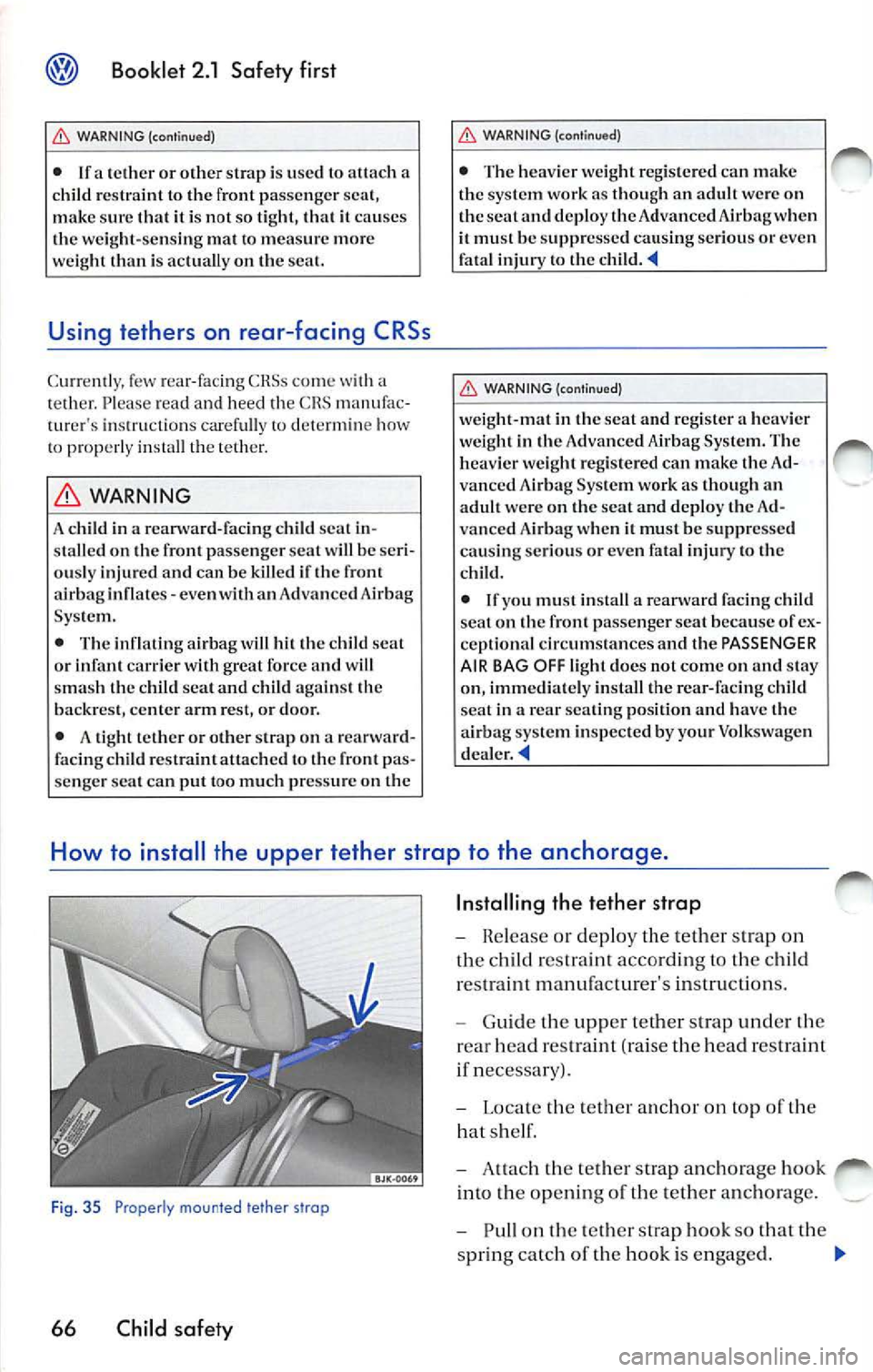
How to install the upper tether strap to the anchorage .
Fig. 35 Prope rly moun ted le ther slrop
66 Child safety In
sta lling the t ether strap
- Release or dep loy the tether str ap on
th e ch ild res train t accor ding to th e ch ild
re stra int manufa ctu rer's in structions.
- Gui de th e upper tether strap und er th e
r e ar head res traint (ra ise th e head res tra int
if necessa ry) .
- Loca te th e te ther anchor on top or th e
h at s h elf.
- Atta ch th e te ther strap anchorag e hook
int o th e op ening
th e tet he r an ch orage.
- Pull on th e te the r strap hook so th at th e
s prin g ca tc h of the h ook is en gag ed .
Page 194 of 477
Alphabetical index
A
Acoustic sig nal 14
Ac tivatin g th e sw itchabl e locking featu re 62
A ddress of NHTSA 1 2
Adjusting safety belt height 24
Adva nced Airb ag Sys tem 3 1
A irb ag dep loymen t zo ne 37
Ho w the compo nen ts wo rk toge th er 35
Adva nced A irbag Sys te m compon ent s 34
Adva nced front airbag syste m 32
A irbag dep loy me nt zone 37
A irba g syste m 27
C ar e 42
Co mpone nts (fro nt airbag s) 34
Co mpone nts (s id e a ir bags) 44
Co mpon en ts (s ide curta in
c hi ld sea t o n t he front
passenger seat 29
Disposal 42
F ro nt airbags 31
Ho w it wo rks? 46, 49
How m any a irbags does my ve hicle
ha ve? 34,
49
Importance of sittin g properly 27
I mportance of wearing safety be lts 27
I mportant thing s
know 27
Indicator light 39
Mo nitor in g 39
PASSENGER
BAG OFF li ght 39
Repai rs 42
S ide airbags 44
W hen mu st the sys te m b e inspected? 39
W here are my a irba gs located? 31, 44, 48
Auto Safety Hotli ne 12
A ut omatic belt r etr ac tor 19
B
Before driv in g 3
Belt p rete nsio ner
D is p osal 26
Service 26
Booster seats 59
Booklet 2 .1 Saf ety first
T et her an chor s 65
Tether strap 65
C onve rtibl e child seats 57
Curtain a irbags 48
C ustome r CARE Ce nter 27
D
Danger offitting a child seat o n the front pas
se nge r sea t 29
D eact iva ting th e swit c hab le lo cking
f ea tur e 63
Dis ta n ce between drive r and steer ing
whee l 4
Dr iver
See Sea ting p osition
Driving safety 3
Dr iv in g w ith childr en 51
E
Examples of imp roper sea ting positions 8
Ext end er for th e s afe ty belts 22
F
Faste nin g
B oos ter sea ts 59
Conve rtible c hild sea ts 57
Infant seats 56
Safety belt extende r 23
Safety belt s 19
Flo or mats 9
Alphabetical inde x 71
Page 195 of 477
@t) Booklet 2.1 Safety first
Front airb ag s yste m 31
A irb ag deplo ym ent zone 37
Th e ba sics 3 1
Front a irba gs
D escr iption 31
F ront al co llisio ns a nd th e la ws of physics 15
G
G uid e fixtu res for lowe r an ch or ages 68
H
H ead rest raint s
C orr ect a djustm ent 7
He avy clothin g and safety b elt s 17
H ow man y airba gs does my ve hicl e have? 34,
44,49
How to in stall th e upp er teth er strap to th e
an chorage 66
I mp orta n ce of s ittin g pro perly 27
Imp ort an ce of wea rin g sa fety be lts 27
Important thin gs
10 do befo re dri vin g 3
Imp roper sea tin g pos ition s 8
Impr operly wo rn safety belt s 25
Ind ica to r light
Ai rbag sys tem 39
Indic ator li ght s
A irb ag sys te m 39
P ASS ENGE R
BA G OF F 39
In fant sea ts 5 6
In stallin g
L
Child r estra int with a s afety belt 60
CR S usin g th e LAT CH sys te m 69
L ea ther sea ts
P ressu re mar ks 67
L owe r an chora ges 67
Lu gg age compartm ent 10
M
M onitorin g th e A dva nce d Airbag Sys te m 39
72 Alphab etical index
Mount in g and re leas ing th e an cho ra ge
h oo k 68
N
NHTSA 12
N umb er of sea ts 13
0
Occ up ant seatin g po siti ons 4
p
PASS ENGE R AIR BAG OFF light 39
P asse nge rs
See Sea ting pos ition
Pe dals 9
P hys ic al prin ciple s of a fro ntal collisio n 15
P reg nant women
S p ec ia l co nside rations w he n wea ring a
s afe ty be lt 21
Pr ess ure m ark s 67
P ro per adju stm ent of head res traint s 7
Pro per oc cu pa nt sea ting po siti ons
Pro pe r safe ty belt po sition 20
P ro per sea tin g pos ition
R
D rive r 4
pa sse nger 5
Occ upant s 4
Rea r passe nge rs 6
R epa irs
i\i rb ag sys te m 42
R epo rti ng saf ety de fec ts 12
R et ra cto r 19
s
Safe driv in g 2
Sa fety belt ex te nd er 22
Sa fe ty belt heig ht adju stm ent 24
Sa fe ty belt pos itio n 20
A dju stin g sa fe ty belt h eig ht 24
P reg nant women 21
Sa fe ty belt pr ete n sion ers 25
Safe ty belt wa rnin g ligh t 14
Page 228 of 477
Booklet 3.1 Controls and Equipment
If the warning light ligh ts up again after d rivi ng
o n for a sh o rt dis tan ce, stop the vehicle and
swi tch off the engine. C onta ct an authorized
V olk swa gen deal er or a qualifi ed wor ksh op.
WARNING
Stop! Before working in the engine compart
ment, always read and heed all WARNINGS
3.2 "Working in the engine com
partment. " The engine compartment of any
motor vehicle is a pot entially dangerou s area
and can cause serious personal injury.
WARNING
Hot steam or coo lant can cause serious burns.
• Never open the engine hood if you sec
steam or coo lant escapi ng from the engine
compartment. Always wa it until you no longer
sec or hea r steam or coo lant escap ing from the
engi ne.
• Always let the en gi ne to cool down com
pletely before carefully open ing the engine
h ood. Hot components w ill burn skin on co n
tact.
• When the engine has cooled down and you
are ready to open the engine hood:
R emove the key from the ignition.
Engine oil pressure 9=:7:
WARNING (continued)
Apply the parking brake firmly and put
the selector in P (Park, automatic trans
mis sion) or Neutral (manual transmis
s ion) .
Keep c hildren a nd oth ers away from the
vehicle.
• Never reach into the area around or touch
the radiato r fan. Contact with the blades can
re sult in serious persona l injury.
• Alway s remember that the radiator fan is
temperature-contro lled and can t urn on sud
den ly - even when the engine has been
switched
for a longer period of tim e and the
k ey has been removed from the ignition.
• Never unscrew the coolant expansio n tank
ca p when the engine is hot. A hot engine will
h eat the coolant and put it under pressure . Re
moving a ca p that is under pressure can result
in serious personal injury and/or burns.
• Alw ays protect face, hands and arms from
h ot escap ing coo lant or steam by cover ing the
cap w ith a large, thick rag.
• Turn the cap slowly and very carefully in a
co unt er-clockwise direction while applying
light downward pres sure on the top of the cap.
• Never sp ill antifreeze or coo lant on the ex
haust system or hot engine parts. Under some
co ndit ions, the ethylene g lyco l in engine
coo lant can catch fire.
This warning symbol indicat es that the en gin e oil pressure is low.
I f thi s wa rning symbo l s tart s to flas h. an d thr ee
w arning s sound , sw itch th e e ngin e and ch ec k
th e oi l leve l. Top off with en gin e oil if necessary
3.2 "Tip s an d Adv ic e" , ch ap te r "E n
g in e o il."
The follo win g inform ation text is disp la ye d:
ST OP Oil p ressure Engin e off Owner 's manual!.
If th e sy mb ol fl as hes eve n though the oil l eve l is
co rrec t, do 11 01 drive on. D o not le t th e engine
idl e. Co nta ct a n authori zed Vo lksw age n d eale r
or a qua lified wo rksh op .
Tip s
Th e oil pre ssure wa rnin g symbol is not an oil
l eve l ga uge. Check the o il leve l reg ularl y, pre fe r
a bl y every time you get gas .
Instrument panel 25
Page 241 of 477
Booklet 3.1 Controls and Equipment
WARNING (continued)
• Never transport objects larger than those
fitting completely into the luggage area be
cause the rear
cannot be fully closed.
• If you absolu te ly must drive with the rear
lid open, observe the following notes to reduce
the risk of carbon monoxide poisoning:
Close all windows ,
Close the power roof,
Open all outlets in the in strument
panel,
Swi tch off the air recirculation,
Set the fresh air fan to the highest speed.
• Never leave yo ur veh icle unattended or let
ch ildr en play around your vehicle , esp ecially
with th e rear lid left open. A child could craw l
into the vehicle through the luggage com part-
Closing the rear lid
Place you r hand into one of the hand le
rece sses in the in sid e trim of th e re ar lid
and pull the rea r Lid do wn.
If the vehicl e is loc ke d (anti-theft alarm syste m
act ivate d ) and the r em ote co ntrol k ey is use d t o
o p en
rea r lid onl y, th e rea r li d is loc ke d im
m ediat ely w hen it is cl ose d. A ll turn sig n als flas h
bri efl y as co nfirmati on.
A di spl ay ap p ea rs in the in strum en t clu ster if th e
r e ar lid i s not properl y close d.
WARNING
Always close the rear lid properl y to help avoid
ser iou s personal injury.
• Never let anyone
in the way of the of the rear lid or its hin ges when the rear lid is
closing.
• Always make sure that the rear lid closes
properly when you close it so that
it cannot
open s udden ly while the vehicle is moving.
38 Opening and closing Keys
WARNING (cont inued)
ment and pull the lid shut becoming trapped
and unable to get out. Being trapped in ave
hicle can l ead to ser iou s persona l injury.
• Heat build-up in the passenger compart
ment and luggage compar tmen t or a parked
vehicle can result in temperature s in the ve
hicle that are much high er than the outside
temperatures, particularly in summer. Tem
pera tures can quickly reach leve ls that can
cau se unconsciou sn ess and death, particu
larly to sma ll ch ildr en.
Tips
At t emp era tur es below O • th e re ar lid will not
o pe n aut om atic all y a ll th e w ay afte r unl ockig it.
I t wil l b e necess ary to lift it by hand
WARNING (continued )
• Never leave your vehicle unattended or let
ch ildr en p lay around your vehicle, especially
w ith the r ear
op en. A child could craw l
into th e vehicle through the luggage compart
ment and pull the lid shut becom ing tra pped
and unable to get out. Being trapped in ave
hicl e can lead to serio us per sona l injury, esp e
cially when it is very hot or co ld.
• Nev er le ave c hildren, disabled per son s or
anyone who ca nnot help themsel ve s in the ve
hicle . The doors ca n be locked using the re
mot e co ntrol key or the central lo cki ng button.
Th is cou ld result in peop le being trapped in
the veh icle.
• Hea t b uil d-up in the passenger compart
ment and luggage compartm ent of a parked
vehicle ca n result in temperatures in the ve
hicle that are much higher than the outside
t e mperat ures , particularly in summer. Tem
peratures can quick ly reac h leve ls that can
cau se unconsciousness and death, particu
larl y to small children
Page 278 of 477
Booklet 3.1 Controls and Equipment
WARNING
Heavy load s will influ ence the way your ve
hicle handl es and heavy loads t hat are not
properly stowe d or sec ured can cause loss of
contro l a nd se rious injury.
• Always keep in
when transporting
h eav y ob ject s, that a chan ge in th e center of
gravity can also cause c hanges in vehicle han
dling:
-Always distribute the load as evenly as
po ssib le.
- Secur e heavy object s properly as far for
ward in the lug gage compar tment as pos
sible.
- Alwa ys s ecure heavy items securely
using the tie-downs provided wit h suitable
s trap s.
• Never excee d the Gross Axle Weight
or the Gross Ve hicle Wei ght Hating on the
s afe ty compliance sticker o n th e left d oor
jamb. Exceedi ng permi ssible weig ht can ca use
the vehicle to slide and handle difTerently.
• Always read and heed a ddition al imp or
in forma tion on driving 2.1
" Safety first."
WARNING
To help p rev en t poisonou s exhaust gas from
being drawn into the vehicle , a lways ke ep the
rear lid clo sed w hile driving.
• Never transport objects larger than those
fitting completely into the luggage area be
cause t he rear lid cannot be full y closed.
• If you abso lut ely must drive with the rear
li d open, observe the following notes to reduce
th e risk of poisoning:
WARNING (continued)
-Close all wind ows,
- Close the power roof,
- Open all air outlets in the in strumen t
panel,
- Switch off the air recirculation,
- Set the fresh air fan to the highest speed.
WARNING
Always make sur e that the doors and rear lid
are secure ly clo sed and locke d to redu ce the
risk of injury when the vehicle is not being
u sed.
• Afte r clo sing the rear lid , a lways mak e sur e
that it is p roper ly closed and locked.
• Never leave yo ur vehicle unattended espe
cially with th e rear lid left open. A child could
craw l into the vehicle through the luggage
compartment a nd pull the re ar lid or window
s hut becoming trapped and unab le to get ou t.
Being trapped in a ve hicle can lead to serious
p ersona l inju ry.
• Never le t ch ildr en play in or around the ve
hicle.
• Never let passe ngers ride in the luggag e
com par tmenl. Vehicl e occupants must always
be properl y re strained in one of the veh icle's
s eat ing po siti on s.
Note
o bj ec ts o n th e hat sh elf co uld d am age the
w ires of the re a r w ind ow d efogg er.
Tips
D o no t co ve r th e ve ntilatio n slo ts in front of th e
r e ar sid e w ind ows beca use this ca n pr event sta le
a ir fr om esca ping the vehi cle.
Seats and storage 75
Page 283 of 477
Booklet 3.1 Controls and Equipment
Air conditioning system
Heating
Controls
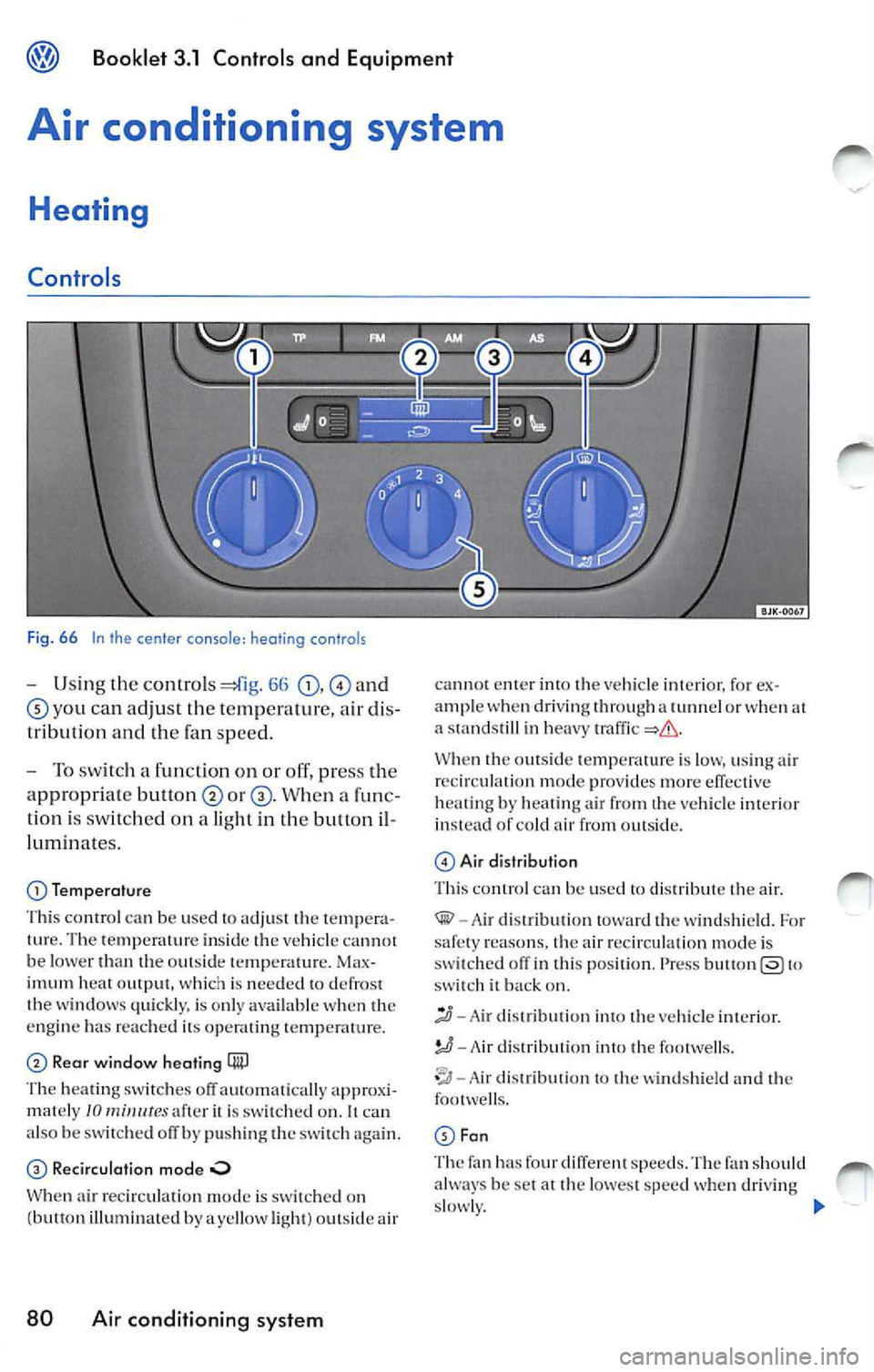
Fig. 66 In the ce nter c onsol e: heo ting control s
-Using the control s 66 and
yo u ca n adju st th e te mper atur e, a ir di s
tr ibuti on an d th e fan speed.
- To switc h a fun ctio n on or off, pr ess th e
ap propriat e
When a fun c
tion is switch ed on a light in th e button i l
luminate s.
Temperatur e
Th is c ont rol can b e use d to a dju st th e te m pera
tu re . Th e te mp erat ure insid e th e ve hicl e
be lower than the out sid e te mpera tur e. Max
imum hea t outp ut, w hich is nee ded to defros t
the wind ows quic kl y, is on ly av ailab le w hen th e
e ngi ne has reac hed i ts ope rat ing te mp erature.
R e ar window heating (jiiJ
The heatin g switc hes off aut om atica lly approxi
m ate ly JO 111 i11 111es it is sw itch ed on . It can
also he sw itch ed olTb y pu shing th e ag ain.
Recirculation mode
W hen air recirc ulat io n mod e is sw itched on
(b u illumin ated yellow light ) out sid e ai r
80 Air conditioning system
can not ent er int o the vehicle interior , fo r ex
a m ple w hen dri ving through a tunn el or w hen at
a sta nd sti ll in hea vy
When th e ou ts ide te mp eratur e is lo w, usin g air
re circ ulati on mode prov ides more
heat ing by heat in g fro m th e ve hicle int erior
i n ste ad of co ld air from outsid e.
Air di stribution
Thi s con tro l c an b e used to di stri bu te th e a ir.
-A ir dis tribu tio n th e w indshi eld. For
s afe ty reaso ns. th e air reci rcula tion mode is
sw itch ed off in th is po sit ion. Press
swit c h it b ack on .
-A ir di stri but ion into th e ve hicle int erior.
!,,0 -Air di stribution in to th e footwe lls.
- Air dis tr ibution to th e and the
foot well s.
Th e fa n h as four diffe re n t spee ds. The fan sh ould
always be se t at the lowes t spe ed when dri ving
s low ly .
Page 284 of 477
Booklet 3.1 Controls and Equipment
WARNING
Poor visibility increases the risk of collision s
and other accidents.
• Always make sure all windows are clear of
i ce, snow, and condensa tion for good visibility
- ou t the wind shield , side a nd rear wind ow s.
• Maximum heating output and fast de
frosting will onl y occur aft er the en gin e has
Climatic
Applies to ve hicles, Climatic
Controls
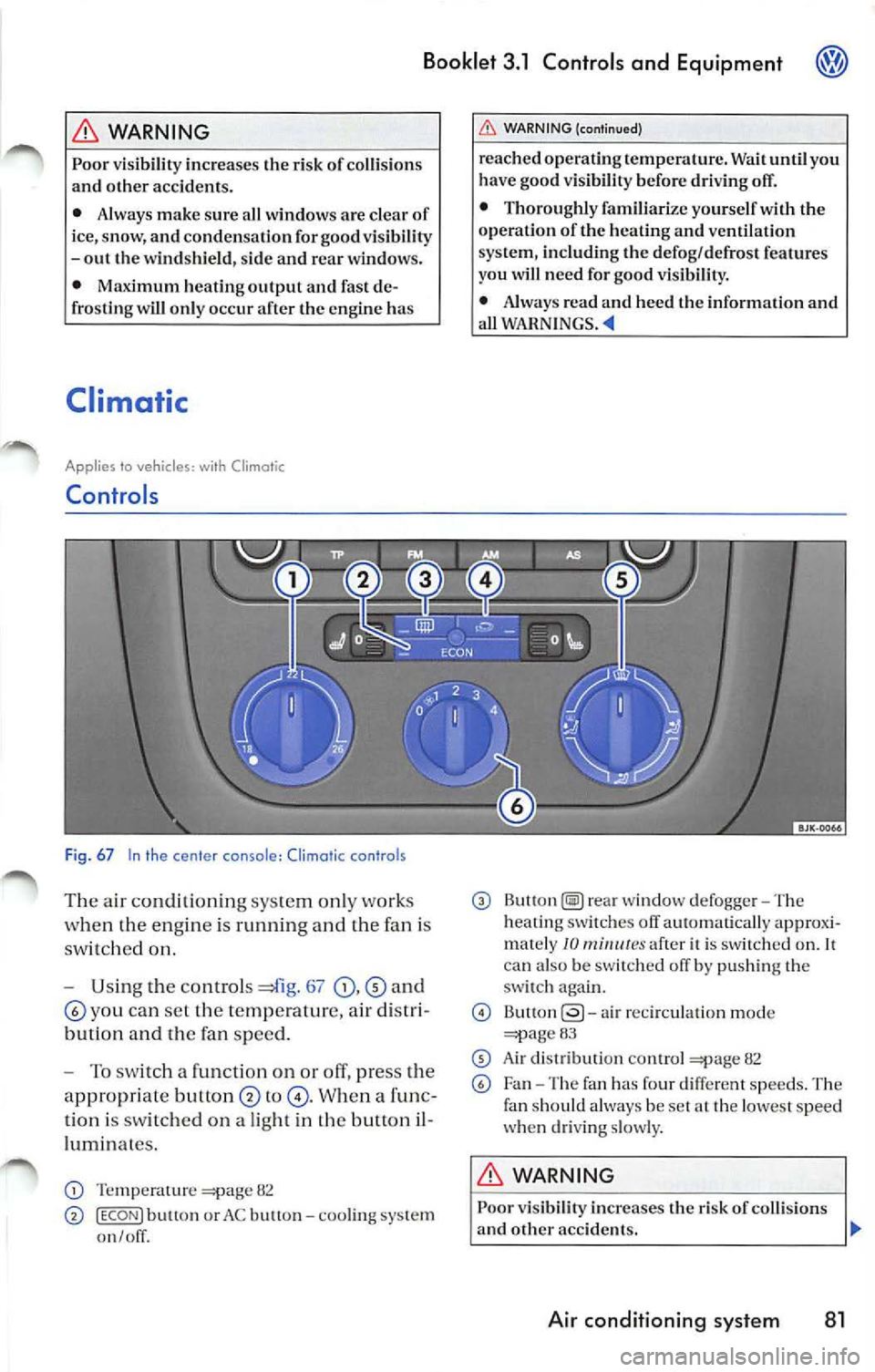
Fig . 67 In the cen te r console , Climatic cont rols
Th e a ir co nditi oning sys te m o nly wo rks
w hen the en gin e is running and th e fan i s
s w it c h ed on.
- Usin g the control s
67 and
yo u can set th e te mperatur e, air di str i
bution and th e fan sp eed.
- To switch a functi on on or off, pre ss the
appropriat e button
Wh en a func
tion is sw itch ed on a light in th e bu tton
il
lumin ates .
Te mp erature =q1age 82
IECONJ butlOn or AC bu lion - coo ling sys te m
o n/off.
WARN ING (co ntinu ed)
reached operating tempe rat ure. Wait until you
have good v isi bili ty befor e driving off.
• Thoroughly famili ari ze yo urse lf wit h th e
operat ion o f the heating and ventilatio n
s ystem, including the defog/defros t features
yo u will n eed for goo d vis ibilit y.
• Always read and h eed the informat ion a nd
a ll WAR NINGS .
'4
But1on rea r window defogge r - The
h eat ing sw itches off a utom atic ally app rox i
m ate ly
/0 a ft er it i s s witc h ed on. It ca n also be swi tc h ed off by pus hing th e
sw it c h aga in.
air r ecir culati on m ode
=q1 age 83
A ir di stri bu tion co ntrol =q1age 82
Fan -Th e fan has fo ur di ffere nt sp ee ds. T he
fa n sh o uld always be se t the lo wes t spe ed
w hen dr ivi ng slow ly.
WARNING
Poor vis ibility increases the risk of c olli sions
and o ther accident s.
Air conditioning system 81
Page 285 of 477
Booklet 3.1 Controls and Equipment
WARNING (continued)
• Always make sure a ll windows arc clear of
ice, snow, and conde nsa tion for good v is ibili ty
-out the wind shi eld , side and rear w indows .
• Max imum heating output and fast
frosting w ill only occur after the en gine has
Applies to vehicles: with Climo tic
Heating and cooling the interior
WARNING (continued)
reache d operat ing temperature. Wait until you
h ave good v is ibilit y befor e driving
• Thoroughly fam iliar ize yourse lf wi th the
op erat io n of lhe hea tin g and vent ilation
sys tem, including the defog/defrost features
you w ill ne ed for good visibilit y.
• Always read and heed the inform ati on and
a ll
The set tempe rature is maintained a.ulOmatically .
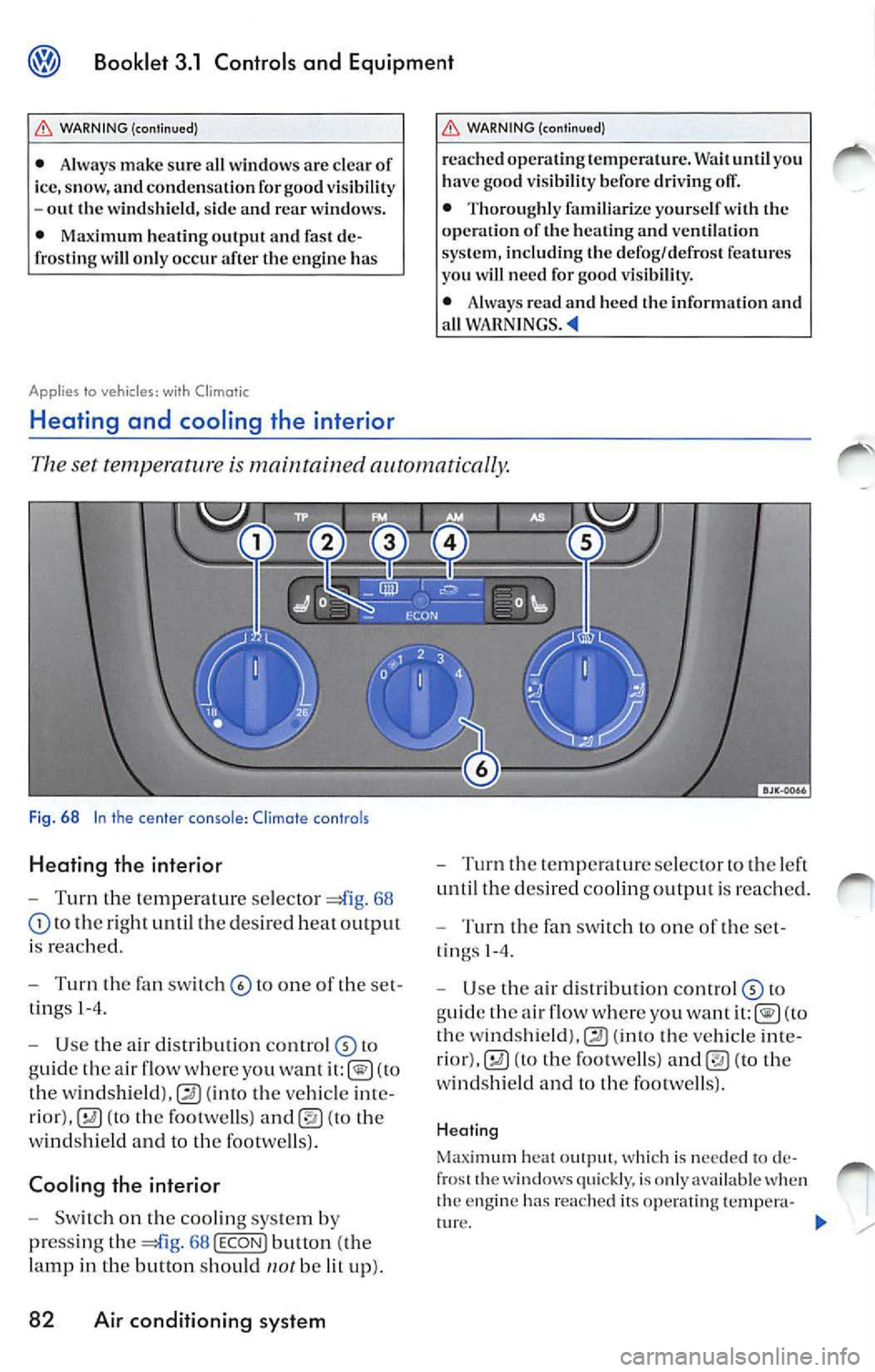
Fig. 68 I n the cen ter conso le : C limo te co ntrols
Heating the interior
- Turn the temperatur e selector 68
to the right until the desired heat output
i s reached.
- Turn the ran switch © to one of the
tin gs
- Use the air di stribution to
g uid e th e air whe re you want (to
the wind shi eld l.@( into the vehicle
(to th e foot wells) th e
w ind shi eld and to th e footw ells).
Cooling the interior
- Sw itc h on the coo ling sys te m b y
pre ssing th e =efig. 68 IECONI button (the
l amp in the button should
1101 b e lit up).
82 Air conditioning system
Turn rhe temperature se lector to the le ft
until the des ired coo ling outpu t is reach ed.
Turn th e fan switch to one of the
tin gs
- Use the air d ist ribution control to
g uide the ai r flow wher e you want
(lo
th e windshield).@ (into the vehicle inte·
ri or).@j ( to the foo t wells)
(to the
w in dshi eld and to th e footwell s).
Heating
Maximum output , w hich i s need ed to fr os t the quickly , is on ly available when
the engin e rea ch ed its ope rating
Page 286 of 477
Booklet 3.1 Controls and Equipment
Cooling system
When the air condit ion ing is on, not on ly th e
temperatur e, but also the air humidit y in th e ve
h icle interior is re du ced. Thi s improve s comfort
for the vehicle occupallls and preve nts th e w in
dows from fogging up when th e o utsi de a ir i s
very humid.
I f the air conditionin g does not
on, it
co uld be for one of the follow ing reasons
• the eng ine is no t running.
Applies to vehicles: with Climatic
Air recirculation mode
• th e fan is sw itch ed off.
• t he outs id e te mperatu re is lower than
rou ghly
+ 40 ( +3 °CJ .
• the air conditioner compr essor has bee n
tempor aril y sw it ched off because th e e ngi ne
coo la nt te mp erature i s too high.
• the air condition er fu se is blow n.
• have the air condit ione r ch ecked by an au
th ori ze d Vo lkswage n deale r.
Air recirculat ion mod e prevent s fum es or unpleasant smells from entering the ve
hicle.
- Pre ss the butt on 82, 68
switch air r eci rculat io n mode on or off.
When it is s witch ed on a yellow light in the
button light s up.
Air r ecircul atio n m ode pre vents stro ng out door
odors from ent erin g th e ve hicle interior, for ex
amp le when driving th rough a tunnel or in
de nse traffi c.
the out side te mp erature is low, usin g air
r e circulat io n m ode prov ides mor e effective
h ea tin g by hea ting air fr om th e ve hicle int eri o r
instead of cold air from outsid e.
W hen th e o utside te mperat ure is hi gh, usin g air
r eci rculation mode prov ides m ore effectiv e
coo ling
cooling air from th e ve hicle i111erior
in ste ad of wa rm ai r from ou ts id e.
For safety re aso ns, air re cir cu lati on is not pos
s ib le
th e colll ro l for air di stributi on i s set
t o th e® pos ition. The air reci rc ul atio n m ode ca
n b e sw itch ed back on b y pressing
bu lion .
WARNING
Stale air cau ses driver fatigue and reduces
dri ver alert ness . Thi s can lead lo acciden ts,
co llisio ns and seriou s perso nal injury.
• Neve r use air reci rculation for lo ng period s
of tim e becau se no fresh air will come into the
pa ssenger com partm ent.
• If the coo ling sys tem is sw itch ed o ff, the
w indows can fog up qui ckl y and decrease
dr ive r vis ibilit y.
• Always sw itch the recirculation mode off
wh en i t is not nee ded.
Do not s moke whil e a ir reci rc ul atio n m ode is on,
as sm oke draw n i111 0 the clim ate-co ntrol sys te m
ca n leave a re sidue on th e evaporator, producin g
perm an en t unpl easant odo r.
Air conditioning system 83