lock VOLKSWAGEN T-ROC 2019 Owners Manual
[x] Cancel search | Manufacturer: VOLKSWAGEN, Model Year: 2019, Model line: T-ROC, Model: VOLKSWAGEN T-ROC 2019Pages: 502, PDF Size: 8.58 MB
Page 381 of 502

drive on. Seek professional assistance.
level remains stable.
Fig. 188
fill up above the top edge of the marked area
Coolant
specificationled water
only. Then add the correct proportion of the specified coolant additive as soon as possible
Coolant specification
WARNING
Hot steam and hot coolant can cause serious burns.
coolant coming out of the engine
compartment. Always wait until you can no longer see or hear escaping steam or coolant.
components can burn the skin.
wing points must be observed before opening the bonnet once it has cooled down:
P or move the gear
lever to the neutral position.
hicle key from the ignition lock.
unattended.
expansion tank when the engine is hot. Coolant may spray out and cause serious burns and other
injuries.
-clockwise while exerting gentle downward pressure on
the cap.
with a large, thick cloth.
spilt service fluids can start a fire. In certain circumstances, the ethylene glycol in the coolant can
catch fire.
NOTICE
Page 382 of 502
Refill only with distilled water. All other types of water can cause corrosion in the engine due to
the chemical components contained in the water. This can also lead to engine failure. If any other
type of water apart from distilled water has been refilled, the fluid in the cooling system should be
completely replaced immediately by a qualified workshop.
Fig. 188
be forced out of the cooling system when the engine is hot and could cause damage.
completely. Heavy coolant loss is an indication of leaks in the cooling system. The cooling system
should be checked by a qualified workshop as soon as possible. Failure to do so can result in engine
damage.
have entered the cooling system. Do not drive on! Seek expert assistance. Failure to do so can result
in engine damage.
correct openings. The use of incorrect service fluids could result in serious malfunctions and engine
damage.
Brake fluid
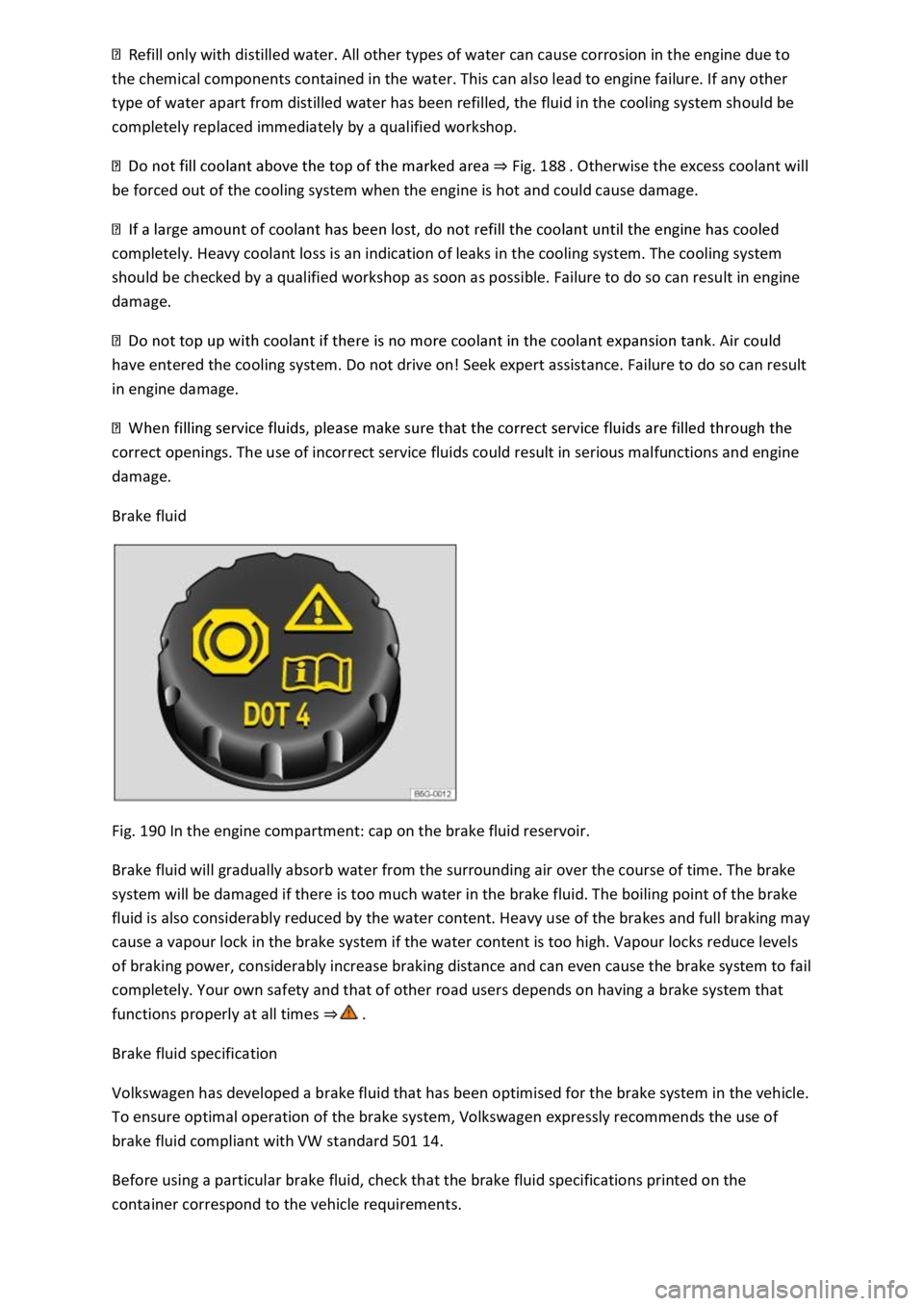
Fig. 190 In the engine compartment: cap on the brake fluid reservoir.
Brake fluid will gradually absorb water from the surrounding air over the course of time. The brake
system will be damaged if there is too much water in the brake fluid. The boiling point of the brake
fluid is also considerably reduced by the water content. Heavy use of the brakes and full braking may
cause a vapour lock in the brake system if the water content is too high. Vapour locks reduce levels
of braking power, considerably increase braking distance and can even cause the brake system to fail
completely. Your own safety and that of other road users depends on having a brake system that
functions properly at all times
Brake fluid specification
Volkswagen has developed a brake fluid that has been optimised for the brake system in the vehicle.
To ensure optimal operation of the brake system, Volkswagen expressly recommends the use of
brake fluid compliant with VW standard 501 14.
Before using a particular brake fluid, check that the brake fluid specifications printed on the
container correspond to the vehicle requirements.
Page 403 of 502

The tread wear indicators show if a tyre is worn down. The tyre must be replaced at the latest when
the tread is worn down to the tread wear indicator.
The bottom of the tyre tread has 1.6 mm high tread wear indicators Fig. 196
tyre sidewall indicate the position of the wear indicators Fig. 196
WARNING
Worn tyres are a safety risk and can lead to a loss of control over the vehicle and cause serious
injuries.
indicators.
roads, which can cause the vehicle to
float along the road surface (aquaplaning).
situations and increase braking distance and the risk of skidding.
Tyre damage
First read and observe the introductoryinformation and safety warnings
Damage to tyres and wheel rims is often hidden
and wheel rims for damage.
Changing a wheelor seal the
tyre with the breakdown set and inflate it Breakdown set
, drive slowly and carefully to the next qualified workshop in order to
have the vehicle checked.
Foreign bodies in the tyre
between the tyre tread blocks can be removed.
Changing a wheelor seal the tyre with the breakdown set and
inflate it Breakdown set
olkswagen recommends using a Volkswagen dealership for this
purpose.
Tyre wear
Fast cornering, heavy acceleration and hard braking all increase tyre wear.
Page 404 of 502
response. Unbalanced wheels will affect the level of tyre wear. In this case, the wheels should be
balanced again.
Incorrect wheel alignment impairs driving safety and increases tyre wear. The running gear should
be checked by a qualified workshop if tyres show excessive wear.
WARNING
If you notice unusual vibration or the car pulling to one side while the vehicle is in motion, this may
indicate that one of the tyres is damaged.
Check the tyres and wheel rims for damage.
have the vehicle checked.
Spare wheel or temporary spare wheel
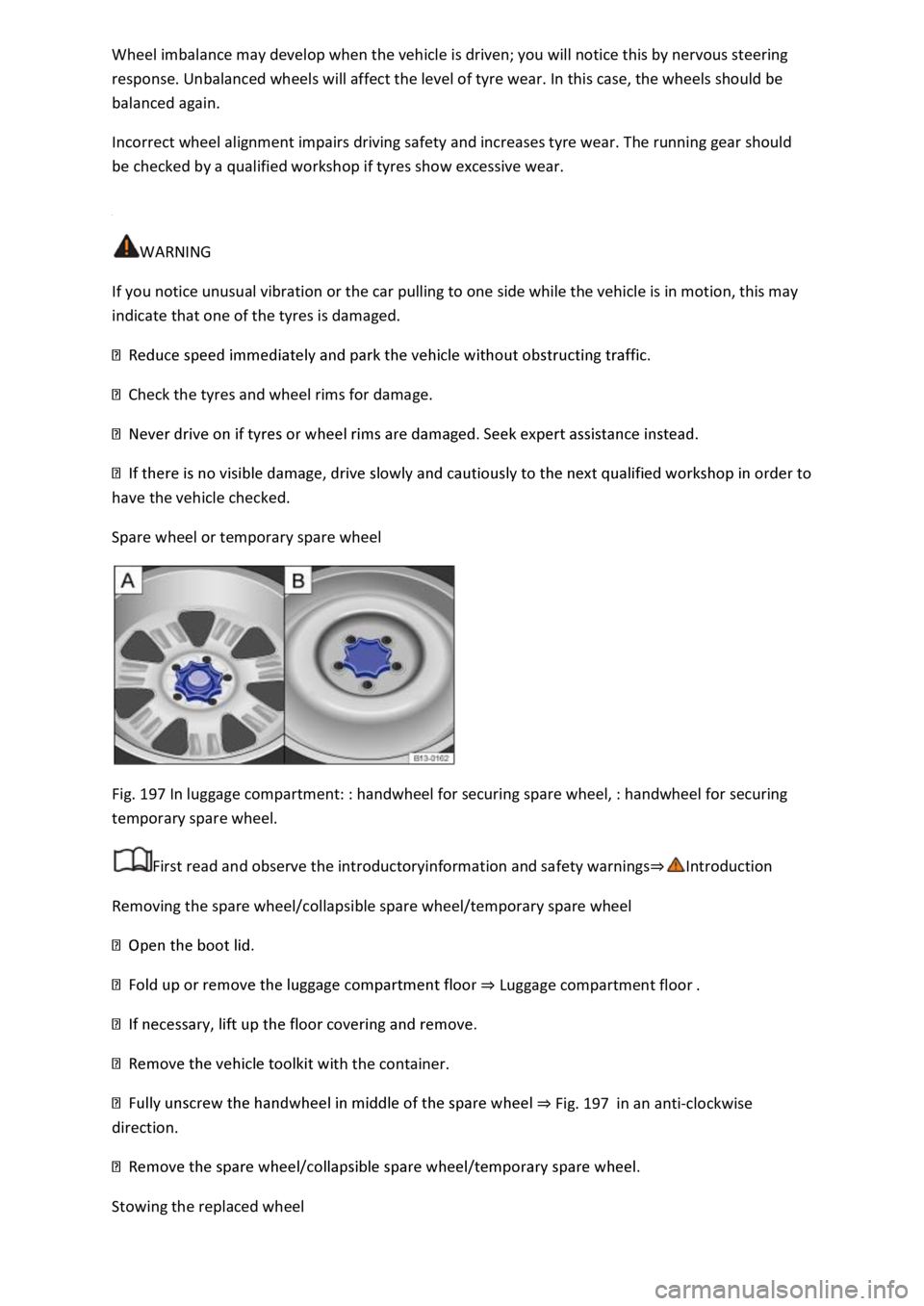
Fig. 197 In luggage compartment: : handwheel for securing spare wheel, : handwheel for securing
temporary spare wheel.
First read and observe the introductoryinformation and safety warnings
Removing the spare wheel/collapsible spare wheel/temporary spare wheel
Luggage compartment floor
th the container.
Fig. 197in an anti-clockwise
direction.
Stowing the replaced wheel
Page 414 of 502
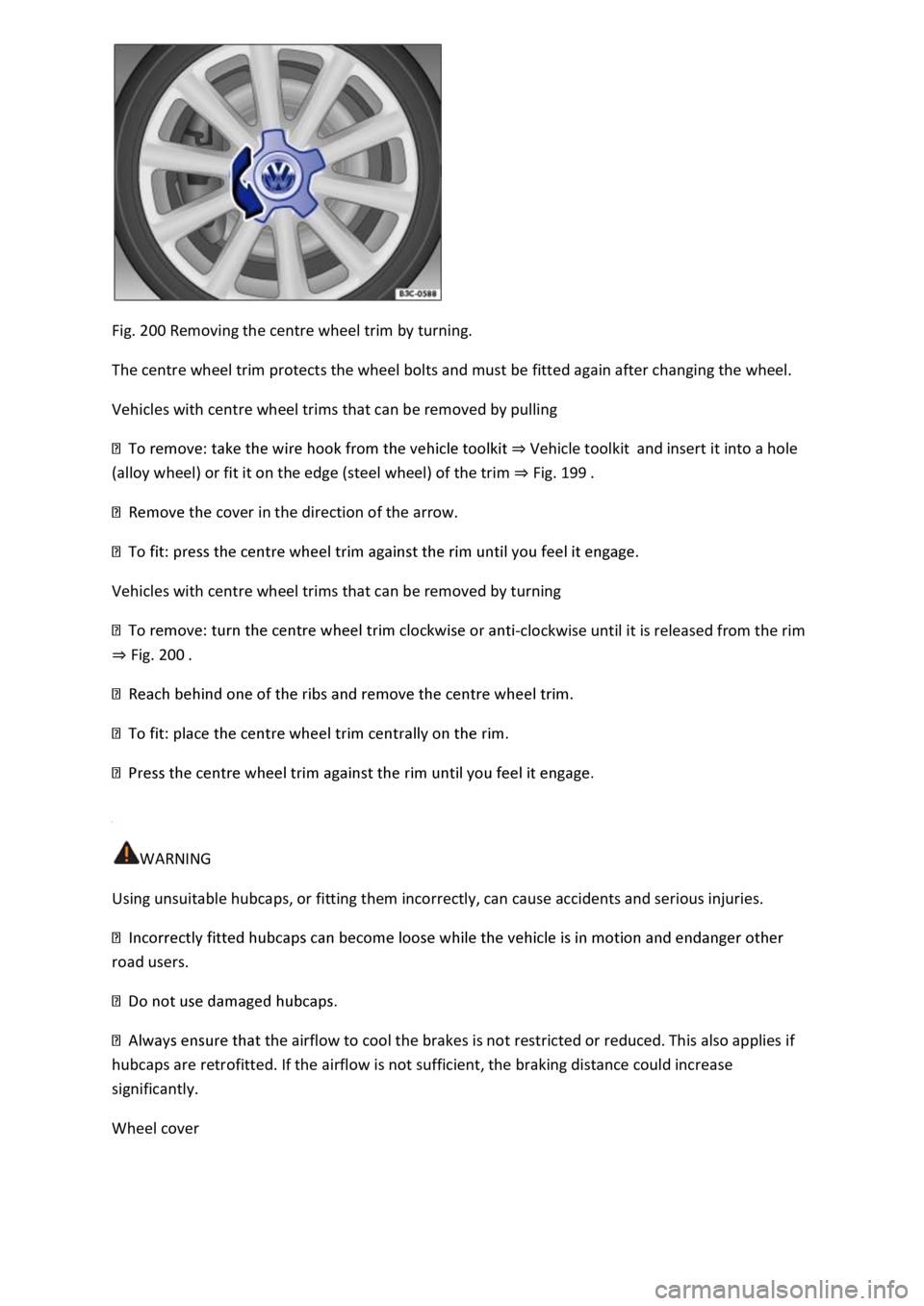
Fig. 200 Removing the centre wheel trim by turning.
The centre wheel trim protects the wheel bolts and must be fitted again after changing the wheel.
Vehicles with centre wheel trims that can be removed by pulling
Vehicle toolkitand insert it into a hole
(alloy wheel) or fit it on the edge (steel wheel) of the trim Fig. 199
cover in the direction of the arrow.
Vehicles with centre wheel trims that can be removed by turning
-clockwise until it is released from the rim
Fig. 200
WARNING
Using unsuitable hubcaps, or fitting them incorrectly, can cause accidents and serious injuries.
road users.
the airflow to cool the brakes is not restricted or reduced. This also applies if
hubcaps are retrofitted. If the airflow is not sufficient, the braking distance could increase
significantly.
Wheel cover
Page 419 of 502
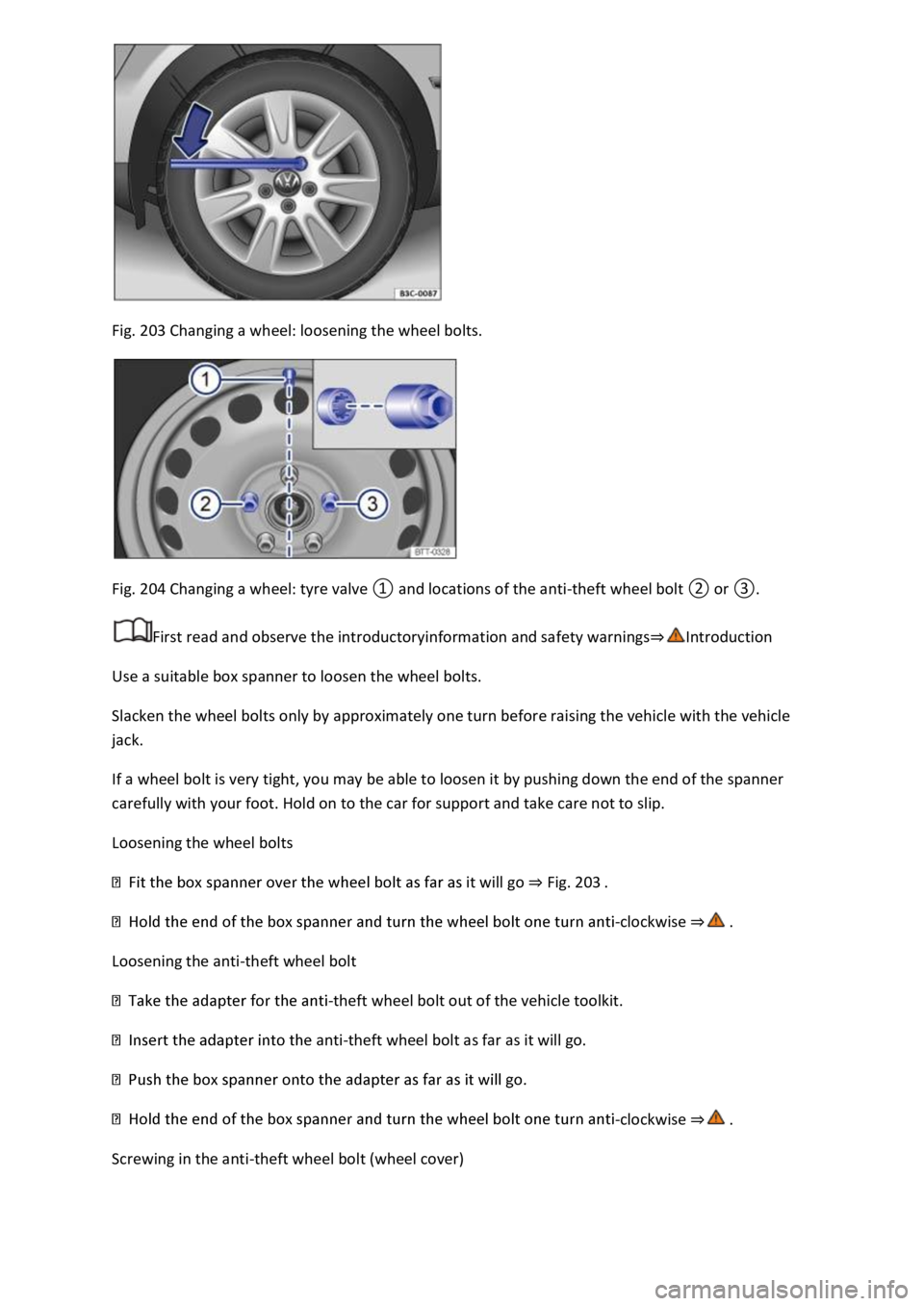
Fig. 203 Changing a wheel: loosening the wheel bolts.
Fig. 204
First read and observe the introductoryinformation and safety warnings
Use a suitable box spanner to loosen the wheel bolts.
Slacken the wheel bolts only by approximately one turn before raising the vehicle with the vehicle
jack.
If a wheel bolt is very tight, you may be able to loosen it by pushing down the end of the spanner
carefully with your foot. Hold on to the car for support and take care not to slip.
Loosening the wheel bolts
it will go Fig. 203
-clockwise
Loosening the anti-theft wheel bolt
-theft wheel bolt out of the vehicle toolkit.
anti-theft wheel bolt as far as it will go.
-clockwise
Screwing in the anti-theft wheel bolt (wheel cover)
Page 424 of 502

theft wheel bolt using the adapter at position Fig.
0
l the other wheel bolts in clockwise direction and tighten them slightly.
tighten the bolts in order but always in diagonally opposite sequence.
Hubcaps
WARNING
Incorrect tightening torque or incorrect use of wheel bolts can lead to a loss of control of the vehicle,
and cause accidents and serious injuries.
ep all wheel bolts and threads in the wheel hubs clean and free from oil and grease. The
wheel bolts must be easy to turn and be tightened to the specified torque.
not use
for loosening or tightening them.
After changing a wheel
First read and observe the introductoryinformation and safety warnings
luggage compartment Vehicle toolkit
Tightening torque of wheel
bolts
as possible.
After changing a wheel, the indicator lamp for the tyre monitoring system may indicate a fault in the
system T
Breakdown set
Introduction
This chapter contains information on the followingsubjects:
Contents of the breakdown set
Preparations
Sealing and inflating tyres
Page 429 of 502

Take the breakdown set out of the luggage compartment.
Take the sticker
Do not remove foreign objects (e.g. screws or nails) from the tyre.
WARNING
Ignoring any of the items on this important safety checklist can lead to accidents and severe injuries.
Sealing and inflating tyres
First read and observe the introductoryinformation and safety warnings
Sealing a tyre
Fig.
0to unscrew the valve core from the tyre valve. Place
the core on a clean surface.
Fig.
0vigorously to and fro several times.
Fig.
0tightly onto the tyre filler bottle in a clockwise direction. The
plastic foil on the closure is pierced automatically.
Fig.
0and place the open end fully on the tyre valve.
Fig.
0to screw the valve core back into the tyre valve.
Inflating the tyre
Fig.
Fig.
0is closed.
-volt plug Fig.
0into one of the vehicle's 12-volt sockets Electrical sockets
Page 439 of 502

pressure cleaner. Never use rotating nozzles
-pressure cleaner.
cm away from the side windows and
other vehicle components.
yres,
rubber hoses, insulation materials or any other sensitive components, e.g. door locks.
brief periods of time.
Hand wash
As a rule, a hand wash is a gentle method to clean your vehicle. However, there are also some things
to note for this
g brush using only light pressure.
Start with the roof and work from the top to the bottom.
Use a shampoo for very stubborn dirt only.
Waxing
Waxing protects the paintwork. At the latest when water no longer clearly forms small drops and
runs off the paintwork when the vehicle is clean, reapply the protection to the vehicle using a quality
preservative wax.
Even if a preservative wax is applied regularly in the automatic car wash, Volkswagen recommends
protecting the vehicle paintwork at least twice a year using Volkswagen Genuine hard wax (-
000 096 317 -).
Polishing
Polishing is only necessary if the paint has lost its shine, and the gloss cannot be brought back by
applying wax.
Matt-painted vehicle parts must not be polished in order to avoid producing a shine
WARNING
Page 442 of 502

nsors, camera lenses:
clean the area in front of the sensors or camera with a soft cloth and solvent-free cleaning agent.
Observe the installation locations Vehicle overviews
camera lens.
Clean sensitive surfaces on the rain/light sensor and the camera window on the windscreen in the
same way as windows and glass surfaces (depending on vehicle equipment).
Remove snow with a hand brush. Do not use warm or hot water. Use the Volkswagen Genuine de-
icing agent (- 000 096 322 -) to remove ice.
Decorative films, protective films:
Remove soiling as for paint. Always use Volkswagen Genuine plastic cleaner (- 000 096 314 -) for
matt decorative films.
Treat the vehicle with liquid hard wax every three months after washing and removing dust. Use
only clean, soft microfibre cloths to apply it. Do not use hot wax, even in car washes.
Trim parts, trim strips, exhaust pipes made of chrome, aluminium or stainless steel:
Clean only using a clean, soft cloth and a mild soap solution2) in a dust-free environment.
Chrome parts can be protected using Volkswagen Genuine hard wax (- 000 096 317 -).
Anodised surfaces: do not use chrome cleaning products.
Headlights, tail light clusters:
Use a soft sponge soaked with a mild soap solution2). Do not use any cleaning agents that contain
alcohol or solvents.
nium care product (-
000 096 319 D -).
Wheels:
Remove dirt and gritting salt deposits with plenty of water.
Alloy wheels: treat dirty aluminium wheels with Volkswagen Genuine wheel rim cleaner (-
000 096 304 -). Volkswagen recommends treating the wheel rims with Volkswagen Genuine hard
wax (- 000 096 317 -) every three months.
-up pen. Go to a qualified
workshop if necessary.
- 000 096 304 -).
Door lock cylinders: