display VOLKSWAGEN T-ROC 2021 Owner´s Manual
[x] Cancel search | Manufacturer: VOLKSWAGEN, Model Year: 2021, Model line: T-ROC, Model: VOLKSWAGEN T-ROC 2021Pages: 502, PDF Size: 9.42 MB
Page 375 of 502

With the engine at operating temperature, park the vehicle on a level surface to ensure that the
engine oil reading is correct.
Switch off the engine and wait a few minutes for the engine oil to flow back into the sump.
Open the bonnet In the engine compartment.
Identify the engine oil filler cap and oil dipstick. The engine oil filler opening can be recognised by
the symbol on the cap and the oil dipstick has a coloured handle. If you cannot find the cap and
dipstick, please contact a qualified workshop.
Pull the dipstick out of the guide tube and wipe it off with a clean cloth.
Insert the oil dipstick into the guide tube again as far as it will go. If there is a marking on the upper
end of the oil dipstick, this marking must fit into the corresponding groove at the top end of the
guide tube upon insertion.
Ⓐ Engine oil
level too high. Observe any messages that are shown on the instrument cluster display or contact a
qualified workshop . Ⓑ Do not fill any engine oil . Continue with step 16. Ⓒ Engine oil level OK.
Engine oil can, e.g. in the case of high engine loads , be filled up to the upper limit of this range.
Continue with step 8 or 16. Ⓓ Engine oil level is too low. Engine oil must be filled. Continue with
step 8.
After reading off the oil level, push the oil dipstick back into the guide tube as far as it will go.
Unscrew the cap of the engine oil filler opening .
Using only the engine oil approved by Volkswagen expressly for this engine, fill oil gradually in small
amounts (no more than 0.5 l).
Page 377 of 502

correct openings. The use of incorrect service fluids could result in serious malfunctions and engine
damage.
The engine oil level must never be above area ⇒ Fig. 186 Ⓑ. Otherwise oil can be drawn in through
the crankcase breather and escape into the atmosphere via the exhaust system.
Troubleshooting
First read and observe the introductoryinformation and safety warnings⇒Introduction
and Engine oil pressure too low
The central warning lamp lights up red and the text message Stop vehicle. Oil pressure. Observe
vehicle wallet is displayed.
Do not drive on!
Switch off the engine and check the engine oil level. Checking the engine oil level ⇒ Checking the
engine oil level and refilling the engine oil . - Do not drive on or allow the engine to run if the
warning lamp is flashing although the engine oil level is correct. The engine could otherwise be
damaged. Seek expert assistance.
and Engine oil level too low
The central warning lamp lights up red and the text message Refill engine oil. is displayed.
Engine oil level is too low. Switch off the engine.
Checking the engine oil level ⇒ Checking the engine oil level and refilling the engine oil .
and Engine oil level low
The central warning lamp lights up yellow and the text message Check oil level. is displayed.
Engine oil level is low. Switch off the engine.
Checking the engine oil level ⇒ Checking the engine oil level and refilling the engine oil .
and Fault in engine oil system
The central warning lamp lights up yellow and the text message Oil sensor: workshop. is displayed.
Engine oil system is faulty. Go to a qualified workshop and have the engine oil sensor checked.
and Engine oil level too high
The central warning lamp lights up yellow and the text message Reduce oil level. is displayed.
Engine oil level is too high. Switch off the engine.
Check the engine oil level. Checking the engine oil level ⇒ Checking the engine oil level and refilling
the engine oil . Seek expert assistance.
Page 389 of 502

Connecting the 12-volt vehicle battery
-volt vehicle
battery.
e cable and then the negative cable ⇒ .
Various indicator lamps may light up after the 12-volt vehicle battery has been connected and the
ignition is switched on. They will go out when you drive a short distance at a speed of approximately
15 – 20 km/h (10 – 12 mph). If the indicator lamps remain lit up, the vehicle should be checked by a
qualified workshop.
If the 12-volt vehicle battery was disconnected for an extended period, the system may not able to
calculate or correctly display the time when the next service is due ⇒ Instrument cluster . Observe
the maximum permissible service intervals ⇒ Service .
Automatic switch-off for electrical consumers
The intelligent vehicle electrical system management function automatically implements a range of
measures to prevent the 12-volt vehicle battery from discharging under high loads:
power supply to the 12-volt socket and the cigarette lighter may be interrupted temporarily
while the engine is being started.
The vehicle electrics management system cannot always prevent the 12-volt vehicle battery from
being discharged, for example if the ignition is left on over a long period with the engine off or the
side lights or parking lights are left on over a long period of time.
12-volt vehicle battery is discharged
gnition is switched on.
⇒ Auxiliary heater and ventilation .
WARNING
Incorrectly mounting the battery and using incorrect 12-volt vehicle batteries can cause short
circuits, fire and serious injuries.
-free and leak-proof 12-volt vehicle batteries that have the same
properties, specifications and dimensions as the factory-fitted 12-volt vehicle battery.
WARNING
A highly explosive mixture of gases is given off when the 12-volt vehicle battery is being charged.
Page 390 of 502

-volt vehicle batteries should be charged only in well-ventilated spaces.
-volt vehicle battery. Discharged 12-volt vehicle batteries can
already freeze at temperatures of around 0°C (+32°F).
-volt vehicle battery must be replaced if it has ever been frozen.
the negative cable.
NOTICE
-volt vehicle batteries if the ignition is switched on or the engine is
running. Never use a 12-volt vehicle battery that does not correspond with the vehicle's
specifications. This can damage the electrical system or electronic components and electrical
malfunctions can occur.
to the 12-volt socket or to the cigarette lighter in order to charge the 12-volt vehicle battery. The
electrical system of the vehicle could otherwise be damaged.
12-volt vehicle batteries may contain toxic substances such as sulphuric acid and lead. Dispose of the
12-volt vehicle battery in accordance with the regulations.
Electrolyte can pollute the environment. Collect any service fluids that escape or are spilt and
dispose of them properly.
Troubleshooting
First read and observe the introductoryinformation and safety warnings⇒Introduction
Vehicle battery (12-volt)
The indicator lamp lights up red.
Fault in the alternator. The 12-volt vehicle battery will not be charged by the alternator while the
vehicle is in motion.
Switch off any electrical consumers that are not required. Inform a qualified workshop. Have the
electrical system checked.
The start/stop system cannot start the engine ⇒ Start/stop system .
and vehicle battery (12-volt)
The central warning lamp lights up red and the text message 12 V battery not charging. Stop vehicle.
is displayed.
Page 391 of 502

Fault in the alternator. The 12-volt vehicle battery will not be charged by the alternator while the
vehicle is in motion.
Switch off any electrical consumers that are not required. Inform a qualified workshop. Have the
electrical system checked.
The start/stop system cannot start the engine ⇒ Start/stop system .
and vehicle battery (12-volt)
The central warning lamp lights up yellow and the text message 12 V battery low. Charge by driving.
is displayed.
The charge level of the vehicle battery is insufficient.
Recharge the 12-volt vehicle battery by driving the vehicle for an extended time.
The start/stop system cannot start the engine ⇒ Start/stop system .
and vehicle battery (12-volt)
The central warning lamp lights up red and the text message Replace 12 V battery. Workshop. is
displayed.
The vehicle battery condition is not ok.
Seek expert assistance and have the battery checked and replaced if necessary.
The start/stop system cannot start the engine ⇒ Start/stop system .
Wheels and tyres
Tyre monitoring system
Introduction
This chapter contains information on the followingsubjects:
⇒ Tyre Pressure Loss Indicator
⇒ Troubleshooting for Tyre Pressure Loss Indicator
The tyre monitoring system warns the driver when the tyre pressures are too low.
The tyre monitoring system monitors various parameters (for example, rolling circumference) of all
wheels using ABS sensors (indirect measurement).
WARNING
The intelligent tyre monitoring system technology cannot overcome the laws of physics, and
functions only within the limits of the system. Incorrect handling of the wheels and tyres can lead to
a sudden loss of pressure in the tyres, tread separation and even tyre blow-out.
Page 393 of 502

ary spare wheel has been fitted.
The Tyre Pressure Loss Indicator may react with a delay or not display anything at all in the event
of a sporty driving style, when driving on snow-covered or icy roads or unpaved roads or when
driving with snow chains.
Synchronising the Tyre Pressure Loss Indicator
button or function button, depending on version ⇒ Vehicle settings menu .
tem.
button.
After an extended driving time with driving at different speeds, the system will automatically learn
the new values and monitor them.
t to rear.
The Tyre Pressure Loss Indicator does not work if there is a fault in the ESC or ABS
⇒ Troubleshooting .
After a warning about the tyre pressure being too low, switch the ignition off and then back on
again. The Tyre Pressure Loss Indicator can be re-synchronised only after this has been done.
Troubleshooting for Tyre Pressure Loss Indicator
First read and observe the introductoryinformation and safety warnings⇒Introduction
lit up
Do not drive on!
s ⇒ Tyre pressure .
Page 427 of 502
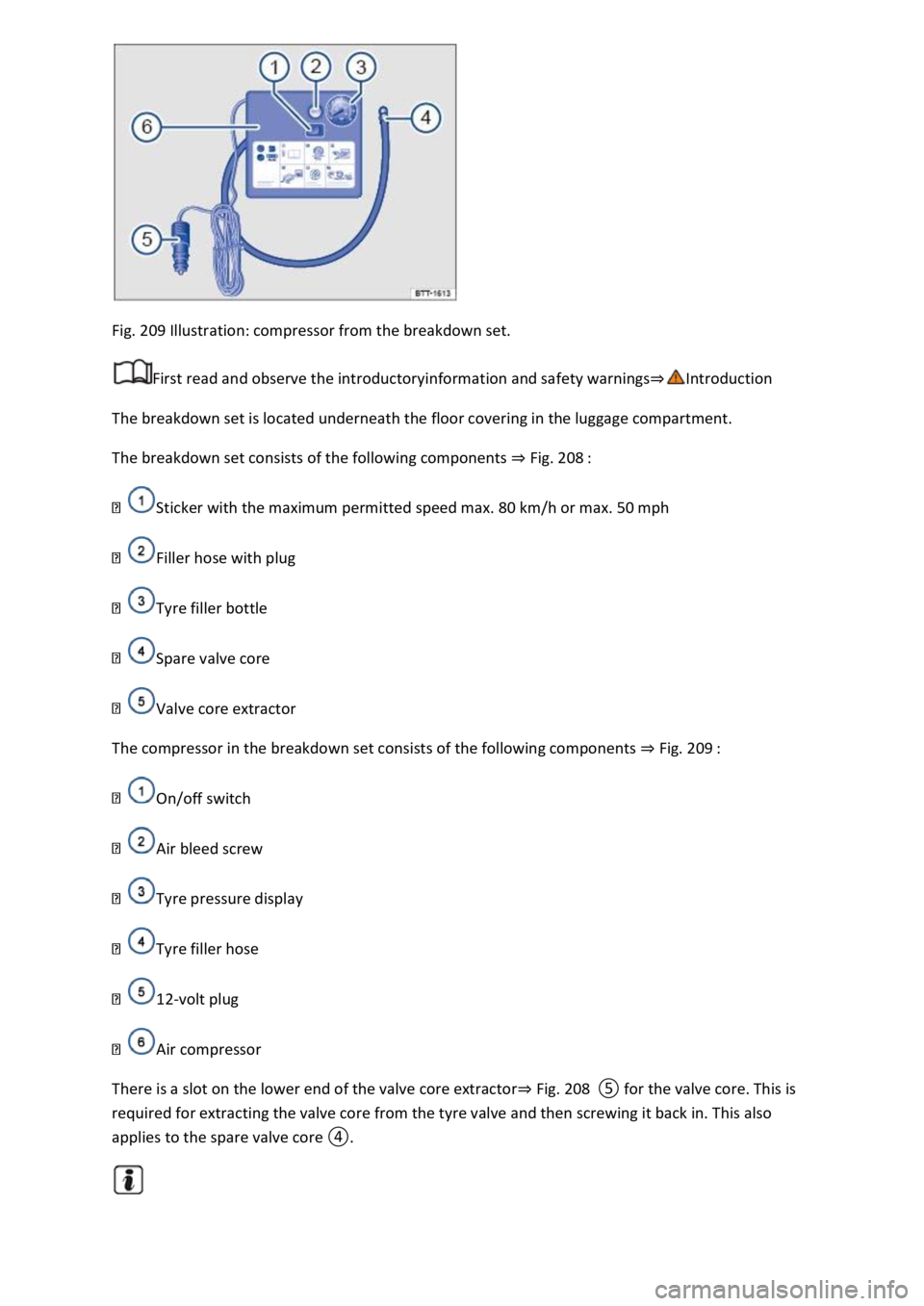
Fig. 209 Illustration: compressor from the breakdown set.
First read and observe the introductoryinformation and safety warnings⇒Introduction
The breakdown set is located underneath the floor covering in the luggage compartment.
The breakdown set consists of the following components ⇒ Fig. 208 :
Sticker with the maximum permitted speed max. 80 km/h or max. 50 mph
Filler hose with plug
Tyre filler bottle
Spare valve core
Valve core extractor
The compressor in the breakdown set consists of the following components ⇒ Fig. 209 :
On/off switch
Air bleed screw
Tyre pressure display
Tyre filler hose
12-volt plug
Air compressor
There is a slot on the lower end of the valve core extractor⇒ Fig. 208 ⑤ for the valve core. This is
required for extracting the valve core from the tyre valve and then screwing it back in. This also
applies to the spare valve core ④.
Page 430 of 502

⇒ Fig. 209① to switch on the air compressor.
– 2.5 bar (29 – 36 psi/200 –
250 kPa) ⇒ . Maximum running time: 8 minutes⇒ .
– 2.5 bar (29 – 36 psi/200 – 250 kPa) cannot be achieved, unscrew the tyre
filler hose from the tyre valve.
metres forward or back so that the sealing compound is evenly
distributed in the tyre.
again.
. The tyre cannot be
sealed with the breakdown set. Do not drive on. Seek expert assistance ⇒ .
km/h (50 mph) if a tyre pressure of 2.0 – 2.5 bar (29 –
36 psi/200 – 250 kPa) has been reached.
minutes⇒ Check after driving for 10 minutes .
WARNING
The tyre filler hose and the air compressor can get hot during inflation.
r hands and skin from the hot components.
bar (29 psi/200 kPa), the tyre is too damaged. The sealant
is unable to seal the tyre. Do not drive on. Seek expert assistance.
NOTICE
Switch the air compressor off after a maximum of 8 minutes to avoid overheating. Let the air
compressor cool down for a few minutes before switching it back on.
Check after driving for 10 minutes
First read and observe the introductoryinformation and safety warnings⇒Introduction
Reconnect the tyre filler hose ⇒ Fig. 209④ and read off the tyre pressure on the tyre pressure
display ③.
1.3 bar (19 psi/130 kPa) and lower:
Page 433 of 502

The service events differ according to oil change service and inspection. The service interval display
in the display of the instrument cluster serves as a reminder for the due date of the next service
event.
Your vehicle will receive either the fixed service or flexible service for the oil change service,
depending on the vehicle equipment, the engine type and the operating conditions.
How do I know which type of service my vehicle needs?
⇒ Fig. 210 (arrow) ⇒ Technical data .
Service eventa) PR No. Service type Service interval
Oil change service QI1 Fixed Every 5,000 km or 1 yearb).
QI2 Every 7,500 km or 1 yearb).
QI3 Every 10,000 km or 1 yearb).
QI4 Every 15,000 km or 1 yearb).
QI6 Flexible According to service interval display.
Inspection According to service interval display.
Observe the information on engine oil specifications according to VW standards ⇒ Engine oil .
Features of the flexible service
With the flexible service, you only need to have an oil change service carried out if your vehicle
requires one. Individual operating conditions and personal driving style are taken into account in
order to determine this point in time. An important part of the flexible service is the use of LongLife
engine oil instead of conventional oil.
Observe the information on engine oil specifications according to VW standards ⇒ Engine oil .
If you do not wish to have the flexible service, you can opt for the fixed service instead. However, a
fixed service can affect your service costs. Your service advisor will be pleased to help.
Service interval display
Scheduled services at Volkswagen are displayed in the service interval display in the instrument
cluster ⇒ Service interval display or in the Vehicle settings menu in the Infotainment system
⇒ Vehicle settings menu . This service interval display provides information on services that include
an oil change or inspection. When an individual service is due, additional work that is due can also be
carried out, e.g. changing brake fluid and spark plugs.
a) Information is stated for vehicles used under normal operating conditions.
b) Whichever comes first.
Page 444 of 502

Textiles, microfibre cloth, leatherette:
Remove any dirt with Volkswagen Genuine interior cleaning agent (- 000 096 301 -). Never treat
materials with leather care agents, solvents, wax polish, shoe cream, stain removers or similar
substances.
icles adhering to surfaces: remove with a vacuum cleaner on a regular basis so that the
material is not permanently damaged by abrasion.
- 000 096 301 -). Dab off
dissolved grease and colour particles with an absorbent cloth and then treat with water if necessary.
-
000 096 301 -) and use a mild soap solution1) if necessary.
Natural leather:
Remove fresh soiling with a cotton cloth and mild soap solution1). Do not allow fluids to seep into
the seams.
Treat any dried stains with Volkswagen Genuine leather cleaner (- 000 096 323 -).
Regularly and each time after having finished cleaning, apply care cream with light protection and
impregnating properties. Use a special coloured leather cream if necessary. If the vehicle is parked
outdoors for long periods, you should cover the leather to protect it from direct sunlight.
Never treat leather with solvents, wax polish, shoe cream, stain removers or similar.
-based soiling, e.g. oil: remove fresh stains with an absorbent cloth.
leather cleaner (- 000 096 323 -).
Plastic parts:
Use a soft, moist cloth.
If stubborn soiling cannot be removed with mild soap solution1), use a solvent-free plastic cleaning
agent if necessary, e.g. Volkswagen Genuine plastic cleaner (- 000 096 314 -).
Trim parts, trim strips made of chrome, aluminium or stainless steel:
Clean using a clean, soft cloth and a mild soap solution1) in a dust-free environment.
Anodised surfaces: do not use chrome cleaning products.
Controls:
Remove coarse dirt and other dirt that is difficult to reach using a soft brush. Then use a clean, soft
cloth and a mild soap solution1). Do not allow liquids to enter the controls.
Displays:
Use a Volkswagen Genuine cleaning cloth (- 000 096 166 A -) with a little water, a suitable glass
cleaner or LCD cleaner. Do not clean displays with a dry cloth.