check engine light VOLKSWAGEN T-ROC 2021 Owner´s Manual
[x] Cancel search | Manufacturer: VOLKSWAGEN, Model Year: 2021, Model line: T-ROC, Model: VOLKSWAGEN T-ROC 2021Pages: 502, PDF Size: 9.42 MB
Page 331 of 502

First read and observe the introductoryinformation and safety warnings⇒Introduction
⇒ Petrol .
⇒ Refuelling .
⇒ Checking the engine oil level and refilling the engine oil .
⇒ Jump starting the vehicle .
If you notice misfiring, loss of power or uneven running when driving, reduce speed immediately and
have the vehicle checked by a qualified workshop ⇒ Troubleshooting . Otherwise unburnt fuel can
enter the exhaust system and escape into the atmosphere. The catalytic converter can also be
damaged by overheating.
The emissions may have a sulphur-like smell even when the exhaust purification system is working
properly.
Particulate filter
First read and observe the introductoryinformation and safety warnings⇒Introduction
Function
⇒ Fuel standards .
⇒ Refuelling .
⇒ Engine oil standards .
⇒ Jump starting the vehicle .
Periodic regeneration
The soot in the particulate filter is burnt off at high temperatures on a periodic basis.
To assist the regeneration of the particulate filter, Volkswagen recommends that you avoid making
only short journeys.
Noises, slight smells and increased engine speeds may occur during regeneration. The radiator fan
may run on while the vehicle is moving or when the engine has been switched off.
During the periodic regeneration process, the yellow indicator lamp does not light up.
Troubleshooting
First read and observe the introductoryinformation and safety warnings⇒Introduction
Irregular engine running and faults
Page 339 of 502

Additional bulb specifications
Some bulbs in headlights or in tail light clusters might have factory specifications that are different to
standard bulbs. The designation is inscribed on the bulb, either on the glass part or on the base.
WARNING
Accidents can occur if roads are not sufficiently illuminated and other road users have difficulty
seeing the vehicle, or cannot see it at all.
WARNING
Changing bulbs incorrectly can cause accidents and serious injuries.
⇒ In the
engine compartment . The engine compartment of any motor vehicle is a dangerous area. Serious
injuries can be sustained here.
change a bulb unless you are familiar with the procedure. If you are uncertain of what to
do, the work should be carried out by a qualified workshop.
heat will cause fingerprints to evaporate on the bulb, which in turn will cause the reflector to go
blind.
-edged parts in the headlight housing in the engine compartment and on the tail
light cluster housing. Protect your hands when changing bulbs.
NOTICE
Damage to the electrical system can be caused by water entering the system if the rubber cover or
plastic covers on the headlight housing are not properly mounted after a bulb has been changed.
Checklist Information on changing bulbs
Page 340 of 502

First read and observe the introductoryinformation and safety warnings⇒Introduction
Checklist
Always carry out the following actions for changing a bulb in the given order ⇒ :
Park the vehicle on a firm and level surface at a safe distance from the flow of traffic.
Switch on the electronic parking brake Electronic parking brake.
Turn the light switch to position 0 Switching lights on and off.
Move the turn signal and main beam lever to neutral position Switching turn signals on and off.
Automatic gearbox: move the selector lever to position P DSG® dual clutch gearbox.
Stop the engine and remove the vehicle key from the ignition Starting the engine.
Manual gearbox: select a gear Manual gearbox: selecting a gear.
Allow the orientation lighting to go out Coming Home and Leaving Home function (orientation
lighting).
Leave the defective bulbs to cool down.
Check to see if a fuse has visibly blown Changing fuses.
Follow the instructions to change the affected bulb . Always replace bulbs with identical bulbs of the
same type. The designation is inscribed on the bulb, either on the glass part or on the base.
Page 341 of 502
Do not touch the glass part of the bulb with unprotected fingers. When switched on, the heat of the
bulb would cause the remaining fingerprint to evaporate and be deposited on the reflector. This will
impair the light output of the headlight.
After changing a bulb, check to ensure that the bulb is working properly. If the bulb is not working
properly, the bulb may not have been inserted properly, may have failed again, or the connector
may have been fitted incorrectly.
Any time you change a bulb at the front of the vehicle, the headlight settings should be checked by a
qualified workshop.
WARNING
Ignoring any of the items on this important safety checklist can lead to accidents and severe injuries.
NOTICE
Always take care when removing or fitting lights to prevent damage to the paintwork or to other
vehicle parts.
Changing bulbs in the front headlights (halogen bulbs)
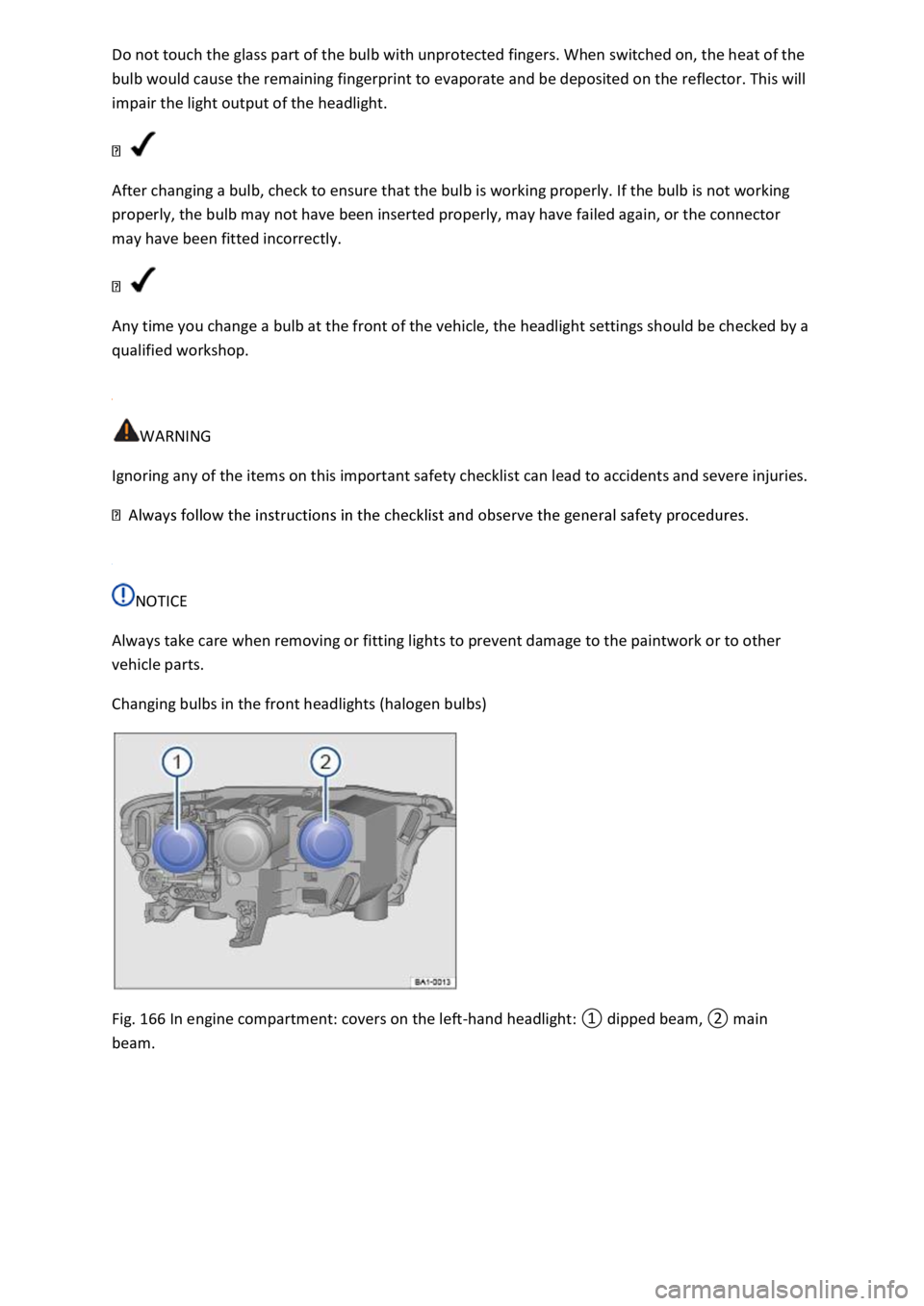
Fig. 166 In engine compartment: covers on the left-hand headlight: ① dipped beam, ② main
beam.
Page 342 of 502
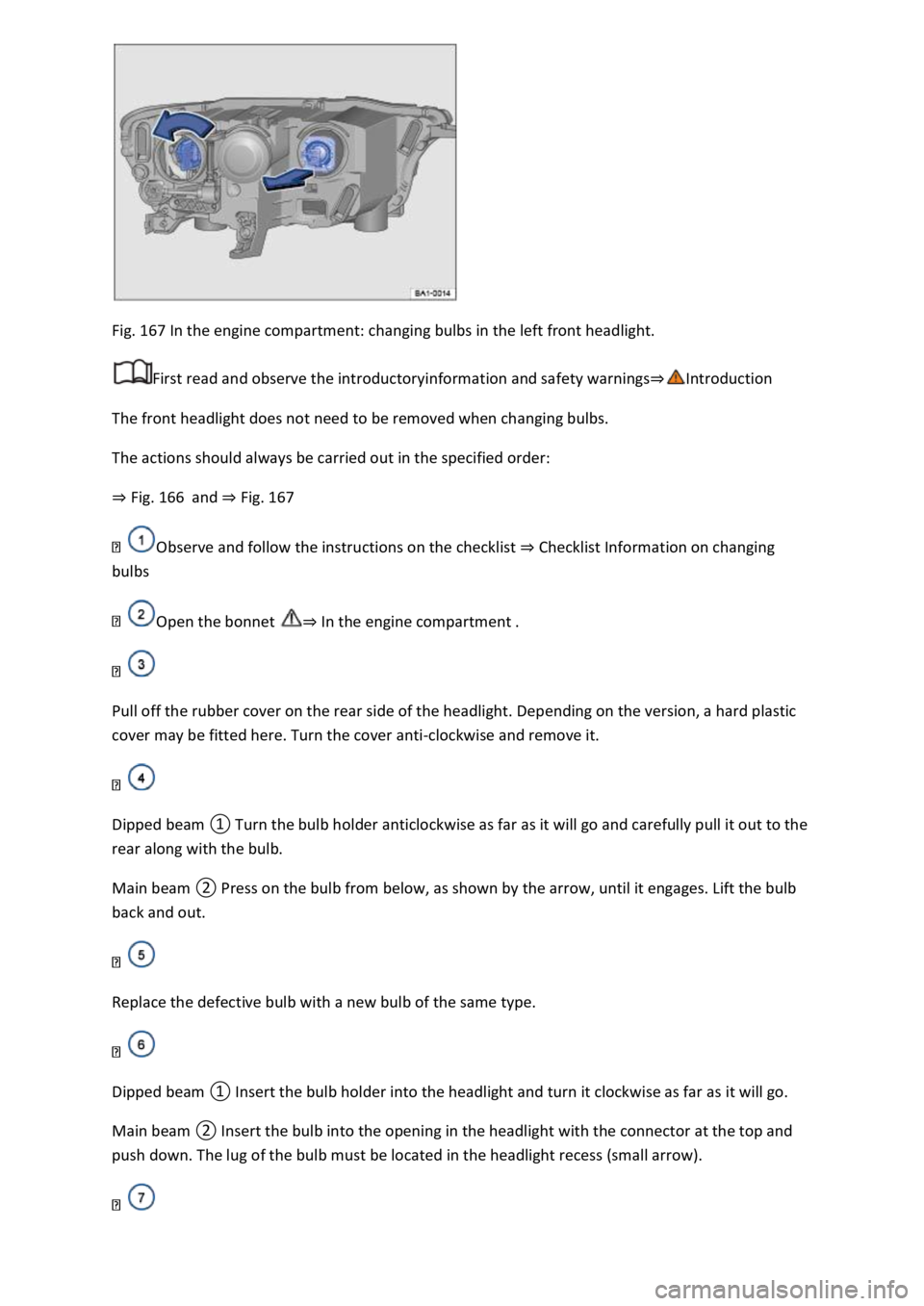
Fig. 167 In the engine compartment: changing bulbs in the left front headlight.
First read and observe the introductoryinformation and safety warnings⇒Introduction
The front headlight does not need to be removed when changing bulbs.
The actions should always be carried out in the specified order:
⇒ Fig. 166 and ⇒ Fig. 167
Observe and follow the instructions on the checklist ⇒ Checklist Information on changing
bulbs
Open the bonnet ⇒ In the engine compartment .
Pull off the rubber cover on the rear side of the headlight. Depending on the version, a hard plastic
cover may be fitted here. Turn the cover anti-clockwise and remove it.
Dipped beam ① Turn the bulb holder anticlockwise as far as it will go and carefully pull it out to the
rear along with the bulb.
Main beam ② Press on the bulb from below, as shown by the arrow, until it engages. Lift the bulb
back and out.
Replace the defective bulb with a new bulb of the same type.
Dipped beam ① Insert the bulb holder into the headlight and turn it clockwise as far as it will go.
Main beam ② Insert the bulb into the opening in the headlight with the connector at the top and
push down. The lug of the bulb must be located in the headlight recess (small arrow).
Page 343 of 502
Attach the rubber cover or hard plastic cover and turn it clockwise as far as it will go.
Close the bonnet ⇒ In the engine compartment .
Changing the bulbs in the headlights (lights with LED technology)
First read and observe the introductoryinformation and safety warnings⇒Introduction
These lamps use LED technology. The LEDs cannot be replaced by customers. If some LEDs fail, this
may be an indication that more elements are on the point of failure. In this case, have the lights
checked and renewed if necessary at a qualified workshop.
Changing the front turn signal bulbs
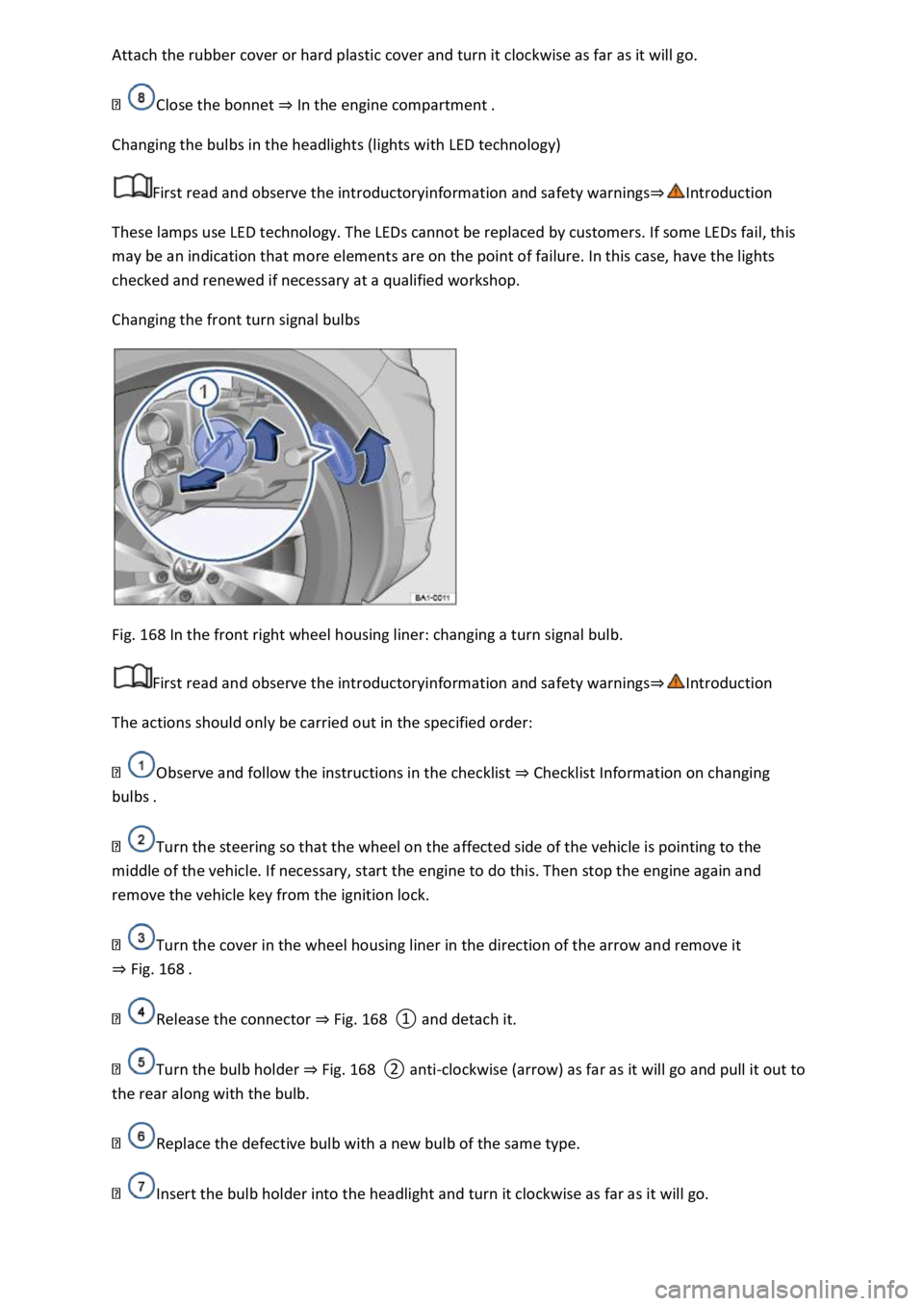
Fig. 168 In the front right wheel housing liner: changing a turn signal bulb.
First read and observe the introductoryinformation and safety warnings⇒Introduction
The actions should only be carried out in the specified order:
Observe and follow the instructions in the checklist ⇒ Checklist Information on changing
bulbs .
Turn the steering so that the wheel on the affected side of the vehicle is pointing to the
middle of the vehicle. If necessary, start the engine to do this. Then stop the engine again and
remove the vehicle key from the ignition lock.
Turn the cover in the wheel housing liner in the direction of the arrow and remove it
⇒ Fig. 168 .
Release the connector ⇒ Fig. 168 ① and detach it.
Turn the bulb holder ⇒ Fig. 168 ② anti-clockwise (arrow) as far as it will go and pull it out to
the rear along with the bulb.
Replace the defective bulb with a new bulb of the same type.
Insert the bulb holder into the headlight and turn it clockwise as far as it will go.
Page 372 of 502

Service identification
You can check whether your vehicle is equipped for the Flexible Service QI6 (Longlife) or Fixed
Service QI1, QI2, QI3, QI4, QI7 (dependent on time or mileage) in the vehicle data ⇒ Technical data
or on the inside cover of this owner's manual.
Permitted engine oil standards
Petrol engineswith particulate filter1)
Flexible ServiceVW 508 00 or alternatively VW 504 002)Fixed ServiceVW 502 00
Petrol engineswithout particulate filter
Flexible ServiceVW 508 00 or alternatively VW 504 00Fixed ServiceVW 502 00
Diesel engineswith particulate filter1)
Flexible ServiceVW 507 00Fixed ServiceVW 507 00
Diesel engineswithout particulate filter
Flexible ServiceVW 507 00Fixed ServiceVW 505 01
Volkswagen recommends engine oils.
NOTICE
additives is not covered by the warranty.
Using other engine oils can cause engine damage.
d engine oils are not
available. To avoid damaging the engine, a maximum quantity of 0.5 litres of the following engine oil
may be used only once until the next oil change:
SN (API SM).
ards ACEA C3 or API CJ-4.
1) Check with a qualified workshop if you are unsure whether your vehicle is equipped with a
particulate filter. Volkswagen recommends using a Volkswagen dealership for this purpose.
2) Using VW 504 00 instead of VW 508 00 may cause the vehicle's emissions values to increase
slightly.
Changing engine oil
First read and observe the introductoryinformation and safety warnings⇒Introduction
Page 377 of 502

correct openings. The use of incorrect service fluids could result in serious malfunctions and engine
damage.
The engine oil level must never be above area ⇒ Fig. 186 Ⓑ. Otherwise oil can be drawn in through
the crankcase breather and escape into the atmosphere via the exhaust system.
Troubleshooting
First read and observe the introductoryinformation and safety warnings⇒Introduction
and Engine oil pressure too low
The central warning lamp lights up red and the text message Stop vehicle. Oil pressure. Observe
vehicle wallet is displayed.
Do not drive on!
Switch off the engine and check the engine oil level. Checking the engine oil level ⇒ Checking the
engine oil level and refilling the engine oil . - Do not drive on or allow the engine to run if the
warning lamp is flashing although the engine oil level is correct. The engine could otherwise be
damaged. Seek expert assistance.
and Engine oil level too low
The central warning lamp lights up red and the text message Refill engine oil. is displayed.
Engine oil level is too low. Switch off the engine.
Checking the engine oil level ⇒ Checking the engine oil level and refilling the engine oil .
and Engine oil level low
The central warning lamp lights up yellow and the text message Check oil level. is displayed.
Engine oil level is low. Switch off the engine.
Checking the engine oil level ⇒ Checking the engine oil level and refilling the engine oil .
and Fault in engine oil system
The central warning lamp lights up yellow and the text message Oil sensor: workshop. is displayed.
Engine oil system is faulty. Go to a qualified workshop and have the engine oil sensor checked.
and Engine oil level too high
The central warning lamp lights up yellow and the text message Reduce oil level. is displayed.
Engine oil level is too high. Switch off the engine.
Check the engine oil level. Checking the engine oil level ⇒ Checking the engine oil level and refilling
the engine oil . Seek expert assistance.
Page 380 of 502
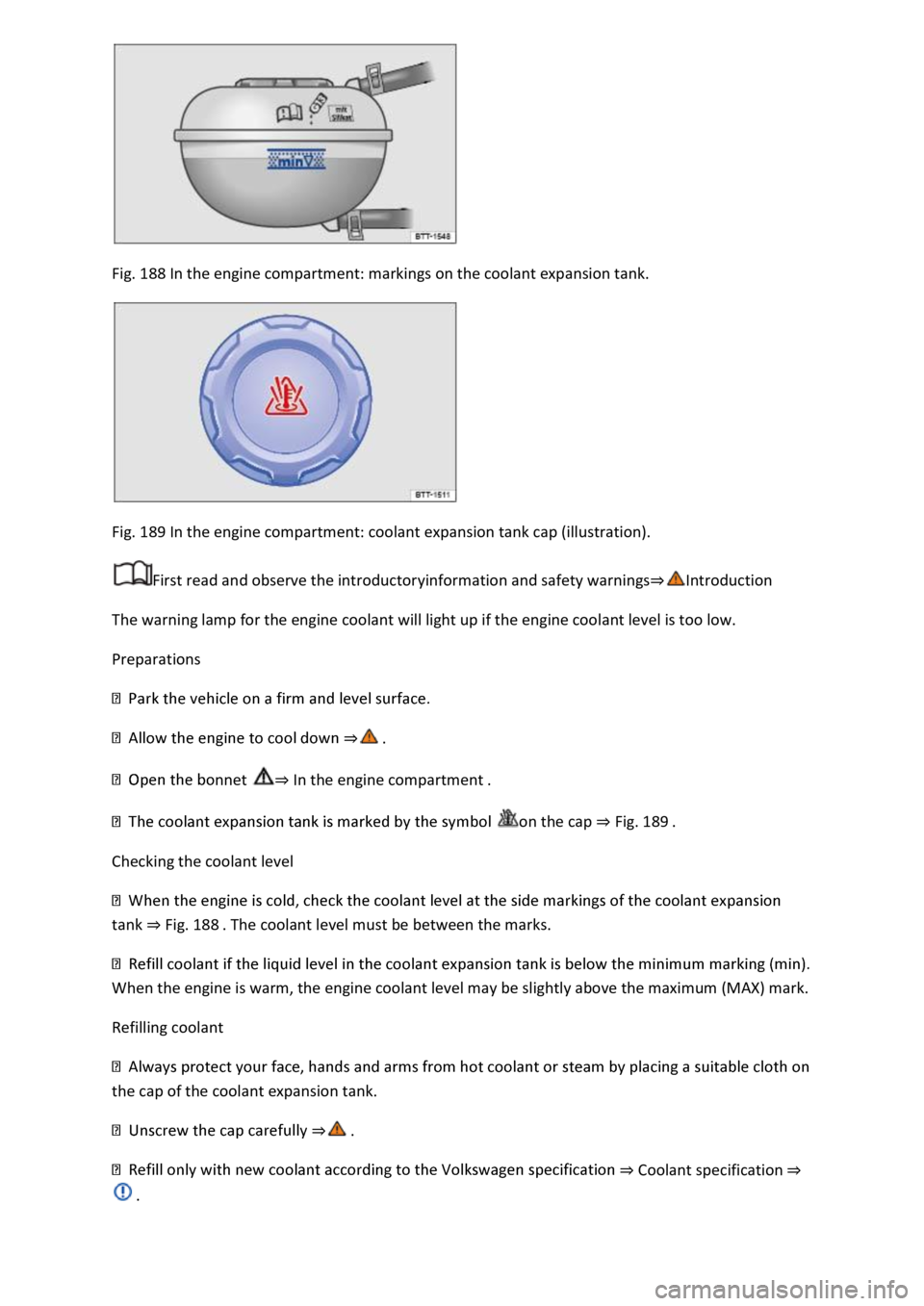
Fig. 188 In the engine compartment: markings on the coolant expansion tank.
Fig. 189 In the engine compartment: coolant expansion tank cap (illustration).
First read and observe the introductoryinformation and safety warnings⇒Introduction
The warning lamp for the engine coolant will light up if the engine coolant level is too low.
Preparations
⇒ .
nnet ⇒ In the engine compartment .
on the cap ⇒ Fig. 189 .
Checking the coolant level
tank ⇒ Fig. 188 . The coolant level must be between the marks.
When the engine is warm, the engine coolant level may be slightly above the maximum (MAX) mark.
Refilling coolant
the cap of the coolant expansion tank.
⇒ .
⇒ Coolant specification ⇒
.
Page 383 of 502

Brake fluid that is compliant with VW standard 501 14 is available from Volkswagen dealerships.
If this brake fluid is not available and it is necessary to use another high-quality brake fluid instead,
brake fluid that is compliant with DIN ISO 4925 CLASS 4 or US standard FMVSS 116 DOT 4 can be
used.
Not all brake fluids that are compliant with DIN ISO 4925 CLASS 4 or US standard FMVSS 116 DOT 4
have the same chemical composition. Some of these brake fluids may contain chemicals that can
damage or destroy brake system components over time.
Volkswagen therefore recommends the use of brake fluid that is compliant with VW standard 501 14
to ensure sustained proper operation of the brake system.
Brake fluid that is compliant with VW standard 501 14 fulfils the requirements of DIN ISO 4925
CLASS 4 or US standard FMVSS 116 DOT 4.
Brake fluid level
The brake fluid level must always be between the MIN and MAX marking on the brake fluid reservoir
or above the MIN marking ⇒ .
The brake fluid level cannot be checked accurately in all models as engine components may partially
conceal the fluid level in the brake fluid reservoir. If the brake fluid level cannot be read exactly,
please go to a qualified workshop.
The brake fluid level drops slightly during vehicle operation as the brake pads wear and the brakes
are automatically adjusted.
Brake fluid level
The indicator lamp lights up red.
Brake fluid level is too low.
Do not drive on! Check the brake fluid level.
If the brake fluid level is too low, inform a qualified workshop. Have the brake system checked.
Changing the brake fluid
The brake fluid should be changed by a qualified workshop. Volkswagen recommends using a
Volkswagen dealership for this purpose. Only brake fluid that conforms with the required
specification should be used.
WARNING
Brake failure or reduced braking efficiency can be caused by the brake fluid level being too low or by
brake fluid that is too old or unsuitable.