Windows VOLKSWAGEN T-ROC 2021 Owner´s Manual
[x] Cancel search | Manufacturer: VOLKSWAGEN, Model Year: 2021, Model line: T-ROC, Model: VOLKSWAGEN T-ROC 2021Pages: 502, PDF Size: 9.42 MB
Page 298 of 502
Never exceed the vehicle's maximum payload. Both the payload and the distribution of the load in
the vehicle will have an effect on the handling and braking distance of the vehicle.
Transporting heavy objects changes the vehicle's handling and the centre of gravity.
The load should be distributed as evenly as possible in the vehicle.
Always secure heavy objects in the luggage compartment as far in front of the rear axle as possible.
Loose objects in the luggage compartment can suddenly slide and change the way the vehicle
handles.
Always adapt your speed and driving style to suit visibility, weather, road and traffic conditions.
Accelerate very carefully and gently.
Avoid sudden braking and driving manoeuvres.
Brake earlier than in normal driving.
NOTICE
Objects rubbing against the rear windows may damage or destroy the heating wires or, depending
on the vehicle equipment, also the aerial.
Luggage compartment cover
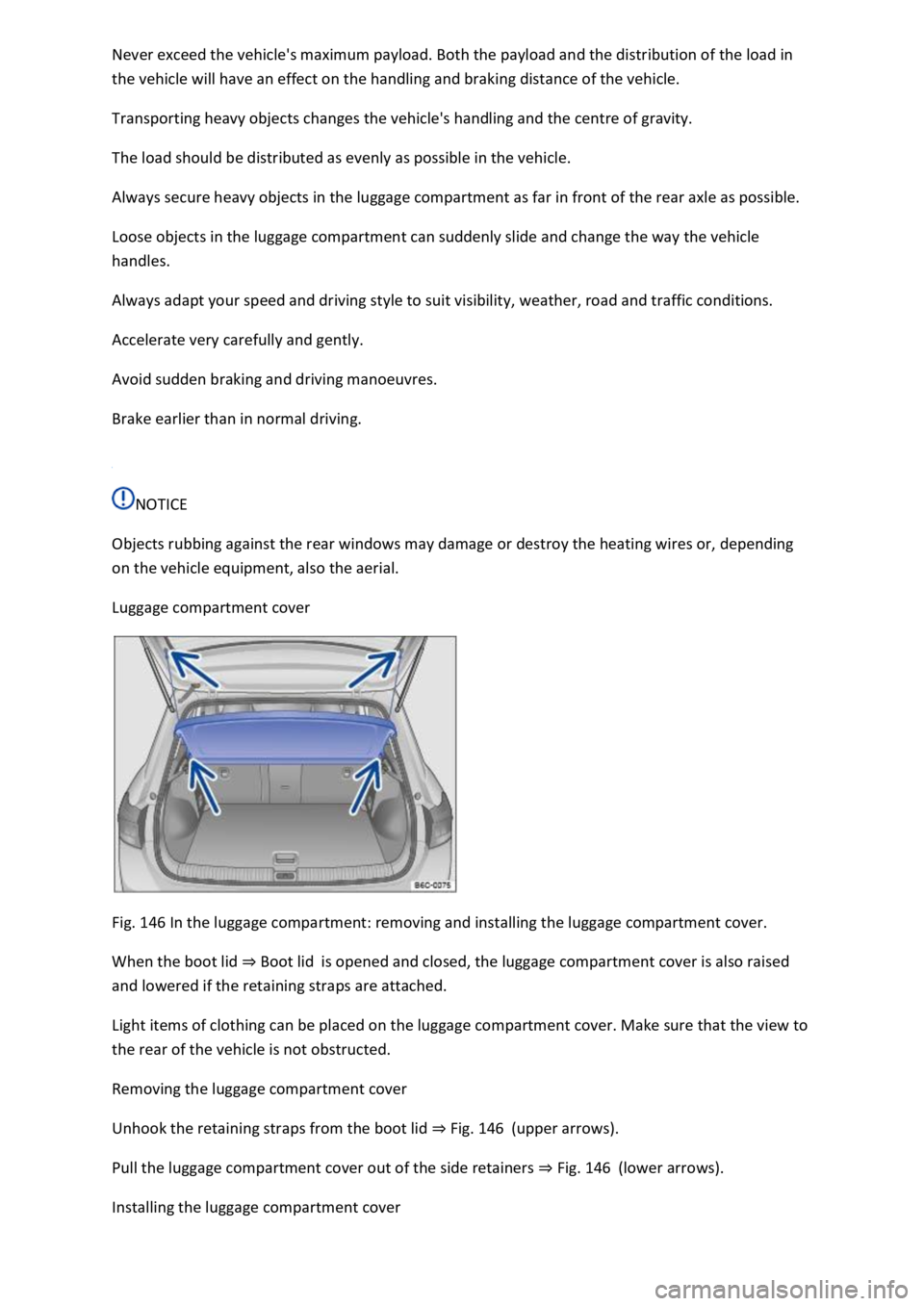
Fig. 146 In the luggage compartment: removing and installing the luggage compartment cover.
When the boot lid ⇒ Boot lid is opened and closed, the luggage compartment cover is also raised
and lowered if the retaining straps are attached.
Light items of clothing can be placed on the luggage compartment cover. Make sure that the view to
the rear of the vehicle is not obstructed.
Removing the luggage compartment cover
Unhook the retaining straps from the boot lid ⇒ Fig. 146 (upper arrows).
Pull the luggage compartment cover out of the side retainers ⇒ Fig. 146 (lower arrows).
Installing the luggage compartment cover
Page 337 of 502

Damaged wiper blades should be replaced immediately. Wiper blades are available from a qualified
workshop.
Cleaning wiper blades
Note for the front windscreen wipers: move the wiper arms to the service position before lifting
them ⇒ Service position .
only in the area of the wiper blade mounting.
⇒ .
Changing the windscreen wiper blades
fting ⇒ Service position .
⇒ Fig. 164 ① and simultaneously pull off the wiper blade in
the direction of the arrow.
r blade with the same length and design onto the wiper arm. Push it on until it
engages.
Changing the wiper blade for the rear window
iper blade mounting.
⇒ Fig. 165 ①.
⇒ Fig. 165 (arrow Ⓐ) and pull it off in the
direction of the arrow Ⓑ at the same time. You may need to use some force to do this.
direction of the arrow. Push it on until it engages ⇒ Fig. 165 Ⓑ. The wiper blade must be in the
folded back position ⇒ Fig. 165 (arrow Ⓐ).
WARNING
Worn or dirty wiper blades reduce visibility and increase the risk of accidents and serious injuries.
nd no longer clean the windows
properly.
Page 437 of 502

Care allergen filter: change.
It is also possible to have servicing work carried out in between the scheduled service events
⇒ Fixed service or flexible service .
The scope of service is subject to change for technical reasons (continuous further development of
components). Your Volkswagen dealership or qualified workshop always has the latest information
about any changes.
Vehicle care
Notes on vehicle care
Regular, expert care helps to maintain your vehicle.
The longer contamination or dirt is left on the surface of vehicle components and upholstery fabrics,
the more difficult it can become to clean and treat them. Extended exposure may mean that it is no
longer possible to remove contamination or dirt.
Volkswagen recommend using Genuine care products that have been matched to your vehicle.1)
Consult a qualified workshop if you have any specific questions or if vehicle parts are not listed.
WARNING
Incorrect care and cleaning of vehicle components can impair the safety features of the vehicle and
cause serious injury.
be cleaned according to the manufacturer's instructions.
airbag modules.
ms against parts with sharp edges, e.g. when cleaning the insides of the
wheel housings.
WARNING
If the windows are covered in dirt, condensation, or ice, visibility will be reduced and the risk of
accidents and severe injuries will increase. This could impair the safety equipment of the vehicle.
-repellent window coating agents. In unfavourable
conditions, such coatings can cause increased dazzle.
Page 439 of 502

Follow the manufacturer’s instructions for the high-pressure cleaner. Never use rotating nozzles ⇒
.
-pressure cleaner.
cm away from the side windows and
other vehicle components.
yres,
rubber hoses, insulation materials or any other sensitive components, e.g. door locks.
brief periods of time.
Hand wash
As a rule, a hand wash is a gentle method to clean your vehicle. However, there are also some things
to note for this ⇒ .
g brush using only light pressure.
Start with the roof and work from the top to the bottom.
Use a shampoo for very stubborn dirt only.
Waxing
Waxing protects the paintwork. At the latest when water no longer clearly forms small drops and
runs off the paintwork when the vehicle is clean, reapply the protection to the vehicle using a quality
preservative wax.
Even if a preservative wax is applied regularly in the automatic car wash, Volkswagen recommends
protecting the vehicle paintwork at least twice a year using Volkswagen Genuine hard wax (-
000 096 317 -).
Polishing
Polishing is only necessary if the paint has lost its shine, and the gloss cannot be brought back by
applying wax.
Matt-painted vehicle parts must not be polished in order to avoid producing a shine ⇒ .
WARNING
Page 441 of 502
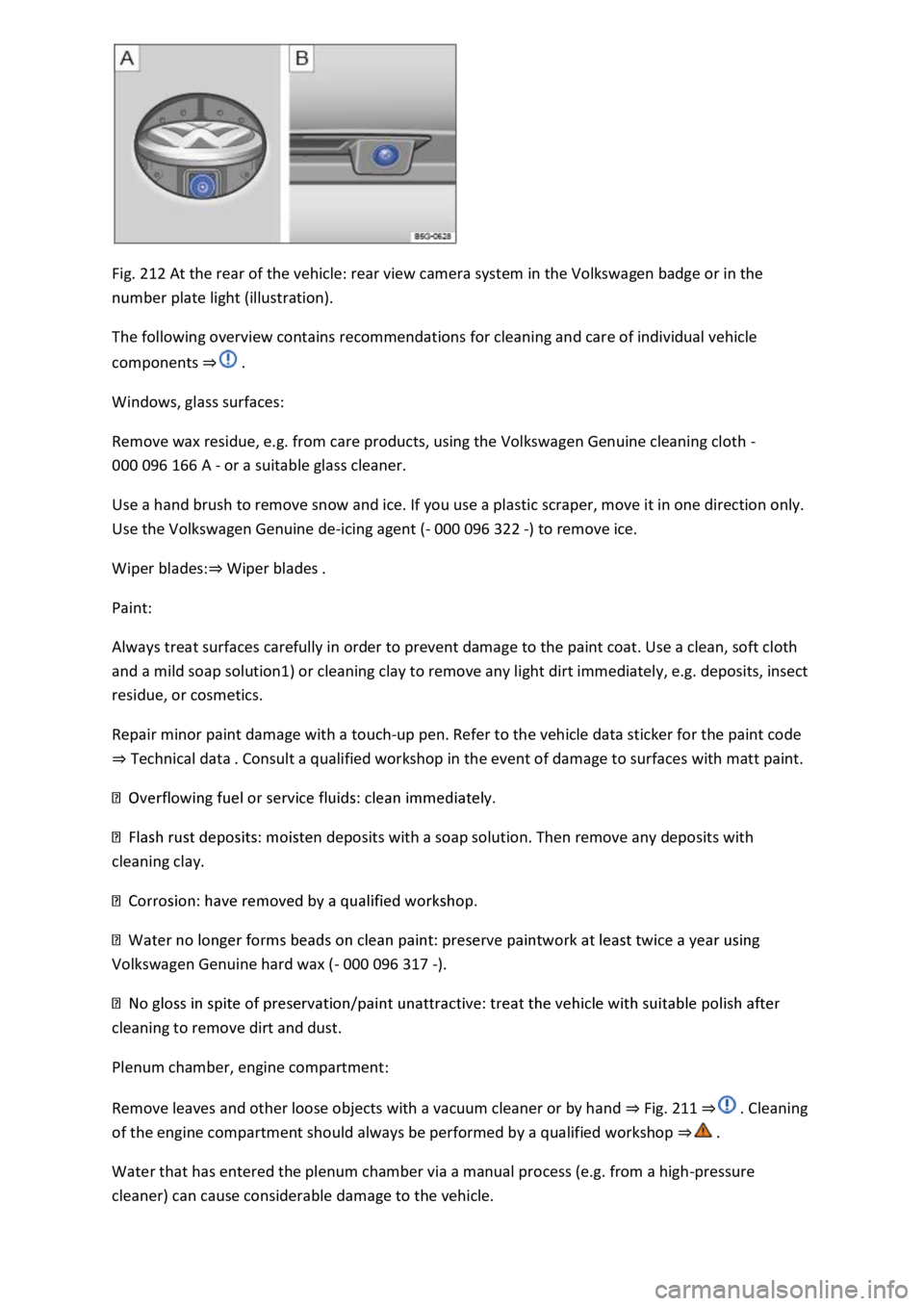
Fig. 212 At the rear of the vehicle: rear view camera system in the Volkswagen badge or in the
number plate light (illustration).
The following overview contains recommendations for cleaning and care of individual vehicle
components ⇒ .
Windows, glass surfaces:
Remove wax residue, e.g. from care products, using the Volkswagen Genuine cleaning cloth -
000 096 166 A - or a suitable glass cleaner.
Use a hand brush to remove snow and ice. If you use a plastic scraper, move it in one direction only.
Use the Volkswagen Genuine de-icing agent (- 000 096 322 -) to remove ice.
Wiper blades:⇒ Wiper blades .
Paint:
Always treat surfaces carefully in order to prevent damage to the paint coat. Use a clean, soft cloth
and a mild soap solution1) or cleaning clay to remove any light dirt immediately, e.g. deposits, insect
residue, or cosmetics.
Repair minor paint damage with a touch-up pen. Refer to the vehicle data sticker for the paint code
⇒ Technical data . Consult a qualified workshop in the event of damage to surfaces with matt paint.
n deposits with a soap solution. Then remove any deposits with
cleaning clay.
Volkswagen Genuine hard wax (- 000 096 317 -).
cleaning to remove dirt and dust.
Plenum chamber, engine compartment:
Remove leaves and other loose objects with a vacuum cleaner or by hand ⇒ Fig. 211 ⇒ . Cleaning
of the engine compartment should always be performed by a qualified workshop ⇒ .
Water that has entered the plenum chamber via a manual process (e.g. from a high-pressure
cleaner) can cause considerable damage to the vehicle.
Page 442 of 502

Sensors, camera lenses:
clean the area in front of the sensors or camera with a soft cloth and solvent-free cleaning agent.
Observe the installation locations ⇒ Vehicle overviews .
camera lens.
Clean sensitive surfaces on the rain/light sensor and the camera window on the windscreen in the
same way as windows and glass surfaces (depending on vehicle equipment).
Remove snow with a hand brush. Do not use warm or hot water. Use the Volkswagen Genuine de-
icing agent (- 000 096 322 -) to remove ice.
Decorative films, protective films:
Remove soiling as for paint. Always use Volkswagen Genuine plastic cleaner (- 000 096 314 -) for
matt decorative films.
Treat the vehicle with liquid hard wax every three months after washing and removing dust. Use
only clean, soft microfibre cloths to apply it. Do not use hot wax, even in car washes.
Trim parts, trim strips, exhaust pipes made of chrome, aluminium or stainless steel:
Clean only using a clean, soft cloth and a mild soap solution2) in a dust-free environment.
Chrome parts can be protected using Volkswagen Genuine hard wax (- 000 096 317 -).
Anodised surfaces: do not use chrome cleaning products.
Headlights, tail light clusters:
Use a soft sponge soaked with a mild soap solution2). Do not use any cleaning agents that contain
alcohol or solvents.
nium care product (-
000 096 319 D -).
Wheels:
Remove dirt and gritting salt deposits with plenty of water.
Alloy wheels: treat dirty aluminium wheels with Volkswagen Genuine wheel rim cleaner (-
000 096 304 -). Volkswagen recommends treating the wheel rims with Volkswagen Genuine hard
wax (- 000 096 317 -) every three months.
-up pen. Go to a qualified
workshop if necessary.
- 000 096 304 -).
Door lock cylinders:
Page 443 of 502

Volkswagen recommends using Volkswagen Genuine de-icing agent (- 000 096 322 -) for de-icing. Do
not use door lock de-icer containing grease solvents.
WARNING
The engine compartment of any motor vehicle is a hazardous area. All work in the engine
compartment carries the risk of injury, scalding, accidents and fire.
and safety precautions ⇒ Safety notes for working in the engine compartment .
NOTICE
Incorrect cleaning and care can cause vehicle damage.
tools.
NOTICE
The drainage channels for the plenum chamber may get blocked by leaves and dirt. Water that does
not drain away could get into the vehicle interior.
The durability and colourfastness of decorative and protective films can be affected by
environmental influences such as direct sunlight, moisture, air pollution, stone impact etc.
Decorative films may show signs of use or ageing after about one to three years, protective films
after about two to three years. In very hot climates, decorative films may start to fade within a year
and protective films within two years.
1) null
2) Mild soap solution: a maximum of two tablespoons neutral soap diluted in one litre of water.
Vehicle interior care and cleaning
The following overview contains recommendations for cleaning and care of individual vehicle
components ⇒ .
Windows:
Clean with a glass cleaning agent and then wipe dry using a clean chamois cloth or a lint-free cloth.
Page 457 of 502

Carry out servicing work in accordance with the specifications.
Fluids in the air conditioning system
Refrigerant in the air conditioning system
The sticker in the engine compartment provides information about the type and quantity of the
refrigerant used in the vehicle's air conditioning system. The sticker is located in the front part of the
engine compartment close to the refrigerant filler neck.
Symbol and description:
Warning: the air conditioning system must be serviced only by qualified personnel.Type of
refrigerant.Type of lubricating oil.See workshop information (available only for Volkswagen
dealerships).The air conditioning system must be serviced only by qualified personnel.
Flammable refrigerant.Ensure correct disposal of all components and never install components
removed from end-of-life vehicles or recycled components in the vehicle.
Lubricating oil in the air conditioning system
The air conditioning system contains up to 210 ml of lubricating oil. The exact specification and
information about the lubricating oil quantity in the air conditioning system are available from the
following website:
https://erwin.volkswagen.de
WARNING
The air conditioning system must be serviced only by qualified personnel in order to ensure safe
handling of the system.
NOTICE
-of-life
vehicles or from recycling sources.
-of-
life vehicles or from recycling sources.
Radio reception and aerials
The aerials for radio reception can be installed at various locations in the vehicle:
side windows.
Page 458 of 502

Aerials on the interior of the windows can be identified by thin wires.
NOTICE
Aerials located on the inside of the windows could be damaged by corrosive or acidic substances or
if hard objects rub against the window.
NOTICE
A retrofitted Infotainment system must be compatible with the aerial amplifier fitted as standard in
the vehicle. The aerial amplifier could otherwise be damaged.
Component protection
Some electronic components and control units are fitted with component protection as standard,
e.g. the Infotainment system.
The component protection allows legitimate installation and replacement of components and
control units by a qualified workshop.
The component protection prevents the factory-supplied components from being operated without
restrictions outside the vehicle in the following situations:
When component protection is activated, the message SAFE CP is shown on the instrument cluster
display. Go to a qualified workshop.
Go to a qualified workshop if the message Component theft protection: Infotainment system
availability currently limited. Please switch on the ignition. is displayed in the Infotainment system
and component protection cannot be deactivated.
Information in accordance with the EU Chemicals Regulation REACH
In accordance with the European regulations on chemicals, known as REACH, Volkswagen would like
to inform you about the materials that may be found in your vehicle.
You can access this information online using your vehicle identification number ⇒ Technical data :
https://reachinfo.volkswagen.com
Declaration of conformity