Door VOLKSWAGEN T-ROC 2021 Owner´s Manual
[x] Cancel search | Manufacturer: VOLKSWAGEN, Model Year: 2021, Model line: T-ROC, Model: VOLKSWAGEN T-ROC 2021Pages: 502, PDF Size: 9.42 MB
Page 236 of 502

First read and observe the introductoryinformation and safety warnings⇒Introduction
Overtaking
If you indicate left (left-hand traffic: indicate right) to overtake, ACC will accelerate the vehicle and
reduce the distance from the vehicle in front. Your set speed will not be exceeded.
If ACC does not detect any vehicle in front after you have changed lane, ACC will accelerate the
vehicle up to the set speed.
Stop-and-go traffic
ACC can brake vehicles with DSG® dual clutch gearbox to a standstill and hold them stationary. ACC
remains active and the instrument cluster display shows ACC ready for a few seconds. During this
time the vehicle will move off again automatically as soon as the vehicle in front moves off
(depending on the vehicle equipment level and not available in all countries).
Press the button.
Press the button or briefly press the accelerator.
The vehicle is stationary for longer than approximately three minutes.
A vehicle door is opened.
The ignition is switched off.
Avoiding overtaking on the right (left-hand traffic: overtaking on the left)
If ACC detects a slower vehicle in the left-hand lane (left-hand traffic: in the right-hand lane), ACC
will brake the vehicle gently within the system limits and therefore prevent a prohibited overtaking
manoeuvre ⇒ Fig. 118 . The function is active from speeds of around 80 km/h (50 mph), but is not
available in all countries.
WARNING
If the message ACC ready is shown on the instrument cluster display and the vehicle in front moves
off, your vehicle will move off automatically. In some cases the radar sensor may be unable to detect
obstacles that are located in the vehicle's path. This can result in serious injury and accidents.
Always check the road ahead before moving off and brake the vehicle if necessary.
Limits of ACC
Page 261 of 502
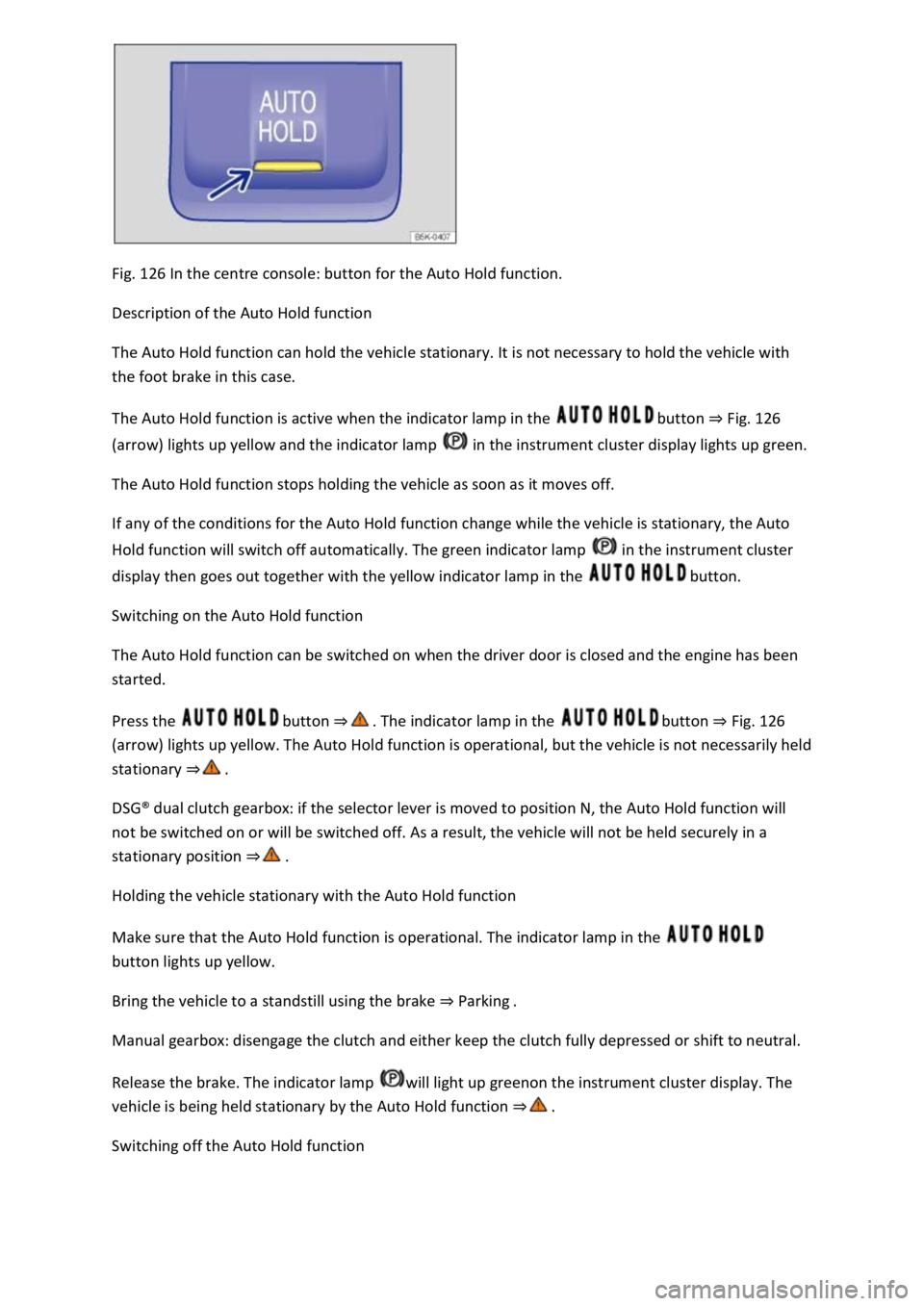
Fig. 126 In the centre console: button for the Auto Hold function.
Description of the Auto Hold function
The Auto Hold function can hold the vehicle stationary. It is not necessary to hold the vehicle with
the foot brake in this case.
The Auto Hold function is active when the indicator lamp in the button ⇒ Fig. 126
(arrow) lights up yellow and the indicator lamp in the instrument cluster display lights up green.
The Auto Hold function stops holding the vehicle as soon as it moves off.
If any of the conditions for the Auto Hold function change while the vehicle is stationary, the Auto
Hold function will switch off automatically. The green indicator lamp in the instrument cluster
display then goes out together with the yellow indicator lamp in the button.
Switching on the Auto Hold function
The Auto Hold function can be switched on when the driver door is closed and the engine has been
started.
Press the button ⇒ . The indicator lamp in the button ⇒ Fig. 126
(arrow) lights up yellow. The Auto Hold function is operational, but the vehicle is not necessarily held
stationary ⇒ .
DSG® dual clutch gearbox: if the selector lever is moved to position N, the Auto Hold function will
not be switched on or will be switched off. As a result, the vehicle will not be held securely in a
stationary position ⇒ .
Holding the vehicle stationary with the Auto Hold function
Make sure that the Auto Hold function is operational. The indicator lamp in the
button lights up yellow.
Bring the vehicle to a standstill using the brake ⇒ Parking .
Manual gearbox: disengage the clutch and either keep the clutch fully depressed or shift to neutral.
Release the brake. The indicator lamp will light up greenon the instrument cluster display. The
vehicle is being held stationary by the Auto Hold function ⇒ .
Switching off the Auto Hold function
Page 262 of 502

Press the button ⇒ . The indicator lamp in the button ⇒ Fig. 126
(arrow) goes out.
The electronic parking brake switches on automatically to hold the vehicle securely. However, the
electronic parking brake will not switch on if the brake pedal is depressed when the Auto Hold
function is switched off ⇒ .
Temporarily switching off the Auto Hold function with the button
It can sometimes be necessary to switch off the Auto Hold function temporarily to enable the vehicle
to roll more easily, for example when manoeuvring.
Press the brake pedal when the engine is on.
Press the button. The Auto Hold function is deactivated.
The Auto Hold function will be reactivated as soon as the brake pedal is depressed again when the
vehicle has come to a standstill.
System limits
If the clutch slips during switching off of the ignition or opening of the driver door, the vehicle may
not be secured against rolling away by either the Auto Hold function or the electronic parking brake
⇒ . After switching off the ignition or opening the driver door, make sure that the indicator
lamp in the instrument cluster displaylights upred. The electronic parking brake is switched on.
WARNING
The intelligent Auto Hold function cannot overcome the laws of physics, and operates only within
the limits of the system. Do not let the extra convenience afforded by the Auto Hold function tempt
you into taking any safety risks when driving.
Make sure that the indicator lamp lights up green or red on the instrument cluster display if the
vehicle is to be held securely. The vehicle is being held by the Auto Hold function if the green
indicator lamp is lit and by the electronic parking brake if the red warning lamp is lit.
Never leave the vehicle if the engine is running and the Auto Hold function is switched on.
In some cases, the Auto Hold function cannot sufficiently hold the vehicle on uphill gradients or
brake it sufficiently on downhill gradients, e.g. if the ground is slippery or icy.
NOTICE
Switch off the Auto Hold function before driving into a car wash. Damage may otherwise be caused
by automatic activation of the electronic parking brake.
Safety notes on the parking systems
The parking systems include the following:
Park Distance Control ⇒ Park Distance Control .
Page 275 of 502

Troubleshooting
First read and observe the introductoryinformation and safety warnings⇒Introduction
The system is not responding as expected
The sensors are dirty ⇒ Caring for and cleaning the vehicle exterior . The sensor visibility may be
impaired by dirt and snow or also residue from cleaning agents or coatings.
The system requirements must be met ⇒ Prerequisites .
The sensors are covered by water.
The vehicle is damaged in the area of the sensors, e.g. caused by parking collisions.
The detection ranges of the sensors are blocked by add-on parts, e.g. bicycle carriers.
Changes have been made to the paintwork in the area of the sensors or structural modifications
have been made, e.g. on the vehicle front end or the running gear.
The ultrasound signal is subject to interference from external noise sources, e.g. rough tarmac
surface or cobblestones.
No sensor visibility, error message, system switches itself off
Park Assist is switched off if a sensor fails.
Clean the sensors or remove stickers or accessories from the sensors and cameras ⇒ Caring for and
cleaning the vehicle exterior .
Check whether any damage is visible.
Possible solution
Switch off the system temporarily.
Check whether any of the causes described apply.
You can switch the system back on again once you have rectified the cause of the problem.
If the system still fails to respond as expected, have the system checked by a qualified workshop.
Automatic cancellation of driving in/out of a parking space
Park Assist cancels parking or driving out of a parking space in the following situations:
The button is pressed.
The driver intervenes using the steering wheel.
The driver door is opened.
The parking operation is not completed within around six minutes.
There is a system fault.
TCS is switched off or is taking corrective action.
Page 286 of 502

Coat hooks are located on the centre door pillars and on the rear roof grab handles.
Bag hooks are located in the luggage compartment ⇒ Luggage compartment equipment .
WARNING
Hanging up items of clothing can restrict the driver's field of vision and cause accidents and serious
injuries.
Always hang items of clothing on the coat hook in such a way that they do not restrict the driver's
field of vision.
The coat hooks in the vehicle should be used only for lightweight clothing. Never leave any heavy,
hard or sharp objects in the pockets.
NOTICE
Each coat hook may be loaded with a maximum of 2.5 kg.
Drink holders
Introduction
This chapter contains information on the followingsubjects:
⇒ Drink holder in the rear centre armrest
Bottle holders
Bottle holders for bottles up to a maximum volume of 1.5 l are located in the stowage
compartments in the driver and front passenger door.
WARNING
Incorrect use of the drink holders can cause injury.
Never place hot drinks in a drink holder. Hot drinks in a drink holder could be spilled and cause
scalding in any sudden braking manoeuvre or accident.
Ensure that drink bottles or any other objects do not enter the driver footwell and obstruct the
pedals while the vehicle is in motion.
Never place heavy cups, food or any other heavy items in the drink holders. These heavy objects
could be flung through the vehicle interior during an accident and cause serious injuries.
WARNING
Page 307 of 502

Before driving through an automatic car wash.
The vehicle height exceeds the required clearance height, e.g. in a garage.
NOTICE
Always remove the roof carrier before driving through an automatic car wash.
The height of the vehicle is changed by the installation of a roof carrier and the load secured to it.
Check and compare the height of the vehicle with clearance heights, e.g. for underpasses and garage
doors.
The roof carrier and its load must not obstruct you from opening and closing the glass roof and the
boot lid. The roof aerial must also remain unaffected.
Driving with a fitted roof carrier will increase air resistance and thus increase fuel consumption.
Trailer towing
Introduction
This chapter contains information on the followingsubjects:
⇒ Technical requirements
⇒ Fitting the removable ball head
⇒ Removing the ball head
⇒ Notes on towing a trailer
⇒ Loading the trailer
⇒ Driving with a trailer
⇒ Trailer stabilisation
⇒ Retrofitting a towing bracket
The vehicle can be used to tow a trailer if it has the required technical equipment for this. The
additional trailer load will affect the amount of wear, fuel consumption and performance of the
vehicle and, in certain circumstances, could shorten the service intervals.
Driving with a trailer not only places an extra load on the vehicle, but also requires increased
concentration on the part of the driver.
Vehicles with start/stop system
When using towing brackets that were not retrofitted by Volkswagen, the start/stop system must be
deactivated manually using the button in the centre console before towing a trailer, and it must
remain deactivated for as long as a trailer is being towed ⇒ .
Page 326 of 502
WARNING
Incorrect refuelling can lead to fire, serious injuries and vehicle damage.
requirements.
-approved service additives in the approved quantity.
At cold temperatures, louder noises may occur in the diesel engine and the exhaust gas may be
tinged blue.
Refuelling
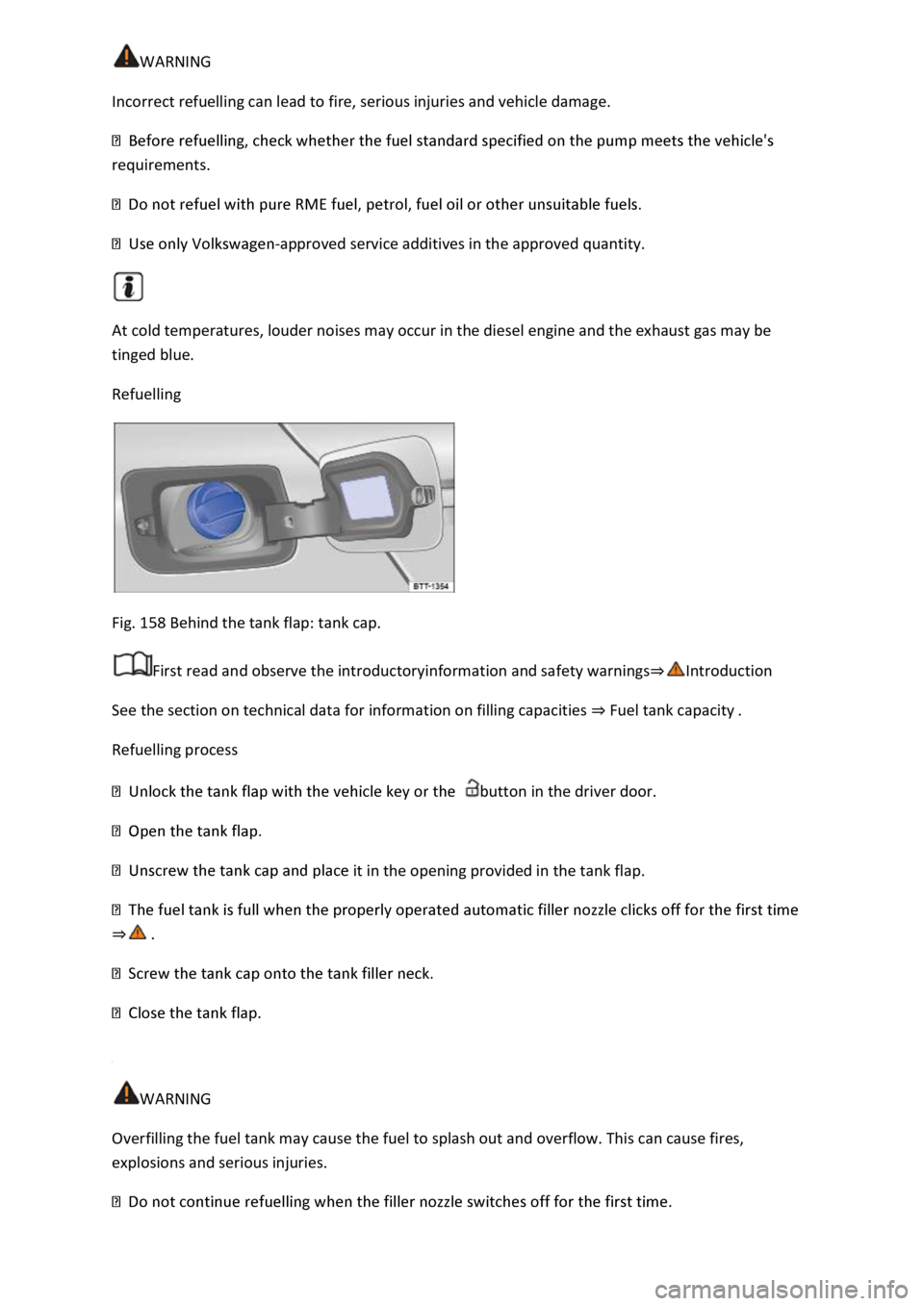
Fig. 158 Behind the tank flap: tank cap.
First read and observe the introductoryinformation and safety warnings⇒Introduction
See the section on technical data for information on filling capacities ⇒ Fuel tank capacity .
Refuelling process
button in the driver door.
it in the opening provided in the tank flap.
⇒ .
WARNING
Overfilling the fuel tank may cause the fuel to splash out and overflow. This can cause fires,
explosions and serious injuries.
Page 368 of 502
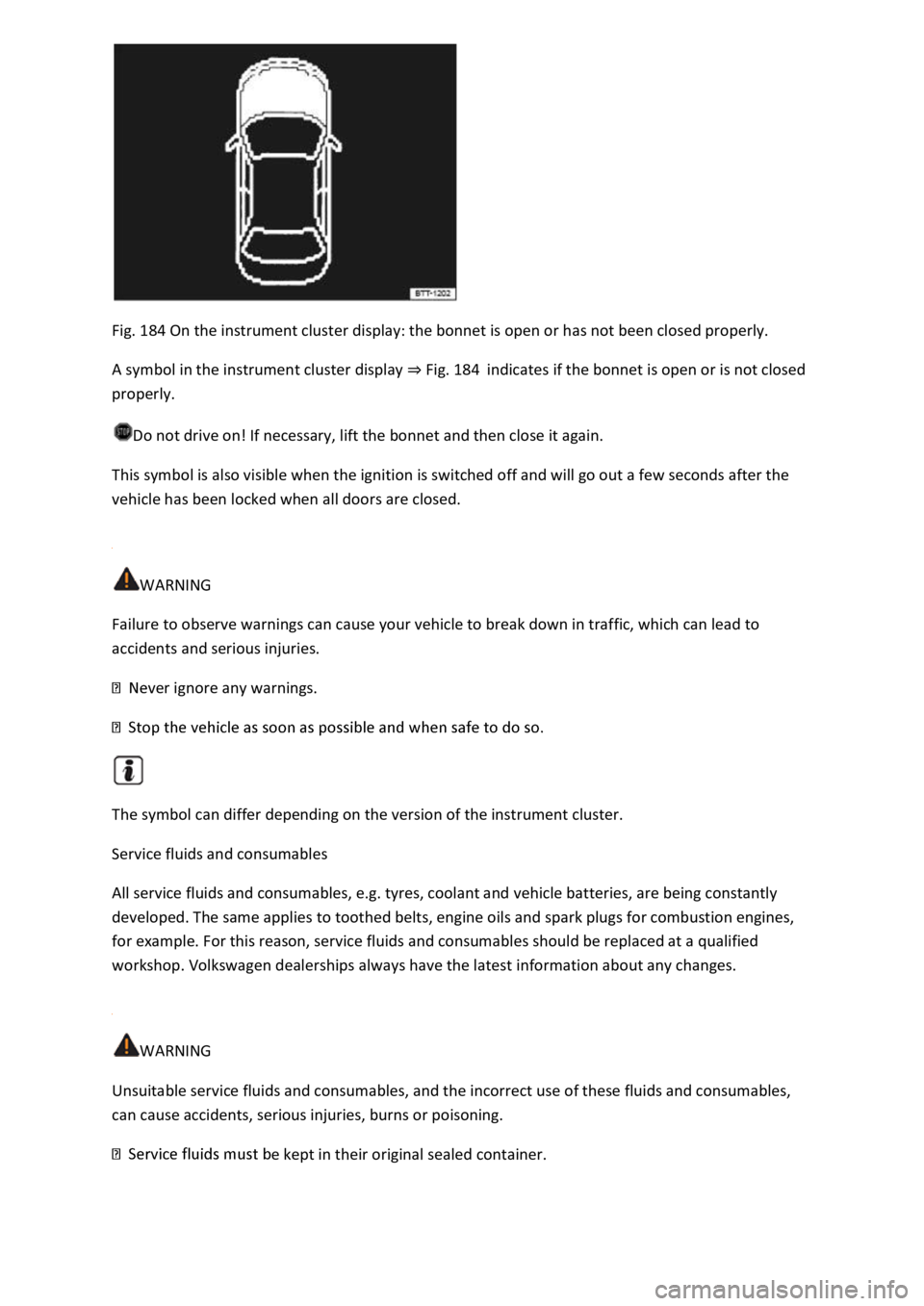
Fig. 184 On the instrument cluster display: the bonnet is open or has not been closed properly.
A symbol in the instrument cluster display ⇒ Fig. 184 indicates if the bonnet is open or is not closed
properly.
Do not drive on! If necessary, lift the bonnet and then close it again.
This symbol is also visible when the ignition is switched off and will go out a few seconds after the
vehicle has been locked when all doors are closed.
WARNING
Failure to observe warnings can cause your vehicle to break down in traffic, which can lead to
accidents and serious injuries.
ver ignore any warnings.
The symbol can differ depending on the version of the instrument cluster.
Service fluids and consumables
All service fluids and consumables, e.g. tyres, coolant and vehicle batteries, are being constantly
developed. The same applies to toothed belts, engine oils and spark plugs for combustion engines,
for example. For this reason, service fluids and consumables should be replaced at a qualified
workshop. Volkswagen dealerships always have the latest information about any changes.
WARNING
Unsuitable service fluids and consumables, and the incorrect use of these fluids and consumables,
can cause accidents, serious injuries, burns or poisoning.
e kept in their original sealed container.
Page 400 of 502
WARNING
The use of unsuitable or damaged wheel rims can impair vehicle safety and cause accidents and
serious injuries.
ave been approved for the vehicle.
WARNING
Incorrect loosening and tightening of the bolts on wheel rims with bolted-on rings can cause
accidents and serious injuries.
on wheel rims with bolted-on rings.
-on rings must be carried out by a qualified workshop. Volkswagen
recommends using a Volkswagen dealership for this purpose.
Tyre pressure
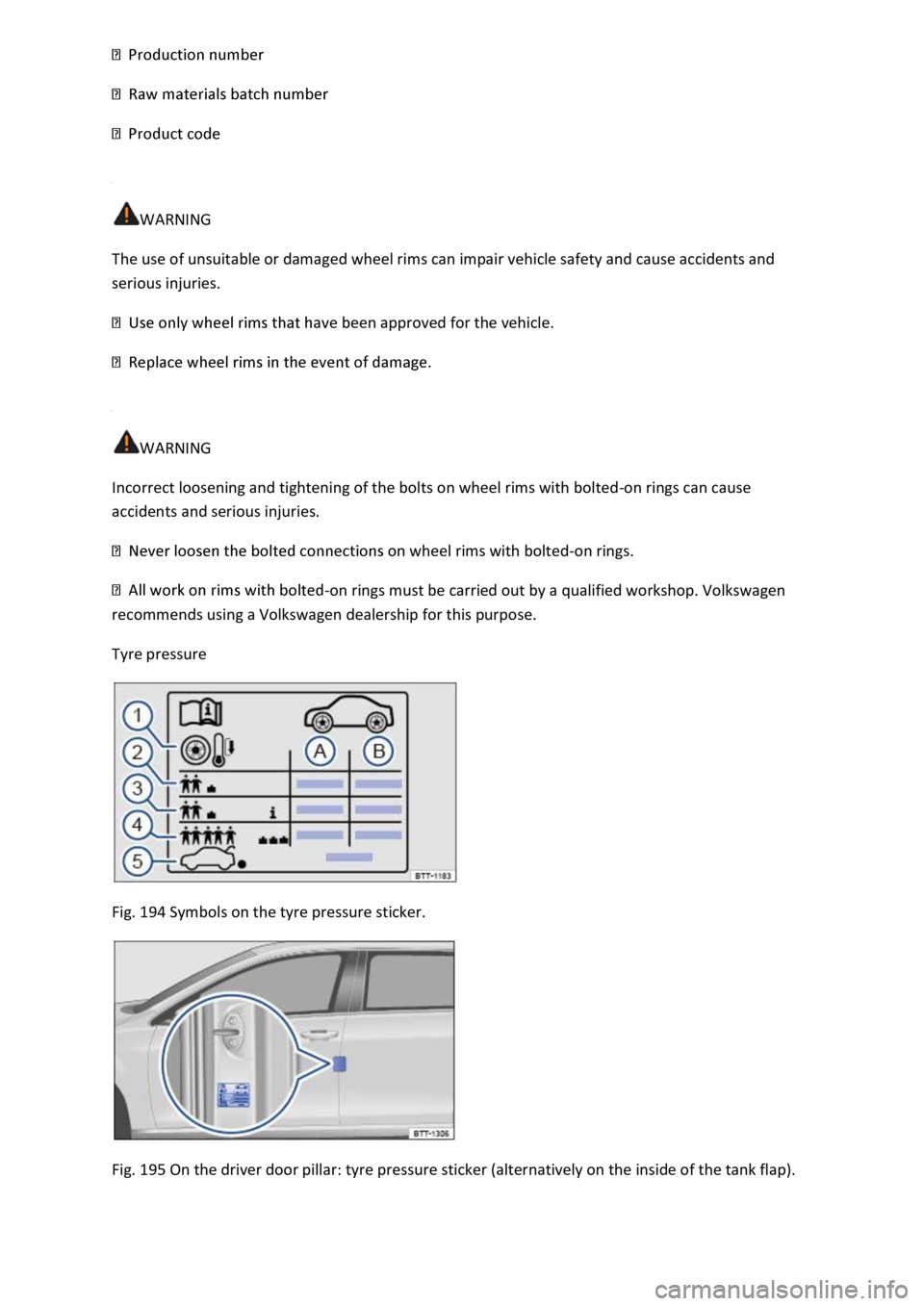
Fig. 194 Symbols on the tyre pressure sticker.
Fig. 195 On the driver door pillar: tyre pressure sticker (alternatively on the inside of the tank flap).
Page 401 of 502

First read and observe the introductoryinformation and safety warnings⇒Introduction
Information on the sticker ⇒ Fig. 194 :
Tyre pressure for the tyres on the front axle.
Tyre pressure for the tyres on the rear axle.
Note: check the tyre pressure when the tyres are cold.
Tyre pressure for partial load.
Vehicle-dependent: comfort tyre pressure for partial load.
Tyre pressure for full load.
Tyre pressure level for the spare or temporary spare wheel.
The sticker provides the correct tyre pressure for approved tyres and is located either on the driver
door pillar ⇒ Fig. 195 or inside the tank flap.
The appearance of the sticker may differ between vehicles. It may include additional tyre sizes.
The wrong tyre pressure will have a negative effect on the vehicle handling and leads to high levels
of wear or even a burst tyre ⇒ . The correct tyre pressure is particularly important at high speeds.
Comfort tyre pressure
Depending on the vehicle, the tyre pressure sticker may show details of a comfort tyre pressure
⇒ Fig. 194③ . The comfort tyre pressure allows increased driving comfort. Fuel consumption may
increase when driving with comfort tyre pressure.
Checking the tyre pressure
tyres. Tyre pressure is always higher in warm tyres than it is in cold tyres. For this reason, never
reduce the pressure in warm tyres to adjust the tyre pressure.
⇒ Fig. 194④ .
and observe the
information on the tyre monitoring system.
which is given on the sidewall of the tyre.
WARNING