interior VOLKSWAGEN T-ROC 2022 Owner's Guide
[x] Cancel search | Manufacturer: VOLKSWAGEN, Model Year: 2022, Model line: T-ROC, Model: VOLKSWAGEN T-ROC 2022Pages: 502, PDF Size: 8.58 MB
Page 178 of 502

move unpredictably.
Any objects protruding from the luggage compartment must be marked to ensure that they are
visible to other road users. Comply with legal regulations.
If items protrude out of the luggage compartment, never use the boot lid to wedge them into place
or hold them in position.
If you have to drive with the boot lid open, you must remove any carriers and the loads attached to
them from the boot lid.
WARNING
Poisonous exhaust fumes could enter the vehicle interior when the boot lid is open. This could result
in loss of consciousness, carbon monoxide poisoning, serious injury and accidents.
You should always drive with the boot lid closed in order to prevent poisonous exhaust fumes from
entering the vehicle.
If exceptional circumstances require you to drive with an open boot lid, you must do the following to
reduce the amount of poisonous exhaust fumes that could enter into the vehicle:
Close all windows and the glass roof.
Switch off the air recirculation mode of the heating and fresh air system or air conditioning system.
Open all vents in the dash panel.
Switch the blower for the heating and fresh air system or for the air conditioning system to the
highest setting.
NOTICE
The vehicle height, and possibly the length, are different when the boot lid is open.
Driving through water
Please follow these points in order to prevent damage to your vehicle when driving through water,
for example on flooded streets:
Check how deep the water is before driving through it. The water may be no higher than the lower
edge of the body
Do not drive faster than walking speed.
Never stop the vehicle, reverse or switch off the engine while in water.
Oncoming vehicles will create waves that could increase the water level for your vehicle to such an
extent that it is not safe to drive through the water.
Always deactivate the start/stop system manually when driving through water Start/stop system
Page 183 of 502

off automatically when engine stop is active when the vehicle is stationary:
The driver seat belt has been unfastened.
No pedals are depressed.
The driver door is opened.
If the ignition is deactivated automatically while the dipped beam headlights are switched on,
the side lights remain switched on and lit for approximately 30 minutes.
The side lights can be switched off manually or will go off when the vehicle is locked.
Engine restart function
If no valid vehicle key is detected in the vehicle interior once the engine has been switched off, the
engine can be restarted within approximately five seconds. A corresponding message appears on the
instrument cluster display.
After this time, the engine cannot be re-started without a valid vehicle key in the vehicle interior.
WARNING
Unintentional vehicle movements can cause serious injury.
Do not depress the brake or clutch pedal when the ignition is switched on as the engine will start
immediately.
WARNING
Improper or unsupervised use of the vehicle keys can cause accidents or serious injuries.
Always take all vehicle keys with you every time you leave the vehicle. Children or unauthorised
persons could lock the vehicle, start the engine, switch on the ignition or operate electrical
equipment such as the electric windows.
Before leaving the vehicle, always switch off the ignition manually and observe any information
shown on the instrument cluster display.
Leaving the vehicle stationary for long periods with the ignition switched on can discharge the 12-
volt vehicle battery so that the engine can no longer be started.
Starting the engine
Page 191 of 502

A minimum engine temperature has been reached.
Vehicles with Climatronic: the temperature of the vehicle interior is within the preset
temperature range, and the humidity level is not too high.
The defrost function of the air conditioning system is not switched on.
The charge level of the 12-volt vehicle battery is sufficient.
The temperature of the 12-volt vehicle battery is not too low or too high.
The vehicle is not on a steep uphill or downhill gradient.
Vehicles with DSG dual clutch gearbox: the steering wheel is not turned too sharply.
The windscreen heating is not switched on.
Reverse gear is not engaged.
Park Assist is not active.
When the conditions for automatic engine switch-off are fulfilled only during a stationary phase, the
engine can also switch off subsequently, e.g. after switching off the defrost function.
Conditions for an automatic restart
The engine can start automatically under the following conditions:
If the temperature inside the vehicle substantially increases or decreases.
If the vehicle starts rolling.
If the electrical voltage of the 12-volt vehicle battery drops.
If the steering wheel is moved.
As a general rule, the engine always starts again automatically when required by the detected
situation and for the vehicle.
Conditions that require a manual engine start
The engine must be started manually in the following conditions:
If the driver door is opened.
If the bonnet is opened.
Manually deactivating and activating the start/stop system
Press the button in the centre console Fig. 102to deactivate the system manually. If the
start/stop system has been deactivated, the indicator lamp in the button lights up.
Press the button in the centre console again Fig. 102to activate the system manually once
more.
Page 282 of 502

Introduction
This chapter contains information on the followingsubjects:
Stowage compartment on the front passenger side
Stowage compartment in the front centre armrest
Drawers
Coat and bag hooks
Stow only light and small objects in the stowage areas.
There is a stowage compartment for the vehicle wallet under the left front seat. Always keep the
vehicle wallet in this stowage compartment.
The USB socket and the function for wireless charging in accordance with the QI standard
Infotainment system, may be located in the stowage compartment in the lower part of the
centre console.
WARNING
Loose objects may be flung through the vehicle interior in the event of a sudden driving or braking
manoeuvre. This can cause serious injury and can also lead to loss of control of the vehicle.
Do not stow any pets or any hard, heavy or sharp objects in the vehicle's open stowage
compartments, on the dash panel, on the luggage compartment cover or in items of clothing and
bags in the vehicle interior.
Always keep stowage compartments closed while the vehicle is in motion.
WARNING
Objects in the driver footwell can interfere with pedal operation. This can lead to loss of control of
the vehicle and increase the risk of serious injury.
Ensure that all pedals can always be operated without any hindrance.
The floor mats must always be properly secured in the footwell.
No additional foot mats or other floor coverings should be placed over the fitted foot mat.
Ensure that no objects can enter the driver footwell while the vehicle is in motion.
WARNING
Cigarette lighters left in the vehicle can become damaged or may ignite unnoticed. This can cause
serious burns and vehicle damage.
Page 286 of 502

Bag hooks are located in the luggage compartment Luggage compartment equipment
WARNING
Hanging up items of clothing can restrict the driver's field of vision and cause accidents and serious
injuries.
Always hang items of clothing on the coat hook in such a way that they do not restrict the driver's
field of vision.
The coat hooks in the vehicle should be used only for lightweight clothing. Never leave any heavy,
hard or sharp objects in the pockets.
NOTICE
Each coat hook may be loaded with a maximum of 2.5 kg.
Drink holders
Introduction
This chapter contains information on the followingsubjects:
Drink holder in the rear centre armrest
Bottle holders
Bottle holders for bottles up to a maximum volume of 1.5 l are located in the stowage
compartments in the driver and front passenger door.
WARNING
Incorrect use of the drink holders can cause injury.
Never place hot drinks in a drink holder. Hot drinks in a drink holder could be spilled and cause
scalding in any sudden braking manoeuvre or accident.
Ensure that drink bottles or any other objects do not enter the driver footwell and obstruct the
pedals while the vehicle is in motion.
Never place heavy cups, food or any other heavy items in the drink holders. These heavy objects
could be flung through the vehicle interior during an accident and cause serious injuries.
WARNING
Page 297 of 502

Place heavy objects as far forward in the luggage compartment as possible.
Observe gross axle weight ratings and the gross vehicle weight rating Technical data
Secure luggage to the fastening rings in the luggage compartment using suitable lashing, fixing and
securing straps Luggage compartment equipment
Also stow small objects safely.
If necessary, fold back the rear seat backrest and engage it securely.
If necessary, adjust the headlight range Headlights
Adjust the tyre pressure according to the vehicle load. Observe the tyre pressure sticker Tyre
pressure
In vehicles with a tyre monitoring system, set the new vehicle load level as necessary Tyre
monitoring system
WARNING
Objects that are not secured, or are secured incorrectly, can cause serious injuries in the event of a
sudden driving or braking manoeuvre or accident. This applies particularly if objects are struck by an
airbag when activated and then flung through the vehicle interior. Please observe the following rules
to reduce the risk of accidents:
Always stow all objects in the vehicle securely.
Small and light objects should also be secured.
Objects should be stowed in the vehicle interior in such a way that they can never enter the airbag
deployment zones while the vehicle is in motion.
Always keep stowage compartments closed while the vehicle is in motion.
Stowed objects must never cause passengers to assume an incorrect sitting position.
If an item is being stowed on a seat, this seat must not be used by any passengers.
Do not stow any hard, heavy or sharp objects loose in any of the vehicle's open stowage areas, on
the surface behind the rear seat backrest or on the dash panel.
Remove any hard, heavy or sharp objects from items of clothing and bags inside the vehicle and
stow them securely.
WARNING
Transporting heavy objects changes the vehicle's handling and increases the braking distance. Heavy
loads that are not properly stowed or secured in the vehicle can lead to a loss of vehicle control and
can cause serious injury.
Page 301 of 502
NOTICE
Never drop the luggage compartment floor; guide it slowly back down. The trims or the luggage
compartment floor could otherwise be damaged.
NOTICE
In the upper position, the variable luggage compartment floor has a maximum load capacity of
120 kg.
Depending on the vehicle equipment, there may be compartments for stowing small items under
the luggage compartment floor.
Luggage compartment equipment
Fastening rings
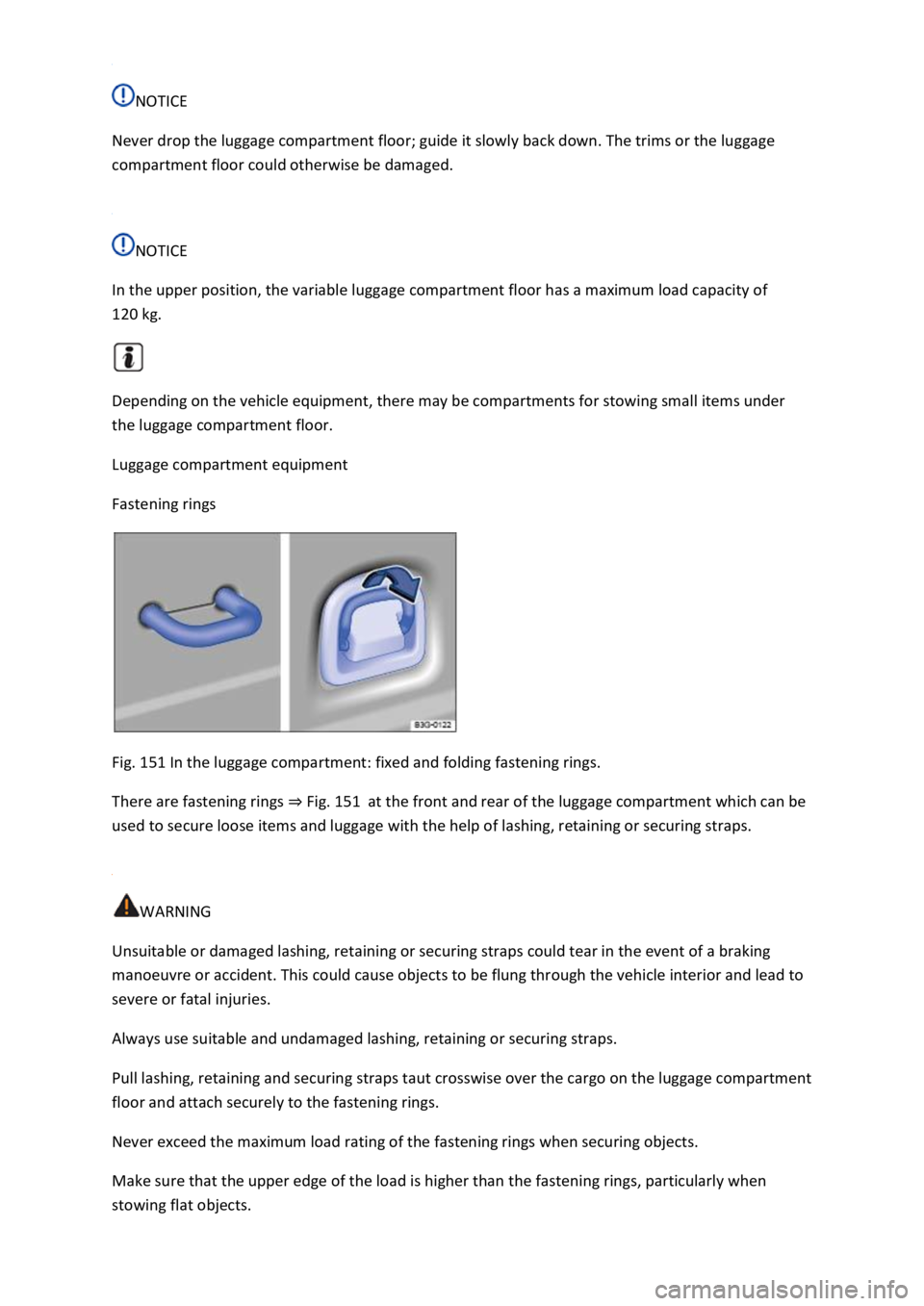
Fig. 151 In the luggage compartment: fixed and folding fastening rings.
There are fastening rings Fig. 151at the front and rear of the luggage compartment which can be
used to secure loose items and luggage with the help of lashing, retaining or securing straps.
WARNING
Unsuitable or damaged lashing, retaining or securing straps could tear in the event of a braking
manoeuvre or accident. This could cause objects to be flung through the vehicle interior and lead to
severe or fatal injuries.
Always use suitable and undamaged lashing, retaining or securing straps.
Pull lashing, retaining and securing straps taut crosswise over the cargo on the luggage compartment
floor and attach securely to the fastening rings.
Never exceed the maximum load rating of the fastening rings when securing objects.
Make sure that the upper edge of the load is higher than the fastening rings, particularly when
stowing flat objects.
Page 303 of 502
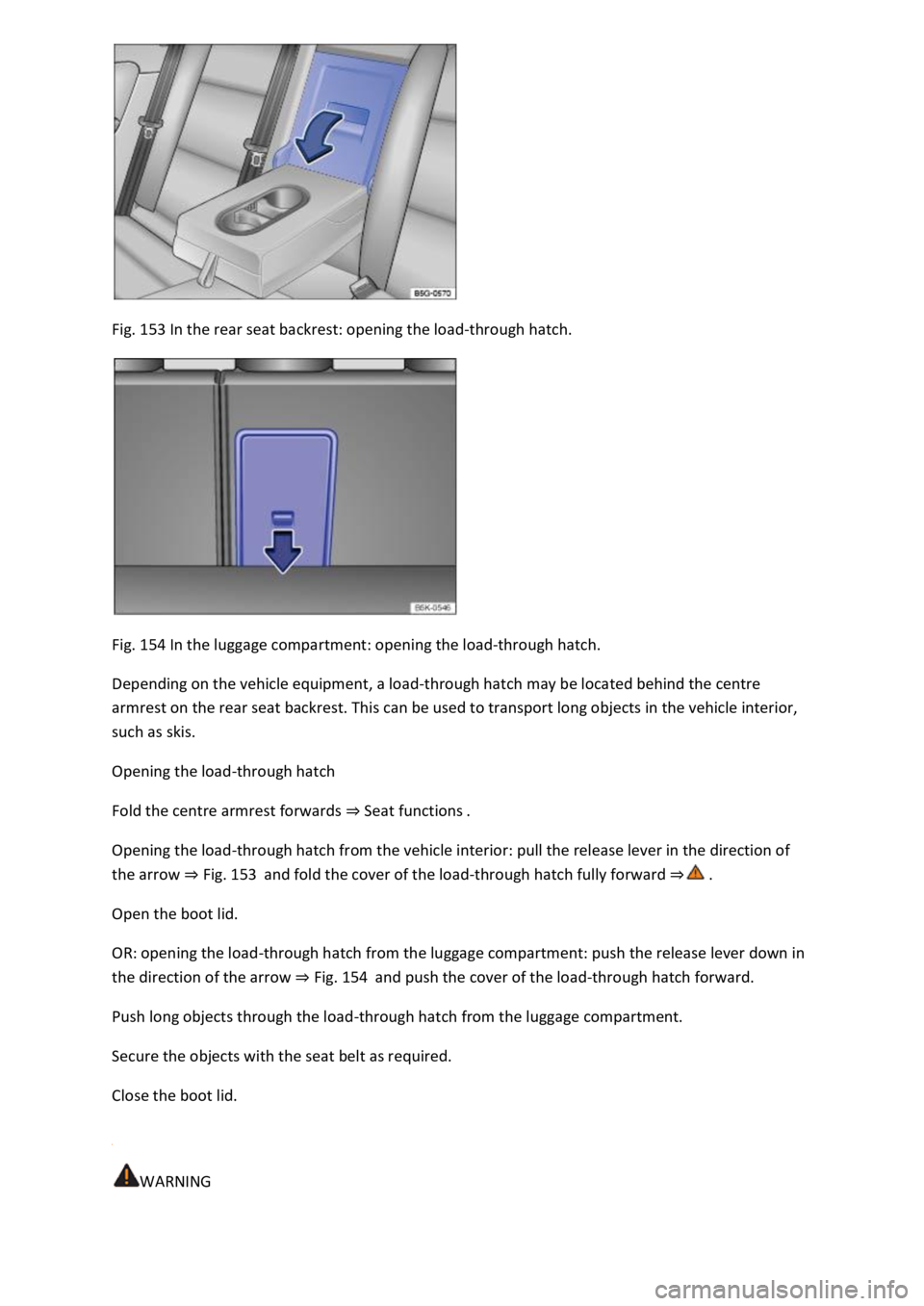
Fig. 153 In the rear seat backrest: opening the load-through hatch.
Fig. 154 In the luggage compartment: opening the load-through hatch.
Depending on the vehicle equipment, a load-through hatch may be located behind the centre
armrest on the rear seat backrest. This can be used to transport long objects in the vehicle interior,
such as skis.
Opening the load-through hatch
Fold the centre armrest forwards Seat functions
Opening the load-through hatch from the vehicle interior: pull the release lever in the direction of
the arrow Fig. 153and fold the cover of the load-through hatch fully forward
Open the boot lid.
OR: opening the load-through hatch from the luggage compartment: push the release lever down in
the direction of the arrow Fig. 154and push the cover of the load-through hatch forward.
Push long objects through the load-through hatch from the luggage compartment.
Secure the objects with the seat belt as required.
Close the boot lid.
WARNING
Page 315 of 502

156 Pin assignment for the trailer socket (illustration).
First read and observe the introductoryinformation and safety warnings
Pin assignment for the trailer socket Fig. 156
Left turn signal
Rear fog light
Earth for pins 1, 2, 4, 5, 6, 7, 8
Right turn signal
Tail light, right
Brake light
Tail light, left
Reversing light
Permanent positive
Permanent positive
Earth for pin 10
Not assigned
Earth for pin 9
Trailer socket
A 13-pin trailer socket produces the electrical connection between the towing vehicle and the trailer.
When the vehicle electrically detects a trailer, the consumers in the trailer are supplied with an
electrical voltage via the electrical connection (pins 9 and 10). Pin 9 is assigned as the permanent
positive, enabling operation of the trailer interior lighting, for example.
Electrical consumers such as a caravan refrigerator are supplied with power only when the engine is
running (pin 10).
To avoid overloading the electrical system, do not connect the earth wires (pins 3, 11 and 13) with
each other.
If the trailer has a 7-pin plug you will need to use a suitable adapter cable. The function of pin 10 is
then not available.
Page 443 of 502

-icing agent (- 000 096 322 -) for de-icing. Do
not use door lock de-icer containing grease solvents.
WARNING
The engine compartment of any motor vehicle is a hazardous area. All work in the engine
compartment carries the risk of injury, scalding, accidents and fire.
and safety precautions Safety notes for working in the engine compartment
NOTICE
Incorrect cleaning and care can cause vehicle damage.
tools.
NOTICE
The drainage channels for the plenum chamber may get blocked by leaves and dirt. Water that does
not drain away could get into the vehicle interior.
The durability and colourfastness of decorative and protective films can be affected by
environmental influences such as direct sunlight, moisture, air pollution, stone impact etc.
Decorative films may show signs of use or ageing after about one to three years, protective films
after about two to three years. In very hot climates, decorative films may start to fade within a year
and protective films within two years.
1) null
2) Mild soap solution: a maximum of two tablespoons neutral soap diluted in one litre of water.
Vehicle interior care and cleaning
The following overview contains recommendations for cleaning and care of individual vehicle
components
Windows:
Clean with a glass cleaning agent and then wipe dry using a clean chamois cloth or a lint-free cloth.