fuel type VOLKSWAGEN TIGUAN 2017 Owner´s Manual
[x] Cancel search | Manufacturer: VOLKSWAGEN, Model Year: 2017, Model line: TIGUAN, Model: VOLKSWAGEN TIGUAN 2017Pages: 341, PDF Size: 9.14 MB
Page 290 of 341
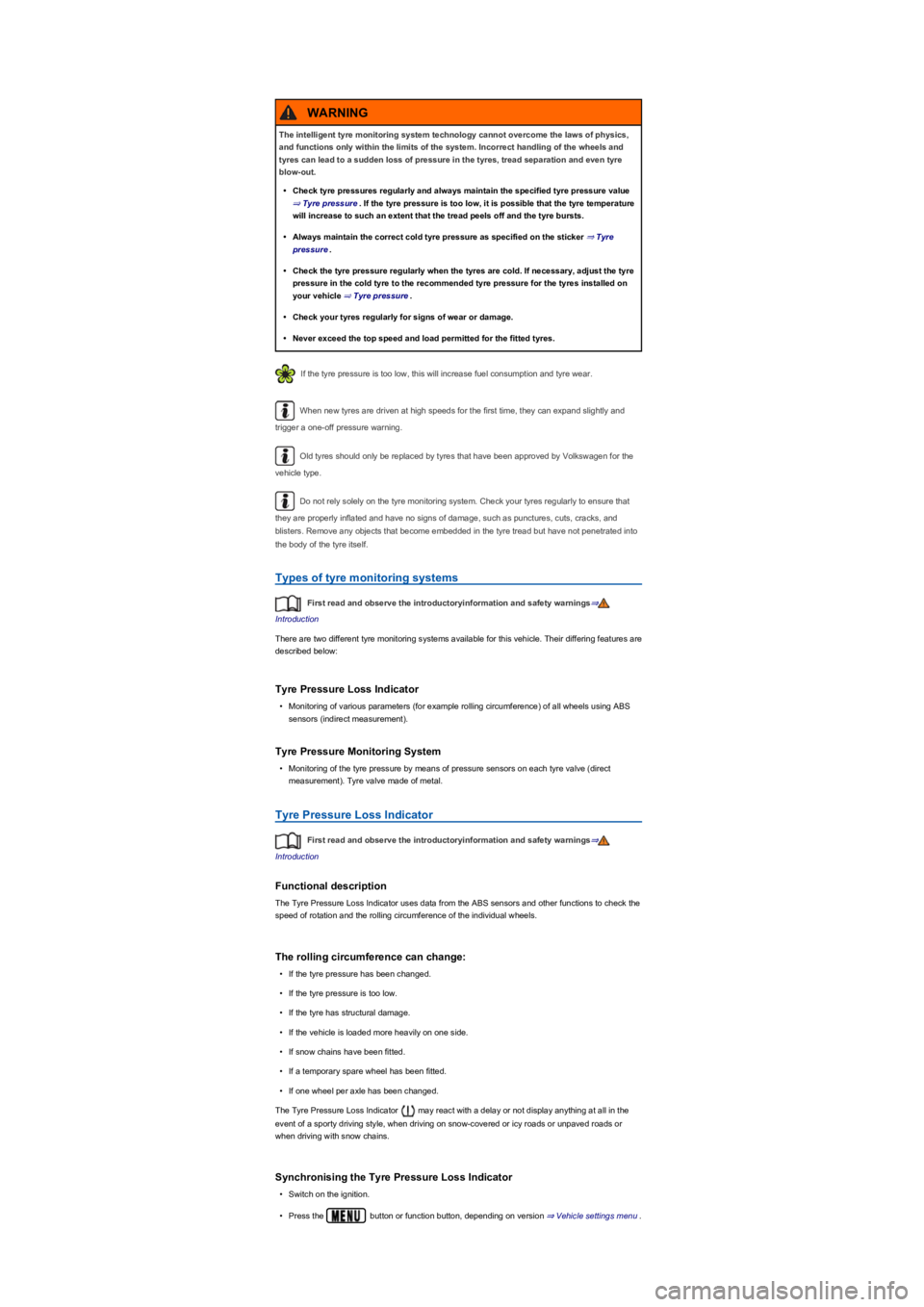
If the tyre pressure is too low, this will increase fuel consumption and tyre wear.
When new tyres are driven at high speeds for the first time, they can expand slightly and
trigger a one-off pressure warning.
Old tyres should only be replaced by tyres that have been approved by Volkswagen for the
vehicle type.
Do not rely solely on the tyre monitoring system. Check your tyres regularly to ensure that
they are properly inflated and have no signs of damage, such as punctures, cuts, cracks, and
blisters. Remove any objects that become embedded in the tyre tread but have not penetrated into
the body of the tyre itself.
Types of tyre monitoring systems
First read and observe the introductoryinformation and safety warnings⇒
Introduction
There are two different tyre monitoring systems available for this vehicle. Their differing features are
described below:
Tyre Pressure Loss Indicator
•Monitoring of various parameters (for example rolling circumference) of all wheels using ABS
sensors (indirect measurement).
Tyre Pressure Monitoring System
•Monitoring of the tyre pressure by means of pressure sensors on each tyre valve (direct
measurement). Tyre valve made of metal.
Tyre Pressure Loss Indicator
First read and observe the introductoryinformation and safety warnings⇒
Introduction
Functional description
The Tyre Pressure Loss Indicator uses data from the ABS sensors and other functions to check the
speed of rotation and the rolling circumference of the individual wheels.
The rolling circumference can change:
•If the tyre pressure has been changed.
•If the tyre pressure is too low.
•If the tyre has structural damage.
•If the vehicle is loaded more heavily on one side.
•If snow chains have been fitted.
•If a temporary spare wheel has been fitted.
•If one wheel per axle has been changed.
The Tyre Pressure Loss Indicator may react with a delay or not display anything at all in the
event of a sporty driving style, when driving on snow-covered or icy roads or unpaved roads or
when driving with snow chains.
Synchronising the Tyre Pressure Loss Indicator
•Switch on the ignition.
•Press the button or function button, depending on version ⇒ Vehicle settings menu.
The intelligent tyre monitoring system technology cannot overcome the laws of physics,
and functions only within the limits of the system. Incorrect handling of the wheels and
tyres can lead to a sudden loss of pressure in the tyres, tread separation and even tyre
blow-out.
•Check tyre pressures regularly and always maintain the specified tyre pressure value
⇒ Tyre pressure. If the tyre pressure is too low, it is possible that the tyre temperature
will increase to such an extent that the tread peels off and the tyre bursts.
•Always maintain the correct cold tyre pressure as specified on the sticker ⇒ Tyre
pressure.
•Check the tyre pressure regularly when the tyres are cold. If necessary, adjust the tyre
pressure in the cold tyre to the recommended tyre pressure for the tyres installed on
your vehicle ⇒ Tyre pressure.
•Check your tyres regularly for signs of wear or damage.
•Never exceed the top speed and load permitted for the fitted tyres.
WARNING
Page 295 of 341
Handling wheels and tyres
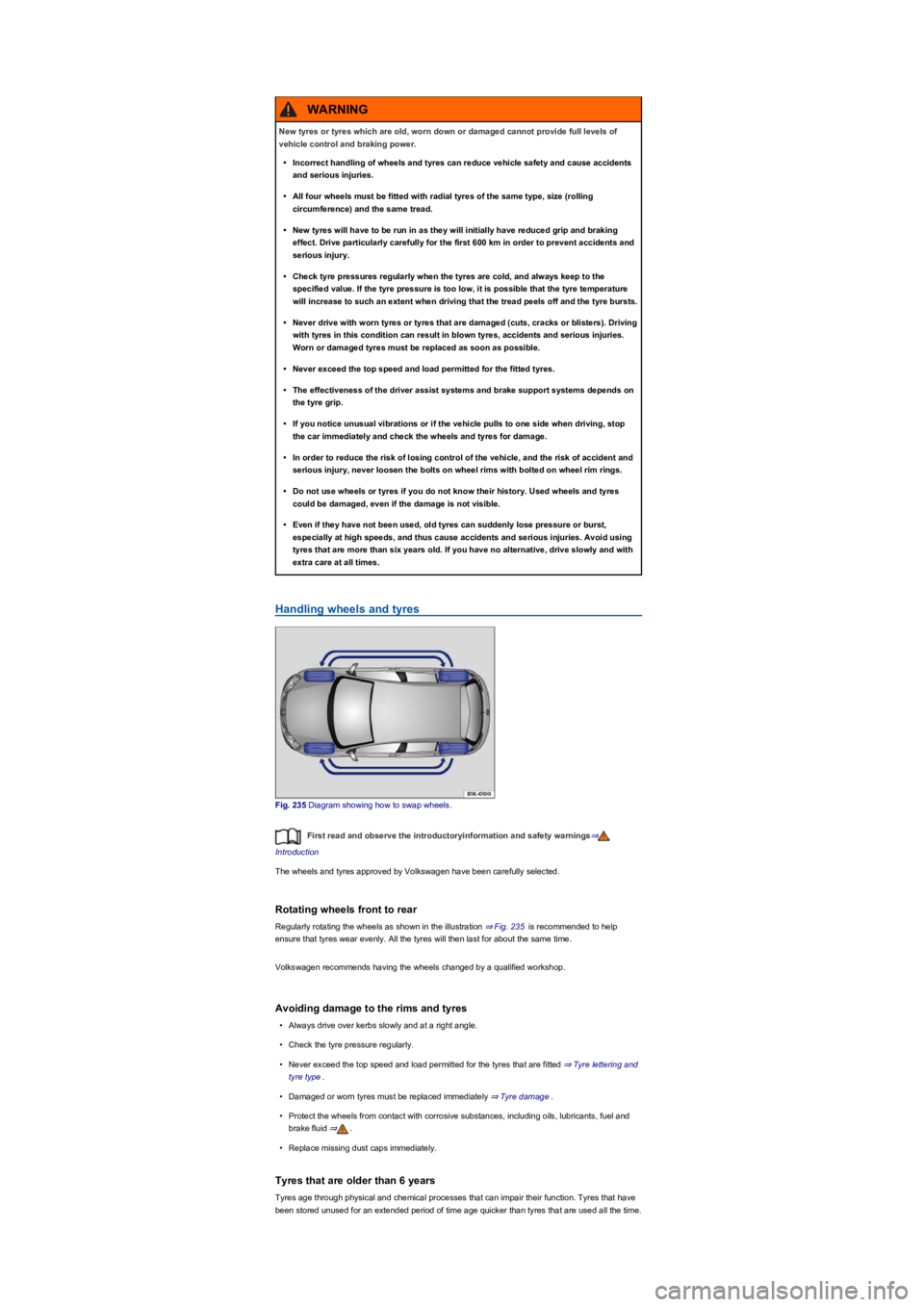
Fig. 235 Diagram showing how to swap wheels.
First read and observe the introductoryinformation and safety warnings⇒
Introduction
The wheels and tyres approved by Volkswagen have been carefully selected.
Rotating wheels front to rear
Regularly rotating the wheels as shown in the illustration ⇒ Fig. 235 is recommended to help
ensure that tyres wear evenly. All the tyres will then last for about the same time.
Volkswagen recommends having the wheels changed by a qualified workshop.
Avoiding damage to the rims and tyres
•Always drive over kerbs slowly and at a right angle.
•Check the tyre pressure regularly.
•Never exceed the top speed and load permitted for the tyres that are fitted ⇒ Tyre lettering and
tyre type.
•Damaged or worn tyres must be replaced immediately ⇒ Tyre damage.
•Protect the wheels from contact with corrosive substances, including oils, lubricants, fuel and
brake fluid ⇒.
•Replace missing dust caps immediately.
Tyres that are older than 6 years
Tyres age through physical and chemical processes that can impair their function. Tyres that have
been stored unused for an extended period of time age quicker than tyres that are used all the time.
New tyres or tyres which are old, worn down or damaged cannot provide full levels of
vehicle control and braking power.
•Incorrect handling of wheels and tyres can reduce vehicle safety and cause accidents
and serious injuries.
•All four wheels must be fitted with radial tyres of the same type, size (rolling
circumference) and the same tread.
•New tyres will have to be run in as they will initially have reduced grip and braking
effect. Drive particularly carefully for the first 600 km in order to prevent accidents and
serious injury.
•Check tyre pressures regularly when the tyres are cold, and always keep to the
specified value. If the tyre pressure is too low, it is possible that the tyre temperature
will increase to such an extent when driving that the tread peels off and the tyre bursts.
•Never drive with worn tyres or tyres that are damaged (cuts, cracks or blisters). Driving
with tyres in this condition can result in blown tyres, accidents and serious injuries.
Worn or damaged tyres must be replaced as soon as possible.
•Never exceed the top speed and load permitted for the fitted tyres.
•The effectiveness of the driver assist systems and brake support systems depends on
the tyre grip.
•If you notice unusual vibrations or if the vehicle pulls to one side when driving, stop
the car immediately and check the wheels and tyres for damage.
•In order to reduce the risk of losing control of the vehicle, and the risk of accident and
serious injury, never loosen the bolts on wheel rims with bolted on wheel rim rings.
•Do not use wheels or tyres if you do not know their history. Used wheels and tyres
could be damaged, even if the damage is not visible.
•Even if they have not been used, old tyres can suddenly lose pressure or burst,
especially at high speeds, and thus cause accidents and serious injuries. Avoid using
tyres that are more than six years old. If you have no alternative, drive slowly and with
extra care at all times.
WARNING
Page 296 of 341
Volkswagen recommends replacing tyres that are older than 6 years with new tyres. This also
applies for tyres which appear to still be in good condition and whose tread depth has not yet
reached the minimum value stipulated by legislation ⇒.
Winter and all-year tyres also largely lose their effectiveness through ageing – regardless of the
remaining tread depth ⇒ Winter tyres.
The age of each tyre can be determined using the manufacturing date ⇒ Tyre lettering and tyre
type.
Storing tyres
Always store tyres in a cool, dry and preferably dark place. Do not store tyres mounted on the rim
vertically.
Any tyres not fitted on rims should be kept in suitable sleeves to protect against dirt and should be
stored vertically (standing on the tread).
New tyres
•Drive particularly carefully for the first 600 km with new tyres as the tyres have to be run in.
Tyres that have not been run in have reduced grip ⇒ and braking effect ⇒.
•All four wheels must be fitted with tyres of the same type, size, and the same tread pattern.
Replacing tyres
•Always replace tyres at least on an axle-by-axle basis ⇒.
•Old tyres should only be replaced by tyres that have been approved by Volkswagen for the
vehicle type.
•Never use tyres with an effective size that is larger than Volkswagen-approved tyres.
Re-adapting the Tyre Pressure Loss Indicator
The Tyre Pressure Loss Indicator must be recalibrated each time one or more wheels are replaced.
This also applies for changing the wheels round, e.g. from the front to the rear ⇒ Tyre monitoring
systems.
Vehicles fitted with a Tyre Pressure Monitoring System
If you wish to replace factory-fitted wheels, make sure that the new wheels are equipped with
sensors that are compatible with the Tyre Pressure Monitoring System ⇒ Tyre Pressure Monitoring
System. The vehicle must be driven at a speed of over 25 km/h (15 mph) for an extended period so
that the new wheels can be recognised.
Volkswagen recommends that a new valve set and set of seals is used every time the sensors are
replaced or modified.
Further information on the Tyre Pressure Monitoring System ⇒ Tyre monitoring systems.
Corrosive liquids and other substances can cause visible and invisible damage to the
tyres, which can cause the tyre to burst.
•Always keep chemicals, oils, lubricants, fuel, brake fluid and other corrosive
substances away from the tyres.
WARNING
Even if they have not been used, old tyres can suddenly lose pressure or burst, especially
at high speeds, and thus cause accidents and serious injuries.
•Avoid using tyres that are more than six years old. If you have no alternative, drive
slowly and with extra care at all times.
WARNING
New tyres will have to be run in as they will initially have reduced grip and braking effect.
•Drive particularly carefully for the first 600 km in order to prevent accidents and
serious injury.
WARNING
Page 298 of 341
Tyre pressure
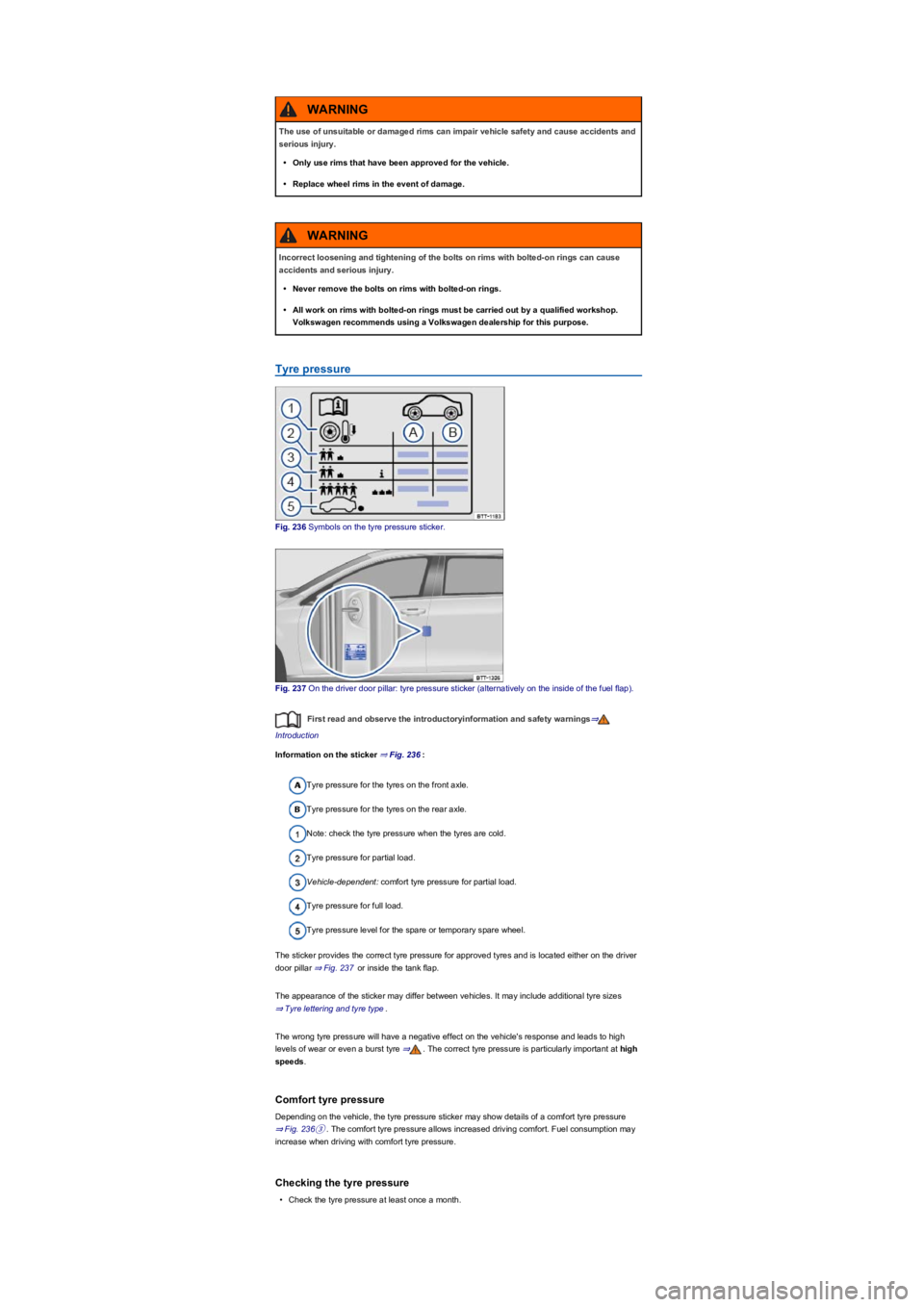
Fig. 236 Symbols on the tyre pressure sticker.
Fig. 237 On the driver door pillar: tyre pressure sticker (alternatively on the inside of the fuel flap).
First read and observe the introductoryinformation and safety warnings⇒
Introduction
Information on the sticker ⇒ Fig. 236:
Tyre pressure for the tyres on the front axle.
Tyre pressure for the tyres on the rear axle.
Note: check the tyre pressure when the tyres are cold.
Tyre pressure for partial load.
Vehicle-dependent: comfort tyre pressure for partial load.
Tyre pressure for full load.
Tyre pressure level for the spare or temporary spare wheel.
The sticker provides the correct tyre pressure for approved tyres and is located either on the driver
door pillar ⇒ Fig. 237 or inside the tank flap.
The appearance of the sticker may differ between vehicles. It may include additional tyre sizes
⇒ Tyre lettering and tyre type.
The wrong tyre pressure will have a negative effect on the vehicle's response and leads to high
levels of wear or even a burst tyre ⇒. The correct tyre pressure is particularly important at high
speeds.
Comfort tyre pressure
Depending on the vehicle, the tyre pressure sticker may show details of a comfort tyre pressure
⇒ Fig. 236③. The comfort tyre pressure allows increased driving comfort. Fuel consumption may
increase when driving with comfort tyre pressure.
Checking the tyre pressure
•Check the tyre pressure at least once a month.
The use of unsuitable or damaged rims can impair vehicle safety and cause accidents and
serious injury.
•Only use rims that have been approved for the vehicle.
•Replace wheel rims in the event of damage.
WARNING
Incorrect loosening and tightening of the bolts on rims with bolted-on rings can cause
accidents and serious injury.
•Never remove the bolts on rims with bolted-on rings.
•All work on rims with bolted-on rings must be carried out by a qualified workshop.
Volkswagen recommends using a Volkswagen dealership for this purpose.
WARNING
Page 304 of 341
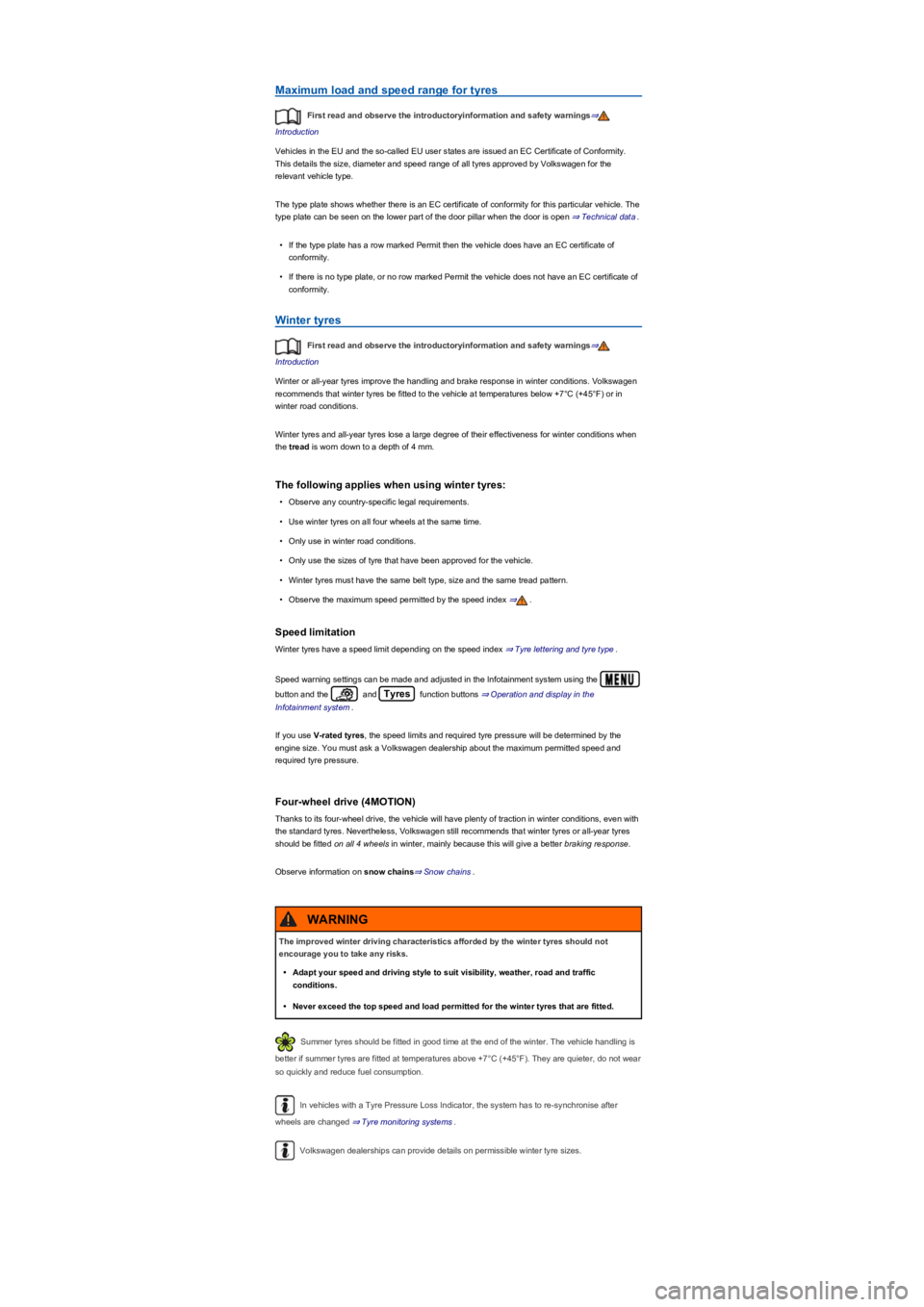
Maximum load and speed range for tyres
First read and observe the introductoryinformation and safety warnings⇒
Introduction
Vehicles in the EU and the so-called EU user states are issued an EC Certificate of Conformity.
This details the size, diameter and speed range of all tyres approved by Volkswagen for the
relevant vehicle type.
The type plate shows whether there is an EC certificate of conformity for this particular vehicle. The
type plate can be seen on the lower part of the door pillar when the door is open ⇒ Technical data.
•If the type plate has a row marked Permit then the vehicle does have an EC certificate of
conformity.
•If there is no type plate, or no row marked Permit the vehicle does not have an EC certificate of
conformity.
Winter tyres
First read and observe the introductoryinformation and safety warnings⇒
Introduction
Winter or all-year tyres improve the handling and brake response in winter conditions. Volkswagen
recommends that winter tyres be fitted to the vehicle at temperatures below +7°C (+45°F) or in
winter road conditions.
Winter tyres and all-year tyres lose a large degree of their effectiveness for winter conditions when
the tread is worn down to a depth of 4 mm.
The following applies when using winter tyres:
•Observe any country-specific legal requirements.
•Use winter tyres on all four wheels at the same time.
•Only use in winter road conditions.
•Only use the sizes of tyre that have been approved for the vehicle.
•Winter tyres must have the same belt type, size and the same tread pattern.
•Observe the maximum speed permitted by the speed index ⇒.
Speed limitation
Winter tyres have a speed limit depending on the speed index ⇒ Tyre lettering and tyre type.
Speed warning settings can be made and adjusted in the Infotainment system using the
button and the and Tyres function buttons ⇒ Operation and display in the
Infotainment system.
If you use V-rated tyres, the speed limits and required tyre pressure will be determined by the
engine size. You must ask a Volkswagen dealership about the maximum permitted speed and
required tyre pressure.
Four-wheel drive (4MOTION)
Thanks to its four-wheel drive, the vehicle will have plenty of traction in winter conditions, even with
the standard tyres. Nevertheless, Volkswagen still recommends that winter tyres or all-year tyres
should be fitted on all 4 wheels in winter, mainly because this will give a better braking response.
Observe information on snow chains⇒ Snow chains.
Summer tyres should be fitted in good time at the end of the winter. The vehicle handling is
better if summer tyres are fitted at temperatures above +7°C (+45°F). They are quieter, do not wear
so quickly and reduce fuel consumption.
In vehicles with a Tyre Pressure Loss Indicator, the system has to re-synchronise after
wheels are changed ⇒ Tyre monitoring systems.
Volkswagen dealerships can provide details on permissible winter tyre sizes.
The improved winter driving characteristics afforded by the winter tyres should not
encourage you to take any risks.
•Adapt your speed and driving style to suit visibility, weather, road and traffic
conditions.
•Never exceed the top speed and load permitted for the winter tyres that are fitted.
WARNING
Page 316 of 341
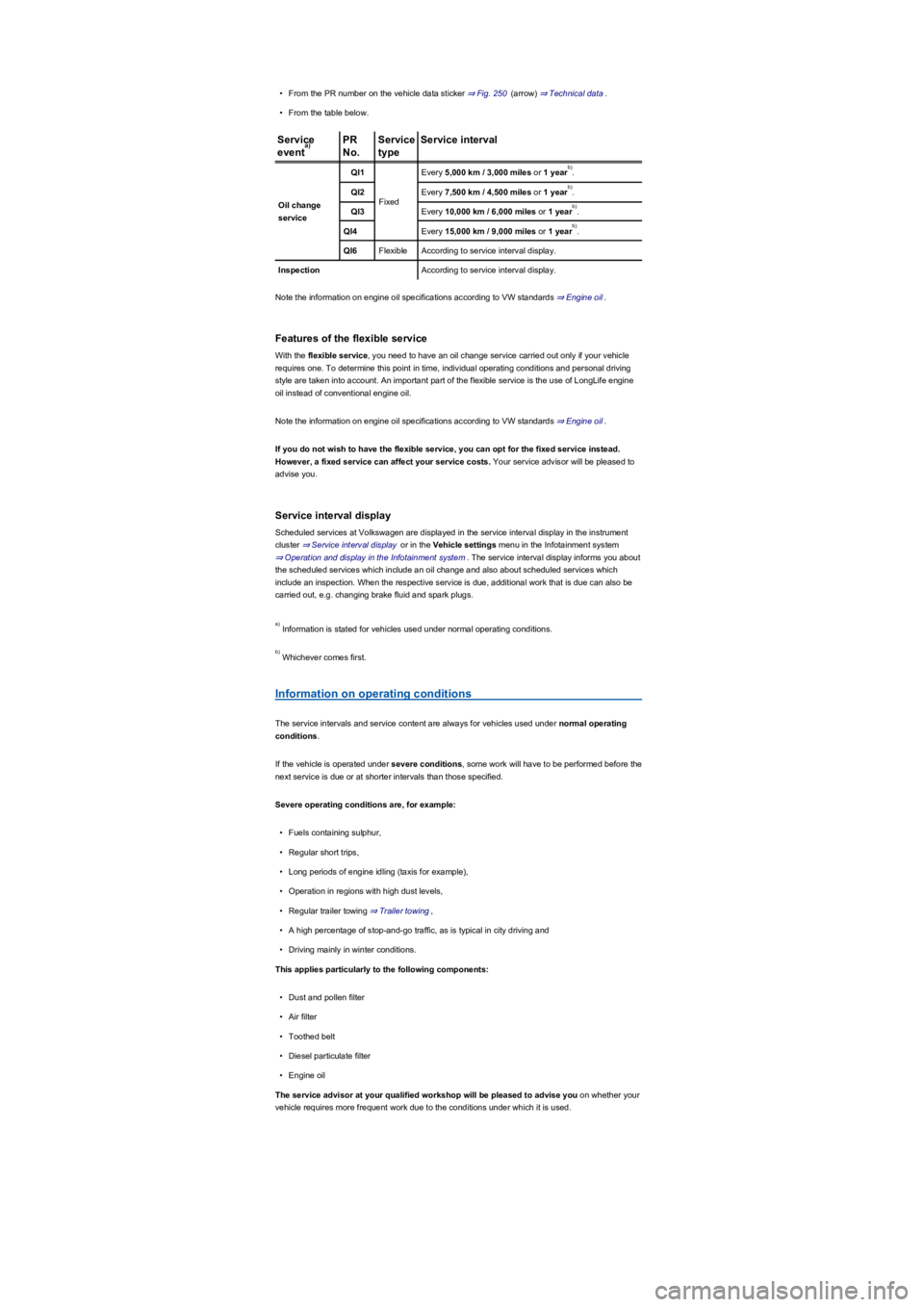
•From the PR number on the vehicle data sticker ⇒ Fig. 250 (arrow) ⇒ Technical data.
•From the table below.
Service
event
PR
No.
Service
type
Service interval
Oil change
service
QI1
Fixed
Every 5,000 km / 3,000 miles or 1 year.
QI2Every 7,500 km / 4,500 miles or 1 year.
QI3Every 10,000 km / 6,000 miles or 1 year.
QI4Every 15,000 km / 9,000 miles or 1 year.
QI6FlexibleAccording to service interval display.
InspectionAccording to service interval display.
Note the information on engine oil specifications according to VW standards ⇒ Engine oil.
Features of the flexible service
With the flexible service, you need to have an oil change service carried out only if your vehicle
requires one. To determine this point in time, individual operating conditions and personal driving
style are taken into account. An important part of the flexible service is the use of LongLife engine
oil instead of conventional engine oil.
Note the information on engine oil specifications according to VW standards ⇒ Engine oil.
If you do not wish to have the flexible service, you can opt for the fixed service instead.
However, a fixed service can affect your service costs. Your service advisor will be pleased to
advise you.
Service interval display
Scheduled services at Volkswagen are displayed in the service interval display in the instrument
cluster ⇒ Service interval display or in the Vehicle settings menu in the Infotainment system
⇒ Operation and display in the Infotainment system. The service interval display informs you about
the scheduled services which include an oil change and also about scheduled services which
include an inspection. When the respective service is due, additional work that is due can also be
carried out, e.g. changing brake fluid and spark plugs.
Information is stated for vehicles used under normal operating conditions.
Whichever comes first.
Information on operating conditions
The service intervals and service content are always for vehicles used under normal operating
conditions.
If the vehicle is operated under severe conditions, some work will have to be performed before the
next service is due or at shorter intervals than those specified.
Severe operating conditions are, for example:
•Fuels containing sulphur,
•Regular short trips,
•Long periods of engine idling (taxis for example),
•Operation in regions with high dust levels,
•Regular trailer towing ⇒ Trailer towing,
•A high percentage of stop-and-go traffic, as is typical in city driving and
•Driving mainly in winter conditions.
This applies particularly to the following components:
•Dust and pollen filter
•Air filter
•Toothed belt
•Diesel particulate filter
•Engine oil
The service advisor at your qualified workshop will be pleased to advise you on whether your
vehicle requires more frequent work due to the conditions under which it is used.
a)
b)
b)
b)
b)
a)
b)