keyless VOLKSWAGEN TIGUAN 2017 Owner´s Manual
[x] Cancel search | Manufacturer: VOLKSWAGEN, Model Year: 2017, Model line: TIGUAN, Model: VOLKSWAGEN TIGUAN 2017Pages: 341, PDF Size: 9.14 MB
Page 101 of 341
Convenience turn signal
To operate the convenience turn signal, push the turn signal and main beam lever up or down to
the point where you meet resistance and then release the lever. The turn signal flashes 3 times.
To cancel the convenience turn signal, immediately move the lever in the opposite direction up to
the pressure point and then release it.
The convenience turn signal can be activated and deactivated in the Infotainment system in
the Vehicle settings menu ⇒ Operation and display in the Infotainment system:
The hazard warning lights also work when the ignition is switched off ⇒ In an emergency.
Some settings can be stored in the user accounts of the personalisation function and
therefore change automatically when the user account changes ⇒ Personalisation.
Vehicle lighting
Switching lights on and off
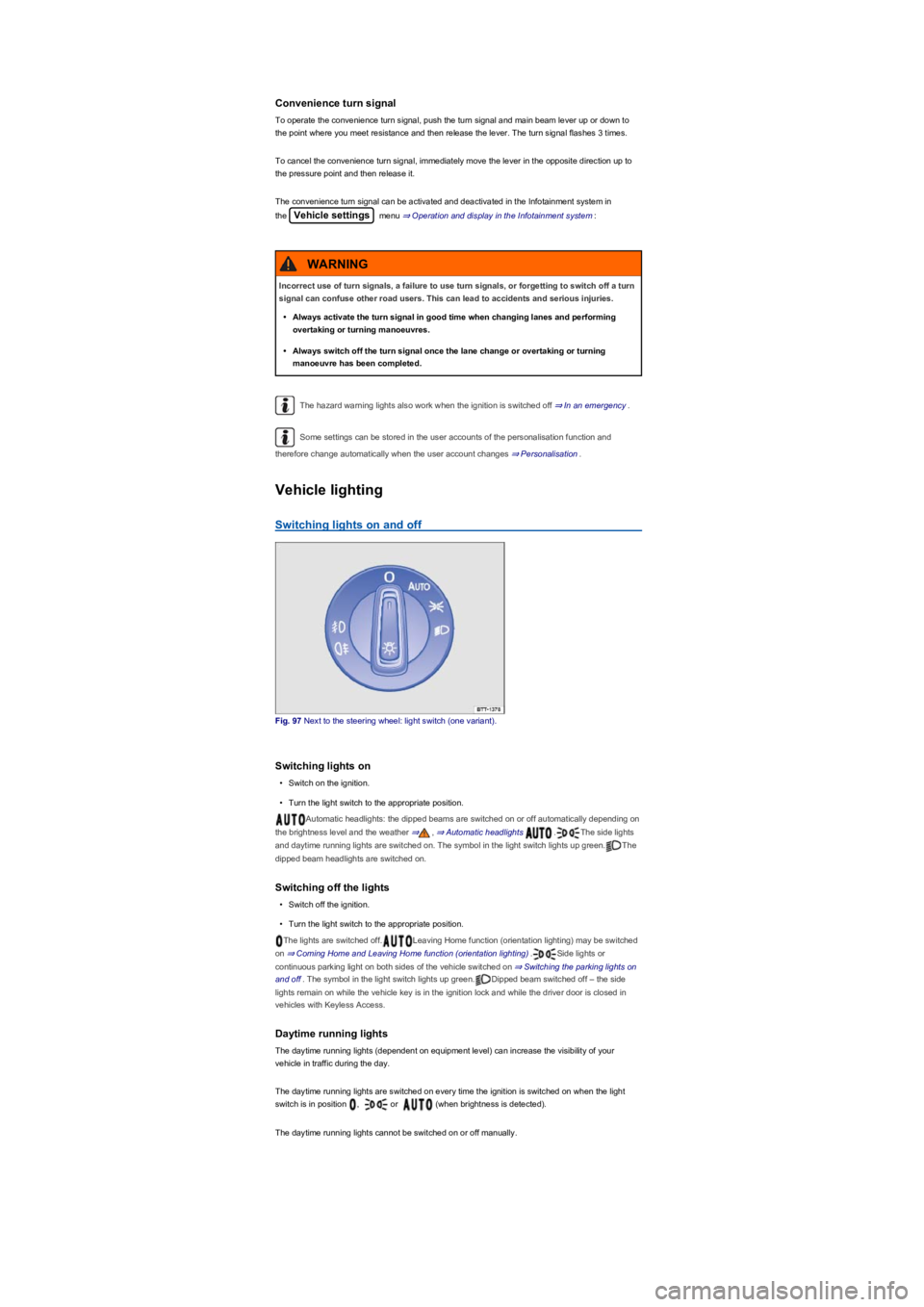
Fig. 97 Next to the steering wheel: light switch (one variant).
Switching lights on
•Switch on the ignition.
•Turn the light switch to the appropriate position.
Automatic headlights: the dipped beams are switched on or off automatically depending on
the brightness level and the weather ⇒, ⇒ Automatic headlights .The side lights
and daytime running lights are switched on. The symbol in the light switch lights up green.The
dipped beam headlights are switched on.
Switching off the lights
•Switch off the ignition.
•Turn the light switch to the appropriate position.
The lights are switched off.Leaving Home function (orientation lighting) may be switched
on ⇒ Coming Home and Leaving Home function (orientation lighting).Side lights or
continuous parking light on both sides of the vehicle switched on ⇒ Switching the parking lights on
and off. The symbol in the light switch lights up green.Dipped beam switched off – the side
lights remain on while the vehicle key is in the ignition lock and while the driver door is closed in
vehicles with Keyless Access.
Daytime running lights
The daytime running lights (dependent on equipment level) can increase the visibility of your
vehicle in traffic during the day.
The daytime running lights are switched on every time the ignition is switched on when the light
switch is in position , or (when brightness is detected).
The daytime running lights cannot be switched on or off manually.
Incorrect use of turn signals, a failure to use turn signals, or forgetting to switch off a turn
signal can confuse other road users. This can lead to accidents and serious injuries.
•Always activate the turn signal in good time when changing lanes and performing
overtaking or turning manoeuvres.
•Always switch off the turn signal once the lane change or overtaking or turning
manoeuvre has been completed.
WARNING
Page 140 of 341
•m/k/a995MKVehicles with a starter button: Press the starter button briefly ⇒ Fig. 119. If
the engine cannot be switched off, carry out the emergency switch-off procedure ⇒ Emergency
deactivation.
•Observe the instructions in the instrument cluster ⇒ Instrument cluster.
Warning before leaving the vehicle
In order to indicate an active ignition when leaving the vehicle, an acoustic warning signal sounds
when opening the driver door and corresponding warning messages appear on the display of the
instrument cluster. The ignition also switches off automatically after a certain period in order to
prevent unintentional discharge of the 12-volt vehicle battery.
m/k/a995MK Vehicles with DSG dual clutch gearbox: if the selector lever is not in position P,
an acoustic warning signal will sound when the driver door is opened and the warning
message Please move selector lever to position P. will be shown on the instrument cluster
display. In this way, a warning is given that the vehicle could potentially roll away. The electronic
parking brake is also activated.
After the engine is switched off, the radiator fan in the engine compartment may run on for
some minutes, even if the ignition is switched off or the vehicle key has been removed. The radiator
fan will switch itself off automatically.
Electronic immobiliser
First read and observe the introductoryinformation and safety warnings⇒
Introduction
The immobiliser helps to prevent the engine from being started and driven with an unauthorised
vehicle key.
There is a chip in the key. This is used to automatically deactivate the immobiliser when a valid
vehicle key is inserted into the ignition lock.
The electronic immobiliser is automatically activated when the vehicle key is removed from the
ignition lock. In vehicles with keyless locking and starting system Keyless Access, the vehicle key
must be outside the vehicle ⇒ Central and manual locking.
The engine can only be started using a genuine Volkswagen vehicle key with the correct code.
Coded vehicle keys are available from a Volkswagen dealership ⇒ Vehicle key set.
The vehicle cannot be operated properly if you do not have a genuine Volkswagen key.
Troubleshooting
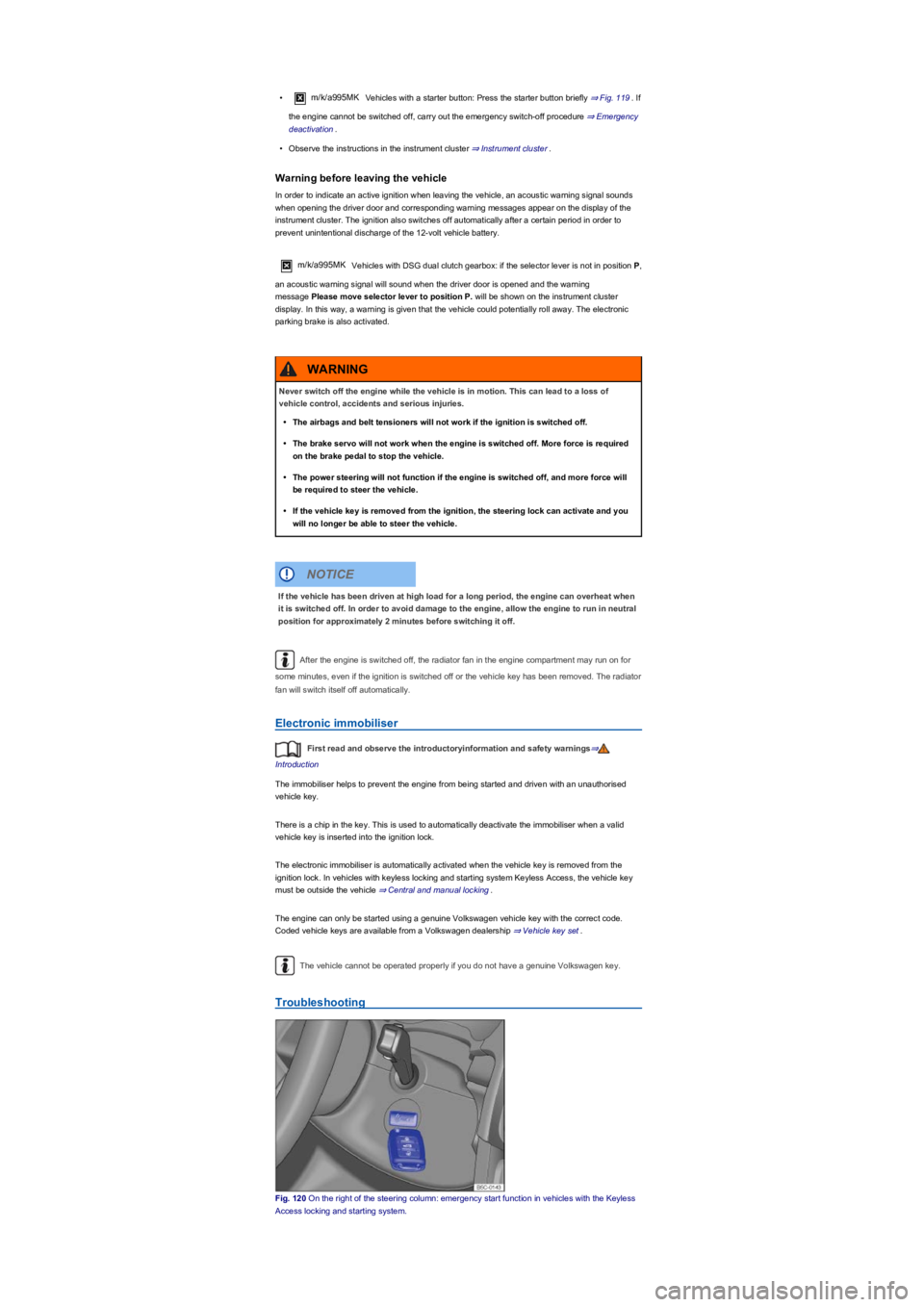
Fig. 120 On the right of the steering column: emergency start function in vehicles with the Keyless
Access locking and starting system.
Never switch off the engine while the vehicle is in motion. This can lead to a loss of
vehicle control, accidents and serious injuries.
•The airbags and belt tensioners will not work if the ignition is switched off.
•The brake servo will not work when the engine is switched off. More force is required
on the brake pedal to stop the vehicle.
•The power steering will not function if the engine is switched off, and more force will
be required to steer the vehicle.
•If the vehicle key is removed from the ignition, the steering lock can activate and you
will no longer be able to steer the vehicle.
WARNING
If the vehicle has been driven at high load for a long period, the engine can overheat when
it is switched off. In order to avoid damage to the engine, allow the engine to run in neutral
position for approximately 2 minutes before switching it off.
NOTICE
Page 267 of 341
Tow-starting or towing
Introduction
This chapter contains information on the followingsubjects:
⇒ Notes on tow-starting and towing
⇒ Fitting the rear towing eye
⇒ Fitting the front towing eye
⇒ Fitting the front towing eye (R-Line)
⇒ Driving notes when towing
Tow-starting is where a vehicle is started from it being set in motion by a vehicle that is hitched up
to it.
Towing is where a vehicle that cannot be driven is pulled away with the aid of another vehicle.
Observe any legal requirements when towing or tow-starting.
For technical reasons, vehicles with a discharged 12-volt battery must not be towed.⇒ Jump
starting
Vehicles with Keyless Access must only be towed with the ignition switched on.
Towing a vehicle when the engine is switched off and the ignition is switched on discharges the 12-
volt vehicle battery. Depending on the charge level of the 12-volt vehicle battery, the drop in voltage
can be large enough after just a few minutes that electrical consumers in the vehicle will no longer
function, e.g. the hazard warning lights.
Jump starting the vehicle incorrectly can cause the 12-volt vehicle battery to explode,
which can lead to serious injuries. Please observe the following in order to reduce the risk
of the 12-volt vehicle battery exploding:
•All work on the 12-volt vehicle battery and the electrical system can cause serious
chemical burns, fire or electric shocks. Always read the warnings and safety
information before carrying out any kind of work on the 12-volt vehicle battery ⇒ 12-
volt vehicle battery.
•Always wear suitable eye protection and gloves and never lean over the 12-volt vehicle
battery.
•Attach the connector cables in the correct order – the positive cable first, followed by
the negative.
•Never connect the negative cable to parts of the fuel system or to the brake lines.
•The non-insulated parts of the battery clamps must not be allowed to touch. The jump
lead attached to the positive terminal on the 12-volt vehicle battery must not touch
electrically conductive parts of the vehicle.
•m/k/a995MK Vehicles with battery in the engine compartment: check the battery
window on the 12-volt vehicle battery. Use a torch for this if necessary. If the display is
light yellow or colourless, do not jump start the vehicle. Seek expert assistance.
•Avoid electrostatic discharge in the vicinity of the 12-volt vehicle battery. The explosive
gas emitted from the 12-volt vehicle battery could be ignited by sparks.
•Do not carry out jump starting if the 12-volt vehicle battery is damaged or if it is or has
ever been frozen.
WARNING
Once the vehicle has been successfully jump-started, go to a qualified workshop and have
the 12-volt vehicle battery checked.
NOTICE
Page 288 of 341
•Switch off all electrical consumers and the ignition.
•Unlock the vehicle before disconnecting the battery in order to avoid triggering the anti-theft
alarm.
•First disconnect the negative cable and then the positive cable ⇒.
Connecting the 12-volt vehicle battery
•Switch off all electrical consumers and the ignition before reconnecting the 12-volt vehicle
battery.
•First reconnect the positive cable and then the negative cable ⇒.
Various indicator lamps may light up after the 12-volt vehicle battery has been connected and the
ignition is switched on. They will go out if you drive a short distance at a speed of approximately
15 – 20 km/h (10 – 12 mph). If the indicator lamps remain lit up, the vehicle should be checked by a
qualified workshop.
If the 12-volt vehicle battery was disconnected for an extended period, the system may not able to
calculate or correctly display the time when the next service is due ⇒ Instrument cluster. Observe
the maximum permissible service intervals ⇒ Service.
Vehicles with Keyless Access:⇒ Central locking system: if the ignition cannot be switched on after
connecting the 12-volt vehicle battery, lock and unlock the vehicle from the outside. Then try to start
the ignition again. Please contact an expert if the ignition cannot be switched on.
Automatic switch-off for electrical consumers
The intelligent vehicle electrical system management automatically implements a range of
measures to prevent the 12-volt battery from discharging under high loads:
•The idling speed is increased so that the alternator provides more electricity.
•The performance of large electrical consumers may be reduced or they may be switched off
completely.
•The power supply to the 12-volt socket and the cigarette lighter is interrupted temporarily while
the engine is being started.
The vehicle electrical system management function cannot always prevent the 12-volt vehicle
battery from discharging. For example when the ignition is switched on for an extended period with
the engine off, or when the side or parking lights are on when the vehicle is parked for an extended
period.
Battery switch-off in an accident in which the airbag is triggered
In vehicles with 12-volt vehicle battery in the luggage compartment, the electrical connection to the
12-volt vehicle battery is disconnected pyrotechnically in the event of an accident in which the
airbags are triggered. This prevents short-circuiting.
What can cause the 12-volt vehicle battery to discharge?
•Long periods at a standstill in which the engine is not running, especially if the ignition is
switched on.
•The use of electrical consumers when the engine is switched off.
•When the auxiliary heater is being used ⇒ Auxiliary heater and ventilation.
Page 332 of 341
Information in accordance with the EU Chemicals Regulation
REACH
In accordance with the European regulations on chemicals, known as REACH, Volkswagen would
like to inform you about the substances that may be found in your vehicle.
You can access this information online using your vehicle identification number ⇒ Technical data:
https://reachinfo.volkswagen.com
Declaration of conformity
The individual manufacturer declares herewith that the following products conform, at the time of
vehicle production, with the basic requirements and other relevant laws and regulations, including
FCC Part 15.19, FCC Part 15.21 and RSS-Gen Issue 1:
Radio-based equipment
•Electronic immobiliser.
•Vehicle key.
•Keyless Access locking and starting system.
•Adaptive Cruise Control (ACC).
•Area monitoring system (Front Assist) including City Emergency Brake.
•Lane change system (Side Assist)
•Remote control for the auxiliary heater ⇒ Auxiliary heater and ventilation.
•Trailer manoeuvring system (Trailer Assist) ⇒ Trailer Assist
Electrical equipment
•12-volt socket.
•230-volt Euro socket, 115-volt socket, 100-volt socket.
Recycling and scrapping end-of-life vehicles
Recycling end-of-life vehicles
Volkswagen has already made provision for you to recycle your vehicle in an environmentally
responsible manner. The recycling system operating in many European countries will take back
your vehicle at the end of its useful life. Once the vehicle has been recycled, a certificate of
destruction will be issued to show that the vehicle has been disposed of correctly.
End-of-life vehicles are recycled free of charge, provided that national legislation is complied with.
Further information on the recycling of end-of-life vehicles can be found at a Volkswagen
dealership.
Scrapping
The relevant safety requirements must be observed when the vehicle or components of the airbag
and the belt tensioners are scrapped. Qualified workshops are familiar with these requirements.
Information about vehicles with N1 approval (light commercial
vehicle)
Please observe the following information for vehicles used to transport goods with a maximum
permitted weight of up to 3.5 t (N1 approval in Europe):
Variants and number of seats
N1 vehicles based on a Volkswagen passenger car models are available in different versions. The
number of seats may be restricted to two or four.
Vehicles with two seats: there is no floor covering in the rear of the vehicle interior because there is
no rear bench seat ⇒.
Vehicles with four seats: the centre seat on the rear bench seat cannot be used⇒.
Safe transport of children
Like in vehicles with passenger car approval (M1), approved child restraint systems can be used on
the seats ⇒ Safe transport of children.
Towing a trailer
If the vehicle is approved for towing a trailer, observe any local regulations for driving with a trailer
and using a towing bracket.