trim VOLKSWAGEN TIGUAN 2017 Owner´s Manual
[x] Cancel search | Manufacturer: VOLKSWAGEN, Model Year: 2017, Model line: TIGUAN, Model: VOLKSWAGEN TIGUAN 2017Pages: 341, PDF Size: 9.14 MB
Page 213 of 341
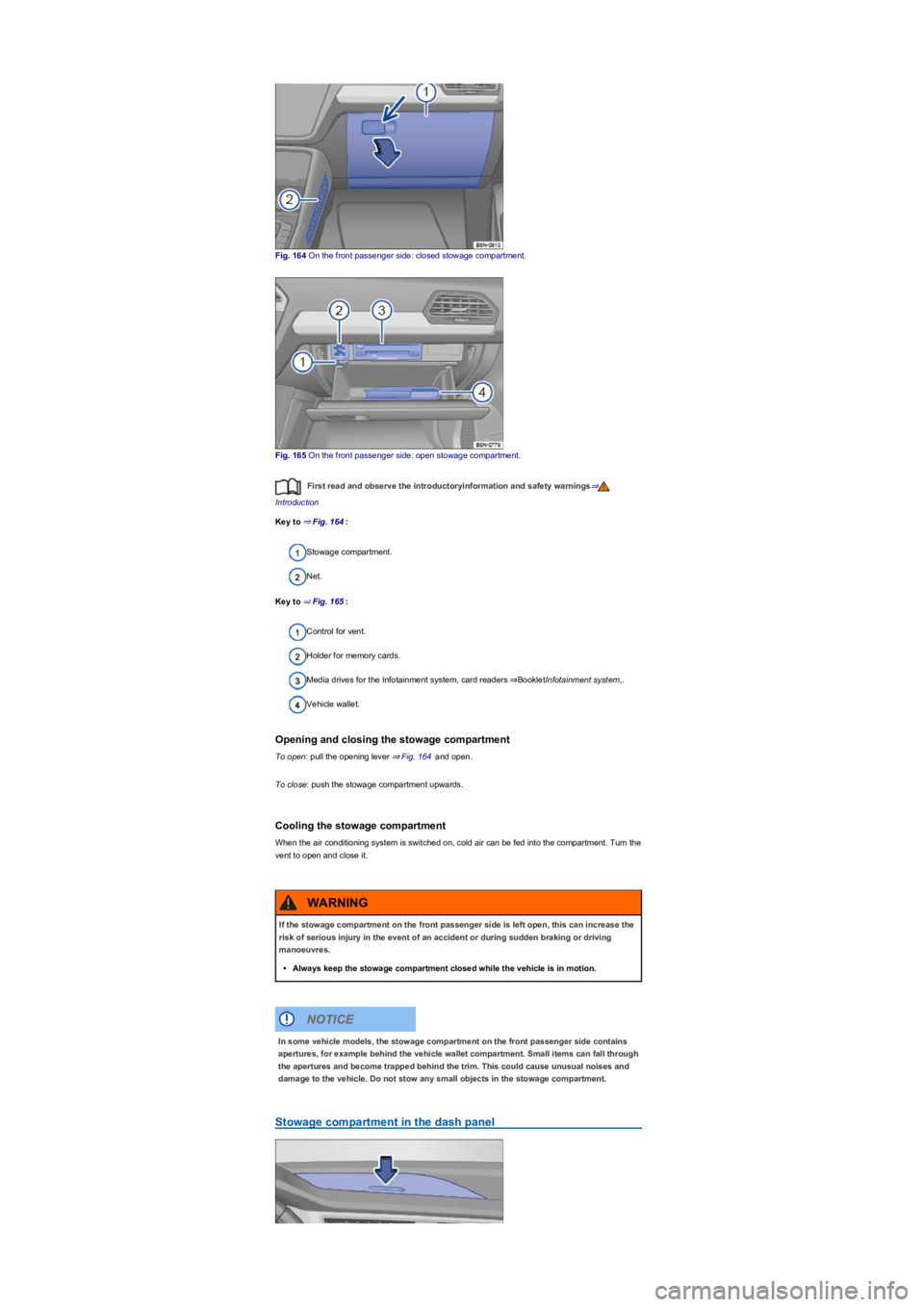
Fig. 164 On the front passenger side: closed stowage compartment.
Fig. 165 On the front passenger side: open stowage compartment.
First read and observe the introductoryinformation and safety warnings⇒
Introduction
Key to ⇒ Fig. 164:
Stowage compartment.
Net.
Key to ⇒ Fig. 165:
Control for vent.
Holder for memory cards.
Media drives for the Infotainment system, card readers ⇒BookletInfotainment system,.
Vehicle wallet.
Opening and closing the stowage compartment
To open: pull the opening lever ⇒ Fig. 164 and open.
To close: push the stowage compartment upwards.
Cooling the stowage compartment
When the air conditioning system is switched on, cold air can be fed into the compartment. Turn the
vent to open and close it.
Stowage compartment in the dash panel
If the stowage compartment on the front passenger side is left open, this can increase the
risk of serious injury in the event of an accident or during sudden braking or driving
manoeuvres.
•Always keep the stowage compartment closed while the vehicle is in motion.
WARNING
In some vehicle models, the stowage compartment on the front passenger side contains
apertures, for example behind the vehicle wallet compartment. Small items can fall through
the apertures and become trapped behind the trim. This could cause unusual noises and
damage to the vehicle. Do not stow any small objects in the stowage compartment.
NOTICE
Page 227 of 341
•If necessary, unclip the luggage net ⇒ Luggage net and remove the securing straps.
•Lift the luggage compartment floor and pull it rearwards out of the guides on the sides of the
luggage compartment ⇒ Fig. 183.
•Insert the luggage compartment floor into the guides at the required height and push it forwards
as far as it will go ⇒ Fig. 183, .
Depending on the vehicle equipment, there may be compartments for stowing small items
under the luggage compartment floor.
Volkswagen recommends that you secure items to the fastening rings with the aid of fixing or
securing straps.
Net partition
Folding the net partition in and out
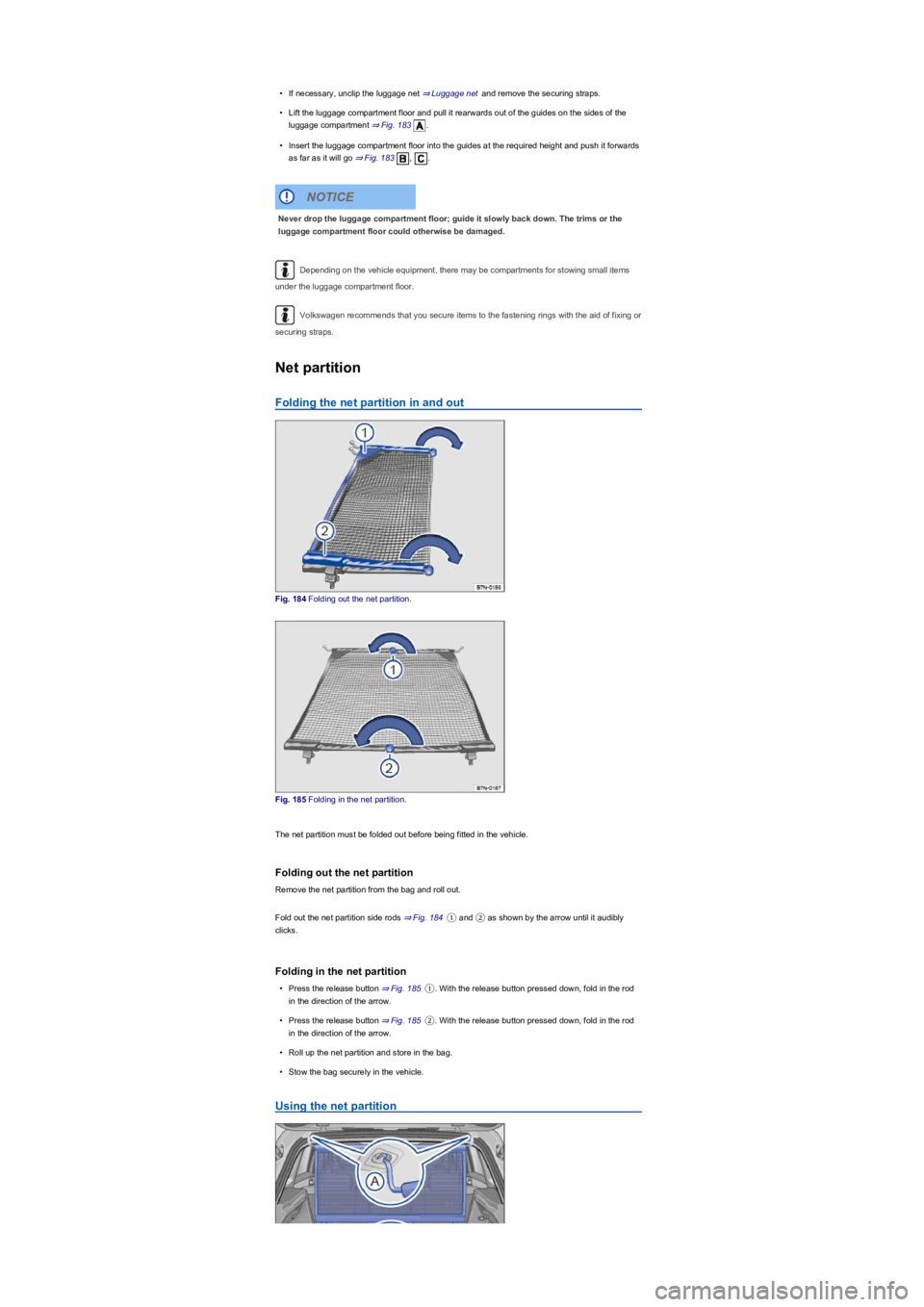
Fig. 184 Folding out the net partition.
Fig. 185 Folding in the net partition.
The net partition must be folded out before being fitted in the vehicle.
Folding out the net partition
Remove the net partition from the bag and roll out.
Fold out the net partition side rods ⇒ Fig. 184① and ② as shown by the arrow until it audibly
clicks.
Folding in the net partition
•Press the release button ⇒ Fig. 185①. With the release button pressed down, fold in the rod
in the direction of the arrow.
•Press the release button ⇒ Fig. 185②. With the release button pressed down, fold in the rod
in the direction of the arrow.
•Roll up the net partition and store in the bag.
•Stow the bag securely in the vehicle.
Using the net partition
Never drop the luggage compartment floor; guide it slowly back down. The trims or the
luggage compartment floor could otherwise be damaged.
NOTICE
Page 257 of 341
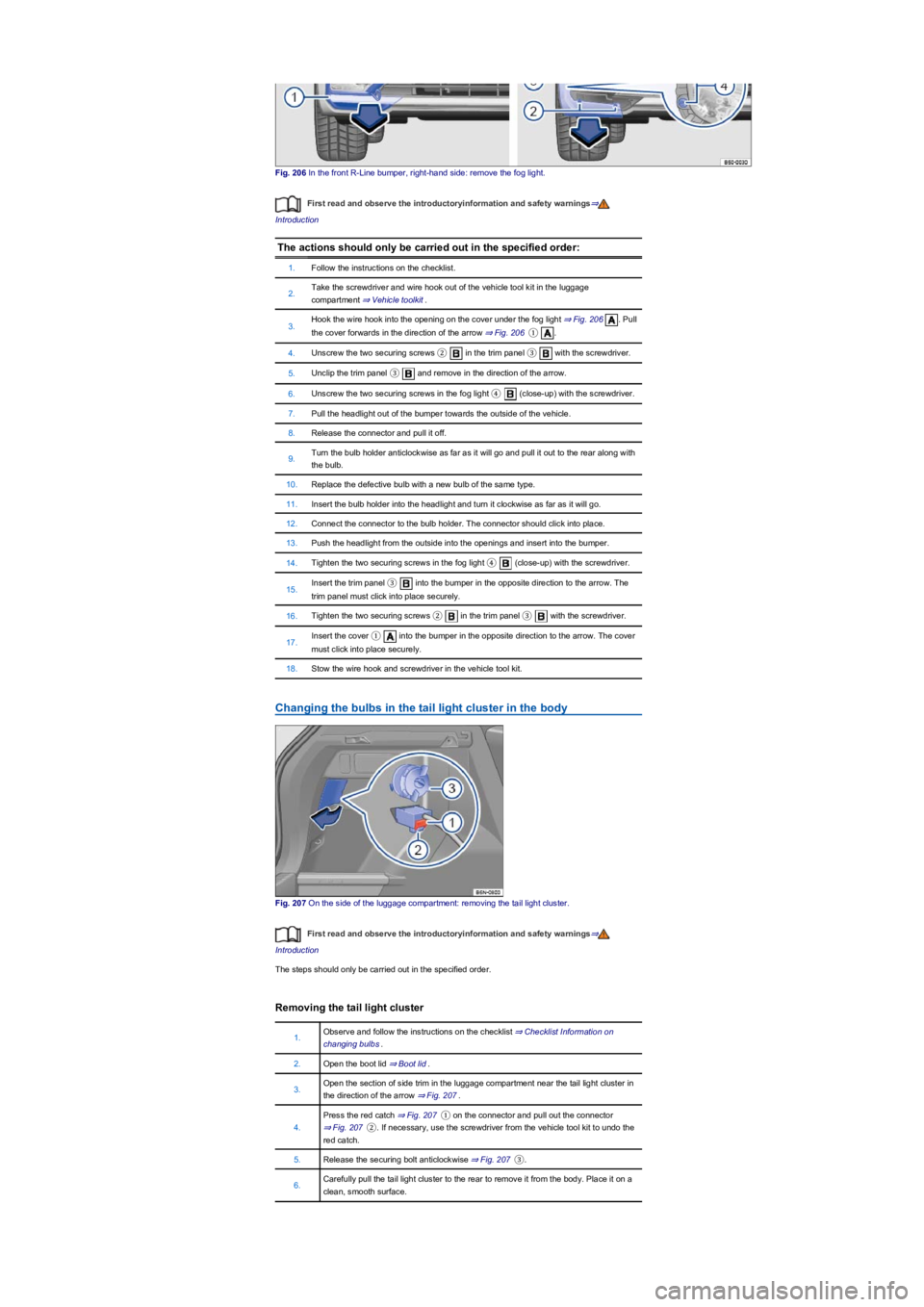
Fig. 206 In the front R-Line bumper, right-hand side: remove the fog light.
First read and observe the introductoryinformation and safety warnings⇒
Introduction
The actions should only be carried out in the specified order:
1.Follow the instructions on the checklist.
2.Take the screwdriver and wire hook out of the vehicle tool kit in the luggage
compartment ⇒ Vehicle toolkit.
3.Hook the wire hook into the opening on the cover under the fog light ⇒ Fig. 206. Pull
the cover forwards in the direction of the arrow ⇒ Fig. 206①.
4.Unscrew the two securing screws ② in the trim panel ③ with the screwdriver.
5.Unclip the trim panel ③ and remove in the direction of the arrow.
6.Unscrew the two securing screws in the fog light ④ (close-up) with the screwdriver.
7.Pull the headlight out of the bumper towards the outside of the vehicle.
8.Release the connector and pull it off.
9.Turn the bulb holder anticlockwise as far as it will go and pull it out to the rear along with
the bulb.
10.Replace the defective bulb with a new bulb of the same type.
11.Insert the bulb holder into the headlight and turn it clockwise as far as it will go.
12.Connect the connector to the bulb holder. The connector should click into place.
13.Push the headlight from the outside into the openings and insert into the bumper.
14.Tighten the two securing screws in the fog light ④ (close-up) with the screwdriver.
15.Insert the trim panel ③ into the bumper in the opposite direction to the arrow. The
trim panel must click into place securely.
16.Tighten the two securing screws ② in the trim panel ③ with the screwdriver.
17.Insert the cover ① into the bumper in the opposite direction to the arrow. The cover
must click into place securely.
18.Stow the wire hook and screwdriver in the vehicle tool kit.
Changing the bulbs in the tail light cluster in the body
Fig. 207 On the side of the luggage compartment: removing the tail light cluster.
First read and observe the introductoryinformation and safety warnings⇒
Introduction
The steps should only be carried out in the specified order.
Removing the tail light cluster
1.Observe and follow the instructions on the checklist ⇒ Checklist Information on
changing bulbs.
2.Open the boot lid ⇒ Boot lid.
3.Open the section of side trim in the luggage compartment near the tail light cluster in
the direction of the arrow ⇒ Fig. 207.
4.
Press the red catch ⇒ Fig. 207① on the connector and pull out the connector
⇒ Fig. 207②. If necessary, use the screwdriver from the vehicle tool kit to undo the
red catch.
5.Release the securing bolt anticlockwise ⇒ Fig. 207③.
6.Carefully pull the tail light cluster to the rear to remove it from the body. Place it on a
clean, smooth surface.
Page 258 of 341
Changing the bulb
7.Turn the bulb holder anticlockwise as far as it will go and carefully pull it out of the tail
light cluster together with the bulb.
9.Replace the defective bulb with a new bulb of the same type.
10.Carefully insert the bulb holder into the tail light cluster and turn it anticlockwise until
the bulb holder engages.
Fitting the tail light cluster
11.Carefully put the tail light cluster into the opening in the body.
12.Use one hand to hold the tail light in the fitting position while using the other hand to
screw the securing bolt firmly back in ⇒ Fig. 207③.
13.Check that the tail light cluster is positioned correctly and securely.
14.Connect the connector to the bulb holder and press into place.
15.Close the section of side trim in the luggage compartment near the tail light cluster
against the direction of the arrow
16.Close the boot lid ⇒ Boot lid.
The illustrations show the left-hand tail light cluster. The right-hand tail light cluster housing is
a mirror image of the one shown.
There are various types of tail light cluster, so the position and design of covers, bulbs and
bulb holders may vary from those shown in the illustrations.
In tail light clusters with LEDs, some light elements may be fitted with normal bulbs. These
bulbs can be changed.
Troubleshooting
First read and observe the introductoryinformation and safety warnings⇒
Introduction
Lighting
Vehicle lighting not working partially or completely. A separate display appears in the
instrument cluster if there is a cornering light fault.A trailer turn signal or all trailer lights have
stopped working.
Check the exterior lighting and change the appropriate bulb as required ⇒ Changing bulbs. If all
bulbs are OK or there is a fault in the dynamic cornering light, go to a qualified workshop.
Monitoring the lights on a connected trailer
For vehicles with a factory-fitted towing bracket, the vehicle will also monitor certain bulbs on a
trailer which has been connected properly via the trailer socket.
If a trailer turn signal or all the trailer lights fail, the indicator lamp in the instrument cluster will
go out.
Changing fuses
Introduction
This chapter contains information on the followingsubjects:
⇒ Fuses in the dash panel
⇒ Fuses in the engine compartment
⇒ Fuse table for fuses in the dash panel
⇒ Fuse tables for fuses in the engine compartment
⇒ Changing a blown fuse
At the time of print we are unable to provide an complete overview of the locations of the fuses for
the electrical consumers. This is because the vehicle is under constant development, because
fuses are assigned differently depending on the vehicle equipment level and because several
consumers may use a single fuse. You can get more information about the fuse layout from a
Volkswagen dealership.
Several electrical consumers could share a single fuse. Conversely, a single consumer could have
more than one fuse.
Therefore fuses should only be replaced when the cause of the fault has been rectified. If a new
fuse blows shortly after insertion, have the electrical system checked by a qualified workshop as
soon as possible.
Page 297 of 341
Old tyres should be disposed of as required by legislation.
Volkswagen-approved tyres are guaranteed to have the dimensions that are suitable for the
vehicle. In the case of other tyres, the tyre seller must provide a certificate from the tyre
manufacturer stating that the tyre is also suitable for the vehicle. This certificate must be stored in a
safe place in the vehicle.
Wheel rims and wheel bolts
First read and observe the introductoryinformation and safety warnings⇒
Introduction
Wheel rims, tyres and wheel bolts are matched to the vehicle type. If different rims are fitted, the
correct wheel bolts with the correct length and correctly shaped bolt heads must be used
⇒ Changing a wheel.
For technical reasons, it is not generally possible to use the wheels from other vehicles. This can
also apply to wheels of the same vehicle type.
Wheel bolts
The correct wheel bolts must be used for all vehicle types; these bolts must always be tightened
with the correct tightening torque ⇒ Wheel bolts.
Wheel rims with bolted rim rings or trim elements
Wheel rims with bolted-on rings or trim elements consist of several components. These
components are joined together using special bolts. Damaged wheel rims must be replaced and
must always be repaired by a qualified workshop. Volkswagen recommends using a Volkswagen
dealership for this purpose ⇒.
Rim identification
In some countries, new wheel rims must contain information on certain properties. The following
information may be provided on the wheel rim:
•Seal of conformity
•Rim size
•Name of manufacturer or brand name
•Date manufactured (month/year)
•Country of origin
•Production number
•Raw materials batch number
•Product code
Wheels must have the necessary freedom of operation. If the wheels do not have the
necessary freedom of operation, the tyre could rub on parts of the running gear, the
vehicle body and the brake lines. This can lead to a fault in the brake system and to tread
separation and thus to a tyre bursting.
•The actual tyre size must not exceed the tyre dimensions of manufacturers approved
by Volkswagen and must not rub on any vehicle body parts.
WARNING
Avoid heavy impacts and drive round obstacles whenever possible. Tyres can be
deformed by potholes and kerb edges especially. This can cause damage to the tyres and
wheel rims.
NOTICE
Page 305 of 341
Snow chains
First read and observe the introductoryinformation and safety warnings⇒
Introduction
Please observe legislation and also the maximum permitted speed when driving your vehicle with
snow chains.
On icy or snow-covered roads, snow chains will improve traction and braking response.
Snow chains may only be fitted on the front wheels – even on four-wheel drive vehicles
(4MOTION) – and only with the following wheel and tyre combinations:
Tyre sizeWheelType of snow chains to use
215 / 65 R 17
6 1/2 J x 17 offset 38Only fine-linked snow chains that add no more than
about 13.5 mm.
7 J x 17 offset 40Only fine-linked snow chains that add no more than
about 9 mm.
Volkswagen recommends that you ask your Volkswagen dealership for information about
appropriate wheel, tyre and snow chain size.
Remove hubcaps and trim rings before fitting snow chains ⇒. For safety reasons cover caps
must then be fitted over the wheel bolts. Caps are available from Volkswagen dealerships.
Mounting the temporary spare wheel in the event of a puncture on a front
wheel
For technical reasons, snow chains must not be used on the temporary spare wheel ⇒ Spare wheel
or temporary spare wheel.
•In event of a flat tyre on one of the front wheels, mount the temporary spare wheel to the rear
axle.
•Replace the damaged front wheel with the removed rear wheel. Note the direction of rotation.
Volkswagen recommends fitting the snow chains before mounting the wheel on the car.
In vehicles with a Tyre Pressure Loss Indicator, the system may have to be re-synchronised
when snow chains are fitted ⇒ Tyre monitoring systems.
Hubcaps
Introduction
This chapter contains information on the followingsubjects:
⇒ Centre cover
⇒ Wheel cover
⇒ Wheel bolt caps
The use of snow chains that are unsuitable for your vehicle or the incorrect installation of
snow chains can cause accidents and serious injuries.
•Always use the correct snow chains.
•Follow the assembly instructions provided by the snow chain manufacturer.
•Never exceed the maximum speed permitted for the snow chains that are fitted.
WARNING
•Remove the snow chains when driving on roads that are free of snow. The snow chains
will otherwise impair handling, damage the tyres and wear out very quickly.
•Snow chains that are in direct contact with the wheel can scratch or damage it.
Volkswagen recommends using snow chains with integrated rim protection.
NOTICE
Using unsuitable hubcaps, or fitting them incorrectly, can cause accidents and serious
injuries.
•Incorrectly fitted hubcaps can become loose while the vehicle is in motion and
endanger other road users.
•Do not use damaged hubcaps.
•Always ensure that the airflow to cool the brakes is not restricted or reduced. This also
applies if hubcaps are retrofitted. If the airflow is not sufficient, the braking distance
could increase significantly.
WARNING
Page 306 of 341
Centre cover
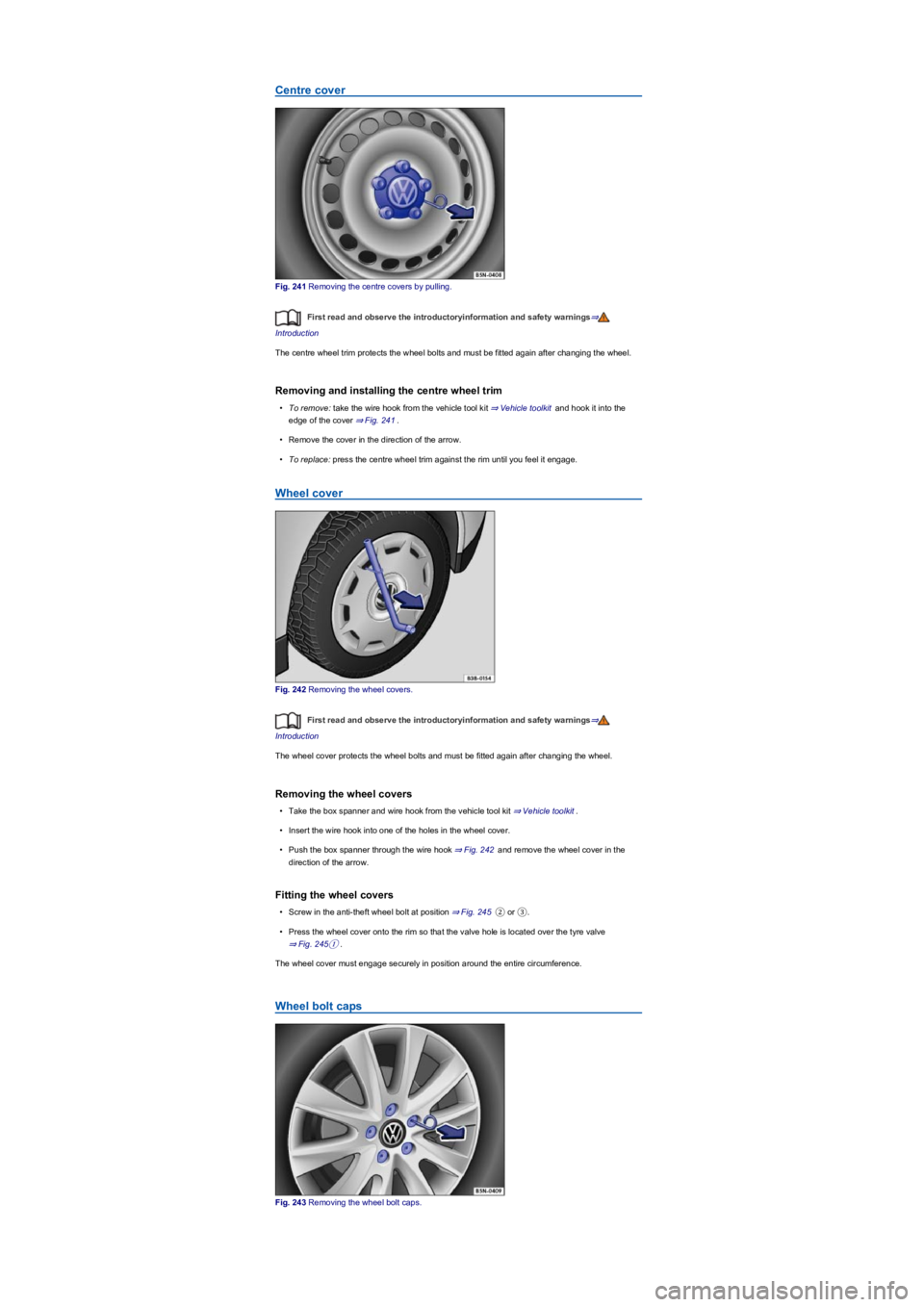
Fig. 241 Removing the centre covers by pulling.
First read and observe the introductoryinformation and safety warnings⇒
Introduction
The centre wheel trim protects the wheel bolts and must be fitted again after changing the wheel.
Removing and installing the centre wheel trim
•To remove: take the wire hook from the vehicle tool kit ⇒ Vehicle toolkit and hook it into the
edge of the cover ⇒ Fig. 241.
•Remove the cover in the direction of the arrow.
•To replace: press the centre wheel trim against the rim until you feel it engage.
Wheel cover
Fig. 242 Removing the wheel covers.
First read and observe the introductoryinformation and safety warnings⇒
Introduction
The wheel cover protects the wheel bolts and must be fitted again after changing the wheel.
Removing the wheel covers
•Take the box spanner and wire hook from the vehicle tool kit ⇒ Vehicle toolkit.
•Insert the wire hook into one of the holes in the wheel cover.
•Push the box spanner through the wire hook ⇒ Fig. 242 and remove the wheel cover in the
direction of the arrow.
Fitting the wheel covers
•Screw in the anti-theft wheel bolt at position ⇒ Fig. 245② or ③.
•Press the wheel cover onto the rim so that the valve hole is located over the tyre valve
⇒ Fig. 245①.
The wheel cover must engage securely in position around the entire circumference.
Wheel bolt caps
Fig. 243 Removing the wheel bolt caps.
Page 310 of 341
Crank the jack further until the wheel is just clear of the ground.
Changing a wheel
Fig. 248 Changing the wheel: removing the wheel bolts with the screwdriver handle.
First read and observe the introductoryinformation and safety warnings⇒
Introduction
Removing the wheel
•Observe the checklist ⇒ Preparations for changing a wheel.
•Loosen the wheel bolts ⇒ Wheel bolts.
•Jack up the vehicle ⇒ Lifting the vehicle with the jack.
•Using the hexagon socket in the screwdriver handle ⇒ Fig. 248, completely unscrew the
loosened wheel bolts and place them on a clean surface.
•Remove the wheel.
Fitting the spare wheel or temporary spare wheel
Note the tyre direction of rotation ⇒ Tyre lettering and tyre type.
•Put the wheel in place.
•Screw in the anti-theft wheel bolt using the adapter at position ⇒ Fig. 245② or ③ and tighten it
slightly in a clockwise direction.
•Screw in all the other wheel bolts in clockwise direction and tighten them slightly.
•Lower the vehicle with the jack.
•Use the box spanner to tighten all the wheel bolts securely in a clockwise direction ⇒. Do
not tighten the bolts in clockwise or anticlockwise sequence. Tighten them in diagonal
sequence.
•Fit the caps, wheel centre trim or wheel cover ⇒ Hubcaps.
Incorrect use of the vehicle jack can cause the vehicle to slip off the jack, which can lead
to severe injuries. Please note the following to help reduce the risk of injuries:
•Only use vehicle jacks that have been approved by Volkswagen for your vehicle type.
Other vehicle jacks could slip out of position – this includes vehicle jacks supplied
with other Volkswagen models.
•The ground must be firm and level. Soft ground or surfaces at an incline under the
vehicle jack may cause the vehicle to slip off the jack. If necessary use a large, strong
board or similar support for the vehicle jack.
•On a hard, slippery surface (such as tiles) use a rubber mat or similar to prevent the
vehicle jack from slipping.
•Fit the vehicle jack only at the points described. The jack claw must securely grip the
vertical rib under the side member ⇒ Fig. 247.
•Never place any part of your body (e.g. an arm or leg) underneath the vehicle if the
latter is only supported by the vehicle jack.
•If you have to work underneath the vehicle, use suitable stands to provide extra
support for the vehicle.
•Never lift the vehicle when the engine is running, or if the vehicle is tilted to the side or
on a gradient.
•Never start the engine when the vehicle is raised on a vehicle jack. Engine vibrations
can cause the vehicle to fall off the vehicle jack.
WARNING
Ignoring any of the items on this important safety checklist can lead to accidents and
severe injuries.
•Always follow the instructions in the checklist and observe the general safety
procedures.
WARNING
Page 319 of 341
Suitable accessories are available from your Volkswagen dealership. Follow the usage
instructions on the packaging.
Washing the vehicle
Also wash the underside of the vehicle on a regular basis to remove road salt or seawater residue.
Automatic car washes
Always observe all the car wash operator's specifications, in particular if your vehicle features add-
on parts ⇒.
•Preferably use car washes without brushes.
•Preclean the vehicle by rinsing with water.
•The steering column must not lock when driving through automatic car washes ⇒ Steering.
•Always switch off the Auto Hold function ⇒ Electronic parking brake, the wipers ⇒ Wipers and
the rain/light sensor before entering the car wash.
•Fold in the exterior mirrors.
•If your vehicle has decorative and protective films, do not select a wash program with hot wax.
High-pressure cleaners
Observe the manufacturer's information for the high-pressure cleaner. Never use rotating nozzles
⇒.
•Only use water with a maximum temperature of +60°C (+140°F).
•Do not clean windows that are iced over or covered in snow with a high-pressure cleaner.
•Move the jet of water uniformly so that the nozzle is at least 50 cm away from the side windows
and other vehicle components.
•Do not point the water jet at the same location for too long. Instead, leave stubborn dirt to soak.
•If possible, do not direct the water jet at seals, e.g. side windows, decorative trim, tyres, rubber
hoses, insulation materials or any other sensitive components, e.g. door locks.
•Sensors, camera lenses, and decorative and protective films should be sprayed directly only for
brief periods of time.
Washing the car by hand
Washing the car by hand is always the more gentle way to clean it. However, there are also some
things to note for this ⇒.
•Before washing the vehicle, soak the dirt with plenty of water and then rinse it off thoroughly.
•Clean the vehicle with a soft sponge, a wash mitt or a brush applying only light pressure. Start
with the roof and work from the top to the bottom.
•Rinse the sponge, wash mitt or brush thoroughly at regular short intervals.
•Clean the wheels, sill panels etc. last. Use a second sponge for this.
Use a shampoo for very stubborn dirt only.
Car care products can be toxic and hazardous. Unsuitable care products and incorrect use
of care products can cause accidents, serious injuries, burns or poisoning.
•Care products must be kept in the original, sealed container only.
•Read the manufacturer's instructions.
•Never use empty food cans, bottles or other containers for storing care products.
•Keep children away from care products.
•The products can give off harmful fumes during use. They should therefore only be
used outside or in well-ventilated spaces.
•Never use fuel, turpentine, engine oil, nail varnish remover or other volatile fluids to
wash, clean or care for your vehicle. These substances are toxic and highly
inflammable.
WARNING
Stains, dirt and other deposits containing aggressive and solvent-based ingredients attack
the material and may cause irreparable damage, even if only left for a short time.
•Stains, dirt and other deposits should always be removed as quickly as possible and
not allowed to dry in.
•Have stubborn stains removed by a qualified workshop.
NOTICE
1)
Page 321 of 341
Use the Volkswagen Genuine de-icing agent (- 000 096 322 -) to remove ice.
Wiper blades:⇒ Wiper blades.
Paintwork: always treat surfaces carefully in order to prevent damage to the paint coat. Use a
clean, soft cloth and a mild soap solution or cleaning clay to remove any light dirt immediately, e.g.
deposits, insect residue, or cosmetics.
Repair minor paint damage with a touch-up pen. Refer to the vehicle data sticker for the paint code
⇒ Technical data. Consult a qualified workshop in the event of damage to surfaces with matt paint.
•Overflowing fuel or service fluids: clean immediately.
•Flash rust deposits: moisten deposits with a soap solution. Then remove any deposits with
cleaning clay.
•Corrosion: have removed by a qualified workshop.
•Water no longer forms beads on clean paint: preserve paintwork at least twice a year using
Volkswagen Genuine hard wax (- 000 096 317 -).
•No gloss in spite of preservation/paint unattractive: treat the vehicle with suitable polish after
cleaning to remove dirt and dust.
Plenum chamber, engine compartment: remove leaves and other loose objects with a vacuum
cleaner or by hand ⇒ Fig. 251⇒. Cleaning of the engine compartment should always be
performed by a qualified workshop ⇒.
Water that has entered the plenum chamber via a manual process (e.g. from a high-pressure
cleaner) can cause considerable damage to the vehicle.
Sensors, camera lenses: clean the area in front of the sensors or camera with a soft cloth and
solvent-free cleaning agent. Observe the installation locations ⇒ Vehicle overviews.
•Switch on the ignition.
•Move the selector lever to position R.
•Clean the camera lens.
Clean sensitive surfaces on the rain/light sensor and the camera window on the windscreen in the
same way as windows and glass surfaces (depending on vehicle equipment).
Remove snow with a brush. Do not use warm or hot water.
Use the Volkswagen Genuine de-icing agent (- 000 096 322 -) to remove ice.
Decorative films, protective films: remove soiling in the same way as for paint. Always use
Volkswagen Genuine plastic cleaner (- 000 096 314 -) for matt decorative films.
Treat the vehicle with liquid hard wax every three months after washing and removing dust. Only
use clean, soft microfibre clothes to apply it. Do not use hot wax, also not in car washes!
•Stubborn dirt: remove carefully using white spirits, and then rinse using warm water.
Trim parts, trim strips, exhaust pipes made of chrome, aluminium or stainless steel: clean
only in a dust-free environment using a clean, soft cloth and a mild soap solution.
Chrome parts can be protected using Volkswagen Genuine hard wax (- 000 096 317 -).
Anodised surfaces: do not use chrome cleaning products.
Headlights, tail light clusters: use a soft sponge soaked with a mild soap solution. Do not use
any cleaning agents that contain alcohol or solvents.
•Stubborn dirt: remove with Volkswagen Genuine chrome and aluminium care product (-
000 096 319 D -).
Wheels: remove dirt and gritting salt deposits with plenty of water.
Alloy wheels: treat dirty aluminium wheels with Volkswagen Genuine wheel cleaner (- 000 096 304
-). Volkswagen recommends treating the wheel rims with Volkswagen Genuine hard wax (-
000 096 317 -) every three months.
•Damage protective paint coating: repair immediately with a touch-up pen. Go to a qualified
workshop if necessary.
•Brake dust: use Volkswagen Genuine wheel rim cleaner (- 000 096 304 -).
Door lock cylinders: Volkswagen recommends using Volkswagen Genuine de-icing agent (-
000 096 322 -) for de-icing. Do not use door lock de-icers containing substances that dissolve
grease.
1)
1)
1)