belt VOLKSWAGEN TIGUAN 2017 Owner´s Manual
[x] Cancel search | Manufacturer: VOLKSWAGEN, Model Year: 2017, Model line: TIGUAN, Model: VOLKSWAGEN TIGUAN 2017Pages: 341, PDF Size: 9.14 MB
Page 56 of 341
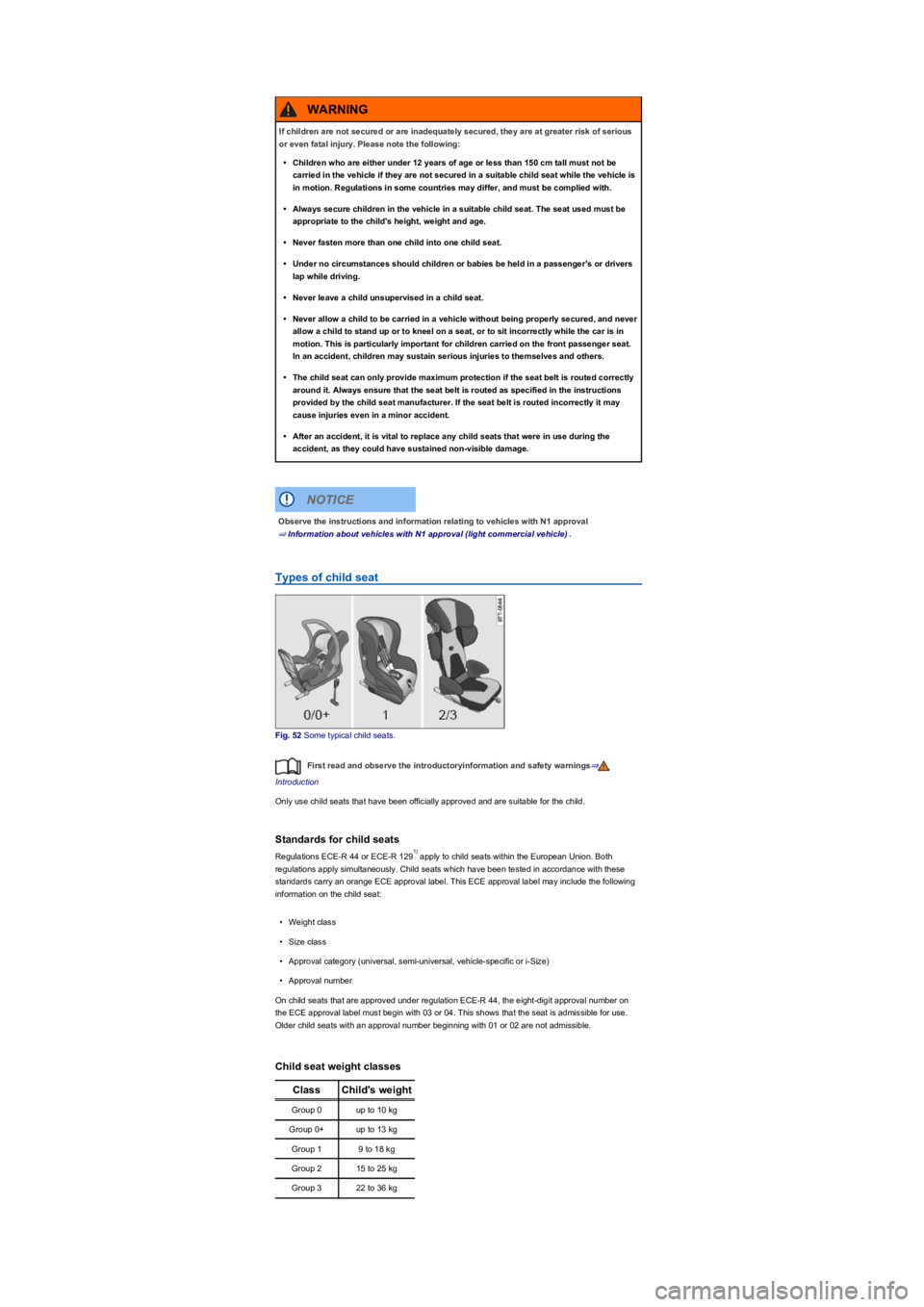
Types of child seat
Fig. 52 Some typical child seats.
First read and observe the introductoryinformation and safety warnings⇒
Introduction
Only use child seats that have been officially approved and are suitable for the child.
Standards for child seats
Regulations ECE-R 44 or ECE-R 129 apply to child seats within the European Union. Both
regulations apply simultaneously. Child seats which have been tested in accordance with these
standards carry an orange ECE approval label. This ECE approval label may include the following
information on the child seat:
•Weight class
•Size class
•Approval category (universal, semi-universal, vehicle-specific or i-Size)
•Approval number
On child seats that are approved under regulation ECE-R 44, the eight-digit approval number on
the ECE approval label must begin with 03 or 04. This shows that the seat is admissible for use.
Older child seats with an approval number beginning with 01 or 02 are not admissible.
Child seat weight classes
ClassChild's weight
Group 0up to 10 kg
Group 0+up to 13 kg
Group 19 to 18 kg
Group 215 to 25 kg
Group 322 to 36 kg
If children are not secured or are inadequately secured, they are at greater risk of serious
or even fatal injury. Please note the following:
•Children who are either under 12 years of age or less than 150 cm tall must not be
carried in the vehicle if they are not secured in a suitable child seat while the vehicle is
in motion. Regulations in some countries may differ, and must be complied with.
•Always secure children in the vehicle in a suitable child seat. The seat used must be
appropriate to the child's height, weight and age.
•Never fasten more than one child into one child seat.
•Under no circumstances should children or babies be held in a passenger's or drivers
lap while driving.
•Never leave a child unsupervised in a child seat.
•Never allow a child to be carried in a vehicle without being properly secured, and never
allow a child to stand up or to kneel on a seat, or to sit incorrectly while the car is in
motion. This is particularly important for children carried on the front passenger seat.
In an accident, children may sustain serious injuries to themselves and others.
•The child seat can only provide maximum protection if the seat belt is routed correctly
around it. Always ensure that the seat belt is routed as specified in the instructions
provided by the child seat manufacturer. If the seat belt is routed incorrectly it may
cause injuries even in a minor accident.
•After an accident, it is vital to replace any child seats that were in use during the
accident, as they could have sustained non-visible damage.
WARNING
Observe the instructions and information relating to vehicles with N1 approval
⇒ Information about vehicles with N1 approval (light commercial vehicle).
NOTICE
1)
Page 57 of 341
•Weight class 0/0+: group 0/0+ or 0/1 rear-facing infant carriers ⇒ Fig. 52 are the best option
for the period from birth to about 18 months.
•Weight class 1: group 1 (up to about four years old) or group 1/2 (up to about seven years old)
with an integral belt system are best for children over the relevant weight limit.
•Weight classes 2/3: groups 2 and 3 include child seats with a backrest, and booster seats with
no backrest. Child seats with a backrest have integrated seat routing and side cushions, and so
provide better protection than booster seats with no backrest. Volkswagen therefore
recommends the use of child seats with a backrest. Group 2 child seats are for children up to
the age of about seven, group 3 child seats for those older than seven.
Not every child will fit in the child seat specified for their weight group. Likewise, not every seat will
fit in every vehicle. Therefore it is vital to check that the child fits properly in their child seat and that
the child seat can be securely fastened in the vehicle.
Child seat approval categories
Child seats can be classified as universal, semi-universal or vehicle-specific (all in accordance with
regulation ECE-R 44), or as i-Size (in accordance with regulation ECE-R 129).
•Universal: child seats with universal approval are approved for use in all vehicles. No type list
is required. ISOFIX child seats with universal approval must also be securing using a strap over
the top of the vehicle seat (top tether).
•Semi-universal: semi-universal approval requires other safety devices for attaching the seat
(that require additional testing) in addition to the standard requirements for universal approval.
Child seats with semi-universal approval come with a type list. The seats should only be used in
vehicles that are included on this list.
•Vehicle-specific: child seats with vehicle specific approval must have undergone dynamic
testing in each model of vehicle for which it is approved. These child seats also come with a
type list.
•i-Size: child seats classified as i-Size must conform to the installation and safety requirements
prescribed in regulation ECE-R 129. Contact the child seat manufacturer to find out which child
seats are approved for this vehicle in accordance with i-Size.
Regulation ECE-R 129 has not yet been implemented by the state authorities in all countries.
Installing and using child seats
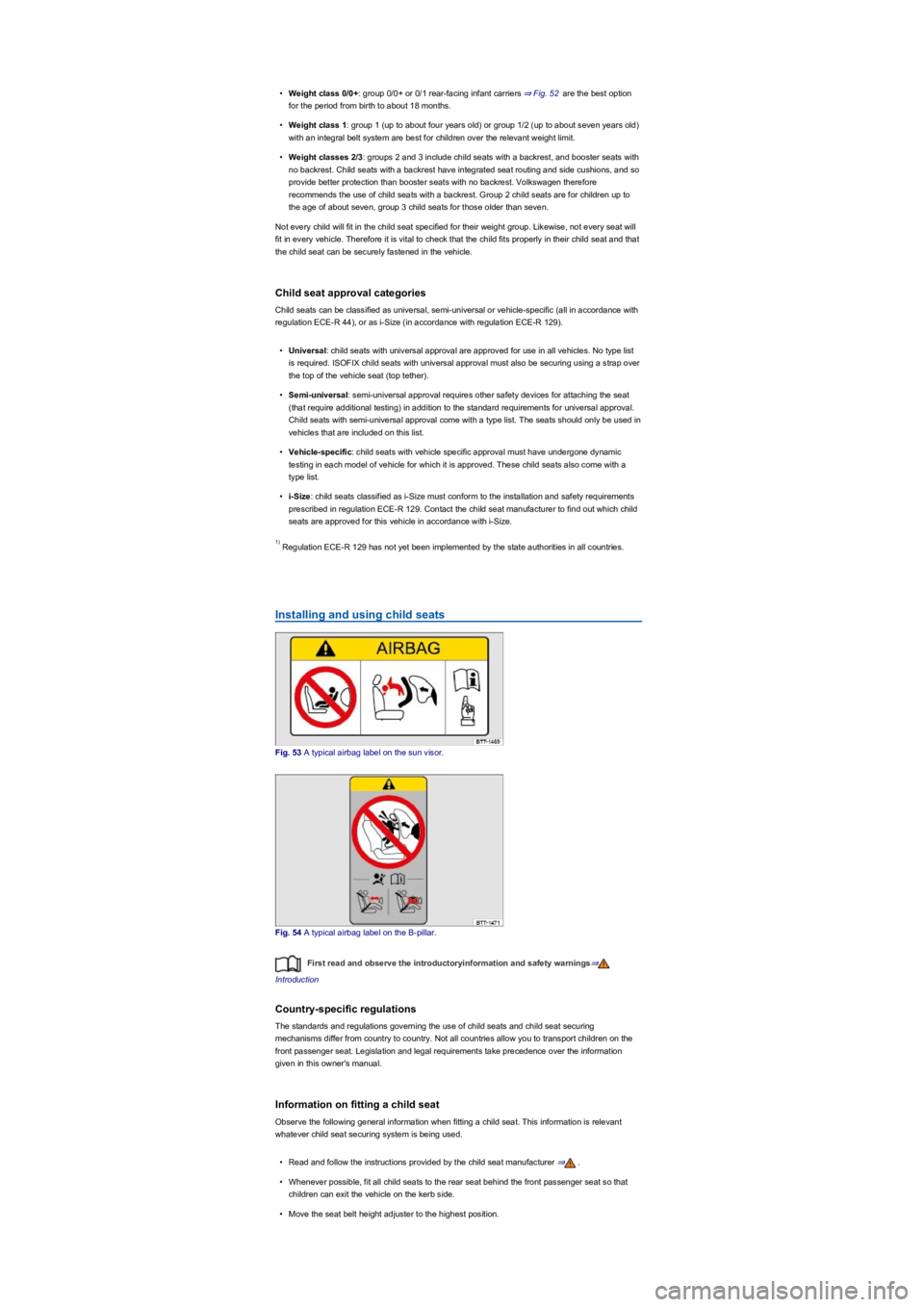
Fig. 53 A typical airbag label on the sun visor.
Fig. 54 A typical airbag label on the B-pillar.
First read and observe the introductoryinformation and safety warnings⇒
Introduction
Country-specific regulations
The standards and regulations governing the use of child seats and child seat securing
mechanisms differ from country to country. Not all countries allow you to transport children on the
front passenger seat. Legislation and legal requirements take precedence over the information
given in this owner's manual.
Information on fitting a child seat
Observe the following general information when fitting a child seat. This information is relevant
whatever child seat securing system is being used.
•Read and follow the instructions provided by the child seat manufacturer ⇒.
•Whenever possible, fit all child seats to the rear seat behind the front passenger seat so that
children can exit the vehicle on the kerb side.
•Move the seat belt height adjuster to the highest position.
1)
Page 58 of 341
•Deactivate the front passenger front airbag if fitting a rear-facing child seat on the front
passenger seat.
•When fitting on the front passenger seat, push the front passenger seat back fully and adjust
the seat to the highest position. Adjust the backrest to an upright position ⇒ Sitting position.
•When using child seats from groups 0 or 1 on the rear bench seat, push the rear bench seat
backwards as far as possible ⇒ Sitting position.
•When using child seats from groups 2 or 3 on the rear bench seat, push the rear bench seat
into a central position ⇒ Sitting position.
•Always ensure that there is enough space around the child seat. If necessary, adjust the
position of the seat in front. When doing so, ensure that the driver or front passenger can still
maintain a correct sitting position ⇒ Sitting position.
•The backrest of the child seat must lay as flat as possible against the vehicle seat backrest.
Adjust the seat backrest angle if necessary so that the child seat lies flush against the backrest.
If the child seat, once fitted, touches the vehicle head restraint so that it cannot lie flat against
the backrest, push the vehicle head restraint up as far as it will go or remove it and stow it away
safely in the vehicle ⇒ Sitting position.
Airbag sticker
The vehicle may be provided with stickers giving key information about the front passenger front
airbag. The information on these stickers may vary from country to country. The stickers may be
found:
•On the driver and/or front passenger sun visor ⇒ Fig. 53.
•On the B-pillar on the passenger side ⇒ Fig. 54.
It is essential to note the warning information shown on these stickers before installing a rear-facing
child seat ⇒.
Risks involved in carrying children on the front passenger seat
If you are using a rear-facing child seat, the front passenger front airbag can cause critical or
potentially fatal injuries when it inflates ⇒.
Rear-facing child seat may only be used on the front passenger seat if the front passenger front
airbag has been deactivated. A deactivated front passenger front airbag is indicated by means of
the permanently lit PASSENGER AIR BAG indicator lamp in the driver's field of vision.
Switching off the front passenger front airbag ⇒ Airbag system, PASSENGER AIR BAG
indicator lamp ⇒ Indicator lamp.
If using a front-facing child seat, do not deactivate the front passenger front airbag. When fitting
the child seat ensure ensure that it is as far away as possible from the front passenger front airbag.
The front passenger front airbag can cause severe injuries when it inflates ⇒.
Some child seats are not suitable for use on the front passenger seat. The child seat must be
specially authorised by the manufacturer for use on the front passenger seat in vehicles with front
and side airbags. Volkswagen dealerships keep an up-to-date list of authorised child seats.
If you use a rear-facing child seat on the front passenger seat, the child in it is at
increased risk of sustaining critical or fatal injuries in the event of an accident.
•Deactivate the front passenger front airbag. If the front passenger front airbag cannot
be deactivated no rear-facing child seat may be used.
•Move the front passenger seat as far back and as high as possible in order to create
the largest possible distance between the child seat and the front passenger front
airbag.
•Move the backrest to the upright position.
•Move the seat belt height adjuster to the highest position.
•Use only child seats that have been approved by the child seat manufacturer for use on
a front passenger seat with front and side airbags.
DANGER
Child seats present a risk of injury if incorrectly installed.
•Always read and follow the installation instructions and warning information provided
by the child seat manufacturer.
WARNING
Page 59 of 341
Securing systems
First read and observe the introductoryinformation and safety warnings⇒
Introduction
Different countries use different securing systems for safely fitting child seats in the vehicle.
Key terms for securing systems
•ISOFIX: ISOFIX is a standardised securing system for fitting child seats in the vehicle quickly
and safely. The ISOFIX attachment system creates a rigid connection between the child seat
and the car body.
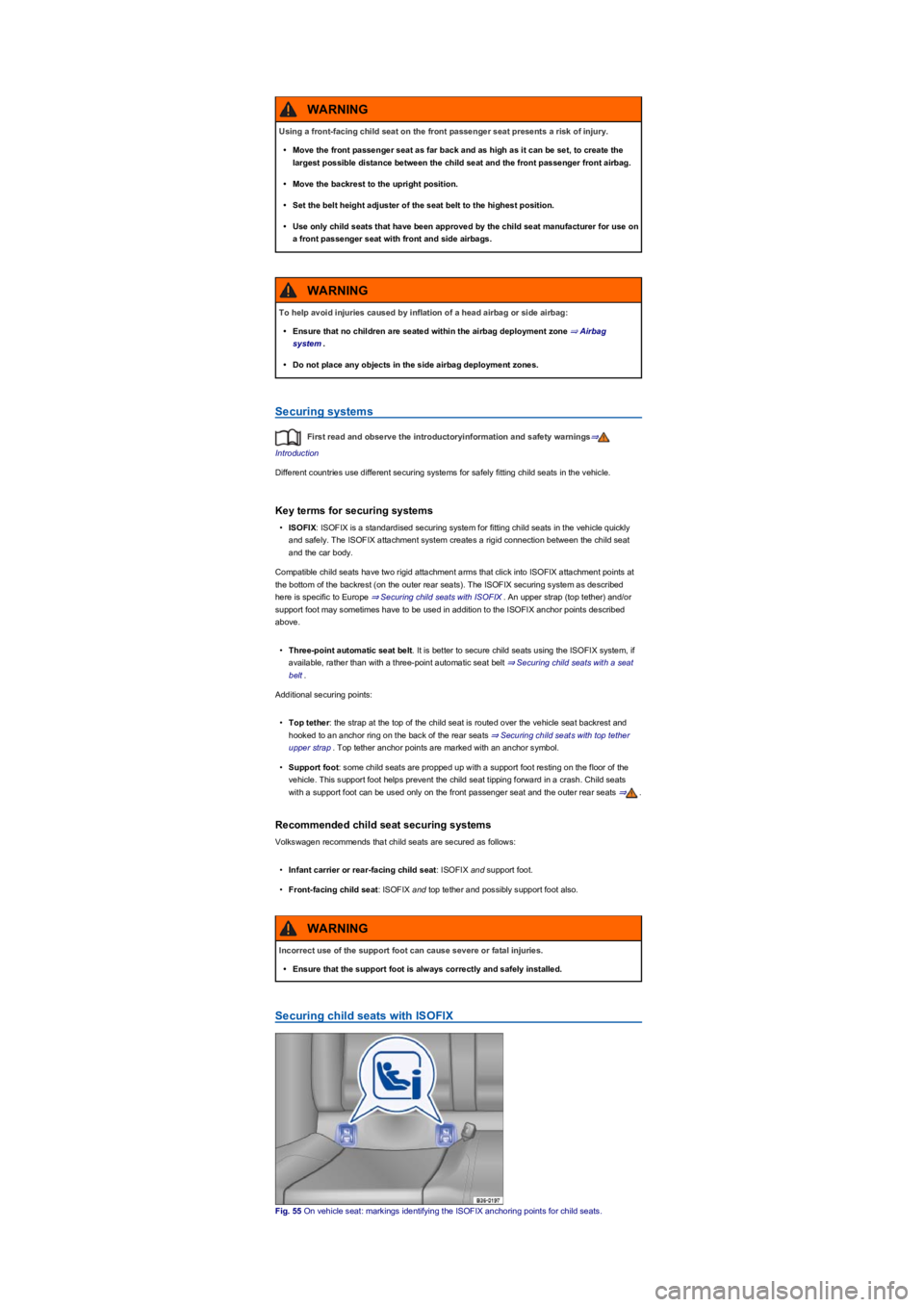
Compatible child seats have two rigid attachment arms that click into ISOFIX attachment points at
the bottom of the backrest (on the outer rear seats). The ISOFIX securing system as described
here is specific to Europe ⇒ Securing child seats with ISOFIX. An upper strap (top tether) and/or
support foot may sometimes have to be used in addition to the ISOFIX anchor points described
above.
•Three-point automatic seat belt. It is better to secure child seats using the ISOFIX system, if
available, rather than with a three-point automatic seat belt ⇒ Securing child seats with a seat
belt.
Additional securing points:
•Top tether: the strap at the top of the child seat is routed over the vehicle seat backrest and
hooked to an anchor ring on the back of the rear seats ⇒ Securing child seats with top tether
upper strap. Top tether anchor points are marked with an anchor symbol.
•Support foot: some child seats are propped up with a support foot resting on the floor of the
vehicle. This support foot helps prevent the child seat tipping forward in a crash. Child seats
with a support foot can be used only on the front passenger seat and the outer rear seats ⇒.
Recommended child seat securing systems
Volkswagen recommends that child seats are secured as follows:
•Infant carrier or rear-facing child seat: ISOFIX and support foot.
•Front-facing child seat: ISOFIX and top tether and possibly support foot also.
Securing child seats with ISOFIX
Fig. 55 On vehicle seat: markings identifying the ISOFIX anchoring points for child seats.
Using a front-facing child seat on the front passenger seat presents a risk of injury.
•Move the front passenger seat as far back and as high as it can be set, to create the
largest possible distance between the child seat and the front passenger front airbag.
•Move the backrest to the upright position.
•Set the belt height adjuster of the seat belt to the highest position.
•Use only child seats that have been approved by the child seat manufacturer for use on
a front passenger seat with front and side airbags.
WARNING
To help avoid injuries caused by inflation of a head airbag or side airbag:
•Ensure that no children are seated within the airbag deployment zone ⇒ Airbag
system.
•Do not place any objects in the side airbag deployment zones.
WARNING
Incorrect use of the support foot can cause severe or fatal injuries.
•Ensure that the support foot is always correctly and safely installed.
WARNING
Page 61 of 341
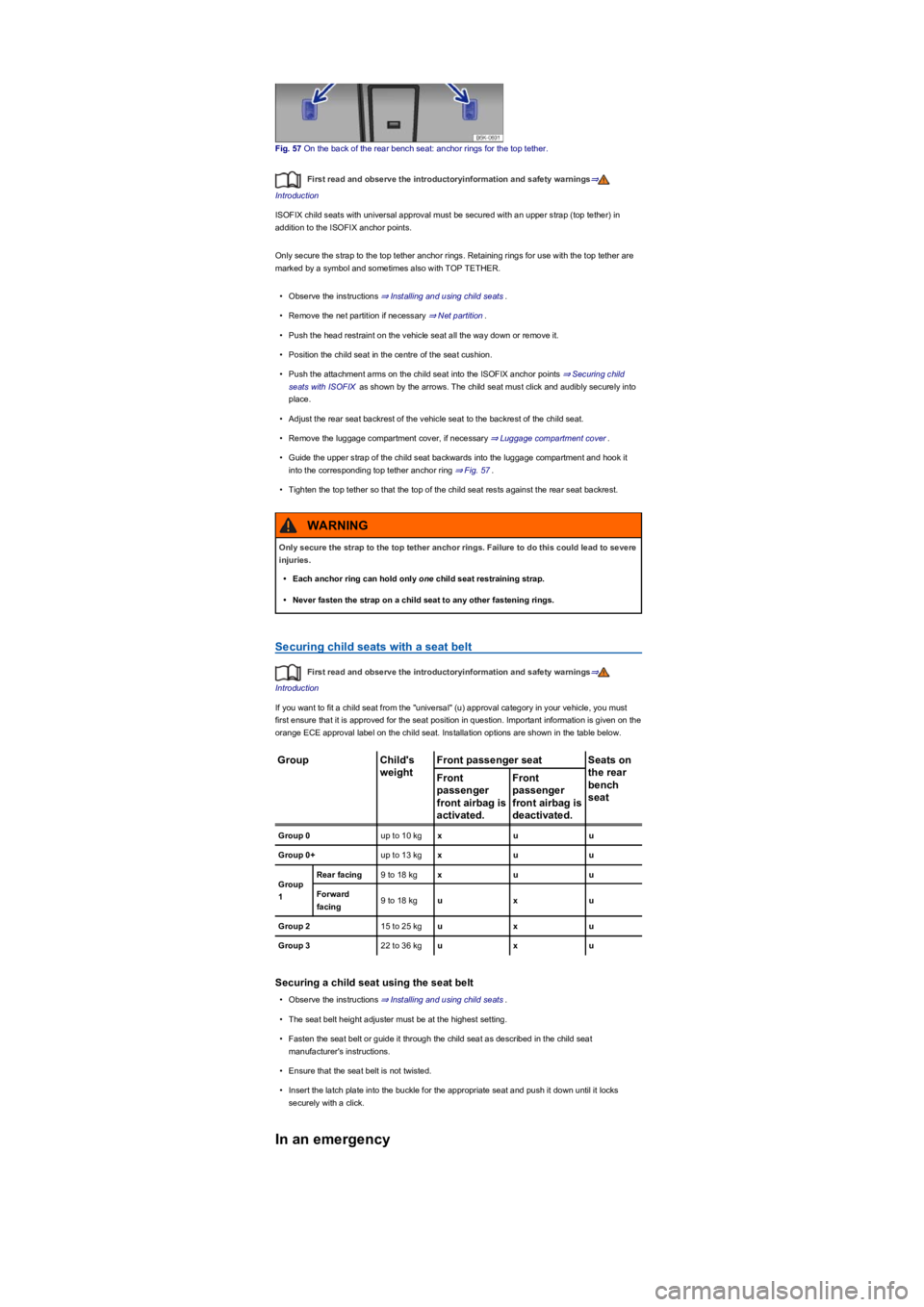
Fig. 57 On the back of the rear bench seat: anchor rings for the top tether.
First read and observe the introductoryinformation and safety warnings⇒
Introduction
ISOFIX child seats with universal approval must be secured with an upper strap (top tether) in
addition to the ISOFIX anchor points.
Only secure the strap to the top tether anchor rings. Retaining rings for use with the top tether are
marked by a symbol and sometimes also with TOP TETHER.
•Observe the instructions ⇒ Installing and using child seats.
•Remove the net partition if necessary ⇒ Net partition.
•Push the head restraint on the vehicle seat all the way down or remove it.
•Position the child seat in the centre of the seat cushion.
•Push the attachment arms on the child seat into the ISOFIX anchor points ⇒ Securing child
seats with ISOFIX as shown by the arrows. The child seat must click and audibly securely into
place.
•Adjust the rear seat backrest of the vehicle seat to the backrest of the child seat.
•Remove the luggage compartment cover, if necessary ⇒ Luggage compartment cover.
•Guide the upper strap of the child seat backwards into the luggage compartment and hook it
into the corresponding top tether anchor ring ⇒ Fig. 57.
•Tighten the top tether so that the top of the child seat rests against the rear seat backrest.
Securing child seats with a seat belt
First read and observe the introductoryinformation and safety warnings⇒
Introduction
If you want to fit a child seat from the "universal" (u) approval category in your vehicle, you must
first ensure that it is approved for the seat position in question. Important information is given on the
orange ECE approval label on the child seat. Installation options are shown in the table below.
GroupChild's
weight
Front passenger seatSeats on
the rear
bench
seat
Front
passenger
front airbag is
activated.
Front
passenger
front airbag is
deactivated.
Group 0up to 10 kgxuu
Group 0+up to 13 kgxuu
Group
1
Rear facing9 to 18 kgxuu
Forward
facing9 to 18 kguxu
Group 215 to 25 kguxu
Group 322 to 36 kguxu
Securing a child seat using the seat belt
•Observe the instructions ⇒ Installing and using child seats.
•The seat belt height adjuster must be at the highest setting.
•Fasten the seat belt or guide it through the child seat as described in the child seat
manufacturer's instructions.
•Ensure that the seat belt is not twisted.
•Insert the latch plate into the buckle for the appropriate seat and push it down until it locks
securely with a click.
In an emergency
Only secure the strap to the top tether anchor rings. Failure to do this could lead to severe
injuries.
•Each anchor ring can hold only one child seat restraining strap.
•Never fasten the strap on a child seat to any other fastening rings.
WARNING
Page 89 of 341
Mechanically adjusting the front seat
Always adjust the front seats to their correct position before any journey and ensure that
any passenger has fastened their seat belt.
•Push the front passenger seat as far back as possible.
•Adjust the driver seat so that there is at least 25 cm between your breastbone and the
hub of the steering wheel. Adjust the driver seat by moving it forwards or backwards
so that you are able to press the pedals to the floor with your knees still slightly bent
and so that the distance from the dash panel to your knees is at least 10 cm. If your
build makes it impossible to fulfil this requirement then you must contact a qualified
workshop so they can make any necessary modifications.
•Never travel with the backrest tilted far back. The further back the backrest is tilted, the
greater the risk of injury caused by incorrect seat belt routing or an incorrect sitting
position.
•Never travel with the backrest tilted far forwards. When a front airbag is triggered it
could force the seat backrest backwards and injure vehicle occupants on the back
seats.
•Adopt and maintain the greatest possible distance from the steering wheel and dash
panel.
•You should always sit upright with your back against the seat backrest with the front
seats properly adjusted. Do not position any body part too close where the airbags are
fitted.
•The risk of serious injury is increased for passengers on the rear seat if they are not
sitting upright because the seat belts are incorrectly positioned.
WARNING
Incorrect adjustment of the seats can cause accidents and serious injuries.
•Only adjust the seats when the vehicle is stationary. The seats could change position
unexpectedly if you attempt to reposition them while the vehicle is in motion, leading
to a loss of control of the vehicle. Furthermore, an incorrect seating position is
adopted while adjusting the seat.
•Only adjust the height and tilt of the seat or move it forwards and backwards when the
area around the seat is clear.
•To be able to make adjustments to the seats, the area around them must not be
restricted by any items.
•Only adjust the height of the rear seat or move it forwards and backwards when the
area around the seat is clear.
•The areas for adjusting and locking the seats must not be soiled.
WARNING
Improper use of seat covers or protective covers may lead to the electrical seat controls
being operated accidentally and the front seats moving unexpectedly while the vehicle is
moving. You could lose control over the vehicle. This could result in serious injury and
accidents. Furthermore, this may result in damage to the electrical components in the
front seats.
•Never attach or secure seat covers or protective covers to the electrical controls.
•Do not fit seat covers or protective covers over the seats unless they have been
expressly approved for use in the vehicle.
WARNING
Cigarette lighters in the vehicle could be damaged or accidentally lit. This could lead to
serious burns and other injuries.
•Before adjusting the seats always ensure that there is no lighter on or near the
moveable parts of the seat.
•Before closing stowage areas or compartments always ensure that there is no lighter
in the way.
•Never stow lighters in stowage areas, compartments or on other surfaces in the
vehicle. High surface temperatures, especially in summer, may cause cigarette lighters
to self-ignite.
WARNING
Page 94 of 341
•Adjust the rear seat backrest to the required position with your hand against the spring pressure
⇒ Fig. 85②.
•Release the loop and engage the rear seat backrest in position by moving it forwards or
backwards gently.
Folding the backrests on the rear bench seat forwards and
backwards
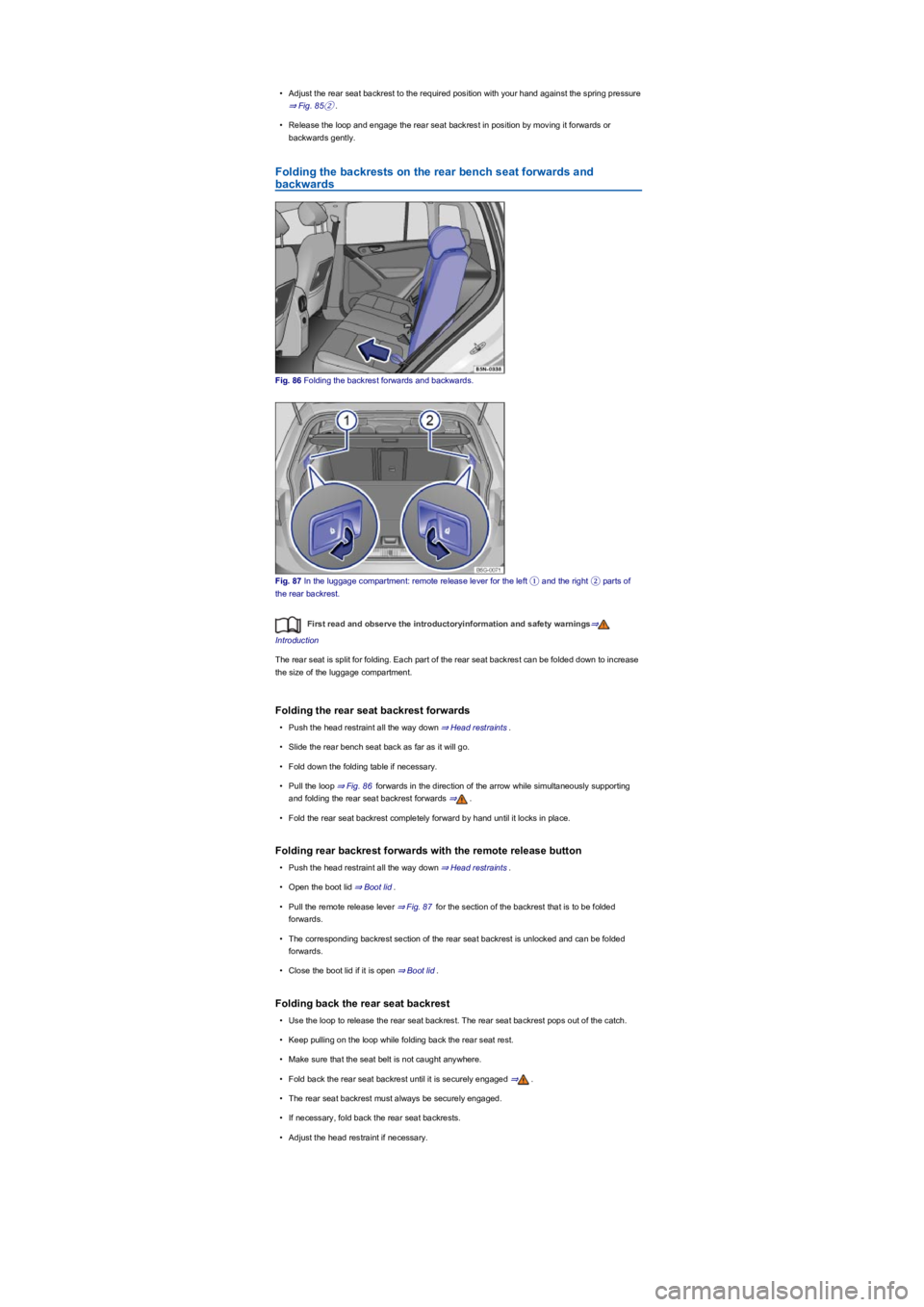
Fig. 86 Folding the backrest forwards and backwards.
Fig. 87 In the luggage compartment: remote release lever for the left ① and the right ② parts of
the rear backrest.
First read and observe the introductoryinformation and safety warnings⇒
Introduction
The rear seat is split for folding. Each part of the rear seat backrest can be folded down to increase
the size of the luggage compartment.
Folding the rear seat backrest forwards
•Push the head restraint all the way down ⇒ Head restraints.
•Slide the rear bench seat back as far as it will go.
•Fold down the folding table if necessary.
•Pull the loop ⇒ Fig. 86 forwards in the direction of the arrow while simultaneously supporting
and folding the rear seat backrest forwards ⇒.
•Fold the rear seat backrest completely forward by hand until it locks in place.
Folding rear backrest forwards with the remote release button
•Push the head restraint all the way down ⇒ Head restraints.
•Open the boot lid ⇒ Boot lid.
•Pull the remote release lever ⇒ Fig. 87 for the section of the backrest that is to be folded
forwards.
•The corresponding backrest section of the rear seat backrest is unlocked and can be folded
forwards.
•Close the boot lid if it is open ⇒ Boot lid.
Folding back the rear seat backrest
•Use the loop to release the rear seat backrest. The rear seat backrest pops out of the catch.
•Keep pulling on the loop while folding back the rear seat rest.
•Make sure that the seat belt is not caught anywhere.
•Fold back the rear seat backrest until it is securely engaged ⇒.
•The rear seat backrest must always be securely engaged.
•If necessary, fold back the rear seat backrests.
•Adjust the head restraint if necessary.
Page 95 of 341
Head restraints
Introduction
This chapter contains information on the followingsubjects:
⇒ Adjusting the head restraints
⇒ Removing and fitting head restraints
The following section describes the options for adjusting and removing the head restraints. Always
ensure that the correct sitting position is adjusted ⇒ Sitting position.
Every seat is fitted with a head restraint. The centre head restraint at the rear is designed solely for
use with the centre rear bench seat. Therefore you should not install the head restraint in any of the
other positions.
Correct head restraint setting
Adjust the head restraint so that its upper edge is at the same height as the top of the head, but not
lower than eye level. Position the back of your head as close to the head restraint as possible.
In vehicles with head restraints that can be adjusted in the longitudinal direction, push the head
restraints on the front seats as close as possible to the back of your head.
Head restraint setting for shorter people
Push the head restraint all the way down, even if the head is then underneath the top edge of the
head restraint. There may be a small gap between the head restraint and backrest in the lowest
position.
Head restraint setting for taller people
Push the head restraint up as far as it will go.
Injuries can be caused if the rear backrests are folded forwards and backwards carelessly.
•While folding the rear backrest, always make sure that no people, animals or items are
in the path.
•Never fold the rear seat backrest forwards or backwards while the vehicle is in motion.
•Ensure that the seat belt is not trapped or damaged when folding back the rear seat
backrest.
•Always keep hands, fingers, feet or other body parts away from the seat area when
folding the rear seat backrest forwards and backwards.
•Ensure that the rear seat backrest engages securely, otherwise the seat belts for the
rear seats will not work properly. This applies to the centre seat of the rear bench seat
in particular. If a seat is occupied and the rear seat backrest has not engaged securely
into place, the seat occupant and rear seat backrest may move forwards in the event of
a sudden braking or driving manoeuvre or during accidents.
•Passengers (adults and children) must not use seats if the backrest is folded forwards
or is not clicked securely into place.
WARNING
Damage to the vehicle or to other objects could be caused if the rear bench seat backrest
is folded forwards and backwards in an uncontrolled way or without taking appropriate
care.
•Before folding the rear seat backrests forwards, always adjust the front seats so that
the rear head restraints or rear seat backrest cushions do not rub against the front
seats.
•Before folding down the rear seat backrest, always ensure that there are no objects
located in its path.
NOTICE
Page 136 of 341
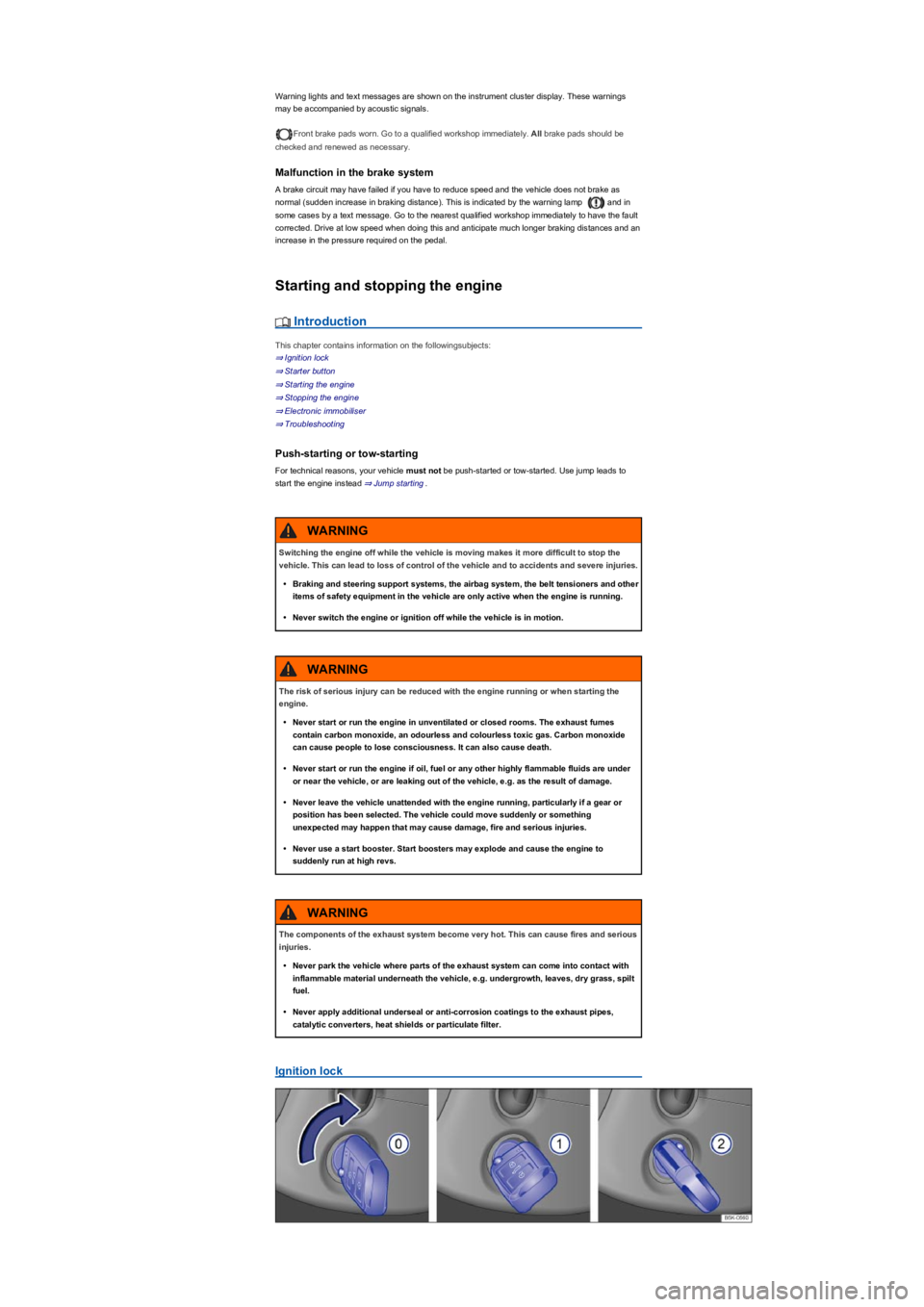
Warning lights and text messages are shown on the instrument cluster display. These warnings
may be accompanied by acoustic signals.
Front brake pads worn. Go to a qualified workshop immediately. All brake pads should be
checked and renewed as necessary.
Malfunction in the brake system
A brake circuit may have failed if you have to reduce speed and the vehicle does not brake as
normal (sudden increase in braking distance). This is indicated by the warning lamp and in
some cases by a text message. Go to the nearest qualified workshop immediately to have the fault
corrected. Drive at low speed when doing this and anticipate much longer braking distances and an
increase in the pressure required on the pedal.
Starting and stopping the engine
Introduction
This chapter contains information on the followingsubjects:
⇒ Ignition lock
⇒ Starter button
⇒ Starting the engine
⇒ Stopping the engine
⇒ Electronic immobiliser
⇒ Troubleshooting
Push-starting or tow-starting
For technical reasons, your vehicle must not be push-started or tow-started. Use jump leads to
start the engine instead ⇒ Jump starting.
Ignition lock
Switching the engine off while the vehicle is moving makes it more difficult to stop the
vehicle. This can lead to loss of control of the vehicle and to accidents and severe injuries.
•Braking and steering support systems, the airbag system, the belt tensioners and other
items of safety equipment in the vehicle are only active when the engine is running.
•Never switch the engine or ignition off while the vehicle is in motion.
WARNING
The risk of serious injury can be reduced with the engine running or when starting the
engine.
•Never start or run the engine in unventilated or closed rooms. The exhaust fumes
contain carbon monoxide, an odourless and colourless toxic gas. Carbon monoxide
can cause people to lose consciousness. It can also cause death.
•Never start or run the engine if oil, fuel or any other highly flammable fluids are under
or near the vehicle, or are leaking out of the vehicle, e.g. as the result of damage.
•Never leave the vehicle unattended with the engine running, particularly if a gear or
position has been selected. The vehicle could move suddenly or something
unexpected may happen that may cause damage, fire and serious injuries.
•Never use a start booster. Start boosters may explode and cause the engine to
suddenly run at high revs.
WARNING
The components of the exhaust system become very hot. This can cause fires and serious
injuries.
•Never park the vehicle where parts of the exhaust system can come into contact with
inflammable material underneath the vehicle, e.g. undergrowth, leaves, dry grass, spilt
fuel.
•Never apply additional underseal or anti-corrosion coatings to the exhaust pipes,
catalytic converters, heat shields or particulate filter.
WARNING
Page 138 of 341
Automatic ignition switch-off
The ignition switches off automatically after a short time if the driver moves away from the vehicle
with the vehicle key when the ignition is switched on. If the dipped beam headlights were switched
on at the time, the side lights will remain switched on for approximately 30 minutes. The side lights
can be switched off manually ⇒ Lights or by locking the vehicle ⇒ Central and manual locking.
Once the vehicle detects that the driver is absent when the engine stop is active, the ignition will
switched off automatically after a certain period of time.
Automatic ignition switch-off in vehicles with a start/stop system
When all the following conditions are fulfilled at the same time, the vehicle ignition will be switched
off automatically when engine stop is active and when the vehicle is stationary:
•The driver removes their seat belt.
•No pedals are depressed.
•The driver door is opened.
If the ignition is deactivated automatically while the dipped beam headlights are switched on ,
the side lights remain switched on for around 30 minutes.
The side lights can be switched off manually or will go off when the vehicle is locked.
Engine restart function
If no valid vehicle key is detected in the vehicle interior once the engine has been switched off, the
engine can be restarted within approximately 5 seconds. A corresponding message appears on the
instrument cluster display.
After this time, the engine cannot be re-started without a valid vehicle key in the vehicle interior.
Before leaving the vehicle, always switch off the ignition manually and observe any
information shown in the instrument cluster display.
Leaving the vehicle stationary for long periods with the ignition switched on can discharge
the 12-volt vehicle battery so that the engine can no longer be started.
The engine cannot, for example, be started with the starter button if the button cell in the
vehicle key is weak or flat. In this case, use the emergency start function ⇒ Emergency start
function.
Starting the engine
First read and observe the introductoryinformation and safety warnings⇒
Introduction
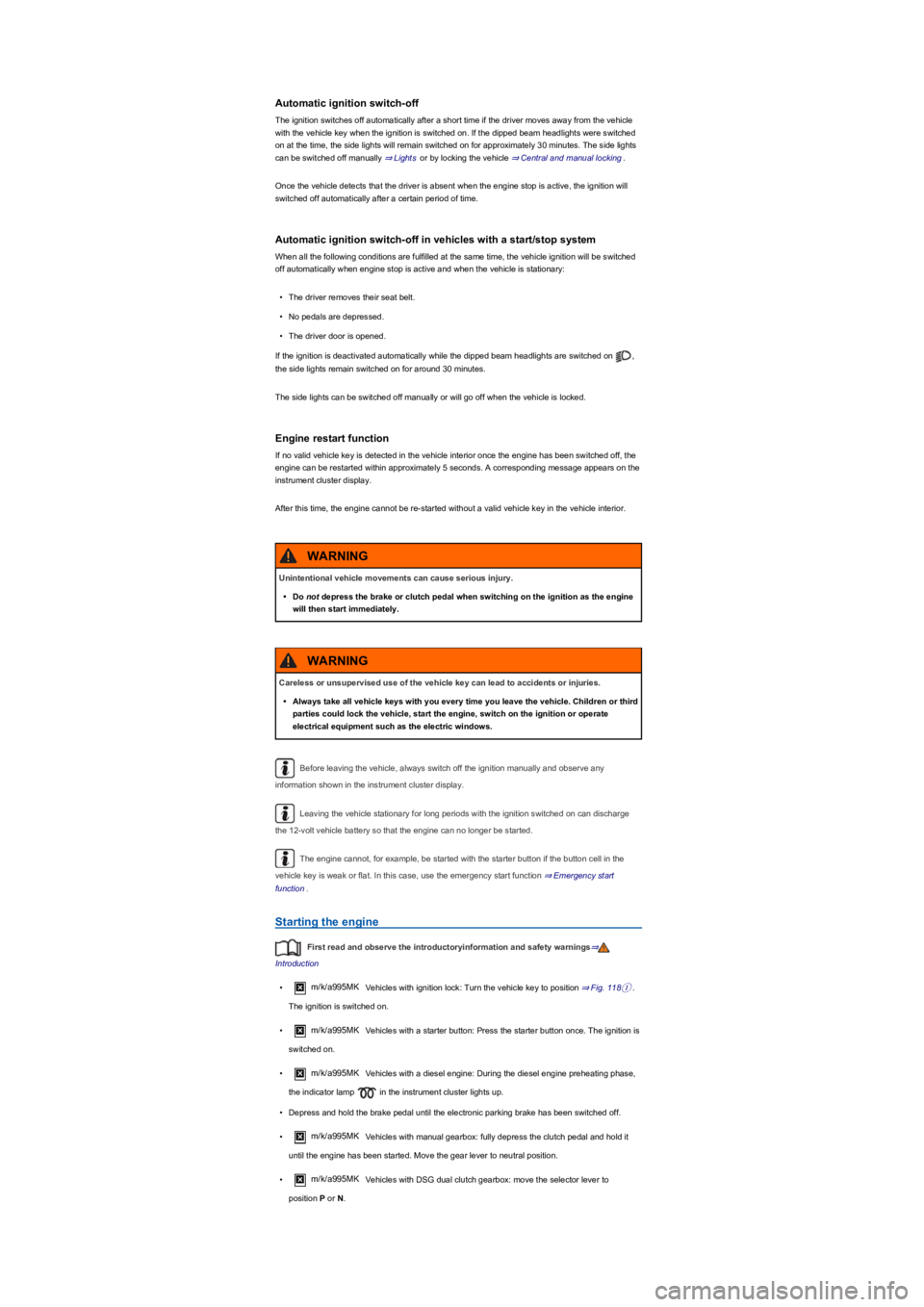
•m/k/a995MKVehicles with ignition lock: Turn the vehicle key to position ⇒ Fig. 118①.
The ignition is switched on.
•m/k/a995MKVehicles with a starter button: Press the starter button once. The ignition is
switched on.
•m/k/a995MK Vehicles with a diesel engine: During the diesel engine preheating phase,
the indicator lamp in the instrument cluster lights up.
•Depress and hold the brake pedal until the electronic parking brake has been switched off.
•m/k/a995MKVehicles with manual gearbox: fully depress the clutch pedal and hold it
until the engine has been started. Move the gear lever to neutral position.
•m/k/a995MKVehicles with DSG dual clutch gearbox: move the selector lever to
position P or N.
Unintentional vehicle movements can cause serious injury.
•Do not depress the brake or clutch pedal when switching on the ignition as the engine
will then start immediately.
WARNING
Careless or unsupervised use of the vehicle key can lead to accidents or injuries.
•Always take all vehicle keys with you every time you leave the vehicle. Children or third
parties could lock the vehicle, start the engine, switch on the ignition or operate
electrical equipment such as the electric windows.
WARNING