red warning light VOLKSWAGEN TRANSPORTER 2021 Workshop Manual
[x] Cancel search | Manufacturer: VOLKSWAGEN, Model Year: 2021, Model line: TRANSPORTER, Model: VOLKSWAGEN TRANSPORTER 2021Pages: 486, PDF Size: 69.28 MB
Page 197 of 486
Mattress, bench seat/bed
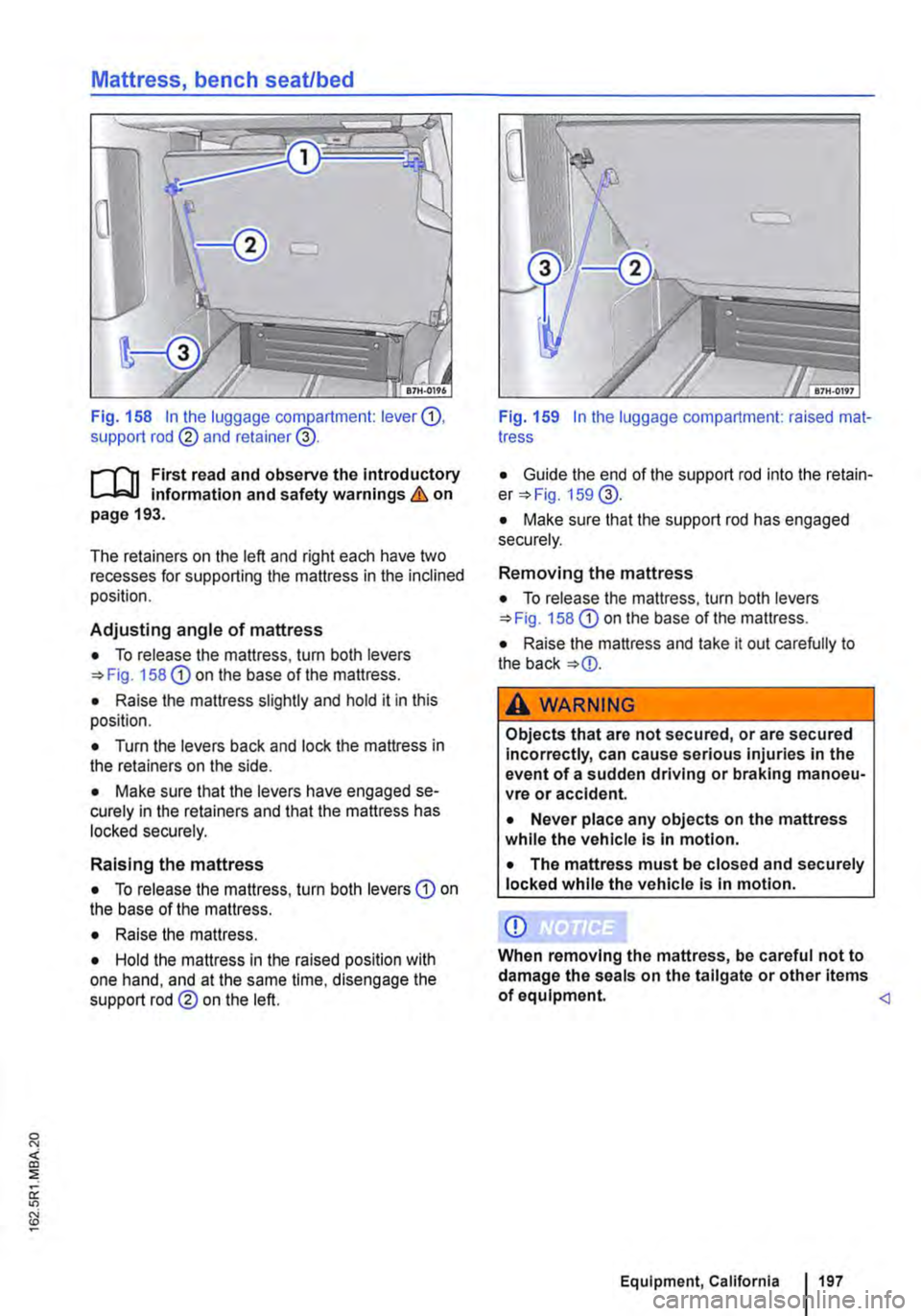
Fig. 158 In the luggage compartment: lever G), support rod @ and retainer@.
r--('n First read and observe the Introductory L.-.J,:.lJ information and safety warnings & on page 193.
The retainers on the left and right each have two recesses for supporting the mattress in the inclined position.
Adjusting angle of mattress
• To release the mattress, turn both levers 158 G) on the base of the mattress.
• Raise the mattress slightly and hold it in this position.
• Turn the levers back and lock the mattress in the retainers on the side.
• Make sure that the levers have engaged se-curely in the retainers and that the mattress has locked securely.
Raising the mattress
• To release the mattress, turn both levers G) on the base of the mattress.
• Raise the mattress.
• Hold the mattress in the raised position with one hand, and at the same time, disengage the support rod@ on the left.
Fig. 159 In the luggage compartment: raised mat-tress
• Guide the end of the support rod into the retain-er 159@.
• Make sure that the support rod has engaged securely.
Removing the mattress
• To release the mattress, turn both levers 158 G) on the base of the mattress.
• Raise the mattress and take it out carefully to the back
A WARNING
Objects that are not secured, or are secured Incorrectly, can cause serious injuries in the event of a sudden driving or braking manoeu-vre or accident.
• Never place any objects on the mattress while the vehicle Is In motion.
• The mattress must be closed and securely locked while the vehicle is In motion.
CD
When removing the mattress, be careful not to damage the seals on the tailgate or other items of equipment.
Page 211 of 486
• Stowage page 1 50
• Cleaning and caring for the interior 388
A WARNING
Loose objects may be flung through the vehi-cle interior in the event of a sudden driving or braking manoeuvre. This can cause serious injury and can also lead to loss of control of the vehicle.
• Do not stow any pets or any hard, heavy or sharp objects in the vehicle's open stow-age compartments, in the luggage net, on the dash panel, on the shelf behind the rear seats or in items of clothing and bags in the vehicle interior.
• Always keep stowage compartments closed while the vehicle is in motion.
A WARNING
Objects in the driver footweli can hinder ped-al operation. This can lead to loss of control of the vehicle and increase the risk of serious injury.
• Please ensure that all pedals can always be operated without any hindrance.
• The foot mats must always be properly se-cured in the footwell.
• No additional foot mats or other floor cov-erings should be placed over the fitted foot mat.
• Ensure that no objects can enter the driv-er footwell while the vehicle is in motion.
• If there are any objects in the footwell, re-move them when the vehicle is parked.
A WARNING
Improper use of the stowage compartments can cause serious injury.
• Never fill stowage compartments beyond their capacity.
A WARNING (Continued)
• Always take care when closing stowage compartments that nobody is within their functional area.
A WARNING
Cigarette lighters in the vehicle could be damaged or accidentally lit. This could lead to serious burns and other injuries.
• Before adjusting the seats always make sure that there is no lighter on or near the moveable parts of the seat.
• Before closing stowage areas or compart-ments always ensure that there is no lighter in the way.
• Never stow lighters in stowage areas or compartments or on other surfaces in the ve-hicle. Cigarette lighters may self-ignite on high-temperature surfaces, especially in sum-mer.
CD
• Hard objects on the shelf can chafe against the wires of the heating element in the rear win-dow and cause damage.
• Do not store any heat-sensitive objects, food or medicines inside the vehicle. Hot and cold temperatures could damage them or ren-der them unusable.
• Objects stored in the vehicle that are made from transparent materials, such as glasses, magnifying glasses or transparent suction cups on the windows, can concentrate the sun's rays and thus cause damage to the vehi-cle.
m Always ensure that the ventilation openings L!J between the rear window and the stowage area are uncovered to allow stale air to escape from the vehicle.
Page 215 of 486
Drink holder, California
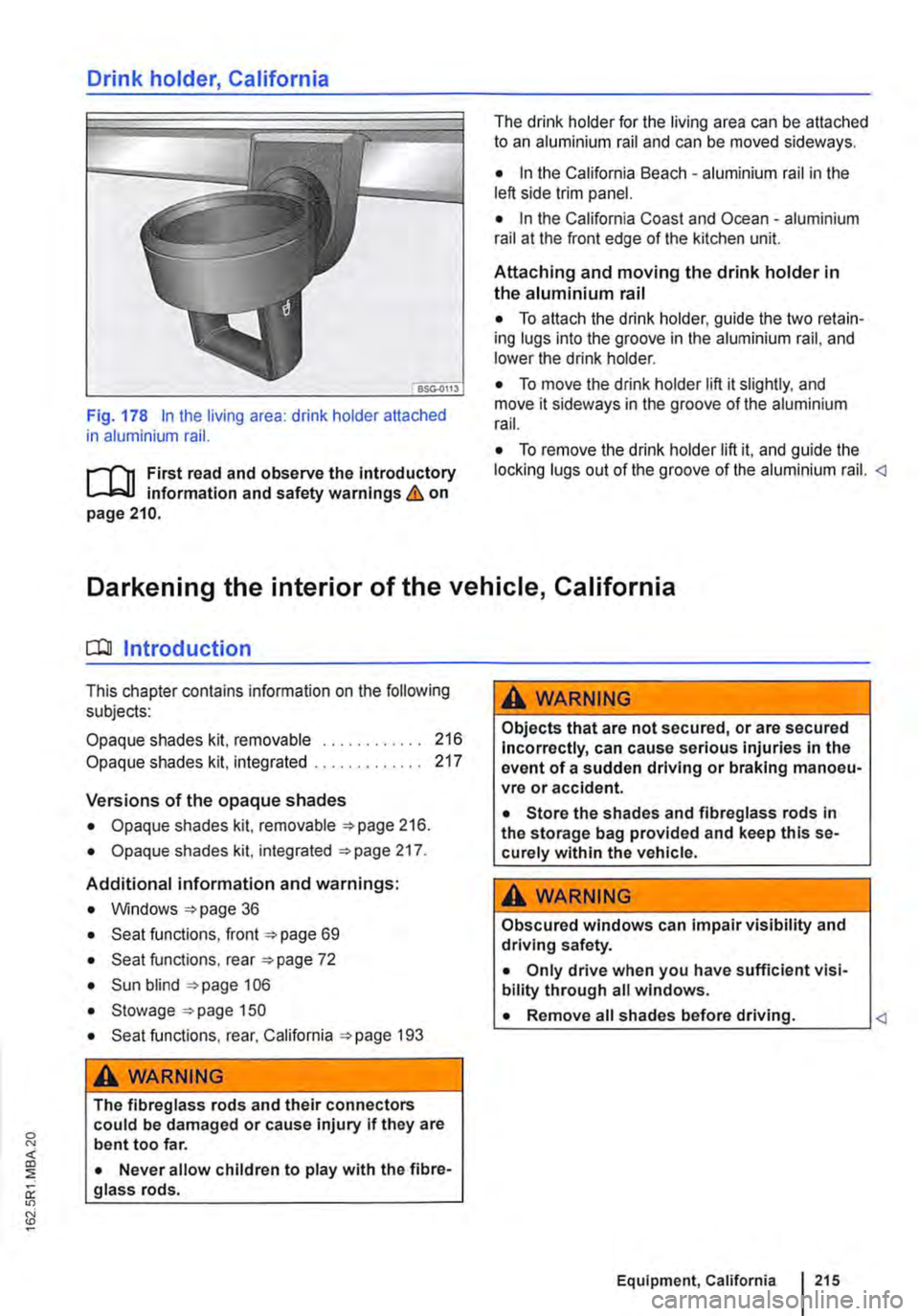
Fig. 178 In the living area: drink holder attached in aluminium rail.
.--m First read and observe the introductory information and safety warnings & on page 210.
The drink holder for the living area can be attached to an aluminium rail and can be moved sideways.
• In the California Beach -aluminium rail in the left side trim panel.
• In the California Coast and Ocean -aluminium rail at the front edge of the kitchen unit.
Attaching and moving the drink holder in the aluminium rail
• To attach the drink holder, guide the two retain-ing lugs into the groove in the aluminium rail, and lower the drink holder.
• To move the drink holder lift it slightly. and move it sideways in the groove of the aluminium rail.
• To remove the drink holder lift it, and guide the locking lugs out of the groove of the aluminium rail.
CC!J Introduction
This chapter contains information on the following subjects:
Opaque shades kit, removable
Opaque shades kit, integrated
Versions of the opaque shades
• Opaque shades kit, removable =>page 216.
• Opaque shades kit, integrated =>page 217.
Additional information and warnings:
• Windows =>page 36
• Seat functions, front =>page 69
• Seat functions, rear =>page 72
• Sun blind =>page 106
• Stowage =>page 150
• Seat functions, rear, California =>page 193
A WARNING
216 217
The fibreglass rods and their connectors could be damaged or cause injury if they are bent too far.
• Never allow children to play with the fibre-glass rods.
A WARNING
Objects that are not secured, or are secured Incorrectly, can cause serious injuries in the event of a sudden driving or braking manoeu-vre or accident.
• Store the shades and fibreglass rods in the storage bag provided and keep this se-curely within the vehicle.
A WARNING
Obscured windows can impair visibility and driving safety.
• Only drive when you have sufficient visi-bility through all windows.
• Remove all shades before driving.
Page 217 of 486
Opaque shades kit, integrated
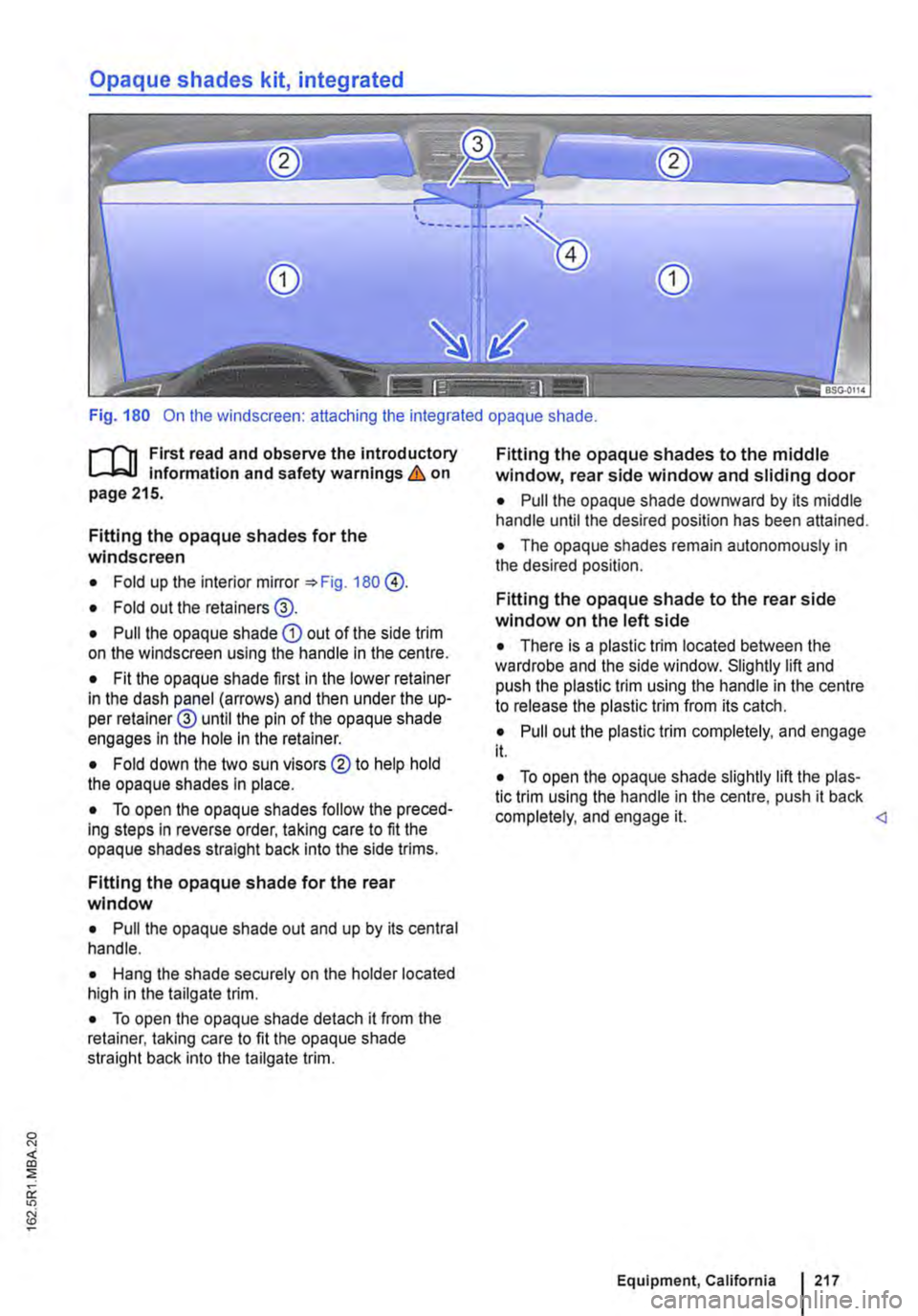
Fig. 180 On the windscreen: attaching the integrated opaque shade.
f""""'('n First read and observe the introductory L-W.I information and safety warnings & on page 215.
Fitting the opaque shades for the windscreen
• Fold up the interior mirror 180 @.
• Fold out the retainers@.
• Pull the opaque shade CD out of the side trim on the windscreen using the handle in the centre.
• Fit the opaque shade first in the lower retainer in the dash panel (arrows) and then under the up-per retainer@ until the pin of the opaque shade engages In the hole in the retainer.
• Fold down the two sun visors ®to help hold the opaque shades in place.
• To open the opaque shades follow the preced-ing steps in reverse order, taking care to fit the opaque shades straight back Into the side trims.
Fitting the opaque shade for the rear window
• Pull the opaque shade out and up by its central handle.
• Hang the shade securely on the holder located high in the tailgate trim.
• To open the opaque shade detach it from the retainer, taking care to fit the opaque shade straight back into the tailgate trim.
Fitting the opaque shades to the middle window, rear side window and sliding door
• Pull the opaque shade downward by its middle handle until the desired position has been attained.
• The opaque shades remain autonomously in the desired position.
Fitting the opaque shade to the rear side window on the left side
• There is a plastic trim located between the wardrobe and the side window. Slightly lift and push the plastic trim using the handle in the centre to release the plastic trim from its catch.
• Pull out the plastic trim completely, and engage it.
• To open the opaque shade slightly lift the plas-tic trim using the handle in the centre, push it back completely, and engage it.
Page 230 of 486
Assembling the folding table inside the vehicle
• Press handle 192 G) to unlock the fold-ing table.
• Lift the folding table out of its retainer.
• Pull the table guides 193@ right out.
• Connect the table guides to the guide rails on the side wall opposite the sliding door. To do this, guide the table guide from above into the groove in the rail, holding the folding table horizontally.
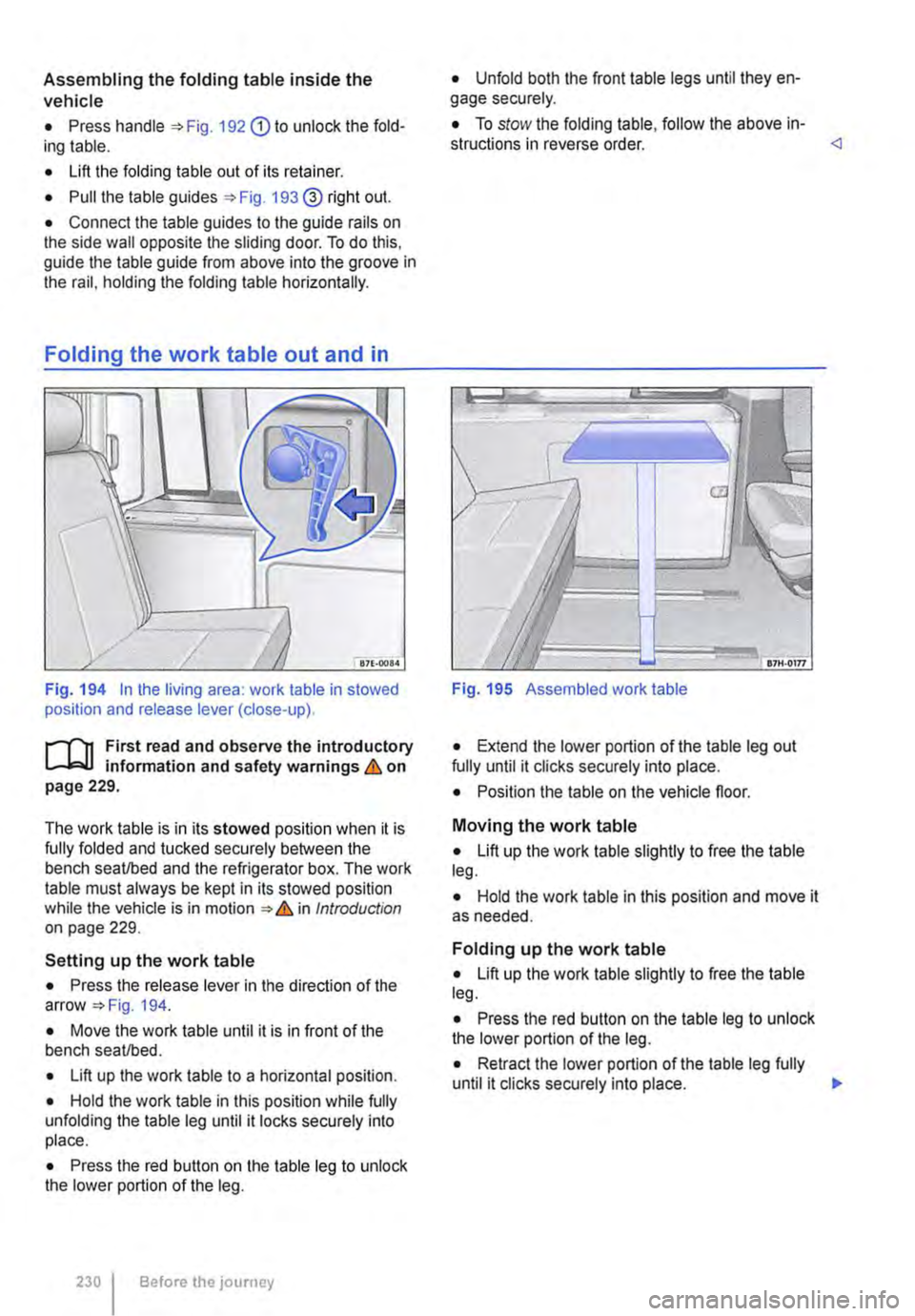
Fig. 194 In the living area: work table in stowed position and release lever (close-up).
1""1'11 First read and observe the introductory L-J,:.,U information and safety warnings & on page 229.
The work table is in its stowed position when it is fully folded and tucked securely between the bench seat/bed and the refrigerator box. The work table must always be kept in its stowed position while the vehicle is in motion & in Introduction on page 229.
Setting up the work table
• Press the release lever in the direction of the arrow 194.
• Move the work table until it is in front of the bench seat/bed.
• Lift up the work table to a horizontal position.
• Hold the work table in this position while fully unfolding the table leg until it locks securely into place.
• Press the red button on the table leg to unlock the lower portion of the leg.
230 Before the journey
• Unfold both the front table legs until they en-gage securely.
• To stow the folding table, follow the above in-structions in reverse order.
Fig. 195 Assembled work table
• Extend the lower portion of the table leg out fully until it clicks securely into place.
• Position the table on the vehicle floor.
Moving the work table
• Lift up the work table slightly to free the table leg.
• Hold the work table in this position and move it as needed.
Folding up the work table
• Lift up the work table slightly to free the table leg.
• Press the red button on the table leg to unlock the lower portion of the leg.
• Retract the lower portion of the table leg fully until it clicks securely into place. 11>
Page 237 of 486
• Keep the knob pressed in for approx. 15 sec-onds to temporarily bridge the igniter safety device. If you let go of the knob too quickly, the gas flame goes out. If this occurs, re-light the burner as de-scribed above.
• Release the regulating knob and adjust the gas flame as required.
Turning off the gas flame
• Turn the appropriate knob@ fully clockwise to turn off the gas flame.
• Close the gas shut-off valve in the kitchen unit.
• Close the safety valve on the gas bottle.
• Remove all objects from the gas cooker and al-low the cooker to cool fully.
• Place the backrest of the left front seat in an upright position or turn the left front seat so that you can close the kitchen unit's cover plate.
• Lower the kitchen unit cover plate and latch it securely. <1
Water supply and disposal, California
n::n Introduction
This chapter contains information on the following subjects:
Fresh water system . . . . . . . . . . . . . . . . . . . . . . 238
Sterilising agent . . . . . . . . . . . . . . . . • . . . . . . . . 239
Cleaning the fresh water tank . . . . . . . . . . . . . 239 Waste water tank . . . . . . . . . . . . . . . . . . . . . . . . 240
Turning the water on and off . . . . . . . . . . . . . . 240
Cleaning the drain . . . . . . . . . . . . . . . . . . . . . . . 241
Additional information:
• Central control panel 204
• Rectifying faults on the camping equipment 254
• Fuses for the camping equipment 249
• Winter conditions 253
• Filling the tank 340
A WARNING
Improper use of the fresh water system can lead to poisoning and illness.
• The fresh water tank should only be filled with drinking water from the public water supply.
• Never fill the fresh water tank from springs or streams. Such water could be con-taminated or contain debris.
• Never use commercially available house-hold cleaners to clean the fresh water tank.
• Never leave water in the fresh water tank for long periods without replacing it with fresh water.
,A WARNING (Continued)
• Drain the fresh water system completely when it will not be used for a long time.
A WARNING
Both the fresh water tank and the waste water tank drain out underneath the vehicle. In very cold conditions this poses a danger from the formation of ice.
• Be especially careful when fresh or waste water are drained during freezing or very cold weather.
CD
In very cold weather the fresh and waste water systems should be emptied to prevent them from becoming damaged if the vehicle is not to be kept heated continuously or Is only to be used for short periods.
CD
Do not allow the water pump to run dry as this will damage the pump.
• Only switch on the water pump when there Is water in the fresh water tank.
m if you do not use the sink for a long period' it L.:!J should be kept dry and free of salt.
m Never confuse the fresh water tank filler neck L.:!J with the fuel tank filler neck. <1
Equipment, California 237
Page 242 of 486
Using the refrigerator box
r--('n First read and observe the introductory information and safety warnings & on page 241.
The suspended basket in the refrigerator box is for cooling food. The temperature is lower under the basket than inside it. Closed containers or glass bottles are less likely to burst if they are stored in the basket rather than on the bottom of the refrig-erator box .& in Introduction on page 241.
The additional battery will discharge if the refriger-ator box is used for a long period while the engine is switched off and the 230-volt connection is not used.
Before the refrigerator box is used for the first time, it should be cleaned thoroughly using lukewarm water and a mild detergent.
Cleaning the refrigerator box
r--f'n First read and observe the introductory information and safety warnings & on page 241.
The refrigerator box works independently of the engine and the ignition. lt is fed exclusively by the additional battery. The refrigerator box is switched on and off and regulated using the central control panel.
As far as possible, keep food and drinks in the re-frigerator box in leak-proof containers. Do not over-fill the refrigerator box such that air circulation is impaired.
Cool the refrigerator box before placing food items and drinks in it. Items you wish to keep in the re-frigerator box should be removed from your house-hold fridge/freezer just before you start your jour-ney. When shopping during a journey, we recom-mend items from shop fridges/freezers be placed in the refrigerator box as quickly as possible.
• To prevent mould and mildew from forming in the refrigerator box when it is not being used for long periods, place a folded dry towel between the box and its lid.
o::JJ Introduction
This chapter contains information on the following subjects:
12-volt socket ........................... 244
230-volt power supply . . . . . . . . . . . . . . • . . . . . 245
230-volt Euro socket, California . . . . . . . . . . . . 245
230-volt grounded safety socket . . . . . . . . . . . 246
Residual current circuit breaker . . . . . . . . . . . . 24 7
Battery charger . . . . . . . . . . . . . . . . . . . . . . . . . 24 7
Additional batteries . . . . . . . . . . . . . . . . . . . . . . 248
Fuses for the camping equipment .. 249
Electrical equipment can be connected to the sock-ets in the vehicle.
The connected devices must be in good condition. Do not use faulty devices.
2421 Before the journey
There are two separate power circuits in the vehi-cle:
• 12-volt DC circuit
• 230-volt AC circuit
12-volt DC circuit
Power is supplied as standard from the additional batteries under the left front seat and in the ward-robe to the following 12-volt consumers:
• Interior lights in the living area
• 12-volt sockets in the living area
• 230-volt Euro socket in the side trim panel be-hind the left front seat
• Central control panel
• Refrigerator box
Page 246 of 486
Inserting the Euro plug
• Plug the Euro plug into the Euro socket. The child safety function will disengage at the same time. Electricity will not flow until the child lock has been unlocked.
• Push the Euro plug all the way into the Euro socket so that it is firmly in place and will not fall out as a result of vibration or other vehicle motion.
LEDs above the socket
Constant green light The child lock is disen-gaged. The Euro socket is ready for use.
Flashing red light A fault has occurred. for example cut-off due to excess current or tem-perature.
Compatible devices
Electrical devices with a Euro plug can be connec-ted to the 230-volt Euro socket in the side trim pan-el behind the left front seat.
230-volt grounded safety socket
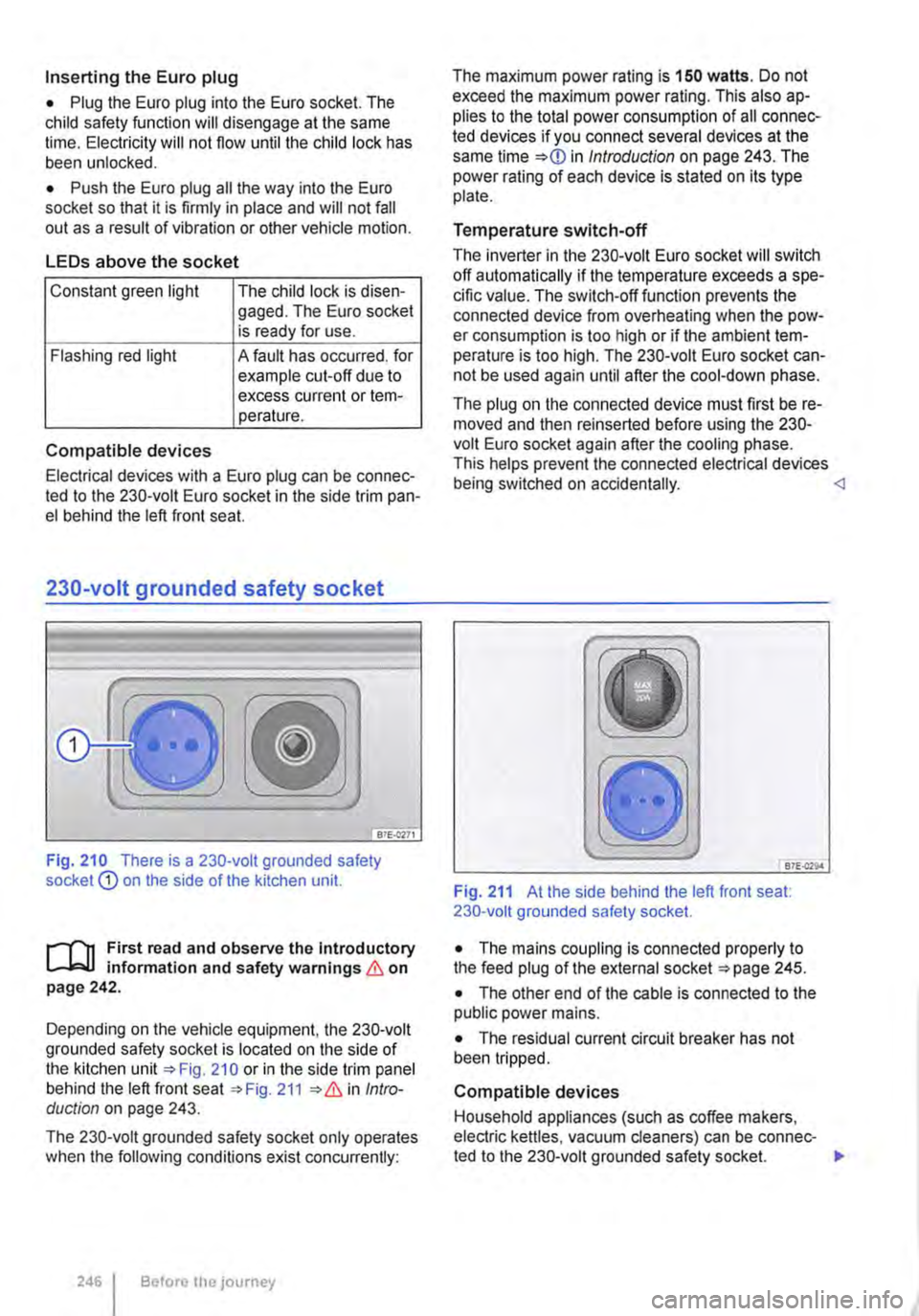
Fig. 210 There is a 230-volt grounded safety socket Q) on the side of the kitchen unit.
r--T'n First read and observe the Introductory L-k.U information and safety warnings & on page 242.
Depending on the vehicle equipment, the 230-volt grounded safety socket is located on the side of the kitchen unit 210 or in the side trim panel behind the left front seat 211 Intro-duction on page 243.
The 230-volt grounded safety socket only operates when the following conditions exist concurrently:
246 I Before the journey
The maximum power rating is 150 watts. Do not exceed the maximum power rating. This also ap-plies to the total power consumption of all connec-ted devices if you connect several devices at the same time in Introduction on page 243. The power rating of each device is stated on its type plate.
Temperature switch-off
The inverter in the 230-volt Euro socket will switch off automatically if the temperature exceeds a spe-cific value. The switch-off function prevents the connected device from overheating when the pow-er consumption is too high or if the ambient tem-perature is too high. The 230-volt Euro socket can-not be used again until after the cool-down phase.
The plug on the connected device must first be re-moved and then reinserted before using the 230-volt Euro socket again after the cooling phase. This helps prevent the connected electrical devices being switched on accidentally. <1
B7E.Q29.4
Fig. 211 At the side behind the left front seat: 230-volt grounded safety socket.
• The mains coupling is connected properly to the feed plug of the external socket 245.
• The other end of the cable is connected to the public power mains.
• The residual current circuit breaker has not been tripped.
Compatible devices
Household appliances (such as coffee makers, electric kettles, vacuum cleaners) can be connec-ted to the 230-volt grounded safety socket. .,.
Page 249 of 486
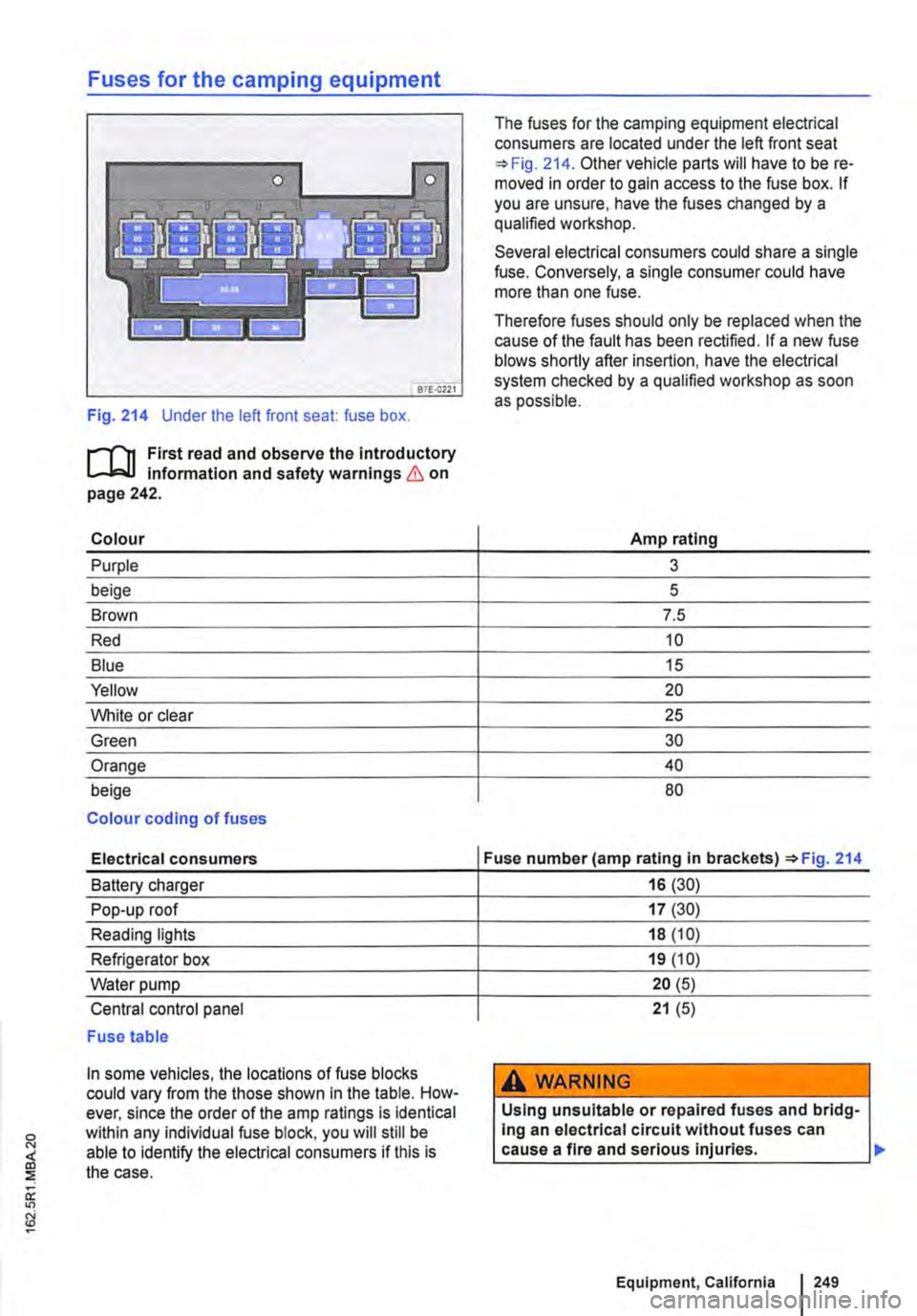
Fuses for the camping equipment
87E-0221
Fig. 214 Under the left front seat: fuse box.
l"""'('n First read and observe the introductory L-Jr:,.U information and safety warnings & on page 242.
Colour
Purple
beige
Brown
Red
Blue
Yellow
White or clear
Green
Orange
beige
Colour coding of fuses
Electrical consumers
Battery charger
Pop-up roof
Reading lights
Refrigerator box
Water pump
Central control panel
Fuse table
In some vehicles, the locations of fuse blocks could vary from the those shown In the table. How-ever, since the order of the amp ratings is identical within any individual fuse block, you will still be able to identify the electrical consumers if this is the case.
The fuses for the camping equipment electrical consumers are located under the left front seat 214. Other vehicle parts will have to be re-moved in order to gain access to the fuse box. If you are unsure, have the fuses changed by a qualified workshop.
Several electrical consumers could share a single fuse. Conversely, a single consumer could have more than one fuse.
Therefore fuses should only be replaced when the cause of the fault has been rectified. If a new fuse blows shortly after insertion, have the electrical system checked by a qualified workshop as soon as possible.
Amp rating
3
5
7.5
10
15
20
25
30
40
80
Fuse number (amp rating in Fig. 214
16 (30)
17 (30)
18 (10)
19 (10)
20 (5)
21 (5)
A WARNING
Using unsuitable or repaired fuses and bridg-Ing an electrical circuit without fuses can cause a fire and serious injuries.
Equipment, California 249
Page 250 of 486
A WARNING (Continued)
• Never fit fuses that have a higher fuse pro-tection limit. Fuses must always be replaced by a new fuse with the same amp rating (same colour and markings) and size.
• Never repair a fuse.
• Never use a metal strip, paper clip or simi-lar objects to replace a fuse.
CD
• To avoid damage to the electrical system in the vehicle, switch the ignition, the lights and all electrical consumers off and remove the ve-hicle key from the ignition before changing a fuse.
• You can damage another position in the electrical system by using a fuse with a higher amp rating.
• Fuse boxes must be protected from dirt and moisture when opened. Dirt and moisture in the fuse boxes can damage the electrical system.
o::n Introduction
This chapter contains information on the following subjects:
Controls for the living area 250
Controls for the living area
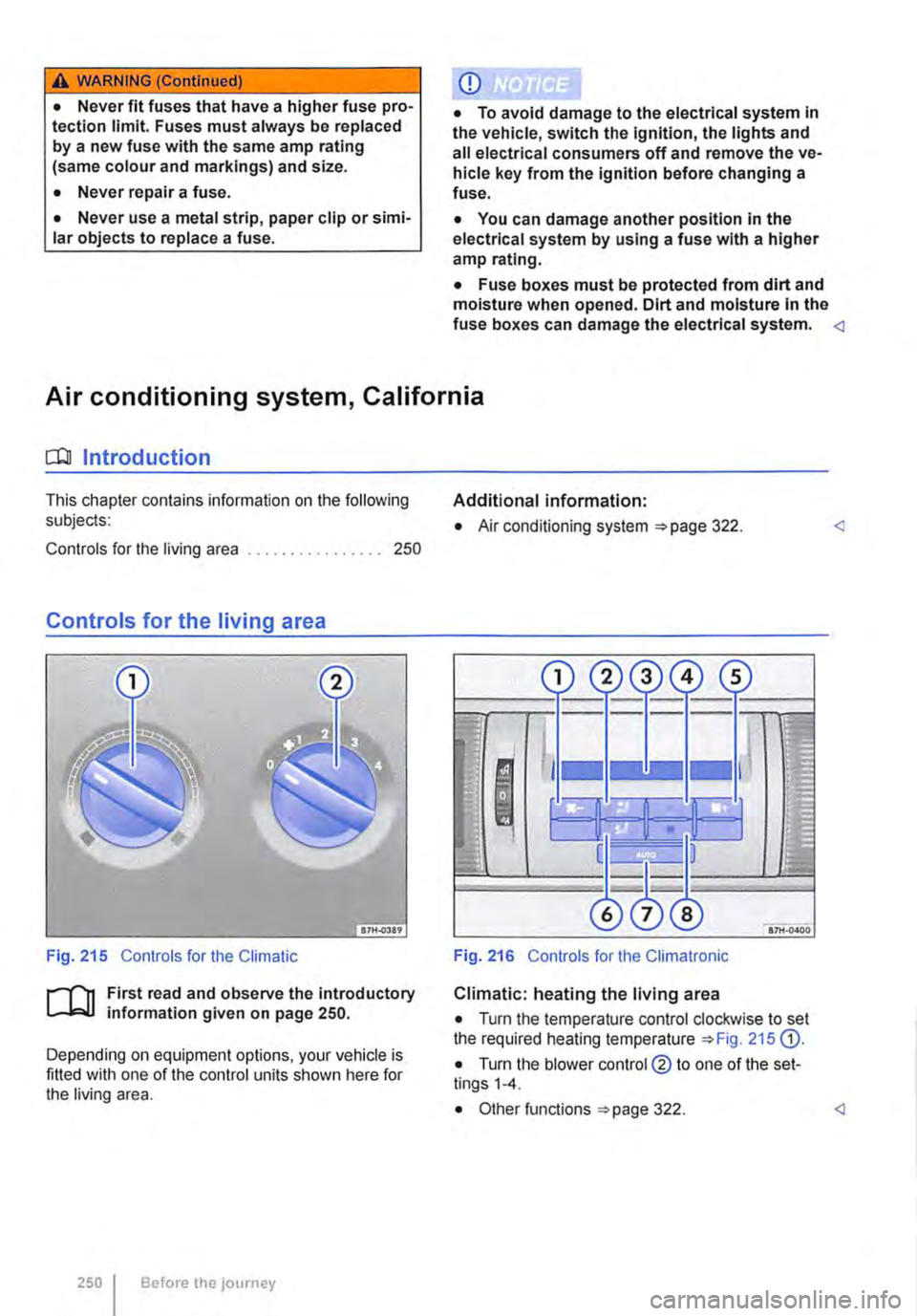
Fig. 215 Controls for the Climatic
ifl1 First read and observe the introductory L-.J.=.IJ information given on page 250.
Depending on equipment options, your vehicle is fitted with one of the control units shown here for the living area.
250 I Before the journey
Additional information:
• Air conditioning system 322.
Fig. 216 Controls for the Climatronic
Climatic: heating the living area
• Turn the temperature control clockwise to set the required heating temperature 215 G).
• Turn the blower control @ to one of the set-tings 1-4.