Cleaning VOLKSWAGEN UP! 2021 Owner´s Manual
[x] Cancel search | Manufacturer: VOLKSWAGEN, Model Year: 2021, Model line: UP!, Model: VOLKSWAGEN UP! 2021Pages: 211, PDF Size: 5.98 MB
Page 113 of 211
Please contact a qualified workshop if there is a fault in the system. Volkswagen
recommends using a Volkswagen dealership for this purpose.
Volkswagen recommends that drivers practise using the ParkPilot in a traffic-calmed area or
car park to allow them to familiarise themselves with the system and its functions.
Operating ParkPilot
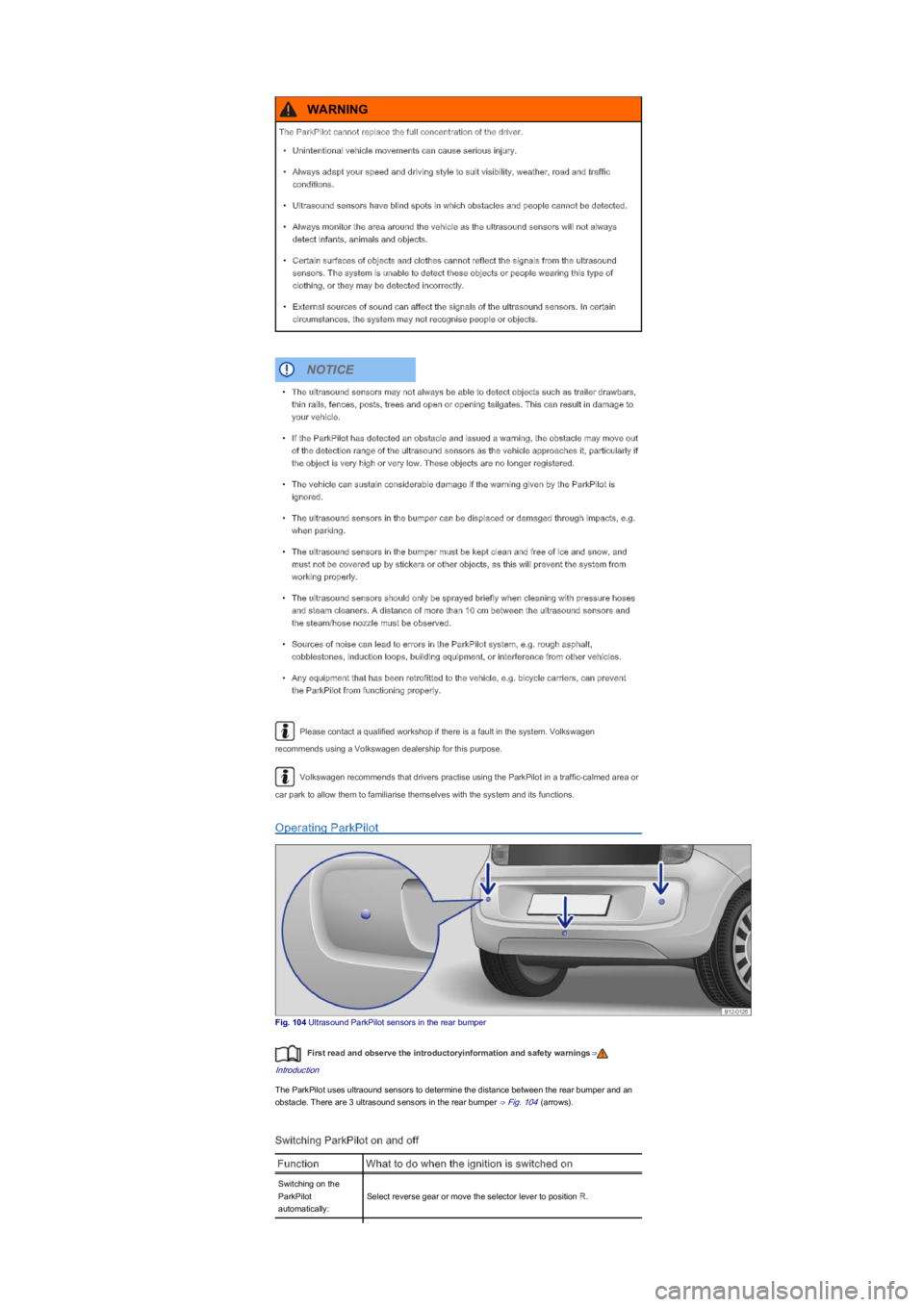
Fig. 104 Ultrasound ParkPilot sensors in the rear bumper
First read and observe the introductoryinformation and safety warnings⇒
Introduction
The ParkPilot uses ultraound sensors to determine the distance between the rear bumper and an
obstacle. There are 3 ultrasound sensors in the rear bumper ⇒ Fig. 104 (arrows).
Switching ParkPilot on and off
FunctionWhat to do when the ignition is switched on
Switching on the
ParkPilot
automatically:
Select reverse gear or move the selector lever to position R.
The ParkPilot cannot replace the full concentration of the driver.
•Unintentional vehicle movements can cause serious injury.
•Always adapt your speed and driving style to suit visibility, weather, road and traffic
conditions.
•Ultrasound sensors have blind spots in which obstacles and people cannot be detected.
•Always monitor the area around the vehicle as the ultrasound sensors will not always
detect infants, animals and objects.
•Certain surfaces of objects and clothes cannot reflect the signals from the ultrasound
sensors. The system is unable to detect these objects or people wearing this type of
clothing, or they may be detected incorrectly.
•External sources of sound can affect the signals of the ultrasound sensors. In certain
circumstances, the system may not recognise people or objects.
WARNING
•The ultrasound sensors may not always be able to detect objects such as trailer drawbars,
thin rails, fences, posts, trees and open or opening tailgates. This can result in damage to
your vehicle.
•If the ParkPilot has detected an obstacle and issued a warning, the obstacle may move out
of the detection range of the ultrasound sensors as the vehicle approaches it, particularly if
the object is very high or very low. These objects are no longer registered.
•The vehicle can sustain considerable damage if the warning given by the ParkPilot is
ignored.
•The ultrasound sensors in the bumper can be displaced or damaged through impacts, e.g.
when parking.
•The ultrasound sensors in the bumper must be kept clean and free of ice and snow, and
must not be covered up by stickers or other objects, as this will prevent the system from
working properly.
•The ultrasound sensors should only be sprayed briefly when cleaning with pressure hoses
and steam cleaners. A distance of more than 10 cm between the ultrasound sensors and
the steam/hose nozzle must be observed.
•Sources of noise can lead to errors in the ParkPilot system, e.g. rough asphalt,
cobblestones, induction loops, building equipment, or interference from other vehicles.
•Any equipment that has been retrofitted to the vehicle, e.g. bicycle carriers, can prevent
the ParkPilot from functioning properly.
NOTICE
Page 121 of 211
•If vehicles are travelling towards you in the same lane.
•If the surrounding vehicles are very dirty and therefore not very reflective.
•If there is a lot of dust.
Air conditioning system
Heating, ventilating, cooling
Introduction
This chapter contains information on the followingsubjects:
⇒ Controls
⇒ General information on the heating and fresh air system
⇒ Information on the air conditioning system
⇒ Vents
⇒ Air recirculation mode
Dust and pollen filter
The dust and pollen filter reduces the level of impurities in the outside air entering the vehicle.
The dust and pollen filter must be changed regularly to avoid impairing the performance of the air
conditioning system.
The dust and pollen filter must be changed more frequently than stated in the service schedule if
the efficiency of the filter declines prematurely due to the vehicle being used in areas with high
levels of air pollution.
Additional information and warnings:
•Exterior views ⇒ Exterior views
•Volkswagen information system ⇒ Volkswagen information system
•Windscreen wiper/washer ⇒ Windscreen wiper and washer
•Cleaning and caring for the vehicle exterior ⇒ Caring for and cleaning the vehicle exterior
If the cooling system is switched off, the outside air that is drawn into the vehicle is not
dehumidified. To prevent the windows misting over, Volkswagen recommends that you leave the air
conditioning (compressor) switched on. Press the button. The indicator lamp in the button
must light up.
Maximum heat output, which is needed to defrost the windows as quickly as possible, is only
available when the engine has reached its operating temperature.
Poor visibility through all windows increases the risk of collisions and accidents, which can
cause serious injuries.
•Always ensure that all windows are free of ice, snow and mist to ensure good visibility.
•Maximum heat output, which is needed to defrost the windows as quickly as possible, is
only available when the engine has reached its operating temperature. Do not start your
journey until you have good visibility.
•Always ensure that the heating and fresh air system or the air conditioning system and the
heated rear window are used correctly in order to have good visibility.
•Never use the air recirculation mode for an extended period. If the cooling system is
switched off, the windows can mist up very quickly in air recirculation mode and reduce
visibility considerably.
•Always switch off the air recirculation mode when it is not required.
WARNING
Stale air can quickly cause tiredness and lack of concentration in the driver, which in turn can
cause collisions, accidents and serious injuries.
•Never switch off the blowers or switch on the air recirculation mode for an extended period
as this prevents fresh air from entering the vehicle interior.
WARNING
•Switch off the air conditioning system if you suspect that it has been damaged. This can
help to prevent further damage. The air conditioning system should be checked by a
qualified workshop.
•Repairs to the air conditioning system require specialist knowledge and special tools.
Volkswagen recommends using a Volkswagen dealership for this purpose.
NOTICE
Page 131 of 211
The vehicle engine management will automatically adapt to the different natural gas qualities. Both
natural gas qualities can therefore be mixed in the fuel tank. You do not need to empty the tank
before refuelling with a different grade.
Natural gas
The vehicle can run on natural gas. Further information is available from your local Volkswagen
dealership.
Safe handling of natural gas
If you can smell gas or think there may be a leak in the natural gas system ⇒:
•Stop the vehicle immediately.
•Switch off the ignition.
•Open all the doors to fully ventilate the vehicle.
•Extinguish cigarettes immediately.
•Remove items that could cause sparks or fire from the vehicle or switch them off.
•Do not drive on if you can still smell gas.
•Seek expert assistance. Have the fault rectified.
Have the natural gas system checked regularly according to the service schedule by a
qualified workshop.
In the engine compartment
Preparation for working in the engine compartment
Introduction
This chapter contains information on the followingsubjects:
⇒ Preparing the vehicle for working in the engine compartment
⇒ Opening and closing the bonnet
Always park the vehicle on a level and stable surface before carrying out any work in the engine
compartment.
The engine compartment of a motor vehicle is a hazardous area. Never carry out any work on the
engine or in the engine compartment if you are not familiar with the requisite procedures and
general safety requirements, or if you only have access to incorrect operating equipment, service
fluids, and unsuitable tools ⇒. The work should be carried out by a qualified workshop if you are
uncertain. Serious injuries can be caused if work is carried out incorrectly.
Additional information and warnings:
•Exterior views ⇒ Exterior views
•Windscreen wiper/washer ⇒ Windscreen wiper and washer
•Starting and stopping the engine ⇒ Starting and stopping the engine
•Brake fluid ⇒ Braking, stopping and parking
•Checks when filling the tank ⇒ Filling the tank
•Engine oil ⇒ Engine oil
•Engine coolant ⇒ Coolant
•Battery ⇒ Vehicle battery
•Accessories, modifications, repairs and renewal of parts ⇒ Accessories, modifications, repairs
and renewal of parts
Ignoring the smell of gas in the vehicle or when refuelling can cause serious injuries.
•Take any necessary action.
•Leave the area of risk.
•Contact the emergency services if necessary.
WARNING
Your vehicle is not suitable for use with Liquefied Natural Gas and must not be filled up or
driven with Liquefied Natural Gas. Liquefied Natural Gas can cause an explosion in the
natural gas tank and serious injuries as a consequence.
WARNING
Cleaning and maintenance
Page 133 of 211
Park the vehicle on a level and stable surface.
Depress and hold the brake pedal until the engine has stopped.
Apply the handbrake firmly Braking, stopping and parking.
Select the neutral position or move the selector lever to N Changing gear.
Stop the engine and remove the vehicle key from the ignition Starting and stopping the
engine.
Allow the engine to cool sufficiently.
Children and other people should be kept well away from the engine compartment.
Ensure that the vehicle cannot roll away unexpectedly.
Service fluids leaks are harmful to the environment. So you should regularly check the
ground underneath your vehicle. If there are spots of oil or other fluids on the ground, the vehicle
should be inspected by a qualified workshop. Any spilt service fluids must be disposed of properly.
Preparing the vehicle for working in the engine compartment
First read and observe the introductoryinformation and safety warnings⇒
Introduction
Checklist
The following steps should always be carried out in the specified order before working in the
engine compartment ⇒:
There are rotating components in the engine compartment that can cause serious injury.
•Never place your hand near or directly in the radiator fan. Touching the rotary blades can
result in serious injuries. The fan is temperature-controlled and can start automatically,
even if the engine has been switched off and the vehicle key has been removed from the
ignition lock.
•If any work has to be performed when the engine is started or with the engine running,
there is an additional, potentially fatal, safety risk from the rotating parts, such as the drive
belts, alternator, radiator fan, etc., and from the high-voltage ignition system. Always be
particularly careful.
- Always ensure that no body parts, jewellery, ties, loose items of clothing or long hair
can be caught up in rotating engine components. Before starting work, remove any
jewellery and ties, tie up long hair and pull clothes in tightly to avoid them getting
caught in the engine compartment.
- Always depress the accelerator carefully and never without due consideration. The
vehicle can start to move even if the handbrake is applied.
•Always ensure that you have not left any objects, such as cleaning cloths and tools, in the
engine compartment. Any forgotten items can cause malfunctions, engine damage and
fires.
WARNING
Operating fluids and some materials in the engine compartment are highly flammable and can
cause fires and serious injuries!
•Never smoke while working on the vehicle.
•Never work near naked flames or sparks.
•Never spill fluids onto the engine. They could ignite on hot engine components and hence
cause injuries.
•Please note the following when carrying out any work on the fuel system or the electrical
system:
- Always disconnect the vehicle battery.
- Never work in the direct proximity of heating systems, water heaters or any other
open flames.
•Always have a fully functional and tested fire extinguisher to hand.
WARNING
When refilling or changing operating fluids please ensure that the fluids are in the correct
container. Incorrect operating fluids can cause serious functional problems and engine
damage.
NOTICE
Page 145 of 211
How the vehicle battery discharges:
•Long periods at a standstill in which the engine is not running, especially if the ignition is
switched on.
•The use of electrical consumers when the engine is switched off.
Dispose of the vehicle battery as required by legislation. Batteries may contain toxic
substances such as sulphuric acid and lead.
Electrolyte can pollute the environment. Clean up any service fluid leakages and dispose of
them properly.
Vehicle care and maintenance
Caring for and cleaning the vehicle exterior
Introduction
This chapter contains information on the followingsubjects:
⇒ Washing the vehicle
⇒ Washing the vehicle with a high-pressure cleaner
⇒ Cleaning windows and exterior mirrors
⇒ Cleaning and changing windscreen wiper blades
⇒ Waxing and polishing the vehicle
⇒ Cleaning and caring for chrome and aluminium trim parts
⇒ Cleaning wheels
⇒ Care of rubber seals
⇒ De-icing the door lock cylinders
⇒ Underseal
⇒ Cleaning the engine compartment
Regular and expert care helps to maintain the value of the vehicle. Proper maintenance may also
be one of the requirements for the approval of warranty claims in the event of corrosion or paint
defects.
Suitable care products are available from Volkswagen dealers.
Additional information and warnings:
•Preparation for working in the engine compartment ⇒ Preparation for working in the engine
compartment
•Cleaning and caring for the interior ⇒ Cleaning and caring for the interior
•Accessories, modifications, repairs and renewal of parts ⇒ Accessories, modifications, repairs
and renewal of parts
Incorrectly attaching the battery and using incorrect vehicle batteries can cause short circuits,
fire and serious injuries.
•Always use maintenance-free and leak-proof batteries that have the same properties,
specifications and dimensions as the factory-fitted vehicle battery.
WARNING
A highly explosive mixture of gases is given off when the vehicle battery is being charged.
•Vehicle batteries should only be charged in well-ventilated spaces.
•Never charge a vehicle battery once it has been frozen. Discharged vehicle batteries can
even freeze at temperatures of around 0°C (+32°F).
•A vehicle battery must be replaced if it has been frozen.
•Incorrectly connected cables can cause a short circuit. First connect the positive cable and
then the negative cable.
WARNING
•Never make or break connections between vehicle batteries if the ignition is switched on or
the engine is running. Never use a vehicle battery that does not correspond with the
vehicle's specifications. The vehicle's electrical system or electronic components could be
damaged, which could lead to electrical faults, for example in the start/stop system.
•Never connect equipment that provides electricity, such as solar panels or a battery
charger, to the 12-volt socket or to the cigarette lighter to charge the vehicle battery. This
can damage the vehicle electrical system.
NOTICE
Page 146 of 211
In the interests of environmental protection, the vehicle should only be washed in specially
provided wash bays. This prevents waste water contaminated with oil, grease or fuel from entering
the sewerage system. In some countries, washing vehicles anywhere else may be prohibited.
Environmentally-friendly care products should be used.
Leftover car care products should not be disposed of with ordinary household waste. Read
the manufacturer's instructions.
Washing the vehicle
First read and observe the introductoryinformation and safety warnings⇒
Introduction
The longer substances such as insects, bird droppings, resinous tree sap, road dirt, industrial
deposits, tar, soot or road salt and other corrosive materials remain on the vehicle, the more
damage they do to the paintwork. High temperatures (for instance in strong sunlight) further
intensify the corrosive effect. The underside of the vehicle should also be cleaned thoroughly and
regularly.
Car washes
Please observe the signs on the automatic car wash. Before using an automatic car wash take
the usual precautions, such as closing all windows and folding in the exterior mirrors, in order to
avoid damage to the vehicle. You must consult the car wash operator if there are special parts on
your vehicle such as spoilers, roof luggage carrier systems or radio aerials ⇒.
The paint is hard-wearing enough for the car to be generally washed in an automatic car wash.
However, the effect on the paint depends to a large extent on the design of the car wash.
Volkswagen recommends the use of car washes without brushes.
To remove any waxy residue from the windows and to stop wipers rubbing, please note the
following ⇒ Cleaning windows and exterior mirrors.
Washing the car by hand
When washing by hand, first soften the dirt with plenty of water and rinse off as well as possible.
Then clean the vehicle with a soft sponge, a glove or a brush using only light pressure. Start with
the roof and work from the top to the bottom. Use a shampoo for very stubborn dirt only.
The sponge or glove should be wrung out thoroughly at regular intervals.
Clean the wheels, sill panels etc. last. Use a different sponge for this purpose.
Car care products can be toxic and hazardous. Unsuitable care products and incorrect
application of care products can cause accidents, serious injuries, burns or poisoning.
•The care product must be kept in its original sealed container.
•Read the manufacturer's instructions.
•Never store car care products in empty food containers, bottles or any other non-original
containers as people finding these containers may not know that they contain care
products.
•Keep children away from care products.
•The products can give off harmful fumes during use. They should therefore only be used
outside or in well-ventilated spaces.
•Never use fuel, turpentine, engine oil, nail varnish remover or other volatile fluids to wash,
clean or care for your vehicle. These substances are toxic and highly inflammable.
WARNING
Incorrect care and cleaning of vehicle parts can impair the safety features of the vehicle and
thus cause serious injury.
•Vehicle parts must be cleaned according to the manufacturer's instructions.
•Only use approved or recommended cleaning products.
WARNING
Cleaning agents that contain solvents attack the material and can cause damage.
NOTICE
Page 147 of 211
Washing the vehicle with a high-pressure cleaner
First read and observe the introductoryinformation and safety warnings⇒
Introduction
Follow the instructions provided by the manufacturer when cleaning your vehicle using a high-
pressure cleaner. This applies in particular to the pressure and the spraying distance⇒.
Maintain sufficient distance to soft materials such as rubber hoses, insulation, and the ParkPilot
sensors. The ParkPilot sensors are located in the rear bumper ⇒.
Never use concentrated jet nozzles or dirt blasters⇒.
Parts of the vehicle with sharp edges can cause injury.
•Protect your hands and arms from cuts on sharp parts, for example when cleaning the
underbody or the inside of the wheel housings.
WARNING
After the car has been washed, the braking effect could set in later than normal and extend
the braking distance as the brake discs and brake pads will be wet, or iced up in winter.
•You can dry and de-ice the brakes by performing careful braking manoeuvres. Ensure that
you do not endanger any other road users or violate any legal regulations when doing so.
WARNING
•The water should be no warmer than +60°C (+140°F).
•Do not wash the vehicle in direct sunlight in order to avoid damage to the vehicle
paintwork.
•Never clean with insect sponges, rough kitchen sponges or similar products as these can
damage the surface.
•Never clean the headlights with a dry cloth or sponge. Always use a wet cloth or sponge. It
is best to use soapy water.
•Washing the vehicle in cold weather: if the vehicle is rinsed with a hose, do not direct the
water into the lock cylinders or the gaps round the doors, boot, or bonnet. The locks and
seals could freeze.
NOTICE
Observe the following guidelines before driving the vehicle into an automatic car wash in order
to avoid damage to the vehicle:
•Ensure that the gap between the guide rails in the car wash is sufficient for the vehicle
track. If the track is too narrow your wheels and tyres will be damaged.
•Switch off the city emergency brake function before driving the vehicle into an automatic
car wash.
•Check that the car wash is tall and wide enough for your vehicle.
•Fold in the exterior mirrors.
•In order to prevent damage to the paintwork on the bonnet, fold the windscreen wipers
back onto the windscreen after drying the wiper blades. Do not drop the wipers onto the
glass.
•Lock the tailgate to prevent it from opening accidentally in the car wash.
NOTICE
Page 148 of 211
Cleaning windows and exterior mirrors
First read and observe the introductoryinformation and safety warnings⇒
Introduction
Cleaning windows and exterior mirrors
Moisten the windows and exterior mirrors with commercially available, alcohol-based glass cleaner.
Dry the glass surfaces with a clean chamois leather or a lint-free cloth. Chamois leathers that have
been used on painted surfaces are not suitable for use on glass surfaces. They will be soiled with
wax deposits which could smear the surfaces.
Use window cleaner or a silicone remover to clean off rubber, oil, grease and silicone deposits ⇒
.
Removing wax
Car washes and care products could leave wax deposits on the glass surfaces. Wax residue can
only be removed using a special cleaning product or cleaning cloths. Wax deposits on the
windscreen can cause the wiper blades to rub. Volkswagen recommends using a glass cleaning
cloth - G 052 522 A1 - to remove wax deposits from the windows and exterior mirrors each time the
vehicle is washed.
A window cleaner specifically for removing wax will stop the blades rubbing if added to the
windscreen wash water. Dilute the cleaner as instructed. Grease removing cleaners will not remove
wax deposits ⇒.
Special cleaners, glass cleaners and glass cleaning cloths are available from Volkswagen
dealerships.
Removing snow
Use a small brush to remove snow from the windows and exterior mirrors.
Removing ice
The best method for removing ice is to use a de-icer spray. If you use an ice scraper, do not move
it to and fro, but push it in one direction only. Moving the ice scraper backwards can cause dirt to
scratch the window.
The incorrect use of a high-pressure cleaner can cause visible and invisible long-term
damage to tyres and other materials. This can cause accidents and serious injuries.
•Maintain sufficient distance between the washer jet and the tyres.
•Never clean the tyres with concentrated jet nozzles (dirt blasters). The tyres may incur
visible and invisible damage even if cleaned briefly with the spray at a distance.
WARNING
After the car has been washed, the braking effect could set in later than normal and extend
the braking distance as the brake discs and brake pads will be wet, or iced up in winter.
•You can dry and de-ice the brakes by performing careful braking manoeuvres. Ensure that
you do not endanger any other road users or violate any legal regulations when doing so.
WARNING
•The water may be no warmer than +60°C (+140°F).
•Do not wash the vehicle in direct sunlight in order to avoid damage to the vehicle
paintwork.
•The ParkPilot sensors in the bumpers must be kept clean and free of ice to guarantee
correct function. When cleaning with pressure hoses or steam cleaners, the sensors
should only be sprayed briefly and the steam/hose nozzle must be kept more than 10 cm
away.
•Do not clean windows that are iced over or covered in snow with a high-pressure cleaner.
•Washing the vehicle in cold weather: if the vehicle is rinsed with a hose, do not direct the
water into the lock cylinders or the gaps round the doors, boot, or bonnet. The locks and
seals could freeze.
NOTICE
Page 149 of 211
Cleaning and changing windscreen wiper blades
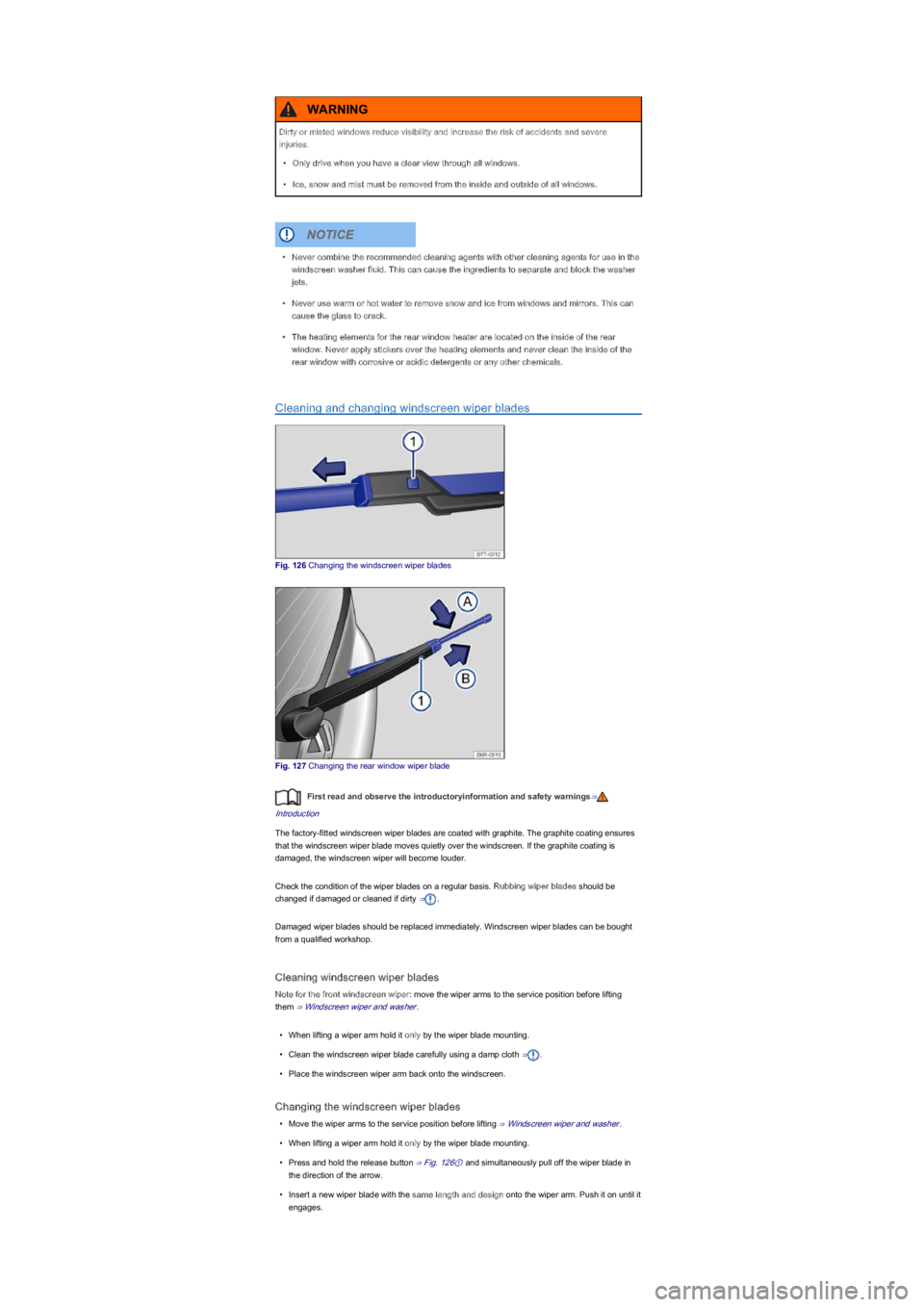
Fig. 126 Changing the windscreen wiper blades
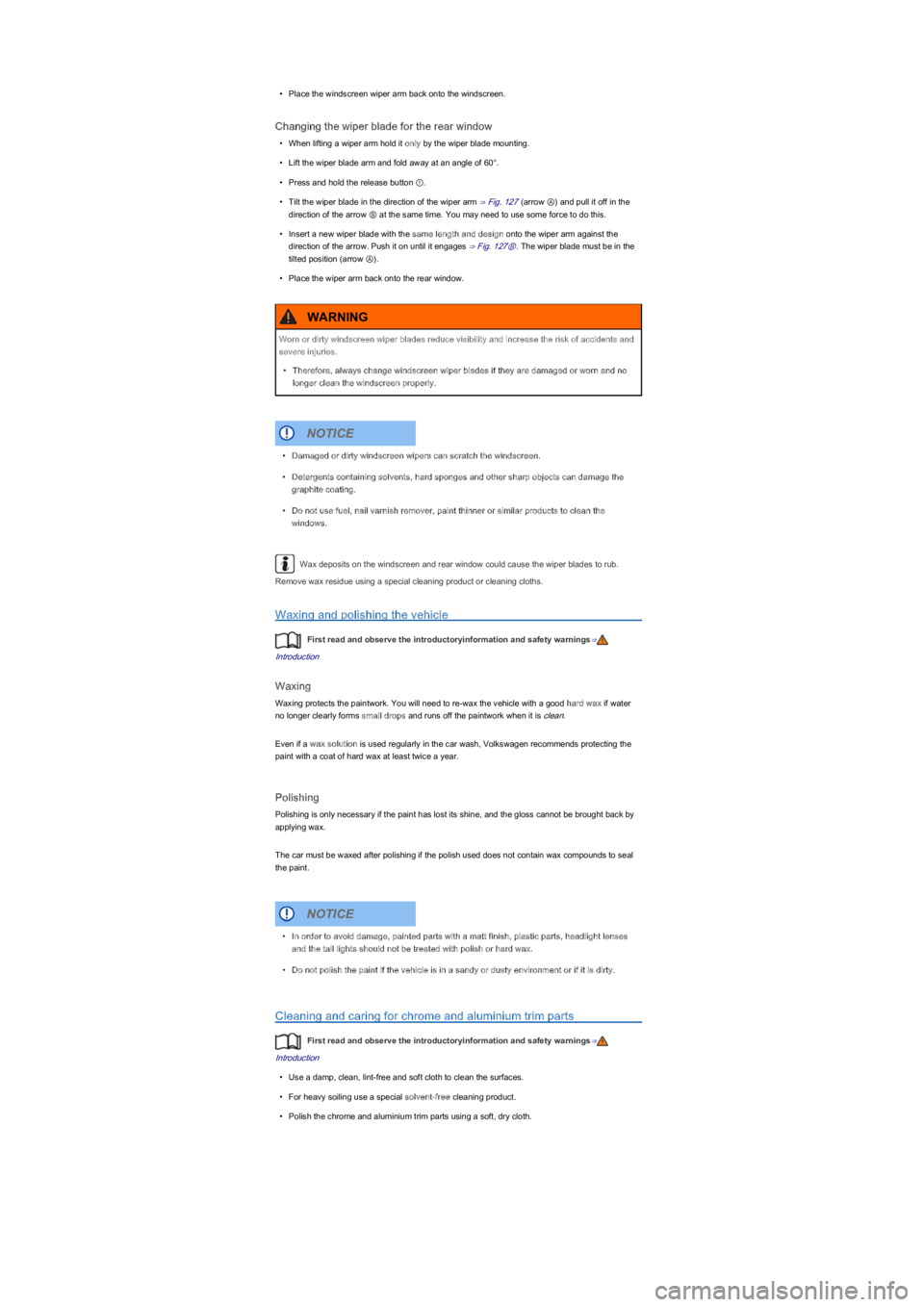
Fig. 127 Changing the rear window wiper blade
First read and observe the introductoryinformation and safety warnings⇒
Introduction
The factory-fitted windscreen wiper blades are coated with graphite. The graphite coating ensures
that the windscreen wiper blade moves quietly over the windscreen. If the graphite coating is
damaged, the windscreen wiper will become louder.
Check the condition of the wiper blades on a regular basis. Rubbing wiper blades should be
changed if damaged or cleaned if dirty ⇒.
Damaged wiper blades should be replaced immediately. Windscreen wiper blades can be bought
from a qualified workshop.
Cleaning windscreen wiper blades
Note for the front windscreen wiper: move the wiper arms to the service position before lifting
them ⇒ Windscreen wiper and washer.
•When lifting a wiper arm hold it only by the wiper blade mounting.
•Clean the windscreen wiper blade carefully using a damp cloth ⇒.
•Place the windscreen wiper arm back onto the windscreen.
Changing the windscreen wiper blades
•Move the wiper arms to the service position before lifting ⇒ Windscreen wiper and washer.
•When lifting a wiper arm hold it only by the wiper blade mounting.
•Press and hold the release button ⇒ Fig. 126① and simultaneously pull off the wiper blade in
the direction of the arrow.
•Insert a new wiper blade with the same length and design onto the wiper arm. Push it on until it
engages.
Dirty or misted windows reduce visibility and increase the risk of accidents and severe
injuries.
•Only drive when you have a clear view through all windows.
•Ice, snow and mist must be removed from the inside and outside of all windows.
WARNING
•Never combine the recommended cleaning agents with other cleaning agents for use in the
windscreen washer fluid. This can cause the ingredients to separate and block the washer
jets.
•Never use warm or hot water to remove snow and ice from windows and mirrors. This can
cause the glass to crack.
•The heating elements for the rear window heater are located on the inside of the rear
window. Never apply stickers over the heating elements and never clean the inside of the
rear window with corrosive or acidic detergents or any other chemicals.
NOTICE
Page 150 of 211
•Place the windscreen wiper arm back onto the windscreen.
Changing the wiper blade for the rear window
•When lifting a wiper arm hold it only by the wiper blade mounting.
•Lift the wiper blade arm and fold away at an angle of 60°.
•Press and hold the release button ①.
•Tilt the wiper blade in the direction of the wiper arm ⇒ Fig. 127 (arrow Ⓐ) and pull it off in the
direction of the arrow Ⓑ at the same time. You may need to use some force to do this.
•Insert a new wiper blade with the same length and design onto the wiper arm against the
direction of the arrow. Push it on until it engages ⇒ Fig. 127Ⓑ. The wiper blade must be in the
tilted position (arrow Ⓐ).
•Place the wiper arm back onto the rear window.
Wax deposits on the windscreen and rear window could cause the wiper blades to rub.
Remove wax residue using a special cleaning product or cleaning cloths.
Waxing and polishing the vehicle
First read and observe the introductoryinformation and safety warnings⇒
Introduction
Waxing
Waxing protects the paintwork. You will need to re-wax the vehicle with a good hard wax if water
no longer clearly forms small drops and runs off the paintwork when it is clean.
Even if a wax solution is used regularly in the car wash, Volkswagen recommends protecting the
paint with a coat of hard wax at least twice a year.
Polishing
Polishing is only necessary if the paint has lost its shine, and the gloss cannot be brought back by
applying wax.
The car must be waxed after polishing if the polish used does not contain wax compounds to seal
the paint.
Cleaning and caring for chrome and aluminium trim parts
First read and observe the introductoryinformation and safety warnings⇒
Introduction
•Use a damp, clean, lint-free and soft cloth to clean the surfaces.
•For heavy soiling use a special solvent-free cleaning product.
•Polish the chrome and aluminium trim parts using a soft, dry cloth.
Worn or dirty windscreen wiper blades reduce visibility and increase the risk of accidents and
severe injuries.
•Therefore, always change windscreen wiper blades if they are damaged or worn and no
longer clean the windscreen properly.
WARNING
•Damaged or dirty windscreen wipers can scratch the windscreen.
•Detergents containing solvents, hard sponges and other sharp objects can damage the
graphite coating.
•Do not use fuel, nail varnish remover, paint thinner or similar products to clean the
windows.
NOTICE
•In order to avoid damage, painted parts with a matt finish, plastic parts, headlight lenses
and the tail lights should not be treated with polish or hard wax.
•Do not polish the paint if the vehicle is in a sandy or dusty environment or if it is dirty.
NOTICE