clock VOLKSWAGEN UP! 2021 Owner´s Manual
[x] Cancel search | Manufacturer: VOLKSWAGEN, Model Year: 2021, Model line: UP!, Model: VOLKSWAGEN UP! 2021Pages: 211, PDF Size: 5.98 MB
Page 185 of 211
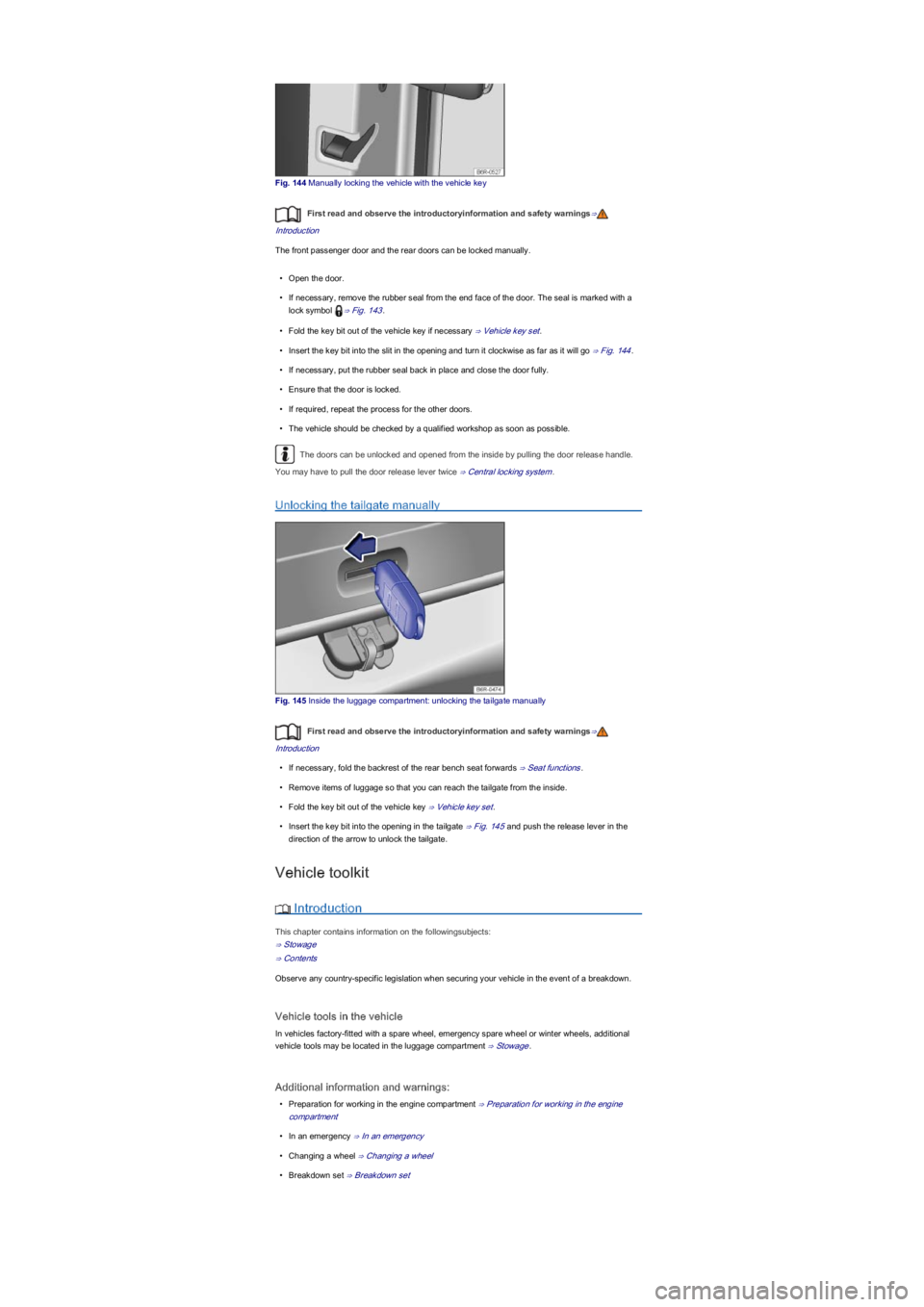
Fig. 144 Manually locking the vehicle with the vehicle key
First read and observe the introductoryinformation and safety warnings⇒
Introduction
The front passenger door and the rear doors can be locked manually.
•Open the door.
•If necessary, remove the rubber seal from the end face of the door. The seal is marked with a
lock symbol ⇒ Fig. 143.
•Fold the key bit out of the vehicle key if necessary ⇒ Vehicle key set.
•Insert the key bit into the slit in the opening and turn it clockwise as far as it will go ⇒ Fig. 144.
•If necessary, put the rubber seal back in place and close the door fully.
•Ensure that the door is locked.
•If required, repeat the process for the other doors.
•The vehicle should be checked by a qualified workshop as soon as possible.
The doors can be unlocked and opened from the inside by pulling the door release handle.
You may have to pull the door release lever twice ⇒ Central locking system.
Unlocking the tailgate manually
Fig. 145 Inside the luggage compartment: unlocking the tailgate manually
First read and observe the introductoryinformation and safety warnings⇒
Introduction
•If necessary, fold the backrest of the rear bench seat forwards ⇒ Seat functions.
•Remove items of luggage so that you can reach the tailgate from the inside.
•Fold the key bit out of the vehicle key ⇒ Vehicle key set.
•Insert the key bit into the opening in the tailgate ⇒ Fig. 145 and push the release lever in the
direction of the arrow to unlock the tailgate.
Vehicle toolkit
Introduction
This chapter contains information on the followingsubjects:
⇒ Stowage
⇒ Contents
Observe any country-specific legislation when securing your vehicle in the event of a breakdown.
Vehicle tools in the vehicle
In vehicles factory-fitted with a spare wheel, emergency spare wheel or winter wheels, additional
vehicle tools may be located in the luggage compartment ⇒ Stowage.
Additional information and warnings:
•Preparation for working in the engine compartment ⇒ Preparation for working in the engine
compartment
•In an emergency ⇒ In an emergency
•Changing a wheel ⇒ Changing a wheel
•Breakdown set ⇒ Breakdown set
Page 190 of 211
Wheel bolts
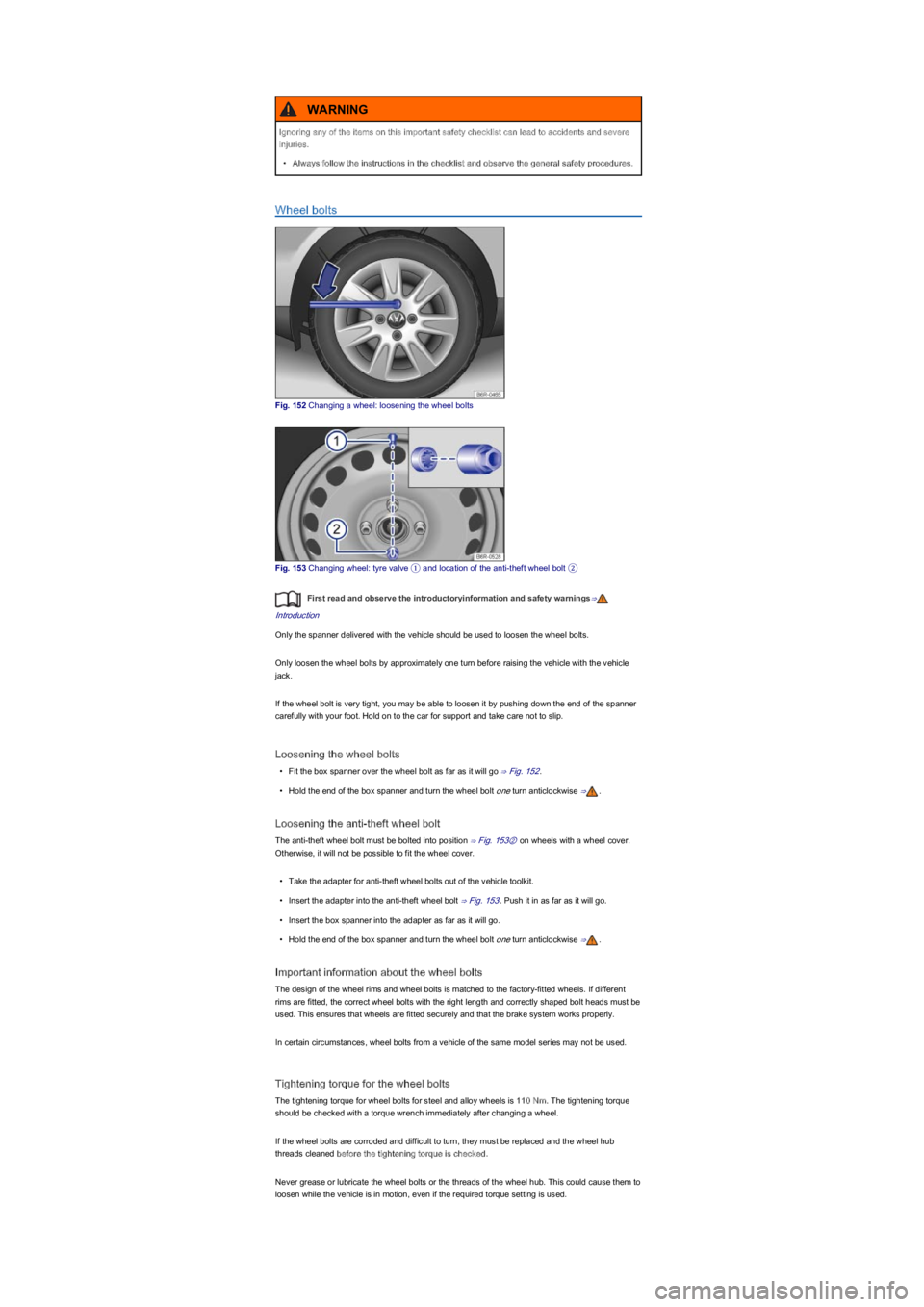
Fig. 152 Changing a wheel: loosening the wheel bolts
Fig. 153 Changing wheel: tyre valve ① and location of the anti-theft wheel bolt ②
First read and observe the introductoryinformation and safety warnings⇒
Introduction
Only the spanner delivered with the vehicle should be used to loosen the wheel bolts.
Only loosen the wheel bolts by approximately one turn before raising the vehicle with the vehicle
jack.
If the wheel bolt is very tight, you may be able to loosen it by pushing down the end of the spanner
carefully with your foot. Hold on to the car for support and take care not to slip.
Loosening the wheel bolts
•Fit the box spanner over the wheel bolt as far as it will go ⇒ Fig. 152.
•Hold the end of the box spanner and turn the wheel bolt one turn anticlockwise ⇒.
Loosening the anti-theft wheel bolt
The anti-theft wheel bolt must be bolted into position ⇒ Fig. 153② on wheels with a wheel cover.
Otherwise, it will not be possible to fit the wheel cover.
•Take the adapter for anti-theft wheel bolts out of the vehicle toolkit.
•Insert the adapter into the anti-theft wheel bolt ⇒ Fig. 153. Push it in as far as it will go.
•Insert the box spanner into the adapter as far as it will go.
•Hold the end of the box spanner and turn the wheel bolt one turn anticlockwise ⇒.
Important information about the wheel bolts
The design of the wheel rims and wheel bolts is matched to the factory-fitted wheels. If different
rims are fitted, the correct wheel bolts with the right length and correctly shaped bolt heads must be
used. This ensures that wheels are fitted securely and that the brake system works properly.
In certain circumstances, wheel bolts from a vehicle of the same model series may not be used.
Tightening torque for the wheel bolts
The tightening torque for wheel bolts for steel and alloy wheels is 110 Nm. The tightening torque
should be checked with a torque wrench immediately after changing a wheel.
If the wheel bolts are corroded and difficult to turn, they must be replaced and the wheel hub
threads cleaned before the tightening torque is checked.
Never grease or lubricate the wheel bolts or the threads of the wheel hub. This could cause them to
loosen while the vehicle is in motion, even if the required torque setting is used.
Ignoring any of the items on this important safety checklist can lead to accidents and severe
injuries.
•Always follow the instructions in the checklist and observe the general safety procedures.
WARNING
Page 192 of 211
Crank the vehicle jack further until the wheel is just clear of the ground.
Changing a wheel
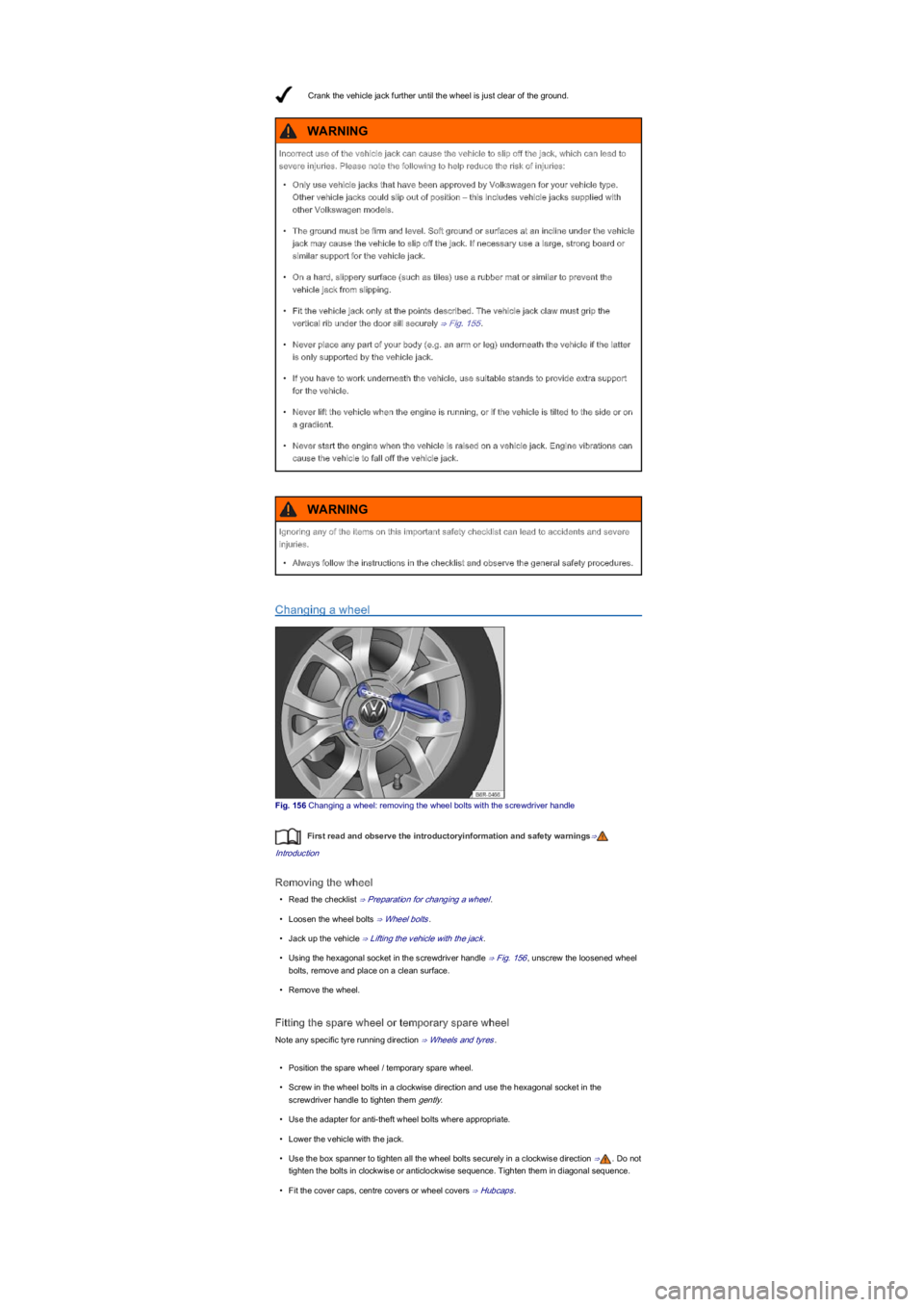
Fig. 156 Changing a wheel: removing the wheel bolts with the screwdriver handle
First read and observe the introductoryinformation and safety warnings⇒
Introduction
Removing the wheel
•Read the checklist ⇒ Preparation for changing a wheel.
•Loosen the wheel bolts ⇒ Wheel bolts.
•Jack up the vehicle ⇒ Lifting the vehicle with the jack.
•Using the hexagonal socket in the screwdriver handle ⇒ Fig. 156, unscrew the loosened wheel
bolts, remove and place on a clean surface.
•Remove the wheel.
Fitting the spare wheel or temporary spare wheel
Note any specific tyre running direction ⇒ Wheels and tyres.
•Position the spare wheel / temporary spare wheel.
•Screw in the wheel bolts in a clockwise direction and use the hexagonal socket in the
screwdriver handle to tighten them gently.
•Use the adapter for anti-theft wheel bolts where appropriate.
•Lower the vehicle with the jack.
•Use the box spanner to tighten all the wheel bolts securely in a clockwise direction ⇒. Do not
tighten the bolts in clockwise or anticlockwise sequence. Tighten them in diagonal sequence.
•Fit the cover caps, centre covers or wheel covers ⇒ Hubcaps.
Incorrect use of the vehicle jack can cause the vehicle to slip off the jack, which can lead to
severe injuries. Please note the following to help reduce the risk of injuries:
•Only use vehicle jacks that have been approved by Volkswagen for your vehicle type.
Other vehicle jacks could slip out of position – this includes vehicle jacks supplied with
other Volkswagen models.
•The ground must be firm and level. Soft ground or surfaces at an incline under the vehicle
jack may cause the vehicle to slip off the jack. If necessary use a large, strong board or
similar support for the vehicle jack.
•On a hard, slippery surface (such as tiles) use a rubber mat or similar to prevent the
vehicle jack from slipping.
•Fit the vehicle jack only at the points described. The vehicle jack claw must grip the
vertical rib under the door sill securely ⇒ Fig. 155.
•Never place any part of your body (e.g. an arm or leg) underneath the vehicle if the latter
is only supported by the vehicle jack.
•If you have to work underneath the vehicle, use suitable stands to provide extra support
for the vehicle.
•Never lift the vehicle when the engine is running, or if the vehicle is tilted to the side or on
a gradient.
•Never start the engine when the vehicle is raised on a vehicle jack. Engine vibrations can
cause the vehicle to fall off the vehicle jack.
WARNING
Ignoring any of the items on this important safety checklist can lead to accidents and severe
injuries.
•Always follow the instructions in the checklist and observe the general safety procedures.
WARNING
Page 195 of 211
If you get a flat tyre, park your vehicle on a firm and level surface at a safe distance from
the flow of traffic.
Apply the handbrake firmly Braking, stopping and parking.
With an automated manual gearbox, move the selector lever to D or R with the ignition on
Changing gear.
Stop the engine and remove the vehicle key from the ignition Starting and stopping the
engine.
Manual gearbox: select a gear Changing gear.
Ensure that all vehicle occupants exit the vehicle and proceed to a safe position, e.g.
behind the safety barrier.
Switch on the hazard warning lights and position the warning triangle In an emergency.
Observe any legal requirements.
Check whether the puncture can be repaired with the breakdown set The tyre sealant must
not be used:.
Remove any items of luggage in the luggage compartment.
Take the breakdown set out of the luggage compartment.
Take the sticker ② from the breakdown set and stick it on the dash panel within the
driver's field of vision.
Do not remove foreign objects (e.g. screws or nails) from the tyre.
12-volt plug
Tyre filler bottle with sealant
Spare valve core
There is a slot on the lower end of the valve core extractor ① for the valve core. This is required
for extracting and fitting the tyre valve. This also applies to the spare valve core ⑪.
Could also be integrated in the compressor.
This function may be carried out by a button in the compressor instead.
Preparation
First read and observe the introductoryinformation and safety warnings⇒
Introduction
Checklist
The following actions must always be carried out in the given order in preparation for filling a
tyre ⇒:
Sealing and inflating tyres
First read and observe the introductoryinformation and safety warnings⇒
Introduction
Sealing a tyre
•Unscrew the cap from the tyre valve.
•Use the valve core extractor ⇒ Fig. 157① to screw the valve core out of the tyre valve. Place
the core on a clean surface.
•Shake the tyre filler bottle ⇒ Fig. 157⑩ vigorously up and down several times.
•Screw the filler hose ⇒ Fig. 157③ tightly onto the tyre filler bottle in a clockwise direction. The
plastic foil on the plug is pierced automatically.
•Remove the plug from the filler hose ⇒ Fig. 157③ and place the open end fully on the tyre
valve.
•Hold the bottle upside down and inject the entire contents of the tyre filler bottle into the tyre.
•Remove the empty tyre filler bottle from the valve.
•Use the valve core extractor ⇒ Fig. 157① to screw the valve core back onto the tyre valve.
Inflating the tyre
•Screw the tyre filler hose ⇒ Fig. 157⑤ of the air compressor tightly onto the tyre valve.
•Check that the bleed screw ⇒ Fig. 157⑦ is closed.
•Start the engine and let it run.
1)
1)
2)
Ignoring any of the items on this important safety checklist can lead to accidents and severe
injuries.
•Always follow the instructions in the checklist and observe the general safety procedures.
WARNING
Page 201 of 211
Changing bulbs in the front headlights
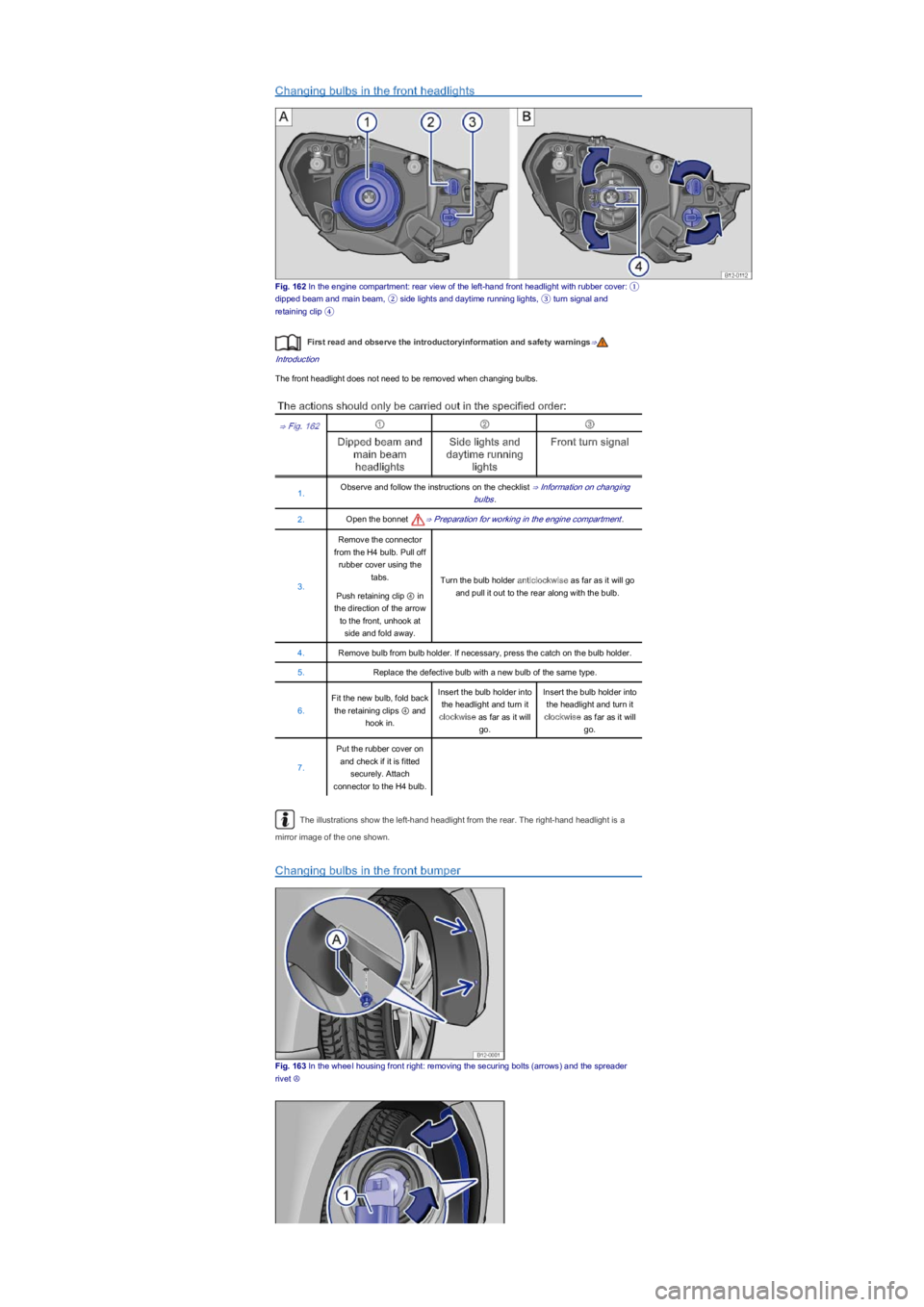
Fig. 162 In the engine compartment: rear view of the left-hand front headlight with rubber cover: ①
dipped beam and main beam, ② side lights and daytime running lights, ③ turn signal and
retaining clip ④
First read and observe the introductoryinformation and safety warnings⇒
Introduction
The front headlight does not need to be removed when changing bulbs.
The actions should only be carried out in the specified order:
⇒ Fig. 162①②③
Dipped beam and
main beam
headlights
Side lights and
daytime running
lights
Front turn signal
1.Observe and follow the instructions on the checklist ⇒ Information on changing
bulbs.
2.Open the bonnet ⇒ Preparation for working in the engine compartment.
3.
Remove the connector
from the H4 bulb. Pull off
rubber cover using the
tabs.Turn the bulb holder anticlockwise as far as it will go
and pull it out to the rear along with the bulb.Push retaining clip ④ in
the direction of the arrow
to the front, unhook at
side and fold away.
4.Remove bulb from bulb holder. If necessary, press the catch on the bulb holder.
5.Replace the defective bulb with a new bulb of the same type.
6.
Fit the new bulb, fold back
the retaining clips ④ and
hook in.
Insert the bulb holder into
the headlight and turn it
clockwise as far as it will
go.
Insert the bulb holder into
the headlight and turn it
clockwise as far as it will
go.
7.
Put the rubber cover on
and check if it is fitted
securely. Attach
connector to the H4 bulb.
The illustrations show the left-hand headlight from the rear. The right-hand headlight is a
mirror image of the one shown.
Changing bulbs in the front bumper
Fig. 163 In the wheeI housing front right: removing the securing bolts (arrows) and the spreader
rivet Ⓐ
Page 202 of 211
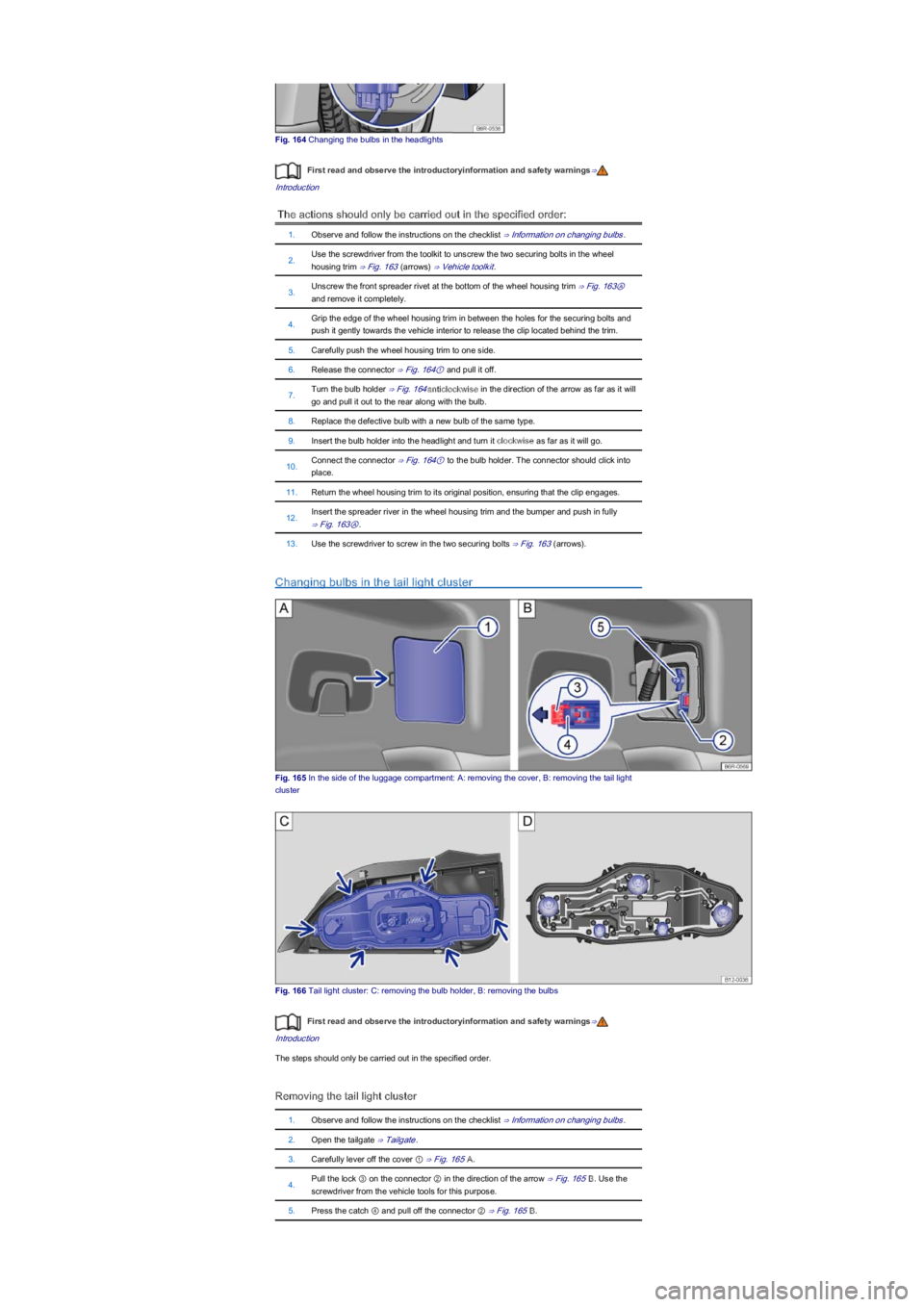
Fig. 164 Changing the bulbs in the headlights
First read and observe the introductoryinformation and safety warnings⇒
Introduction
The actions should only be carried out in the specified order:
1.Observe and follow the instructions on the checklist ⇒ Information on changing bulbs.
2.Use the screwdriver from the toolkit to unscrew the two securing bolts in the wheel
housing trim ⇒ Fig. 163 (arrows) ⇒ Vehicle toolkit.
3.Unscrew the front spreader rivet at the bottom of the wheel housing trim ⇒ Fig. 163Ⓐ
and remove it completely.
4.Grip the edge of the wheel housing trim in between the holes for the securing bolts and
push it gently towards the vehicle interior to release the clip located behind the trim.
5.Carefully push the wheel housing trim to one side.
6.Release the connector ⇒ Fig. 164① and pull it off.
7.Turn the bulb holder ⇒ Fig. 164anticlockwise in the direction of the arrow as far as it will
go and pull it out to the rear along with the bulb.
8.Replace the defective bulb with a new bulb of the same type.
9.Insert the bulb holder into the headlight and turn it clockwise as far as it will go.
10.Connect the connector ⇒ Fig. 164① to the bulb holder. The connector should click into
place.
11.Return the wheel housing trim to its original position, ensuring that the clip engages.
12.Insert the spreader river in the wheel housing trim and the bumper and push in fully
⇒ Fig. 163Ⓐ.
13.Use the screwdriver to screw in the two securing bolts ⇒ Fig. 163 (arrows).
Changing bulbs in the tail light cluster
Fig. 165 In the side of the luggage compartment: A: removing the cover, B: removing the tail light
cluster
Fig. 166 Tail light cluster: C: removing the bulb holder, B: removing the bulbs
First read and observe the introductoryinformation and safety warnings⇒
Introduction
The steps should only be carried out in the specified order.
Removing the tail light cluster
1.Observe and follow the instructions on the checklist ⇒ Information on changing bulbs.
2.Open the tailgate ⇒ Tailgate.
3.Carefully lever off the cover ① ⇒ Fig. 165A.
4.Pull the lock ③ on the connector ② in the direction of the arrow ⇒ Fig. 165B. Use the
screwdriver from the vehicle tools for this purpose.
5.Press the catch ④ and pull off the connector ② ⇒ Fig. 165B.
Page 203 of 211
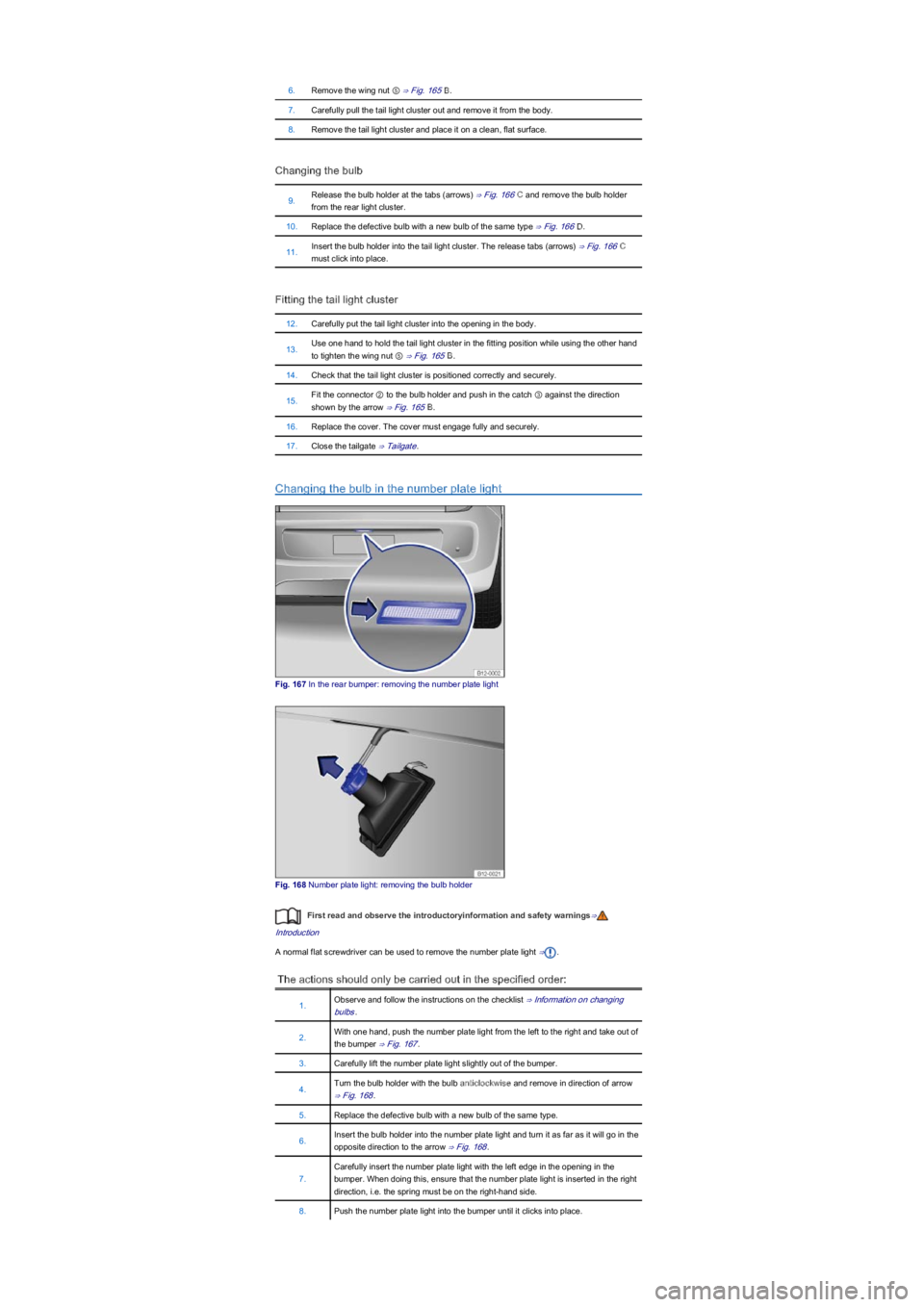
6.Remove the wing nut ⑤ ⇒ Fig. 165B.
7.Carefully pull the tail light cluster out and remove it from the body.
8.Remove the tail light cluster and place it on a clean, flat surface.
Changing the bulb
9.Release the bulb holder at the tabs (arrows) ⇒ Fig. 166C and remove the bulb holder
from the rear light cluster.
10.Replace the defective bulb with a new bulb of the same type ⇒ Fig. 166D.
11.Insert the bulb holder into the tail light cluster. The release tabs (arrows) ⇒ Fig. 166C
must click into place.
Fitting the tail light cluster
12.Carefully put the tail light cluster into the opening in the body.
13.Use one hand to hold the tail light cluster in the fitting position while using the other hand
to tighten the wing nut ⑤ ⇒ Fig. 165B.
14.Check that the tail light cluster is positioned correctly and securely.
15.Fit the connector ② to the bulb holder and push in the catch ③ against the direction
shown by the arrow ⇒ Fig. 165B.
16.Replace the cover. The cover must engage fully and securely.
17.Close the tailgate ⇒ Tailgate.
Changing the bulb in the number plate light
Fig. 167 In the rear bumper: removing the number plate light
Fig. 168 Number plate light: removing the bulb holder
First read and observe the introductoryinformation and safety warnings⇒
Introduction
A normal flat screwdriver can be used to remove the number plate light ⇒.
The actions should only be carried out in the specified order:
1.Observe and follow the instructions on the checklist ⇒ Information on changing
bulbs.
2.With one hand, push the number plate light from the left to the right and take out of
the bumper ⇒ Fig. 167.
3.Carefully lift the number plate light slightly out of the bumper.
4.Turn the bulb holder with the bulb anticlockwise and remove in direction of arrow
⇒ Fig. 168.
5.Replace the defective bulb with a new bulb of the same type.
6.Insert the bulb holder into the number plate light and turn it as far as it will go in the
opposite direction to the arrow ⇒ Fig. 168.
7.
Carefully insert the number plate light with the left edge in the opening in the
bumper. When doing this, ensure that the number plate light is inserted in the right
direction, i.e. the spring must be on the right-hand side.
8.Push the number plate light into the bumper until it clicks into place.
Page 209 of 211
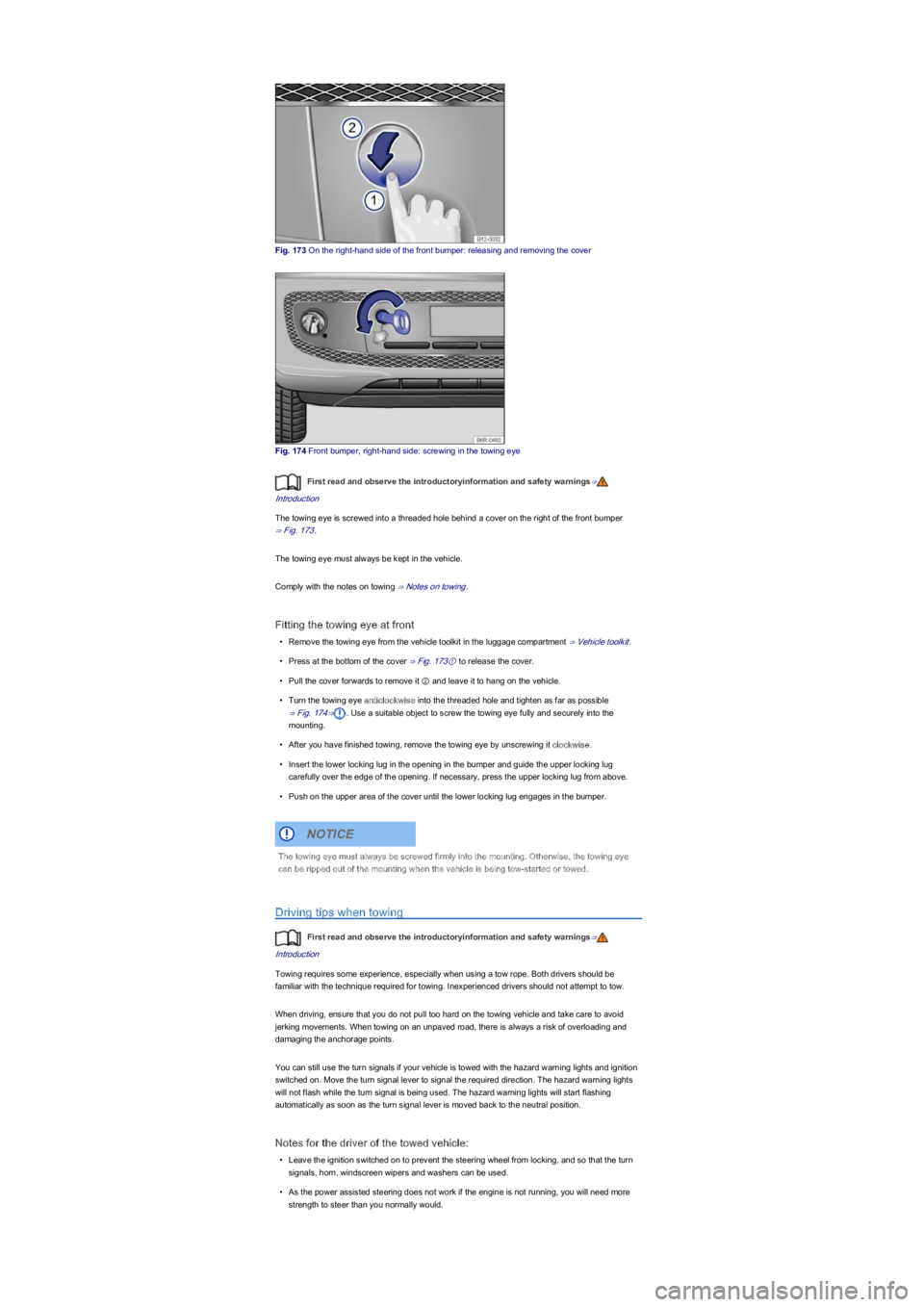
Fig. 173 On the right-hand side of the front bumper: releasing and removing the cover
Fig. 174 Front bumper, right-hand side: screwing in the towing eye
First read and observe the introductoryinformation and safety warnings⇒
Introduction
The towing eye is screwed into a threaded hole behind a cover on the right of the front bumper
⇒ Fig. 173.
The towing eye must always be kept in the vehicle.
Comply with the notes on towing ⇒ Notes on towing.
Fitting the towing eye at front
•Remove the towing eye from the vehicle toolkit in the luggage compartment ⇒ Vehicle toolkit.
•Press at the bottom of the cover ⇒ Fig. 173① to release the cover.
•Pull the cover forwards to remove it ② and leave it to hang on the vehicle.
•Turn the towing eye anticlockwise into the threaded hole and tighten as far as possible
⇒ Fig. 174⇒. Use a suitable object to screw the towing eye fully and securely into the
mounting.
•After you have finished towing, remove the towing eye by unscrewing it clockwise.
•Insert the lower locking lug in the opening in the bumper and guide the upper locking lug
carefully over the edge of the opening. If necessary, press the upper locking lug from above.
•Push on the upper area of the cover until the lower locking lug engages in the bumper.
Driving tips when towing
First read and observe the introductoryinformation and safety warnings⇒
Introduction
Towing requires some experience, especially when using a tow rope. Both drivers should be
familiar with the technique required for towing. Inexperienced drivers should not attempt to tow.
When driving, ensure that you do not pull too hard on the towing vehicle and take care to avoid
jerking movements. When towing on an unpaved road, there is always a risk of overloading and
damaging the anchorage points.
You can still use the turn signals if your vehicle is towed with the hazard warning lights and ignition
switched on. Move the turn signal lever to signal the required direction. The hazard warning lights
will not flash while the turn signal is being used. The hazard warning lights will start flashing
automatically as soon as the turn signal lever is moved back to the neutral position.
Notes for the driver of the towed vehicle:
•Leave the ignition switched on to prevent the steering wheel from locking, and so that the turn
signals, horn, windscreen wipers and washers can be used.
•As the power assisted steering does not work if the engine is not running, you will need more
strength to steer than you normally would.
The towing eye must always be screwed firmly into the mounting. Otherwise, the towing eye
can be ripped out of the mounting when the vehicle is being tow-started or towed.
NOTICE