fuel pressure VOLKSWAGEN UP! 2021 Owner´s Manual
[x] Cancel search | Manufacturer: VOLKSWAGEN, Model Year: 2021, Model line: UP!, Model: VOLKSWAGEN UP! 2021Pages: 211, PDF Size: 5.98 MB
Page 15 of 211
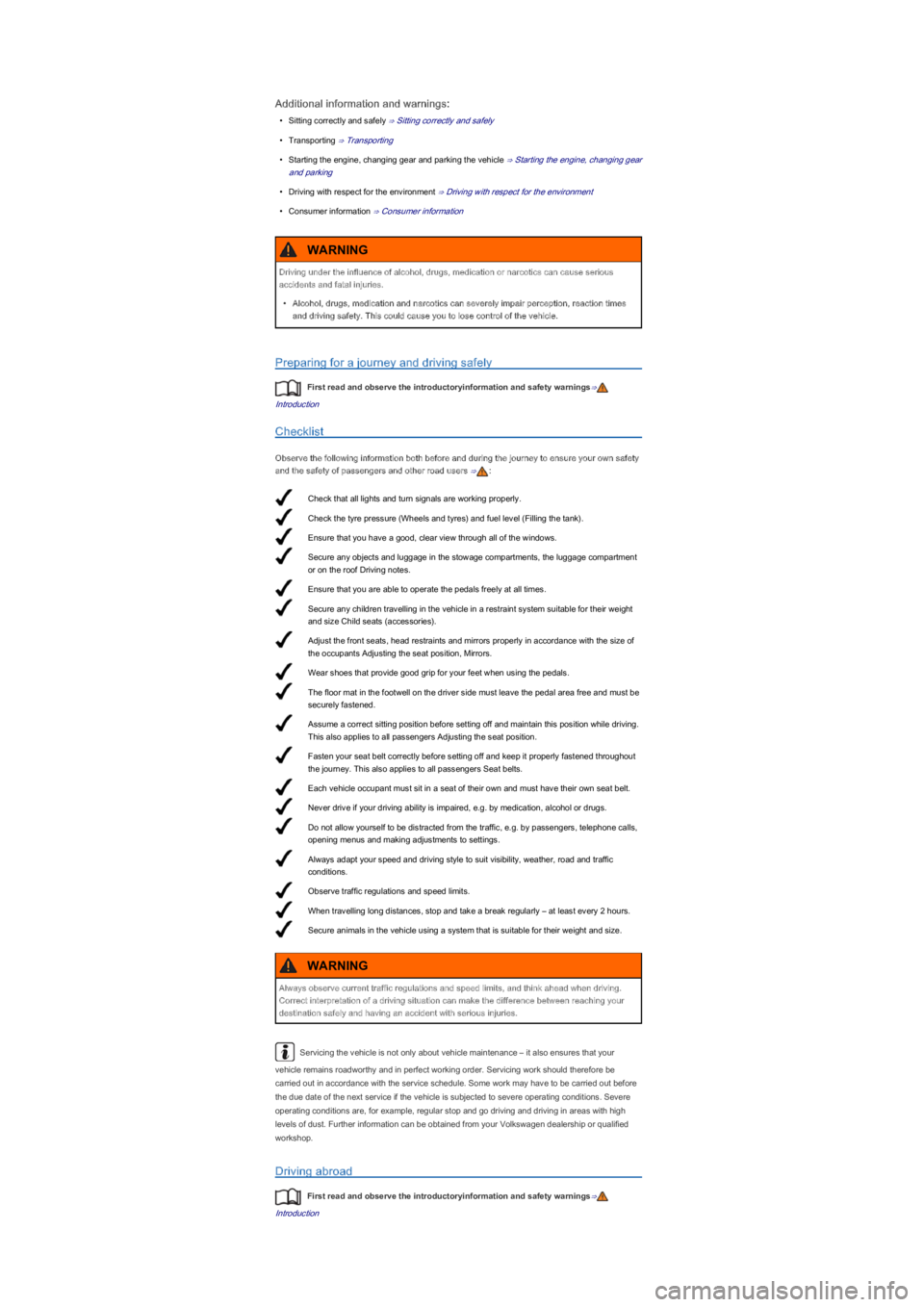
Check that all lights and turn signals are working properly.
Check the tyre pressure (Wheels and tyres) and fuel level (Filling the tank).
Ensure that you have a good, clear view through all of the windows.
Secure any objects and luggage in the stowage compartments, the luggage compartment
or on the roof Driving notes.
Ensure that you are able to operate the pedals freely at all times.
Secure any children travelling in the vehicle in a restraint system suitable for their weight
and size Child seats (accessories).
Adjust the front seats, head restraints and mirrors properly in accordance with the size of
the occupants Adjusting the seat position, Mirrors.
Wear shoes that provide good grip for your feet when using the pedals.
The floor mat in the footwell on the driver side must leave the pedal area free and must be
securely fastened.
Assume a correct sitting position before setting off and maintain this position while driving.
This also applies to all passengers Adjusting the seat position.
Fasten your seat belt correctly before setting off and keep it properly fastened throughout
the journey. This also applies to all passengers Seat belts.
Each vehicle occupant must sit in a seat of their own and must have their own seat belt.
Never drive if your driving ability is impaired, e.g. by medication, alcohol or drugs.
Do not allow yourself to be distracted from the traffic, e.g. by passengers, telephone calls,
opening menus and making adjustments to settings.
Always adapt your speed and driving style to suit visibility, weather, road and traffic
conditions.
Observe traffic regulations and speed limits.
When travelling long distances, stop and take a break regularly – at least every 2 hours.
Secure animals in the vehicle using a system that is suitable for their weight and size.
Additional information and warnings:
•Sitting correctly and safely ⇒ Sitting correctly and safely
•Transporting ⇒ Transporting
•Starting the engine, changing gear and parking the vehicle ⇒ Starting the engine, changing gear
and parking
•Driving with respect for the environment ⇒ Driving with respect for the environment
•Consumer information ⇒ Consumer information
Preparing for a journey and driving safely
First read and observe the introductoryinformation and safety warnings⇒
Introduction
Checklist
Observe the following information both before and during the journey to ensure your own safety
and the safety of passengers and other road users ⇒:
Servicing the vehicle is not only about vehicle maintenance – it also ensures that your
vehicle remains roadworthy and in perfect working order. Servicing work should therefore be
carried out in accordance with the service schedule. Some work may have to be carried out before
the due date of the next service if the vehicle is subjected to severe operating conditions. Severe
operating conditions are, for example, regular stop and go driving and driving in areas with high
levels of dust. Further information can be obtained from your Volkswagen dealership or qualified
workshop.
Driving abroad
First read and observe the introductoryinformation and safety warnings⇒
Introduction
Driving under the influence of alcohol, drugs, medication or narcotics can cause serious
accidents and fatal injuries.
•Alcohol, drugs, medication and narcotics can severely impair perception, reaction times
and driving safety. This could cause you to lose control of the vehicle.
WARNING
Always observe current traffic regulations and speed limits, and think ahead when driving.
Correct interpretation of a driving situation can make the difference between reaching your
destination safely and having an accident with serious injuries.
WARNING
Page 40 of 211
Switch off the seat heating when the seat is not occupied.
FunctionAction ⇒ Fig. 41
Switching onPress the button. The seat heating is switched on at the
highest setting. All indicator lamps light up in the button.
Adjusting the heating
outputPress the button again until the required heating level is set.
Switching offPress the button until the indicator lamps in the button go out.
If the second temperature level has been switched on for more than 15 minutes, it will automatically
switch to the first temperature level. Only one indicator lamp will be lit up.
The seat heating should be switched off as soon as it is no longer needed. Fuel is otherwise
wasted.
Seat belts
Introduction
This chapter contains information on the followingsubjects:
⇒ Warning lamp
⇒ Frontal collisions and the laws of physics
⇒ What happens to vehicle occupants who have not fastened their seat belts
⇒ Seat belt protection
⇒ Using seat belts
⇒ Fastening and unfastening seat belts
⇒ Seat belt routing
⇒ Automatic belt retractor, belt tensioner, belt tension limiter
⇒ Service and disposal of belt tensioners
Check the condition of all seat belts regularly. If the belt webbing, belt connections, belt retractor or
seat belt buckle become damaged, the seat belt in question should be replaced immediately by a
qualified workshop ⇒. The qualified workshop must use correct spare parts that are compatible
with the vehicle, equipment level and model year. Volkswagen recommends using a Volkswagen
dealership for this purpose.
Additional information and warnings:
•Adjusting the seat position ⇒ Adjusting the seat position
•Airbag system ⇒ Airbag system
•Child seats (accessories) ⇒ Child seats (accessories)
•Stowage ⇒ Stowage area
•Cleaning and caring for the interior ⇒ Cleaning and caring for the interior
•Accessories, modifications, repairs and renewal of parts ⇒ Accessories, modifications, repairs
and renewal of parts
Anyone experiencing reduced sensitivity to pain or temperature due to medication, paralysis
or chronic illness (e.g. diabetes) could sustain burns on the back, buttocks and legs when
using the seat heating. These burns may take a long time to heal or may never heal fully.
Please consult a doctor to determine your own level of health.
•Anyone experiencing reduced sensitivity to pain or temperature should never use the seat
heating.
WARNING
Wet upholstery can cause a fault in the seat heating and increase the risk of burns.
•Ensure that the seat cushion is dry before the seat heating is used.
•Do not sit on the seat when wearing damp or wet clothing.
•Do not set any damp or wet objects or items of clothing on the seat.
•Do not spill any liquids on the seat.
WARNING
•To avoid damaging the heating elements, do not kneel on the seat or apply sharp pressure
at a single point on the seat cushion and backrest.
•Liquids, sharp objects and insulating materials (such as a protective cover or child seat) on
the seat could damage the seat heating.
•If the system starts to emit a smell, switch the seat heating off immediately and have it
checked by a qualified workshop.
NOTICE
Page 97 of 211
Driving in the correct gear can reduce fuel consumption.
The display on the gear-change indicator will disappear when the clutch pedal is depressed.
In some vehicles the gear recommendation may be displayed on the screen of the portable
navigation device (delivered by Volkswagen) ⇒ Accessories, modifications, repairs and renewal of
parts.
Braking, stopping and parking
Introduction
This chapter contains information on the followingsubjects:
⇒ Warning and indicator lamps
⇒ Handbrake
⇒ Parking
⇒ Information on the brakes
⇒ Brake assist systems
⇒ Brake fluid
The brake assist systems are the electronic brake pressure distribution system (EBV), anti-lock
brake system (ABS), the brake assist system (BAS), the electronic differential lock (EDS), traction
control (TC), the traction control system (TCS) and the electronic stabilisation programme (ESC).
Additional information and warnings:
•Pull-away assist systems ⇒ Pull-away assist systems
•Wheels and tyres ⇒ Wheels and tyres
•Accessories, modifications, repairs and renewal of parts ⇒ Accessories, modifications, repairs
and renewal of parts
The gear-change indicator is only designed to assist the driver and cannot replace the driver's
own judgement.
•The driver has full responsibility for selecting the correct gear in all situations, e.g. when
overtaking or when driving up and down hills.
CAUTION
Page 101 of 211
Information on the brakes
First read and observe the introductoryinformation and safety warnings⇒
Introduction
New brake pads cannot generate the full braking effect during the first 200 to 300 km and must first
be run in ⇒. However, you can compensate for the slightly reduced braking force by applying
more pressure to the brake pedal. During the run-in period, the braking distance is longer when
the brakes are depressed fully or during emergency braking than with brakes that have been fully
run in. In the run-in period, the brakes should not be depressed fully and situations that create a
heavy load on the brakes should be avoided. For example, when driving too close to the vehicle
ahead.
The rate of wear of the brake pads depends to a great extent on the conditions under which the
vehicle is operated and the way in which the vehicle is driven. With regular urban trips, short
journeys and a sporty driving style, the brake pads must be checked by a qualified workshop more
regularly than stated in the service schedule.
When driving with wet brakes, for example after driving through water, after heavy rainfall or after
washing the vehicle, the braking effect may be delayed as the brake discs will be wet, or possibly
iced up (in winter). The brakes must be dried as quickly as possible by careful braking at higher
speed. Please ensure that no following vehicle and no other road user is put at risk as a result of
this action ⇒.
Any layer of salt accumulated on the discs and pads will delay the braking effect and increase the
braking distance. If the brakes on the vehicle have not been applied for a long time on roads that
have been gritted with salt, the layer of salt must be reduced through careful braking ⇒.
Corrosion on the brake discs and dirt in the brake pads are facilitated through long periods of
inactivity, low mileage and low load levels. If the brake pads have been hardly used, or if they are at
all corroded, Volkswagen recommends that the brake discs and brake pads be cleaned by braking
strongly several times from high speed. Please ensure that no following vehicle and no other road
user is put at risk as a result of this action ⇒.
Fault in the brake system
A brake circuit may have failed if you have to reduce speed and the vehicle does not brake as
normal (sudden increase in braking distance). This is indicated by the warning light . Go to the
nearest qualified workshop immediately to have the fault corrected. Drive at low speed when doing
this and anticipate much longer braking distances and an increase in the pressure required on the
pedal.
Brake servo
The brake servo will only function when the engine is running and reinforces the pressure applied
by the driver on the brake pedal.
If the brake servo is not functioning or the vehicle is being towed, the brake pedal will have to be
depressed more forcefully as the braking distance will be increased due to the lack of assistance for
the brake system ⇒.
The components of the exhaust system become very hot. This can cause fires and serious
injuries.
•Never park the vehicle where parts of the exhaust system can come into contact with any
inflammable material underneath the vehicle, e.g. leaves, dry grass, spilt fuel.
WARNING
•To avoid unintentional movement when parking the vehicle, first apply the handbrake firmly
and then remove your foot from the brake pedal.
•Always take care when driving in car parks with protruding kerbstones or bollards. Objects
that protrude from the ground can damage the bumper and other components when
parking the vehicle. In order to avoid any damage, stop the vehicle before the wheels
touch the bollards or kerbs.
•Drive carefully through dips in the road, over driveways, ramps, kerbstones and other
objects. Low-lying vehicle components such as the bumper, spoiler and parts of the
running gear, engine or exhaust system could be damaged.
NOTICE
Page 107 of 211
•The cooling function of the air conditioning system: if the air conditioning system is set to a very
high or low temperature it will require a lot of energy, which is generated by the engine.
Therefore the temperature setting in the vehicle should not vary too much from the outside
temperature. It may be a good idea to air the vehicle before setting off and then to travel a short
distance with the windows open. The air conditioning system should then be switched on once
the windows have been closed.
•Keep the windows closed when driving at high speeds. Having the windows open increases fuel
consumption.
•Switch the seat heating off as soon as it has served its purpose.
•Switch the rear window heating off as soon as the window has defogged and is clear of ice.
Other factors that increase fuel consumption (examples):
•Fault in engine management.
•Driving in hilly regions.
Driving in a fuel-efficient manner
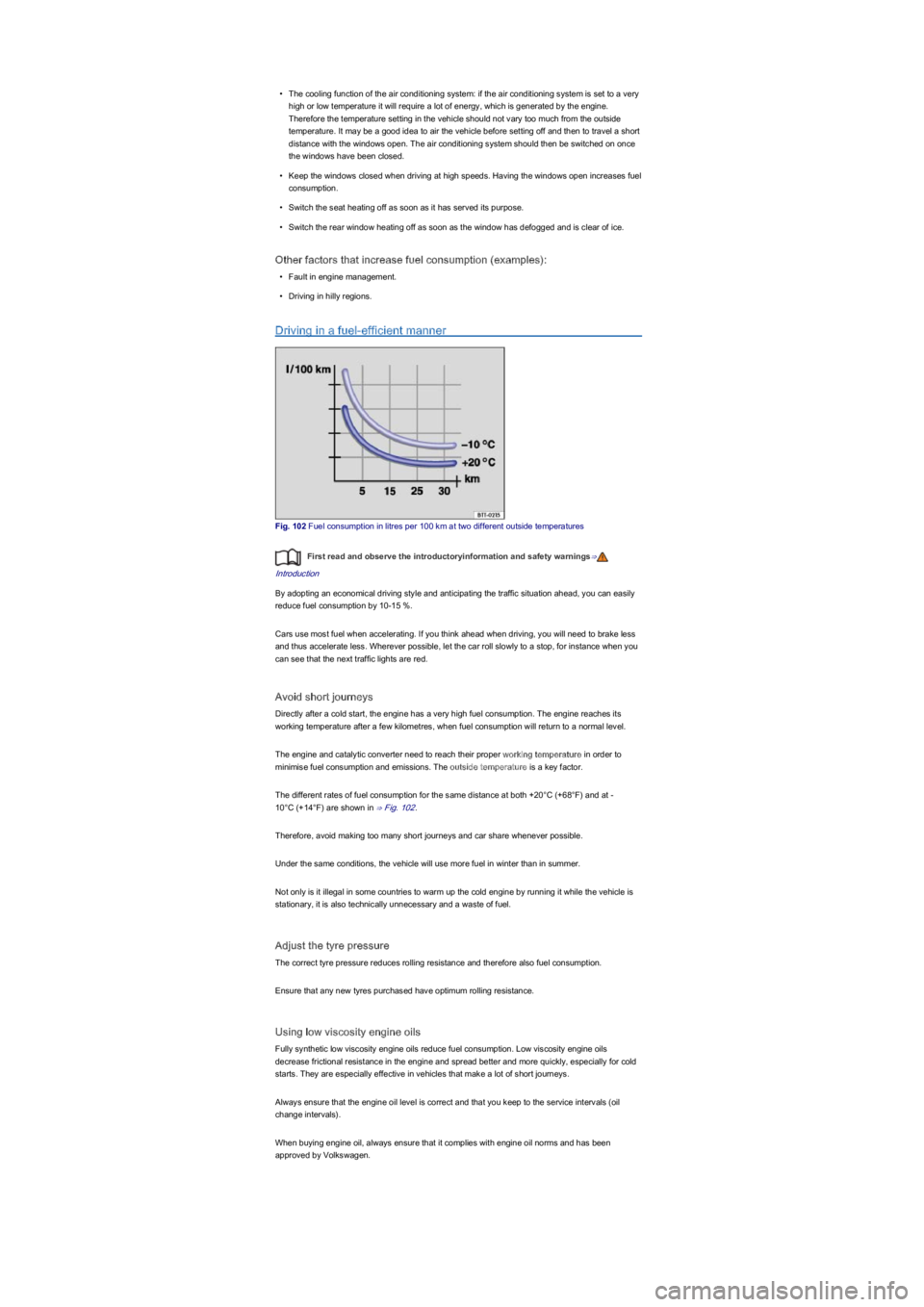
Fig. 102 Fuel consumption in litres per 100 km at two different outside temperatures
First read and observe the introductoryinformation and safety warnings⇒
Introduction
By adopting an economical driving style and anticipating the traffic situation ahead, you can easily
reduce fuel consumption by 10-15 %.
Cars use most fuel when accelerating. If you think ahead when driving, you will need to brake less
and thus accelerate less. Wherever possible, let the car roll slowly to a stop, for instance when you
can see that the next traffic lights are red.
Avoid short journeys
Directly after a cold start, the engine has a very high fuel consumption. The engine reaches its
working temperature after a few kilometres, when fuel consumption will return to a normal level.
The engine and catalytic converter need to reach their proper working temperature in order to
minimise fuel consumption and emissions. The outside temperature is a key factor.
The different rates of fuel consumption for the same distance at both +20°C (+68°F) and at -
10°C (+14°F) are shown in ⇒ Fig. 102.
Therefore, avoid making too many short journeys and car share whenever possible.
Under the same conditions, the vehicle will use more fuel in winter than in summer.
Not only is it illegal in some countries to warm up the cold engine by running it while the vehicle is
stationary, it is also technically unnecessary and a waste of fuel.
Adjust the tyre pressure
The correct tyre pressure reduces rolling resistance and therefore also fuel consumption.
Ensure that any new tyres purchased have optimum rolling resistance.
Using low viscosity engine oils
Fully synthetic low viscosity engine oils reduce fuel consumption. Low viscosity engine oils
decrease frictional resistance in the engine and spread better and more quickly, especially for cold
starts. They are especially effective in vehicles that make a lot of short journeys.
Always ensure that the engine oil level is correct and that you keep to the service intervals (oil
change intervals).
When buying engine oil, always ensure that it complies with engine oil norms and has been
approved by Volkswagen.
Page 108 of 211
Avoid unnecessary loads
The lighter the vehicle, the more economical and environmentally-friendly it is. An extra weight of
100 kg can increase fuel consumption by up to 0.3 l/100 km.
Remove all unnecessary objects and loads from the vehicle.
Remove any unnecessary special equipment and accessories
The more aerodynamic a vehicle, the lower its fuel consumption. Special equipment and
accessories, such as roof carriers or bicycle carriers, make the vehicle less aerodynamic.
You should therefore remove any special equipment and luggage carriers that are not in use,
especially if you are going to be driving at high speeds.
Steering
Introduction
This chapter contains information on the followingsubjects:
⇒ Warning and indicator lamps
⇒ Information on steering
Depending on its equipment level the vehicle may have power steering.
The power steering is not hydraulic. It is an electromechanical system. The advantage of this
steering system is that no hydraulic hoses, hydraulic oil, pumps, filter or other parts are required.
The electromechanical system reduces fuel consumption. A hydraulic system requires constant oil
pressure in the system, whereas an electromechanical steering system only needs an energy
supply while steering.
The power steering provided by the electromechanical steering system automatically adjusts to the
vehicle speed, steering wheel torque and steering wheel angle. The electromechanical steering
only functions when the engine is running.
Additional information and warnings:
•Starting and stopping the engine ⇒ Starting and stopping the engine
•Battery ⇒ Vehicle battery
•Tow-starting and towing ⇒ Tow-starting and towing
Warning and indicator lamps
First read and observe the introductoryinformation and safety warnings⇒
Introduction
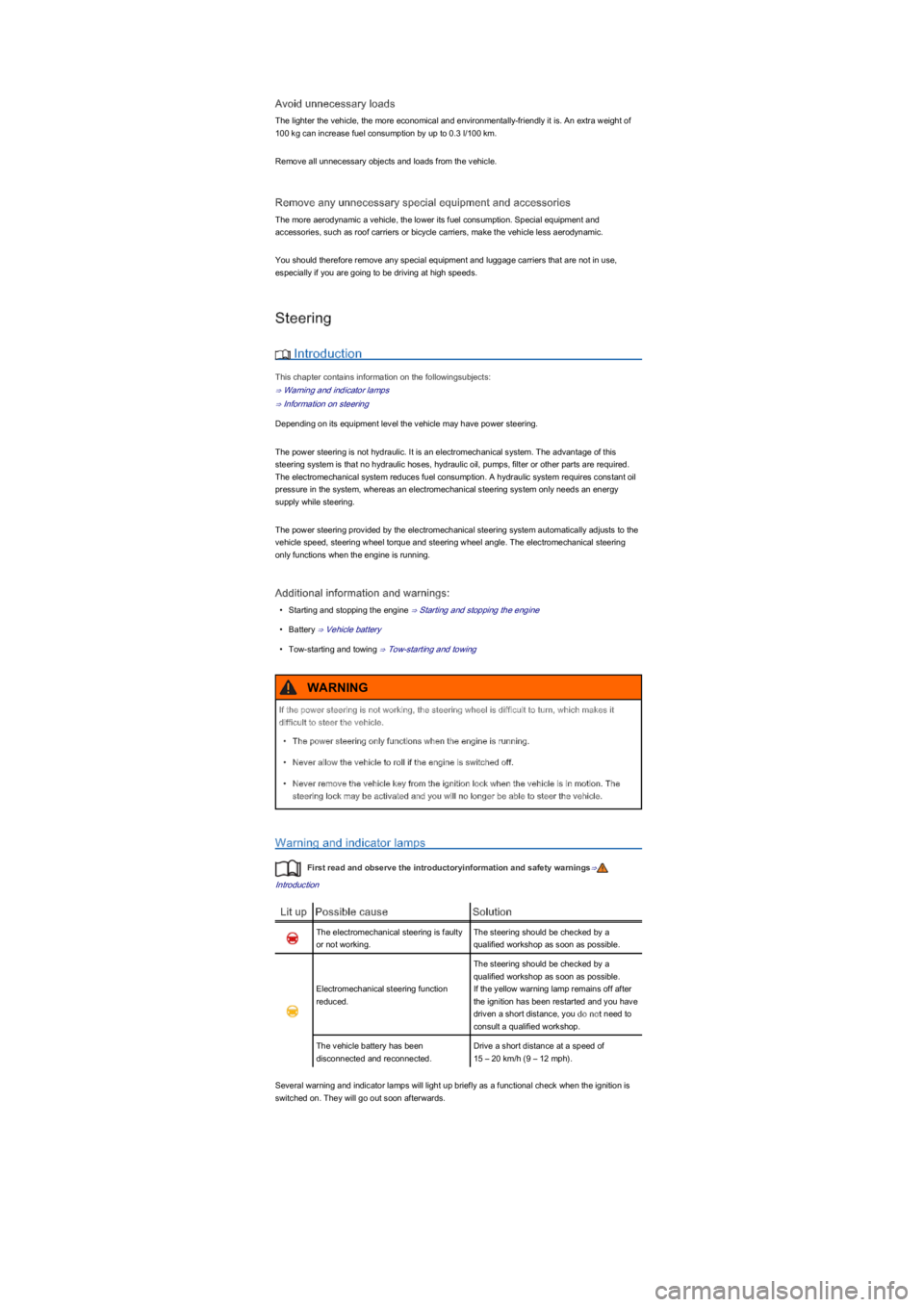
Lit upPossible causeSolution
The electromechanical steering is faulty
or not working.
The steering should be checked by a
qualified workshop as soon as possible.
Electromechanical steering function
reduced.
The steering should be checked by a
qualified workshop as soon as possible.
If the yellow warning lamp remains off after
the ignition has been restarted and you have
driven a short distance, you do not need to
consult a qualified workshop.
The vehicle battery has been
disconnected and reconnected.
Drive a short distance at a speed of
15 – 20 km/h (9 – 12 mph).
Several warning and indicator lamps will light up briefly as a functional check when the ignition is
switched on. They will go out soon afterwards.
If the power steering is not working, the steering wheel is difficult to turn, which makes it
difficult to steer the vehicle.
•The power steering only functions when the engine is running.
•Never allow the vehicle to roll if the engine is switched off.
•Never remove the vehicle key from the ignition lock when the vehicle is in motion. The
steering lock may be activated and you will no longer be able to steer the vehicle.
WARNING
Page 126 of 211
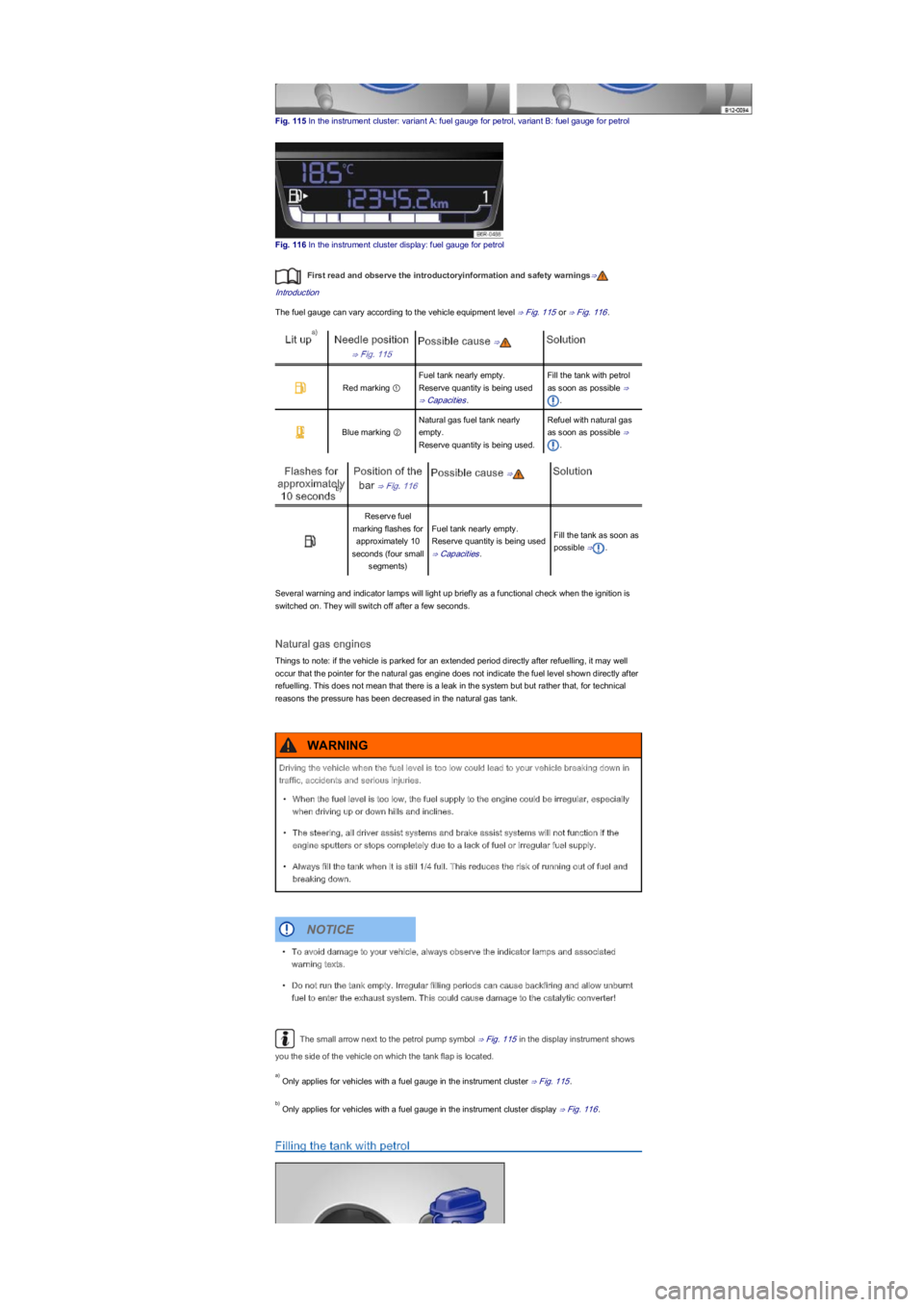
Fig. 115 In the instrument cluster: variant A: fuel gauge for petrol, variant B: fuel gauge for petrol
Fig. 116 In the instrument cluster display: fuel gauge for petrol
First read and observe the introductoryinformation and safety warnings⇒
Introduction
The fuel gauge can vary according to the vehicle equipment level ⇒ Fig. 115 or ⇒ Fig. 116.
Lit upNeedle position
⇒ Fig. 115
Possible cause ⇒Solution
Red marking ①
Fuel tank nearly empty.
Reserve quantity is being used
⇒ Capacities.
Fill the tank with petrol
as soon as possible ⇒
.
Blue marking ②
Natural gas fuel tank nearly
empty.
Reserve quantity is being used.
Refuel with natural gas
as soon as possible ⇒
.
Flashes for
approximately
10 seconds
Position of the
bar ⇒ Fig. 116
Possible cause ⇒Solution
Reserve fuel
marking flashes for
approximately 10
seconds (four small
segments)
Fuel tank nearly empty.
Reserve quantity is being used
⇒ Capacities.
Fill the tank as soon as
possible ⇒.
Several warning and indicator lamps will light up briefly as a functional check when the ignition is
switched on. They will switch off after a few seconds.
Natural gas engines
Things to note: if the vehicle is parked for an extended period directly after refuelling, it may well
occur that the pointer for the natural gas engine does not indicate the fuel level shown directly after
refuelling. This does not mean that there is a leak in the system but but rather that, for technical
reasons the pressure has been decreased in the natural gas tank.
The small arrow next to the petrol pump symbol ⇒ Fig. 115 in the display instrument shows
you the side of the vehicle on which the tank flap is located.
Only applies for vehicles with a fuel gauge in the instrument cluster ⇒ Fig. 115.
Only applies for vehicles with a fuel gauge in the instrument cluster display ⇒ Fig. 116.
Filling the tank with petrol
a)
b)
Driving the vehicle when the fuel level is too low could lead to your vehicle breaking down in
traffic, accidents and serious injuries.
•When the fuel level is too low, the fuel supply to the engine could be irregular, especially
when driving up or down hills and inclines.
•The steering, all driver assist systems and brake assist systems will not function if the
engine sputters or stops completely due to a lack of fuel or irregular fuel supply.
•Always fill the tank when it is still 1/4 full. This reduces the risk of running out of fuel and
breaking down.
WARNING
•To avoid damage to your vehicle, always observe the indicator lamps and associated
warning texts.
•Do not run the tank empty. Irregular filling periods can cause backfiring and allow unburnt
fuel to enter the exhaust system. This could cause damage to the catalytic converter!
NOTICE
a)
b)
Page 129 of 211
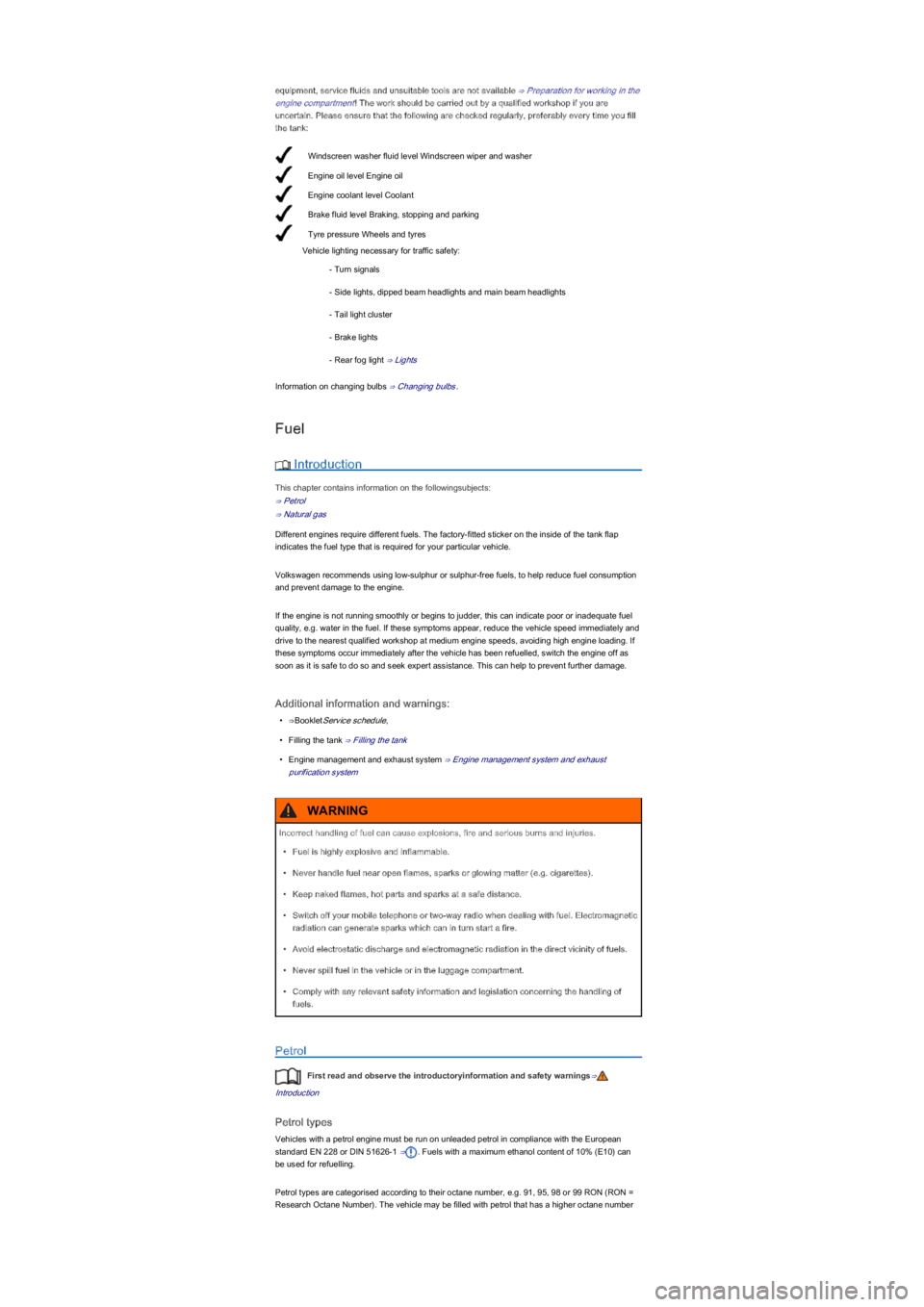
Windscreen washer fluid level Windscreen wiper and washer
Engine oil level Engine oil
Engine coolant level Coolant
Brake fluid level Braking, stopping and parking
Tyre pressure Wheels and tyres
equipment, service fluids and unsuitable tools are not available ⇒ Preparation for working in the
engine compartment! The work should be carried out by a qualified workshop if you are
uncertain. Please ensure that the following are checked regularly, preferably every time you fill
the tank:
Vehicle lighting necessary for traffic safety:
- Turn signals
- Side lights, dipped beam headlights and main beam headlights
- Tail light cluster
- Brake lights
- Rear fog light ⇒ Lights
Information on changing bulbs ⇒ Changing bulbs.
Fuel
Introduction
This chapter contains information on the followingsubjects:
⇒ Petrol
⇒ Natural gas
Different engines require different fuels. The factory-fitted sticker on the inside of the tank flap
indicates the fuel type that is required for your particular vehicle.
Volkswagen recommends using low-sulphur or sulphur-free fuels, to help reduce fuel consumption
and prevent damage to the engine.
If the engine is not running smoothly or begins to judder, this can indicate poor or inadequate fuel
quality, e.g. water in the fuel. If these symptoms appear, reduce the vehicle speed immediately and
drive to the nearest qualified workshop at medium engine speeds, avoiding high engine loading. If
these symptoms occur immediately after the vehicle has been refuelled, switch the engine off as
soon as it is safe to do so and seek expert assistance. This can help to prevent further damage.
Additional information and warnings:
•⇒BookletService schedule,
•Filling the tank ⇒ Filling the tank
•Engine management and exhaust system ⇒ Engine management system and exhaust
purification system
Petrol
First read and observe the introductoryinformation and safety warnings⇒
Introduction
Petrol types
Vehicles with a petrol engine must be run on unleaded petrol in compliance with the European
standard EN 228 or DIN 51626-1 ⇒. Fuels with a maximum ethanol content of 10% (E10) can
be used for refuelling.
Petrol types are categorised according to their octane number, e.g. 91, 95, 98 or 99 RON (RON =
Research Octane Number). The vehicle may be filled with petrol that has a higher octane number
Incorrect handling of fuel can cause explosions, fire and serious burns and injuries.
•Fuel is highly explosive and inflammable.
•Never handle fuel near open flames, sparks or glowing matter (e.g. cigarettes).
•Keep naked flames, hot parts and sparks at a safe distance.
•Switch off your mobile telephone or two-way radio when dealing with fuel. Electromagnetic
radiation can generate sparks which can in turn start a fire.
•Avoid electrostatic discharge and electromagnetic radiation in the direct vicinity of fuels.
•Never spill fuel in the vehicle or in the luggage compartment.
•Comply with any relevant safety information and legislation concerning the handling of
fuels.
WARNING
Page 146 of 211
In the interests of environmental protection, the vehicle should only be washed in specially
provided wash bays. This prevents waste water contaminated with oil, grease or fuel from entering
the sewerage system. In some countries, washing vehicles anywhere else may be prohibited.
Environmentally-friendly care products should be used.
Leftover car care products should not be disposed of with ordinary household waste. Read
the manufacturer's instructions.
Washing the vehicle
First read and observe the introductoryinformation and safety warnings⇒
Introduction
The longer substances such as insects, bird droppings, resinous tree sap, road dirt, industrial
deposits, tar, soot or road salt and other corrosive materials remain on the vehicle, the more
damage they do to the paintwork. High temperatures (for instance in strong sunlight) further
intensify the corrosive effect. The underside of the vehicle should also be cleaned thoroughly and
regularly.
Car washes
Please observe the signs on the automatic car wash. Before using an automatic car wash take
the usual precautions, such as closing all windows and folding in the exterior mirrors, in order to
avoid damage to the vehicle. You must consult the car wash operator if there are special parts on
your vehicle such as spoilers, roof luggage carrier systems or radio aerials ⇒.
The paint is hard-wearing enough for the car to be generally washed in an automatic car wash.
However, the effect on the paint depends to a large extent on the design of the car wash.
Volkswagen recommends the use of car washes without brushes.
To remove any waxy residue from the windows and to stop wipers rubbing, please note the
following ⇒ Cleaning windows and exterior mirrors.
Washing the car by hand
When washing by hand, first soften the dirt with plenty of water and rinse off as well as possible.
Then clean the vehicle with a soft sponge, a glove or a brush using only light pressure. Start with
the roof and work from the top to the bottom. Use a shampoo for very stubborn dirt only.
The sponge or glove should be wrung out thoroughly at regular intervals.
Clean the wheels, sill panels etc. last. Use a different sponge for this purpose.
Car care products can be toxic and hazardous. Unsuitable care products and incorrect
application of care products can cause accidents, serious injuries, burns or poisoning.
•The care product must be kept in its original sealed container.
•Read the manufacturer's instructions.
•Never store car care products in empty food containers, bottles or any other non-original
containers as people finding these containers may not know that they contain care
products.
•Keep children away from care products.
•The products can give off harmful fumes during use. They should therefore only be used
outside or in well-ventilated spaces.
•Never use fuel, turpentine, engine oil, nail varnish remover or other volatile fluids to wash,
clean or care for your vehicle. These substances are toxic and highly inflammable.
WARNING
Incorrect care and cleaning of vehicle parts can impair the safety features of the vehicle and
thus cause serious injury.
•Vehicle parts must be cleaned according to the manufacturer's instructions.
•Only use approved or recommended cleaning products.
WARNING
Cleaning agents that contain solvents attack the material and can cause damage.
NOTICE
Page 152 of 211
recommends that the protective coating on the underside of the vehicle and on the running gear
should be checked regularly and repaired if necessary.
Cleaning the engine compartment
First read and observe the introductoryinformation and safety warnings⇒
Introduction
The engine compartment of any motor vehicle is a hazardous area ⇒ Preparation for working in the
engine compartment.
The engine compartment should be cleaned by a qualified workshop. An incorrect cleaning
procedure could possibly remove corrosion protection and damage electrical components.
Furthermore, water could enter the vehicle interior directly via the plenum chamber ⇒.
If the engine compartment is very dirty, we recommend that you always proceed to a qualified
workshop to have it cleaned by a professional mechanic. Volkswagen recommends using a
Volkswagen dealership for this purpose.
Plenum chamber
The plenum chamber is located in the engine compartment between the windscreen and the engine
and has a perforated cover. Air from outside is drawn in from the plenum chamber and is passed
into the vehicle interior via the heating and air conditioning system.
Leaves and other loose objects must be removed from the cover of the plenum chamber at regular
intervals using a vacuum cleaner or by hand.
In the interests of environmental protection, the engine compartment should be washed only
in specially provided wash bays. This prevents toxic waste water containing oil, grease and fuel
from entering the sewerage system. In some districts, washing the engine compartment anywhere
else may be prohibited.
Cleaning and caring for the interior
Introduction
This chapter contains information on the followingsubjects:
⇒ Seat covers
⇒ Cleaning cloth seat covers, fabric trim and Alcantara upholstery
⇒ Cleaning and caring for natural leather covers
⇒ Cleaning leatherette upholstery
⇒ Cleaning stowage compartments, drink holders and ash trays
⇒ Cleaning and caring for the dash panel, wooden trims and plastic parts
⇒ Cleaning seat belts
Modern fabrics, such as dark denim, are often not colourfast. Light-coloured upholstery (soft
materials or leather) is particularly sensitive to staining caused by these fabrics, even if you are
careful. This is not caused by a fault in the upholstery, but by the non-colourfast nature of the
garments.
Leaving stains, dirt and other deposits on the surface of vehicle components and cloth seat covers
for a long time can make it difficult to clean and treat them. Stains, dirt and deposits may become
impossible to remove, particularly if left for a long time.
Additional information and warnings:
•Cleaning and caring for the vehicle exterior ⇒ Caring for and cleaning the vehicle exterior
Underseal and anti-corrosion coatings can ignite on the hot exhaust system or on other hot
engine parts.
•Never apply underseal or anti-corrosion coatings to the exhaust pipes, catalytic converter,
heat shields or other vehicle components that become hot.
CAUTION
All work in the engine compartment carries the risk of injury, scalding, accidents and fire.
•Before carrying out any work ensure that you are familiar with the requisite procedures
and general safety regulations ⇒ Preparation for working in the engine compartment.
•Volkswagen recommends having the work carried out by a qualified workshop.
WARNING
Water that has entered the plenum chamber via a manual process (e.g. from a high-pressure
cleaner) can cause considerable damage to the vehicle.
NOTICE