torque VOLKSWAGEN UP! 2021 Owner´s Manual
[x] Cancel search | Manufacturer: VOLKSWAGEN, Model Year: 2021, Model line: UP!, Model: VOLKSWAGEN UP! 2021Pages: 211, PDF Size: 5.98 MB
Page 18 of 211
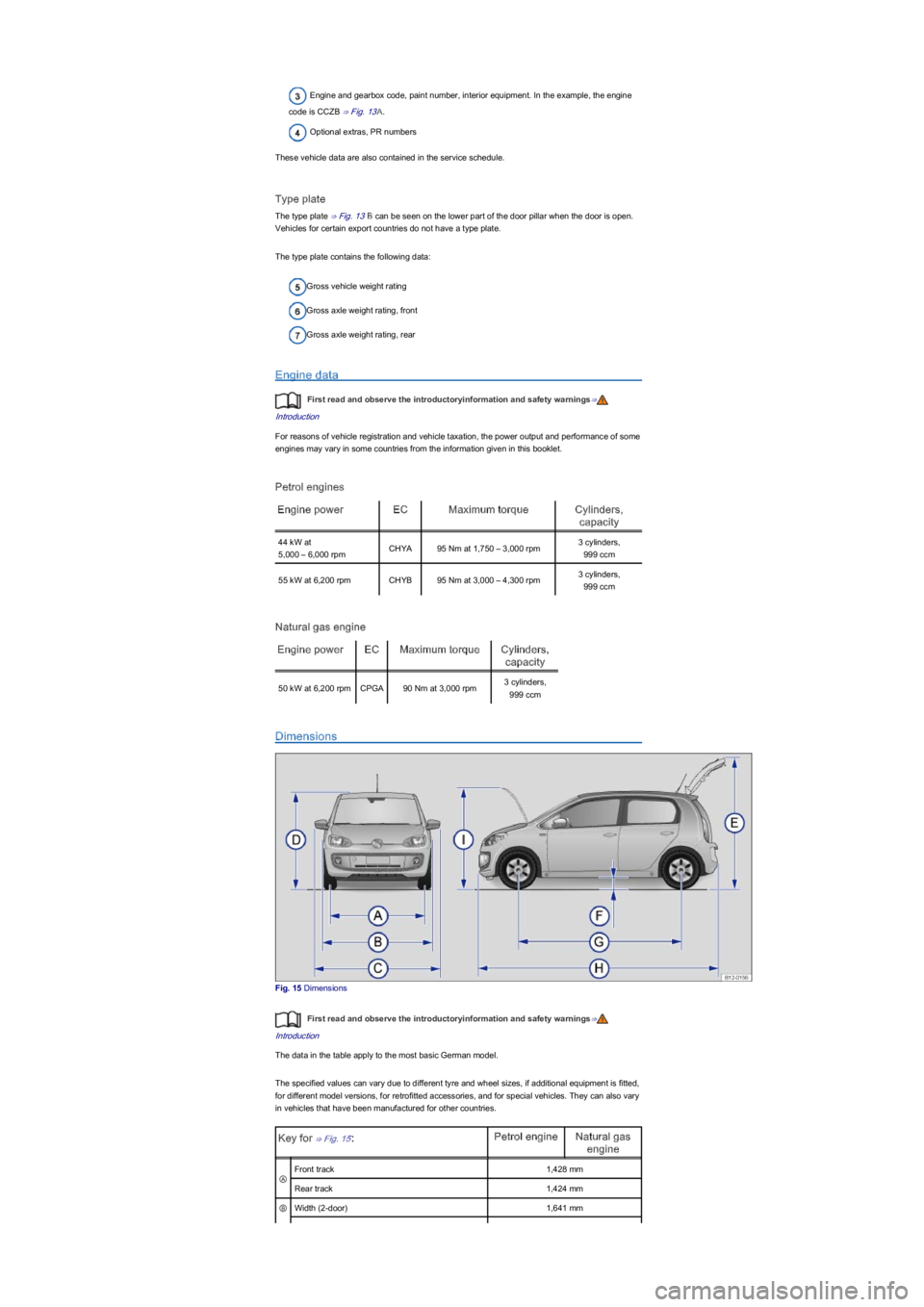
Engine and gearbox code, paint number, interior equipment. In the example, the engine
code is CCZB ⇒ Fig. 13A.
Optional extras, PR numbers
These vehicle data are also contained in the service schedule.
Type plate
The type plate ⇒ Fig. 13B can be seen on the lower part of the door pillar when the door is open.
Vehicles for certain export countries do not have a type plate.
The type plate contains the following data:
Gross vehicle weight rating
Gross axle weight rating, front
Gross axle weight rating, rear
Engine data
First read and observe the introductoryinformation and safety warnings⇒
Introduction
For reasons of vehicle registration and vehicle taxation, the power output and performance of some
engines may vary in some countries from the information given in this booklet.
Petrol engines
Engine powerECMaximum torqueCylinders,
capacity
44 kW at
5,000 – 6,000 rpmCHYA95 Nm at 1,750 – 3,000 rpm3 cylinders,
999 ccm
55 kW at 6,200 rpmCHYB95 Nm at 3,000 – 4,300 rpm3 cylinders,
999 ccm
Natural gas engine
Engine powerECMaximum torqueCylinders,
capacity
50 kW at 6,200 rpmCPGA90 Nm at 3,000 rpm3 cylinders,
999 ccm
Dimensions
Fig. 15 Dimensions
First read and observe the introductoryinformation and safety warnings⇒
Introduction
The data in the table apply to the most basic German model.
The specified values can vary due to different tyre and wheel sizes, if additional equipment is fitted,
for different model versions, for retrofitted accessories, and for special vehicles. They can also vary
in vehicles that have been manufactured for other countries.
Key for ⇒ Fig. 15:Petrol engineNatural gas
engine
Ⓐ
Front track1,428 mm
Rear track1,424 mm
ⒷWidth (2-door)1,641 mm
Page 102 of 211
If the front brake pads are tested, the rear brake pads should be tested at the same time.
Regularly check the thickness of the brake pads through the openings in the rims or from the
underside of the vehicle. If necessary, remove the wheels to carry out a comprehensive check.
Volkswagen recommends using a Volkswagen dealership for this purpose.
Brake assist systems
First read and observe the introductoryinformation and safety warnings⇒
Introduction
The brake assist systems ESC, ABS, EBV, BAS, TCS, TC and EDL will only function when the
engine is running. They make a considerable contribution to active driving safety.
Electronic stability control (ESC)
The ESC helps to reduce the risk of skidding and to improve driving stability by braking individual
wheels in certain driving situations. The ESC detects critical driving situations such as oversteer,
understeer and wheelspin. The system supports the stabilisation process for the vehicle by targeted
braking or by reducing engine torque.
ESC has its limitations. It is important to realise that ESC cannot overcome the laws of physics.
ESC will not be able to assist in every situation faced by a driver. For example, ESC will not be able
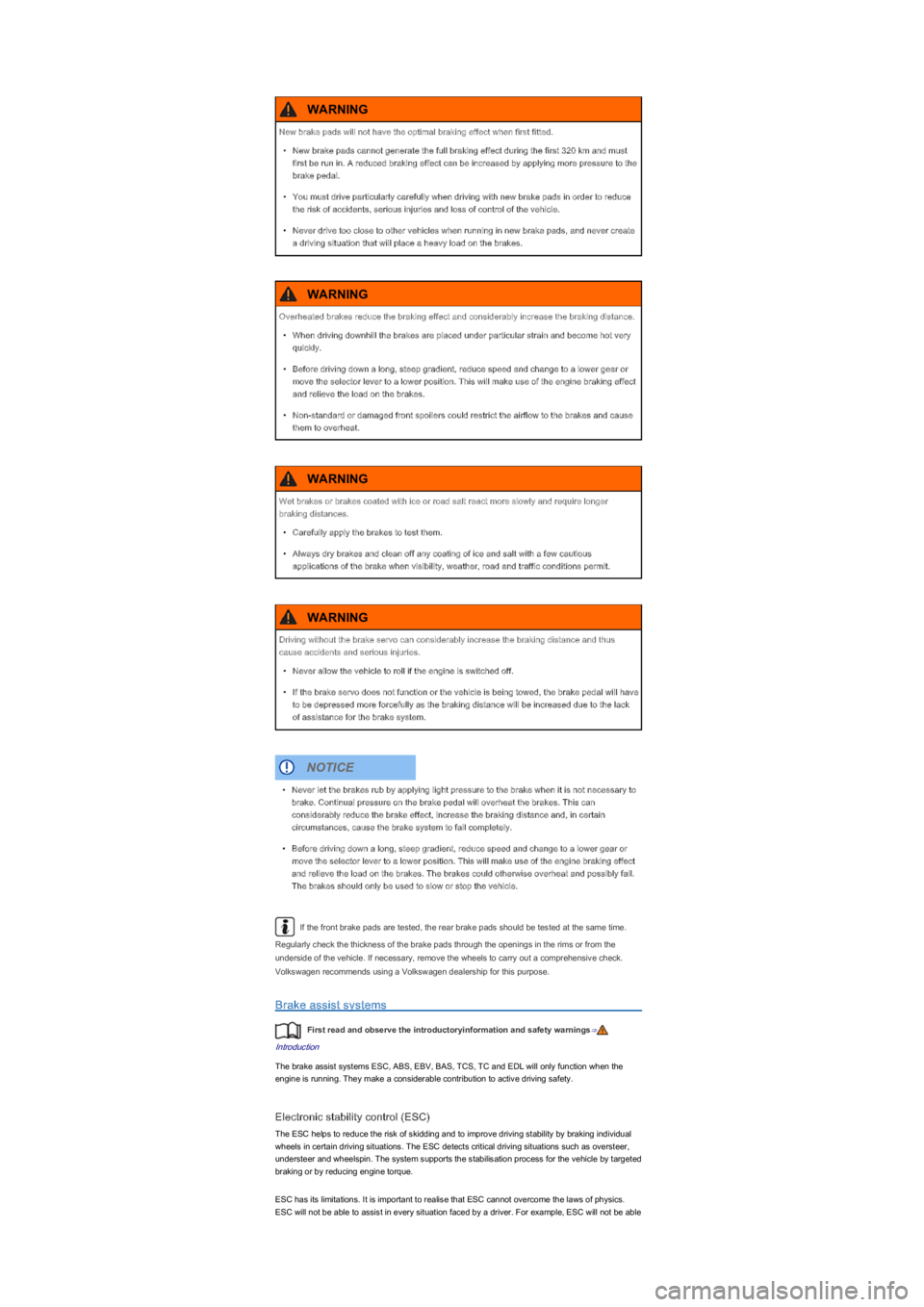
New brake pads will not have the optimal braking effect when first fitted.
•New brake pads cannot generate the full braking effect during the first 320 km and must
first be run in. A reduced braking effect can be increased by applying more pressure to the
brake pedal.
•You must drive particularly carefully when driving with new brake pads in order to reduce
the risk of accidents, serious injuries and loss of control of the vehicle.
•Never drive too close to other vehicles when running in new brake pads, and never create
a driving situation that will place a heavy load on the brakes.
WARNING
Overheated brakes reduce the braking effect and considerably increase the braking distance.
•When driving downhill the brakes are placed under particular strain and become hot very
quickly.
•Before driving down a long, steep gradient, reduce speed and change to a lower gear or
move the selector lever to a lower position. This will make use of the engine braking effect
and relieve the load on the brakes.
•Non-standard or damaged front spoilers could restrict the airflow to the brakes and cause
them to overheat.
WARNING
Wet brakes or brakes coated with ice or road salt react more slowly and require longer
braking distances.
•Carefully apply the brakes to test them.
•Always dry brakes and clean off any coating of ice and salt with a few cautious
applications of the brake when visibility, weather, road and traffic conditions permit.
WARNING
Driving without the brake servo can considerably increase the braking distance and thus
cause accidents and serious injuries.
•Never allow the vehicle to roll if the engine is switched off.
•If the brake servo does not function or the vehicle is being towed, the brake pedal will have
to be depressed more forcefully as the braking distance will be increased due to the lack
of assistance for the brake system.
WARNING
•Never let the brakes rub by applying light pressure to the brake when it is not necessary to
brake. Continual pressure on the brake pedal will overheat the brakes. This can
considerably reduce the brake effect, increase the braking distance and, in certain
circumstances, cause the brake system to fail completely.
•Before driving down a long, steep gradient, reduce speed and change to a lower gear or
move the selector lever to a lower position. This will make use of the engine braking effect
and relieve the load on the brakes. The brakes could otherwise overheat and possibly fail.
The brakes should only be used to slow or stop the vehicle.
NOTICE
Page 108 of 211
Avoid unnecessary loads
The lighter the vehicle, the more economical and environmentally-friendly it is. An extra weight of
100 kg can increase fuel consumption by up to 0.3 l/100 km.
Remove all unnecessary objects and loads from the vehicle.
Remove any unnecessary special equipment and accessories
The more aerodynamic a vehicle, the lower its fuel consumption. Special equipment and
accessories, such as roof carriers or bicycle carriers, make the vehicle less aerodynamic.
You should therefore remove any special equipment and luggage carriers that are not in use,
especially if you are going to be driving at high speeds.
Steering
Introduction
This chapter contains information on the followingsubjects:
⇒ Warning and indicator lamps
⇒ Information on steering
Depending on its equipment level the vehicle may have power steering.
The power steering is not hydraulic. It is an electromechanical system. The advantage of this
steering system is that no hydraulic hoses, hydraulic oil, pumps, filter or other parts are required.
The electromechanical system reduces fuel consumption. A hydraulic system requires constant oil
pressure in the system, whereas an electromechanical steering system only needs an energy
supply while steering.
The power steering provided by the electromechanical steering system automatically adjusts to the
vehicle speed, steering wheel torque and steering wheel angle. The electromechanical steering
only functions when the engine is running.
Additional information and warnings:
•Starting and stopping the engine ⇒ Starting and stopping the engine
•Battery ⇒ Vehicle battery
•Tow-starting and towing ⇒ Tow-starting and towing
Warning and indicator lamps
First read and observe the introductoryinformation and safety warnings⇒
Introduction
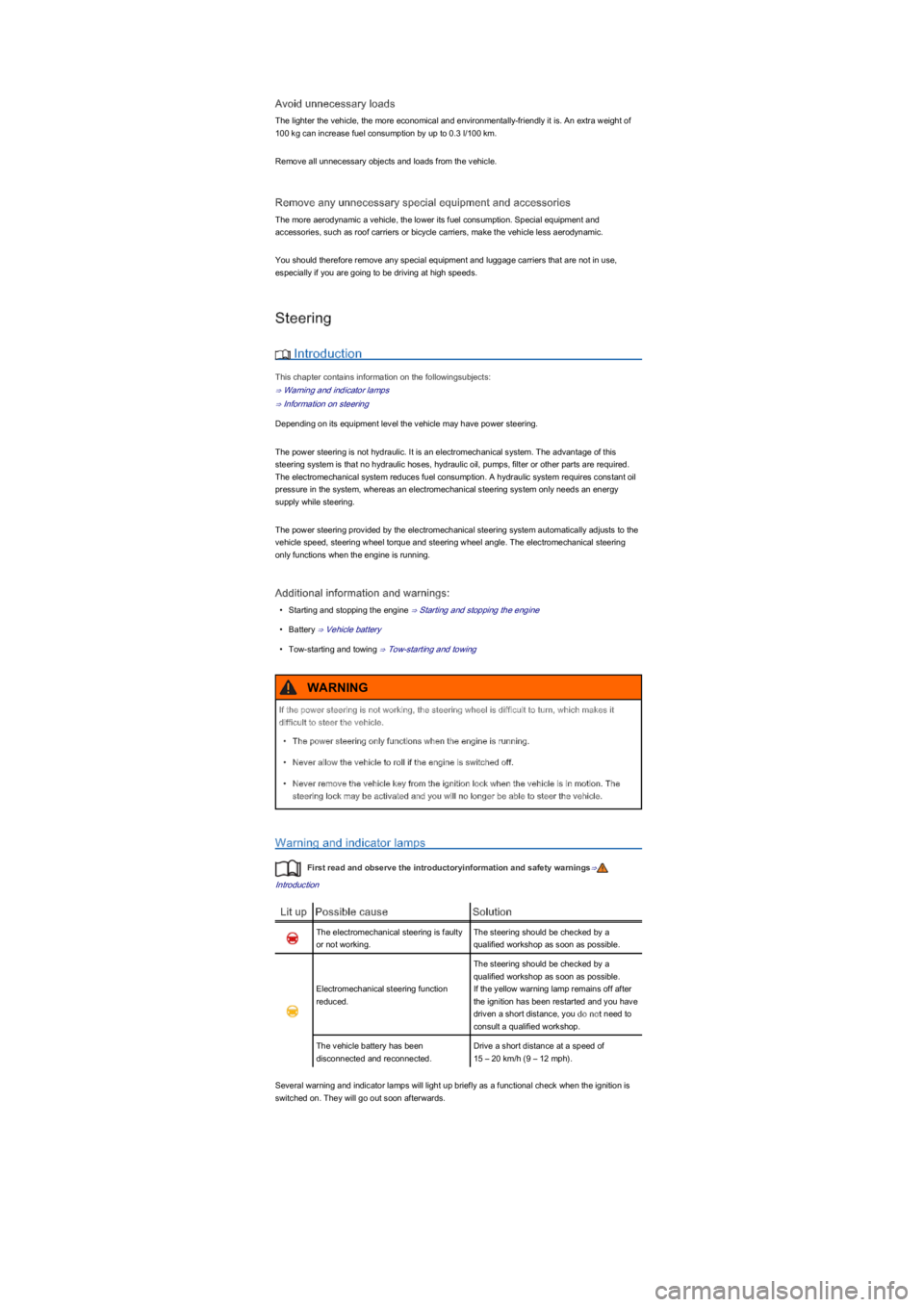
Lit upPossible causeSolution
The electromechanical steering is faulty
or not working.
The steering should be checked by a
qualified workshop as soon as possible.
Electromechanical steering function
reduced.
The steering should be checked by a
qualified workshop as soon as possible.
If the yellow warning lamp remains off after
the ignition has been restarted and you have
driven a short distance, you do not need to
consult a qualified workshop.
The vehicle battery has been
disconnected and reconnected.
Drive a short distance at a speed of
15 – 20 km/h (9 – 12 mph).
Several warning and indicator lamps will light up briefly as a functional check when the ignition is
switched on. They will go out soon afterwards.
If the power steering is not working, the steering wheel is difficult to turn, which makes it
difficult to steer the vehicle.
•The power steering only functions when the engine is running.
•Never allow the vehicle to roll if the engine is switched off.
•Never remove the vehicle key from the ignition lock when the vehicle is in motion. The
steering lock may be activated and you will no longer be able to steer the vehicle.
WARNING
Page 109 of 211
Information on steering
First read and observe the introductoryinformation and safety warnings⇒
Introduction
The steering should be locked every time you leave the vehicle to make it more difficult for the
vehicle to be stolen.
Mechanical steering column lock
The steering column is locked if the vehicle key is removed from the ignition lock when the vehicle
is stationary.
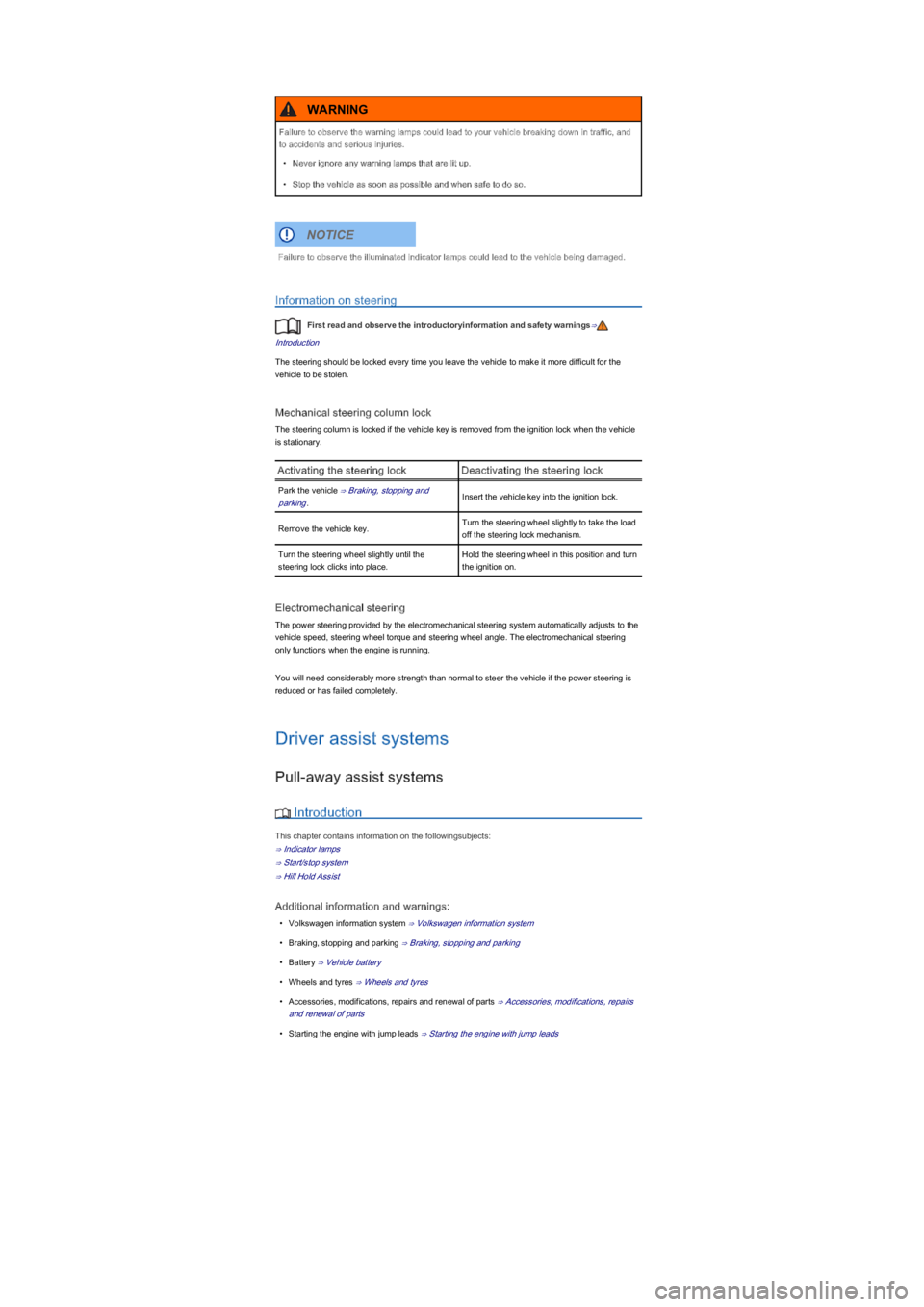
Activating the steering lockDeactivating the steering lock
Park the vehicle ⇒ Braking, stopping and
parking.Insert the vehicle key into the ignition lock.
Remove the vehicle key.Turn the steering wheel slightly to take the load
off the steering lock mechanism.
Turn the steering wheel slightly until the
steering lock clicks into place.
Hold the steering wheel in this position and turn
the ignition on.
Electromechanical steering
The power steering provided by the electromechanical steering system automatically adjusts to the
vehicle speed, steering wheel torque and steering wheel angle. The electromechanical steering
only functions when the engine is running.
You will need considerably more strength than normal to steer the vehicle if the power steering is
reduced or has failed completely.
Driver assist systems
Pull-away assist systems
Introduction
This chapter contains information on the followingsubjects:
⇒ Indicator lamps
⇒ Start/stop system
⇒ Hill Hold Assist
Additional information and warnings:
•Volkswagen information system ⇒ Volkswagen information system
•Braking, stopping and parking ⇒ Braking, stopping and parking
•Battery ⇒ Vehicle battery
•Wheels and tyres ⇒ Wheels and tyres
•Accessories, modifications, repairs and renewal of parts ⇒ Accessories, modifications, repairs
and renewal of parts
•Starting the engine with jump leads ⇒ Starting the engine with jump leads
Failure to observe the warning lamps could lead to your vehicle breaking down in traffic, and
to accidents and serious injuries.
•Never ignore any warning lamps that are lit up.
•Stop the vehicle as soon as possible and when safe to do so.
WARNING
Failure to observe the illuminated indicator lamps could lead to the vehicle being damaged.
NOTICE
Page 160 of 211
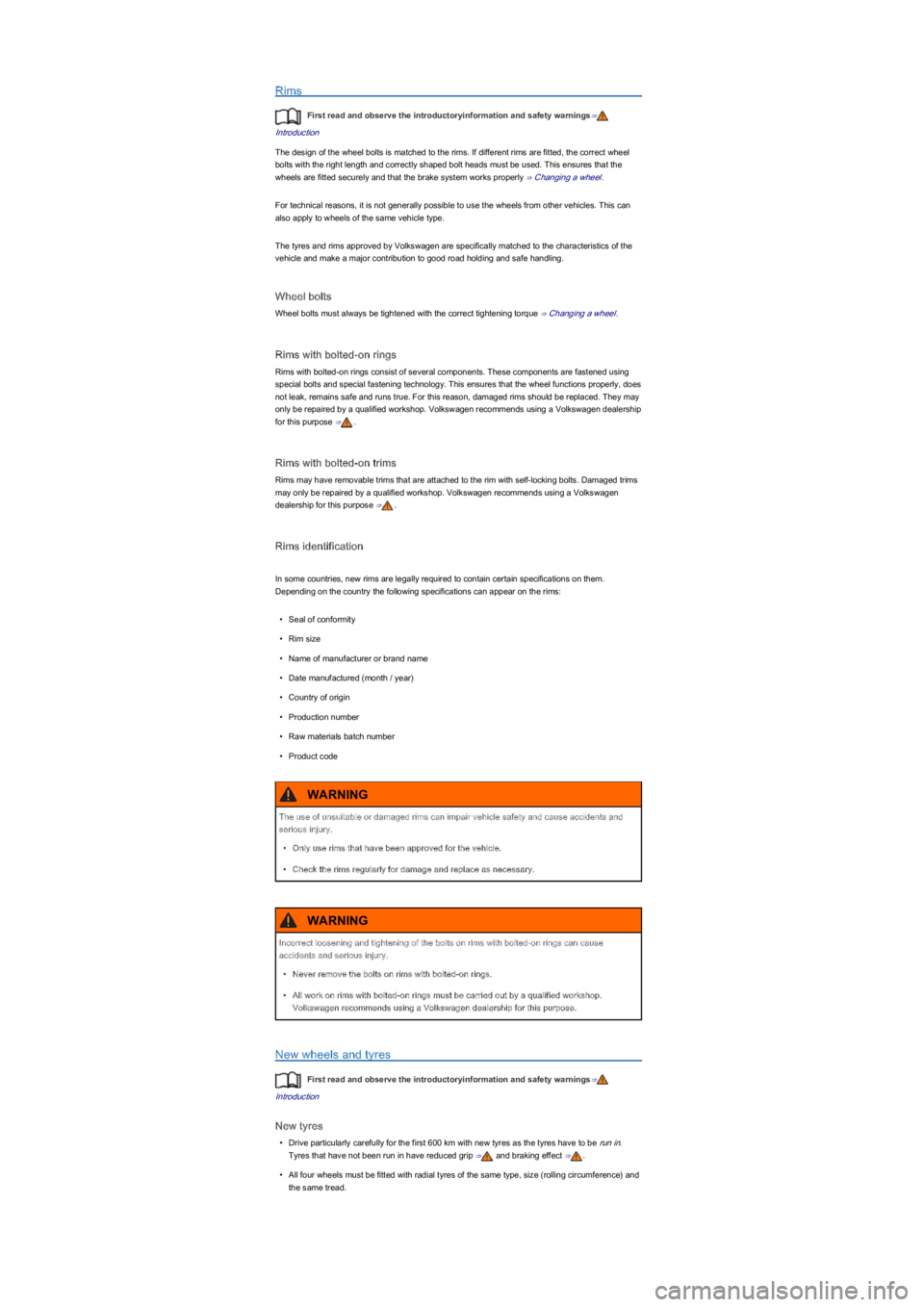
Rims
First read and observe the introductoryinformation and safety warnings⇒
Introduction
The design of the wheel bolts is matched to the rims. If different rims are fitted, the correct wheel
bolts with the right length and correctly shaped bolt heads must be used. This ensures that the
wheels are fitted securely and that the brake system works properly ⇒ Changing a wheel.
For technical reasons, it is not generally possible to use the wheels from other vehicles. This can
also apply to wheels of the same vehicle type.
The tyres and rims approved by Volkswagen are specifically matched to the characteristics of the
vehicle and make a major contribution to good road holding and safe handling.
Wheel bolts
Wheel bolts must always be tightened with the correct tightening torque ⇒ Changing a wheel.
Rims with bolted-on rings
Rims with bolted-on rings consist of several components. These components are fastened using
special bolts and special fastening technology. This ensures that the wheel functions properly, does
not leak, remains safe and runs true. For this reason, damaged rims should be replaced. They may
only be repaired by a qualified workshop. Volkswagen recommends using a Volkswagen dealership
for this purpose ⇒.
Rims with bolted-on trims
Rims may have removable trims that are attached to the rim with self-locking bolts. Damaged trims
may only be repaired by a qualified workshop. Volkswagen recommends using a Volkswagen
dealership for this purpose ⇒.
Rims identification
In some countries, new rims are legally required to contain certain specifications on them.
Depending on the country the following specifications can appear on the rims:
•Seal of conformity
•Rim size
•Name of manufacturer or brand name
•Date manufactured (month / year)
•Country of origin
•Production number
•Raw materials batch number
•Product code
New wheels and tyres
First read and observe the introductoryinformation and safety warnings⇒
Introduction
New tyres
•Drive particularly carefully for the first 600 km with new tyres as the tyres have to be run in.
Tyres that have not been run in have reduced grip ⇒ and braking effect ⇒.
•All four wheels must be fitted with radial tyres of the same type, size (rolling circumference) and
the same tread.
The use of unsuitable or damaged rims can impair vehicle safety and cause accidents and
serious injury.
•Only use rims that have been approved for the vehicle.
•Check the rims regularly for damage and replace as necessary.
WARNING
Incorrect loosening and tightening of the bolts on rims with bolted-on rings can cause
accidents and serious injury.
•Never remove the bolts on rims with bolted-on rings.
•All work on rims with bolted-on rings must be carried out by a qualified workshop.
Volkswagen recommends using a Volkswagen dealership for this purpose.
WARNING
Page 189 of 211
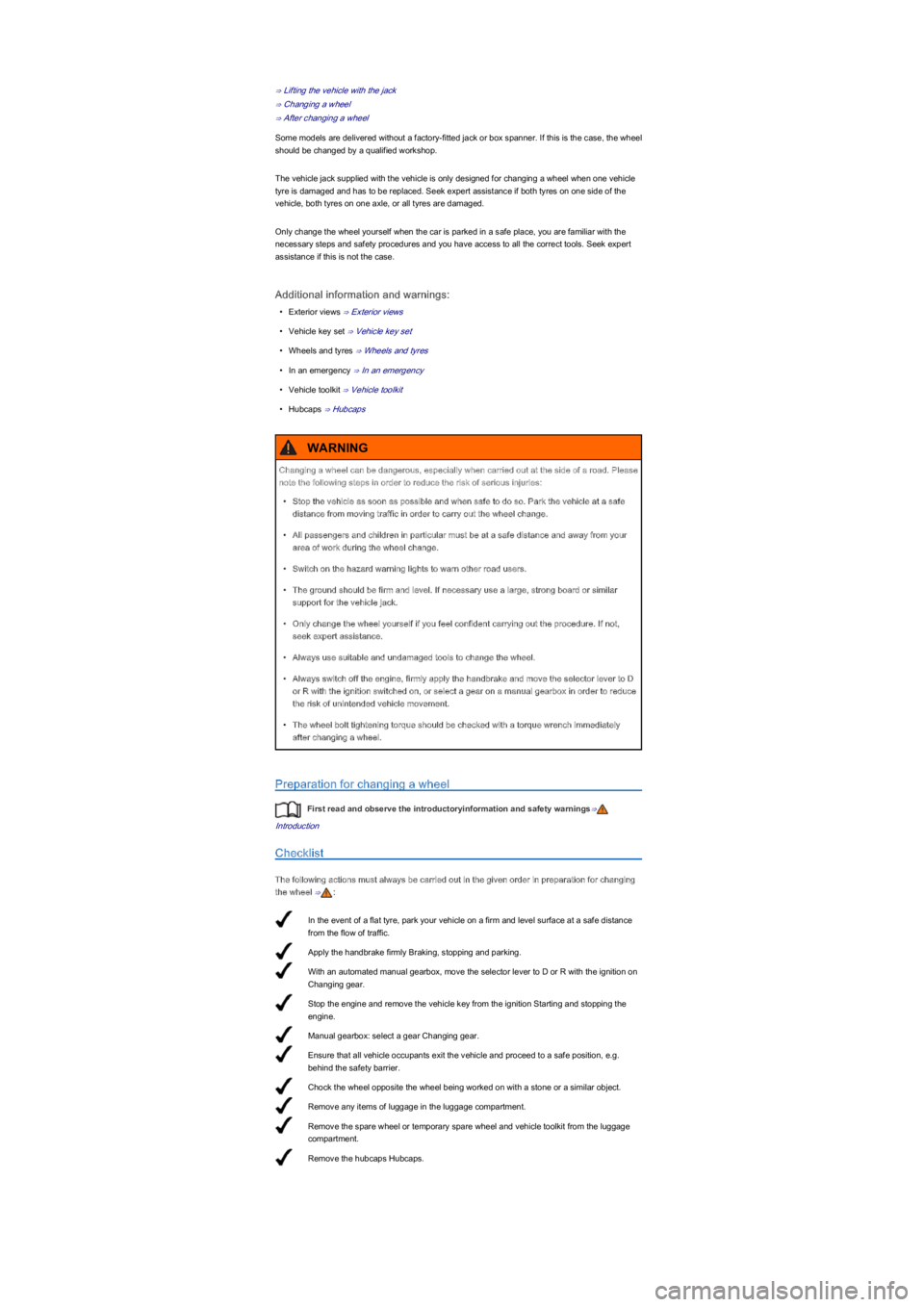
In the event of a flat tyre, park your vehicle on a firm and level surface at a safe distance
from the flow of traffic.
Apply the handbrake firmly Braking, stopping and parking.
With an automated manual gearbox, move the selector lever to D or R with the ignition on
Changing gear.
Stop the engine and remove the vehicle key from the ignition Starting and stopping the
engine.
Manual gearbox: select a gear Changing gear.
Ensure that all vehicle occupants exit the vehicle and proceed to a safe position, e.g.
behind the safety barrier.
Chock the wheel opposite the wheel being worked on with a stone or a similar object.
Remove any items of luggage in the luggage compartment.
Remove the spare wheel or temporary spare wheel and vehicle toolkit from the luggage
compartment.
Remove the hubcaps Hubcaps.
⇒ Lifting the vehicle with the jack
⇒ Changing a wheel
⇒ After changing a wheel
Some models are delivered without a factory-fitted jack or box spanner. If this is the case, the wheel
should be changed by a qualified workshop.
The vehicle jack supplied with the vehicle is only designed for changing a wheel when one vehicle
tyre is damaged and has to be replaced. Seek expert assistance if both tyres on one side of the
vehicle, both tyres on one axle, or all tyres are damaged.
Only change the wheel yourself when the car is parked in a safe place, you are familiar with the
necessary steps and safety procedures and you have access to all the correct tools. Seek expert
assistance if this is not the case.
Additional information and warnings:
•Exterior views ⇒ Exterior views
•Vehicle key set ⇒ Vehicle key set
•Wheels and tyres ⇒ Wheels and tyres
•In an emergency ⇒ In an emergency
•Vehicle toolkit ⇒ Vehicle toolkit
•Hubcaps ⇒ Hubcaps
Preparation for changing a wheel
First read and observe the introductoryinformation and safety warnings⇒
Introduction
Checklist
The following actions must always be carried out in the given order in preparation for changing
the wheel ⇒:
Changing a wheel can be dangerous, especially when carried out at the side of a road. Please
note the following steps in order to reduce the risk of serious injuries:
•Stop the vehicle as soon as possible and when safe to do so. Park the vehicle at a safe
distance from moving traffic in order to carry out the wheel change.
•All passengers and children in particular must be at a safe distance and away from your
area of work during the wheel change.
•Switch on the hazard warning lights to warn other road users.
•The ground should be firm and level. If necessary use a large, strong board or similar
support for the vehicle jack.
•Only change the wheel yourself if you feel confident carrying out the procedure. If not,
seek expert assistance.
•Always use suitable and undamaged tools to change the wheel.
•Always switch off the engine, firmly apply the handbrake and move the selector lever to D
or R with the ignition switched on, or select a gear on a manual gearbox in order to reduce
the risk of unintended vehicle movement.
•The wheel bolt tightening torque should be checked with a torque wrench immediately
after changing a wheel.
WARNING
Page 190 of 211
Wheel bolts
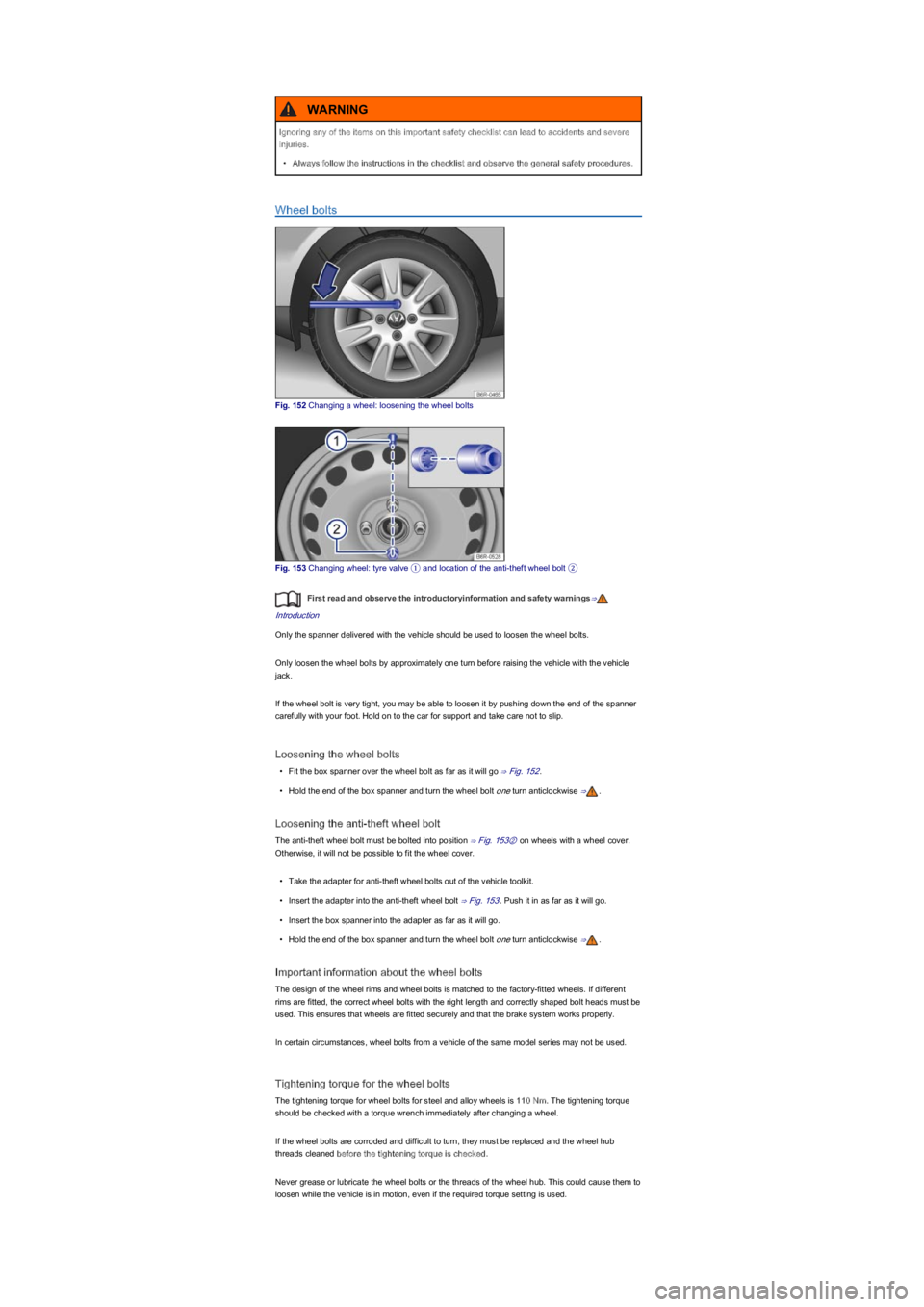
Fig. 152 Changing a wheel: loosening the wheel bolts
Fig. 153 Changing wheel: tyre valve ① and location of the anti-theft wheel bolt ②
First read and observe the introductoryinformation and safety warnings⇒
Introduction
Only the spanner delivered with the vehicle should be used to loosen the wheel bolts.
Only loosen the wheel bolts by approximately one turn before raising the vehicle with the vehicle
jack.
If the wheel bolt is very tight, you may be able to loosen it by pushing down the end of the spanner
carefully with your foot. Hold on to the car for support and take care not to slip.
Loosening the wheel bolts
•Fit the box spanner over the wheel bolt as far as it will go ⇒ Fig. 152.
•Hold the end of the box spanner and turn the wheel bolt one turn anticlockwise ⇒.
Loosening the anti-theft wheel bolt
The anti-theft wheel bolt must be bolted into position ⇒ Fig. 153② on wheels with a wheel cover.
Otherwise, it will not be possible to fit the wheel cover.
•Take the adapter for anti-theft wheel bolts out of the vehicle toolkit.
•Insert the adapter into the anti-theft wheel bolt ⇒ Fig. 153. Push it in as far as it will go.
•Insert the box spanner into the adapter as far as it will go.
•Hold the end of the box spanner and turn the wheel bolt one turn anticlockwise ⇒.
Important information about the wheel bolts
The design of the wheel rims and wheel bolts is matched to the factory-fitted wheels. If different
rims are fitted, the correct wheel bolts with the right length and correctly shaped bolt heads must be
used. This ensures that wheels are fitted securely and that the brake system works properly.
In certain circumstances, wheel bolts from a vehicle of the same model series may not be used.
Tightening torque for the wheel bolts
The tightening torque for wheel bolts for steel and alloy wheels is 110 Nm. The tightening torque
should be checked with a torque wrench immediately after changing a wheel.
If the wheel bolts are corroded and difficult to turn, they must be replaced and the wheel hub
threads cleaned before the tightening torque is checked.
Never grease or lubricate the wheel bolts or the threads of the wheel hub. This could cause them to
loosen while the vehicle is in motion, even if the required torque setting is used.
Ignoring any of the items on this important safety checklist can lead to accidents and severe
injuries.
•Always follow the instructions in the checklist and observe the general safety procedures.
WARNING
Page 191 of 211
Find a firm and level surface suitable for lifting the vehicle.
Stop the engine, select a gear on a manual gearbox or with an automated manual
gearbox, move the selector lever to D or R with the ignition switched onChanging gear
then apply the handbrake firmly Braking, stopping and parking.
Chock the wheel diagonally opposite using the collapsible chocks or other suitable objects.
Loosen the wheel bolts on the wheel that is being changed Wheel bolts.
Find the jacking point under the vehicle which is closest to the wheel that is being
changed.
Raise the vehicle jack until it just fits under the jacking point of the vehicle.
Ensure that the foot of the jack is resting securely on the ground with its whole surface and
that the foot of the jack is positioned precisely, i.e. vertically beneath the point of
application .
Position the vehicle jack. At the same time, continue to crank the claw up until it is in
position around the vertical rib underneath the vehicle .
Lifting the vehicle with the jack
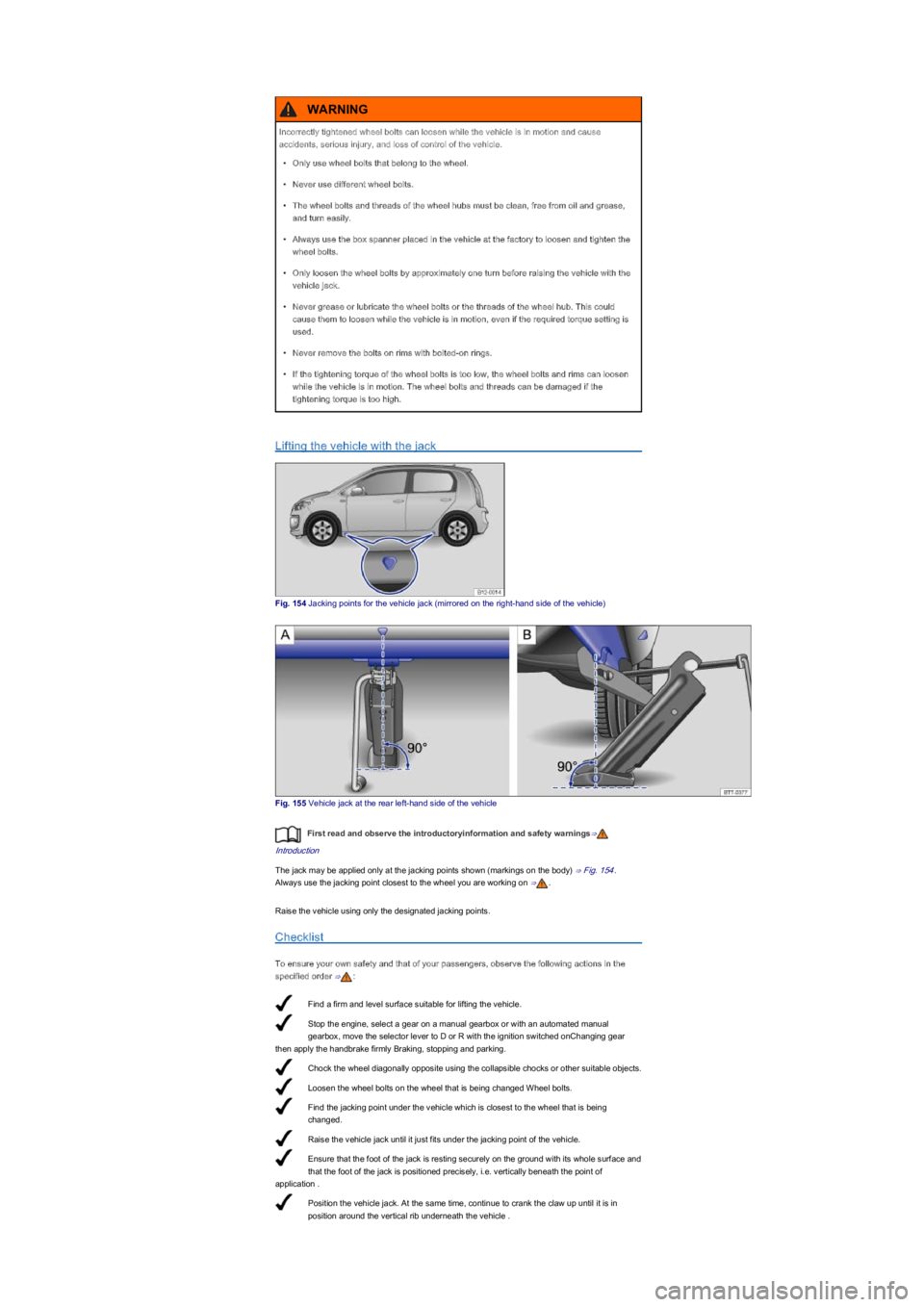
Fig. 154 Jacking points for the vehicle jack (mirrored on the right-hand side of the vehicle)
Fig. 155 Vehicle jack at the rear left-hand side of the vehicle
First read and observe the introductoryinformation and safety warnings⇒
Introduction
The jack may be applied only at the jacking points shown (markings on the body) ⇒ Fig. 154.
Always use the jacking point closest to the wheel you are working on ⇒.
Raise the vehicle using only the designated jacking points.
Checklist
To ensure your own safety and that of your passengers, observe the following actions in the
specified order ⇒:
Incorrectly tightened wheel bolts can loosen while the vehicle is in motion and cause
accidents, serious injury, and loss of control of the vehicle.
•Only use wheel bolts that belong to the wheel.
•Never use different wheel bolts.
•The wheel bolts and threads of the wheel hubs must be clean, free from oil and grease,
and turn easily.
•Always use the box spanner placed in the vehicle at the factory to loosen and tighten the
wheel bolts.
•Only loosen the wheel bolts by approximately one turn before raising the vehicle with the
vehicle jack.
•Never grease or lubricate the wheel bolts or the threads of the wheel hub. This could
cause them to loosen while the vehicle is in motion, even if the required torque setting is
used.
•Never remove the bolts on rims with bolted-on rings.
•If the tightening torque of the wheel bolts is too low, the wheel bolts and rims can loosen
while the vehicle is in motion. The wheel bolts and threads can be damaged if the
tightening torque is too high.
WARNING
Page 193 of 211
After changing a wheel
First read and observe the introductoryinformation and safety warnings⇒
Introduction
•Clean the tools as necessary and place them back in the foam rubber holder in the luggage
compartment ⇒ Vehicle toolkit.
•Stow the spare wheel, temporary spare wheel or the removed wheel safely in the luggage
compartment.
•The tightening torque of the wheel bolts should be checked immediately with a torque wrench
⇒ Tightening torque for the wheel bolts.
•The damaged wheel should be replaced as soon as possible.
Breakdown set
Introduction
This chapter contains information on the followingsubjects:
⇒ Contents of the breakdown set
⇒ Preparation
⇒ Sealing and inflating tyres
⇒ Test after driving for 10 minutes
You can use the breakdown set (tyre mobility set) to safely seal any tyre damage caused by foreign
bodies or punctures (up to 4 mm in diameter). Do not remove foreign objects (e.g. screws or
nails) from the tyre!
Once the sealant has been added to the tyre, the tyre pressure must be checked again after
approximately 10 minutes of driving.
Seek expert assistance if more than one vehicle tyre is damaged. The breakdown set is only
designed for filling one tyre.
Only use the breakdown set if the car is parked in a safe place, you are familiar with the required
actions and safety procedures, and you have access to the correct breakdown set. Seek expert
assistance if this is not the case.
The tyre sealant must not be used:
•If the rim is damaged.
•If the outside temperature is below -20°C (-4°F).
•If there are cuts or punctures in the tyre that are larger than 4 mm.
•If the tyre pressure is very low or the tyres are flat.
•If the use-by date on the tyre filler bottle has expired.
•If a foreign object has been removed from the tyre.
Additional information and warnings:
•Vehicle key set ⇒ Vehicle key set
•Braking, stopping and parking ⇒ Braking, stopping and parking
•Wheels and tyres ⇒ Wheels and tyres
•In an emergency ⇒ In an emergency
•Hubcaps ⇒ Hubcaps
Incorrect torque or incorrect use of wheel bolts can lead to a loss of control of the vehicle,
cause accidents and serious injuries.
•Always keep all wheel bolts and threads in the wheel hubs clean and free from oil and
grease. The wheel bolts must be easy to turn and be tightened to the specified torque.
•The hexagonal socket in the screwdriver handle should only be used for turning wheel
bolts, not use for loosening or tightening them.
WARNING
Page 210 of 211
•You will need to depress the brake pedal more vigorously than normal as the brake servo is not
working. Do not drive too close to the towing vehicle.
•Read and comply with the information and notes in the owner's manual of the towing vehicle.
Notes for the driver of the towing vehicle
•Accelerate carefully and gently. Avoid any sudden driving manoeuvres.
•Brake earlier than normal by pressing lightly on the brake pedal.
•Read and comply with any information and notes in the owner's manual of the towed vehicle.
AbbreviationDefinition
rpmRevolutions per minute – engine speed.
ABSAnti-lock brake system.
AG55-speed automated manual gearbox.
TCSTraction control system.
BASBrake Assist system.
ccmCubic centimetres. Unit of displacement.
CNGCompressed Natural Gas.
COCarbon dioxide.
DINGerman Standards Authority (Deutsches Institut für Normung).
DRLDaytime running lights.
EBDElectronic brake pressure distribution system.
EDLElectronic differential lock.
EUEuropean Union.
ENEuropean standard.
EPCEngine management system (electronic power control).
ESCElectronic stabilisation programme.
EECEuropean Economic Community.
VINVehicle identification number
g/kmCarbon dioxide emissions in grams per kilometre.
CCSCruise control system.
kNKilonewton, pulling power.
kpKilopond, pulling power.
kPaKilopascal, value for tyre inflation pressure.
kWKilowatt, engine power.
LEDLight-emitting diode.
MFDMultifunction display.
ECEngine code.
NmNewton metres, unit of engine torque.
RONResearch octane number, indication of the knock resistance of petrol.
MG55-speed manual gearbox.
TCTraction control.
TINT Tyre identification number (TIN).
tripTrip recorder.
TWITread wear indicator.
Volkswagen AG works continuously to develop and improve its vehicles. Please understand that we
must therefore reserve the right to alter any part of the vehicle and its equipment or technical
specifications at any time. The data provided concerning scope of delivery, appearance,
performance, dimensions, weights, fuel consumption, standards and vehicle functions are all
correct at the time of going to print. Some of the equipment described might not yet be available in
a particular vehicle (information can be provided by your local Volkswagen dealership), and some
equipment may not be available in certain countries. No legal commitment may be inferred from the
information, illustrations or descriptions in this manual.
No part of this manual may be reprinted, reproduced or translated without the written permission of
Volkswagen AG.
All rights under the laws of copyright are expressly reserved by Volkswagen AG. Subject to
alteration and amendment.
Printed in Germany.
© Volkswagen AG 2012
This paper was bleached without the use of chlorine.
Abbreviations
2