oil AUDI A3 2015 User Guide
[x] Cancel search | Manufacturer: AUDI, Model Year: 2015, Model line: A3, Model: AUDI A3 2015Pages: 288, PDF Size: 71.46 MB
Page 76 of 288
74 Driving
(D Tips
-After starting a cold engine, there may
be a brief period of increased noise be
cause the oil pressure must first build up in the hydraulic valve adjusters. This is
normal and not a cause for concern.
- If the . indicator light blinks in the in
strument cluster before switching the ig
nition off, the ignition will not switch on
again
Qpage 189.
-If you leave your vehicle with the ignition
switched on, the ignition will switch off
after a certain amount of time. Make
sure that electrical equipment such as
the exterior lights are switched off.
Turning th n ine off using the
button
Applies to vehicles: with conven ience key
.. Bring the vehicle to a fu ll stop.
.. Automatic transmission: Move the selector
lever into the P position.
.. Press the !START ENGINE STOPI button
Q page 73, fig. 66.
If the engine does not stop, proceed as fol
lows
q page 75, Starting the engine if there
is a malfunction .
Steering wheel lock1
)
The steering locks when you turn the engine
off using the
I START ENGINE STOP !* button,
move the selector lever into the P position
(automatic transmission*) and open the driv
er's door.
The locked steering helps prevent vehicle
theft.
Emergency off function
If it is necessary in unusua l circumstances, the
engine can be switched off while the vehicle is
moving at speeds less than 6 mph (10 km/h).
If you press the
I START ENGINE STOP I* but
ton while driving, the message
Pressing
start/stop button again will switch off en-
l) This function is not availa ble in all coun tries.
gine! appears . To switch the engine off, press
the
I START ENGINE STOP !* button twice in a
row briefly or press and hold for longer than
two seconds.
A WARNING
- Never turn off the engine before the ve
hicle has come to a complete stop . The
full function of the brake booster and the
power steering is not guaranteed . You
must use more force to turn or brake, if
necessary. Because you cannot steer and
b rake as you usually would, this could
lead to accidents and serious injuries.
- The brake booster and power steering
only work when the engine is running . If
the engine is off, you have to use more
force when steering or braking. Because
you cannot steer and brake as you usual
ly would, this could lead to crashes and
serious injuries .
- Always take the vehicle key with you
when leaving the vehicle, even for a
short period of time . This applies partic
ularly when children remain in the vehi
cle. Otherwise the children could start
the engine or operate electrical equip
ment such as power windows.
- For safety reasons, you should always
park your vehicle with the selector lever
in P. Otherwise, the vehicle could inad
vertently roll away.
-After the eng ine has been switched off,
the radiator fan can continue to run for
up to 10 minutes -even with the ignition
switched off. It can also switch on again
after some time if the coolant tempera
ture rises as the result of a heat buildup or if the engine is hot and the engine
compartment is additionally heated by
the sun's rays.
0 Note
If the engine has been under heavy load
for an extended period of time, heat builds up in the engine compartment after the ..,_
Page 191 of 288
for a test. Brakes will dry and ice coatings will be cleaned off after a few
careful brake applications.
- Driving for an extended period of time on
salt-covered roads without using your
brakes can also affect braking efficiency.
Clean off accumulated salt coating from
brake discs and pads with a few careful
brake applications.
- If you damage the front spoiler, or if you
install a different spoiler, be sure the air
flow to the front brakes is not obstruct
ed. Otherwise the brake system could
overheat reducing the effectiveness of
the entire brake system.
- Failure of one brake circuit will impair
the braking capability resulting in an in
creased stopping distance. Avoid driving
the vehicle and have it towed to the near
est Audi dealer or qualified workshop.
- Never let the vehicle roll to a stop with
the engine shut off.
- If the brake booster is not working, the
brake pedal must be pressed considera
bly harder to make up for the lack of
booster assistance.
(D Note
- Never let the brakes "rub" by pressing
the pedal lightly when braking is not really necessary. This causes the brakes
to overheat and increases braking dis
tance and causes wear.
- Before driving on a long stretch with
steep slopes, reduce your speed and shift
to the next lower gear This makes use of
the engine braking effect and relieves
the brakes. If you need to brake addition
ally, brake in intervals and not continu
ously.
(D Tips
- If the brake booster is not working, you
must press the brake pedal with much
more force then normal.
- If you retrofit your vehicle with a front
spoiler, wheel covers or similar items,
Smart Technology 189
make sure that the air flow to the front
wheels is not interrupted. Otherwise the
brake system can become too hot.
Electromechanical
steering
The electromechanical steering supports the
driver's steering movements.
Power steering adapts electronically based on
the vehicle speed.
The vehicle still has full steering functionality if the power steering fails or when the engine
is stopped (towing) . To steer, you must apply
much more force than usual.
Indicator lights and messages
• Do not drive vehicle: steering defective
If this indicator light turns on and stays on
and this message appears, the power steering
may have failed.
Do
not continue driving . See your authorized
Audi dealer or qualified repair facility.
• Do not drive vehicle: steering defective
There is an electronic steering column lock
malfunction . You cannot turn the ignition on.
Do
not tow your vehicle because it cannot be
steered. See your authorized Audi dealer or qualified repair facility.
c~ij Steering malfunction: you can continue
driving
If the indicator light turns on, the steering
wheel may be more difficult to move or more
sensitive than usual. The steering wheel may
also be at an angle when driving straight.
Drive slowly to your authorized Audi dealer or
qualified workshop to have the malfunction
corrected.
Ill Steering lock: system fault! Please con
tact Service
There is an electronic steering column lock
malfunction.
•
•
•
Page 196 of 288
194 Driving and the environment
Driving through water
on roads
Note the following to avoid vehicle damage
when driving through water, for example on
flooded roads:
- The water must not be any higher than the
bottom of the vehicle body.
- Do not drive faster than wa lking speed.
A WARNING
After driving through water or mud, the
braking effect can be reduced due to mois
ture on the brake discs and brake pads. A
few careful brake applications should dry off the brakes.
@) Note
Vehicle components such as the engine, transmiss ion, suspension or electrical sys
tem can be severely damaged by driving
through water.
- Determ ine the depth before driving
through water.
- Do not stop the vehicle, drive in reverse
or switch the engine off when driving
through water .
- Keep in mind that oncoming vehicles may create waves that raise the water
level and make it too deep for your vehi
cle to drive through safely.
- Avoid dr iving through salt water (corro
s ion).
Catalytic converter
App lies to vehicles: with gasoline engine
It is very important that your emission con
trol system (catalytic converter) is function
ing properly to ensure that your vehicle is run
ning in an environmentally sound manner.
> Always use lead-free gaso line¢ page 206,
Fuel supply .
> Never run the tank down all the way to emp-
ty.
> Never put too much motor o il in your engine
¢ page 215, Adding engine oil
The catalytic converter is an efficient "clean
up" device built into the exhaust system of
the vehicle . The cata lytic converter burns
many of the pollutants in the exhaust gas be
fore they are released into the atmosphere.
The exclusive use of unleaded fuel is critica lly
important for the life of the catalytic convert
er and proper functioning of the engine.
A WARNING
-
The temperature of the exhaust system is high, both when driv ing and after stopping
the eng ine .
- Never touch the exhaust tail pipes once
they have become hot . This could result
in burns.
- Do not park or operate the vehicle in
areas where the hot exhaust system may
come in contact with dry grass, brush,
fue l spill or other material wh ich can
cause a fire.
- Do not app ly additional undercoating or
rustproofing on or near the exhaust manifold, exhaust pipes, catalytic con
verter or heat shields . Dur ing driving, the
substance used for undercoating could
overheat and cause a fire.
(D Note
- Be aware that just one tank filling with
leaded fuel will already seriously de
grade the performance of the catalytic
converter.
- Do not exceed the correct engine oil level
¢page 215.
-Do not drive until the fuel tank becomes
completely empty. The engine could mis
fire . Unburned fuel could also get into
the exhaust system and this cou ld cause
the catalytic converter to overheat.
- Do not switch off the ignition while the
vehicle is moving.
- Do not continue to operate your vehicle
under these conditions, as otherwise fuel
IIJ,,
Page 198 of 288
196 Driving and the environment
than the posted speed limit and weather con
ditions permit.
Reducing unnecessary idling
Even wh en your car is just idling it burns up
fuel.
,.. Shu t the engine off when you a re not dr iv ing
the vehi cle.
... Do not warm up the vehicle by letting the
engine run at idle.
It is efficien t to switch off the engine when
stopped at railroad crossings and long red
lights. Turning the engine
off for j ust 30-40
seconds saves mo re f uel than is burned by
start ing the engine again.
It takes a long time fo r the engine to wa rm up
fu lly when it is running at idle. However , wear
and noxious emissions are especially high
when the engine is warming up. So you should
drive away as soon as you start the engine and
avoid ru nning at h igh rpms while the engine is
still warming up.
{[) Note
Do not leave engine idling unattended af
ter starting. If warning lights s hould come
on to indicate improper operation, they
wou ld go unheeded . E xtended idling also
produces heat, which cou ld resu lt in over
heat ing or o ther da mage to the vehicle or
o ther prope rty.
Regular maintenance
A badly tuned engine unnecessarily wastes a
lot of fuel .
... Have your vehicle serv iced at regular inter-
vals.
H aving your vehicle regular ly serviced by an
author ized Audi dealer helps to ensure that it
runs properly and economically . T he condition
of yo ur vehicle not only affects its safety and
ab ility to hold its value, it also affec ts
fuel
con sumption. Check
your oil each t ime you fill your tank.
T he amou nt of oi l used is re lated to engine
lo ad a nd speed.
It is normal fo r the oil consumption of a new
engine to reach its lowest valu e after a c erta in
mileage has bee n driven.
You must drive your veh icle about 3,000 m iles
(5,000 kilometers) before you can properly
assess oil consumpt io n.
This also app lies to fue l consumption and en
gine output .
(0 Note
- Have your veh icle ma inta ined properly
and in accordance with the service rec
ommendations in your Wa rranty
& Ma in
tenance boo klet . Lack of proper ma inte
nance as well as improp er use of the ve
hicle will impair the fu nction of the
em iss io n con trol system and cou ld lead
t o dam age.
- Do not alte r or remove any component of
t he Emis sio n Control Sys tem unless ap
proved by the manufacturer .
- Do not alter or remove any device, such
as hea t sh ie lds, swi tches, ig nitio n w ires,
valves, which are designed to p rotec t
your vehicle's Emission Control System
and other impo rtant vehicle compo
nents.
' Fewer short trips
Fuel consumption will always be relatively
high on short trips.
... Try to avoid dr iv ing sho rt distances w it h a
cold engine .
T he eng ine and cat alytic conver ter h ave to
re ach their opt imal
operating t emperature to
reduce fuel consumpt io n and nox ious em is
sions effectively.
Jus t aft er s tarti ng, a c old eng ine in a mid-s ize
ca r on ly achieves a fuel economy of 6-8 m iles
per gallon (30 -40 l/100 km) . After about a
half a mile , fu el economy climbs to 12 mpg .,..
Page 206 of 288
204 Caring and cle aning
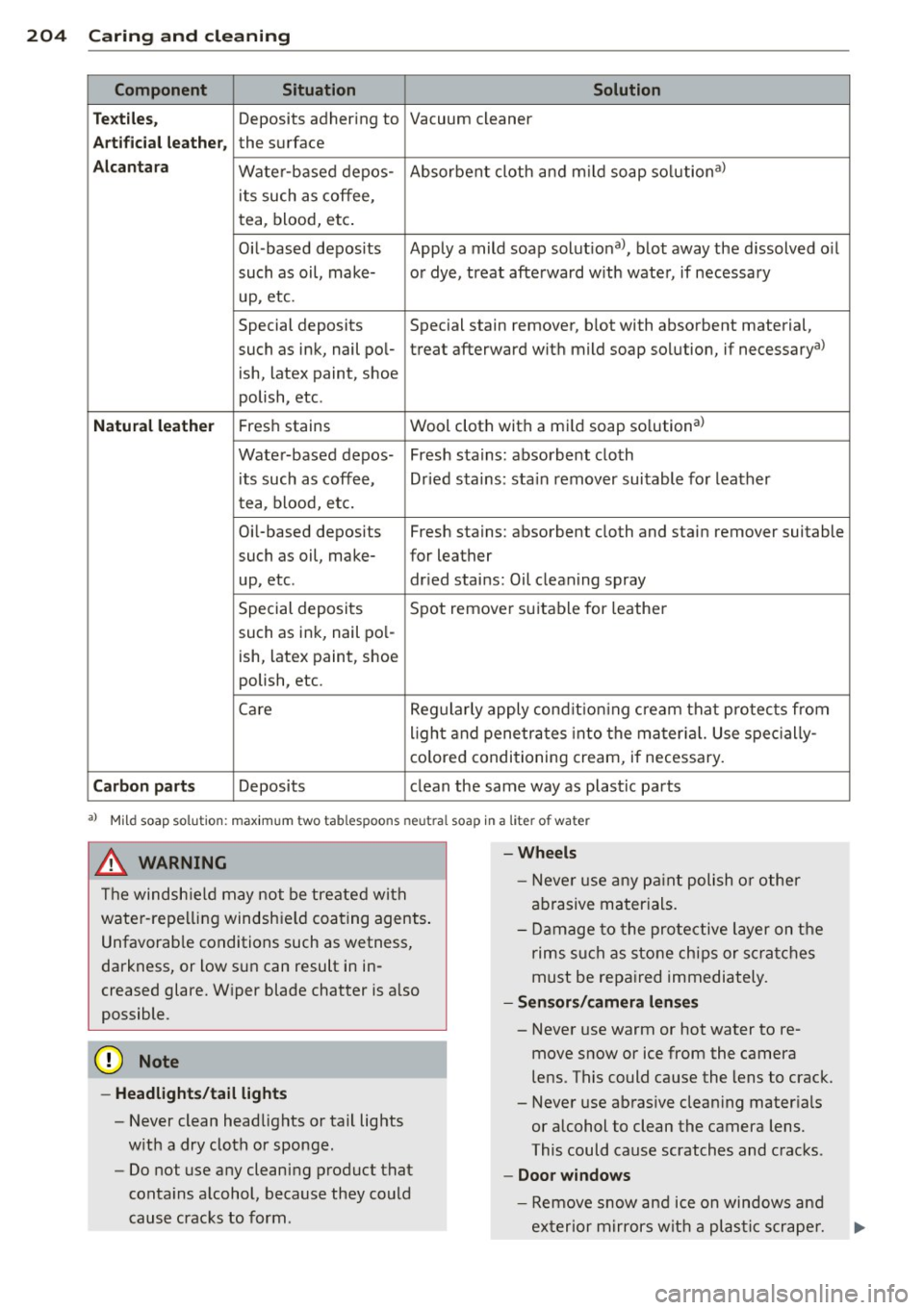
Component Situ ation Solution
Tex tile s,
Deposits adhering to Vacuum cleaner
Art ifi cial leat her, the surface
Alcan ta ra Water-based depos- Absorbent cloth and m
ild soap so lution a>
its such as coffee,
tea, blood, etc.
Oil-based deposits Apply
a mild soap solutiona >, blot away the dissolved o il
such as oil, make- o r dye, treat afterward w ith water, if necessary
up, etc.
Special deposits Special stain remover, blot with absorbent material,
such as ink, nail pol-treat afterward with mild soap so lution, if necessarya>
ish, latex paint, shoe
polish, etc.
Natura l leathe r Fresh stains Wool
cloth with a mild soap so lution a>
Water-based depos- Fresh stains: absorbent cloth its such as coffee, Dr ied stains: stain remover suitable for leather
tea, blood, etc.
Oi l-based deposits Fresh stains: absorbent cloth and stain remover suitable
such as oil, make- for leather
up, etc . dried stains: Oil clean ing spray
Special deposits Spot remover suitable for leathe r
such as ink, nail pol-
ish, latex paint, shoe
polish, etc.
Care Regularly apply condit ion ing cream that protects from
light and penetrates into the mater ial. Use spec ially-
co lored! conditioning cream, if necessary.
Carb on p art s Deposits clean th e same way as plastic parts
a) Mild soap solution: maximu m two tablespoons neutral soap in a liter of water
_& WARNING
The windsh ie ld may not be treated with
water-repelling windshield coating agents .
Unfavorab le conditions such as wetness,
darkness, or low sun can result in in
creased glare. Wiper blade chatter is also
possible.
([) Note
-Headlight s/tail li ght s
-Never clean headlights or tail lights
w ith a dry cloth or sponge.
- Do not use any cleaning product that
conta ins alcohol, because they could
cause cracks to form.
-
- Whee ls
- Never use any pa int polish or other
abrasive materials.
- Damage to the protective layer on the
rims s uch as stone chips or scratches
must be repaired immediately.
- Sen sors/ cam era len ses
-Never use warm or hot water to re-
move snow or ice from the camera
lens. This could cause the lens to crack.
- Never use abrasive cleaning mater ials
or alcohol to clean the camera lens.
This could cause scratches and cracks.
-Door windo ws
-Remove snow and ice on windows and
exter ior mirrors with a plastic scrape r.
Page 213 of 288
,&_ WARNING
California Proposition 65 Warning:
- Engine exhaust, some of its constituents,
and certain vehicle components contain
or emit chemicals known to the State of
California to cause cancer and birth de
fects and reproductive harm. In addition, certain fluids contained in vehicles and
certain products of component wear con
tain or emit chemicals known to the
State of California to cause cancer and birth defects or other reproductive harm .
- Battery posts, terminals and related ac
cessories contain lead and lead com
pounds, chemicals known to the State of
California to cause cancer and reproduc
tive harms. Wash hands after handling.
(D Note
When filling fluids, be sure not to mix the
fluids up. Otherwise severe malfunctions and engine damage will occur.
@) For the sake of the environment
You should regularly check the ground un der your vehicle in order to detect leaks
quickly .
If there are visible spots from oil
or other fluids, bring your vehicle to an au
thorized Audi dealer or qualified repair fa
cility to be checked.
Opening the hood
The hood is released from the interior.
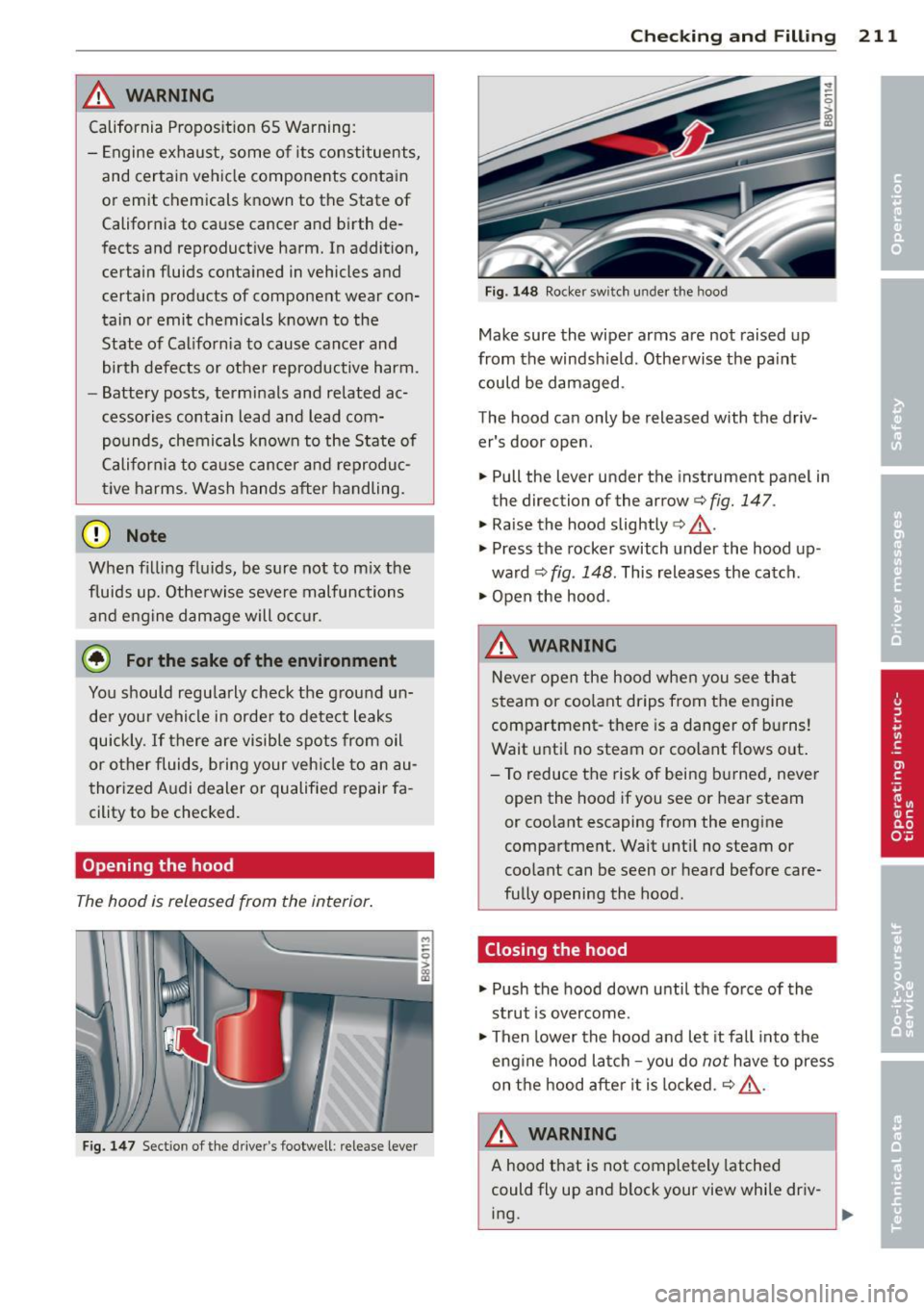
Fig. 147 Sect ion of the driver's footwell: release lever
Checking and Filling 211
Fig. 148 Rocke r switch un der t he hood
Make sure the wiper arms are not raised up
from the windshield. Otherwise the paint
could be damaged .
The hood can only be released with the driv
er's door open .
.,. Pull the lever under the instrument panel in
the direction of the arrow¢
fig. 147 .
.,. Raise the hood slightly¢,&. .
.,. Press the rocker switch under the hood up
ward
c:> fig. 148. This releases the catch.
.,. Open the hood .
.&, WARNING
Never open the hood when you see that
steam or coolant drips from the engine
compartment- there is a danger of burns!
Wait until no steam or coolant flows out.
- To reduce the risk of being burned, never open the hood if you see or hear steam
or coolant escaping from the engine
compartment. Wait until no steam or
coolant can be seen or heard before care
fully opening the hood .
Closing the hood
.,. Push the hood down until the force of the
strut is overcome . -
.,. Then lower the hood and let it fall into the
engine hood latch -you do
not have to press
on the hood after it is locked. ¢ ,&. .
.&, WARNING -
A hood that is not completely latched
could fly up and block your view while driv ing.
Page 214 of 288
212 Checking and Filling
- When you close the engine hood, check it
to make sure the safety catch has proper
ly engaged. The hood should be flush
with the surrounding vehicle body parts.
Engine compartment overview
The most important check points.
- If you notice while driv ing that the hood
is not secured properly, stop at once and
close it.
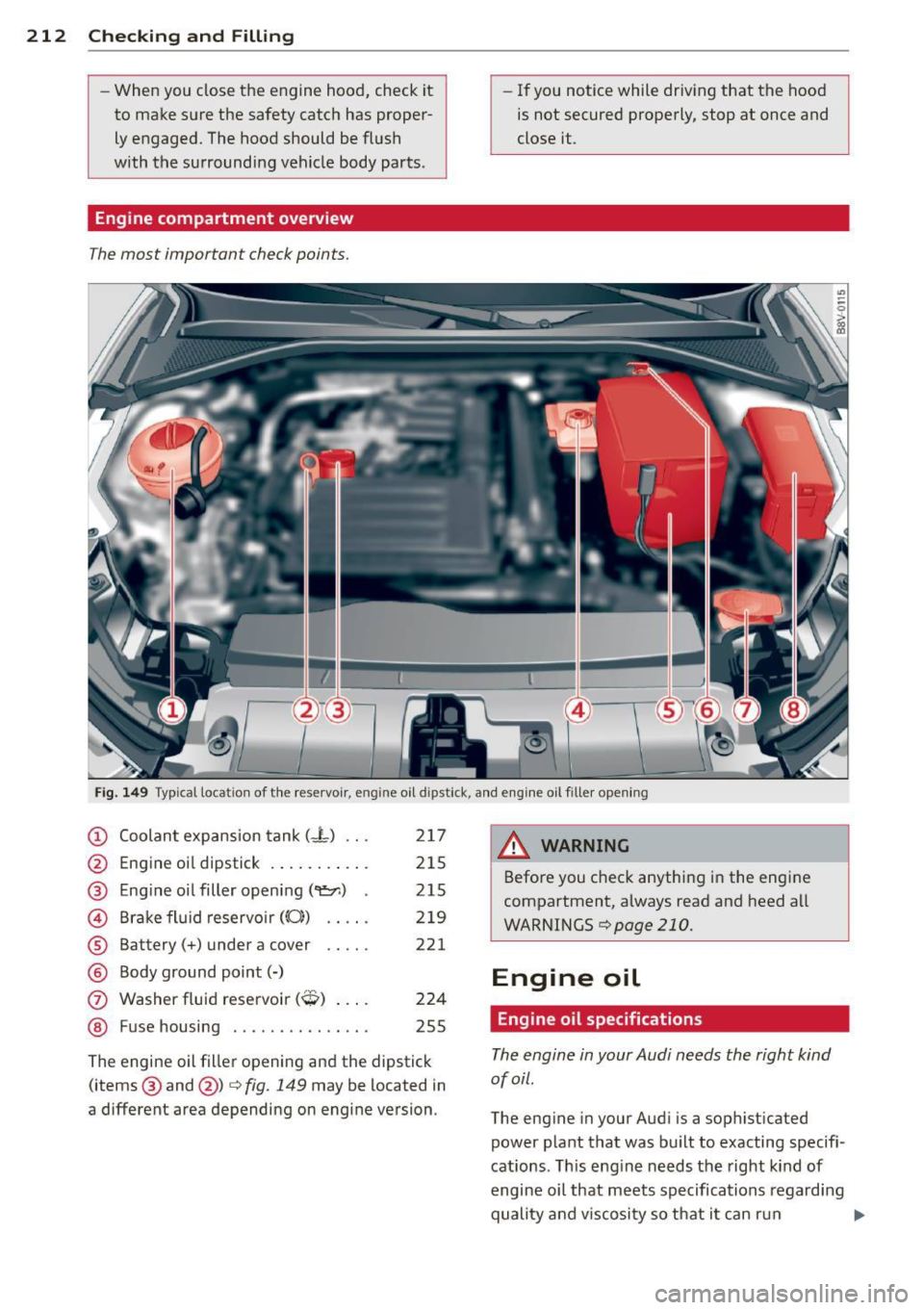
Fig. 149 Typ ica l locat ion of the reservoir, en g in e oil d ipstick, and engine o il filler opening
(D Coolant expansion tank (- L) .. .
@ Engine oi l dipstick ... .... .. . .
® Engine oil filler opening (~) .
@ Brake fluid reservo ir ((0)) .. .. .
® Battery(+) under a cover .. .. .
@ Body ground point(-)
0 Washer f luid reservoir (~) ... .
@ Fuse housing ....... .... ... .
2 17
215
215
219
221
224
255
The engine oil filler opening and the dipstick (items ® and @)
c::> fig. 149 may be located in
a different area depending on engine version .
A WARNING ,...,___ -
Before you check anything in the engine
compartment, always read and heed all
WARNINGS
c::> page 210.
Engine oil
Engine oil specifications
The engine in your Audi needs the right kind
of oil.
The eng ine in your Audi is a sophisticated
power plant that was built to exacting specifi
cations . This engine needs the right kind of
engine oil that meets specifications regarding
quality and v iscosity so that it can run
II>-
Page 215 of 288
smoothly and reliably. Choosing the right oil
and changing oil within the time and mileage intervals printed in your vehicle's Warranty
&
Maintenance booklet matters a lot more to
day than it did years ago . Audi has developed
a special quality standard for engine oil that
will help assure that your vehicle's engine will get the lubrication it needs for proper opera
tion .
Modern engine lubrication has taken a quan
tum leap in the last few years. Many synthetic
oils available today provide better engine lu
brication that can outlast traditional petrole
um-based oils , making them a smart choice
for use throughout the life of your Audi.
Whether you use synthetic or petroleum based engine oil , the oil that you use must
conform to Audi's oil quality standard
VW 502 00 to help keep your vehicle's engine
running smoothly and help prevent the for
mation of harmful deposits, sometimes called
"sludge", that over time can lead to expensive
repairs .
At the time of printing, engine oils available in
the U.S. and Canada that meet the exacting
specifications of Audi oil standard VW 502 00
are synthetic engine oils. This does not mean, however, that every synthetic engine oil will
meet Audi oil standard VW 502 00 . So always
be sure that you use an approved oil.
To help prevent the formation of harmful de posi ts use only oil with the following specifi
cations printed on the oil container:
Audi oil standard VW 502 00
Oil container labels may carry the specifica
tion singly or in combination with other desig
nations and oil quality standards.
Viscosity
Engine oils are graded according to their vis
cosity . The proper viscosity grade oil for your
engine depends on climactic or seasonal con
ditions where you drive. You can use oil with a
viscosity grade of SAE 5W40 across all tem
perature ranges for normal driving conditions.
Checking and Filling 213
However, if engine oil viscosity grade SAE
5W40 is not available , you can also use viscos
ity grade SAE 5W -30 or SAE OW-40 as long as
it meets Audi oil quality standard VW 502 00
specifications.
Because engine oil that meets the Audi oil
standard may not be available everywhere
when you need it, we strongly recommend
that you always carry with you an extra quart
(liter) of oil that expressly conforms to the
VW 502 00 spec ificat ion, in case you have to
top off the oil while on the road .
Only if the level of the oil is at or below the
minimum mark -and no oil that expressly
conforms to Audi oil standard VW 502 00
specifications is available - may you top off
with a high quality engine oil , preferably syn
thetic-based, that meets ACEA A3 or API SM specifications, but even then, only in viscosity
grades SAE 5W-40 , SAE SW-30, or SAE
OW-40. However, during the entire time be
tween oil change intervals, never top off with
more than a total of 0.5 qt/liter engine oil
that does not conform to Audi oil specification
vw 502 00.
For more information about engine oil that
has been approved for your vehicle, please
contact either your authorized Audi dealer or
Audi Customer Relations at 1 (800) 822 -2834
or v isit our web site at www.audiusa .com or
www .audicanada .ca. Here you will also find a
current list of oils (manufacturers, brand
names etc.) that conform to Audi oil standard
vw 502 00.
Changing the engine oil
The engine oil and oil filter must be changed
according to the mileage (kilometers) and
time intervals specified in your veh icle's War
ranty
& Maintenance booklet. Do not exceed
these intervals -harmful deposits from old
engine oil can reduce engine performance and
can lead to expensive engine repairs.
Changing the oil at the recommended inter-
vals is so very important because the lubricat
ing properties of oil decrease gradually during
normal vehicle use. If you are not sure when .,..
•
•
•
Page 216 of 288
214 Checking and Filling
you have your oil changed, ask your author
ized Audi Service Advisor.
Under some circumstances the engine oil
should even be changed more frequently .
Change oil more often if you drive mostly
short distances, operate the vehicle in dusty
areas or mostly under stop-and-go traffic con
ditions, or when you use your vehicle where
temperatures stay below freezing point for
long periods .
Detergent additives in the o il wi ll make fresh
oil look dark after the engine has been run
ning for a short time. This is normal and is not
a reason to change the oil more often than recommended .
Damage or malfunctions due to lack of
maintenance
It is essential that you change your oil at the
recommended interva ls using only engine oil
that complies with Audi oil standard
VW 502 00. Your Lim ited New Vehicle War
ranty does not cover damage or malfunctions
due to fa ilure to follow recommended mainte
nance and use requ irements as set forth in
the Audi Owner's Manual and Warranty
&
Maintenance booklet . Your dea ler will have to
deny warranty coverage un less yo u present to
the dea ler proof in the form of Service or Re
pair Orders that all schedu led maintenance
was performed in a timely manner.
Engine oil consumption
The engine in your vehicle depends on on ade
quate amount of oil to lubricate and cool all
of its moving ports.
In order to provide effective lubrication and
cooling of internal engine components , a ll in
ternal combustion eng ines consume a certain
amount of o il. Oil consumption var ies from
engine to engine and may change significantly
over the life of the eng ine . Typically, engines
with a specif ied break-in period (see
¢
page 193) consume more oil during the
b reak-in period than they consume after oil
consumption has stabilized. Under
normal conditions, the rate o f oil con
s u mption depends on the quality and viscosity
of the oil, the RPM (revolut ions per minute) at
which the engine is operated, the ambient
temperature and road conditions. Further fac
tors are the amount of oil dilut ion from water
co nd ensat ion or fuel residue and the oxida
t ion level of the oil. As any engine is subject to
wea r as mileage builds up, the oil consump
tion may increase over time until replacement
of worn components may become necessary.
With a ll these variab les coming into play, no
standard ra te of oil consumpt io n can be es
tablished or specified. There is no alternative
to regu lar and frequent check ing of the oil lev
el , see
Note.
If the yellow engine oil leve l warning symbo l
Ill in the instr ument cl uster light s up, you
shou ld check the oil leve l as soon as possible
¢
page 215. Top off the oil at your earliest
convenience
~ page 215.
A WARNING
-~
Before you check anything in the engine
compartment, always read and heed all
WARNINGS¢
page 210.
(D Note
Driving wit h an insufficient oil level is like
l y to cause severe damage to the engine.
(D Tips
-The oil pressure warning display. is
not an indicator of the oil level. Do not
rely on it. Instead, check the oil level in
your engine at regular intervals, pref
erably each time you refuel, and always
before going on a long trip .
-If you have the impression your engine
consumes excessive amounts of oil, we
recommend that you consult an author
ized Aud i dea ler to have the cause of
your concern properly diagnosed. Keep in
mind that the accurate measurement of
oil consumption requ ires great care and
may take some time. An authorized Audi ..,.
Page 217 of 288
dealer has instructions about how to measure oil consumption accurately.
Checking the engine oil level
Fi g. 150 O il dip stick: O rienta ti on ass ist an ce for mea s·
ur ing t he oil leve l
Dete rmining th e oil l evel
• Park your vehicle on a level surface.
• Let the engine run in id le briefly while it is at
operating temperature and then shut the
engine off.
• Wait approximately two minutes .
• Remove the oil dipst ick. W ipe off the oil dip·
stick with a clean cloth and inse rt it all the
way in again.
• Remove the dipstick again and then read the
oi l level ¢
fig. 150 . Add more engine o il, if
necessary ¢
page 215.
Oil level in the G) area
• Do not add any o il.
Oil level in the @area
• You may add oil. After adding oil , the level
shou ld be in the@area.
Oil l evel in th e@ area
• You must add oil. After adding oil, the level
shou ld be in the@area.
D epending on the way the vehicle is driven
and the operating conditions, oil consumptio n
can be up to a 1/2 quart per 600 mi les
(0.5 liter per 1,000 km) . Consumption may be
h igher with in the first 3,000 miles (5,000
km) . Because of th is, the engine oil leve l must
be checked regularly . It would be best to
check each time you refue l your veh icle and
befo re long drives.
Che cking and Fillin g 215
Adding engine oil 'i=:1:
Fig. 151 E ng in e compa rtm en t: en gin e o il fil ler o pen ·
in g cover
• Tur n the engine off.
• Unscrew the engi ne oil filler opening cap
~ ¢ fig.151, ¢page 212, fig. 149 .
• Carefully add 0.5 q ua rts (0.5 liters) of the
appropriate oil¢
page 212 .
• After two m inutes check the oil leve l again
¢ page 215, Checking the engine oil level .
• Add oil, if necessa ry.
• Close the eng ine o il filler cap and push the
d ipstick al l the way in.
A WARNING
- When adding oil, do no t let o il drip o nto
hot engine components. There could be
ris k of a f ire.
- T he o il filler cap mus t be p roperly se·
cured to preven t oil from bei ng sprayed
on t he hot engine a nd exhaust system
when t he engine is running -fire haza rd!
- Always clean s kin th oroughly if it comes
into contac t with engine oil.
(D Note
- T he oil level cannot be above the@
range, beca use thi s ca n cause damage to
t he cat alytic conve rter or the engine .
Contact yo ur autho rize d Audi deale r o r
qualified repair facility to have excess oil
extracted if necessary.
- Do not mix any addit io na l lubr icants into
the engine oil. Damage cause by such ad·
ditives is not covered by the warranty .
1i1J>