wheel AUDI A3 2015 Manual PDF
[x] Cancel search | Manufacturer: AUDI, Model Year: 2015, Model line: A3, Model: AUDI A3 2015Pages: 288, PDF Size: 71.46 MB
Page 244 of 288
24 2 T ire s and wheel s
Where snow chains are mandatory oncer
tain roads, this normally also applies to
veh icles with all-wheel dr ive.
Wheel bolts
Wheel bolts must always be tightened to the
correct torque.
The design o f whee l bolts is matched to the
factory installed rims . If different rims are fit
ted, the correct wheel bolts with the right
length and correctly shaped bolt heads must
be used. This ensures that wheels are fitted
securely and that the brake system functions
correctly .
In certain circumstances, you may not use
wheel bolts from a different vehicle -even if it
is the same model
r=> page 270.
A WARNING
Improperly tightened or maintained wheel
bolts can become loose caus ing loss of
c ont ro l, a co llision and serious persona l in
Jury .
- Always keep the wheel bolts and the
threads in the wheel hubs clea n so the
wheel bolts can turn easily and be prop er ly t igh tened .
- Never grease or oil the wheel bo lts and
the threads in the wheel hubs. They can
become loose while d riving if greased or
oiled, even if tightened to the specified
torque.
- Only use wheel bolts that belong to the
rim being installed.
- Never use different whee ls bolts on your
vehicle.
- Always maintain the co rrect tighten ing
torq ue fo r th e wheel bo lts to reduce the
risk of a wheel loss . If the tightening tor
que of the wheel bo lts is too low, they
can loosen and come out w hen the veh i
cle is moving. If the tighteni ng torque is
too high, the whee l bolts and threads can be damaged and the whee
l can be
come loose.
@ Note
The specified torque for the whee l bolts is
90 ft lb (120 Nm) with a tolerance of± 7,4
ft lb(± 10 Nm) . Torque wheel bolts diago
nally. After changing a whee l, the torque
must be checked as soon as possible with a
torque w rench -preferably by an author
i zed Audi dealer or qualified workshop .
Low aspect ratio tires
Your Audi is factory-eq uipped w it h low aspect
ra tio tires. These tires have been tho roughly
tested and been se lected specifically fo r your
model for their superb perfo rmance, road fee l
and handling under a variety of d riving condi
t ions . Ask your author ized A udi dealer for
more details.
T he low aspect ratio of these tires is ind icated
by a numera l of
55 or less in the tire's s ize
designation. The n umera l represents the ratio
of the tire's sidewall height in relation to its
tread width expressed in percentage. Conven
t iona l tires have a he ight/w idth ratio of 60 or
more .
The performance of low-aspect -ratio tires is
particularly sens iti ve to imp roper inflation
pressure. It is therefore important that low
a spect ratio tires are inflat ed to the specified
pre ssure and that the inflation pressure i s
regularly ch ecked and maintain ed. Tire pre s·
sure s should be checked at lea st once a
m onth and always bef ore a long trip
r=> page 231, Checking tire pressure .
What you can do to avoid tire and rim
damage
Low aspect ratio tires can be d amage d more
easily by impact w ith potholes, curbs, gull ies
or ridges on t he road, particularly if the tire is
u nd eri nflated.
Page 245 of 288
In o rder to minimize the occu rrence o f impact
damage to the tires of your vehicle, we recom mend that you observe the following precau
tions :
- Always maintain recommended inflation
pressures. Check your tire pressure every
2,000 miles (3,000 km) and add a ir if neces
sary.
- Drive carefu lly on roads with potholes, deep
gullies or ridges. The impact from driving
t h rough or over such obstacles can damage
your tires. Impact with a curb may also
cause damage to your tires .
- After any impact, immediately inspect your
tires or have them inspected by the nearest
authorized Aud i dealer . Replace a damaged
t ire as soon as poss ible .
- In spect your t ires every 2,000 miles (3,000
km) for damage and wear . Damage is not al
ways easy to see. Damage can lead to loss of
air and unde rinflation, wh ic h could eventu
ally cause t ire fail ure.
If yo u be lieve that a
tire may have been damaged , replace the
tire as soon as possible.
- These tires may wear more qui ck ly than oth
ers.
- Please a lso remembe r that, whi le these t ires
deliver respons ive handling, they may ride
less comfortably and make more noise than
other choices.
Reduced p erformance in winter /cold
sea son condit ion s
All tires are designed for certain purposes .
The low aspect ratio, ultra hig h performance
tires originally installed on your vehicle are in
tended for max imum dry and wet road per
f ormance and handling . They are not suitable
for cold, snowy or icy weather cond it ions .
If
you dr ive under those circumstances, you
should equip your vehicle with all-season or
winter tires, which offer better traction under
those cond it io ns . We suggest you use the rec
ommended snow or all -season tires specified
for your ve hicle, or their equiva lent .
Refe r to ~
page 240 for mo re deta iled info r
ma tion regarding w in ter t ires.
Tire s an d wheel s 243
Tire pressure
monitoring system
ill General notes
Each tire, incl uding the spare (if provided),
shou ld be checked monthly when co ld and in
flated to the inflation pressure recommended by the veh icle manufac turer on the veh icle
placard or tire inflation pressure label. (If your
vehicle has tires of a different size than the
s ize indicated on the vehicle placard or tire i n
flat io n pressu re labe l, you shou ld dete rm ine
the p roper t ire inflation p ress ure fo r those
t i r es).
As an added safety feature , your veh icle has
been equipped with a tire pressure mon ito ring
system ( TPMS) that illum inates a low ti re
pressure te lltale when one or more o f your
t ires is significant ly under -inflated . Acco rding
l y, when the low tire pressure te lltale i llumi
nates, you should stop and check your tires as
soon as possib le, and inflate them to the
proper pressure. Driving on a sign ificantly un
der- inflated tire causes the tire to overheat
and can lead to tire fa ilure. Under-inflation al
so reduces fuel eff ic iency and tire tread life,
and may affe ct the vehicle's hand ling and
stopp ing ability.
Please note that the TPMS is not a substitute
fo r proper tire ma intenance, and it is the driv
er's respons ibility to maintain co rrect tire
pressure, even if under -inflation has not
rea ched the leve l to tr igger illuminat ion of the
TPMS low tire p ressure tellta le .
You r vehicle has also been equipped with a
T PMS ma lfunction indicator to ind icate when
the sys tem is not operating properly . T he
TPMS ma lfunction indicator is combined with
the low tire pressure te lltale. When the sys
tem detects a malfunction, the telltale will
flash for approximate ly one min ute and then
rema in continuously illum inated . Th is se
quence will continue upon subsequent vehicle
start-ups as long as the malfunct io n exists.
When the malfunction indicator is illum inat-
ed, the system may not be ab le to detect or
lilJ,
•
•
Page 246 of 288
24 4 T ire s and wheel s
signal low tire pressure as intended. TPMS
malfunctions may occur for a variety of rea
sons, includ ing the installat ion of replace
ment or a lternate tires or whee ls on the veh i
cle that prevent the TPMS from funct ioning
properly . Always check the TPMS malfunct ion
telltale after replacing one or more t ires or
wheels on your veh icle to ensure that the re
p lacement or a lternate tires and wheels allow
the TPMS to continue to function properly.
If the Tire Pressure Monitoring System
indicator appears
Applies to vehicles: with tire pressure monitoring system
The tire pressure indicator in the instrument
cluster informs you if the tire pressure is too
low or if there is a system malfunction.
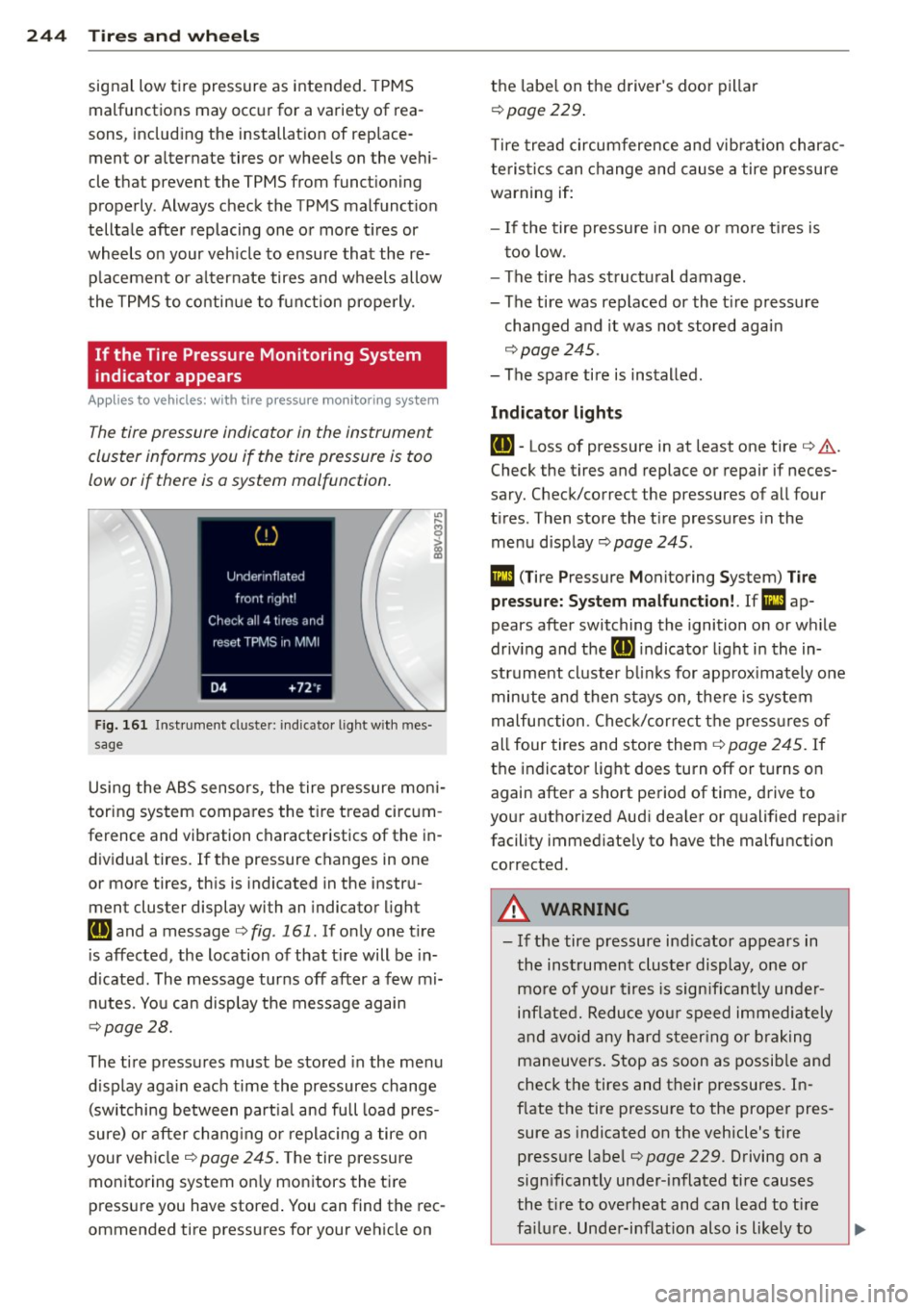
F ig. 161 Ins trumen t cluste r: ind icato r light w it h m es
s age
Using the ABS sensors, the tire pressure moni
toring system compa res the tire tread circum
ference and vibration characteristics of the in
dividual tires .
If the pressure changes in one
or more tires, th is is indicated in the instru
ment cluster display with an indicator light
IE and a message ¢ fig. 161 . If only one t ire
is affected, the location of that t ire will be in
d icated. The message turns off after a few mi
nutes. You can disp lay the message again
¢ page 28.
The tire pressures must be stored in the menu
d isplay aga in each time the pressures change
(switching between part ia l and full load pres
sure) or after chang ing or replac ing a tire on
your ve hicle ¢
page 245. The tire pressure
monitoring system on ly monitors the ti re
press ure you have stored . You can find the rec
ommended tire pressures for your vehicle on the
labe l on the driver's doo r pillar
¢ page 229 .
Tire tread circumference and vib ration charac
teristics can change and cause a tire pressure
warning if:
- I f the tire pressure in one or more ti res is
t oo low.
- The tire has structural damage.
- The tire was replaced or the t ire pressure
changed and it was not stored again
¢ page 245.
-The spare tire is installed .
Indicator lights
IE -Loss of pressure in at least one tire ¢ .&. .
Check the tires and replace or repair if neces
sary. Check/correct the pressures of all four
t ires . Then store the t ire pressures in the
menu display
¢ page 245.
Ill (T ire Pressure Monitoring System) T ire
pre ssure: S ystem mal function!. Ifm:!
ap
pears afte r switching the ignition on or w hile
driv ing and the [ti] indicato r light in the in
strument cluster b links for app rox imately one
minute and then stays on , the re is system
malfu nction . Check/cor rect the p ress ures of
all four tires and store them¢
page 245. If
t h e indicator lig ht does turn off or tu rns on
again after a short pe riod of time, drive to
your authori zed Aud i dea ler or qualified repair
facility immed iately to have the malfunction
corrected .
A WARNING
--- If the tire pressure ind icator appears in
the instrument cluster display , one or
mo re of your t ires is sign ifi cant ly unde r
i n flated. Reduce yo ur speed immedi ately
an d avoid any hard steer ing or b rak ing
maneuvers. Stop as soon as possib le and
check the tires and their pressures. In
f late the tire pressure to the proper pres
sure as indicated on the vehicle's tire
pressure labe l
¢page 229. Driving on a
significantly under-i nflated tire causes
the t ire to overheat and can lead to ti re
fa ilur e. Unde r-inflation also is li kely to
Page 247 of 288
impair the vehicle's handling and stop
ping ability.
- The driver is responsible for maintaining
the correct tire pressures. You must
check the t ire pressures regularly.
- Under certain conditions (such as a spor
ty driving style, w inter condit ions or un
paved roads), the pressure monitor ind i
cator may be de layed.
- Ask your authorized dealer if run-flat
tires may be used on your vehicle. You ve
hicle registrat ion becomes invalid if you
use these tires when not permitted .
Damage to your vehicle or accidents
c ou ld also resu lt.
(0 Tips
- The t ire pressure monitoring system can
also stop work ing when there is an ESC/
ABS malfunction.
- Using snow chains may result in a system malfunction .
- The t ires with the ident ificat ion "AO" or
"RO"¢ page 236 have been matched
with you r A udi tire p ressu re monito ring
system. We recommend that you use
these tires.
- The t ire pressure monitoring system can
on ly mon itor the t ire pressure of the
driving tires . C he ck the tire pressure of
the spare wheel in the luggage compart
ment so that if necessary it is ready for
u se .
Storing tire pressures
Applies to vehicles: with tire pressure monitoring system
A change in tire pressure or a change in tires
must be stored in the system.
The ti re p ress ure is s to red in the M MI.
~ Make sure befo re stor ing that the tire pres
su res of all fou r tires meet the specified val
ues and a re adapted to the load. Otherw ise
the system co uld mal function ~
page 229.
~ Switch the ignition on.
~ Select : Sys tem s control button or Car sy s
tems > Servic e
& control > Tire pressure
Tire s an d wheel s 245
monitor > Store tire pre ssure > Ye s, store
now .
(D Tips
Do not s to re the tire pressures if snow
chains a re installed.
•
•
•
Page 248 of 288
246 What do I do now?
What do I do now?
Luggage compartment
lid emergency release
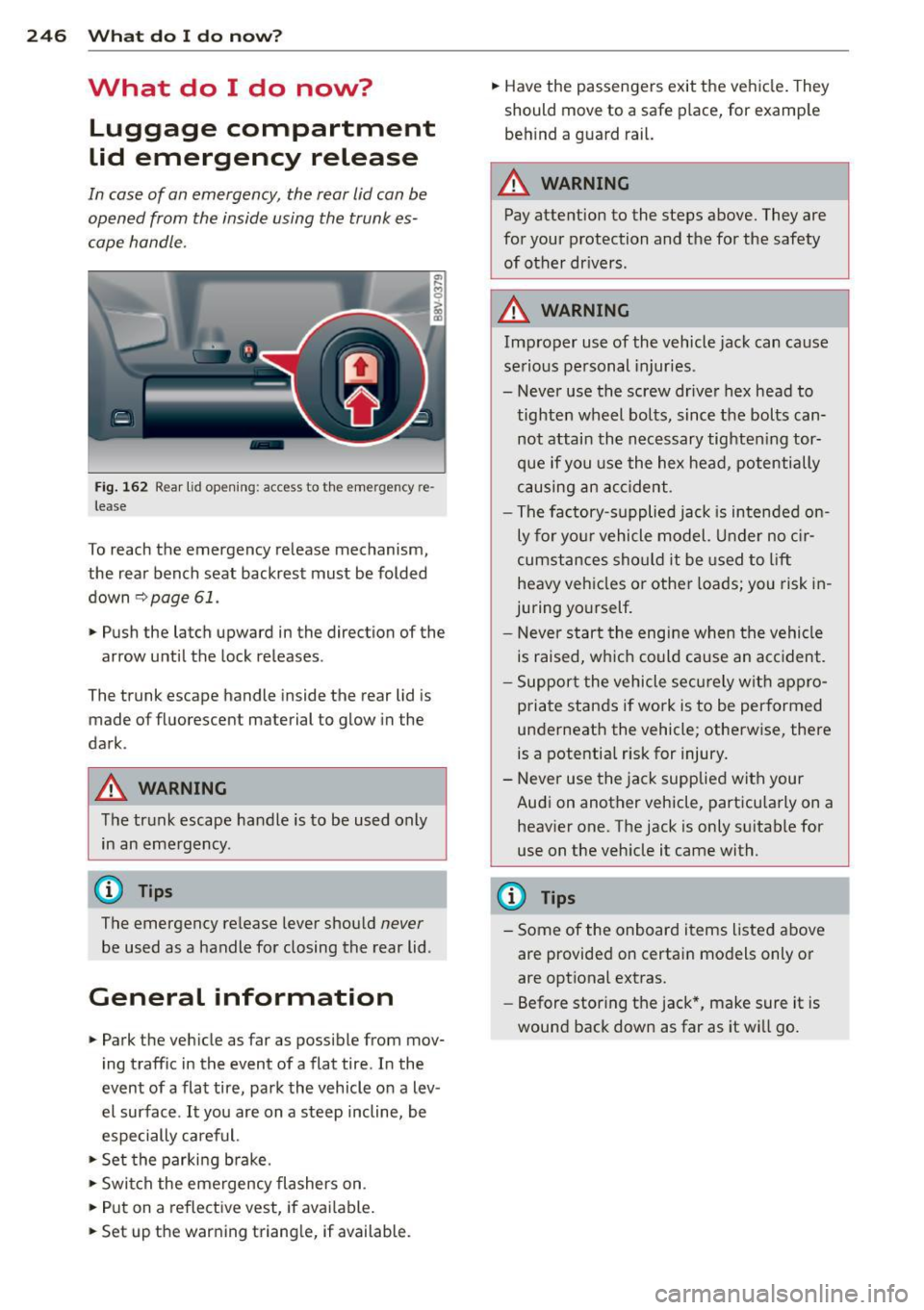
In case of an emergency , the rear lid can be
opened from the inside using the trunk es
cape handle .
Fig. 162 Re ar lid op ening : access to th e e merg en cy re
l ease
To reach the emergency release mechanism,
the rear bench seat backrest must be folded down
~ page 61 .
,. Push the latch upward in the direction of the
arrow until the lock releases .
The trunk escape handle inside the rear lid is
made of fluorescent material to glow in the
dark .
A WARNING
The trunk escape handle is to be used only
m an emergency .
@ Tips
The emergency release lever should never
be used as a handle for closing the rear lid.
General information
,. Park the vehicle as far as possible from mov
ing traffic in the event of a flat tire. In the
event of a flat tire, park the vehicle on a lev
el surface .
It you are on a steep incline, be
especially careful.
,. Set the parking brake.
,. Switch the emergency flashers on.
• Put on a reflective vest, if available.
• Setup the warning triang le, if available . •
Have the passengers exit the vehicle. They
should move to a safe place, for examp le
behind a guard rail.
A WARNING
-
Pay attention to the steps above. They are
for your protection and the for the safety of other drivers.
A WARNING
Improper use of the vehicle jack can cause
serious personal injuries .
- Never use the screw driver hex head to tighten wheel bolts, since the bolts cannot attain the necessary tightening tor
que if you use the hex head, potentially
causing an accident .
- The factory-supplied jack is intended on
ly for your vehicle model. Under no cir
cumstances should it be used to
lift
heavy vehicles or other loads; you risk in
juring yourself.
- Never start the engine when the vehicle
is raised, which could cause an accident.
- Support the vehicle securely with appro
priate stands if work is to be performed
underneath the vehicle; otherwise, there
is a potential risk for injury.
- Never use the jack supplied with your
Audi on another vehicle, particularly on a
heavier one. The jack is only suitable for
use on the veh icle it came with.
(D Tips
- Some of the onboard items listed above
are provided on certain models only or
are optional extras.
- Before storing the jack*, make sure it is
wound back down as far as it wil l go.
Page 249 of 288
Equipment
Vehicle tool kit
Applies to vehicles: with vehicle tool kit
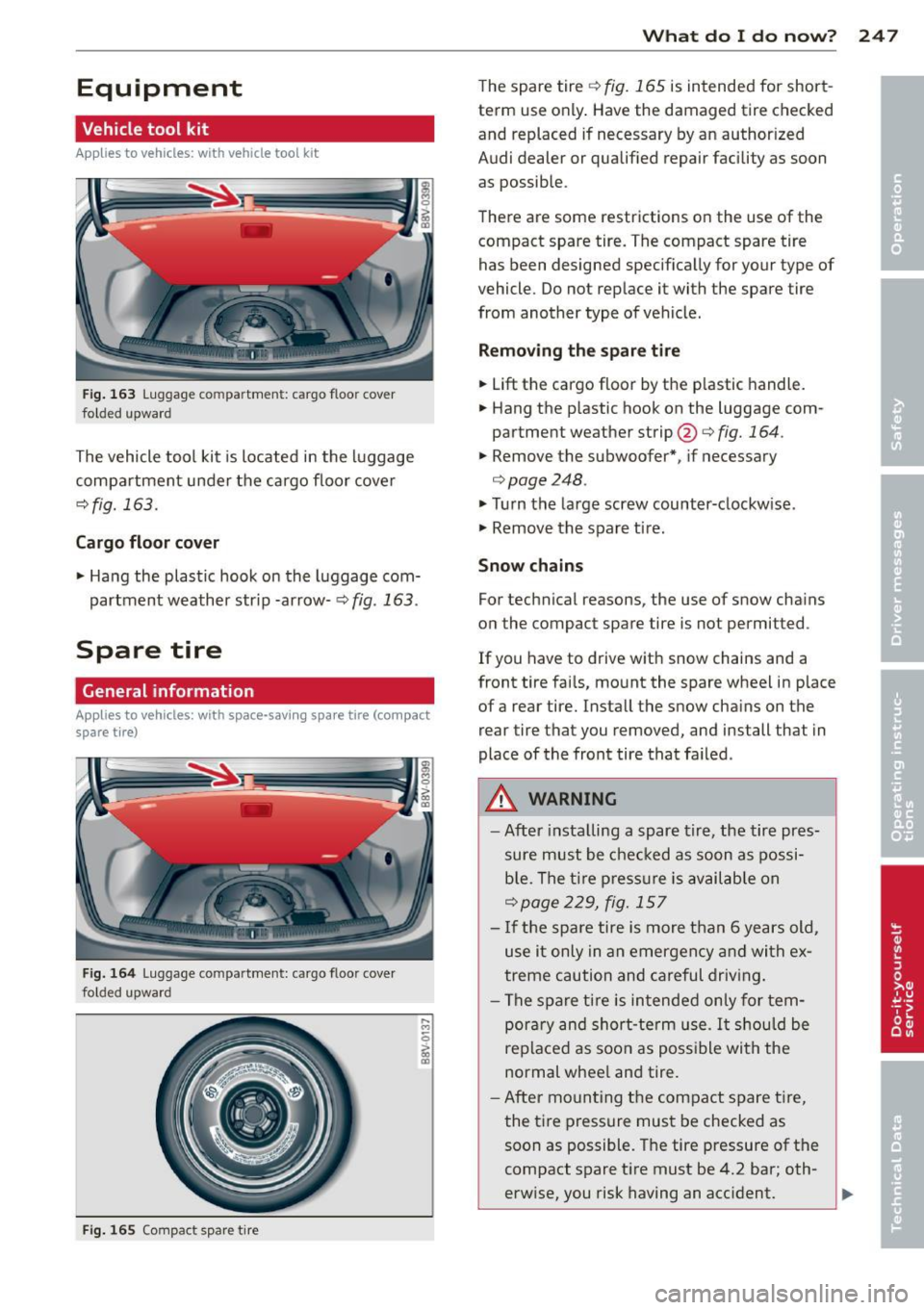
Fig . 163 Luggage compartment: cargo floor cover
folded upward
The vehicle tool kit is located in the luggage
compartment under the ca rgo floo r cover
¢ fig. 163.
Cargo floor cover
.. Hang the plast ic hook on the luggage com
partment weather str ip -arrow-
c:> fig. 163.
Spare tire
General information
Applies to vehicles: with space-sav ing spa re tire (compact
spare t ire)
F ig. 164 Luggage compartment: cargo floor cove r
fo lded upward
F ig. 165 Compact spare tire
What do I d o now ? 24 7
The spare tire c=;,fig. 165 is intended for short
term use only. Have the damaged tire checked
and replaced if necessary by an authorized
Audi dealer or qualified repair facility as soon
as possible.
There are some restrictions on the use of the
compact spare tire. The compact spare tire
has been designed specifically for your type of
vehicle. Do not replace it with the spare tire
from another type of vehicle .
Removing the spar e tir e
.. Lift the cargo floor by the plastic handle.
.. Hang the plastic hook on the luggage com
partment weather strip@¢
fig. 164 .
.. Remove the subwoofer*, if necessary
c=;, page248 .
.. Tu rn the large screw counter-clockwise .
.. Remove the spare tir e.
Snow chains
For technical reasons, the use of snow cha ins
on the compact spare tire is not permitted.
If you have to drive with snow chains and a
front tire fails, mount the spare wheel in place
of a rear tire. Install the snow chains on the
rear tire that you removed, and install that in
place of the front tire that fa iled .
A WARNING
-After insta lling a spare tir e, the tire pres
sure must be chec ked as soo n as possi
b le. The t ire p re ssu re is availab le on
¢page 229, fig.157
- If the spa re tire is more t han 6 years old,
use it only in an emergen cy and wi th ex
treme caution and careful driv ing.
- T he spare ti re is in tended only fo r tem
pora ry and short-te rm use .
It should be
rep laced as soon as possible wi th the
normal whee l and tire.
- After mo unting t he com pact spare t ire,
the t ire pressure mus t be checked as
soon as possible. T he tire pressure of the
compact spare tire must be 4.2 bar; oth
erw ise, you risk having an acc ident.
Page 250 of 288
248 What do I do now?
-Do not drive faster than 50 mph (80 km/
h) . You risk having an acc ident.
- Avoid full-throttle acce le ration, heavy
braking, and fast corner ing. You risk hav
ing an acc ident.
- Never drive us ing more than one spare
wheel and tire. You risk having an acci
dent .
- Norma l summer or winter tires must not
be mounted on the compact spare whee l
rim.
- For technical reasons, the use o f ti re
chains on the spare tire is not permitted.
If it is necessary to drive with tire chains,
the spare whee l must be mounted on the
front axle in the eve nt of a flat in a rear
t ir e. Th e newly ava ilable front w heel
must the n be installed in pla ce of the
re ar wheel wi th the flat ti re. Ins tal ling
the ti re chai n befo re mo unt ing the wheel
and tire is recommen ded .
- L oose items in the p assenge r comp art
ment can ca use serio us personal inj ury
dur ing hard braking or in an acc ident.
N ever sto re the inf latable spare tire or
jack and t ools in the passenger c ompart
me nt.
- No rma l summer or wi nte r tires must not
be m ounted on the compact spare wheel
rim .
Removing the subwoofer
App lies to vehicles: with subwoofer
The subwoofer must be removed before the
spare wheel* can be removed.
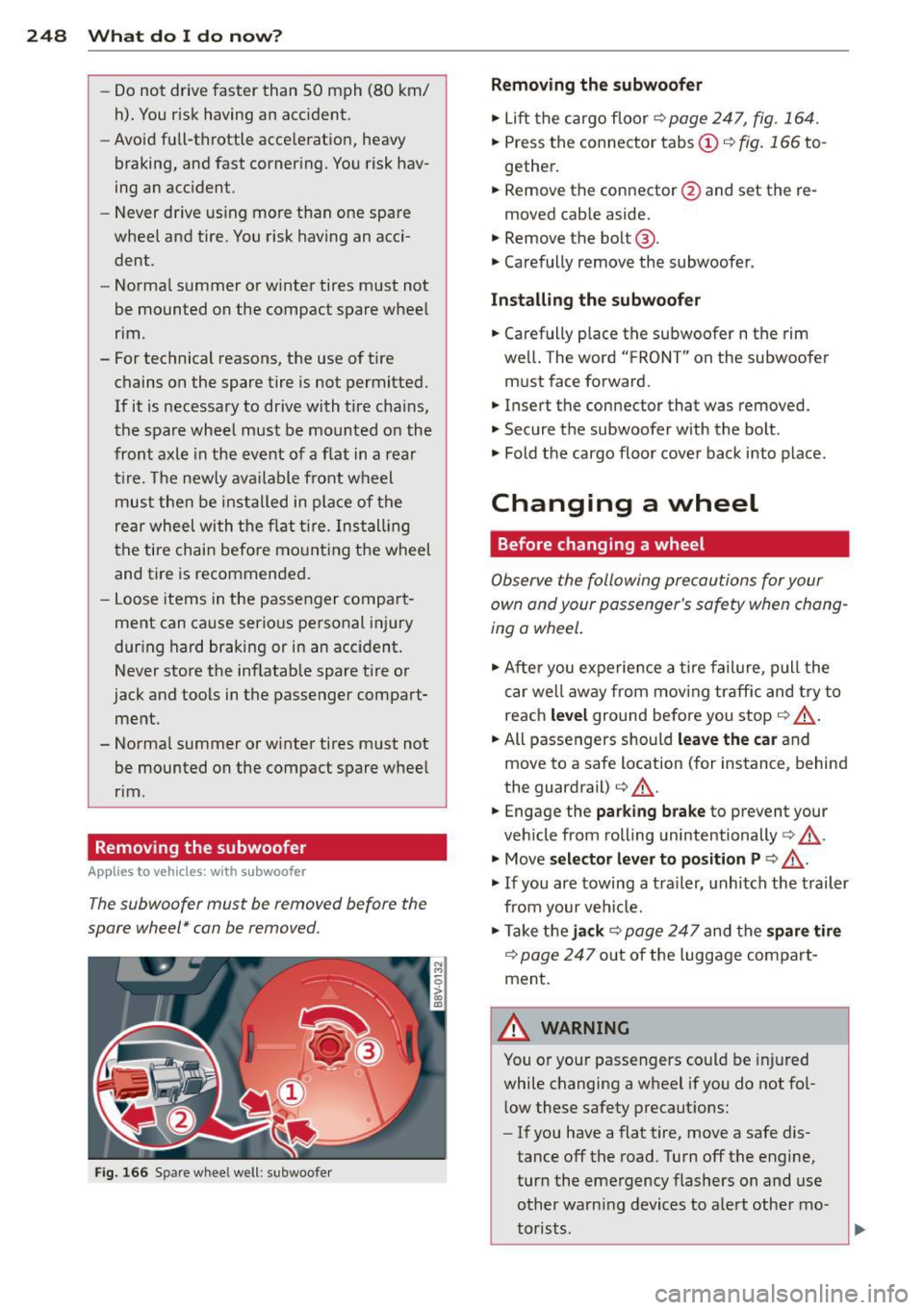
F ig . 166 Spare w hee l well : subwoofe r
Removing the subwoofer
.,. Lift the c argo floor i=:> page 247, fig . 16 4.
.. Press the connector tabs (!) i=:> fig. 16 6 to-
gether .
.. Re move the connector @and set the re-
moved cab le aside .
.,. Remove the bo lt @ .
.. Carefully remove the subwoofe r.
Installing the subwoofer
.. Carefully place the subwoofer n the rim
we ll. The word "FRONT" on the subwoofer
m ust face forward.
.. Insert the con nector that was removed.
.. Secure t he subwoofer w ith the bolt .
.. Fold the cargo floo r cover back into place.
Changing a wheel
· Before changing a wheel
O bserve the following prec au tions f or your
own and your p assenger's safety when chang
ing a wheel .
.. Afte r you ex perie nce a ti re fail ure, p ull the
car we ll away from mov ing tr affic and try to
reach level ground before you stop
¢ ,&.
.. All passengers should leave the car and
move to a safe location ( for instance, behind
the guardrail)¢ ,&.
.. Engage the parking brake to prevent your
veh icle from rolling unintentionally <=>,& .
.. Move selector lever to position Pi=:> ,& .
.. If you are towing a t railer, unhitch the trailer
from your ve hicl e.
.. Ta ke t he ja ck ¢
page 247 and the spare tire
¢ page 247 out of the luggage compart
ment .
A WARNING
You o r you r passengers could be inj ured
while c hanging a w heel if you do not fo l
l ow these safety precaut io ns:
- If you have a flat tire, move a safe d is
tance off the road. Turn off t he engine,
tur n the eme rgency flashers on and use
other warni ng devices to a le rt other mo
torists.
-
Page 251 of 288
-Make sure that passengers wait in a safe
place away from the vehicle and well
away from the road and traffic.
- To help prevent the vehicle from moving
suddenly and possibly slipping off the
jack, always fully set the parking brake
and block the wheel diagonally opposite
the whee l being changed. When one
front whee l is lifted off the gro und, plac
ing the A utomat ic Transm iss ion in P
(Park) wi ll
not prevent t he vehi cle from
moving .
- Before you change a wheel, be su re the
ground is leve l and fi rm.
If necessary,
use a st urdy board under the jack.
- Always store the vehicle tool ki t, the jack
and the replaced ti re in the l uggage com
partment¢
page 12 7 .
Changing a wheel
When you change a wheel, follow these
quence described below step-by-step and in
exactly that order.
1. Remove the d ec orative wheel cov er* . For
more deta ils see also
c:>page 249, Deco
rative wheel covers
or ¢ page 2 50,
Wheels with wheel bolt caps.
2. Loosen the wheel bolt s c:> page 250.
3. Locate the proper mount ing point for the
jack and align the jack below that point
<=> page 251.
4. Raise the car w ith the jack c:> page 251.
5. Remove the wheel with the flat tire and
then install
the spare ¢ page 252 .
6. Tighten all wheel bo lts light ly.
7 .
Low er the ve hicle with the jack.
8. Use the wheel bolt wrenc h and
firmly
tighten all whee l bolts c:> page 250.
9. Replace the decorative wheel cov er*.
A WARNING
Always read and follow all WARNINGS and
information
c:> .&. in Raising the vehicle on
page251
and ¢page 253.
What do I d o now ? 249
After changing a wheel
A wheel change is not complete without the
doing the following.
.,. Always store the vehicle tool kit, the jack*
and the replaced tire in the luggage com
partment
c:> page 127.
.,. Check the tir e pr essure on the spare whee l
immed iate ly afte r mounting i t.
.,. As soon as poss ib le, have the
tight ening
torque s
on all wheel bolts checked w ith a
torque wrench . The correct tighten ing tor
que is 90 ft lb (120 Nm).
.,. Have the flat tire
replaced as soon as possi
ble.
@ Tips
- If you notice that the wheel bo lts a re
corroded and difficult to turn while
chang ing a tire, they should be replaced
before you c heck the tightening torque.
- Drive at reduced speed until you have the tightening torques checked.
- After changing a whee l, the ti re press ure
in all four tires must be checked/correct
ed and the tire pressure monitoring indi
cator must be stored in the M MI
c:>page245.
Decorative wheel covers
App lies to veh icles: w ith decorat ive w hee l cove rs
The decorative wheel covers must be removed
first to access the wheel bolts.
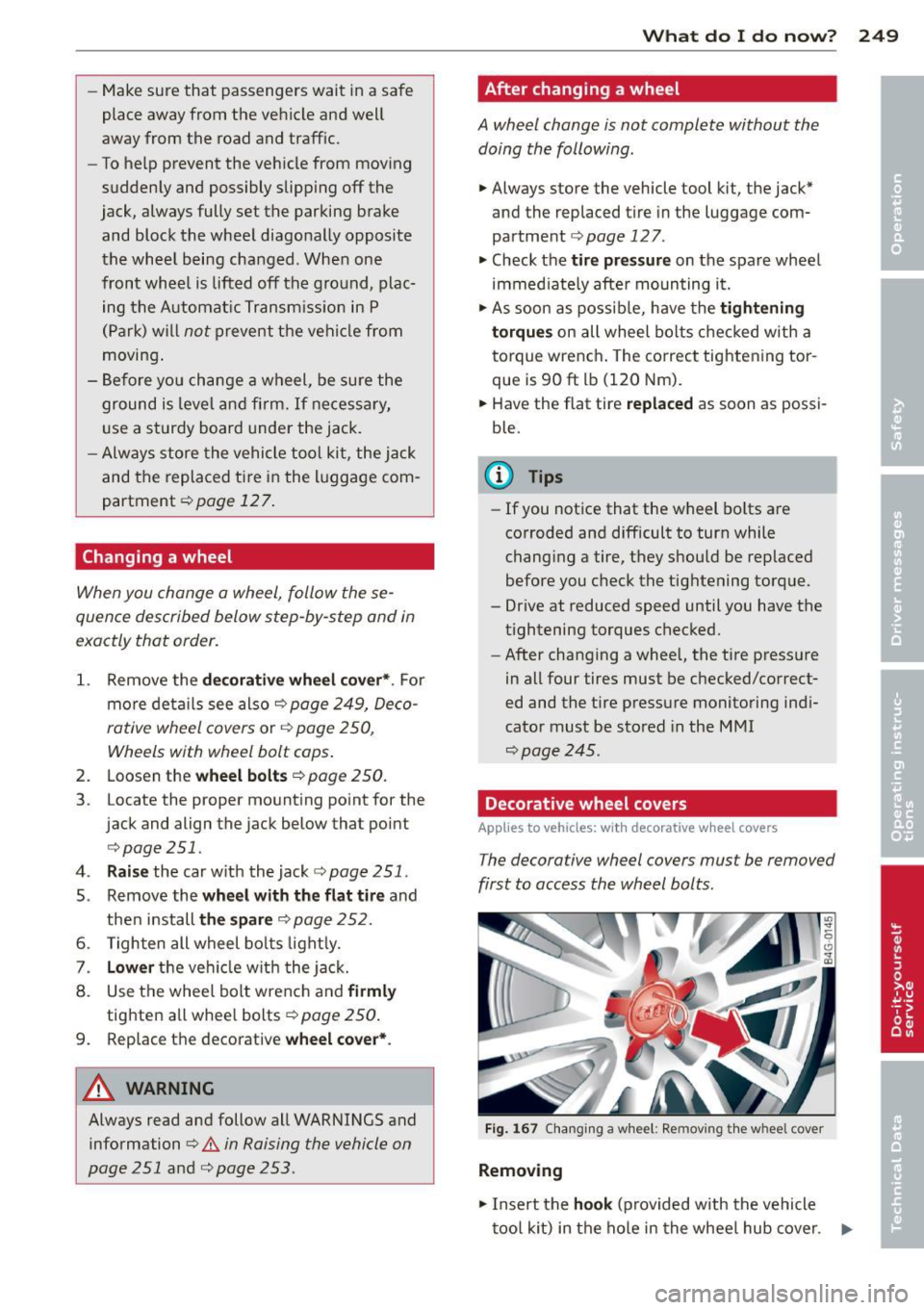
Fi g. 167 Chang ing a whee l: Removing th e w hee l cover
Removing
.,. Insert the hook (provided with the vehicle
t oo l kit) in the ho le in the whee l hub cover .
i,,.
Page 252 of 288
250 What do I do now?
• Pull off the decorative wheel cover
Q fig. 167.
Wheels with wheel bolt caps
Applies to vehicles: with whee l bo lts wit h caps
The caps must be removed first from the
wheel bolts before the bolts con be un
screwed .
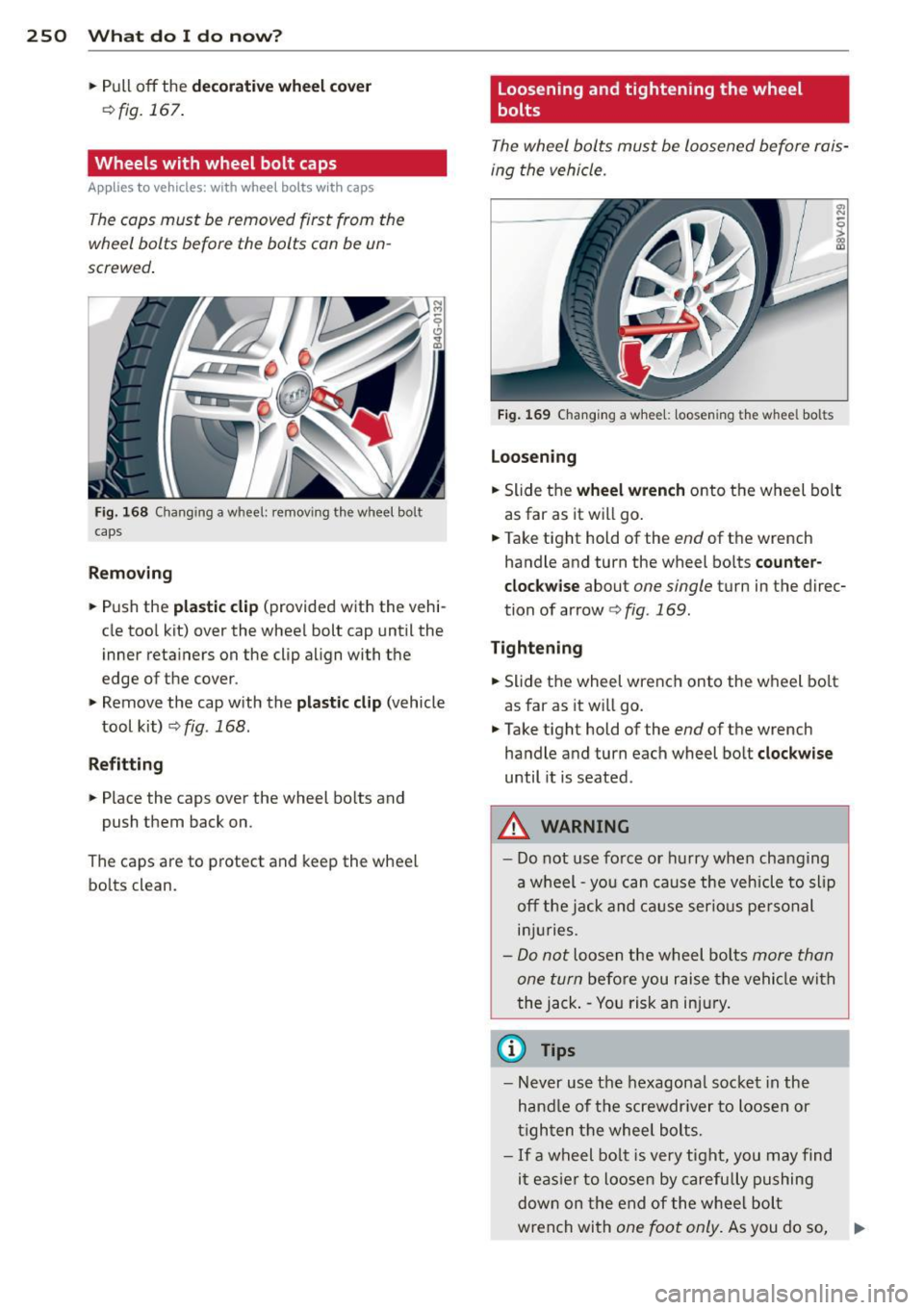
Fig. 168 Chang ing a w hee l: rem ov ing the w heel bo lt
caps
Removing
• Push the plastic clip (provided with the vehi
cle too l kit) over the whee l bolt cap until the
inner retainers on the clip align with the
edge of the cover .
• Remove the cap with the
plastic clip (vehicle
tool kit)
Q fig . 168.
Refitting
• Place the caps over the wheel bo lts and
push them back on.
The caps are to protect and keep the wheel bolts clean.
Loosening and tightening the wheel
bolts
The wheel bolts must be loosened before rais
ing the vehicle .
Fig. 1 69 Changing a whe el: loosening the w hee l bol ts
Loosening
• Slide the wheel wrench onto the wheel bolt
as far as it will go.
• Take tight hold of the
end of the wrench
handle and turn the wheel bolts
counter
clockwise
about one single turn in the direc
tion of arrow
Q fig . 169.
Tightening
• Slide t he wheel wrench onto the wheel bo lt
as far as it w ill go.
• Take tight hold of the
end of the wrench
handle and turn each wheel bolt
clockw ise
until it is seated .
A WARNING
--Do not use force or hurry when changing
a wheel -you can cause the vehicle to slip
off the jack and cause serious personal
in ju ries.
-Do not loosen the wheel bolts more than
one turn
before you raise the vehicle with
the jack . - Yo u risk an inju ry.
© Tips
-Never use the hexagonal socket in the
hand le of the screwdr iver to loosen or
tighten the wheel bolts.
- If a wheel bolt is very tight, you may find
it eas ier to loosen by carefully pushing
down on the end of the wheel bolt
w rench with
one foot only. As you do so, ..,.
Page 253 of 288
hold on to the ca r to keep your ba lance
and take care not to slip.
Raising the vehicle
Th e ve hicl e must be li~ed with the jack first
before the wheel can be removed.
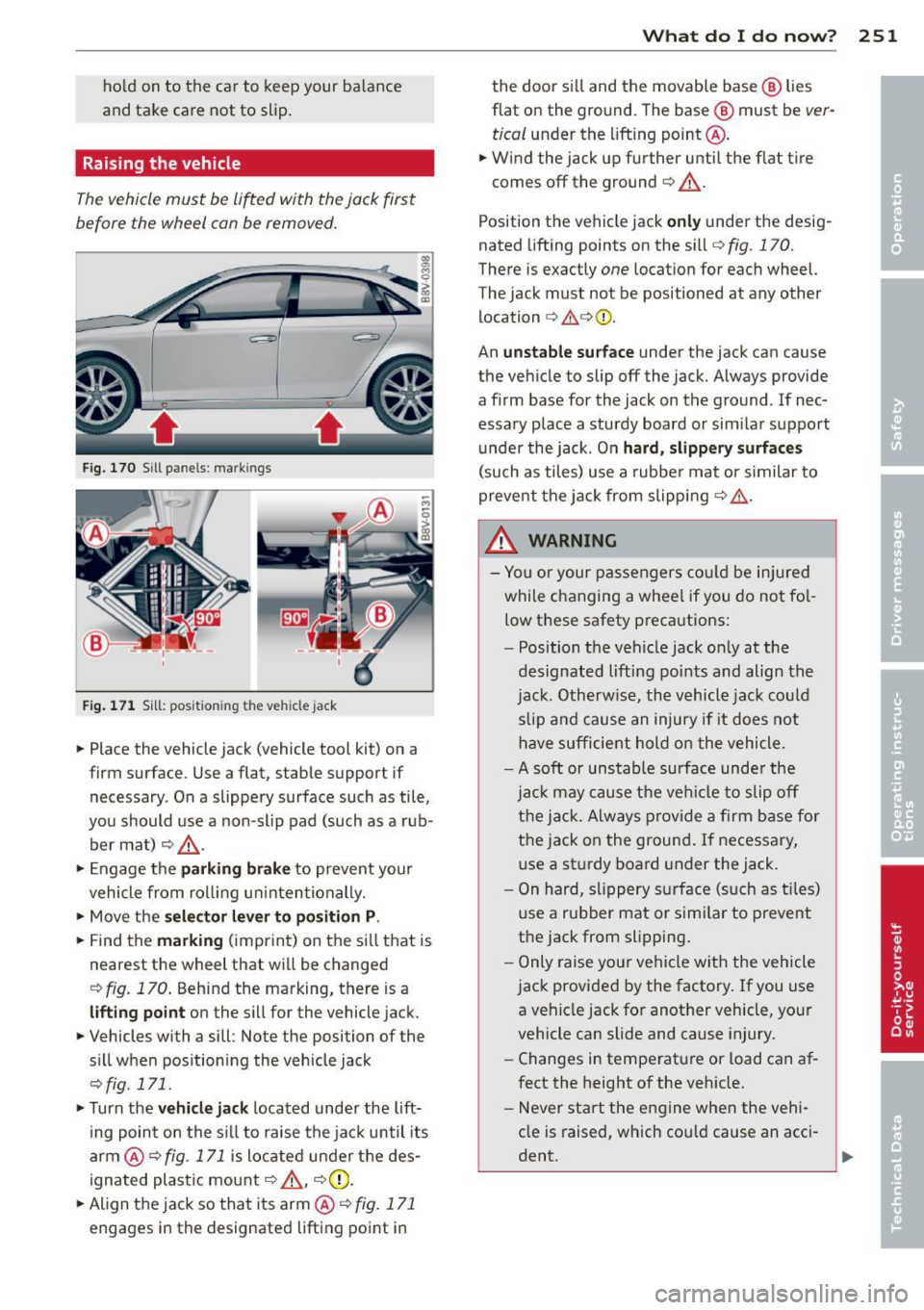
F ig. 170 Sill p anels : m arkin gs
Fig. 171 Sill: posi tioning th e vehicle jack
.. Place the vehicle jack (vehicle tool kit) on a
firm surface . Use a flat, stable support if
necessary . On a slippery surface such as tile,
you should use a non -slip pad (such as a rub
ber mat) ¢_& .
.. Engage the
p arking brak e to prevent your
vehicle from rol ling u ninten tionally.
.. Move the
se lector leve r to pos ition P.
.. Find the marki ng (imprint) on the si ll that is
nearest the wheel that wi ll be changed
¢ fig . 170 . Behind the marking, there is a
lifting point on the si ll for the vehicle jack.
.. Vehicles with a sill : Note the position of the
s ill when pos ition ing the vehicle jack
¢ fig . 171.
.. Turn the
ve hicle jack located under the lift
ing poin t on the s ill to raise the jac k until its
arm @
Q fig. 171 is located under the des
ignated plastic mount c:::>
A, ¢(D .
.. Align the jack so that its arm @c:::> fig. 171
engages in the designated lifting point in
What do I d o now ? 251
the door si ll and the movable base ® lies
flat on the ground. The base @ must be ver
tical under the lifting point @ .
.. Wind the jack up further until the flat t ire
comes off the ground
c:::> _& .
Position the vehicle jack
onl y under the desig
nated lifting points on the si ll
c:::> fig. 170.
There is exactly one locat ion for each wheel.
The jack must not be positioned at any other location ¢ 8 ¢(1).
An
uns table surface under the jack can cause
the vehicle to slip off the jack. Always provide a firm base for the jack on the ground . If nec
essary place a sturdy board or sim ilar support
under the jack . On
hard, slippery surfaces
(such as tiles) use a rubbe r mat or similar to
prevent the jack from slipping
Q & .
_&. WARNING
-You or your passengers co uld be in ju red
while changing a wheel if you do no t fo l
low these safety preca utions:
- Position the vehicle jack on ly at the
designated lifting points and align the
j ac k. Otherw ise, the vehicle jac k co uld
slip and cause an injury if it doe s not
h ave sufficient hold on the vehicle .
- A soft or unstable su rface unde r the
ja ck may cause the ve hicle to slip off
the jack . A lw ays p rov ide a firm b ase for
the j ack on the ground . If necessary,
u se a st urdy board under the jack .
- On hard, slippery surface (such as t iles)
u se a rubber mat or similar to prevent
the jack from slipping .
- Only raise your vehicle with the vehicle
j ack provided by the factory . If you use
a veh icle jack for another vehicle, you r
vehicle can slide and cause injury .
- Changes in tempe rature or load can af
fect the height of the veh icle .
- Never sta rt the engine when the vehi
cle is raised , which cou ld cause an acci-
dent.
~