lock AUDI A3 2016 Owner´s Manual
[x] Cancel search | Manufacturer: AUDI, Model Year: 2016, Model line: A3, Model: AUDI A3 2016Pages: 328, PDF Size: 81.78 MB
Page 220 of 328
Child safety
airbag system inspected by your authorized
Audi dealer.
- Take the child restraint off the front passen
ger seat and install it properly at one of the
rear seat positions if the
PASSENGER AIR
BAG OFF
light does not stay on whenever
the ignition is switched on .
Booster seats and safety belts
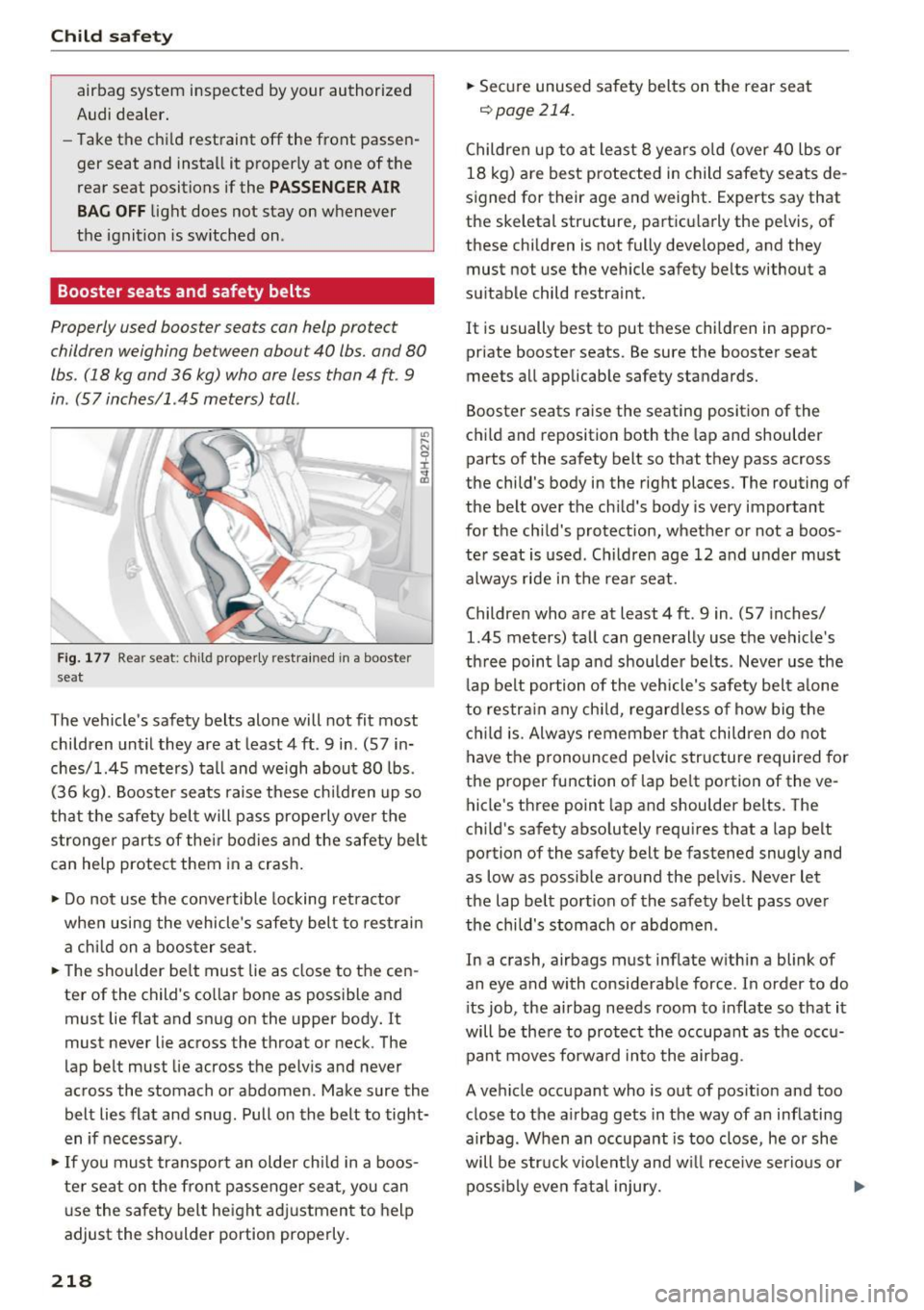
Properly used booster seats con help protect
children weighing between about 40 lbs. and 80
lbs. (18 kg and 36 kg) who ore less than 4
ft. 9
in . (57 inches/1 .45 meters) toll .
Fig. 177 Rear seat: c hil d p rop erly restrain ed in a booster
seat
"' ,...
i i
The vehicle's safety belts alone will not fit most
children until they are at least 4
ft. 9 in . (57 in
ches/1.45 meters) tall and weigh about 80 lbs .
(36 kg). Booster seats raise these chi ldren up so
that the safety belt will pass properly over the
stronger parts of their bodies and the safety bel t
can help protect them in a crash.
• Do not use the convertible locking retractor
when using the vehicle's safety bel t to rest rain
a chi ld on a boos ter seat.
• The shoulder be lt must lie as close to the cen
ter of the child's collar bone as possible and
must lie flat and snug on the upper body. It
must never lie across the throat or neck. The
lap belt must lie across the pelv is and never
across the stomach or abdomen . Make sure the
belt lies flat and snug. Pull on the belt to tight
en if necessary .
• If you must transpo rt an older child in a boos
ter seat on the front passenger seat, you can
use the safety belt he ight adjustment to help
adjust the shoulder portion properly .
218
• Secure unused safety belts on the rear seat
r=;, page 214 .
Children up to at least 8 years o ld (over 40 lbs or
18 kg) are best protected in child safety seats de
signed for their age and weight. Experts say that
the skeletal structure, particularly the pelvis, of
these children is not fully developed, and they
must not use the vehicle safety belts without a
su itable child restraint.
It is usually best to put these chi ldren in appro
priate booster seats. Be sure the booster seat
meets all applicable safety standards.
Booster seats raise the seating position of the
chi ld and reposition both the lap and shoulder
parts of the safety belt so that they pass across
the child 's body in the right places. The routing of
the belt over the ch ild's body is very important
for the child's p rotection, whether or not a boos
te r seat is used. Children age 12 and under must
always ride in the rear seat.
Children who are at least 4
ft . 9 in . (57 inches/
1.45 meters) tall can generally use the vehicle's
three point lap and shoulder belts. Never use the
l ap belt portion of the veh icle's safety belt a lone
to restrain any child, regard less of how big the
child is. Always remember that children do not
have the pronounced pelvic structure required for
the proper function of lap be lt portion of the ve
hicle's three point lap and shoulder belts. The
child's safety abso lutely requires that a lap belt
portion of the safety belt be fastened snugly and
as low as possible around the pelvis . Never let
the lap belt portion of the safety belt pass over
the chi ld's stomach or abdomen .
In a crash, airbags must inflate with in a blink of
an eye and with considerab le force . In order to do
its job, the airbag needs room to inflate so that it
will be there to protect the occupant as the occu
pant moves forwa rd into the airbag .
A vehicle occupant who is out of pos it ion and too
close to the a irbag gets in the way of an inflating
a irbag . When an occupant is too close, he or she
will be struck violent ly and will rece ive serious or
possibly even fata l injury. ..,.
Page 221 of 328
,....,
N
0 > co ,....,
important that all vehicle occupants, especia lly
any children, who must be in the front seat be
cause of exceptional circumstances, be properly restrained and as far away from the airbag as
possible . By keeping room between the child 's
body and the front of the passenger compart
ment , the airbag can inflate comp letely and pro
vide supp lemental protect ion in certain frontal
coll is ions.
A WARNING
Not using a booster seat, using the booster
seat improperly, incorrectly insta lling a boos
ter seat or using the vehicle safety belt im
properly increases the risk of serious personal
injury and death in a collision or other emer
gency situat ion. To help reduce the risk of se
r ious personal injury and/or death:
- The shoulder belt must lie as close to the
center of the child's collar bone as possible
and must lie flat and snug on the upper
body .
It must neve r lie across the throat or
neck. The lap belt must lie across the pelv is
and never across the stomac h or abdomen .
Make sure tha t the belt lies fla t and sn ug.
Pull on the belt to tighten if necessary.
- Failure to p roperly route safety belts over a
child 's body will cause severe injuries in an
accident or other emergency situation
¢ page 176.
-The rear side of the child sa fety seat should
be pos itioned as close as poss ible to the
backrest on the vehicle seat .
- For adjustable head restraints: adjust or re
move the rear seat head restraint if it is dif
ficult to install the child seat with the head
restra int in place ¢
page 60. Install the
head restraint again immediately once the
child seat is removed. Driving w ithout head
restra ints or w ith head restraints that are
not properly adjusted increases the risk of
serious o r fa ta l neck injury d ramatically .
- Children on the front seat of any car, even
with Advanced Ai rbags, can be se riously in
jured or even killed when a n ai rbag inflates.
- Never let a child stand or knee l on any seat,
for example the front seat.
-
Ch ild safety
-Never let a chi ld ride in the cargo area of
your veh icle.
- Always remember that a chi ld leaning for
ward, sitting sideways or out of position in any way du ring an accident can be struck by
a dep loying airbag. Th is w ill result in serious
personal injury or death .
- If you must install a booster seat on the
front passenger seat because of exceptiona l
circumstances the
PASSENGER AIR BAG
OFF
li ght must come on and stay on, when
eve r the ignit ion is switched on.
- If the PASSENGER AIR BAG OFF light does
not come on and stay on, perfo rm the
checks desc ribed ¢
page 196, Monitoring
the Advanced Airbag System.
- Take the child restra int off the front passen
ge r seat an d install it prope rly at one of the
rear seat positions if the
PASSENGER AIR
BAG OFF
light does not stay on whenever
the ignition is switched on .
- Always read and heed all WARNINGS when
ever using a chi ld restrained in a vehicle is
be ing used
¢ page 176, Safety belts,
¢ page 184, Airbag system and
¢ page 209, Important information.
Securing child seats
Securing a child safety seat using a safety
belt
Safety belts for the rear seats and the front pas
senger can be locked with the convertible locking
retractor to properly secure child safety seats .
The safety belts emergen cy loc king retractors for
the rear seats safety be lts and fo r th e front pas
senger's sea t sa fe ty be lt have a conve rtible lock
ing retractor for child restraints . The safety be lt
must be lock ed so that be lt webbing cannot un
ree l. The retractor can be activated to lock the
safety belt and prevent the safety belt webbing
from loosening up dur ing norma l d riving. A ch ild
safety seat can on ly be properly installed when
the safety belt is locked so that the ch ild and
child safety seat will stay in place.
Always remember : Even though your veh icle is
equipped with an Advanced Airbag system, all
219
Page 222 of 328
Child safety
children, especially those 12 years and younger,
should always ride in the back seat properly re
strained for their age and size.
.&_ WARNING
-
Improperly installed child safety seats in
crease the risk of serious personal injury and
death in a collision.
- Always make sure that the safety belt re
tractor is locked when installing a child
safety seat . An unlocked safety belt retrac
tor cannot hold the child safety seat in place during normal driving or in a crash.
-Always buckle the child safety seat firmly in
place even if a child is not sitting in it . A
loose child safety seat can fly around during
a sudden stop or in a collision.
- Always make sure that the rear seat back
rest to which the center rear safety belt* is
attached is securely latched whenever the
rear center safety belt is being used to se
cure a child restraint.
- If the backrest is not securely latched, the
child and the child restraint will be thrown
forward together with the backrest and will
strike parts of the vehicle interior. The child
can be seriously injured or killed.
- Never install rear-facing child safety seats
or infant carriers on the front passenger
seat. A child will be seriously injured and can be killed when the passenger airbag in
flates.
- The inflating airbag will hit the child safety
seat or infant carrier with great force and
will smash the child safety seat and child
against the backrest, center armrest, door
or roof.
- Always install rear-facing child safety seats
or infant carriers on the rear seat.
- Forward-facing child safety seats or infant
carriers installed on the front passenger's
seat may interfere with the deployment of
the airbag and cause serious injury to the
child.
- It is safer to install a forward-facing child
safety seat on the rear seat.
- Always read and heed all WARNINGS when
ever using a child restrained in a vehicle is
220
being used¢ page 209. Special precautions
apply when installing a child safety seat on
the front passenger seat¢
page 185, Child
restraints on the front seat -some impor
tant things to know.
.&_ WARNING
Always take special precautions if you must
install a forward or rearward-facing child re
straint on the front passenger's seat in excep
tional situations:
- Whenever a forward or rearward-facing
child restraint is installed on the front pas
senger seat, the
PASSENGER AIR BAG OFF
light must come on and stay on whenever
the ignition is switched on.
- If the
PASSENGER AIR BAG OFF light does
not come on and stay on, perform the
checks described ¢
page 196, Monitoring
the Advanced Airbag System.
- Take the child restraint off the front passen
ger seat and install it properly at one of the rear seat positions if the
PASSENGER AIR
BAG OFF light does not stay on whenever
the ignition is switched on.
- Improper installation of child restraints can
reduce their effectiveness or even prevent
them from providing any protection .
- An improperly installed child restraint can
interfere wi th the airbag as it deploys and
seriously injure or even kill the child.
- Always carefully follow the manufacturer's
instructions provided with the child safety
seat or carrier .
- After checking to make sure that the child
restraint is properly installed, make certain
that the child restraint is correctly recog
nized by the capacitive passenger detection
system in the front passenger seat and that
the
PASSENGER AIR BAG OFF light signals
the correct front passenger frontal airbag
status.
_&. WARNING
Forward-facing child restraints:
-
Page 223 of 328
,....,
N
0 > co ,....,
has been designed and certified by its man
ufacturer for use on a front seat with a pas
senger front and side airbag.
- Never put the forward-facing child restraint
up, against or very near the instrument pan
el.
- Always move the passenger seat into its
rearmost position in the seat's fore and aft
adjustment range, as far away from the air
bag as possib le before installing the for
ward-facing child restra int. The backrest
must be adjusted to an up right posit ion.
- Make sure that the
PASSEN GER AI R BA G
OFF
light comes on and stays on all the time
whenever the ignition is switched on.
_& WARNING
Rearwa rd-facing child restra ints:
- A ch ild in a rea rwa rd-facing child safety seat
installed on the front passenger seat wi ll be
seriously injured and can be killed if the
front airbag inflates - even with an Ad
vanced Airbag System .
- The inflating airbag will hit the child safety
seat or infant carrier with great force and
will smash the chi ld safety seat and chi ld
against the backrest, center armrest, door
or roof.
- Always be especially careful if you must in
stall a rearward facing child safety seat on
the front passenger seat in exceptional c ir
cumstances.
- Make sure that the
PA SSEN GER AIR BA G
OFF
light comes on and stays on all the time
whenever the ignition is switched on .
- If the
PASSEN GER A IR BAG OFF light does
not come on and stay on, immediately in
stall the rear-fac ing ch ild safety seat in a
rear seat ing pos ition and have the airbag
system inspected by your Aud i deale r.
Ch ild safety
Activating the convertible locking retractor
Use the convertible locking retractor to secure a
child restraint .
Always heed the ch ild safety seat manufacturer's
instruct ions when installing a child restraint in
your vehicle. To activate the convertible locking retractor:
.. Place the child restraint on a seat, preferably
on the rear seat.
.. Slowly pull the belt
all the w ay out .
.. Route it around or through the child restra int
be lt path
¢ & .
.. Push the ch ild safety seat down with you r full
weight to get the safety belt really tight.
.. Insert the belt tongue into the buckle for that
seating position.
.. Guide the safety belt back into the retractor un
til the belt lies flat and snug on the child safety
seat.
.. You should hear a ''cl icking" noise as the belt
w inds back into the inertia reel. Test the con
vert ible lock ing retractor by pull ing on the belt.
You shou ld no longer be able to pull the belt
out of the retractor. The convertib le loc kin g re
t ractor is now activated.
.. Make sure that the red release button is facing
away from the c hild restraint so that it can be
unbuckled quickly .
.. Pull on the belt to make sure the safety belt is
properly tight and fastened so that the seat
cannot move forward or sideways more than
one inch (2 .5 cm) .
_& WARNING
Using the wrong ch ild rest raint o r an improp
e rly inst alled child restra int can cause se rious
personal injury or death in a crash.
- Always make sure that the safety be lt re
tr actor is locked when installing a child
safety seat . An un locked safety be lt retrac
tor cannot hold the ch ild safety seat in p lace
during normal driving or in a crash.
- Always buckle the child safety seat fi rm ly in
p lace even if a child is not sitting in it. A
loose child safety seat can fly a round during
a sudden stop or in a crash. .,.
221
Page 224 of 328
Child safety
-Always make sure the seat backrest to which
the child restraint is installed is in an up
right position and securely latched into
place and cannot fold forward. Otherwise,
the seatback with the child safety seat at
tached to it could fly forward in the event of
an accident or other emergency situation.
- Always read and heed all WARNINGS when
ever using a child restrained in a vehicle is
being used
¢ page 209 . Special precautions
apply when installing a child safety seat on
the front passenger seat¢
page 185, Child
restraints on the front seat -some impor
tant things to know.
Deactivating the convertible locking
retractor
The convertible Locking retractor for child re
straints will be deactivated automatically when
the belt is wound all the way bock into the re
tractor .
~ Press the red button on the safety belt buckle.
Th@ belt tongue will pop out of the buckle.
~ Guide the safety belt all the way back into its
stowed position .
Always let the safety belt retract completely into
its stowed position . The safety belt can now be
used as an ordinary safety belt without the con
vertible locking retractor for child restraints .
If the convertible locking retractor should be ac
tivated inadvertently, the safety belt must be un
fastened and guided completely back into its
stowed position to deactivate this feature. If the
convertible lock ing retractor is not deactivated,
the safety belt will gradually become tighter and
uncomfortable to wear.
A WARNING
-
Improperly installed child safety seats in
crease the risk of serious personal injury and
death in a collision.
- Never unfasten the safety belt to deactivate
the convertible locking retractor for child re straints while the vehicle is moving . You
222
would not be restrained and could be seri
ously injured in an accident.
- Always read and heed all WARNINGS when
ever using a child restrained in a vehicle is
being used¢
page 209. Special precautions
apply when installing a child safety seat on
the front passenger seat
<=:> page 185, Child
restraints on the front seat -some impor
tant things to know.
LATCH system (Lower
anchorages and tethers
for children)
' Child Restraint System anchors and how
are they related to child safety
To provide a simpler and more practicable way to
attach the child restraint on the vehicle seat, Federal regulations require special lower ancho
rages in vehicles and devices on new child re
straints to attach to the vehicle anchorages .
In the United States, the combination of the
tether anchorages and the lower anchorages is
now generally called the LATCH system for
"Lower Anchorages and Tethers for Children" . In
Canada, the terms "top tether" with "lower uni
versal anchorages" (or "lower universal anchor
age bars") are used to describe the system .
In other countries the term "ISOFIX" is used to
describe the lower anchorages .
Forward-facing child restraints manufactured af
ter September 1, 1999, are required by U.S. fed
eral regulations to comply with new child head
movement performance requirements . These
new performance requirements make a tether
necessary on most new child seats.
Installing a child restraint that requires a top
tether without one can seriously impair the per
formance of the child restraint and its ab ility to
protect the child in a collision. Installing a child
restraint that requires a top tether without the
top tether may be a violation of state law.
Child restraint manufacturers offer LATCH lower
anchorages on their child seats with hook-on or ...
Page 226 of 328
Child safety
Please remember that the lower anchorage
points are only intended for installation and at
tachment of child restraints specifically certified
for use with
LATCH lower anchorages. Child re
straints that are not equipped with the lower an
chorage attachments can still be installed in
compliance with the child restraint manufactur
er's instructions on using vehicle safety belts .
A WARNING
Improper use of LATCH lower anchorages can
cause serious personal injury in an accident.
- Always carefully follow the child restraints
manufacturer's instructions for proper in
stallation of the child restraint and proper
use of the lower anchorages or safety belts
in your vehicle.
- Never secure or attach any luggage or other
items to the
LATCH lower anchorages.
- Always read and heed the important infor
mation about child restraints in this chapter
and WARNINGS
¢ page 209, Child safety.
Installing a child restraint with LATCH
lower anchorages
Applies to veh icles: w ith Top Tether
Whenever you install a child restraint always fol
low the child restraint manufacturer 's instruc
tions.
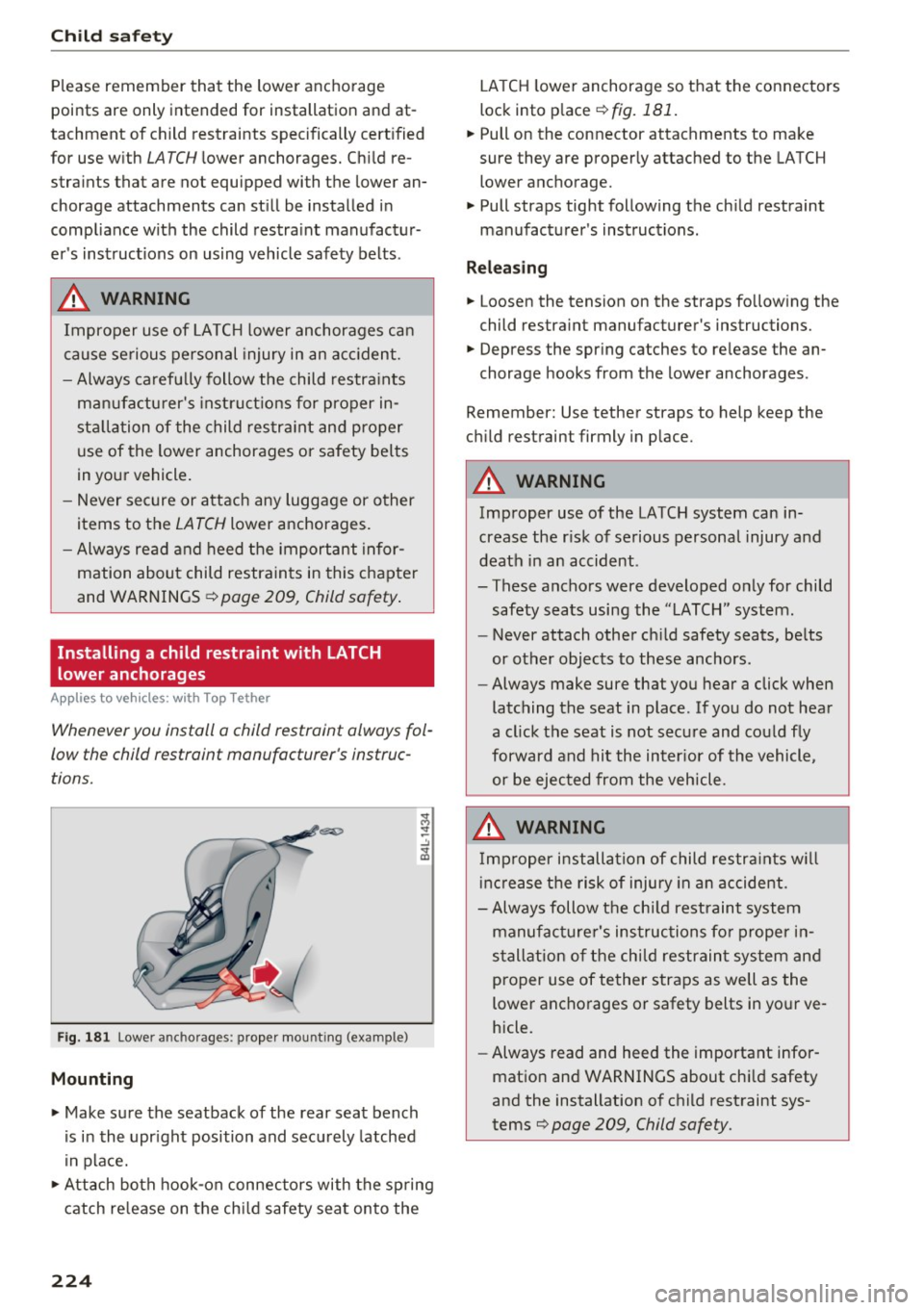
Fig. 181 L owe r an ch orage s: proper mou nting (examp le)
Mounting
.. Make sure the seatback of the rear seat bench
is in the upright position and securely latched
in place .
.. Attach both hook-on connectors with the spring
catch release on the child safety seat onto the
224
LATCH lower anchorage so that the connectors
lock into place
¢ fig. 181.
.. Pull on the connector attachments to make
sure they are properly attached to the LATCH
lower anchorage.
.. Pull straps tight following the child restraint
manufacturer's instructions.
Releasing
.. Loosen the tension on the straps following the
child restraint manufacturer's instructions.
.. Depress the spring catches to release the an
chorage hooks from the lower anchorages .
Remember: Use tether straps to help keep the
child restraint firmly in place.
A WARNING
-
Improper use of the LATCH system can in
crease the risk of serious personal injury and
death in an accident .
- These anchors were developed only for child safety seats using the "LATCH" system.
- Never attach other child safety seats, belts
or other objects to these anchors .
- Always make sure that you hear a click when
latching the seat in place. If you do not hear
a click the seat is not secure and could fly
forward and hit the interior of the vehicle,
or be ejected from the vehicle.
A WARNING
Improper installation of child restraints will
increase the risk of injury in an accident.
- Always follow the child restraint system
manufacturer's instructions for proper in
stallation of the child restraint system and
proper use of tether straps as well as the lower anchorages or safety belts in your ve
hicle.
- Always read and heed the important infor
mation and WARNINGS about child safety
and the installation of child restraint sys
tems
¢ page 209, Child safety.
-
Page 228 of 328
Child safety
Installing the upper tether strap on the
anchorage
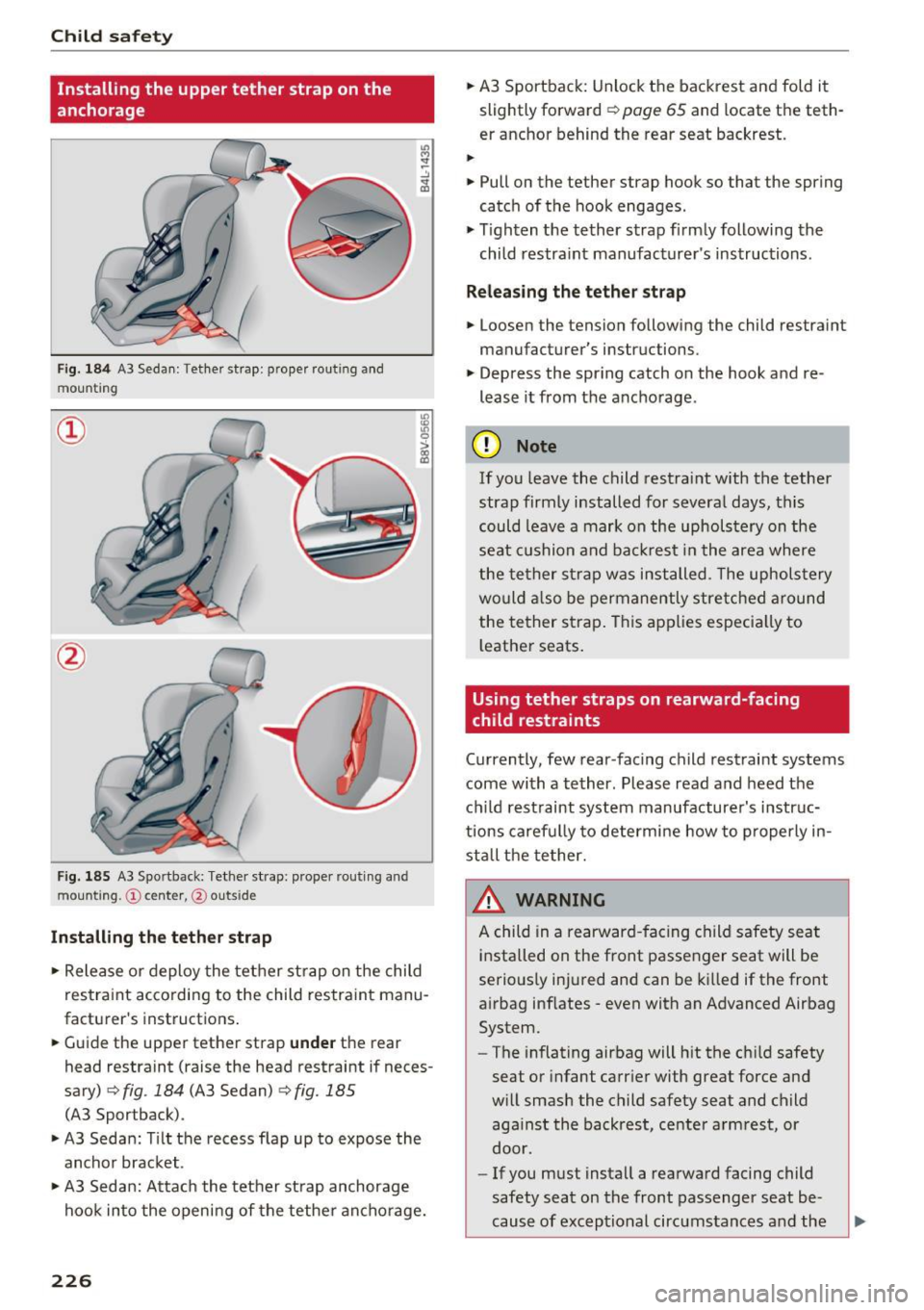
Fig. 184 A3 Sedan : Tethe r strap : prope r rout ing and
m oun ting
F ig . 185 A3 Sportback: Tet her st rap: p roper rout ing an d
m oun ting. (!) cent er, @ outs ide
Inst all ing th e teth er strap
"' ' ~ I 0 :> gi
,... Release or deploy the tether strap on the child
restra int according to the child restraint manu
facturer's instructions .
,... Guide the upper tether strap
unde r the rear
head restraint (raise the head restraint if neces
sary) ¢
fig. 184 (A3 Sedan) ¢ fig. 185
(A3 Sportback) .
,... A3 Sedan: T ilt the recess flap up to expose the
anchor bracket .
,... A3 Sedan: Attach the tether st rap anchorage
hook into the opening of the tether anchorage.
226
,... A3 Sportback: Unlock the backrest and fold it
slightly forward ¢
page 65 and locate the teth
er anchor behind the rear seat backrest .
..
,... Pull on the tether strap hook so that the spring
catch of the hook engages .
,... Tighten the tether strap f irmly following the
child restra int manufacturer's instructions .
Releasing the tether str ap
,... Loosen the tension following the child restraint
manufacturer's instructions.
,... Depress the spr ing catch on the hook and re
lease it from the anchorage .
(D Note
If you leave the child restraint with the tether
strap firmly installed for several days, this
could leave a mark on the upholstery on the
seat cushion and backres t in the area where
the tether s trap was installed . T he upholstery
would a lso be permanently stretc hed around
the tether strap. This applies especially to
l eather seats .
Using tether straps on rearward-facing
child restraints
Currently, few rear -facing child restraint systems
come with a tether. Please read and heed the
ch ild rest raint system manufacturer's instruc
tions carefully to determi ne how to p roperly in
stall the te ther.
_.6 WARNING
A child in a rearward -facing ch ild safety seat
installed on the front passe nger seat will be
serious ly injured and can be killed if the front
airbag inflates - even with an Advanced Airbag
System.
- The inflating airbag will h it the ch ild safety
seat or infant carr ier with great force and
w ill smash the child safety seat and child
against the backrest , center arm rest, or
door.
- If you must install a rearward facing child
safety seat on the front passenger seat be
cause of exceptional circumstances and the
Page 232 of 328
Checking and Filling
Refueling
Fuel filler neck
The fuel filler neck is located on the right rear
side panel behind the fuel fi ller flap.
If the power locking system should fail, you can
still open the flap manually· for deta iled instruc
tions see~
page 232 .
You can find the fuel tank capacity of your vehicle
in
c::;, page 303 .
The label on the inside of the fuel filler flap tells
you the correct fuel for your vehicle . For more in
formation about fuel specifications, see
c::;, page 228 .
Your vehicle fuel tank has an onboard refuelling
vapor recovery system . This feature helps to pre·
vent fuel vapors from escap ing from the tank and
polluting the environment while you refuel your
veh icle. In order to fill the tank properly while
protecting the environment, please fo llow this
refueling procedure carefully .
.&, WARNING
Under normal operating conditions, never car
ry additional fuel containers in your car. Gas
canisters and other containers used to trans
port fuel can be dangerous . Such containers,
full or empty, may leak and could cause a fire
in a collision. If you must transport fuel to
use for your lawn mower, snow blower, etc.,
be very careful a nd always observe local and
state laws regard ing the use, t ransportation
and storage of such fue l containers. Make cer·
tain the container meets industry standards (ANSI/ASTM F852 · 86).
(D Note
Never drive yo ur vehicle unt il the fuel tank is
completely empty. The ir regula r supply of
fue l can cause misfiring. Gasoline could enter
the exhaust system and damage the catalytic
converter.
230
Fueling procedure
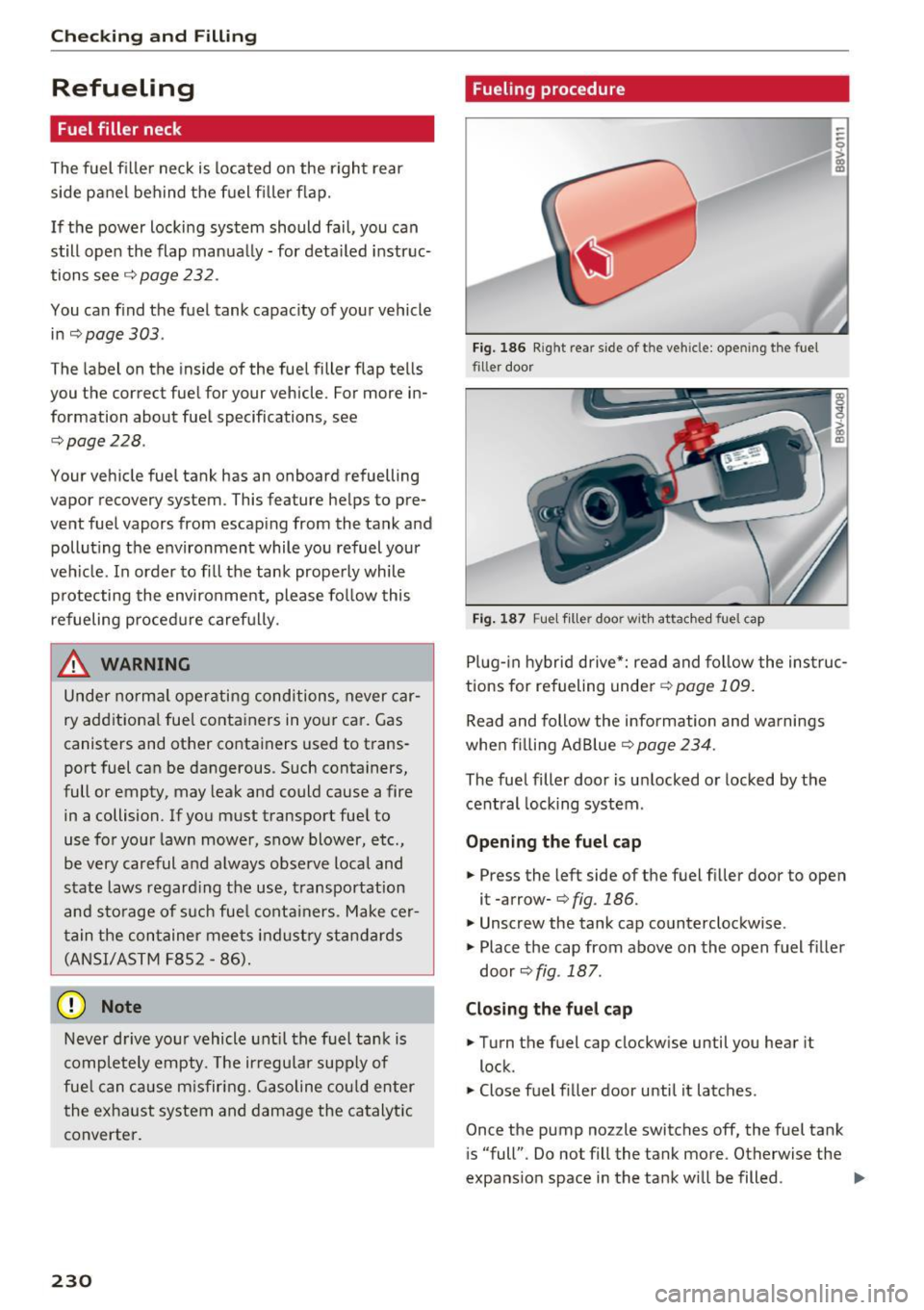
Fig. 186 R ig ht rea r side of t he ve hicle: ope ning the fuel
fil ler door
Fig. 187 Fuel fill er doo r wit h attached fue l cap
--0 > g:
Plug -in hybrid drive*: read and follow the instruc
tions for refueling unde r
c::;,page 109.
Read and follow the information and warnings
when filling AdBlue
c::;,page 234.
The fuel filler door is unlocked or locked by the
central locking system .
Opening the fuel cap
.. Press the left side of the fuel filler door to open
it -arrow-¢
fig. 186.
.,. Unscrew the tank cap counterclockwise .
.. Place the cap from above on the open fuel filler
door ¢
fig. 187.
Closing the fuel cap
.. Turn the fuel cap clockwise until you hear it
lock.
.. Close fuel f iller door until it latches .
Once the pump nozzle switches off, the fuel tank
is "full". Do not fill the tank more. Otherwise the
expans ion space in the tank will be filled .
IJ.
Page 234 of 328
Checking and Filling
@ Tips
Fue l can age and may lead to prob lems when
starting. Audi recommends replacing the fuel
in your vehicle within six months.
@ Tips
- If the engi ne is running while fueling, va
pors can escape or the fuel can spill over.
Because of th is, the fuel no zzle switches off
before the tank is full.
- Do not fuel the vehicle when the ignition is
switched on. Otherwise, the fuel gauge may
not show t he correct level after fueling the
vehicle .
- Diesel veh icles are equ ipped with a diesel
misfueling guard
1>. It allows the vehicle to
be f ueled on ly w ith a diesel fuel pump noz
zle .
- A wo rn o r damaged nozzle or a nozzle that
i s too smal l may not be ab le to open the
diesel misfueling protector . If this is the
case, try t urning the nozzle before inserting
i t in the f uel fille r neck, u se a d ifferent fue l
pump or see an aut horized Audi dea ler or
a uthorized Audi Service Facility fo r assis
tance .
- The misf ueling guard does not open when
adding fue l from a fue l conta iner . You can
bypass it by adding the diesel fuel slow ly.
- The fuel filler door on your ve hicle does not
l ock when you lock the vehicle from the in
side.
l ) Ma rket -specifi c
232
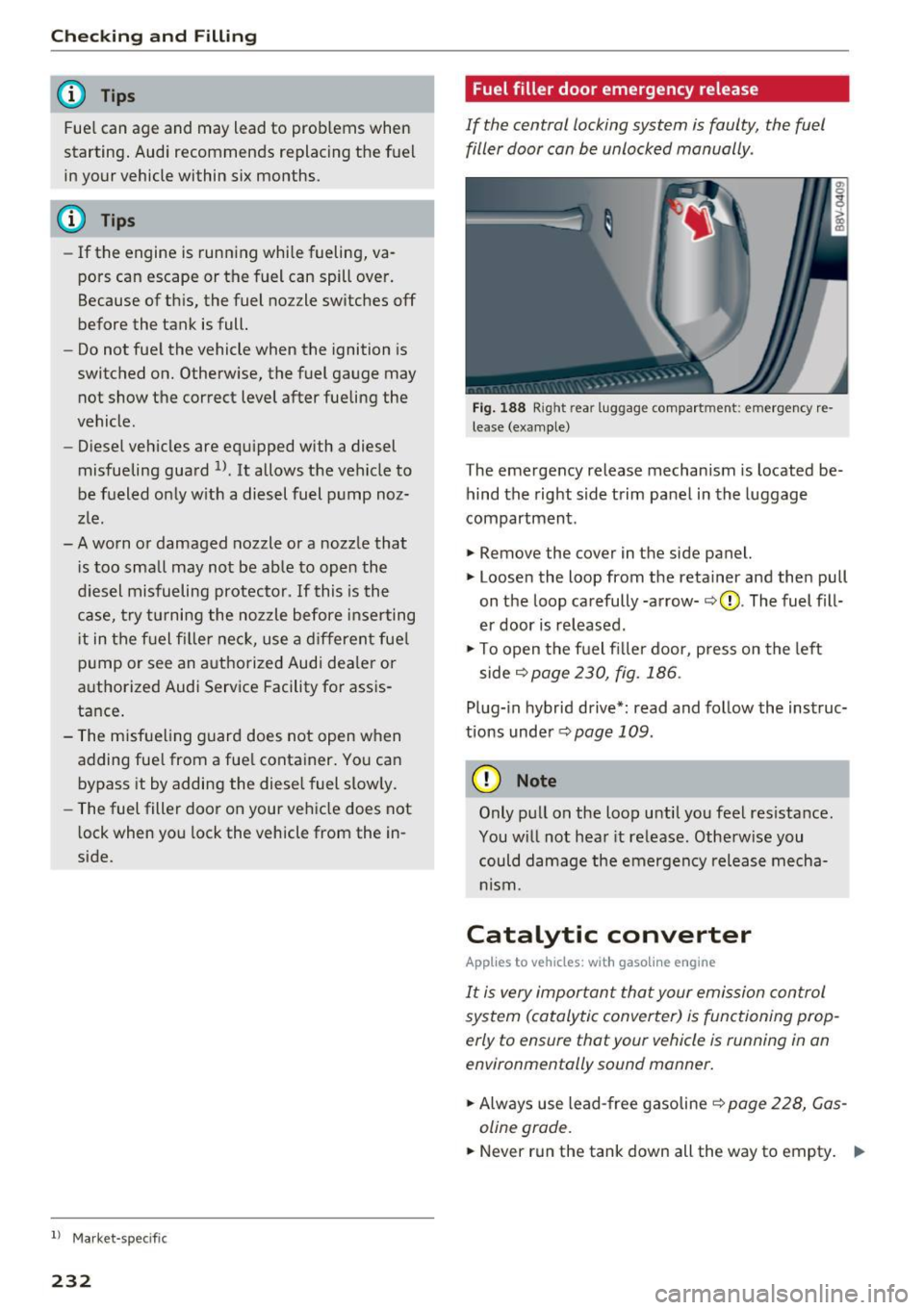
Fuel filler door emergency release
If the cen tral locking system is faulty, the fuel
filler door can be unlocked manually .
Fig. 188 Right re ar l ug gag e compa rtm en t: em erg enc y re
lease (example)
T he emergency release mechan ism is located be
hind the right s ide trim panel in the luggage
compartment.
.,. Remove the cover in the side panel.
.,. Loosen the loop from the retainer and then pull
on the loop carefully-arrow-
~ CD. The fuel fill
er door is released .
.,. To open the f uel filler door, press on the left
side
~ page 230, fig. 186 .
Plug-in hybrid drive*: read and follow the instruc
tions unde r
Qpage 109.
(D Note
Only pu ll on the loop until you feel res ista nce .
You wil l not hear it re lease. Otherw ise you
could damage the emergency release mecha
n ism .
Catalytic converter
Applies to vehicles: with gasol ine engine
It is very important tha t your emi ssion control
sys tem (ca talytic conv erter) is functioning prop
erly to ensure that your vehicle is running in an
env ironmentally sound manner .
.,. Always use lead-free gasoline ~ page 228, Gas
oline grade .
.,. Never run the tank down all the way to empty . ..,.
Page 237 of 328

.... N
0 > CX)
....
"' U"I
....
"' ....
Ad Blue,/' Ad Blue: sy stem fault! No re start in
600 miles (1000 km ). See owner' s manual.
This mes sage appea rs when it is only poss ible to
d rive the d ist an ce ind icated in the dr iver informa
tion system . Drive to the nearest autho rized Audi
dealer or authorized Audi Service Facility to have
the ma lfunction corrected . Otherwise the engine
w ill not start again if you stop it once the d is
tance indicated has been driven .
Ad Blue: system fault . Engine start
not possible! See owner 's manual
This message appears if the sys tem has de te cted
that the tank was filled incorrectly or that there
is a malfunction. Drive immediately to the near
est authorized Aud i dea ler or a uthorized Aud i
Service Facility to have the malfunction correct
ed. Otherwise you will not be able to start the en
g ine again once you stop it .
Filling AdBlue
Applies to vehicles: with selective catalyt ic redu ction
A special refill bottle must be used to fill the
AdBlue.
F ig. 1 89 Right rear s ide of t he veh icle: remov ing the AdB l·
ue cap
F ig. 190 Ad Blue filler neck: insert ing refill bottle
Checking and Filling
T he Ad Blue tank open ing is located near the d ie
sel tank opening. Add at least 1 gallon (3.8 lit
ers) of Ad B lue (two bottles) . This is the min imum
amount required to ensure the system detects
the refilling and to start the engine. You can add a max imum of approximately 4 gallons (15 l it
ers).
Opening the filler neck and refilling AdBlue
with a bottle
Requireme nt: T he request to add AdBlue must
appear in the instrument cluster disp lay .
.. Park your veh icle on a level s urface.
• Switch the ignit ion off.
• Open the tank door¢
page 230.
• Turn the cap on the tank opening to the left to
remove ¢
fig. 189.
• Remove the cap from the ref ill bo ttle.
• Posi tion the refill bo ttle on the fil le r tube and
turn the bottle clockwise until it stops t urning
@ to empty it. Continue press ing the bottom
of the bottle until it is empty or until f luid
stops f low ing into the ta nk.
• Tu rn the bottle to t he left without pressing on
the bottom .
Closing the filler neck
.. Turn the Ad B lue cap to the right on the filler
tube until the cap clicks into place.
• Close the tank cover.
Afte r filling
The vehicle must be driven . The system may take
u p to two minutes to detect t hat the AdBl ue has
been filled.
• If the re w as no Ad B lue left in the tank and a
range of
O mi (0 km) was displayed in the in
strument cluster, switch the ign it ion on for
about 30 seconds before starting the engine.
A WARNING
-Ad B lue can irritate the sk in, eyes and respira-
tory system . If there is contact with the flu id,
flus h immed iate ly w it h plenty of water. Con-
su lt a phys ic ian if necessa ry.
~
235