ABS AUDI A3 CABRIOLET 2016 User Guide
[x] Cancel search | Manufacturer: AUDI, Model Year: 2016, Model line: A3 CABRIOLET, Model: AUDI A3 CABRIOLET 2016Pages: 272, PDF Size: 67.88 MB
Page 130 of 272
Driving safety
-Never place or install floor mats or other
floor coverings on top of already installed
floor mats. Additional floor mats and other
coverings will reduce the size of the pedal
area and interfere with the pedals .
- Always properly reinstall and secure floor
mats that have been taken out for cleaning.
- Always make sure that objects cannot fall
into the driver footwell while the vehicle is
moving . Objects can become trapped under
the brake pedal and accelerator pedal caus ing a loss of veh icle control.
Storing cargo correctly
Loading the luggage compartment
All luggage and other objects must be properly
stowed and secured in the luggage compart
ment.
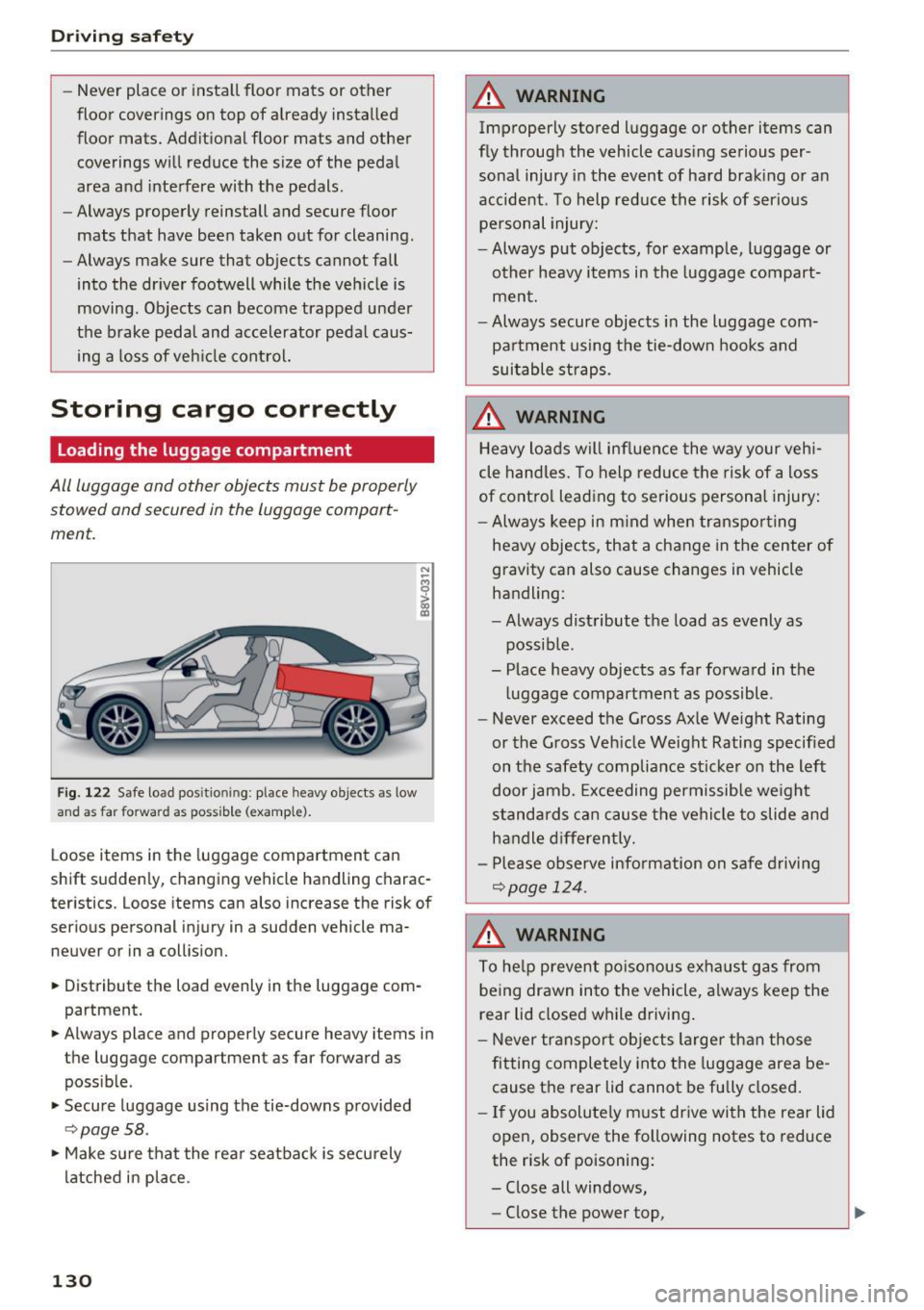
Fig. 122 Safe load positio nin g: place heavy objects as low
and as far forward as possible (example).
N ;;:; 0
> ill
Loose items in the luggage compartment can
shift suddenly, changing vehicle handling charac
teristics . Loose items can also increase the risk of
serious personal injury in a sudden vehicle ma
neuver or in a collision.
.,. Distribute the load evenly in the luggage com
partment .
.,. Always place and properly secure heavy items in
the luggage compartment as far forward as
possible .
.,. Secure luggage using the tie-downs provided
~ page 58.
.,. Make sure that the rear seatback is securely
latched in place .
130
A WARNING
Improperly stored luggage or other items can
fly through the vehicle caus ing serious per
sonal injury in the event of hard braking or an
accident. To help reduce the risk of serious
personal injury:
- Always put objects, for example, luggage or
other heavy items in the luggage compart
ment.
-Always secure objects in the luggage com
partment using the tie-down hooks and
suitable straps .
A WARNING
Heavy loads will influence the way your vehi
cle handles. To help reduce the risk of a loss
of control leading to serious personal injury:
- Always keep in m ind when transporting
heavy objects, that a change in the center of
gravity can also cause changes in vehicle
handling:
- Always distribute the load as evenly as
possible.
- Place heavy objects as far forward in the
luggage compartment as possible .
- Never exceed the Gross Axle Weight Rating
or the Gross Veh icle Weight Rating specified
on the safety compliance sticker on the left
door jamb. Exceeding permissible we ight
standards can cause the vehicle to slide and
handle differently.
- Please observe information on safe driving
~page 124.
A WARNING
To help prevent poisonous exhaust gas from
being drawn into the vehicle, always keep the
rear lid closed while driving .
- Never transport objects larger than those
fitting completely into the luggage area be
cause the rear lid cannot be fully closed.
- If you absolutely must dr ive with the rear lid
open, observe the following notes to reduce
the risk of poisoning:
- Close all windows,
- Close the power top,
Page 136 of 272
Safety belts
Why use safety belts?
Frontal collisions and the law of physics
Frontal crashes create very strong forces for peo
ple riding in vehicles .
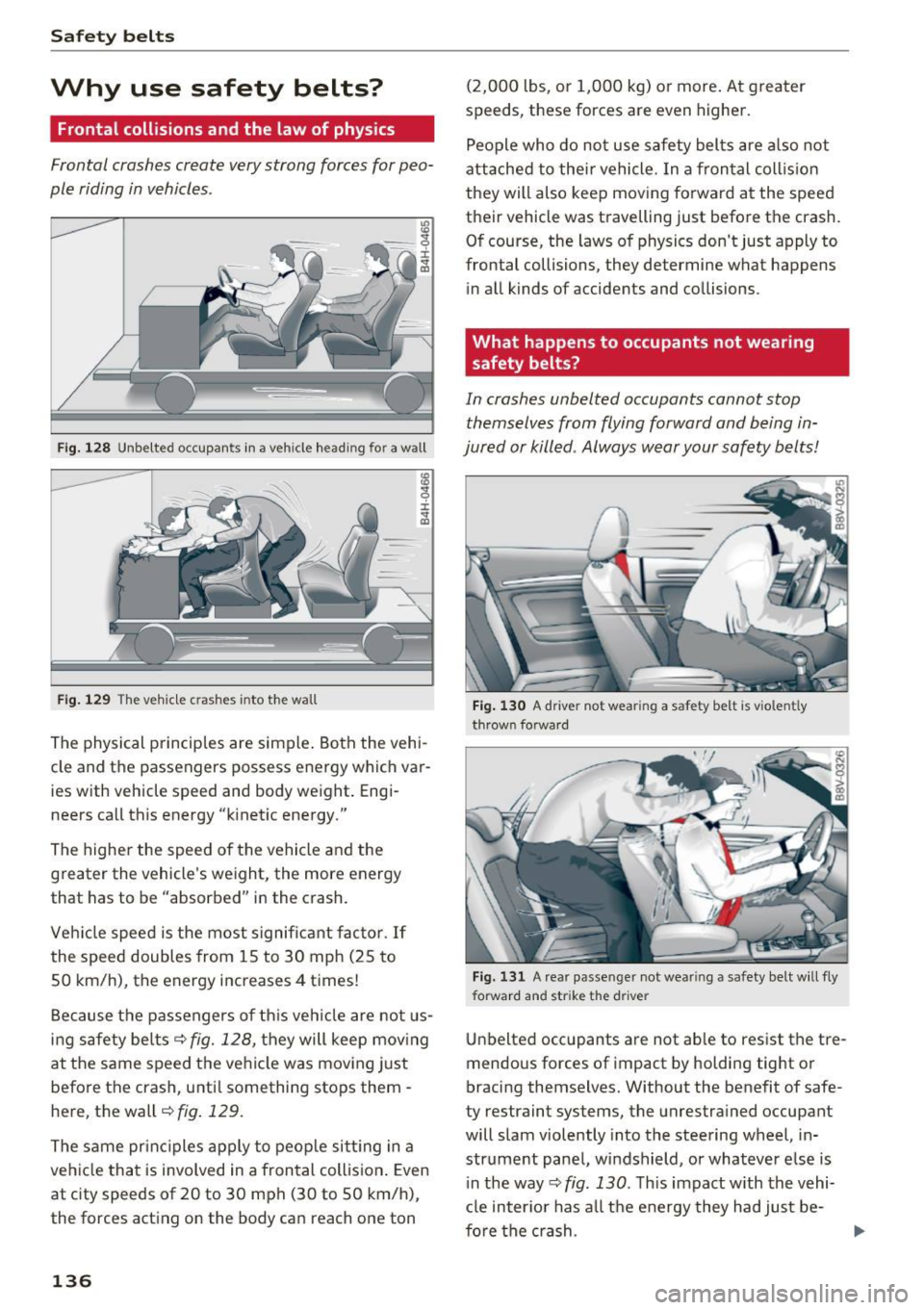
Fig. 128 Unbelted occupants in a veh icle headi ng fo r a wall
Fig. 129 The vehicle c rashes into the wall
The physical principles are simple. Both the vehi
cle and the passengers possess energy which var ies w ith vehicle speed and body weight . Engi
neers call this energy "k inetic energy."
The higher the speed of the vehicle and the
greater the vehicle's weight, the more energy
that has to be "absorbed" in the crash.
Vehicle speed is the most significant factor .
If
the speed doubles from 15 to 30 mph (25 to
50 km/h), the energy increases 4 times!
Because the passengers of this vehicle are not us
ing safety belts~
fig. 128, they will keep moving
at the same speed the vehicle was moving just
before the crash, unti l something stops them -
here, the wall~
fig. 129.
The same principles apply to people sitting in a
vehicle that is involved in a frontal collision . Even
at c ity speeds of 20 to 30 mph (30 to 50 km/h),
the forces acting on the body can reach one ton
136 (2,000 lbs,
or 1,000 kg) or more. At greater
speeds, these forces are even higher.
People who do not use safety belts are also not
attached to their vehicle. In a frontal collision
they will also keep moving forward at the speed
their vehicle was travelling just before the crash.
Of course, the laws of physics don't just apply to
frontal collisions, they determine what happens in all kinds of accidents and collisions .
What happens to occupants not wearing
safety belts?
In crashes unbelted occupants cannot stop
themselves from flying forward and being in
jured or killed . Always wear your safety belts!
Fig. 130 A drive r not wea ring a safety belt is vio len tly
th row n forward
Fig. 131 A rea r passe nge r not wea ring a safety belt will fly
forward and st rike t he drive r
Unbelted occupants are not ab le to resist the tre
mendous forces of impact by holding tight or
bracing themselves. Without the benefit of safe
ty restraint systems, the unrestrained occupant
will slam violently into the steering wheel, in
strument panel, windshield, or whatever else is i n the way~
fig. 130 . This impact w ith the vehi
cle inter ior has all the energy they had just be-
fo re the crash .
Ill>
Page 137 of 272
<( co ..... N
" N ..... 0 r--. > 00
Never rely on airbags alone for protection. Even
when they deploy, airbags provide on ly additional
protection. Airbags are not supposed to dep loy in
all kinds of accidents. A lthough your Audi is
equipped with airbags, all vehicle occupants, in
cluding the dr iver, must wear safety belts cor
rectly in order to minimize the risk of severe in
jury or death in a crash .
Remember too, that airbags will deploy only
once and that your safety belts are always there
to offer protect ion in those accidents in w hich
a ir bags are not supposed to deploy or when they
have already deployed. Unbelted occupants can
also be thrown o ut of the vehicle where even
more severe or fatal injur ies can occur.
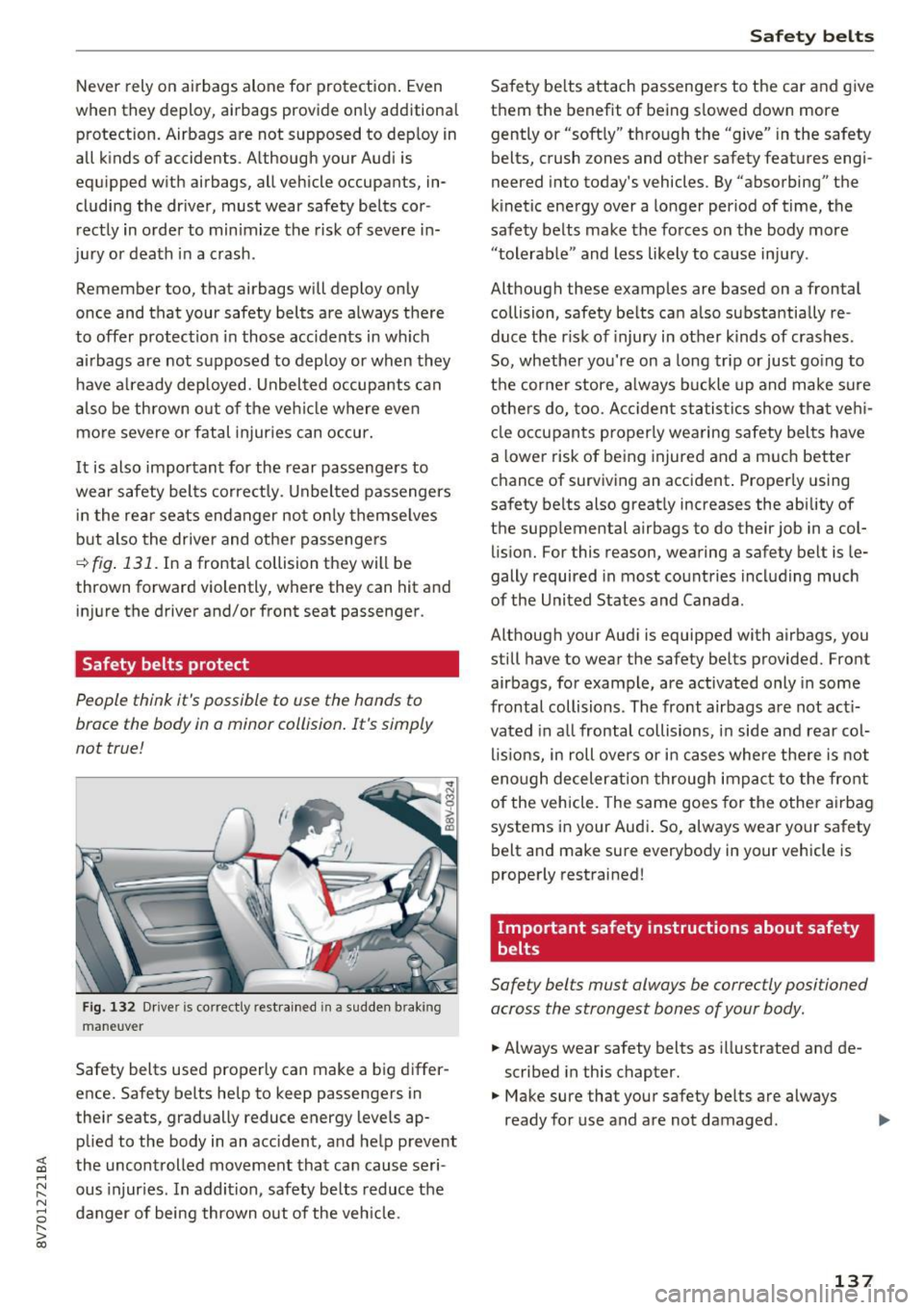
It is also important for the rear passengers to
wear safety belts correctly . Unbelted passengers
in the rear seats endanger not only themse lves
but also the driver and other passengers
¢fig . 131. In a frontal collision they will be
thrown forward violently, where they can hit and
injure the driver and/or front seat passenger .
Safety belts protect
People think it's possible to use the hands to
brace the body in a minor collision. It 's simply
not true!
Fig. 132 Dr iver is correctly restra ined in a sudden b raking
maneuver
Safety belts used properly can make a big differ
ence. Safety belts help to keep passengers in
their seats, gradually reduce energy levels ap
plied to the body in an accident, and help prevent
the uncontrolled movement that can cause se ri
ous injur ies. In addition, safety belts reduce the
danger of being thrown out of the vehicle .
Safety belts
Safety belts attach passengers to the car and give
them the benefit of being slowed down more
gently or "softly" through the "give" in the safety
belts, crush zones and other safety features engi
neered into today's vehicles. By "absorbing" the
kinetic ene rgy over a longer period of time, the
safety belts make the forces on the body more
"tolerab le" and less likely to ca use injury .
Although these examples are based on a frontal collision, safety be lts can also substantially re
duce the r isk of injury in other k inds of crashes.
So, whether you're on a long trip or just going to
the corner store, always buckle up and make sure
others do, too. Acciden t statist ics show that vehi
cle occupants properly wearing safety belts have
a lower risk of being injured and a much better
chance of surviving an accident . Properly using
safety belts also greatly increases the ability of
the supp lemental airbags to do their job in a col
lision. For this reason, wearing a safety belt is le
gally required in most count ries including much
of the United States and Canada .
Although your Aud i is equipped with airbags, you
still have to wear the safety belts provided. Front
airbags, for example, are activated only in some
frontal collisions. The front airbags are not act i
vated in all frontal collisions, in side and rear col
lisions , in roll overs or in cases where there is not
enough deceleration through impact to the front
of the vehicle. The same goes for the other air bag
systems in your Audi . So, always wear your safety
belt and make sure everybody in your vehicle is
properly restrained!
Important safety instructions about safety
belts
Safety belts must always be correctly positioned
across the strongest bones of your body.
.,. Always wear safety belts as illustrated and de
scribed in this chapter.
.,. Make sure that your safety belts are always
ready for use and are not damaged.
137
Page 148 of 272
Airbag system
-Therefore, always wear your safety belts and
make sure that everybody in your vehicle is
properly restrained.
- Always hold the steering wheel with both
hands on the outside of the steering wheel
rim at the 9:00 o 'clock and 3 :00 o'clock po
sitions to help reduce the risk of personal in
jury if the driver's airbag inflates .
- Never hold the steering wheel at the 12
o'clock position or with your hands any
where inside the steering wheel or on the steering wheel hub. Holding the steering
wheel the wrong way increases the risk of
severe injury to the arms, hands, and head if
the driver airbag deploys.
A WARNING
Objects between you and the airbag will in
crease the risk of injury in a crash by interfer
ing with the way the airbag unfolds and/or by
being pushed into you as the airbag inflates.
- Always make sure nothing is in the front air-
-
bag deployment zone that could be struck
by the airbag when it inflates.
- Objects in the zone of a deploying airbag
can become projectiles when the airbag de
ploys and cause serious personal injury.
- Never hold things in your hands or on your lap when the vehicle is in use .
- Never place accessories or other objects
(such as cup holders, telephone brackets,
note pads, navigation systems, or things
that are large, heavy, or bulky) on the doors;
never attach then to the doors or the wind
shield; never place them over or near or at
tach them to the area marked ,.AIRBAG" on
the steering wheel, instrument panel or the
seat backrests; never place them between
these areas and you or any other person in
the vehicle.
- Never attach objects to the windshield
above the passenger front airbag, such as
accessory GPS navigation units or music
players. Such objects could cause serious in
jury in a collision, especially when the air bags inflate .
148
-Never recline the front passenger seat to
transport objects. Items can also move into
the deployment area of the side airbags or
the front airbag during breaking or in a sud
den maneuver . Objects near the airbags can
fly dangerously through the passenger com
partment and cause injury, particularly
when the seat is reclined and the airbags in
flate.
A WARNING
A person on the front passenger seat, espe
cially infants and small children, will receive
serious injuries and can even be killed by be ing too close to the airbag when it inflates .
- Although the Advanced Airbag System in
-
your vehicle is designed to turn off the front
passenger airbag if an infant or a small child
is on the front passenger seat, nobody can
absolutely guarantee that deployment un
der these special conditions is impossible in
all conceivable situations that may happen
during the useful life of your vehicle.
- The Advanced Airbag System can deploy in
accordance with the .,low risk" option for 3-
and 6-year-old children under the U.S . Fed
eral Standard if a child with electrical capac
itance greater than the combined capaci
tance of a typical one-year old infant re
strained in one of the forward facing or rear
ward-facing child seats with which your ve
hicle was certified is on the front passenger
seat and the other conditions for airbag de
ployment are met.
- Accident statistics have shown that children
are generally safer in the rear seat area than
in the front seating position.
- For their own safety, all children, especially
12 years and younger, should always ride in
the back properly restrained for their age and size.
Advanced front airbag system
Your vehicle is equipped with a front Advanced
Airbag System in compliance with United States
Federal Motor Vehicle Safety Standard 208, as
well as Canada Motor Vehicle Safety Standard ..,.
Page 150 of 272
Airbag syste m
seat. Please be sure to read the important infor
mation in the sections that follow and be sure to
heed all of the WARNINGS.
.&_ WARNING
To reduce the risk of injury when an airbag in
flates, always wear safety belts properly.
- If you are unrestrained, leaning forward, sit ting s ideways or out of position in any way,
your risk of injury is much h igher.
- You will also receive serious injuries and could even be killed if you are up aga inst the
airbag or too close to it when it inflates -
even with an Advanced Airbag
r:::;, page 143 .
.&_ WARNING
A child in a rearward-facing chi ld seat instal
led on the front passenger seat will be ser i
ously inju red and can be killed if the front air
bag inflates -even with an Advanced Airbag
System.
- Although the Advanced A irbag System in
yo ur vehicle is designed to tu rn off the front
airbag when a rearwa rd -facing child re
straint has been insta lled on the front pas
senger seat, nobody can absolutely g uaran
tee that deployment is impossible in all con
ceivable s ituations that may happen during
the useful life of your vehicle .
- The inflating a irbag w ill hit the child seat or
infant carrier w ith great force and will
smash the ch ild seat and child against the
backrest, center a rmrest, door, or roof .
- Always install rearward-facing ch ild re
straints on the rear seat .
- If you must install a rearward fac ing ch ild
seat on the front passenger seat because of exceptional c ircumstances and the
PASSEN
GER AIR BAG OFF
light does not come on
and stay on, immediately insta ll the rear
facing child seat in a rea r seating position
and have the airbag system inspected by
your Audi dealer .
150
.&_ WARNING ,_
If, in exceptional circumstances, you must in
stall a forward-facing child restraint on the
front passenger's seat:
- Always make sure the forward-facing seat
has been des igned and certified by its man
ufacturer for use on a front seat with a pas
senger front and side airbag.
- Never put the forwa rd-facing child restraint
up against or very nea r the instrument pan
el.
- Always move the front passenge r seat to
the highest posit ion in the up and down ad
justmen t range and move it back to the
rearmost posit io n in the seat's fo re and aft
adjustment range, as far away from the a ir
bag as poss ible, before install ing the for
ward-facing chi ld restraint.
- Always make sure that the safety be lt upper
anchorage is behind the chi ld rest raint and
not next to o r in front of the c hild restraint
so that the safety be lt will be p roper ly posi
tioned.
- Always make sure that there is noth ing on
the front passenger seat that will cause the
capacitive passenger detection system in
the seat to signal to the Airbag System that
the seat is occup ied by a person when it is
not , or to signal that it is occupied by some
one who is heavier than the person ac tually
si tting o n the sea t. T he presence of addi
tional objects could cause the passenger
front airbag to be turne d on when it should
be
off, or could cause the airbag to work in a
way that is d ifferent from the way it wou ld
have worked without the object on the seat.
- Make sure that the
PASSENGER AIR BAG
OFF
li ght comes on and stays on all the time
whenever the ign it ion is switched on.
Advanced Airbag System components
T he front passenger seat in your veh icle has a lot
of ve ry important parts of the Advanced A irbag
System i n it. These parts incl ude the capacitive
passenger detection system, wir ing , b rackets,
and more. The control uni t moni tors the system
on the front passenge r seat when t he ignit ion is ..,.
Page 159 of 272

<( co ..... N
" N ..... 0 r--. > 00
must be performe d by qualified workshops
only. Make sure that any airbag service ac
tion is entered in your Audi Warranty
&
Maintenance booklet under AIRBAG RE
PLACEMENT RECORD.
- For safety reasons in severe accidents, the
alternator and starter are separated from
the vehicle battery with a pyrotechn ic circuit
interrupter.
- Work on the pyrotechnic circ uit interrupt
er must only be performed by a qualified
technicians who have the experience, in
formation and special tools necessary to
perform the work safely.
- If the veh icle or the c ircuit interrupter is
scrapped, all app licable safety precautions
must be followed .
@) For the sake of the environment
Undeployed airbag modu les and pretension
ers might be classified as Perch lorate Materi
al - special handling may apply, see
www.dtsc .ca.gov/hazardouswaste/perchlo
rate. When the veh icle or parts of the re
strai nt system including airbag modules and
safety bel ts wit h pretensione rs are scrapped,
all a ppli cable laws and regulations mus t be
observed. Your a uthorized Audi dealer is fa
m iliar with these requirements and we recom
mend that you have your dealer perform this
service for you.
Other things that can affect Advanced
Airbag performance
Changing the vehicle's suspension system can
change the way that t he Advanced Airbag System
pe rforms in a crash. For examp le, using tire-r im
comb inat ions no t approved by Audi, lowering the
ve hicle, changing the s tiffness of the suspens ion,
includ ing the springs, suspension struts, shock
absorbers etc . can change the forces that are
measured by the airbag sensors and sent to the
e lectronic contro l unit . Some suspens ion changes
can, for example, increase the force levels meas
ured by the sensors and make the airbag system
deploy in crashes in wh ich it would not dep loy if
the changes had no t been made. Other kinds of
Airb ag sys tem
changes may red uce the force levels measured by
the sensors and prevent the airbag from deploy
i ng when it sho uld.
A WARNING
=
Changing the vehicle's suspension including
use of unapproved tire-rim combinations can
change Advanced Airbag performance a nd in
crease the risk of serious personal injury in a
crash.
- Never install suspension components that do not have the same performance charac
ter istics as the components origina lly instal
led on you r vehi cle.
- Never use tire-rim combinations that have
not been approved by Audi.
Knee airbags
Description of knee airbags
Applies to: vehicles wi th knee airbags
The knee airbag system can provide supplemen
tal protection to properly restrained front seat
occupants .
Fig. 14 1 Driver 's k nee a irbag
The driver knee airbag is in the instrument panel
underneath the s teer ing whee l
~fig. 141, the
airbag fo r the passenger is at abou t the same
heig ht in the i nstr ume nt p ane l underneath the
glove compa rtment.
The knee airbag offers add itiona l protection to
t h e d river's and passenge r's knees and uppe r and
l ower thigh areas a nd supplements the p rotec
t ion prov ided by the safety bel ts .
If the front airbags deploy, the knee a irbags also
deploy in frontal coll is ions when the deploymen t
Iii--
159
Page 175 of 272
<( co .... N ,.__
N .... 0 ,.__
> co
It is usually best to put these children in appropriate booster seats. Be sure the booster seat
meets all applicable safety standards.
Booster seats ra ise the seat ing pos it ion of the
child and reposition both the lap and shoulder
parts of the safety be lt so that they pass across
the child's body in the right places . The rout ing of
the belt over the child's body is very important
for the child's protection, whether or not a boos
ter seat is used. Children age 12 and under must
always ride in the rear seat.
Children who are at least 4 ft. 9 in. (57 inches/ 1.45 meters) tall can generally use the vehicle's
three point lap and shoulder belts. Never use the lap belt portion of the vehicle 's safety belt alone
to restrain any child, regardless of how b ig the
child is. A lways remembe r that children do not
have the pronounced pelv ic struc ture requ ired for
the proper function of lap belt portion of the ve
hicle's three point lap and shoulder be lts. The
chi ld's safety absolutely requires that a lap belt
port ion of the safety be lt be fastened snugly and
as low as possible around the pelvis. Never let
the lap belt portion of the safety belt pass over
the child's stomach or abdomen.
In a crash, airbags must inflate within a blink of
an eye and with considerable force. In order to do its job, the airbag needs room to inflate so that it
will be there to protect the occupant as the occu
pant moves forward into the a irbag .
A vehicle occupant who is out of position and too
close to the airbag gets in the way of an inflating
airbag. When an occupant is too close, he or she
will be struck v iolently and will receive ser ious or
possibly even fatal injury.
In order for the airbag to offer protection, it is important that all vehicle occupants, especially
any children, who must be in the front seat be
cause of exceptional circumstances, be properly
rest rained and as far away from the airbag as
possib le. By keep ing room be tween the child's
body and the front of the passenger compa rt
ment, the airbag can inflate comp letely and pro
vide supplemental protection in certain fronta l
coll isions.
Ch ild safety
_& WARNING
Not using a booster seat, using the booster
seat improperly, incorrectly installing a boos
ter seat or us ing the vehicle safety belt im
p roperly increases the r isk of serious personal
i njury and death in a collision or other emer
gency situation. To help reduce the risk of se rious personal injury and/or death:
- The sho ulde r belt m ust lie as close to the
center of the ch ild's co llar bone as possible
and must lie flat and snug on the upper
body . It must never lie across the throat or
neck. The lap belt must lie across the pelvis
and never across the stomach or abdomen. Make sure that the belt lies f lat and snug.
Pull on the belt to tighten if necessary.
- Fa ilure to properly route safety belts over a
child's body w ill cause severe injuries in an
accident or other emergency situation
c:::>page 135.
- The rear side of the ch ild safety seat should
be positioned as close as possible to the
backrest on the veh icle seat.
- For adjustable head restraints: adjust or re move the rea r seat head rest raint if it is dif
f icult to insta ll the ch ild seat with the head
rest raint in place
c:::> page 55. Install the
head restraint again immed iate ly once the
child seat is removed. Driving witho ut head
restraints or with head restraints that a re
not properly adjusted increases the risk of
serio us or fatal neck injury dramatica lly.
- Never let a chi ld put the shoulder belt under
the arm or behind the back, because it could
cause severe injuries in a crash.
- Chi ldren on the front seat of a ny car, even
with Advanced Airbags, can be seriously in
jured or even k illed when an airbag inflates.
- Never let a chi ld stand or kneel on any seat,
for examp le the front seat.
- Never let a chi ld ride in the cargo area of
your veh icle.
- Always remember that a chi ld leaning fo r
ward, sitting sideways or out of position in
any way during an accident can be struck by
a dep loying airbag. Th is w ill result in serious
-
personal injury or death . ~
175
Page 197 of 272
<( co ..... N
" N ..... 0 r--. > 00
Brake fluid
Checking brake fluid level
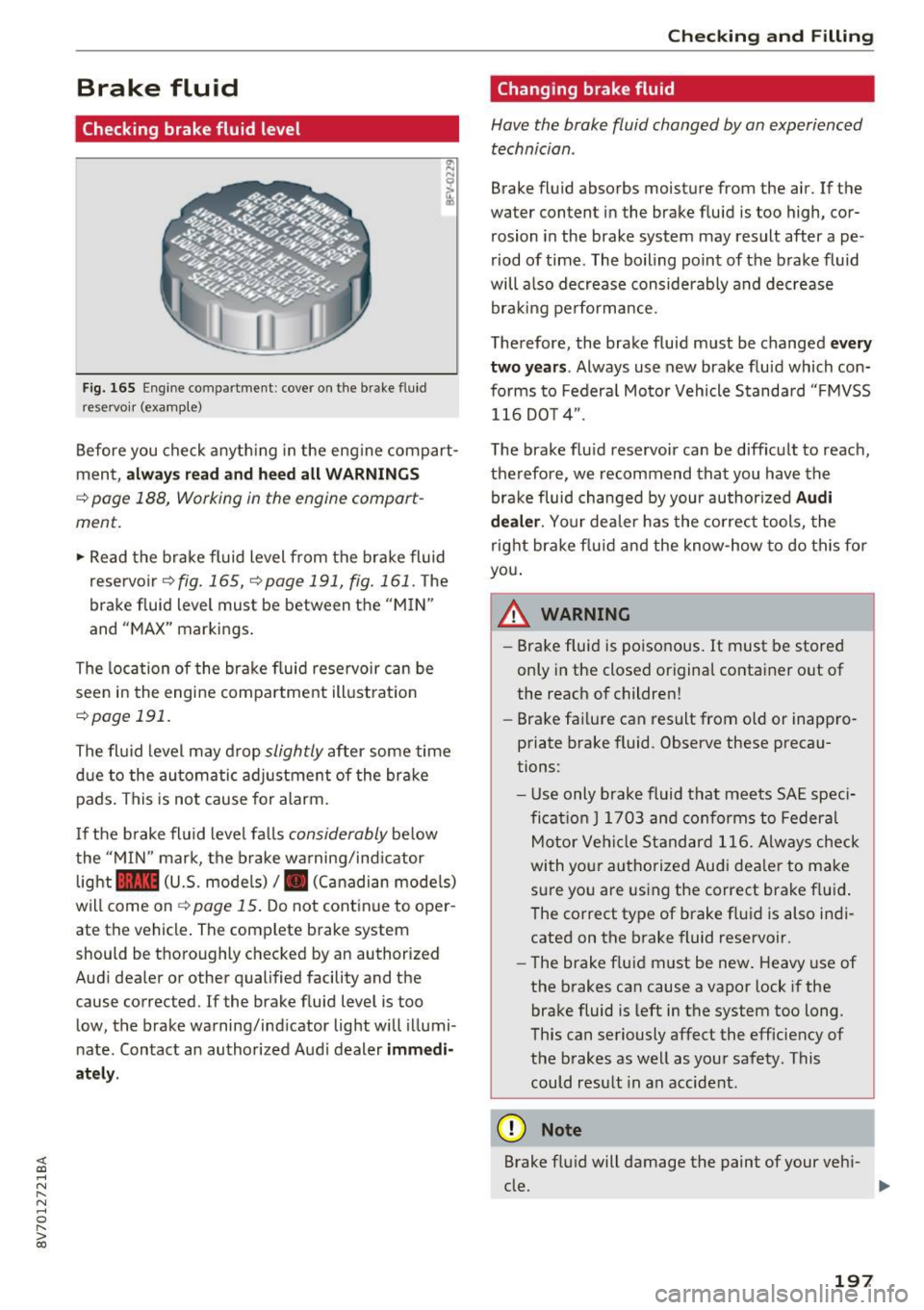
Fig. 165 Engine compartment : cover on t he brake fluid
reservoir (examp le)
"' N N
~ .,
Before you check anything in the engine compart
ment,
always read and heed all WARNINGS
¢page 188, Working in the engine compart
ment.
.,. Read the brake fluid level from the brake fluid
reservoir
~fig. 165, ¢page 191, fig. 161 . The
brake fluid level must be between the "MIN"
and "MAX" markings .
The location of the brake fluid reservoir can be
seen in the engine compartment illustration
¢page 191.
The fluid level may drop slightly after some time
due to the automatic adjustment of the brake
pads . This is not cause for alarm.
I f the brake fluid level falls
considerably below
the "MIN" mark, the brake warning/indicator
light
1111 (U.S. mode ls)/ . (Canadian models)
will come on¢
page 15. Do not continue to oper
ate the vehicle . The complete brake system
should be thoroughly checked by an authorized
Audi dealer or other qualified facility and the
cause corrected. If the brake fluid level is too
low, the brake warning/indicator light will illumi
nate. Contact an authorized Audi dealer
immedi
ately.
Checking and Filling
Changing brake fluid
Have the brake fluid changed by an experienced
technician.
Brake fluid absorbs moisture from the air. If the
water content in the brake fluid is too high, cor
rosion in the brake system may result after ape
riod of time . The boiling point of the brake fluid
will also decrease considerably and decrease braking performance.
Therefore, the brake fluid must be changed
every
two years. Always use new brake fluid which con
forms to Federal Motor Vehicle Standard "FMVSS
116 DO T 4" .
The brake fluid reservoir can be difficult to reach,
therefore, we recommend that you have the
brake fluid changed by your author ized
Audi
dealer. Your dealer has the correct tools, the
right brake fluid and the know-how to do this for
you.
A WARNING
- Brake fluid is poisonous. It must be stored
only in the closed original container out of
the reach of children!
- Brake failure can result from old or inappro
priate brake fluid . Observe these precau
tions:
- Use only brake fluid that meets SAE speci
fication
J 1703 and conforms to Federal
Motor Vehicle Standard 116. Always check
with your authorized Audi dealer to make
sure you are using the correct brake fluid .
The correct type of brake fluid is also indi
cated on the brake fluid reservoir.
- The brake fluid must be new. Heavy use of
the brakes can cause a vapor lock if the
brake fluid is left in the system too long.
This can seriously affect the efficiency of
the brakes as well as your safety. This
could result in an accident.
(D Note
Brake fluid will damage the paint of your vehi-
cle. ..,.
197
Page 198 of 272
Check ing and F illing
@ For the sake of the environment
Because of the prob lem of proper disposal of
brake fluid as we ll as the special tools re
quired and the necessary expertise, we rec
ommend that you have the b rake fluid
changed by your author ized Audi dealer .
Battery ( 12 V)
General information
All work on the battery requires expert knowl
edge .
Read and follow the WARNINGS
before check
i n g a nyth ing in the engine compartment
c::> page 188, Working in the engine compart
ment.
The batte ry in you r Aud i does not need any main
tena nce unde r
normal operating cond itions. A udi
re commends hav ing the e lectro lyte level check
by an au thor ized A udi dealer or au thori ze d Audi
Serv ice Facility when there a re
high outs ide tem
peratures or when driving a ll day. The elect rolyte
level sho uld a lso be checked each time the bat
tery is charged
c::> page 200.
Have the battery checked when you bring your ve
hicle in for an inspection. It is a good idea to re
p lace the battery if it is more than 5 years old .
T he batte ry is located in the eng ine compar tment
and is practically
maintenance-free .
Disconnecting the battery terminals
The battery shou ld not be d isconnected. Severa l
veh icle functions (power w indows, for example)
w ill be lost w hen the b attery is disconne cted. The
f u nctions mus t be reprog rammed after connect
in g the battery. To avo id th is, the battery shou ld
only be disconn ecte d from the vehicle e lectrica l
system when it is abso lutely necessary.
T o reprogram the func tions, proceed as follows:
198
Function Reprogramming
Power window one-c::> page 35, Correcting
touch up/down func-power window malfunc-
tion tions
Remote control key o r If the vehicle does no t
Convenience key react to the key, it must
be synchronized
c::> page29
Dig ita l cl ock c::>page 10
ESC indicator light The ind icator light goes
o ut after driving a few
meters
Not running the vehicle for long period s of
time
If you do not drive your vehicle for severa l days o r
weeks, electrical components are gradually re d u ced or switched off . This reduces energy con
s u mp tion and mai ntain s the vehicle's ability to
st art over a long perio d of time
c::> page 1 21.
Some conven ien ce f unctions, such as inter ior
li ght ing o r power seats* may not wor k. T hese
convenience functions will be availab le aga in
once you sw itch the ignition on and start the en
gine.
Winter operation
D ur ing the winte r mon ths, it is common for the
batte ry capac ity to decrease as the temperatures
become lower . This is because more power is
needed to start the vehicle and components such
as the headlights and the rear window defogger
a re used more freque ntly .
Avoid using power unnecessa rily, espec ia lly in
c ity dr iving o r on short t rips. Have your author
i z ed Audi dealer or author iz ed Audi Se rvice Facili
ty check the battery capacity be fore the start of
winter
c::> page 200 . A well -cha rged battery will
not only reduce sta rting prob lems in cold wea th
e r, bu t it will a lso l ast longer.
.&_ WARNING
- W ork on the b attery requires e xper t knowl
e d ge. Con tact an a uthor ized Audi dealer or
author ized Audi Se rvice Facility for info rma
tion rega rding the vehicle batte ry. There is a
-
ris k for chemical burns or e xplosions . ..,.
Page 212 of 272
Tires and wheels
different tire speeds. For this rea
son, in case of emergency, only
use a spare tire* that is the same
circumference as the regular
tires.
,&. WARNING -
-Only use tire/rim combina
tions and suitable wheel bolts
that have been approved by
Audi. Otherwise, damage to
the vehicle and an accident could result.
-For technical reasons, it is not possible to use tires from oth
er vehicles - in some cases,
you cannot even use tires from
the same vehicle model.
-Make sure that the tires you select have enough clearance
to the vehicle. Replacement
tires should not be chosen simply based on the nominal
size, because tires with a dif
ferent construction can differ
greatly
even if they are the
same size. If there is not
enough clearance, the tires or
the vehicle can be damaged and this can reduce driving
safety and increase the risk of an accident.
212
-Only use tires that are more
than six years old when abso lutely necessary and drive
carefully when doing so.
-Do not use run-flat tires on your vehicle. Using them when not permitted can Lead to ve
hicle damage or accidents.
-If you install wheel covers on
the vehicle, make sure they al
low enough air circulation to
cool the brake system. If they
do not, this could increase the
risk of an accident.
Tire wear/damage
Fig. 169 Tire profile: tread wear indica
tor
Tire wear
Check the tires regularly for wear.
-Inflation pressure that is too low
or high can increase tire wear
considerably.
-Driving quickly through curves, rapid acceleration and heavy
braking increase tire wear. ..