fuel AUDI A3 CABRIOLET 2016 User Guide
[x] Cancel search | Manufacturer: AUDI, Model Year: 2016, Model line: A3 CABRIOLET, Model: AUDI A3 CABRIOLET 2016Pages: 272, PDF Size: 67.88 MB
Page 62 of 272

<( co .... N ,.__
N .... 0 ,.__
> co
Warm and cold Climate control system
Description
The climate control system* cools and removes
humidity from the air in the vehicle interior. It is
the most effect ive when the windows and power
top are closed. If there is a build-up of heat in
side the vehicle, ventilation can help to speed up
the cooling process. Because of this, the windows
can be opened from outside.
¢ page 34, Conven
ience opening/closing
Pollutant filter
The pollutant filter removes pollutants such as
dust and pollen from the air.
Key recognition
Different climate control system* settings are
stored and assigned to the remote control key
that is be ing used .
A WARNING
Poor visibility can lead to accidents.
- For safer driving, keep all windows free of
ice, snow and fog.
- Become familiar as quickly as possible with
the correct use and function of the climate
control system, especially with the defrost
ing and defogging function.
- When the temperature is below freezing,
only use the windshield washer system after
the windshield has been warmed by the cli
mate control system. The washer fluid could
Warm and cold
freeze on the windshield and impair visibili
ty.
@ Note
- If you suspect that the climate contro l sys
tem is damaged, switch the system off to
prevent further damage and have it checked
by an authorized Audi dealer or authorized
Audi Service Facility.
- Repairs to the Audi climate control system
require special technical knowledge and
special tools. See an authorized Audi dealer
or authorized Audi Service Fac ility.
@) For the sake of the environment
Reducing the amount of fuel used also re
duces the amount of pollutants that enter the
air.
(D Tips
- To prevent interference with the heating
and cooling output and to prevent the win
dows from fogging over, the air intake in
front of the windshield must be free of ice, snow or leaves.
- Condensation from the cooling system* can dr ip and form a pudd le of water under the
vehicle. This is normal and does not mean
there is a leak.
- The energy management system may switch
the seat heating* or rear window defroster
off temporarily . These systems are available
again as soon as the energy supply has been
restored.
- The flows through the vents under the rear
window. Make sure the openings are not
covered when placing clothing on the lug
gage compartment cover.
61
Page 66 of 272
<( co .... N ,.__
N .... 0 ,.__
> co
Driving
General information
The first 1,000 miles (1,500 km) and afterwards
The new engine needs to be run-in during the
first 1,000 miles (1,500 km) .
For the first 600 miles (1,000 kilom eter s):
.,. Do not use full throttle.
.,. Do not drive at engine speeds that are more
than 2/3 of the max imum permitted RPM .
.,. Avo id high engine speeds .
From 600 to 1,000 mile s (1 ,000 to
1 ,500 kilomete rs ):
.,. Speeds can gradually be increased to the maxi
mum perm issible road or engine speed .
During and aft er bre ak-in pe riod
.,. Do not rev the engine up to high speeds when it
is cold. This applies whether the transmission is
in
N (Neutral) or in gear .
After th e br eak-in p eriod
.,. Do not exceed maximum engine speed under
any circumstances .
.,. Upshift into the next higher gear
before reach
ing the red area at the end of the tachometer
scale
opage 10.
During the first few hours of driving, the engine's
internal friction is higher than later when all the
mov ing parts have been broken in. How well this
break-in process is done depends to a considera
b le extent on the way the veh icle is driven during
the first 1,000 miles (1,500 kilometers).
CD Note
Extremely high eng ine speeds are automati
cally reduced. However, these rpm lim its are
programmed for an engine well run-in, not a
new engine.
@) For the sake of the environment
Do not dr ive with unnecessarily high eng ine
speeds - upshifting early saves fuel, reduces
noise and protects the environment.
D riv ing
Driving through water on roads
Note the following to avo id vehicle damage when
driv ing th rough water, for examp le on flooded
roads:
- The water must not be any higher than the bot
tom of the vehicle body .
- Do not dr ive faster than walk ing speed .
.&, WARNING ..__
After driv ing through water or mud, the brak
i ng effect can be reduced d ue to moistu re on
the brake d iscs and bra ke pads. A few careful
brake applications should dry off the brakes.
CD Note
Vehicle components such as the engine,
transmission, suspension o r electrical system
can be severely damaged by d riving throug h
water.
(D Tips
- Determine the depth before dr iving through
water.
- Do not stop the vehicle, d rive in reverse or
switch t he engine off when d riving through
water .
- Keep in mind that oncom ing vehicles may
create waves that raise the water level and
ma ke it too deep for yo ur vehicle to drive
through safe ly.
- Avoid dr iv ing th rough salt wate r (cor rosion) .
Economical and environ
mentally-friendly driving
General
Your personal style of driving will determine the
economy of your vehicle, as well as exhaust and
noise levels.
Fuel economy, env ironmental impact, and wear
on your engine, brakes and t ires largely depend
on three factors:
- your personal driving style
- operat ing cond itions
- technical limitations
65
Page 67 of 272
Driving
If you anticipate what you need to do next and
drive economically, you can easily cut your fuel
consumption by 10-15 percent. This section will
give you some tips on how you can help the envi ronment and your pocketbook.
(D Tips
The consumption estimates as published by ENVIRONMENTAL PROTECTION AGENCY
(EPA) and Transport Canada may not corre
spond to your actual consumption on the
road, which will vary depending upon vehicle
load and speed, road and weather conditions,
trip length, etc.
Drive smoothly and keep a lookout ahead
Vehicles use the most fuel when they are acceler
ating.
.. Avoid unnecessary accelerating and braking .
Vehicles use the most fuel when they are acceler
ating. If you anticipate what is going to happen next, you will need to brake less and, thus, accel
erate less. Let the vehicle coast whenever possi
ble -for example when you see that the next traf
fic light is red.
Avoid full throttle
Driving at moderate speeds saves fuel and im
proves your mileage.
.. Try and keep well below your car's maximum
speed .
Accelerating gently reduces fuel consumption,
engine wear, and does not disturb the environ ment.
Fuel consumption, exhaust emissions and engine
noise increase disproportionately at high speeds.
If you drive at approximately three quarters of
top speed, fuel consumption will be reduced by
one half . Never drive faster than the posted
speed limit and weather conditions permit.
66
· Reducing unnecessary idling
Even when your car is just idling it burns up fuel .
.. Shut the engine off when you are not driving
the vehicle .
.,. Do not warm up the vehicle by letting the en-
gine run at idle .
It is efficient to switch off the engine when stop
ped at railroad crossings and long red lights.
Turning the engine off for just 30 -40 seconds
saves more fuel than is burned by starting the
engine again .
It takes a long time for the engine to warm up
fully when it is running at idle . However, wear
and noxious emissions are especially high when
the engine is warming up . So you should drive
away as soon as you start the engine and avoid running at high rpms while the engine is still
warming up .
@ Note
Do not leave engine idling unattended after
starting. If warning lights should come on to
indicate improper operation, they would go
unheeded. Extended idling also produces
heat, which could result in overheating or
other damage to the vehicle or other proper
ty.
Regular maintenance
A badly tuned engine unnecessarily wastes a lot
of fuel.
.. Have your vehicle serviced at regular intervals.
By having your vehicle regularly serviced by an
Audi dealer helps to ensure that it runs properly
and economically. The condition of your vehicle
not only affects its safety and ability to hold its
value, it also affects
fuel consumption.
Check your oil each time you fill your tank.
The amount of oil used is related to engine load
and speed.
It is normal for the oil consumption of a new en
gine to reach its lowest value after a certain mile -
age has been driven . ..,.
Page 68 of 272
<( co ..... N
" N ..... 0
" > 00
You must drive your vehicle about 3,000 miles
(5 ,000 kilomet ers) before you can prop erly as
sess oil consumption .
This also applies to fuel consumption and engine output.
(D Note
- Have your vehicle maintained properly and
in accordance with the service recommenda
tions in your Warranty
& Maintenance book
let. Lack of proper maintenance as well as
improper use of the vehicle will impair the
function of the emission control system and
could lead to damage .
- Do not alter or remove any component of
the Emission Control System unless ap proved by the manufacturer.
- Do not alter or remove any device, such as
heat shields, switches, ignition wires,
valves, which are designed to protect your
vehicle's Emission Control System and other i mportant vehicle components.
Fewer short trips
Fuel consumption will always be relatively high
on short trips.
• Try to avoid driving short dist ances with a cold
engine .
T he eng ine and catalytic converter have to reach
their optimal
operating temperature to reduce
fuel consump tion and noxious emissions effec
tively .
Just after starting, a cold engine in a mid-si ze car
only achieves a fuel economy of 6-8 mi/gal (30-40 l/100 km) . After about a half a mile , fuel
economy climbs to 12 mpg (20 l/100 km) . After
about
2.5 miles (4 km), the engine is at its prop
er operating temperature and fuel economy has reached a normal level. So you can see that you
should avoid sho rt trips whenever possible.
The
outside temperature is also critical in this re
gard . Your car consumes more fuel in the winter
than in the summer .
Driving
Steering
Adjusting the steering wheel position
The steering wheel position is fully adjustable up
and down and forward and back.
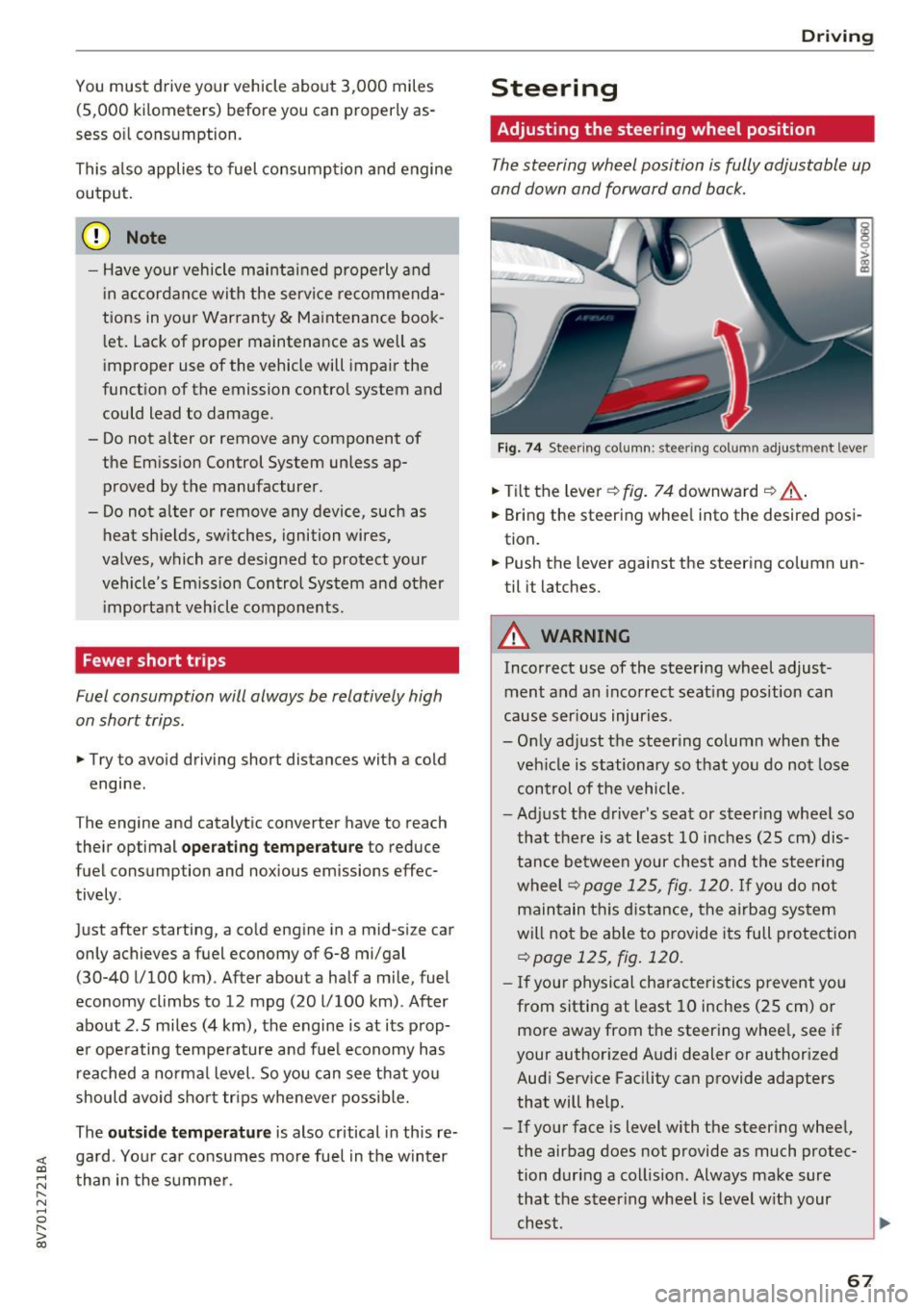
Fig. 74 St ee ring co lumn: steering col umn adjus tmen t leve r
• Tilt the lever¢ fig. 74 downward ¢&_ .
• Bring the steering wheel into the desired posi
tion.
• Push the lever against the steering column un
til it latches.
A WARNING
-
Incorrect use of the steering wheel adjust ment and an incorrect seating position can
cause serious injuries .
- Only adjust the steering column when the
vehicle is stationary so that you do not lose control of the vehicle.
-
- Adjust the driver's seat or steer ing wheel so
that there is at least 10 inches (25 cm) dis
tance between your chest and the steering
wheel
r:!> page 125, fig. 120. If you do not
maintain this distance, the airbag system
will not be able to provide its full protection
r:!> page 125, fig. 120.
-If your physical characteristics prevent you
from sitting at least 10 inches (25 cm) or
more away from the steering wheel, see if
your authorized Audi dealer or authorized
Audi Service Facility can provide adapters
that will help.
- If your face is level with the steering wheel,
the airbag does not provide as much protec
tion during a collision . Always make sure
that the steering wheel is level with your
chest.
~
67
Page 77 of 272
Automatic transmissio n
Automatic transmission
S tronic
Introduction
A pp lies to: ve hicles w ith au tomat ic tra nsmi ssio ns
Your veh icle is equipped with an electronically
controlled DSG t ransm iss ion called S t ronic. Two
independent cl utches transfer the power be
tween the engine and t ransmission . It allows the
vehicle to accelerate without a noticeab le inter
ruption in traction.
The transm ission upshifts o r downshifts auto
mat ica lly. The driving sty le continuously influen
ces the selection of the driving program.
When a
mod erat e dri ving styl e is used, the
transmission se lects the most eco nomical d riving
mode . The t ransmission upshifts at a lower RPM
and downshifts at a higher RPM to improve fuel
efficiency.
The transm ission switches to a spo rty mode afte r
a kick-down or when the driver uses a
s port y
dri ving style
characterized by quick accelerator
pedal movements, heavy acce leration, frequent
changes in speed and traveling at the maximum
speed.
I f desired, the driver can also select the gears
manually (tiptronic mode) ¢ page 81, Shifting
manually (tiptronic mode).
Selector lever positions
A ppl ies to: ve hicles w ith a uto mat ic t ra n smi ssio ns
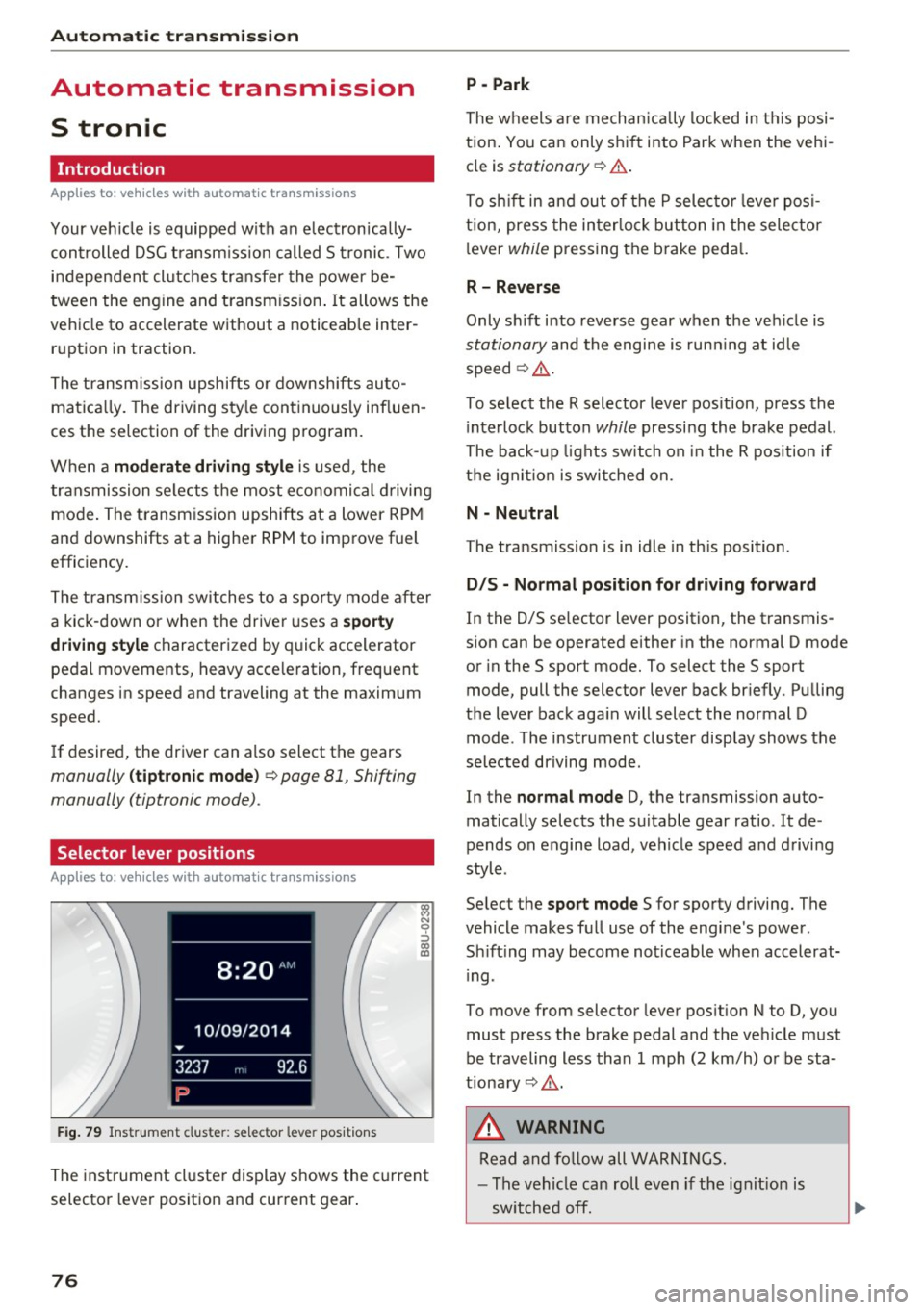
F ig. 79 Instrument cluster: selec tor lever posit ions
The instrument cluste r display shows the current
selector lever position and current gear .
76
P - Park
The w heels a re mechan ically locked in t his posi
tion . Yo u can only sh ift into Park when the vehi
cle is
stationary ¢.&. .
To sh ift in and ou t of the P selecto r leve r posi
tion, press the interlock button in the selector
l ever
while pressing the brake peda l.
R- Reverse
Only shift into reverse gear when the veh icle is
stationary and the engine is run ning at id le
speed¢ ,&..
To select the R selector lever position, press the i nterlock button
while pressing the brake pedal.
The back- up lights switch on i n the R pos ition if
the ign it io n is switched on.
N - Neutral
The transmission is in idle in th is position.
D /S - No rmal po sition fo r dri ving fo rw ard
In the D/S se lector lever position, the transmis
sion can be operated either in the normal D mode
or in the S sport mode. To select the S sport
mode, pull the selector lever back br iefly. Pulling
the lever back aga in will select the normal D
mode . The instrument cluster display shows the
selected driving mode.
In the
normal m ode D, the transmission auto
matically selects the suitable gear ratio . It de
pends on engine load, veh icle speed and driving
style .
Se lect the
sport mo de S for sporty driving. The
vehicle makes full use of the engine's power .
Sh ift ing may become noticeable when accelerat
i ng .
To move from selector lever pos ition N to D, you
must press the brake pedal and the veh icle must
be traveling less than 1 mph (2 km/h) or be sta
tionary ¢,&. .
&, WARNING
Read and fo llow all WARNINGS.
- The vehicle can roll even if the ig nit ion is
sw itched off.
Page 184 of 272
Check ing and F illing
Checking and Filling
Gasoline fuel
Gasoline grade
A pp lies to: ve hicles w ith gaso li ne engines
The correct gasoline grade is stated on the inside
of the fuel filler door .
The vehicle is equipped with a catalytic converter
and must only be driven w ith
unlead ed ga soli ne.
Aud i recommends using TOP TIER Detergent Gas
oline. Additional information on TOP TIER Deter
gent Gasoline can be found on the official web
site (www .toptiergas.com) .
The individua l gasoline grades are differentiated
by
oct ane rating s. This value is given with (R +M)/
2 equating to AK I or in RON.
The fo llowing headings match the corresponding
sticker in the fuel fi ller door .
UNLEADED FUEL ONLY MIN. (R+M) /2 87
R egula r/ MIN. RON
91 Regular
Use regu lar gasoline with minim um 87 AKI/
9 1 RON ~@ .
The max imum engine power is only reached if
p rem ium gasol ine 91 AKI/ 95 RON is used.
UNLEADED FUEL ONLY PREMIUM MIN . (R
+M )/2
91 / SUPER MIN. RON 95
Using premium gasoline with m inim um 91 AKI/
95 RON is recommended.
If premium gasoline is not available, you can also
use regula r gasoline 87 AKI/ 91 RON . However
this does reduce the engine powe r slight ly.
CD Note
- Fil li ng the tank just one time with leaded
fuel or other meta llic additives will cause
permanent deteriorat ion to the cata lyt ic
conve rter func tion.
- When gasoline with an octane rati ng that is
too low is used , h igh speeds o r heavy engine
l oad can lead to engi ne dam age.
184
(D Tips
The vehicle can be fi lled with fue l that has a
h igher octane rating than what is requi red by
the eng ine.
Blended gasoline
App lies to : vehicles wit h gasol ine engi ne
U se of g asoline cont aining alcohol or MTBE
(m ethyl tertiary butyl ether )
You may use unleaded gasoline blended with al
cohol o r M TBE (commonly referred to as oxygen
ates) if the blended m ixt ure meets the fo llow ing
c rit eria:
Blend of ga soline methanol (wood alcohol or
methyl alcohol)
- Anti-knock index must be 87 AKI or h igher.
- Blend must contain no more than 3% metha-
nol.
- Blend must contain more than 2% co-solvents.
Blend of ga soline and ethanol (grain alcoh ol or
ethyl alcohol)
- Anti-knoc k index must be 87 A KI or h igher.
- Blend must not conta in more than 15% etha-
nol.
Blend of gasoline and MTBE
- Anti -knock index must be 87 AKI or higher.
- Blend mus t contain no t more than 15% MTBE .
Seasonall y adjusted ga soline
Many gasoline grades are blended to perform es
pecially well for winter or summer dr iv ing . Du r
i ng seasonal change-over, we suggest that you
fill up at busy gas stat ions where the seaso nal
adjustment is mo re l ikely to be made in t ime .
CD Note
-Methanol fuels which do not meet these re
quirements may cause corrosion and dam
age to plasti c and rubber components in the
fue l system.
- Do not use fue ls that fa il to meet the speci
fied cr iteria in th is chapter.
...
Page 185 of 272
<( co .... N r--N .... 0 r--> co
-If you are unable to determine whether or
not a particular fuel blend meets the speci
ficat ions, ask your service station or its fuel
supplier.
- Do not use fuel for which the contents can
not be identified.
- Fuel system damage and performance prob
lems resulting from the use of fue ls diffe r
ent from those specified are not the respon
s ibility of Audi and are not covered under
the New Veh icle or the Emiss ion Control
System Warrant ies .
- If you experience a loss of fue l economy or
driveability and pe rformance problems due
to the use of one of these fuel blends, we r ecommend that you switch to unblended
fuel.
Gasoline additives
A ma jor concern among many auto manufactur
ers is carbon deposit build-up ca used by the type
of gasoline yo u use.
A lt hough gasoline grades d iffer from one manu
facturer to another, they have cer tain things in
common . A ll gasoline grades contain substances
that can cause deposits to collect on vita l engine
parts, such as fue l injectors and intake valves. Al
though most gasoline brands include additives to
keep engine and fuel systems clean, they are not
equally effective .
Aud i recommends using TOP TIER Detergent Gas
oline. For more informat ion on TOP TIER Dete r
gent Gasoline, please go to the official website
(www.toptiergas .com) .
After an extended period of using inadequate
fuels, carbon deposit build-ups can rob your en
g ine of peak performance.
CD Note
Damage or malfunction due to poor fuel q ual
ity is not covered by the Aud i New Vehicle
Limited Warranty.
Ch eck ing and Filling
Refueling
Fuel filler neck
The fue l filler neck is located on the rig ht rea r
s ide panel behind the fuel fille r flap .
If the power lock ing system shou ld fail, yo u can
st ill open the flap manually -fo r detailed instruc
tio ns see
9 page 187.
You can find the fuel tank capacity of your vehicle
i n c:;,
page 251 .
The label on the inside of the f uel fi ller flap tells
you the correct fuel for your vehicle. For more in
f ormat ion about fuel spec ificat ions, see
9 page 184.
Your vehicle fuel tank has an onboard refue lling
vapor recovery system. This feature helps to pre
vent fuel vapors from escaping from the tank and
polluting the environme nt wh ile you refue l yo ur
vehicle . In order to fill the tank p roper ly w hile
pro tect ing t he e nvir onment, p lease follow t his
r efue ling p rocedure ca refully.
_& WARNING
Un der normal opera ting co nd it io ns, neve r car
r y additional f uel con tainers in your car. Gas
canisters and other containers used to trans
port fue l can be dange rous. Such containe rs,
f ull or empty, may leak and could cause a fire
i n a co llision. If you must transpo rt fuel to
use for your lawn mower, snow blower, etc .,
be ve ry careful and always observe local and
sta te laws rega rding the use, transportation
and storage of su ch f uel con tainers. Make cer
t ai n t he co ntain er meets industry standards
(ANSI/AS TM F8S2 -86).
CD Note
Neve r drive your veh icle until the fue l tank is
complete ly empty. The irreg ular s upply of
f u el can cause misfiring. Gasol in e c ould enter
the e xhaust sys tem an d damage the cat aly tic
conve rter.
185
Page 186 of 272
Checking and Filling
Fueling procedure
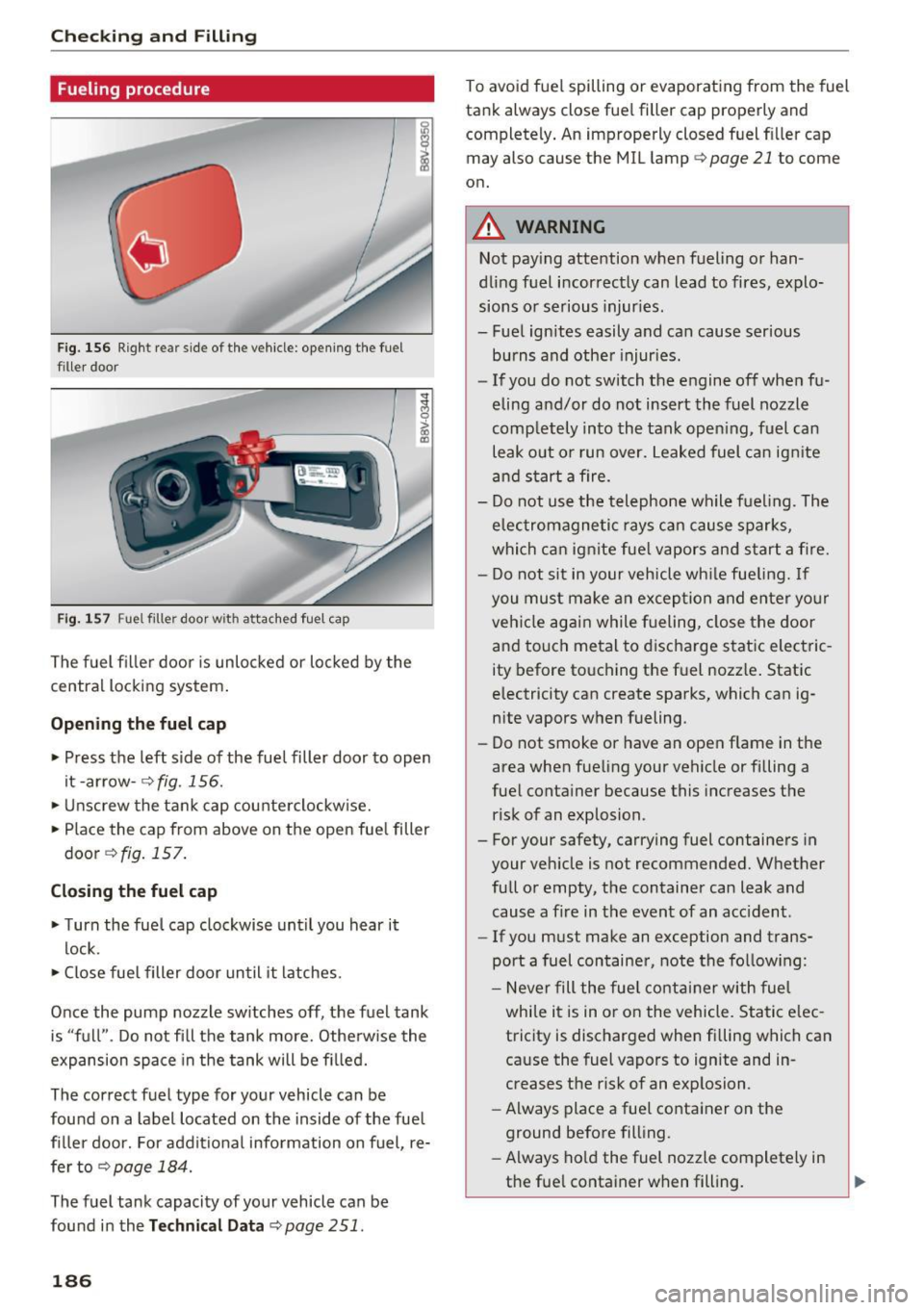
Fig. 156 Right rear side of the vehicle: opening the fue l
filler door
Fig . 157 Fue l filler door w it h atta ched fue l cap
The fuel fi ller door is unlocked or locked by the
central locking system .
Opening the fuel cap
I
• Press the left side of the fuel filler door to open
it -arrow -
9 fig. 156.
• Unscrew the tank cap counte rclockw ise.
• Place the cap from above on the open fue l filler
door
9 fig. 157.
Cl osi ng th e fu el cap
• Turn the fue l cap clockwise until you hear it
lock.
• Close fuel filler door until it latches.
Once the pump nozzle sw itches off, the fuel tank
is "fu ll". Do not fi ll the tank more. Otherw ise the
expansion space in the tank will be fi lled.
The correct fuel type for your vehicle can be
found on a label located on the inside of the fue l
fi ller door. For addit io nal info rmation on fuel, re
fe r to
Q page 184.
The fuel tank capacity of your vehicle can be
found in the
Technic al Data 9 page 251.
186
To avoid fuel spilling or evaporating from the fuel
tank always close fue l filler cap properly and
completely . An improperly closed f uel f iller cap
may also cause the MIL lamp
~ page 21 to come
on.
A WARNING
Not pay ing attention w hen fueling or han
dling f uel incorrectly can lead to fires , explo
sions o r serious injur ies .
- Fue l ignites easily and can cause serious
burns and other injur ies .
-
-If you do not switch the engine off when fu
eling a nd/or do not insert the fuel nozzle
comp letely into the tank open ing, fuel can
leak out o r run over. Leaked fuel can ign ite
and start a fire.
- Do not use the telephone wh ile f uel ing . The
elec tromagneti c rays can cause sparks,
which can ignite fue l vapors and s tart a fire.
- Do not sit in your vehicle wh ile fue ling. If
you must make an excep tion and enter yo ur
veh icle aga in while fueling, close the door
and touch me tal to discharge static electric
ity before touching the f uel nozz le . Static
electricity can create sparks, which can ig
nite vapors when fueling .
- Do not smoke or have an open flame in the
area when fueling your vehicle or filling a
fue l conta iner because this increases the
risk of an explosion.
- For your safety, carrying fuel containers in
your veh icle is not recommended. Whether
full or empty, the container can leak and
cause a fire in the even t of an acc ident.
- If you must make an exception and trans
port a fuel containe r, note the follow ing:
- Never fill the fuel co ntainer with fue l
while it is in or on the vehicle. Static e lec
tricity is discharged when fi lling which can
cause the fuel vapors to ignite and in
creases the risk of an exp losion.
- Always place a fuel conta iner on the
ground before fill ing.
- Always ho ld the fuel nozzle completely in
the fue l container when filling.
Page 187 of 272
<( co ..... N
" N ..... 0 r--. > 00
-If the fuel container is made of metal, the
fuel nozzle must always be in contact with
the container when filling it with fuel. This
prevents static electricity from discharg
ing.
- Never spill fuel in the vehicle or the lug
gage compartment . Evaporated fuel is ex
plosive and increases the risk of serious in
jury or death.
- Follow legal requirements when using,
storing and transporting fuel containers .
- Make sure the fuel container conforms to industry standards (ANSI/ASTM F852-86).
(D Note
-Remove spilled fuel from vehicle paint im
mediately, because it can damage paint.
- Never drive until the fuel tank is completely
empty . The irregular supply of fuel that re
sults from that can cause engine misfires. Uncombusted fuel will enter the exhaust
system and increase the risk of damage to
the catalytic converter.
@) For the sake of the environment
If the fuel nozzle is used correctly, it will ind i
cate that the tank is full the first time it
sw itches off automatically. Do not try to add
more fuel, because it can spill over. Also, the
expansion space in the tank will fill, which can
result in fuel spilling out when it becomes
warm and polluting the environment.
@ Tips
Fuel can age and may lead to problems when
starting . Audi recommends replacing the fuel
in your vehicle within six months.
@ Tips
- If the engine is running while fueling, va
pors can escape or the fuel can spill over.
Because of th is, the fuel nozzle switches off
before the tank is full.
- Do not fue l the vehicle when the ignition is
switched on . Otherwise, the fuel gauge may
not show the correct level after fueling the
vehicle.
Checking and Filling
-The fuel filler door on your vehicle does not
lock when you lock the vehicle from the in
side.
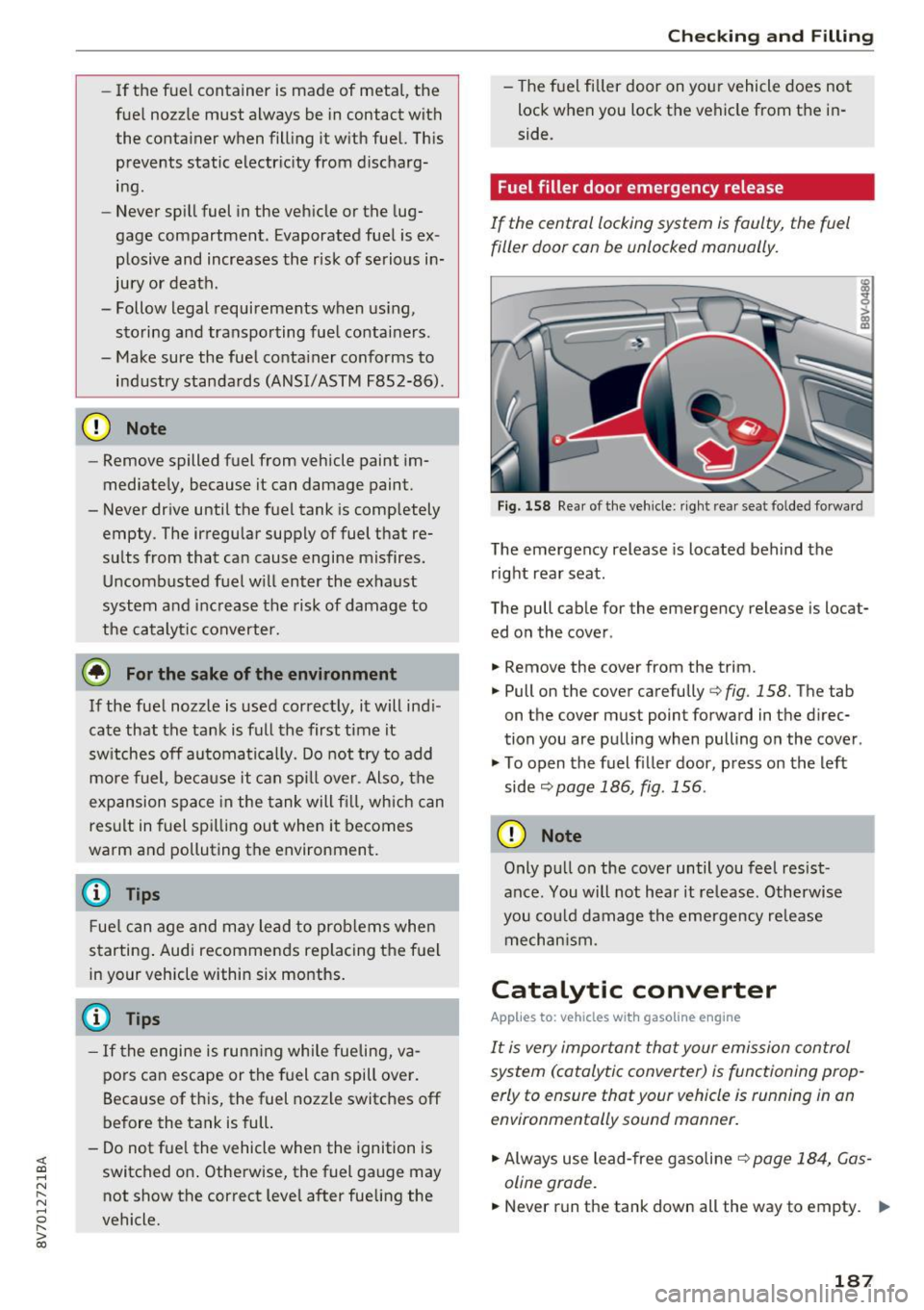
Fuel filler door emergency release
If the central locking system is faulty, the fuel
filler door can be unlocked manually.
Fig. 158 Rear of the vehicle: right rea r seat fo lded fo rward
The emergency release is located behind the
right rear seat.
The pull cable for the emergency release is locat ed on the cover .
.. Remove the cover from the trim .
.. Pull on the cover carefully
c:> fig. 158. The tab
on the cover must point forward in the direc
tion you are pulling when pulling on the cover .
"' To open the fuel filler door, press on the left
side
c:> page 186, fig . 156 .
(D Note
Only pu ll on the cover until you feel resist
ance. You will not hear it release. Otherwise
you could damage the emergency re lease
mechanism.
Catalytic converter
Applies to: vehicles with gasoline engine
It is very important that your emission control
system (catalytic converter) is functioning prop
erly to ensure that your vehicle is running in an
environmentally sound manner.
.. Always use lead-free gasoline c:> page 184, Gas
oline grade .
.. Never run the tank down all the way to empty. ~
187
Page 188 of 272
Checking and Filling
"'Never put too much motor oil in your engine
¢ page 193 , Checking the engin e oil lev el and
adding oil.
"'Never try to push- or tow-star t your vehicle.
The catalytic converter is an efficient "clean-up"
device built into the exhaust system of the v ehi
cle. The catalytic converter burns many of the pollutants in the exhaust gas before they are re
leased into the atmosphere .
The exclusive use of unleaded fuel is critically im
portant for the life of the catalytic converter and
proper functioning of the engine.
A WARNING
The temperature of the exhaust system is
high, both when driving and after stopping
the engine.
-
- Never touch the exhaust tail pipes once they
have become hot . This could result in burns .
- Do not park or operate the vehicle in areas
where the hot exhaust system may come in
contact with dry grass, brush , fuel spill or
other material which can cause a fire.
- Do not apply additional undercoating or
rustproofing on or near the exhaust mani
fold, exhaust pipes, catalytic converter or heat shields. During driving, the substance
used for undercoating could overheat and
cause a fire.
(D Note
- Be aware that just one tank filling with
leaded fuel will already seriously degrade
the performance of the catalytic converter.
- Do not exceed the correct engine oil level
¢page 193.
-Do not drive until the fuel tank becomes
completely empty. The engine could mis
fire. Unburned fuel could also get into the
exhaust system and this could cause the
catalytic converter to overheat.
- Do not switch off the ignition while the vehi
cle is moving.
- Do not continue to operate your vehicle un
der these conditions, as otherwise fuel can reach the catalytic converter. This could re-
188
sult in overheating of the converter, requir
ing its replacement.
- To assure efficient operation of the Emis
sion Control System:
- Have your vehicle maintained properly and
in accordance with the service recommen
dations in your Warranty
& Maintenance
booklet.
- Lack of proper maintenance as well as im
proper use of the vehicle will impair the
function of the emission control system
and could lead to damage.
@ For the sake of the environment
Even when the Emission Control System is op
erating properly, the exhaust gas can have a
sulfur-like exhaust gas smell under some op
erating states. This depends on the sulfur
content of the fuel being used. Using a differ
ent brand of fuel may help, or filling the tank
with lead-free super grade gasoline.
Engine compartment
Working in the engine compartment
Special care is required if you are working in the
engine compartment
For work in the engine compartment, such as
checking and filling fluids, there is a risk of in
jury, scalding, accidents, and burns. For this
reason, follow all the following listed warnings
and general safety precautions. The engine
compartment is a dangerous area.
£:=? &. -
A WARNING
To reduce the risk of injuries, complete the
following steps before opening the hood:
- Turn the engine off.
- Switch the ignition off.
- Set the parking brake.
- Place the selector lever in the P position .
- Let the engine cool down .
- Never open the hood when you see that
steam or coolant drips from the engine
compartment- there is a danger of burns!
Wait until no steam or coolant flows out .
-