lock AUDI A3 CABRIOLET 2016 Repair Manual
[x] Cancel search | Manufacturer: AUDI, Model Year: 2016, Model line: A3 CABRIOLET, Model: AUDI A3 CABRIOLET 2016Pages: 272, PDF Size: 67.88 MB
Page 186 of 272
Checking and Filling
Fueling procedure
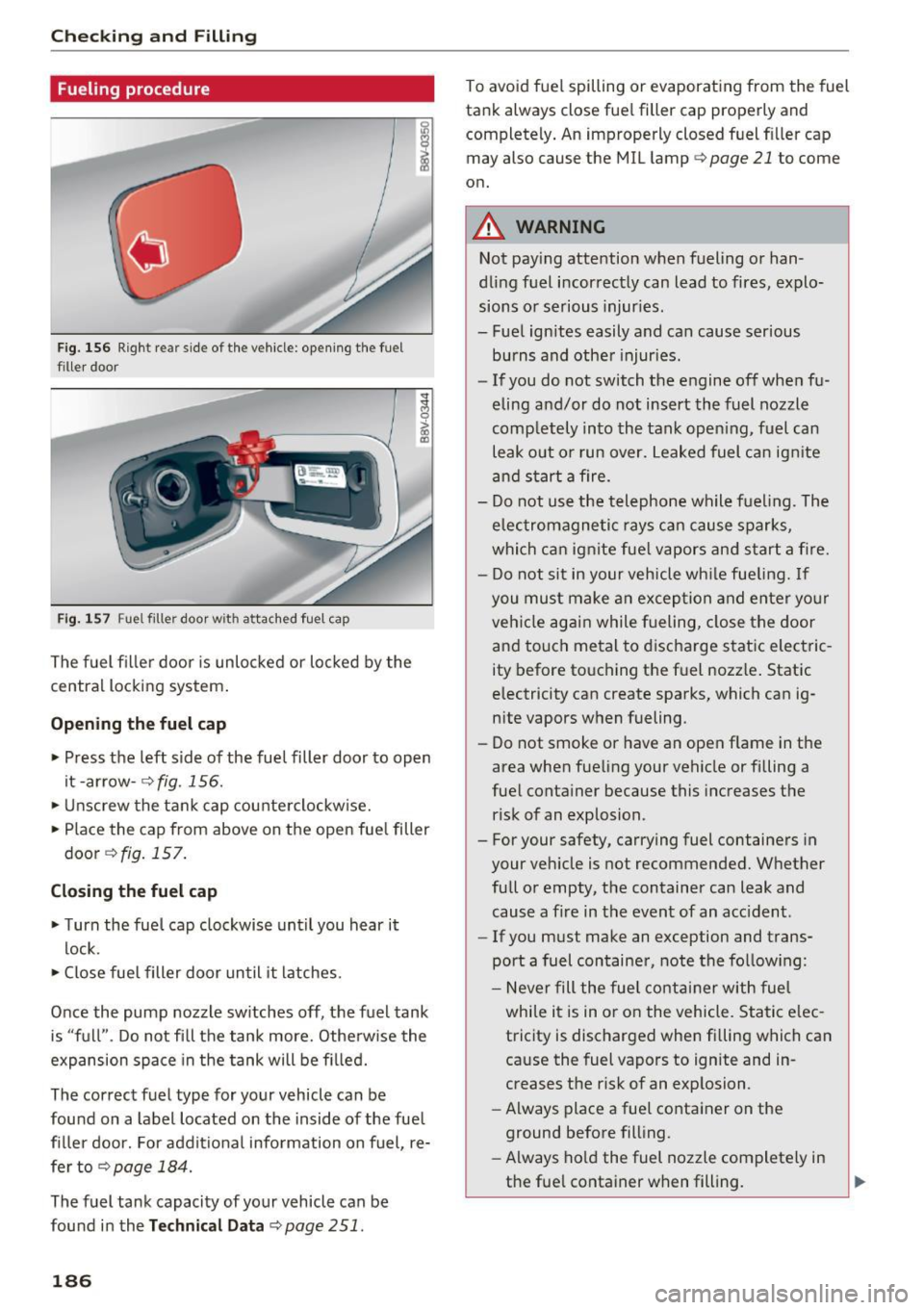
Fig. 156 Right rear side of the vehicle: opening the fue l
filler door
Fig . 157 Fue l filler door w it h atta ched fue l cap
The fuel fi ller door is unlocked or locked by the
central locking system .
Opening the fuel cap
I
• Press the left side of the fuel filler door to open
it -arrow -
9 fig. 156.
• Unscrew the tank cap counte rclockw ise.
• Place the cap from above on the open fue l filler
door
9 fig. 157.
Cl osi ng th e fu el cap
• Turn the fue l cap clockwise until you hear it
lock.
• Close fuel filler door until it latches.
Once the pump nozzle sw itches off, the fuel tank
is "fu ll". Do not fi ll the tank more. Otherw ise the
expansion space in the tank will be fi lled.
The correct fuel type for your vehicle can be
found on a label located on the inside of the fue l
fi ller door. For addit io nal info rmation on fuel, re
fe r to
Q page 184.
The fuel tank capacity of your vehicle can be
found in the
Technic al Data 9 page 251.
186
To avoid fuel spilling or evaporating from the fuel
tank always close fue l filler cap properly and
completely . An improperly closed f uel f iller cap
may also cause the MIL lamp
~ page 21 to come
on.
A WARNING
Not pay ing attention w hen fueling or han
dling f uel incorrectly can lead to fires , explo
sions o r serious injur ies .
- Fue l ignites easily and can cause serious
burns and other injur ies .
-
-If you do not switch the engine off when fu
eling a nd/or do not insert the fuel nozzle
comp letely into the tank open ing, fuel can
leak out o r run over. Leaked fuel can ign ite
and start a fire.
- Do not use the telephone wh ile f uel ing . The
elec tromagneti c rays can cause sparks,
which can ignite fue l vapors and s tart a fire.
- Do not sit in your vehicle wh ile fue ling. If
you must make an excep tion and enter yo ur
veh icle aga in while fueling, close the door
and touch me tal to discharge static electric
ity before touching the f uel nozz le . Static
electricity can create sparks, which can ig
nite vapors when fueling .
- Do not smoke or have an open flame in the
area when fueling your vehicle or filling a
fue l conta iner because this increases the
risk of an explosion.
- For your safety, carrying fuel containers in
your veh icle is not recommended. Whether
full or empty, the container can leak and
cause a fire in the even t of an acc ident.
- If you must make an exception and trans
port a fuel containe r, note the follow ing:
- Never fill the fuel co ntainer with fue l
while it is in or on the vehicle. Static e lec
tricity is discharged when fi lling which can
cause the fuel vapors to ignite and in
creases the risk of an exp losion.
- Always place a fuel conta iner on the
ground before fill ing.
- Always ho ld the fuel nozzle completely in
the fue l container when filling.
Page 187 of 272
<( co ..... N
" N ..... 0 r--. > 00
-If the fuel container is made of metal, the
fuel nozzle must always be in contact with
the container when filling it with fuel. This
prevents static electricity from discharg
ing.
- Never spill fuel in the vehicle or the lug
gage compartment . Evaporated fuel is ex
plosive and increases the risk of serious in
jury or death.
- Follow legal requirements when using,
storing and transporting fuel containers .
- Make sure the fuel container conforms to industry standards (ANSI/ASTM F852-86).
(D Note
-Remove spilled fuel from vehicle paint im
mediately, because it can damage paint.
- Never drive until the fuel tank is completely
empty . The irregular supply of fuel that re
sults from that can cause engine misfires. Uncombusted fuel will enter the exhaust
system and increase the risk of damage to
the catalytic converter.
@) For the sake of the environment
If the fuel nozzle is used correctly, it will ind i
cate that the tank is full the first time it
sw itches off automatically. Do not try to add
more fuel, because it can spill over. Also, the
expansion space in the tank will fill, which can
result in fuel spilling out when it becomes
warm and polluting the environment.
@ Tips
Fuel can age and may lead to problems when
starting . Audi recommends replacing the fuel
in your vehicle within six months.
@ Tips
- If the engine is running while fueling, va
pors can escape or the fuel can spill over.
Because of th is, the fuel nozzle switches off
before the tank is full.
- Do not fue l the vehicle when the ignition is
switched on . Otherwise, the fuel gauge may
not show the correct level after fueling the
vehicle.
Checking and Filling
-The fuel filler door on your vehicle does not
lock when you lock the vehicle from the in
side.
Fuel filler door emergency release
If the central locking system is faulty, the fuel
filler door can be unlocked manually.
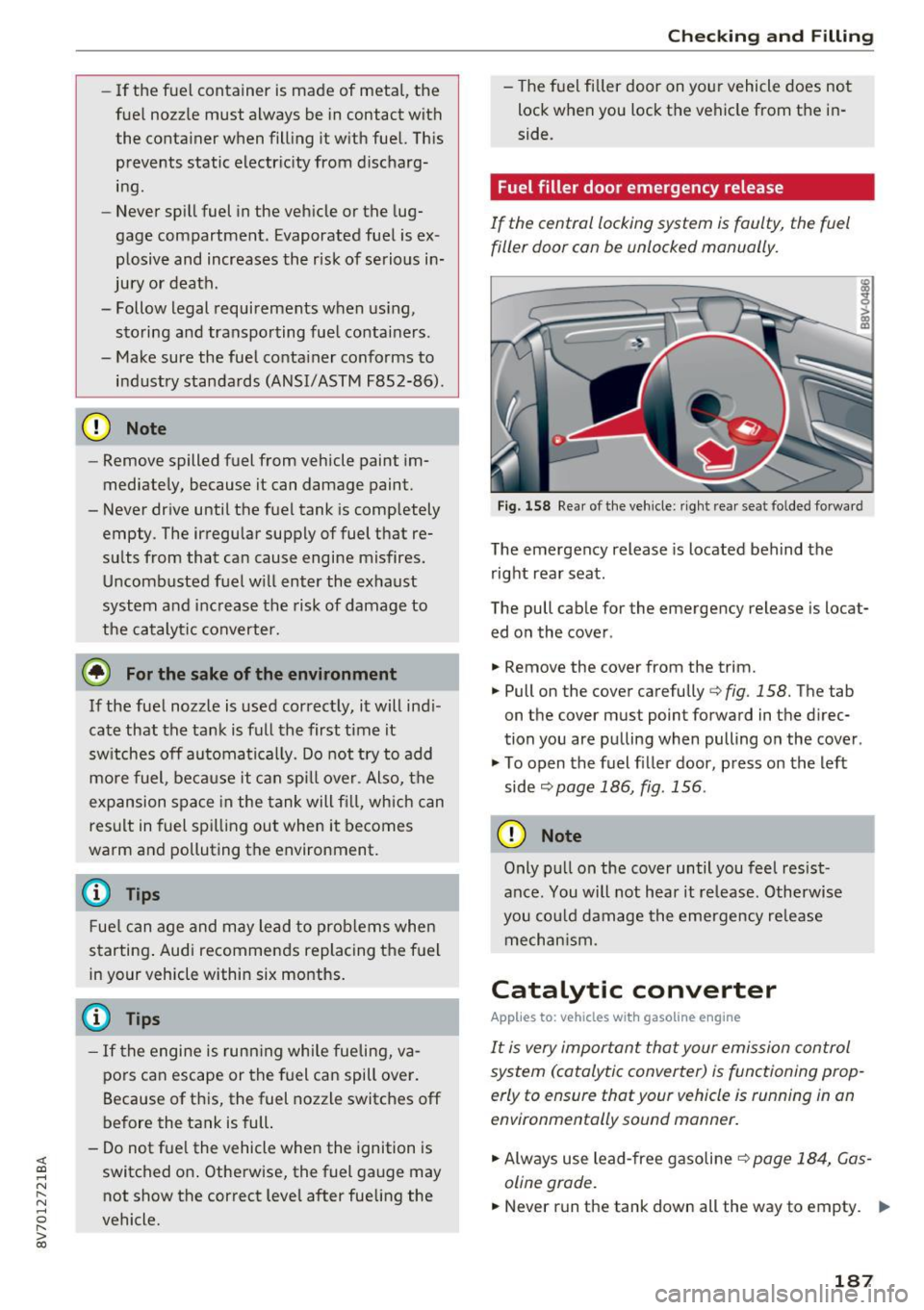
Fig. 158 Rear of the vehicle: right rea r seat fo lded fo rward
The emergency release is located behind the
right rear seat.
The pull cable for the emergency release is locat ed on the cover .
.. Remove the cover from the trim .
.. Pull on the cover carefully
c:> fig. 158. The tab
on the cover must point forward in the direc
tion you are pulling when pulling on the cover .
"' To open the fuel filler door, press on the left
side
c:> page 186, fig . 156 .
(D Note
Only pu ll on the cover until you feel resist
ance. You will not hear it release. Otherwise
you could damage the emergency re lease
mechanism.
Catalytic converter
Applies to: vehicles with gasoline engine
It is very important that your emission control
system (catalytic converter) is functioning prop
erly to ensure that your vehicle is running in an
environmentally sound manner.
.. Always use lead-free gasoline c:> page 184, Gas
oline grade .
.. Never run the tank down all the way to empty. ~
187
Page 197 of 272
<( co ..... N
" N ..... 0 r--. > 00
Brake fluid
Checking brake fluid level
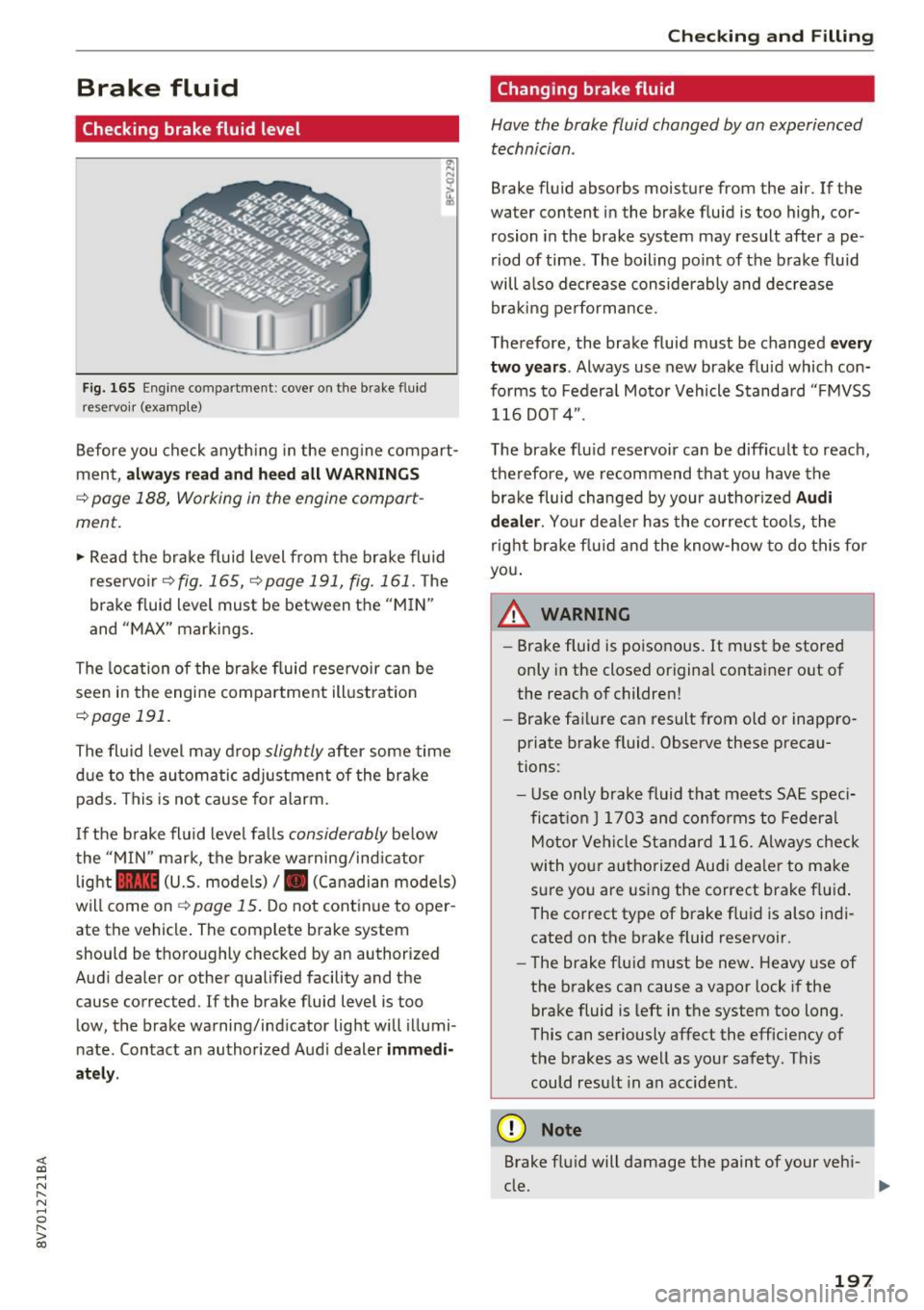
Fig. 165 Engine compartment : cover on t he brake fluid
reservoir (examp le)
"' N N
~ .,
Before you check anything in the engine compart
ment,
always read and heed all WARNINGS
¢page 188, Working in the engine compart
ment.
.,. Read the brake fluid level from the brake fluid
reservoir
~fig. 165, ¢page 191, fig. 161 . The
brake fluid level must be between the "MIN"
and "MAX" markings .
The location of the brake fluid reservoir can be
seen in the engine compartment illustration
¢page 191.
The fluid level may drop slightly after some time
due to the automatic adjustment of the brake
pads . This is not cause for alarm.
I f the brake fluid level falls
considerably below
the "MIN" mark, the brake warning/indicator
light
1111 (U.S. mode ls)/ . (Canadian models)
will come on¢
page 15. Do not continue to oper
ate the vehicle . The complete brake system
should be thoroughly checked by an authorized
Audi dealer or other qualified facility and the
cause corrected. If the brake fluid level is too
low, the brake warning/indicator light will illumi
nate. Contact an authorized Audi dealer
immedi
ately.
Checking and Filling
Changing brake fluid
Have the brake fluid changed by an experienced
technician.
Brake fluid absorbs moisture from the air. If the
water content in the brake fluid is too high, cor
rosion in the brake system may result after ape
riod of time . The boiling point of the brake fluid
will also decrease considerably and decrease braking performance.
Therefore, the brake fluid must be changed
every
two years. Always use new brake fluid which con
forms to Federal Motor Vehicle Standard "FMVSS
116 DO T 4" .
The brake fluid reservoir can be difficult to reach,
therefore, we recommend that you have the
brake fluid changed by your author ized
Audi
dealer. Your dealer has the correct tools, the
right brake fluid and the know-how to do this for
you.
A WARNING
- Brake fluid is poisonous. It must be stored
only in the closed original container out of
the reach of children!
- Brake failure can result from old or inappro
priate brake fluid . Observe these precau
tions:
- Use only brake fluid that meets SAE speci
fication
J 1703 and conforms to Federal
Motor Vehicle Standard 116. Always check
with your authorized Audi dealer to make
sure you are using the correct brake fluid .
The correct type of brake fluid is also indi
cated on the brake fluid reservoir.
- The brake fluid must be new. Heavy use of
the brakes can cause a vapor lock if the
brake fluid is left in the system too long.
This can seriously affect the efficiency of
the brakes as well as your safety. This
could result in an accident.
(D Note
Brake fluid will damage the paint of your vehi-
cle. ..,.
197
Page 226 of 272
Care and cleaning
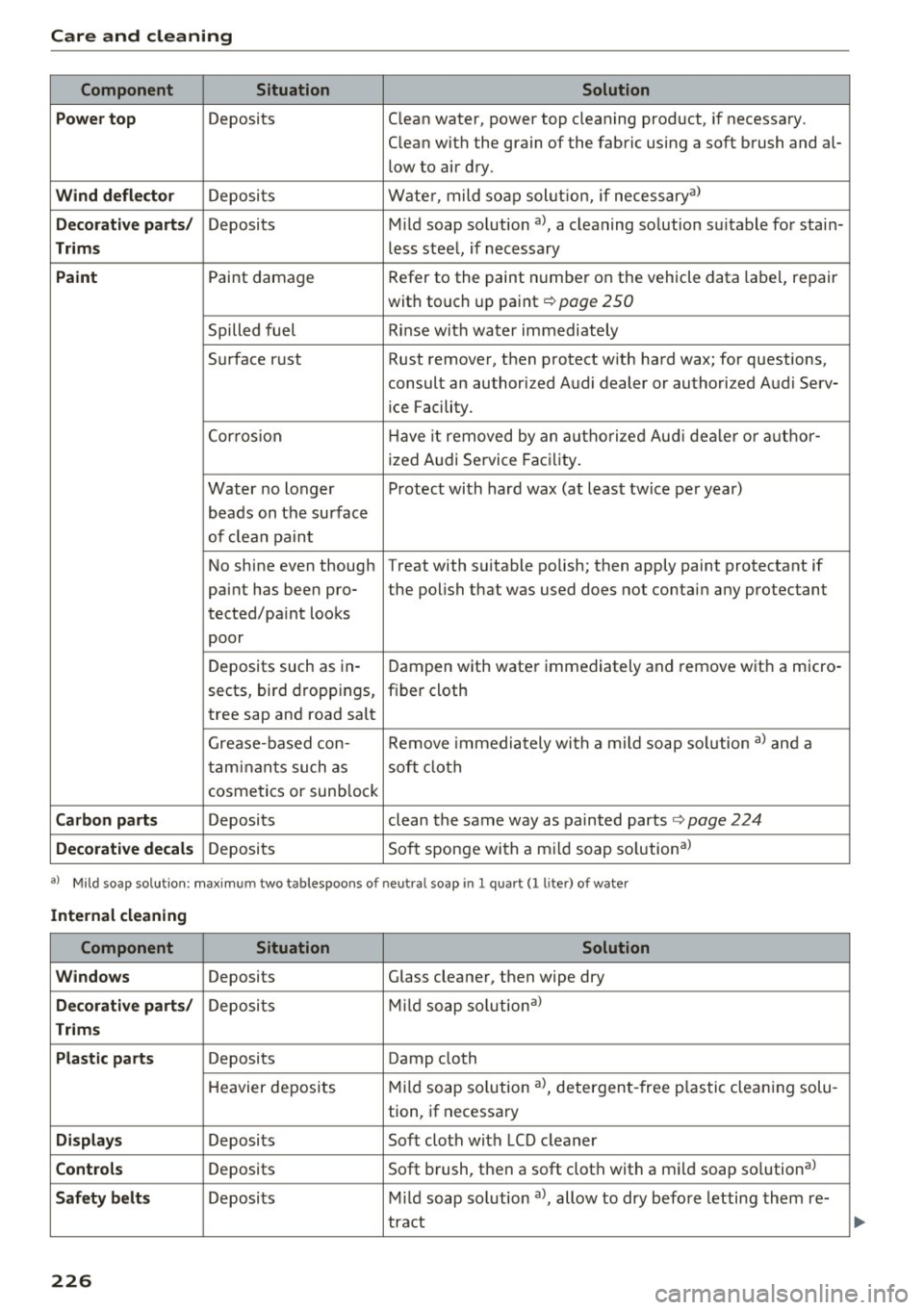
Component Situation Solution
Power top
Deposits Clean water, power top cleaning product , if necessary.
Clean with the grain of the fabric using a soft brush and al- low to air dry.
Wind deflector Deposits Water, mild soap solution,
if necessaryal
Decorative parts/ Deposits Mild soap solution a>, a cleaning solution suitable for stain-
Trims less steel, if necessary
Paint Paint damage Refer to the paint number on the vehicle data label, repair
with touch up paint
r:!) page 250
Spilled fuel Rinse with water immediately
Surface r ust Rust remover, then protect with hard wax; for questions,
consult an authorized Audi dealer or authorized Audi Serv-
ice Facility.
Corrosion H
ave it removed by an authorized Aud i dealer or author-
ized Audi Service Facility.
Water no longer Protect with hard wax (at least twice per year)
beads on the surface
of clean paint
No shine even though Treat with suitable polish; then apply paint protectant if
paint has been pro- the polish that was used does not contain any protectant
tected/pa int looks
poor
Deposits such as in- Dampen with water immediately and remove with a micro-
sects, bird droppings,
fiber cloth
tree sap and road salt
Grease-based con- Remove
immediately with a mild soap solution a) and a
taminants such as soft cloth
cosmetics or sunblock
Carbon parts Deposits clean the same way as painted parts ~ page 224
Decorative decals Deposits Soft
sponge with a mild soap solution al
a) Mild soap so lution: maxim um two tablespoons of neutral soap in l quar t (l lite r) of water
Internal cleaning
Component Situation Solution
Windows
Deposits Glass cleaner, then wipe dry
Decorative parts/ Deposits Mild
soap solutiona )
Trims
Plastic parts
Deposits Damp cloth
Heavier deposits Mild soap so lution a>, detergent-free p lastic clean ing solu -
tion, if necessary
Displays Deposits Soft cloth with LCD cleaner
Controls Deposits Soft
brush, then a soft cloth with a mild soap so lutional
Safety belts Deposits Mild soap so lution a>, allow to dry before letting them re-
tract
226
Page 230 of 272

Emerg ency assis ta nce
Emergency assistance
Trunk escape latch
Applies to: vehicles with trunk escape latch (A3 sedan)
In case of an emergency, the rear lid can be
opened from the inside using the trunk escape
latch.
Fig. 172 luggage compartment: t runk escape latch
.,. Push the latch in the direction of the arrow un
til the lock releases .
The trunk escape latch inside the rear lid is made of fluo rescent mater ial to glow in the dark.
_& WARNING
The trunk escape latch is to be used only in an
emergency .
General information
.,. Park the vehicle as far as poss ible from moving
traff ic in the event of a flat tire. In the event of
a flat t ire, park the vehicle on a level surface. It
you are on a steep incline, be especia lly careful.
.,. Set the park ing brake.
.,. Place the selector lever in the P position.
.,. Switch the emergency flashers on.
.,. Put on a reflective vest, if available .
.,. Set up the warning triangle, if available .
.,. Have the passengers exit the vehicle . They
should move to a safe place, for example be
hind a guard rail.
_& WARNING
Pay attention to the steps above. They are for
your protection and the for the safety of other
drivers.
2 30
Equipment
Vehicle tool kit
Applies to: vehicles with vehicle tool kit
Fig. 173 lu gg age compartmen t: cargo floor cove r fo lded
upward (example)
The vehicle tool kit, t ire repa ir set* and compres
sor* are stored in the luggage compartment un
der the floor cover~
fig. 173 .
.,. Hook the p lastic hook@ into the luggage com
partment seal.
.,. Unhook the cargo floor before closing the lug
gage compartment lid.
_& WARNING
Improper use of the vehicle jack can cause se
rious personal injuries.
- Never use the screw driver hex head to
tighten wheel bolts, since the bolts cannot
attain the necessary tightening torque if you
use the hex head, potentially causing an ac
cident.
- The factory-supplied jack is intended only
for your veh icle model. Under no circum
stances should it be used to lift heavy
vehicles or other loads; you risk injuring
yourself .
- Never start the engine when the veh icle is
raised, which co uld cause an accident .
- Support the vehicle securely with a ppropri
ate stands if work is to be pe rformed under
neath the vehicle; otherwise, there is a po
tential risk for injury.
- Never use the jack supplied with your Audi
on another vehicle, particularly on a heavier
one. The jack is only su itable for use on the
vehicle it came with. ..,.
Page 233 of 272
<( co ..... N
" N ..... 0 r--. > 00
A WARNING
If the tire pressure is less than 19 psi
(130 kPA) after 10 minutes of driving , then
the ti re is too severely damaged . Do not con
tinue dr iv ing . See an authorized Audi dealer
or authorized Aud i Servi ce Fac ility for assis
tance .
A WARNING
Pay attent ion to the following after repair ing
the tire:
- Do not drive faster than SO mph (80 km/h).
- Avoid hard acceleration, brak ing sharp ly,
and fast cornering.
- The veh icle may become more difficult to
control.
- If the t ire is too severely damaged, see an
authorized Audi dealer or authorized Aud i
Service Facility for assistance .
@ For the sake of the environment
You can give the used tire sealant bottle to an
author ized Audi dealer or authorized A udi
Serv ice Facility for disposal.
(I_) Tips
Remember to obtain a new bottle of sealant
from an authorized Aud i dea ler or authorized
Aud i Service Facility after repairing a tire.
Spare tire
General information
Applies to: vehicles with space-saving spare tire (compact
spare tire)
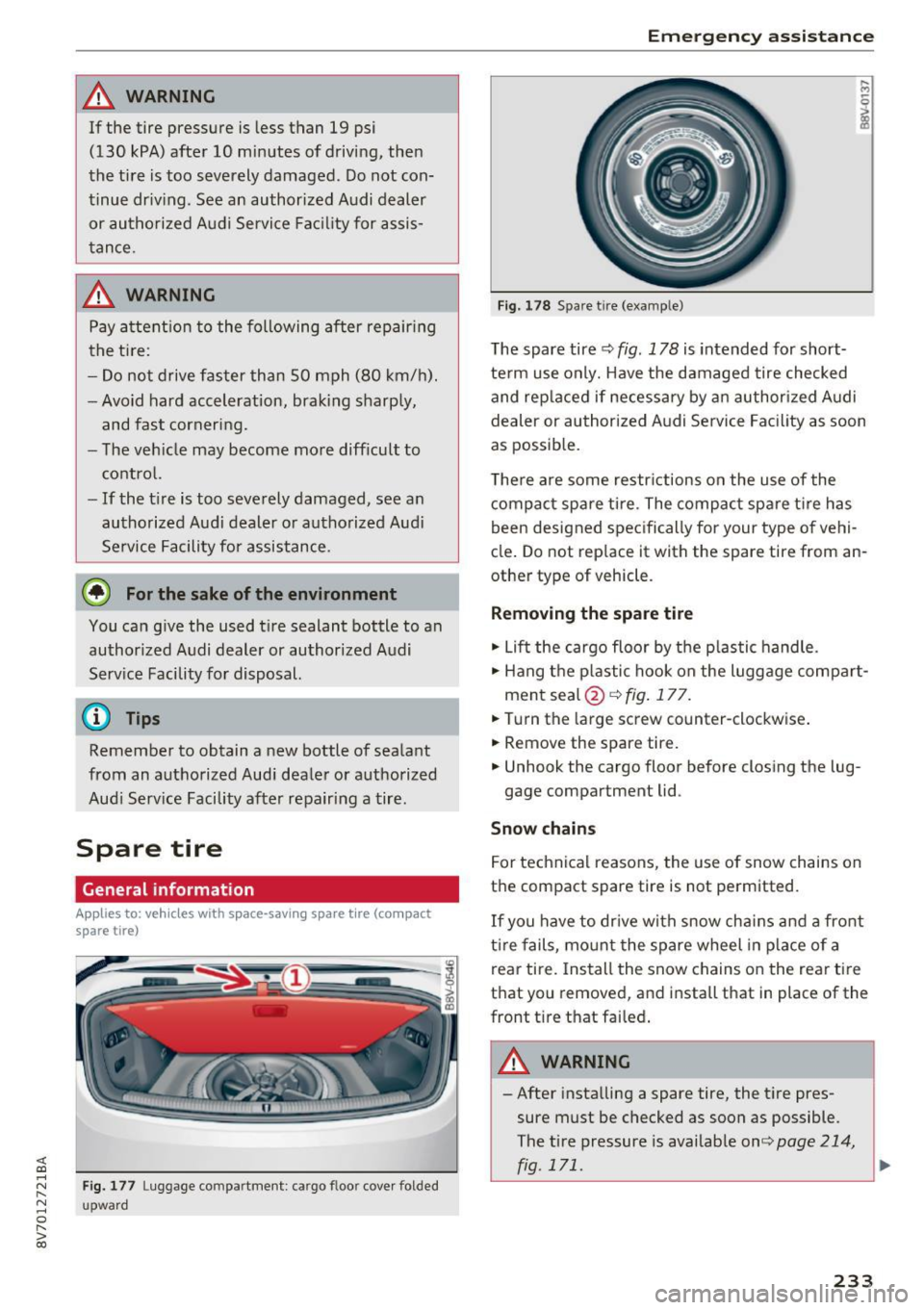
Fig. 177 L ugg age co mpa rtment : ca rgo floo r cover folded
up ward
Em ergen cy a ssis tanc e
Fig. 178 Spa re t ire (examp le )
The spare tire ¢ fig. 178 is intended for short
te rm use only. Have the damaged tire checked
and replaced if necessary by an author ized Audi
dealer or authorized A udi Service Facility as soon
as possible.
T here are some restr ictions on the use of the
compact spare tire . The compact spare t ire has
been designed specifically for your type of vehi
cle. Do not rep lace it with the spare tire from an
other type of vehicle.
Removing the spare tire
.,. Lift the cargo floor by the p lastic handle .
.,. Hang the plastic hook on the luggage compart -
ment seal@¢
fig. 177.
.,. Turn the large screw counter-clockwise .
.,. Remove the spare tire.
.. Unhook the cargo floor befo re closing the lug -
gage compartment lid .
Snow chains
For technical reasons, the use of snow chains on
the compact spare tire is not permitted.
If you have to dr ive with snow chains and a front
t ire fails, mo unt the spare wheel in p lace of a
rear tire. Install the snow chains on the rear tire
that you removed, and install that in place of the
front t ire that fai led .
A WARNING
--After installing a spare tire, the t ire pres
sure must be checked as soon as possible.
The tire pressure is available one:>
page 214,
-
rg.111 . ~
233
Page 234 of 272
Emerg enc y assis ta nc e
-If the spare tire is more than 6 years old,
use it only in an emergency and with ex
treme caution and careful dr iving .
- The spare tire is intended on ly for tempora
ry and short-term use. It should be replaced
as soon as possible with the normal wheel and t ire .
- After mounting the compact spare t ire, the
t ire pressure must be checked as soon as
poss ible . The tire pressure of the compact
spare tire must be
61 psi (420 kPA); other
wise, you risk hav ing an accident.
- Do not drive faster than
50 mph (80 km/h).
You risk hav ing an accident.
- Avoid full -throttle accelerat ion, heavy brak
ing, and fast cornering. You risk having an
acc ident.
- Never dr ive using more than one spare
wheel and tire. You risk having an acc ident .
- Normal summer or winter tires must not be mounted on the compact spare wheel rim.
- For technical reasons, the use of tire chains
on the spare tire is not perm itted. If it is
necessary to drive with t ire chains, the spare
wheel must be mounted on the front axle in
the event of a flat in a rear tire. The new ly
available front wheel m ust then be insta lled
in place of the rear wheel with the flat tire.
Installing the tire chain before mounting
the wheel and tire is recommended.
- Loose items in the passenger compartment
can cause serious personal injury during
hard braking or in an accident. Never store
the inflatable spare t ire or jack and too ls in
the passenger compartment.
- Normal summer or winter tires must not be
mounted on the compact spare wheel rim.
Replacing wheels
Before changing a wheel
Observe the following precautions for your own
and your passenger's safety when changing a
wheel.
.,. After you experience a tire failure, pull the car
well away from moving traff ic and try to reach
le vel ground before you stop¢_& .
234
.. All passengers should lea ve th e car and move
to a safe location (for instance, behind the
guardrail) ¢ _& .
.. Engage the
par king br ake to prevent your vehi
cle from rolling unintentionally¢_& .
.. Move
selec tor le ve r to p osition P ¢ _& .
.. If you are towing a tra iler , u nhitch the trailer
from your vehicle.
.. Ta ke the
jac k¢ page 230 and the spar e tir e
¢ page 233 out of the luggage compa rtment.
A WARNING
-
You or your passengers could be injured while
changing a whee l if you do not follow these
safety precautions:
- If you have a flat tire, move a safe distance off the road. Turn off the engine, turn the
emergency f lashers on and use other warn
ing dev ices to alert other motorists.
- Make sure that passengers wait in a safe
place away from the vehicle and well away
from the road and traff ic.
- To help prevent the veh icle from moving
suddenly and possibly slipping off the jack,
always fully set the parking brake and block
the wheel diagonally opposite the wheel be
ing cha nged . When one front wheel is lifted
off the ground, placing the Automat ic
T ransmiss ion in P (Park) will
not prevent the
veh icle from moving.
- Before you change a whee l, be sure the
gro und is level and firm . If necessary, use a
sturdy board under the jack.
- Always sto re the vehicle too l kit, the jack
and the replaced tire in the luggage com
par tment
¢page 130.
Changing a wheel
When you change a wheel, follow the sequence
described below step-by-step and in exactly that
order.
1. Remove the decorati ve wh eel co ver* . For
more detai ls see also ¢
page 235, Decora
tive wheel covers
or ¢ page 235, Wheels
with wheel bolt caps .
2. Loosen the wh ee l bolt s ¢page 236.
Page 236 of 272
Emergency assistance
The caps are to protect and keep the whee l bolts
clean.
Loosening and tightening the wheel bolts
Th e wheel bolts must be loosened before raising
the vehicle.
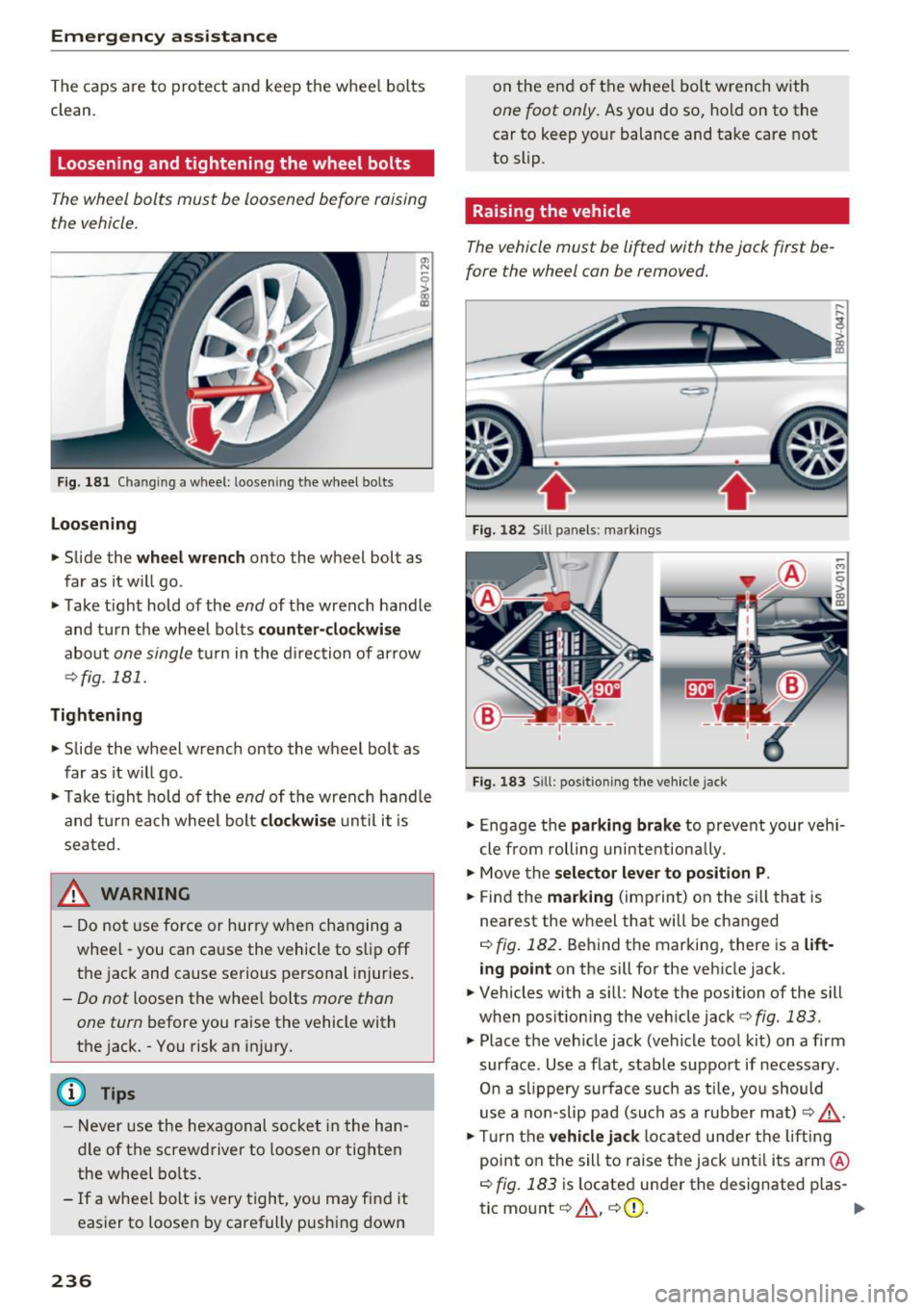
Fig . 181 Cha ngin g a wheel: loosening t he w heel bolts
Loosening
• Slide the wheel wrench onto the wheel bolt as
far as it w ill go .
• Take tight hold of the
end of the wrench handle
and turn the wheel bolts
counter-clockwise
about one single tur n in the direction of arrow
c:::>fig . 181.
Tightening
• Slide the wheel wrench onto the wheel bolt as
far as it w ill go .
• Ta ke tight hold of the
end of the wrench handle
and turn each whee l bolt
clockwise until it is
seated.
_& WARNING
- Do not use force or hurry when changing a
wheel -you can cause the vehicle to slip off
the jack and cause serious personal injuries.
-Do not loosen the whee l bolts more than
one turn
before you raise the vehicle with
the jack . - You risk an injury .
(D Tips
-Never use the hexagonal socket in the han
dle of the screwdriver to loosen o r tighten
the wheel bolts.
- If a whee l bolt is very tight, you may find it
easier to loosen by carefully push ing down
236
on the end of the whee l bolt wrench with
one foot only. As you do so, hold on to the
car to keep your balance and take care not
to slip .
Raising the vehicle
The vehicle must be lifted with the jack first be
fore the wheel can be removed.
Fig. 182 Sill panels: marking s
Fig. 183 S ill: pos itio ning the vehicle jack
• Engage the parking brake to prevent your vehi
cle from rolling unintentiona lly .
• Move the
selector lever to position P .
• Find the marking (imprint) on the sill that is
nea rest the wheel that will be changed
c:::>fig. 182. Behind the marking, there is a lift
ing point on the sill for the vehicle jack.
• Vehicles with a sill : Note the position of the sill
when position ing the veh icle jack
c:::> fig. 183 .
• Place the veh icle jack (vehicle tool kit) on a firm
surface . Use a f lat, stable support if necessary .
On a slippery surface such as tile, you should
use a non-slip pad (such as a rubber mat)
c:::> & -
• Tur n the vehicle jack located under the lifting
point on the sill to raise the jack until its arm @
c:::> fig. 183 is located under the designated plas-
tic mount
c:::> ,&. , c:::>(D . "'
Page 238 of 272
Emergency assistance
Taking the wheel off/installing the spare
Follow these instructions step-by-step for chang
ing the whee l.
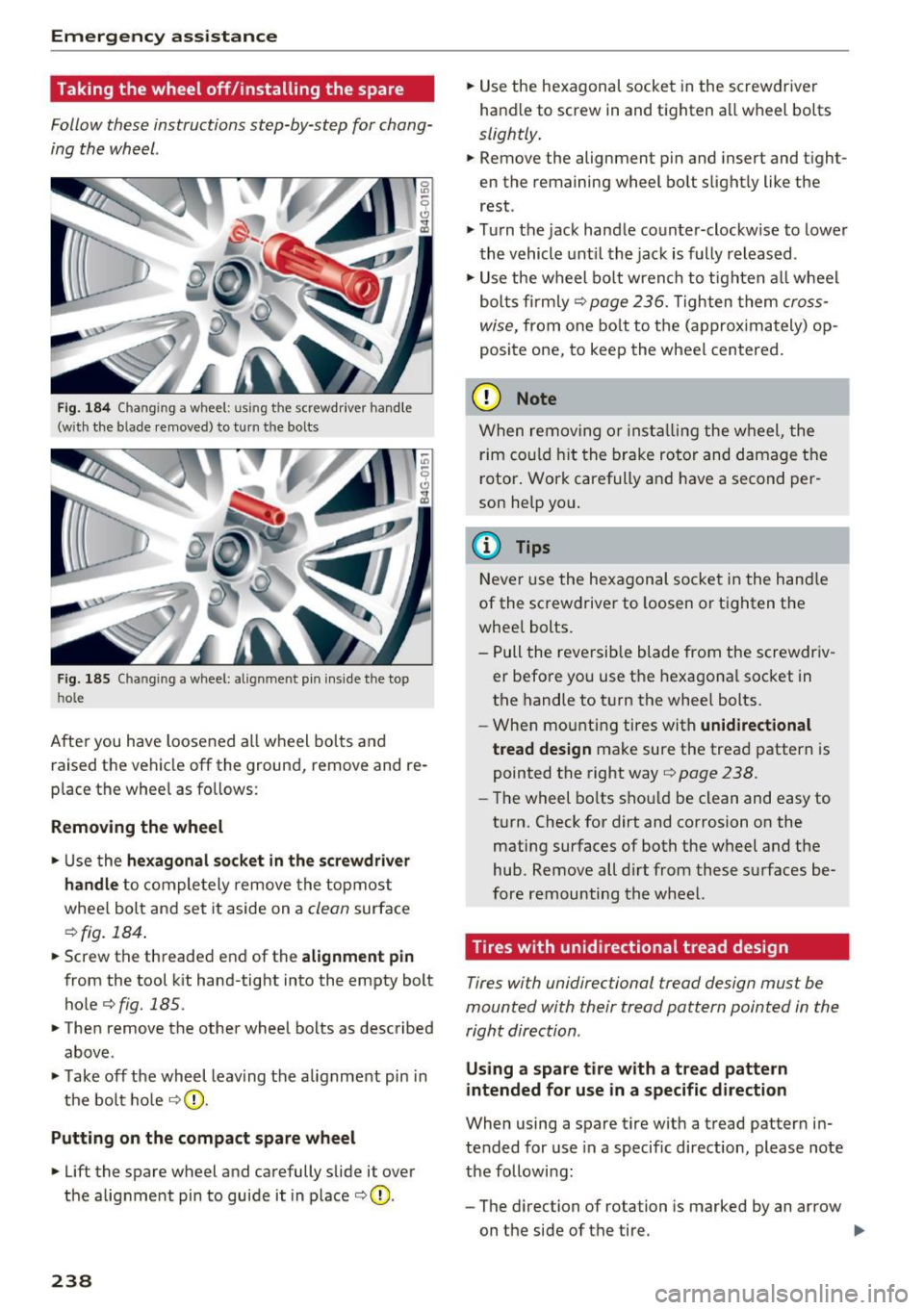
F ig. 184 Chang ing a wheel: using the screw driver ha ndl e
(wit h th e bla de re m oved) to turn the bol ts
F ig . 185 Chang ing a whee l: alignment p in inside t he top
hole
Afte r you h ave loose ned a ll w heel bo lts and
raised t he ve hicl e off the groun d, remove and re
p lace the whee l as fo llows:
Removing the wheel
• Use the hexagonal so cket in the screwdriver
handle
t o comple tely remove the topmost
whee l bolt and se t it aside on a
clean surface
~fig. 184 .
• Scre w the th reade d end of the alignment pin
from the tool kit hand-tight into the empty bolt
hole
c> fig. 185 .
• The n remove the other wheel bolts as described
above.
• Takeoff the wh eel leav ing the a lignm ent pin in
t h e bolt ho le
¢ 0 .
Putting on the compact spare wheel
• Lift the spare wheel and carefully slide it ove r
the alignme nt pin to gui de it in place
c> 0 .
238
• Use the hexagonal socket in the screwdriver
handle to screw in and tighten a ll wheel bo lts
slightly .
• Remove the alignment pin and insert and tight
en the remaining wheel bo lt s light ly like the
rest .
• Tur n t he jack hand le co unter-clockw ise to lowe r
the vehicl e until t he ja ck is fu lly released .
• Use the wheel bo lt wren ch to tig hte n all wheel
bolts firm ly¢
page 236. T igh ten them cro ss
wise,
from one bo lt to t he (a pprox ima tely) op
posite one, to keep the wheel centered.
(D Note
W hen re mov ing o r installin g the w heel, the
rim co uld hit the bra ke r otor an d damage t he
r otor . Work care fully and h ave a second per
son he lp yo u.
(D Tips
Neve r use the he xagonal socke t in the han dle
of the sc rew drive r to loosen or t ighten the
whee l bolts .
- Pull the reve rsible blade from the screwdr iv
er befo re yo u use t he hexagona l so cket in
t h e handle to t urn the whee l bolts.
- W he n mo unting tires with
unidirectional
tread design
make sure the trea d pattern is
pointed t he right way~
page 238.
-Th e wheel bolts s ho uld be clean an d easy to
t u rn. Check fo r dirt and corrosion o n the
mati ng surfaces of both the wheel and the
hub. Remove all dirt from these s urfaces be
fore r emounting the whee l.
Tires with unidirectional tread design
Tires with unidirectional tread design must be
mounted with their tread pattern pointed in the
right direction .
Using a spare tire with a tread pattern
intended for use in a specific direction
When using a spare tire wit h a tread patter n in
te nded for use in a specific direction, please note
the followi ng:
- The direction of rotation is marked by an arrow
on the side of the tire. ..,.
Page 241 of 272
<( co ..... N
" N ..... 0 r--. > 00
-Some of the equipment listed in the follow
ing tables applies only to certain model ver
s ions or certain optional equipment .
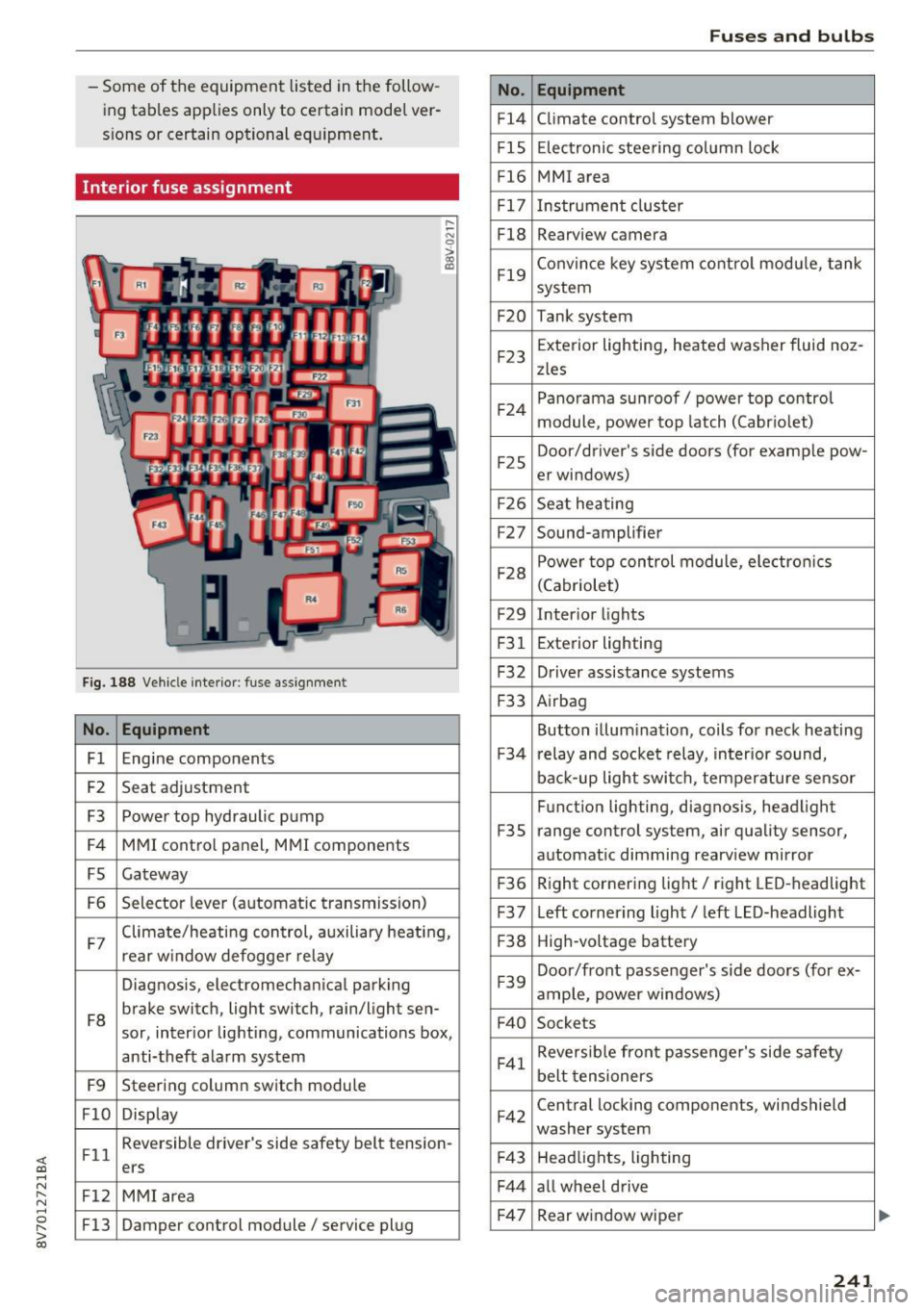
Interior fuse assignment
Fig. 188 Vehicle interior: fuse assignment
No. Equipment
Fl Engine components
F2 Seat
adjustment
F3 Power top hydraulic pump
F4 MMI control panel, MMI components
FS Gateway
F6 Selector
lever (automatic transmission)
.... ~ N
0
>
"' (0
F7 Climate/heating control, auxiliary heating,
rear w
indow defogger relay
Diagnosis, electromechanical parking
FB brake switch, light switch
, rain/light sen-
sor, inter ior lighting, communications box,
anti-theft alarm system
F9 Steering column switch module
FlO Display
Fll Reversible driver's side safety belt tension
-
ers
F12 MMI area
F13 Damper control module/ service plug
No.
Fl4
FlS
Fl6
F 17
FlB
F19
F20
F23
F 24
F2 5
F2 6
F27
F28
F29
F 31
F32
F 33
F 34
F35
F 36
F37
F38
F39
F40
F41
F42
F4 3
F44
F 47
Fuses and bulbs
Equipment
Climate control system blower
Electronic steering column lock
MMI area
Instrument cluster
Rearview camera
Convince key system control module, tank
system
Tank system
Exterior lighting, heated washer fluid noz -
zles
Panorama sunroof/ power top control
module, power top latch (Cabriolet)
Door/driver's side doors (for examp le pow-
er windows)
Seat heating
Sound-amplifier
Power top control module, electro nics
(Cabriolet)
Inter ior lights
Exterior lighting
Driver assistance systems
Airbag
Button illumination, coils for neck heating
r elay and socket relay, interior sound,
back-up light switch, temperature sensor
Function lighting, diagnosis, headlight
range control system, air quality sensor,
automat ic dimming rearview mirror
R ight cornering light/ right LED-headlight
Left cornering light/ left LED-headlight
High-voltage battery
Door/front passenger's side doors (for ex-
ample, power windows)
Sockets
Reversible front passenger's side safety
belt tensioners
Central locking components, windshield
washer system
Headlights, lighting
all wheel drive Rear w indow wiper
241