ESP AUDI A3 SEDAN 2017 Manual Online
[x] Cancel search | Manufacturer: AUDI, Model Year: 2017, Model line: A3 SEDAN, Model: AUDI A3 SEDAN 2017Pages: 400, PDF Size: 67.32 MB
Page 325 of 400
a, a, ..... N
" N ..... 0 N > 00
@ For the sake of the environment
-Before changing your oil, first make sure
you know where yo u can properly dispose of
the used oil.
- Always dispose of used engine oil prope rly .
Do not dump it on garden soil, wooded
areas, into open streams or down sewage
drains.
- Recycle used engine oil by taking it to a used engine oil collection facility in your area, or
contact a serv ice stat ion.
Cooling system
Coolant
The engine coo ling system is filled with a mixture
of purified water and coolant additive at the fac
tory. This coo lant must not be not changed.
The coolant leve l is monitored through
the . in
d icator
light ¢ page 28. However, we do recom
mend occasionally checking the coo lant level
manually.
I f you m ust add coolant, use a m ixture of water
and coolant addit ive. Mixing the coolant additive
with distilled water is recommended.
Coolant additive
The coolant addi tive is made of anti-freezing and
cor ros ion pro tection agents. Only use the follow
ing coolant additives . These additives may be
mixed with each other.
Coolant additive Specification
G13 TL 774 J
G12++ TL 774 G
The amount of coo lant additive that needs to be
mixed with water depends on the climate where
the vehicle will be operated .
If the coolant addi
tive percentage is too low, the coolan t can freeze
and damage the engine.
Checking and Filling
Coolant Freeze protec-
additive tion
Warm regions min.40% min. -13 °F
max. 45% (-25 °()
Cold reg
ions min. 50% max. -40 °F
max . 55 % (-40
°()
(D Note
-
Before the start of winter, have an a uthor
ized Aud i dea ler o r authorized Audi Serv ice
Facility check if the coo lant additive in your
vehicle matches the percentage appropriate
for the climate. This is especially important
when driving in colder climates.
- If the appropriate coo lant additive is not
available in an emergency, do not add any
other additive. You could damage the en
gine . If this happens, on ly use water and re
store the correct mix tu re ratio with the
specified coolant add it ive as soon as poss i
ble.
- Only refill w ith new coolant.
- Radiator sealant must not be mixed with
the coolant .
Adding coolant
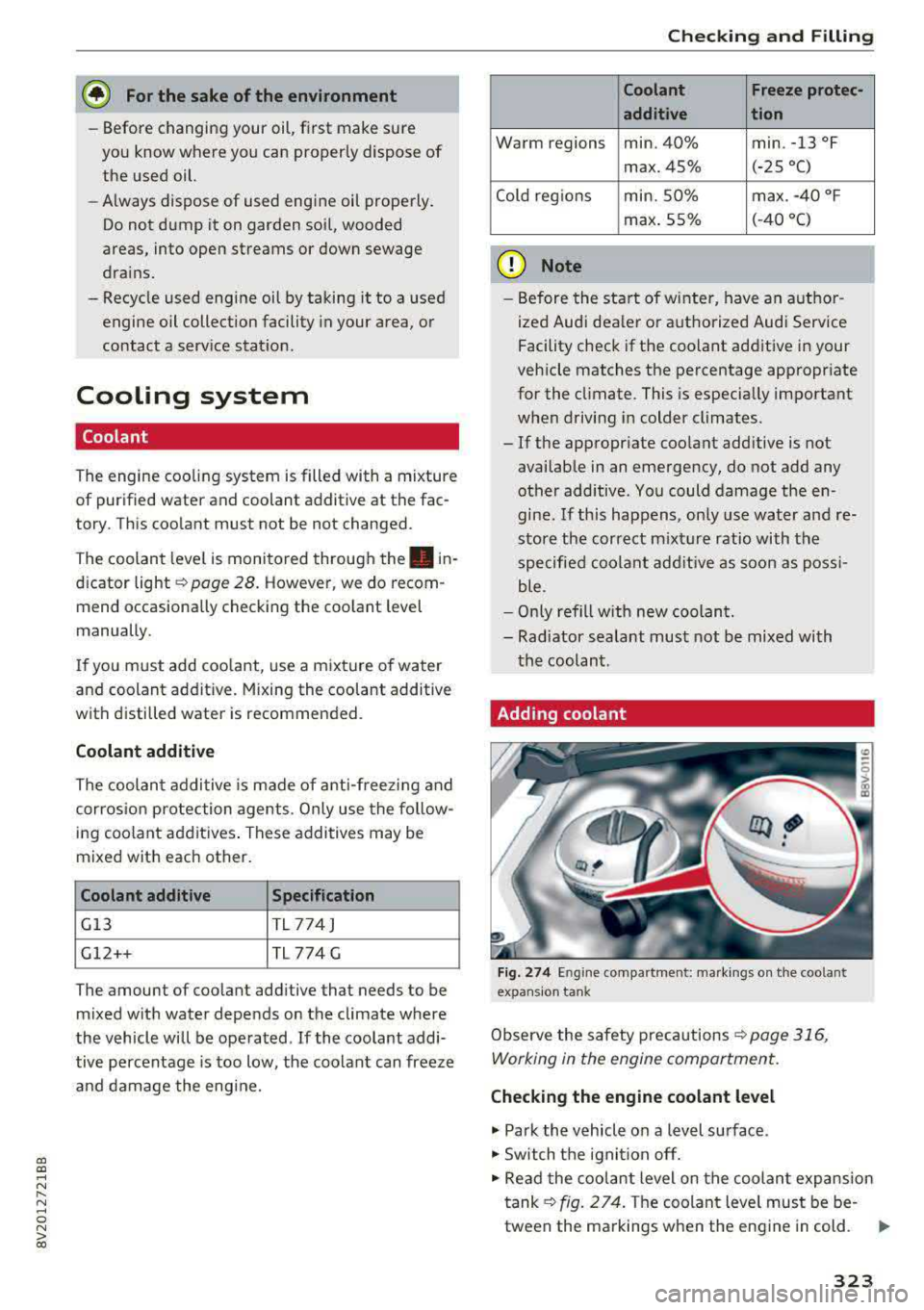
Fig. 27 4 En g in e compa rtment: ma rkings on the coolant
expansion tank
Observe the safety precautions ¢ page 316,
Working in the engine compartment.
Checking the engin e coolant level
.. Park the vehicle on a level su rface .
.. Switch t he ignit ion off.
.. Read the coolant level on the coolant expans ion
tank ¢ fig. 2 74. The coolant leve l must be be -
tween the ma rkings when the engine in cold .
..,
323
Page 326 of 400
Checking and Filling
When the engine is warm it can be slightly above the upper marking.
Adding coolant
Plug-in hybrid drive* : Your vehicle has two cool
ant expansion tanks that are separate from each
other. The smaller of the two expansion tanks
must not be opened
¢ page 104. Read and fol
low the important safety precautions ¢
A in
Coolant on page 105 .
Requirement: there must be a residual amount of
coolant in the expansion tank
¢ (D .
~ Let the engine cool down.
~ Place a cloth over the coolant expansion tank
cap and unscrew the cap counterclockwise
¢_&. .
~ Add coolant mixed in the correct ratio
¢page 323 up to the upper marking.
~ Make sure that the fluid level remains stable.
Add more coolant if necessary.
~ Close the cap securely.
Coolant loss usually indicates there is a leak . Im
mediately drive your vehicle to an authorized
Audi dealer or authorized Audi Service Facility
and have the cooling system inspected.
If the
cooling system is not leaking, a loss can come
from the coolant boiling through overheating
and being pushed out of the cooling system.
.,&. WARNING
The cooling system is pressurized and can be
come very hot. To reduce the risk of burns
from hot coolant:
- Do not open the coolant expansion tank cap
when the engine is hot. This increases the
risk of burns.
- Stop the engine and allow it to cool.
- Protect your face, hands and arms from es-
caping coolant and steam by covering the
coolant tank cap with a large, thick cloth.
- Turn the coolant tank cap counterclockwise
slowly and keep light pressure on the cap.
- To reduce the risk of burns, do not allow any
antifreeze or coolant to drip onto the ex
haust system or hot engine components.
324
The ethylene glycol in engine coolant can
catch fire under certain circumstances.
- The coolant additive and the coolant can be
dangerous to your health. For this reason,
keep the coolant in the original container
and away from children . There is a risk of
poisoning.
- When working in the engine compartment,
remember that the radiator fan can switch
on even if the ignition is switched off, which
increases the risk of injury.
(D Note
Do not add coolant if the expansion tank is
empty . Air could enter the cooling system and
damage the engine . If this is the case, do not
continue driving . See an authorized Audi deal
er or authorized Audi Service Facility for assis
tance.
- Before the start of winter, have an author
ized Audi dealer or authorized Audi Service
Facility check if the coolant additive in your
vehicle matches the percentage appropriate
for the climate. This is especially important
when driving in colder climates.
- If the appropriate coolant additive is not
available in an emergency, do not add any
other additive. You could damage the en
gine. If this happens, only use water and re
store the correct mixture ratio with the
specified coolant additive as soon as possi
ble .
- Only refill with new coolant.
- Radiator sealant must not be mixed with the coolant.
· Radiator fan
The radiator fan switches on automatically by it
self
An auxiliary electric radiator fan switches on and
off depending on coolant temperature and other
vehicle operating conditions.
After you switch the engine off, the auxiliary fan
can continue running for up to 10 minutes
-even
with the ignition off.
It can even switch on again
later by
itself ¢.& , if .,..
Page 329 of 400
CXl CXl .... N ,.__
N .... 0 N > 00
Windshield washer system
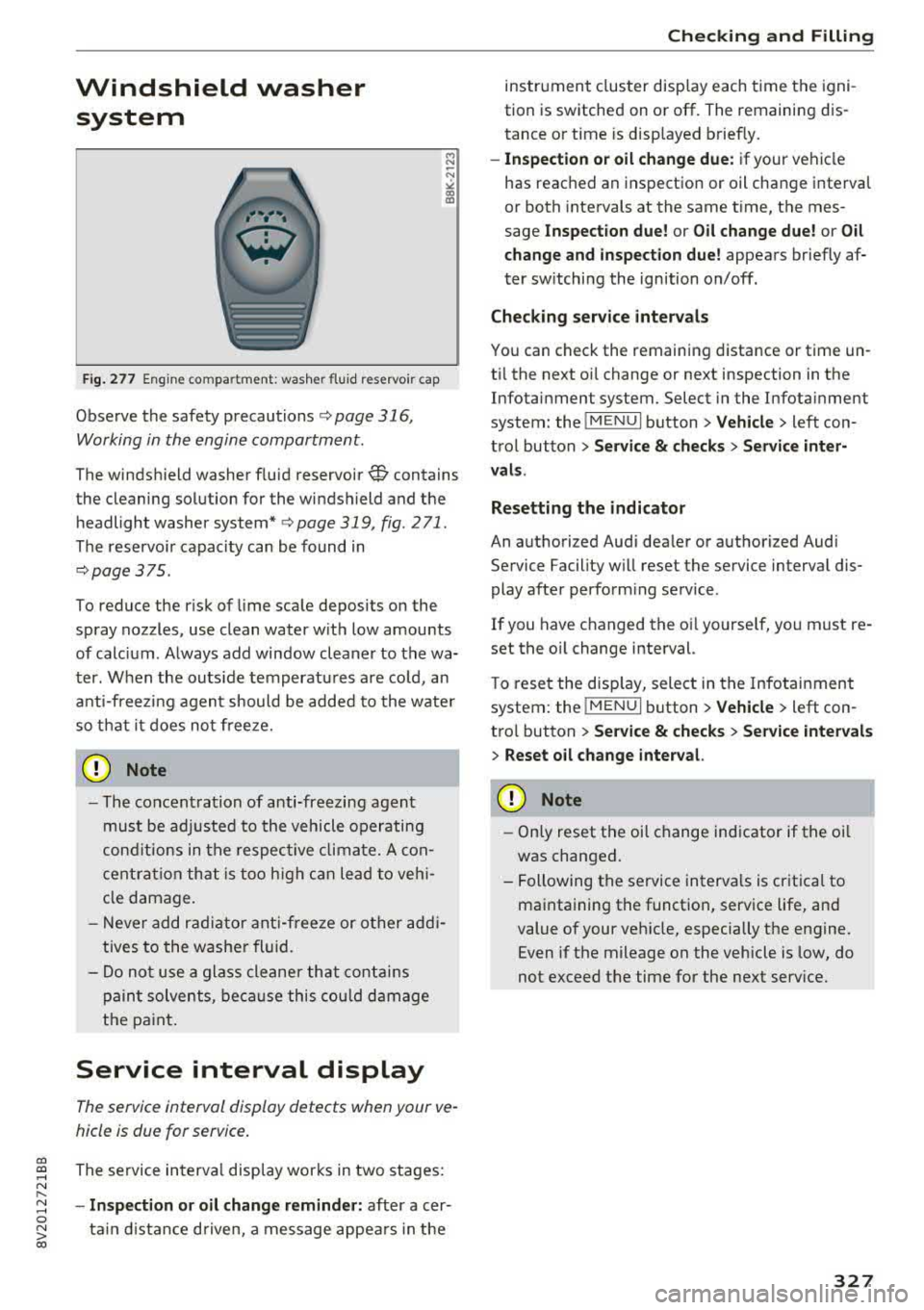
Fig. 277 Engine co mpa rtment: washer fluid reservoir cap
Observe the safety precautions ¢ page 316,
Working in the engine compartment.
M N
-N ~
"' a,
The windshield washer f luid reservoir~ contains
the cleaning solution for the windshield and the
headlight washer
system* ¢ page 319, fig. 2 71 .
The reservoir capacity can be found in
¢page 375 .
To reduce the risk of lime scale deposits on the
spray nozzles, use clean water with low amounts
of calc ium . Always add window cleaner to the wa
ter. When the outside temperatures are co ld, an
anti-freezing agent should be added to the water
so that it does not freeze.
CD Note
-The concentration of anti-freezing agent
must be adjusted to the vehicle operating
conditions in the respective climate. A con
centration that is too high can lead to veh i
cle damage.
- Never add radiator anti-freeze or other addi
tives to the washer fluid.
- Do not use a glass cleaner that contains
paint solvents, because this could damage
the paint .
Service interval display
The service interval display detects when your ve
hicle is due for service .
The service interva l display works in two stages:
- Inspection or oil change reminder: after a cer-
ta in distance driven, a message appea rs in the
Checking and Filling
instrument cluster display each time the igni
tion is switched on or off. The remaining dis
tance or time is disp layed briefly.
- Inspection or oil change due: if your vehicle
has reached an inspection or oil change interval
or both intervals at the same time, the mes
sage
Inspection due! or Oil change due! or Oil
change and inspection due!
appears briefly af
ter sw itching the ignition on/off.
Checking service intervals
You can check the remaining distance or time un
til the next oi l change or next inspection in the
Infotainment system. Select in the Infotainment
system: the
! MENUI button> Vehicle> left con
trol button
> Service & checks > Service inter
vals.
Resetting the indicator
An authorized Audi dealer or authorized Audi Service Facility will reset the service interval dis
play after performing service .
If you have changed the oi l yourself, you must re
set the oil change interval.
T o reset the disp lay, select in the Infotainment
system: the
! MENUI button> Vehicle> left con
tro l button
> Service & checks > Service intervals
> Reset oil change interval.
CD Note
-Only reset the oil change indicator if the oi l
was changed.
- Following the service intervals is critical to
maintaining the function, service life, and
value of your vehicle, especially the engine.
Even if the mileage on the vehicle is low, do
not exceed the time for the next service.
327
Page 332 of 400
Wheel s
® Mud and snow capability
"M/5" or "M+S" indicates the tire
is sui table for driving on mud and
snow.
& indicates a winter tire.
@ Composition of the tire cord
and materials
The number of plies indicates the
number of rubberized fabric lay
ers in the t ire. In general: the
more layers, the more weight a
tire can carry . Tire manufacturers
must also specify the materials
used in the tire. These include
steel, nylon, po lyester and other
materials.
@ Maximum permitted load
This number indicates the maxi
mum load in kilograms and
pounds that the tire can carry .
@Uniform tire quality grade
standards for treadwear,
traction and temperature resist ance
Treadwear, traction and tempera
ture
ranges ¢ page 344.
@ Running direction
The arrows indicate the running
direction of unidirectional t ires .
You must always follow the speci
fied running direction
¢page 361 .
330
@ Maximum permitted
inflation pressure
This number indicates the maxi
mum pressure to which a tire can
be inflated under normal operat
ing condit ions.
Glossary of tire and loading
terminology
Acces sory we ight
means the combined weight (in
excess of those standard items
which may be replaced) of auto matic transmission, power steer
ing, power brakes, power win
dows, power seats, radio, and
heater, to the extent that these
items are available as factory-in
stalled equipment (whether in
stalled or not) .
Aspect ratio
means the ratio of the height to
the width of the tire in percent .
Numbers of 55 or lower indicate a
low sidewall for improved steer
ing response and better overall
handling on dry pavement.
Bead
means the part of the tire that is
made of steel wires, wrapped or
reinforced by ply cords and that is
shaped to fit the r im .
...
Page 337 of 400
a, a, ..... N
" N ..... 0 N > 00
fo r t he numb er of seating p osi
t io ns . R efe r to th e ta bl e
¢ ta ble
o n pag e 33 8 for th e number of
p eople th at co rrespo nd to th e ve
hi cle n orm al l oa d.
New tires or wheels
Aud i recommends having all work on tires or
wheels performed by an authorized Audi dealer
or author ized Audi Se rvice Facility . These fac ili
ties have the proper know ledge and are equipped
with the required too ls and replacement parts.
• New tires do not yet have the optimum grip
ping properties. Drive caref ully and at moder
ate speeds for the first 350 mi les (500 km)
with new tires.
• Only use tires w it h the same design, size (roll
i ng c ircumference) and as close to the same
tread patter n as poss ible on all four wheels .
• Do not replace t ires individua lly. At least re
pla ce both t ires on the same axle at the same
t ime .
• Audi recommends that you use Aud i Original
Tires . If you wou ld like to use different tires,
please note that the tires may perform differ
ently even if they are the same
si ze ¢ ,& .
• If you would like to equip your veh icle w ith a
tire/rim comb inat ion that is different from
what was installed at the factory, consult w ith
an aut horized Aud i dea ler o r authorized Audi
Se rvice Facility befo re making a
purchase ¢,& .
The spare tire* is different from the regular tires
insta lled on the veh icle
-for example, if w inter
tires or w ide tires a re ins talled
-so only use the
spa re ti re* tempo rar ily in case of emergen cy and
d rive caref ully wh ile i t is in use . It should be re
p laced w it h a regular t ire as soon as possib le.
Applies to: vehicles with all wheel drive: all four
wheels must be eq uipped w ith tires that are the
same brand and have the same construc tion and
tread pattern so that the drive system is not
damaged by different wheel speeds. For this rea
son , in case of eme rgency, only use a spare tire*
Wheels
that is the same circ umfe rence as the regular
tires.
A WARNING
--On ly use t ire/rim comb inations and suitab le
wheel bo lts that have been approved by
Aud i. Otherwise, damage to the vehicle and
a n accident could res ult.
-For technical reasons, it is not possible to
use t ires from other ve hicles
-in some cas
es, yo u cannot even use tires from the same
veh icle model.
-Make sure that the tires you select have
e nough clearance to the veh icle. Rep lace
ment tires should not be chosen s imply
based on the nomina l size, because ti res
wit h a differe nt constru ction can diffe r
g reatly even if they are the same size . If
there is no t enough clearance, the tires or
the vehicle can be damage d and this can re
duce dr iving safety and increase the risk of
an accident.
-On ly use t ires that are more than s ix years
old when absolutely necessa ry and drive
carefully when doing so.
- Do not use run -flat tires on your vehicle . Us
ing them when not perm itted can lead to
veh icle damage or accidents.
- If you install wheel covers on the vehicle, make sure they allow enough air circulation
to cool the brake system. If they do not, t his
could increase the risk of an acc ident.
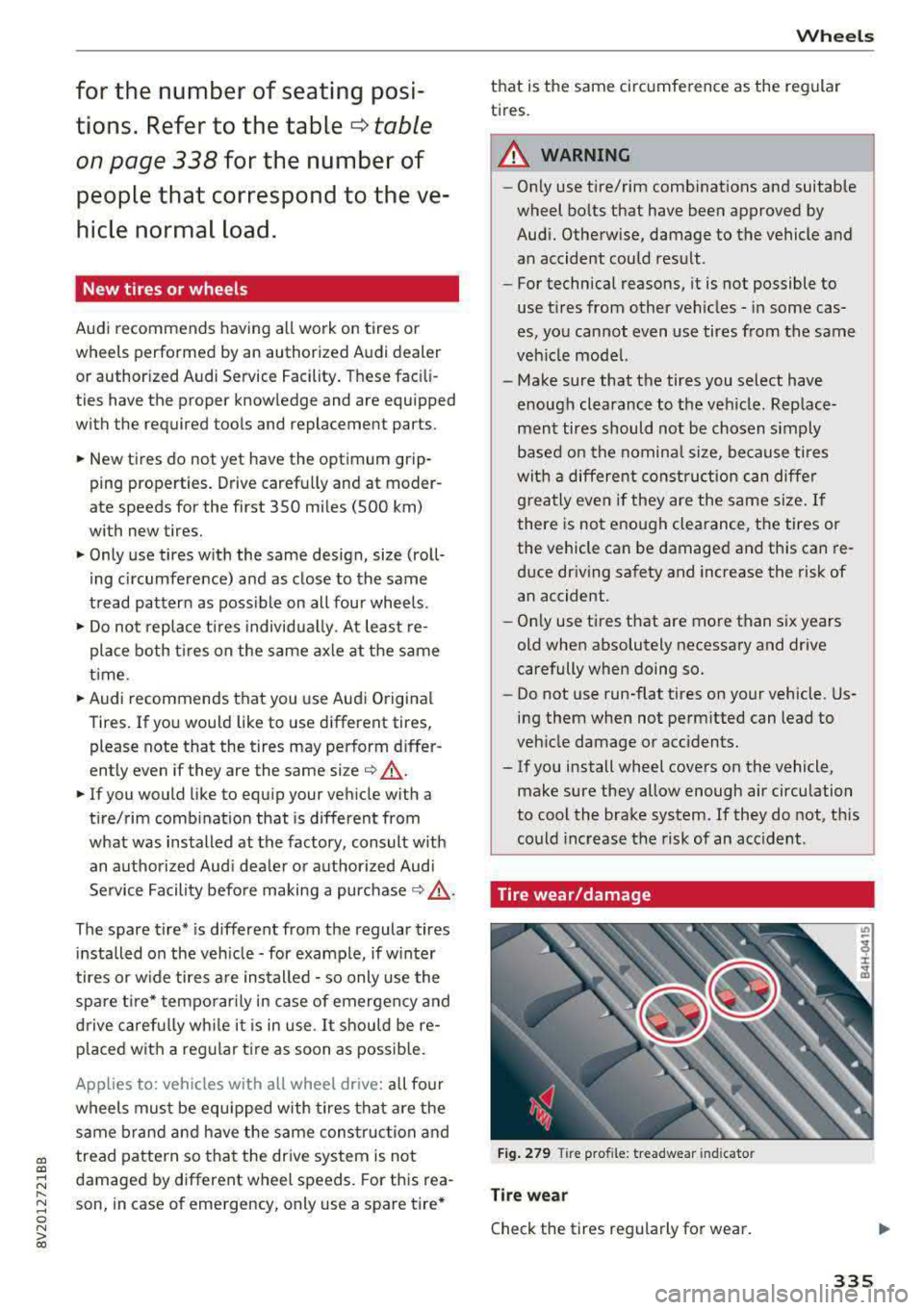
Tire wear/damage
F ig . 279 Tire pro file: treadwear indicato r
Tire we ar
Check the tires regu larly for wear.
335
Page 345 of 400
CXl CXl .... N ,.__
N .... 0 N > 00
Check with an authorized Audi dealer or author
ized Audi Service Facility to see if you may use
snow chains .
Use
fine-mesh snow chains . They must not add
more than 0.53 inch (13 .5 mm) in height, includ
ing the chain lock.
You must remove the snow chains on roads with
out snow. Otherw ise, you could impair driving
ability and damage the tires.
~ WARNING
Using incorrect snow chains or installing snow
chains incorrectly can result in loss of vehicle
control, which increases the risk of an acc i
dent.
0 Note
Snow chains can damage the rims/wheel cov
ers * if the chains come into direct contact
w ith them. Remove the wheel covers * first.
Use coated snow chains.
(D Tips
When using snow cha ins, it may be useful to
sw itch on sport mode
¢page 152.
Low aspect ratio tires
Your Aud i is factory-equipped with low aspect ra
tio tires. These t ires have been thoroughly tested
and been selected specifically for you r model for
their superb performance, road feel and handling
under a va riety of driving conditions. As k your au
thorized Audi dealer for mo re de tails.
The low aspect ratio of these tires is indicated by
a numera l of
55 or less in the tire's size designa
tion . The numeral represents the ratio of the
tire's sidewall height in relation to its tread width
expressed in percentage. Conventional tires have
a height/w idth rat io of 60 or more .
The performance of low-aspect-ratio tires is par
ticularly sensitive to improper inflation pres
sure. It is therefore important that low aspect
ratio tires are inflated to the specified pressure
and that the inflation pressure is regularly
checked and maintained. Tire pressures should
Wheels
be checked at least once a month and always
before a long trip
¢ page 336 .
What you can do to avoid tire and rim
damage
Low aspect ratio tires can be damaged more easi
ly by impact w ith potholes, curbs, gullies or
ridges on the road, particularly if the tire is un
der inflated.
In order to minimize the occurrence o f impact
damage to the tires of your vehicle, we recom
mend that you observe the following precau
t ions:
-Always maintain recommended inflation pres
sures . Check your tire pressure every
2,000 miles (3,000 km) and add air if necessa
ry.
-Drive carefully on roads with potholes, deep
gullies or ridges. The impact from driving
through or over such obstacles can damage
your tires. Impact with a curb may also cause damage to your tires.
-After any impact, immediate ly inspect your
tires or have them inspected by the nearest au
thorized Audi dealer . Replace a damaged tire as
soon as possible .
-Inspect your tires every 2,000 m iles (3,000 km)
for damage and wear . Damage is not a lways
easy to see. Damage can lead to loss of air and
unde rinflation, w hich could even tually cause
t ire fa ilure.
If yo u bel ieve that a tire may have
been damaged, replace the tire as soon as pos
sible.
-These tires may wear more quickly than others.
-Please also remember that, while these tires
deliver responsive handlin g, they may ride less
comfortably and make more noise than other
choices.
Reduced performance in winter/cold season
conditions
All tires are designed for certain purposes. The
low aspect ratio, ultra high performance tires
origina lly installed on your vehicle are intended
for maximum dry and wet road performance and
handling. They are not suitable for cold, snowy or
icy weather conditions. If you drive under those
c ir cumstances, you should equip your vehicle
..,.
343
Page 346 of 400
Wheels
with all-season or winter tires, which offer better
traction under those cond itions. We suggest you
use the recommended snow or all-season tires
specified for your vehicle, or their equivalent.
Refer to
q page 342 for more detailed informa
tion regarding winter tires.
Uniform tire quality grading
-Tread wear
- Traction AA A B C
- Temperature ABC
Quality grades can be found where applicable on
the tire side wall between tread shoulder and
maximum sect ion w idth
q page 328, fig. 278.
For example: Tread wear 200 , Traction AA, Tem
perature
A .
All passenger car tires must conform to Federal
Safety Requirements in addition to these grades.
Tread wear
The tread wear grade is a comparative rating
based on the wear rate of the tire when tested
under controlled conditions on a specified gov
ernment test course .
For examp le, a tire graded 150 would wear one
and one half
(1 1/2) times as well on the govern
ment course as a tire graded 100.
The relative performance of tires depends upon
the actual conditions of their use, however, and
may depart significantly from the norm due to
variations in driving habits, service practices and
differences in road characteristics and climate.
Traction
The traction grades, from highest to lowest, are
AA, A, Band
C. Those grades represent the tire 's
ability to stop on wet pavement as measured un
der controlled conditions on specified govern
ment test surfaces of asphalt and concrete . A tire
marked C may have poor traction performance
q .,&..
Temperature
The temperature grades are A (the highest), B,
and C, representing the tire's resistance to the
344
generation of heat and its ability to dissipate
heat when tested under controlled conditions on
a specified indoor laboratory test wheel.
Sustained high temperature can cause the mate
rial of the tire to degenerate and reduce tire life,
and excessive temperature can lead to sudden
tire
failure ¢.&. .
The grade C corresponds to a level of perform
ance which all passenger car tires must meet un
der the Federal Motor Vehicle Safety Standard
No. 109. Grades Band A represent higher levels
of performance on the laboratory test wheel than
the minimum required by law.
A WARNING
-
The tract ion grade assigned to this tire is
based on straight-ahead braking traction
tests, and does not include acceleration, cor
nering, hydroplaning or peak traction charac
teristics.
A WARNING
The temperature grade for th is tire is estab
lished for a tire that is properly inflated and
not overloaded. Excessive speed, underinfla
tion, or excessive loading, either separately or
in combination, can cause heat bui ldup and
possible tire failure.
A WARNING
Temperature grades apply to tires that are properly inflated and not over or underinflat
ed .
Tire pressure monitoring
system
(1) General notes
App lies to : vehicles with tire pressure mo nitori ng syste m
.
Each tire, including the spare (if provided),
should be checked monthly when cold and inflat
ed to the inflation pressure recommended by the
vehicle manufacturer on the vehicle placard or
tire inflation pressure label. (If your veh icle has
tires of a different size than the size ind icated on
the veh icle placard or tire inflat ion pressure
..,.
Page 348 of 400
Wheels
after switching the ignition on or while driving
and the
[tlJ indicator light in the instrument clus
ter blinks for approximately one minute and then
stays on, there is system malfunction. Check/cor rect the pressures on all four tires and store the
pressures
Q page 346 . If the indicator light does
turn off or turns on again after a short period of
time, drive to an authorized Audi dealer or au
thorized Audi Service Facility immediately to have
the malfunction corrected.
A WARNING
- If the tire pressure indicator appears in the
instrument cluster display, reduce your
speed immediately and avoid any hard
steering or braking maneuvers. Stop as soon
as possible and check the tires and their
pressures.
- The driver is responsible for maintaining the correct tire pressures. You must check the
tire pressures regularly.
- Under certain conditions (such as a sporty
driving style, winter conditions or unpaved
roads), the pressure monitor indicator may
be delayed.
- Do not use run-flat tires on your vehicle. Us
ing them when not permitted can lead to
vehicle damage or accidents.
@ Tips
- The tire pressure monitoring system can al
so stop working when there is an ESC/ABS
malfunction.
- Using snow chains may result in a system
malfunction.
- The tire pressure monitoring system in your
Audi was calibrated with "Audi Original
Tires"
¢ page 335. Using these tires is rec
ommended .
- The tire pressure monitoring system can on
ly monitor the tire pressure of the driving
tires. Check the tire pressure of the spare
wheel in the luggage compartment so that
if necessary it is ready for use.
346
· Storing tire pressures
Applies to: vehicles with Tire P ressure Monitoring System in
dicator
A change in tire pressure or a change in tires
must be stored in the system.
Before storing the tire pressures, make sure the
tire pressures of all four tires meet the specified
values and are adapted to the load¢
page 335.
.,. Select in the Infotainment system: IMENU ! but
ton
> Vehicle > Service & checks > Tire pres
sure monitoring
> Store tire pressure > Yes,
store now.
(D Tips
Do not store the tire pressures if snow chains
are installed.
Page 349 of 400
Care and cleaning
General information
Plug -in hybrid drive*: For additional cleaning and
maintenance information, refer to
r=> page 119.
Regular, proper ca re helps to maintain your veh i
cle's value.
It can a lso be a requirement when
submitting warranty claims for corrosion damage
and paint defects on the body.
The necessary care prod ucts can be obtained
from an authorized Aud i dealer or autho rized
Audi Service Facility. Read and follow the instruc
tions for use on the packaging.
A WARNING
-Us ing clean ing and care prod ucts incorrectly
can be dangerous to your hea lth.
- Always store cleaning and care products out
of reach of chi ldren to reduce the risk of po i
soning.
@ For the sake of the environment
-Preferably purchase env ironmentally-friend
l y cleaning products.
-Do not dispose o f leftover cleaning and care
products with household trash.
Car washes
The longer that deposits s uch as insects, bird
droppings, tree sap or road salt remain on the ve hicle, the more the surface can be damaged. High
temperatures such as those caused by sunlight
increase the damag ing effect.
Before washing, rinse off heavy deposits with
p lenty of water .
S tu bborn depos its s uch as bird d roppi ngs or tree
sap are best removed with plenty of water and a
microfiber cloth.
A lso, wash the underside of yo ur vehicle once
road sa lt stops being used for the season.
cc Pressure washers CXl .... N ~ When washing your ve hicle w ith a pressure wash-
~ er, a lways fo llow the operating instructions pro-
> 00
Ca re and cleaning
vided with the pressure washer . This is especially
important in regard to the pressure and spraying
distance . Do not aim the spray d irect ly at sea ls on
s ide windows, doors, the hood, the luggage com
partment lid or the panorama glass roof* or at
t ires, rubber hoses, insulating material, the pow
er top*, senso rs* or camera lenses* . Keep a d is
tance of at least 16 in (40 cm) .
Do not remove snow and ice with a pressure
washer .
Never use cone nozzles or high pressure nozzles.
T he wate r temperat ure mus t not be above 140 °F
(60 °().
Automat ic car washes
Sp ray off the vehicle befo re wash ing.
Make sure that the windows, the panorama glass
roof* and the power top* are closed and the
windshield wipe rs are off . Fo llow instructions
from the car wash operator, espec ially if there
are accesso ries attached to your ve hicle.
If possible, use car washes that do not have
brushes.
Wa shing
by hand
Clean the vehicle starting from the top and work
ing down using a soft sponge or cleaning brush.
Use solvent-free cleaning products.
Wa shing vehicle s with matte fini sh paint
by
h and
To avo id damag ing the pa int when washing, f irst
remove dust and large particles from your vehi
cle. Insects, grease spots and f ingerpr ints are
best removed w ith a special clea ner for matte
finish paint.
Apply the product using a microfiber cloth. To
avo id damag ing the pa int surface, do not use too
much pressure .
Rinse the vehicle thorough ly w ith water. Then
clean using a neutral shampoo and a soft micro
fiber cloth.
Rinse the vehicle thorough ly again and let it air
dry. Remove any water residue using a chamois.
Ill-
347
Page 351 of 400
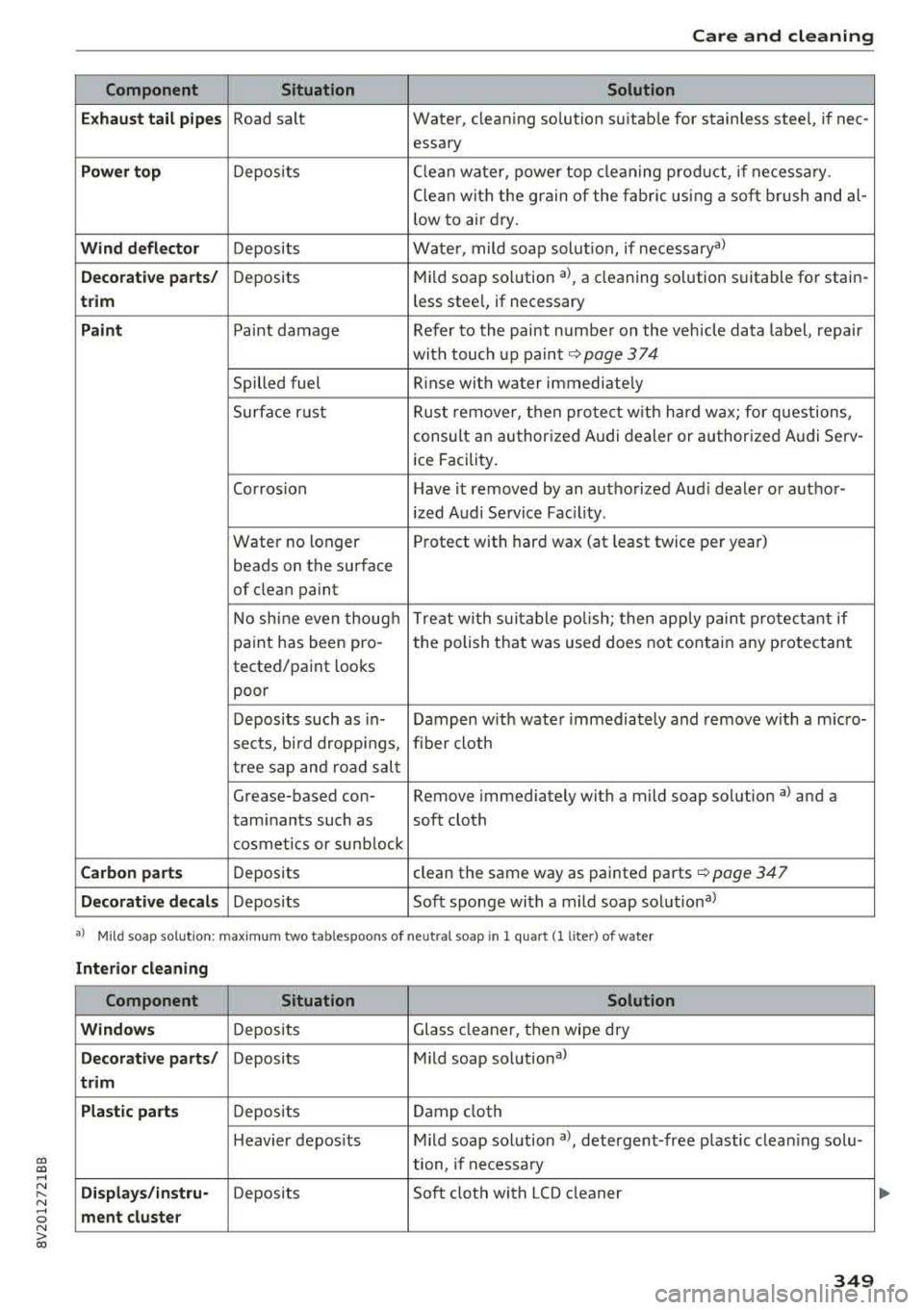
CXl CXl .... N r--N .... 0 N > 00
Care and cleaning
Component Situation Solution
Ex haust t ail p ip es
Road salt Water, cleaning solution suitab le for stainless steel, if nee-
essary
Po we r top Deposits Clean water, power top cleaning product, if necessa ry.
C lean with the grain of the fabric us ing a so ft brush and al-
l ow to air dry.
Wind defl ecto r Deposits Water, mild soap solut ion, if necessaryal
D ecor ativ e part s/ Deposits Mild soap solution al, a cleaning so
lution suitable for stain-
trim less stee l, if necessary
P aint Pa int damage Refer to the paint numbe r on the vehicle data label, repair
with touch up paint
~page 374
Spilled fuel Rinse with water immediately
Surface rust Rust remover, then prote ct w ith ha rd wax; for questions,
consult an author ized Audi dealer or authorized Audi Serv-
ice Facility .
Corrosion Have it removed by an authorized Aud i dealer or author-
i zed Audi Service Facility.
Water no longer Protect with hard wax (at least twice per year)
beads on the surface
of clean paint
No sh ine even thoug h Treat w ith suitable po lish; then apply paint protectant if
paint has been pro -the polish that was used does not contain any protectant
tected/paint looks poor
Deposits such as in- Dampen w ith water immediately and remove with a m icro-
sects, bi rd dropp ings, fiber cloth
tree sap and road sal t
Grease-based con-Remove immediately with a mild soap solution al and a
tam inants such as soft cloth
cosmetics or sunblock
C ar bon p art s Deposits clean
the same way as painted parts ~ page 347
Dec orati ve d ecals
Deposits Soft sponge with a mild soap solutional
a) Mild soap solution: maximum two tablespoons of neutral soap in 1 quart (1 liter l of water
Interio r cl ea ning
Component Situation Solution
Window s
Deposits Glass cleaner, then wipe dry
D
ecor ati ve part s/ Deposits Mild soap solutional
trim
Pla stic pa rts
Deposits Damp cloth
Heavier depos its Mild soap solution
al, detergent-free plastic clean ing solu-
tion, if necessary
Di spl ays/in stru· Deposits Soft cloth with LCD cleaner
ment clus te r
349