steering AUDI A4 2016 Owner's Manual
[x] Cancel search | Manufacturer: AUDI, Model Year: 2016, Model line: A4, Model: AUDI A4 2016Pages: 278, PDF Size: 70.26 MB
Page 133 of 278
,....,
N
0
""' CX) ,....,
I.Cl U"I ,....,
I.Cl ,....,
Why use safety belts?
Frontal collisions and the law of physics
Frontal crashes create very strong forces for peo
ple riding in vehicles .
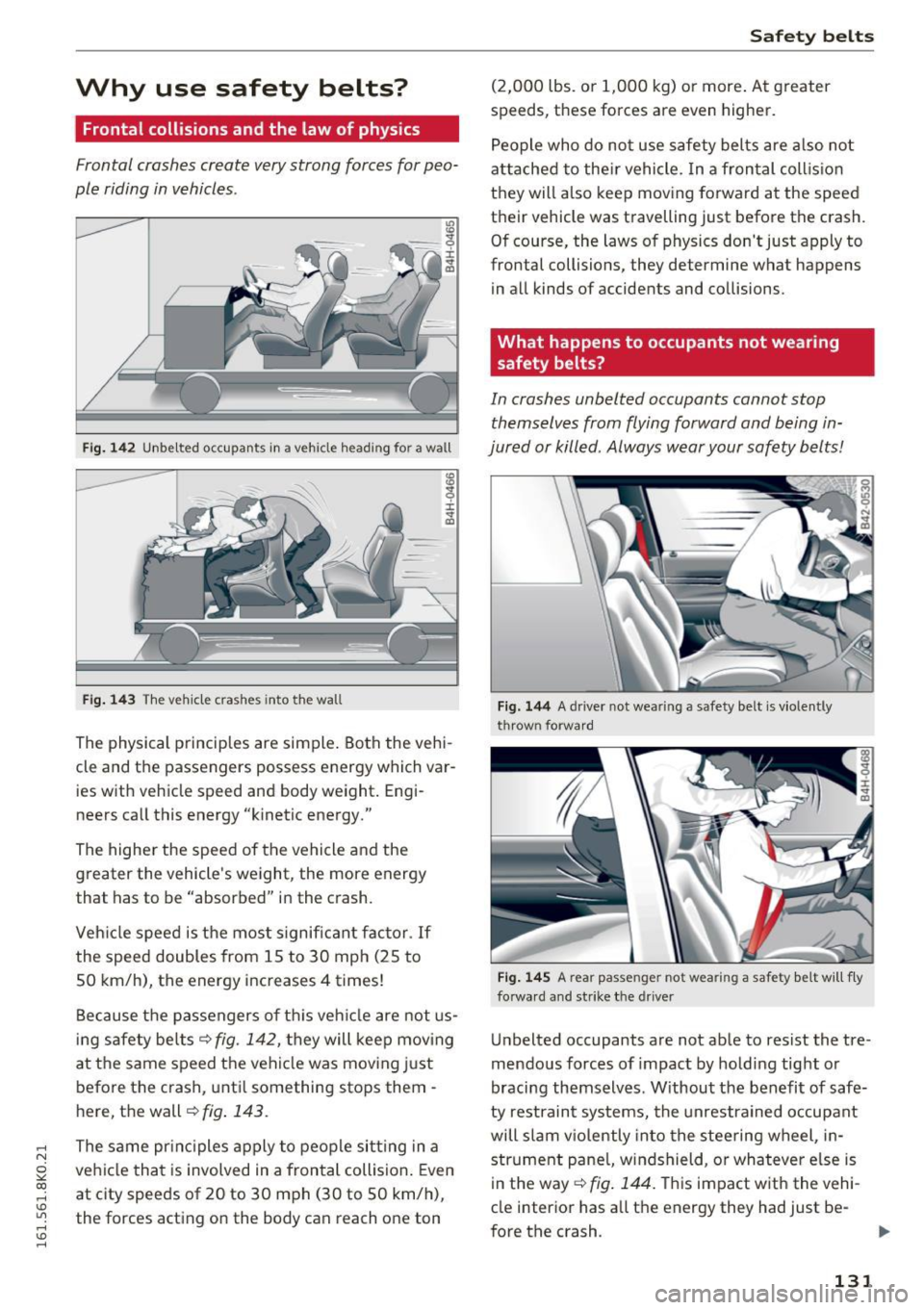
Fig. 142 Unbelted occupants in a vehicle heading for a wall
Fig . 143 The vehicle crashes into the wall
CD
~ ±
cle and the passengers possess energy which var
ies with vehicle speed and body weight. Engi
neers call this energy "kinetic energy."
The higher the speed of the vehicle and the
greater the vehicle's weight, the more energy
that has to be "absorbed" in the crash.
Veh icle speed is the most significant factor.
If
the speed doubles from 15 to 30 mph (25 to
50 km/h), the energy increases 4 times!
Because the passengers of this vehicle are not us
ing safety belts¢
fig. 142, they will keep mov ing
at the same speed the vehicle was moving just
before the crash, until something stops them -
here, the wall
¢fig. 143.
The same principles apply to people sitting in a
vehicle that is involved in a frontal collision. Even
at city speeds of 20 to 30 mph (30 to 50 km/h),
the forces acting on the body can reach one ton
Safety belts
(2,000 lbs. o r 1,000 kg) or more . At greater
speeds, these forces are even higher.
People who do not use safety belts are also not
attached to their vehicle. In a frontal collision
they will also keep moving forward at the speed
their vehicle was travelling just before the crash.
Of course, the laws of physics don't just apply to
frontal collisions, they determine what happens in all kinds of accidents and collisions.
What happens to occupants not wearing
safety belts?
In crashes unbelted occupants cannot stop
themselves from flying forward and being in
jured or killed. Always wear your safety belts!
Fig. 144 A driver not wearing a safety belt is v iolently
thrown forward
Fig. 145 A rear passenger not wearing a safety belt will f ly
forwa rd and strike the
driver
Unbelted occupants are not able to resist the tre
mendous forces of impact by holding tight or
bracing themselves . Without the benefit of safe
ty restraint systems, the unrestrained occupant
will slam viol ently into the steering wheel, in
strument panel, windshield, or whatever else is
in the way
¢fi g. 144. This impact with the vehi
cle interior has all the energy they had just be-
fore the crash.
Ill>-
131
Page 140 of 278
Airbag syste m
Airbag system
Important information
Importance of wearing safety belts and
sitting properly
Airbags are only supplemental restraints . For
airbags to do their job, occupants must always
properly wear their safety belts and be in a prop
er seating position.
For your safety and the safety of your passen
ge rs , before driving off, always :
"' Adjust the driver's seat and steering wheel
properly ¢
page 122,
"'Adjust the front passenge r's seat properly
¢ page 60,
"'Wear safety belts p roperly ¢ page 132 ,
"'Always properly use the proper child restraint
to protect children
¢ page 158.
In a coll is io n airbags must inflate wi thin the b link
of an eye and with cons iderable force . The sup
p lemental airbags can cause injuries if the driver
or the front seat passenger is not s eated proper ·
Ly. T herefore in order to help the airbag to do its
job, it is important, both as a dr iver and as a pas
senger to sit properly at all t imes .
By keeping room between your body and the
steering whee l and the front of the passenger
compartment, the a irbag can inflate fully and
completely and provide supplemental protect ion
in certain frontal collisions¢
page 122, Correct
passenger seating positions .
For details on the
operation of the seat adjustment con trols
¢ page 60.
It's especially important that children are proper
ly restra ined
¢ page 158 .
There is a lot that the driver and the passengers
can and must do to help the ind iv idual safety fea
tures installed in your Audi work together as a
system .
Proper seating posit ion is important so that the
front airbag on the drive r side can do its job. If
you have a physical impairment or cond ition that
prevents you from s itting properly on the driver
seat with the safety be lt properly fastened and
138
reaching the peda ls, special modifications to
your vehicle may be necessary.
Contact yo ur aut ho rized Aud i dea le r, or call A udi
C u stomer Rela tions a t 1-800-822-2834.
When the airbag sys tem dep loys, a gas generator
will fill the a irbags, b reak open the padded cov
e rs, and inflate betwee n the steering wheel and
the driver and between the inst rument pa nel and
the front passenger . The a irbags w ill deflate im
mediate ly after dep loyment so t hat the front oc
cupants can see th ro u gh the windsh ie ld again
without interruption.
A ll of th is takes p lace in the blink of an eye, so
fast that many people don't even rea lize that the
airbags have deployed. The airbags a lso inflate
with a great deal of force and nothing should be i n the ir way when they deploy. Front airbags in
combination with properly worn safety belts slow
down and lim it t he occupant's forward move
ment . T ogether they he lp to prevent the driver
and front sea t passenger from h itti ng pa rts of
t h e i nside the veh icle w hile reducing the fo rces
acti ng on the occupant dur ing the cras h. In th is
way they help to reduce the risk of inju ry to the
head and uppe r body i n the crash. Airbags do not
protect the arms or the lower parts of the body.
Both front airbags will not infla te in all frontal
collisions . The trigge ring of the airbag system de
pends on the vehicle deceleration rate caused by
the coll is ion and registered by the electronic con
tro l unit . If this rate is be low the reference value
programmed into the contro l unit, the airbags
will not be triggered, even though the car may be
badly damaged as a resu lt of the co llision. Vehi
cle damage, repa ir costs or even the lack of vehi
cl e damage is not ne cessari ly an indication of
whethe r an a irbag should infla te o r not.
It is not possib le to define a range of vehicle
speeds that w ill cove r every possible k ind and an
gle of impa ct that will always tr igger the airbags ,
s in ce the circumst ances w ill vary cons iderably be
tween one collision and anot her. Important fac
tors include, for examp le, the natu re (hard or
soft) of the object which the car hits, t he angle of
i mpact, vehicle speed, etc . The front airbags will ..,_
Page 141 of 278
..... N
0 ::..:: co .....
ro ll-overs.
A lwa ys rememb er: Airbags will deploy only o nce,
and on ly in certain kinds of coll is ions. Your safety
be lts are always there to offer protection in those
situations in which airbags are not supposed to
deploy, or when they have a lready deployed; for
examp le, when your vehicle str ikes or is struck by
another after the first collis ion.
This is just one of the reasons why an airbag is a
supp lementary restraint and is not a substitute
for a safety belt. The airbag system works most effect ively when used with the safety belts.
Therefore, always properly wear your safety belts
r:::;,page 130.
A WARNING
Sitting too close to the steer ing whee l or in
st rument panel will decrease the effect ive
ness of the airbags and will inc rease the risk
o f persona l injury in a co llision.
- Never sit closer than 10 inches (25 cm) to
the steering wheel or instrument panel.
- If you cannot sit mo re than 10 inches
( 2 5 cm) from the steering wheel, inves ti
gate whethe r adaptive equipment may be
available to help you reach the pedals and
increase your seating distance from the
steering wheel.
- If you are unrest rained, leaning forward, s it
ting s ideways or out of position in any way,
your risk of in jury is much h igher.
- Yo u will also receive serious injur ies and
cou ld even be killed if you are up against the
airbag or too close to it when it inf lates -
even with an Advanced Airbag.
- To reduce the risk of in jury when an airbag
inflates, a lways wear safety belts p roperly
i=> page 133, Safety belts .
-Always make certain that ch ild ren age 12 or
younger always ride in the rear seat. If chil dren are not properly restra ined, they may
be severe ly injured o r kill ed when an airbag
inflates .
- Never let children ride unrestrained or im prope rly restrained in the veh icle. Adjust the
fro nt sea ts properly .
-
Airb ag sys tem
-Never ride with the back rest recl ined.
-Always sit as fa r as possible from the steer-
ing wheel o r the instrument panel
r:::;,page 122.
-Always sit upright with your back against
the backrest of your seat.
- Never p lace your feet on the instrument
panel or on the seat. Always keep both feet
on the floor in front of the seat to help pre
vent ser ious injuries to the legs and hips if
the airbag inflates.
- Never recline the front passenger's seat to transpo rt objects. Items can also move into
the area of the s ide a irbag or the front air
bag during braking or in a sudden maneu
ver. Objects nea r the airbags can become
p roje ct il es and cause injury when an airbag
inflates.
A WARNING
A irbags tha t h ave deployed in a cr ash m ust be
r e p laced.
- Use o nly orig inal equipment airbags ap
p roved by A udi a nd insta lled by a trained
technici an who has the necessary tools and
diagnostic equipment to properly replace
any airbag in yo ur vehicle and assu re system
effect iveness in a crash.
- Never permit salvaged or recycled airbags to
be installed in you r vehicle .
Child restraints on the front seat - some
important things to know
.,. Be sure to read the important i nformat ion and
head the WARNINGS for important deta ils
about ch ildren and Advanced A irbags
r:::;, page 158.
Even though your veh icle is equipped wit h an Ad
vanced Airbag System, make certa in that a ll chil
dre n, espec ia lly those 1 2 yea rs and yo unger, al
ways r ide in the back se at prope rly res train ed fo r
their age and size. The ai rbag on t he p asse nger
s ide makes t he fron t seat a potentia lly dange rous
place for a child to ride. The front seat is not the
sa fest p lace for a child in a forward-facing child .,.
139
Page 144 of 278
Airbag syste m
Front airbags
Description of front airbags
The airbag system can provide supplemental
protection to properly restrained front seat occu
pants.
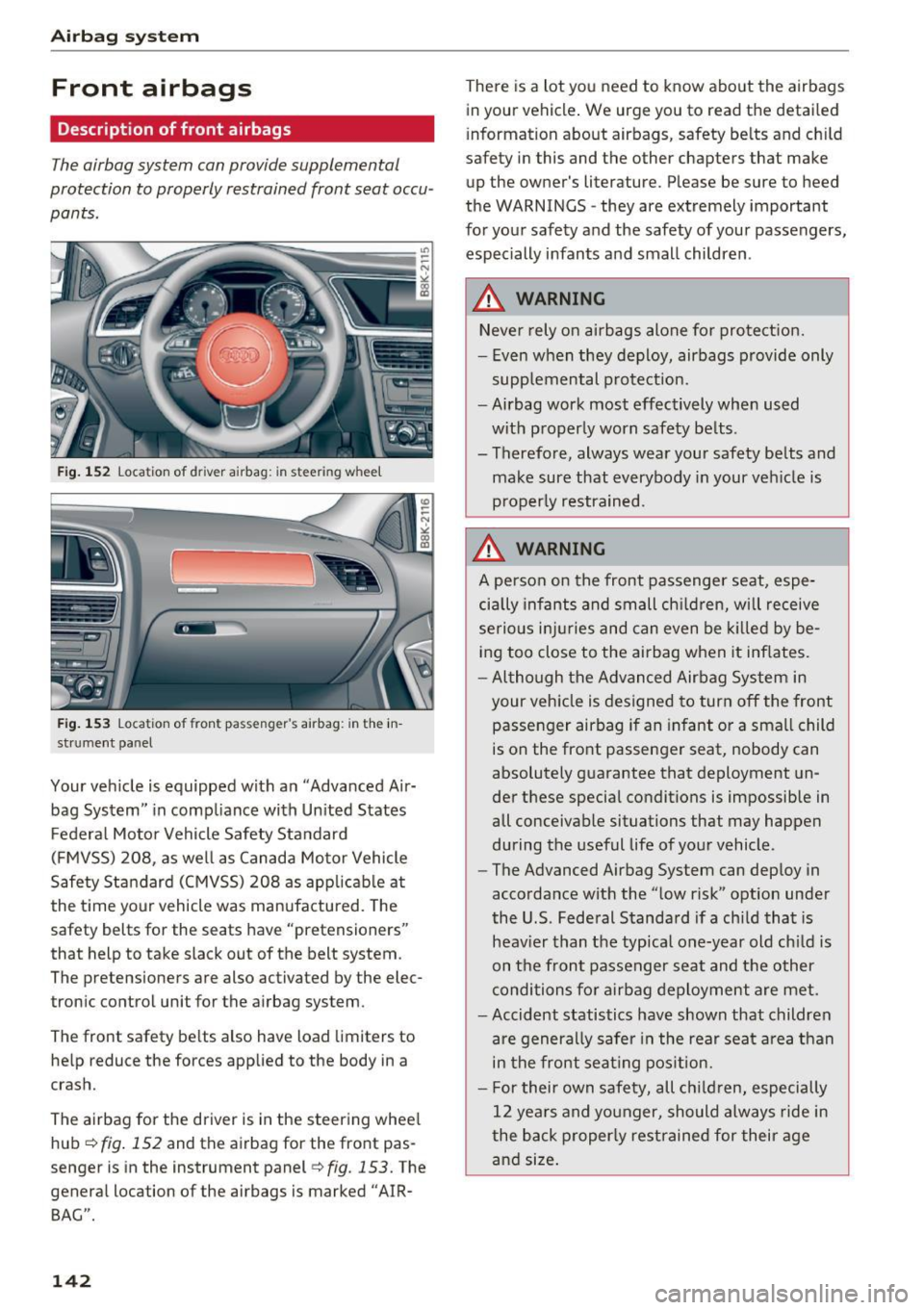
Fig. 152 Location of driver airbag: in steering whee l
Fig. 153 Location of front passenger's airbag: in the in
strument panel
Your veh icle is equipped with an "Advanced Air
bag System" in compliance with Un ited States
Federa l Motor Vehicle Safety Standard
(FMVSS) 208, as well as Canada Motor Vehicle
Safety Sta ndard (CMVSS) 208 as app licable at
the time your vehicle was manufactured. The
safety belts for the seats have "pretensioners"
that help to take slack out of the belt system.
The pretensioners are also activated by the elec
tronic control unit for the airbag system.
The front safety be lts also have load limiters to
help reduce the forces applied to the body in a
crash.
The airbag for the driver is in the steering wheel
hub
<=>fig . 152 and the airbag for the front pas
senger is in the instrument panel
<=>fig. 153. The
general location of the airbags is marked "AIR
BAG".
142
There is a lot you need to know about the airbags
in your vehicle . We urge you to read the detailed
i nformation about airbags, safety belts and child
safety in this and the other chapters that make
up the owner's literature. Please be sure to heed
the WARNINGS -they are extremely important
for your safety and the safety of your passengers,
especially infants and small children .
.&_ WARNING -
Never rely on airbags alone for prote ct ion.
- Even when they deploy, airbags provide only supp lemental protection.
- Airbag work most effectively when used with properly worn safety be lts.
- Therefore, always wear your safety belts and make sure that everybody in your veh icle is
properly restrained .
.&_ WARNING
A person on the front passenger seat, espe
cially infants and small ch ildren, wi ll receive
serious inju ries and can even be killed by be
ing too close to the airbag when it inf lates.
- Although the Advanced Airbag System in
-
your vehicle is designed to turn off the front passenger airbag i f an infant or a small child
is on the front passenger seat, nobody can
absolutely guarantee that deployment un
der these special conditions is impossible in
all conceivable situations that may happen
during the useful life of your vehicle.
- The Advanced Airbag System can deploy in
accordance with the "low risk" option under
the U.S. Federal Standard if a child that is
heav ier than the typical one-year old ch ild is
on the front passenger seat and the other
conditions for airbag deployment are met.
- Accident statistics have shown that children are generally safer in the rear seat area than
in the front seat ing pos ition.
- For their own safety, all chi ld ren, especially
12 years and younger, should always ride in
the back proper ly restrained for their age
and size .
Page 145 of 278
..... N
0 ::..:: co .....
Your vehicle is equipped with a front Advanced
Airbag System in compliance with Un ited States
F edera l Motor Vehicle Safety Standard 208, as
well as Canada Motor Vehicle Safety Standard
(CMVSS) 208 as applicable at the time your vehi
cle was manufactured .
The front Advanced Airbag System supp lements
the safety belts to provide additional protection
for the driver 's and front passenger's heads and
upper bodies in frontal crashes . The airbags in
f late only in frontal impacts when the veh icle de
celerat ion is high enough.
The front Advanced Airbag System for the front
seat occupants is not a substitute for your safety be lts . Rather, it is part of the overall occupant re
stra int system in your vehicle. Always remember
that the airbag system can on ly help to protect
you, if you are sitting upr ight, wear ing your safe
ty belt and wear ing it prope rly . This is why you
and your passengers must always be prope rly re
stra ined, not just beca use the law req uires yo u to
be .
The Advanced Airbag System in your veh icle has
been ce rtified to meet the "low r is k" requi re
ments fo r 3 and 6 ye ar-old children o n the pas
senger side and very sma ll adults on the drive r
side . The low risk dep loyment cr iteria are intend
ed to help reduce the risk of injury through inter
action with the front a irbag that can occur, for
examp le, by being too close to the steering wheel
and instrument panel when the airbag inflates .
In addition, the system has been certified to
comp ly with the "suppression" requirements of
the Safety Standard, to turn off the front a irbag
for i nfants 12 months old and younger who are
restrained on the front passenger seat in child re
stra ints that are listed in the Standa rd
¢ page 160, Child restraints and Advanced Air
bags.
"Suppress ion" requ ires the front a irbag on the
passenger side to be turned off if:
- a ch ild up to about one year of age is restra ined
on the front passenger seat in one of the rear
facing or forward -fac ing infant restra ints listed
Airb ag sys tem
in Federal Motor Veh icle Safety Standard 208
with which the Advanced Airbag System in your
veh icle was certif ied. For a List ing of the child
restraints that were used to certify your vehi
cle's compliance with the US Safety Standard
¢page 160,
-weight less than a threshold level stored in the
control un it is detected on the front passenger
seat .
When a person is detected on the front passen ger seat, weighing more than the total weight of
a chi ld that is about
1 year old restra ined in one
of the rear-facing or forward -fac ing infant re
straints (listed in Federal Motor Veh icle Safety
Standard 208 with w hich the Advanced A irbag
System i n your veh icle was certified), the front
airbag on the passenge r side may o r may not de
ploy .
T he
PAS SENGER AIR BAG OFF lig ht comes o n
whe n the elect ronic con trol uni t detects a tota l
weight on the fron t passenger sea t th at req uires
the front a irbag to be turned off . If th e
PASSEN
GER AIR BAG OFF
light does not come on, the
front airbag on the passenger side has not been
turned off by the control unit and can dep loy if
the control unit senses an impact that meets the
condit io ns stored in its memory .
If the total weight on the front passenger seat is
more than that of a typica l 1 year-old, but less
than the weight of a small adult, the front airbag
o n the passenger s ide may deploy (the
PAS SEN
GER AIR BAG OFF
light does not come on) .
For example , the ai rb ag may deploy if :
- a small ch ild that is heav ier than a typ ica l 1
yea r-o ld child is on the front passenger seat
(regard less of whether the child is in one of the
child safety seats listed
¢ page 160),
- a child who has outgrown c hild restraints is on
the front passenger seat.
If the front passenge r a irbag is t urned off, the
PASSENGER AIR BAG OFF light in the center of
the instr ument pane l wi ll come on and stay on .
T he front airbag on the passenger s ide m ay
not
deploy (the PASSENGER AIR BAG OFF light does
not illuminate and stay lit) if: ..,.
143
Page 147 of 278

..... N
0 ::..:: co .....
ger seat contains important parts of the Ad
vanced A irbag System, you must take care to pre
vent it from being damaged. Damage to the seat may prevent the Advanced Airbag for the front
passenger seat from doing its job in a crash .
The front Adv anced Airb ag Sy stem con sist s
of the following :
-Crash sensors in the front of the vehicle that
measure vehicle accelerat ion/decelerat io n to
provide information to the Advanced Airbag
System about the severity of the crash .
- An electronic control un it, with integrated
crash sensors fo r front and side impacts . The
contro l unit "decides" whether to fire the front
airbags based on the information received from
the crash sensors. The control unit also "de
cides" whether the safe ty be lt pretens ioners
sho uld be activated.
- An Advanced Airbag wi th gas generato r and
contro l valve for the driver ins ide the steer ing
whee l hub .
- An Advanced Airbag with gas generator and
contro l valve inside the instrument pane l for
the front passenger.
- A weight -sensing mat under t he upho lstery
padding of the front passenger seat cushion
that meas ures the total weight on the seat . The
information registered is sent continuously to
the electron ic control unit to regulate dep loy
ment of the front Adva need A irbag on the pas
senger side.
- An airbag monitoring system and indicator
light i n the instrument cluster
¢ page 148.
-A sensor in each front seat registers the dis
tance between the respective seat and the
steering wheel or instrument panel. The infor
mation reg istered is sent cont inuous ly to the
electroni c control unit to regulate deployment
of the fro nt Adv a need A irbags.
- T he
PASS EN GE R AIR BAG OFF light comes on
and stays on in the center of the instrument
pane l¢
page 148, fig . 155 a nd tells you when
the fron t Advan ced Airbag on the passenge r
side has been turned off.
- A se nsor below the safe ty bel t lat ch fo r th e
front seat passenger to meas ure the tens ion on
Airb ag sys tem
the sa fe ty belt. The tension on the safety belt
and the weight registered by the weight-sens
ing mat help the contro l unit "decide" whether
the front airbag for the front passenger seat
should be turned off or not¢
page 139, Child
restraints on the front seat -some important
things to know.
- A sensor in the safety belt latch for the driver
and for the front seat passenger that senses
whether that safety belt is latched o r not and
t ransmits this information to t he electronic
cont rol un it.
_& WARNING
Da mage to the front passenge r seat can pre
vent the front airbag from working properly.
- Imp roper repair or disassembly of the fro nt
passenger and driver seat will p revent the
Advanced Airbag System from f unct ioning
p roperly.
- Repairs to the front passenger seat must be
performed by qualified an d properly trained
wo rkshop personne l.
- Never remove the front passenge r or driver
seat from the vehicle.
- Never remove the upholstery from the front
passenger seat.
- Never disassemble o r remove par ts from the
seat o r disconnect w ires from it.
- Never ca rry sharp objects in your pocke ts or
p la ce them on the seat. If the weight-sens
ing mat in the passenger seat is punctu red
it cannot work proper ly.
- Never carry things on your lap or carry ob
jects on the passenge r seat. S uch items can
increase the weight reg istered by the
weight-sensing mat and send the wrong in
formation to the a irbag control unit.
- Never store items unde r the front passenger
seat. Parts of the Advanced Airbag System
under the passenger seat could be dam
aged, p reventing them and the airbag sys
tem from worki ng p roper ly.
- Never p lace seat covers or replacement up
holstery tha t have not been specifically ap
p roved by A udi on the front seats.
- Seat covers can prevent the Advanced A ir
bag Sys tem from recognizing chi ld
145
Page 150 of 278
Airbag syste m
-Never place or attach accessories or other
objects (such as cupholders, telephone
brackets, large, heavy or bulky objects) on
the doors, over or near the area marked "AIRBAG" on the steering wheel, instru
ment panel, seat backrests or between
those areas and yourself. These objects
could cause injury in a crash, especially
when the airbags inflate.
- Never recline the front passenger's seat to
transport objects. Items can also move into
the area of the side airbag or the front a ir
bag during braking or in a sudden maneu
ver. Objects near the airbags can become projectiles and cause injury, particularly
when the seat is reclined.
A WARNING
The fine dust created when airbags deploy can
cause breath ing problems for people w ith a
history of asthma or other breathing condi
t ions.
- To reduce the risk of breathing problems,
those w ith asthma or other respiratory con
ditions should get fresh air right away by
gett ing out of the vehicle o r opening w in
dows or doors.
- If you are in a collision in which airbags de
ploy, wash your hands and fa ce with mild
soap and water before eat ing.
- Be careful not to get the dust into your eyes,
o r into any cuts or sc ratches.
- If the resid ue should get into yo ur eyes,
flush them with water.
Monitoring the
Advanced Airbag System
~i ( USA model s) /!f (Canada models )
Airbag monitoring indicator light
Two separate indicators monitor the function of
the Advanced Airbag System: the airbag moni
toring indicator light and the
PASSENGER AIR
BAG OFF light.
The Advanced Airbag System (including the elec
tronic co ntrol unit, senso r ci rcui ts and system
wiring) is monitored continuously to make su re
148
that it is functioning properly whenever the igni
tion is on. Every time you turn on the ignition, the
airbag system indicator light
II (USA models) I
E,I (Canada models) will come on for a few sec
onds (function check).
The system must be inspected wh en th e
indicator light
fl ( USA models) 1m
( Canada models ):
- does not come on when the ignition is sw itched
on,
- does not go out a few seconds after you have
sw itched on the igni tion, or
- comes on while driving .
If an airbag system malfunction is detected, the
indicator light will first start flashing to catch the
driver's attention and then stay on continuously
to serve as a constant reminder to have the sys
tem inspected immediately .
If a malfunction occurs that turns the front air
bag on the passenger side off, the
PASSEN GER
AIR BAG OFF
light will come on and stay on
whenever the ignition is on .
A WARNING
An airbag system that is not functioning prop
e rly cannot provide supp lemental protection
i n a fronta l crash.
- If the airbag ind icator light ¢
page 19
comes when the veh icle is being used, have
t he system inspected immedia tely by your
author ized Audi dealer . It is possib le that
the airbag will inflate when it is not sup
posed to, or wi ll not inflate when it should .
PASSENGER AIR BAG OFF light
Fig . 155 Se ction from the inst rument panel: PASSENGER
AIR BAG O FF light .,,_
Page 161 of 278
..... N
0 :,,:: co .....
GER AIR BAG OFF
light does not come on
and stay on, immediately insta ll the rear
ward-facing child safety seat in a rear seat
ing posit ion and have the airbag system in
spected immediately by your authorized
Audi dealer.
A WARNING
If, in except ional circumstances, you must in
stall a forward-facing chi ld restraint on the
front passenger's seat :
- Always make sure the forward-fac ing seat
has been designed and certified by its man
ufacturer for use on a front seat with a pas
senger front and s ide airbag .
- Always follow the manufac turer 's instruc
tions provided with the chi ld safety seat or
carrier.
- Always move the passenger seat into its
rearmost position in the seat's fore and aft
adjustment range, as far away from the air
bag as possib le before installing the child
restra int. The backrest must be adjusted to
an upr ight position.
-Always make sure that the
PA SSENGER AIR
B AG OFF
light comes on and stays on all the
t ime whenever the ignition is switched on.
Always replace ch ild restraints that were in
stalled in a vehicle dur ing a crash. Damage to
a child restraint that is not visib le could cause
it to fail in another collision situation.
Advanced front airbag system and children
Your veh icle is equipped with a front "Advanced
A irbag System" i n compliance w ith United States
F edera l Moto r Vehicle Safety Standard ( FMVSS)
208, as well as Canada Motor Ve hicle Safety
Standard (CMVSS) 208 as applicable at the time
your vehicle was manufactured .
The Advanced Airbag system in your ve hicle has
been ce rtified to meet the " low-risk" requ ire
ments for 3 -and 6-yea r old children on the pas
senger side and sma ll adults on the driver side .
Child safety
The low risk deployment criteria a re intended to
reduce the risk of injury through interaction with
the a irbag that can occur, for example, by be ing
too close to the steering wheel and instrument panel when the airbag inflates. In addition, the
system has been certified to comply with the "suppression" requirements of the Safety Stand·
ard, to turn off the front airbag for infants up to
12 months who are restrained on the front pas
senger seat in ch ild rest raints that are listed in
the Standard.
Even though your veh icle is equipped with an Ad·
vanced Airbag system, all ch ild ren, especially
those 12 yea rs and you nger, sho uld a lways ride
in the back seat proper ly restrained for their age
and size . The airbag on the passenger side makes
the front seat a potentially dangerous p lace for a
child to ride. The front seat is not the safest place
for a ch ild in a forward-fac ing ch ild safety seat. It
can be a very dangerous place for an infant or a
larger ch ild in a rearward-facing seat .
' Advanced Airbags and the weight-sensing
mat in the front seat
The Advanced A irbag System in you r vehicle de
tects the presence of an infant or chi ld in a chi ld
restraint on the front passenger seat using the
weight -sensing mat in the seat cushion and the
sensor below the safety belt latch on the front
passenger seat that measures the tens ion on the
safety belt.
The weight-sensing mat measures total weight of the child and the chi ld safety seat and a child
blanket on the front passenger seat . The weight
on the front passenger seat is related to the de
s ign of the child restra int and its "footprint", the
s ize and shape of the bottom of the ch ild re-
straint as it sits on the seat. The weight of a ch ild
restra int and its "footprint" va ry for different
k inds of child restra ints and for the different
models of the same kind o f chi ld rest raint of -
fered by chi ld restraint manufacturers.
T he we igh t ranges for the indiv id ual types,
makes and mode ls of ch ild restraints that the
NH TSA has specified in the Safety Standard to
gether with the weight ranges of typical infants .,.
159
Page 179 of 278
..... N
0 ::..:: co .....
wireless telecommunications provider and the
"About Aud i connect" tab in your vehicle's
MMI*:
IMENU I button> Audi connect > About
Audi conn ect.
Electronic Stabilization
Control (ESC)
Description
ESC helps to improve road ho ld ing and vehicle
dynamics to help reduce the probability of skid
d ing and loss of veh icle control. It works only
when the engine is runn ing . E SC detects certain
d ifficult dr iving sit uat ions, including when t he
ve hicl e is begin ning to spin (yaw) out of co ntro l
a nd helps you to ge t the veh icle back under con
tro l by se lective ly bra king the wheels, and/or re
d ucing engine powe r and provid ing steering as
sistance to help hold the vehicle on the dr iver's
intended course. The indicator light
GJ in the in
strument cluster blinks when ESC is taking action
to help you co ntro l the vehicle.
ESC has limitations. It is important to remember
that ESC cannot overcome the laws of physics. It
will not a lways be able to help out under all con
d itions you may come up aga inst. For example,
ESC may not always be able to help you master
situations where there is a sudde n change in the
coeff icient of friction of the road surface. When
there is a section of dry road that is sudde nly cov
e red with wate r, slush o r snow, ESC cannot pe r
form the same way i t wo uld on the dry s urface . If
the vehicle hydrop lanes (rides on a cushion of wa
ter i nstead of t he road su rface), ESC wi ll not be
ab le to he lp you steer the ve hicle because contact
with the pavement has been interrupted and the
ve hicle cannot be b raked or steered. Dur ing fast
cornering, pa rticula rly on w inding roads, ESC
cannot always deal as effect ively w it h difficult
d riving si tuations tha n at lowe r speeds. When
tow ing a t raile r, ESC is no t able to help you re
g ai n con trol as it would if you we re not towing a
tra iler .
A lways adjust yo ur speed and driving sty le to
road, traffic and weathe r co nd itions. ESC canno t
override the vehicle's physical lim its, increase the
Intellig ent Technology
available t ract ion, or keep a vehicle on the road if
road depart ure is a resu lt of driver inattention .
Instead, ESC improves the possib ility o f keeping
the vehicle under contro l and on the road d uring
extreme maneuvers by us ing the driver's steer ing
i nputs to help keep the veh icle go ing in the in
tended direction.
If you are traveling at a speed
that causes you to run off the road before ESC
c an p rovide any assistan ce, you may not exper i
en ce the benefi ts of ESC.
ESC is swi tched o n all the time . In certa in s itua
t ions when you need less tract ion, you can sw itch
off AS R by press ing the button
11) c:> page 178,
fig. 173 o r c:> page 178, fig . 174. Be s ure to
swi tch ASR on again w hen you no longe r need
l ess trac tion.
T he following systems are integ ra ted in the ESC:
Anti-lock brak ing system (ABS)
ABS prevents the wheels from locking up w hen
braking. The vehicle can still be steered even d ur
i ng hard braking. Apply steady p ressure to the
brake pedal. Do not pump the peda l. A p uls ing in
t h e br ake peda l indicates that the system is help
i ng yo u to b rake the vehi cle.
Brake assist system
T he brake assist system can decrease braking dis
tance . It increases b raking powe r when the dr iver
presses the b rake peda l quickly in emergency sit
u at io ns. You mus t press and ho ld the br ake pedal
u nt il t he s ituat ion is ove r. In vehicles wi th adap
tive cru ise control *, the brake assist system is
more sensitive if the distance detected to the ve
hicle ahead is too sma ll.
Anti-slip regulation (ASR )
ASR reduces engine powe r whe n the dr ive whee ls
begi n to spin and adapts the fo rce to the road
co ndit ions . Thi s makes it easier to start, acce ler
ate and d rive up hills .
Electronic differential lock (EDL)
T he ED L brakes wheels t hat are spi nning and
transfe rs the dr ive power to the o ther dr ive
whee l or wheels if the vehicle is equ ip p ed with
all -wheel drive*. This function is not ava ilab le at
higher speeds. .,.
177
Page 180 of 278
Inte llig ent Techn olo gy
In extreme cases, EDL automatically switches off
to help keep the brake on the braked wheel from
overheating. EDL will switch on aga in automati
cally when conditions have returned to normal.
St eer ing r ecomm endation
The ESC helps to stabilize the vehicle by chang ing
the steering torque .
I n vehicles with dynamic steering*, ESC also
helps to stabilize the stee ring in critical situa
tions.
Electron ic inter axle differential lock*/
sel ective whe el t orque control *
The electronic interaxle differentia l lock (front
wheel drive) or the selective wheel torque control
(a ll whee l drive) operates when driving through
curves . The front wheel on the inside of the curve
or both wheels on the inside of the curve are
braked selectively as needed. This allows more
precise driving in curves. The applicable system
may not activate when driving in wet or snowy
conditions.
.,&. WARNING
- The ESC and its in tegrated systems canno t
overcome the laws of phys ics. This is espe
c ially important on slippery or wet roads.
If
the systems begin acting to stabilize your
Switching on /off
vehicle, you should immediately change
your speed to match the road and traffic
conditions. Do not let the increased safety
provided by these systems tempt you to
take risks. Doing so will increase the risk of
a loss of vehicle control, collision and seri
ous personal injuries.
- Always adapt your speed to road, traffic and
weather conditions. The risk of los ing con
trol of the vehicle increases when driving
too fast, espec ially through curves and on
slippery o r wet roads, and when driving too
close to vehicles up ahead . The ESC and its
integrated systems cannot always prevent
collisions -there is still a risk of accidents!
- Always accelerate with specia l care on even,
smooth surfaces such as those that are wet
or covered with ice and snow. The drive
wheels can spin even with these assistance
systems that cannot always help to reduce
the risk of loss of vehicle control.
@ Tips
- ABS and ASR only work correct ly when all
four wheels are equipped with identical
t ires. Different tire sizes can lead to a reduc
t ion in engine power.
- You may hear noises when the systems de
scribed are working.
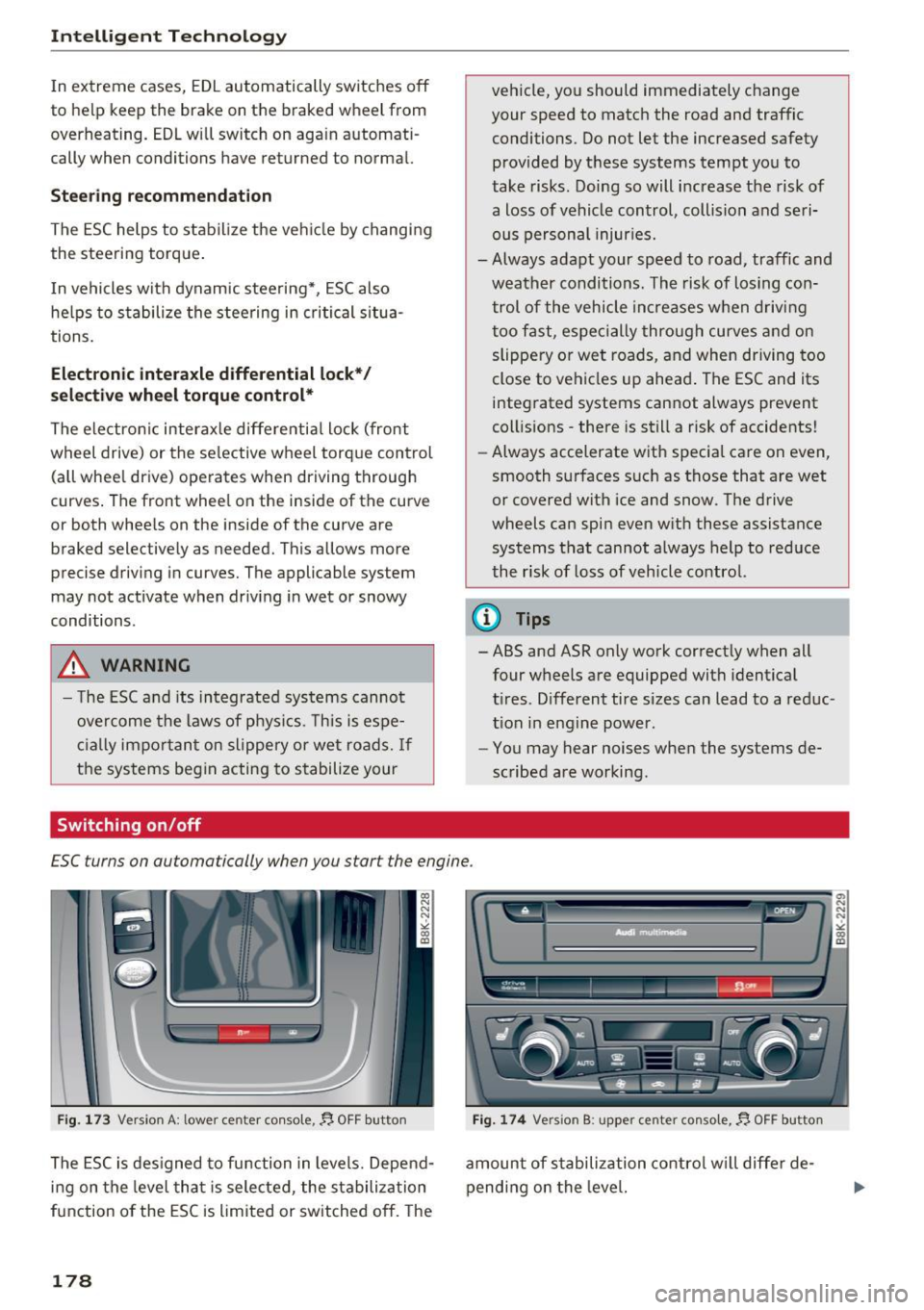
ESC turns on automatically when you start the engine .
Fig. 173 Version A: lower center console,~ OFF button
The ESC is des igned to function in levels. Depend
i n g on the level tha t is selected, the stabilization
function of the ESC is limited or switched off. The
178
Fig. 174 Version B: upper center console,~ OFF button
amount of stabilization contro l w ill diffe r de
pending on the level.
"' N N N ~ 0:, m