page 76 AUDI A5 COUPE 2013 Owners Manual
[x] Cancel search | Manufacturer: AUDI, Model Year: 2013, Model line: A5 COUPE, Model: AUDI A5 COUPE 2013Pages: 294, PDF Size: 73.84 MB
Page 163 of 294
- in rollovers. In some types of accidents the front airbags,
side curtain airbags and side airbags may be
trigger ed together.
& WARNING
- Safety belts and the airbag system will
only provide protection when occupants
are in the proper seating position
r:::;, page 161.
-If the airbag indicator light c:::> page 20
comes when the vehicle is being used,
have the system inspected immediately
by your authorized Audi dealer. It is pos
sible that the airbag will inflate when it
is not supposed to, or will not inflate
when it should.
How supplemental side airbags work
-
Side airbags deploy instantly and can help re
duce the risk of upper torso injuries for occu
pants who are properly restrained .
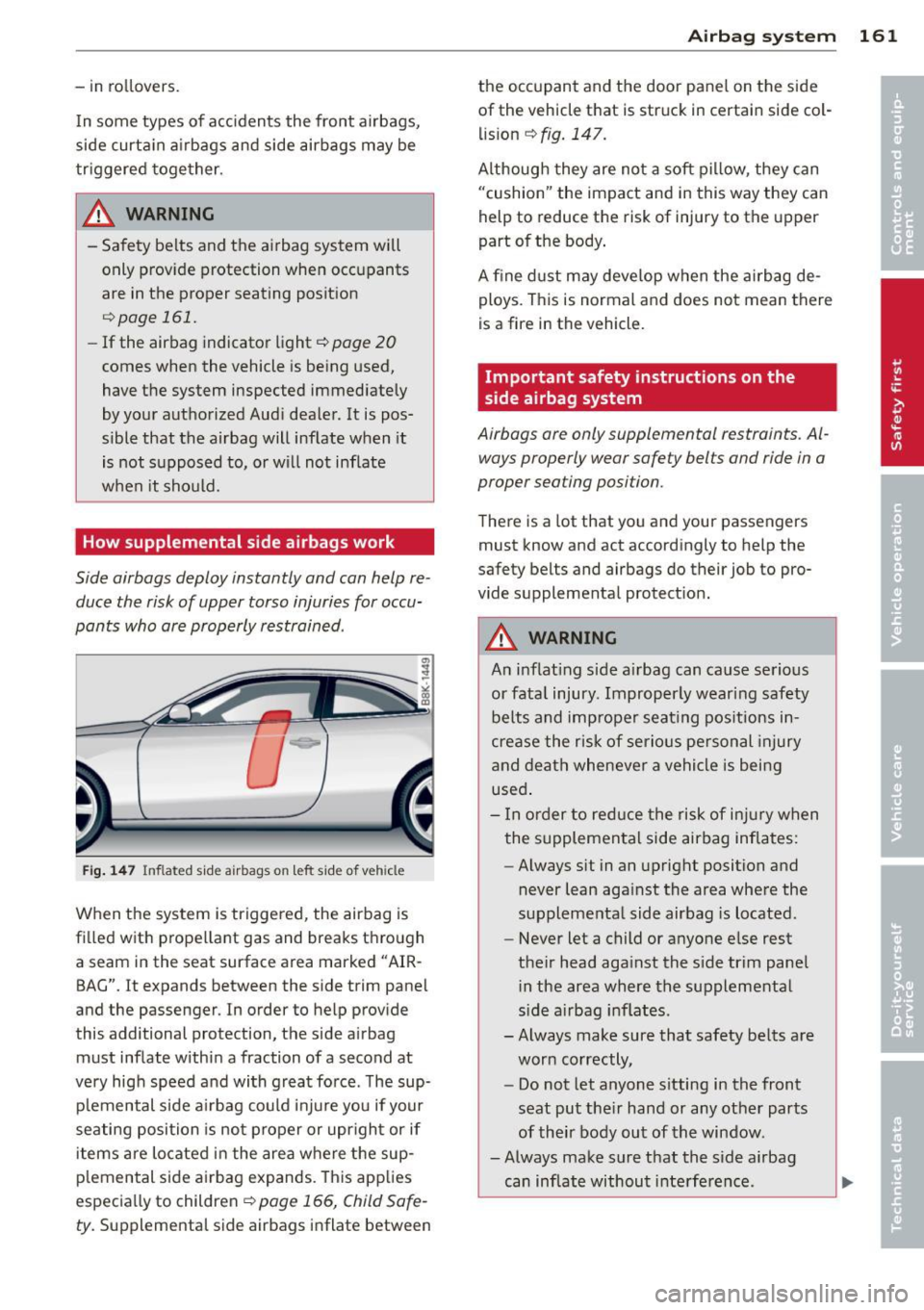
Fig. 147 Inflated sid e airbags on left s ide of vehicle
When the system is triggered, the airbag is
f ill ed with propellant gas and breaks through
a seam in the seat surface area marked "AIR
BAG".
It expands between the side trim panel
and the passenger . In order to help provide
this additional protection, the side airbag
must inflate within a fraction of a second at
very high speed and with great force . The sup
plemental side airbag could injure you if your
seating position is not proper or upright or if
items are Located in the area where the sup
plemental side airbag expand s. This applies
especially to children
c:::> page 166, Child Safe
ty.
Supplemental side airbags inflate between
Airbag system 161
the occupant and the door panel on the side
of the vehicle th at is struck in certain side col
li sion
c:::> fig. 147.
Although they are not a soft pillow, they can
"cushion" the impact and in this way they can
help to reduce the risk of injury to the upper
part of the body.
A fine dust may develop when the airbag de ploys . This is normal and does not mean there
is a fire in the vehicle.
Important safety instructions on the
side airbag system
Airbags are only supplemental restraints. Al
ways properly wear safety belts and ride in a
proper seating position.
There is a lot that you and your passengers
must know and act accordingly to help the
safety belts and airbags do their job to pro
vide supplementa l protection.
& WARNING ...
An inflating side airbag can cause serious
or fatal injury. Improperly wearing safety
belts and improper seating positions in
crease the risk of serious personal injury
and death whenever a vehicle is being
used.
- In order to reduce the risk of injury when
the supplemental side airbag inflates:
- Always sit in an upright position and
never lean against the area where the
supplemental side airbag is located.
- Never Let a child or anyone else rest
their head against the side trim panel
in the area where the supplemental
side airbag inflates .
-Always make sure that safety belts are worn correctly,
- Do not let anyone sitting in the front
seat put their hand or any other parts
of their body out of the window .
-Always make sure that the side airbag can inflate without interference.
Page 164 of 294
162 Airbag system
-Never insta ll seat covers or replace
ment upho lstery over the front
seatbacks that have not been specifi
cally approved by Audi.
- Never use add itional seat cushions that
cover the areas where the side airbags
deploy.
- Damage to the original seat covers or
to the seam in the area of the side air
bag module must always be repa ired
immed iately by an authorized Audi
dealer.
- Objects between you and the airbag can
increase the risk of injury in an acc ident
by interfering with the way the airbag
unfolds or by being pushed into you as
the airbag inflates.
- Never place or attac h accessories or
other objects (such as cupholders, tele
phone b rackets, or even large, bulky
objects) on the doors, over o r near the
a rea marked "AIRBAG" on the seat
backrests.
- Such objects and accessories can be
come dangerous p rojectiles and cause
i n ju ry when t he supplemental s ide air
bag deploys.
- N ever ca rry any objects or pets in the
deployment space between them and
the airbags or a llow children or other
passengers to travel in th is posit ion .
- Always use the built-in coat hooks only
for lightwe igh t clothing. Never leave any
heavy or sharp -edged objects in the
pockets that may interfere with side air
bag dep loyment and can cause personal
injury in an accident.
- Always prevent the side a irbags from be
ing damaged by heavy objects knocking
against or hitting the sides of the seat
backs.
- The airbag system can only be triggered
once.
If the a irbag has been triggered,
the system m ust be replaced by an au
thorized Aud i deale rship.
- Damage (c rac ks, deep scratches etc.) to
the original seat covers or to the seam in
the area of the side airbag module must always be repa
ired immediately by an au
thorized Audi dealer.
- If children are seated improperly, their
risk of injury increases in the case of an
accident
c:> page 166, Child Safety.
- Never attempt to modify any compo
nents of the airbag system in any way.
- In a side collision, side airbags will not
function properly if sensors cannot cor
rectly measure increasing a ir pressure in
side the doo rs whe n air escapes through
large r, unclosed openings in the door
panel.
- Never dr ive with inte rior door trim pan
els removed.
- Never dr ive when par ts h ave bee n re
moved from the inside door pane l and
the ope nings they leave have not been
proper ly closed .
- Never dr ive when loudspeakers in the
doors have been removed unless the
speaker holes have been properly
closed.
- Always make certain that openings are
covered or filled if add it iona l speakers
o r other equipment is installed in the
inside door panels.
- Always have work o n the doors done by
an authorized Audi dea ler or q ualified
workshop .
Side curtain airbags
Description of side curtain airbags
The side curtain airbag system can provide
supplemental protection to properly restrain
ed occupants.
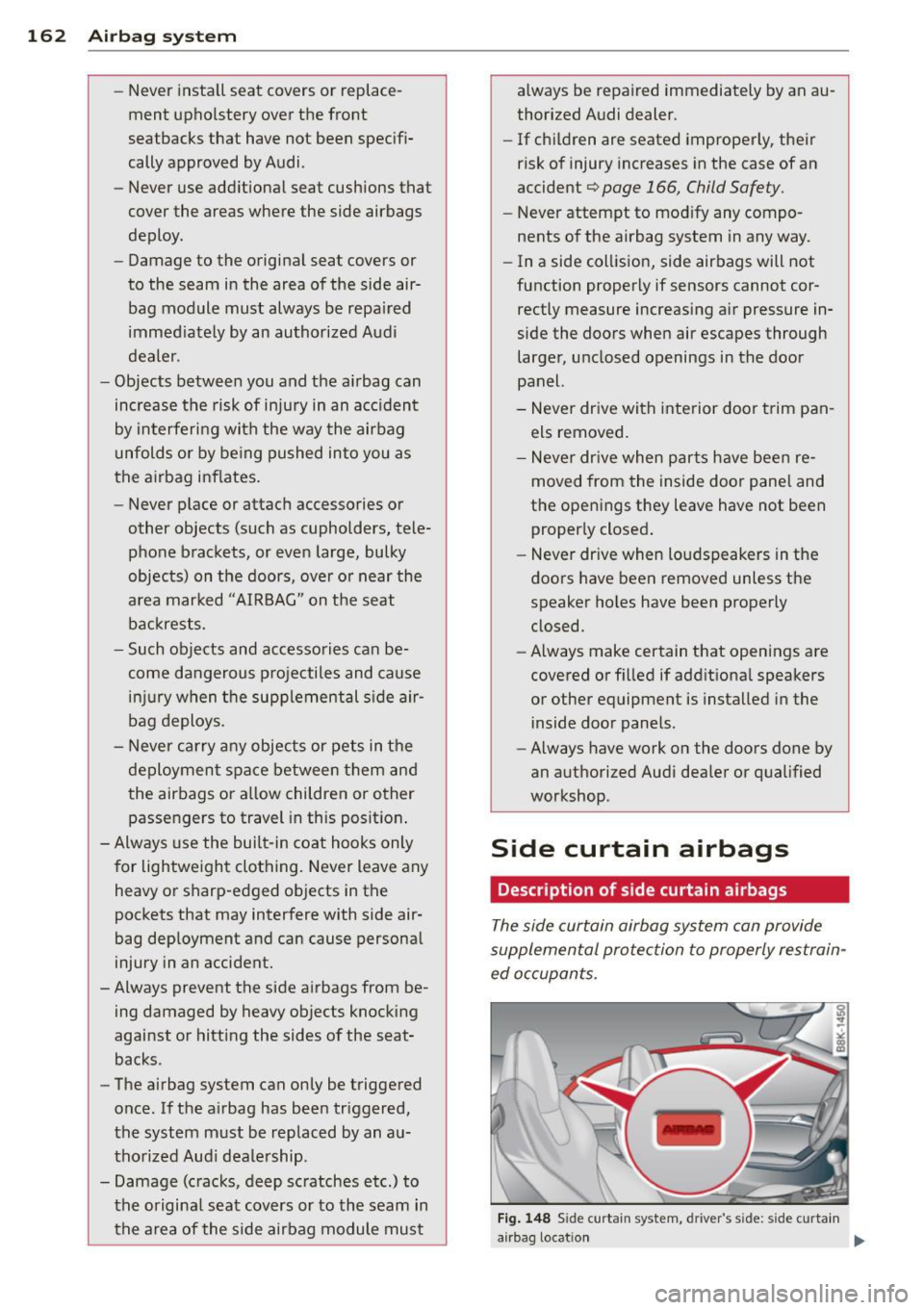
Fig. 14 8 Side curtain system, d river 's s ide: s ide curta in
a irbag locat io n
II>-
Page 165 of 294
The side curtain airbags are located on both
sides of the interior above the front and rear
side windows ¢
fig. 148. They are ident ified
by the word "AIRBAG" on the windshie ld
frame and the center roof pillar.
The side curtain airbag system supp lements
the safety belts and can help to reduce the
risk of inju ry for occupants ' heads and upper
t orso on the side of the vehicle that is struck
in a side collision . The side curta in a irbag in
flates in s ide impacts and only when the veh i
cle acce le rat ion reg istered by the contro l unit
i s high enoug h.
If th is rate is below the refer
ence va lue programmed into the control un it,
the side airbags will not be triggered, even
though the car may be badly damaged as a re
sult of the collision .
It is not possible to de
f ine an a irbag triggering range that will cover
every possible angle of impact, since the cir
cumstances will vary considerably between
one co llision and another . Important factors
in clude, for examp le, the nature (hard o r soft)
of the impacting object, the ang le of impact ,
ve hicl e speed, et c. ¢
page 164, How side cur
tain airbags work.
Aside from the ir normal safety function, safe
ty belts work to he lp keep the driver or front
passenger in posit ion i n the event of a co lli
sion so that the side curtai n ai rbags can pro
vide p rotection.
The airbag system is not a subst itute for your
safety belt. Rathe r, it is pa rt of the overall oc
cupa nt restraint system in your veh icle. Al
ways remember that the airbag system can
only help to protect you if you are wearing
your safety belt and wearing it properly. This
is another reason why you shou ld a lways wear
your safety belts, not just because the law re
qu ires you to do so ¢
page 134, General
notes .
It is important to remember that while the
side curta in a irbag system is designed to he lp
reduce the likelihood of serious injuries, other
i njuries, for example, swelling, bruising, and
minor abrasions can also be associated w ith
these airbags. Remembe r too, these a irbags
will dep loy only once and only in certain kinds
A irbag system 163
of accidents -your safety belts are always
there to offer protection.
The side curtain airbag system basically
con sists of:
-The e lectronic control module and external
side impact sensors
- The side curtain airbags above the front and
rear side windows
- The a irbag in dic ator light in t he in str ument
panel
T he airbag system is mon itored e lectronically
to make ce rtain it is functioning prope rly at all
times. Each time yo u turn on the ignit ion, the
airbag system ind icator light will come on for
a few seconds (self diagnostics) .
The side curtain airbag is not activated :
-if the ignition is turned off ,
- in side collisions whe n the acceleration
measured by the sensor is too low,
- in rear-end collisions,
- in rollovers.
A WARNING
-Safety belts and the airbag system will
only provide protection when occupants
are in the proper seating position
¢ page 53, Seats and s torage .
-If the ai rbag ind icator light ¢ page 20
comes when the veh icle is being used,
have the system inspected immediately
by your au thori zed A udi dealer.
It is pos
sible tha t the airbag will inflate when it
is not supposed to, or will not inflate
when it should. •
•
Page 166 of 294
164 Airbag system
How side curtain airbags work
Side curtain airbags can work together with
side airbags to help reduce the risk of head
and upper torso injuries for occupants who
are properly restrained.
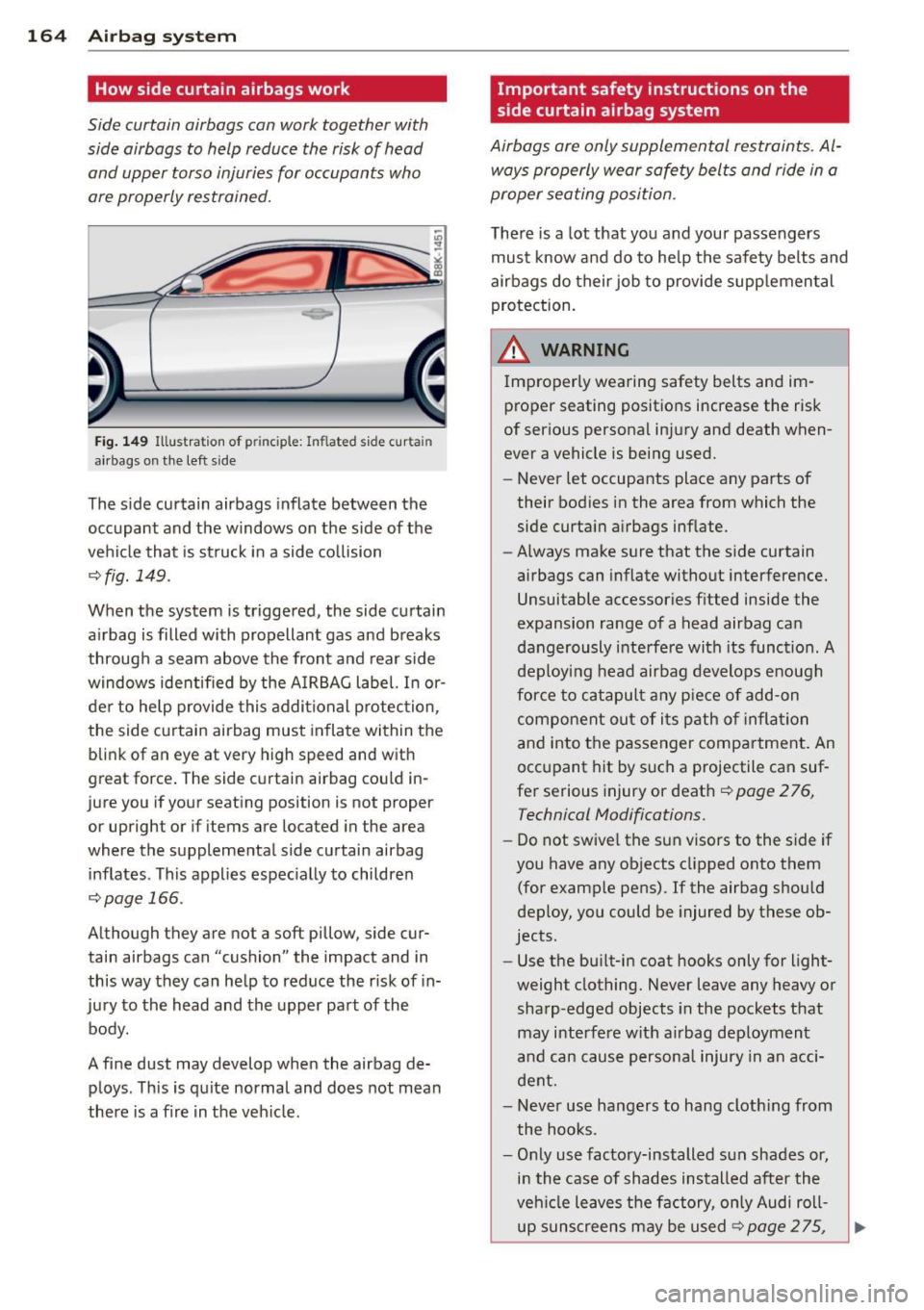
Fig . 14 9 Illust rat ion of p rinciple: In flated s ide cur ta in
ai rbags on the left s ide
The s ide curtain airbags inflate between the
occupant and the windows on the side of the
vehicle that is st ruck in a side co llision
<=) fig. 149 .
-"' ..,
-' " 18
When the system is triggered , the side curtain
a irbag is filled with propellant gas and breaks
through a seam above the front and rear side windows identified by the A IRBAG label. In or
der to help provide this addi tional p rotection ,
the side c urtai n airbag must inflate within the
blink of an eye at very high speed and with
great force . T he side c urtain airbag cou ld in
jure you if your se ating position is not proper
or upright or if items are located in the area
where the supplemental side curtain airbag
inflates. This applies espec ially to childre n
r::!) page 166.
Although they are not a soft pillow, side cur
tain airbags can "cushion" the impact and in
this way they can help to reduce the r isk of in
ju ry to the head and the upper part of the
body.
A fine dust may develop when the airbag de ploys . This is quite normal and does not mean
there is a fire in the veh icle.
Important safety instructions on the
side curtain airbag system
Airbags are only supplemental restraints . Al
ways properly wear safe ty belts and ride in a
proper seating position.
The re is a lot that you and your passengers
must know and do to he lp the sa fety belts and
airbags do their job to provide supp lemental
protection.
A WARNING
Imp roperly wea ring safety belts and im
proper seating positions increase the risk
of serious personal injury and death when
ever a vehicle is being used.
- Never let occupants place any parts of
their bodies in the area from which the
side curtain a irbags inflate.
- Always make sure that the side curtain
airbags can inflate without interference.
Unsuitable accessories fitted inside the
expansion range of a head airbag can
dangerously inte rfe re with its funct ion. A
deploying head airbag develops enough
for ce to catapul t any p ie ce of add-on
component out of i ts p ath o f infla tio n
and into the passenger compar tment . An
occ upant h it by such a projectile can suf
fer serious injury or deat h
r::!) page 2 76,
Technical Modifications.
- Do not swive l the sun visors to the side if
you have any objects clipped onto them (for examp le pens). If the airbag should
deploy, you could be injured by these ob
jects.
- Use the bu ilt-in coat hooks only for light
weight clothing. Never leave any heavy or sharp-edged objects in the pockets that
may interfe re with a irbag dep loyment
a nd can cause persona l injury in an acci
dent.
- Never use hangers to hang cloth ing from
the hoo ks .
- Only use factory-installed sun shades or,
in the case of shades installed after the
veh icle leaves the fa ctory, only Audi ro ll
up suns creens may be u sed
r:!) page 2 75,
-
Page 168 of 294
166 Child Saf ety
Child Safety
Important things to
know
Introduction
The rear seat is generally the safest place in a
collision .
The physical principles of what happens when
your veh icle is in a crash app ly also to chi ldren
q page 135, What happens to occupants not
wearing safety belts? .
But unlike adults their
muscles and bones are not fully developed. In
many respects children are at greater risk of
serious injury in crashes than adults.
Because children's bodies are not fully deve l
oped, they require restra int systems especial
l y designed for their size , weight, and body
structure. Many countries and all states of the United States and p rovinces of Canada have
laws requiring the use of approved child re
straint systems for infants and small children .
In a frontal crash at a speed of 20 -35 mph
(30-56 km/h) the forces acting on a 13-pound
(6 kg) infant will be more than 20 times the
weight of the child . This means the weight of
the child would suddenly be more than
260 pounds (120 kg). Under these conditions,
only an appropriate ch ild restraint properly
used can reduce the risk of serious injury.
Ch ild restra ints must be used properly to be
effective. Used improperly, they can increase
the risk of serious injury in an accident .
Consult the child safety seat manufactu rer's
instructions to be sure the seat is right for
your chi ld's size
q page 169, Important safe
ty instructions for using child safety seats .
Please be sure to read and heed all of the im
portant information and WARNINGS about
child safety, Advanced Airbags, and the instal lation of child restraints in this chapter .
There is a lot you need to know about the Ad
vanced Airbags in your vehicle and how they
work when infants and children in child re
straints are on the front passenger seat . Be
cause of the large amount of important infor- mation, we cannot repeat it all here
. We urge
you to read the detailed information in this
owner's manua l about airbags and the Ad
vanced Airbag System in your vehicle and the
very important information about transport
ing children on the front passenger seat .
Please be sure to heed the WARNINGS - they
are extremely important for your safety and
the safety of your passengers, especially in
fants and small children.
A WARNING
- Accident statistics have shown that chil
dren are generally safer in the rear seat
area than in the front seating position.
Always restrain any child age 12 and un
der in the rear.
- All vehicle occupants and especially chil
dren must be restrained properly when
ever riding in a vehicle. An unrestrained
or improperly restrained chi ld could be
injured by str ik ing the interior or by be
ing ejected from the vehicle dur ing a
sudden maneuver or impact. An unre
strained or improperly restrained ch ild is
also at greater risk of injury or death
through contact with an inflating airbag.
- A suitable child restraint properly instal
led and used at one of the rear seating
positions provides the highest degree of
protection for infants and small children
in most accident situations.
A WARNING
Children on the front seat of any car even
with Advanced Airbags can be seriously in
jured or even killed when an airbag in
flates . A child in a rearward-facing child
safety seat installed on the front passen
ger seat w ill be ser iously injured and can
be killed if the front airbag inflates.
- The inflating airbag will h it the child
safety seat or infant carrier with great
force and will smash the child safety seat
and child against the back rest, center
armrest or door .
- Always install rearward-facing child safe-
ty seats on the rear seat.
IJi,,,
Page 171 of 294
-Model Manufactured on or
after
Graco Snugride September 25, 2007
Peg Perego Primo V i- September 25, 200 7
aggio SIP I MUN00US
Subpart C -Forward-facing and
con vertible child r estra ints
Model Manufactured on or
after
Britax Roundabout September 25, 2007
E9L02xx
Cosco Touriva 02519 December 1, 1999
Cosco Summit Deluxe September 25, 2007
High Back Booster
22-262
Cosco High Back September 25, 2007
Booster 22-209
Evenflo Tribute V September 25, 2007
379xxxx
Evenflo Medallion December 1, 1999
254
Evenflo Generations September 25, 200 7
352xxxx
Graco ComfortSport September 25, 2007
Graco Toddler Safety September 25, 2007
Seat Step 2
Graco Platinum Cargo September 25, 2007
A WARNING
T o reduce the risk of serious injury, make
sure that the
PASSENGER AIR BAG O FF
light comes on and stays on whenever a
child restraint is installed on the front pas
senger seat and the ignition is switched
on.
- Take the child restraint off the fro nt pas
senger seat and install it properly at one of the rea r seat positions if the
PASSEN
GER AIR BAG OFF
light does not stay on.
- Have the airbag system inspected by
your authorized Aud i dealer immediate
ly.
Child Sa fet y 169
'
(D Tips
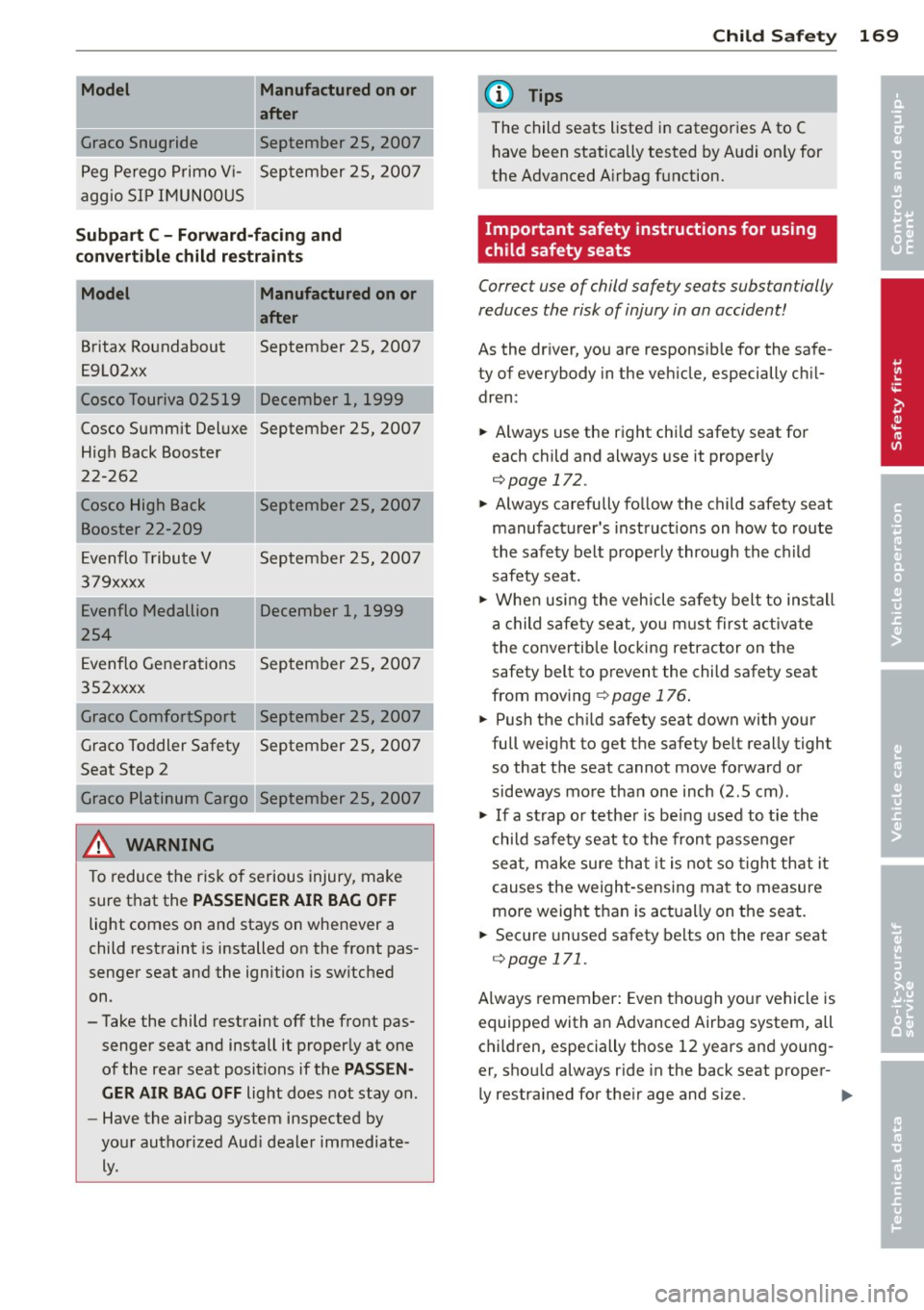
The child seats listed in categories A to C
have been statically tested by A udi on ly for
the Advanced A irbag function.
Important safety instructions for using
child safety seats
Correct use of child safety seats substantially
reduces the risk of injury in an accident!
As the dr iver, you are responsib le for the safe
ty of everybody in the vehicle, especially ch il
dren:
... Always use the right chi ld safety seat for
each child and always use it properly
¢page 172 .
... Always carefully fo llow the child safety seat
manufacturer's instruct ions on how to route
the safety belt properly through the child
safety seat.
... When usi ng the veh icle safety belt to ins tall
a child safety se at, you m ust first activate
the convertib le locking retractor on the
safety belt to prevent the child safety seat
from moving
¢ page 176.
... Push the ch ild safety seat down with your
full weight to get the safety be lt really tight
so that the seat cannot move forwa rd or
sideways mo re than one inch (2 .5 cm) .
... If a strap o r tethe r is be ing used to tie the
child safety seat to the fron t passenger
s eat , make sure tha t it is not so tight that it
causes the weight-sensing mat to measure
more weight than is act ually on the seat.
... Sec ure unused safety belts on the rear seat
¢ page 171.
Always remember : Even tho ugh yo ur vehicle is
equipped with an Advanced Airbag system, all c h il dren, especially those 12 years and young
er, shou ld always r ide in the back seat proper -
ly restra ined for the ir age and size. .,_ •
•
Page 173 of 294
range, and as far away from the a irbag
as poss ible before instal ling the child
restraint.
- Always make sure that nothing pre
vents the front passenger's seat from be ing moved to the rearmost position
i n its fore and aft adjustment range.
- Always make sure that the backrest is
in the upr ight position.
- Always buckle the child safety seat firmly
in place even if a child is not sitting in it.
A loose ch ild safety seat can fly around
dur ing a sudden stop or in a coll is ion .
- Always read and heed all WARNINGS
whenever using a child restrained in ave
hicle is being used
c:::;,page 134, Safety
belts,
c:::;, page 142, Airbag system and
¢ page 166, Child Safety.
.8, WARNING
To reduce the risk of serious injury, make
sure tha t the
PASSENGER AIR BAG OFF
light comes on and stays on whenever a
child rest raint is installed on the front pas
senger seat and the ignition is switched
on.
- Take the child restraint off the front pas
senger seat and install it proper ly at one
of the rear seat positions if the
PASSEN
GER AIR BAG OFF
light does not stay on.
- Have the airbag system inspected by
your authorized Aud i dealer immediate
ly.
Secure unused safety belts on the rear
seat
F ig. 150 Schematic overview: kee p un used safety be lts
away from chil dren in child safe ty seats. @-oute r rear
safety be lt
.
Child S afety 1 71
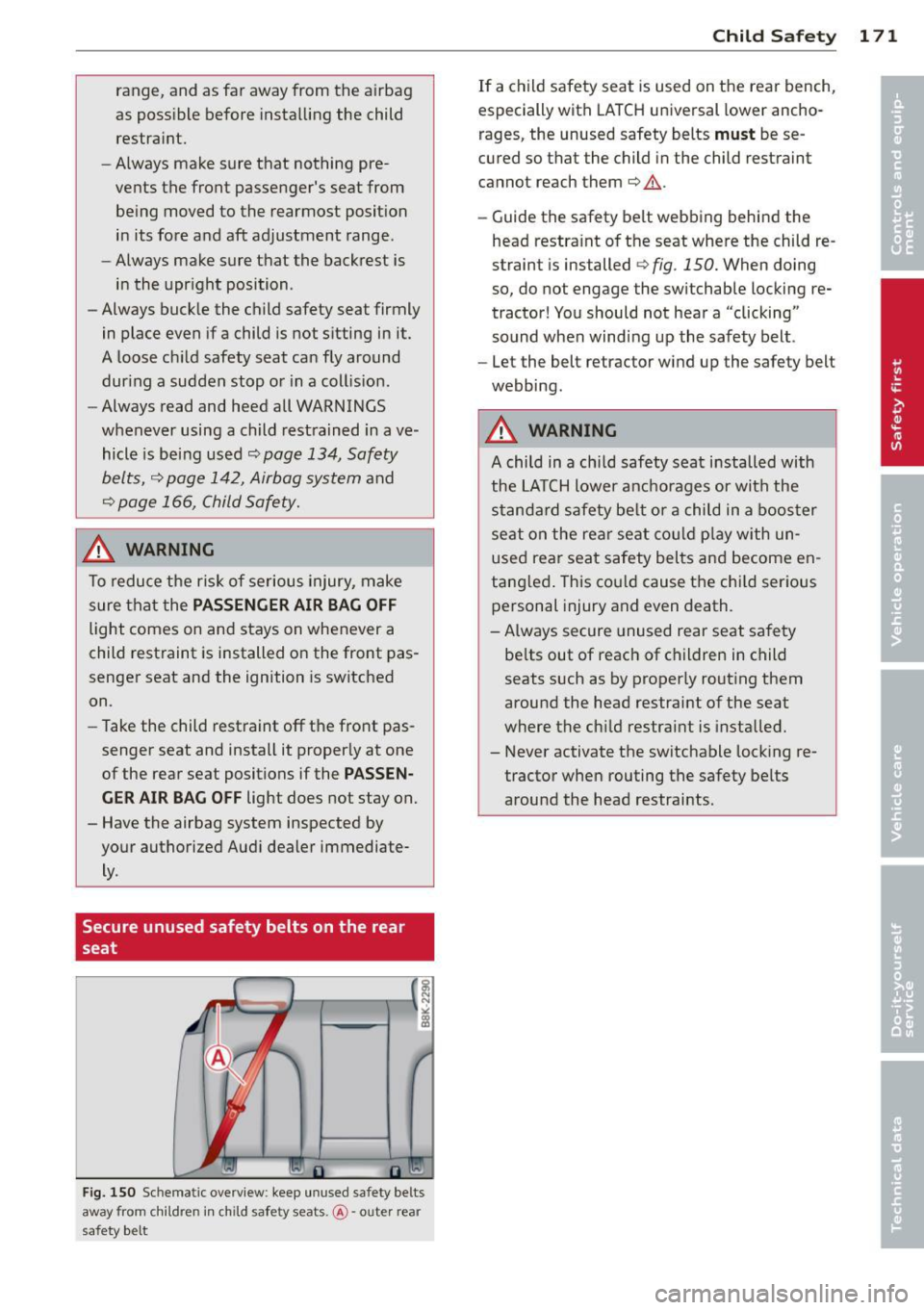
If a child safety seat is used on the rea r bench,
especially with LATCH universal lower ancho
rages, the unused safety belts
must be se
cured so that the child in the child restraint
cannot reach them
c:::;, &,.
- Guide the safety belt webbing behind the
head restra int of the seat where the child re
straint is installed ¢
fig. 150. When doing
so, do not engage the switchable locking re
tractor ! You should not hear a "clicking"
sound when wind ing up the safety belt.
- Let the belt retractor wind up the safety belt
webbing.
.8, WARNING
A child in a chi ld safety seat installed with
the LA TCH lower anc horages or with the
standa rd safety be lt or a child in a booster
se at o n the rea r seat co uld play with un
used rear seat safety belts and become en
tang led . This cou ld cause t he chi ld ser ious
personal injury and even death.
-A lways secure unused rear seat sa fe ty
be lts out of reach of children in child
seats such as by proper ly rout ing them
around the head restraint of the seat
where the ch ild restraint is installed.
- Never activate the switchable locking re
tracto r when routing the safety belts
around the head restraints.
Page 174 of 294
17 2 Child Safety
Child safety seats
Infant seats
Babies and infants up to about one year old
and 20 lbs. or 9 kg need special rearward-fac
ing child restraints that support the back,
neck and head in a crash.
-- /
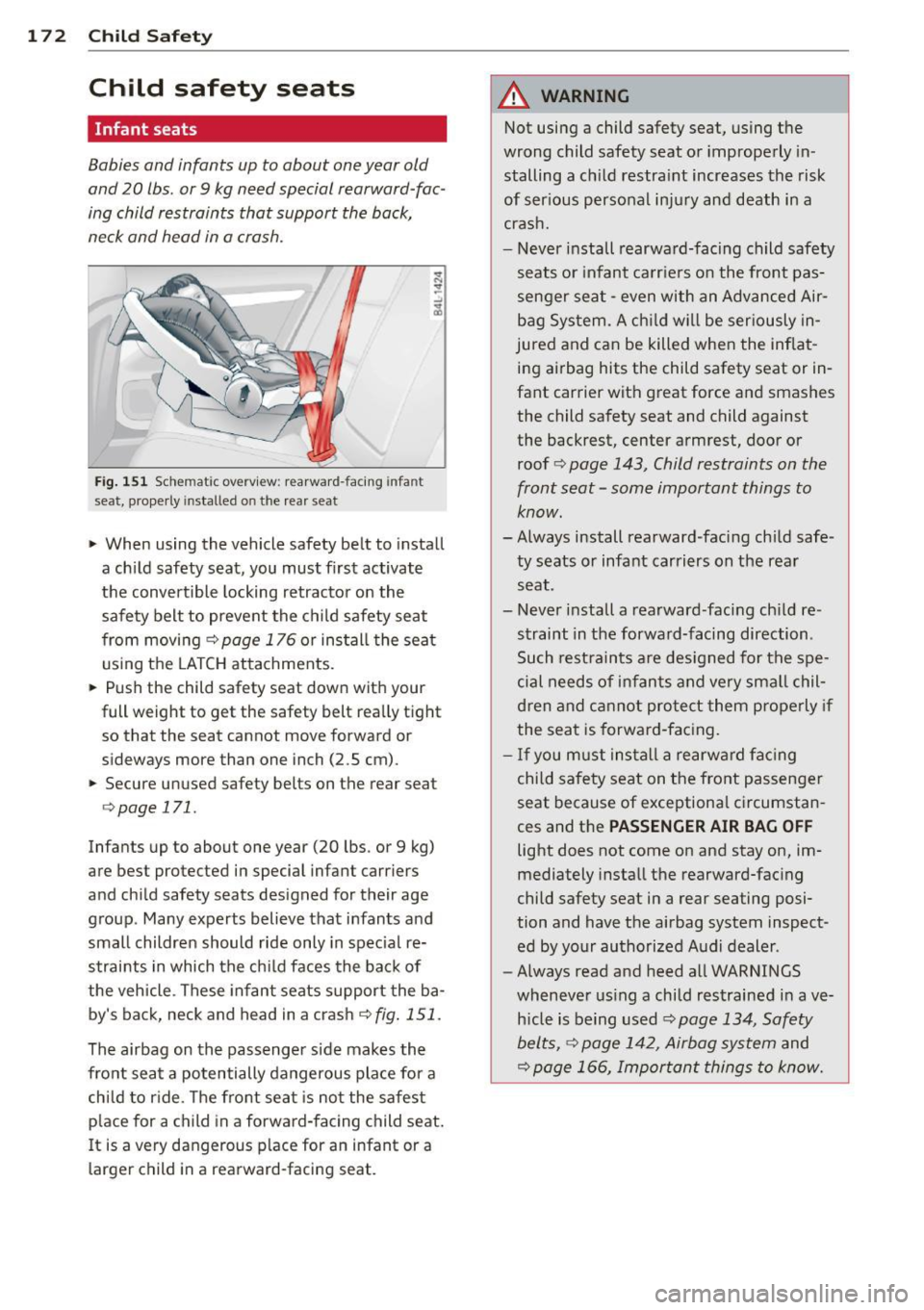
Fig . 151 Schematic overv iew: rearwa rd -fac ing infant
seat, properly installed on the rear seat
> When using the vehicle safety belt to install
a ch ild safety seat, you must first activate
the convertible locking retractor on the
safety belt to prevent the child safety seat
from moving ¢
page 176 or install the seat
using the LATCH attachments .
> Push the child safety seat down with your
full weight to get the safety belt really tight
so that the seat cannot move forward or
s idew ays more than one inch (2.5 cm).
> Secure unused safety belts on the rear seat
¢page 171.
Infants up to about one year (20 lbs. or 9 kg)
are best protected in special infant carriers
and child safety seats designed for their age
group . Many experts believe that infants and
small children should ride only in spec ial re
straints in which the chi ld faces the back of
the vehicle . These infant seats support the ba
by's back, neck and head in a crash¢
fig. 151 .
The airbag on the passenger side makes the
front seat a potentially dangerous place for a
child to ride . The front seat is not the safest
p lace for a child in a forwa rd-facing child seat.
I t is a very dangerous p lace for an infant or a
larger child in a rearward-facing seat.
A WARNING
-Not using a child safety seat, using the
wrong child safety seat or improperly in
stalling a ch ild restra int increases the risk
of ser ious personal injury and death in a
crash.
- Never install rearward-facing child safety
seats or infant ca rr ie rs on the front pas
senger seat -even with an Advanced Air
bag System. A child will be ser iously in
jured and can be killed whe n the inflat
ing airbag hits the child safety seat or in
fant carrier with great force and smashes the child safety seat and child against
the backrest, center armrest, door or roof¢
page 143, Child restraints on the
front seat -some important things to
know.
- Always install rearward-facing ch ild safe
ty seats or infant carriers on the rear seat.
- Never install a rearward-facing ch ild re
straint in the forward-facing direction .
Such rest ra ints are designed for the spe
cial needs of infants and very smal l chil
dren and cannot protect them properly if
the seat is forward-facing.
-If you must install a rearward facing
chi ld safety seat on the front passenger
seat because of exceptiona l circumstan
ces and the
PASSENGER AIR BAG OFF
light does not come on and stay on, im
mediately install the rearward-fac ing
child safety seat in a rear seating posi
tion and have the airbag system inspect
ed by your authorized Aud i dealer .
- Always read and heed all WARNINGS
whenever using a child restrained in ave
h icle is being used
¢page 134, Safety
belts,
¢ page 142, Airbag system and
¢ page 166, Important things to know.
Page 175 of 294
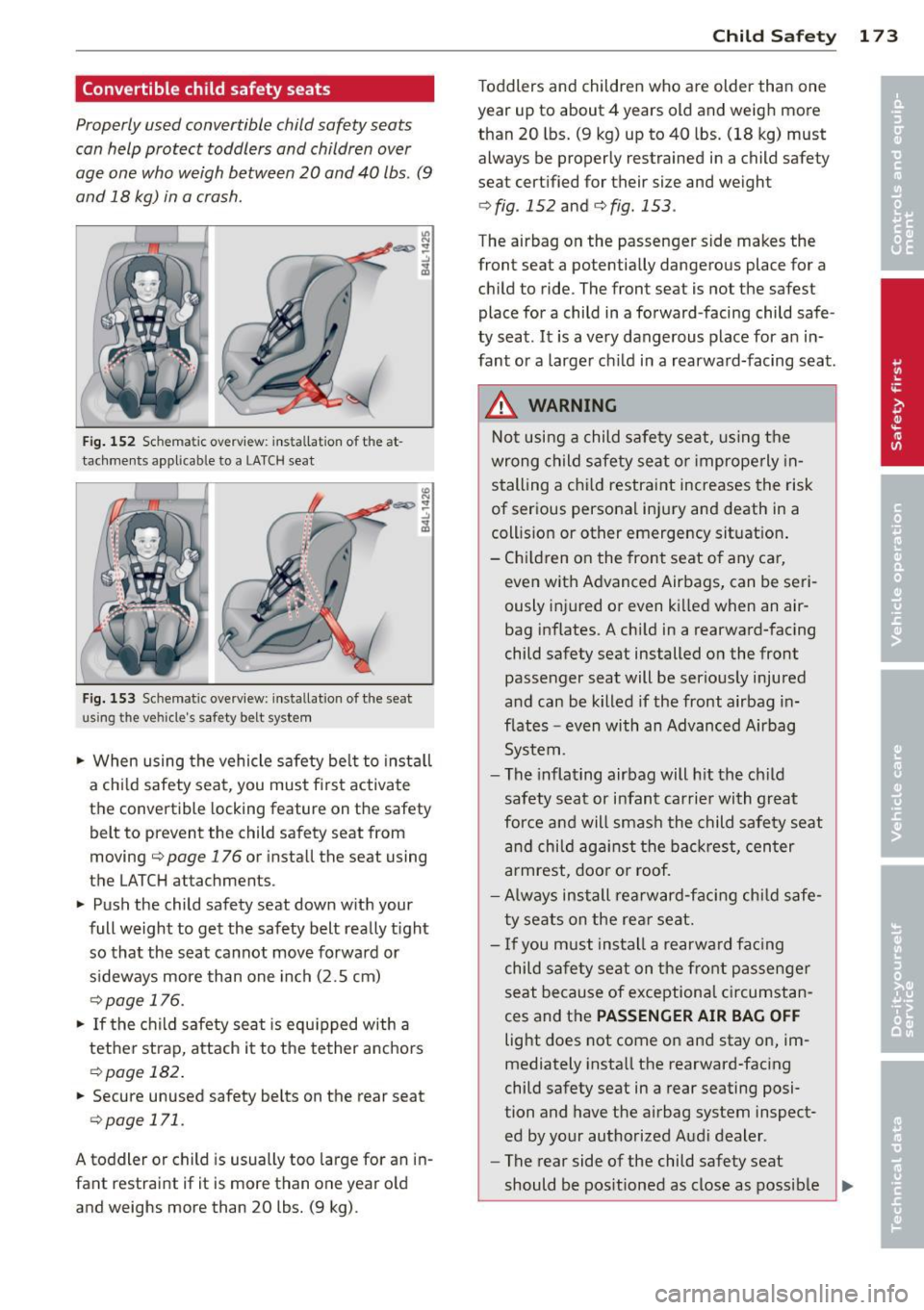
Convertible child safety seats
Properly used convertible child safety seats
can help protect toddlers and children over
age one who weigh between 20 and 40 lbs. (9
and 18 kg) in a crash.
Fig. 152 Schematic overview: installat ion of the at
tachments applicable to a LATCH seat
F ig. 153 Schematic overview: installation of the seat
using the vehicle's safety belt system
.. When using the vehicle safety be lt to insta ll
a chi ld safety seat, you must f irst activate
the convertible locking feature on the safety
belt to prevent the child safety seat from
moving
c::>page 176 or install the seat using
the LATCH attachments.
.,. Push the child safety seat down w ith your
full weight to get the safety belt really t ight
so that the seat cannot move forward or
s ideways more than one inch (2.5 cm)
c:;, page 176.
.,. If the child safety seat is equ ipped with a
tether strap, attach it to the tether anchors
c:;, page 182 .
.. Secure unused safety belts on the rear seat
c:;, page 171.
A toddler or child is usually too large for an in
fant restraint if it is more than one year o ld
and weighs more than 20 lbs. (9 kg). Child Safety 173
Toddlers and children who are older than one
year up to about 4 years old and weigh more
than 20 lbs. (9 kg) up to 40 lbs. (18 kg) must
always be properly restrained in a child safety
seat cert ified for their size and weight
c::>fig . 152 and c::>fig. 153.
The airbag on the passenger side makes the
front seat a potentially dangerous place for a
child to ride. The front seat is not the safest place for a child in a forward-facing child safe
ty seat.
It is a very dangerous place for a n in
fant or a large r ch ild in a rearward-facing seat .
.&_ WARNING
Not using a child safety seat, using the
wrong child safety seat or imprope rly in
stalling a chi ld restraint increases the risk
of serious personal injury and death in a
collision or other emergency situation .
- Ch ildren on the front seat of any car,
even with Advanced Airbags, can be seri
ously injured or even killed when an air bag inflates. A child in a rearward-facing
child safety seat installed on the front passenger seat will be serious ly injured
and can be killed if the front airbag in
flates -even with an Advanced Airbag
System .
- The inflating airbag will hit the child
safety seat or infant carrier with great
force and will smash the child safety seat
and child against the backrest, center
armrest, door or roof.
- Always install rearward-f acing child safe
ty seats on the rear seat.
- If you must install a rearward facing
child safety seat on the front passenger
seat because of exceptional circumstan
ces and t he
PASSENGER AIR BAG OFF
light does not come on and stay on, im
mediately install the rearward-fac ing
child safety seat in a rear seating posi
tion and have the airbag system inspect
ed by your authorized Audi dealer.
- The rear side of the child safety seat
should be positioned as close as possible
~
Page 176 of 294
174 Child Safety
to the backrest on the vehicle seat. Ad
just or remove the rear seat head restraint if it is difficult to install the
child seat with the head restraint in place
<=>page 57. Install the head restraint
again immediately once the child seat is
removed. Driving without head restraints
or with head restraints that are not prop
erly adjusted increases the risk of serious
or fatal neck injury dramatically.
- Always read and heed all WARNINGS
whenever using a child restrained in ave
hicle is being used
<=> page 134, Safety
belts,<=> page 142, Airbag system
and
t::> page 166, Important things to know.
A WARNING
If exceptional circumstances require the
use of a forward-facing child restraint on
the front passenger's seat, the child's safe
ty and well-being require that the follow
ing special precautions be taken:
- Make sure the forward-facing seat has been designed and certified by its manu
facturer for use on a front seat with a passenger front and side airbag.
-Always follow the manufacturer's in
structions provided with the child safety
seat or infant carrier.
- Always move the front passenger seat in
to the rearmost position of the passen
ger seat's fore and aft adjustment range,
and as far away from the airbag as possi
ble before installing the child restraint.
- Always make sure that nothing prevents
the front passenger's seat from being
moved to the rearmost position in its
fore and aft adjustment range.
- Always make sure the backrest is in an
upright position.
- Make sure that the
PASSENGER AIR BAG
OFF
light comes on and stays on all the
time whenever the ignition is switched
on.
- If the light does not stay on, perform the
checks
<=> page 153, Monitoring the Ad
vanced Airbag System.
-
- Take the child restraint off the front pas
senger seat and install it properly at one
of the rear seat positions if the
PASSEN
GER AIR BAG OFF
light does not stay on
whenever the ignition is switched on.
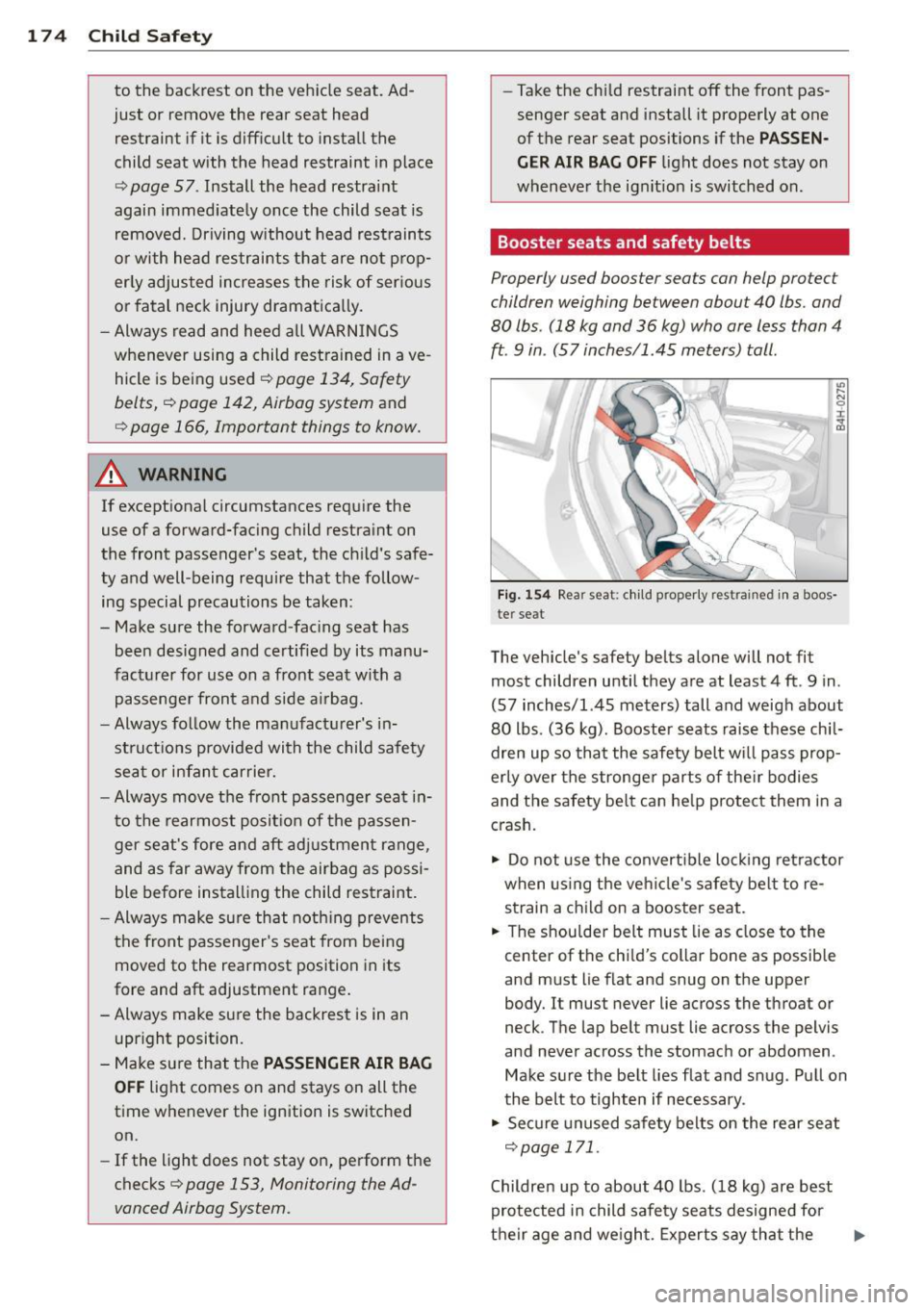
Booster seats and safety belts
Properly used booster seats can help protect
children weighing between about 40 lbs. and
80 lbs. (18 kg and 36 kg) who are less than 4
ft. 9 in . (57 inches/1 .45 meters) tall.
"' .....
"' 0 ±
o5
Fig. 154 Rear seat: child properly restrained in a boos
ter seat
The vehicle 's safety belts alone will not fit
most children until they are at least 4 ft . 9 in .
(57 inches/1.45 meters) tall and weigh about
80 lbs.
(36 kg). Booster seats raise these chil
dren up so that the safety belt will pass prop
erly over the stronger parts of their bodies
and the safety belt can help protect them in a
crash.
.,. Do not use the convertible locking retractor
when using the vehicle's safety belt to re
strain a child on a booster seat.
.. The shoulder belt must lie as close to the
center of the child's collar bone as possible
and must lie flat and snug on the upper
body. It must never lie across the throat or
neck . The lap belt must lie across the pelvis
and never across the stomach or abdomen .
Make sure the belt lies flat and snug. Pull on
the belt to tighten if necessary .
.,. Secure unused safety belts on the rear seat
<=>page 171.
Children up to about 40 lbs. (18 kg) are best
protected in child safety seats designed for
their age and weight. Experts say that the