warning AUDI A5 COUPE 2013 Owners Manual
[x] Cancel search | Manufacturer: AUDI, Model Year: 2013, Model line: A5 COUPE, Model: AUDI A5 COUPE 2013Pages: 294, PDF Size: 73.84 MB
Page 180 of 294
178 Child Safety
though an adult were on the seat and deploy the Advanced Airbag when it must
be suppressed causing serious or even
fatal injury to the child .
- Make sure that the
PASSENGER AIR BAG
OFF
light comes on and stays on all the
time whenever the ignition is switched
on.
- If the
PASSENGER AIR BAG OFF light
does not come on and stay on, immedi
ately install the rearward-facing child
safety seat in a rear seating position and
have the airbag system inspected by your
authorized Audi dealer.
Activating the convertible locking retractor
Use the convertible locking retractor to se
cure a child restraint.
Always heed the child safety seat manufactur
er's instructions when installing a child re
straint in your vehicle. To activate the conver
tible locking retractor:
"" Place the child restraint on a seat, prefera
bly on the rear seat.
"" Slowly pull the belt
all the way out.
"" Route it around or through the child re
straint belt path¢&_ .
"" Push the child safety seat down with your
full weight to get the safety belt really tight.
"" Insert the belt tongue into the buckle for
that seating position.
"" Guide the safety belt back into the retractor
until the belt lies flat and snug on the child
safety seat.
"" You should hear a "clicking" noise as the
belt winds back into the inertia reel. Test the
convertible locking retractor by pulling on
the belt. You should no longer be able to
pull the belt out of the retractor. The con
vertible locking retractor is now activated.
"" Make sure that the red release button is fac
ing away from the child restraint so that it
can be unbuckled quickly .
"" Pull on the belt to make sure the safety belt
is properly tight and fastened so that the seat cannot move forward or sideways more
than one inch (2.5 cm).
A WARNING ....__ -
Using the wrong child restraint or an im
properly installed child restraint can cause
serious personal injury or death in a crash.
- Always make sure that the safety belt re- tractor is locked when installing a child
safety seat. An unlocked safety belt re
tractor cannot hold the child safety seat
in place during normal driving or in a
crash.
- Always buckle the child safety seat firmly
in place even if a child is not sitting in it.
A loose child safety seat can fly around
during a sudden stop or in a crash.
- Always make sure the seat backrest to
which the child restraint is installed is in
an upright position and securely latched
into place and cannot fold forward. Oth
erwise, the seatback with the child safety
seat attached to it could fly forward in
the event of an accident or other emer
gency situation.
- Always read and heed all WARNINGS whenever using a child restrained in ave
hicle is being used ¢
page 166. Special
precautions apply when installing a child
safety seat on the front passenger seat
¢ page 143, Child restraints on the front
seat -some important things to know.
Deactivating the convertible locking
retractor
The convertible locking retractor for child re
straints will be deactivated automatically when the belt is wound all the way back into
the retractor.
"" Press the red button on the safety belt
buckle. The belt tongue will pop out of the
buckle.
"" Guide the safety belt all the way back into
its stowed position .
Always let the safety belt retract completely
into its stowed position. The safety belt can
1J1-
Page 181 of 294
now be used as an ordinary safety belt with
out the convertible locking retractor for chi ld
restra ints.
I f the convertible locking retractor shou ld be
activated inadvertently, the safety belt must
be unfastened and guided completely back in
to its stowed position to deactivate this fea
ture.
If the convertib le locking retractor is not
deactivated, the safety belt will gradually be
come tighter and uncomfortable to wear .
A WARNING
Improperly installed child safety seats in
crease the risk of ser ious personal injury
and death in a collision.
- Never unfasten the safety belt to deacti
vate the convert ible lock ing ret ractor for
c hild restraints while the veh icle is mov
ing. You would not be restrained and
cou ld be ser iously injured in an accident.
- Always read and heed all WARN INGS
whenever using a child rest rained in ave
hicle is being used
¢page 166. Special
precautions apply when installing a chi ld
safety seat on the front passenger seat
¢ page 143, Child restraints on the front
seat -some important things to know.
Child Sa fet y 179
•
•
Page 182 of 294
180 Child Safet y
LATCH Lower
anchorages and tether
for children
Child Restraint System anchors and how
are they related to child safety
To provide a simpler and more practicable way
to attach the child restraint on the vehicle
seat, Federal regulations require specia l lower
anchorages in veh icles and dev ices on new
child restraints to attach to the vehicle ancho
rages.
The combination of the tether anchorages and
the lower anchorages is now generally called
the
LA TC H system for "L ower Anchorages and
Tethers for C hildren ."
F orward-facing child restraints manufactured
after September 1, 1999, are required by U.S.
federal regulations to comply with new child
head movement performance requirements .
These new performance requirements make a
tether necessary on most new child seats.
I nstalling a child restraint that requires a top
tether without one can seriously impair the
performance of the child restraint and its abi l
ity to protect the child in a collision . Installing
a child restraint that requires a top tether
without the top tether may be a violation of
state law .
Ch ild restra int manufacturers offer LATCH
lower anchorages on their child seats with
hook-on or push-on connectors attached to
adj ustab le straps.
In addition to the LATCH lower anchorages,
these child restraint systems usually require
the use of tether straps to help keep the child
restra int firmly in place.
_&. WARNING
Imprope r insta llation of chi ld restraints
w ill increase the risk of inju ry and death in
a crash.
- Always fo llow the instructions p rov ided
by the manufacturer of the c hild re- straint yo
u intend to install in your vehi
cle.
- Never install a child restraint without a
properly attached top tether strap if the
child restraint manufacturer's instruc
tions require the top tether strap to be
used.
- Improper use of child restraint LATC H
lower anchorage points can lead to injury
in a collision . T he LATC H lower anchorage
points are designed to withstand on ly
those loads imposed by correctly fitted
chi ld res traints.
- Never mount two child restra int systems
on one LATC H lower anchorage point.
- Never secure or attach any luggage or
other item to the LATCH lower anchorag
es.
(D Tips
In Canada, the terms "top tether" with
"lower universa l anchorages" (or "lower
u niversa l anchorage ba rs") are used to de
scribe the system.
- In other countries, the term " ISOFIX" is
used to describe the lower a ncho rages.
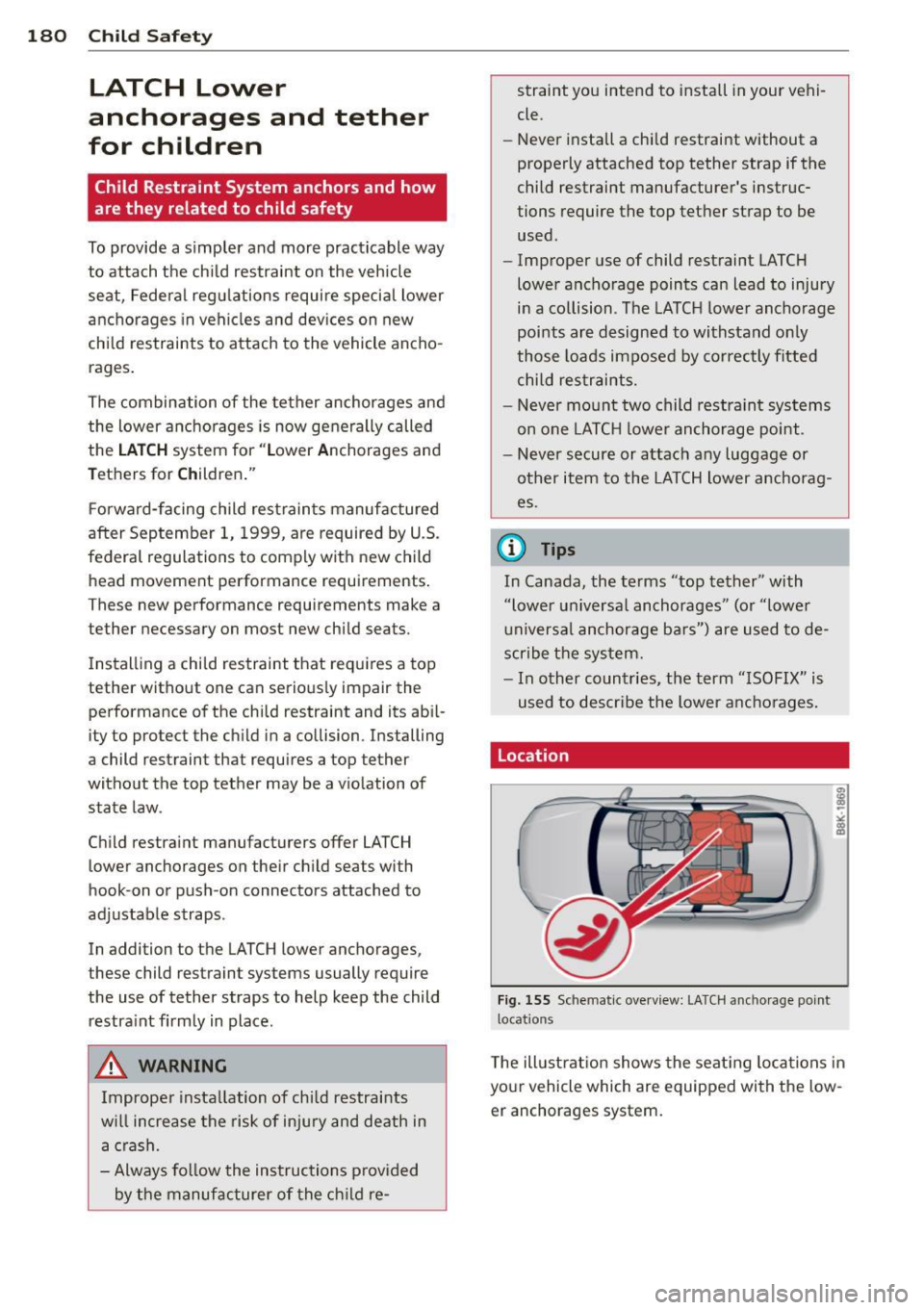
Location
Fi g. 155 Sc hem atic overview: LA TCH ancho rage point
l ocations
T he illust rat ion shows the seat ing loca tions in
you r vehicle which are equipped with the low
er anchorages system.
Page 183 of 294
Description
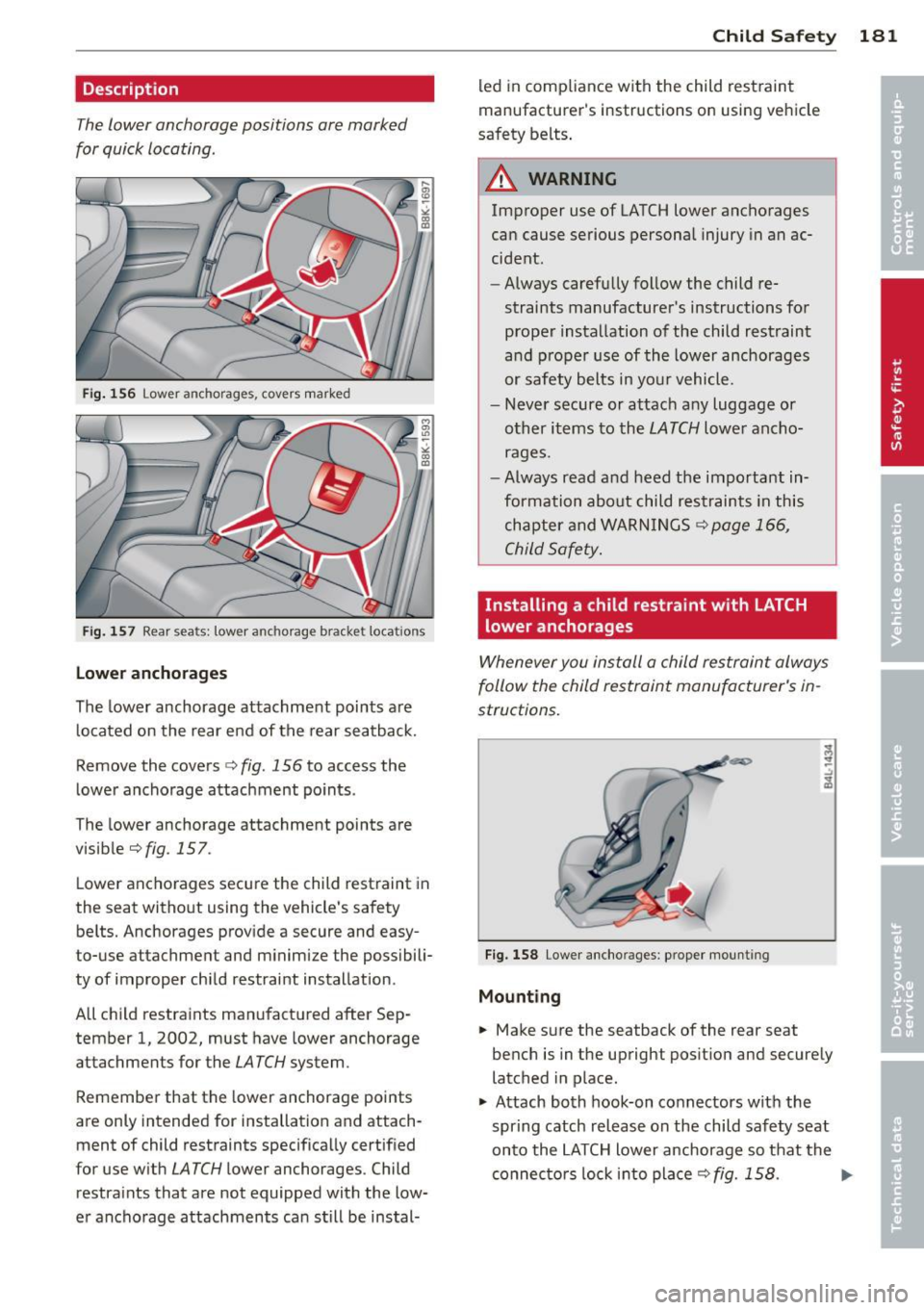
The lower anchorage positions are marked
for quick locating.
Fig . 156 Lower anchorages, covers marke d
Fi g. 157 Rea r seats: lower anc horage bracket locat io ns
Lowe r ancho rages
The lower anchorage attachment points are
l ocated on the rear end of the rear seatback.
Remove the covers
c::> fig . 156 to access the
lower anchorage attachment points .
The lower anchorage attachment points are
visib le
c::> fig. 157 .
Lower anchorages secure the child restraint in
the seat witho ut using the vehicle 's safety
be lts. Anchorages provide a secure and easy
to-use attachment and minimize the possibili
ty of improper child restraint installation .
All chi ld restraints manufactured after Sep
tember 1, 2002, must have lower anchorage
attachments for the
LATCH system.
Remember that the lower anchorage points
are only intended for installation and attach
ment of child restraints specifically certified
for use w ith
LATCH l ower anchorages. Child
restra ints that are not equipped with the low
er anchorage attachments can still be instal-
Child S afety 181
led in compliance with the child restraint
manufacturer's instructions on using vehicle
safety belts .
_& WARNING
Improper use of LATCH lower anchorages
can cause serious personal injury in an ac
cident.
- Always carefully follow the child re
straints manufacturer's instructions for
proper installation of the child restraint
and p roper use of the lower anchorages
or safety belts in your vehicle.
- Never secure or attach any luggage or
other items to the
LATCH lowe r ancho
rages.
- Always read and heed the important in
formation about child restraints in this
chapter and WARN INGS
c::> page 166,
Child Safety.
Installing a child restraint with LATCH
lower anchorages
Whenever you install a child restraint always
follow the child restraint manufacturer's in
structions.
F ig. 158 Lowe r anc horages: proper mount ing
Mounting
.. Make sure the seatback of the rear seat
bench is in the upright pos it ion and securely
latched in place .
"' Attach both hook-on connectors with the
spring catch release on the child safety seat
onto the LATCH lower anchorage so that the
connec to rs lock into place
c::> fig. 158 . ..,.
Page 184 of 294
182 Child Safet y
• Pull on the connector attachments to make
sure they are properly attached to the LATCH
lower anchorage.
• Pull straps tight following the child re
straint manufacturer's instructions.
Re leasin g
• Loosen the tension on the straps following
the chi ld restraint manufacturer 's instruc
tions .
• Depress the spring catche s to release the
anchorage hooks from the lower anchorag
es .
Remember: Use tether straps to help keep the
child restrain t firmly in place.
A WARNING ,.
Improper use of the LATCH system can in
crease the risk of ser ious personal injury
and death in an acc ident .
- These anchors were developed only for
child safety seats us ing the "LATCH" sys
tem .
- Never attach other child safety seats,
belts or ot her objects to these anchors .
-Always make sure that you hear a click when latching the seat in place . If you do
not hear a click the seat is not secure and
cou ld fly forward and h it the interior of
the vehicle, or be ejected from the vehi
cle .
A WARNING
Improper insta llation of chi ld restraints
wi ll increase the risk of injury in an acci
dent.
- Always follow the child restraint system
manufacturer's instructions for proper
installation of the child restraint system
and proper use of tether straps as we ll as
the lower anchorages or safety belts in
your vehicle .
- Always read and heed the important in
format ion and WARNINGS about child
safety and the installation of child re
straint systems ¢
page 166, Child Safe
ty.
-
Tether anchors and tether straps
Fig. 159 Tet her an ch ors : recess flaps beh ind t he rear
s ea tba cks
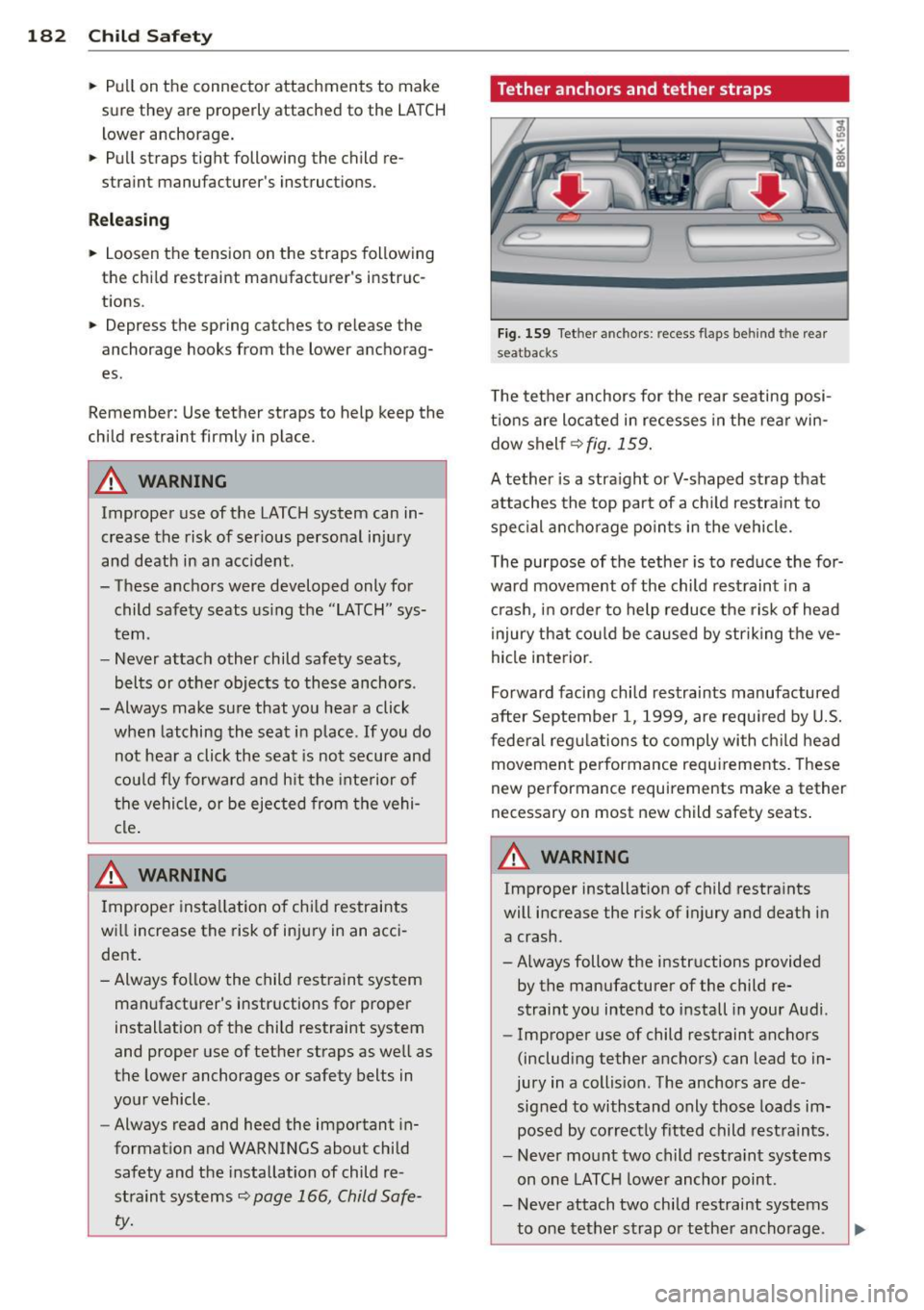
T he tether anchors for the rear seating posi
tions are located in recesses in the rear win
dow shelf ¢
fig. 159.
A tether is a stra ight or V-shaped strap that
attaches the top part of a ch ild restra int to
special ancho rage po ints in the vehicle.
The purpose of the tether is to reduce the for
ward movement of the child rest raint in a
crash , in orde r to help reduce the risk of head
injury that cou ld be caused by strik ing the ve
hicle interior.
Forward facing child restraints manufactured
after September 1, 1999, are requi red by U.S.
federa l regu lations to comply with ch ild head
movement performance requirements. These
new performance requirements make a tether
necessary on most new child safety seats .
A WARNING
Improper installation of child restra ints
will increase the risk of injury and death in
a crash.
- Always follow the instructions provided
by the manufacturer of the child re
straint you intend to install in your Audi .
- Improper use of child restraint anchors
(including tether anchors) can lead to in
jury in a collis ion. The anchors are de
signed to withstand only those loads im
posed by correctly fitted child rest raints.
- Never mount two child restra int systems
on one LATCH lower anchor point.
- Never attach two child restraint systems to one tether strap or tether anchorage .
-
Page 185 of 294
-Never attach a tether strap to a tie-down
hook in the luggage compartment.
- Never use child restraint tether ancho
rages to secure safety belts or other
kinds of occupant restraints .
- Never secure or attach any luggage or
other items to the LATCH lower ancho
rages or to the tether anchors.
- If a tether or other strap is used to at
tach a child restraint to the front passen
ger seat, make sure that it is not so
tight, that it causes the weight-sensing
mat to measure mo re weight than is ac
tually on the seat .
- The heav ier weight reg istered can make
the Advanced Airbag System work as
though an adult were on the seat and de ploy the Adva nced Airbag when it must
be s uppressed causing serious or even
f a tal inj ury to the child .
-If you mus t install a rearward facing
child safety seat on the front passenger
seat because of exceptional circumstan
ces and the
PASSENGER AIR BAG OFF
light does not come on and stay on, im
mediately install the rear-facing child
safety seat in a rear seating position a nd
have t he a irbag system inspected by you r
Audi dealer.
Installing the upper tether strap on the
anchorage
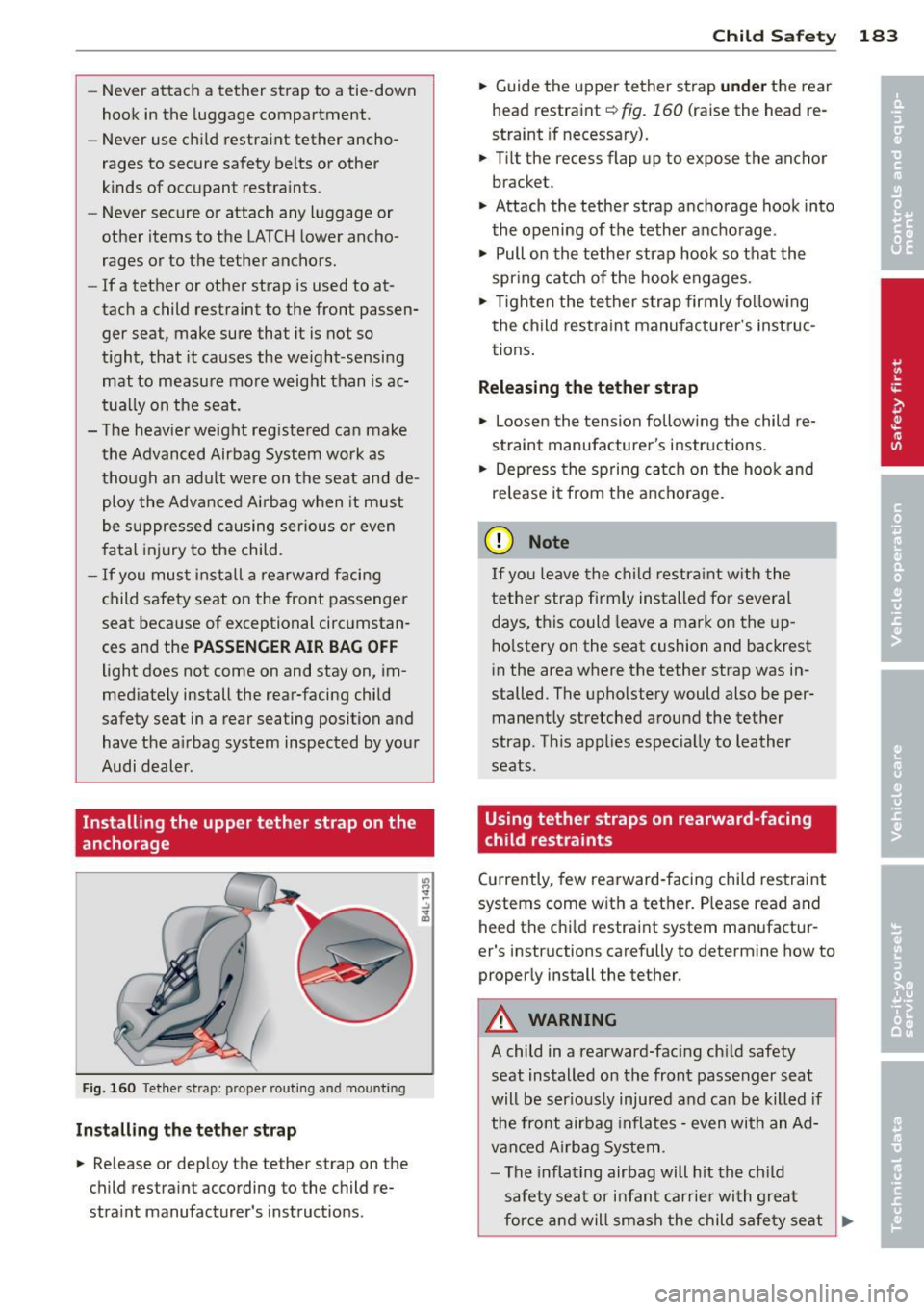
F ig. 160 Tether strap: proper routing and mounting
Inst alling the tether strap
.. Release or deploy the tether strap on the
child restra int according to the child re
stra int manufacturer's instructions.
Child S afety 183
.. Guide the upper tether strap und er the rear
head restraint
¢ fig. 160 (raise the head re
straint if necessary).
.. Tilt the recess flap up to expose the anchor
bracket.
.. Attach the tether strap anchorage hook into
the opening of t he tether anchorage .
.. Pull on the tether strap hook so that the
spr ing catch of the hook engages .
.. Tighten the te ther s trap firmly fo llow ing
t he child restra int manufac turer's inst ruc
tions .
Releasing the tether strap
.. Loosen the tension follow ing the child re
s traint manufacture r's instr uctions.
.. Depress the spring c atch on the hook and
re lease it from the ancho rage.
(D Note
If you leave the c hild restra int w ith the
tethe r strap fi rmly ins talle d for several
days, this could leave a mark on the up
ho lstery on the seat cushion and backrest
i n the area where the tether strap was in
stalled. The upholstery would also be per
manently stretched around the tether
strap . This applies espec ia lly to leather
seats .
Using tether straps on rearward-facing
child restraints
Curre ntly, few rearward-facing child restraint
systems come w ith a tether . P lease read and
heed the chi ld restraint system manufactur
er's instr uctions carefully to determine how to
properly install the tether.
A WARNING
-
A child in a rearward-fac ing ch ild safety
seat installed on the front passenger seat
will be ser ious ly injured and can be killed if
the front airbag inflates -even with an Ad
vanced A irbag Sy stem .
- The inflating airbag will h it the ch ild
safety sea t or i nfan t carrie r wi th great
for ce a nd will smas h the child safety se at .,.
Page 188 of 294
186 Intelligent technology
ESC includes and/or works together with the
anti-lock brake system (ABS), brake assist sys
tem, anti-slip regulation (ASR) , e lectronic dif
ferential lock (EDL), dynamic steering" and
e lectronic interaxle differentia l lock* /selective
wheel torque control* . ESC is switched on all
the t ime. I n certa in s ituations whe n you need
l ess t raction, you can switch
off ASR by p ress
i ng the bu tto n
[ru ¢ page 187, fig. 161 or
¢ page 187, fig. 162. Be sure to sw itch ASR
on aga in when yo u no longer need less t rac
tion .
Anti -lock braking system (ABS)
ABS prevents the wheels from locking up
when braki ng. The veh icle can still be steered
even d uring h ard br aking. Apply ste ady p res
sure to the brake pedal. Do no t pump the ped
a l. A pulsing in the brake peda l indicates t hat
the system is he lping yo u to b rake the vehicle .
Brake assist system
The brake assis t system can decrease b ra ki ng
d ista nce. It incre ases braking power w hen the
d river p resses the brake pedal q uic kl y in eme r
gency situations . You must p ress and hold the
b rake peda l until the situation is over. In
vehicles w ith adapt ive cru ise contro l", the
brake assist system is more sensit ive if the
d ista nce detected to t he vehicle a head is too
small.
Anti-slip regulation (ASR)
ASR reduces engine power when the drive
wheels begin to spin and adapts the fo rce to
the road condit ions. This makes it eas ier to
start , accelerate and drive up hills.
Electronic differenti al lock (EDL )
The ED L brakes wheels that are spinn ing and
transfers the drive power to the other drive
wheel or whee ls if t he vehicle is equipped with
all-w heel drive*. This function is available up
to abo ut 60 mph (100 km/h).
In extreme cases, EDL automat ica lly switches
off to help keep the bra ke on the braked whee l
from overheating. EDL wi ll switch on again au-tomat
ica lly when conditions have ret urned to
no rma l.
Dynamic steering*
On vehicles wi th dynam ic steering*, ESC he lps
st abiliz e the steer ing in cr itical situ ations.
Electronic interaxle differential lock* /
selective wheel torque control*
T he elec troni c int eraxle differentia l lock (front
whee l dr ive) o r th e se lec tive whee l torque
control (all-whee l dr ive) oper ates when dr iv
ing t hro ugh curves. The front w heel on the in
side of the c urve or both whee ls on the inside
of the c urve are b raked se lectively as needed.
This m inimizes sliding in the front wheels and
allows for more precise driving through
curves . The applicable system may not acti
vate when dr iving in wet o r snowy cond itions.
A WARNING
- ESC, ABS, ASR, EDL dynam ic steering*
an d the ele ct roni c interaxle differential
lo ck* /se lective whee l torque con trol *
fu nction canno t over come the laws of
p hys ics. Th is is especially important on
slippe ry or wet roads . If the systems be
g in acting to stabilize yo ur vehicle, you
should immediately change yo ur speed
to match the road and traffic conditions. Do not let the increased safety provided
by these systems tem pt you to ta ke risks.
Doing so will increase the risk of a loss of
veh icle cont ro l, col lision and ser ious per
sonal injur ies.
- Always ada pt your speed to road, traffi c
a nd wea ther condi tions. The risk of los-
ing con trol of the vehicle increases when
d riving too fast, es pec ia lly through
curves and o n slippe ry or wet roads, an d
when dr iv ing too close to vehicles up
ahead. ESC, ABS, the brake ass ist sys
tem, ASR, EDL dynam ic steer ing* and the
e lectronic inte raxle differentia l lock*/se
lec tive whee l to rque control* func tion
cannot prevent collisions.
-
Page 189 of 294
-Always acce lerate with specia l care on
even, smooth surfaces s uch as those that
are wet or covered with ice and snow.
The drive wheels can spin even with
these assistance systems that cannot al
ways help to reduce the risk of loss of ve hicle control.
(0 Tips
- ABS and ASR on ly work correctly when
all four wheels are equ ipped w ith ident i
ca l tires. Different tire s izes can lead to a
reduct ion i n eng ine power.
- You may hear noises when the systems
described are wo rking .
- If the indicator light D] or m!S (USA
models) ;tiJ (Canada models) appears,
the re may be a malfunct ion
c::> page 19,
~ page 19.
Switching on/off
ESC turns on automatically when you start
the engine .
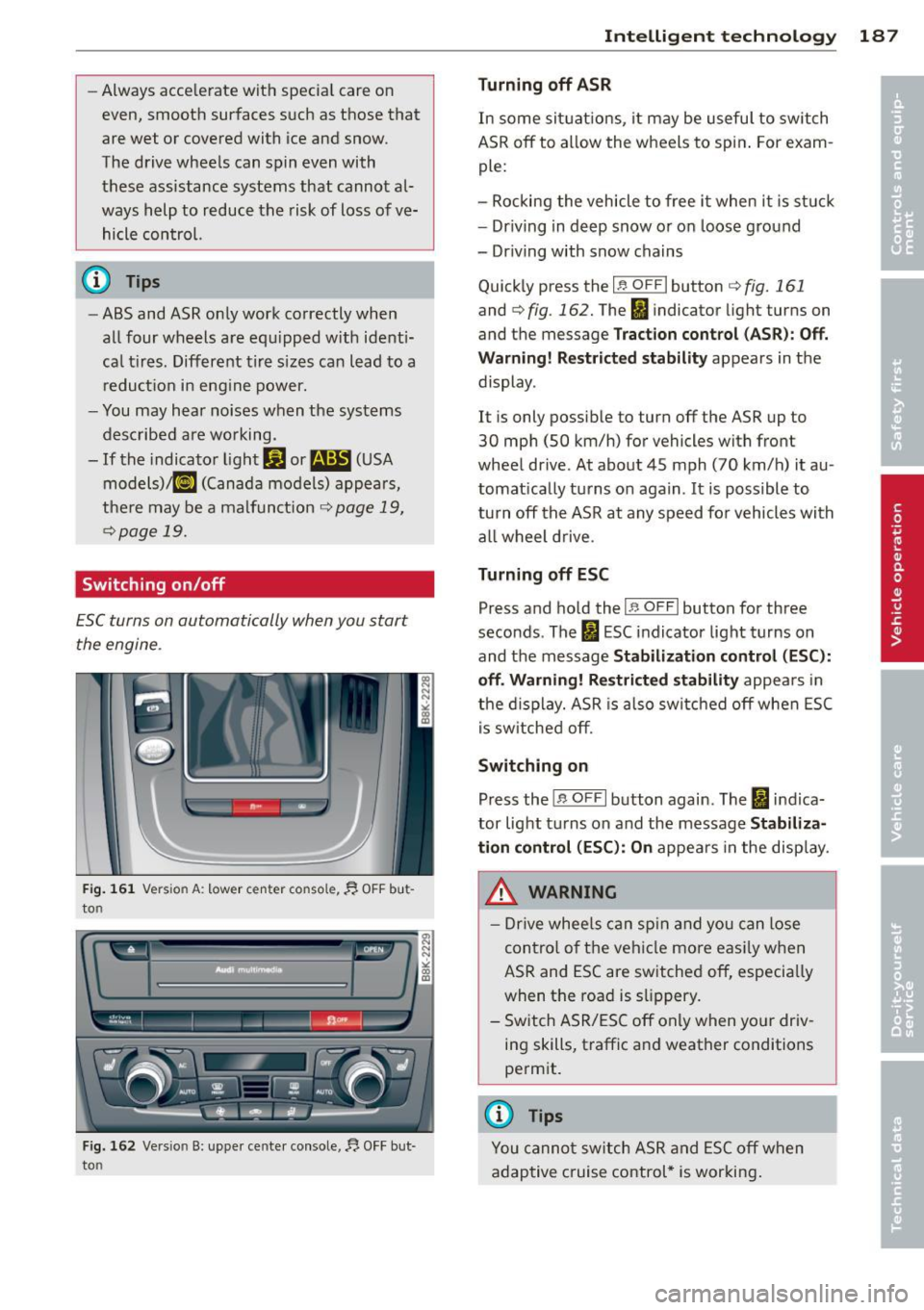
Fig . 161 Vers ion A: low er c en ter co nsol e, fj. OFF bu t
to n
Fig. 162 Ve rsio n B: upper ce nte r console,~ OFF bu t
to n
Intelligen t technolog y 187
Turning off ASR
In some sit uatio ns, it may be useful to switch
ASR
off to a llow the wheels to spin . For exam
ple:
- Rocking the vehicle to free it when i t is st uck
- Dr iving in deep snow or on loose ground
- Dr iving with snow chains
Qu ick ly press the
I~ O FF I button c::> fig. 161
and c::> fig . 162. The Ii indicator light turns on
and the message
Trac tion control (A SR) : Off.
War ning! R estrict ed stability
appears in the
display .
It i s only possible to turn
off the ASR up to
30 mph (SO km/h) for vehicles wi th front
wheel drive . At about 45 mph (70 km/h) it au
tomat ically turns on again .
It is possible to
turn
off the ASR at any speed fo r vehicles with
all wheel drive .
Turning off ESC
Press and hold the I;; OFFI button for three
seconds . The
fl ESC indicator light turns on
and the message
Stabil ization cont rol (ESC ):
o ff . Warni ng ! Re str icted stab ilit y
appea rs in
the d isplay. ASR is also sw itched
off when ESC
i s sw itched off.
Switching on
Press the j ;; O FFI button again . The fi indica
tor light t urns on and the message
St abi liz a
t ion control (ESC ): On
appears in the disp lay.
_&. WARNING
- Drive whee ls can sp in and you can lose
contro l of the vehicle more eas ily when
ASR and ESC are switched off, especia lly
when the road is s lippery .
- Switch ASR/ESC
off only when yo ur driv
ing skills, traffic and weather conditions
permit.
@ Tips
You cannot sw itch ASR and ESC off when
adaptive cruise control* is working .
-
Page 190 of 294
188 Intelligent technology
Braking
What affects braking efficiency?
New brake pads
During the first 250 miles (400 km), new
b rake pads do not possess their fu ll braking
effect , they have to be "broken in" first¢.&. .
You can compensate for this slightly reduced braking power by push ing harder on the brake
pedal. Avoid heavy braking loads during the
break-in per iod.
Operating condition s and d riv ing hab it s
The brakes on today's automob iles are st ill
subject to wea r, depending largely on operat
ing conditions and driving habits¢.&. . On
vehicles that are e ither driven mostly in stop
and-go city traffic or are driven hard, the b rake pads should be checked by your author
ized Audi dealer more often than specified in
the
Warranty & Maint enan ce booklet . Failure
to have your b rake pads inspected can res ult
in red uced brake pe rformance.
On steep slopes, you shou ld use the brak ing
effect of the engine. This way, you p revent un
necessa ry wear on the brake system. If yo u
must use yo ur brakes, do not hol d the brakes
down continuously. P ump the brakes at inter
va ls.
Operating noise
Noises may occur when braking depending on
the speed, brak ing fo rce and outside condi
tions such as temperature and humidity.
Effect of water and road salt
In ce rtain situat ions, for example after driving
through water , in heavy ra in, after overn ight
conde nsation or afte r washing your car, the
b rak ing effect can be redu ced by mois ture or
ice on the brake rotors and brake pads . The
brakes must be dried first with a few careful
brake applications .
A t higher speeds and with the w indshield w ip
ers turned on, the brake pads press against
the brake rotors for a short amount of time .
This occurs at regular intervals witho ut the driver noticing and p
rovides fo r bette r brake
response time under wet conditions .
T he effec tiveness of the brakes can be red uced
when the vehicle is d riven on a sa lt -covered
r oad and the brakes are not used . Likewise,
you clean off accumulated salt coating from brake d iscs and pads with a few cautio us ap
plicat ions of the brake ¢ .&. .
Corro sio n
The re may be a tendency for di rt to b uild up
on the brake pads and corrosion to form on
the discs if the car is not driven regularly or only fo r short trips w ith litt le use of the
brakes.
If the brakes are not used frequently, o r if cor
rosion has formed on the discs, it is advisable
to clean off the pads and d iscs by braking
firmly a few times from a moderately high
speed ¢.&. .
Fault s in the brak e syst e m
If you s hou ld notice a sudden increase i n
brake pedal trave l, then one of the two brake
c ircuits may have failed ¢.&. .
Low brake fluid level
Malfunctions can occ ur in the b ra ke system if
the brake fluid level is too low. The brake fluid
l evel is monitored electronica lly.
Brake booster
T he bra ke booster inc reases the pressure that
you generate wi th the b rake peda l. It works
o n ly when the engine is runn ing .¢ .&.
Brake lining wear status
Brake lining wear may be checked by visual in
spect ion of the condition of the brake pads
th rough the ope nings in the wheel. If neces
sary, the wheel may be removed for t his in
spect ion ¢
page 253, Changing a wheel.
_& WARNING ,____
-New b rake pads don't have the best stop
p ing power and m ust be "broken-in" dur-
ing the initial 100 to 150 miles (150 to
11>-
Page 192 of 294
190 Intelligent technology
steering wheel will be easy to move. Re
initia lization might be necessary if the steer
ing whee l was moved hard to the left and
right while the vehicle was not moving. The
d isplay goes out as soon as in itia lizat ion is
comp lete.
A WARNING
Have the dynamic steering* system ma l
function repaired as soon as poss ible by an
authori zed A udi dealer or any qualified
workshop -risk of accident!
- If the . or
l:r-ij indicator light on ly stays
on for a short t ime, yo u may continue
drivi ng.
- The dynamic steering * stability systems
are not available in the event of a system
malfunction.
- Fo r additional informat ion on dynamic
stee ring*, refer to ¢
page 109.
Driving with your
quattro ®
Applies to vehicles: with all-wheel drive
With all-wheel drive, all four wheels are driv
en.
General information
W ith all-whee l drive, power is distribute d to
a ll fo ur whee ls. This happens automat ica lly
d epending on your dr iving sty le and the road
conditions at the t ime. See also¢
page 185 .
A cen ter different ial d istr ib ut es the dr iv ing
power var iably to the front and rear axle. It
wo rks together with se lective whee l torque
control, which activates when driving throug h
curves ¢
page 186. With the sport differen
tial*, power distribution to the rear wheels is
variable and can be adjusted with Audi drive se lect ¢
page 109 .
The all-wheel drive concept is designed for
h igh engine power . Your vehicle is exception
ally powerful and has exce llent dr iving charac
terist ics bot h under normal driving conditions and on snow and
ice . Always read and follow
safety precautio ns ¢ &. .
Winter tires
When driving in t he win ter, yo ur vehicle wi th
all-wheel d rive h as an adv antage, eve n w it h
r egular tires. In wi nte r road conditions it may
be advisable to mount winter tires (or all -sea
son tires) for improved driveability and brak
i ng : these tires must be mounted on
all fou r
wheels . See also ¢ page 246, Winter tires.
Tire chains
Where tire chains are mandatory on certain
roads, this no rma lly also app lies to ve hicles
with all-wheel drive¢
page 247, Snow
chains .
Replacing wheels/tires
Vehicles wi th a ll-wheel drive m ust always
have ti res of t he same s ize. A lso avoi d tires
with differe nt t read depths . For detai ls see
page ¢
page 242, New tires and replacing
tires and wheels.
Off-Road dr iving?
You r A ud i does no t have e nough gro und clea r
ance to be used as an off -road vehicle .
It is
t h e refore best to avoid roug h tracks and u n
even te rrain as much as possib le . Also refer to
¢ page 193.
A WARNING
Always ad just your dr iv ing to road and traf
f ic conditions. Do not let the extra safety
afforded by all-wheel drive tempt you into
taking ext ra risks .
-Al though the a ll-wheel drive is ve ry ef
fective, always remember that braking capacity is lim ited by tire t raction. You
s hould t herefore no t drive at ex cessive
speeds on i cy or slippe ry road surfa ces.
- On wet road surfa ces, be careful not to
d rive too fast because the fr on t whee ls
could begin to slide on top of the water
(aquaplaning) . If thi s should occur, you