warning AUDI A5 COUPE 2016 Owners Manual
[x] Cancel search | Manufacturer: AUDI, Model Year: 2016, Model line: A5 COUPE, Model: AUDI A5 COUPE 2016Pages: 264, PDF Size: 66.92 MB
Page 176 of 264
Intelligent Technology
Clean off accumulated salt coating from
brake discs and pads with a few caref ul
brake app lications.
- If you damage the front spoiler, or if yo u in
stall a d ifferent spoiler, be sure the air flow
to the front brakes is not obstructed. Other
wise the brake system could overheat reduc
ing the effectiveness of the entire b rake sys
tem.
- Failure of one brake c ircuit will impair the
bra king capability res ult in g in an increased
stopp ing distance. Avoid driving the vehicle
and h ave i t towe d to the ne arest author ized
Audi dealer or quali fied workshop.
- Never let the vehicle roll to a s to p wi th the
eng ine shut off.
- I f the bra ke booste r is not wor kin g, the
bra ke pe dal m ust be presse d considerably
harder to make up for the lac k of b oos ter
assistance .
Electro-mechanical
power assist, dynamic
steering
The electro-mechanical power assist helps the
driver when steering.
Power steering adapts electronically based on
the vehicle speed .
Indicator lights and mess ages
• Steering defective! Do not dri ve vehicle!
If thi s ind icator light tu rns on and stays o n and
this message appears, t he power steering may
have fa iled.
D o
not conti nue d riving. See yo ur autho riz ed
Aud i dea ler o r a q ua lified repair facility fo r assis
tance.
l;r-ij Dynamic steering : Sy stem fault! You can
c ontinue driving
If t he i ndicator lig ht t urns on and the message
appears, the steering may be more difficult to
move or mo re sens it ive than usual. The steer ing
wheel may also be a t an an gle when dr iv ing
s tra ight .
174
Drive slowly to your a uth orized Audi dea ler or
qualified workshop to have the malfunction cor
r ected.
'I-ij Dynamic steering: initializing
If this d rive r message appea rs and t he in dicator
li ght is flashing on the instr ume nt pa nel, dynam
ic steer ing * is being re ini tiali zed. After s tarting
the e ngine, t he s teer ing whee l w ill move sligh tly.
Re -initializa tion might be necessary if the steer
ing whee l was moved hard to the left and right
whi le the vehicle was not moving . T he d isp lay
goes out as soon as initiali zation is comp lete.
A WARNING
-
H ave the dynamic steering* system malfunc-
tion repaired as soon as poss ible by an au
thor ized Audi dealer or qualified workshop -
risk of acc ident!
@ Tips
- If the . or 'I-ij indicator light only stays on
for a sho rt time, you may cont inue driving.
- The dynamic steerin g* stab ility systems a re
not ava ilable in the event of a system mal
function .
- For add itiona l information on dynamic
steeri ng*, refer to
<=> page 102.
Driving with your
quattro
Applies to vehicles: with all-whee l dr ive
With all-wheel drive, all four wheels are driven.
General informat ion
With a ll-w heel d rive, power is distri buted to a ll
fo ur wheels. This happens automat ica lly depend
i ng on your d riving style a nd the roa d conditions
at the t ime . See also
c> page 170.
A center d ifferen tial d istr ibu tes the dr iving powe r
variab ly to the front and rear ax le.
It works to
gether w it h select ive whee l torque contro l, w hich
ac tiv ates w hen d rivi ng thro ugh curves
<=> page 171. With the spo rt different ial *, power
distribution to the rear wheels is variable and can
be adjusted with drive select<::>
page 102. .,.
Page 177 of 264

.... N
0 Ico ....
engine power. Your vehicle is exceptionally pow
erful and has excellent driving characterist ics
both under normal dr iving condit ions and on
snow and ice. Always read and fo llow safety pre
cautions <=>
,&.
Winter t ire s
When driving in the winter, your vehicle with a ll
wheel drive has an advantage, even with regular
tires. In winter road conditions it may be adv isa
ble to mount w inter tires (or all-season tires) for
i mproved driveab ility and brak ing : these tires
must be mounted on
all four wheels . See also
<=> page 220, Winter tires.
Tire chains
Where tire chains are mandatory on certain
roads, this normally also applies to vehicles w it h
all -wheel drive <=>
page 220, Snow chains.
Replacing wheels /tires
Vehicles with all-whee l dr ive must always have
tires of the same size. A lso avoid tires with differ
ent tread depths. For details see page
<=>
page 212, New tires or wheels.
Off-Road dri ving ?
Your Aud i does not have enough ground clear
ance to be used as an off-road vehicle.
It is there
fore best to avoid rough tracks and uneven ter rain as much as possible . Also refer to
<=> page 177 .
A WARNING
Always adjust your driving to road and t raff ic
conditions. Do not let the extra safety affo rd
ed by all-wheel drive temp t yo u into ta king
extra risks.
- Although the all-whee l drive is very effec
t ive, a lways remember th at br akin g capac ity
is limited by tire traction. Yo u should t here
f ore not drive at excess ive speeds on icy or
slippery road surfaces.
- On wet road surfaces, be caref ul no t to drive
too fast because the front wheels co uld be
gin to slide on top of the water (aq uaplan
ing). If this shou ld occur, you wi ll have no
Intellig ent Technology
warn ing from a s udden increase in engine
speed as w ith a front-wheel drive vehicle.
Always drive at speeds which are suited to the road conditions - risk of crash .
Energy management
Starting ability is optimized
Energy management controls the distribution of
elec trical energy and thus optimizes the availa
bility of ele ctrical energy for star ting the engine.
If a vehicle with a conventiona l energy system is
not dr iven fo r a long pe riod of time, the batte ry is
discharged by id ling curre nt cons umers (e.g. im
mobili ze r). In cer tain circumstances i t can res ult
in the re being insuffi cien t energy ava ilable to
start the engine .
Intellige nt energy manageme nt in yo ur vehicle
hand les the distri bu tion of elec trical energy.
Start ing ability is markedly improved and the life
of the battery is extended .
B as ic all y, energy managemen t cons ists of
bat
tery diagn osis , idling current man agement
a nd
d ynamic energy man agement.
Battery diagnosis
Battery d iagnosis con tinuously dete rmines the
state of the bat tery. Sensors de termine battery
vo ltage, b attery curren t and batte ry tempera
tu re. This de termines t he current state of charge
and the power of the battery .
Idling current management
Idling cur rent management reduces ene rgy con
s u mption wh ile the vehicle is standi ng. With the
ignition swi tched off , it co ntrols the energy sup
ply to the vario us elec trical components . Data
from battery diagnosis is considered .
Depend ing on the ba tte ry's s ta te of charge, indi
v idual consumers are g radually turned off to pre
ven t excess ive d ischarge of the battery and thus
maintain starting capab il ity.
Dynamic energy management
While the vehicle is being driven, dynam ic ene rgy
manageme nt dis trib utes the energy generated ""'
175
Page 179 of 264
.... N
0 Ico ....
environment
Breaking in
New engine
The engine needs to be run-in during the first
1,000 miles (1,500 km).
For the first 600 miles (1 ,000 kilometer s):
"' Do not use full throttle .
"' Do not drive at engine speeds that are more
than
2/3 of the max imum permitted RPM .
From 600 to 1,000 miles (1 ,000 to 1 ,500
kilometers):
"' Speeds can gradually be increased to the maxi
mum pe rm issib le road or engine speed .
During and after break-in pe riod
"' Do not rev the engine up to high speeds when it
is cold. This applies whether the transmission is
in N (Neutral) or in gear .
After the break-in period
"'Do not exceed maximum engine speed under
any c ircumstances.
"'U pshift into the next higher gear
before reach
ing the red area at the end of the tachometer
sca le
c=>page 10.
During the first few hours of driving, the eng ine's
internal friction is higher than later when all the
mov ing parts have been broken in . How well this
b reak-in process is done depends to a considera
b le exte nt on the way the veh icle is d rive n during
t he first 1,000 miles (1,500 kilometers).
(D Note
Extremely high eng ine speeds a re au toma ti
cally reduced. However, these rpm limits are
programme d for a n engine well run-in, not a
new engine.
@) For the sake of the environment
D o not dr ive with u nnecessari ly high eng in e
spee ds -ups hifting ea rly saves fuel, reduces
noise and pro tec ts the envi ronme nt.
Driving and the envir onment
New tires
If your vehicle is runn ing on new tires, d rive very
car efu lly fo r the firs t 35 0 miles (500 kilometers)
a ft er fit ting.
New tires tend to be slippe ry and must a lso
be "bro ken-in". Be sure to remembe r th is dur
i ng the fi rst 350 m iles (500 kilometers).
Brake gent ly. Avoid following closely behind
other vehicles or other s ituations that m ight
r equire sudden, hard b raking.
Avoid damaging the
vehicle
When yo u are dr iv ing o n poor roa ds, or over
cur bs, stee p ramps, e tc., ma ke cert ain that low
ly ing parts s uch a s spo ile rs a nd exh aust sy stem
parts do no t bottom o ut and get dama ged.
T his is espec ially true for ve hicles with low-s lung
c h ass is (sports c hass is) * and fully loaded
vehicles.
Driving through water on
roads
Note t he following to avoi d ve hicle damage w hen
driv ing through water, for examp le on flooded
roads:
- The water must not be any hig her t han the bot
tom of the vehicle body.
- Do not dr ive faste r than walk ing speed.
A WARNING
= -
Afte r driv ing th ro ugh water, m ud, slush, etc .,
the brakes may be slow to take effect beca use
of wet brake rotors and pa ds. Dry the brakes
f irst by braking carefully to restore the full
b raking effect.
(D Note
Ve hicle compone nts such as the engine,
transmission, suspension o r electrica l system
can be severely damaged by driving throug h
water.
177
Page 180 of 264
Driving and th e en vironm ent
(D Tips
- Check the depth of the water before driving
through it .
- Do not stop the veh icle, drive in reverse or
switch the engine
off when driving through
water.
- Keep in mind that oncoming vehicles may
create waves that raise the water level and
make it too deep for your veh icle to drive
through safely.
- Avoid driving through salt water because it
can cause corrosion.
Catalytic converter
It is very important that your emission control
system (catalytic converter) is functioning prop erly to ensure that your vehicle is running in an
environmentally sound manner .
~ Always use lead-free gasoline ¢ page 186,
Fuel supply .
~ Never run the tank down a ll the way to empty .
~ Never put too much motor oil in your engine
¢ page 195, 9::?1 Adding engine oil .
~ Never try to push- or tow-start you r vehicle.
The cata lytic converter is an efficient "clean-up"
dev ice bu ilt into the exha ust system of the vehi
cle. The cata lytic conve rter burns many of the
pollutants in the exhaust gas before they are re
leased into the atmosphere.
The exclusive use of unleaded fue l is critica lly im
portant for the life of the catalytic conve rter and
p roper functioning of the engine.
A WARNING ,..____ -
- The temperature of the exhaust system is
high, both when driving and after stopping
the engine.
- Never touch the exha ust tail pipes once they
have become hot. This could result in burns.
- Do not park or ope rate t he vehicle in areas
where the hot exha ust system may come in
contact with dry grass, br ush, fue l spill or
other mater ial which can cause a fire.
- Do not apply additional undercoating or
rustproofing on or near the exhaust mani-
178
fold, exha ust pipes, cata lytic conve rter or
heat shields. D uring driving, the substance
used for undercoat ing could overheat and
cause a f ire.
Cl) Note
- Be aware that just one tank f illing wit h
leaded fu e l w ill already seriously degrade
the performance of the catalytic converter.
- Do not exceed the correct engine oil leve l
¢page 195.
-Do not drive until the fue l tank becomes
completely empty. The engine could mis
fire. Unbu rned fue l cou ld also get into the
exhaust system and this could cause the
catalytic converter to overheat.
- Do not turn off the ign ition while the vehicle
is moving .
- Do not continue to operate your vehicle un
der these conditions, as otherw ise fuel can
reac h the catalytic converter. T his could re
sult in overheat ing of the converter, requir
ing its replacement.
- T o ass ure eff icient operat ion of the Emis
sion Contro l System:
- Have you r vehicle maintained properly and
i n accordance wit h the service recommen
dations in your Warranty
& Ma intenance
booklet.
- Lack of proper ma intenance as well as im
p roper use of the veh icle will impa ir the
function of the emission control system
and could lead to damage.
(® For the sake of the environment
Even when the Emiss ion Control System is op
erating properly, t he exhaust gas can have a
sulfur-like exhaust gas smell under some op
erating states. Th is depends on the sulfur
content of the fuel being used. Us ing a d iffer
ent brand of fuel may help, or fi lli ng the tank
wi th lead-free super g rade gasoline.
Shutting down vehicle
If you wo uld like yo ur vehicle to remain inopera
tive for a longer pe riod of time, con tact an Audi
o r other spec ia liz ed dealer. They can adv ise you ..,.
Page 183 of 264
.... N
0 Ico ....
General information
Your Audi was designed primarily for passenger
transportation .
If you plan to tow a trailer, please remember that
the additional load will affect durability, econo my and performance.
T railer towing not only places more stress on the
vehicle, it also calls for more concentration from
the driver.
For this reason, always follow the operating and
driving instructions provided and use common
sense.
Technical requirements
Trailer hitch
Use a weight-carrying hitch conforming to the
gross trailer weight. The hitch must be suitable
for your vehicle and trailer and must be mounted
securely on the vehicle's chassis at a technically
sound
location . Use only a trailer hitch with a re
movable ball mount . Always check with the trail
er hitch manufacturer to make sure that you are
using the correct hitch.
Do not use a bumper hitch.
The hitch must be installed in such a way that it
does not interfere with the impact -absorbing
bumper system . No modifications should be
made to the vehicle exhaust and brake systems .
From time to time, check that all hitch mounting
bo lts remain securely fastened.
When you are not towing a trailer,
remove the
tra iler hitch ball mount . This prevents the hitch
from causing damage should your vehicle be
struck from beh ind ¢
,&. .
Trailer brakes
If your trailer is equipped with a braking system,
check to be sure that it conforms to all regula
tions .
Trailer mode
The trailer hydraulic brake system must not be
directly connected to the vehicle's hydraulic
brake system ¢.&. .
Safety chains
Always use safety chains between your vehicle
and the trailer.
Trailer lights
T ra iler lights must meet all regulations . Be sure
to check with your author ized Audi dealer for cor
rect wiring, switches, and relays.
Mirrors
If you are unable to see the traffic behind you us
ing the regular outside mirrors, then you
must in
stall extended mirrors. It is important that you
always have clear vision to the rear.
,8. WARNING
-If a trailer has electrical brakes please note
that these brakes are not activated by the
factory-fitted control unit -risk of accident!
- After removing the trailer hitch, do not store it in your vehicle. In case of sudden
braking, the hitch could fly forward and in
jure you or your passengers.
Operating instructions
Maximum trailer weight
A trailer for your vehicle is limited to a typical
class 1 or class 2 trailer.
Trailer load distribution
Be sure the load in the trailer is held securely in
place to prevent it from shifting forward, back
ward or sideways.
Never allow a passenger to ride in a trailer¢.&.
in Driving instructions on page 182.
Engine cooling system
Towing a trailer makes the engine work harder . It
is important that the cooling system's perform
ance is up to the additional load . Make sure that
the cooling system has enough fluid. .,..
181
Page 184 of 264
Trailer mode
Tire pressure
When towing a trailer, inflate the tires of you r
veh icle to the cold tire pressure listed under "Fu ll
load" on the label located on the driver's side B
pillar (visib le when the door is open) . Inflate
trai ler tires to trailer and tire manufacturers'
specifications.
Lights
The headlight settings should be checked with
the trailer attached before driving off. Check to
make sure both vehicle and trailer lights are
working properly .
Safety chains
Be sur e trailer safety chains are properly connect
ed from the trai ler to the hitch on the vehicle .
Leave enough slack in the chains to permit turn
ing corners . When you install safety chains, make
sure they w ill not drag on the road when you are
driving.
The chains shou ld cross under the trailer tongue
to prevent it from dropping in case of separation
from the hitch.
Driving instructions
Driving with a trailer always requires extra care
and consideration.
To obtain the best possible handling of vehicle
and trailer, please note the fo llowing :
.. Do not tow a loaded trailer when your car itself
is not load ed .
.. Be especia lly carefu l when passing other
vehicles .
.. Observe speed limits.
.. Do not drive at the maximum permissible
speed .
.. Always apply brakes early.
.. Monitor the temperature gauge .
Weight distribution
Towing a loaded trailer with an empty car resu lts
in a high ly unstable distribution of weight. If this
cannot be avo ided, drive at very low speeds only
to avoid the risk of losing steering control.
182
A "balanced" rig is easier to operate and control.
This means that the tow vehicle shou ld be loaded
to the extent possible and permissib le, wh ile
keeping the trailer as light as poss ible under the
c ir cumstances . Whenever possible, transfer
some cargo to the luggage compartment of the
tow veh icle while observing tongue load require
ments and vehicle load ing considerations .
Speed
The higher the speed, the more difficult it be
comes for the driver to control the r ig. Do not
drive at the maximum permissible speed. Reduce
your speed even more if load, weather or wind
cond it ion s are unfavorab le -particularly when
go ing downh ill.
Reduce vehicle speed
immediately if the trailer
shows the slightest sign of sway ing .
Do not try
to stop the swaying by accelerating.
Observe speed limits. In some areas, speeds for
vehicles towing tra ilers are lower than for regular
vehicles.
Always apply brakes early. When driving down
hill, shift into a lower gear to use the engine
braking effect to slow the vehicle . Use of the
brakes alone can cause them to overheat and fail.
Coolant tempe rature
The coolant temperature gauge c::> page 10 must
be observed carefully.
If the needle moves close
to the upper end of the scale, reduce speed im
med iately and/or turn off the a ir cond itioner .
If the coolant temperature warning light . in
the instrument cluster starts flashing, pull off
the road, stop and let the engine
idle for about
two m inutes to prevent heat build-up .
A WARNING
Anyone not properly restrained in a moving
vehicle is at a much greater risk in an acci
dent. Never let anyone ride in your car who is
not properly wearing the restraints provided
by Audi.
-
Page 186 of 264

Care and cleaning
Care and cleaning
General information
Regular, proper care helps to maintain your vehi
cle's value.
It can also be a requirement when
submitting warranty claims for corrosion damage
and paint defects on the body.
The necessary care products can be obtained
from your authorized Audi dealer . Read and fol
low the instructions for use on the packaging.
A WARNING
-Using cleaning and care products incorrectly
can be dangerous to your health.
-Always store cleaning and care products out of reach of children to reduce the risk of poi
soning .
@ For the sake of the environment
-Preferably use environmentally-friendly
products when buying cleaning agents.
- Do not dispose of leftover cleaning and care
products with household trash.
Car washes
The longer that deposits remain on the vehicle,
the more the surface may be damaged. High
temperatures such as those caused by sunlight
increase the damaging effect.
Before washing, rinse
off heavy deposits with
plenty of water.
Stubborn deposits such as bird droppings or tree
sap are best removed with plenty of water and a
microfiber cloth.
Also , wash the underside of your vehicle once
road sa lt stops being used for the season.
Pressure washers
When washing your vehicles with a pressure
washer, always follow the operating instructions
provided with the pressure washer. This is espe
cially important in regard to the pressure and
spraying distance . Do not aim the spray directly
at seals on side windows, doors, the hood, the
luggage compartment lid or the sunroof* or at
184 tires,
rubber hoses, insulating material, sensors*
or ca mer a lenses*. Keep a distance of at least
40.64 cm (40 cm).
Do not remove snow and ice with a pressure
washer.
Never use rotary nozzles or high pressure noz
zles.
The water temperature must not be above 140 °F
(60
°() .
Automatic car washes
Spray off the vehicle before washing.
Make sure that the windows and roof* are closed
and the windshield wipers are
off . Follow instruc
tions from the car wash operator, especially if
there are accessories attached to your vehicle.
If possible, use car washes that do not have
brushes.
Washing by hand
Clean the vehicle starting from the top and work
ing down using a soft sponge or cleaning brush.
Use solvent-free cleaning products.
Washing vehicles with matte finish paint by
hand
To avoid damaging the paint when washing, first
remove dust and large particles from your vehi
cle. Insects, grease spots and fingerprints are
best removed with a special cleaner for matte
finish paint .
Apply the product using a microfiber cloth. To
avoid damaging the paint surface, do not use too
much pressure.
Rinse the vehicle thoroughly with water. Then
clean using a neutral shampoo and a soft micro
fiber cloth .
Rinse the vehicle thoroughly again and let it air
dry. Remove any water residue using a sham my.
A WARNING
-
- Only wash the vehicle when the ignition is
off and follow the instructions from the car
Page 190 of 264
Fuel and Refueling
Gasoline additives
A major concern among many auto manufactur
ers is carbon deposit build-up ca used by the type
of gasoline you use .
Although gasoline grades d iffer from one manu
facturer to another, they have certain things in
common. All gasoline grades contain substances
that can cause deposits to collect on v ital engine
parts, such as fuel injectors and intake valves. Al
though most gasoline brands include additives to
keep engine and fuel systems clean, they are not
equally effective.
Audi recommends using TOP TIER Detergent Gas
oline. For more information on TOP TIER Deter
gent Gasoline, please go to the official website (www.toptiergas.com).
After an extended period of using inadequate
fue ls, built-up carbon depos its can rob your en
g ine of peak performance.
CD Note
- Damage or malfunction due to poor fuel
quality is not covered by the Audi New Vehi
cle Limited Warranty .
- Do not add aftermarket fuel additive prod
ucts to yo ur fuel tank.
Refueling
Fuel filler neck
The fuel filler neck is located on the right rear
side panel behind the fuel f iller flap .
If the power locking system should fail, you can
still open the flap manually -for detailed instruc
tions see
c> page 190 .
You can find the fuel tank capacity of your vehicle
in
<=>page 242 .
The label on the inside of the fuel filler flap tells
you the correct fue l for your vehicle. For more in
formation about fuel specifications , see
<=> page 186 .
Your veh icle fuel tank has an on-board refuelling
vapor recovery system. This feature he lps to pre
vent fuel vapors from escaping from the tank and
188
polluting the environment whi le you refuel your
veh icle. In order to fill the tank proper ly while
protecting the env ironment, please follow th is
refueling procedure carefully.
A WARNING
Under normal operating conditions, never car
ry additional fuel containers in your car. Gas
can isters and other containers used to trans
port fue l can be dangerous. Such containers,
full or empty, may leak and could cause a fire
in a col lision.
If you must transport fuel to
use for your lawn mower , snow blower , etc.,
be very careful and always observe local and
state laws regarding the use, transportation
and storage of such fuel containers. Make cer
tain the container meets industry standards (ANSI/ASTM F852 -86) .
CD Note
Never drive your vehicle until the fuel tank is
complete ly empty. The irregular supply of
fuel can cause misfiring. Gasoline could enter the exhaust system and damage the catalytic
converte r.
Refuelling
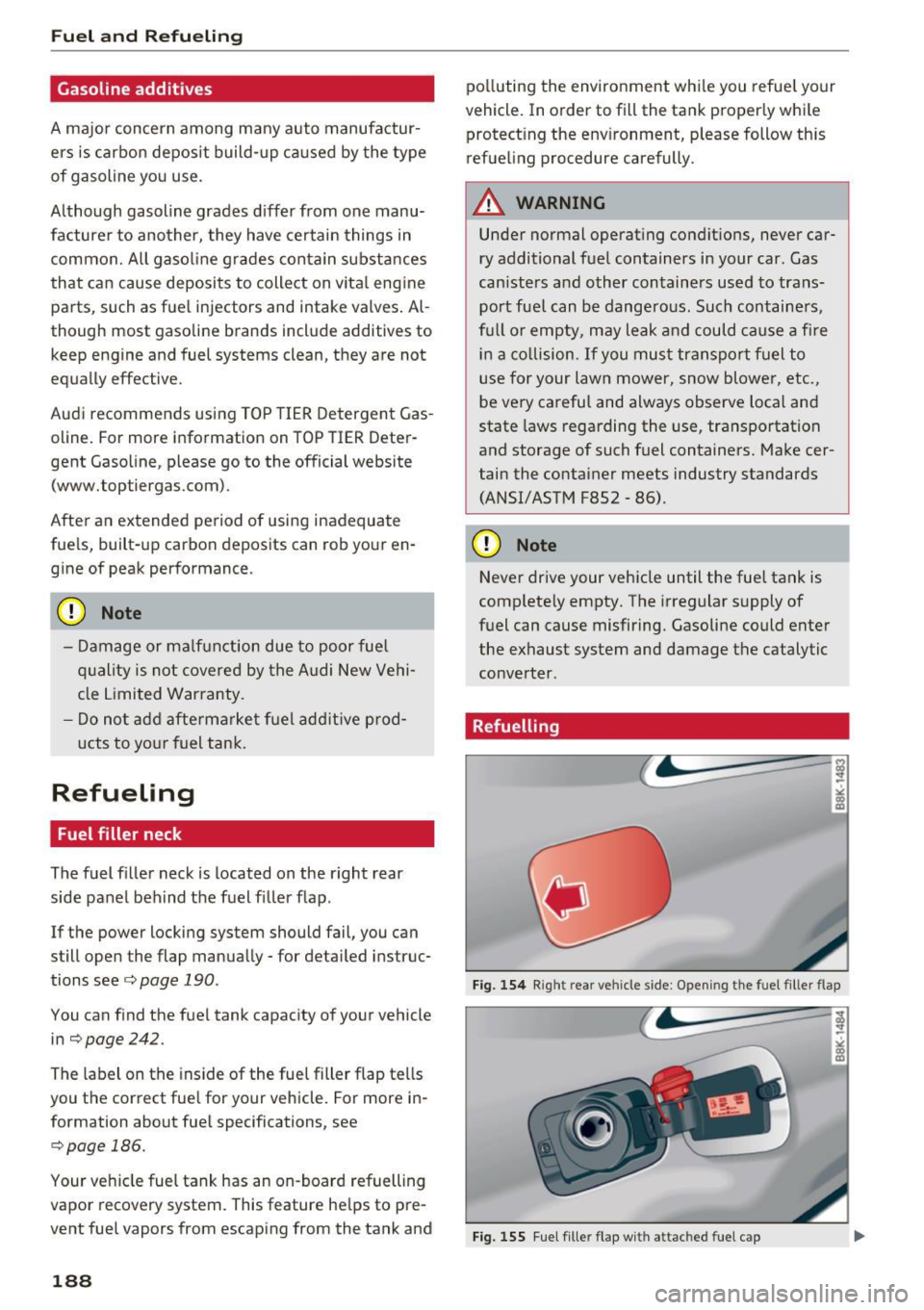
Fig. 154 R ight rea r vehicle side: Ope ning the fuel filler flap
Fig. 155 Fuel fille r flap w ith att ach ed fuel c ap
Page 191 of 264
.... N
0 Ico ....
er flap is automatically unlocked or locked. Re
fue l the vehicle with the ignit ion turned
off.
T a king the fuel cap off
.,. Turn off the ignition.
.,. Press the left side of the fue l filler flap to open
it
c:> fig . 154 -arrow -.
.,. Unscrew fue l cap counter -clockwise and hang it
on the fue l filler flap
c:> fig. 155.
Refuelling proc edure
.,. Inse rt the fue l nozzle from the gasoline pump
into the fuel filler neck as far as it will go .
.,. Se lect a medium refuelling rate so that the
nozzle switches off automatically when the
tank is full.
Putting the fuel cap back on
.,. After filling yo ur tank, tw ist the f uel cap clock-
wise as far as it wi ll go .
.,. Close the fuel filler flap.
To avoid fuel spill ing o r evaporating from the f uel
tank always close fuel cap proper ly and com
pletely.
A WARNING
Improper refueling or handling of fuel can
cause fire, explosion and severe b urns.
-
- Fuel is highly flammable an d can cause se
vere burns and other injur ies .
- Failure to shut the engine off wh ile refuel
ing and/or to insert the pump nozz le fully
into the fuel filler neck could ca use fue l to
spray out of filler neck or to ove rflow. Fuel
spray and overflowing fue l can cause a fire.
- Never use a cellular telephone wh ile refuel
ing. The electromagnetic radiation can
cause spa rks that can ignite f uel vapors and
cause a fire.
- Never get back into your vehicle while refu
eling. If in except ional circumstances you
must get back in your vehicle while refuel
ing, make certain that you close the door
and touch meta l to discha rge static ele ctric
ity befo re touching the filler noz zle ag ain.
Fuel and R efueling
Stat ic elect ricity can cause sparks that can
ignite fue l vapors released during refueling.
- Never smo ke or have an open flame any
where in or near your vehicle when ref ueling
or filling a portable fuel container .
- For your safety, we strongly recommend
that you do not trave l with a po rtable fuel
container in your veh icle. The container, fu ll
or empty may leak and co uld cause a fire,
especially in a crash.
- If, under except ional circumstances, you
m ust transport a portable fuel container,
p lease observe the following:
- Never fill a portab le fue l conta iner while it
is anywhere in or on the vehicle (for exam
ple, in the l uggage compa rtment, o r on
the trunk). Static electricity can build up
while filling and can ignite fuel vapors caus ing a f ire .
-Always place a portab le fue l conta iner on
the ground before fi lling .
-A lways keep the f iller nozzle comp lete ly
inside the portable container before and
during f il li ng.
- If filling a portable co nta iner made of
metal, the filler nozz le must always be in
contact with the container . This will he lp
prevent stat ic elec trici ty from discharging
and ca use a fire.
- Never spill fue l inside the vehicle o r lug
gage compartment. F uel vapors a re highly
flammable.
- Always observe loca l and state/prov incial
l aws rega rding the use, storage a nd trans
po rtation of fuel contai ners.
- Make ce rtain the f uel con tainer mee ts i n
dust ry sta ndards (A NSI/ AS TM F852 -86).
(D Note
If any fuel has sp illed onto the car, it should
be removed immed iately to p revent damage
to the pa int.
@) For the sake of the environment
As soon as the correctly operated nozzle
switches off automatically for the first time,
189
Page 193 of 264
,-1 N
0 1-CX)
,-1 I.Cl U"I
,-1 I.Cl ......
Checking and Filling Hood
Releasing and opening the engine hood
The engine hood is released from inside the vehi
cle.
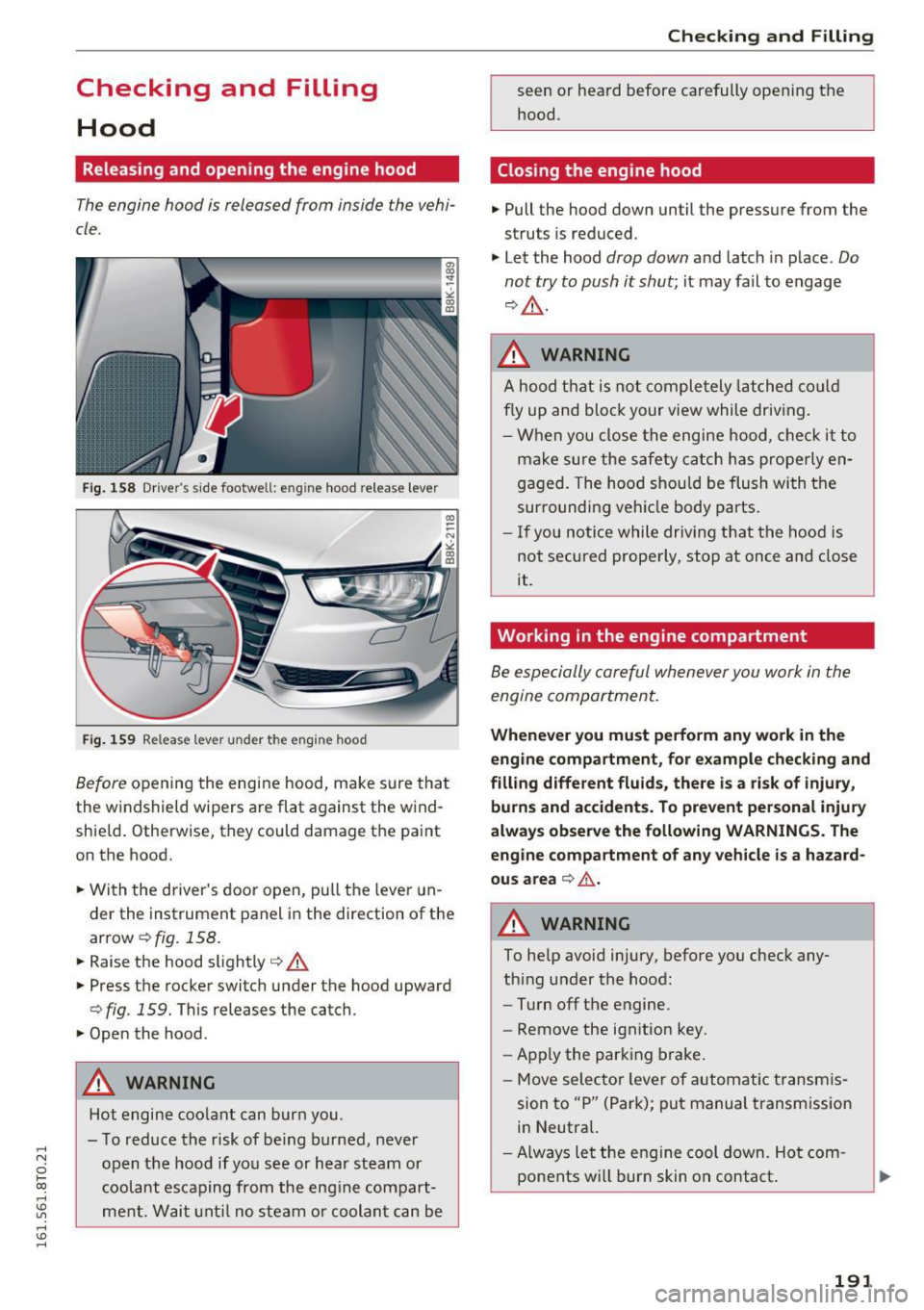
Fig. 158 Driver's side footwell: engine hood re lea se lever
Fig. 159 Release lever under the engine hood
Before opening the engine hood, make sure that
the windshield wipers are flat against the wind
shield. Otherwise, they could damage the paint
on the hood.
.. With the driver's door open, pull the lever un
der the instrument panel in the direction of the
arrow
¢ fig. 158.
.. Raise the hood slightly¢&.
.. Press the rocker switch under the hood upward
¢fig . 159. This releases the catch.
.. Open the hood.
A WARNING
Hot engine coolant can burn you.
- To reduce the risk of being burned, never
open the hood if you see or hear steam or
coolant escaping from the engine compart
ment. Wait until no steam or coolant can be
Checking and Filling
seen or heard before carefully opening the
hood.
Closing the engine hood
.. Pull the hood down until the pressure from the
struts is reduced .
.,. Le t the hood
drop down and latch in place. Do
not try to push it shut;
it may fail to engage
¢&, .
A WARNING
A hood that is not completely latched could
fly up and block your view while driving.
- When you close the engine hood, check it to
make sure the safety catch has properly en
gaged. The hood should be flush with the
surrounding vehicle body parts.
- If you notice while driving that the hood is
not secured properly, stop at once and close
it.
Working in the engine compartment
Be especially careful whenever you work in the
engine compartment.
-
Whenever you must perform any work in the
engine compartment, for example checking and
filling different fluids, there is a risk of injury, burns and accidents. To prevent personal injury
always observe the following WARNINGS. The
engine compartment of any vehicle is a hazard
ous area
¢ .&. .
A WARNING
-~
To help avoid injury, before you check any
thing under the hood:
- Turn off the engine.
- Remove the ignition key .
- Apply the parking brake.
- Move selector lever of automatic transmis-
sion to "P" (Park); put manual transmission
in Neutral.
-Always let the engine cool down. Hot com
ponents will burn skin on contact.
191