SEN AUDI A6 2012 Owner's Manual
[x] Cancel search | Manufacturer: AUDI, Model Year: 2012, Model line: A6, Model: AUDI A6 2012Pages: 298, PDF Size: 74.43 MB
Page 50 of 298
48 Clear vis ion
@ Tips
- Commercial hot waxes applied by auto
matic car washes affect the cleanability
of the windshield.
- You can also use the service position, for
example, if you want to protect the
winds hield from icing by using a cover.
- You cannot activate the service position
when the hood is open.
Mirrors
Adjusting the exterior mirrors
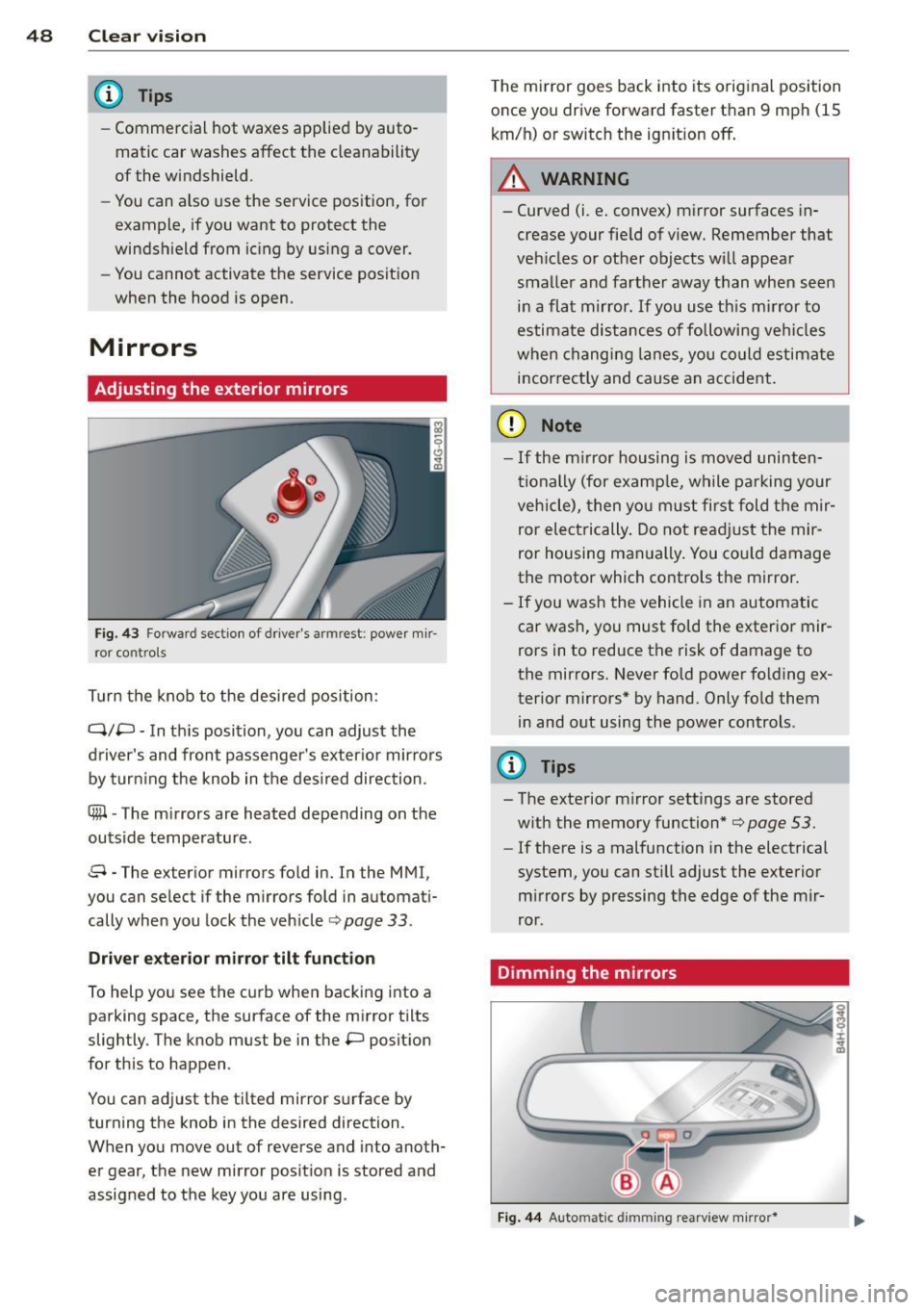
Fig. 43 F orwa rd section of drive r's arm rest: power m ir
ro r cont ro ls
T urn the knob to the desired position :
Q/P -In th is position, you can adjust the
d river's and front passenger's exter io r mirrors
by tur ning the knob in t he des ired direction.
® -The m irrors are heated depending on t he
outside temperature .
8 -The exterior mirrors fo ld in. In the MMI,
you can se lect if the m irrors fold in automat i
cally when you lock the vehicle ¢ page
33 .
Driv er exter io r mirro r tilt function
To help yo u see the c urb when bac king into a
parking space, the surface of the mirror tilts
slightly . The knob must be in the P posit ion
for this to happen .
You can ad just the ti lted mirror s urface by
turning the knob in the desired direction.
When you move out of reverse and into anoth
er gear, the new mirror posit ion is stored and
assigned to the key yo u are using . T
he mi rror goes back into its orig inal position
o nce you drive forward faster than 9 mph (15
km/h) or switch the ign ition off .
A WARNING
--
- Curved (i.e. conve x) m irror surfaces in
crease your fie ld of view. Remember that
veh icles o r ot her objects w ill appea r
smalle r and farther away t han when seen
in a flat mir ror. If you use th is m irror to
estimate distances of followi ng ve hicles
when c hanging lanes, yo u cou ld estimate
incorrect ly and cause an accide nt.
(D Note
- If the m irror housing is moved uninten
ti onally (for examp le, w hile pa rking your
veh icle), then yo u must first fold t he mir
ror electrically. Do not re adj ust the mir
ror housing man ually . You co uld damage
the motor which controls the mirror .
-If you wash the vehicle in an automatic
car was h, you must fo ld the exter ior mir
rors in to reduce the risk of damage to
the mirro rs. Never fold power folding ex
terior mirrors* by hand. Only fo ld them
in and out using the power controls.
{I) Tips
- The exterior m irror settings are stored
w ith the memory function*
¢ page 53.
- If there is a malfunction in the electrical
system, you can sti ll adjust the exterior
m irrors by pressing the edge of the mir
ror.
Dimming the mirrors
Fi g. 44 Auto matic d immin g rearv iew mirro r*
Page 52 of 298

50 Seat s a nd s tor ag e
Seats and storage
General recommen
dations
Why is your seat adjustment so
important?
The safety belts and the airbag system can
only provide maximum protection if the front
seats are correctly adjusted.
There are various ways of adjust ing the front
seats to provide safe and comfortable support
for the driver and the front passenger . Adjust
you r seat prope rly so that :
- you can easily and quick ly reach all the
switches and controls in the instrument
panel
-your body is prope rly supported thus reduc
ing physical stress and fatigue
- the safety be lts and a irbag system can offer
maximum protection
¢ page 142 .
In the following sec tions, you will see exactly
how you can best adjust you r seats .
There are special regulations and instructions
for insta lling a child seat on the front pas
senger's seat. Always fo llow the information
regarding ch ild safety provided in
q page 168, Child Safety.
A WARNING
Incorrect seating position of the driver and
all other passengers can result in serious
personal in jury.
- Always keep your feet on the floor when
the vehicle is in motion -never p ut your
f eet on top of the instrument panel, out
of the w indow or on top of the seat cush
ion . Th is app lies especially to the passen
gers .
If your seating posi tion is incorrect,
yo u increase the r isk of injury in the case
of sudden braking or an acc ident.
If the
a irbag infla tes and the seating positio n
is incorrect, this could result in personal
injury o r even death.
- It is import ant for bo th the driver and
front passenger to keep a distance of at least 10 inches (25 cm) between them
selves and the steering wheel and/or in
strument panel. If you're s itting any
closer than th is, the a irbag system can
not protect you properly . In addition, the
front seats and head restraints must be
adjusted to your body height so that they
can give you max imum protect ion.
- Always try to keep as much distance as
possible between yourself and the steer
ing wheel o r inst rument pane l.
- Do not adjust the driver's o r front pas
senger's seat whi le the vehicle is moving.
Your sea t may move unexpected ly, caus
ing sudden loss of vehicle cont rol and
personal injury . If you adjust yo ur seat
while the veh icle is moving, yo u are out
of posit ion.
Driver's seat '
The correct seat position is important for safe
and relaxed driving.
We recommend tha t you adjus t the dr iver's
seat in the fo llowing manner :
.,. Adjust t he seat in fo re and aft direction so
t ha t you can eas ily pus h the peda ls to the
floor w hile keeping your knees sl igh tly bent
q A in Why is your seat adjustment so im
portant? on page 50.
.. Adjust the back rest so that when you sit
w ith your back against t he backrest, you can
still grasp the top of the steering wheel.
.. Adjust the head restraint so the upper edge
is as even as poss ible with the top of your
head . If that is not poss ible , try to adjust
t he head restraint so that it is as close to
t his pos it ion as possib le
q page 52.
A WARNING
Neve r place any objects in the dr iver's foot
well. An object could get into the pedal
area and interfere with pedal function . In
case of sudden braking or an acc ident, you
would not be able to brake or accelerate .
Page 53 of 298

Front passenger's seat
Always move the front passenger seat into the rearmost position.
To avoid contact with the airbag while it is de
ploying, do not sit any closer to the instru
ment panel than necessary and always wear
the three-point safety belt provided adjusted
correctly. We recommend that you adjust the
passenger's seat in the following manner:
.. Move the front passenger seat into the rear
most position of the fore and aft adjustment
range
~ .&. in Why is your seat adjustment
so important? on page 50.
• Bring the backrest up to an (almost) upright
position.
Do not ride with the seat reclined .
.. Adjust the head restraint so the upper edge
is as even as possible with the top of your
head. If that is not possible, try to adjust
the head restraint so that it is as close to
th is position as possible ¢
page 52.
.. Place your feet on the floor in front of the
passenger's seat .
Front seats
Controls
The operating logic for the switches corre
sponds to the construction and function of
the seat.
Fig. 45 Front seat: adjusting the seat
@ -adjusting lumbar support*: press the but
ton in the corresponding position¢.&,.
@ -Moving the seat forward/back: press the
button forward/back ¢ ,&. .
@ -Mov ing the seat up/down: press the but
ton up/down ¢,&. . To adjust the front section
Seats and storage 51
of the seat, press the front button up/down
¢ ,&. .To adjust the rear section of the seat,
press the rear button up/down ¢,&. .
© -Backrest forward/back: press the button
forward/back
~ ,&. .
A WARNING
-
-Never adjust the driver's or front pas
senger's seat whi le the vehicle is moving.
If you do this while the veh icle is moving,
you will be out of position. Always adjust
the dr iver's or front passenger's seat
when the vehicle is not moving.
- Be careful when adjusting the seat
he ight. Check to see that no one is in the
way, or serious injury cou ld result!
- Because the seats can be electrically ad
justed with the ignition off, never leave
children unattended in the vehicle. Unsu
pe rvised use of the electric seat adjust
ments may cause serious injury .
- To reduce the risk of injury in the case of
sudden braking or accident, front pas
sengers must never r ide in a moving ve
hicle with the backrest reclined. Safety
be lts and the airbag system on ly offer
maximum protection when the backrest
is upright and the safety belts are prop
erly positioned on the body. The more
the backrest is reclined, the greater the risk of personal injury from an incorrect
seating position and improperly posi
tioned safety belts.
Armrest
There is a storage compartment under the
armrest.
Fig. 46 Cockp it : center armrest
Page 54 of 298

52 Seats and storage
Adjusting the armrest
.,. To adjust the angle, raise the armrest from
the start ing pos ition detent by detent.
.,. To bring the armrest back into its origina l
position, lift it above the top position and
then fold it back down.
Opening the storage compartment
.,. Press the button -arrow- upward.
Please note that the driver's arm movements
may be restr icted w ith the armrest fo lded
down. For this reason, the arm rest should not
be folded down when driving in c ity traffic.
Head restraints
Front head restraints
App lies to vehicles: with adj ustable head restraints
Head restraints that ore adjusted according
to body size, along with the seat belt , offer
effective protection .
' Fig. 47 Front seat : Ad justing t he head restrain t
"' ;g 0 6
"' m
Adjust the head restraint so the upper edge is
as even as possible with the top of your head.
If that is not possible, try to adjust the head
restraint so that it is as close to this position
as possible
¢ page 52.
.,. To move the head restrai nt up or forward,
s lide it until it locks into place.
.,. To move the head restraint down or back,
press the side button -arrow-¢
fig. 47 and
slide the head restraint until it locks into
place.
Refer to¢
page 127 , Proper adjustment of
head restraints
for guidelines on how to ad- just the
height of the front head restraints to
suit the occupant's body size .
.&_ WARNING
--
-Driving without head restraints or with
head restraints that are not properly ad
justed increases the risk of ser ious or fa
tal neck injury dramatically.
- Read and heed all WARNINGS
¢ page 12 7, Proper adjustment of head
restraints .
(D Tips
Correct ly adjusted head restraints and
safety belts are an extremely effect ive
combination of safety features.
Rear head restraints
Fig. 48 Rea r seats: Head restraint
Fig. 49 Rear head res tra ints: release
If there is a passenger on the rear center seat
ing position, slide the center head restraint
upward at least to the next notch.
Adjusting the head restraints .,. To move the head restraint up, hold it at the
sides with both hands and s lide it upward
until you fee l it lock i nto place. .,..
Page 56 of 298

54 Seats and storage
• To store a seating profi le, press the ISETI
button and then one of the memory but
tons.
• To reca ll a seating profile , press and hold
the memory button until the seat is adjust ed to the stored settings .
• To sw itch the memory function fo r th e d riv
er or front passenger off, p ress the
I OFFI
button. The word OFF lights up when the
memory fu nction is switched off. Seating
profiles will not be stored .
~ WARNING
-For safety reasons, the seat setting
should only be recalled when the vehicle
is stationary -otherwise you risk having
an acc ident.
- If necessary, you stop the process by
pressing the
! O FFI button or any of the
memory buttons.
Ashtray
Fi g. 51 Cente r console : front ashtray•
F ig. 52 Rear ashtray
Opening /closing
• To open the front ashtray, slide the cover
up . •
To close the front ash tray, press down on
the cover.
• To open the rear ashtray, tap the cover on
the rim.
Emptyin g
• To empty the front ashtray, pull it upward
and out .
• To empty the rear ashtray, press the rear
side of the cover down when it is open
q fig. 52 . The ashtray will lift up out of its
mount.
.,. To insert the ashtray aga in, press it down in
to the mount unt il it locks i nto place .
A WARNING
Never put waste paper in the ashtray. Hot
as hes or other ho t objects in the ashtray
could se t waste paper on fi re .
Cigarette lighter
Applies to vehicles: wit h cigarette lighter
Fig . 53 Center co nsole: ciga rette lighte r
• Push the knob on the cigarette lighter in.
• Remove the cigarette lighter when it pops
out.
The socket of the c igarette lighter may be
used for 12-volt appliances
q page 55 .
A WARNING
-
The c igarette lighter or sockets and any
e lectr ica l accessories con nected to them
operate only when the ign ition is switched
on. Incorrect usage can lead to ser ious in
j u ries o r burns. For th is reason, children
-
Page 59 of 298
- Compartment in the rear center armrest
-Two mounting hooks* unde r the base of the
rear window inside the luggage compart
ment. You can attach light objects to these
hooks. The mounting hooks are spring-load
ed and will return to their normal position
when not in use.
A WARNING
- Always remove objects from the instru
ment panel. Any items not stored could
sl ide aro und inside the vehicle while driv
ing or when accelerating or when apply
ing the brakes or when drivi ng around a
corner.
- When you are driving make sure that
anything you may have placed in the cen
ter console or othe r storage locat ions
cannot fa ll out into the footwells. In case
of sudden braking you would not be able
to brake or accelerate.
- Always keep the l id of the compartment
for (sun)glasses* closed while driv ing to
reduce the risk of injury during a sudden
braking maneuver or in the event of an
acc ident.
- Any articles of cloth ing that you have
hung up must not interfere with the driv
er's v iew. The coat hooks are designed
only for lightweight clothing. Never hang
any clothing w ith ha rd , pointed or heavy
objects in the pockets on the coat hooks.
During sudden braking or in an accident -
especially if the airbag is deployed -
these objects could injure any passen
gers inside the vehicle.
- To reduce the risk o f personal injury in an
accident or sudden stop, always keep the
glove compartment closed while dr iv ing .
- Read and fo llow all WARN INGS
~ page 164, Important safety instruc
tions on the side airbag system.
- Hang clothes in such a way that they do
not impair the driver's vision .
- The coat hooks must only be used for
lightweight clothing. Do not leave any
heavy or sharp edged objects in the pock
ets which may interfere with the side cur-
S ea ts a nd s to rage 57
tain airbag deployment and can ca use
personal injury in a crash .
- Do not use coat hangers for hanging
cloth ing on the coat hooks as this can in
terfere with proper deployment of the side curta in a irbags in an acc ident.
- Do not hang heavy objects on the coat hooks, as they could cause personal in
jury in a sudden stop.
- For strength-re lated reasons, the mount
ing hooks can only be used to secure ob
jects weigh ing up to 10 lb . (5 kg). Heavi
e r objects will not be adequately secu red
- there is a r isk of injury .
(D Note
Objects located on the rear shelf that rub
against the rear window could damage the
heating wires for the rear w indow defog
ger .
Roof rack
Description and mounting locations
Additional cargo can be carried with a roof
luggage rack .
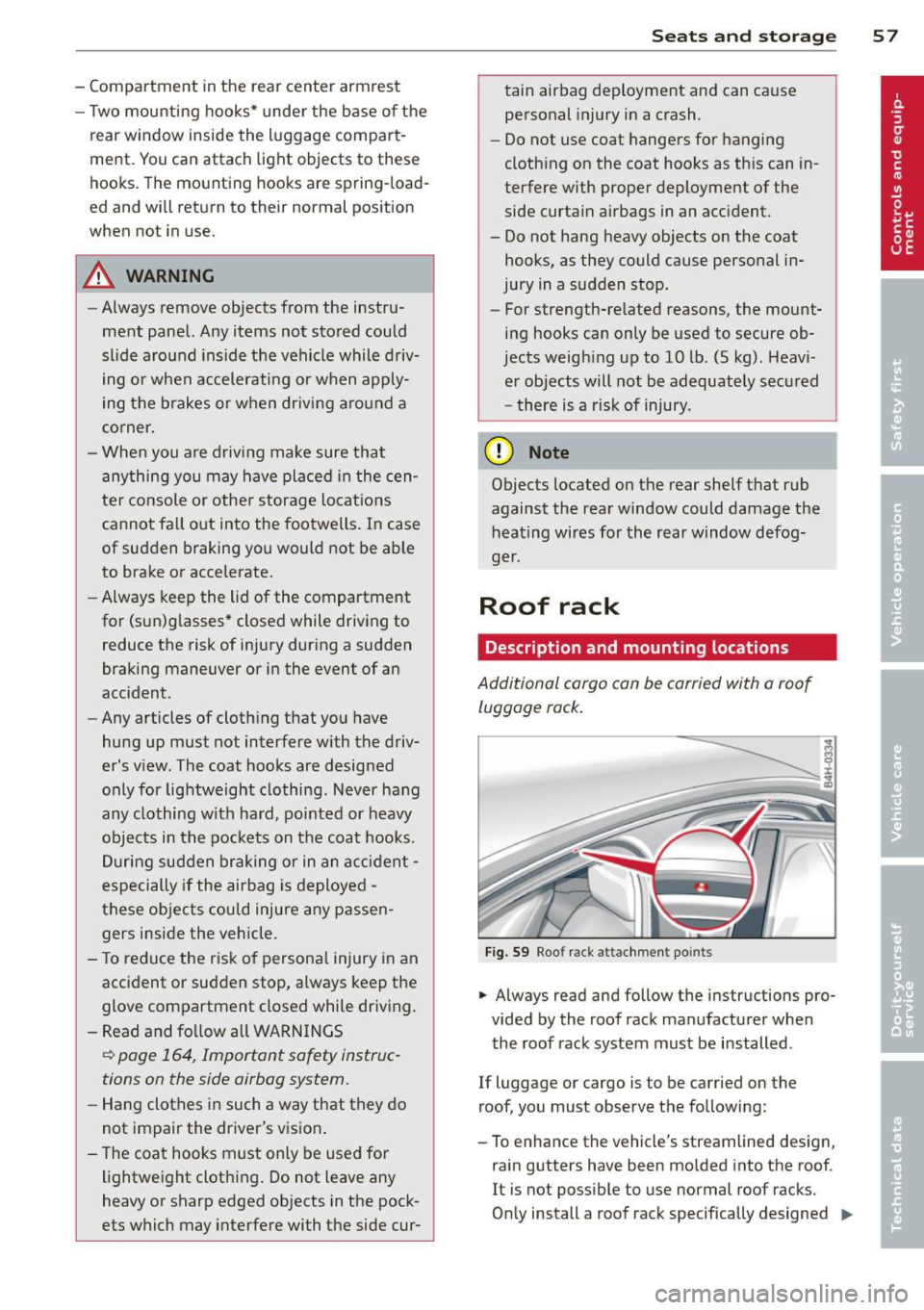
Fig. 59 Roof rack attac hment po ints
.,. Always read and follow the instructions pro
vided by the roof rack manufacturer when
the roof rack system must be installed .
If luggage or cargo is to be carried on the
roof, you must observe the following:
- To enhance the vehicle's streamlined design,
rain gutters have been molded into the roof.
It is not poss ible to use normal roof racks.
Only install a roof rack specifically designed .,.
Page 61 of 298
maximum capacity specified by the
manufacturer of the roof rack system.
A WARNING
Weak, damaged or improper straps used
to secure items to the roof rack can fail during hard braking or in a collision and
cause serious personal injury .
- Make sure the roof rack is installed exact
ly as specified above¢
page 57 .
- Always use suitable mounting straps for
securing items to the roof rack to help
prevent items from shifting or fly ing for
ward.
- Items on the roof rack must always be
securely mounted.
- The use of a roof rack can negatively af
fect the way a vehicle handles . Cargo
that is large, heavy, bulky, long or flat
will have a greater negative influence on
the vehicle's aerodynamics, center of
gravity and overall handling . Always
dr ive slowly, avoid sudden braking and
maneuvers when transpo rting cargo on
the roof of your vehicle.
- Never exceed the maximum permissible
load carrying capacity of the roof of your
vehicle , the permissib le axle weights and
the permissible total weight of your veh i
cle ¢
page 274, Weights.
-Always drive slowly, avoid sudden brak
ing and maneuvers when transporting
cargo on the roof of your vehicle .
@) For the sake of the environment
Sometimes it may be easier to leave a roof
rack insta lled even though you are not us
ing it . Due to the increased air resistance
your veh icle will unnecessar ily use more
fuel. Remove the roof rack if you are not
going to use it .
.
Sea ts a nd s to rage 59
Luggage compartment
Loading luggage compartment
Items of luggage must be stowed securely.
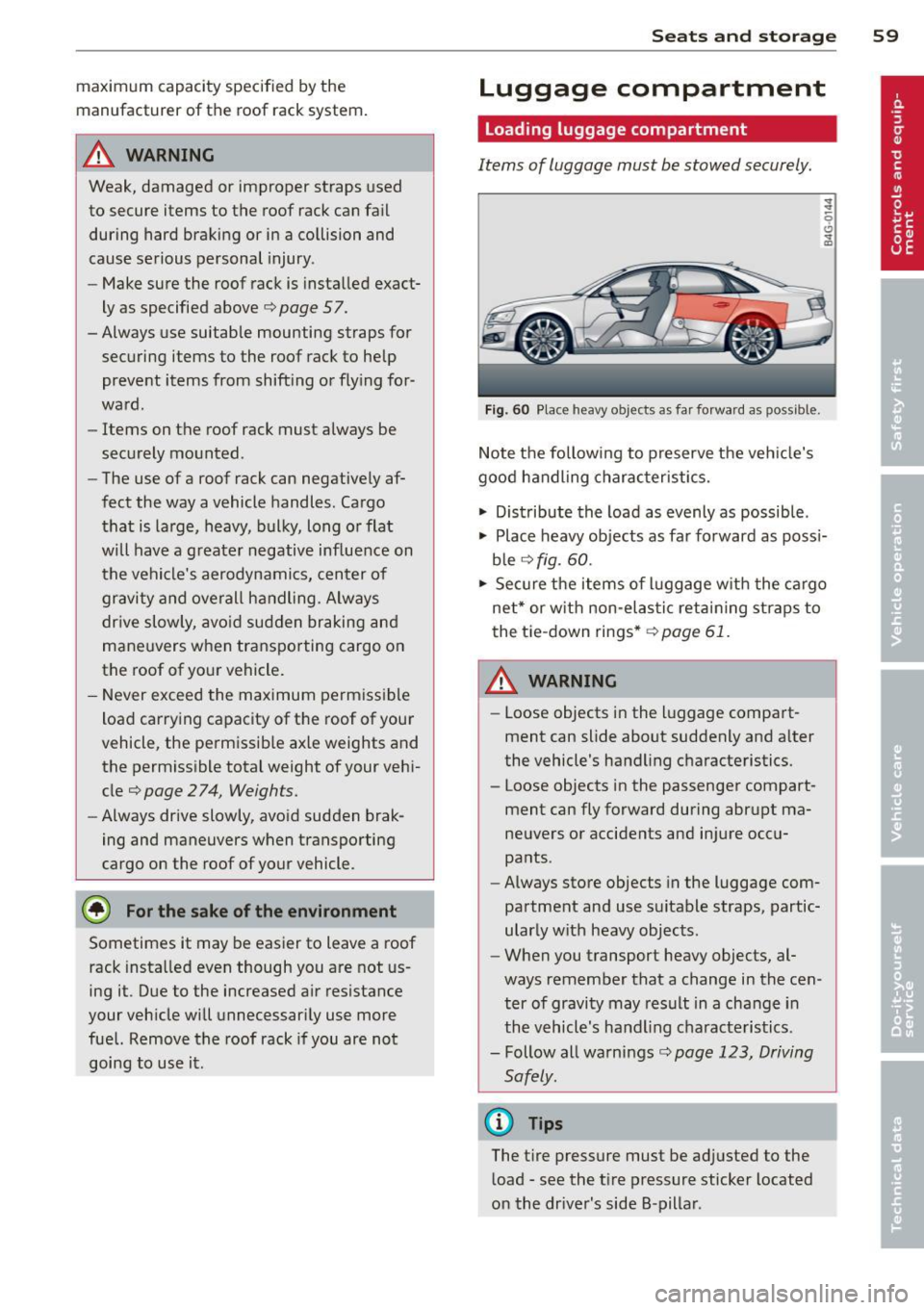
Fig. 60 Pla ce hea vy o bject s as far forward a s possible .
Note the following to preserve the vehicle's
good handling charac teristics.
.,.. Distribute the load as evenly as possible .
... Place heavy objects as far forward as poss i
ble ¢
fig. 60 .
... Secure the items of luggage w ith the cargo
net* or w ith non -elastic retaining straps to
the tie-down rings * ¢
page 61.
A WARNING
- Loose objects in the l uggage compart
ment can slide about suddenly and a lter
the vehicle's handling characteristics.
- Loose objects in the passenger compart
ment can fly forward during abr upt ma
neuvers or accidents and injure occu
pants .
- Always store objects in the luggage com
partment and use suitable straps, partic
ularly with heavy objects .
-
-When you transport heavy objects, al
ways remember that a change in the cen
ter of gravity may result in a change in
the vehicle's handling characteristics.
- Follow all warnings¢
page 123, Driving
Safely .
(D Tips
The tire pressure must be ad justed to the
load - see the t ire pressure sticker located
on the dr iver's side B -pillar .
Page 63 of 298
Tie-downs and cargo net
The cargo net* prevents small objects from
sliding .
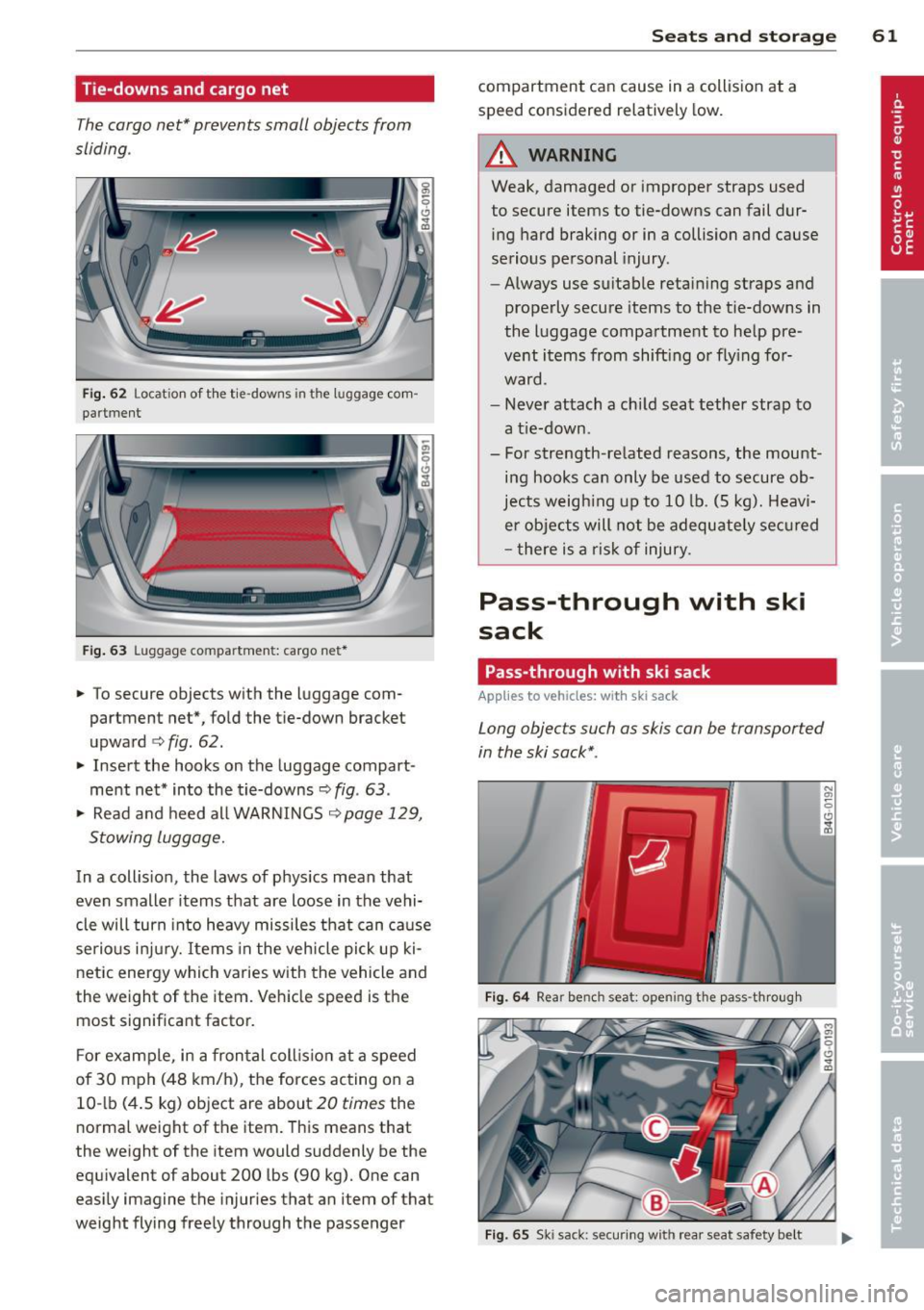
Fig. 62 Location of th e tie -downs in the luggage com
partment
Fig. 63 Lugg age compartment: cargo net•
.. To secure objects with the luggage com·
partment net*, fold the tie-down bracket
upward
q fig. 62.
.. Insert the hooks on the luggage compart
ment net* into the tie-downs
q fig . 63 .
.. Read and heed all WARNINGS 9page 129,
Stowing luggage.
In a collision, the laws of phys ics mean that
even smaller items that are loose in the vehi
cle will turn into heavy missiles that can cause
serio us i njury. Items in the vehicle pick up ki
netic energy which varies with the vehicle and
the weight of the item. Vehicle speed is the
most significant factor.
F or example, in a frontal coll is ion at a speed
of 30 mph (48 km/h), the forces acting on a
10- lb (4.5 kg) object are about
20 times the
no rma l weight of the item. This means that
the weight of the item would suddenly be the
equivalent of about 200 lbs (90 kg). One can
easily imagine the injuries that an item of that
weight flying freely through the passenger
Seats and storage 61
compartment can cause in a collision at a
speed considered relatively low.
A WARNING
Weak, damaged or improper straps used
to secure items to tie-downs can fail dur
ing h ard braking or in a collision and cause
serious personal injury.
- Always use suitable retaining straps and
properly secure items to the tie-downs in
the luggage compartment to help pre
vent items from shifting or flying for
ward.
- Never attach a child seat tether strap to
a t ie-down .
- For strength-related reasons, the mount
ing hooks can only be used to secure ob
jects weigh ing up to 10 lb. (5 kg). Heavi
er objects will not be adequately secured
- there is a risk of injury.
Pass-through with ski
sack
Pass-through with ski sack
App lies to vehicles : wi th ski sa ck
Long objects such as skis can be transported
in the ski sack* .
Fig. 64 Rear bench seat: opening the pass -through
Fig. 65 Sk i sack: secu ring with rea r seat safety belt
Page 66 of 298
64 Warm and cold
Three-zone climate control
Operation
Applies to vehicles: with three -zone climate control
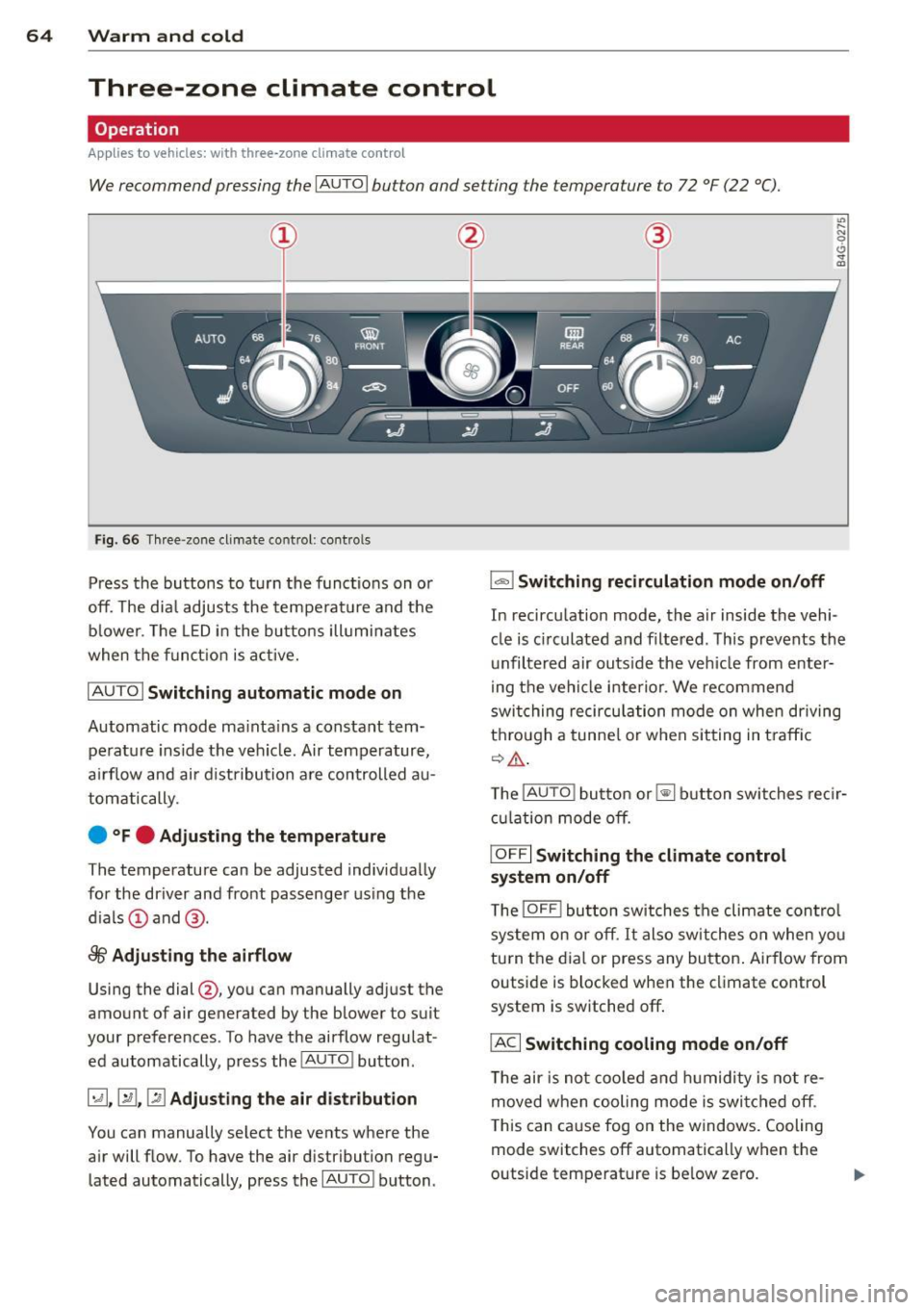
We recommend pressing the IAUTO I button and setting the temperature to 72 °F (22 °C).
F ig. 66 Three-zone cl imate co ntrol: cont ro ls
Press the buttons to turn the funct ions on or
off. The dia l adjusts the temperature and the
blower. The LED in the butto ns ill uminates
when the function is active.
IAUTO I Switching automatic mode on
Automatic mode mainta ins a constant tem
perature inside the vehicle . Air temperature,
airflow and air distribution are controlled au
tomatically.
e °Fe Adjusting the temperature
The temperature can be adjusted individua lly
for the driver and front passenger using the
dials @and @.
8fr Adjusting the airflow
Using the dial@, you can manually adjust the
amount of air generated by the blower to suit
your preferences . To have the airflow regulat
ed automatically, press the
!AU TO ! button .
~.~ .~ Adjusting the air distribution
You can manually se lect the vents where the
air will flow. To have the air distribution regu
lated automatically, press the
IAUTOI button.
1..,., 1 Switching recirculation mode on/off
"' ..... g
0 .. a,
In recirculation mode, the air inside the vehi
cle is c irculated and filtered . This prevents the
unfiltered air outside the veh icle from enter
ing the vehicle interior . We recommend
switching recirculation mode on when driving
through a tunnel or when sitting in traffic
¢ ,&.
The !AUTO ! button or~ button swit ches recir
culation mode off.
IOFFI Switching the climate control
system on/off
T he IOFF ! button switches the climate cont rol
system on or off.
It also switches on when you
turn the dial or press any button . Airflow from
outside is blocked when the climate control
system is switched off .
IACI Switching cooling mode on/off
The air is not cooled and humidity is not re
moved when cooling mode is switched off .
T his can cause fog on the windows. Cooling
mode switches off automatically when the
outside temperature is be low zero.
Page 67 of 298
l
ed or cleared of condensation as quickly as possib le. The maximum amount of air flows
mainly from th e vents be low the windshield.
Recirculation mode switches off .
The
IAU TO I button switches the defroster off.
ICi@ REAR I Switching rear window heate r
on /off
The rear w indow heater only operates when
the engine is running. It switches off auto
matica lly after a few minutes, depending on
the outside temperature.
To prevent the rear w indow heater from
switching off automatically, press and hold
the ~ button for more than 2 seconds. This
remains stored unti l the ignition is switched
off.
[il A dj ustin g seat heat ing
Pressing the button swi tches the seat heating
on at the highest sett ing ( leve l 3) . The LEDs
indicate the temperature leve l. To reduce the
temp erature, press the button again. To
switch the seat heating off, press the button
repeatedly unt il the LED turns off .
After 10 minutes , the seat heating automati
cally switches from leve l 3 to level 2.
The seat heating for both outer rear sea ts* is
ad justed using the buttons in the cente r con
sole.
Warm and c old 65
Air vents
You can open or close the center and outer
vents in the cockpit and the vents in the rear
center console using the ridged thumbwheels.
The l evers adjust the dir ection of the airflow
from the vents.
T he air temperature in the rear can be adjust
ed so that it is warmer or co lder by turning
the knob to the r ed or blue area.
A WARNING
- Do not use this setting for extended peri
ods of time. The w indows could fog up
since no fresh air can enter the vehicle . If
the windows fog up, press the air rec ircu
lation button again immediate ly to
sw itch off the air reci rcu lation function
or select defrost .
- I ndividuals w ith reduced sensitivity to
pa in or tempera ture cou ld deve lop burns
when using the seat heating function . To
red uce the risk of i nju ry, these indiv idu
a ls sho uld not use seat heating.
(D Note
To avoid damage to the heat ing e lements
i n the sea ts, do not kneel on the seats or
place heavy loads on a small area of the
seat.