hose AUDI A6 2013 User Guide
[x] Cancel search | Manufacturer: AUDI, Model Year: 2013, Model line: A6, Model: AUDI A6 2013Pages: 306, PDF Size: 76.92 MB
Page 154 of 306
152 Airbag sys te m
If the tota l electrical capacitance registe red
on the front passenger seat is more than that
of a typ ica l 1 year-old, but less than the
weight of a small adult, the front a irbag on
the passenger side may deploy (the
PA SSE N
GER AIR BAG OFF
li ght does not come on).
For e xample , the airbag m ay deploy if :
-a small child that is heavier than a typical 1
year-o ld child is on the front passenger seat
(regardless of whether the child is in one of
the chi ld seats listed
¢ page 173),
-a chi ld who has outgrown child restraints is
on the front passenger seat.
If the front passenger airbag is turned off, the
PASSENGER AIR BAG OFF light in the center
of the instrument panel wi ll come on and stay
on.
If the front passenger airbag deploys, the
F ederal Standard requires the airbag to meet
the " low risk" deployment criteria to help re
d uce the risk of injury through interaction
with the airbag. "Low risk" deployment occurs
in those crashes that take place at lower de
celerations as defined in the electronic control un it
¢ page 157.
Alw ays rem ember : Even though your vehicle
is equipped with Advanced Airbags, the safest
place for children is properly restrained on the
back seat . Please be sure to read the impor
tant information in the sect ions that follow
and be sure to heed a ll of the WARNINGS.
.&_ WARNING
To reduce the risk of injury when an airbag
inflates, a lways wear safety belts prope rly.
- If you are unrestrained, lean ing fo rward,
sitting sideways or out of position in any
way, your risk of injury is much higher.
- You w ill also receive serio us injuries and
cou ld even be killed if you are up against
the a irbag or too close to it when it in
flates - even with an Advanced Airbag
¢page 145.
.&_ WARNING
A child in a rearward-fac ing ch ild seat in
stalled on the front passenger seat will be
seriously injured and can be killed if the
front airbag inflates - even w ith an Ad
van ced A irbag System.
- Altho ugh the Advanced Airbag System in
your veh icle is designed to turn off the
front airbag when a rearward-facing
child restraint has been instal led on the
front passenger seat, nobody can abso
lutely g uarantee that dep loyment is im
possible in all conceivable situations that
may happen dur ing the usefu l life of your
veh icle.
- The inflating airbag will h it the ch ild seat
or infant carrier with great force and will
smash the child seat and child against
the backrest, center armrest, door, or roof.
- Always install rearward-facing ch ild re
straints on the rear seat .
- If you must install a rearward fac ing
child seat on the front passenger seat because of exceptional circumstances
and the
PASSENGER AIR BAG OFF light
does not come on and stay on, immed i
a tely insta ll the rear-facing child seat in a
rear seat ing pos ition and have the airbag
system inspected by your Audi dealer.
.&_ WARNING ,..___
If, in except iona l circumstances, you m ust
install a forward -facing child restraint on
the front passenger's seat:
- Always make sure the forward-facing
seat has been designed and certified by
its manufacturer for use on a front seat
with a passenger front and s ide a irbag.
- Never p ut the forward-facing child re
straint up against or very near the instru
ment panel.
- Always move the passenger seat into its
rearmost pos ition in the seat's fore and
aft ad justment range, as far away from
the airbag as possible, before install ing
the forward-fac ing ch ild restra int. The
-
Page 159 of 306
-Never place or attach accessories or o th
er objects (such as cup hol ders, tele
phone brackets, large, heavy or bulky ob
jects) on the doors, over or near the area
marked ''AIRBAG" on the steering wheel,
instrument panel, seat backrests or be
tween those a reas and yourself. These
objects co uld cause injury in a crash, es
pecially when the airbags inflate .
- Never recline the front passe nger's seat
to transport objec ts. Items can also
move into the area o f the side airbag or
the front airbag during braking or in a
sudden maneuver . Objects near the air
bags can become project iles and cause
injury, part icularly when the seat is re
cl ined .
- Never place or transport ob jects on the
front passenger seat. Objects on the
front passenger seat could cause the ca pacitive senso r in the seat to s ignal to
airbag system that the seat is occupied
by a person when it in fa ct is not, o r that
the person on the se at is he avier than he
or she actually is. The change in electric
capacitance beca use of such objects can
cause the passenger front airbag to be
turned on when it sho uld be
off, or can
cause the airbag to work in a way that is
different from the way it wou ld have
worked w ithout objects on the seat.
- Always make sure that there is nothing
on the front passenger seat that will
cause the capacitive passenge r detection
system in the s eat to s ignal to the A irbag
System that the seat is oc cupied by a
pers on when it is not, or to sign al th at it
is occupied by someone who is heavier
than the pe rson actually s itting on the
seat . The presence of an object co uld
cause the passenger front a irbag to be
turned on when it sho uld be
off, or co uld
cause the airbag to work in a way that is
different from the way it wou ld have
worked w ithout the object on the seat. A
irbag
sys tem 157
A WARNING
The fine dust created when airbags deploy
can cause breathing prob lems fo r people
with a history of as thma or other breath
ing cond itions.
- To reduce the risk of breath ing problems,
those wi th asthma o r other respiratory
conditions s hou ld get fresh air r ight
away by get ting o ut o f the veh icle or
open ing win dows or do ors.
- If you are in a collision in which airbags
deploy, was h your ha nds and fa ce with
mild soap and wate r be fore eating.
- Be ca reful not to get the dust in to your
eyes, o r into any c uts or sc ratches.
- If the resid ue should get into your eyes,
f lus h t hem w ith wa te r.
Monitoring the
Advanced Airbag System
fl~ Airbag monitoring indicator light
Two separate indicators monitor the function
of the Advan ced Airbag System: the airbag
monitoring indi cator light and the
PASSEN
GER AIR BAG O FF
light.
The Advanced A irbag System ( includ ing the
electron ic co ntro l unit, sensor circu its and sys
tem wir ing) is monitored con tinuously to
make sure that it is functio ning properly
whenever the ignition is on. Each time you
switch on the ignition, the airbag monitor ing
indicator light
fl will come on for a few sec
onds (self diagnost ics).
The sy stem must be in spected when the
indicator light
I :
- does not come on when the ignition is
sw itched on,
- does not go out a few seconds after you
have switched on the ignit ion, or
- comes on while driv ing.
If an airbag system malfunc tion is detec ted,
the indicator light wi ll first start f lashing to
catch the driver's attention and then stay on
llo-
•
•
Page 165 of 306
The knee airbag offers additional protect ion
to the driver's and passenger's knees and up
per and lower thigh areas and supp lements
the protect ion provided by the safety belts.
I f the front airbags deploy , the knee airbags
also deploy in fronta l collisions when the de
p loyment threshold stored in the control unit
is met c>
page 155, More important things to
know about front airbags.
In addition to their normal safety function,
safety be lts he lp keep the driver or front pas
senger in posit ion in a frontal coll is ion so that
the airbags can prov ide supplemental protec
tion .
The airbag system is not a subst itute for yo ur
safety be lt. Rather, it is part of the overall oc
cupant restraint system in your veh icle. Al
ways remember that the airbag system can
only help to protect you if you are wea ring
your safety belt and wear ing it prope rly . Th is
i s why you shou ld always wear you r safety
be lt, not just because the law requires yo u to
do soc>
page 136, General notes.
The safety belt buck le for the dr iver and front
seat passenge r have switc hes that tell the a ir
bag con trol mod ule if the safety belt is be ing
used or not . If the safety belt is being used,
the knee airbag will deploy at a slightly higher rate of deceleration than if the belt is not be
ing used. Therefore, in a particu lar collision, it
is poss ible that an airbag will not deploy at a
seating position where the safety belt is being
used but will inflate at the position whe re the
safety belt is not be ing used.
Remember too, airbags will deploy only once
and only in certain kinds of accidents -your
safety belts are always there to offer protec
tion in those acc idents in which a irbags a re
not supposed to deploy or when they have a l
r eady deployed, fo r example whe n your veh i
cle strikes or is s truck by another afte r the
fi rst coll is ion .
This is just one of the reasons why an a irbag is
n ot a substi tute fo r the safety belt. The airbag
sys tem works most effective ly when used with
A irbag system 163
the safety belts. Therefore, always wear yo ur
safety belts correct ly .
I t i s important to remembe r that w hile the
s u pplementa l knee airbag system is designed
to reduce the likelihood of ser ious injuries,
other injuries, for example, swelling, bruising
and minor abrasions and friction b urns can a l
so occur when an airbag inflates.
The knee airbag system basically consists
of:
- The e lectronic control module
- Two inflatable ai rbags (airbag and gas gen -
erator), one for the driver and one for the
front passenger
- The ai rbag indicator lig ht in the instrument
pane l
The knee airbag system will not deploy:
-when the ignit io n is switched off
- in frontal collisions when the deceleration
meas ured by the con trol un it is too low
- in side co llisions
- in rear-end collisions
- in rollovers
- in the event of a system malfunction (warn-
ing/ind icator light is on)
i=> page 19.
A WARNING
-Safety belts and the airbag system can
only provide protection when occupa nts
are in the proper seating position
i=>page 155.
- If the airbag ind icator light i=> page 19
comes when the veh icle is being used,
have the system inspe cted immediately
by your au thori zed A udi dealer.
It is pos
sib le tha t the airbag will infla te when i t
is not supposed to, or will not infla te
when it should .
-
•
•
Page 168 of 306
166 Airbag system
Always remember that the side airbag system
can only help to protect you if you are wearing
your safety belt and wear ing it properly. This
is another reason why you should always wear
your safety belts, not just because the law re
qu ires you to do so
Q page 136, General
notes.
It is important to remember that while the
supplemental side a irbag system is designed
to reduce the likelihood of serious injuries,
other inju ries, for example, swell ing, b ruising,
friction burns and minor abrasions can also be
associa ted with deployed side airbags. Re
member too, side airbags will deploy only
once and only in certain k inds of accidents -
your safety belts are always there to offer pro
tection .
Vehicle damage, repa ir costs or even the lack
of vehicle damage are not necessar ily an indi
cation of over-sensitive or failed airbag activa
tion. In some co llisions, both front and side
a irbags may inflate. Remember too, that air
bags will dep loy only once and only in certain
kinds of collisions -your safety belts are al
ways there to offer protection in those acci
dents in wh ic h airbags are not supposed to
deploy or when they have already deployed.
The side airbag s yst em will not deploy:
- when the ign ition is switched off
- in s ide collisions when the acceleration
measured by the sensor is too low
- in front-end collisions
- in rear-end collisions
- in ro llovers.
In some types of acc idents the front airbags,
side curta in a irbags and side airbags may be
tr iggered together.
.&_ WARNING
- Sa fety belts and t he ai rbag sys tem w ill
only prov ide p rotec tion when occ upants
are in t he proper seating posit ion
Qpoge 167.
-If the airbag indicator light Q page 19
comes when the vehicle is being used,
-
have the system inspected immediately
by your authorized A udi dealer. It is pos
sible that the airbag will inflate when it
is not supposed to, or will not inflate
when it should.
How supplemental side airbags work
Side airbags deploy instantly and can help re
duce the risk of upper torso injuries for occu
pants who are properly restrained .
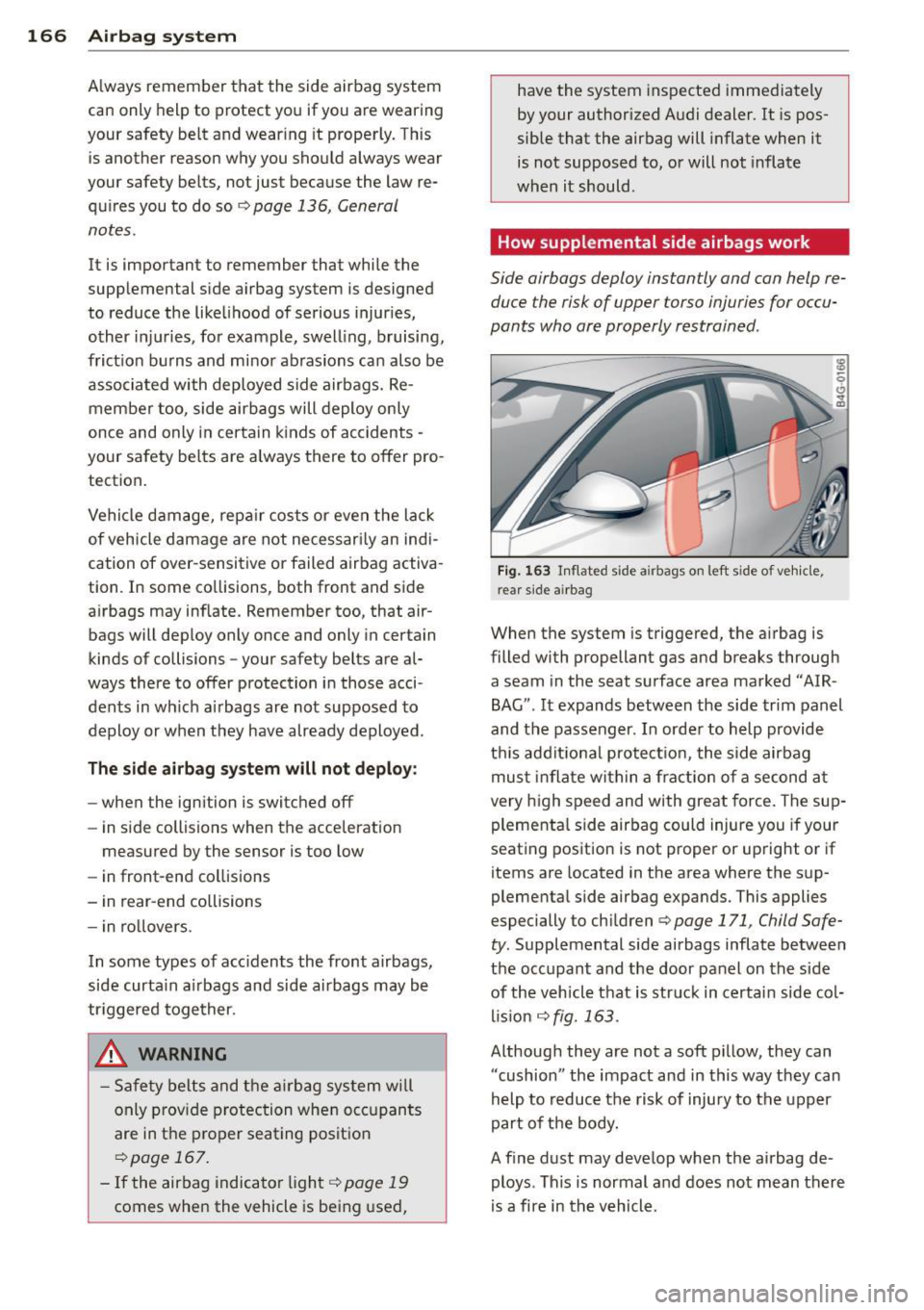
Fig. 163 In flated side airbags o n left s ide of vehicle,
r ear side a irbag
When the system is triggered, the airbag is
filled with propellant gas and breaks through
a seam in the seat su rface area marked "AIR
BAG".
It expands between the side trim panel
and the passenger. In order to help provide
t hi s addit ional protect ion, the side airbag
mus t inflate with in a fra ction of a second a t
very h igh speed and with great force. The sup
plementa l side airbag could injure you if your
seat ing position is not proper or up right or if
items are located in the area where the sup
plementa l side airbag expands. This applies
especially to children
Q page 171, Child Safe
ty .
Supplemental side airbags inflate between
the occupant and the door panel on the side
of the veh icle that is str uck in certa in side col
li sion
9 fig. 163 .
Although they are not a soft pillow, they can
"cushion" the impact and in this way they can
help to reduc e the risk of inju ry to the upp er
part of the body.
A fine dust may deve lop when the airbag de
ploys . This is normal and does not mean there
is a fi re in th e vehicle.
Page 175 of 306
~ page 171, Important things to
know.
(D Tips
Always replace child restraints that were
installed in a vehicle during a crash. Dam
age to a child restraint that is not visible
could cause it to fail in another collision
situation.
Advanced front airbag system and children
Your vehicle is equipped with a front "Ad
vanced Airbag System" in compliance with United States Federal Motor Vehicle Safety
Standard (FMVSS) 208 as applicable at the
time your vehicle was manufactured.
The Advanced Airbag system in your vehicle
has been certified to meet the "low-risk" re
quirements for 3- and 6-year old children on
the passenger side and small adults on the
driver side. The low risk deployment criteria
are intended to reduce the risk of injury
through interaction with the airbag that can
occur, for example, by being too close to the
steering wheel and instrument panel when
the airbag inflates. In addition, the system
has been certified to comply with the "sup
pression" requirements of the Safety Stand
ard, to turn off the front airbag for infants up
to 12 months who are restrained on the front passenger seat in child restraints that are list
ed in the Standard.
Even though your vehicle is equipped with an
Advanced Airbag system, all children, espe
cially those 12 years and younger, should al
ways ride in the back seat properly restrained
for their age and size. The airbag on the pas
senger side makes the front seat a potentially
dangerous place for a child to ride. The front
seat is not the safest place for a child in a for
ward-facing child safety seat. It can be a very
dangerous place for an infant or a larger child
in a rearward-facing seat.
The vehicle 's Advanced Airbag System has a
capacitive passenger detect ion system in the
Child Safety 173
front passenger seat cushion that can detect
the presence of a baby or a child in a child re
straint system on this seat.
The capacitive passenger detection system
registers the changes that result in an electri
cal field when a child, a child restraint, and a
baby blanket are on the front passenger seat .
The change in the measured capacitance due
to the presence of a child, a child restraint,
and a baby blanket on the front passenger
seat is related to the child restraint system resting on the seat . The measured capacitance
of a child restraint system varies depending
on the type of system and specific make and
model.
The electrical capacitance of the various
types, makes, and models of child restraints
specified by the U.S.National Highway Traff ic
Safety Administration (NH TSA) in the relevant
safety standard are stored in the Advanced
Airbag System control unit together with the
capacitances typical of infants and a 1-year
old child. When a child restraint is used on the
front passenger seat with a typical
1 year-old
infant, the Advanced Airbag System compares
the capacitance measured by the capacitive passenger detection system with the data
stored in the electronic control unit.
Child restraints and Advanced front
airbag system
Regardless of the child restraint that you use,
make sure that it has been certified to meet
United States Federal Motor Vehicle Safety
Standards and has been certified by its manu
facturer for use with an airbag. Always be sure
that the child restraint is properly installed at
one of the rear seating positions. If in excep
tional circumstances you must use it on the
front passenger seat, ca refully read all of the
information on child safety and Advanced Air
bags and heed all of the applicable WARN
INGS. Make certain that the chi ld and child re
straint are correctly recognized by the capaci
tive passenger detection system in the front passenger seat, that the front passenger air
bag is turned off, and that the airbag status is ..,.
•
•
Page 177 of 306
@ Tips
The child seats listed in categories A to C
have been statically tested by Audi only for
the Advanced Airbag function.
Important safety instructions for using
child safety seats
Correct use of child safety seats substantially
reduces the risk of injury in an accident!
As the driver, you are responsible for the safe
ty of everybody in the vehicle, especially chil
dren:
~ Always use the right child safety seat for
each child and always use it properly
q page 177.
~ Always carefully follow the child safety seat
manufacturer's instructions on how to route
the safety belt properly through the child
safety seat.
~ When using the vehicle safety belt to install
a child safety seat, you must first activate
the convertible locking retractor on the
safety belt to prevent the child safety seat
from moving
r::!) page 182.
~ Push the child safety seat down with your
full weight to get the safety belt really tight
so that the seat cannot move forward or
sideways more than one inch (2.5 cm).
~ Secure unused safety belts on the rear seat
9 page 177.
Always remember: Even though your vehicle is
equipped with an Advanced Airbag system, all
children , especially those 12 years and young
er, should always ride in the back seat proper
ly restrained for their age and size.
.&, WARNING ,~
Not using a child safety seat, using the
wrong child safety seat or improperly in
stalling a child restraint increases the risk
of serious personal injury and death .
- All vehicle occupants and especially chil
dren must always be restrained properly
whenever riding in a vehicle.
Child Safety 175
- An unrestrained or improperly restrain
ed child can be injured or killed by be
ing thrown against the inside of the ve
hicle or by being ejected from it during
a sudden maneuver or impact.
- An unrestrained or improperly restrain
ed child is at much greater risk of injury
or death by being struck by an inflating
airbag.
- Commercially available child safety seats are required to comply with U.S . Federal
Motor Vehicle Safety Standard (FMVSS)
213 (in Canada CMVSS 213).
- When buying a child restraint, select
one that fits your child and the vehicle.
- Only use child restraint systems that
fully contact the flat portion of the
seat cushion . The child restraint must
not tip or lean to either side . Audi does
not recommend using child safety
seats that rest on legs or tube-like
frames. They do not provide adequate
contact with the seat.
-Always heed all legal requirements per
taining to the installation and use of
child safety seats and carefully follow
the instructions provided by the manu
facturer of the seat you are using.
- Never allow children under 57 inches
(1.45 meters) to wear a normal safety
belt. They must always be restrained by a
proper child restraint system. Otherwise,
they could sustain injuries to the abdo
men and neck areas during sudden brak
ing maneuvers or accidents.
- Never let more than one child occupy a
child safety seat.
- Never let babies or older children ride in
a vehicle while sitting on the lap of an
other passenger .
- Holding a child in your arms is never a
substitute for a child restraint system.
- The strongest person could not hold
the child with the forces that exist in
an accident. The child will strike the in
terior of the vehicle and can also be
struck by the passenger. •
•
Page 184 of 306
182 Child Saf ety
- Never let a child ride in the cargo area of
your vehicle .
- Always remember that a chi ld leaning
forward, sitt ing s ideways or out of posi
t ion in any way during an acc ident can be
struck by a deploying airbag . This will re
sult in serious personal injury or death .
- If you must install a booster seat on the
front passenger seat because of excep
t ional circumstances the
PASSENGER
AIR BAG OFF
light must come on and
stay on, whenever the ignition is sw itch
ed on.
- If the PASSENGER AIR BAG OFF light
does not come on and s tay on, perform
the chec ks described ¢
page 157, Moni
toring the Advanced Airbag System.
- T ake the child rest raint off the front p as
senger seat and install it properly at one
of the rea r seat positions if the
PASS EN·
GER AIR BAG OFF
light does not stay on
whenever the ignition is switched on .
- Always read and heed all WARNINGS whenever using a child rest rained in ave
hicle is being used
¢ page 136, Safety
belts,¢ page 145, Airbag system
and
¢ page 171, Important things to know.
Installing a child safety
seat
Securing a child safety seat using a
safety belt
Safety belts for the rear seats and the front
passenger can be locked with the convertible
locking re tractor to properly secure child
safety seats.
The safety belts emergency locking retractors
for the rear seats safety belts and for the
fro nt passenger's seat safety belt have a con
vertible locking retracto r for child restra ints .
The safety belt must be locke d so that belt
webbing can not unreel. The ret ractor ca n be
activ ated to lock the safety be lt and p revent
the safety belt webbing from loosening up
d ur ing normal driv ing . A child sa fe ty seat can
on ly be proper ly installed whe n the safety belt is loc
ked so that the chi ld and child sa fety
seat wi ll stay in place.
Alw ays remember: Even tho ugh yo ur vehicle is
equipped wi th an A dvan ced Airbag system, all
c hi ldren, especially those 1 2 years and young
er, sho uld always ride in the back seat prope r
l y restra ined fo r the ir age and size.
A WARNING
Improperly installed ch ild safety seats in
crease the risk of serious personal injury
and death in a co llision.
- Always make sure that the safety belt re
tractor is locked when insta lling a child
safety seat. A n un locked safety belt re
trac to r cannot hold the child safety seat
in place dur ing norma l driving o r in a
crash.
- Always buckle the child safety seat firmly
in place even if a ch ild is not si tt ing in it.
A loose child sa fe ty se at can fly aroun d
du ring a s udden stop or in a collision .
- Always make sure that the rear seat
backres t to wh ich the center rear safety
belt * is attache d is sec urely latched
wheneve r the rea r ce nter safety belt is
be ing used to secure a child rest raint.
- If the backrest is not securely la tc h ed,
the child and the child restraint will be
thrown forward together with the back
rest and will strike parts of the vehicle
interior. The child can be seriously in
jured or killed.
- Never install rear-facing child safety
seats or infant ca rr ie rs o n the front pas
senger seat . A child will be serious ly in
jured and can be killed when the passen
ge r airbag inflates.
- The infla ting airbag will h it the ch ild
safety seat or infant carrie r w ith gr eat
for ce and will smas h the child safe ty seat
a nd child ag ai nst t he back res t, cen ter
a rmrest, doo r or roof.
- Always inst all rear-fa cing ch ild safety
se ats or in fa nt c arrie rs on the re ar se at.
Page 187 of 306
If the convertible locking retracto r shou ld be
activated inadvertently, the safety belt must be unfastened and guided comp letely back in
to its stowed position to deac tivate th is fea
ture. If the co nver tible locking retractor is not
deactivated, the safety belt will gradually be
come tighter and u ncomfortable to wear .
A WARNING
Improperly insta lled child safety seats in
crease the risk of ser ious personal inju ry
and death in a collision.
- Never unfasten the safety belt to deacti
vate the convert ible lock ing ret ra ctor for
child restrain ts w hile the veh icle is mov
ing. You would not be rest rained and
cou ld be seriously injured in an accident.
- Always read and heed all WARN INGS
whenever using a child rest rained in ave
hicle is being used
c:!) page 171. Spec ial
precautions apply when installing a ch ild
safety seat on the front passenger seat
c:!) page 147, Child restraints on the front
seat -some important things to know.
LATCH Lower
anchorages and tethers
for children
Child Restraint System anchors and how
are they related to child safety
To provide a s impler and more pract icable way
to attach the child restraint on the vehicle
seat, Federa l regu lations require specia l lower
anchorages in vehicles and devices on new
chi ld restraints to attach to the vehicle ancho
rages.
The combination of the tether anchorages and
the lowe r anchorages is now generally called
the
LAT CH system for " Lower Anchorages and
T ethers for Children."
F orward-facing child restraints manufactured
after September 1, 1999, are requi red by U .S.
federal regulations to comply with new chi ld
head movement performance requirements.
Child Sa fet y 185
These new performance req uirements make a
tether necessary on most new child seats.
Installing a ch ild restra int that requires a top
tether without one can seriously impair the
performance of the child restraint and its abil
ity to protect the child in a collision . Insta lling
a chi ld restraint that requires a top tether
without the top tether may be a violat ion of
sta te law.
Child restraint manufacturers offer LA TCH
l ower anchorages on their child seats w ith
hook-on or push-on connectors attached to
adjustable st raps.
In addition to the LATCH lower anchorages,
these chi ld restraint systems usually require
the use of tether straps to he lp keep the child
restraint f irmly in place .
A WARNING
Improper installat ion of child restra ints
will increase the r isk of injury and death in
a crash .
-Always follow the instructions provided
by the manufacturer of the child re
straint you intend to install in your vehi
cle.
- Never install a child restraint without a
properly attached top tether strap if the
child restraint manufacturer's instruc
tions require the top tether st rap to be
used .
- Improper use of child restraint LATC H
lower anchorage points can lead to injury
in a collision. The LATCH lowe r anchorage
points are designed to withstand on ly
those loads imposed by correctly fitted
child restraints.
- Never mo unt two child restraint systems
on one LATCH lower anchorage point.
- Never secure or attach any luggage or
other item to the LATCH lower anchorag
es.
-
•
•
Page 190 of 306
188 Child Safet y
Tether anchors and tether straps
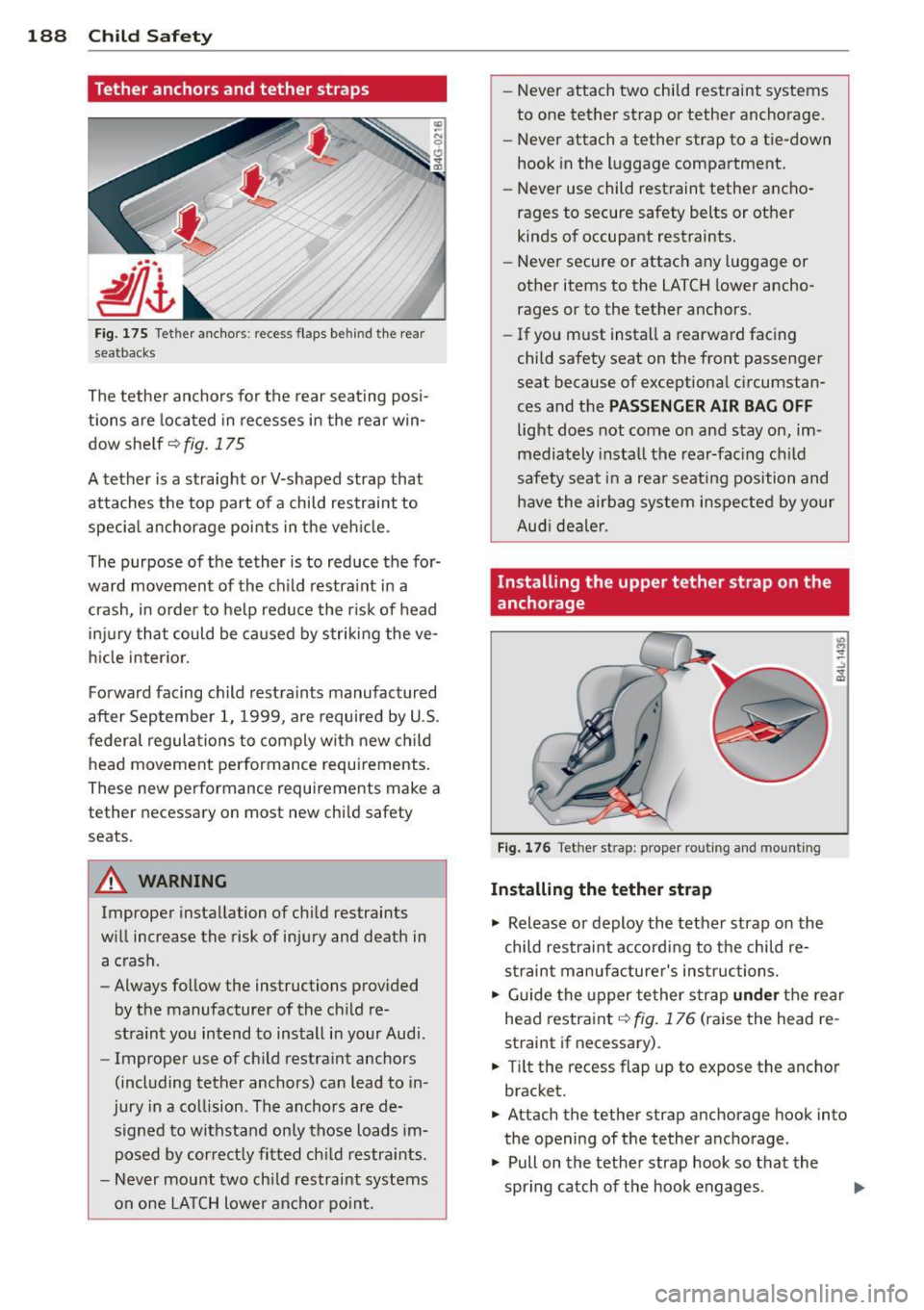
Fig. 175 Tethe r ancho rs: recess flaps be hin d the rear
sea tbacks
The tethe r anchors for the rear sea ting posi
tions are located in recesses i n the rear win
dow shelf ~ fig.
175
A tether is a straight or V-shaped strap that
attaches the top part of a child restraint to
specia l anchorage points in the veh icle.
The purpose of the tether is to reduce the for·
ward movement of the ch ild restra int in a
crash, in order to help reduce the r isk of head
in ju ry that could be ca used by s tri king the ve
hicle interior.
Forward facing child restra ints manufactured
after September 1, 1999, a re required by U .S .
federal regulations to comply with new child
head movement performance requirements.
These new performance requ irements make a
tether necessary on most new chi ld safety
seats.
A WARNING
Improper insta llation of chi ld restraints
w ill increase the risk of injury and death in
a crash.
- Always follow the instructions prov ided
by the manufacturer of the ch ild re
stra int you intend to install in your Audi.
- Improper use of c hild restra int anchors
(including tether anchors) can lead to in ·
jury in a co llision. Th e anchors are de·
sign ed to withstand only those loads im
posed by cor rect ly fi tted ch ild restraints.
- Never mou nt two chi ld restraint systems
on one LA TCH lower anchor po int. -
Never attach two child restraint systems
to one tether strap or tether anchorage .
- Never attach a tether strap to a tie-down
hook in the luggage compartment.
- Never use child restraint tether ancho
rages to secure safety belts or other
kinds o f occupant restraints.
- Never secure or attac h any luggage or
other items to the LATCH lower ancho
rages or to the tether anchors.
- If you must install a rearwa rd facing
child safety seat on the front passenger
seat because of exceptional c ircumstan
ces and the
PASSENGER AIR BAG OFF
light does not come on and stay on, im
mediately insta ll the rear-fac ing ch ild
safety seat i n a rea r seating position and
h ave the airbag system ins pe cted by your
Aud i dea le r.
Installing the upper tether strap on the
anchorage
F ig . 1 7 6 Tet her st ra p : prope r rou ting and mou nting
Installing the tether strap
.,. Release or deploy the tether strap on the
child res traint accord ing to t he child re
s traint manufacturer's instructions.
.,. Guide the upper te t her s trap
under the rear
head restra int ~ fig.
176 (ra ise the head re
stra int if necessary) .
.,. Tilt the recess flap up to expose the ancho r
bracket.
.,. Attach the tether strap anchorage hook into
the opening of t he tether anchorage .
.,. Pull on the tether strap hook so that the
spring catch of the hook engages .
liJJ,
Page 195 of 306
ESC includes and/or works together with the
anti-lock brake system (ABS) , brake assist sys
tem, anti -slip regulation (ASR) , electronic dif
ferential lock (E DL) and e lectronic interaxle
d ifferential lock*. ESC is swi tched on all the
time. In certain situat ions when you need less
traction , you can switch off ASR by pressing
the button
[ru ~ fig . 177 . Be sure to switch
ASR on again when you no longer need less
traction.
Anti-lock braking system (ABS)
ABS prevents the wheels from locking up
when braking. The vehicle can still be steered even during hard braking . Apply steady pres
sure to the brake pedal. Do not pump the ped
al. A puls ing in the brake pedal indicates that
the system is he lping you to brake the vehicle.
Brake assist system
The brake assist system can decrease brak ing
d istance.
It increases braking power when the
driver presses the brake pedal quickly in emer
gency situations. You must press and hold the
brake pedal until the situation is over . In
vehicles with adaptive cruise control* , the
brake assist system is more sensitive if the
d istance detected to the vehicle ahead is too
small.
Anti-slip regulation (ASR)
ASR reduces engine power when the drive
wheels begin to spin and adapts the force to
the road condit ions. This makes it eas ier to
s tart, accelerate and drive up hills.
Electronic differential lock (EDL)
The EDL brakes wheels that are spinn ing and
transfers the drive power to the other drive
wheel or whee ls if the vehicle is equipped with
all-whee l drive*. This function is available up
to about 75 mph (120 km/h).
I n extreme cases , EDL automatically switches
off to help keep the brake on the braked wheel
from overheating. EDL wi ll switch on again au
tomatically when conditions have returned to
normal.
Intelligent technology 193
Electronic interaxle differential lock*/
selective wheel torque control*
The electronic interaxle differential lock (front
whee l drive) or the se lective wheel torque
cont rol (all-wheel dr ive) operates when dr iv
ing through curves . The front wheel on the in
s ide of the curve or both wheels on the inside
of the curve are braked selectively as needed .
T his min imizes sliding in the front wheels and
allows for more precise driving through
curves . Th e applicable system may no t acti
vate when driv ing in wet or snowy conditions.
A WARNING
-
-ESC, ABS, ASR, EDL and the electronic in
teraxle differential lock function* cannot
overcome the laws of physics. This is es
pecially important on slippery or wet
roads . If the systems begin acting to sta
bilize your vehicle, you should immedi
ately change your speed to match the
road and traffic conditions. Do not let
the increased safety provided by these
systems tempt you to t.;1ke risks. Doing
so will increase the risk o f a loss of vehi
cle control, collision and serious personal
injuries.
-Always adapt your speed to road, traffic
and weather conditions . The risk of los
ing control of the vehicle increases when
driving too fast, espec ially through
curves and on slippery or wet roads, and
when dr iving too close to vehicles up
ahead . ESC, ABS, the brake assist sys
tem, EDL, ASR and the elec tronic inter
axle differential lock function* cannot
prevent collisions .
- Always accelerate with special care on
even, smooth surfaces such as those that
are wet or covered with ice and snow.
The drive wheels can spin even with
these assistance systems that cannot al
ways he lp to red uce the risk of loss of ve -
hicle control. .,.
•
•