ignition AUDI A6 2017 Workshop Manual
[x] Cancel search | Manufacturer: AUDI, Model Year: 2017, Model line: A6, Model: AUDI A6 2017Pages: 280, PDF Size: 70.24 MB
Page 184 of 280
Child safety
body and the front of the passenger compart
ment, the airbag can inflate completely and pro
vide supplemental protection in certain frontal
collisions.
.,&. WARNING
Not using a booster seat, using the booster
seat improperly, incorrectly installing a boos
ter seat or using the vehicle safety belt im
properly increases the risk of serious personal
injury and death in a collision or other emer
gency situation. To help reduce the risk of se
rious personal injury and/or death:
- The shoulder belt must lie as close to the
center of the child's collar bone as possible
and must lie flat and snug on the upper
body.
It must never lie across the throat or
neck. The lap belt must lie across the pelvis
and never across the stomach or abdomen .
Make sure that the belt lies flat and snug.
Pull on the belt to tighten if necessary.
- Failure to properly route safety belts over a
child's body will cause severe injuries in an
accident or other emergency situation
¢ page 139.
-The rear side of the child safety seat should
be positioned as close as possible to the
backrest on the vehicle seat .
- For adjustable head restraints: adjust or re
move the rear seat head restraint if it is dif
ficult to install the child seat with the head
restraint in place
¢ page 52. Install the
head restraint again immediately once the
child seat is removed. Driving without head
restraints or with head restraints that are
not properly adjusted increases the risk of
serious or fatal neck injury dramatically.
- Never let a child put the shoulder belt under
the arm or behind the back, because it could
cause severe injuries in a crash.
- Children on the front seat of any car, even
with Advanced Airbags, can be seriously in
jured or even killed when an airbag inflates .
- Never let a child stand or kneel on any seat,
for example the front seat.
- Never let a child ride in the cargo area of
your vehicle.
182
- Always remember that a child leaning for
ward, sitting sideways or out of position in
any way during an accident can be struck by
a deploying airbag . This will result in serious
personal injury or death .
- If you must install a booster seat on the
front passenger seat because of exceptional
circumstances the
PASSENGER AIR BAG
OFF
light must come on and stay on, when
ever the ignition is switched on.
- If the
PASSENGER AIR BAG OFF light does
not come on and stay on, perform the
checks described ¢
page 159, Monitoring
the Advanced Airbag System .
-Take the child restraint off the front passen
ger seat and install it properly at one of the
rear seat positions if the
PASSENGER AIR
BAG OFF
light does not stay on whenever
the ignition is switched on.
- Always read and heed all WARNINGS when
ever using a child restrained in a vehicle is
being used¢
page 139, Safety belts,
¢ page 147, Airbag system and
¢ page 171, Important information.
Securing child seats
Securing a child safety seat using a safety
belt
Safety belts for the rear seats and the front pas
senger con be locked with the convertible locking
retractor to properly secure child safety seats.
The safety belts emergency locking retractors for
the rear seats safety belts and for the front pas
senger's seat safety belt have a convertible lock
ing retractor for child restraints. The safety belt
must be locked so that belt webbing cannot un
reel. The retractor can be activated to lock the
safety belt and prevent the safety belt webbing
from loosening up during normal driving . A child
safety seat can only be properly installed when
the safety belt is locked so that the child and
child safety seat will stay in place.
Always remember : Even though your vehicle is
equipped with an Advanced Airbag system, all
children, especially those 12 years and younger, .,.
Page 185 of 280
co
co
.... N
" N .... 0 0 <..:l '
A WARNING
Improperly installed child safety seats in
crease the risk of serious personal injury and
death in a collision.
-Always make sure that the safety belt re tractor is locked when installing a child safety seat. An unlocked safety belt retrac
tor cannot hold the child safety seat in place
dur ing normal driving or in a crash .
- Always buckle the child safety seat firmly in
place even if a child is not sitting in it . A
loose child safety seat can fly around during
a sudden stop or in a collision.
- Always make sure that the rear seat back
rest to wh ich the center rea r safety be lt* is
attached is secure ly latched whenever the
rear cente r safety belt is being used to se
cure a chi ld restraint.
- If the backrest is not securely latched, the
child and the child restraint will be thrown
forward together with the backrest and will
strike parts of the vehicle interior . The chi ld
can be seriously injured or killed.
- Never install rear-facing chi ld safety seats
or infant carriers on the front passenger
seat. A child will be serious ly injured and
can be killed when the passenger airbag in
flates.
- The inflating a irbag w ill hit the child safety
seat or infant carrier with great force and
will smash the ch ild safety seat and child
against the backrest, center armrest, door
or roof.
- Always install rear -facing child safety seats
or infant carriers on the rear seat.
- Forward -facing ch ild safety seats or infant
carriers installed on the front passenger 's
seat may inte rfere with the deployment of
the a irbag and cause serious injury to the
child.
- It is safer to install a forward-fac ing ch ild
safety seat on the rear seat.
- Always read and heed all WARNINGS when
ever using a child restrained in a veh icle is
being used
r:::> page 171 . Specia l precaut ions
Ch ild safety
apply when install ing a child safety seat on
the front passenger seat
r:::> page 148, Child
restraints on the front seat -some impor
tant things to know .
A WARNING
Always take special precautions if you must
i nstall a forward or rearward-facing child re
stra int on the front passenger's seat in excep
tional s ituations:
- Whenever a forward or rearward-fac ing
child restraint is installed on the front pas
senger seat, the
PASSENGER AIR BAG OFF
light must come on and stay on whenever
the ignition is switched on .
- I f the
PASSENGER AIR BAG OFF light does
not come on and stay on, perform the
checks described
r:::> poge 159, Monitoring
the Advanced Airbag System.
- Take the child restraint off the front passen
ger seat and install it properly at one of the rear seat positions if the
PAS SENGER AIR
BAG O FF
light does not stay on whenever
the ignition is switched on.
-Improper installat ion of child restraints can
reduce the ir effectiveness or even prevent
them from providing any protect ion.
- An improperly installed child restra int can
interfere with the airbag as it deploys and
serious ly injure or even kill the child.
- Always carefully follow the manufacturer's
instructions provided with the child safety
seat or carr ier.
- After checking to make sure that the child
restraint is properly installed, make certain
that the child restraint is correctly recog
n ized by the capacitive passenge r detection
system in the front passenger seat and that
the
PASSENGER AIR BAG OFF light signals
the correct front passenger frontal airbag
stat us.
A WARNING
Forwa rd -facing child restraints :
-
183
Page 186 of 280
Child safety
-Always make sure the forward-facing seat
has been designed and certified by its man
ufacturer for use on a front seat with a
passenger front and side airbag.
- Never put the forward-facing child restraint
up, against or very near the instrument pan
el.
- Always move the front passenger seat to
the highest position in the up and down ad
justment range and move it back to the
rearmost position in the seat's fore and aft
adjustment range, as far away from the air
bag as possible, before installing the for
ward-facing child restraint.
- Always make sure that the safety belt upper
anchorage is behind the child restraint and
not next to or in front of the child restraint
so that the safety belt will be properly posi
tioned.
- Make sure that the
PASSENGER AIR BAG
OFF
light comes on and stays on all the time
whenever the ignition is switched on.
A WARNING
Rearward-facing child restraints:
- A child in a rearward-facing child safety seat
installed on the front passenger seat will be
seriously injured and can be killed if the
front airbag inflates -even with an Ad
vanced Airbag System.
- The inflating airbag will hit the child safety seat or infant carrier with great force and
will smash the child safety seat and child against the backrest, center armrest, door
or roof.
-Always be especially careful if you must in
stall a rearward facing child safety seat on
the front passenger seat in exceptional cir
cumstances.
- Make sure that the
PASSENGER AIR BAG
OFF
light comes on and stays on all the time
whenever the ignition is switched on.
- If the
PASSENGER AIR BAG OFF light does
not come on and stay on, immediately in
stall the rear-facing child safety seat in a
rear seating position and have the airbag
system inspected by your Audi dealer.
184 ·
Activating the convertible locking retractor
Use the convertible locking retractor to secure a
child restraint.
Always heed the child safety seat manufacturer's
instructions when installing a child restraint in
your vehicle. To activate the convertible locking retractor:
.. Place the child restraint on a seat, preferably
on the rear seat.
.. Slowly pull the belt
all the way out.
.. Route it around or through the child restraint
belt path
~ ,&. .
.. Push the child safety seat down with your full
weight to get the safety belt really tight.
.. Insert the belt tongue into the buckle for that
seating position.
.. Guide the safety belt back into the retractor un
til the belt lies flat and snug on the child safety
seat.
.. You should hear a "clicking" noise as the belt
winds back into the inertia reel. Test the con
vertible locking retractor by pulling on the belt.
You should no longer be able to pull the belt
out of the retractor. The convertible locking re
tractor is now activated.
.. Make sure that the red release button is facing
away from the child restraint so that it can be
unbuckled quickly.
.. Pull on the belt to make sure the safety belt is
properly tight and fastened so that the seat
cannot move forward or sideways more than
one inch (2 .5 cm) .
A WARNING
Using the wrong child restraint or an improp
erly installed child restraint can cause serious
personal injury or death in a crash.
- Always make sure that the safety belt re
tractor is locked when installing a child
safety seat. An unlocked safety belt retrac
tor cannot hold the child safety seat in place
during normal driving or in a crash.
- Always buckle the child safety seat firmly in
place even if a child is not sitting in it. A
loose child safety seat can fly around during
a sudden stop or in a crash.
IIJJ,-
Page 200 of 280
Check ing and F illing
- Do not drive until the fuel tank becomes
complete ly empty . The engine cou ld mis
fire . Unburned fuel could also get into the
exhaust system and this cou ld cause the
catalytic converter to overheat.
- Do not sw itch off the ignition while the vehi
cle is moving .
- Do not continue to operate your vehicle un
der these cond itions, as otherwise fuel can
reach the catalytic converter . This could re
su lt in overheating of the converter, requ ir
i ng its replacement .
- To assure efficient operation of the Emis
sion Control System :
- Have your ve hicle main tained pro perly and
in accordance with the service recommen
dations in your Wa rranty & Maintenance
book let.
- Lac k of proper maintenance as well as im
proper use of the vehicle will impair the
function of the emission cont rol system
and could lead to damage.
@ For the sake of the environment
Even when the Emission Control System is op
erat ing properly, the exhaust gas can have a
sulfur-like exhaust gas smell under some op
erat ing states . This depends on the su lfur
content of the fuel be ing used . Using a differ
ent brand of fue l may he lp, or filling the tan k
w ith lead-free super grade gasoline.
Diesel particulate filter
A ppl ies to: ve hicles w ith diesel e ng in e
The diesel particulate fi lter filters nearly all of
the soot particles out of the ex haust. The f ilter
cleans i tse lf automatically under normal d riv ing
conditions. If the filte r ca nnot clean itse lf (for e x
a mple , beca u se you are only driving sho rt distan
ces), the fi lter becomes clo gged with soot and
the . symbo l for the diesel particulate fi lter il
lum inates
c:> page 18.
A WARNING
- Do not park you r vehicle over flammable
materials such as grass or leaves because
198 -
the high temperature of the diesel particu
late filte r could sta rt a fire .
- Do not apply an underbody protectant in the
exhaust system area or a fire could sta rt.
Engine compartment
· Working in the engine compartment
Special care is required if you are working in the
engine compartment
For work in the engine compartment, such as
checking and fill ing fluids , the re is a risk of in
jury, scalding, accidents , and burns. For this
reason, follow all the warnings and general
safety precaut ions provided in the following in ·
formation . The engine compartment is a dan
gerous area on the vehicle.
c:> .&, .
A WARNING
-Turn the engine off.
- S witch t he igni tion off.
- Set the park ing bra ke .
- Select the P s elector lever position.
-Let the eng ine cool down .
- Never open the hood when there is steam o r
coo lant escaping from the engine compart
ment, because there is a risk that you could
be burned . Wait unt il no steam or coolant is
escaping .
- Keep children away from the eng ine com
pa rtment .
- Never sp ill fluids on a hot eng ine. These flu
ids (such as the freeze protection contained
in the coolant) ca n ca tch fire .
- Avoid short c ircuits in the electrical system .
- When working in the engine compa rtment,
remember that the radiator fan can switch
on even if the ignition is switched off, wh ich
increases the r is k of p ersona l injury.
- Never ope n the cap on the coolant expan
sion tank when the engine is warm . The
coo ling system is under p ressure .
- To protect your face, hands, and arms from ho t steam or coolant, cover the cap with a
large cloth wh en opening .
~
Page 201 of 280
co
co
.... N
" N .... 0 0 <..:l '
circumstances . This increases the risk of
burns.
- If tests need to be performed with the en
gine running, there is additional danger due
to moving components (such as the ribbed belt, alternator and radiator fan) and from
the high voltage ignition system.
- Do not under any circumstances give gas in
advertently (for example, by hand from the
engine compartment) if the vehicle is sta
tionary but the engine is running and a gear
is engaged. Otherwise, the vehicle will start
to move immediately and this could result
in an accident.
- Pay attention to the following warnings list
ed when work on the fuel system or on the
electrical equipment is required.
- Do not smoke .
- Never work near open flames.
- Always have a working fire extinguisher
nearby
- All work on the battery or electrical system
in your vehicle can result in injuries, chemi•
cal burns, accidents or burns. Because of
this, all work must be performed
only by an
authorized Audi dealer or authorized Audi
Service Facility.
- To reduce the risk of electric shock and in
jury, never touch the following components when the engine is running or is being start
ed :
- Ignition cable
- Other components in the electronic high-
voltage ignition system
- If you must check or perform work on the
engine while it is running:
- Set the parking brake and place the selec
tor lever in the P (park) position first .
- Always proceed with extreme caution so
that clothing, jewelry or long hair do not
become caught in the radiator fan, fan
belt or other moving components or do not come into contact with hot compo
nents. Tie back long hair before beginning
work and do not wear clothing that can
hang down into the engine .
Checking and Filling
-Limit your exposure to exhaust and chemi
cals to as short a time as possible
c:> A .
A WARNING
-California Proposition 65 Warning:
- Engine exhaust, some of its constituents,
and certain vehicle components contain or
emit chemicals known to the State of Cali
fornia to cause cancer and birth defects and
reproductive harm . In addition, certain flu
ids contained in vehicles and certain prod
ucts of component wear contain or emit
chemicals known to the State of California
to cause cancer and birth defects or other
reproductive harm.
- Battery posts, terminals and related acces
sories contain lead and lead compounds,
chemicals known to the State of California
to cause cancer and reproductive harms. Wash hands after handling.
(D Note
When filling fluids, be sure not to mix the flu
ids up. Otherwise severe malfunctions and en
gine damage will occur.
@ For the sake of the environment
You should regularly check the ground under
your vehicle in order to detect leaks quickly. If
there are visible spots from oil or other fluids, bring your vehicle to an authorized Audi deal
er or authorized Audi Service Facility to be
checked.
199
Page 205 of 280
co
co
.... N
" N .... 0 0 <..:l '
sumes excessive amounts of oil, we recom
mend that you cons ult your Audi dealer to
have the cause of your concern properly di
agnosed. Keep in mind that the accurate
measurement of oil consumption requires
great care and may take some time. Your
A udi dealer has instructions about how to
measure oil consumption accurate ly.
Checking the engine oil level and adding
engine oil
The engine oil level can be checked in the Info
tainment system
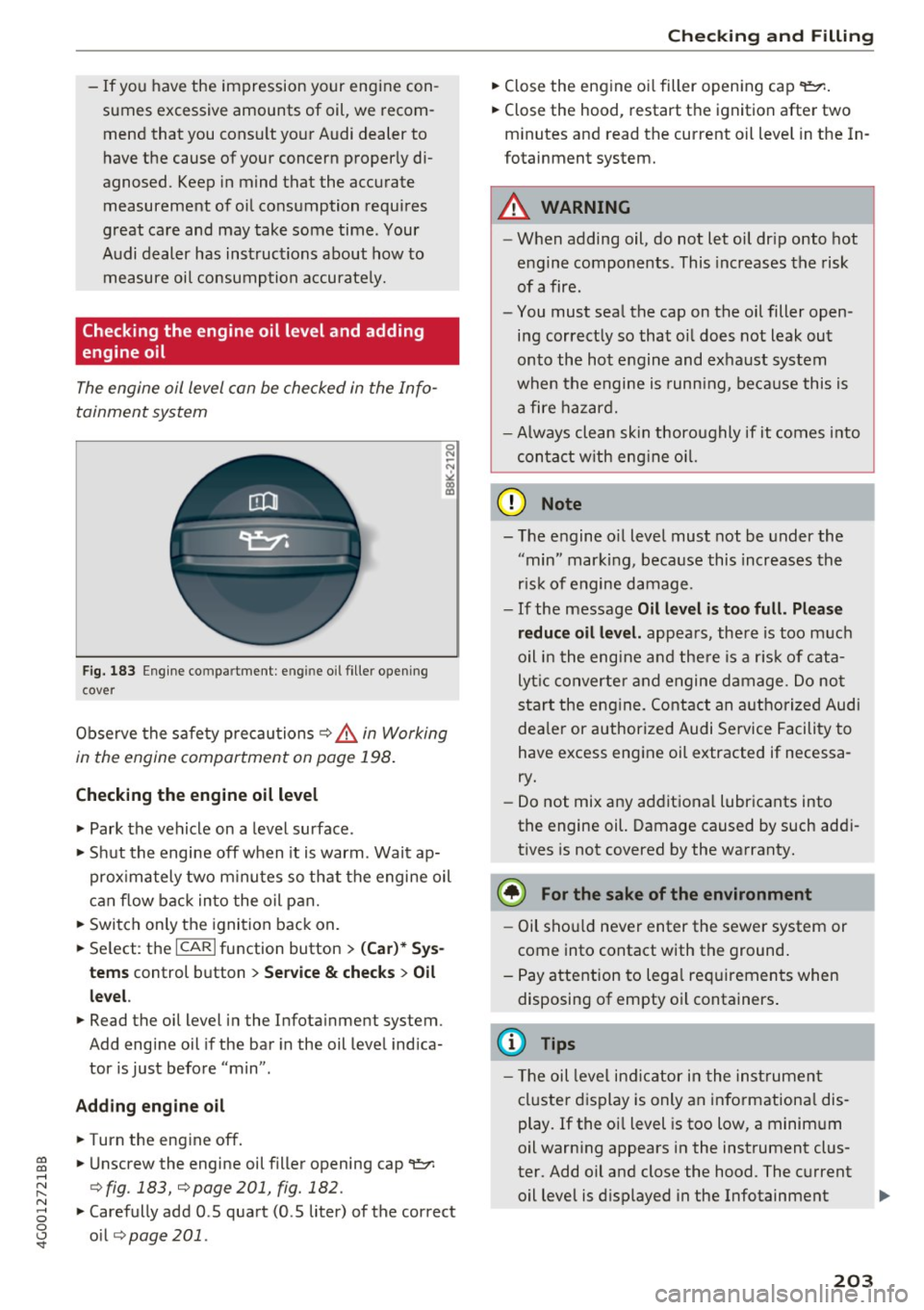
Fig. 183 Eng ine compartment : eng ine oil filler opening
cover
Obse rve the safety precautions¢ &. in Working
in the engine compartment on page 198 .
Checking the engine oil level
.,. Park the vehicle on a level surface.
.,. Shut the engine off when it is warm. Wait ap
prox imately two m inutes so that the engine oil
can flow back in to the oil pan .
.,. Switch only the ignition back on.
.,. Se lect: the
ICARI function button > (Car )* Sy s
tems
control button > Service & checks > Oil
le vel.
.,. Read the oil level in the Infota inment system.
Add engine oil if the bar in the oil level indica
tor is just before "min".
Adding engine o il
.,. Turn the engine off.
.,. Unscrew the engine oil filler opening cap
"t!:r.
¢fig.183, ¢page 201, fig.182.
.,. Carefully add 0.5 quart (0.5 liter) of the correct
o il
¢ page 201.
Check ing and Filling
.,. Close the engine oi l filler open ing cap "t!:r. .
.,. Close the hood, restart the ignition after two
m inutes and read the current o il leve l in the In
fotainment system.
A WARNING
-When adding oil, do not let oi l dr ip onto hot
e ngine components. This increases the risk
of afire.
- You must seal the cap on the oil filler open
ing correctly so that oi l does not leak ou t
onto the hot engine and exhaust system
when the engine is runn ing, be ca use this is
a fire hazard.
- Always clean sk in thoro ughly if it comes into
con ta ct w ith eng ine oi l.
d) Note
-The e ngine o il level must not be under the
"min" marking, beca use this increases the
r is k of engine damage.
- If the message
Oil level is too full. Pleas e
reduce
oil level. appea rs, the re is too m uch
oil in the engine and the re is a r is k of cata
lyt ic converte r and engine damage. Do no t
start the eng ine. Co ntact an a uthorized Audi
dea ler or authorized Audi Service Facility to
have excess engine oil extracted if necessa
ry.
-Do not mix any ad ditiona l lubricants into
the engine oil. Damage caused by such add i
tives is not covered by the warranty .
@ For the sake of the environment
- Oil sho uld never enter the sewer system or
come into contact with the ground .
- Pay attention to lega l req uiremen ts when
disposing of empty oil containers .
(D Tips
- T he oil level in dicator in the inst rumen t
cl uster display is only an informationa l dis
play. If the o il level is too low, a minim um
oil warn ing appears in the instrument clus
ter. Add oil and close the hood. The c urrent
oil level is d isplayed in the Infotainment
203
Page 206 of 280
Checking and Filling
system the next time the ignition is
switched on.
- The engine oil consumption may be up to
0.5 quart/600 miles (0.5 liter/1 ,000 km),
depending on driving style and operating
conditions . Consumption may be higher
during the first 3,000 miles (5,000 km). Be
cause of this, the engine oil level must be
checked regularly .
It would be best to check
each time you refuel your vehicle and before
long drives .
Changing the engine oil
We recommend that have your oil changed by an
authorized Audi dealer or a qualified service sta
tion.
Before you check anything in the engine compart
ment ,
always read and heed all WARNINGS q .&.
in Working in the engine compartment on
page 198.
The engine oil must be changed according to the
intervals specified in your Warranty
& Mainte
nance booklet. This is very important because the
lubricating properties of oil diminish gradually
during normal vehicle use.
Under some circumstances the engine oil should
be changed more frequently . Change oil more of
ten if you drive mostly short distances , operate
the vehicle in dusty areas or under predominantly
stop-and-go traffic conditions, or have your vehi
cle where temperatures remain below freezing
for extended periods.
Detergent additives in the oil will make fresh oil
look dark after the engine has been running for a
short time. This is normal and is not a reason to
chang e the oil more often than recommended.
Because of the problem of proper disposal, along
with the special tools and necessary expertise re
quired, we strongly recommend that you have
your oil changed by an authorized
Audi dealer or
a qualified service station .
If you choose to change your oil yourself, please
note the following important information:
204
A WARNING
-
To reduce the risk of personal injury if you
must change the engine oil in your vehicle
yourself:
- Wear eye protection.
- To reduce the risk of burns from hot engine
-
oil, let the engine cool down to the touch .
- When removing the oil drain plug with your
fingers, stay as far away as possible. Always keep your forearm parallel to the ground to
help prevent hot oil from running down your
arm .
- Drain the oil into a container designed for
this purpose, one large enough to hold at
least the total amount of oil in your engine.
- Engine oil is poisonous . Keep it well out of
the reach of children.
- Continuous contact with used engine oil is
harmful to your skin . Always protect your
skin by washing oil off thoroughly with soap
and water.
(D Note
Never mix oil additives with your engine oil.
These additives can damage your engine and
adversely affect your Audi Limited New Vehi
cle Warranty.
@ For the sake of the environment
- Before changing your oil, first make sure you know where you can properly dispose of
the used oil.
- Always dispose of used engine oil properly .
Do not dump it on garden soil, wooded
areas, into open streams or down sewage
drains.
- Recycle used engine oil by taking it to a used
engine oil collection facility in your area, or
contact a service station .
Cooling system
Coolant
The engine cooling system is filled with a mixture
of purified water and coolant additive at the fac-
tory. This coolant must not be not changed. ..,.
Page 208 of 280
Checking and Filling
_& WARNING
-The cooling system is under pressure. Do
not open the coolant expansion tank cap
when the engine is hot. This increases the
risk of burns.
- The coolant additive and the coolant can be
dangerous to your health. For this reason,
keep the coolant in the original container
and away from children. There is a risk of
poisoning .
- When working in the engine compartment,
remember that the radiator fan can switch
on even if the ignition is switched off, which
increases the risk of injury.
CD Note
Do not add coolant if the expansion tank is
empty. Air could enter the cooling system and
damage the engine. If this is the case, do not
continue driving. See an authorized Audi deal
er or authorized Audi Service Facility for assis
tance .
Brake fluid
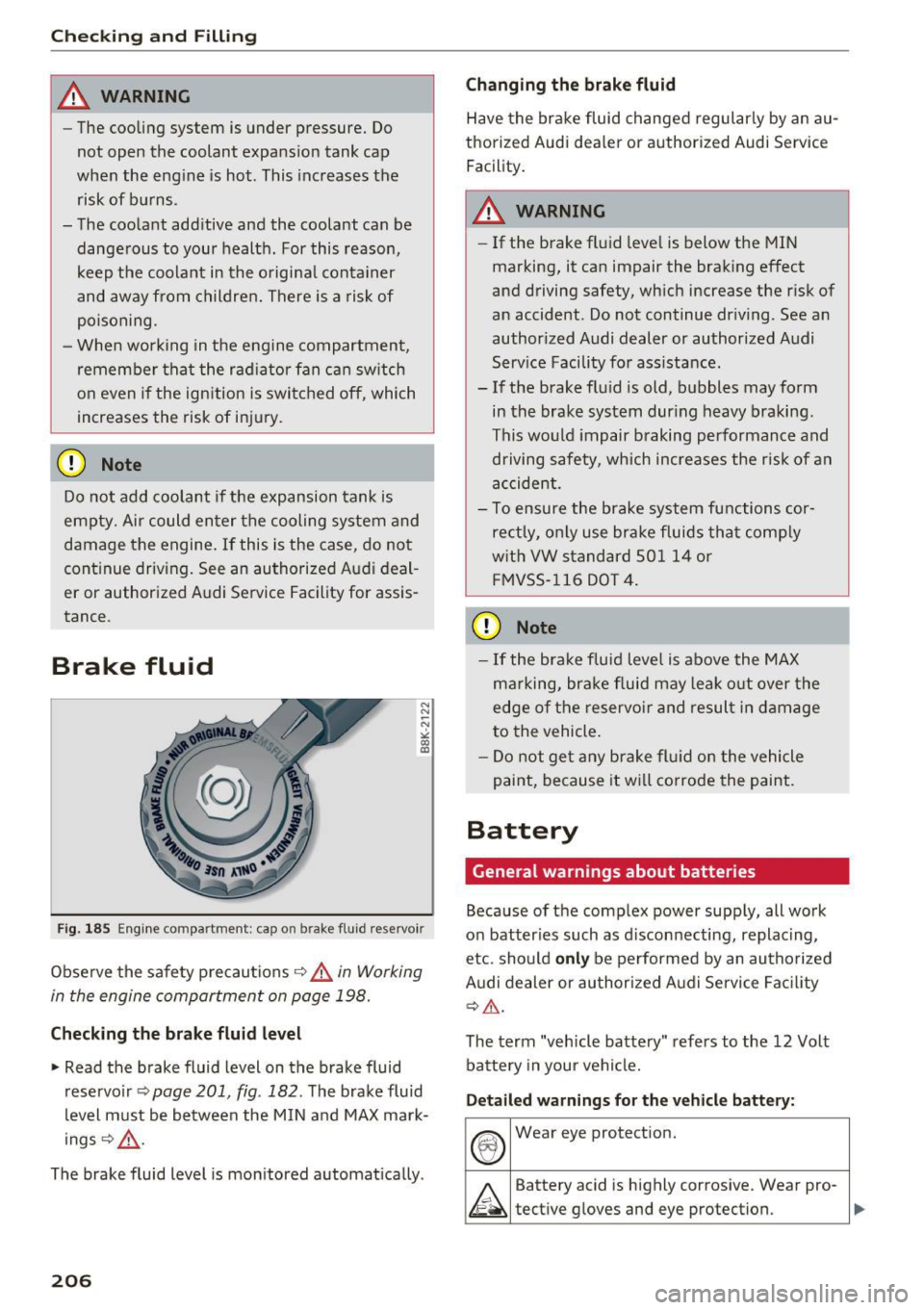
Fig. 185 Engine compartment : ca p on brake fl uid re servoir
Observe the safety precautions c::> .&. in Working
in the engine comportment on page 198.
Checking the brake fluid level
• Read the brake fluid level on the brake fluid
reservoir
c::> page 201, fig . 182. The brake fluid
level must be between the MIN and MAX mark
i n gs c::> .,&. .
The brake fluid level is monitored automatically .
206
Changing the brake fluid
Have the brake fluid changed regularly by an au
thorized Audi dealer or authorized Audi Service Facility.
_& WARNING
- If the brake fluid level is below the MIN
marking, it can impair the braking effect
-
and driving safety, which increase the risk of
an accident . Do not continue driving . See an
authorized Audi dealer or authorized Audi
Service Facility for assistance.
- If the brake fluid is old, bubbles may form
in the brake system during heavy braking.
This would impair braking performance and driving safety, which increases the risk of an
accident .
- To ensure the brake system functions cor
rectly, only use brake fluids that comply
with VW standard 50114 or FMVSS-116 DOT 4.
CD Note
-If the brake fluid level is above the MAX
marking, brake fluid may leak out over the
edge of the reservoir and result in damage
to the vehicle.
- Do not get any brake fluid on the vehicle
paint, because it will corrode the paint.
Battery
General warnings about batteries
Because of the complex power supply, all work
on batteries such as disconnecting, replacing,
etc. should
only be performed by an authorized
Audi dealer or authorized Audi Service Facility
c:::, &.
The term "vehicle battery" refers to the 12 Volt
battery in your vehicle.
Detailed warnings for the vehicle battery:
®) Wear eye protection.
~ Battery acid is highly corrosive. Wear pro-
~ tect1ve gloves and eye protection. ..,.
Page 209 of 280
co
co
.... N
" N .... 0 0 <.,;) 'SI"
@
Fire, sparks, open flame and smoking are
forb idden.
~
A highly explosive mixture of gases can
form when charging batteries.
®
Keep children away from battery acid and
batteries.
A WARNING
All work on the battery or electrical system in
your vehicle can result in injuries, chemical
burns, accidents or burns. Because of this, all
work must be performed
only by an author
ized Aud i dealer or authorized Aud i Service
Facility.
A WARNING
California Proposition 65 Warning:
- Battery posts, terminals and related acces
sories contain lead and lead compounds,
chemicals known to the State of California
to cause cancer and reproduct ive problems.
Wash hands after handling.
(D Note
Protect the vehicle battery against freezing if
the vehicle will be parked for long periods of
time so that it is not destroyed by "freezing"
c:>page207.
@ For the sake of the environment
~ Batteries contain poll uting substances such
as sulfuric acid and lead. Contact an author
ized Audi dealer or authorized Audi Service
Facility for more information.
Vehicle battery
The term "vehicle battery" refers to the 12 Volt
battery in your vehicle.
Not running the vehicle for long periods of
time
If you do not drive your vehicle for several days or
weeks, e lectrical equipment is gradually scaled
back or switched off. This reduces energy use and
ensures the veh icle will be able to start after long
periods of time
c:> page 124. Some convenience
Checking and Filling
functions, such as interior lighting or power seat
adjustment, may not be available under certa in
c ir cumstances. These convenience functions will
be available again once you switch the ignition on
and start the engine .
Even when electrical equipment is switched off,
the equipment can still dra in the vehicle battery
if the vehicle is not driven for long periods of
time . Deep draining results in a chemical reaction
that destroys the inside of the vehicle battery .
T he veh icle battery must be charged every month
to reduce the risk of this happening
c:> page 207 .
Contact an authorized Aud i dea ler or authorized
A udi Service Facility for more information .
Winter operation
Cold weather places higher demands on the vehi
cle battery . This results in reduced starting abili
ty. Have the veh icle battery checked by an au
thorized Audi dea ler or authorized Audi Service
Facility before the cold time of year.
Charging the vehicle battery
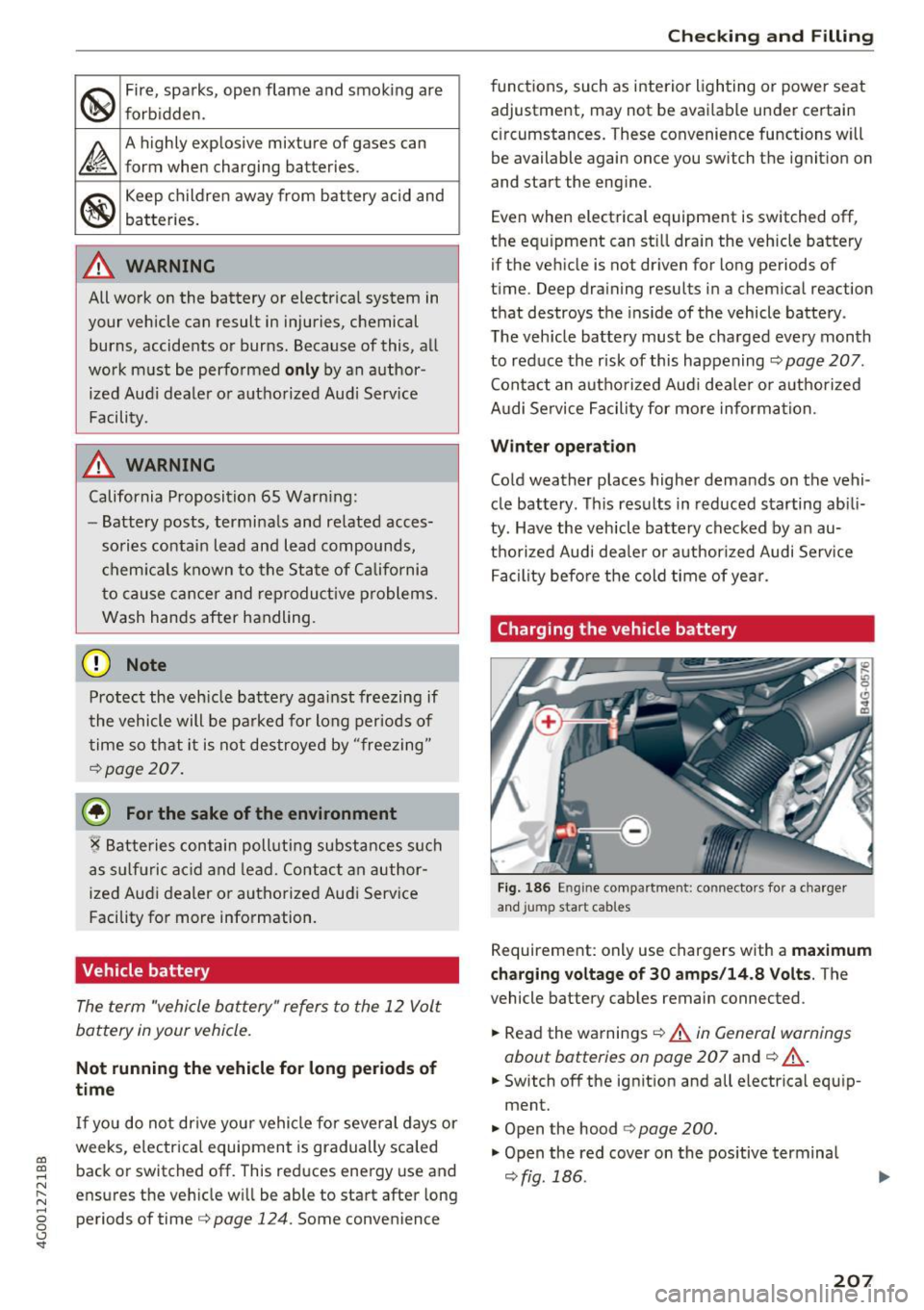
Fig. 186 En g in e compa rtment: co nnectors for a cha rge r
and ju mp start cables
Requirement: only use chargers with a maximum
charging voltage of 30 amps/14.8 Volts.
The
vehicle battery cables remain connected .
.,. Read the warnings
c:> &. in General warnings
about batteries on page 207
and ¢ &_ .
.,. Switch off the ignit ion and all electrical equ ip
ment.
.,. Open the hood
c:> page 200.
"'Open the red cover on the pos itive terminal
c:> fig. 186 .
207
Page 231 of 280
Tire pressure monitoring system
Applies to: vehicles with Tire Pressure Monitoring System in
dicator
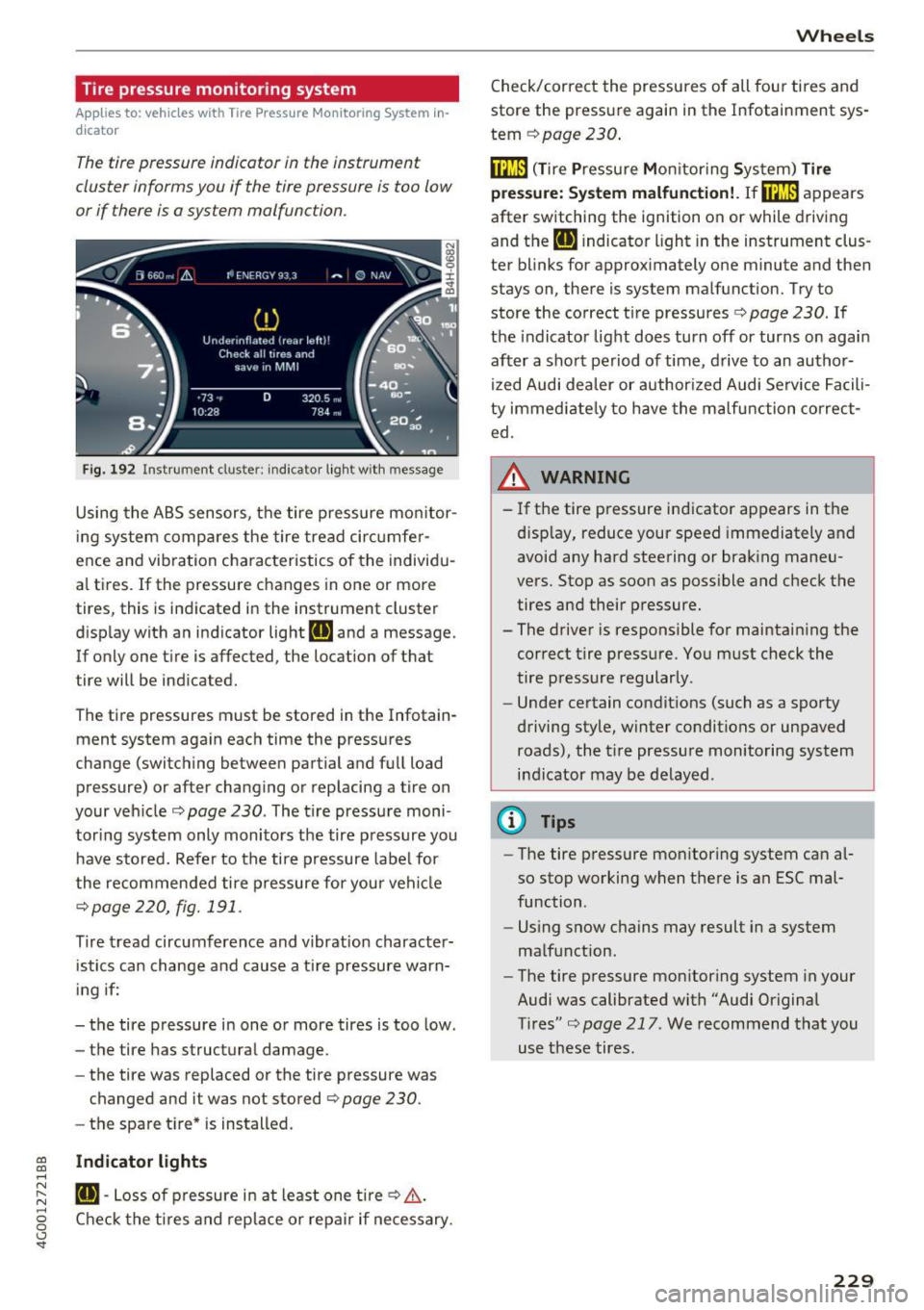
The tire pressure indicator in the instrument
cluster informs you if the tire pressure is too low
or if there is a system malfunction .
Fig. 192 Instrument clus ter : indicator ligh t w ith message
Using the ABS sensors, the tire pressure monitor
ing system compares the tire tread circumfer
ence and vib ration characteristics of the individu
al tires.
If the pressure changes in one or more
tires, this is indicated in the instrument cluster
display with an indicator light
RE and a message.
If only one tire is affected, the location of that
tire will be indicated.
The tire pressures must be stored in the Infotain
ment system again each time the pressures
change (switching between partial and full load pressure) or after changing or replacing a tire on
your vehicle ¢
page 230 . The tire pressure moni
toring system only monitors the tire pressure you have stored. Refer to the tire pressure label for
the recommended tire pressure for your vehicle
¢page 220, fig.191 .
Tire tread circumference and v ibration character
istics can change and cause a tire pressure warn
ing if:
- the tire pressure in one or more tires is too low.
- the tire has structural damage.
- the tire was replaced or the tire pressure was
changed and it was not stored
¢ page 230.
- the spare tire* is installed.
~ Indicator lights ....
~ RE-Loss of pressure in at least one tire¢,&,. . ....
g Check the tires and replace or repair if necessary.
<.,;) 'SI"
Wheels
Check/correct the pressures of all four tires and
store the pressure again in the Infotainment sys
tem
¢ page 230 .
fflm (T ire Pressure Monitoring System) Tire
press ure: System malfunction!.
Ifffi:m appears
after switching the ignition on or while driving
and the
RE indicator light in the instrument clus
ter blinks for approximately one minute and then
stays on, there is system malfunction. Try to
store the correct tire pressures¢
page 230. If
the indicator light does turn off or turns on again
after a short period of time , drive to an author
ized Audi dealer or author ized Audi Service Facili
ty immediately to have the malfunction correct
ed.
_& WARNING ,..___
- If the tire pressure indicator appears in the
d isplay, reduce your speed immediately and
avoid any hard steering or braking maneu
vers. Stop as soon as possible and check the
tires and their pressure.
- The driver is responsible for maintaining the
correct tire pressure. You must check the
tire pressure regularly.
- Under certain conditions (such as a sporty
driving style, winter conditions or unpaved roads), the tire pressure monitoring system
indicator may be delayed .
@ Tips
-The tire pressure monitoring system can al
so stop working when there is an ESC mal
function .
- Using snow chains may result in a system
malfunction.
- The tire pressure monitoring system in your
Audi was calibrated with "Audi Original
Tires"¢
page 217 . We recommend that you
use these tires.
229