warning light AUDI A7 2013 Owners Manual
[x] Cancel search | Manufacturer: AUDI, Model Year: 2013, Model line: A7, Model: AUDI A7 2013Pages: 310, PDF Size: 77.45 MB
Page 218 of 310
216 Cleaning and protec tio n
Apply the product using a micr ofib er cl oth. To
avoid damaging the paint surface, do not use
too m uch pressure.
R inse the vehicle t ho roughly with water . Clean
the vehicle sta rting at the top and working to
ward the bottom using a
neutra l sh ampoo
and a soft mi crofiber cloth . Stop frequently to
rinse the cloth thoroughly.
C lean the wheels and sill panels last. Use a
clean
s pon ge on these areas .
R inse the vehicle tho roughly aga in and let it
a ir dry.
If there are any wa ter spo ts, they can
be removed using a
leather cloth .
Clean again with the spe cial clean er for matt e
finish paint
if ne cessary.
Removing stubborn d irt
B ird d ropping s or tree sap are best removed
with plenty of water and a m icrofiber cloth .
You should r inse
off ga soli ne res idue immedi
ately with plenty of water.
A WARNING
- Wash your ve hicle only when the ignition
is switched
off to reduce the risk of a
crash .
- Always read and heed all WARNINGS and othe r information
c:::> page 213.
([) Note
-Do not treat vehicle parts painted w ith
matte f inish paint us ing polish ing mate
r ials or hard wax. These products could
cause damage to the appea rance or sur
face that cannot be repaired.
- Never use p rotective wax.
It can destroy
the matte fin ish effect .
- Do not p lace any st ickers or magnetic
s igns on vehicle parts painted with
matte finish paint. The pa int could be
damaged when the st ickers or magnets
a re removed.
- To preven t pa int damage, do not wash
the veh icle in direct s unl igh t. -
To prevent damage to the pa int surface,
do not use insect remova l sponges,
rough kitchen sponges or sim ilar items .
- Yo u should remove debris (such as in
sects) from the headlight lenses on a
regu lar basis, for example when refuel
ing your vehicle. Only clean the head
lights using a wet cloth or sponge, never
a dry one. Cleaning with soapy water is
recommended.
(D Tips
For more information on special cleaning
products designed for matte finish paint,
seeyourAud idea~~
Sensors and camera lenses
- Remove snow with a hand brush and remove
ice with a de -icing spray that does not con
tain so lvents.
- Clean the senso rs (adaptive c ruise control*,
park ing system*) w ith a cleaning so lution
tha t does not contain so lvents and a soft
cloth .
- The camera lens or the area in front of the
camera lens is norma lly cleaned by the
windshield wipers (Audi active lane assist*)
or head light wipers (night vision system *).
If the lens or the area is exceptionally dirty,
clean the area with glass cleaner and a soft,
dry cloth .
(D Note
-If you wash your vehicle with a pressure
washer,
- make sure there is eno ugh distance to
sensors i n the fron t and rear bumper,
- do not clean the camera lenses and the
ar ea a round them with the p ress ure
washer.
- N ever use warm or hot wate r to remove
snow or i ce from the camera lens. This
cou ld cause the lens to crack.
- Never clean the camera lens wi th abra
sive products.
Page 219 of 310
Waxing and Polishing
Wa xing
A good wax coat ing protects the vehicle pa int
to a large extent aga inst the environmental
factors listed under
~page 213, Washing and
even against slight sc ratches.
You can use a liquid car wax to protect your pa int as soon as one week after your veh icle
has been del ivered.
Even if you regularly use a
w axi ng process in
automatic car washes, we recommend that
you manually app ly a coat of wax to give the
pa int ext ra protection, particularly if wate r no
l onge r beads on the clean paint.
Protect p lastic body parts with car wax in the
same way as the vehicle body.
During warm weather dead insects tend to
collect on the front bumper and on the for
ward area of the hood . They are much easier
to remove from paint that is waxed
often.
Poli shing
Polish your vehicle only if the pa int has lost its
sh ine and the gloss cannot be brought back
with wax .
If the polish used does not contain preserva
tive compounds, the paint must be waxed af
terwards.
&, WARNING
Always read and heed all WARNINGS and
other information
~ page 213.
(I) Note
Do not use car wax on
- matte or anod ized metal trim
- rubber or rubber-like trim.
Trim strips
Metal trim needs special care.
For environmenta l reasons, Aud i fabricates
the br ight tr im st rips and t rim pieces from
pu re chromium-free a lum inum.
Cleaning and protec tion
D irt and marks on the trim strips sho uld be
removed wit h a
pH-balanced cleaning agent
(do not use a chrome cleaner). Audi dealers
carry clean ing products w hich have been test
ed for use on your vehicle and are not harmful
to the environment.
To avoid corrosion on the exter ior trim strips,
only a pH-ba lanced solution should be used
for the windsh ield washer.
&, WARNING
A lways read and heed all WARNINGS and
other info rmation
~page 213.
Plastic and vinyl
Plastic needs special care.
Use a clean, damp cloth or sponge to remove
dust and light s urface dirt. For other soil, use
a lukewarm all-p urpose cleaning so lution or a
mild saddle soap for v inyl tr im. Remove water
spots and traces of soap with a clean, damp cloth or sponge . Use a clean, soft cloth to rub
dry.
Grease, tar or oil stains can be removed w ith a
clean cloth or sponge soaked with a ll-purpose
cleaner o r with a solvent designed espec ially
to clean v inyl.
Occas ionally apply a colorless vinyl or leather
preservative to retain the mater ia l's luster
and pliability .
&, WARNING
Always read and heed all WARNI NGS and
other info rmat ion
~ page 213 .
Aluminum trim
Use only neutral-pH p rod ucts to remove spots
and deposits from a luminum sur faces.
Chrome care products and a lkaline cleaners
will attack a luminum surfaces and can dam-
age them over time. ..,.
217
•
•
Page 220 of 310
218 Cleaning and protection
8_ WARNING
Always read and heed all WARNINGS and other information
Q page 213 .
Touch-up paint
Minor paint damages should be touched up
immediately.
.. Use either a to uch -up paint stick or spray
paint to cover minor scratches and nicks .
Your Audi dea ler has touch-up paint for minor
scratches and stone chips. Scratches shou ld
be touched up soon after they occur to pre
vent corrosion.
If a spot starts to rust, however, a simple
touch-up job will not be enough . The affected
surface must be sanded smooth and coated
with an anti-rust primer before the painted
finish can be restored.
The number for the origina l vehicle paint can
be found on the vehicle identification label
r::>
page 2 85.
A WARNING
Always read and heed all WARNINGS and other information
Qpage 213.
Windows
Clear vision to all sides.
Clean all windows regularly to remove road
fi lm and car wash wax buildup.
.. Remove sno w from windows using a brush.
.. Use a plastic ice scraper to remove ice from
windows and mirrors .
.. Remove other residue on the windows with
a spray -on glass cleaner.
.. Wipe the windows dry with a clean p iece of
cloth or kitchen paper towel.
The best way to remove snow from windows
and mirrors is to use a brush . Use a non-abra
sive
plastic ice scraper -better still, a spray
deicer - to remove
ice from windows and mir
rors . Oil, grease or silicone residue can be removed
with
glass cleaner or silicone remover . How
ever, wax res idue requires the use of a spec ial
ly formulated so lvent. Please contact your
Audi dealer for adv ice on safe products for
wax removal.
Windows should also be cleaned on the inside at regu lar intervals.
Never dry windows with the same chamois
that you use to dry painted surfaces . Wax resi
due on the chamois can impair v is ion through
the windows.
A WARNING
- Always read and heed all WARNINGS and
other information
Q page 213 .
-The windsh ield must not be treated w ith
water-repellent materials. They can in crease glare under poor v is ib ility condi
tions such as wetness, darkness, or when
the sun is low on the hor izon. In addi
tion, they can cause the windshield wip
ers to chat ter.
(D Note
- Never use warm or hot water to remove
snow and ice from windows and mirrors.
Thi s could cause the glass to crack .
- To prevent damage to the wires of the
rear defogger, do not place any adhesive
st ick ers on the inside of the rear win dow
over the wires.
- To help prevent dirt from scratching the
w ind ow, always scrape in a forward di
rection -pushing the scraper away from
you -never back and forth .
Cast (light) alloy wheels
Cast (light) alloy wheels require special care .
.. Wash the wheels with a sponge or hose
brush every other week.
.. For deep cleaning afterwards, use only a
dedicated
acid-free cast alloy wheel cleaner.
.. Rub a coat of
liquid wax onto the rims every
three month . Be sure to reach and treat all
parts of the rim.
...
Page 221 of 310
To preserve the decorative appearance of the
cast a lloy whee ls , some specia l care is neces
sary. In add it ion to road dirt and sa lt, brake
dust is also corros ive. If left on for too long,
brake dust can cause pitting.
Use only specia l
acid-free cleaners formulated
for a lloy rims. Safe products are available at
your Aud i dealer. Never leave the cleaner on
t he r ims longer than spec ified on the label. If
not rinsed off promptly, the acid conta ined in
some cleaners can attack the threads on the
wheel bo lts.
Never use abras ive or metal polishing clean
ing agents . If the protective coat ing has been
chipped, e .g . by k icked up road d irt, touch it
up as soon as possib le.
.8, WARNING
- Moist ure and ice on brakes may affect
braking efficiency
r::!;> page 199, General
information .
Test the brakes caref ully
each time you wash the vehicle.
- Alw ays read and hee d all WARN INGS and
other information ¢
page 213 .
-
Body cavity sealing
The body cavity sealing does not need to be
checked.
All body cavities wh ich could be affected by
corrosion have been thoroughly p rotected at
the facto ry.
This sea ling does not require any inspection or
addit ional treatment . If any wax should seep
out of the cav ity w hen the ambient tempera
ture is high, it can be removed wit h a plastic
scrape r and a su itab le solvent.
.8, WARNING
So lvents can be dangerous.
- Benzine is flammable and toxic.
If you
u se benzine for removing the wax, keep
sparks, flame and lighted c igarettes
away. Never dump benzine on t he
ground, into open streams or down sew
age drains .
Cleaning and protec tion 219
- Be s ure to observe all safety and environ
mental reg ulations . Follow all instruc
tions on the container.
- Always read and heed a ll WARNINGS and
other information
r::!;> page 213.
Chassis
Have the undercoating checked for damage
from time to time .
The lower body shell of your Aud i is also thor
oughly protected against corrosion .
A ny damage to the unde rcoa ting caused by
road hazards sho uld be repaired prompt ly.
.8, WARNING ,.____
T oo much undercoating in the wrong p la
ces can cause a fire.
- Do not app ly addition al u nder coati ng or
r u stp roof ing on or nea r the exhaust
manifold, exhaust pipes, catalytic con
verter or heat shields . While driving, the
substance used for undercoating could
overheat and cause a fire.
- Always read and heed a ll WARNINGS and
other information
r::!;> page 213.
Exhaust tail pipes
Road salt and other corrosive materials will
damage the material in the exhaust tail pipes
if they are not clea ned regular ly . Do not clea n
the tail pipes with w heel cleaner, pa int polish,
c hr ome polish or other ab ras ive clea ne rs.
C lean t he tail pipes with ca r c are products
that are suitable for stainless steel.
Your authorized Audi dea ler ca n provide clean
ing products that have been tested and ap
proved for yo ur vehicle .
Care of interior
Infotainment components
The MMI/RSE* display may be cleaned w it h a
soft clot h and commercia lly-available "LCD
cleaner" . T he cloth should be coated lightly .,..
•
•
Page 225 of 310
-Leather cleaning and care kit
- Creams to care for colo red leather
- Spot removers fo r ballpo int pens, shoe pol-
ish , etc.
- Oil/grease dissolving spray
- New and upcoming products.
A WARNING
Always read and heed all WARNINGS and
other information ~
page 213.
-Never use chemical solvents (e .g. lighter
flu id , turpentine), waxes, shoe polish or
s imilar products on the leather surfaces
i n your Audi.
- To avoid damage, have stubborn stains
r emoved by a commerc ial cleaning spe
c ia list .
Cleaning Alcantara ® (synthetic suede)
Ap plies to vehicles : wit h Alcanta ra up hols tery
Removing dust and dirt
.,. Moisten a cloth, squeeze out excess water
and wipe down the se at s urfaces .
Removing stains
.,. Moisten a cloth w it h lukewarm water or
with diluted
ethyl (rubb ing) alcoho l.
.,. Dab at the stai n. Start at the outside and
wor k inwards.
.,. Once the s tain is no longer visib le , use a
soft dry cloth or t issue to soak up the mois
tu re .
D o no t use leather cleaning produc ts on Al
cantara .
You may use a suitable s hampoo fo r removi ng
dust and dirt.
Dust and grit in the pores and seams can
scratch and damage the surface . If the car is
l eft standing in the sun fo r long pe riods , the
A lcantara covers sho uld be protected against
d ir ect sunlight to preve nt i t from fading.
Slight color var iat ions w ill deve lop in normal
Cleaning and protec tion 223
use and a re not an indication of material dete
rioration .
(D Note
-Never use chem ic al so lvents (e .g. lighter
fluid , tur pentine), waxes, shoe polish o r
simi lar products on A lcantara ® surfaces.
- To avoid damage, have stub born sta ins
removed by a commercial clean ing spe
cialist .
- Do not use b rushes, sti ff spon ges or sim
ilar ly abrasive cleaning a ids.
Safety belts
Only well-maintained safety belts work relia
bly when needed.
.,. Keep belts clean.
.,. For cleaning, use a mild soap and water so l
ution. Let belts dry thoroug hly and away
from direct sunlight .
.. Do not allow inertia ree l sa fety belts to re
tract before they are completely dry.
.,. Check t he condition of your safety belts reg·
ularly .
Heavi ly so iled safety belts may not retract
proper ly.
A WARNING
Damaged safety belts can break in a crash .
-Anyth ing that might damage your safety
be lts could mea n that you and your pas
sengers would not be adequate ly pro
t e cted in an accide nt.
- Safety belt performance depends on co r
rect installation . Never remove be lts
from the veh icle to clean t hem .
- Do not use chemical clea ning agents,
bleach or dyes . T hey have corrosive prop
erties which wea ken the webb ing .
- When clea ning your safety be lts, inspect
them for damage . If you discover dam
age, see your Audi d ealer.
- Always read a nd heed a ll WAR NINGS and
other information
~ page 213 .
•
•
Page 232 of 310
230 Checking and filling
Checking and filling Engine hood
Releasing the engine hood
The engine hood is released from inside the
vehicle .
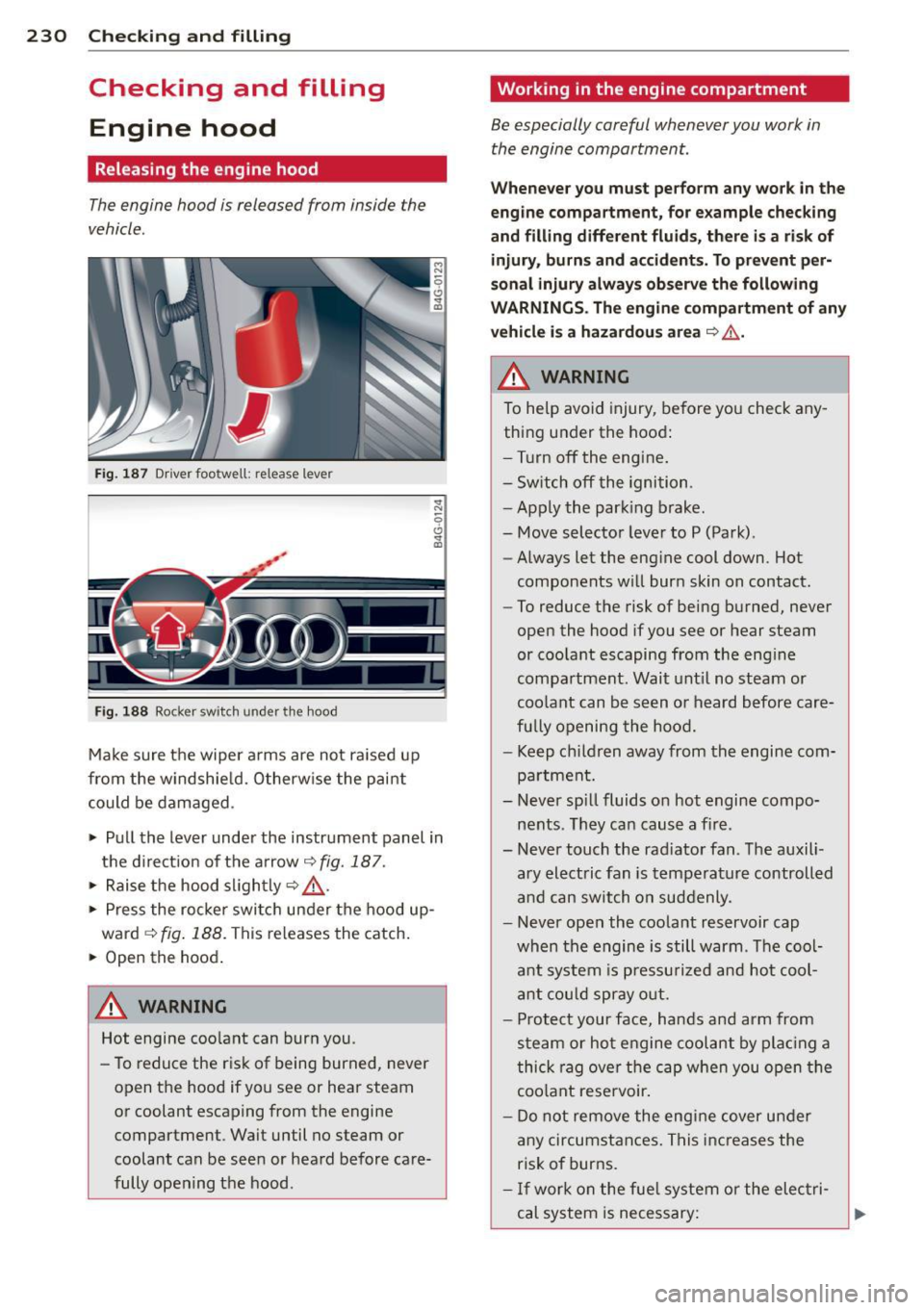
Fig. 187 Driver foo twell: release lever
Fig. 188 Rocker switch un der the hood
Make sure the wiper arms are not raised up
from the windshield. Otherwise the paint
could be damaged .
.,. Pull the lever under the instrument panel in
the direction of the arrow
~ fig. 187.
.,. Raise the hood slightly~,&. .
... Press the rocker switch under the hood up
ward
~ fig. 188. This releases th e catch.
... Open the hood.
&_ WARNING
Hot engine coolant can burn you.
- To reduce the risk of being burned, never
open the hood if you see or hear steam
or coolant escaping from the engine compartment . Wait until no steam or
coolant can be seen or heard before care
fully opening the hood .
'Working in the engine compartment
Be especially careful whenever you work in
the engine compartment.
Whenever you must perform any work in the
engine compartment, for example checking
and filling different fluids, there is a risk of injury, burns and accidents. To prevent per
sonal injury always observe the following
WARNINGS. The engine compartment of any
vehicle is a hazardous area
~ ,&. .
A WARNING
To help avoid injury, before you check any
thing under the hood:
- Turn off the engine.
- Switch off the ignition .
- Apply the parking brake.
- Move selector lever to P (Park).
- Always let the engine cool down. Hot
components will burn skin on contact.
- To reduce the risk of being burned, never
open the hood if you see or hear steam
or coolant escaping from the engine
compartment. Wait until no steam or
coolant can be seen or heard before care
fully opening the hood.
- Keep children away from the engine com
partment.
- Never spill fluids on hot engine compo
nents . They can cause a fire .
- Never touch the radiator fan. The auxili
ary electric fan is temperature controlled
and can switch on suddenly .
- Never open the coolant reservoir cap
when the engine is still warm . The cool
ant system is pressurized and hot cool
ant could spray out.
- Protect your face, hands and arm from
steam or hot engine coolant by placing a
thick rag over the cap when you open the
coolant reservoir.
- Do not remove the engine cover under
any circumstances. This increases the
risk of burns.
- If work on the fuel system or the electri
cal system is necessary:
Page 234 of 310
232 Checking and filling
Engine compartment
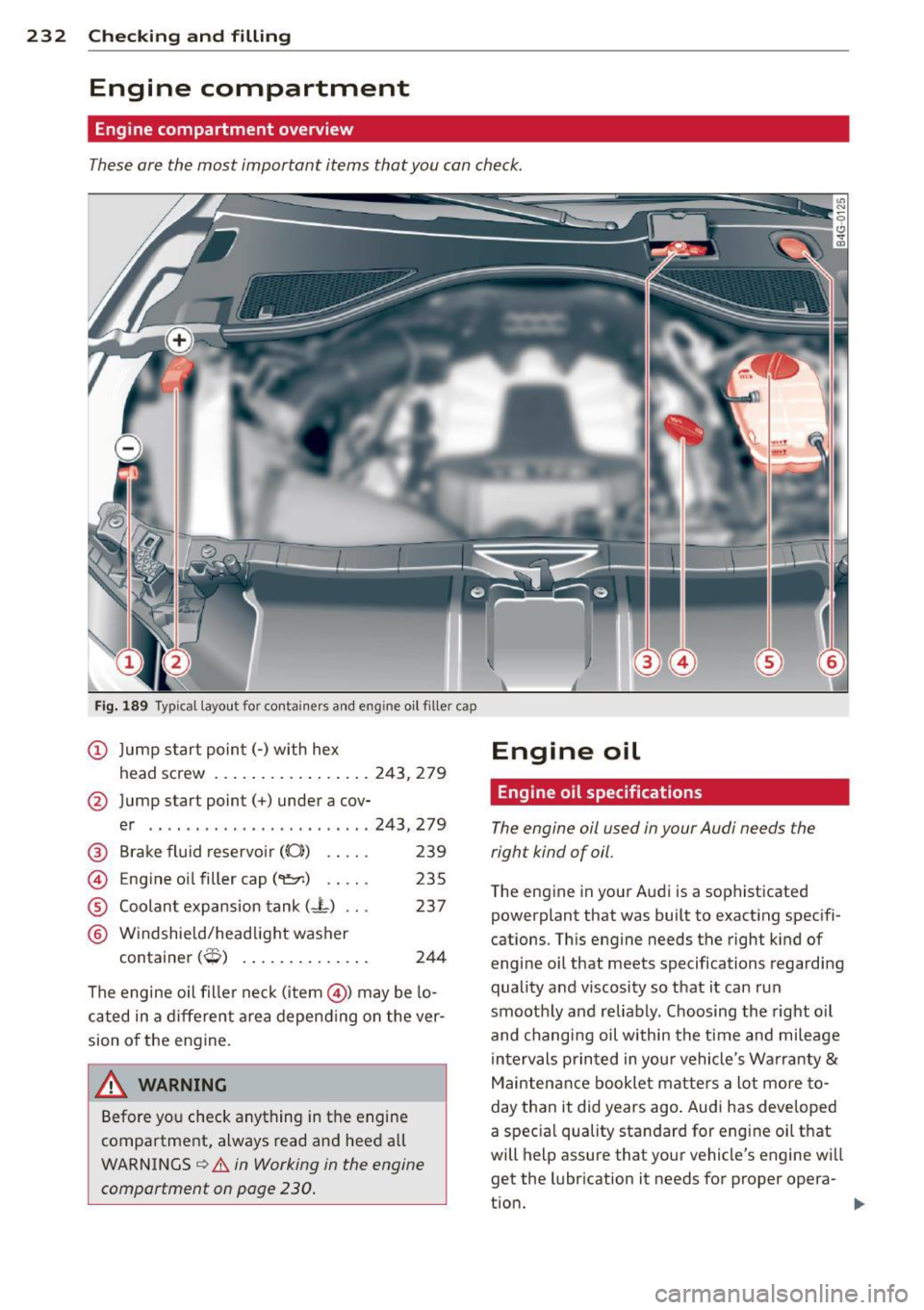
Engine compartment overview
These are the most important items that you can check.
Fig. 189 Typ ical layout for contai ners and eng ine o il filler cap
(D Jump start point(-) with hex
head screw .... .............
243, 279
@ Jump start point(+) under a cov-
er .. .. ............... .... .
243,279
®
©
®
®
Brake fluid reservoir ((0)) . . . . . 239
Engine oil filler cap (
(-L) ...
Windshield/headlight washer
237
t . (.'R) con ainer ,,.., ............ . . 244
The engine oil filler neck (item @) may be lo
cated in a different area depending on the ver
sion of the engine.
~ WARNING
Before you check anything in the engine
compartment, always read and heed all
WARNINGS
¢ &. in Working in the engine
compartment on page 230.
-
Engine oil
Engine oil specifications
The engine oil used in your Audi needs the
right kind of oil.
The engine in your Audi is a sophisticated
powerplant that was built to exacting specifi
cations . This engine needs the right kind of
engine oil that meets specifications regarding
quality and viscosity so that it can run
smoothly and reliably . Choosing the right oil
and changing oil within the time and mileage
intervals printed in you r vehicle's Warranty
&
Maintenance booklet matters a lot more to
day than it did years ago . Audi has developed
a special quality standard for engine oil that
will help assure that your vehicle's engine wi ll
get the lubrication it needs for proper opera-
tion. ..,.
Page 236 of 310
234 Checking and filling
temperatures stay below freezing point for long periods.
Detergent additives in the oil w il l make fresh
oil look dark after the eng ine has been run
ning for a short time . This is norma l and is not
a reason to change the oi l more often than
recommended.
Damage or malfun ctions due to lack of
maintenance
It is essential that you change your oil at the
recommended intervals using only engine o il
that complies with Audi oi l standard
VW 502 00. Your Limited New Vehicle War
ranty does not cover damage or malfunctions
due to fail ure to fo llow recommended mainte
nance and use requ irements as set forth in
the Audi Owner's Manual and Warranty &
Maintenance booklet . Your dealer will have to
deny warranty coverage unless you present to
the dea ler proof in the form of Service or Re
pa ir Orders that all scheduled ma intenance
was performed in a timely manner.
Eng ine oil consumption
The engine in your vehicle depends on an ade
quate amount of oil to lubricate and cool all
of its moving parts.
In order to provide effective lubrication and
cool ing of internal engine components, all in
ternal combustion eng ines consume a certain
amount of oil. Oil consumption varies from
engine to engine and may change significantly
over the life of the engine. Typically, engines
with a specif ied break-in period (see
¢ page 204) consume more oil during the
break-in period than they consume after oil
consumption has stabilized.
Under norma l conditions, the rate of oil con
sumption depends on the quality and viscosity
of the oil, the RPM (revolutions per minute) at
which the engine is operated, the ambient
temperature and road condit ions . Further fac
tors are the amount of oil d ilution from water
condensat ion or fuel residue and the oxida
tion level of the oil. As any engine is subject to wear as mi
leage builds up, the oil consump
tion may increase over time until replacement
of worn components may become necessary.
With all these variables coming into play, no
standard rate of oil consumption can be es
tablished or specified. There is no alternative
to regu lar and frequent checking of the o il lev
el, see Note.
If the yellow engine oil leve l warning symbo l
in the instrument cluster
II lights up, you
sho uld check the oil leve l as soon as possible
c:> page 235. Top off the oil at your earliest
convenience
c:> page 235.
A WARNING '"---
Before you check anythi ng in the engine
compartment, always read and heed all
WARNINGS
c:> A in Working in the engine
compartment on page 230.
(D Note
Driving with an insufficient o il level is like
ly to cause severe damage to the engine.
(D Tips
- The oil pressure warning display . is
not an indicator of the oil level. Do not
rely on it. Instead, check the oil level in
your engine at regular intervals, pref
erably each time you refuel, and always
before going on a long trip.
- If you have th e impression your engine
consumes excessive amounts of oil, we
recommend that you consult your Audi
dealer to have the cause of your concern
properly diagnosed. Keep in mind that
the accurate meas urement of oil con
sumption requ ires great care and may
take some t ime. Your Audi dealer has in
structions about how to measure oil con
sumption accurately.
-
Page 240 of 310
238 Checking and filling
the level may be slightly above the "max"
marking.
The location of the coolant expansion tank
can be seen in the engine compartment illus
tration
¢ page 232.
To obtain an accurate reading, the engine
must be switched off.
The expansion tank in your vehicle is equipped
with an electric coolant level sensor.
When the coolant level is too low, the warning light in the Auto-Check System¢
page 16 will
illuminate until you add coolant and the level
has been restored to normal. Even though
there is an electric coolant level sensor , we
still recommend you check the coolant level
from time to time.
Coolant loss
Coolant loss may indicate a leak in the cooling
system. In the event of coolant loss, the cool
ing system should be inspected immediately
by your authorized Audi dealer.
It is not
enough merely to add coolant.
In a
sealed system, losses can occur only if
the boiling point of the coolant is exceeded as
a result of overheating.
_& WARNING
The cooling system is under pressure and
can get very hot. Reduce the risk of scald
ing from hot coolant by following these
steps. -
- Turn off the engine and allow it to cool
down.
- Protect your face, hands and arms from
escaping fluid and steam by covering the
cap with a large, thick rag.
- Turn the cap slowly and very carefully in
a counter-clockwise direction while ap
plying light, downward pressure on the
top of the cap .
- To avoid being burned, do not spill anti freeze or coolant on the exhaust system
or hot engine parts. Under certain condi
tions, the ethylene glycol in engine cool
ant can catch fire .
(D Note
Do not add any type of radiator leak seal
ant to your vehicle's engine coolant. Add
ing radiator repair fluid may adversely af
fect the function and performance of your
cooling system and could result in damage not covered by your New Vehicle Limited
Warranty .
Adding coolant
Be very careful when adding engine coolant.
Before you check anything in the engine com
partment,
always read and heed all WARN
INGS ¢&. in Working in the engine compart
ment on page 230.
.. Turn off the engine .
.. Let the engine cool down.
.. Place a thick rag over the coolant expansion
tank ¢
fig. 192 and carefully twist the cap
counter-clockwise ¢,&. .
.,. Add coolant.
.. Twist the cap on again
tightly.
Replacement engine coolant must conform to
exact specifications ¢
page 23 7, Coolant. We
recommend using only coolant additive G12+
+, G13 or in an emergency G12+. Do
not use a
different additive. In an emergency use plain
water until you can get the correct additive
and can restore the correct ratio. This should
be done as soon as possible .
If you have lost a considerable amount of
coolant , then you should add cold antifreeze
and cold water only when the engine is cold.
Always use
new engine coolant when refilling.
Do not fill coolant above the "MAX" mark. Ex
cess coolant will be forced out through the
pressure relief valve in the cap when the en
gine becomes hot.
_& WARNING
-= -- The cooling system is under pressure and
can get very hot. Reduce the risk of ..,_
Page 241 of 310
scalding from hot coo lant by following
these steps.
- Turn
off the engi ne and a llow it to cool
down.
- Protect your face, hands and arms from
escapi ng fl uid and steam by cover ing
the cap with a large, thick rag .
- Turn the cap slowly and very ca refully
i n a cou nte r-clockw ise dir ect ion while
a pply ing lig ht, downwa rd p ress ure on
the top of the cap.
- To avo id being burned, do no t sp ill an
tifree ze o r coolan t on t he exh aust sys
tem or ho t engine parts . Un der certain
conditions, the ethylene glyco l in en
gine coolant can catch fire .
- Antifree ze is poisono us. Always store an
tifreeze in its or iginal co ntainer and we ll
o ut o f the reac h of children.
- If you drain the coolant , it must be
caught and safely stored in a p roper con
tainer clear ly marked "poison".
(D Note
- Coolant po llutes the env ironment and
could ca use a n engine fire . Excess coo l
ant wi ll be forced out through the pres
sure re lief va lve in the cap when the en
gine becomes hot.
- If, in an emergency, only water can be
added , the correct ratio between water
and antifreeze¢
page 237 must be re
stored as soon as possib le .
@ For the sake of the environment
Drained coolant should not be re used . Al
ways dispose of used c oolant while observ
ing all envir onmental regulations .
Radiator fan
The radiator fan switches on automa tically by
itself
An auxiliary e lectric radiator fa n switches on
and
off depending on coolant temperature
and other ve hicle operating conditions.
Checkin g and fillin g 239
After you switch the engine off, the auxi liary
fan can continue running for up to 10 minutes
- even w ith the ign ition off. It can even switch
o n again later by itself¢.& , if
- the temperature of the engine coo lant rises
due to the heat build- up from the engine in
the engi ne compartment, or
- the engine compa rtment heats up because
the vehicle is parked in intense sunlight.
&_ WARNING
--To reduce the risk of persona l in ju ry nev-
er touch the radiator fan .
- The a uxiliary electric fan is tempe rat ure
contro lled and can switch on suddenly
even when the engine is not ru nning.
- The a uxiliary radiator fan sw itches on a u
tomatically when the engine coo lant
reaches a certai n temperature and will
cont inue to ru n until the coo lant temper
atur e drops.
Brake fluid
Checking brake fluid level
N
N
N
.,; 0:, a,
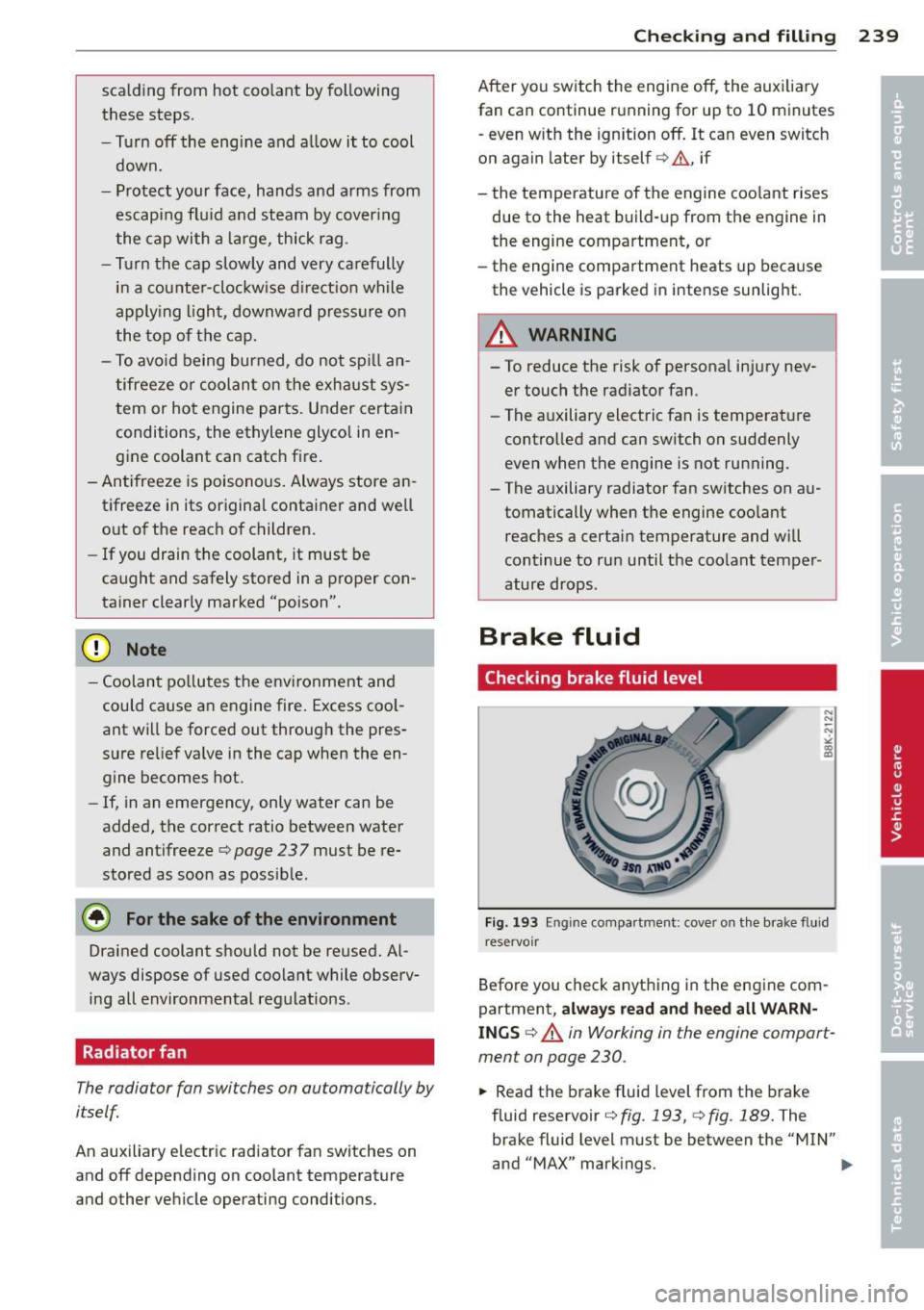
Fig. 193 Engin e co mpa rt m ent: cove r on t he bra ke fluid
reservo ir
Before you check anything in the eng ine com
partment,
alw ays r ead and heed all WARN
INGS c:> A in Working in the engine compart
ment on page 230 .
.. Read t he brake fluid level from the brake
fluid reservoir
c:> fig. 193, c:> fig. 189. The
brake fluid level must be between the "MIN"
and "MAX" markings. .,..