child seat AUDI A7 2020 User Guide
[x] Cancel search | Manufacturer: AUDI, Model Year: 2020, Model line: A7, Model: AUDI A7 2020Pages: 310, PDF Size: 81.29 MB
Page 76 of 310
Sitting correctly and safely
This can cause serious or fatal injuries for
the child and passengers.
— If children use an incorrect seating position
while driving, they have a higher risk of in-
jury during a sudden braking maneuver or
accident. This especially applies to children
in the front passenger's seat or children who
have their head near the side airbag deploy-
ment area, if the airbag system is deployed
during an accident. This incorrect seating
position can cause severe or even fatal inju-
ries.
— Make sure there is enough space in front of
the child in the child safety seat. If necessa-
ry, adjust the angle and position of the seat
in front of the child safety seat.
— The rear side of a forward-facing child safety
seat should be positioned as close as possi-
ble to the backrest on the vehicle seat. If the
head restraints make it difficult to install a
child safety seat, adjust or remove them
=> page 63. Reinstall the head restraints im-
mediately once the child safety seat has
been removed.
— Always make sure that the backrest on the
seat where the child safety seat is installed
is securely locked in place and cannot move
forward. Otherwise, the backrest where the
child safety seat is secured could move for-
ward in the event of an accident or other
emergency situation.
— NEVER use a rear-facing child safety seat on
a seat with an ACTIVATED FRONT AIRBAG;
this could cause DEATH or SERIOUS INJU-
RIES to a CHILD.
— Always secure child safety seats on the
rear seats. If exceptional circumstances re-
quire the child safety seat to be placed on
the front passenger's seat, then the front
passenger's airbag must be deactivated.
Always make sure that
PASSENGER AIR BAG OFF %; remains
on while driving. If
PASSENGER AIR BAG OFF 2%; does not
turn on, remove the child safety seat and
install it again according to the child safe-
ty seat manufacturer instructions. If
PASSENGER AIR BAG OFF #¥%; still
74
does not turn on, the front passenger's
seat must not be used. Drive to an author-
ized Audi dealer or authorized Audi Service
Facility and have the airbag system in-
spected.
— If you must use a forward-facing child safety
seat on the front passenger's seat, move the
seat as far back as possible so that it is as
far as possible from the front passenger's
airbag. While doing this, make sure the seat
can be adjusted all the way. A child in a child
safety seat on the front passenger's seat can
receive a severe impact if the front passeng-
er's airbag deploys, which increases the risk
of serious or fatal injury.
— Replace the child safety seat after an acci-
dent because there could be damage that is
not visible.
— Even if a child is not sitting in the child safe-
ty seat, the child safety seat must be se-
cured. An unsecured child safety seat may
be thrown through the vehicle interior dur-
ing sudden braking maneuvers or an acci-
dent.
Correct positioning for children
Always secure children in a child safety seat de-
signed for the body size, weight, and age of the
child.
You can secure child safety seats in your vehicle
using the lower LATCH anchors or the safety
belts. You can also secure child safety seats to
the top tether anchor. Depending on the child
safety seat, it may also be necessary to secure it
to the top tether anchor. In Canada, securing for-
ward-facing child safety seats to the top tether
anchors is required by law.
Always transport children in the rear seats
Accident statistics show that children that are se-
cured correctly in the rear seats are safer than in
front seats. Always transport children in suitable
child safety seats secured on the rear seats. >
Page 77 of 310
4K8012721BC
Sitting correctly and safely
In exceptional circumstances: transporting
children in the front passenger's seat
If exceptional circumstances require the child
safety seat to be placed on the front passenger's
seat, then the front passenger's airbag must be
deactivated. Please note the important informa-
tion for this > page 71, Advanced airbag system.
If you must secure a forward-facing child safety
seat, move the front passenger's seat as far back
as possible so that it is as far as possible from the
front passenger's airbag. While doing this, make
sure the seat can be adjusted all the way.
Only switch to a larger child safety seat when
absolutely necessary
Switch to a larger child safety seat only when ab-
solutely necessary. Secure your child using a safe-
ty belt without a child safety seat only if all of the
following statements are true:
— The child is large enough to sit upright in the
seat
— The child is able to sit with his or her back rest-
ing completely on the seat backrest
—The child is able to sit with his or her knees
bent over the edge of the seat surface
—The child is able to sit with both of his or her
feet completely touching the floor in the foot-
well
—The lap portion of the safety belt lies flat and
securely over the hip area and never over the
stomach
— The shoulder portion of the safety belt lies flat
and securely over the center of the shoulder
and
the chest, and never under the arm, behind
the back, or over the neck or face.
—The child is able to maintain this seating posi-
tion throughout the entire trip
Read and follow the important information and
warnings regarding the correct use of safety belts
> page 64.
G@) Tips
— Child safety seats can also be secured to
seats with side airbags. In the event of an
accident, children can also be protected by
the side airbags if the child is correctly se-
cured in a suitable child safety seat that is
attached correctly.
— The lower LATCH anchors as well as the
safety belt may be required to correctly in-
stall some child safety seats. Using both at
the same time is permitted, provided that
the fastening systems or safety belts do not
impair those in an adjacent seating position.
— All child safety seats are constructed so that
they can be secured using the lap safety belt
in the vehicle.
— Child safety seats with a support base can
only be secured to the outer rear seats and
to the front passenger's seat.
Securing child safety seats to the lower
PN G@ Earle)
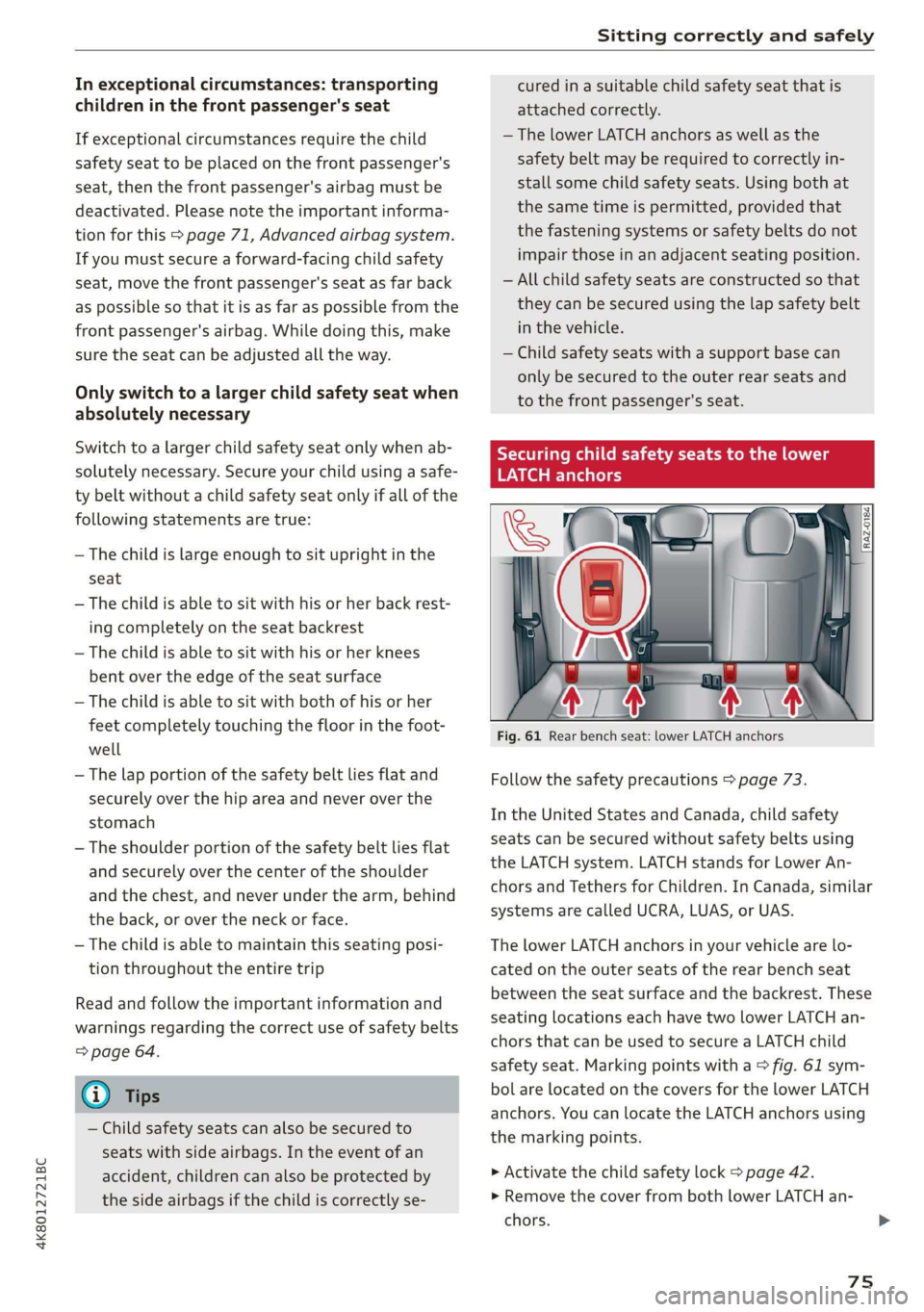
Fig. 61 Rear bench seat: lower LATCH anchors
Follow the safety precautions > page 73.
In the United States and Canada, child safety
seats can be secured without safety belts using
the LATCH system. LATCH stands for Lower An-
chors and Tethers for Children. In Canada, similar
systems are called UCRA, LUAS, or UAS.
The lower LATCH anchors in your vehicle are lo-
cated on the outer seats of the rear bench seat
between the seat surface and the backrest. These
seating locations each have two lower LATCH an-
chors that can be used to secure a LATCH child
safety seat. Marking points with a > fig. 61 sym-
bol are located on the covers for the lower LATCH
anchors. You can locate the LATCH anchors using
the marking points.
> Activate the child safety lock > page 42.
> Remove the cover from both lower LATCH an-
chors.
75
Page 78 of 310
Sitting correctly and safely
> If you secure a child safety seat to the rear seat,
secure any unused safety belts that are within
reach of the child > A\ in Securing child safety
seats with a safety belt on page 77.
> Secure the child safety seat according to the
child safety seat manufacturer instructions.
> Pull on the child safety seat to check if both
sides are engaged correctly in the LATCH an-
chors.
> If possible, also secure the child safety seat to
the respective top tether anchor on the seat
=> page 77.
Z\ WARNING
The LATCH anchors in the vehicle are only de-
signed for child safety seats with the LATCH
system. To reduce the risk of serious or fatal
injury, never secure other child restraint sys-
tems, belts, or objects to the anchors.
@ Tips
The LATCH anchors are designed for a total
weight (child and child safety seat combined)
up to 65 lbs (29 kg). If the total weight is
greater than this, the child safety seat must
be secured with the vehicle safety belt.
Tae ma Ce aR
Py-hy
Follow the safety precautions > page 73. The
front passenger’s seat is a dangerous location for
a child, even with an advanced airbag system. If
exceptional circumstances require the child safe-
ty seat to be placed on the front passenger's
seat, then the front passenger's airbag must be
deactivated. Please note the important informa-
tion for this > page 74, Correct positioning for
children and > page 71, Advanced airbag sys-
tem.
Securing child safety seats
> Activate the child safety lock > page 42.
> If you secure a child safety seat to the rear seat,
secure any unused safety belts that are within
reach of the child > A\, > page 77.
76
> If you secure a child safety seat to the front
passenger's seat, adjust the front passenger's
seat to the highest position.
> Secure the child safety seat according to the
child safety seat manufacturer instructions.
> If necessary, activate the belt retractor lock
=> page 76, Activating the belt retractor lock.
> If the child safety seat is secured on the front
passenger's seat, adjust the front passenger's
seat backrest until it rests flat against the child
safety seat. Also make sure that the upper safe-
ty belt fixture is behind the child safety seat.
> If you secure a child safety seat on the rear
seat, also secure it to the correct top tether an-
chor if possible > page 77.
Activating the belt retractor lock
If you secure a child safety seat using the vehicle
safety belt, you must activate the belt retractor
lock. Follow the child safety seat manufacturer
instructions.
The belt retractor lock prevents the safety belt
from becoming loose while driving, which could
result in the child safety seat no longer being ad-
equately secured.
> Secure the child safety seat according to the
child safety seat manufacturer instructions.
While doing so, pull out the safety belt. Insert
the safety belt into the belt latch that belongs
to that seat until it audibly locks.
> Pull the upper belt out completely and then al-
low it to retract. You will hear a clicking sound
while the belt is retracting. It will not be possi-
ble to pull the safety belt out any farther.
> Push the child safety seat into the seat and al-
low the belt to retract more.
> Make sure that the child safety seat cannot
move more than 1 inch (2.5 cm).
Deactivating the belt retractor lock
> Unbuckle the safety belt from the belt latch.
> Remove the child safety seat according to the
manufacturer instructions.
> Allow the safety belt to retract completely. The
belt retractor lock is deactivated.
Page 79 of 310

4K8012721BC
Sitting correctly and safely
AN WARNING Follow the safety precautions > page 73.
= safety belt that is not locked by the belt There is a top tether anchor behind every seat in
retractor lock or a locking device cannot se- the rear bench seat to additionally secure a child
cure a child safety seat while driving or in safety seat with an upper belt.
the event of an accident, which increases the > Move the head restraint behind the child safety
risk of fatal injury. Always make sure the seat upward.
belt retractor lock on the safety belt is acti- > Secure the child safety seat according to the
vated if the child safety seat manufacturer child safety seat manufacturer instructions.
instructions require it. > Guide the upper belt on the child safety seat
— Due to the risk of fatal injury, never place a under the head restraint or along both sides of
rear-facing child safety seat on the front it and toward the rear (depending on the child
passenger's seat when the front passenger's safety seat model).
airbag is switched on. >» Fasten the belt to the
top tether anchor
— For the child safety seat to offer the maxi- => fig. 63. While doing this, make sure the belt
mum protection, it is especially important is not twisted and is not running over any sharp
to route the vehicle safety belt correctly. Al- edges.
ways follow the instructions from the child > Pull the belt tightly so that the child safety seat
safety seat manufacturer for routing the rests at the top of the seat backrest.
safety belt correctly. Incorrectly fastened > If necessary, move the head restraint behind
safety belts can cause injuries, even during the child safety seat downward.
minor accidents.
ZX WARNING
Additionally securing a child safety seat to The top tether anchors in the vehicle are only
the top tether anchor designed for child safety seats equipped with
an upper strap. To reduce the risk of serious or
fatal injury, never secure other child restraint
systems, belts, or objects to the anchors.
Securing unused safety belts on the rear
Pye
Fig. 62 Rear backrest: top tether anchors to secure a child
safety seat with an upper belt
RAZ-0186|
Fig. 64 Rear bench seat: securing unused safety belts
If a child safety seat is used on the rear bench
seat, the child must not be able to reach any
safety belts that are not being used. Secure safe-
Fig. 63 Rear backrest: securing the upper belt to the top ty belts that are within reach of the child. >
tether anchor
77
Page 80 of 310
Sitting correctly and safely
> If you secure a child safety seat to the LATCH
anchors, fasten the safety belt on the seat
where the child safety seat is installed using
the seat's safety belt latch.
> If you secure a child safety seat to one of the
outer seats, fasten the safety belt for the cen-
ter seat in its latch.
> Activate the belt retractor lock on the fastened
safety belts. To do this, pull the upper belt out
completely and then allow it to retract. You will
hear a clicking sound while the belt is retract-
ing. It will not be possible to pull the safety
belt out any farther.
> Make sure the fastened safety belt does not
block access to the LATCH anchors. Otherwise,
it may not be possible to secure the child safety
seat to the LATCH anchors correctly.
ZA WARNING
A child in a child safety seat could play with
the unused safety belts and then become en-
tangled in them, which increases the risk of
fatal injury. Always secure unused safety belts
so that they are not within reach of children in
child safety seats.
78
Page 83 of 310

4K8012721BC
Stowing and using
ZA\ WARNING
— The luggage compartment cover must al-
ways be securely fastened when in use to re-
duce the risk of an accident.
— Loose objects can be thrown around the ve-
hicle interior during sudden driving or brak-
ing maneuvers, which increases the risk of
an accident. Always stow objects securely in
the luggage compartment and secure them
at the tie-downs. Use straps suitable for
heavy objects.
— If pieces of luggage or objects are secured
to the tie-downs with unsuitable or dam-
aged straps, this can increase the risk of in-
jury during braking maneuvers or accidents.
— When transporting heavy objects, the vehi-
cle characteristics will change due to the
shift in the center of gravity, which increases
the risk of an accident. You may need to
adapt your driving style and speed to the
current conditions.
— The cargo net is only strong enough to se-
cure light objects. Heavy objects are not ade-
quately secured. Attempting to secure heavy
objects increases the risk of injury.
— Never exceed the permitted axle and load
and vehicle weight > page 292.
— Never secure a child safety seat to the tie-
downs.
— Never leave your vehicle unattended, espe-
cially if the luggage compartment lid is
open. Children could enter the luggage com-
partment and close the luggage compart-
ment lid from the inside. This creates the
risk of fatal injury, since the children would
be locked in and may not be able to escape
by themselves.
— Do not allow children to play in or on the ve-
hicle. Close and lock the luggage compart-
ment lid as well as all other doors when you
leave the vehicle.
— Never transport passengers in the luggage
compartment. Every passenger must be cor-
rectly secured with the safety belts in the
vehicle > page 64.
— Be careful when releasing the backrest and
folding
it forward. To reduce the risk of be-
ing pinched, pay attention and check when
folding backrests forward.
— The backrest must be securely latched so
objects cannot slide forward out of the lug-
gage compartment during sudden braking.
— The backrest must be latched securely to en-
sure that the safety belt is protecting the
center seating position.
— Always pull forward on the backrest to make
sure it is check if it is correctly locked in
place.
@) Note
—To reduce the risk of damage, move the rear
head restraints down > page 64 before fold-
ing the rear backrests forward.
— When folding the backrest forward, make
sure the outer safety belts are in the belt
guide recess so that they do not get pinched
in the backrest lock and damaged. Other ob-
jects should be removed from the rear
bench seat to protect the backrest from
damage.
— If you move the front seat back when the
rear seat backrest is folded forward, you
could damage the head restraints on the
rear seat.
— Make sure that the heating grid strips for
the rear window defogger are not damaged
by abrasive objects.
G@) Tips
— The tire pressure must be adapted to the
load > page 251.
— You can purchase straps at specialty stores.
81
Page 89 of 310

4K8012721BC
Warm and cold
Applies to: vehicles with 4-zone automatic cli-
mate control: In the rear control panel, you can
press J multiple times to adjust the air distribu-
tion based on the direction of the arrow.
® Defrosting
The windshield and side windows are defrosted
or cleared of condensation as quickly as possible.
Align the outer air vents with the side windows.
The maximum amount of air flows mainly from
the vents below the windshield. The windshield
defogger* is also switched on at low outside tem-
peratures. The ¥ button will flash. Recirculation
mode switches off. The temperature should be
set at +72°F (22°C) or higher. Depending on the
outside temperature, the A/C cooling mode may
automatically switch on.
& Rear window defogger
The rear window defogger only operates when
the engine is running. It switches off automati-
cally after 10 to 20 minutes, depending on the
outside temperature.
To prevent the rear window defogger from
switching off automatically, press and hold &¥ for
more than three seconds. This is stored until the
ignition is switched off.
AUTO
<>/&S Recirculation mode
In recirculation mode, the air inside the vehicle is
circulated and filtered. This prevents the unfil-
tered air outside the vehicle from entering the
vehicle interior.
AUTOX.
If you activate <2s*, the air quality sensor will au-
tomatically switch recirculation mode on or off
depending on the outside temperature.
If you activate <, recirculation mode will switch
on manually > A\.
« Seat heating
Applies to: vehicles with heated seats
The seat heating temperature can be set at mul-
tiple levels. Press «/ once to switch on the highest
level. Press «! again to decrease the temperature
one level at a time. The seat heating is switched
off if the button is not illuminated.
*) Seat ventilation
Applies to: vehicles with seat ventilation
The seat ventilation intensity can be set to multi-
ple levels. Press 2) once to switch on the highest
level. Press 2) again to decrease the intensity one
level at a time. The seat ventilation is switched
off if the button is not illuminated.
@ Child safety lock*
If 8 turns on in the control panel in the rear*, the
child safety lock is active and operation is blocked
> page 42.
Ionizer
Applies to: vehicles with ionizer
Hazardous particles and germs in the air may be
reduced through ionization. This will produce
better air quality inside the vehicle.
&* Fragrance
Applies to: vehicles with fragrance function
The fragrance function will dispense a scent in
the vehicle interior. It is dispensed through the
front outer vents. This will produce a pleasant
scent. The fragrance is time-delayed, especially
at low or high temperatures. You can adjust the
fragrance function > page 88.
Residual heat
The residual heat from the coolant is used to
heat the vehicle interior. To use this function,
press and hold {8 for more than two seconds
while the ignition is switched off. The function
switches off automatically after about 15 mi-
nutes.
Z\ WARNING
— You should not use the recirculation mode
for an extended period of time, because no
fresh air is drawn in and the windows can
fog when cooling mode is switched off. This
increases the risk of an accident.
— Individuals with reduced sensitivity to pain
or temperature could develop burns when
using the seat heating* function. To reduce
the risk of injury, these individuals should
not use seat heating*.
87
Page 300 of 310

Index
I
Ignition
Switching on and off...............000- 90
Imbalance (wheels) ..........-...00-005 250
Immobilizer
refer to Electronic immobilizer........... 36
Indicator lights « was ss wems sz sews x a eee ee: 7
Inspection interval. ...........eeee ee ees 240
Instrument cluster. ....... 0.0 e sees eee eee 12
Adjusting the layout................... 14
CLEARING! « + cusses oo ancien + came © sezens 6-6 Ht 264
Engine code.............-. 0c eee eee 221
[email protected] s sees as wens ¥ + awmm 3 ¥ eee 3 eee 12
On-board computer.............22.000. 16
Operating .......... 0.0 e cece eee eee 13
Personal: profile « vas 5 ¢ ewe 5 s oem 2 + eee 13
Service interval display................ 240
Software information................- 221
Switching tabs: « s sce: ss esas x eee se ews 13
Switching the Views so vscws 6 a save 6 a uve ae 14
Vehicle functions...................00. 16
Version information..............000+ 221
Instrument illumination..............00- 53:
Integrated assistance................0-. 20
Intelligent search
Navigation as : sees se eees s peee es veees 183
Interior lighting.................005. 52,53
Interior monitoring...........0-..ee eee 35
Intermittent mode (windshield wipers) ..... 55
International travel................0005 179
Internet
refer toconnect.......... eee eee eee ee 174
Internet radio
refer
to Online radio...............04. 201
Intersection assistant.................. 150
Tonizer.... 2... eee eee eee 87
iPhone
refer to Audi music interface........... 208
J
Jump starting ....... cece eee eee ee eee 273
298
K
Key... cece eee eee eee eee eee 32, 36
Convenience opening and closing......... 43
Key
replacement..............2-000 eee 36
Mechanical key.............0.000-00005 36
Not recognized « : eee: ¢ x seen ds pees ee een 91
PANIG:K@ Yas so cessnee oo annie © 2 ouenies a we cameens we 36
Replacing the battery.................. 38
Unlocking and locking..............0085 37
Mehiclecode « sisi a snesase w 6 amenees ao oxime 9 ws 36
KeyUS@P nn ys manu + s cems + camey 6s eos oe ee 31
KiCkK-GOWN's « « sus ¢ aguas a # awe & 2 esa «ne 94
L
Lane assist
refer to Lane departure warning......... 141
refer to Lane guidance................ 141
Lane departure warning................. 141
Cleaning the camera area.............. 262
Lane guidance.............0 cece eens 135
Laptimer........ 0.0... cece eee eee 123
EValUating’s + = sees + anes & + eeee & ¥ ewes 124
Startin Qin » 2 erie oo smu 6 2 os oo ees 123
Laser lightingse;s < seca ¢ sews « y pews se eee 50
Laser scanner ss « eee < ecw + eens + ees 116
Cleanings 2 3 wea 3 wim 2 wasn oo vivcim @ #8 263
LATCH (securing child safety seats)......... 75
AUTEM COMO lew s x gees 2 women & & Sum gx He 95
Leather care and cleaning............... 264
Legal information
License subscriptions................. 221
Software information............0.0.048 221
Software licenses................00005 221
Version information.................. 221
License plate bracket..............-500 288
Lifting points (vehicle jack).............. 271
Light/rain sensor
Headlights i; 2s seen ss eeee ov bows ee eee 48
Intermittent mode (windshield wipers).... 55
Lighting
Exterior... 2... cece ccc eee 48
TAtGKIOR = sews x 2 wen 5 o tien so ees SES 52
Lights... 2... ee eee eee eee 48
Listening to music
refer to M@didewes & & cas ¢ ¢ eases «oes 205, 209
LOad + sng « xem & s seu YE Mew ce see 2 2 292
Page 304 of 310
Index
S
Safety belts. ...... 0... 2 cee eee eee 64
Cl@aniNnG: ¢ « sews = e eeay se ween 2 eaen se Be 264
LOCKING rains 2s acters oo arerece xo acne x mi senor owe 76
Securing child safety seats.............. 76
Satellite map... . 0.2... eee eee eee ee 192
Saving fuel
Energy consumers..........-..--000000- 17
RecUPEratiOn s ¢ wes + x ees 2 eee ss wee g 17
Screen
refer'to Touch displayriis. . . seiaw oo wecnw ov 18
SGREWAPIVER': = 4 sexes 5 2 even x s neues 5 e HUH & 2 267
SD card reader (MMI) ......... 0000s eee 205
Séarch aréa (POD) sccs = s ees x sees ys ees 185
Search function
refer to Free text search. .........00005 213
Seat Weating quay « x saws x # ame = RaeD aE REE 87
Seats
Adjusting the front seats................ 60
Cleaning...................000000008 264
Folding
Front passenger’s seat adjustment....... 62
Head restraints. .......... 0.0.00 eee eee 63
Massage function.............2--.000- 60
Mettiory furetion « cess as cows as ews a ¢ vers 67
Resetting the position.................. 61
Storing a seat profile..............200.. 67
Seat ventilation. ......... cece eee eee 87
Selecting a source (media).............. 209
Selector lever... 2.00... cee eee eee eee 92
Self-learning navigation
refer to Personal route assistance....... 190
Sensors
Coverage areaS..... 2. cece eee 116
LOGAIONS ies «2 sme = 3 meee © 7 sueKe wo ere LL7
Service interval display................. 240
Setting measurement units.............. 219
Settings ..........0 0.0.02 e eee eee 219
Announcements and tones............. 219
Bluetooth................ 00. eee eee 220
Date andtime.................0 eae 219
LANGUAGE veces 5 2 sees ¥ 2 eawa § 8 ews 2 2 ea 219
Measurement units.................4. 219
Media. ... 2... eee eee eects 214
NaVidatiOlic: = ¢ sew s 3 eee 2 ees & 5 Rome g 195
Rad Obariie se sewrie ve ouerere ew omens ew anaes ww 203
302
SOU ssccnes + a axcwe ww swcwuns © a anew w stews Oe 219
SyStEM . 6. eects 219
TIME ZONGiccs s 2 wees a & HoweE 2 i owR eb wee 219
Wi-Fihotspot « sices + 2 scene a 6 woe es woe 178
Setting the language................... 219
Setting the time... : sesass eeea ee reese ey 219
Shift paddles wx «= sees sv sees ay oeee ye oes 94
SHIPCSrTIEr: 5 xcs.c + sues cs Hew Ge Hewes 5 105
Shortcut
refer to Shortcuts’. = segs ss ees ye ees ees 23
SHORECUtSicx: = s game « 2 seus gv ee fe rae Eo 23
Shuffle... 0.0... eee eee eee 211
also refer to Shuffle..............000- 211
[email protected] s 2 news 3 ¥ cows ge Pee ye ese 147
Cleaning the sensors ..........0ee ee eee 262
SIMieand «3 inesius oi inomaon < aroma 2 inavim w © ascwem 175
SiriusXM alert notifications.............. 202
Sliding/tilting sunroof
refer to Panoramic glass roof............ 44
Smartfavoritest, « wiv oc save ao sarees @ wane 201
Smartphone
Wireless charging...............-.05. 163
also refer to Telephone............0005 161
Snow chains.......... 0.0.00 eee eee eee 257
Socket... eect eee 79
Software
Update... 0... ee eee eee eee 220
Software information
Legal information’: « 2 cw: ss sees se ewes s 221
Software version (MMI)
Version information...............05- 221
Sound
refer to Adjusting the sound............ 219
Space-saving spare tire (compact spare tire) . 273
SPar@ titles = esas + vers se wees se wees oe 273
Speed limit information
refer to Traffic sign recognition......... 120
Speed limits
refer to Traffic sign recognition......... 120
Speedometer..............00 cece eee ee 12
Speed warning system..............-00. 120
Spoilefias « = sscea ow veces = 2 mew + wate ee Rae 110
Sport differential « csas ss cseu stews news 108
Start/Stop SySt@ti ws < = saws ve sews 2 2 revs se 98
MeSSAQES « ewes ss sess 6% seman ¥ suaweas ao eRe 99
Switching offandon...............0005 98
Page 305 of 310

4K8012721BC
Starting to drives: 2 « cccn 2 ween © © ween ao exenene 91
Starting (Engine). « sssw0 6 & isi so scone ew anew 98
Steering’: «= news ¢ e sews cy swan oo we Fo oe 106
Audi drive select w..cc2 . seve oe consace 2 anene 104
also refer to Steering.............0008 106
Steering lock..........2-. 000 eee eee 90, 106
Steering wheel
AQjUSTING ax ¢ ¢ cacae ¢ 5 Some to Heme to eee ze 63
Shift
paddles vero « 2 cusses 2 = cms o a avons 6 os 94
Steering wheel heating................. 88
also refer to Multifunction steering wheel. . 13
Steps for determining correct load limit... 255
Stopover (navigation) .................. 187
Stopping: (@MgGine) rar acaoma sa anvzene es szana aa 98
STORAGE’: «6 6 sess oo owen « 0 anna @ 8 cuomans wo 0 80, 82
Storage area behind the rear head restraints. 80
Storage compartment. 0.2... 6000 ee veeeee 80
StOPSGE Nets « somes g x neue Fo eRUER FE RS a a 80
Streaming
refer to Online media... .......0...008 207
Subtitles (DVD) wisn a + aawy a x wane 2 2 eee 2 213
Sunshade
ROOF. cseuros x 0 cereus © a aocuans vw apnoomn vn seca ww a 44
SUNVISOMS ese oo wwe oo mew 2 mew o HEE se 55
SUSPENSION snes 3 5 sea + y anew ¢ eaeeR w + HEE 105
Audiidrive’select evccus + ssusve = consace 9 2 sere 104
Swapiealll sss a acces a v ceawene ie 2 wanes x e anecets & 168
SWEMVElASSISE ses: « 2 ove wo macnn 2s eae 2 og 145
Symbols
Navigations. «+ scccne a 6 seve a 0 oven 3 6 secon © 188
Traffic... 6... eee 194
also refer to Indicator lights.............. 7
SYNC (climate control system) ............ 86
System settings .................0.000. 219
T
Tachometer...............-0 eee eee 12,15
Tail lights
Cl@ANiNg : ¢ eeu se eee ge wes ge Pee 262
Technical data.....................05. 291
Technical modifications................. 286
Telephone .......... 0. ccc ee eee eee 161
Audi phone box. « 2 se0s ss sees se eens ae 163
Connecting acell phone............... 161
Dialing anumber..............2--.05- 167
Options during aphonecall............ 168
Playing music... 0.0.0... cece eee ee eee 206
Temperature display (outside temperature)... 15
Temperature gauge
Coolant... .. cee eee 12
Text input... 2.6... ee eee eee 24
Text messages
SGttinGS was « 5 as,8 & Bes Fs HaeeR © 3 BEER 169
Text messaging settings............... 169
also refer to Text messages............ 169
Tied OWS is & sui wo oxiuare ¥ a owen ow atamena 6 soa 83
Tightening specification
Wheel bolts.............. 0. eee eee eee 272.
Tightening specification (wheel bolts) ..... 272
THM G2: & sseeiss oo serene wo rere vo oRaeDs ww aeRO oo 16
tiptronic
refer to Manual shifting................ 94
Tire Mobility System (tire repair set)....... 267
TAPES: seossue « 2 secwess x stoners @ © tueeEWn oo xxeanes © vom 241
Loose wheel warning...............005 256
LOW=profiletires < seas ss ees ee ewes Bes 257
Repaitisetic ss seas + news ss mene a x muon ¥ 0 0 267
Replacing......... 0... cece cece eee 269
S@rvice lifeicnx ss asec : sane « t yom & 2 eee 250
Tin@ PreSSUCbeci 2 mnew + sem oe mem oe 251
Tire pressure monitoring system.... 258, 259
Tire préssuré tables : 2.cs si ceases tees se 252
Tire pressure (trailer mode)............ 112
Treadwear indicators.................. 250
Unidirectional. ..............040. 243,272
Uniform tire quality grading............ 258
Tires and wheels
Glossary of tire and loading terminology .. 244
Tires and vehicle load limits............ 253
TOOL... eee 267
TooltipS..... 0... eee eee eee ee 20
Top tether anchor (securing the child safety
Seat)... eee eee 77
Touch display
Adjusting feedback.............s0eeuee 20
Operating’: «a wise + wows o + acess wo aoe 6 © a8 18
TOWi0G ies = < sey ¢ 5 eowe 5 o eee ¢ nee 6 ge 275
TOWING OOD « sees zs eeeu 2s eeee 2 v eee 276; 277
Towing protection monitoring............. 35.
TPMS
Tire pressure monitoring system........ 259
Traffic information = v2ex + < seu « = mage x x 2 194