tow AUDI Q3 2016 Owner's Manual
[x] Cancel search | Manufacturer: AUDI, Model Year: 2016, Model line: Q3, Model: AUDI Q3 2016Pages: 252, PDF Size: 62.81 MB
Page 157 of 252
intervals and fac ilitat es a better reaction time for
the brak es in wet weather.
The braki ng effect can also be red uced if you are
driving on salted roads and you do not apply the b rakes for long periods of time . The layer of salt
on th e brake rotors and brake pads must be worn
off first when the brakes are applied~&, .
Cor ro sion
Leaving the vehicle par ked for long periods of
time, low m ileage and avo iding heavy brak ing
can contribute to corros ion on the brake rotors
and dirty brake pads.
If you usually avo id heavy b raking or if there is
cor ros io n present , occasional heavy braking at
high speeds is recommended to clean the brake
rotors and pads~&, .
Brake system malfunct ion
if you notice that the bra ke pedal travel has sud
denly
go tten larger , the n a brake circu it may have
failed ~&. .
Low brake fluid level
When the brake flu id level is low , malfunct ions in
the brake system may occ ur. The brake flu id leve l
i s elect ronically mo nitored .
Brake booster
The brake booster amplifies the pressure you ap
p ly to the brake pedal.
It only works when the en
g ine is running ~&, .
Brak e lining we ar status
Brake lining wea r may be checked by visual in
spection of the condition of the brake pads
through the open ings in the wheel. If necessary,
the wheel may be removed for this inspection
~ page 213, Replacing wheels .
.8, WARNING
-New bra ke pads don 't have the best stop
ping power and must be "bro ken- in" dur ing
the init ial 250 m iles ( 400 km). Yo u can
compensate for this by p ressing the brake
peda l more firm ly . T his also applies later
when new pads are installed .
Intelligent Technology
- You shou ld pe rform braking maneuvers for
the purpose of cleaning the brake system
only if road condit ions permit . Other road
users must not be put at r isk -you may
cause an accident!
- Before descending a steep grade, reduce
speed and sh ift tra nsmission in to a lower
gea r or lower dr iving range . Do not r ide the
b rakes or hold the pedal down too long or
too often. Th is co uld cause t he b rakes to ge t
hot and dim inish b raking effic ien cy.
- D o not " ride the bra kes " by rest ing you r foot
on the ped al when you do no t intend to
brake . T his may ca use the brakes to ove r
heat, premature wear and increased stop
ping distance .
- Under cer tain clima tic and ope rating condi
tions such as passing t hrough water, driving
in heavy rain o r after washing the vehicle,
the effectiveness of the brakes can be re
duced. In winter, ice can accumu late on the
brake pads, lin ings, discs and drums . Care
fully apply brakes for a test . Brakes will d ry
and ice coat ings will be cleaned off after a
few ca refu l bra ke applications .
- Driving for an extended period of t ime on
salt-covered roads without using your b rakes can also affect braking eff icien cy.
Clea n off acc umulated salt coat ing fr om
b rake discs an d pads w ith a few careful
brake applicat ions .
- If you damage the front s poile r, or if you in
s t all a different spoiler, be s ure the a ir flow
to the front brakes is not obstructed. Other
wise the brake system could overheat reduc
ing the effectiveness of the ent ire brake sys
tem.
- Fai lu re of one brake circ uit w ill impa ir the
braking capability resulting in an increased
stopping distance . Avoid driving the vehicle
and have it towed to the nearest authorized
Aud i deale r or qualified worksho p.
- Never let the ve hicle roll to a stop with the
e ngine shut off.
- If the brake booster is not working, the
brake pedal must be pressed cons iderab ly
harder to make up for the lack of booster
assis tance .
155
Page 161 of 252
Driving and the
environment
Breaking in
New engine
The engine needs to be run-in during the first
1,000 miles (1, 500 km).
For the first 600 miles (1 ,000 kilometer s):
"' Do not use full throttle .
"' Do not drive at engine speeds that are more
than
2/3 of the max imum permitted RPM .
From 600 to 1,000 miles (1 ,000 to 1 ,500
kilometers):
"' Speeds can gradually be increased to the maxi
mum pe rm issib le road or engine speed .
During and after break-in pe riod
"' Do not rev the engine up to high speeds when it
is cold. This applies whether the transmission is
in N (Neutral) or in gear .
After the break-in period
"'Do not exceed maximum engine speed under
any c ircumstances .
"'U pshift into the nex t higher gear
before reach
ing the red area a t the end of the tachometer
sca le
c=> page 10.
During the first few hours of driving, the eng ine's
internal fric tion is higher than later when all the
mov ing parts have been broken in . How well this
b reak-in process is done depends to a considera
b le exte nt on the way the veh icle is d rive n during
t he first 1,000 miles (1,500 kilometers).
(D Note
Extremely high eng ine speeds a re au toma ti
cally reduced . However, these rpm limits are
programme d for a n engine well run-in, not a
new engine.
@) For the sake of the environment
D o not dr ive with u nnecessari ly high eng in e
spee ds -ups hifting ea rly saves fuel, reduces
noise and pro tec ts the envi ronme nt.
Driving and the envir onment
New tires
If your vehicle is runn ing on new tires, d rive very
car efu lly fo r the firs t 35 0 miles (500 kilometers)
a ft er fit ting.
WARNING
New tires tend to be slippe ry and must a lso
be "bro ken-in". Be sure to remembe r th is dur
i ng the fi rst 350 m iles (500 kilometers).
Brake gent ly. Avoid following closely behind
other vehicles or other s ituations that m ight
r equire sudden, hard b raking .
Avoid damaging the
vehicle
When yo u are dr iv ing o n poor roa ds, or over
cur bs, stee p ramps, e tc., ma ke cert ain that low
ly ing parts s uch a s spo ile rs a nd exh aust sy stem
parts do no t bottom o ut and get dama ged.
T his is espec ially true for ve hicles with low-s lung
c h ass is (sports c hass is) * and fully loaded
vehicles.
Catalytic converter
It is very important that your emission control
system (catalytic converter) is functioning prop
erly to ensure that your vehicle is running in an
environmentally sound manner.
"' Always use lead -free gasoline c> page 173,
Fuel supply.
"' Never run the tank down all the way to empty.
"' Never put too much moto r o il in you r engine
c=> page 181, "t':::r. Adding engine oil .
"'Never try to push -or tow -start your veh icle .
The catalytic converter is an efficient "clean-up" device built into the exhaust system of the veh i
cle. The catalyt ic converter b urns ma ny of the
pollutants in the exhaust gas before they are re
leased into the atmosphere .
The exclusive use of un leaded fuel is critically im
portant for the life of the catalytic converter and
prope r fu nct ion ing of the eng ine. ..,.
159
Page 166 of 252
Trailer mod e
Trailer mode
Driving with a trailer
General information
Your Audi was designed primarily for passenger
transportation.
If you plan to tow a trailer, please remember that
the additional load will affect durability, economy and performance.
Trailer towing not only places more stress on the
vehicle, it also calls for more concentration from
the driver.
F or this reason, always follow the operating and
driving instructions provided and use common
sense.
Technical requirements
Tr aile r hitch
Use a weight-carrying hitch conforming to the
gross trailer weight. The hitch must be suitable
for your veh icle and trailer and must be mounted
securely on the vehicle's chassis at a technically
sound
location . Use only a trailer hitch with a re
movable ball mount . Always check w ith the t rail
er hitch man ufact urer to make su re that you are
using the co rrect hitch .
Do not use a bump er hit ch .
The hitch must be installed in such a way that it
does not interfere with the impact -absorbing
bumper system. No mod ificat ions should be
made to the vehicle exhaust and brake systems .
From t ime to t ime, check that a ll hitch mount ing
bolts rema in securely fastened.
When you are not tow ing a tra iler, remove the
tra iler hitch ba ll mount . This prevents the hitch
from caus ing damage shou ld your veh icle be
s truck from be hind ¢
,&..
Trailer brakes
If your trailer is equipped with a brak ing system,
check to be sure that it conforms to all regula
tions .
164
The trailer hydraulic brake system must not be
directly connected to the vehicle's hydraulic
brake system ¢&. .
Safety chains
Always use safety chains between you r vehicle
and the trailer.
Trailer lights
Traile r lights must meet all regulations . Be sure
to check w ith your author ized Audi dealer for cor
r ec t wiring , switches, and relays.
M irrors
If you are unable to see the traffic behind you us
ing the regular outs ide mirrors, then you
must in
stall extended mirrors . It is important that you
always have clear vision to the rear.
.&_ WARNING
- If a tra ile r has e lectr ica l brakes p lease no te
t hat these brakes are not activated by the
factory-fit ted contro l unit -risk of accident!
- After removing the trai ler hitch, do not
store it in your vehicle. In case of sudden
braking, the hitch co uld fly forward and in
jure you or yo ur passengers.
- Never install a "we ight distribu ting" or
"load eq ualizing" trailer hitch on your vehi
cle. The vehicle was not designed for these
kinds of trailer hitches. The hitch attach ment can fail, caus ing the tra iler to tear
loose from the vehicle.
- The Gross Vehicle Weight Rating for your
veh icle, found on the safety compliance la
be l on the driver's s ide B-pillar, must never
be exceeded under any circumstances . Ex
ceed ing the Gross Vehicle Weight Rat ing of
your veh icle is likely to damage yo ur vehicle,
and such damage will not be covered by
your Limited New Vehicle Warranty . Exceed
ing the Gross Vehicle Weight Rating will al
so change the performance and handling
characteristics of your vehicle, which could
cause a crash result ing in serious injury or
death.
Page 167 of 252
Operating instructions
6" r-2
~·~
1/2"
1·1/2"
ill
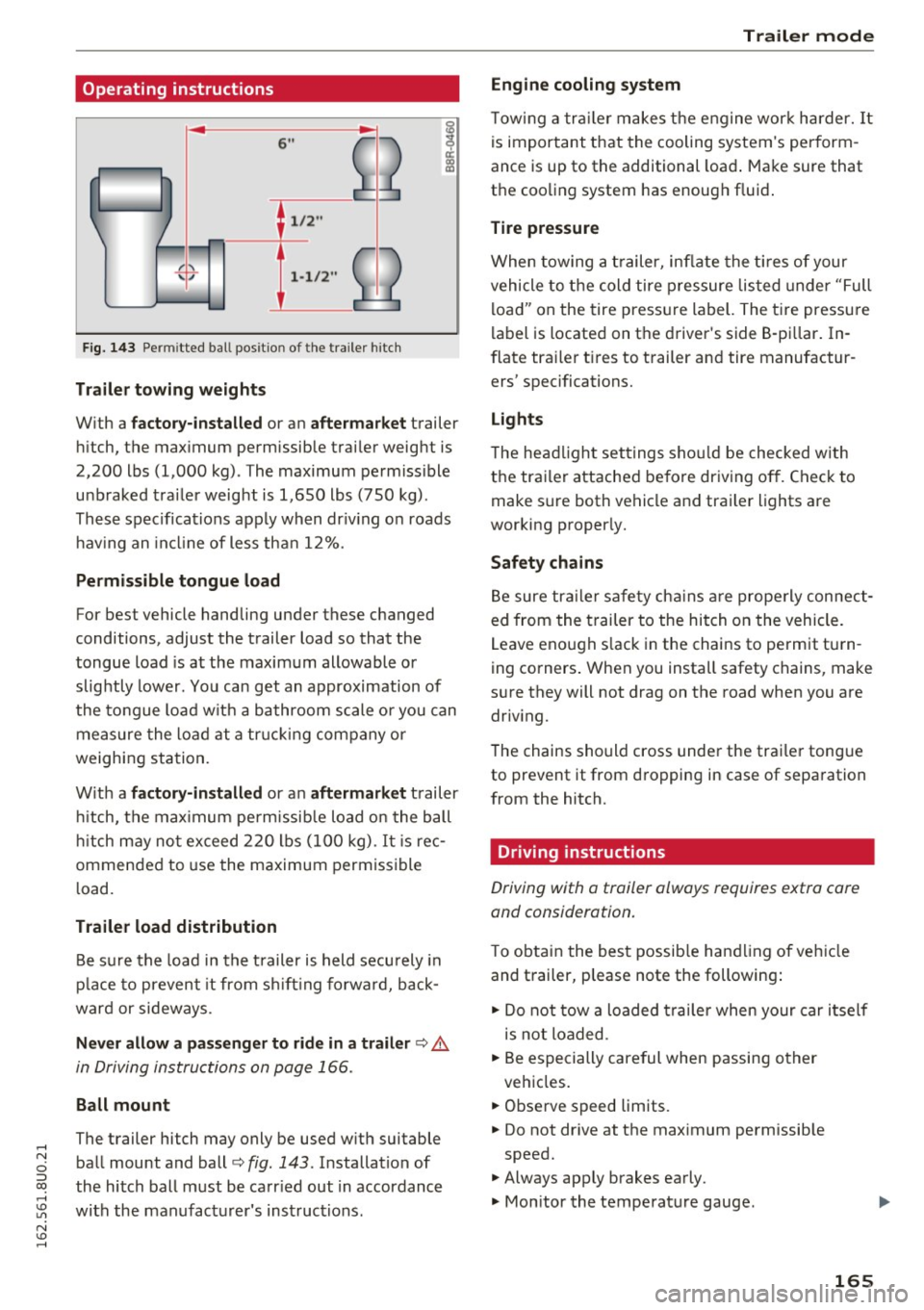
Fig. 143 Permitted ball pos ition of the trailer hitch
Trailer towing weights
With a
factory-installed or an aftermarket trailer
hitch, the maximum permissib le trailer weight is
2,200 lbs (1,000 kg). The maximum permiss ible
unbraked trailer weight is 1,650 lbs (750 kg).
These specifications apply when dr iv ing on roads
h av ing an incl ine of less than 12%.
Permissible tongue load
For best vehicle handling under these changed
conditions, adjust the trailer load so that the
tongue load is at the maximum allowable or
slightly lower. You can get an approximation of
the tongue load w ith a bathroom scale o r you can
measure the load at a trucking company or
weighing station.
With a
factory-installed or an aftermarket trailer
hit ch, the maximum permissib le load on the ball
hitch may not exceed 220 lbs (100 kg).
It is rec
ommended to use the maximum permissible
l oad.
Trailer load distribution Be sure the load in the trailer is held securely in
place to prevent it from s hiftin g forward, back
ward or sideways.
Never allow a passenger to ride in a trailer ¢.&.
in Driving instructions on page 166.
Ball mount
The trailer hitch may only be used w ith suitable
ball mount and ball¢
fig. 143. Installation of
the hitch ball must be carr ied out in accordance
with the manufacturer's instructions.
Trailer mode
Engine cooling system
To wing a trailer makes the engine work harder. It
is important that the cooling system's perform
ance is up to the additional load . Make sure that
the cooling system has enough fluid .
Tire pressure
When towing a trailer, inflate the tires of your
vehicle to th e cold tire pressure lis ted under "Full
load" on the tire pressure label. The tire pressu re
label is located on the driver's side B-pi llar . In
flate trailer t ires to trailer and tire manufactur
ers' specifications.
Lights
T he headlight settings shou ld be checked with
the trai ler attached before driving off. Check to
make s ure both vehicle and trailer lights are
working properly.
Safety chains
Be sure trailer safety chains are properly connect
ed from the trailer to the hitch on the vehicle.
Leave enough s lack in the chains to permit turn
ing corners . When you install safety chains, make
sure they will not drag on the road when you are
driv ing.
The chains should cross under the trai ler tongue
to prevent it from dropping in case of separation
from the hitch.
Driving instructions
Driving with o trailer always requires extra core
and consideration .
To obtain the best possib le handling of vehicle
and trailer, p lease note the following:
.. Do not tow a loaded trailer when your car itself
is not loaded.
.. Be especially care ful when passing other
vehicles .
.. Observe speed limits.
.. Do not drive at the maximum permissib le
speed.
.. Always apply brakes early.
.. Mon itor the temperature gauge .
165
Page 168 of 252
Trailer mod e
Weight d istribution
Towing a loaded trailer with an empty car res ults
in a high ly unstable distribution of weight . If this
cannot be avoided, drive at very low speeds on ly
to avoid the risk of losing steering control.
A "balanced" rig is easie r to operate and con trol.
This means that the tow vehicle should be loaded
to the extent possible and permissible, while
keeping the trai le r as light as possib le under the
circumstances. Whenever possible, transfer
some cargo to the luggage compartment of the
tow vehicle while observ ing tongue load requ ire
ments and vehicle loading considerat ions.
Spee d
The higher the speed, the more difficult it be
comes for the driver to contro l the rig. Do not
drive at the maximum permiss ible speed. Reduce
your speed even more if load, weather or w ind
conditions are unfavorable - part icularly when
goi ng downhill.
Reduce veh icle speed
immediatel y if the tra iler
shows the slightest sign of swaying .
Do not try
to stop the sway ing by acc ele rating .
Observe speed lim its. In some areas, speeds for
veh icles towing trailers are lower than for regular
ve hicles.
A lways app ly brakes early. When driving down
h ill, shift into a lower gear to use the engine
braking effect to slow the veh icle. Use of the
brakes alone can cause them to overheat and fail.
Coolant temp era ture
The coolant temperature gauge¢ page 10 must
be observed carefully. If the needle moves close
to the upper end of the scale, reduce speed im mediately and/or turn off the air conditioner.
If the coo lant temperature warning light in the
instr ument cluster starts flashing., pull off
the road, stop and let the engine
idle for about
two minutes to prevent heat bu ild-up.
A WARNING
Anyone not proper ly restrained in a moving
vehicle is at a much greater risk in an acci-
166
-
dent . Never let anyone ride in your car who is
not properly wear ing the restraints provided
by Audi.
Trailer mode notes
Important to know
You r vehicle handles differently when towing a
trailer because o f th e additiona l weight and dif
ferent weight distribution. Safety, performance
and economy will g reatly depend on how carefu l
l y you load your trai ler and operate your rig.
Before yo u actually tow your trailer, pract ice
turning, stopping and backing up in an area away
from traffic . Keep practicing unti l you have be
come complete ly familiar w ith the way your vehi
cle-tra iler combination behaves and responds.
Backing up is difficult and requires practice .
Backing up with a trailer genera lly requires steer
ing action opposite to that when backing up your
vehicle without a trailer.
Maintain a greater distance between your vehicle
and the one in fro nt of you . You will need more
room to stop. To compensate for the trailer, you
will need a larger than normal turning radius.
When passing, remember that you cannot accel erate as fast as you normally wo uld beca use of
the added load. Make sure you have enough room
to pass. After passing, allow p lenty of room for
your trailer before changing lanes again.
Avoid jerky starts, sharp turns or rapid lane
changes.
@ Tips
- Do not tow a trailer du ring the break-in peri
od of your vehicle.
- If you tow a trai le r, your Au di may requi re
more frequent maintenance due to the ex
t ra load ¢
page 232.
Page 169 of 252
Parking on a slope
Do not pork on a slope with a trailer. If it cannot
be avoided, do so only ofter doing the following:
When parking:
.. Apply the foot brake .
.. Have someone place chocks under both the ve
hicle and the trailer wheels .
.. With chocks in place, slowly release the brakes
until the wheel chocks absorb the load .
.. Turn the wheels towards the curb .
.. Apply the parking brake .
.. Move the selector lever to P.
When restarting after parking:
.. Apply the foot brake .
.. Start the engine .
.. Move the selecto r lever to D/S .
.,. Release the parking brake and slowly pull out
and away from the wheel chocks .
.. Stop and have someone retrieve the wheel
chocks.
(D Tips
If you move the selector lever of the automat
ic transmission to P before applying the park
ing brake and before blocking the wheels, you
may have to use more force later to move the
lever out of the P position.
Trailer mode
167
Page 206 of 252
Wheels
position and the total weight of
any luggage in the vehicle. If you
tow a trailer, the weight of the trailer hitch and the tongue
weight of the loaded trailer must be included as part of the vehicle
load.
The
Gross Axle Weight Rating
("GAWR") is the maximum load
that can be applied at each of the
vehicle's two axles.
The fact that there is an upper
limit to your vehicle's Gross Vehi
cle Weight Rating means that the
total weight of whatever is being
carried in the vehicle (including
the weight of a trailer hitch and
the tongue weight of the loaded
trailer) is limited. The more pas
sengers in the vehicle or passen
gers who are heavier than the
standard weights assumed mean
that less weight can be carried as luggage.
The Gross Vehicle Weight Rating
and the Gross Axle Weight Rating
are listed on the safety compli
ance sticker label located on the
driver's side B-pillar
~ page 201,
fig . 158 .
204
_& WARNING
Overloading a vehicle can cause
loss of vehicle control, a crash
or other accident, serious per
sonal injury, and even death.
-Carrying more weight than
your vehicle was designed to carry will prevent the vehicle
from handling properly and
increase the risk of the loss of
vehicle control.
-The brakes on a vehicle that has been overloaded may not
be able to stop the vehicle
within a safe distance.
-Tires on a vehicle that has
been overloaded can fail sud
denly, including a blowout and
sudden deflation, causing loss of control and a crash.
-Always make sure that the to
tal load being transported -
including the weight of a trail
er hitch and the tongue
weight of a loaded trailer -
does not make the vehicle
heavier than the vehicle's
Gross Vehicle Weight Rating.
Page 207 of 252
Determining correct load
limit
Use the example below to calcu
late the total weight of the pas
sengers and luggage or other
things that you plan to transport
so that you can ma ke sure that
your vehicle will not be overload ed .
Steps for Determining Correct
Load Limit
1 . Locate the statement "THE
COMBINED WEIGHT OF OCCU PANTS AND CARGO SHOULD
NEVER EXCEED XXX KG OR XXX
LBS"on your vehicle 's pla card
(tire inflation pre ssure l abel)
¢ page 201, fig. 158.
2 . Determine the combined
weight of the drive r and pas
s engers that will be riding in
your vehicle.
3 . Subtra ct the combined weight
of the driver and passengers
from
" XXX" kilograms or "XXX"
pounds shown on the sticker
¢ page 201 , fig. 158 .
4. The re sulting figure equals the
available amount of cargo and
luggage load capacity. For ex
ample, if the
" XXX" amount
equals 1400 lbs. and there will
Wheels
be five 1 SO lbs. pa ssengers in
your vehicle, the amount of available cargo and luggage load capacity i s 650 lb s.
(1400-750 (5 X 150) = 650
lbs.)
5. Determin e the combined
weight of luggage and cargo
being loaded on the vehicle.
That weight may not safely ex
ceed the available cargo and luggage load capa city cal culat
ed in Step 4 .
6. If your vehi cle will be towing a
trailer, load from your trailer
will be transferred to your ve
hicle. Con sult thi s manual to
determine how this reduces
the available cargo and lug gage load capacity of your vehi
cle.
..,.Check the tire sidewall
(¢page 191 , fig. 156) to deter
mine the designated load rating
for a specific tire.
Wheel bolts and rims
Wheel bolts
Wheel bolts mus t be clean and loosen/tig hte n
easily .
Rims
Rims with a bo lted r im ring * or with bo lted w heel
cove rs* cons ist of mult iple p ieces. These compo-
nents were bolted togethe r using s pec ial bolts ..,.
205
Page 213 of 252
.... N
c:i ::J CX)
.... I.Cl U"I
N I.Cl ......
Emergency assistance
General information
.. Park the vehicle as far as poss ible from moving
traffic in the event of a flat tire. In the event of
a flat tire, park the vehicle on a level surface. It
you are on a steep incline, be especially careful.
.. Set the parking brake .
.. Switch the emergency flashe rs on .
.. Put on a reflective vest, if available .
.. Set up the warn ing triang le, if available .
.. Have the passengers exi t the veh icle. They
sho uld move to a safe place, for example be
hind a guard rail.
_& WARNING
Pay attention to the steps above . They are for
your protection and the for the safety of other drivers.
_& WARNING
Improper use of the vehicle jack can cause se
rious personal injuries.
- Never use the screw driver hex head to
t ighten whee l bolts, since the bolts cannot
attain the necessary tighten ing torque if you
use the hex head, potentially causing an ac
c ident.
- The factory-supplied jack is intended only
for your vehicle model. Under no circum
stances should it be used to lift heavy
vehicles o r other loads; yo u ris k inju ring
yo urself.
- Never start the engine when the vehicle is
ra ised, which could cause a n accident.
- Support the veh icle secure ly with app ropr i
a te s tan ds if wor k is to be performed under
neath t he vehicle; otherwise, the re is a po
tent ial ris k for i njur y.
- Never use the jack s upplied with yo ur Audi
on another vehicle, pa rtic ularly o n a heav ie r
one. The jack is only suitable for u se on the
vehicle it came wit h.
Emergen cy a ssis tanc e
Vehicle tool kit
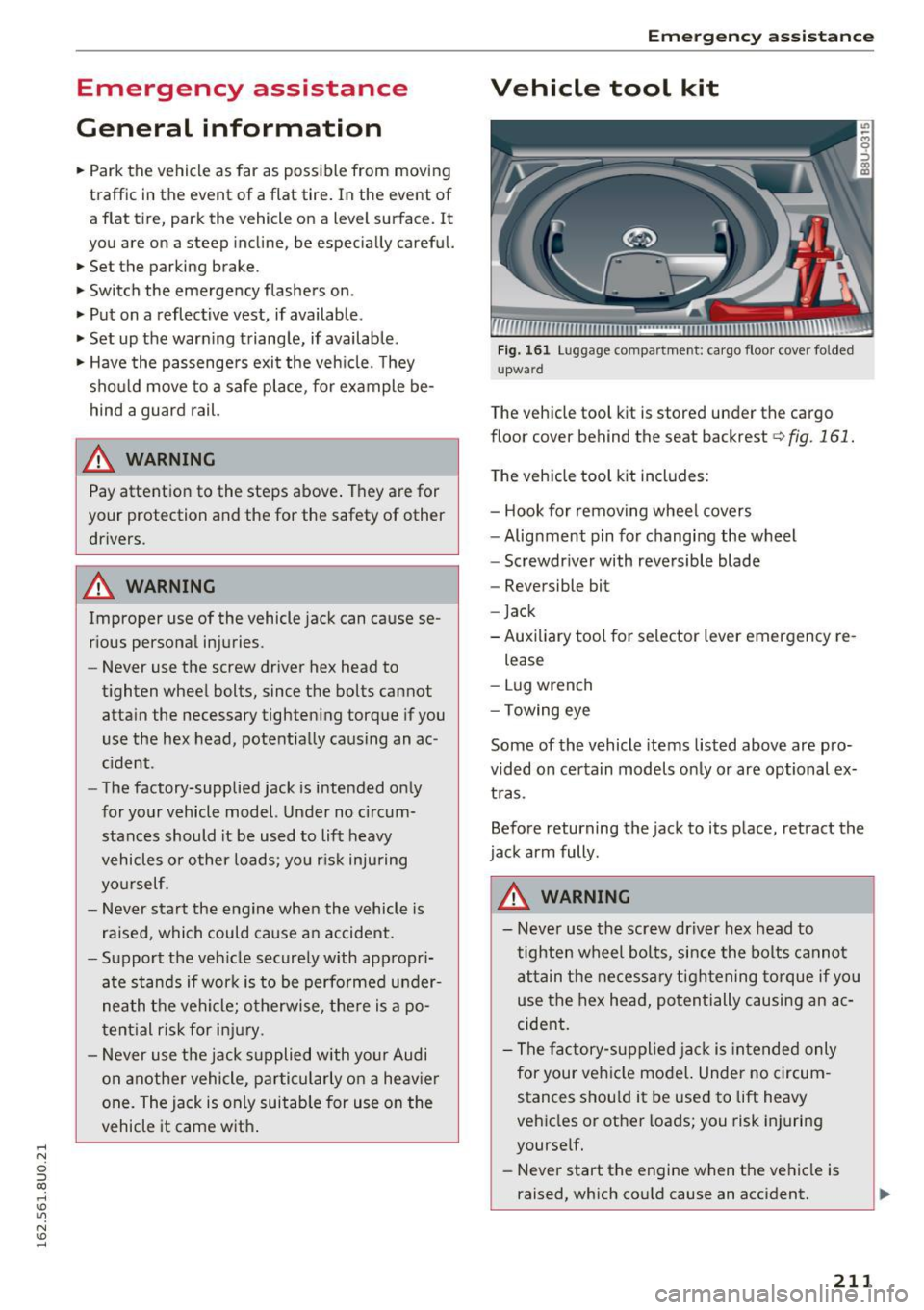
Fig. 161 Lu ggage compa rtment: cargo floor cover fo lded
u pwa rd
The vehicle tool kit is stored under the cargo
floor cover behind the seat backrest
q fig. 161.
The veh icle tool k it includes :
- Hook for remov ing wheel covers
- Alig nment pin for changing the w heel
- Screwdr iver with reversible blade
- Reversible bit
- Jack
- Auxiliary tool for selector lever emergency re -
lease
- Lug wrench
- Towing eye
Some of the vehicle items listed above are pro
vided on certa in models on ly or are optional ex
t ras.
Befo re returning the jack to its place, retract the
jack arm fully .
_& WARNING
---= -
-Never use the screw driver hex head to
tighten wheel bo lts, since the bolts cannot
at tain t he necess ary tightening to rque if yo u
use the hex head, po ten tially causing an ac
cident.
- T he factory-su pplied jac k is in tended only
for your ve hicle mode l. Under no circum
stances shou ld it be used to lift heavy
ve hicles or othe r loads; you risk injuring
yourse lf .
- Never start the engine when the ve hicle is
raised, which cou ld cause an accident .
211
Page 215 of 252
The spare tire is intended for short-term use on
ly. Have the damaged tire checked and replaced,
if necessary, by an author ized Audi dealer or au
thor ized Audi Service Facility as soon as possib le.
There are some restrictions on the use of the
compact spare tire . The compact spare tire has
been designed specif ically for your type of veh i
cle . Do not replace it with the spare tire from an
other type of vehicle.
R emo ving th e spar e tire
... Remove the cargo floor .
... Remove the wing bolt and then remove the re-
tainer underneath it.
... Remove the subwoofer*
¢ page 212.
... Remove the spare tire.
Snow cha in s
For technical reasons, the use of snow chains on
the compact spare tire is not permitted.
If you have to drive with snow chains and a front
tire fails, mount the spare wheel in place of a
rear tire. Install the snow chains on the rear tire
that you removed, and install that in p lace of the
front tire that failed.
A WARNING
- Never use the spare t ire if it is damaged or if
it is worn down to the tread wear indicators.
- If the spare tire is more than 6 years o ld,
use it only in an emergency and with ex
treme caution and carefu l dr iving.
- The spare tire is intended on ly for tempora
ry and short-term use. It shou ld be replaced
as soon as possible with the normal wheel
and t ire.
- After mounting the compact spare t ire, the
t ire pressure must be checked as soon as
poss ible. The t ire pressure of the compact
spare tire must be 4.2 bar; otherwise, yo u
risk having an accident.
- Do not d rive faster than 50 mph (80 km/h).
Yo u risk hav ing an accident.
- Avoid full-throttle accelerat ion, heavy b rak
ing, and fast cornering. You risk having an
acc ident.
Em ergenc y ass is tanc e
-Never drive using more than one spare
wheel and tire. You r isk having an accident.
- Normal summer or winter tires must not be
mounted on the compact spare wheel rim.
- For technical reasons, the use of tire chains
on the spare tire is not permitted. If it is
necessary to drive w ith tire chains, the spare
wheel must be mounted on the front axle in
the event of a flat in a rear t ire. The newly
ava ilable front wheel must then be installed
in place of the rear wheel with the flat tire.
I nstalling the tire chain befo re mounting
the wheel and tire is recommended .
- Loose items in the passenger compartment
can cause se rious personal injury during
ha rd bra king or i n an accident. Never store
the spare tire or jack and tools in the pas
senger compartment.
Replacing wheels
Before changing a wheel
Observe the following precautions for your own
and your passenger's safety when changing a
wheel.
... After you experience a tire failure, pull the car
well away from moving traffic and try to reach
lev el ground before you stop¢ page 211,
¢ .&_.
... All passengers should le av e the car and move
to a safe location (for instance, behind the
gua rdrail)
c:::> .lll ·
... Engage the parking brake to prevent your veh i
cle from rolling unintentiona lly
c:::> .&_ .
... Move the selector le ver to the P po sit ion .
... If you are towing a trai ler: unhitch the trailer
from your vehicle.
... Take the
jack ¢ page 211 and the spa re ti re
¢page 212 out of the luggage compartment.
A WARNING
You or your passengers could be injured while
changing a whee l if you do not follow these
safety pre caut ions:
- If you have a flat tire, move a safe distance
off the road. Turn off the eng ine, turn the
213