fuel AUDI Q3 2017 Owner´s Manual
[x] Cancel search | Manufacturer: AUDI, Model Year: 2017, Model line: Q3, Model: AUDI Q3 2017Pages: 236, PDF Size: 58.93 MB
Page 61 of 236

00
00
......
"' ,....
"' ...... 0 0 :::,
00
consumption to zero (fuel shut-off during decel
eration).
Shift efficiently
An effective way to save fuel is to upshift earlier .
Staying in a gear too long uses fuel unnecessari
ly. Press down on the accelerator pedal slowly
and avoid "kick-down".
Avoid full acceleration
You should rarely travel at the maximum vehicle
speed. High speeds cause a disproportionately
high increase in fuel consumption, emissions and
traffic noise. Slower driving saves fuel.
Reduce idling time
There are benefits to stopping the engine, for ex
ample when at railroad crossings or traffic lights
with longer red lights. Stopping the engine for
30-40 seconds already saves more fuel than the
amount of extra fuel needed to restart the en
gine.
It takes a very long time in idle to warm the en
gine up to operating temperature . Wear and
emissions are especially high in the warm-up
phase. Therefore, you should begin driving im
mediately after starting the engine. Avoid high
RPMs while doing this.
Have maintenance performed regularly
By having maintenance performed regularly on
your vehicle, you can help to reduce fuel con
sumption before you even start to drive. The maintenance condition of your vehicle not only
affects traffic safety and long-term value but al
so impacts
fuel consumption. A poorly main
tained engine can lead to fuel consumption that
is 10% higher than normal.
Also check the
oil level when refueling. The oil
consumption
depends largely on the engine load
and speed . It is normal for the oil consumption
of a new engine to reach its lowest point only af
ter a certain amount of use. Therefore, the oil
consumption can only be properly judged after
approximately 3,000 miles (5,000 km) have been
driven.
Driving
Fewer short trips
The engine and catalytic converter have to reach
their optimal
operating temperature to reduce
fuel consumption and noxious emissions effec
tively.
Just after starting, a cold engine in a mid-size car
only achieves a fuel economy of 6-8 mpg
(30-40 l/100 km). After about a half a mile, fuel
economy climbs to 12 mpg (20 l/100 km). After
about 2.5 mi
(4 km), the engine is at its proper
operating temperature and fuel economy has
reached a normal level. So you can see that you
should avoid short trips whenever possible .
The
outside temperature is also critical in this re
gard. Your car consumes more fuel in the winter
than in the summer.
@ Note
Do not leave engine idling unattended after
starting. If warning lights should come on to indicate improper operation, they would go
unheeded. Extended idling also produces
heat, which could result in overheating or
other damage to the vehicle or other proper
ty.
(D Note
- Have your vehicle maintained properly and
in accordance with the service recommenda
tions in your Warranty & Maintenance book
let. Lack of proper maintenance as well as
improper use of the vehicle will impair the
function of the emission control system and could lead to damage.
- Do not alter or remove any component of
the Emission Control System unless ap
proved by the manufacturer.
- Do not alter or remove any device, such as
heat shields, switches, ignition wires,
valves, which are designed to protect your
vehicle's Emission Control System and other
important vehicle components .
(j) Tips
The consumption estimates as published by
ENVIRONMENTAL PROTECTION AGENCY
(EPA) and Transport Canada may not
59
Page 69 of 236
00
00
......
"' ,-...
"' ...... 0 0 :::,
00
- Please note that the wheels can spin more
and the vehicle can swerve when in ESC off
road mode, especially when the road is s lip
pery or has loose surface material.
- Driv ing stability is reduced in the ESC Off
road mode.
@ For the sake of the environment
Avoid harming the environment and show consideration for nature.
@ Tips
Only drive where it is a llowed and always stay
on the provided roads and paths.
Driving information
Applies to: ve hicles with offroad mode
There is only one right way to drive in difficult
conditions: slowly and with caution!
Observe the follow ing when driving on unpaved
roads:
"' Only drive in terrain that is suitable for the ve
hicle and your d riving ab ility. Never take any
unnecessary risks!
.,. Drive slowly and cautiously!
.,. Pay attention to the ground clearance of your
vehicle! The clearance may vary depending on
the load, ground composition and the environ
ment. The ground clearance is reduced for spe
cial suspension systems, such as sport suspen
s ion. The driver is therefore respons ible for de
c iding whether a vehicle can handle a specific
s ituation .
.,. Activate the ESC offroad mode as needed
¢page 93 .
.,. Use the hill descent assist when driving down
steep hills
¢page 94.
Difficult terrain
When driving in unfami liar a reas and offroad,
d rive slowly and keep on the watch for unexpect
ed obstacles (such as potholes, rocks, tree
stumps, etc.) .
To prevent the veh icle from bottoming out and to
reduce the risk of underbody damage, you shou ld
d rive across uneven ground on only one side of D
riving
the vehicle so that only two of your wheels cross
the uneven area, instead of driving across the
center of the uneven area with all four wheels.
Drive quickly thro ugh sandy o r marshy off-road
sections and do not stop, if at all possible.
Driving through water on roads
Also read the information found on
r::;, page 58.
Automatic transmission
Introduction
The automatic transmission is controlled elec
tronically. The transmission shifts up or down au
tomat ically depending on which dr ive program is
selected .
When a moderate driving style is used, the
transmission selects the most economical dr iving
mode . The transmission upshifts at a lower RPM
and downsh ifts at a higher RPM to improve fuel
efficiency .
The transmission switches to a sporty mode after a kick-down or when the driver uses a sporty
driving style characterized by quick accelerator
peda l movements, heavy acceleration, frequent
changes in speed and t raveli ng at t he maximum
speed.
If desired, the driver can also select the gears
manually (tiptronic mode) r::;, page 71, Manual
shifting (tiptronic mode).
Power is transferred using a torque converter .
67
Page 157 of 236

00
00
......
"' ,....
"' ...... 0 0 :::,
00
Checking and Filling
Gasoline
Fuel supply
Using the right fuel helps keep the environment
clean and prevents engine damage .
Fuel recommendation
The fuel recommended for your veh icle is unlead
ed premium
grade gasoline. Audi recommends
using TOP TIER Detergent Gasoline with a mini
mum octane rat ing of 91 AKI (95 RON). For more
in fo rmation on TOP TIER Detergent Gasoline,
p lease go to the offic ial website
(www.toptiergas.co m).
The recommended gasoline octa ne rating for
your eng ine can a lso be fo und o n a label located
on the inside of the fue l filler flap. Th is rat ing
m ay be s pec ified as A KI or RON.
Your ve hicle may also be operated us ing unlead
ed regular gasoline with a minimum octane rat in g of 87 AKI/9 1 RO N. However, using 8 7 AKI/9 1
RO N octa ne f uel w ill slightly reduce engi ne pe r
f o rm an ce.
Use unleaded gasoline only. Unleaded gasoline
i s available throug hout t he USA, Canada, and in
m ost European co untr ies . We recom mend that
you do not t ake your veh icle t o area s or co untries
w here un leaded gaso line m ay not be av a ila ble.
For mo re informa tion on re fueling your veh icle,
see
r=;, page 15 6 .
Octane rating
Octane rati ng indicates a gasoline's ability to re
sist engine damaging "knock" caused by prema
ture ignit ion and detonation . The refore, buy ing
the co rrect grade of gasoline is ve ry important to
h e lp p revent poss ible e ngine damage and a loss
of eng ine pe rforma nce.
Gasoline mos t commonly used in the United
S tates a nd C anada has the following octane ra t
in gs that ca n usually be fo und o n the filler pump:
- Premium Grade: 91 - 96 AKI
- Regular Grade: 87 - 90 A KI
Checking and Filling
Explanation of the abb reviations:
A KI=
A nti K nock Index= ( R+ M )/2 = (R ON+M ON )/
2
RON = Resea rch Octa ne Number
MON= Motor Octane Number.
(D Note
- Do not use any f uel w ith octane ratings low
er than 87 A KI or 9 1 RO N ot herwise e xpe n
sive engine damage w ill occur.
- Do
not use lea ded gasoline . T he use of lead
ed gasoline will severe ly damage you r vehi
cle's catalyt ic converter and its ability to
cont rol exhaust emissions .
Blended gasoline
Use of gasoline containing alcohol or MTBE (methyl tertiary butyl ether)
You may use unlead ed gasoli ne b le nded with al
c o hol o r MTB E (commonly referre d to as oxyge n
ates) if the blende d m ix tu re meets the fo llow ing
c rit e ri a:
Blend of gasoline methanol (wood alcohol or
methyl alcohol)
- Anti-knoc k index must be 87 AKI or higher.
- Blend must contain no more than 3% metha-
nol.
- Blend must contain more than 2% co-solvents.
Blend of gasoline and ethanol (grain alcohol or
ethyl alcohol)
- An ti- kno ck index mus t be 87 A KI or hi gher.
- Blend must not co nta in mo re than 15% etha-
nol.
Blend of gasoline and MTBE
- Anti -knock index must be 87 AKI or h igher.
- Blend must contain not mo re than 15% MTBE .
Seasonally adjusted gasoline
Many gasoline grades a re blended to perform es
pecially well for w in ter o r su mmer dr iv ing . D ur
i ng seasonal cha nge-ove r, we sugges t that yo u
fill up a t busy gas st at io ns w here the seasonal
adjus tme nt is mo re li kely to be made in t ime. ..,.
155
Page 158 of 236
Check ing and F illing
CJ) Note
- Methanol fuels which do not meet these re
q uirements may cause corros ion and dam
age to plast ic and rubber components in the
fuel system.
- Do not use fuels that fail to meet the speci fied criter ia in this chapter.
- If you are unable to determine whether or
not a particular fuel blend meets the speci
ficat ions, ask your service station or its fuel
supplier .
- Do not use fuel for wh ich the contents can
not be identified.
- Fuel system damage and performance prob lems result ing from the use of fue ls differ
ent from those specified a re not the respon
s ibility of Audi and are not covered under
the New Veh icle o r the Emiss ion Control
System Warra nties.
- If you experience a loss of fue l economy or
driveability and pe rformance prob lems due
to the use of one of these fuel b lends, we
r ecommend t hat you swi tch to u nblended
fuel.
Gasoline additives
A major concern among many auto manufactur
ers is carbon deposit build-up caused by the type
of gasoline you use .
A lthough gasoline grades dif fer from one manu
facturer to another, they have certain things in
common. All gaso line grades contain substances
that can cause deposits to collect on v ita l eng ine
parts, such as fue l injectors and intake valves. Al
though most gasoline brands include additives to
keep eng ine and fuel systems clean, they a re not
equa lly effective .
Aud i recommends using TOP TIER Detergent Gas
oline . For more i nformation on TOP TIER Deter
gent Gasoline, please go to the official website (www.toptiergas .com) .
After an extended period of using inadequate
fue ls, built -up carbon depos its can rob your en
g ine of peak performance .
156
(D Note
-Damage o r mal func tion d ue to poor f uel
quality is no t covered by the Audi New Vehi
cle Lim ited Warranty .
- Do not ad d aftermar ket fuel addi tive prod
ucts to your fue l tank .
Refueling
Fuel filler neck
The fuel filler neck is located on the right rea r
s ide panel behind the fuel fille r flap .
If the power lock ing system shou ld fail , you can
still open the flap manually -fo r detailed instruc
tions see
Q page 158.
You can find the fuel tank capacity of your vehicle
i n
¢ page 216.
The label o n the inside of the f uel fi ller flap tells
you the correct fuel for your vehicle. For more in
format ion about fuel specifications, see
¢ page 155.
You r vehicle f uel tank has an on-board refueling
vapor recovery system. T his feature helps to pre
vent fue l vapors from escaping from the tank and
polluting the enviro nment wh ile you refue l your
vehicle . In order to fill the tank proper ly wh ile
protect ing the e nvir onment, please follow th is
r efue ling p rocedure carefully.
A WARNING
U nder no rmal opera ting co nd itions, neve r ca r
r y addi tional f uel con tainers in your car. Gas
caniste rs and o ther con tainers used to trans
port fue l can be dangero us. Such containe rs,
f ull or empty, may leak and could cause a fi re
in a co llision. If you must transport fuel to
use for your lawn mower, snow blower, etc .,
be ve ry ca reful and always observe local and
state laws regarding the use, transportation
and storage of such fuel containers . Make cer
tai n the co ntai ner mee ts industry s tandards
(A NS I/AS TM F 8S2 -86) .
Page 159 of 236
a:,
a:,
...... N r--. N
'"' 0 0 ::, a:,
(D Note
Never drive your vehicle until the fuel tank is
completely empty. The irregular supply of
fuel can cause misfiring. Gasoline could enter
the exhaust system and damage the catalytic
converter.
Fueling procedure
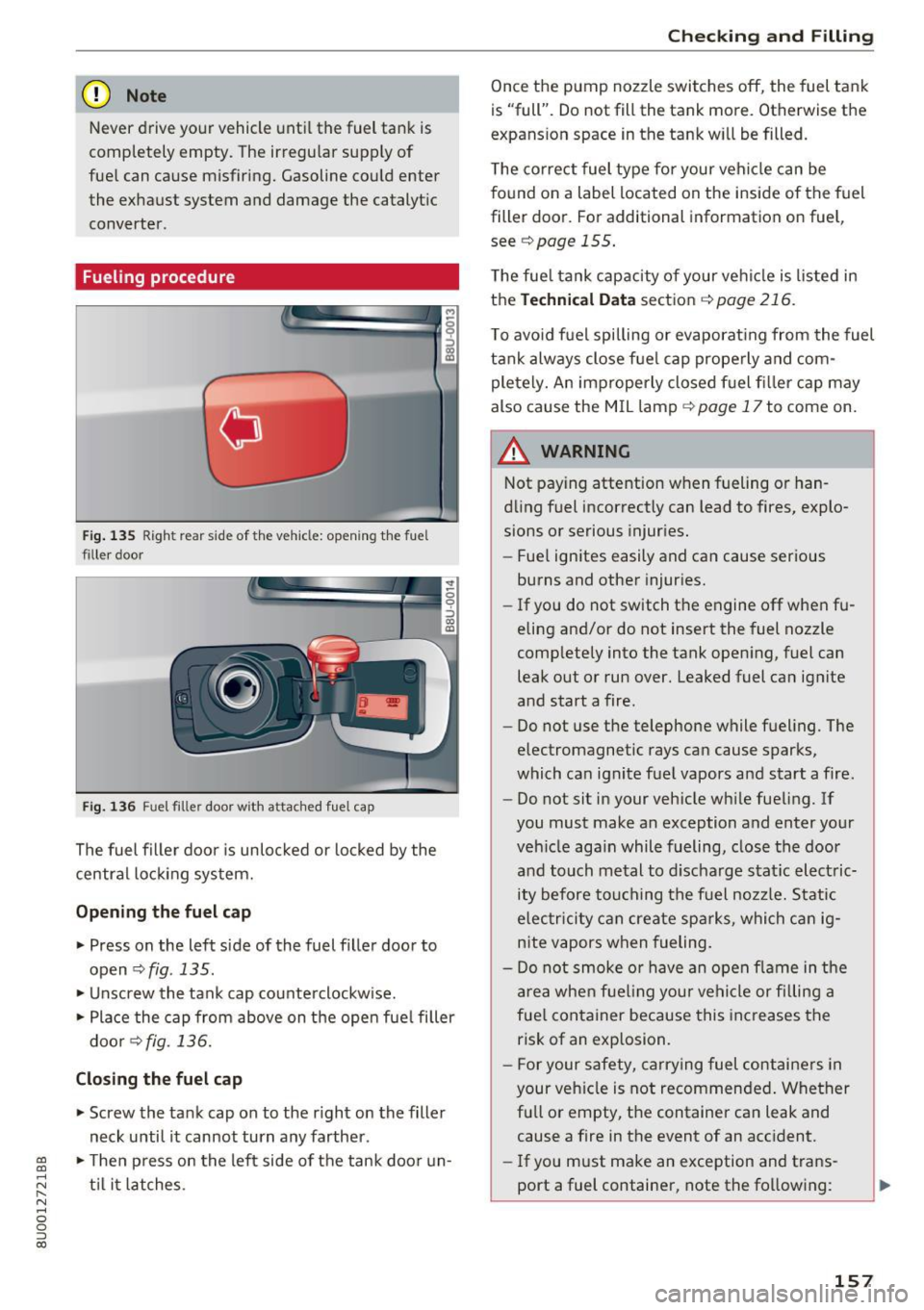
Fig. 135 R ight rear side of the vehicle: opening the fue l
f iller door
Fig. 136 Fu el fil ler door w ith attached fuel cap
The fuel filler door is unlocked or locked by the
central locking system.
Opening the fuel cap
"" Press on the left side of the fuel filler door to
open ¢
fig. 135.
""Unscrew the tank cap counterclockw ise.
"" Place the cap from above on the open fuel filler
door ¢
fig. 136.
Closing the fuel cap
""Screw the tank cap on to the right on the filler
neck until it cannot turn any farther.
""Then press on the left side of the tank door un
ti l it latches .
Checking and Filling
Once the pump nozzle switches off, the fuel tank
is "full". Do not fill the tank more . Otherwise the
expansion space in the tank will be filled.
The correct fuel type for your vehicle can be
found on a label located on the inside of the fuel
filler door. For additional information on fuel,
see
¢ page 155.
The fuel tank capacity of your vehicle is listed in
the
Technical Data section¢ page 216.
To avo id fuel spilling or evaporat ing from the fuel
tank always close fuel cap properly and com
pletely. An improperly closed fuel filler cap may
also cause the MIL lamp¢
page 17 to come on.
A WARNING
Not paying attention when fueling or han
dling fuel incorrectly can lead to fires, explo
sions or serious injuries.
- Fuel ignites easily and can cause serious
burns and other injuries.
-
-If you do not switch the engine off when fu
eling and/or do not insert the fuel nozzle
completely into the tank opening, fuel can
leak out or run over. Leaked fuel can ignite
and start a fire.
- Do not use the telephone while fueling. The
electromagnetic rays can cause sparks,
which can ignite fuel vapors and start a fire .
- Do not sit in your vehicle while fueling. If
you must make an exception and enter your
veh icle aga in while fueling, close the door
and touch metal to discharge static electric
ity before touching the fuel nozzle. Static
electricity can create sparks, which can ig
nite vapors when fueling.
- Do not smoke or have an open flame in the
area when fueling your vehicle or filling a
fuel container because this increases the
risk of an explosion.
- For your safety, carrying fuel containers in
your vehicle is not recommended. Whether
full or empty, the container can leak and
cause a fire in the event of an accident.
- If you must make an exception and trans
port a fuel container, note the following:
157
Page 160 of 236
Checking and Filling
-Never f ill the fuel container with fuel
while it is in or on the vehicle. Stat ic elec
tricity is d ischarged when filling wh ich can
cause the f uel vapors to ignite and in
creases the r isk of an explos ion .
- Always p lace a fuel container on the
ground before fi lling .
- Always hold the fuel nozzle comp letely in
the fuel container when fi lling .
- If the fue l conta iner is made of metal, the
fue l nozzle must always be in contact wit h
the conta iner w hen filling it w ith fue l. Th is
prevents static electr ic ity from discharg
ing.
- Never sp ill fuel in the veh icle or the lug
gage compartment . Evaporated fue l is ex
plosive and increases the risk of se rio us i n
jury o r death.
- Follow legal requireme nts when usi ng,
s t o ring and tran spo rting fuel cont ainers.
- Ma ke sure the fue l conta iner confo rms to
i ndu stry st anda rds (A NSI/ ASTM F852-86).
0 Note
- Remove spilled fuel from vehicle paint im
mediately, because it can damage paint.
- Never drive until the fuel tank is completely
empty . The ir regular supp ly of fuel that re
su lts from that ca n cause engine m isfires .
Uncombusted f ue l w ill enter the exha ust
sy stem a nd incr ease t he risk of damage to
the c atalyt ic converter.
@ For the sake of the environment
Do not ove rfi ll the f uel tank, othe rw ise fue l
can le ak out when the vehicle is wa rm ing up.
(0 Tips
The f uel fi ller door on yo ur vehicle does not
loc k if yo u lock the vehicle from the inside .
158
Fuel filler door emergency release
If the cen tral locking system is faulty, the fuel
filler door can be unlocked manually .
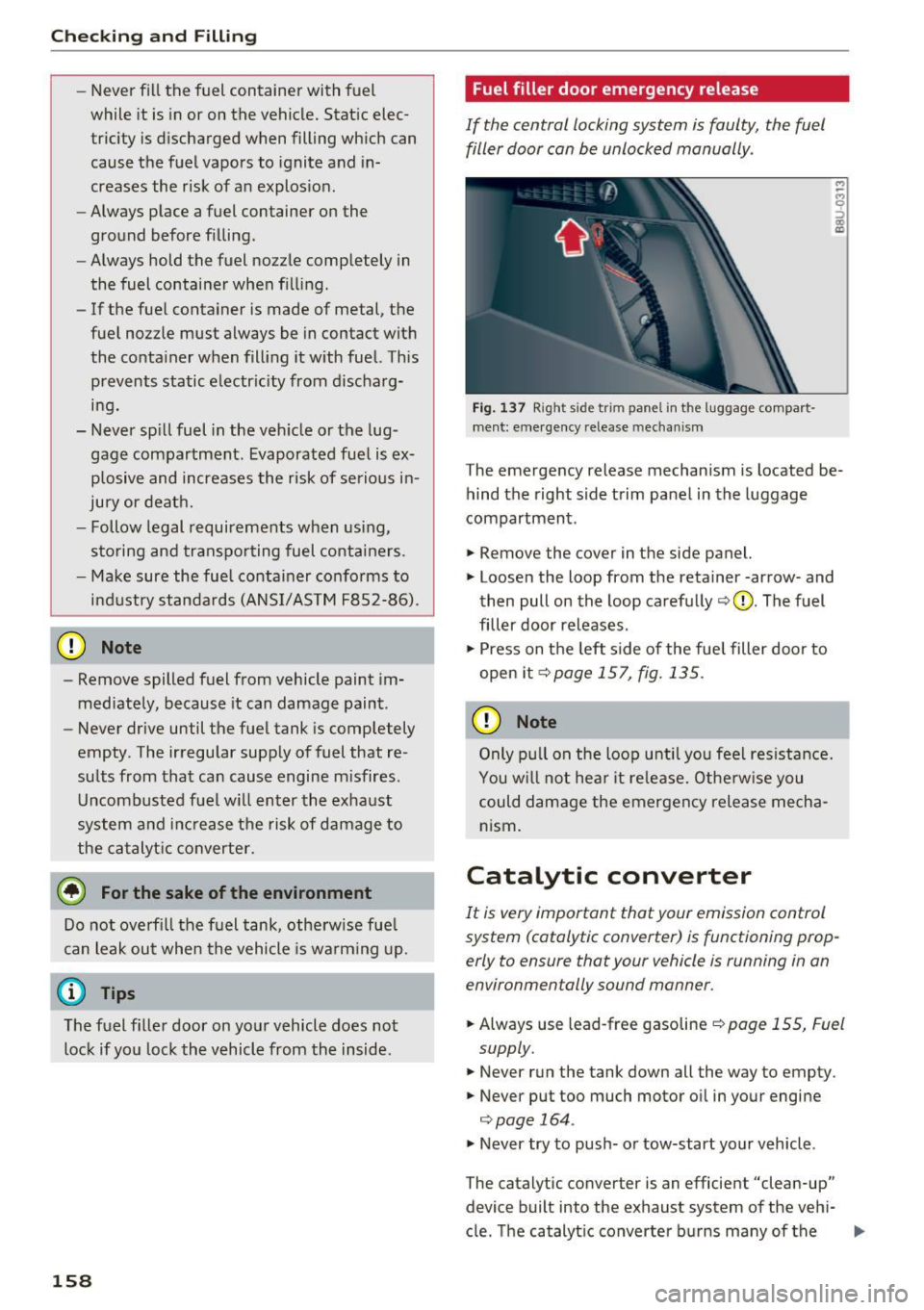
Fig. 13 7 Right side trim panel in t he lugg age compar t
m ent: eme rge ncy rele ase mecha nis m
T he emergency release mechan ism is located be
hind the right s ide trim panel in the luggage
compartment.
.,. Remove the cover in t he side panel.
.,. Loosen the loop from the retainer -arrow- and
then pull on the loop carefu lly ¢ @ . The f uel
fill er door releases.
.,. Press on t he left s ide of the fue l filler doo r to
open i t¢
page 15 7, fig. 135.
(D Note
Only p ull on t he loo p until yo u feel res ista nce.
You w ill not hea r it re lease. Othe rw ise you
c o uld d amage the emergen cy rele ase mech a
nism .
Catalytic converter
It is very important that your emission control
system (catalytic converter) is functioning prop
erly to ensure that your vehicle is running in an
environmentally sound manner .
.,. Always use lead -free gasoline ¢ page 155, Fuel
supply.
.,. Never r un the tank down all the way to empty .
.,. Never put too much motor oi l in your engine
¢ page 164 .
.,. Never try to push- or tow-start your vehicle .
The catalytic conve rter is an efficient "clean-up"
device built into the exhaust system of the veh i-
cle. The catalyt ic converter burns many of the
lilJ,
Page 161 of 236
00
00
......
"' ,....
"' ...... 0 0 :::,
00
pollutants in the exhaust gas before they are re
leased into the atmosphere.
The exclusive use of unleaded fue l is critically im
portant for the life of the catalytic converter and
proper functioning of the engine .
~ WARNING
-The temperature of the exhaust system is
high, both when driving and after stopping
the engine.
- Never touch the exha ust ta il pipes once they
have become hot. This could result in burns.
- Do not park or operate the vehicle in areas
where the hot exhaust system may come in
contact with dry grass, brush, fuel spill or
other mater ial which can cause a fire.
- Do not apply additional undercoating or
rustproof ing on or near the exhaust mani
fold, exhaust pipes, catalytic converter or
heat shields. During dr iv ing, the substance
used for undercoating could overheat and
cause a fire.
(D Note
- Be aware that just o ne tank filling with
lead ed fue l will already ser iously degrade
the pe rformance of the catalytic co nverter .
- Do not exceed the correct eng ine o il level
c::;, page 164.
- Do not drive until the fuel tank becomes
completely empty. The engine could mis
fire. Unburned fuel could also get into the
exhaust system and th is cou ld cause the
c ata lytic converter to overheat.
- Do not turn off the ignition whi le the vehicle
i s mov ing.
- Do not continue to operate your veh icle un
der these cond it ions, as otherwise fue l can
r each the cataly tic conve rte r. This cou ld re
s ul t in ove rheating of the converter, req uir
i ng its re placement.
- To assure efficient operation of the Em is
s ion Control System:
- Have your vehicle maintained properly and
in accordance with the service recommen
dations in your Warranty
& Maintenance
booklet.
-
Ch eck ing and Filling
-Lack of proper ma intenance as well as im
p roper use of the vehicle w ill impair the
f u nct ion o f the emission control system
and could lead to damage.
® For the sake of the environment
Even when the Emiss ion Control System is op
erating properly, the exhaust gas can have a
su lfur -like exhaust gas sme ll under some op
erating states. This depends on the sulfur
content of the fuel being used. Us ing a d iffer
ent brand of fuel may help, or f illing the tank
wi th lead-free supe r g rade gasoline.
Engine compartment
Working in the engine compartment
Special care is required if you are working in the
engine comportment
For work in th e engine compartm ent su ch as
che cking and filling fluids, there i s a ri sk of in
jury, scalding , accident s, and burn s. For thi s
reason , follow all the warnings and gene ral
s afety p re caution s prov ided in the following in·
formatio n. The engine compartment is a dan
gerous area on the vehicle.
c::;, .&. .
A WARNING
-- T urn the engine off.
- Sw itch the ignition off.
- Set the parking brake .
- Move the selector lever into t he P position .
- Neve r open the hood whe n there is steam o r
coo lant escaping from the engine compart
ment, because there is a risk that you could
be burned. Wait unt il no steam or coolant is
escaping.
- Let the eng ine cool down.
- Keep children away from the eng ine com -
partment.
- Never sp ill fluids on a ho t engine. These flu
ids (such as the anti -freezing agent con
tained in the coolant) can ignite .
- Avoid short c ircui ts in the elect rical sys tem.
- W hen working in the engi ne comp artme nt,
remember that the radiator fan can swi tch
159
Page 162 of 236
Checking and Filling
on even if the ignition is switched off, which
increases the risk of personal injury.
- Never open the cap on the coolant expan
sion tank when the engine is warm. The
cooling system is under pressure.
- To protect your face, hands, and arms from
hot steam or coolant, cover the cap with a
large cloth when opening.
- Do not remove the engine cover under any
circumstances . This increases the risk of
burns.
- If tests need to be performed with the en gine running, there is additional danger due
to moving components (such as the ribbed
belt, alternator and radiator fan) and from
the high-voltage ignition system .
- Do not under any circumstances activate the throttle inadvertently (for example, by hand
from the engine compartment) if the vehi
cle is stationary but the engine is running
and a gear is engaged. Otherwise, the vehi
cle will start to move immediately and this
could result in an accident.
- Pay attention to the following warnings list
ed when work on the fuel system or on the
electrical equipment is required.
- Do not smoke .
- Never work near open flames.
- Always have a working fire extinguisher
nearby
- To reduce the risk of electric shock and in
jury, never touch the following components when the engine is running or is being start
ed:
- Ignition cable - Other components in the electronic high-
voltage ignition system
- If you must check or perform work on the
engine while it is running:
- Set the parking brake and place the selec
tor lever in the P (park) position first .
- Always proceed with extreme caution so that clothing, jewelry or long hair do not
become caught in the radiator fan, fan
belt or other moving components or do
not come into contact with hot compo
nents . Tie back long hair before beginning
160
work and do not wear clothing that can
hang down into the engine .
- Limit your exposure to exhaust and chemi
cals to as short a time as possible
c:> ,& .
-All work on the battery or electrical system
in your vehicle can result in injuries, chemi
cal burns, accidents or burns. Because of
this, all work must be performed
only by an
authorized Audi dealer or authorized Audi
Service Facility .
A WARNING
California Proposition 6S Warning:
- Engine exhaust , some of its constituents,
and certain vehicle components contain or
emit chemicals known to the State of Cali
fornia to cause cancer and birth defects and
reproductive harm . In addition, certain flu
ids contained in vehicles and certain prod
ucts of component wear contain or emit
chemicals known to the State of California
to cause cancer and birth defects or other reproductive harm .
- Battery posts, terminals and related acces ·
sories contain lead and lead compounds,
chemicals known to the State of California
to cause cancer and reproductive harms. Wash hands after handling.
(D Note
When filling fluids, be sure not to mix the fluids up. Otherwise severe malfunctions and en
gine damage will occur .
@I For the sake of the environment
You should regularly check the ground under
your vehicle in order to detect leaks quickly. If
there are visible spots from oil or other fluids, bring your vehicle to an authorized Audi deal
er or authorized Audi Service Facility to be
checked .
Page 165 of 236

00
00
......
"' ,....
"' ...... 0 0 :::,
00
A udi rec ommend s
@;Cilstrot /Jgjgf ~ f'r,w.~7dr,,'1AJ.
A ud i re commends Longlife high p erform ance
e ngi ne oil from A udi Gen uin e P art s
Using the proper engine oil is important for the
functionality and service life of the engine. Your
engine was factory-filled with a high-quality oil
which can usually be used throughout the entire
year .
Note
Your Limited New Vehicle Warranty does not
cover damage or malfunctions due to failure
to follow recommended maintenance and use
requirements as set fo rth in the Aud i Owner's
Manual a nd Warranty & Mai ntenan ce booklet.
- Use only a high quality eng ine oil that ex-
pressly complies with the Aud i oil q ual ity
standard specified for your vehicle's engine. Using any other oil can cause serious engine
damage .
- Do not mix any l ubricants or othe r addi tives
into the engine oil. Doing so can cause en
gine damage.
(D Tips
If you need to add oil and there is none availa
ble that meets the Audi oil quality standard
your engine requires, you may add a total of
no more than 0 .5 quart/liter of a high-quality
"synthet ic"oil that meets the following speci
fications.
- ACEA A3 or API SM with a viscosity grade of
SAE OW-30, SAE SW-30 or SAE SW-40.
- For more information about engine oi l that
has been approved for your vehicle, please
contact e ither your authorized Audi dea ler
or Audi Customer Relat ions at
1 (800) 822-2834 or vis it our web site at
www.audiusa.com or www.aud icanada .ca.
Ch eck ing and Filling
Engine oil consumption
The engine in your vehicle depends on on ade
quate amount of oil to lubricate and
cool oil of
its moving ports.
In order to provide effect ive lubrication and cool
ing of internal engine components, all internal
combust ion eng ines consume a certa in amount
of oil. Oil consumption varies from eng ine to en
gine and may change s ign ificantly over the life of
the engine. Typ ica lly, engines w ith a specified
break-in period (see
q page 58) consume more
oi l during the break -in period than they consume
after oil consumption has stabilized.
Under normal cond itions, the rate of oil con
sumption depends on the q uality and viscosity o f
the oil, the RPM (revol utions per minute) at
which the engine is operated, the ambient tem perature and road condit ions. Further factors are
the amount of oil dilution from water condensa
tion or fuel residue and the oxidation level of the o il. As any engine is subject to wear as mileage
builds up, the oil consumption may increase over
time unt il replacement of worn components may
become necessary.
With all these variables coming into play, no standard rate of o il consumption can be estab
li shed or spec ified . T he re is no alte rnative to reg
u la r and frequent checking of the oi l level , see
Note .
If the yellow engine o il leve l warning symbo l !I
in the instrument cluster lights up, you sho uld
check the o il level as soon as possible
q page 164. Top off the o il at your earlies t con
venience.
A WARNING ~
Before you check anything in the engine com-
partment, always read and heed all WARN
INGS
q .&. in Working in the engine comport
ment on page 159.
(D Note
Driving with an insufficient oil level is likely to
cause severe damage to the eng ine. ..,.
163
Page 166 of 236
Checking and Filling
@ Tips
-The oil pressure warning display. is not
an indicator of the oil level. Do not rely on
i t. Instead , check the oil level in your en
gine at regular intervals, preferably each
time you refuel, and always before going
on a long trip.
- If you have the impression your engine con
sumes excessive amounts of oil, we recom
mend that you cons ult an autho rized Aud i
dealer to have the cause of your concern
properly diagnosed. Keep in mind that the
accurate measurement of oil consumption
requires great care and may take some
time. An authorized Audi dealer has instruc
tions about how to measure oil consump
tion accurately .
Checking the engine oil level and adding
engine oil
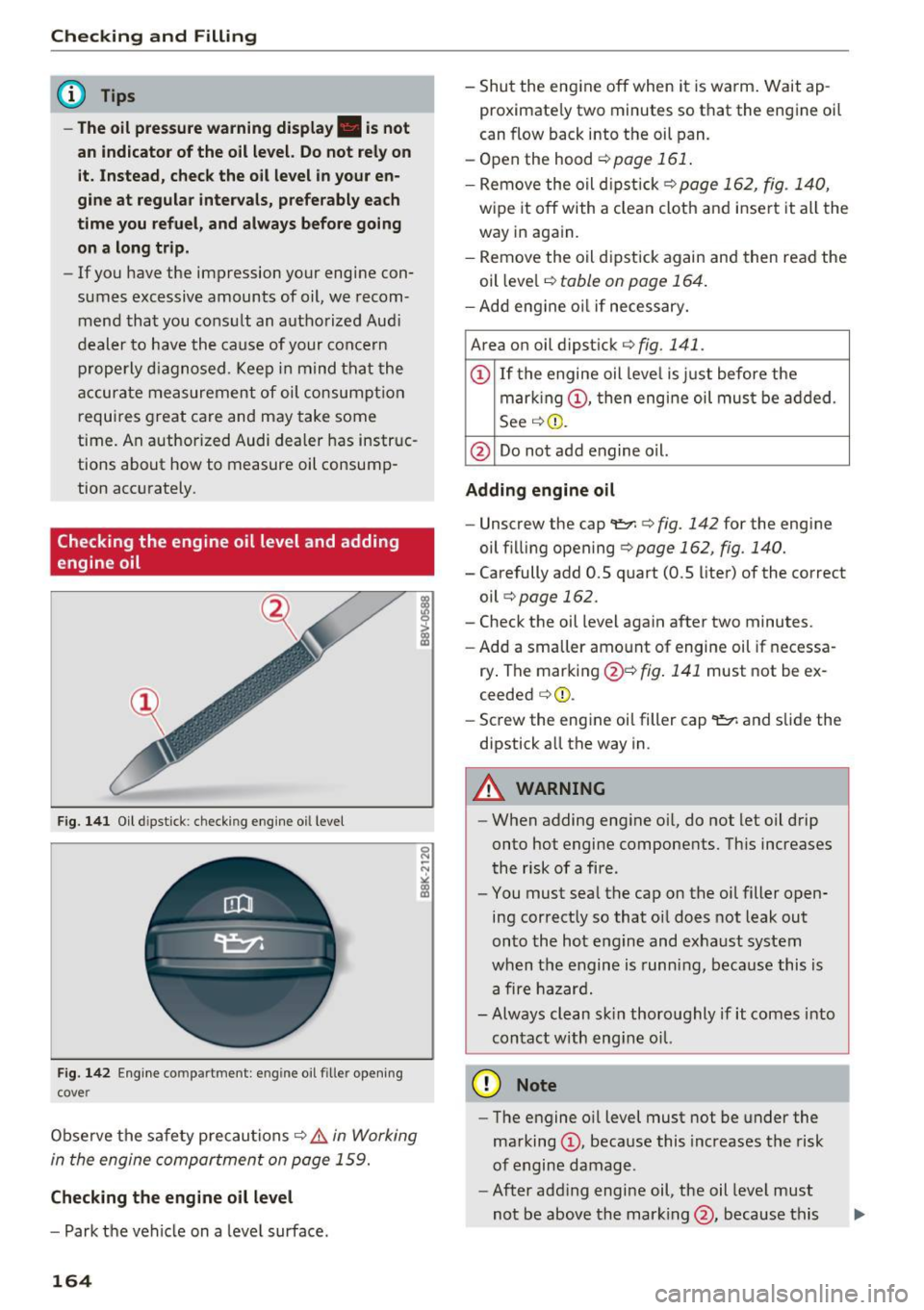
Fig. 141 Oil d ipst ick: check ing engine o il level
Fig. 142 Engine co mpa rtment : en gin e oi l fille r opening
cove r
Obse rve the safety p recau tions c:::> & in Working
in the engine comportment on page 159.
Checking the engine oil level
-Park the vehicle on a level surface.
164
- Shut the engine off when it is warm . Wait ap
proximate ly two minutes so that the engine oil
can flow back into the oil pan.
- Open the hood c:::>
page 161.
-Remove the oil d ipstick c:::> page 162, fig . 140,
w ipe it off with a clean cloth and inse rt it all the
way in again.
- Remove the oil dipstick again and then read the
oil level c:::>
table on page 164.
-Add engine o il if necessary.
Area on oil dipstick
c:::> fig. 141.
@ If
the engine oil leve l is just before the
mark ing@ , then engine oil must be added.
See
c:::> (D.
@ Do not add engine o
il.
Adding engine oil
- Unscrew the cap "t!:;f; c:::> fig. 142 for the engine
oil f illing opening c:::>
page 162, fig . 140.
- Carefully add 0.5 quart (0.5 liter) of the correct
oil c:::>
page 162.
-Check the oil level again after two minutes.
- Add a smaller amount of engine oil if necessa-
ry . The mark ing@c:::>fig .
141 must not be ex
ceeded c:::>
(D.
-Sc rew the engine oil filler cap "t!:;f; and slide the
dipstick all the way in.
A WARNING
- When adding engine oil, do not let oil drip
onto hot engine components. This increases
the risk of a fire.
- You must seal the cap on the oil filler open
ing correctly so that oil does not leak out
onto the hot engine and exhaust system
when the engine is running, because this is
a fire hazard.
-A lways clean sk in thoroughly if it comes into
contact with engine oil.
(D Note
-The engine oil level must not be under the
marking @, because this increases the risk
of engine damage .
- After adding engine oil, the oil leve l must
not be above the mark ing@ , because this