check engine light AUDI Q5 2013 User Guide
[x] Cancel search | Manufacturer: AUDI, Model Year: 2013, Model line: Q5, Model: AUDI Q5 2013Pages: 316, PDF Size: 78.89 MB
Page 36 of 316
34 Driver information display
left in the fuel tank. Time to refuel!
¢page 230.
If the symbol lights up, even when there is
ample fuel in the tank, and the text
Fuel tank
system malfunction! Contact dealer
appears
in the display, there is a fault in the system.
Contact an author ized A udi dealer to have the
fault rect ified.
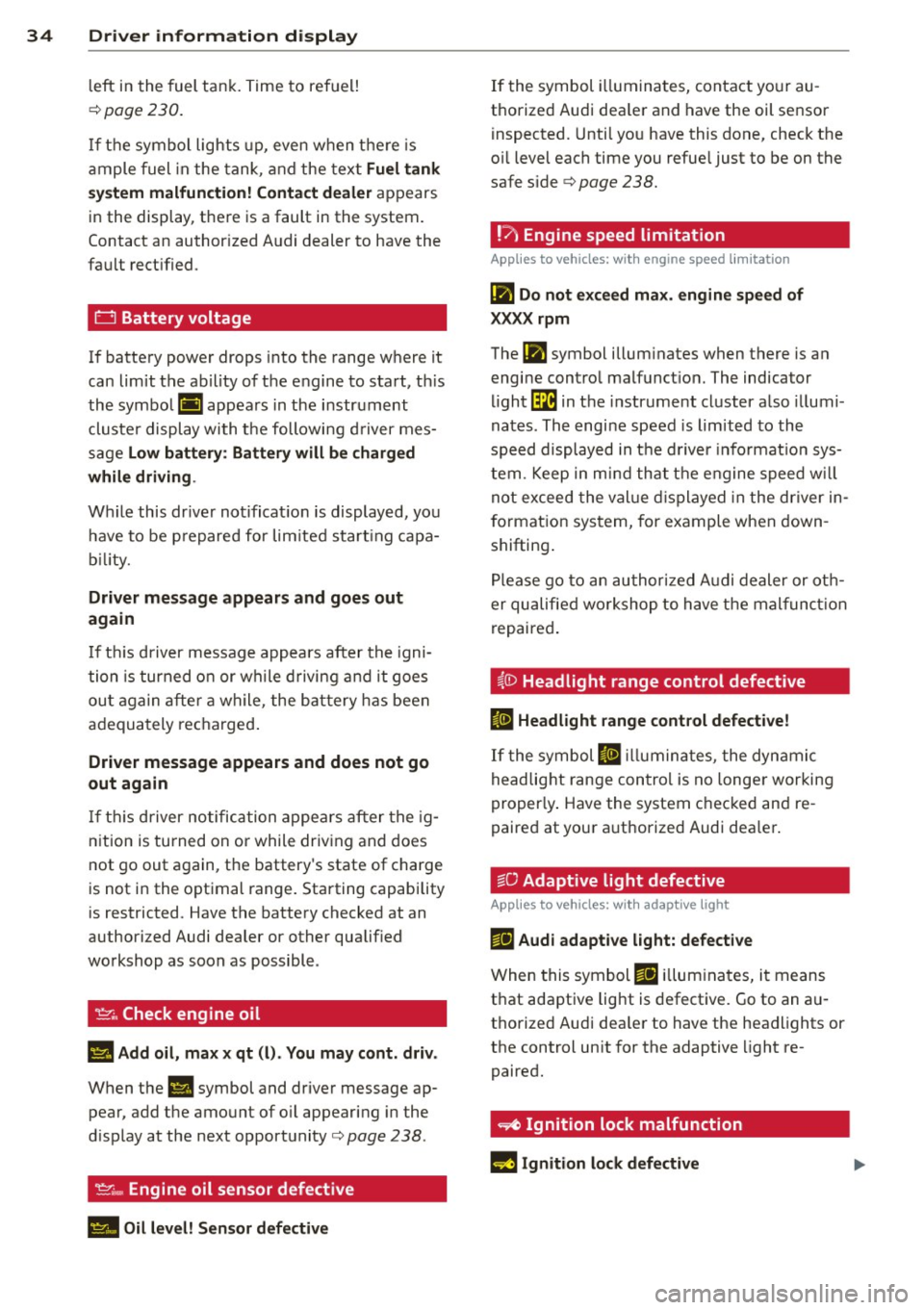
0 Battery voltage
If battery power drops into the range where it
can limit the ability of the engine to start, th is
the symbol (•) appears in the instrument
cluster display with the following driver mes
sage
Low battery : Battery will be charged
while driving .
While this dr iver not ificat ion is displayed, you
have to be p repared for lim ited start ing capa
bility.
Driver message appears and goes out
again
If thi s driver message appears after the igni
tion is turned on or while driving and it goes
out again after a while, the battery has been
adequately recharged .
Driver message appears and does not go
out again
If this driver notification appea rs after the ig
nition is turned on or while driving and does
not go out again, the battery's state of charge
is not in the optimal range. Starting capab ility
is restricted . Have the battery checked at an
authorized Audi dealer or other qualif ied
workshop as soon as possible .
~. Check engine oil
II Add oil, max x qt (l). You may cont. driv.
When the II symbol and driver message ap
pear, add the amount of oil appearing in the
d isplay at the next opportunity¢
page 238.
't'.::r.., Engine oil sensor defective
II Oil level! Sensor defective
If the symbol illuminates, contact your au
thorized Audi dea ler and have the oil sensor
inspected. Until you have this done, check the
o il level each time you refue l just to be on the
safe side ¢
page 238.
!'7 Engine speed limitation
Applies to vehicles: with engine speed limitation
(m Do not exceed max. engine speed of
XXXX rpm
The (m symbol illum inates when there is an
engine control malfunct ion. The indicator
light~ in the instrument cluster also illumi
nates . The engine speed is limited to the
speed displayed in the driver informat ion sys
tem. Keep in mind that the engine speed will
not exceed the value displayed in the driver in
f o rmation system, for example when down
shifting .
Please go to an authorized Audi dealer or oth
er qualified workshop to have the malfunction
repaired.
~0 Headlight range control defective
Iii Headlight range control defective!
If the symbol II illuminates, the dynamic
headlight range control is no longer working
properly . Have the system checked and re
paired at your a uthorized Audi dea ler .
§0 Adaptive light defective
Applies to vehicles: wit h adaptive light
ma Audi adaptive light: defective
When this symbol ma illuminates, it means
that adaptive light is defective. Go to an au
thorized Audi dea ler to have the headlights or
the control un it for the adaptive light re
paired.
~ Ignition lock malfunction
m Ignition lock defective
Page 94 of 316
92 On the road
Starting/stopping the engine
Applies to vehicles: with Start-Stop-Syste m
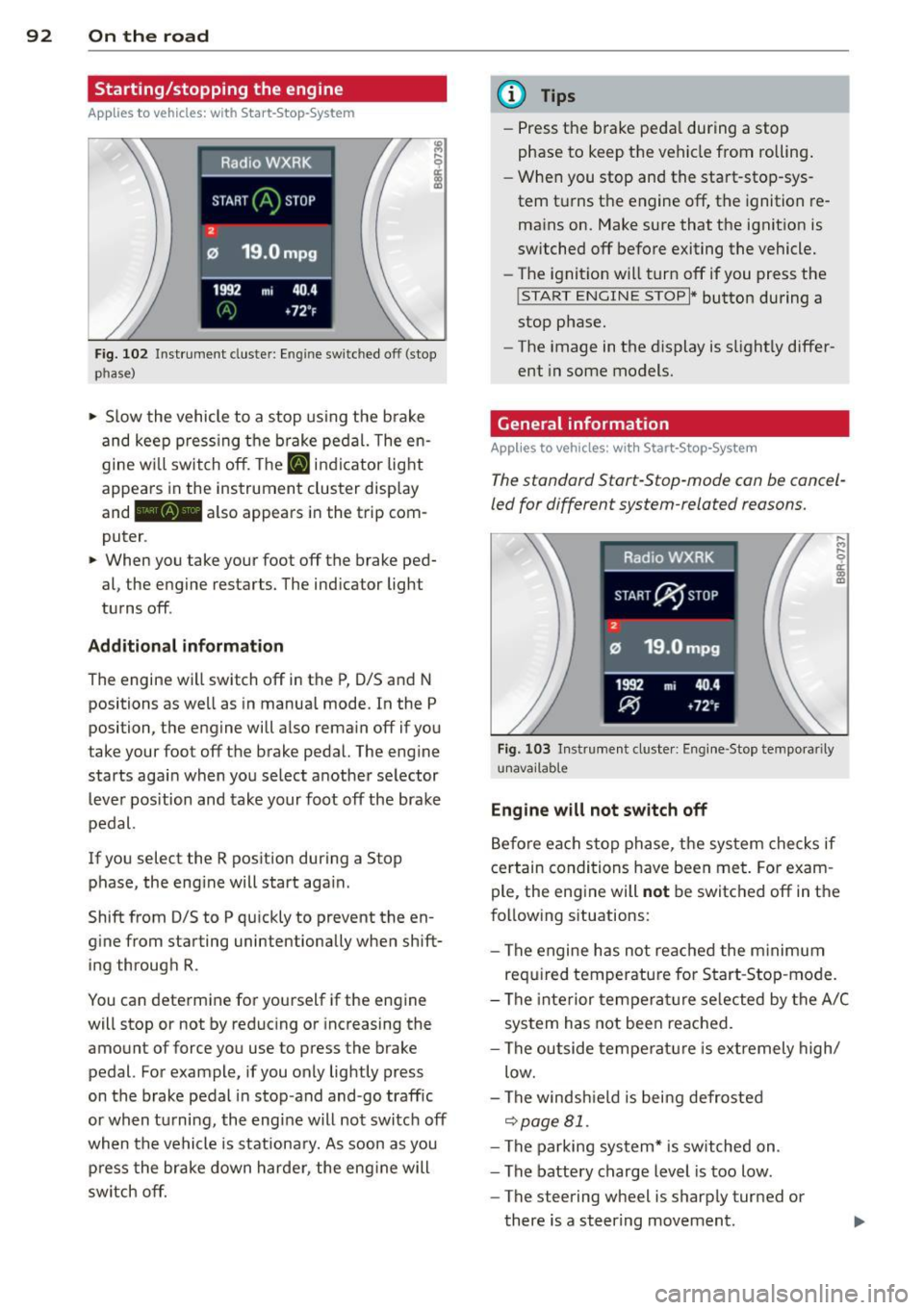
Fig. 102 Instrument cluste r: Eng ine switched off (stop
phase)
.. Slow the vehicle to a stop using the brake
and keep pressing the brake pedal. The en
gine w ill switch off. The
[IJ indic ator light
appears in the instrument cluster display
and - also appears in the trip com
puter .
.. When you take your foot off the brake ped
al, the engine restarts. The indicator light
turns off .
Additional information
The engine will switch off in the P, 0/5 and N
positions as well as in manual mode. In the P
position, the engine will also remain off if you
take your foot off the brake pedal. The engine
starts again when you select another selector
lever position and take your foot off the brake
pedal.
If you select the R position during a Stop phase, the eng ine will start aga in .
Shift from 0/5 to P qu ickly to prevent the en
g ine from starting unintentionally when shift
ing through R.
You can determine for yourself if the engine
will stop or not by reduc ing or increasing the
amount of force you use to press the brake
pedal. For example, if you only lightly press
on the brake pedal in stop-and and-go traffic
or when tu rning, the eng ine will not switch off
when the vehicle is stationary. As soon as you
press the brake down harder, the engine will
switch off.
(D Tips
-Press the brake pedal during a stop
phase to keep the vehicle from rolling.
- When you stop and the start-stop-sys
tem turns the engine off, the ignition re
mains on. Make sure that the ignition is
switched off before exiting the vehicle.
- The ignition will turn off if you press the
!START ENGINE STOPI * button during a
stop phase.
- The image in the display is slightly differ
ent in some models.
General information
Applies to vehicles: with Start-Stop-System
The standard Start-Stop-mode can be cancel
led for different system-related reasons.
Fig. 103 Instrument cluster: Engi ne-Stop tempora rily
unavailable
Engine will not switch off
Before each stop phase, the system checks if
certain conditions have been met. For exam
ple , the eng ine will
not be switched off in the
following sit uations:
- The engine has not reached the minimum
required temperature for Start-Stop -mode.
- The interior temperature selected by the A/C
system has not been reached.
- The outside temperature is extremely high/
low.
- The windsh ield is being defrosted
~page 81.
-The parking system* is switched on .
- The battery charge level is too low .
- The steering wheel is sharply turned or
there is a steering movement.
Page 203 of 316
Fa u lts in th e brake sy stem
If you should notice a sudden increase in
brake peda l travel, then one of the two brake
circuits may have failed~.&. .
Low brak e flu id level
Malfunct ions can occur in the brake system if
the brake fl uid leve l is too low . T he b rake fluid
l eve l is monito red electronically .
Brake booster
The brake booster increases the pressure that
you generate w ith the brake pedal.
It only op
e rates while the eng ine is running or with the
i gnit ion sw itched on (hybr id dr ive*) ~.&, .
Brake lining wear statu s
Brake lining wear may be checked by visual in
spection of the condition of the brake pads
through the openings in the whee l. If neces
sa ry, the wheel may be removed for this in
spection
~ page 2 74, Changing a wheel.
.&_ WARNING
=
- You should perform braking maneuvers
for the purpose of clean ing the brake
system on ly if road conditions permit.
Other road users must not be put at risk -
you may cause an acc ident!
- Before descending a steep grade, reduce
speed and shift transmiss ion into a lower
gear or lower driving range . Do not ride
the brakes or hold the pedal down too long or too often . This could cause the
brakes to get hot and dimin ish b raking
efficiency .
- Do not "ride the brakes" by resting your
foot on the pedal when you do not intend
to brake . Th is may cause the b rakes to
overheat, premat ure wear and increased
stopping distance .
- Under certain climat ic and operating
condit ions such as passing through wa
ter , driving in heavy rain or after wash ing
the vehicle, the effectiveness of the brakes can be reduced. In winter, ice can
accumulate on the brake pads, linings,
discs and drums . Carefully apply brakes
Int ellig ent technolog y 201
for a test. Brakes will dry and ice coat
ings w ill be cleaned off after a few care
ful brake applicat ions.
- Driving for an extended period of time on
salt-covered roads without using your
brakes can also affect braking efficiency.
Clean off accumulated salt coating from
brake discs and pads with a few careful
brake applications.
- If you damage the front spoiler, or if you install a different spoiler, be sure the air
f low to the front brakes is not obst ruct
ed. Otherw ise the brake system could
overhea t reducing the effectiveness of
the entire brake system .
- Failure of one brake circuit will impair
the braking capability resulting in an in
creased stopping distance . Avoid driving
the vehicle and have it towed to the near
est a uthori zed Audi dea ler or qualified
workshop.
- Never let the vehicle roll to a stop with
the engine shut off .
- If the brake booster is not working, for
examp le when towing your vehicle, or
because the brake booster has somehow
been damaged, the brake pedal must be
pressed considerably harder to make up
for the lack of booster assistance .
Electromechanical
power assist, Dynamic
steering
The electromechanical power assist helps the
driver when s teering.
Power ste ering adapts electronically based on
the vehicle speed.
Indicator lights an d m ess age s
• Steeri ng defe ctive ! D o n ot dr ive vehi cle!
If this indicator light turns on and stays on
and this message appears, the power steer ing
may have failed .
Stop the vehicle in a safe location as soon as poss ible . Do
no t continue driving . See your ..,.
•
•
Page 211 of 316

Driving off road
Driving in difficult road
conditions and offroad
General information
The operation of the E lectronic Stabilization
Control (ESC) is expanded fo r operation away
from paved roads. In situations where slip or a
differential lock ing funct ion is required, the
ESC offroad mode can be act ivated
c> page 197 . Your Audi also has permanent
all-wheel drive in addition .
However, your Aud i is not a pure offroad ve hi
cle . It was not built for driving under extreme
conditions, e .g . for trips that are in the nature
of an expedition .
D riv e only on roads and offro ad sections
which match the des ign of your vehicle and
your abil it ie s as a driver . Ne ver take ri sks!
Before dri ving offroad
- Check the engine oi l level, tire pressure,
coolant leve l, and the fluid level in the w ind
shield washer reservo ir.
- Stow luggage items and other objects in the
lu ggage compartment, and secure them
against slid ing around .
After driv ing offroad
- After trips offroad, remove any twigs and other foreign objects from the grill, the un
derbody and the wheels. Pay specia l atten
t ion to fore ign objects (stones) which have
become lodged in the tire tread.
- Clean the body and the vehicle unders ide,
and inspect the veh icle for possible damage.
- Clean dirty windows, headlamp lenses, rear
lights, and license plates.
- Perform a brake check (particu larly after
trave lling through water) .
A WARNING
- Drive especially attentive ly and plan
ahead in difficult road conditions and
w hen offroad . Excess ive speed or incor-
-
Driving off road 209
rect maneuvers can cause injuries and
damage to the vehicle.
- Always adapt your speed and driving
style to road, offroad, traff ic, and weath
er conditions. Drive especially slowly off
road when your v iew is restricted.
- Please be aware that in ESC offroad
mode, particularly on a smooth and slip
pery road, the wheels may have an in
creased tendency to spin and the vehicle
may break away - danger of skidding!
- Stability is limited in the ESC offroad mode.
@) For the sake of the environment
Avoid damage to the environment and re
spect nature .
(D Tips
Only drive where it is permitted and stay
on marked roads and paths.
Explanation of some technical terms
The following data refer to ideal cond itions .
Depend ing on veh icle load and ground condi
tions and the environment, the numbers may
vary. It is the d rive r's responsibi lity to decide
whethe r a veh icle can overcome a specific s it
u at ion
c::> .&. .
Gradient angle
The number of meters in alt itude ga ined over
a d istance of 109 .4 yards or 100 meters
(grade) a re given as a pe rcentage o r degrees .
Info rmation abou t the gr ad ient the veh icle
can climb under i ts own power (depends in
part on the road surface and engine power).
Max imum permitted grade : 3 1
°
Late ral angle (slope of vehicle )
Ind icates the angle up to which the vehicle
can be d riven diagona lly or across the fall line
on a slope wi tho ut the vehicle tipping over
sideways (depends o n center of gravity) . Maxi-
mum permitted lateral angle: 25 ° .,.
•
•
Page 215 of 316
Operating instructions
6"
~ ~
I 1,2 ..
-{ }
l::_
-
2
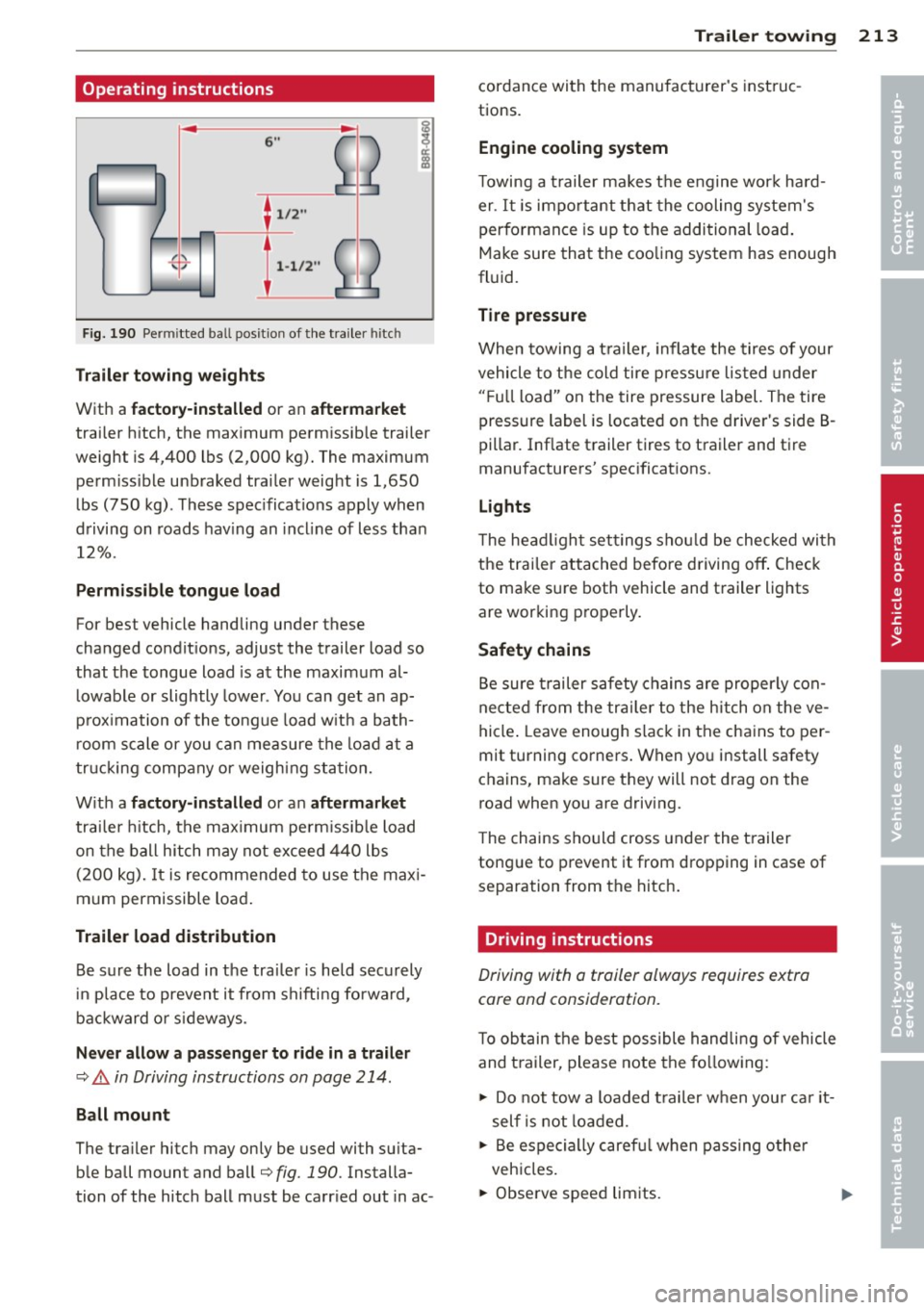
Fig. 190 Permit ted ball position of the trailer hitch
Trailer towing weights
With a factory-installed or an aftermarket
trailer hitch, the maximum permissible trailer
weight is 4,400 lbs (2,000 kg). The maximum permissible unbraked trailer weight is 1,650
lbs (750 kg) . These specifications apply when
driving on roads having an incline of less than
12%.
Permissible tongue load
For best vehicle handling under these
changed conditions, adjust the trailer load so
that the tongue load is at the maximum al
lowable or slightly lower . You can get an ap
proximation of the tongue load with a bath
room scale or you can measure the load at a
trucking company or weighing station.
With a
factory-installed or an aftermarket
trailer hitch, the maximum permissible load
on the ball hitch may not exceed 440 lbs
(200 kg).
It is recommended to use the maxi
mum permissible load.
Trailer load distribution
Be sure the load in the trailer is held securely
in place to prevent it from shifting forward,
backward or sideways.
Never allow a passenger to ride in a trailer
¢.&. in Driving instructions on page 214.
Ball mount
The trailer hitch may only be used with suita
ble ball mount and ball¢
fig. 190. Installa
tion of the hitch ball must be carried out in ac-
Trailer towing 213
cordance with the manufacturer's instruc
tions.
Engine cooling system
Towing a trailer makes the engine work hard
er .
It is important that the cooling system's
performance is up to the additional load.
Make sure that the cooling system has enough
fluid.
Tire pressure
When towing a trailer, inflate the tires of your
vehicle to the cold tire pressure listed under
"Full load" on the tire pressure label. The tire
pressure label is located on the driver's side B
pillar. Inflate trailer tires to trailer and tire
manufacturers' specifications.
Lights
The headlight settings should be checked with
the trailer attached before driving off. Check
to make sure both vehicle and trailer lights
are working properly.
Safety chains
Be sure trailer safety chains are properly con
nected from the trailer to the hitch on the ve
hicle. Leave enough slack in the chains to per
mit turning corners. When you install safety
chains, make sure they will not drag on the
road when you are driving.
The chains should cross under the trailer
tongue to prevent it from dropping in case of
separation from the hitch.
Driving instructions
Driving with a trailer always requires extra
care and consideration.
To obtain the best possible handling of vehicle
and trailer, please note the following :
.,. Do not tow a loaded trailer when your car it
self is not loaded .
.,. Be especially careful when passing other
vehicles.
.,. Observe speed limits.
•
•
Page 228 of 316
226 Cleaning and protec tio n
• Remove specific kinds of spots (ballpoint
pen, felt marker, fingernai l polish, water
based paint, shoe polish, etc .) with a spot
remover specifically formulated for leather .
Leath er care
• Every ha lf year use an approved leather care
product (available from your authorized
Audi dealer) to care for the leather.
• Apply the product very sparing ly.
• Wipe it off with a damp cloth.
If you have any questions about cleaning and
caring for the leather in your vehicle, it is best
to contact your author ized Audi dealer, who
will be glad to help you and tell you about our
full range of leather care products, such as:
- Leather cleaning and care
kit
- Creams to care for colored leather
- Spot removers fo r ballpo int pens, shoe po l-
ish , etc.
- Oil/grease dissolving spray
- New and upcoming products.
_& WARNING
Always read and heed a ll WARNINGS and
other information
r::!v page 216.
(D Note
- Neve r use chemical solvents (e.g . lighter
fluid, turpentine), waxes, shoe polish or
s imilar products on the leather surfaces
i n you r A ud i.
- To avoid damage, have stubborn stains
r emoved by a commer cial cleani ng spe
cia list .
Safety belts
Only well-maintained safety belts work relia
bly when needed.
• Keep be lts clean .
• Fo r cl eaning, use a m ild soap and wate r sol
u tio n. Let be lts dry thoro ughly and away
from direct sunlight .
• Do not a llow inertia reel safety be lts to re
tract before they are completely dry . •
Check the condition of your safety be lts
reg
ularly .
Heavi ly so iled s afety bel ts may not ret ract
proper ly .
A WARNING
Damaged safety belts can break in a crash .
- Anyth ing that might damage your sa fety
be lts could mean that you and your pas
sengers would not be adequate ly pro
tected in an accident.
- Safety belt performance depends on cor
rect insta llation. Never remove be lts
from the veh icle to clean them.
- Do not use chemical cleaning agents,
bleach or dyes. They have corrosive prop
erties which weaken the webb ing.
- When cleaning you r safety be lts, inspect
them for damage. If you discover dam
age, see your authorized Audi dealer .
- Always read and heed a ll WARNINGS and
other information
r::!v page 216.
Engine compartment
Be especially careful when cleaning the en
gine compartment.
Alway s swit ch off th e ignition before cle an
ing the engine
r::!v .&. .
Plenum panel
Remove leaves from the plenum panel in front
of the w indshield under the eng ine hood. This
preve nts the wa ter dr ain holes from becomi ng
blocked, and it prevents debris from entering
the ve hicle interior t hrough the heating and
ventilat ion ducts .
Corrosion protection
T he eng ine compartmen t and transmission
have been co rrosion-protected a t the f actory.
Good anti-corrosion treatment is very impor
tant, particu larly in the w inte r.
If the vehicle
is frequently d riven on salt t rea ted roads, the
en tire engine compar tment and p lenum panel
shou ld be thoroughly cleaned at the end of
winter and retreated to prevent salt damage. ...
Page 235 of 316
Checking and filling Engine hood
Releasing the engine hood
The engine hood is released from inside the
vehicle .
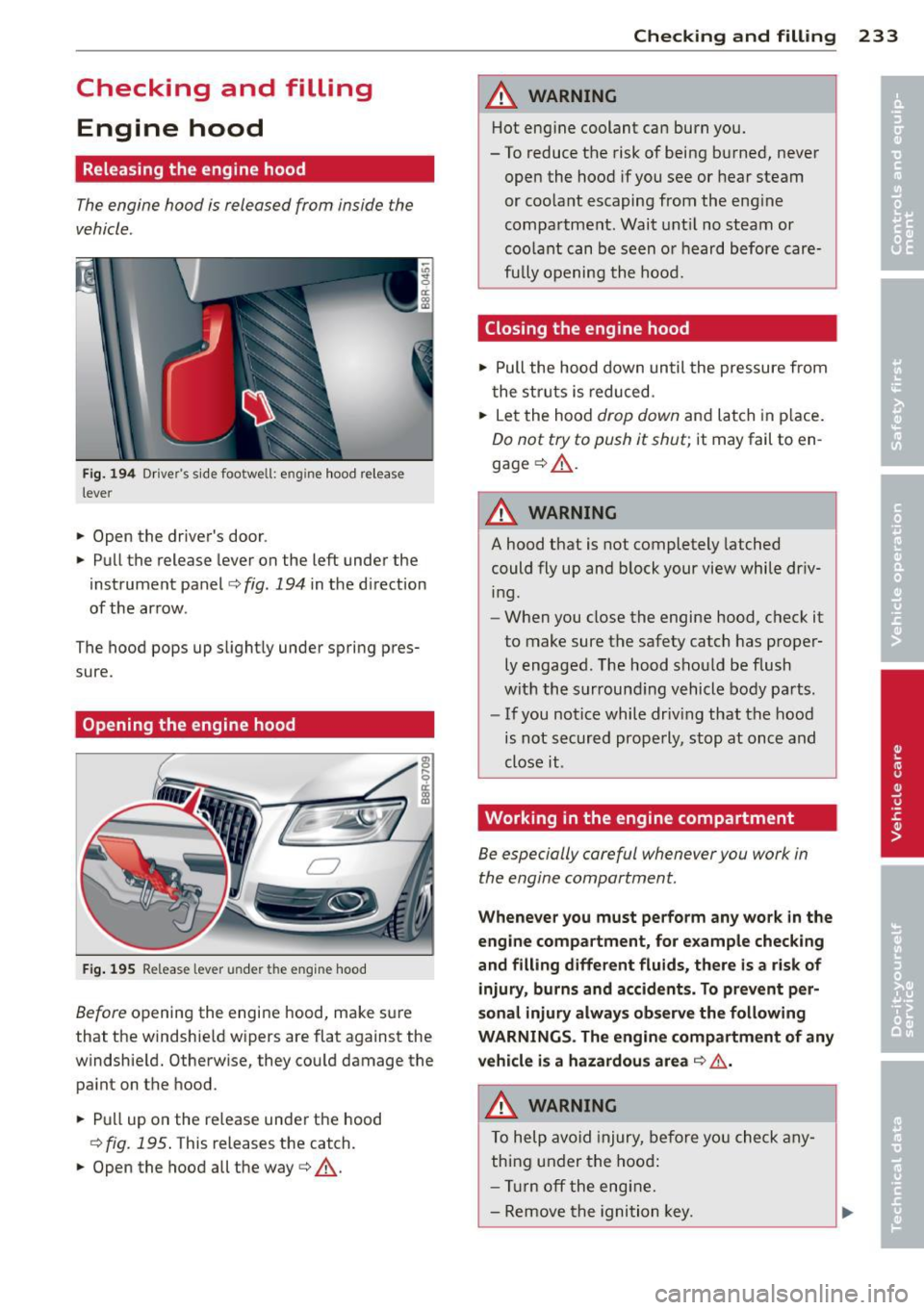
Fig. 19 4 Driver's s ide footwell: engine hood release
lever
"' Open the driver's door .
"' Pull the release lever on the left under the
instrument panel
i=:> fig. 194 in the d irection
of the arrow.
The hood pops up slightly under spring pres
sure.
Opening the engine hood
F ig . 195 Re lease lever under the engine hood
Before opening the engine hood, make sure
that the windshield wipers are flat against the
windshie ld. Otherwise, they could damage the
paint on the hood.
"' Pull up on the release under the hood
c;, fig. 195 . This releases the catch.
"' Open the hood all the way
c::> &,.
Checkin g and fillin g 233
A WARNING
Hot engine coolant can burn you.
- To reduce the risk of being burned, never
open the hood if you see or hear steam
or coolant escaping from the eng ine
compartment. Wait unt il no steam or
coolant can be seen or heard before care
fu lly opening the hood.
Closing the engine hood
"' Pull the hood down un til the pressure from
the struts is reduced.
"' Let the hood
drop down and latch in p lace.
Do not try to push it shut; it may fail to en
gage
c;, &, .
A WARNING
--
A hood that is not completely latched
could fly up and block your view while dr iv
ing.
- When you close the engine hood, check it
to make sure the safety catch has proper
ly engaged. The hood should be flush
with the surround ing vehicle body parts.
- If you notice while driv ing that the hood
is not secured properly, stop at once and
close it .
Working in the engine compartment
Be especially careful whenever you work in
the engine compartment.
Whenever yo u must pe rform any w ork in the
e n g ine com pa rt ment, for e xample ch e cki ng
and filling differ ent fluids, th ere is a risk of
injury , burn s and accid ent s. T o pr eve nt per
so nal injury alwa ys obs erve the foll owing
WARNINGS . Th e en gine co mpa rtm ent of an y
v e hicl e is a hazardou s ar ea
c;, Lh, .
A WARNING ~
To help avoid injury, be fo re you check any
thing under the hood:
- Turn off the engine.
- Remove the ignition key.
Page 237 of 316
Checking and filling 235
Engine compartment
Engine compartment
These are the most important items that you can check.
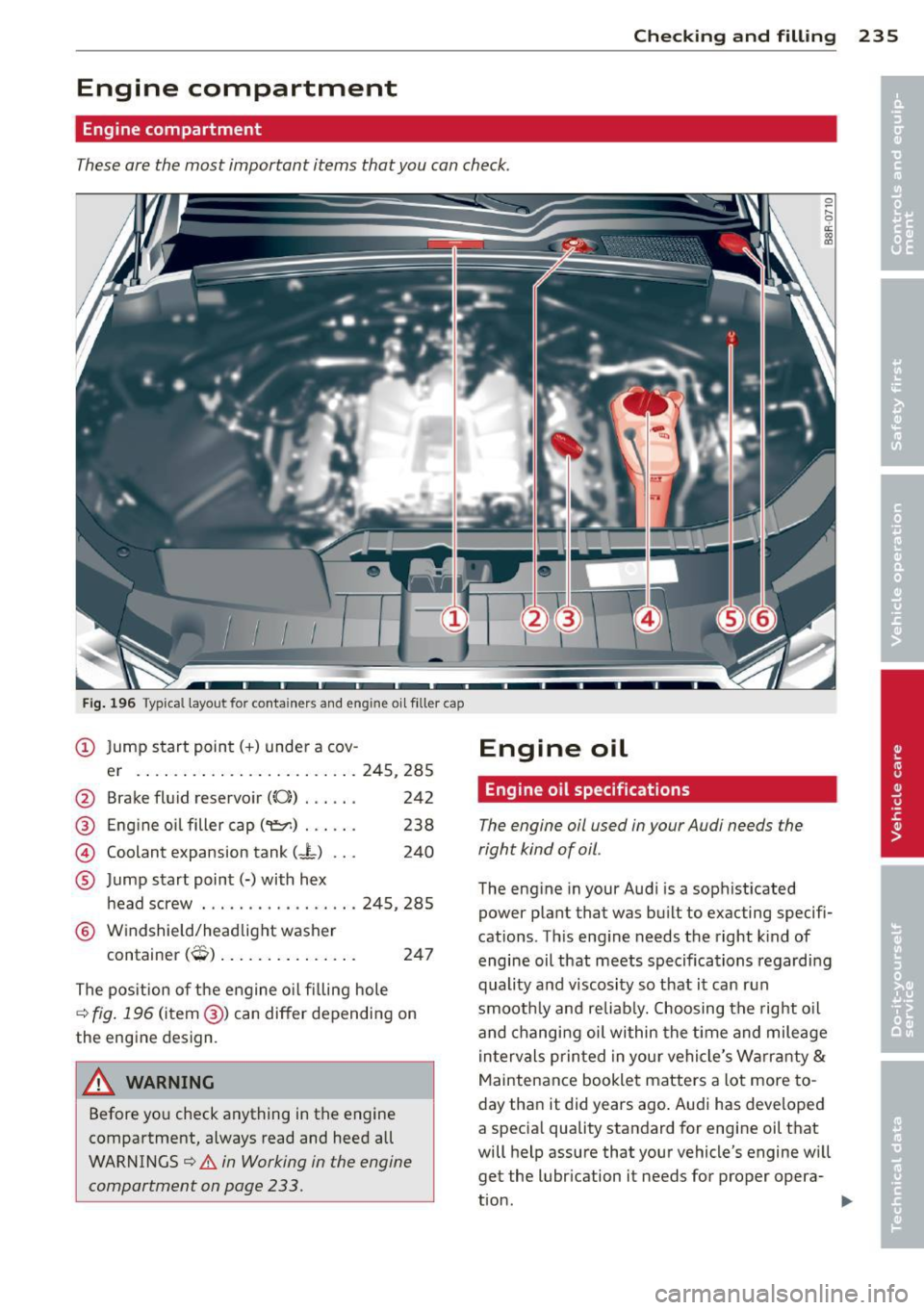
Fig. 196 Typical layout for contain ers and engine oil filler cap
(D Jump start point( +) under a cov -
er .. .. .. .. .............. .. 245, 285
@ Brake fluid reservoir ((0)) . . . . . . 242
@ Eng ine oil filler cap
("t=:?1) . . . . . . 238
@ Coolant expansion tank (J-) . . . 240
® Jump start point(-) with hex
head screw ........... .... .. 245, 285
® Windshield/headlight washer
container
(0) . . . . . . . . . . . . . . . 247
The pos ition of the engine o il filling hole
¢ fig. 196 (item@) can differ depending on
the engine design.
A WARNING
-
Before you check anything in the engine
compartment, always read and heed all
WARNINGS ¢&. in Working in the engine
compartment on page 233.
Engine oil
Engine oil specifications
The engine oil used in your Audi needs the
right kind of oil .
The engine in your Audi is a sophisticated
power plant that was bu ilt to exacting specifi
cations. This eng ine needs the right k ind of
engine oil that meets specifications regarding
quality and viscosity so that it can run
smooth ly and reliab ly. Choosing the right oil
and changing oil within the time and mileage
intervals printed in your vehicle's Warranty
&
Maintenance booklet matters a lot more to
day than it did years ago . Audi has developed
a specia l quality standard for engine oil that
will help assure that your vehicle's engine will
get the lubrication it needs for proper opera-
tion. .,..
Page 243 of 316
engine is warm, the level may be slightly
above the "MAX" marking .
The location of the coolant expansion tank
can be seen in the engine compartment illus
tration ¢
page 235.
To obtain an accurate reading, the engine
must be switched
off.
The expansion tank in your vehicle is equipped
with an electric coolant level sensor.
When the coolant level is too low, the warning
light in the Auto-Check System¢
page 30 will
blink until you add coolant and the level has
been restored to normal. Even though there is
an electric coolant level sensor, we still rec
ommend you check the coolant level from
time to time.
Coolant loss
Coolant loss may indicate a leak in the cooling
system. In the event of coolant loss, the cool
ing system should be inspected immediately
by your authorized Audi dealer.
It is not
enough merely to add coolant.
In a
sealed system, losses can occur only if
the boiling point of the coolant is exceeded as
a result of overheating.
(D Note
Do not add any type of radiator leak seal
ant to your vehicle's engine coolant. Add
ing radiator repair fluid may adversely af
fect the function and performance of your
cooling system and could result in damage
not covered by your New Vehicle Limited
Warranty.
Adding coolant
Be very careful when adding engine coolant.
Before you check anything in the engine com
partment,
always read and heed all WARN
INGS ¢ A in Working in the engine compart
ment on page 233.
... Turn off the engine .
... Let the engine cool down.
Checking and filling 241
... Place a thick rag over the coolant expansion
tank ¢
page 240, fig. 199 and carefully turn
the cap counter-clockwise ¢
A.
... Add coolant.
... Twist the cap on again
tightly.
Replacement engine coolant must conform to
exact specifications ¢
page 240, Coolant. We
recommend using only coolant additive
Gl2+
+, Gl3
or in an emergency Gl2 +. Do not use a
different additive . In an emergency use plain
water until you can get the correct additive and can restore the correct ratio. This should
be done as soon as possible .
If you have lost a considerable amount of
coolant, then you should add cold antifreeze
and cold water only when the engine is cold.
Always use
new engine coolant when refilling.
Do not fill coolant above the "MAX" mark. Ex
cess coolant will be forced out through the
pressure relief valve in the cap when the en
gine becomes hot.
A WARNING
- The cooling system is under pressure and
can get very hot. Reduce the risk of
scalding from hot coolant by following
these steps.
- Turn
off the engine and allow it to cool
down.
- Protect your face, hands and arms from
escaping fluid and steam by covering
the cap with a large, thick rag.
- Turn the cap slowly and very carefully
in a counter-clockwise direction while
applying light, downward pressure on
the top of the cap .
- To avoid being burned, do not spill an
tifreeze or coolant on the exhaust sys
tem or hot engine parts. Under certain
conditions, the ethylene glycol in en
gine coolant can catch fire.
-Antifreeze is poisonous. Always store an
tifreeze in its original container and well
out of the reach of children.
~
•
•
Page 244 of 316
24 2 Ch ecking and filling
-If you drain the coolant, it must be
caught and safely stored in a p roper
conta iner clearly marked "poison".
(D Note
- Coolant pollutes the env ironment and
could cause an engine fire . Excess coo l-
ant will be forced out through the pres
sure relief valve in the cap when the en
gine becomes hot.
- If, in an emergency, only water can be
added , the correct ratio between water
and antifreeze¢
page 240 must be re
stored as soon as possible .
@ For the sake of the environment
Drained coolant should not be reused. Al
ways dispose of used coolant while observ ing all environmental regulations.
Radiator fan
The radiator fan switches on automatically by
itself
The radiator fan is driven by the engine via the
V-be lt . The viscous clutch regulates the speed
of the fan accord ing to t he temperature of the
coolant.
An auxiliary electric radiator fan* switches on
a nd off depending on coolant temperature
and other ve hicle operating conditions.
After you switch the engine off, the auxiliary
fan can cont inue running for up to 10 minutes
- even with the ignition off. It can even switch
on again later by itself¢&. , if
- the temperature of the engine coolant rises
due to the heat build-up from the engine in
the engine compartment, or
- the engine compartment heats up because
the veh icle is parked in intense sunlight.
_&. WARNING
- To reduce the r isk of personal injury nev
er to uch the radiator fa n. -
The a uxiliary electric fan is temperat ure
controlled and can switch on suddenly
even when the engine is not running.
- The auxiliary radiator fan switches on a u
tomatically when the engine coolant reaches a certai n temperature and will
continue to ru n until the coolant temper
ature drops.
Brake fluid
Checking brake fluid level
The brake fluid level can be checked with a
quick glance.
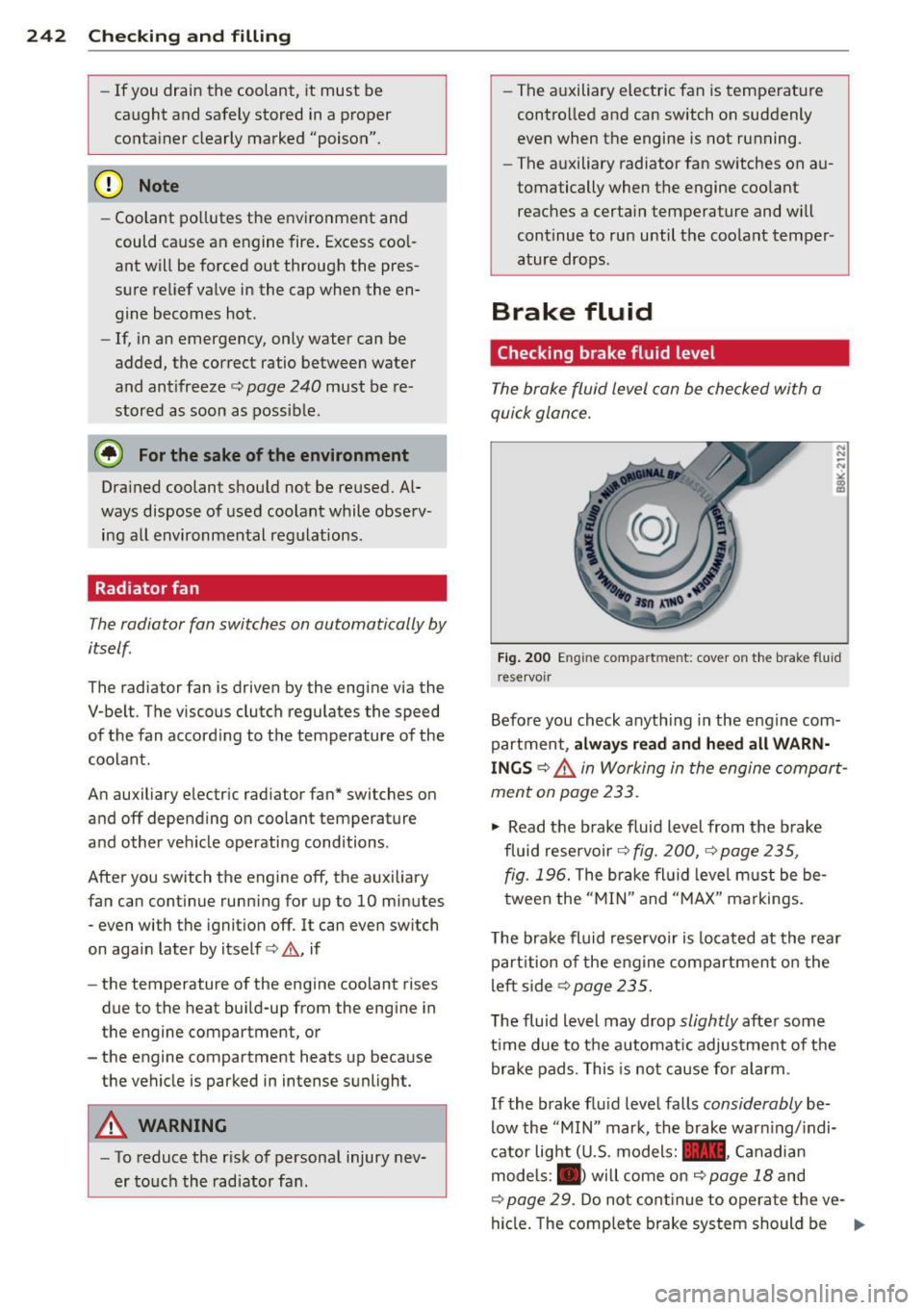
F ig. 2 00 Engine compart men t: cover on t he brake fluid
reservoir
Befo re you check anyth ing in the engine com
partment,
alway s read and he ed all WARN
INGS c::> ,&. in Working in the engine compart
ment on page 233.
.,. Read the brake fluid level from the b rake
fluid reservoir
c::> fig. 200, c::> page 235,
fig. 196.
The brake fl uid level m ust be be
tween the "MIN" and "MAX" markings.
T he bra ke fluid reservo ir is located at the rear
part ition o f the e ngine compartment on the
left s ide
c::> page 235.
The fluid level may drop slightly afte r some
t ime due to the a utomatic adjustment of the
brake pads. This is not cause for a larm .
If the brake fl uid level falls
considerably be
low the
"MIN" mar k, the brake war ning/ indi
cator light ( U.S. models:
1111 , Canadian
models :. will come on
c::> page 18 and
c::>page 29. Do not con tinue to operate the ve-
hicle . The comp lete brake system should be ..,.