ESP AUDI Q5 2014 Workshop Manual
[x] Cancel search | Manufacturer: AUDI, Model Year: 2014, Model line: Q5, Model: AUDI Q5 2014Pages: 316, PDF Size: 78.41 MB
Page 191 of 316
and child against the backrest, center
armrest, door or roof.
- Always install rear-facing child safety
seats or infant carriers on the rear seat.
- Forward-facing child safety seats or in
fant carriers installed on the front pas
senger's seat may interfere with the de
ployment of the airbag and cause serious
injury to the child.
- It is safer to install a forward-facing
child safety seat on the rear seat.
- Always read and heed all WARNINGS whenever using a child restrained in ave
hicle is being used¢
page 178. Special
precautions apply when installing a child
safety seat on the front passenger seat
¢ page 158, Child restraints on the front
seat -some important things to know.
A WARNING
Always take special precautions if you
must install a forward or rearward-facing
child restraint on the front passenger's
seat in exceptional situations:
-Whenever a forward or rearward-facing
child restraint is installed on the front
passenger seat, the
PASSENGER AIR
BAG OFF
light must come on and stay on
whenever the ignition is switched on.
- If the
PASSENGER AIR BAG OFF light
does not come on and stay on, perform
the checks described ¢
page 168, Moni
toring the Advanced Airbag System.
- Take the child restraint off the front pas
senger seat and install it properly at one
of the rear seat positions if the
PASSEN
GER AIR BAG OFF
light does not stay on
whenever the ignition is switched on.
- Improper installation of child restraints
can reduce their effectiveness or even
prevent them from providing any protec
tion.
- An improperly installed child restraint
can interfere with the airbag as it de
ploys and seriously injure or even kill the
child.
Child Safety 189
- Always carefully follow the manufactur
er's instructions provided with the child
safety seat or carrier.
- Never place additional items on the seat
that can increase the total weight regis
tered by the weight-sensing mat and can
cause injury in a crash.
A WARNING
Forward-facing child restraints:
- Always make sure the forward-facing
seat has been designed and certified by its manufacturer for use on a front seat
with a passenger front and side airbag.
- Never put the forward-facing child re straint up, against or very near the in
strument panel.
- Always move the passenger seat into its rearmost position in the seat's fore and
aft adjustment range, as far away from
the airbag as possible before installing
the forward-facing child restraint. The
backrest must be adjusted to an upright
position.
- Make sure that the PASSENGER AIR BAG
OFF
light comes on and stays on all the
time whenever the ignition is switched
on.
A WARNING
Rearward-facing child restraints:
- A child in a rearward-facing child safety
seat installed on the front passenger
seat will be seriously injured and can be killed if the front airbag inflates -even
with an Advanced Airbag System.
- The inflating airbag will hit the child
safety seat or infant carrier with great
force and will smash the child safety seat
and child against the backrest, center
armrest, door or roof.
-Always be especially careful if you must
install a rearward facing child safety seat
on the front passenger seat in exception-
al circumstances. .,.
•
•
Page 197 of 316
Installing the upper tether strap on the
anchorage
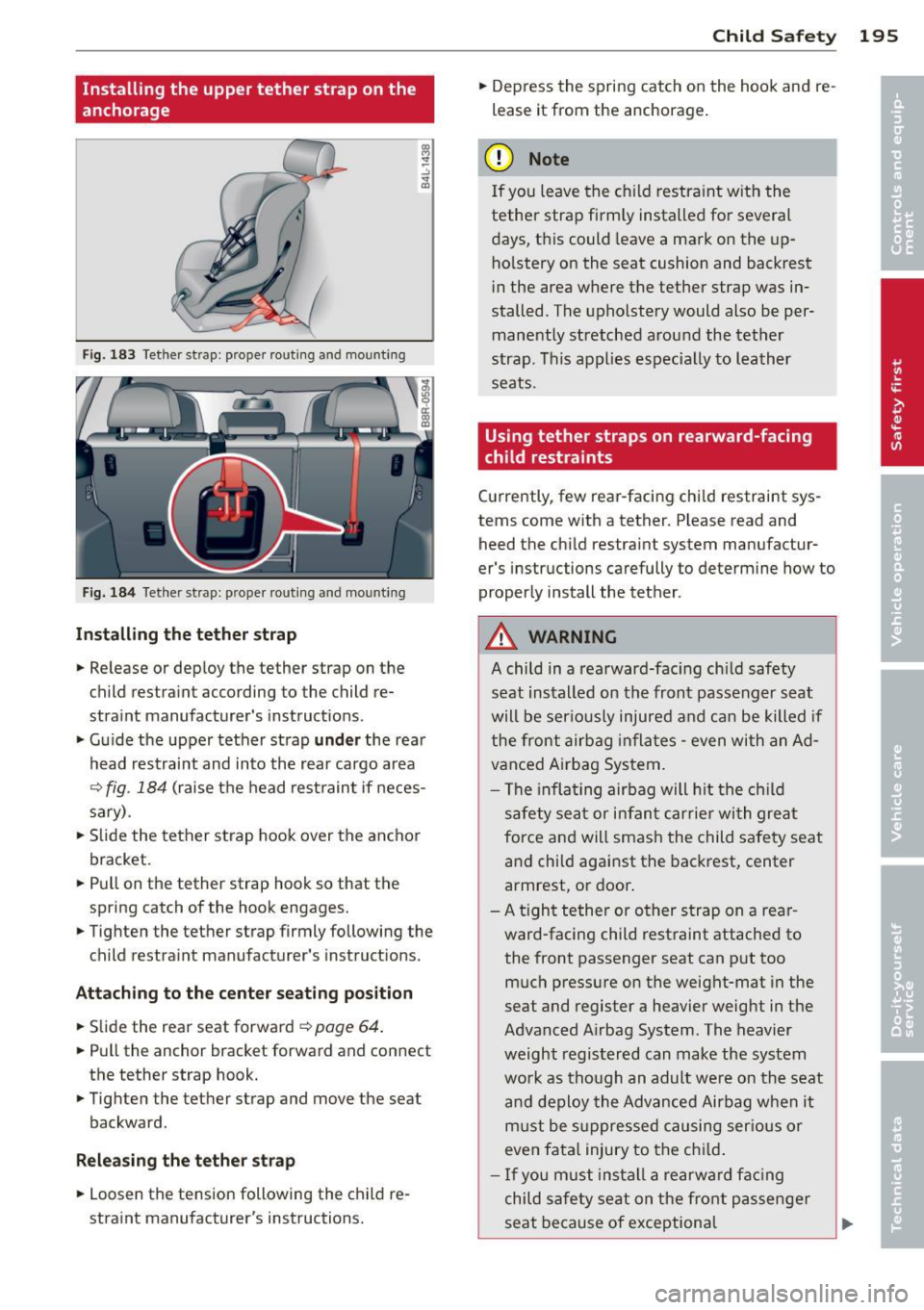
Fig. 183 Tether strap: proper routing and mounting
Fig. 184 Tether strap: proper rout ing and mounting
In sta ll in g th e tether strap
• Release or deploy the tether strap on the
child restraint according to the child re
straint manufacturer's instructions .
• Gu ide the upper tether strap
under the rear
head restraint and into the rear cargo area
Q fig. 184 (raise the head rest raint if neces
sary) .
• Slide the tether strap hook over the anchor
bracket.
• Pull on the tether strap hook so that the
spring catch of the hook engages.
• Tighten the tether strap firmly following the
child restra int manufacturer's instruct ions .
Attaching to th e center se ating po sit ion
• Slide the rear seat forward Q page 64.
• Pull the anchor bracket forward and connect
the tether strap hook.
• Tighten the tether strap and move the seat
backward .
Releasing th e te th er stra p
• Loosen the tension following the child re
straint manufacturer's instructions.
Child S afety 195
• Depress the spring catch on the hook and re
lease it from the anchorage .
(D Note
If you leave the child restra int w ith the
tether strap firmly installed fo r several
days, this could leave a mark on the up
holstery on the seat cushion and backrest
i n the area where the tether strap was in
stalled. The upholstery would also be per
manently stretched around the tether
strap . This applies especia lly to leather
seats.
Using tether straps on rearward-facing
child restraints
Cu rrently, few rear-facing child restraint sys
tems come with a tether. Please read and
heed the child restraint system manufactur
er's instructions carefully to determine how to
properly install the tether.
&, WARNING
A child in a rearward-fac ing ch ild safety
seat installed on the front passenger seat
will be ser ious ly injured and ca n be killed if
the front airbag inflates -even with an Ad
vanced Airbag System.
- The infla ting airbag will h it the ch ild
safety sea t or i nfan t carrie r with great
force and will smash the child safety seat and child against the backrest, center
armrest, o r door .
- A t ight tether or other strap on a rear
ward-facing child rest raint attached to
the front passenger seat can p ut too
muc h pressure on the weight-mat in the
seat and register a heavier weight in the
Advanced A irbag System . The heavier
weight registered can make the system
wo rk as tho ugh an adult we re on th e seat
a nd deploy the Advanced Airbag when it
m ust be s uppressed causing ser ious or
even fatal injury to the ch ild .
- If you must insta ll a rearwa rd fa cing
child safety seat on t he front passenger
seat because of exceptional
Page 200 of 316
198 Intelligent technology
Dynamic ste ering *
On vehicles with dynamic stee ring* , ES C helps
stabilize the st eering in critical s ituations .
Selective wh eel torque c ontrol
The selective whee l torque control operates
when dr iv ing through curves . T he front wheel
on the inside of the curve or both wheels on
the inside of the curv e are braked selective ly
as needed. This m inimizes sliding in the front
wheels and allows for more pr ecise driving
through curves . T he system may not act ivate
when driving in wet or snowy cond itions .
A WARNING
-ESC, ABS, ASR, EDL dynamic steering"
and the se lective wheel torque control
cannot overcome the laws of physics .
Th is is especially important on slippery
or wet roads.
If the systems begin act ing
to stabilize yo ur vehicle , you sho uld im
med iately change your speed to ma tch
the road and traffic condit ions. Do not
let the increased safety provided by
these systems tempt you to take risks. Do ing so wi ll increase the risk of a loss of
vehicle control, collision and serious per
sonal injuries .
- Always adapt your speed to road, traff ic
and weather condit ions. The risk of Los-
ing cont ro l of the veh icle increases when
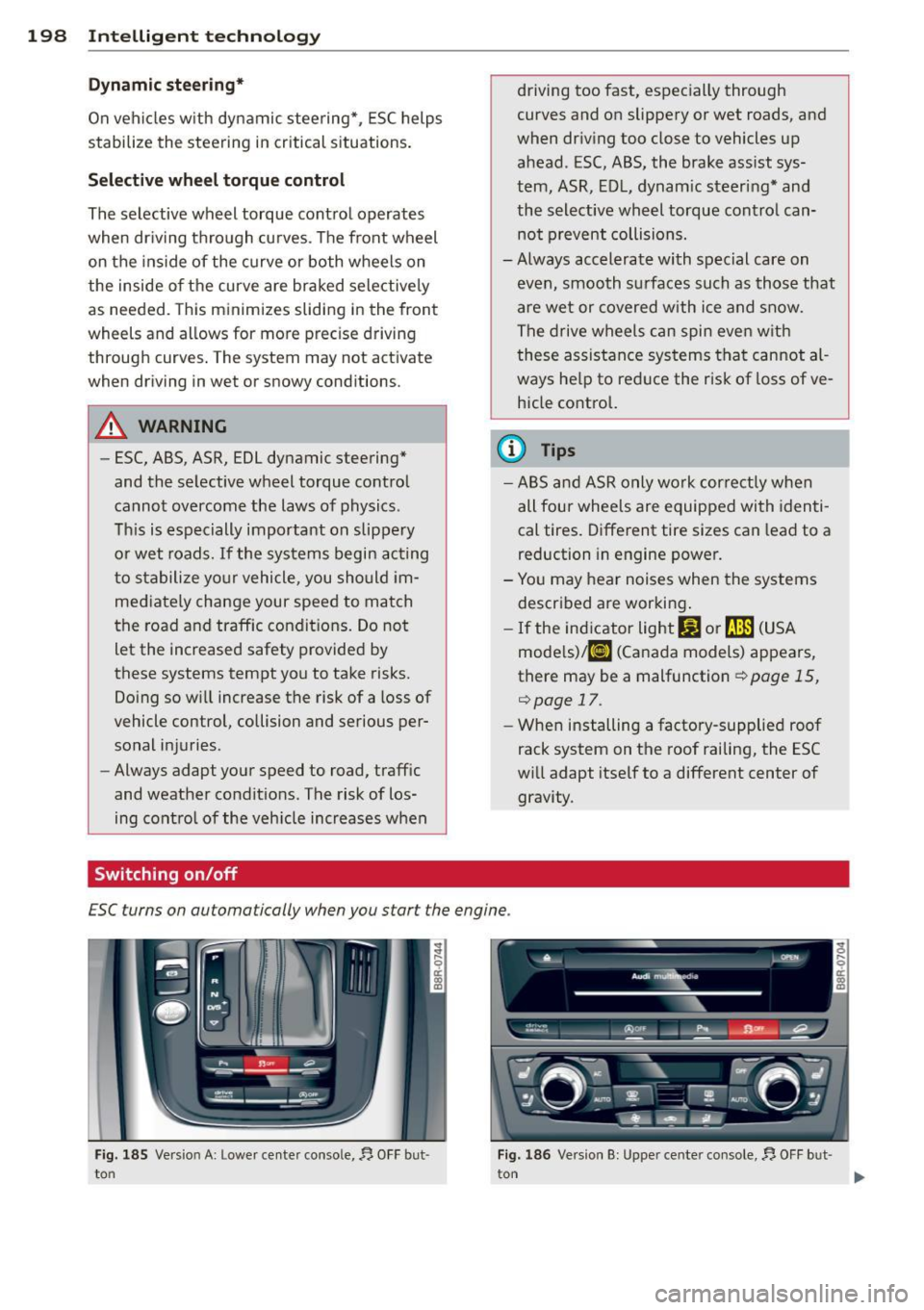
Switching on/off
-
driving too fast, espec ially through
curves and on slippery or wet roads, and
when dr iv ing too close to vehicles up
ahead . ESC, ABS, the brake ass ist sys
tem, ASR, ED L, dynam ic steering* and
the selective whe el torque cont ro l can
not p revent collisions.
- Always accelerate with special care on
even, smooth surfaces such as those that
are wet or covered with ice and snow.
The drive wheel s can spin eve n w ith
these assistance sys tems t hat can not al
ways he lp to red uce the risk of loss of ve
hicle control.
(0 Tips
- ABS and ASR only work correctly when
all four whee ls are equipped wi th identi
cal tires . Different tire sizes can lead to a
reduction in engine powe r.
- Yo u may hear noises when the systems
described are working .
-If the ind icator light&] or llB (USA
mode ls)/ [iJ (Canada models) appears,
there may be a malfunction
c:::, page 15,
c:::, page 17.
-When installing a factory-supplied roof
rack system on the roof railing, the ESC
w ill adapt itse lf to a different center of
gravity.
ESC turn s on automa tically when you star t the engine .
Fig . 18 5 Ve rs io n A: L ower ce nte r conso le , fJ. O FF b ut·
to n Fig. 186 Ve rs io n B: Uppe r ce nte r co nso le, fJ. OF F bu t
t on
Page 201 of 316
The following situations are exceptions where it may be useful to switch on offroad mode to
allow the whee ls to spin :
- Rocking the vehicle to free it when it is stuck
- Driv ing in deep snow or on loose ground
- Driving with snow cha ins
Offroad mode on
Intelligen t technolog y 199
- Driving downh ill wh ile braking on loose
ground
- Dr iving on roug h ter rain when much of the
car's weight is lifted
off the whee ls (axle ar
tic ulation)
Offroad mode off
Beha vior
The ESC and ASR stabilization funct ions The full stab ilizat ion function of the ESC
are limited ~,&. .
Operation Press the I~ OF FI button.
Ind icat or II tu rns on.
li g ht s
Dri ver me s- Stabilizat ion cont rol (ESC ): Offroad.
s age s War
nin g ! Rest ricted stab ility
A WARNING
You should only sw itch offroad mode on if
your dr iving abili ties and road cond itions
pe rmit .
- T he stabilization function is limited
when offroad mode is swi tched on. The
dr iv ing whee ls co uld spin and the vehicle
cou ld swe rve, especially on slick or slip
pery road surfaces.
- Yo u should o nly switch offroad mode o n
when driving offroad.
@ Tips
Offroad mode cannot be swit ched o n when
a dapt ive cr uise control* is sw itched o n.
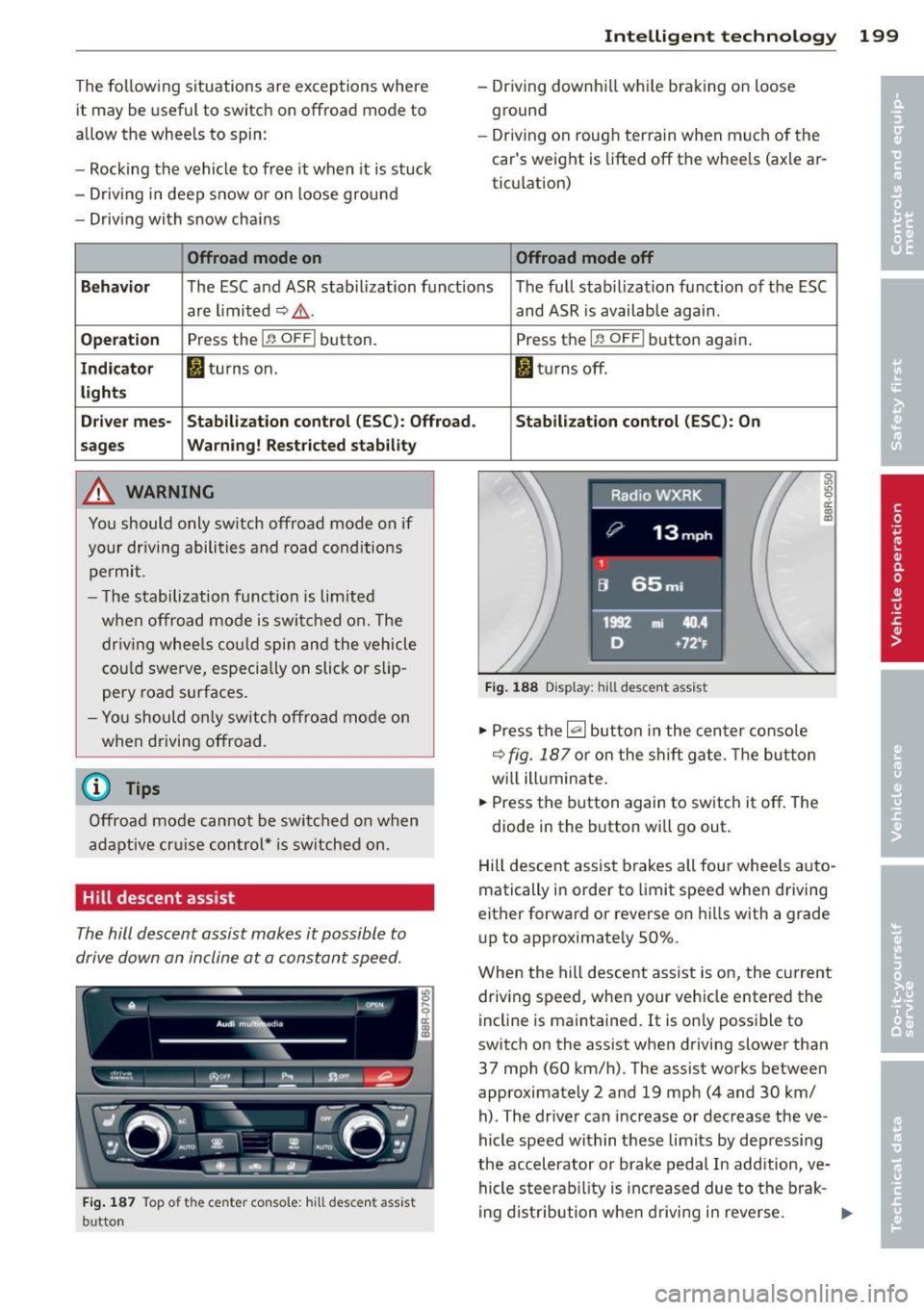
Hill descent assist
The hill descent assist makes it possible to
drive down an incline at a constant speed.
F ig . 187 Top o f the ce nter conso le : hi ll d es cent ass ist
b utto n
and ASR is available again .
Press the
I ~ OFF I button again .
MJ tu rns off .
Stabil ization control (ESC ): On
Fi g. 18 8 Disp lay: hil l de sce nt ass is t
"' Press the~ button in the cen ter conso le
~ fig. 187 or on the sh ift ga te. Th e but ton
wi ll ill uminate.
"' Press the b utton again to sw itch it
off . The
diode in the button wi ll go out .
Hill descent assist brakes all four whee ls auto
matically in order to limit speed when driving
either forwa rd or reverse on hill s with a grade
up to approximate ly 50% .
When the hill descent assist is on, the current
driv ing speed, when your vehicle entered the
incline is maintained. It is on ly possible to
switch on the assist when driving slower than
37 mph (60 km/h). The assist works between
approximately 2 and 19 mp h (4 and 30 km/
h) . The driver can inc rease or decrease the ve
hicle speed within these limits by depress ing
the accelerator or brake pedal In addition, ve hicle steerab ility is increased due to the brak-
i ng distribution when driving i n reve rse . ..,.
Page 206 of 316
204 Intelligent technology
If starting capability is jeopa rdized due to en
ergy consumption, the following warning ap
pears in the radio or MMI* display:
Please start engine, otherwise system will
switch off in 3 minutes.
The warning ind icates that the system will be
turned off automatically after 3 minutes. If
you wish to continue using the functions, you
have to start the engine .
With the engine running
Although electrical energy is generated when
the vehicle is be ing driven, the battery can be
come discharged . Thi s happens mostly when
little ene rgy is being generated and a great
deal consumed and the battery's state o f
charge is not optima l.
To bring the energy balance back into equili
brium, consumers which require especially
l arge amounts of energy are temporarily cut
back or switched off. Heating systems in par
ticular require a great dea l of energy. If you
notice, for example, that the heated seats* or
the heated rear window are not heating, they
have been temporar ily cut back or switched
off. These systems will be ava ilable again as
soon as the energy balance has been restored.
You will also notice that engine idle speed has been increased slightly. This is normal and not
a cause for concern . By increas ing engine idle
speed the add it iona l energy required is gener
ated and the battery is charged.
Page 209 of 316
A WARNING ,~
- Do not park your vehicle over flammable
materials such as grass or leaves because
the high temperature of the diesel par
t icu late filter could start a fire .
- Do not apply an underbody protectant in the exhaust system area or a fire could sta rt.
Avoid damaging the
vehicle
When you are driving on poor roads, o r over
curbs, steep ramps, etc., make ce rtain that
l ow -lying parts such as spoi lers and exhaust
system parts do not bottom out and get dam
aged.
This is especially true for vehicles with low
slung chassis (sports chassis)* and f ully load
ed vehicles.
Shutting down vehicle
I f you wou ld like your veh icle to remain inop
erative for a longer period of time, contact an
Audi or other specialized dealer. They can ad
vise you on necessary precautions e.g . corro
sion prevention, ma intenance and storage.
Pay attention to add itiona l information con
cerning the battery. Refer to
c::> page 242 .
Operate your vehicle
economically and
minimize pollution
General
Your personal style of driving will determine
the economy of your vehicle, as well as ex
haust and noise levels.
Fuel economy, environmental impact, and
wear on your engine, brakes and t ires largely
depend on th ree factors:
- you r persona l dr iving style
- operating conditions
- technica l lim itations
Dri vin g and en vironm ent 207
If you ant ic ipate what you need to do next and
drive economically, yo u can easily cut yo ur
fuel consumpt ion by 10 -15 percent. T his sec
tion w ill give you some tips on how you can
help the env ironment and your pocketbook.
Q) Tips
The consumption estimates as published
by ENVIRONMENTAL PROTECTION AGENCY
(EPA) and Transport Canada may not corre
spond to your actual consumption on the road, which will vary depending upon vehi
cle load and speed, road and weather con
dit ions, t rip leng th, etc.
Drive smoothly and keep a lookout
ahead
Vehicles use the most fuel when they are ac
celerating .
.,. Avo id u nnecessary accelerating and b rak ing.
Vehicles use the most fuel when they are ac
ce le rat ing . If you ant icipate what is going to
happen next, you will need to brake less and,
thu s, acce le rate less. Le t the vehicle coast
whenever possible -for examp le when you see
that the next t raff ic light is re d.
Avoid full throttle
Driving at moderate speeds saves fuel and
improves your mileage.
.,. Try and keep well below your car 's maximum
speed.
Acce le rat ing gently reduces fue l cons ump
tion, eng ine wear, and does not disturb the
environment.
Fuel consumpt ion, exhaust emiss ions and e n
gine noise inc rease disproport ionately at high
speeds . If you driv e at app rox imately th ree
quarte rs of top speed, fuel consumption w ill
be reduced by one ha lf. Never d rive fas ter
t han the pos ted speed limi t and weathe r con
ditions pe rmit.
•
•
Page 210 of 316
208 Driving and environment
Reducing unnecessary idling
Even when your car is just idling it burns up
fuel.
.,. Shut the engine off when you are not driving
the vehicle.
.,. Do not warm up the vehicle by letting the
engine run at idle .
The idling phase is automatically reduced for
vehicles with the Start-Stop -System* . It is ef
fic ient to sw itch
off the eng ine in vehicles
without the Start-Stop-System* when stopped
at railroad crossings and long red lights. Turn
ing the eng ine
off for just 30-40 seconds
saves more fuel than is burned by sta rting the
engine again .
It takes a long time for the engine to wa rm up
fu lly when it is running at idle. However , wear
and nox ious emissions are especially high
when the engine is warming up. So you should
drive away as soon as you start the engine and
avoid running at high rpms while the engine is
still warming up.
(D Note
Do not leave engine idling unattended af
ter starting. If warning lights should come
on to indicate improper operation, they
would go unheeded. Extended idling also
produces heat, which could resu lt in over
heat ing or other damage to the vehicle or
other property .
Regular maintenance
A badly tuned engine unnecessarily wastes a
lot of fuel .
.,. Have your vehicle serviced at regular inter-
vals.
By having your vehicle regularly serviced by an
author ized Audi dealer helps to ensure that it
runs properly and economically . The condition
of your vehicle not only affects its safety and
ab ility to hold its value, it also affects
fuel
consumption. Check
your oil each time you fill your tank.
The amount of oi l used is re lated to engine
load and speed.
It is normal for the oil consumption of a new
engine to reach its lowest value after a certa in
mileage has been driven .
You must drive your veh icle about 3,000 mi les
(5,000 kilometers) before you can properly
assess oil consumpt ion.
This also app lies to fuel consumption and en
gine output .
(0 Note
- Have your veh icle ma inta ined properly
and in accordance with the service rec
ommendations in your Warranty
& Ma in
tenance booklet. Lack of proper ma inte
nance as well as improper use of the ve
hicle will impair the function of the
em iss ion control system and could lead
t o damage.
- Do not alter or remove any component of
the Emission Control System unless ap
proved by the manufacturer.
- Do not alter or remove any device, such
as heat shie lds , switches, ignition wires,
valves, which are designed to protect
your vehicle's Emission Control System
and other important vehicle compo
nents.
' Fewer short trips
Fuel consumption will always be relatively
high on short trips.
... Try to avoid driving sho rt distances w it h a
cold engine .
T he eng ine and catalytic converter have to
reach their optimal
operating temperature to
reduce fuel consumpt ion and nox ious emis
sions effectively.
Jus t after starting, a cold engine in a mid-s ize
car only achieves a fuel economy of 6-8 mi les
per gallon (30 -40 l/100 km). After about a
half a mile, fuel economy climbs to 12 mpg .,..
Page 212 of 316
210 Driving o ff road
Driving off road
Driving in difficult road
conditions and offroad
General information
The operation of the E lectronic Stabilization
Control (ESC) is expanded for operation away
from paved roads. In situations where slip or a
d ifferential locking function is required, the
offroad mode can be activated
c::;, page 197.
Your Audi also has permanent all -wheel drive
in addit ion.
However, your Aud i is not a pure offroad vehi
cle . It was not built for driving under extreme
conditions , e.g . for trips that are in the nature
of an expedition .
D riv e only on roads and off road sections
which match the design of your vehicle and
your abil ities a s a driver . Never take ri sks!
Before driving offro ad
- Check the engine oi l level, tire press ure,
coolant leve l, and the fluid level in the w ind
shield washer reservo ir.
- Stow luggage items and other objects in the
l uggage compartment, and secure them
against slid ing around .
After driving offroad
- After trips offroad, remove any twigs and other foreign objects from the grill, the un
derbody and the wheels. Pay specia l atten
t ion to fore ign ob jects (stones) which have
become lodged in the tire tread.
- Clean the body and the vehicle unders ide,
and inspect the veh icle for possible damage.
- Clean dirty w indows, headlamp lenses, rear
li ghts, and license plates .
- Perform a brake check (part icu larly after
trave lling through water) .
A WARNING
- Drive especially attentively and plan
ahead in difficult road conditions and
w hen offroad . Excess ive speed or incor-
-
rect mane uvers can cause injuries and
damage to the vehicle.
- Always adapt your speed and driving
style to road, offroad, traff ic, and weath
er cond itions. Drive especially slowly off
road when your v iew is restricted.
- Please be aware that in offroad mode,
particularly on a smooth and slippery
road , the whee ls may have an increased
tendency to sp in and the vehicle may
b reak away- dange r of skiddi ng!
- Stability is limited in the offroad mode .
® For the sake of the environment
Avoid damage to the environment and re
spect nature.
(D Tips
Only drive w here it is permitte d and stay
on marked roads and paths.
Explanation of some technical terms
The following data refer to ideal cond it ions .
Depend ing on veh icle load and ground condi
t ions and the environment, the numbers may
vary. It is the d river 's responsib ility to d ecide
whethe r a ve hicl e can overcome a spe cific s it
u ati on
c::;, ,&. .
Gradient angle
The number of meters in alt itude ga ined over
a di sta nce of 109 .4 yards or 100 mete rs
(grade) a re given as a pe rcentage o r degrees .
Info rmation abou t the gra dien t the veh icle
c an climb under i ts own power (depends in
part on t he road surfa ce and engine power).
Maximum pe rm itted gra de : 3 1
°
Lateral angle (slope of vehicle)
Ind icates the angle up to which the vehicle
can be d riven diagona lly or a cross the fall line
o n a s lope wi tho ut the vehicle tip ping over
s ideways (depends on center of gravity) . Maxi -
mum pe rmitted lateral angle: 25°
Ill-
Page 216 of 316
214 Trailer towing
Operating instructions
6"
i ~
I 1,2 ..
{ ~
~
,,
-
2
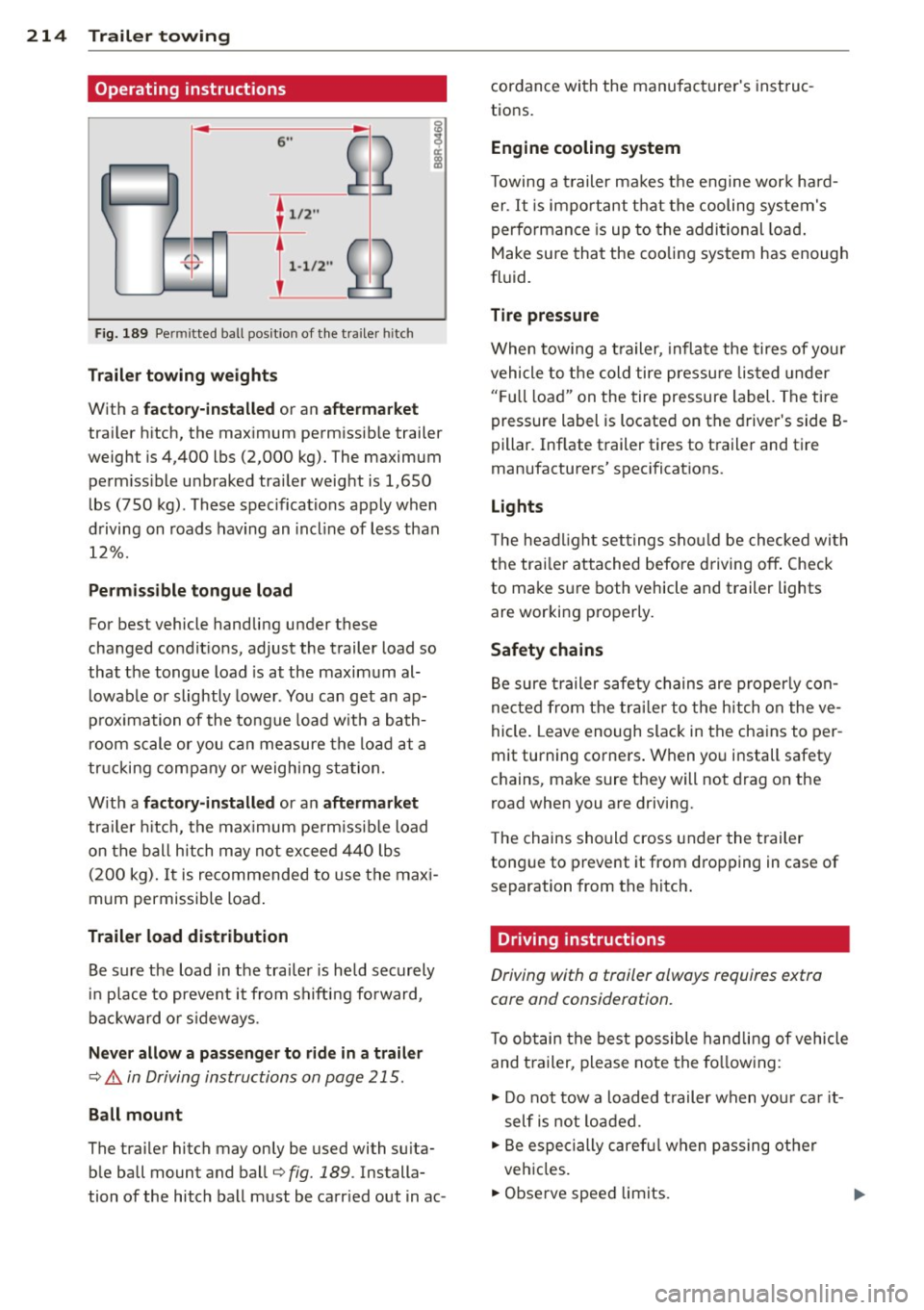
Fig. 189 Pe rmi tted ball posit ion of the tra iler h itch
T ra ile r tow ing weight s
With a factor y-insta lled or an afte rm arket
trailer h itch, the max imum permissib le trailer
weight is 4,400 lbs (2,000 kg). The maximum perm iss ible unbraked trailer weight is 1,650
lbs (750 kg). These spec ifications apply when
driving on roads hav ing an incl ine of less than
12%.
P erm is s ible tongue load
For best vehicle handling under these
changed condit ions, adjust the trailer load so
that the tongue load is at the maximum al
l owable or slightly lower . You can get an ap
p rox imation of the tongue load w ith a bath
room scale or you can measure the load at a
tr ucking company or weighing sta tion.
W ith a
fact ory -in stall ed or an aftermarket
trailer h itch, the max imum pe rm issible load
on the ball hitch may not exceed 440 lbs (200 kg).
It is recommended to use the maxi
mum permissible load .
Trailer lo ad distribut ion
Be sure the load in the trai ler is held securely
in place to prevent it from shifting fo rward,
backward or s ideways.
N eve r allow a p assenger to rid e in a trail er
¢ .&. in Driving instructions on page 215.
Ball mount
The trailer hitch may only be used with su ita
ble ball mount and ball¢
fig. 189. Installa
tion of the hitch ball must be carr ied out in ac- cordance with the manufacturer's instruc
tions.
Eng ine cooling system
T owing a t railer makes the engine work hard
er . It is important that the cooling system's
performance is up to the additional load .
Make sure that the cooling system has enough
fluid.
Tire pressur e
When towing a trailer, inflate the tires of your
vehicle to the cold tire pressu re listed under
" F u ll load" on the tire pressure label. The tire
pressure label is located on the driver's side B·
pillar. Inflate trailer tires to trailer and tire
manufacturers' spec ificat ions.
Lights
T he headlight settings shou ld be checked wi th
the trai ler attached before driving off . Check
to make sure both vehicle and trailer lights
are working properly.
Safety chains
Be sure trailer safety chains are properly con
nected from the tra iler to the hitch on the ve
hicle . Leave enough slack in the chains to per
mit turning corners . When you install safety
chains, make sure they will not drag on the
road when you are driving.
T he chains should cross under the trailer
tongue to prevent it from dropping in case of separation from the hitch .
Driving instructions
Driving with a trailer always requires extra
core and consideration.
T o obtain the best possible handling of vehicle
and t railer, please note the fo llowing :
.,. Do not tow a loaded t railer when you r ca r it
self is not loaded .
.. Be especially caref ul when passing ot her
vehicles.
.. Observe speed limits.
Page 217 of 316
~ Do not drive at the maximum permissible
speed.
~ Always apply brakes early.
~ Monitor the temperature gauge.
Weight distribution
Towing a loaded tra iler with an empty ca r re
sults in a high ly unstable distribution of
weight. If this cannot be avoided, drive at very low speeds only to avoid the risk of losing
steering control.
A "balanced" rig is easier to operate and con
trol. This means that the tow vehicle should
be loaded to the extent possible and permiss i
ble, while keeping the trailer as light as possi
ble under the circumstances. Whenever possi
ble, transfer some cargo to the luggage com
partment of the tow vehicle wh ile observing
tongue load requirements and vehicle loading
considerations .
Speed
The higher the speed, the more difficult it be
comes for the driver to control the rig . Do not
drive at the maximum permissible speed. Re
duce your speed even more if load, weather or
wind conditions are unfavorable -part icularly
when going downhill.
Reduce vehicle speed
immediately if the trail
er shows the slightest sign of swaying.
Do not
try to stop the swaying by accelerating.
Observe speed limits. In some areas, speeds
for veh icles towing trailers are lower than for
regular vehicles.
Always apply brakes early . When driving
downhill, shift into a lower gear to use the en
g ine braking effect to slow the vehicle . Use of
the brakes alone can cause them to ove rheat
and fail.
Coolant temperature
T he coolant temperature gauge c:> page 10
must be observed carefully . If the needle
moves close to the upper end of the scale, re
duce speed immed iate ly and/or turn off the
air cond itioner.
Trailertowin g 215
If the coolant temperature warning light in
the instr ument cluster starts flashing., pull
off the road, stop and let the engine
idle for
about two minutes to prevent heat build -up.
A WARNING
Anyone not properly restrained in a mov
ing vehicle is at a much greater risk in an
accident. Never let anyone ride in your car
who is not properly wearing the restraints
prov ided by Audi .
Trailer towing tips
Important to know
Your vehicle handles differently when towing
-
a trailer because of the additional weight and
different weight distr ibut ion. Safety, perform
ance and economy will greatly depend on how
carefully you load your trailer and operate
your rig.
Before you actually tow your tra iler, practice
turning, stopping and backing up in an area
away from traffic. Keep practicing until you
have become completely familiar w ith the way
your vehicle-tra ile r combination behaves and
responds.
Backing up is difficult and requires practice .
Backing up with a trailer generally requires
steering action opposite to that when backing
u p you r vehicle without a trailer.
Maintain a greater d ista nce between your ve
hicle and the one in front of you. You w ill need
more room to stop. To compensate fo r the
trailer, you w ill need a larger than normal
turning radius.
When passing, remember that you cannot ac
celerate as fast as you normally would be
cause of the added load. Make sure yo u have
enough room to pass. After passing, a llow
plenty of room for your trailer before chang
ing lanes again.
Avoid jerky starts , sharp t urns or rapid lane
changes.
•
•