ABS AUDI Q5 2015 User Guide
[x] Cancel search | Manufacturer: AUDI, Model Year: 2015, Model line: Q5, Model: AUDI Q5 2015Pages: 302, PDF Size: 75.01 MB
Page 143 of 302
M N
co
a:
co
,...., \!) 1.1'1
N 1.1'1 ,....,
-Always put objects, for examp le, luggage or
other heavy items in the luggage c ompart
ment.
- Always secure objects in the luggage com
partment us ing the tie-down eye lets and
suitable straps.
A WARNING
Heavy loads will influence the way your vehi
cle handles. To help reduce the risk of a loss
of control leading to ser ious personal injury:
- Always keep in m ind when transporting
heavy objects, that a change in the center of
gravity can also cause changes in vehicle
hand ling:
- Always distribute the load as even ly as
possible.
- Place heavy objects as far forward in the
luggage compartment as possible.
- Never exceed the G ross Ax le Weight Rating
or the Gross Vehicle Weight Rating specified
on the safety compliance sticker on the left
doo r jamb. Exceeding permissible weight
standards can cause the vehicle to s lide and
hand le different ly.
- Please observe information on safe driving
r=>page 135.
A WARNING
To help prevent poisonous exhaust gas from
being drawn into the vehicle, always keep the
rear lid closed while driv ing.
- Never transport objects larger than those
fitt ing completely into the luggage a rea be
cause the rea r lid cannot be fully closed .
- If you absolutely must drive w ith the rear lid
open, observe the following notes to reduce
the risk of poisoning:
- Close a ll windows,
- Close the Panoramic sliding sunroof*,
- Open al l air outlets in the instrument pan-
el,
- Sw itch off the air recircu lation,
- Set the fresh ai r fan to the h ighest speed.
Dr ivin g s afet y
A WARNING
Always make sure that the doors, all windows,
the Panoramic sliding sunroof * and the rear
lid are securely closed and locked to reduce
the r is k of injury when the vehicle is not being
used.
- After closing the rear lid, always make sure
that it is p roperly closed and locked.
- Never leave your vehicle unattended espe
cially with the rea r lid left open . A child
could crawl into the ve hicle through the lug
g age compartmen t and clo se the re ar lid be
coming trapped and unable to get out. Be
ing trapped in a vehicle can lead to serious
pe rsonal injury .
- Never let children play in or around the vehi
cle.
- Never let passengers ride in the luggage
compa rtment . Vehicle occupants must al
ways be properly restrained in one of the ve
hicle's seating positions.
(D Tips
- Air circul ation helps to reduce window fog
ging . Stale ai r escapes to the outs ide
through vents in the t rim panel. Be sure to
keep these slots free and open.
- The tire pressure m ust correspond to the
load. The tire pressure is shown on the tire
pressure label. The t ire p ress ure label is lo
cated on the dr iver's side B-pillar. The tire
pressure label lists the recommended cold
t ire inflation pressures fo r the veh icle at its
maximum ca pac ity weight and the tires that
we re on your vehicle at the t ime it was man
ufac tured. For recommended tire pressures
for normal load condi tions, please see chap
ter
r=> page 246.
Tie-downs
The luggage compar tment is equipped wi th four
tie-downs to se cure luggage and other items .
Use the t ie-downs to secu re your cargo prope rly
r=> page 140, Loading the luggage compar tment. lliJ,
141
Page 147 of 302
M N
co ~ co
rl I.O
"' N
"' rl
- Failure to pay attention to the warning light
that come on, could lead to personal injury.
Why use safety belts?
Frontal collisions and the law of physics
Frontal crashes create very strong forces for peo
ple riding in vehicles .
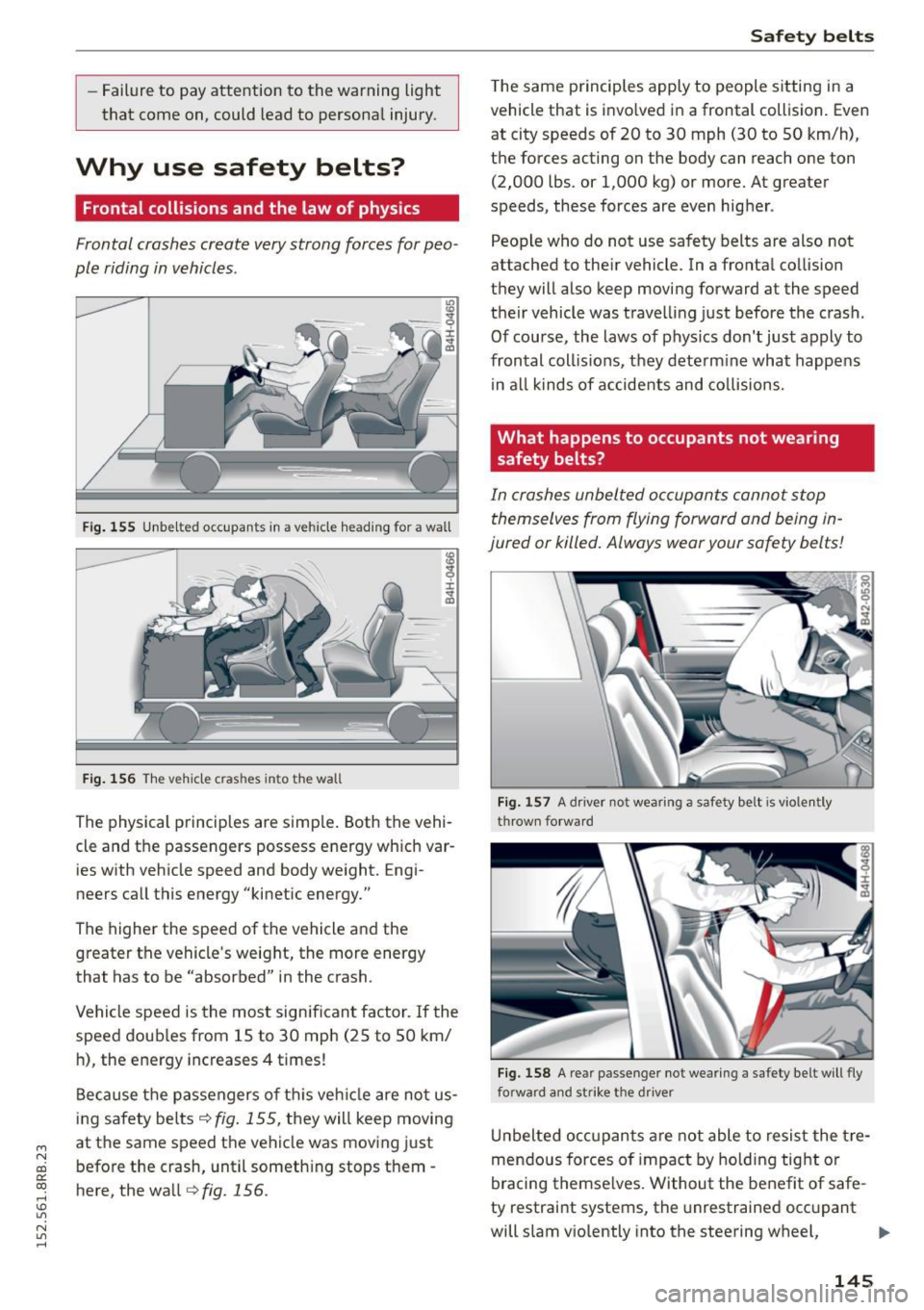
Fig. 155 Unbelted occupants in a vehicle heading for a wall
Fig. 156 The vehicle crashes into the wall
The physical principles are simp le. Both the vehi
cle and the passengers possess energy wh ich var
ies with vehicle speed and body weight. Engi
neers call this energy "kinetic energy."
The higher the speed of the vehicle and the
greater the vehicle's weight, the more energy
that has to be "absorbed" in the crash.
Vehicle speed is the most signif icant factor. If the
speed doubles from 15 to 30 mph (25 to SO km/
h), the energy increases 4 times!
Because the passengers of this vehicle are not us
ing safety belts¢
fig. 155, they will keep moving
at the same speed the vehicle was moving just
before the crash, until something stops them -
here, the wall¢
fig. 156.
Safety belts
The same principles apply to people sitting in a
vehicle that is invo lved in a frontal collision. Even
at city speeds of 20 to 30 mph (30 to 50 km/h),
the forces acting on the body can reach one ton
(2,000 lbs. or 1,000 kg) or more. At greater
speeds, these forces are even higher .
People who do not use safety belts are also not
attached to their vehicle. In a frontal collision
they will also keep moving forward at the speed
their vehicle was travelling just before the crash .
Of course, the laws of physics don't just apply to
frontal collisions, they determine what happens
in all kinds of accidents and co llisions.
What happens to occupants not wea ring
safety belts?
In crashes unbelted occupants cannot stop
themselves from flying forward and being in
jured or killed. Always wear your safety belts!
Fig. 157 A driver no t wearing a safety belt is violen tly
thrown forward
Fig. 158 A rear passenger not wearing a safety belt will fly
forward and strike the dr iver
Unbelted occupants are not able to resist the tre
mendous forces of impact by holding tight or
bracing themselves. Without the benefit of safe
ty restraint systems, the unrestrained occupant
will slam violently into the steering wheel, ..,_
145
Page 148 of 302
Safety belts
instrument panel, windshield, o r whatever else is
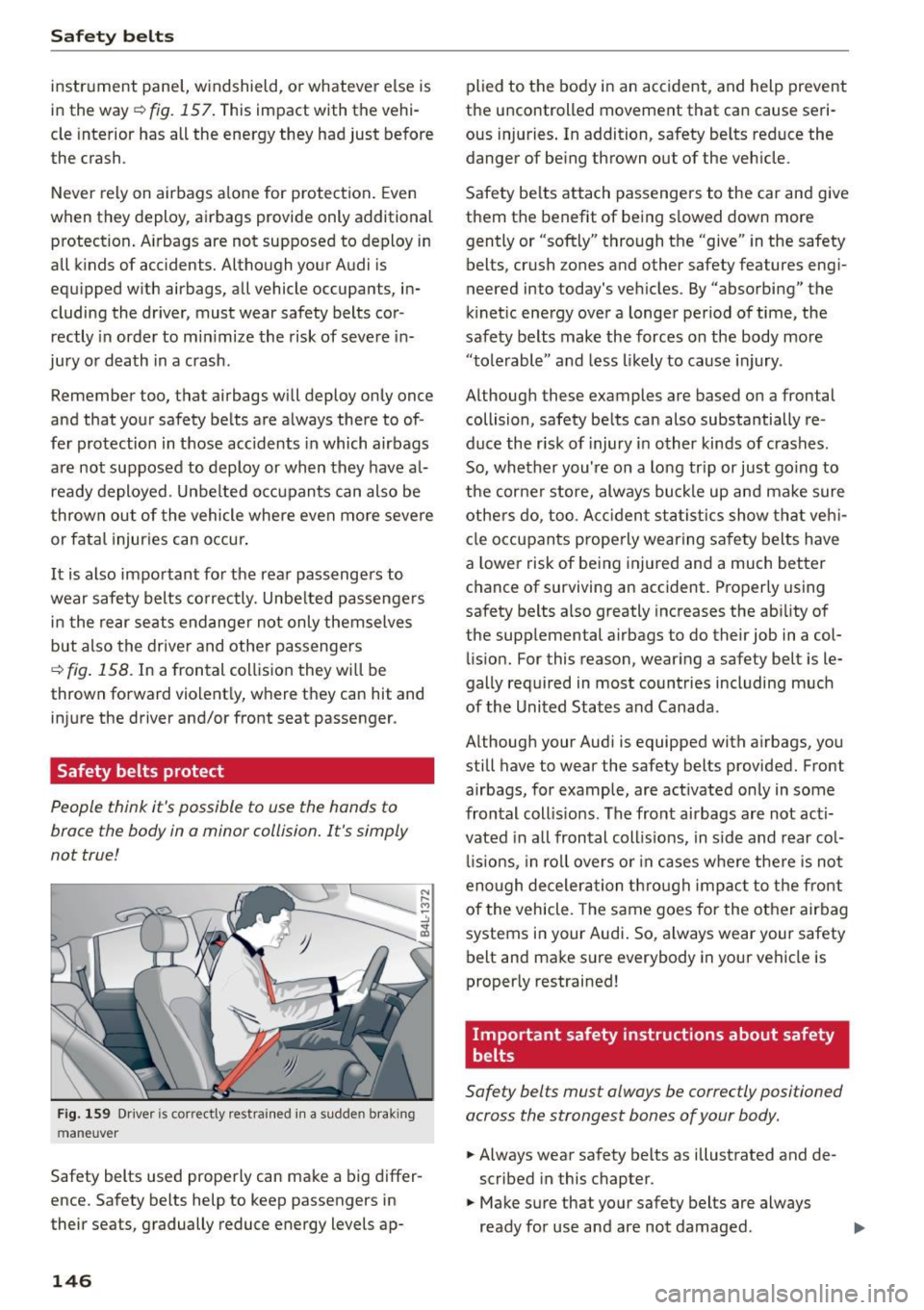
in the way~
fig. 157 . This impact with the vehi
cle interior has all the energy they had just before
the crash .
Never rely on airbags a lone for protection . Even
when they deploy, airbags provide only additional
protection . A irbags are not supposed to deploy in
all kinds of accidents. Although your Audi is
equipped w ith airbags, all vehicle occupants, in
cluding the driver, must wear safety belts cor
rectly in orde r to min imize the risk of severe in
jury o r death in a crash .
Remember too, that airbags will deploy only once
and that your safety be lts are always there to of
fer protection in those accidents in which airbags
are not supposed to deploy or when they have a l
ready deployed . Unbelted occupan ts can also be
thrown out of the vehicle where even mo re severe
or fata l injur ies can occur .
It is also important fo r the rear passenge rs to
wear safety belts co rrectly. Unbe lted passengers
i n t he rear seats endanger not only themselves
but also the driver and other passengers
~ fig . 158. In a frontal coll ision they wi ll be
thrown forward violent ly, where they can hit and
in jure the driver and/or front seat passenger.
Safety belts protect
People think it's possible to use the hands to
brace the body in a minor collision . It's simply
not true!
F ig . 1 59 Driver is co rr ect ly re st rained in a sudden b rak ing
m ane uver
Safety belts used properly can make a big differ
ence. Safety belts help to keep passengers in
their seats, gradually reduce energy levels ap-
146
plied to the body in an accident, and help prevent
the u ncontrolled movement that ca n cause seri
ous injuries . In addition, safety be lts reduce the
danger of being thrown out of the veh icle.
Safety be lts attach passengers to the car and give
them the benefit of being s lowed down more
gently or "softly" through the "give" in the safety
belts , cru sh zones and other safety features eng i
neered into today 's veh icles . By "absorbing" the
k inetic ene rgy over a longer period of time, the
safety belts make the forces on the body more "tolerable " and less likely to cause injury .
Although these examples are based on a frontal
collision , safety be lts can also substantially re
duce the r isk of injury in other kinds of crashes .
So, whether you're on a long tr ip or just go ing to
the cor ner store, always bu ckle up and make sure
others do , too. Ac ciden t sta tis tics show that veh i
cle occupants properly wearing sa fety belts have
a lower risk of be ing injured and a much better
chance of surviv ing an accident. Properly using
safety belts also greatly increases the ab ility of
the supp lemental airbags to do their job in a col
li sion. For this reason, wear ing a safety belt is le
gally required in most countries including much
of the United States and Canada .
Although your Audi is equipped with a irbags, you
still have to wear the safety belts provided. Front airbags, for example, are activated only in some
frontal coll is ions . The front airbags are not acti
vated in all frontal col lisions, in s ide and rear co l
li sions, in ro ll overs o r in cases whe re there is not
enough deceleration th ro ugh impac t to the front
of the vehicle . T he same goes for the other airbag
systems in your Audi. So, always wear your safety
belt and make sure everybody in your vehicle is
proper ly restrained!
Important safety instructions about safety
belts
Safe ty belts must always be correctly positioned
acros s the strongest bones of your body .
.,. Always wear safety belts as illustrated and de
scribed in this chapter .
.,. Make sure that your safety belts are always
ready for use and are not damaged .
Page 158 of 302
Airb ag syst em
Front airbags
Description of front airbags
The airbag system can provide supplemental
protection to properly restrained front seat occu
pants .
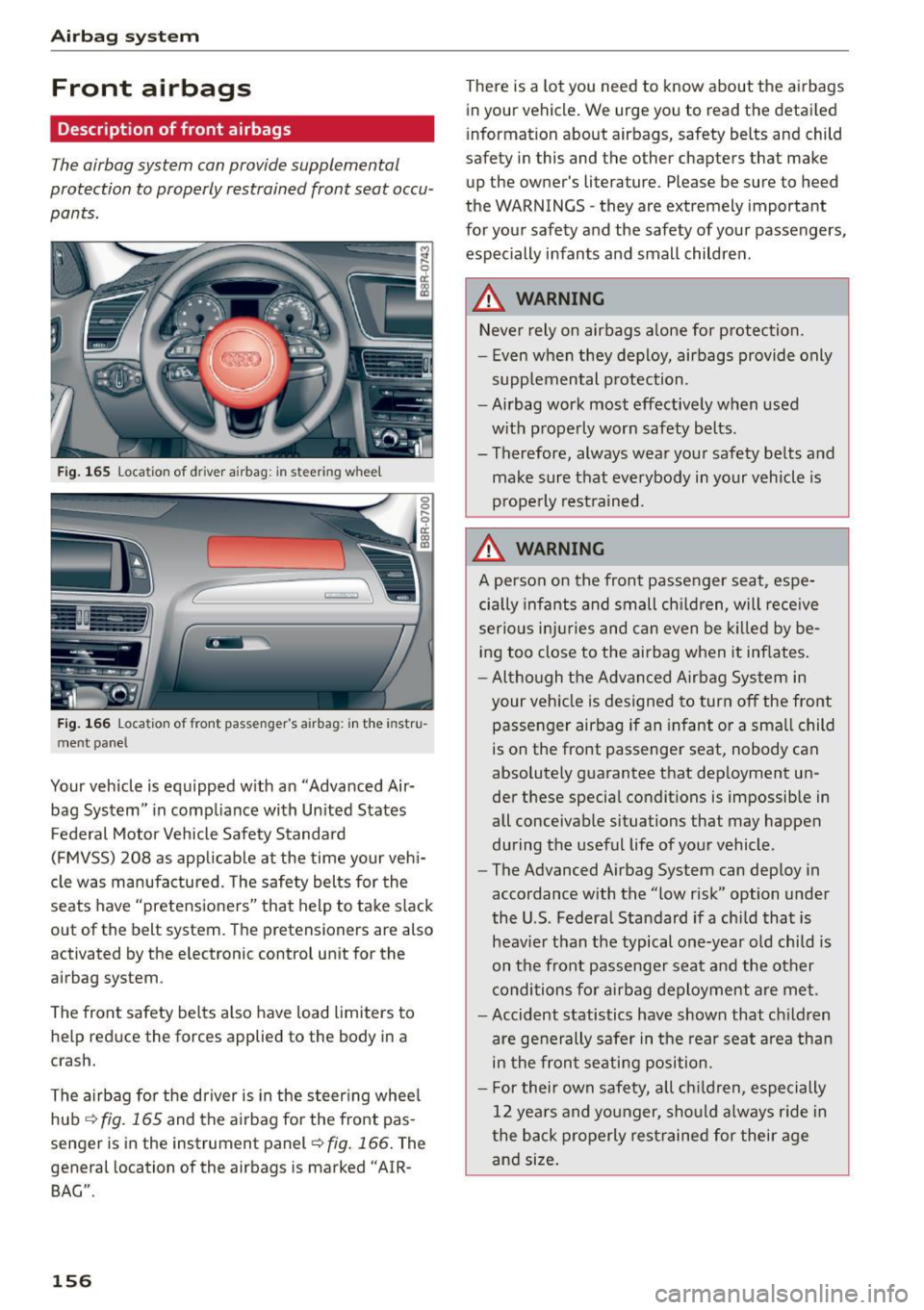
Fig. 165 Location of driver airbag : in steering whee l
Fig. 166 Location of front passenger's airbag: in the instru
ment panel
Your vehicle is equ ipped with an "Advanced Air
bag System" in compliance with Un ited States
Federal Motor Vehicle Safety Standard
(FMVSS) 208 as applicab le at the time your veh i
cle was manufactured. The safety belts for the
seats have "pretensioners" that help to take s lack
out of the belt system . The pretensioners are also
activated by the electronic control unit for the
airbag system .
The front safety belts a lso have load limiters to
help reduce the forces applied to the body in a
crash.
The airbag for the driver is in the steer ing wheel
hub ¢
fig. 165 and the airbag for the front pas
senger is in the instrument panel¢
fig. 166. The
general location of the airbags is marked "AIR
BAG".
156
There is a lot you need to know about the airbags
in your vehicle . We urge you to read the detailed
i nformation about airbags, safety belts and child
safety in this and the other chapters that make
up the owner's literature. Please be sure to heed
the WARNINGS -they are extremely important
for your safety and the safety of your passengers, especially infants and small children .
,&_ WARNING -
Never rely on airbags alone for protection.
- Even when they deploy, airbags provide only supp lemental p rotection.
- Airbag work most effectively when used with properly worn safety belts .
- Therefore, always wear your safety be lts and
make sure that everybody in your vehicle is
prope rly restrained.
,&_ WARNING
A person on the front passenger seat, espe
cially infants and small ch ild ren, will rece ive
serious i njur ies and can even be killed by be
ing too close to the airbag when it inf lates .
- Although the Advanced Airbag System in your vehicle is designed to turn off the front passenger airbag if an infant or a sma ll child
is on the front passenger seat, nobody can
absolutely guarantee that dep loyment un
der these special condit ions is impossible in
all conceivable situations that may happen
during the useful life of your vehicle .
- The Advanced Airbag System can dep loy in
accordance with the "low risk" option under
the U .S. Federal Standard if a chi ld that is
heav ier than the typical one-year old child is
on the front passenger seat and the other
conditions for airbag deployment are met.
- Accident statistics have shown that ch ildren
are generally safer in the rear seat area than
in the front seating position .
- F or their own safety, all ch ildren, especially
12 years and younger, sho uld a lways ride in
the back properly restrained for their age
and size .
-
Page 160 of 302
Airbag syste m
-a small adu lt or teenager is on the front pas
senger seat
- a passenger who is not sitting upright with
their back against a non -reclined backrest with
their feet on the vehicle floor in front of the
seat is on the front passenger seat.
I f the front passenger airbag deploys, the Federal
Standard req uires the airbag to meet the " low
risk" deployment criteria to help reduce the risk
of injury through interaction with the airbag .
"Low risk" deployment occurs in those crashes
that take place at lower decelerations as defined in the electron ic control unit . ¢ page
162
Alw ays re member: Even though your vehicle is
equ ipped w ith Advanced Airbags, the safest place
for children is properly restrained on the back
seat . Please be sure to read the important infor
mat ion in the sections that follow and be sure to
heed a ll of the WARNINGS.
_& WARNING
To reduce the ris k of injury when an airbag in
fla tes, always wear safety belts proper ly.
- If you are unrestrained, leaning fo rward, s it
t ing s ideways or out of position in any way,
your risk of injury is much higher .
- You w ill also receive serious inju ries and
could even be killed if you are up against the
airbag or too close to it when it inflates -
even with an Advanced Airbag ¢page
152.
_& WARNING
A child in a rearward-facing child safety seat
installed on the front passenger seat will be
ser iously injured and can be killed if the front
airbag inflates - even w ith an Advanced Airbag
System.
- Although the Advanced Airbag System in
your vehicle is designed to turn off the front
airbag when a rearward -facing child re
straint has been installed on the front pas
senger seat, nobody can absolutely guaran
tee that deployment is impossible in al l con
ceivable s ituations that may happen dur ing
the usef ul life o f your vehicle .
- The inflating a irbag w il l hit the child safety
seat or infant carrier wi th great force and
158
w ill smash the child safety seat and child
aga inst the backrest, center armrest, door,
or roof.
- Always install rearward-facing chi ld re
straints in the back seat.
- If you must insta ll a rearward fac ing ch ild
safety seat on the front passenger seat be
cause of exceptional circumstances and the
PAS SENGER AIR BAG OFF light does not
come on and stay on, immediately install
the rear-facing child safety seat in a rear
seating position and have the airbag system
inspected by your au thorized Aud i dealer .
_& WARNING
If, in exceptiona l circumstances, you must in
stall a forwa rd-facing child restra int on the
front passenger's seat:
- Always ma ke sure the forward-facing sea t
has been des igned and certif ied by its man
ufacturer for use on a front seat with a pas
senger front and s ide a irbag .
- Never p ut the fo rward-facing child restraint
up against or very near the instrument pan
el.
-Always move the passenger seat into its
rearmost position in the seat's fore and aft
ad justment range, as far away from the a ir
bag as poss ible, before insta lling the for
ward-facing child restraint. The backrest
must be adjusted to an upr ight position .
- Make sure that the
PASSENGER AIR BAG
OFF
li ght comes on and stays on all the time
whenever the ign it ion is switched on.
Advanced Airbag System components
The front passenger seat in your vehicle has a lot
of ve ry impo rtant parts of the Advanced A irbag
System in it. These pa rts include the we ight
sensing mat, senso rs, w iring, bracke ts, and more.
The function of the system in the front passenge r
seat is checked by the e lectronic control unit
when the ignition is on. The control unit mon itors
the Advanced Airbag System and turns the airbag i ndicator light on when a malfunct io n in the sys
tem components is detected. The function of the
a irbag indicator light is described in greate r
Page 168 of 302
Airb ag syst em
@ For the sake of the environment
Undep loyed airbag modu les and pretension
ers m ight be classified as Perchlorate Mater ia l
-special handling may apply, see
www.dtsc.ca.gov/hazardouswaste/perchlo rate. When the vehicle or parts of the re
straint system including a irbag modules safe
ty belts with pretensioners are scrapped, all
app licab le laws and regu lations must be ob
served. Your authori zed A udi dealer is fami lia r
w ith these requirements and we recommend
that you have yo ur dealer perform this service
for you.
Other things that can affect Advanced
Airbag performance
Changing the vehicle 's suspension system can
change the way that the Advanced A irbag System
pe rforms in a crash. For example, using t ire-rim
comb inat ions not approved by Audi, lowering the
ve hicl e, chang ing the stiffness of the suspension,
including the spr ings, suspension s truts, shock
absorbers etc . can change the forces that are
measured by the airbag sensors and sent to the
electronic control un it. Some suspension changes
can, for example, increase the force leve ls meas
ured by the sensors and make the airbag system
deploy in c rashes in which it wo uld not deploy if
the changes had not been made. Other ki nds of
changes may reduce the force levels measured by
the sensors and preve nt the airbag from deploy
i n g when i t should .
A WARNING
Changing the vehicle's s uspension including
use of unapproved ti re -rim comb inations can
change Advanced A irbag pe rformance and in
crease t he risk of serious persona l injury in a
crash.
- Never install suspension components that do not have the same performance charac
teristics as the components or iginally insta l
led on your veh icle .
- Never use tire-rim combinations that have
not been approved by Audi .
166
A WARNING
Items stored between the safety be lt b uckle
and the center console can cause the sensors i n the buckle to send the wrong informat ion
to the electronic control module a nd prevent
the Adva nced Airbag System from wor king
properly .
- Always ma ke sure that nothing can interfere
w it h the safe ty belt bu ckles an d that they
are no t obstr ucted.
Side airbags
Description of side airbags
The airbag system can provide supplemental
protection to properly restrained occupants.
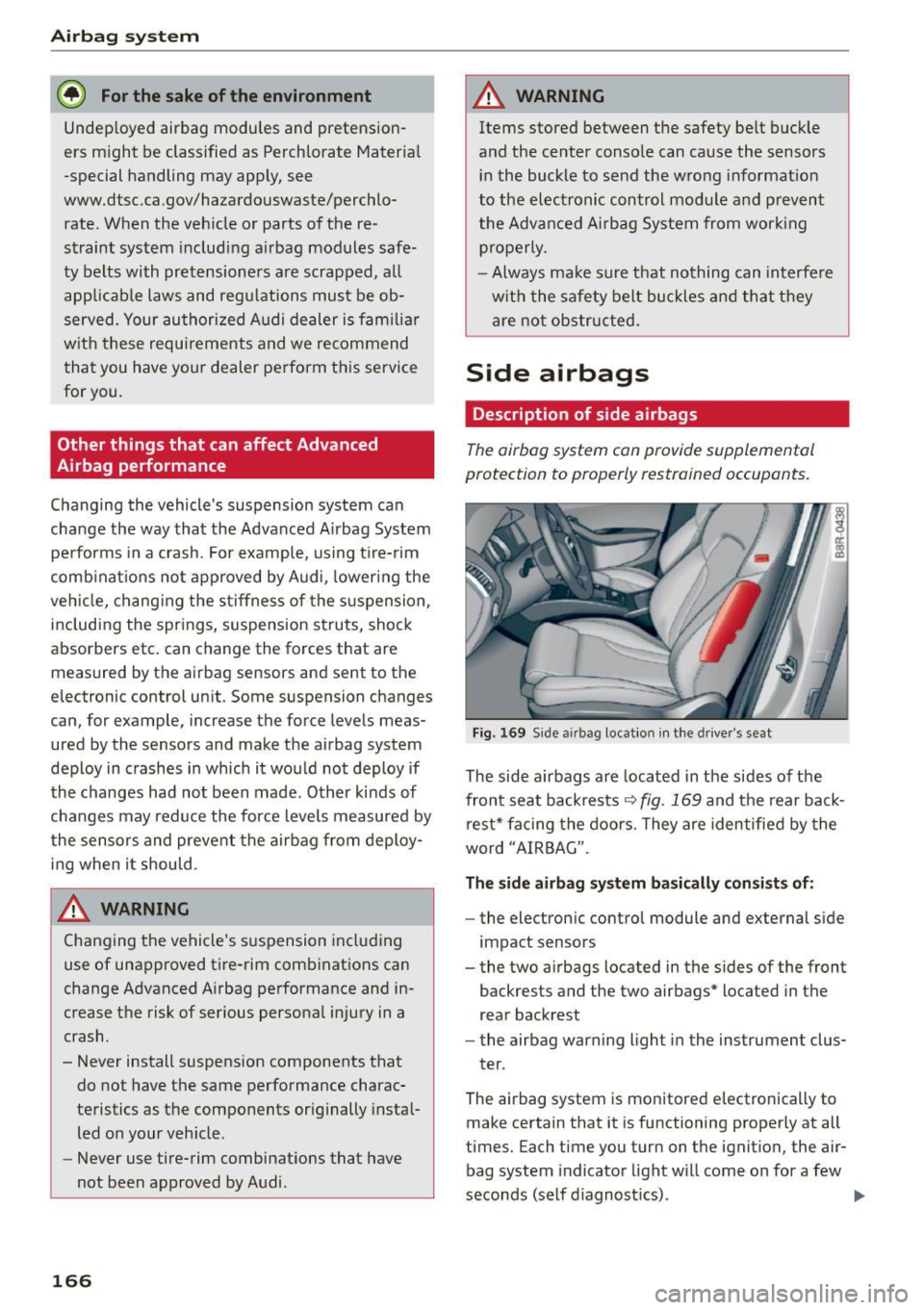
F ig. 169 S ide ai rbag locat io n in th e dr ive r's seat
The side airbags are located in the sides of the
fron t seat backrests ~
fig. 169 and the rear back
res t* fa cing the doors. They are identified by the
word "AIRBA G".
The side airbag sy stem bas ically consi st s of :
-the electron ic control module and external side
impact sensors
- the two airbags located in the s ides of the front
backrests and the two airbags* located in the
rear backrest
- the airbag warning light in the instrument clus-
ter.
The airbag system is monitored e lectronically to
make certain that it is functioning properly at all
times. Each time you turn on the ignit ion, the air
bag system indicator light w ill come on for a few
seconds (self d iagnost ics) .
II>-
Page 182 of 302
Child safety
Booster seats and safety belts
Properly used booster seats can help protect
children weighing between about 40 lbs. and 80
lbs. (18 kg and 36 kg) who are less than 4
ft. 9
in. (57 inches/1.45 meters) tall .
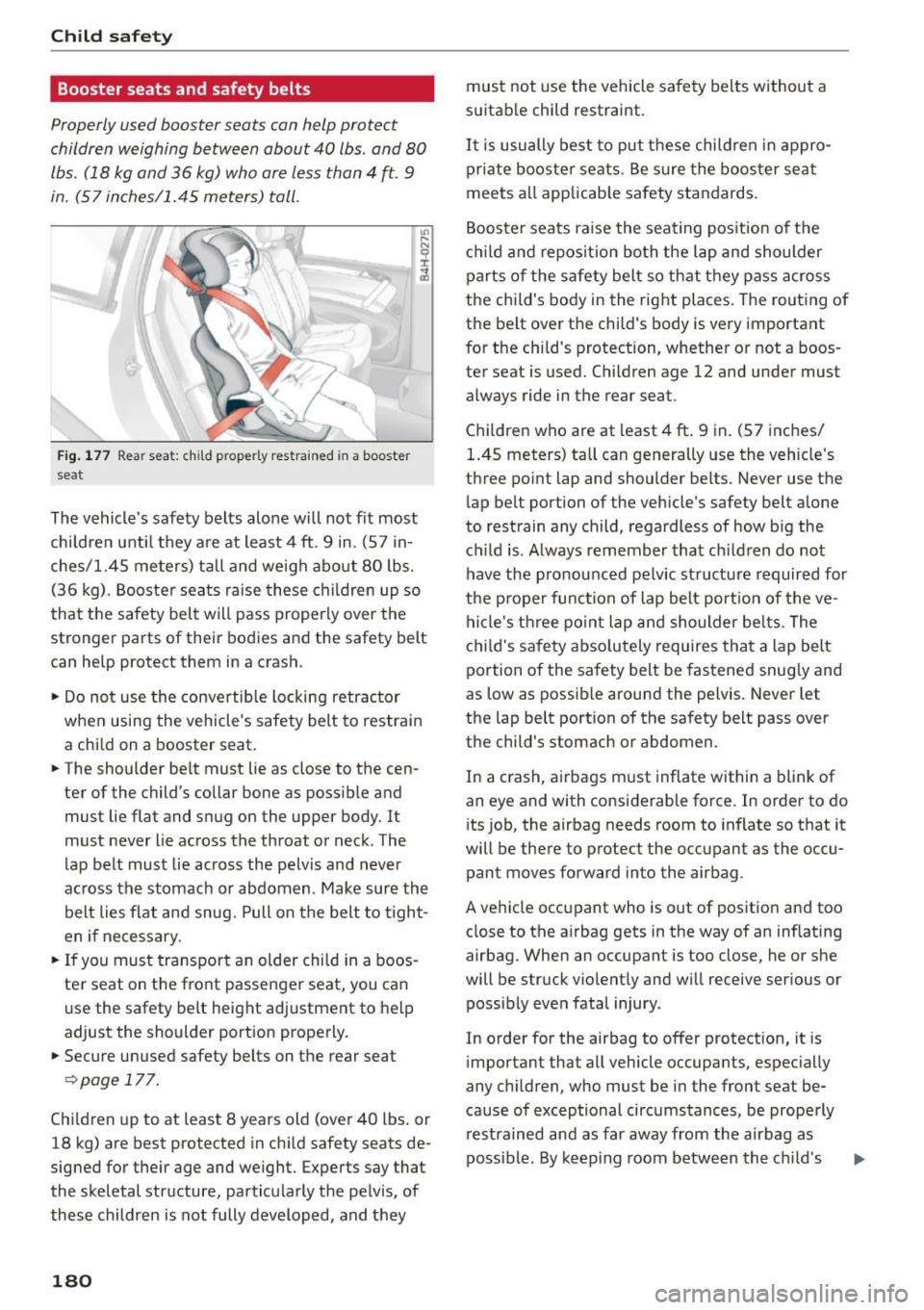
Fig. 177 Rear seat: child prope rly restrained in a booste r
seat
The vehicle's safety belts alone will not fit most
children until they are at least 4
ft. 9 in . (57 in
ches/1.45 meters) tall and weigh about 80 lbs. (36 kg) . Booster seats raise these children up so
that the safety belt will pass properly over the
stronger parts of their bodies and the safety belt
can help protect them in a crash .
• Do not use the convertible locking retractor
when using the vehicle's safety belt to restrain
a child on a booster seat.
• The shoulder belt must lie as close to the cen
ter of the child's collar bone as possible and
must lie fla t and snug on the upper body. It
must never lie across the throat or neck . The
lap belt must lie across the pelvis and never
across the stomach or abdomen . Make sure the
belt lies flat and snug. Pull on the belt to tight
en if necessary.
• If you must transport an older child in a boos
ter seat on the front passenger seat, you can
use the safety belt height adjustment to help
adjust the shoulder portion properly .
• Secure unused safety belts on the rear seat
c> page 177.
Children up to at least 8 years old (over 40 lbs. or
18 kg) are best protected in child safety seats de
signed for their age and weight. Experts say that
the skeletal structure, particularly the pelvis, of
these children is not fully developed, and they
180
must not use the vehicle safety belts without a
suitable child restra int .
It is usually best to put these children in appro
priate booster seats . Be sure the booster seat
meets all applicable safety standards.
Booster seats raise the seating position of the
child and reposition both the lap and shoulder
parts of the safety belt so that they pass across
the child's body in the right places. The routing of
the belt over the child's body is very important
for the child's protection, whether or not a boos
ter seat is used. Children age 12 and under must
always ride in the rear seat .
Ch ildren who are at least 4
ft. 9 in. (57 inches/
1.45 meters) tall can generally use the vehicle's
three point lap and shoulder belts. Never use the
lap belt portion of the vehicle's safety belt alone
to restrain any child, regardless of how big the
child is. Always remember that children do not
have the pronounced pelvic structure required for
the proper function of lap belt portion of the ve
hicle's three point lap and shoulder belts . The
child's safety absolutely requires that a lap belt
portion of the safety belt be fastened snugly and
as low as possible around the pelvis. Never let
the lap belt portion of the safety belt pass over
the child 's stomach or abdomen.
In a crash, airbags must inflate within a blink of
an eye and with considerable force . In order to do
its job, the airbag needs room to inflate so that it
will be there to protect the occupant as the occu
pant moves forward into the airbag .
A vehicle occupant who is out of position and too
close to the airbag gets in the way of an inflating
airbag. When an occupant is too close, he or she
will be struck violently and will receive serious or possibly even fatal injury .
In order for the airbag to offer protection, it is
important that all vehicle occupants, especially
any children, who must be in the fron t seat be
cause of exceptional circumstances, be properly
restrained and as far away from the airbag as
possible. By keeping room between the child's .,,.
Page 193 of 302
M N
co
a:
co
,...., \!) 1.1"1
N 1.1"1 ,....,
shared, please see your contract with the
wireless telecommunications provider and the
"About Aud i connect" tab in your vehicle's
MMI*:
IMENU I button> Audi connect > About
Audi connect .
Electronic Stabilization
Control (ESC)
Description
The Electronic Stabilization Control (ESC) reinfor
ces driver safety. It reduces the risk of slipping
and improves driving stability. ESC detects criti
cal s ituations such as the vehicle oversteering
and understeering or the wheels sp inning. The
veh icle is stab ilized by applying the brakes or re
ducing engine torque. Once the ESC is act ive, the
indicator light
m blinks in the instrument clus
ter.
The fol low ing systems a re integrated in the ESC:
Anti-lock brake system (ABS)
ABS prevents the wheels from locking up when
brak ing . The vehicle can still be steered even dur
ing hard braking. Apply steady pressure to the
brake pedal. Do not pump the pedal. A pulsing in
the brake pedal indicates that the system is help
ing you to brake the vehicle.
Brake assist system
The brake assist system can decrease braking d is
tance . It increases braking power when the dr iver
presses the brake pedal quick ly in emergency s it
uations. You must press and hold the brake pedal
unti l the situation is over. In vehicles w ith adap
tive cruise control*, the brake assist system is
more sensitive if the distance detected to the ve
hicle ahead is too small.
Anti-slip regulation (ASR)
ASR reduces engine power when the drive whee ls
begin to spin and adapts the force to the road
conditions. This makes it easier to start, acceler
ate and drive up hills.
Smart Technology
Electronic differential lock (EDL)
The EDL brakes whee ls that are spinning and
trans fers the drive power to the other whee ls.
This function is not avai lable at higher speeds .
In extreme cases, EDL automatically sw itches off
to help keep the brake on the braked wheel from
overheating. EDL will switch on again automati
ca lly when conditions have returned to normal.
Steering recommendation
The ESC helps to stabilize the vehicle by changing
the steering torque.
On vehicles with dynam ic steering*, ESC helps
stab ilize the steer ing in crit ical situat ions .
Selective wheel torque control
Selective wheel torque control is used when driv
ing on curves. The front wheel on the inside of
the curve or both wheels on the inside of the
curve are braked select ively as needed. This al
lows more precise driving in curves. The applica
ble system may not activate when driving in wet
o r snowy conditions .
A WARNING
-
-The ESC and its integrated systems cannot
overcome the laws of physics. This is espe
cially important on slippery or wet roads. If
the systems begin acting to stabilize your
vehicle, you should immediately change
your speed to match the road and traffic conditions . Do not let the increased safety
provided by these systems tempt you to
take risks. Doing so will increase the risk of a
loss of vehicle control, collision and serious
personal injuries.
- Always adapt your speed to road, traffic and
weather conditions. The risk of los ing con
trol of the vehicle increases when driving
too fast, especially through curves and on
slippery or wet roads, and when driving too
close to vehicles up ahead . The ESC and its
integrated systems cannot a lways prevent
coll isions - there is st ill a risk of acc idents!
- Always accelerate with special care on even,
smooth surfaces such as those that are wet
or covered with ice and snow. The drive
191
Page 194 of 302
Smart Technology
wheels can spin even with these assistance
systems that cannot always help to reduce
the risk of loss of vehicle control.
@ Tips
-ABS and ASR only work correctly when all
four whee ls are equipped with identical
Switching on/off
tires . Different tire sizes can lead to a reduc
tion in engine power .
- You may hear noises when the systems de
scribed are working.
- When installing a factory-supplied roof rack
system on the roof railing, the ESC will
adapt itself to a different center of gravity.
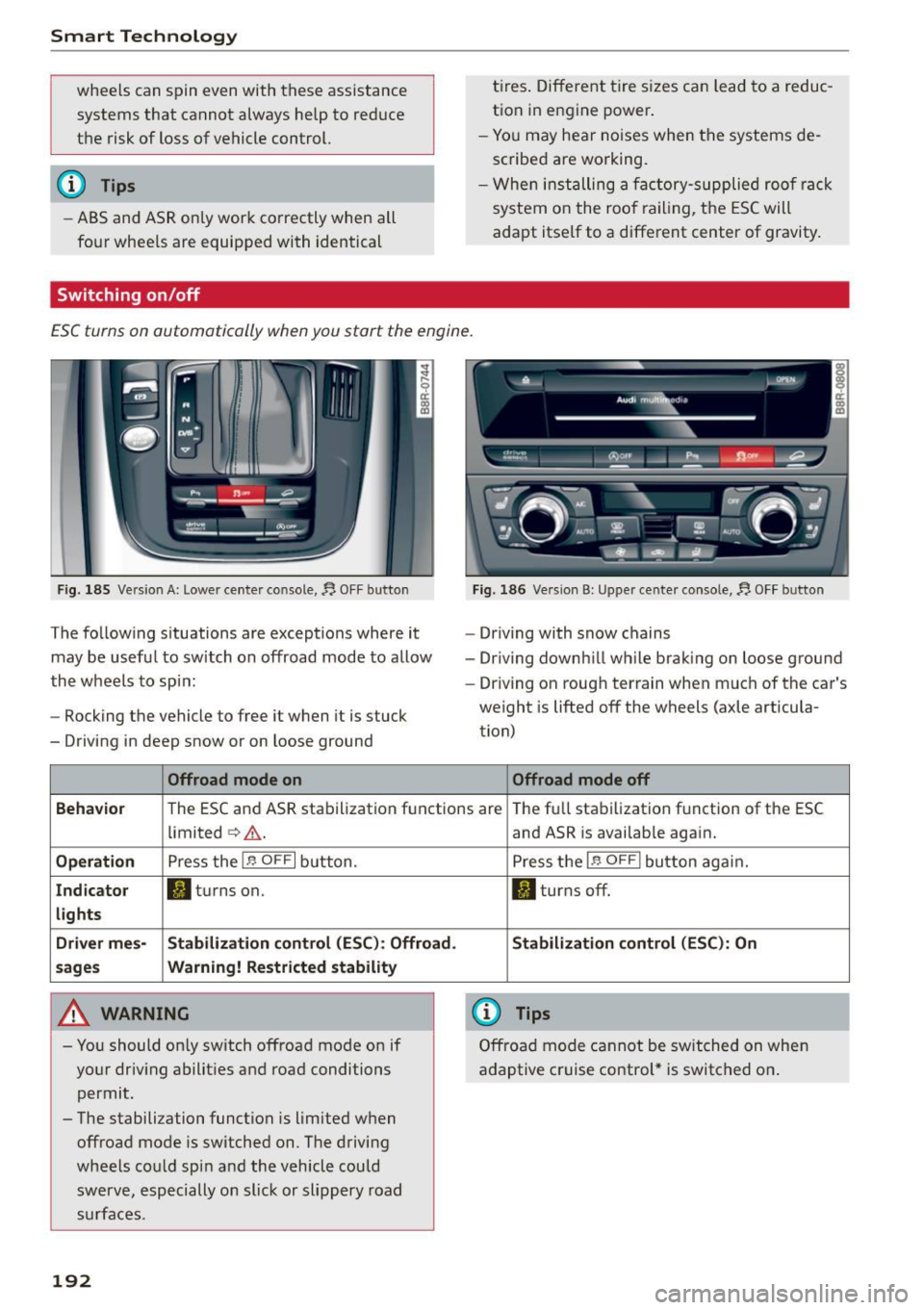
ESC turns on automatically when you start the engine.
Fig. 185 Version A: Lower center console, YJ. OFF butto n
The fo llow ing situations are exceptions where it
may be useful to sw itch on offroad mode to allow
the wheels to spin:
- Rocking the vehicle to free it when it is stuck
- Driving in deep snow or on loose ground
Offroad mode on
Fig. 186 Ve rs ion B: Upper center co nsole, YJ. O FF button
-Driving with snow chains
- Driving downhill while braking on loose ground
- Driving on rough terrain when much of the car's
weight is lifted off the wheels (axle articula
tion)
Offroad mode off
Behavior
The ESC and ASR stabilization functions are The full stabilization function of the ESC
limited
c> & .
Operation Press the l.13 OFF I button.
Indicator Ill turns on.
lights
Driver mes· Stabilization control (ESC): Offroad .
sages Warning! Restricted stability
A WARNING
- You should only switch offroad mode on if
your driving abilit ies and road conditions
permit.
- The stabilization function is limited when offroad mode is switched on. The driving
wheels cou ld spin and the vehicle could
swerve, especially on slick or slippery road
surfaces.
192
and ASR is availab le again.
Press the
1.$ OFF I button again.
II turns off.
Stabilization control (ESC): On
(D Tips
Offroad mode cannot be switched on when
adaptive cruise control" is switched on .
Page 206 of 302
Trailer mode
Trailer mode
Driving with a trailer
General information
Your Audi was designed primarily for passenger
transportation.
If you plan to tow a trai ler, please remember that
the additional load will affect durability, econo my and performance.
Trailer towing not on ly places more stress on the
vehicle, it also calls for more concentration from the driver .
F or this reason, always follow the operating and
driving instructions provided and use common
sense.
Technical requirements
Tr aile r h itch
Use a weight-carrying hitch conforming to the
gross trailer weight. The hitch must be suitable
for your vehicle and trailer and must be mounted
securely on the veh icle's chassis at a technically
sound
location . Use only a trai ler hitch w ith a re
movable bal l mount . Always check with the tra il
er h itch man ufacturer to make sure that you are
using the co rrect hitch.
D o not u se a bump er hit ch.
The hitch must be installed in such a way that it
does not interfere with the impact -absorbing
bumper system. No mod ificat ions should be
made to the vehicle exhaust and brake systems .
From time to time, check that all hitch mounting
bolts remain securely fastened .
When you are not towing a trailer, remove the
trailer h itch ball mount. This prevents the hitch
from causing damage should your vehicle be struck from behind ¢ .&, .
Trailer bra kes
If your trailer is equipped with a braking system,
check to be sure that it conforms to all regula
tions.
204
The trailer hydraulic brake system must not be di
rect ly connected to the vehicle's hydraulic brake
system ¢.&, .
Safet y ch ain s
Always use safety chains betwee n your veh icle
and the trai ler .
Tr aile r lights
Trailer lights must meet all regulations. Be sure
to check w ith your author ized Audi dealer for cor
rect w iring, sw itches, and relays .
Mirro rs
If you are unable to see the traffic behind you us
ing the regular outside mirrors, then you
must in
stall extended mirrors .
It is important that you
always have clear vision to the rear.
&, WARNING
-If a trailer has electrical brakes p lease note
that these brakes are not activated by the
factory -fitted contro l unit -risk of accident!
- After removing the t railer hitch, do not store
it in your vehicle . In case of sudden braking,
the hitch could fly forward and injure you or
your passengers.
- Never install a "weight distributing" or "load equalizing" trailer hitch on your vehi
cle. The vehicle was not designed for these
kinds of tra iler hitches. The hitch attach
ment can fail, causing the tra iler to tear
loose from the veh icle.
- The Gross Vehicle Weight Rating for your ve
hicle, found on the safety compliance label
on the driver's side B-p illar, must never be
exceeded under any circumstances . Exceed
ing the Gross Vehicle We ight Rating of your
veh icle is likely to damage your vehicle, and
such damage will not be covered by your Limited New Vehicle Warranty. Exceeding
the Gross Vehicle Weight Rating will also
change the performance and handling char
acteristics of your vehicle, wh ich could cause
a crash resulting in serious injury or death .