ECU AUDI Q5 2016 Owner's Manual
[x] Cancel search | Manufacturer: AUDI, Model Year: 2016, Model line: Q5, Model: AUDI Q5 2016Pages: 300, PDF Size: 75.02 MB
Page 139 of 300
..... N
co
er::
co
.....
of the seat. Never rest them on the seat, in
strument panel, out of the window, etc. The
airbag system and safety belt will not be able to protect you properly and can even in
crease the risk of injury in a crash.
- Never drive with the backrest reclined or
tilted far back! The farther the backrests are
tilted back, the greater the risk of injury due
to incorrect positioning of the safety belt
and improper seating position .
- Children must always ride in child safety
seats¢
page 171 . Special precaut ions ap
ply when installing a ch ild safety seat on the
front passenger seat ¢
page 151.
Proper seating positions for passengers in
rear seats
Rear seat passengers must sit upright with both
feet on the floor consistent with their physical
size and be properly restrained whenever the ve hicle is in use.
To reduce the risk of injury caused by an incorrect
seating position in the event of a sudden braking
maneuver or an accident, your passengers on the
rear bench seat must always observe the follow
ing:
~ If there is a passenger on the rear center seat
ing position, slide the center head restraint up
ward at least to the next notch ¢
page 67.
~ Make sure that the seatback is securely latched
in the upright position
¢page 69.
~ Keep both feet flat in the footwell in front of
the rear seat .
~ Fasten and wear safety belts properly
¢page 146.
~ Make sure that children are always properly re
strained in a child restraint that is appropriate
for their size and age ¢
page 171.
A WARNING
Passengers who are improperly seated on the
rear seat can be seriously injured in a crash .
- Each passenger must always sit on a seat of
their own and properly fasten and wear the
safety belt belonging to that seat .
Driving safety
- Safety belts only offer maximum protection
when the seatback is securely latched in the
upright position and the safety belts are properly positioned on the body . By not sit
ting upright, a rear seat passenger increases
the risk of personal injury from improperly
positioned safety belts!
- Always adjust the head restraint properly so
that it can give maximum protection.
Proper adjustment of head restraints
Correctly adjusted head restraints are an impor
tant part of your vehicle's occupant restraint sys
tem and can help to reduce the risk of injuries in
accident situations.
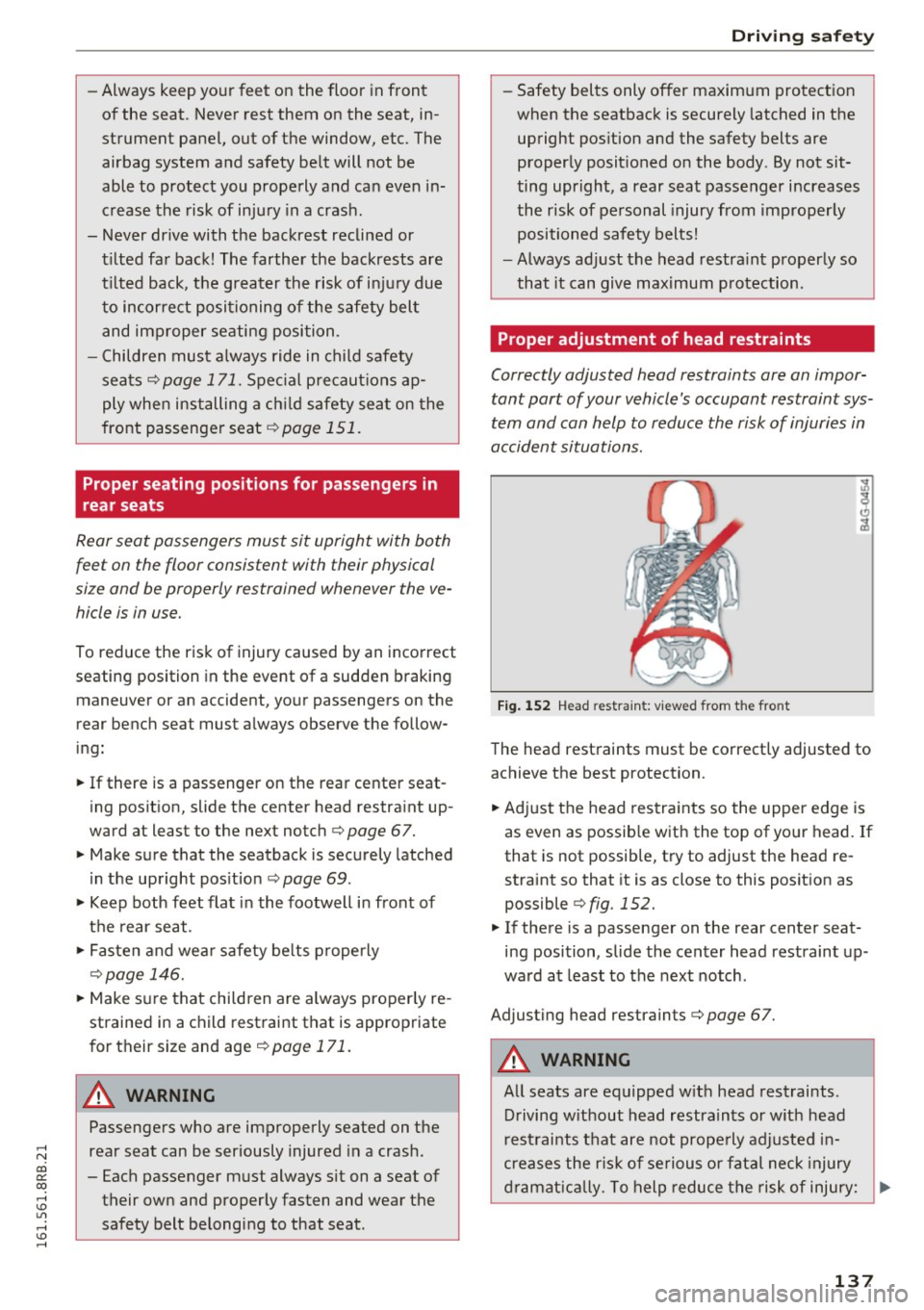
Fig. 1S2 Head restraint: vi ew ed from t he front
The head restraints must be correctly adjusted to
achieve the best protection.
~ Adjust the head restraints so the upper edge is
as even as possible with the top of your head. If
that is not possible, try to adjust the head re
straint so that it is as close to this position as
possible
¢ fig . 152.
~ If there is a passenger on the rear center seat
ing position, slide the center head restraint up
ward at least to the next notch .
Adjusting head restraints¢
page 67.
A WARNING
-All seats are equipped w ith head restraints.
Driving without head restraints or with head
restraints that are not properly adjusted in
creases the risk of serious or fata l neck injury
dramatically . To help reduce the risk of injury: ..,
137
Page 140 of 300
Driving sa fe ty
-Always drive with the head restraints i n
place and properly adjusted.
- Every person in the vehicle must have a
properly adjusted head restra int.
- Always make sure each person in the vehicle
properly adjusts their head restraint. Adjust
the head restra ints so the upper edge is as
even as possib le w ith the top of your head.
If that is not possib le, try to adjust the head
restra int so that it is as close to th is position
as possib le.
- Never attempt to adjust head restraint wh ile driving.
If you have dr iven off and
must adjust the driver headrest for any rea
son, fi rst stop the vehicle safely before at
tempting to ad just the head restr aint.
- Children must always be p roperly restrained
in a chi ld restrain t th at is appropria te fo r
their age and size~
page 171.
Examples of improper seating positions
The occupant restraint system can only reduce
the risk of injury if vehicle occupants are properly
seated.
I mp roper seating positions can cause se rious in
ju ry or deat h. Safety belts can only wo rk when
they are p roperly posi tioned o n the body . Im
p roper seating posi tions reduce t he effe ct iveness
of sa fety belts and w ill even increase the r isk o f
in jury and death by moving the safety be lt to crit
ical areas of the body . Improper seating posit ions
also increase the risk of ser ious injury and death
when an airbag deploys and strikes an occupant
who is not in the prope r seat ing position. A driver
is respo nsible for the safety of all vehicle occu
pants and especially fo r children. Therefo re:
~ Never allow anyone to assume an incorrect
seat ing pos ition w hen the veh icle is being used
~ .&. -
The follow ing bulletins list only some sample po
sitions that will inc rease the risk of serious inju ry
and death. Ou r hope is that these examples will
make you more aware of seat ing pos it io ns that
a re dangero us.
138
Therefore , whenever the vehicle is moving :
-neve r stand up in the vehicle
- neve r sta nd on the seats
- neve r kneel on the seats
- never ride w ith the seatback recl ined
- neve r lie down on the rear seat
- neve r lean up against the instrument panel
- never s it on the edge of the seat
- neve r sit sideways
- neve r lean out t he window
- neve r put your feet o ut the window
- never put your feet on the instrument panel
- neve r rest your feet on the seat cushion or back
of the seat
- never ride in the footwell
- never ride in the cargo area
'
A WARNING
Imp roper seating positions inc rease the risk
of ser ious personal injury and death whenever
a veh icle is being used.
- Always make sure that all veh icle occupants
stay in a proper seating posit ion and are
properly restrained whenever the vehicle is be ing used .
Pedal area
Pedals
The pedals must alway s be free to move and
must never be interfered with by a floor mat or
any o ther object.
Mak e su re t hat all pedals move free ly w ithout in
te rfe rence and t hat nothing prevents them from
r etur ning to their orig inal positions.
Only use floor mats that leave the pedal a rea free
and can be secured wi th floor ma t faste ne rs.
If a brake circuit fails, i ncreased brake pedal trav
el is requ ired to bring the vehicle to a fu ll stop.
A WARNING
Pedals that ca nnot move freely ca n cause loss
of vehicle contro l and increase the r is k of seri
ous injury.
Page 141 of 300
,...,
N
co ~ CX) ,...,
I.Cl U"I ,...,
I.Cl ,...,
-Never place any objects in the driver's foot
well. An object could get into the pedal area and interfere w ith pedal function. In case of
sudden braking or an accident, you would not be able to brake or accelerate!
- Always make sure that nothi ng can fall or
move into the dr iver's footwell.
Floor mats on the driver side
Always use floor mots that con be securely at
tached to the floor mot fasteners and do not in
terfere with the free movement of the pedals .
.. Make sure that the floor mats are properly se
cured and cannot move and interfere with the
pedals
¢ .&, .
Use only floor mats that leave the pedal area un
obstructed and that are firmly secured so that
they cannot slip out of position. You can obtain
suitable floor mats from your authorized Audi
dealer .
F loor mat fasteners are installed in your Audi.
Fl oor mats used in your vehicle must be attached
to these fasteners. Proper ly securing the floor
mats will prevent them from sliding into posi
tions that could interfere with the pedals or im pair safe operation of your vehicle in other ways.
A WARNING
Peda ls that cannot move free ly can result i n a
loss of vehicle control and increase the risk of
ser ious personal injury .
-Always make sure that floor mats are prop erly secured.
- Never place or install floor mats or other
floo r coverings in the veh icle that ca nnot be
prope rly secured in place to prevent them
from slipp ing and in terfering with the ped
als or the abili ty to contro l the vehicle.
- Never place or insta ll floor mats or o ther
floo r coverings on top of already insta lled
floo r ma ts. Addit ional floor mats and othe r
coverings w ill reduce the size of the peda l
area and interfere with the pedals .
- Always properly reinstall and secu re floor
mats that have been taken o ut for cleaning .
Driving safety
-Always make sure that objects cannot fall
into the driver footwell while the vehicle is
mov ing. Objects can become trapped under
the brake pedal and accelerator pedal caus ing a loss of vehicle control.
Storing cargo correctly
Loading the luggage compartment
All luggage and other objects must be properly stowed and secured in the luggage compart
ment.
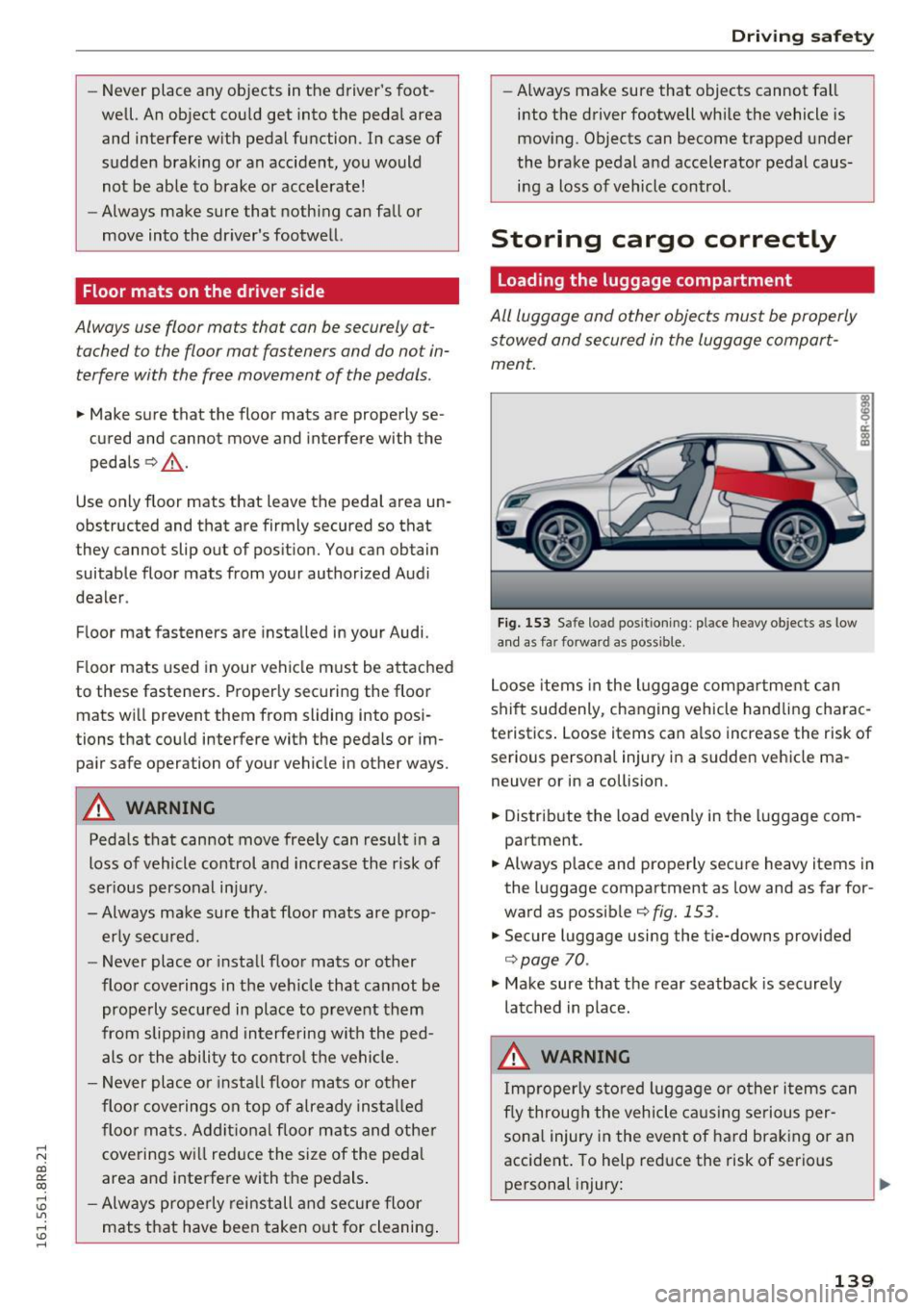
F ig. 153 Safe load positioning: place heavy objects as low
a n d as far forward as possible .
Loose items in the luggage compar tment can
shift suddenly, changing vehicle handling charac
teristics . Loose items can also increase the risk of
serious persona l injury in a s udden vehicle ma
neuver or in a collision.
.,. Distribute the load evenly in the luggage com
partment.
.. Always place and properly secure heavy items in
the luggage compartment as low and as far for
ward as possib le
¢fig. 153.
.,. Secure luggage using the tie-downs provided
¢page 70.
.,. Make sure that the rear seatback is securely
latched in place.
A WARNING
I mproperly s to red luggage or o ther i tems can
fly through the vehicle ca us ing serious per
sona l injury in the event of hard braking or an
accident . To help reduce the risk of serio us
personal injury: .,.
139
Page 142 of 300
Driving safety
-Always put objects, for example, luggage or
other heavy items in the luggage compart
ment.
- Always secure objects in the luggage com
partment using the tie-down eyelets and
suitable straps.
A WARNING
Heavy loads will influence the way your vehi
cle handles. To help reduce the risk of a loss
of control leading to serious personal injury:
- Always keep in mind when transporting
heavy objects, that a change in the center of
gravity can also cause changes in vehicle
handling:
- Always distribute the load as evenly as
possible.
- Place heavy objects as far forward in the
luggage compartment as possible.
- Never exceed the Gross Axle Weight Rating or the Gross Vehicle Weight Rating specified
on the safety compliance sticker on the left
door jamb. Exceeding permissible weight
standards can cause the vehicle to slide and handle differently .
- Please observe information on safe driving
¢page 134.
A WARNING
To help prevent poisonous exhaust gas from
being drawn into the vehicle, always keep the
rear lid closed while driving.
- Never transport objects larger than those fitting completely into the luggage area be
cause the rear lid cannot be fully closed .
- If you absolutely must drive with the rear lid open, observe the following notes to reduce
the risk of poisoning:
- Close all windows,
- Close the Panoramic sliding sunroof*,
- Open all air outlets in the instrument pan-
el,
- Switch off the air recirculation,
- Set the fresh air fan to the highest speed .
140
A WARNING
,--
Always make sure that the doors, all win
dows, the Panoramic sliding sunroof* and the
rear lid are securely closed and locked to re
duce the risk of injury when the vehicle is not
being used .
-After closing the rear lid, always make sure
that it is properly closed and locked.
- Never leave your vehicle unattended espe
cially with the rear lid left open. A child
could crawl into the vehicle through the lug
gage compartment and close the rear lid be
coming trapped and unable to get out. Be
ing trapped in a vehicle can lead to serious
personal injury.
- Never let children play in or around the vehi
cle.
- Never let passengers ride in the luggage
compartment. Vehicle occupants must al
ways be properly restrained in one of the ve
hicle's seating positions.
(D Tips
- Air circulation helps to reduce window fog
ging. Stale air escapes to the outside
through vents in the trim panel. Be sure to keep these slots free and open .
- The tire pressure must correspond to the
load. The tire pressure is shown on the tire
pressure label. The tire pressure label is lo
cated on the driver's side B-pillar . The tire
pressure label lists the recommended cold
tire inflation pressures for the vehicle at its
maximum capacity weight and the tires that
were on your vehicle at the time it was man
ufactured. For recommended tire pressures
for normal load conditions, please see chap
ter ¢
page 245.
Tie-downs
The luggage compartment is equipped with four
tie-downs to secure luggage and other items.
Use the tie-downs to secure your cargo properly
¢page 139, Loading the luggage compartment . ..,_
Page 143 of 300
,....,
N
In a collision, the laws of physics mean that even
smaller items that are loose in the vehicle will become heavy missiles that can cause serious in
jury. Items in the vehicle possess energy which vary with vehicle speed and the weight of the
item. Vehicle speed is the most significant factor .
For example, in a frontal collision at a speed of
30 mph (48 km/h), the forces acting on a 10-lb
(5 kg) object are about 20 times the normal
weight of the item . This means that the weight
of the item would suddenly be about
200 lbs . (90 kg). You can imagine the injuries
that a 200 lbs. (90 kg) item flying free ly through
the passenger compartment could cause in a col
l ision like this.
& WARNING ,___ -
Weak, damaged or improper straps used to
secure items to tie-downs can fail during hard
braking or in a collision and cause serious per
sonal injury.
- Always use suitable mounting straps and
properly secure items to the tie-downs in
the luggage compartment to help prevent
items from shifting or flying forward as dan
gerous missiles .
- When the rear seat backrest is folded down,
always use suitable mounting straps and
properly secure items to the tie-downs in
the luggage compartment to help prevent
items from flying forward as dangerous
missiles into the passenger compartment.
- Never attach a child safety seat tether strap
to a tie-down.
Reporting Safety Defects
Applicable to U.S.A.
If you believe that your vehicle
has a defect which could cause a
crash or could cause injury or
death, you should immediately in-
; form the National Highway Traffic
,....,
~ Safety Administration (NHTSA) in ,...., v:, ,....,
Driving safety
addition to notifying Audi of
America, Inc.
If NHTSA receives similar com
plaints, it may open an investiga
tion , and if it finds that a safety
defects exists in a group of
vehicles, it may order a recall and
remedy campaign. However,
NHTSA cannot become involved in
individual problems between you,
your dealer, or Audi of America, Inc.
To contact the N HTSA, you may
either call:
Tel.: 1-888-327-4236 (TTY: 1-800-424-9153) or
1-800-424-9393
or you may write to:
NHTSA
U.S. Department of Transporta
tion 1200 New Jersey Ave., S.E.
West Building
Washington, DC 20590
You can also obtain other infor
mation about motor vehicle safe
ty from:
http:/ /www.safercar.gov
141
Page 148 of 300
Safety belts
_&. WARNING
Not wearing safety belts or wearing them im
properly increases the risk of serious personal
injury and death . Safety belts can work only
when used correctly.
-Always fasten your safety belts correctly be fore driving off and make sure all passen
gers are correctly restrained.
- For maximum protection, safety belts must
always be positioned properly on the body.
- Never strap more than one person, includ
ing small children, into any belt.
- Never place a safety belt over a child sitting
on your lap.
- Always keep feet in the footwell in front of
the seat while the vehicle is being driven.
- Never let any person ride with their feet on
the instrument panel or sticking out the
window or on the seat.
- Never
remove a safety belt while the vehicle
is moving . Doing so will increase your risk of
being injured or killed .
- Never wear belts twisted.
- Never wear belts
over rigid or breakable ob-
jects in or on your clothing, such as eye
glasses, pens, keys, etc., as these may cause
injury.
- Never allow safety belts to become dam
aged by being caught in door or seat hard
ware .
- Do not wear the shoulder part of the belt
under your arm or otherwise out of position.
- Several layers of heavy clothing may inter
fere with correct positioning of belts and re
duce the overall effectiveness of the system.
- Always keep belt buckles free of anything
that may prevent the buckle from latching
securely .
- Never use comfort clips or devices that cre
ate slack in the shoulder belt. However, spe
cial clips may be required for the proper use
of some child restraint systems.
- Torn or frayed safety belts can tear, and
damaged belt hardware can break in an acci
dent . Inspect belts regularly.
If webbing,
bindings, buckles, or retractors are dam-
146
aged, have belts replaced by an authorized
Audi dealer or qualified workshop.
- Safety belts that have been worn and loaded
in an accident must be replaced with the
correct replacement safety belt by an au
thorized Audi dealer. Replacement may be
necessary
even if damage cannot be clearly
seen. Anchorages that were loaded must al
so be inspected.
- Never
remove, modify , disassemble, or try
to repair the safety belts yourself .
-Always keep the belts clean. Dirty belts may not work properly and can impair the func
tion of the inertia reel¢
table Internal
cleaning on page 209.
Safety belts
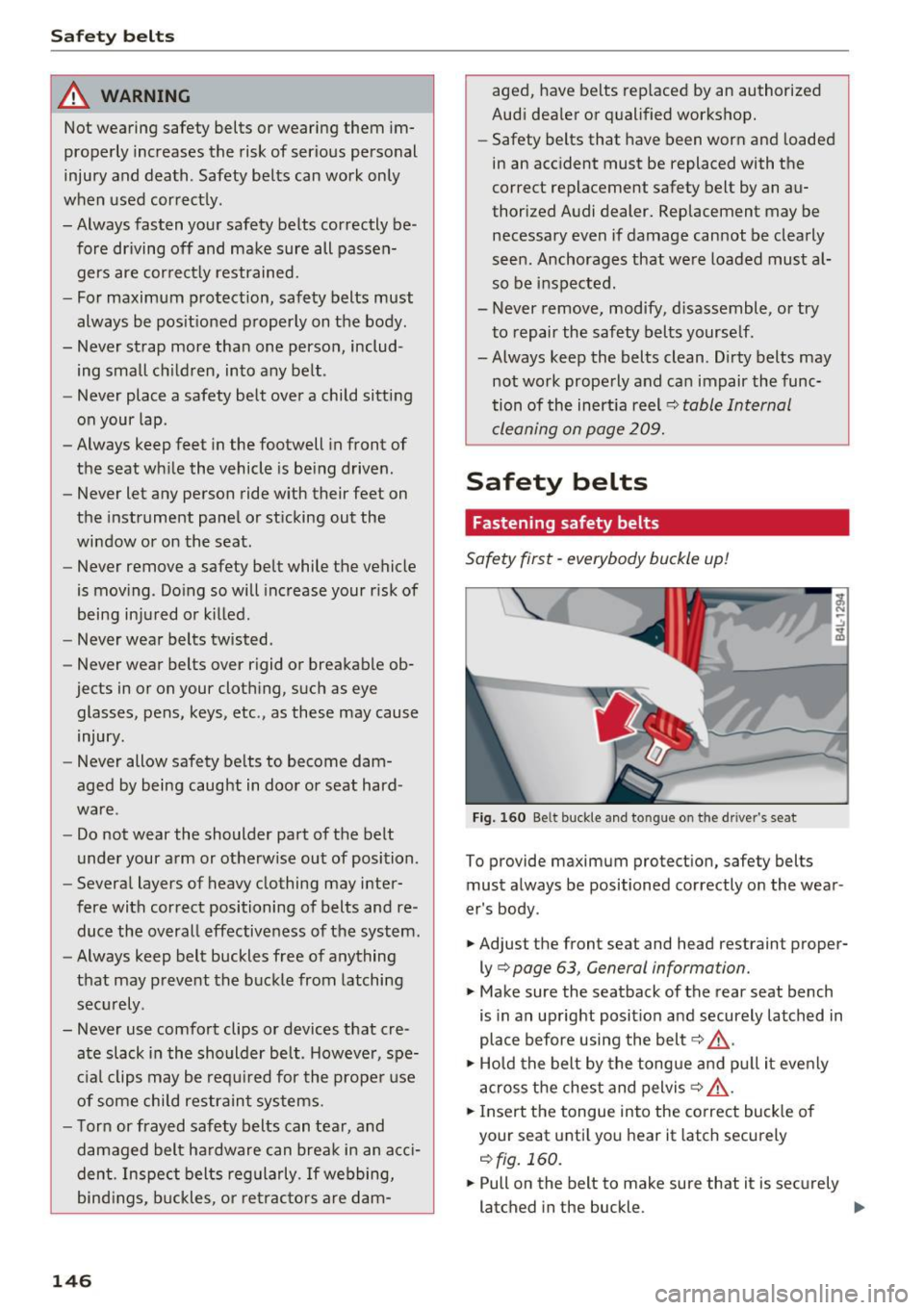
Fastening safety belts
Safety first -everybody buckle up!
Fig. 160 Be lt buckle and tongue on the driver's seat
To provide maximum protection, safety belts
must always be positioned correctly on the wear
er's body .
.. Adjust the front seat and head restraint proper
ly¢
page 63, General information.
.. Make sure the seatback of the rear seat bench
is in an upright position and securely latched in
place before using the belt¢,&. .
.. Hold the belt by the tongue and pull it evenly
across the chest and pelvis¢,&..
.. Insert the tongue into the correct buckle of
your seat until you hear it latch securely
¢fig. 160.
.. Pull on the belt to make sure that it is securely
latched in the buckle. .,,._
Page 149 of 300
..... N
co ~ CX)
..... I.Cl U"I
..... I.Cl .....
Automatic safety belt r etractors
Every safety be lt is equ ipped wi th an automatic
be lt retractor on the shoulder belt. Th is feature
l ocks the belt when the belt is p ulled out fast,
during hard braking and in an accident. The belt
may also lock when you drive up or down a steep
h ill or through a sharp curve. During normal driv
ing the belt lets you move freely .
Safety belt pret en sioners
The safety belts are equipped with a belt preten
sioner that helps to tighten the safety belt and
remove slack when the pretensioner is activated.
The funct ion of the pretensioner is monitored by
a warning light
r::> page 16 .
Switchabl e lo ck ing feature
Every safety belt exc ept the one on the driver
seat is equipped with a switchable locking fea
ture that
must be used when the safety be lt is
used to attach a child safety seat. Be sure to read
the important information about this feature
r::;, page 180 .
A WARNING
Improperly posit ioned safety be lts ca n cause
ser ious injury in an accident
r::;, page 147,
Safety belt position.
- Safety belts offer optimum protection only
when the seatback is upr ight and belts are
prope rly pos itioned on the body.
- Always ma ke sure tha t the rear sea t bac k
rest to wh ic h t he cente r re ar safety be lt is
attached is secure ly latched whenever the
rear center safety belt is being used. If the
backrest is not securely latched, the passen
ger will move forward with the backrest dur
ing sudden braking, in a sudden maneuver
and especially in a cras h.
- Never attach the safety belt to the buckle
for another seat. Attaching the belt to the
wrong buckle w ill red uce safety belt effec
t iveness and can cause serious personal in
jury .
- A passenger who is not p roperly restrained
can be seriously in ju red by the safety be lt it
self when it moves from the stronger parts
Safet y bel ts
of the body into critical areas like the abdo
men .
- Always lock the convertible locking retractor
when you are securing a child safety seat in
the vehicle
r::> page 182.
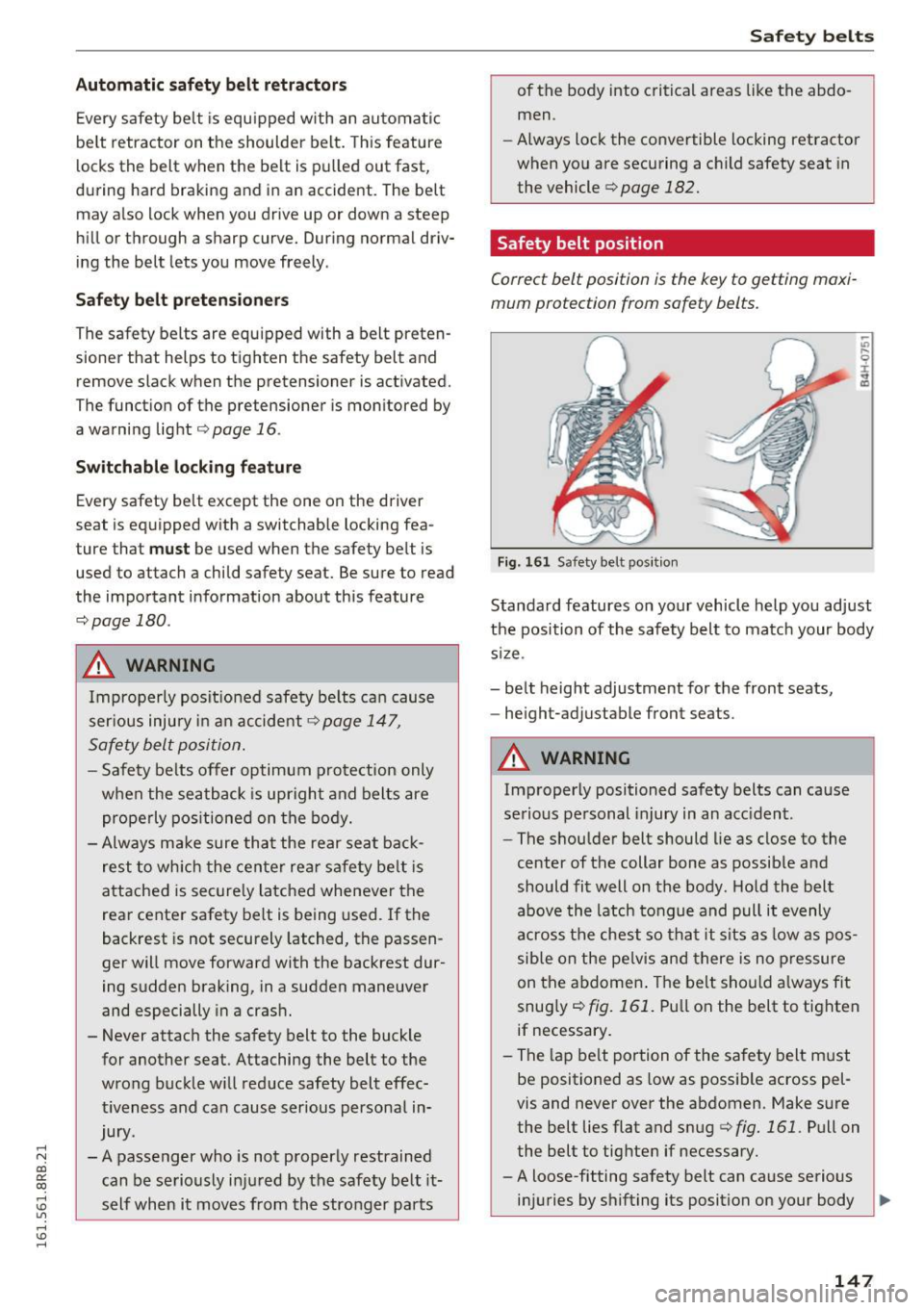
Safety belt position
Correct belt position is the key to getting maxi
mum protection from safety belts.
Fig. 161 Safety belt pos it ion
Standard features on your vehicle help you adjust
the position of the safety belt to ma tch your body
s iz e.
- be lt height adjustment for the front seats,
- he ight-adjustable front seats .
A WARNING
Improperly positioned safety belts can ca use
se rious personal injury in an acc ident.
- The shou lder belt should lie as close to the
center of the collar bone as possib le and
should fit well on the body . Ho ld the belt
above the latch to ngue and pull it evenly
across the chest so th at it sits as low as pos
sible on the pe lvis and there is no p ressure
on the abdomen . The belt should a lway s fit
snug ly
r::> fig. 161. Pu ll on the belt to tighten
if necessary .
- The lap be lt portion of the sa fety belt must
be positioned as low as possible across pel
vis and never over the abdomen. Make sure
the belt lies flat and snug
r::> fig. 161 . Pull on
the belt to tighte n if necessary.
- A loose-fitting safety belt can cause serious
in ju ries by shifting its position on your body
~
147
Page 150 of 300
Safety belts
from the strong bones to more vulnerable,
soft tissue and cause serious injury.
- Always read and heed all WARNINGS and
other important information¢
page 145.
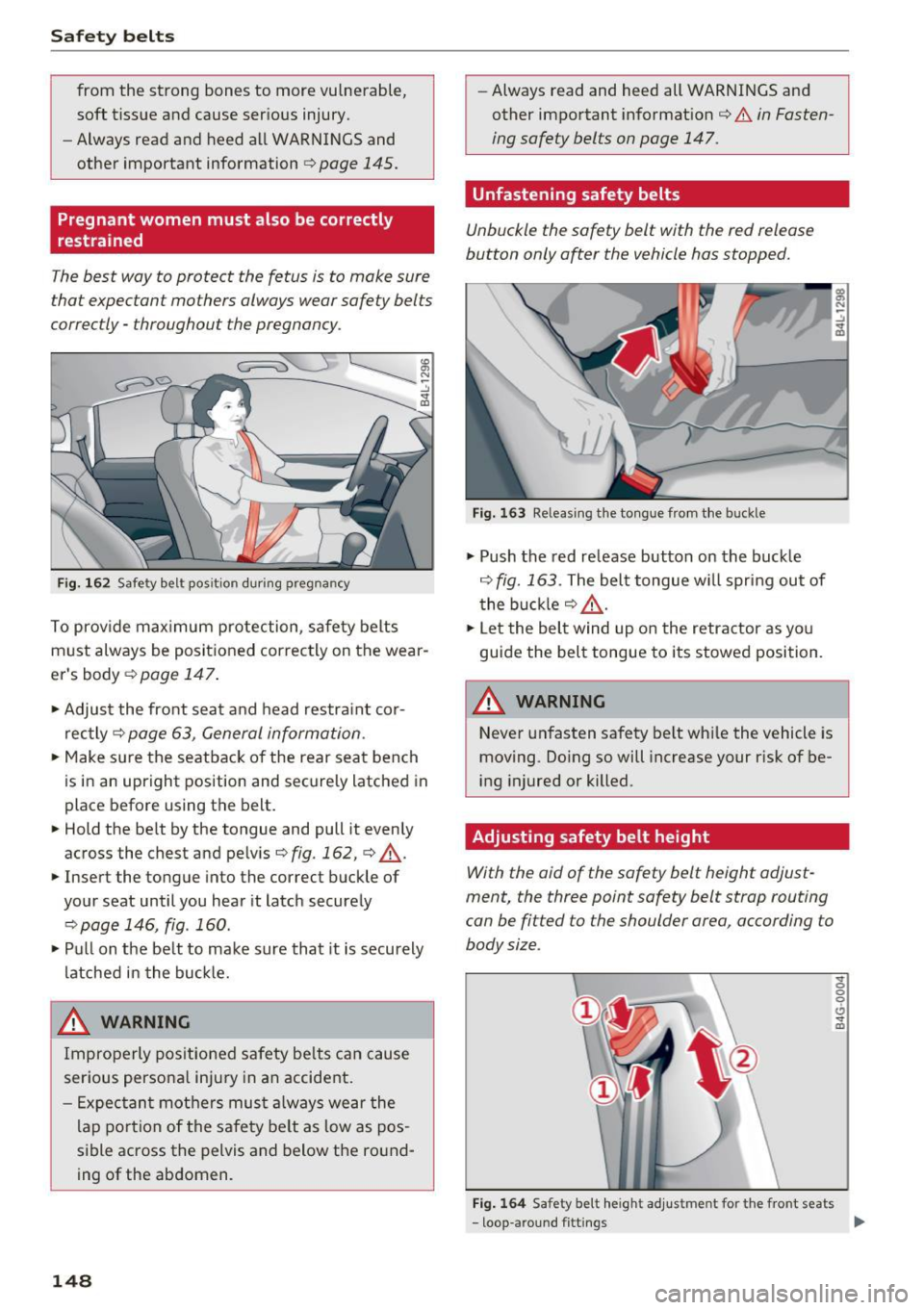
Pregnant women must also be correctly
restrained
The best way to protect the fetus is to make sure
that expectant mothers always wear safety belts
correctly -throughout the pregnancy.
Fig. 162 Safety belt pos ition during pregnancy
To provide maximum protection , safety belts
must always be positioned correctly on the wear
er's body ¢
page 147.
.,. Adjust the front seat and head restraint cor
rectly ¢
page 63, General information .
,.. Make sure the seatback of the rear seat bench
is in an upright position and securely latched in
place before using the belt.
,.. Hold the be lt by the tongue and pull it evenly
across the chest and pelvis¢
fig. 162, ¢ &.
.,. Insert the tongue into the correct buckle of
your seat until you hear it latch securely
¢page 146, fig .160 .
.,. Pull on the belt to make sure that it is securely
latched in the buckle.
,8. WARNING
Improperly positioned safety belts can cause
serious personal injury in an accident.
- Expectant mothers must always wear the
lap portion of the safety belt as low as pos
sible across the pelvis and below the round
ing of the abdomen.
148
- Always read and heed all WARNINGS and
other important information ¢
& in Fasten
ing safety belts on page 147.
Unfastening safety belts
Unbuckle the safety belt with the red release
button only after the vehicle has stopped.
Fig. 163 Releasing the tongue from the buckle
.,. Push the red release button on the buckle
¢ fig. 163. The belt tongue will spring out of
the buckle ¢
&-
.,. Let the belt wind up on the retractor as you
guide the belt tongue to its stowed position.
,8. WARNING
Never unfast en safety belt while the vehicle is
moving. Doing so will increase your risk of be
ing injured or killed.
Adjusting safety belt height
With the aid of the safety belt height adjust
ment, the three point safety belt strap routing
can be fitted to the shoulder area, according to
body size .
Fig. 164 Safety belt heigh t adjustment for the front seats
- loop- around fittings
Sf 0 0
0
CJ Sf m
Page 176 of 300
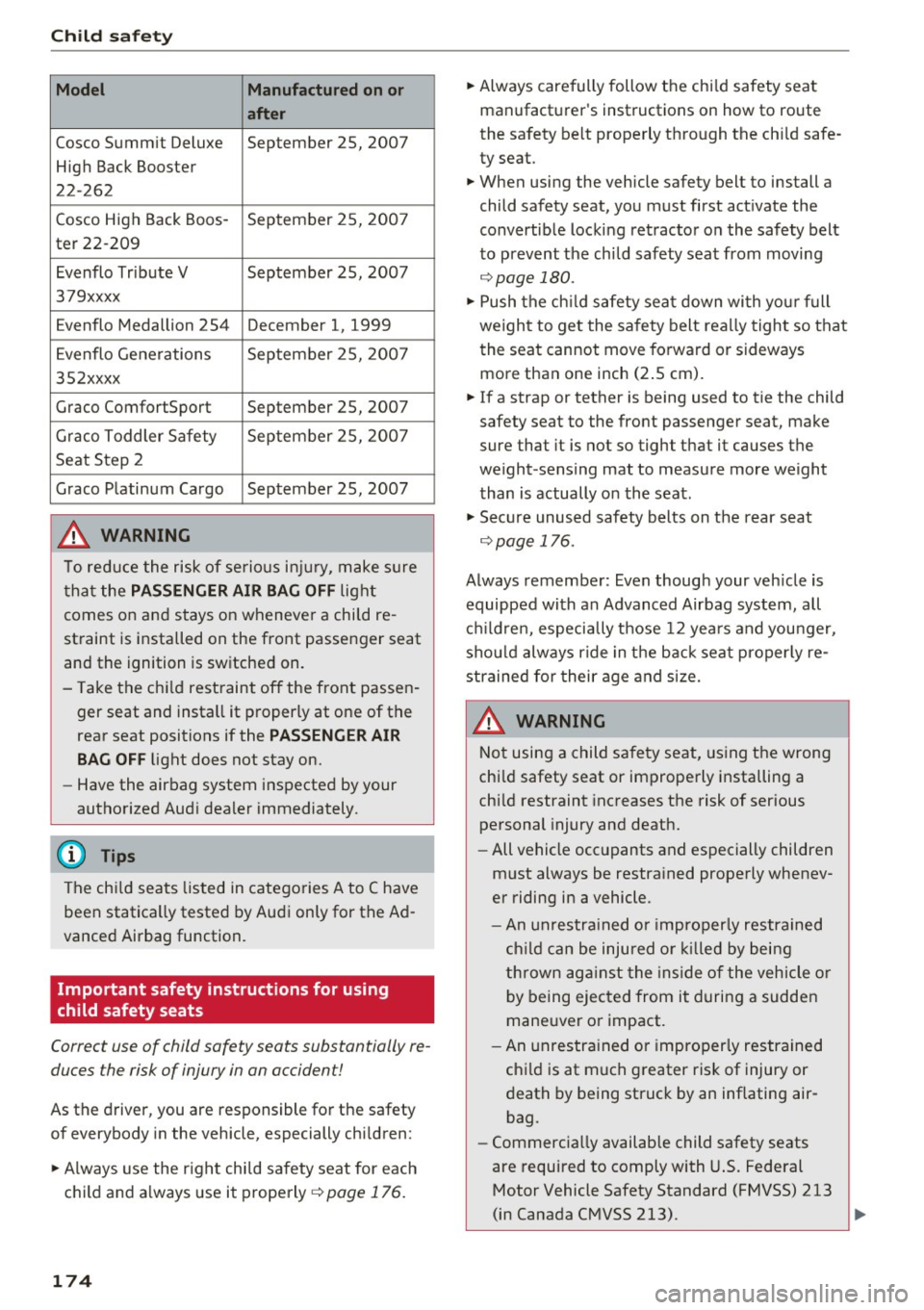
Child safet y
Model Manufactured on or
after
Cosco Summit Deluxe September 25, 2007
High Back Booster
22-262
Cosco High Back Boos -
September 25, 200 7
ter 22-209
Evenflo Tribute V September 25, 2007
379xxxx
Evenflo Medallion 254 December 1, 1999
E venflo Generations September 25, 200 7
352xxxx
Graco ComfortSport September 25, 2007
Graco Toddler Safety Sep tember 25, 200 7
Seat Step 2
Graco P latinum Cargo September 25, 2007
,& WARNING
T o red uce the risk of serio us i njur y, m ake s ure
t ha t the
PASSENGER AIR BAG OFF lig ht
comes o n and stays on wheneve r a child re
straint is installed on the front passenger seat
and the ignition is sw itche d on.
- Take the ch ild rest raint off the front passen
ger seat and insta ll it p roperly at one of the
rear seat positions if the
PASSENGER AIR
BAG OFF
light does not stay on.
- Have the airbag system inspecte d by your
autho rized Aud i dealer immediately.
(D Tips
The ch ild seats listed in catego ries A to C have
been statica lly tested by Au di only for the Ad
vanced Airbag function.
Important safety instructions for using
child safety seats
Correct use of child safety seats substantially re
duces the risk of injury in on occident!
As the driver, you are respons ible for the safety
of everybody in the vehicle, especially chi ldren:
... Always use the r ight chi ld safety seat for each
c h ild and a lways use it properly ¢
page 176.
174 ...
Always carefully follow the chi ld safety seat
manufact urer 's instructions on how to route
the sa fety be lt properly thro ugh the ch ild safe
ty seat.
... When using the vehicle safety belt to install a
child safety seat, you must first act ivate the
convertib le lock ing retracto r o n the safety belt
to prevent the chi ld safety seat from moving
¢ page 180.
... Push the ch ild sa fety sea t down wi th yo ur fu ll
weigh t to get the safety belt rea lly tight so tha t
the seat cannot move forward or sideways
more than one inch (2 .5 cm).
... If a strap or tether is being used to tie the child
safety seat to the front passenge r seat, make
sure that it is not so tight t hat it causes the
weight -sensing mat to measure more weight
t han is actually o n the seat .
... Secu re unused safety belts on the rear s eat
¢ page 176.
Always remember : Even though your veh icle is
equipped wi th an Advanced Airbag system, all
c hi ld ren, especially those 12 yea rs and you nger,
s h ould always ride in th e back sea t proper ly re
strained for their age and s ize.
,& WARNING
-
Not usin g a child sa fe ty seat, us ing t he wrong
c h ild safety seat or imprope rly installing a
chi ld restraint inc reases t he risk of serious
personal injury and death.
- All vehicle occupants and es pecially children
m ust always be restra ined properly whenev
er riding in a vehicle.
- An unrestra ined o r imprope rly restrained
c h ild ca n be injured or killed by bei ng
t h rown ag ai nst the inside of the vehicle or
b y being ejected from it durin g a sudden
maneuver o r impact.
- An unrestra ine d or i mprope rly restrained
ch ild is at much g reater risk of injury or
death by being struck by an inflating air
bag .
- Commerc ia lly available child safety seats
are required to comply with U.S. Federal
Motor Vehicle Safety Standard (FMVSS) 213
(in Canada C MVSS 213). ...
Page 178 of 300
Child safety
-Take the child restraint off the front passen
ger seat and install it proper ly at one of the
rear seat positions if the
PASSEN GER AIR
BA G OF F
light does not stay on.
- Have the airbag system inspected by your
authorized Aud i dealer immediately.
Secure unused safety belts on the rear seat
l8
,h- --lJ ;g
--- 0
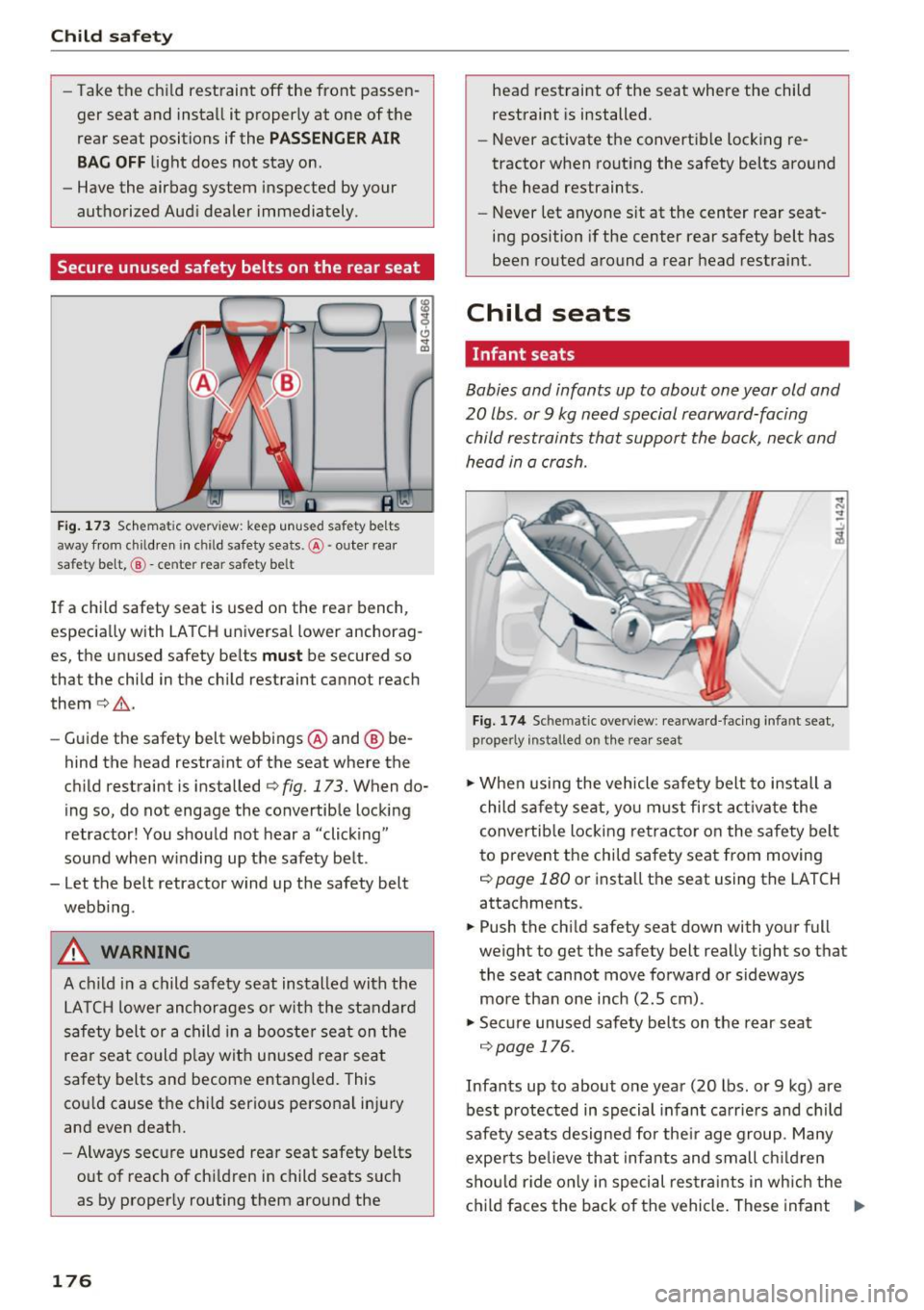
Fig . 173 Schematic overv iew: keep unused safety be lts
away from chi ld ren i n chil d safety seats.@-oute r rear
safety belt, @ - center rear safety be lt
~
If a chi ld safety seat is used on the rear bench,
especially with LA TCH universal lower anchorag
es, the unused safety be lts
mu st be secured so
that the child in the child restraint cannot reach
them ¢,& .
- Gu ide the safety belt webbings @and @ be
hind the head restraint of the seat where the
child restraint is installed
¢fig. 173. When do
ing so, do not engage the convertib le locking
retractor! You should not hear a "clicking"
sound when w inding up the safety be lt .
- Let the belt retractor wind up the safety belt
webb ing .
_& WARNING
A ch ild in a child safety seat installed with the
LATC H lowe r anchorages or w ith the standard
safety belt or a child in a booste r seat on the
rear seat could p lay wit h unused rear seat
safety belts and become entangled. This
cou ld cause t he chi ld ser ious personal injury
and even death.
- Always sec ure unused rear seat safety belts
o ut of reach of ch ild ren in child seats such
as by proper ly routing them aro und the
176
head restraint of the seat where the child
restraint is installed .
- Never activate t he convertible locking re
tractor when routing the safety belts around
the head restraints.
- Never let anyone s it at the center rear seat
ing position if the center rear safety belt has
been routed around a rear head restraint.
Child seats
Infant seats
Babies and infants up to about one year old and
20 lbs . or
9 kg need special rearward-facing
child restraints that support the back, neck and
head in a crash.
Fig. 1 74 Sc hema tic ove rview : rearward -facing infa nt sea t,
p rope rly installed on th e rear sea t
.. When using the veh icle safe ty belt to install a
c hild safe ty seat, yo u must first a ct ivate the
convertib le locking re tractor on the safe ty belt
to prevent the child safety seat from moving
¢
page 180 or insta ll the seat using the LATCH
attachments .
.. Push the child safety seat down with your full
weight to get the safety belt really tight so that
the seat cannot move forward or sideways
more than one inch (2 .5 cm).
.. Secure unused safety bel ts on the rear seat
¢ page 176.
Infants up to about one year (20 lbs . or 9 kg) are
bes t protected in special infant carr iers and child
safe ty seats designed for the ir age group. Many
expe rts be lieve that inf ants and small ch ildren
sho uld r ide o nly in special res tra ints in wh ic h t he
ch ild faces the back of the vehicle. These infant
II>