child lock AUDI Q5 2017 User Guide
[x] Cancel search | Manufacturer: AUDI, Model Year: 2017, Model line: Q5, Model: AUDI Q5 2017Pages: 296, PDF Size: 74.43 MB
Page 86 of 296
Driving
CD Note
If the engine has been under heavy load for
an extended period, heat builds up in the en
gine compartment after the engine is switch
ed off- there is a risk of damaging the eng ine.
Allow the e ngine to ru n at idle for about two
m inutes befo re switching it off.
Convenience key
Starting the engine
Applies to: veh icles with Convenience key
The I S TAR T ENGINE ST OP ! button switches the
ignition on and starts the engine.
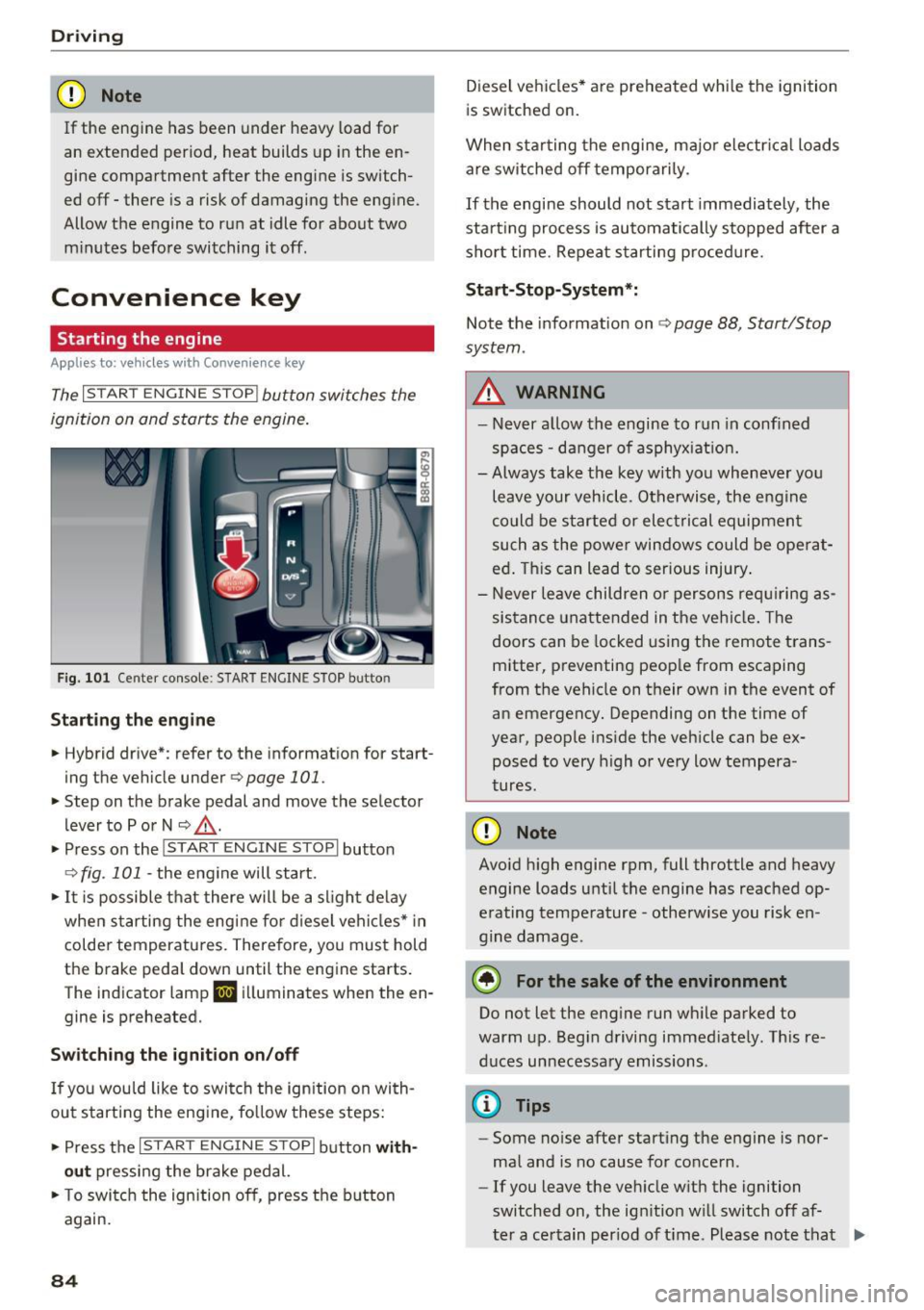
F ig . 101 Ce nter console: START ENGINE STOP b utto n
Starting the engine
.. Hybrid dr ive *: refer to the informat ion for start
ing the vehicle under
c:> page 101.
.. Step on the brake pedal and move the se lector
lever to P or N
c;, ,& .
.. Press on the ~ , S_T_A_R _T_ E_N_G_I_N_E_S_T_O_P~I butto n
c:>fig . 101 -the engine will start.
.. It is possible t hat there will be a sl ight de lay
whe n starting the eng ine fo r diesel vehi cles* in
colde r temperatu res. There fore, you must hold
the brake pedal down until the eng ine starts.
The ind icator lamp
1,1 i lluminates when the en
gine is p reheated.
Sw itching the ignition on /off
If you would like to swi tch the ign ition on with
out starting the eng ine , fo llow these steps:
.. Press the
I S TAR T E NGIN E STO PI button with
out pressing the brake pedal.
.. To switc h the ignition off, press the button
again.
84
D iesel ve hicl es* are preheated whi le the ignition
is switched on.
Whe n sta rting the engine, m ajo r electr ica l loads
are switched off temporarily .
If the engine should not start immediately , the
sta rt ing process is au tomatically stopped after a
sho rt time. Repeat s tarting pro cedure.
Start-Stop-System*:
Note the informat ion on c> page 88, Start/Stop
system .
A WARNING
-Never a llow the engine to r un in confined
spaces -da nger of asphyx ia ti on.
- Always take t he key w ith you wheneve r yo u
le ave your veh icle . Otherwise, the e ngine
co uld be st arte d or elect rical equipmen t
such as the powe r wi nd ows could be ope rat
ed . Thi s can lead to ser ious injury .
- Never le a ve children o r persons req uiring as
sis tance unattended in the ve hicle. Th e
-
doors can be locked using the remote trans
mitter, preventing peop le from esca ping
from t he vehicle on t heir own in the event of
an emergency . Depending on the time of
year, people i ns ide the veh icle can be ex
posed to very h igh o r very low tempera
tures .
CD Note
Avo id h igh engine rpm, full throttle and heavy
engine loads u nti l the engine has reac hed op
erating tempe rature -otherwise you risk en
g ine damage .
@ For the sake of the environment
Do not let the eng ine run wh ile parked to
warm up . Beg in driving immed iate ly . Th is re
d uces un necessary emissions .
@ Tips
-Some no ise after starting t he engine is nor
ma l and is no cause for conce rn .
- If you leave the ve hicle w ith the ignition
switched on, the ig nition w ill switch of f af-
te r a ce rtain per iod of t ime . Please note that ..,.
Page 89 of 296
CD
CD
.... N ,-... N .... 0 0 C<'. 00
Emergency brake function
An emergency brake ensures tha t the vehicle can
be slowed down even if the
normal brakes fai l
¢ page 88, Emergency braking.
A WARNING
If a drive range is engaged with t he vehicle
stat iona ry and the engine running, you must
in no instance accelerate care lessly . Other
w ise the vehicle will start to move immed iate
ly- risk of a n accide nt.
(D Tips
- If the parking brake is app lied with the igni
tion switched off, the indicator lights in the
switch and . (USA models)/ . (Cana-
da models) in the instrumen t cluster will go
out af ter a ce rtain per io d of t ime .
- Occasiona l noises when the park ing brake is
applied and re leased a re normal and a re not
a cause for conce rn.
- When the vehicle is parked, the park ing
brake goes th ro u gh a se lf-tes t cycle at regu
l a r i nte rva ls . Any associated noises a re no r
mal.
Parking
~ P ress the brake ped al to stop the vehicle.
~ Pull the switch c::> page 86, fig. 102 to set the
parking b rake.
~ Move the selecto r lever to P .
~ Turn the eng ine off c::> .&, .
-
~ When on incl ines or declines, turn the steering
wheel so that the veh icle w ill roll into the curb
if it beg ins to move .
A WARNING
-Whe n you leave your ve hicl e -even if onl y
br iefly- alw ays remove the ig nition key. Thi s
applies p articul arly when children rem ain i n
t h e ve hicle . Othe rwise the c hildren could
sta rt the eng ine, release t he parking brake
o r operate elect rical eq uipment (e.g. powe r
windows). There is the risk of an accident.
- When the vehicle is loc ke d , no one - part icu
larly not children shou ld remain in the vehi-
-
D riving
cle. Locked doors make it more d ifficult for
emergency wo rkers to get into the vehicle -
putting lives at r isk.
Starting from rest
The starting assist function ensures that the
parking brake is released automatically upon starting.
Stopping and applying parking brake
~ Pull the sw itch to app ly the parkin g brake.
Starting and automatically releasing the
parking brake
~ W he n you start to drive as usu a l, t he p ark ing
b rake is automa tic ally released and yo ur vehicle
beg ins to move.
When stop ping at a tr affic sig nal or sto pping in
c ity traff ic on vehicles wi th an aut omat ic t ra ns
mission, t he parking brake can be app lied . The
vehicle does not have to be held with the foot
bra ke. The pa rking brake e liminates the tendency
to c reep w ith a dr ive range engaged. As soon as
you drive off as usual, the parking brake is re leased a utomat ica lly and the vehicle starts to
move .
Starting on slopes
When starting on incl ines, the sta rting assist pre
vents the vehicle from un intent iona lly rolling
back. The b raking force of the parking brake is
not re leased unt il su ff icient dr iving force has
been buil t up at t he wheels .
(D Tips
For safety reasons, the park ing brake is re
l eased automatically on ly when t he d river's
safety be lt is engaged in t he buc kle.
Starting off with a trailer
To prevent rolling back unintentionally on an in
cline, do the following:
~ Keep the switch pulled and depress the acceler
ator . The parking brake stays applied and pre-
vents the veh icle from roll ing backward . .,,.
87
Page 135 of 296
CD
CD
.... N ,-... N .... 0 0 C<'. 00
For detailed information on how to adjust the
driver's seat, see
¢ page 61.
A WARNING
Drivers who are unbelted, out of position or
too close to the airbag can be seriously in
jured by an airbag as it unfolds. To help re
duce the risk of serious personal injury:
- Always adjust the driver's seat and the
steering wheel so that there are at least 10 inches (25 cm) between your breastbone
and the steering wheel.
- Always hold the steer ing wheel on the out
side of the steering wheel rim with your
hands at the 9 o'clock and 3 o'clock posi
tions to help reduce the r isk of persona l in
jury if the driver's airbag inflates.
- Never hold the steer ing whee l at the
12 o'clock position or w ith your hands at
other pos it ions inside the steering wheel
rim or on the steering wheel hub. Holding
the steering wheel the wrong way can cause
serious injuries to the hands, arms and head if the driver's airbag deploys.
- Pointing the steering wheel toward your
face decreases the ability of the supplemen
tal driver's airbag to protect you in a colli sion.
- Always sit in an upright position and never lean against or place any part of your body
too close to the area where the airbags are
located .
- Before driving, always adjust the front seats
and head restraints properly and make sure
that all passengers are properly restrained.
- Never adjust the seats while the vehicle is
moving . Your seat may move unexpectedly
and you could lose control of the vehicle .
- Never drive with the backrest reclined or
t il ted far back! The farther the backrests are
tilted back, the greater the risk of injury due
to incorrect positioning of the safety belt
and improper seating position.
- Children must always ride in child safety
seats¢
page 168. Spec ial precaut ions ap
ply when installing a ch ild safety seat on the
front passenger seat
c:::;, page 148.
Driving safety
Proper seating position for the front
passenger
The proper front passenger seating position is
important for safe, relaxed driving.
For your own safety and to reduce the risk of in
jury in the event of an acc ident, we recommend
that you adjust the seat for the front passenger
to the follow ing position:
"' Adjust the angle of the seatback so that it is in
an upright position and your back comes in full
contact with it whenever the vehicle is moving.
"' Adjust the head restraint so the upper edge is
as even as possible with the top of your head. If
that is not possible, try to adjust the head re
straint so that it is as close to this position as
possible
¢ page 134.
"' Keep both feet flat on the floor in front of the
front passenger seat.
"' Fasten and wear safety belts correctly
c:::;, page 143.
For detailed information on how to adjust the
front passenger's seat, see
c:::;, page 60.
A WARNING
--
Front seat passengers who are unbelted, out
of position or too close to the airbag can be
seriously injured or killed by the airbag as it
unfolds. To help reduce the risk of serious
personal injury:
- Passengers must always s it in an upright po
sition and never lean against or place any
part of their body too close to the area
where the airbags are located.
- Passengers who are unbelted, out of posi
tion or too close to the airbag can be seri
ously injured by an airbag as it unfolds with
great force in the blink of an eye.
- Always make sure that there are at least
10 inches (25 cm) between the front pas
senger's breastbone and the instrument
panel.
- E ach passenger must always sit on a seat of
their own and properly fasten and wear the
safety belt belonging to that seat .
- Before driving, always adjust the front pas
senger seat and head restraint properly.
133
Page 139 of 296
CD
CD
.... N ,-... N .... 0 0 C<'. 00
-Always put objects, for example, luggage or
other heavy items in the luggage compart
ment.
- Always secure objects in the luggage com
partment using the tie-down eyelets and
suitable straps.
A WARNING
Heavy loads will influence the way your vehi
cle handles . To help reduce the risk of a loss
of control leading to serious personal injury:
- Always keep in mind when transporting
heavy objects, that a change in the center of
gravity can also cause changes in vehicle
hand ling:
- Always distribute the load as evenly as
possible.
- Place heavy objects as far forward in the
luggage compartment as possible.
- Never exceed the Gross Axle Weight Rating
or the Gross Vehicle Weight Rating specified
on the safety compliance sticker on the left
door jamb. Exceeding permissible weight
standards can cause the vehicle to slide and
handle differently .
- Please observe information on safe driving
<=>page 131.
A WARNING
To help prevent poisonous exhaust gas from
being drawn into the vehicle, always keep the
rear lid closed while driving .
- Never transport objects larger than those
fitting completely into the luggage area be
cause the rear lid cannot be fully closed .
- If you absolutely must drive with the rear lid
open, observe the following notes to reduce
the risk of poisoning:
- Close all windows,
- Close the Pano ramic sliding sunroof*,
- Open all air outlets in the instrument pan-
el,
- Switch off the air recirculation,
- Set the fresh air fan to the highest speed .
Driving safety
A WARNING
-
Always make sure that the doors, all win
dows, the Panoramic sliding sunroof* and the
rear lid are securely closed and locked to re
duce the risk of injury when the vehicle is not
being used .
-After closing the rear lid, always make sure
that it is properly closed and locked.
- Never leave your vehicle unattended espe
cially with the rear lid left open. A child
could crawl into the vehicle through the lug
gage compartment and close the rear lid be
coming trapped and unable to get out. Be
ing trapped in a vehicle can lead to serious
personal injury.
- Never let children play in or around the vehi
cle.
- Never let passengers ride in the luggage
compartment. Vehicle occupants must al
ways be properly restrained in one of the ve
hicle's seating positions.
(D Tips
-Air circulation helps to reduce w indow fog
ging . Stale air escapes to the outside
through vents in the trim panel. Be sure to
keep these slots free and open.
- The tire pressure must correspond to the
load. The tire pressure is shown on the tire
pressure label. The tire pressure label is lo
cated on the driver's side B-pillar . The tire
pressure label lists the recommended cold
tire inflation pressures for the vehicle at its
maximum capac ity weight and the tires that
were on your vehicle at the time it was man
ufactured. For recommended t ire pressures
for normal load conditions, please see chap
ter
r=> page 241.
Tie-downs
The luggage compartment is equipped with four
tie-downs to secure luggage and other items.
Use the tie-downs to secure your cargo properly
Q page 136, Loading the luggage compartment . ..,_
137
Page 146 of 296
Safe ty belts
Autom ati c s afet y belt retr actors
Every safety belt is equ ipped with an automa tic
be lt retractor on the shoulder belt. This feature
locks the belt when the belt is pulled out fast,
during hard braking and in a n accident. The belt
may a lso lock when you drive up or down a steep
hill or through a sharp curve. Dur ing normal driv
ing the belt lets you
move freely.
Safety belt p ret en sion ers
The safety belts are equipped with a belt preten
sioner that helps to t ighten the safety belt and
remove slack when the pretensioner is activated.
The function of the pretensioner is mon itored by
a warning light
r:::') page 13.
Swi tc hable l ocking f eature
Every safety belt except the one on the driver
seat is equipped with a switchable locking fea
ture that
must be used when the safety belt is
used to attach a child safety seat. Be sure to read
the impo rtant information about this feature
r=;,page 178.
.&_ WARNING
Improperly pos itioned safety be lts can cause
ser ious injury in an accident
c:> page 144,
Safety belt position.
- Safety belts offer optimum protection only
when the seatback is upright and belts are
properly positioned on the body.
- Always make sure that the rear seat bac k
rest to which the center rea r safety belt is
attached is secure ly latched whenever the
rear center safety belt is being used. If the
backrest is not securely latched, the passen
ger will move forward with the backrest dur
ing sudden braking, in a sudden maneuver
and especially in a crash.
- Never attach the safety belt to the buckle for another seat. Attaching the belt to the
wrong buckle wi ll reduce safety belt effec
t iveness and can cause serious persona l in
jury.
- A passenger who is not properly restrained can be seriously in ju red by the safety be lt it
self when it moves from the stronger parts
144
of the body into critical areas like the abdo men.
- Always lock the convertible locking retractor
when you are securing a child safety seat in
the vehicle
c:> page 180.
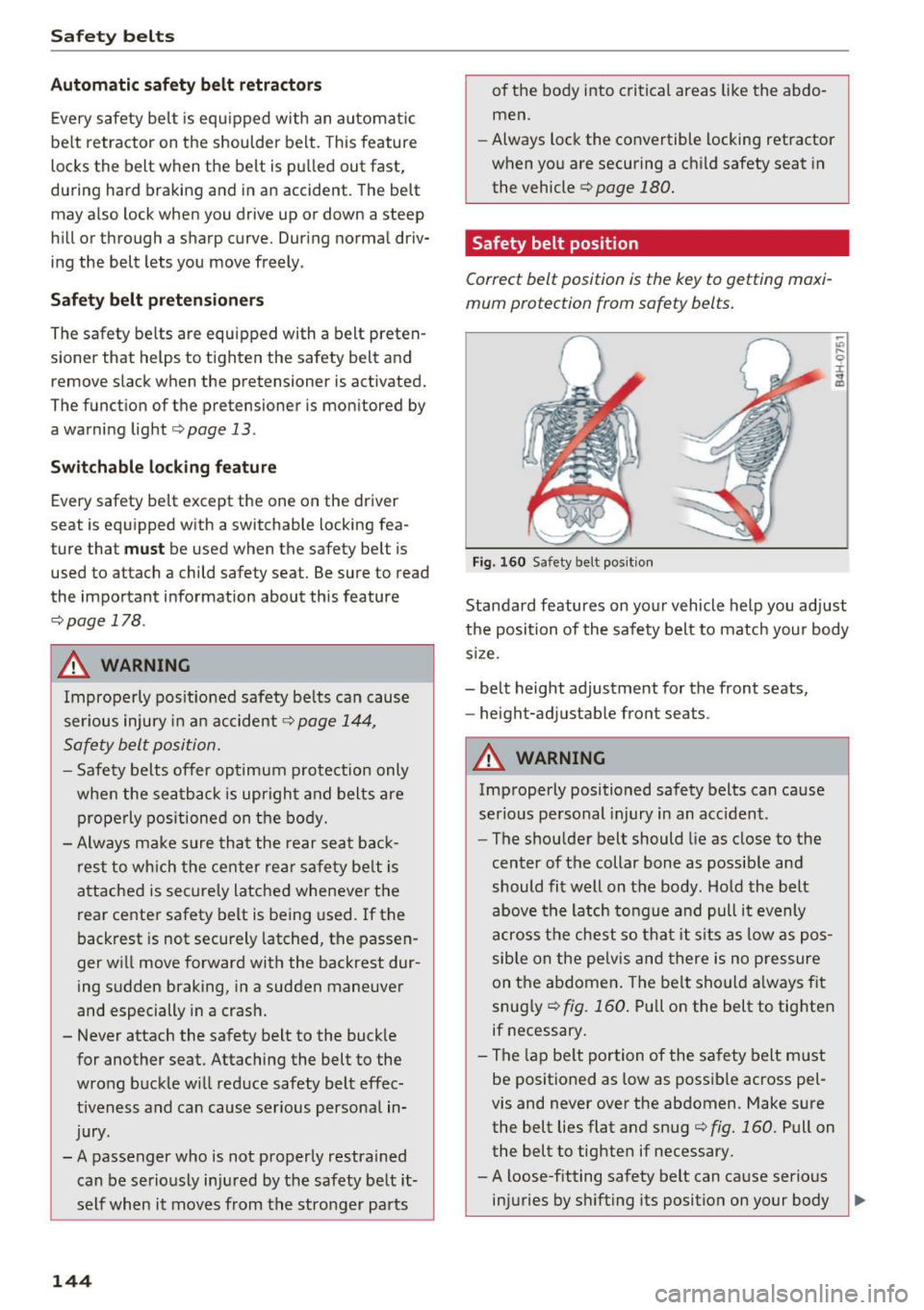
Safety belt position
Correct belt position is the key to getting maxi
mum protection from safety belts .
Fig. 160 Safety belt posit ion
-"' .... 9 I ... a,
Standard features on your vehicle help you adjust
the position of the safety belt to match your body
s ize.
- belt height adjustment for the front seats,
- height-adjustab le front seats.
.&_ WARNING
Improperly positioned safety belts can cause
serious pe rsonal injury in an acc ident .
- The shoulder belt should lie as close to the
center of the collar bone as possible and
should fit well on the body. Hold the belt
above the latch tongue and pull it evenly
across the chest so that it s its as low as pos
sib le on the pe lvis and there is no p ressure
on the a bdomen . The belt sho uld a lways f it
snug ly
r:::;, fig. 160. Pull on the belt to tig hten
if necessary .
- The lap be lt portion of the safety belt must
be positioned as low as possible across pel
vis and never over the abdomen. Make sure
the belt lies flat and snug
c:> fig. 160. Pull on
the belt to tighten if necessary.
- A loose-fitting safety belt can cause serious injuries by sh ifting its position on your body ..,_
Page 161 of 296
a,
a,
..... N r-N ..... 0 0
0:
co
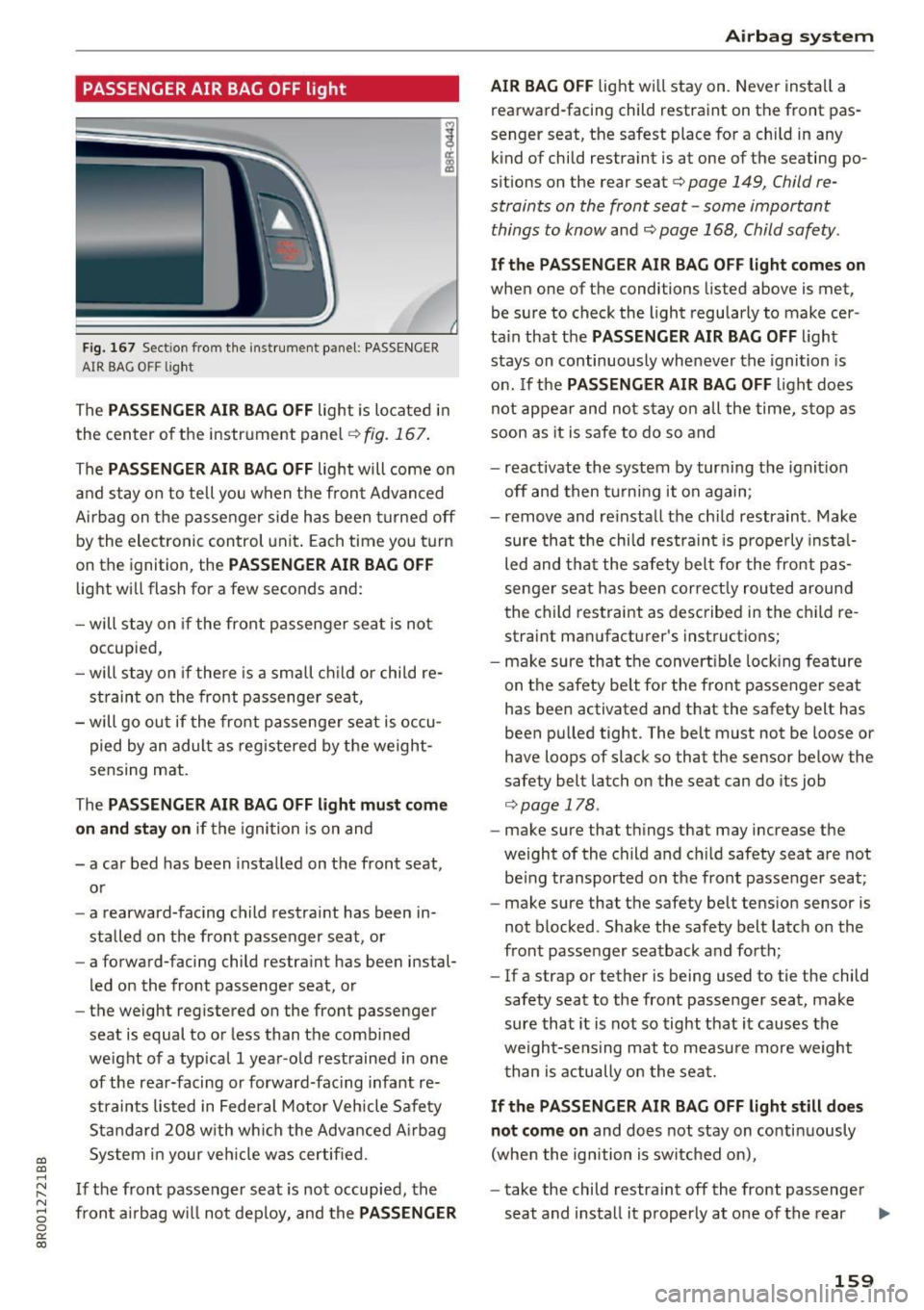
PASSENGER AIR BAG OFF light
Fig. 167 Sect ion from the instrument panel: PASSENGER
AIR BAG O FF light
The PA SSENGER AIR BAG O FF light is located i n
the center of the instrument pane l¢
fig. 167 .
The PASSENGER AIR BAG OFF light will come on
and stay on to tell you when the front Advanced
Ai rbag on the passenger side has been t urned off
by the electronic control unit . Each time you turn
on the ignition, the
PA SSEN GER AIR BAG OFF
light will flash for a few seconds and:
- will stay on if the front passenger sea t is not
occupied,
- will stay on if the re is a small child or child re
straint on the front passenger seat,
- will go ou t if the front passenge r seat is occu
pied by an adul t as reg istered by the weight
sensing mat.
The
PASSENGER AIR BAG OFF light mu st come
on and stay on
if the ignition is on and
- a car bed has been installed on t he front seat,
or
- a rearward-facing child restraint has been in
stalled on the front passenger seat, or
- a forward-facing child restra int has been instal
led on the front passenger seat, or
- the weight registered on the front passenger
seat is equal to or less than the combined
weight of a typical 1 year-old restrained in one
of the rear-facing or forward-fac ing infant re
straints listed in Federal Motor Vehicle Safety
Sta ndard 208 with w hich the Adva nced A irbag
System in your veh icle was certified.
I f the front passenger seat is not occupied, the
front a irbag w ill not deploy, and the
PASSENGER
Airb ag sys tem
AIR BAG OFF light wi ll stay on. Never install a
rearward-facing child restraint on the front pas
senger seat, the safest place for a ch ild in any
k ind of child restraint is at one of the seating po
sitions on the rear seat¢
page 149, Child re
straints on the front seat -some important
things to know
and r::;, page 168, Child safety.
If the PAS SENGER AIR BAG OFF light comes on
when one of the conditions listed above is met,
be su re to check the light regularly to make cer
ta in that the
PASSENGER AIR BAG OFF li ght
stays on continuously whenever the ignition is
on. If the
PASSENGER AIR BAG OFF li ght does
not appear and not s tay o n all the time, stop as
soon as it is safe to do so and
- reactivate the system by turning the ignit ion
off and then t urning it on again;
- remove and re insta ll the child restraint . Make
sure that the child restraint is properly insta l
led and tha t the safety belt for the fro nt pa s
senger seat has bee n correct ly routed around
the child res traint as desc ribed in the c hild re
stra int man ufactu rer's instructions;
- make sure that the convert ible lo ck ing fea ture
on the safety be lt for the front passenger seat
has been activated and that the safety belt has
been pulled tight. The belt must not be loose or
have loops of slack so that the sensor be low the
safety belt latch on the seat can do its job
c:;, page 178 .
-make sure that things that may increase the
weight of the child and ch ild safety seat are not
be ing transported on the front passe nger seat;
- make sure that the safety belt tens ion sensor is
not blocked . Shake the safety belt latch on the
front passe nger seatback and forth;
- If a strap or tether is being used to tie the child
safety seat to the front passenger seat, make
sure that it is not so tight that it causes the
weight-sens ing mat to measu re more weight
t han is actually on the seat.
If th e PA SS ENGER AIR BA G OFF light still does
not come on
and does not stay on continuously
(whe n the ignition is switc hed on),
- take the child restraint off the front passenger
seat and insta ll it properly at one of the rear
Iii--
159
Page 173 of 296
CD
CD
.... N ,-... N ..... 0 0 C<'. 00
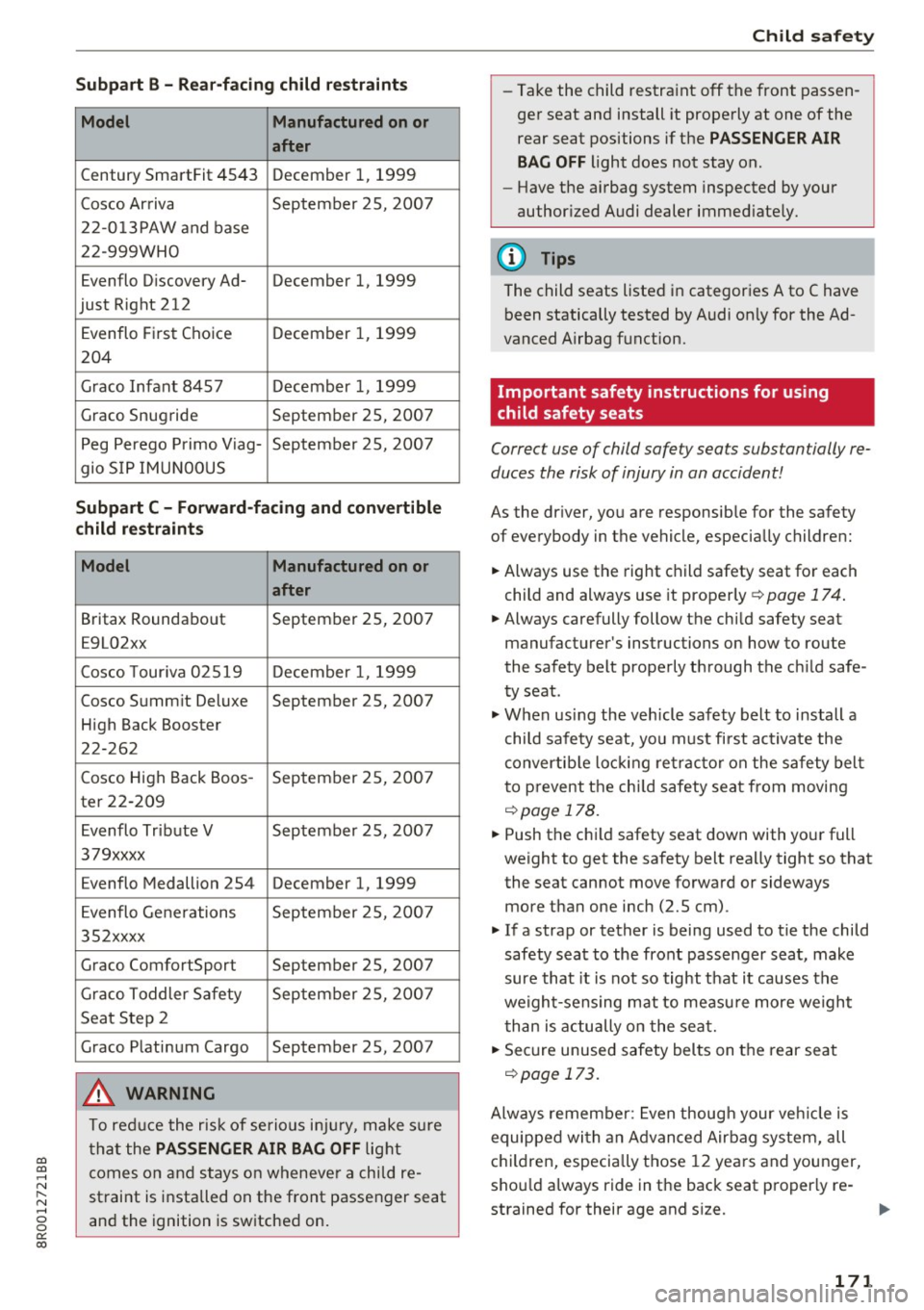
Subpart B - Rear-facing child restraints
Model Manufactured on or
after
Century SmartFit 4543 December 1, 1999
Cosco Arriva September 25, 2007
22-013PAW and base
22-999WHO
Evenflo Discovery Ad- December 1, 1999
just Right 212
Evenflo First Choice December 1, 1999
204
Graco Infant 8457 December 1, 1999
Grace Snug ride September 25, 2007
Peg Perego Primo Viag- September 25, 2007
gio S IP IMUNOOUS
Subpart C -Forward-facing and convertible
child restraints
Model Manufactured on or
after
Britax Roundabout September 25, 2007
E9L02xx
Cosco Tour iva 02519 December 1, 1999
Cosco Summit Deluxe September 25, 2007
High Back Booster
22-262
Cosco High Back Boos-
September 25, 200 7
ter 22-209
Evenflo Tribute V September 25, 2007
379xxxx
Evenflo Medallion 2S4 December 1, 1999
Evenflo Generations September 25, 2007
352xxxx
Grace ComfortSport September 25, 2007
Grace Toddler Safety September 25, 2007
Seat Step 2
Grace Platinum Cargo September 25, 2007
A WARNING
To reduce the risk of serious injury, make sure
that the
PASSENGER AIR BAG OFF light
comes on and stays on whenever a child re
straint is installed on the front passenger seat
and the ignition is switched on.
Child safety
- Take the child restraint off the front passen
ger seat and install it properly at one of the
rear seat positions if the
PASSENGER AIR
BAG OFF
light does not stay on.
- Have the airbag system inspected by your
authorized Audi dealer immed iately.
(D Tips
The child seats listed in categor ies A to C have
been statically tested by Audi only for the Ad
vanced Airbag function.
Important safety instructions for using
child safety seats
Correct use of child safety seats substantially re
duces the risk of injury in an accident!
As the driver, you are responsible for the safety
of everybody in the vehicle, especially children:
.,. Always use the right child safety seat for each
child and always use it properly ¢
page 174 .
.,. Always carefully follow the chi ld safety seat
manufacturer's instructions on how to route
the safety belt properly through the child safe ty seat .
.,. When using the vehicle safety belt to install a
child safety seat, you must first activate the
convertible locking r etractor on the safety belt
to prevent the chi ld safety seat from moving
~page 178.
.,. Push the chi ld safety seat down with yo ur full
weight to get the safety belt really tight so that the seat cannot move forward or sideways more than one inch (2.5 cm).
.,. If a strap or tether is being used to tie the child
safety seat to the front passenger seat, make
sure that it is not so tight that it causes the
weight-sens ing mat to measure more weight
than is actually on the seat.
.,. Secure unused safety belts on the rear seat
~page 173.
Always remember: Even though your veh icle is
equipped with an Advanced Airbag system, all
children, especia lly those 12 years and younger,
shou ld a lways ride in the back seat proper ly re-
strained for their age and s ize.
liJJ..
171
Page 175 of 296
a,
a,
..... N ,....
N ..... 0 0
0:
co
aft adjustment range, as far away from
the airbag as possible, before installing
the forward-facing child restraint.
- Always make sure that the safety belt up
per anchorage is behind the child restraint
and not next to or in front of the child re
straint so that the safety belt will be prop
erly positioned.
- Always make sure that nothing prevents
the front passenger's seat from being
moved to the rearmost position in its fore
and aft adjustment range.
- Always make sure that the backrest is in the upright position.
-Always buckle the child safety seat firmly in
place even if a child is not sitting in it. A
loose child safety seat can fly around during
a sudden stop or in a collision.
-Always read and heed all WARNINGS when
ever using a child restrained in a vehi .cle is
being used
~ page 140, Safety belts,
~ page 148, Airbag system and
~ page 168, Child safety.
& WARNING
To reduce the risk of serious injury, make sure
that the
PASSENGER AIR BAG OFF light
comes on and stays on whenever a child re
straint is installed on the front passenger seat
and the ignition is switched on.
- Take the child restraint off the front passen
ger seat and install it properly at one of the
rear seat positions if the
PASSENGER AIR
BAG OFF
light does not stay on.
- Have the airbag system inspected by your
authorized Audi dealer immediately.
Child safety
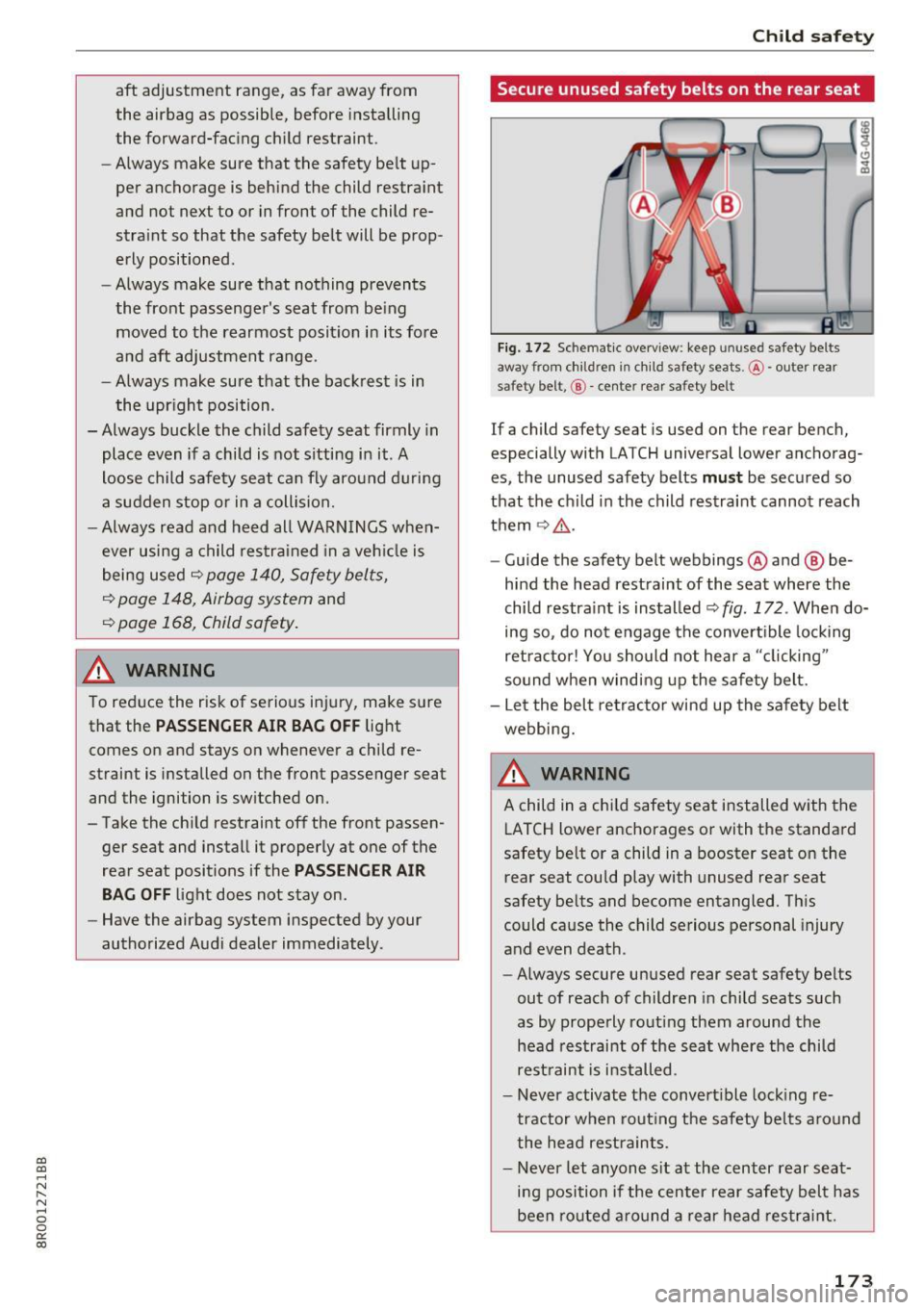
Secure unused safety belts on the rear seat
Fig. 172 Sc hema tic overv iew: keep unused safety belts
away from children in chil d safety seats.@· ou ter rear
safety belt ,@ -center rear safety belt
If a child safety seat is used on the rear bench,
especially with LATCH universal lower anchorag
es, the unused safety belts
must be secured so
that the child in the child restraint cannot reach
them ~.&. -
- Guide the safety belt webbings @ and @ be
hind the head restraint of the seat where the
child restraint is installed
<::) fig. 172 . When do
ing so, do not engage the convertible locking
retractor! You should not hear a "clicking"
sound when winding up the safety belt.
- Let the belt retractor wind up the safety belt
webbing.
A WARNING
-
A child in a child safety seat installed with the LATCH lower anchorages or with the standard
safety belt or a child in a booster seat on the rear seat could play with unused rear seat
safety belts and become entangled. This
could cause the child serious personal injury
and even death.
- Always secure unused rear seat safety belts
out of reach of children in child seats such
as by properly routing them around the head restraint of the seat where the child
restraint is installed .
- Never activate the convertible locking re
tractor when routing the safety belts around
the head restraints.
- Never let anyone sit at the center rear seat
ing position if the center rear safety belt has
been routed around a rear head restraint .
173
Page 176 of 296
Child safety
Child seats
Infant seats
Babies and infants up to about one year old and
20 lbs. or 9 kg need special rearward -facing
child restraints that support the back, neck and
head in a crash.
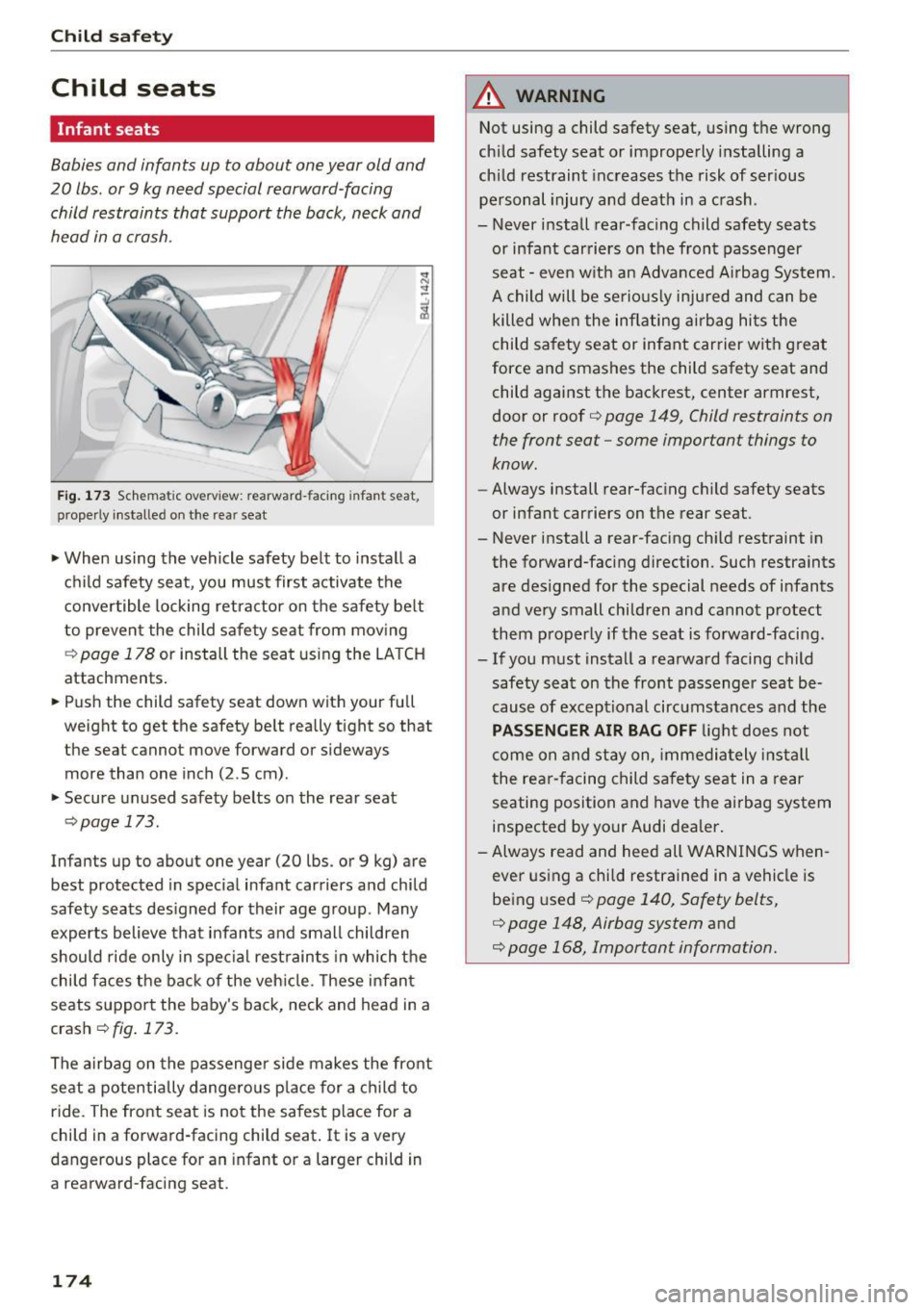
Fig. 173 Schema tic overv iew: rearwa rd -facing infan t sea t,
properly installe d on the rea r seat
• When using the vehicle safety belt to install a
child safety seat, you must first activate the
convertible locking retractor on the safety belt
to prevent the child safety seat from moving
c::> page 178 or install the seat using the LA TCH
attachments.
• Push the child safety seat down with your full
weight to get the safety belt really tight so that
the seat cannot move forward or sideways
more than one inch (2 .5 cm) .
• Secure unused safety belts on the rear seat
c::>page 173.
Infants up to about one year (20 lbs. or 9 kg) are
best protected in special infant carriers and child
safety seats des igned for their age group. Many
experts believe that infants and small children
should ride only in spec ial restraints in which the
chi ld faces the back of the veh icle. These infant
seats support the baby 's back, neck and head in a
crash
c::> fig . 173 .
The airbag on the passenger side makes the front
seat a potentially dangerous place for a child to
ride . The front seat is not the safest place for a
child in a forward -facing child seat.
It is a very
dangerous place for an infant or a larger child in
a rearward-facing seat.
174
A WARNING
Not using a child safety seat, using the wrong
child safety seat or improperly installing a
child restraint increases the risk of ser ious
personal injury and death in a crash .
- Never install rear-facing child safety seats
or infant carriers on the front passenger
seat -even w ith an Advanced Airbag System .
A ch ild will be serio usly inju red and can be
killed when the inflating airbag hits the
child safety seat or infant carrier with great
force and smashes the child safety seat and
child against the backrest, center armrest,
door or roof
c::> page 149, Child restraints on
the front seat -some important things to
know .
-Always install rear-facing child safety seats
or infant carriers on the rear seat.
- Never install a rear-facing child restraint in
the forward-facing direction. Such restraints
are designed for the special needs of infants
and very small children and cannot p rotect
them properly if the seat is forward-facing.
- If you must install a rearward facing child
safety seat on the front passenger seat be
cause of exceptional circumstances and the
PASSENGER AIR BAG OFF light does not
come on and stay on, immediately i nstall
the rear-facing child safety seat in a rear
seating position and have the airbag system
inspected by your Audi dealer .
-Always read and heed all WARNINGS when
ever using a child restrained in a vehicle is
being used
c::> page 140, Safety belts,
c::> page 148, Airbag system and
c::> page 168, Important information.
Page 177 of 296
Convertible child safety seats
Properly used convertible child safety seats can
help protect toddlers and children over age one
who weigh between
20 and 40 lbs. (9 and 18 kg)
in a crash.
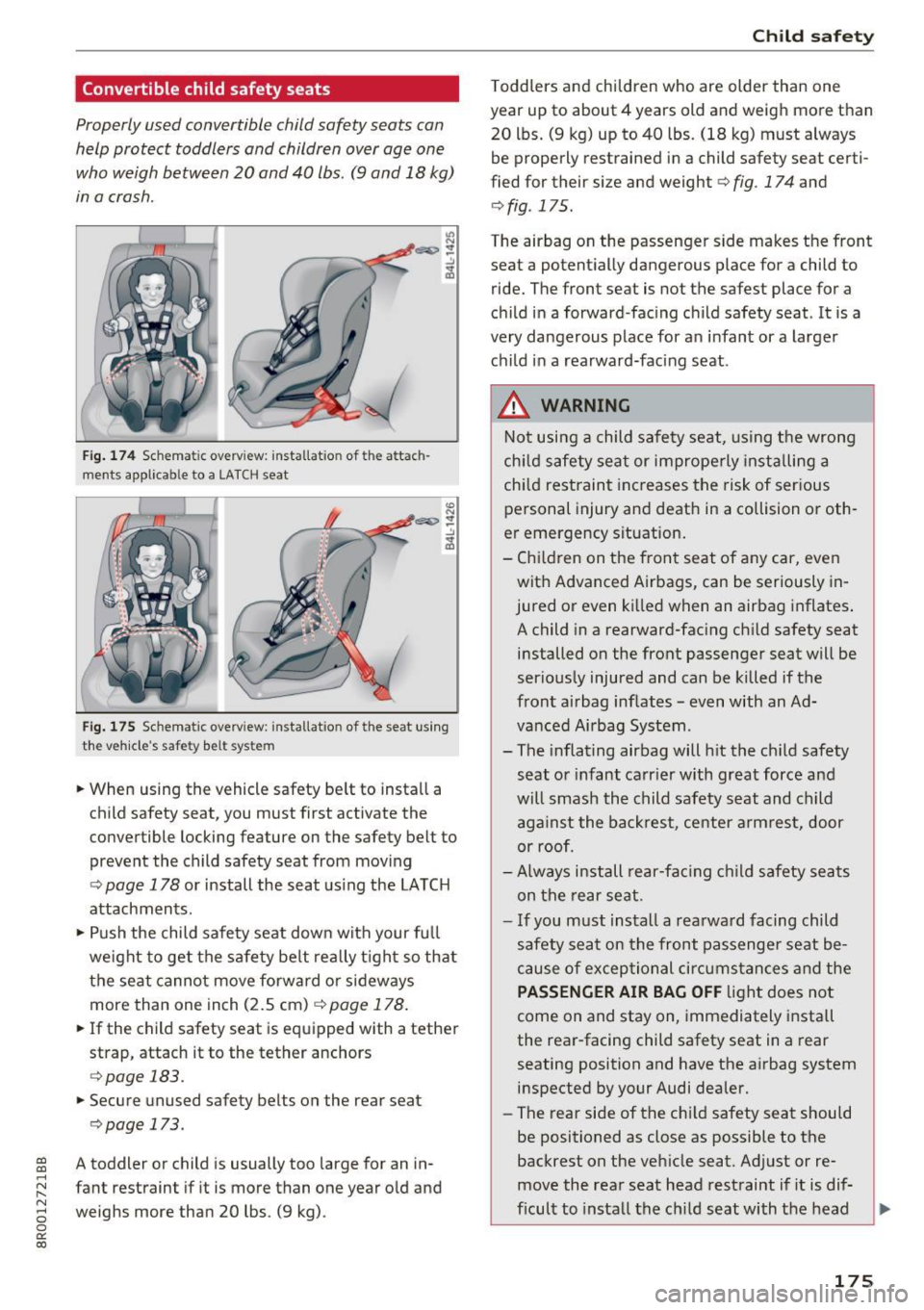
Fig. 174 Schemat ic overv iew: installatio n of the attac h
ments app lica ble to a LA TCH seat
Fig. 175 Schematic overv iew : installat io n of the seat using
the vehicle 's safe ty be lt syste m
.. When using the vehicle safety belt to install a
child safety seat, you must first activate the
convertible locking feature on the safety belt to
prevent the child safety seat from moving
Q page 178 or install the seat us ing the LATC H
attachments .
.. Push the child safety seat down with your fu ll
weight to get the safety belt really tight so that
the seat cannot move forward o r sideways
more than one inch (2.5 cm)
Q page 178.
.. If the child safety seat is equipped with a tether
strap, attach it to the tether anchors
Q page 183.
.. Secure unused safety belts on the rear seat
Q page 173.
~ A toddler or child is usually too large for an in-
~ fant restraint if it is more than one year old and r--
8 weighs more than 20 lbs . (9 kg) .
0
0:
co
Child safety
Toddlers and children who are older than one
year up to about 4 years old and weigh more than
20 lbs. (9 kg) up to 40 lbs. (18 kg) must always
be properly restrained in a child safety seat certi
fied for their size and weight
Q fig . 174 and
q fig . 175.
The airbag on the passenger side makes the front
seat a potentially dangerous place for a child to
ride. The front seat is not the safest place for a
child in a forward -facing child safety seat. It is a
very dangerous place for an infant or a larger
child in a rearward-facing seat .
_&. WARNING
Not using a child safety seat, us ing the wrong
chi ld safety seat or improperly instal ling a
chi ld restraint increases the risk of serious
personal injury and death in a collision or oth
er emergency situation.
- Children on the front seat of any car, even
with Advanced Airbags, can be seriously in
jured or even killed when an airbag inflates.
A child in a rearward-facing ch ild safety seat
installed on the front passenger seat will be
seriously injured and can be killed if the
front airbag inflates -even with an Ad
vanced Airbag System .
- The inflating airbag will hit the child safety
seat or infant carr ier with great force and
will smash the child safety seat and child
against the backrest, center armrest, door
or roof.
-Al ways install rear-fa cing child safety seats
on the rear seat .
- If you must insta ll a rearward facing child
safety seat on the front passenger seat be
cause of exceptional circumstances and the
PASSENGER AIR BAG OFF light does not
come on and stay on, immediately install
the rea r-facing child safety seat in a rear
seating position and have the a irbag system
inspected by your Audi dealer .
- The rear side of the ch ild safety seat shou ld
be positioned as close as possible to the
backrest on the veh icle seat. Adjust or re
move the rear seat head restraint if it is dif-
ficult to install the child seat with the head
91>
175