warning AUDI Q5 2018 Owners Manual
[x] Cancel search | Manufacturer: AUDI, Model Year: 2018, Model line: Q5, Model: AUDI Q5 2018Pages: 392, PDF Size: 60.56 MB
Page 310 of 392
Child sa fet y
Tether anchors and tether straps
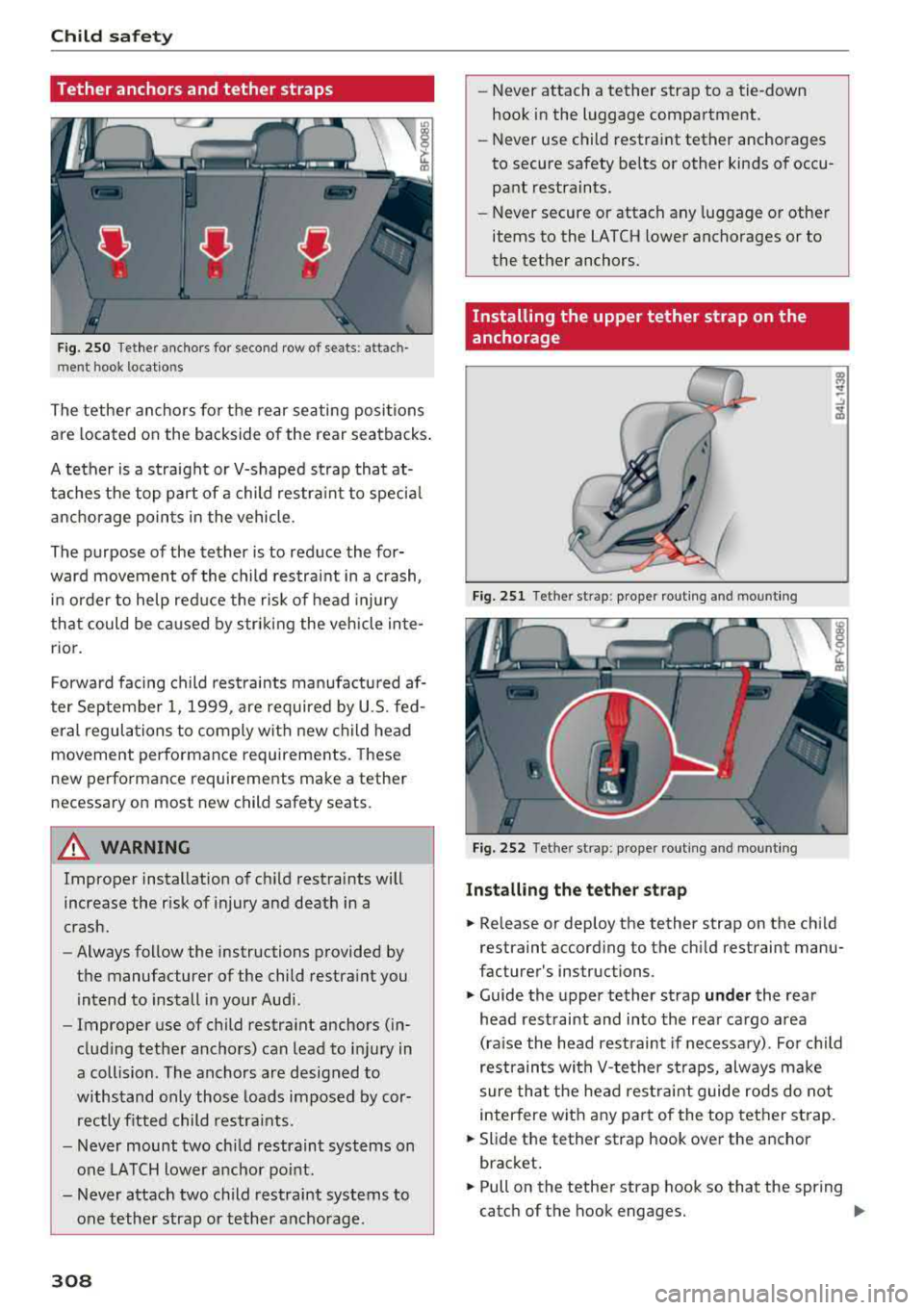
Fig. 250 Tether ancho rs for second row of seats: a tt a ch ·
m ent hook locat io ns
The tether an chors fo r the rear seating posi tions
are located on the backside of the rear sea tbacks .
A tether is a straight or V-shaped s trap that at·
t a ches the top part of a child restra int to spec ia l
ancho rage poin ts in the vehicle .
The purpose of the tether is to red uce the for
ward movement of the child res traint in a crash,
i n order to help red uce the risk of head injury
tha t could be c aused by str iki ng the vehicle inte
rior .
Forward fac ing ch ild rest rai nts manufactured af
ter September 1, 1999, are required by U .S. fed
eral regula tions to comply with new child head
movement performance requirements. These
new perfo rmance requirements make a tethe r
necessary on most new child safety seats.
A WARNING
Improper installation of c hild restraints will
increase the risk of injury and death in a
crash .
- Always follow the instructions provided by
the manufacturer of the child restra int you
intend to install in your Audi .
- Improper use of child restra int anchors (in
clud ing tether anchors) can lead to i njury in
a collision . The anchors are designed to
withs tand only those loads imposed by cor
r ectly fitted child restra ints.
- Never mount two chi ld restraint systems on
one LATC H lower anc ho r poi nt.
- Never attach two child restraint systems to
one tether strap or tether anchorage.
308
-
- Never attach a tether strap to a tie -down
hook in the luggage compartment .
- Never use child restraint tether anchorages
to secure safety be lts or other kinds o f occu
pant restraints.
- Never secure or attach any luggage or other
items to the LATCH lower ancho rages or to
the tether anchors.
Installing the upper tether strap on the
anchorage
F ig. 2 51 Tet her st ra p: pro per r out ing and m oun ting
Fi g. 2 52 Tet her st rap: prope r rou ting and m oun ting
Installing the tether st rap
.,. Re lease or deploy the tethe r strap on the chi ld
restraint accord ing to the ch ild restraint manu
fac turer's ins tructions.
.,. Guide the upper tether strap under the rear
head restraint and into the rear cargo area (ra ise the head restraint if necessa ry) . Fo r ch ild
restrain ts with V- te ther st ra ps, alw ays ma ke
sure that the hea d rest rain t guide rods do not
interfere with any part of the top tether strap.
.,. Slide the tether strap hook ove r the anchor
bracket.
.,. Pull on the tether strap hook so that the spring
catc h of the hook engages.
..,_
Page 311 of 392
u co ..... N ,..._
N ..... 0 <( 0 00
~ Tighten the tether strap firmly fo llowing t he
child restraint manufacturer's instructions .
Releasing the tether strap
~ Loosen the tens ion following the ch ild rest rai nt
man ufacturer's instructions.
~ Depress the spring catch on the hook and re
l ease it from the anchorage.
(LlJ) Note
I f you leave the ch ild rest rain t with t he tether
s trap firm ly installed for severa l days, this
cou ld leave a mark on the upholstery on the
seat cushion and backrest in the area where
the tether strap was installed. The upholstery
wou ld also be permanently stretched around
the tether strap . This applies especially to
leather seats .
Using tether straps on rearward-facing
child restraints
Current ly, few rear-facing chi ld restraint systems
come wit h a tether. Please read and heed the
chi ld restraint system manufacturer's instruc
tions carefully to determine how to properly in
stall the tether.
A WARNING
A child in a rearward-facing chi ld safety seat
installed on the front passenger seat w ill be
ser iously injured and can be killed if the front
airbag inflates -even with an Advanced Air
bag System .
- T he inflat ing a irbag w ill hit the child safety
seat or infant car rie r with g reat fo rce and
w ill smash the ch ild safety seat a nd ch ild
agai nst t he bac kres t, cen ter armrest, o r
door .
-If you mus t install a rearw ard fac ing c hild
sa fety seat on t he front passenger seat be
cause of exceptiona l circumstances and the
PASSENGER AIR BAG OFF ~; light does not
come on and stay on, immed iate ly install
the rear-fac ing c hild safety seat in a rear
seating pos it ion and have the airbag system
inspected by your A udi dealer .
Child saf ety
Additional information
Sources of information about child
restraints and their use
T here are a number of sources o f additional in
formation about child restraint selection, instal
l ation and use :
N HT SA advises that the best ch ild safety seat is
the one that fits your child and fits in your vehi
cle, and that you wi ll use correct ly and consis
tent ly.
T ry befo re yo u buy!
U.S . N ational High way Traffic S afet y A dmini s
tration
T el. : 1-888-3 27- 42 36 ( TTY: 1-800 -424-91S3)
http:/ /www.nhtsa.gov
http:/ /www.sa ferca r.gov
Nati onal SAFE KIDS Camp aig n
Tel. : (202) 662-0600
http:/ /www.safekids .org
S afety BeltSaf e U.S .A.
Tel. : (800) 745-SAF E (E nglish)
T el. : (800) 747-SANO (Spanish)
http://www.ca rsea t.o rg
Tran sport C anada Information Centre
T el. : 1-800-333-0371 o r ca ll 1 -613-998-86 16 if
yo u are in the Ottawa area
http://www.tc.gc.ca/ eng/ roadsafety/men u. h tm
Audi Cu stomer Relation s
Tel.: (800) 822-2834
309
Page 314 of 392
Check ing and F illing
fi ller door . For additional information on fuel,
see
r=> poge 310.
For the tank capac ity in yo ur vehicle , refer to the
Technical Data
r:!> pog e 369.
To reduce the r isk of fuel leak ing out or vapors
escap ing , make sure that the fuel tank is closed
correct ly. Otherwise
thP ¢'4 i ndicato r light will
t ur n on.
I f the central lock ing system malfunct ions, the
fue l filler door may emergency release
r=> poge 313.
_& WARNING
An improper f ueli ng p rocedure and improper
hand ling of fue l can lead to exp losions, fires,
severe b urns and other injuries .
- Do not smoke and keep away from open
flames .
- T he ign it ion m ust be switched off when re
f ueling .
- Cell p hones, radio devices and other radio
equipment s hou ld always be switched off
when refueling . Electromagnetic rays cou ld
cause sparks and start a fire .
- If you do not insert the fue l pump nozzle a ll
the way into the filler tube, then fue l can
l eak out . Spi lled fue l can ignite and start a
fire.
- Never get into the vehicle when refueling. If
there is an exceptional situation where the
vehicle must be entered, close the door and
touch a metal surface before touching the
fuel pump nozzle again . This will reduce the
risk of electrostat ic discharge that can cause
flying sparks . Sparks can start a fire when
r efuel ing .
_& WARNING
We recommend that you do not t ransport any
fue l conta iners in t he ve hicle. Fue l cou ld leak
out of the container and ignite, espec ially dur
ing an accident. This can cause exp losions,
fires and injuries .
- If you must transport fuel in a fuel contain
er, please note the following:
312
- Always place a fue l container on the
ground before fill ing . Never fill the fuel
container with fuel while it is in or on the
vehicle . Electrostatic charge can occur
while refueling and the fuel vapors could i gnite .
- For fuel containers made of metal, the fuel pump nozzle must always maintai n
contact with the conta iner to reduce the
r isk of s tat ic charge.
- Insert the fuel pump nozz le as far as pos
s ible into the fi lle r opening w hile refuel
ing .
-Fo llow lega l requ irements when using,
stor ing and t ransporti ng f uel con ta iners.
- Make su re that the fuel containe r meets
t h e i nd ust ry standa rds, fo r example ANS I
o r ASTM F852 -86.
@ Note
- Remove fuel that has overflowed onto any
vehicle components immediately to reduce
the risk of damage to the vehicle.
- Never dr ive unt il the fuel tank is completely
empty . T he irregula r supply of fue l that re
s u lts from that can cause eng ine misfi res.
Uncombus ted fuel will ente r th e exhaus t
system and increase the risk of damage to
the cata lytic converter .
@ For the sake of the environment
Do not overfill the fuel t ank, o therwise f uel
can leak o ut w hen the veh icle is warming up.
(D Tips
The fuel fille r doo r on your veh icle does not
l ock if you lock t he ve hicle from t he i nside us
i ng the centra l locking switc h.
Page 315 of 392
u co ..... N r-N .....
~ 0 co
Fuel filler door emergency release
If the central locking system is faulty, the fuel filler door can be unlocked manually.
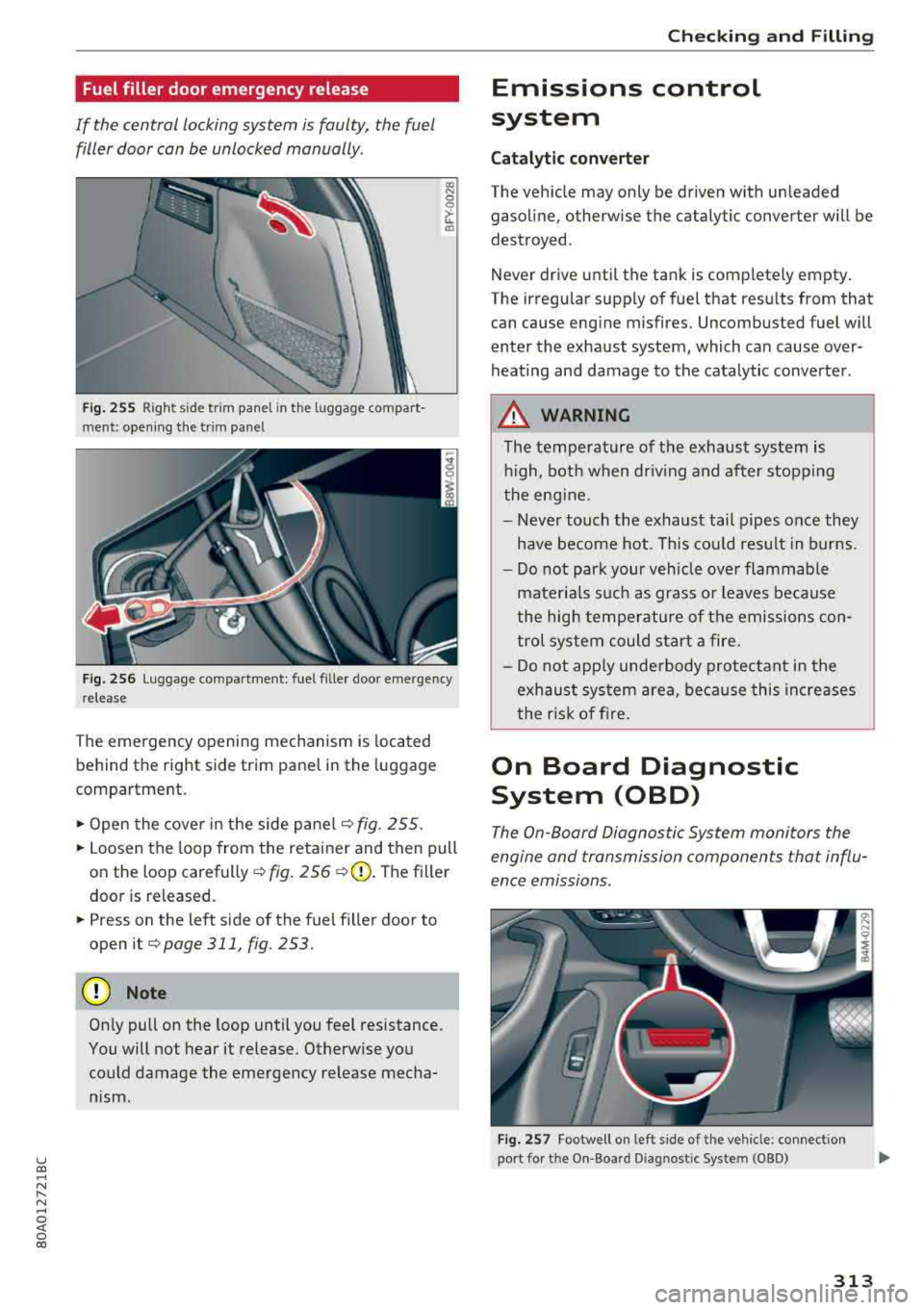
Fig . 255 Right side trim j)anel in the luggage compart
ment: opening the trim panel
Fig. 256 Luggage compartment: fuel filler door emergency
release
The emergency opening mechanism is located
behind the right side trim panel in the luggage
compartme nt.
.,. Open the cover in the side pane l¢ fig. 255.
.,. Loosen the loop from the retainer and then pull
on the loop
carefully¢ fig . 256 ¢ Q) . The filler
door is released .
.,. Press on the left side of the fuel filler door to
open it
¢page 311, fig. 253.
(D Note
On ly pull on the loop until you feel resistance.
You will not hear it release. Otherwise you could damage the emergency release mecha
nism.
Chec king and Filling
Emissions control
system
Cat alytic con verter
The vehicle may only be driven with unleaded
gasoline, otherwise the catalytic converter will be
destroyed.
Never drive until the tank is completely empty .
The irregu lar supply of fuel that results from that
can cause engine misfires. Uncombusted fuel will
enter the exhaust system, which can cause over
heating and damage to the catalytic converter .
A WARNING
The temperature of the exhaust system is
hi gh, both when driv ing and after stopping
the eng ine.
-
- Never touch the exhaust tail pipes once they
have be come hot. This cou ld resu lt in burns.
- Do not park your veh icle over flammable
mate ria ls such as grass or leaves because
the high temperature of the emissions con
trol system could start a fire.
- Do not app ly unde rbody protectant in the
exhaust sys tem area, beca use this increases
the risk of f ire.
On Board Diagnostic
System (OBD)
The On-Board Diagnostic System monitors the
engine and transmission components that influ
ence emissions .
Fig. 257 Footwell on left s ide of th e veh icle: conn ect io n
port fo r the O n-Board D iagnost ic System (08D)
313
Page 316 of 392
Check ing and F illing
On -Board Diagnostic S yst em
Eng ine data can be read out at the On-Board D i
agnostic System connection po rt using a special
testing device
¢ fig. 257 .
Indicator light
Ift hP ¢..ifi indicato r light b lin ks o r tu rns o n, there
is a malfunction that is caus ing poor emiss ions
qua lity and that could damage the catalytic con
verter.
Dr ive s low ly to an author ized Audi dealer or au
thor ized Audi Se rvice Fac il ity to have the ma l
f u nction co rrected.
The indicator l ight can also turn on if the fuel fi ll
er cap is not closed correct ly
9 page 311.
_& WARNING
Incorrect use of the connection po rt fo r th e
On-Board Diagnostic Sys tem can ca use mal
functions, which can then result in accidents
and serious injuries.
- Only allow an authorized Audi dealer or au
thorized Audi Service Facility to read out the
engine data .
Engine compartment
Working in the engine compartment
Special care is required if you are working in the
engine compartment
-
Fo r w ork in th e engi ne comp artm ent su ch as
c heck ing and filli ng flu id s, the re is a risk of in
jur y, scalding , ac cident s, and b urns . Fo r this
r easo n, follow all th e warning s and g enera l
sa fe ty preca ution s pro vided in the foll owin g in
f o rm ation . Th e e ng ine comp artmen t is a d an
ger ous ar ea .
9 &, .
_& WARNING
- T urn the eng ine off.
- Switch the ig nition off.
- Set the parking brake .
- Select the "P" selector lever pos it io n.
- let the engine coo l down.
314
- Never open the hood when there is steam or
coo lant escaping from the engine compart
ment, because there is a risk that you could
be burned . Wait unt il no steam or coolant is
escaping.
- Keep children away from the eng ine com
partment .
- Never sp ill fluids on a hot engine . These flu
ids (such as the anti-freezing agent con
tained in the coolant) can ignite .
- Avoid short c ircuits in the electrical system.
- When working in the engine compartment, remember that the radiator fan can switch
on even if the ignition is switched off, wh ich
increases the r isk of injury .
- Never open the cap on the coolant expan
sion tank when the engine is warm . The
cool ing system is under pressure .
- To protect your face, hands, and arms from
hot steam or coolant, cover the cap w ith a
large cloth when open ing.
- Do not remove the engine cover under any
circumstances . This increases the risk of
burns .
- If tests need to be performed with the en
gine runni ng, there is add itiona l danger due
to mov ing components (such as the r ibbed
be lt, alte rnato r and rad iato r fan) and from
the hig h-voltage ignition system.
- Do not unde r any ci rcumstances activate the
throttle inadvertent ly (for example, by hand
from the engine compartment) if the veh i
cle is stationary but the engine is running
and a gear is engaged. Otherwise, the vehi
cle will start to move immediate ly and this
could result in an acc ident.
- Pay attention to the following warnings
when work on the fue l system is required:
- Do not smoke.
- Never work near open flames .
- Always have a working fire extinguisher
nearby.
- All work on the battery or electrical system in your vehicle can result in injuries, chemi
cal burns, acc idents or burns . Because of
this, all work must be performed
only by an
author ized Audi dealer or author ized Audi
Serv ice Faci lity.
Page 317 of 392
u co ..... N r-N .....
~ 0 co
-To reduce the risk of electric shock and in
jury, never touch the following components
when the engine is running or is being start
ed :
- Ignition cable
- Other components in the electronic high-
voltage ignition system
- If you must check or perform work on the
engine while it is running:
- Set the parking brake first and then select
the
"P" selector lever position .
- Always proceed with extreme caution so
that clothing, jewelry or long hair do not
become caught in the radiator fan, fan
belt or other moving components or do
not come into contact with hot compo nents. Tie back long hair before beginning
work and do not wear cloth ing that can
hang down into the engine.
- Limit your exposure to exhaust and chemi
cals to as short a time as possible
c::> & .
..&, WARNING
California Proposition 65 Warning:
- Engine exhaust, some of its constituents,
and certain vehicle components contain or
emit chemicals known to the State of Cali
fornia to cause cancer and birth defects and
reproductive harm. In addition, certain flu
ids contained in vehicles and certain prod
ucts of component wear contain or emit
chemicals known to the State of California
to cause cancer and birth defects or other
reproductive harm.
- Battery posts, terminals and related acces
sories contain lead and lead compounds, chemicals known to the State of California
to cause cancer and reproductive harms.
Wash hands after handling.
(D Note
When filling fluids, be sure not to mix the flu
ids up . Otherwise severe malfunctions and en
gine damage will occur.
Checking and Filling
@) For the sake of the environment
You should regularly check the ground under
your vehicle in order to detect leaks quickly.
If
there are visible spots from oil or other fluids,
bring your vehicle to an authorized Audi deal
er or authorized Audi Service Facility to be
checked .
Opening/closing the hood
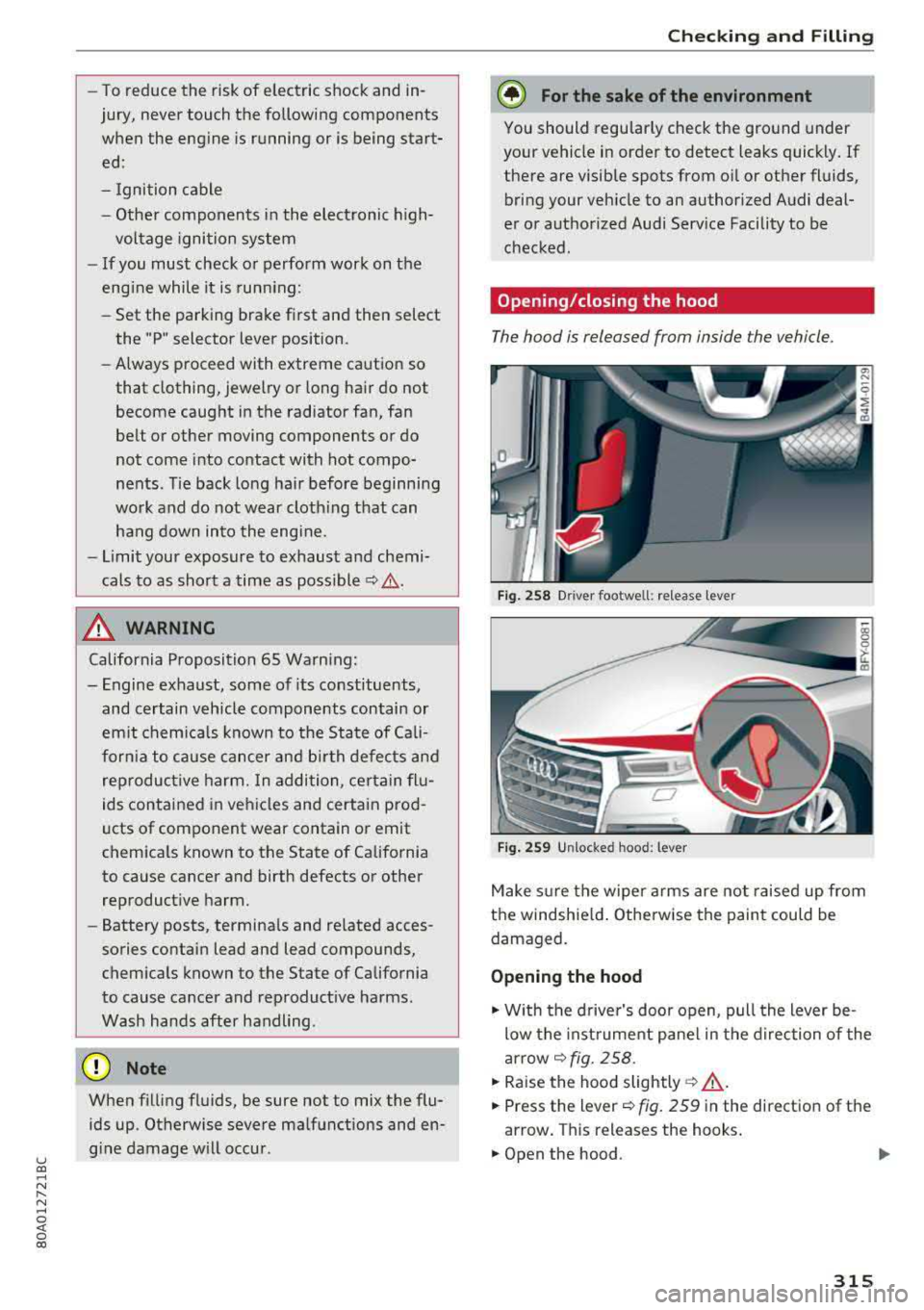
The hood is released from inside the vehicle .
Fig. 258 Driver footwell : relea se lever
Fig. 259 Unlocked hood: lever
Make sure the wiper arms are not raised up from
the windshield . Otherwise the paint could be
damaged.
Opening the hood
.,. With the driver 's door open, pull the lever be
low the instrument panel in the direction of the
arrow
c::, fig. 258.
.,. Raise the hood slightly c::> &.-
.. Press the lever c::, fig. 259 in the direction of the
arrow. This releases the hooks .
.,. Open the hood. ..,.
315
Page 318 of 392
Checking and Filling
Cl osing the ho od
~ Push the hood down until you overr ide the
force of t he struts .
~ Let the hood fall light ly into the latch. Do not
press it in.
c::> &_ .
A WARNING
-Never open the hood when there is steam or
coolant escaping from the engine compart
ment, because there is a risk that you could
be burned. Wait until no steam or coolant is
escaping.
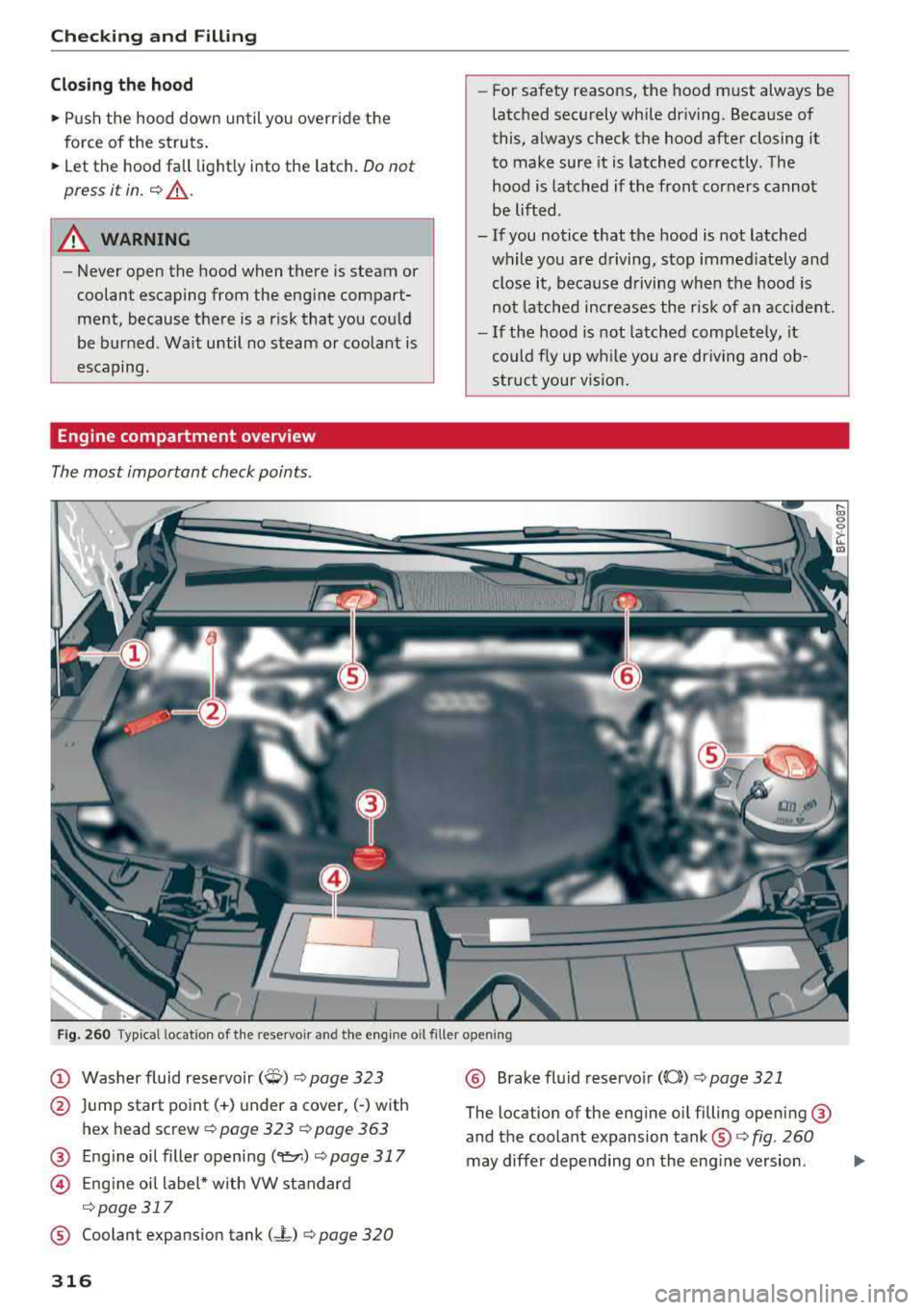
Engine compartment overview
The most important check points .
-For safety reasons, the hood must always be
latched securely while dr iving. Because of
this, always check the hood after closing it
to make sure it is latched correctly . The
hood is latched if the front corners cannot
be lifted .
-If you notice that the hood is not latched
while you are driving, stop immed iate ly and
close it, because d riving when the hood is
not latched increases the r is k of an accident.
-If the hood is not latched comp letely, it
could f ly up wh ile you are driving and ob
s t ruc t your vis ion.
F ig . 260 Typical location of the rese rvoir and the engine o il fil le r open ing
@ Washer fluid rese rvoir (W) c::> page 323
@ J ump start po int(+) under a cover,(-) w ith
hex head screw
c::> page 323 c::> page 363
® Eng ine oi l filler openi ng (9:=r.) c::> page 317
@ Eng ine oi l label * w ith VW st andard
c;, page 317
® Coolant expans ion tank (-L) c::> page 320
316
@ B rake fl uid reservo ir (Oi) c::>pag e 321
The location of the eng ine o il filling open ing ®
and the coolant expansion tank ®
c::> fig. 260
may differ depending on the eng ine version .
Iii>
Page 319 of 392
u co .... N r--N .... 0 <( 0 00
A WARNING
Read and follow all WARNINGS before check
ing anything in the eng ine compartment
9poge 314.
Engine oil
If the engine oil level is too low
If you need to add engine oil, use an oil that is
listed on the sticker.
The sticker is located at the
front of the engine compartment
9 poge 316,
fig. 260.
I f the recommended engine oil is not available,
in an emergency you may add a maximum of 1
quart
Cl liter) of ACEA C3 or API SN engine oil
one time until the next oil change.
F or more information on the correct engine oil
for your ve hicle, contact an authorized Audi dea l
er or authorized Audi Service Facility. Have the oil
changed by an authorized Audi dealer or author ized Service Fac ility.
Audi recommends
~cas jjjjfl /[email protected] Fr,w.::«:J.o,-JAl.
Audi recommends using the Long Life high
performance engine oil from Audi Genuine
Parts.
Checking the engine oil level
The engine oil level con be checked in the Info
tainment system
Observe the safety precautions c::> & in Working
in the engine comportment on page 314.
~ Park your vehicle on a level surface.
~ S hu t the engine off when it is warm.
~ Switch only the ignition back on.
~ Wait approx imately two minutes.
~ Select in the Infotainment system: the I MENU I
button > Vehicle > left control button > Service
& checks
> Oil level.
~ Read the oi l level in the display. Add engine oil
if the bar in the oil leve l indicator is just before
"min"
c::> page 318.
Checking and Filling
@ Note
The engine oi l level must not be under the
"min" marking, as th is w ill increase the risk of
engine damage.
(D Tips
The oil leve l indicator in the display is only an
informational display.
If the oil leve l is too
l ow, a min imum oil warning appears in the in
strument cluster. Add oil and close the hood.
The current oil level is displayed in the Info
tainment system the next time the ignition is
switched on .
(D Tips
The engine oil consumption may be up to
0.5 quart/600 miles (0.5 liter/1,000 km), de
pending on driv ing sty le and operat ing cond i
tions. Consumption may be higher dur ing the
first 3,000 miles (5,000 km). Because of this,
the engine o il level must be checked regular
l y . It is best to check each time you refuel
your vehicle and before long drives.
- In order to provide effective lubrication and
cooling of internal engine components, a ll
internal combustion engines consume acer
tain amount of oil. Oil consumption varies
from engine to engine and may change sig
nifica ntly over the life of the engine. Typ i
cally, eng ines with a specified break-in peri
od consume more oil during the break-in pe
r iod than they consume after oil cons ump
t ion has stabilized.
- Under normal conditions, the rate of oil
consumption depends on the quality and
viscos ity of the oil, the RPM (revo lutions per
min ute) at which the engine is operated, the
ambient temperature and road conditions.
Further factors are the amount of oil dilu
tion from water condensation or fue l resi
due and the oxidation level of the oil. As any
eng ine is subject to wear as m ileage builds
up, the oil consumption may increase over
time until replacement of worn components
may become necessary.
.,..
317
Page 320 of 392
Checking and Filling
-With all these variables coming into play,
no standard rate of o il consumption can be
established or specified. There is no alterna
tive to checking the oil level regularly and
frequently.
- If you have the impression your engine con
sumes excessive amounts of oil, we recom
mend that you consult an authorized Audi
dealer to have the cause of your concern properly diagnosed . Keep in mind that the
accurate measurement of oil consumption
requires great care and may take some
time. An authorized Audi dealer has instruc
tions about how to measure oil consump
tion accurately.
- You can find information on engine oil and
engine oil capacities for the USA at
www.audiusa.com/help/maintenance, or
for Canada at www.audi.ca/ca/web/en/
customer-area/ care-a nd-maintena nee/ aud
i
service-schedules. html , or call
800 -822-2834.
Adding engine oil
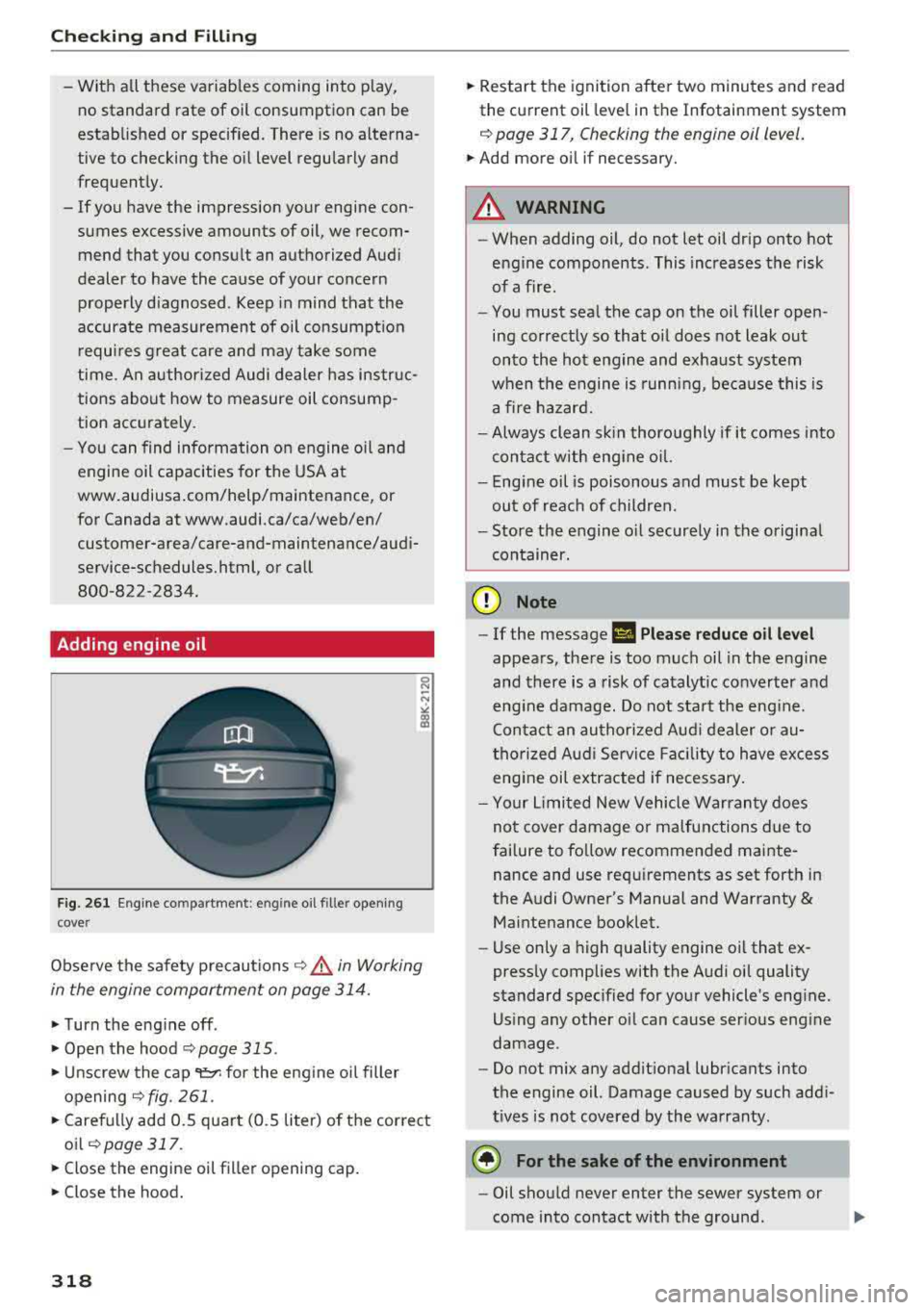
Fig. 261 Engine co mpartment : en gin e oil fille r opening
c ove r
0 N
-N ,.:
gi
Observe the safety precautions c::, &. in Working
in the engine compartment on page 314.
"Turn the engine off.
" Open the hood c::, page 315.
" Unscrew the cap 't=?1 for the engine oil filler
opening
c::, fig. 261.
,.. Carefully add O.S quart (0 .5 liter) of the correct
oil
c::, page 317.
,.. Close the engine oil filler opening cap.
,.. Close the hood.
318
,.. Restart the ignition after two minutes and read
the current oil level in the Infota inment system
c::, page 317, Checking the engine oil level.
"Add more oil if necessary.
A WARNING
- When adding oil, do not let oil drip onto hot
engine components . This increases the risk
of afire.
- You must seal the cap on the oil filler open
ing correctly so that oil does not leak out
onto the hot engine and exhaust system
when the engine is running, because this is
a fire hazard.
-Always clean skin thoroughly if it comes into
contact with engine oil.
- Engine oil is poisonous and must be kept
out of reach of children.
- Store the engine oil securely in the original
container.
(D Note
- If the message II Please reduce oil level
appears, there is too much oil in the engine
and there is a risk of catalytic converter and
engine damage. Do not start the engine.
Contact an authorized Audi dealer or au
thorized Audi Service Facility to have excess
engine oil extracted if necessary.
- Your Limited New Vehicle Warranty does
not cover damage or malfunctions due to
failure to follow recommended mainte
nance and use requirements as set forth in
the Audi Owner's Manual and Warranty &
Maintenance booklet.
- Use only a high quality engine oil that ex
pressly complies with the Audi oil quality
standard specified for your vehicle's engine. Using any other oil can cause serious engine
damage .
- Do not mix any additional lubricants into
the engine oil. Damage caused by such addi
tives is not covered by the warranty .
@ For the sake of the environment
-Oil should never enter the sewer system or
come into contact with the ground .
Page 321 of 392
u co ..... N r--N ..... 0 <( 0 00
-Pay attention to legal requirements when
disposing of empty oi l containers .
Changing the engine oil
We recommend that have your oil changed by an
authorized Audi dealer or a qualified service sta
tion .
Before you check anyt hing in the eng ine compart
ment,
alwa ys read and heed all WARNING S¢.&.
in Working in the engine comportment on
page 314.
The engine oil must be changed accord ing to the
intervals specified in your Warranty
& Mainte
nance booklet . This is very important because the
lubricat ing propert ies of oil diminish gradually
during normal vehicle use.
Under some circumstances the engine oi l should
be changed more frequently. Change oil more of
ten if you drive most ly short distances, operate
the vehicle in dusty areas or under predominant ly
stop-and-go traffic condit ions, or have your vehi
cle where temperatures remain below freezing
for extended periods.
Detergent additives in the oil will make fresh oil
look dark after the engine has been running for a
short time. Th is is normal and is not a reason to
change the oil more often than recommended.
Because of the problem of proper disposal, along
with the special tools and necessary expertise re
qu ired, we strongly recommend that you have
your oil c hanged by an authorized
A udi de aler or
a qualified service station .
If you choos e to change your o il y our self , please
note the following important information:
A WARNING
T o red uce the r isk of pe rsonal injury if yo u
must change the engine oil in your ve hicle
yourse lf:
-Wear eye p rotection.
-To reduce the risk of burns from hot engine
o il, let the eng ine cool down to the touch.
-
-Whe n removing the o il drain plug with your
fingers, stay as far away as poss ible. A lways
Ch eck ing and F illing
keep your forearm pa rallel to the ground to
he lp prevent hot oil from running down your
arm.
-Drain the oil into a container designed for
this purpose, one la rge enough to hold at
least the tota l amount of oil in your engine.
-Engine oil is poisonous. Keep it well out of
the reach of children.
-Continuous contact with used engine o il is
harmful to your skin. Always protect your
skin by washing oil off thoroughly with soap
a nd water.
@ Note
Never mix oil additives with yo ur engine oil.
These additives can damage your engine and
adverse ly affect your Audi limited New Vehi
cle Warranty.
@) For the sake of the environment
-Before chang ing your oi l, first ma ke sure
you know where you can properly d ispose of
the used oil.
-Always dispose of used engine o il properly.
Do not dump it on garden so il, wooded
areas, into open streams o r down sewage
dra ins.
-Recycle used eng ine o il by tak ing it to a used
eng ine oi l collec tion fac ility in yo ur area, or
contact a se rvice station.
Cooling system
Coolant
The eng ine cooling system is fi lled w ith a mixture
of purified water and coolant additive at the fac
tory. This coolant must not be not changed.
T he coo lant level is monitored through
the . in
dicator light
¢page 23. However, we do recom
mend occasionally checking the coolant leve l
manual ly.
If you must add coo lant, use a mixture of water
and coolant additive. Mixing the coolant add itive
with dist illed water is recommended.
IIJ>-
319